

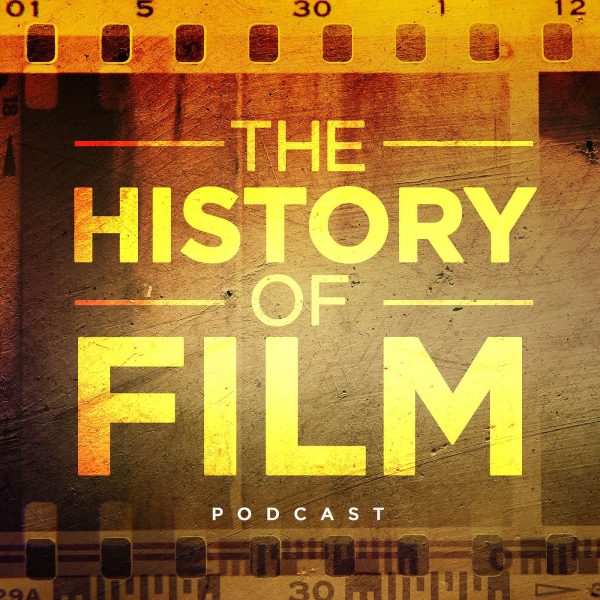
The History of Film
- Folgen
- 44
- Format
- Serie – von Anfang an hören
- Letzte Folge
- 27. März 2026
Über den Podcast
A (mostly) chronological exploration of international film history. Each episode is a deep dive into the history of the people, events, technologies, cultural forces, and most all the movies that have molded cinema into what it is today! Join host Jacob Aschieris and other listeners for an in depth, thoughtful listening experience, and learn why no story ever written for the screen is as dramatic as the story of the screen itself!
Folgen 44
A New Translation of a Master Filmmaker: Dr. Anne McKnight on Long Take
An interview with Japanese media scholar Anne McNight about her new book Long Take. Long Take is a collection of interviews and other material by or about Akira Kurosawa, one of most famous and influential …
Shownotes
An interview with Japanese media scholar Anne McNight about her new book Long Take. Long Take is a collection of interviews and other material by or about Akira Kurosawa, one of most famous and influential filmmakers in world history. These are being translated and published into English for the first time.
You can find Dr. McKnight's new translation here:
https://www.upress.umn.edu/9781517903299/long-take/
37- Abel Gance, and the Prelude to the Post-War
An episode about Gance, covering his life and movies from birth to just before of the release of his monumental film J'accuse.Support the show
36- Women's Pictures, Staring Women, that Women Were Watching
An episode all about proper (or not explicitly patriotic) melodrama as it was developing in France during the war. Who were these movies made for? What were they about? Well, let's find out.If you would …
Shownotes
An episode all about proper (or not explicitly patriotic) melodrama as it was developing in France during the war. Who were these movies made for? What were they about? Well, let's find out.
If you would like to email me you can do so at [email protected]
History of Film Discord: https://discord.gg/Ud8EcEzvSF
Letter Boxed: https://boxd.it/3cZn335- French Patriotic Melodrama
This episode is a little smaller in scope than usual. But like one my great podcasting heroes, my ambition for this show is to tell the history of film without any gaps. We cover two examples of an important …
Shownotes
This episode is a little smaller in scope than usual. But like one my great podcasting heroes, my ambition for this show is to tell the history of film without any gaps. We cover two examples of an important, though ultimately short lived, sub-genre: The Patriotic Melodrama. We discuss and analyze the 1916 film Alsace, directed by Henri Pouctal, and the 1917 Mothers of Frances, directed by René Hervi .
If you would like to email me you can do so at [email protected]
History of Film Discord: https://discord.gg/Ud8EcEzvSF
Letter Boxed: https://boxd.it/3cZn334- American Invasion, Sessue Hayakawa, and "The Cheat"
In this episode we cover just how, exactly, American cinema came to dominate Europe in the wake of WW1. We take a look at the economic practices that facilitated the "invasion" of American cinema onto French …
Shownotes
In this episode we cover just how, exactly, American cinema came to dominate Europe in the wake of WW1. We take a look at the economic practices that facilitated the "invasion" of American cinema onto French screens. We also examine one picture in particular, The Cheat, which exemplifies the technical sophistication of U.S. national cinema, and that film's reception by the City of Lights.
If you would like to email me you can do so at [email protected]
History of Film Discord: https://discord.gg/Ud8EcEzvSF
Letter Boxed: https://boxd.it/3cZn333- War on Film, Film at War
This week we cover the effect of The War on the French film Industry. While The Conflict's Titanic needs did a real number on French production, it did also help develop a new kind of documentary …
Shownotes
This week we cover the effect of The War on the French film Industry. While The Conflict's Titanic needs did a real number on French production, it did also help develop a new kind of documentary filmmaking: The Newsreel, which was then put to work in service to the Republic.
If you would like to email me you can do so at [email protected]
History of Film Discord: https://discord.gg/Ud8EcEzvSF
Letter Boxed: https://boxd.it/3cZn332- Foundation of Death, Foundation of Light
This episode reexamines some topics we have already looked at, but this time as context for one of history's greatest butcheries, rather than as pure film history. The development of cinema is intertwined …
Shownotes
This episode reexamines some topics we have already looked at, but this time as context for one of history's greatest butcheries, rather than as pure film history. The development of cinema is intertwined with the forces that defined the 20th century. Today we explore how the First World War and the movies are cut from the same fabric, as we set the stage for some of the screen's greatest epochs -- German Expressionism, French Impressionism, Soviet Montage, and the Golden Age of American Silent Film. All that is tied up in The War, so let's start our journey facing it head-on.
-Jake
If you would like to email the show, you can do so at [email protected].Announcement – Plans and Reasons
The History of Film Podcast has been on Haitus since May of 2022. This announcement officially ends that. Let's get back to it!If you have any ideas on how I can improve the show, you can email me at …
Shownotes
The History of Film Podcast has been on Haitus since May of 2022. This announcement officially ends that. Let's get back to it!
If you have any ideas on how I can improve the show, you can email me at [email protected].
See you soon!
-Jake!31- Gertie: The First Animated Character
In this episode we finish up our series on early animation by covering Gertie the Dinosaur and The Sinking of the Lusitania, both animated by Winsor McCay. Next time it's back to Europe, where we will …
Shownotes
In this episode we finish up our series on early animation by covering Gertie the Dinosaur and The Sinking of the Lusitania, both animated by Winsor McCay. Next time it's back to Europe, where we will cover the the effect of the First World War on European film!
I decided to end the Patreon, at least for the foreseeable future. It was a hard decision, but I wasn't in the position to devote the time that I wanted and needed to make the channel what I wanted it to be. A special thank you to all my patrons for their support. I hope that I can find a way to bring all of the ideas I had for it to life for you in the future!
If you would like to contact me, you can email me at [email protected].
You can visit historyoffilmpodcast.com to access helpful resources for this episode.
The history of the film has a discord server, which you can access through this here link:
discord.gg/Ud8EcEzvSF30- Animation Before the Dinosaur
This is the first of two episodes (only two, I promise) about the great animator Winsor McCay. We cover his life before he became a filmmaker, and his two first movies: Little Nemo (1911) and How a Mosquito …
Shownotes
This is the first of two episodes (only two, I promise) about the great animator Winsor McCay. We cover his life before he became a filmmaker, and his two first movies: Little Nemo (1911) and How a Mosquito Operates (1912).
The history of the film has a discord server, which you can access through this here link:
discord.gg/Ud8EcEzvSF
Thank you to my wonderful patrons who helped make this show possible! A special thank you to patron Ed & Shari for supporting this program in such a big way. If you want to support this show, read your name down here in the credits, and get access to cool bonus content, you can! By visiting patreon.com/historyoffilm and becoming a patron, you can play an integral part in actually making this show exist.
If you would like to contact me, you can email me at [email protected].
You can visit historyoffilmpodcast.com to access helpful resources for this episode.29- Phantasmagoria
It's a new year, and the History of Film is back! In this episode, we cover the life and achievements of French animator Emile Cohl, as he creates the first paper film animation, and brings fluidity and …
Shownotes
It's a new year, and the History of Film is back! In this episode, we cover the life and achievements of French animator Emile Cohl, as he creates the first paper film animation, and brings fluidity and grace to a medium he helped invent!
Thank you to my wonderful patrons who helped make this show possible! A special thank you to patron Ed & Shari for supporting this program in such a big way. If you want to support this show, read your name down here in the credits, and get access to cool bonus content, you can! By visiting patreon.com/historyoffilm and becoming a patron, you can play an integral part in actually making this show exist.
If you would like to contact me, you can email me at [email protected].
You can visit historyoffilmpodcast.com to access helpful resources for this episode.
You can join the History of Film discord server by using this link;
discord.gg/Ud8EcEzvSF28- Drawings That Can Dance
The long promised day is finally here! We dive into the world of animation, examine ancient Iranian pottery, and meet animators named Charles-Emile Reynaud and James Stewart Blackton, as we begin our journey …
Shownotes
The long promised day is finally here! We dive into the world of animation, examine ancient Iranian pottery, and meet animators named Charles-Emile Reynaud and James Stewart Blackton, as we begin our journey though a whole other kind of cinema.
Thank you to my wonderful patrons who help make this show possible! A special thank you to patron Ed & Shari for supporting this program in such a big way. If you want to support this show, read your name down here in the credits, and get access to cool bonus content, you can! By visiting patreon.com/historyoffilm and becoming a patron, you can play an integral part in actually making this show exist.
If you would like to contact me, you can email me at [email protected].
You can visit historyoffilmpodcast.com to access helpful resources for this episode.
You can join the History of Film discord server by using this link;
discord.gg/Ud8EcEzvSF27- The Fall of Babylon, The Fall of Griffith
In this episode we take a look at Griffith's second most famous movie, Intolerance, and examine its production, structure, and impact. We also (finally) finish the long arc of Griffith's story, and …
Shownotes
In this episode we take a look at Griffith's second most famous movie, Intolerance, and examine its production, structure, and impact. We also (finally) finish the long arc of Griffith's story, and bring his career, and his time here on the podcast, to a close.
I would like to give special credit to my wonderful patron Ed & Shari for supporting this episode and helping to make this show possible. If you want to support this show, read your name down here in the credits, and get access to cool bonus content, you can! By visiting patreon.com/historyoffilm and becoming a patron, you can play an integral part in actually making this show exist.
If you would like to contact me, you can email me at [email protected].
You can visit historyoffilmpodcast.com to access helpful resources for this episode.26- The Birth of a Nation: Part III
This is the last of it. In this episode, we dig into how and why The Birth of a Nation was so influential, and who was influenced by it. I am happy to say that next week we will be moving on from here. So three …
Shownotes
This is the last of it. In this episode, we dig into how and why The Birth of a Nation was so influential, and who was influenced by it. I am happy to say that next week we will be moving on from here. So three cheers for that.
If you would like to email me, you can do so at [email protected]
You can visit the show's website at historyoffilmpodcast.com
and you can support the show at patreon.com/historyoffilm
Thank you for listening!25- The Birth of a Nation: Part II
When I write these, I never know just how long they will be. As it turns out, talking about a film that has had a huge impact on the development of film history, and made the world so much worse, is taking a …
Shownotes
When I write these, I never know just how long they will be. As it turns out, talking about a film that has had a huge impact on the development of film history, and made the world so much worse, is taking a lot of words. So, this is the second of what I hope to be three episodes of The Birth of a Nation. In this episode, we describe the plot of the movie in detail (though I still skipped a couple of things here and there for the sake of brevity, believe it or not), and talk about how the ideas present in the story interact with each other.
The clip I play toward the end is from the 1993 Documentary D. W. Griffith: The Father of Film, directed by Kevin Brownlow and David Gill.
You can contact me at [email protected], and you can visit the show's website: historyoffilmpodcast.com to view resources for each episode.
24- The Birth of a Nation: Part I
Well, where it is. The Birth of a Nation is an extremely important movie. It would be hard to overstate it. In this episode, we cover the original novel the film was based on, and the film-making process for …
Shownotes
Well, where it is. The Birth of a Nation is an extremely important movie. It would be hard to overstate it. In this episode, we cover the original novel the film was based on, and the film-making process for the movie.
So, spoilers for a 106-year-old movie, The Birth of a Nation is an evil film. other than the films that were created by the Nazi regime during WWII, I don't think there have been movies that have spread so much evil and hate that have been so widely received. We have to deal with it, so we will do so now.
If you would like to email me, you can do so at [email protected].Bonus: Film as Cultural Artifacts
This is the first of (hopefully) a recurring series of episodes on film critical theory. Today, with special guest Melissa Favara, we cover the idea of cultural production. This is kind of the broadest way of …
Shownotes
This is the first of (hopefully) a recurring series of episodes on film critical theory. Today, with special guest Melissa Favara, we cover the idea of cultural production. This is kind of the broadest way of looking at movies, as a product of a culture rather only the work of an individual or group of filmmakers. This is a lens with witch to look at movies, and a tool for building context for the movies we will encounter throughout this series. I hope you enjoy it!
You can email me at:
[email protected]23- D. W. Griffith
Here it is! Its an episode and a subject that has been a long time coming, and it's one that is less important then people used to think, though perhaps a little more important than some people say it is …
Shownotes
Here it is! Its an episode and a subject that has been a long time coming, and it's one that is less important then people used to think, though perhaps a little more important than some people say it is now.
D. W. Griffith was a filmmaker who invented nothing, innovated on much, and influenced many (including influencing people to commit acts of viscous evil and pernicious violence). In today's episode, we cover his early life and career, and talk about some of the movies that would lead him to making The Birth of a Nation. You can learn more about some of Griffith's movies in Episode 13, 15, and 16a of this show.
If you would like to email me, you can do so at [email protected].
I hope you enjoy thew show!
-Jake22- Italian Futurism and Everything Else
Hello and welcome back! This is everything about early Italian films that we didn’t cover in the last two episodes. That means we talk a little about how Italian studios were run throughout the 1910s, Important …
Shownotes
Hello and welcome back! This is everything about early Italian films that we didn’t cover in the last two episodes. That means we talk a little about how Italian studios were run throughout the 1910s, Important actors not playing Maciste, influential directors (including another of the most prolific women of early film), and a film movement: Futurism. We talk about the movement’s origin, and its only surviving film – Thaïs – and how it, and the whole Italian film industry, entered a decline throughout the 1920s.
If you would like to contact me, you can email me at
[email protected]
And you can visit the show's website at
Historyoffilmpodcast.comAnnouncement: Updates on "The History of Film" Going Forward
A few words on exciting changes that are coming to "The History of film in very near future. [email protected] the show
21- Astonishing Super Spectacles
This week it's all about two movies Quo Vadis? from 1912 or 1913 and Cabiria from 1914. If you would like to visit the show's website, you can do so at historyoffilmpodcast.com. You can email me at …
Shownotes
This week it's all about two movies Quo Vadis? from 1912 or 1913 and Cabiria from 1914.
If you would like to visit the show's website, you can do so at historyoffilmpodcast.com.
You can email me at [email protected].
thank you so much for listening! I hope to see you next week!20- Rise of the Roman Film Empire
This is the first of a planned three-episode series about Italian film from before the 1920's and the rise of fascism in Italy. In this very first episode, we cover the earliest origins of Italian film …
Shownotes
This is the first of a planned three-episode series about Italian film from before the 1920's and the rise of fascism in Italy. In this very first episode, we cover the earliest origins of Italian film, though much more briefly than we did French film, mostly because there isn't as much written about it. We also go into some detail about the astonishing 1911 special effects wonderland The Inferno directed by a bunch of Italian guys whose names I struggle with.
If you would like to contact me you can email me at [email protected], and you can visit the show's website at historyoffilmpodcast.com19- Murderers, Vamps and Deviants: The Work of Louis Feuillade
It is a little late, but it is also long! This is one I have been researching and working on for a long time. This week it's all about a new kind of serial film–one that takes us out of the light, and into …
Shownotes
It is a little late, but it is also long! This is one I have been researching and working on for a long time.
This week it's all about a new kind of serial film–one that takes us out of the light, and into the shadowy depths of a criminal and violent Paris. Louis Feuillade takes us to depths not before plumbed by this show, as we give some much-deserved attention to serial films made by the man whom Alice Guy hand-picked to be her replacement. Fantomas and Les Vampires are two excellent movie serials that will keep you on the edge of your seat! You can watch them on YouTube, but if you have access to it through your local library, I recommend you use the streaming service Kanopy to give them a watch!
The clip I used of Alfred Hitchcock I got here. You can see resources for this episode and others at historyoffilmpodcast.com, and you can contact me at [email protected].
Happy Listening!
-Jake18- Heroines and Villains Every Week! Early U.S. Serial Film
Forget movies that are a mere five reels long, how about three hundred!? In the United States during the "nickelodeon era" of film history, movies got longer in more ways than the ones we have been covering …
Shownotes
Forget movies that are a mere five reels long, how about three hundred!? In the United States during the "nickelodeon era" of film history, movies got longer in more ways than the ones we have been covering recently. Some became the first film series with continuing stories! We cover that transition and its greatest star in today's episode!
Make sure to visit the website, historyoffilmpodcast.com, for this week's episode–there is some information there that is important but didn't make it into the show for various reasons. This includes the very literal origins of the word "cliffhanger" and examples of some of the movies we talked about in this episode.
If you would like to email me, you can contact me at [email protected].
Thank you, and happy listening!17- Film D'art
Just as promised in episode 15, this week we begin our journey through the early influences of feature-length movies that will eventually take us into the studio era of the U. S. film industry and D. W …
Shownotes
Just as promised in episode 15, this week we begin our journey through the early influences of feature-length movies that will eventually take us into the studio era of the U. S. film industry and D. W. Griffith. Film D'art is more important for what it inspired than what it accomplished, and funnily enough, is skipped over entirely in a book I have on the History of French film, but is still worth discussing. It represents the last holdouts from the Edison/Black Maria style of filmmaking. This "un-cinematic" style of filmmaking will, happily, be in the rearview mirror (unless you count some of the crummy movies I tried to make as a freshman in high school).
If you want to email me you can do so at [email protected]
you can visit the show's website at "historyoffilmpodcast.com"16- The Stars are Born
16- The Stars are BornHere it is, episode 16, which in my heart, is the Kill Bill Vol. II of the podcast. This one pares a lot with episode 15, so I have a couple of brief recaps of the last episode to make the …
Shownotes
16- The Stars are Born
Here it is, episode 16, which in my heart, is the Kill Bill Vol. II of the podcast. This one pares a lot with episode 15, so I have a couple of brief recaps of the last episode to make the episode flow a little better.
I played a clip from Jim Henson’s The Dark Crystal from 1982 and was very tempted to play the emperor’s death sounds again when I was talking about the downfall of Edison’s trust.
If you would like to contact me you can email me at [email protected], and you can visit the show's website, historyoffilmpodcast.com, to access resources for each episode. I'm a little behind on updating it, but by the end of the week (22 May 2021), it should be all caught up.
-Jake16a- Florence Lawrence
This episode is actually a bonus episode, rather than the other “bonus” episode I’ve released, which was 30 minutes long and took weeks to make. This episode gets a little heavy, but suicide is a heavy subject …
Shownotes
This episode is actually a bonus episode, rather than the other “bonus” episode I’ve released, which was 30 minutes long and took weeks to make.
This episode gets a little heavy, but suicide is a heavy subject. If you, or someone you know, is having suicidal thoughts, know that there is help. In the United States, you can visit https://suicidepreventionlifeline.org to make contact with people who are here to help you right now. You can also call them on the phone, just dial 800-273-8255.
I'm a great admirer of the writer and philanthropist, John Green, who put it excellently when he said “Suicide is a permanent solution to a temporary problem.” People struggling with suicidal thoughts make it through them, and you, or the people you know, can too.
I'm sorry that I don't have the information here of other countries, but this kind of help is available in many places across the world.
I also really recommend This Was Hollywood by Carla Valderama. It's entertaining and packed full of information that I used for both this episode and episode 16.
If you would like to contact me you can email me at [email protected], and you can visit the show's website, historyoffilmpodcast.com.
Jake.
15- Feature Presentations
This is actually the first of a two-part episode that I was originally going to call "Trustbusters." This week, we cover the early events of Carl Laemmle's life and see the feature film become the dominant …
Shownotes
This is actually the first of a two-part episode that I was originally going to call "Trustbusters." This week, we cover the early events of Carl Laemmle's life and see the feature film become the dominant form of cinematic presentation in the United States. Next week it is the star system and the exodus to California, where the center of film production has stayed (in the U.S. at least) ever since.
If you would like to contact me, you can do so at [email protected]
and you can visit the show's website at http://historyoffilmpodcast.com
Thanks, and I will see you next week!
-Jake, May 202114a- Inside the Nickelodeon
This was a wonderful episode to produce, even if it was tricky. If you would like to learn all of the things that I didn't get to in this episode, like some of the wonderful names nickelodeon’s had, I …
Shownotes
This was a wonderful episode to produce, even if it was tricky. If you would like to learn all of the things that I didn't get to in this episode, like some of the wonderful names nickelodeon’s had, I really can't recommend At The Picture Show: Small-Town Audiences and the Creation of Movie Fan Culture by Kathryn Fuller enough. I wish there was an audiobook for it (but I feel that way about every book).
A couple of clarifying points–
I assume the "Latin races" that were talked about in the quote from the beginning of the episode were intended to be in reference to people of ethnically Italian origin. I'm fairly confident about this, as I don't think that LatinX people were a major minority population in the metropolitan centers of the Northeastern United States at the turn of the 20th century. People of Italian origin, however, definitely were, which is the basis of my assumption. I use the term "Latin races" as a segue to talk about LatinX peoples in the Southwestern United States, but by doing so I was removing the term from its original context.
Women were not common in Nickelodeons of the South and Midwest, but undoubtedly some women, on rare occasions, would have seen movies. I'm not aware of any legal blockade against women attending movies, as was the case with the black populations of the South, but rather extremely powerful social and religious conventions. Still, for all intents and purposes, as I stated in the show, nickelodeons in these regions were dominated by white men and boys.
The song I played in the show was "Let's Go into a Picture Show" as performed by Byron G. Harlan. It was written by Jack Norworth and was released as an Edison Phonograph record in 1909. If you would like to listen to the song in full (I didn't play the first verse in the show) you can look it up on YouTube, or, as I did, the UCSB Cylinder Audio Archive.14- Growing Audiences and Consolidating Power
The reason my voice sounds just a little off is because I have been pretty sick for more than a week now. This is far and away the best I have sounded in a while though, so I went into the makeshift recoding …
Shownotes
The reason my voice sounds just a little off is because I have been pretty sick for more than a week now. This is far and away the best I have sounded in a while though, so I went into the makeshift recoding booth and gave you my best!
This week's show its all about the growth of cinemas's audiences and industry, and attempts by powerful people (mostly Thomas Edison) to control that industry. Towards the end of the show I use a few seconds from the 1977 film Star War's directed by George Lucas.
If you would like to email me, you can do so at: [email protected]
And you can visit the show's website at: historyoffilmpodcast.com
Thanks for listening and enjoy!
Jake
Ähnliche Podcasts
Mehr Geschichte-Podcasts

Ist das dein Podcast?
Bestätige es mit einem Eintrag in deinem Feed: Du bekommst hier einen Code, trägst ihn als podcast:txt in den Kanal deines Feeds ein, und wir prüfen ihn. Danach steht dein Podcast als „verifiziert“ bei SoundNode.