

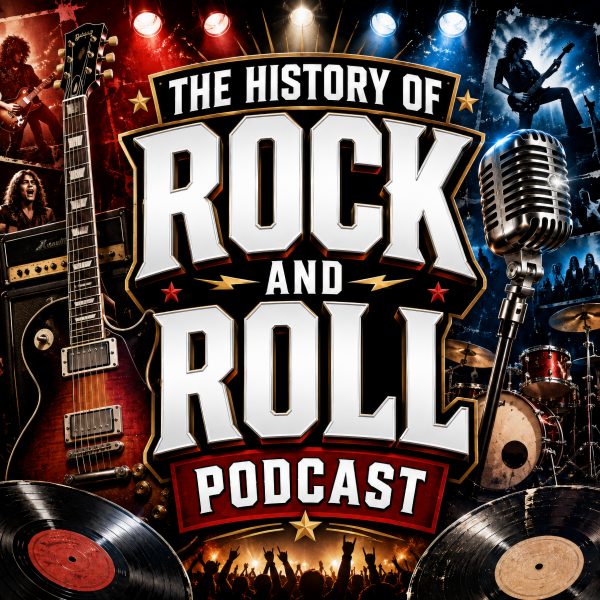
The History of Rock and Roll Podcast: A Wild Ride Through Bands, Legends, Music, Rebellion, and Rock History
- Folgen
- 2.215
- Erscheint
- täglich
- Letzte Folge
- 18. Nov. 2026
Über den Podcast
The History of Rock and Roll Podcast takes listeners on a wild ride through the bands, legends, songs, sounds, scandals, innovations, and rebellious moments that shaped rock history. From the roots of rock and roll in blues, rhythm and blues, country, gospel, and early electric music to the rise of massive stadium bands, punk, metal, alternative rock, and modern rock culture, each episode explores the people and ideas that changed popular music forever. Discover the stories behind legendary artists, influential bands, groundbreaking record labels, iconic producers, unforgettable performances, controversial moments, and songs that helped redefine entire generations. Episodes examine the evolution of electric guitars, distortion, amplifiers, studio recording, synthesizers, the Mellotron, sitar, multitrack production, and other technologies that transformed the sound of rock and roll. The podcast also explores how artists including Chuck Berry, Little Richard, Buddy Holly and the Crickets, The Beach Boys, The Rolling Stones, and countless others helped push rock forward, along with the influence of landmark recordings, changing youth culture, rebellion, fashion, radio, touring, record companies, and the business behind the music. Whether you love classic rock, early rock and roll, psychedelic music, hard rock, punk, heavy metal, alternative, or simply want to understand how rock became one of the most influential forces in modern culture, the History of Rock and Roll Podcast brings the stories, sounds, personalities, and turning points of rock history together in one ongoing journey through the music that changed the world.
Folgen 2.215
How Guitarists’ Quest for Endless Sustain Changed Rock Music
This episode explores how the pursuit of sustained notes— from early amplifier quirks to modern pedal tricks—has reshaped riffs, solos, and the very texture of rock, tracing technological shifts, studio …
Shownotes
This episode explores how the pursuit of sustained notes— from early amplifier quirks to modern pedal tricks—has reshaped riffs, solos, and the very texture of rock, tracing technological shifts, studio techniques, and musical motivations behind one of rock’s most defining sonic goals.
Learn more about your ad choices. Visit megaphone.fm/adchoices
Inside KISS’s ‘Alive!’: Truth Behind the Live Album
A deep dive into KISS’s 1975 live record and the studio tricks that blurred concert sound and polished production. We unpack the overdubs, audience-mixing tactics, and production choices that sparked debate …
Shownotes
A deep dive into KISS’s 1975 live record and the studio tricks that blurred concert sound and polished production. We unpack the overdubs, audience-mixing tactics, and production choices that sparked debate among fans, critics, and music historians.
Learn more about your ad choices. Visit megaphone.fm/adchoices
Shea Stadium Shock: Grand Funk, Critics, and the Rise of Arena Rock
We dive into Grand Funk Railroad’s 1970 Shea Stadium performance—examining how the band’s thunderous arena show slammed critics to the floor while fans roared on—and what that clash reveals about the shift …
Shownotes
We dive into Grand Funk Railroad’s 1970 Shea Stadium performance—examining how the band’s thunderous arena show slammed critics to the floor while fans roared on—and what that clash reveals about the shift toward stadium‑sized rock. The episode explores the sound, spectacle, and cultural context that made this moment a landmark in live rock history.
Learn more about your ad choices. Visit megaphone.fm/adchoices
Chess Records and the Blueprint That Fueled British Rock
This episode dives into how Chess Records’ catalog of Chicago blues provided the sonic, structural, and production foundation for Britain’s first wave of rock stars, revealing the recording techniques, business …
Shownotes
This episode dives into how Chess Records’ catalog of Chicago blues provided the sonic, structural, and production foundation for Britain’s first wave of rock stars, revealing the recording techniques, business practices, and cultural exchanges that turned raw grooves into a global phenomenon.
Learn more about your ad choices. Visit megaphone.fm/adchoices
From Compression to Loud‑Quiet‑Loud: How Modern Engineering Reshaped Rock
This episode peels back the layers of contemporary rock mixing, revealing how tools like compression, parallel processing and automation have turned the loud‑quiet‑loud pattern into a core part of modern sound …
Shownotes
This episode peels back the layers of contemporary rock mixing, revealing how tools like compression, parallel processing and automation have turned the loud‑quiet‑loud pattern into a core part of modern sound. We chart the journey from early 1940s tube compressors to today’s digital consoles that program fader swells with millisecond precision, showing engineers harness dynamics to create punch, groove and emotion in tracks from Queen to EDM drops. The discussion also examines how these techniques have driven the loudness war, shaped arrangement density, and altered both listener experience and industry production standards.
Learn more about your ad choices. Visit megaphone.fm/adchoices
How Cliff Burton Brought Baroque Counterpoint to Metallica
In this episode we trace Cliff Burton’s musical roots in baroque theory and how he infused those ideas into Metallica’s early albums, turning bass lines into melodic counterpoint. We examine studio practices …
Shownotes
In this episode we trace Cliff Burton’s musical roots in baroque theory and how he infused those ideas into Metallica’s early albums, turning bass lines into melodic counterpoint. We examine studio practices, touring dynamics, and the lasting impact on modern heavy‑metal bassists. The story reveals how one bassist helped transform thrash into a sophisticated, classically‑influenced art form.
Learn more about your ad choices. Visit megaphone.fm/adchoices
When the Beatles Fell Apart: The Management and Money Battle That Broke the Band
Explore how Brian Epstein’s death, Allen Klein’s contract maneuvers, and Apple Corps’ legal battles set in motion creative tensions and business disputes among the Beatles. Learn how songwriting wars, studio …
Shownotes
Explore how Brian Epstein’s death, Allen Klein’s contract maneuvers, and Apple Corps’ legal battles set in motion creative tensions and business disputes among the Beatles. Learn how songwriting wars, studio clashes, and individual ambitions fractured the band while albums like *Abbey Road* still shone, reshaping industry practices and leaving a lasting myth about fame, art, and corporate power.
Learn more about your ad choices. Visit megaphone.fm/adchoices
How the DigiTech Whammy Made The White Stripes' Seven Nation Army Sound Like Bass
In this episode we unpack how Jack White’s use of a DigiTech Whammy pitch‑shifter turned the iconic riff from ‘Seven Nation Army’ into a bass‑like groove, reshaping indie rock's approach to instrumentation. We …
Shownotes
In this episode we unpack how Jack White’s use of a DigiTech Whammy pitch‑shifter turned the iconic riff from ‘Seven Nation Army’ into a bass‑like groove, reshaping indie rock's approach to instrumentation. We trace the technology’s roots, its role in Elephant, and how it opened up new sonic possibilities for guitarists everywhere.
Learn more about your ad choices. Visit megaphone.fm/adchoices
How Tom Morello Turned a Guitar Into a DJ
Explore how R.A.M.’s guitarist Tom Morello blended a cheap Gibson SG, whammy pedal, 3‑way pickup, and feedback tricks to create a turntable‑style sound that rewrote the role of lead guitar in metal. The episode …
Shownotes
Explore how R.A.M.’s guitarist Tom Morello blended a cheap Gibson SG, whammy pedal, 3‑way pickup, and feedback tricks to create a turntable‑style sound that rewrote the role of lead guitar in metal. The episode dissects gear, studio techniques, live performance tactics, and the ripple effect on rock, metal, hip‑hop, and production culture.
Learn more about your ad choices. Visit megaphone.fm/adchoices
Southern Tongues: Neil Young’s ‘Southern Man’ vs Lynyrd Skynyrd’s ‘Sweet Home Alabama’
In this episode we dissect the lyrical tug‑of‑war between Neil Young’s blistering "Southern Man" and Lynyrd Skynyrd's emblematic "Sweet Home Alabama." By unpacking the historical backdrop of civil rights …
Shownotes
In this episode we dissect the lyrical tug‑of‑war between Neil Young’s blistering "Southern Man" and Lynyrd Skynyrd's emblematic "Sweet Home Alabama." By unpacking the historical backdrop of civil rights, production choices at Muscle Shoals and Topanga, and each band's intent, we reveal how rock music became a forum for regional identity and political critique. The conversation exposes myth‑making, showcases Southern rock’s sonic character, and shows how two songs shaped the cultural dialogue of 1970s America.
Learn more about your ad choices. Visit megaphone.fm/adchoices
How ‘Live at Leeds’ Rewrote Live‑Album History – The Who’s 1970 Powerhouse
We take a deep dive into The Who’s 1970 live album ‘Live at Leeds,’ exploring how the band captured raw, high‑volume stage energy on a four‑track rig and set a new benchmark for live rock recordings. From the …
Shownotes
We take a deep dive into The Who’s 1970 live album ‘Live at Leeds,’ exploring how the band captured raw, high‑volume stage energy on a four‑track rig and set a new benchmark for live rock recordings. From the venue’s cavernous acoustics to the minimalist microphone setup, we uncover why this performance continues to shape expectations of authenticity in live albums.
Learn more about your ad choices. Visit megaphone.fm/adchoices
Quadraphonic Rock: How the 1970s Experimented with Spatial Sound
This episode unpacks the rise of quadraphonic vinyl in the early 1970s, spotlighting Pink Floyd’s pioneering releases, the competing matrix systems, and why consumers never embraced a four‑speaker setup. We …
Shownotes
This episode unpacks the rise of quadraphonic vinyl in the early 1970s, spotlighting Pink Floyd’s pioneering releases, the competing matrix systems, and why consumers never embraced a four‑speaker setup. We trace how studio practices evolved around quad audio, the industry’s fragmented standards, and the lasting influence on later surround‑sound technologies.
Learn more about your ad choices. Visit megaphone.fm/adchoices
How the Rolling Stones Bridged Blues on Prime‑Time TV in 1965
The episode explores how the Rolling Stones invited Chicago blues legend Howlin’ Wolf onto ABC’s Shindig! in early 1965, turning a rare TV moment into a cross‑cultural landmark. It examines the logistics …
Shownotes
The episode explores how the Rolling Stones invited Chicago blues legend Howlin’ Wolf onto ABC’s Shindig! in early 1965, turning a rare TV moment into a cross‑cultural landmark. It examines the logistics, musical choices, and political climate behind the broadcast, and shows how it elevated both acts while reshaping rock’s relationship to African‑American blues.
Learn more about your ad choices. Visit megaphone.fm/adchoices
The Vocoder: Turning Human Voices Into Machines
An in‑depth look at the original Bell Labs vocoder, its journey from wartime communication tool to a hallmark of Kraftwerk’s robotic sound, and how that technology seeded everything from pop‑rock effects to …
Shownotes
An in‑depth look at the original Bell Labs vocoder, its journey from wartime communication tool to a hallmark of Kraftwerk’s robotic sound, and how that technology seeded everything from pop‑rock effects to today’s digital pitch correction and vocal synthesis. The episode traces engineering, studio practices, cultural shifts and lasting influence across genres.
Learn more about your ad choices. Visit megaphone.fm/adchoices
How Cream Turned 12‑Bar Blues Into Amplified Improvisation
This episode investigates how Cream re‑defined the classic blues form with booming amplification, melodic bass lines and polyrhythmic drumming. From Marshall stack mishaps to studio layering tricks, we trace …
Shownotes
This episode investigates how Cream re‑defined the classic blues form with booming amplification, melodic bass lines and polyrhythmic drumming. From Marshall stack mishaps to studio layering tricks, we trace how their live improvisations stretched simple riffs into sonic adventures that shaped future jam bands.
Learn more about your ad choices. Visit megaphone.fm/adchoices
Flanging: From Tape Delays to Psychedelic Soundscapes
This episode traces the birth of the flanging effect—from its accidental tape‑loop origins at Abbey Road, through the Beatles’ pioneering use on "Tomorrow Never Knows", to modern plugins that bring phase swells …
Shownotes
This episode traces the birth of the flanging effect—from its accidental tape‑loop origins at Abbey Road, through the Beatles’ pioneering use on "Tomorrow Never Knows", to modern plugins that bring phase swells into every studio. We uncover how engineers turned subtle speed differences into sonic portals that shaped psychedelic rock and set the stage for later modulation techniques.
Learn more about your ad choices. Visit megaphone.fm/adchoices
The Beatles' ‘Tomorrow Never Knows’: Birth of Modern Studio Rock
In this episode we dissect John Lennon's experimental track "Tomorrow Never Knows", exploring how tape looping, a Leslie-speaker vocal and heavy compression at Abbey Road created a sound that prefigured …
Shownotes
In this episode we dissect John Lennon's experimental track "Tomorrow Never Knows", exploring how tape looping, a Leslie-speaker vocal and heavy compression at Abbey Road created a sound that prefigured ambient, industrial and electronic music. We trace the studio workflow, technical innovations and the ripple effects that shaped studio experimentation for decades to come.
Learn more about your ad choices. Visit megaphone.fm/adchoices
From Booklets to Backdrops: How Gatefold Sleeves Built Rock’s Visual Worlds
In this episode we trace how the introduction of gatefold sleeves on LPs turned static cover art into immersive visual narratives that amplified concept albums and influenced rock's identity. From Dylan’s early …
Shownotes
In this episode we trace how the introduction of gatefold sleeves on LPs turned static cover art into immersive visual narratives that amplified concept albums and influenced rock's identity. From Dylan’s early double‑disc booklets through 1970s prog‑rock to modern vinyl revivals, we uncover the economic, technological, and cultural forces behind this iconic packaging form.
Learn more about your ad choices. Visit megaphone.fm/adchoices
How the Rolling Stones Gained a Southern Groove for 'Brown Sugar'
This episode explores the Rolling Stones’ December 1969 session at Muscle Shoals that produced ‘Brown Sugar’, blending southern R&B rhythms with their hard‑rock swagger and provocative lyrics. It dissects the …
Shownotes
This episode explores the Rolling Stones’ December 1969 session at Muscle Shoals that produced ‘Brown Sugar’, blending southern R&B rhythms with their hard‑rock swagger and provocative lyrics. It dissects the musicianship, studio techniques, and cultural impact that made the track a lasting classic.
Learn more about your ad choices. Visit megaphone.fm/adchoices
How the Rolling Stones Mobile Studio Changed Rock's Recording Landscape
In this deep dive we trace how a repurposed 1960s truck became the first truly portable recording rig, reshaping where and how rock albums were made. We examine the technology inside, its use by bands like Led …
Shownotes
In this deep dive we trace how a repurposed 1960s truck became the first truly portable recording rig, reshaping where and how rock albums were made. We examine the technology inside, its use by bands like Led Zeppelin and Deep Purple, and how mobile studios shifted power from brick‑wall studios to touring rigs.
Learn more about your ad choices. Visit megaphone.fm/adchoices
How Elton John Turned the Piano into a Rock Frontman’s Instrument
This episode traces how Elton John, trained at the Royal Academy of Music, blended classical piano technique with amplified rock showmanship to elevate the grand piano from accompaniment to lead instrument in …
Shownotes
This episode traces how Elton John, trained at the Royal Academy of Music, blended classical piano technique with amplified rock showmanship to elevate the grand piano from accompaniment to lead instrument in 1970s arena shows. It examines his use of electric keyboards such as the Fender Rhodes and Clavinet, multitrack overdubs in studio, and theatrical stagecraft that influenced later keyboard‑centric acts.
Learn more about your ad choices. Visit megaphone.fm/adchoices
How Slade Built Glam’s Roar and Sparked Hair Metal
Slade’s aggressive glam‑era hits—marked by platform boots, booming power chords, and crowd‑shouting choruses—dominated the UK charts from 1971‑74 and set a template for arena‑size rock. Their relentless focus …
Shownotes
Slade’s aggressive glam‑era hits—marked by platform boots, booming power chords, and crowd‑shouting choruses—dominated the UK charts from 1971‑74 and set a template for arena‑size rock. Their relentless focus on loud, theatrical performances and simple yet punchy production paved the way for hair metal’s heavier aesthetic and stagecraft in the 1980s.
Learn more about your ad choices. Visit megaphone.fm/adchoices
How The Police Turned Jamaican Offbeats into World‑Wide Rock Rhythm
This episode traces how Sting, Stewart Copeland, and Andy Summers blended Jamaican offbeat patterns with punk energy and new‑wave clarity, turning reggae rhythms into a global pop‑rock groove. We dive into …
Shownotes
This episode traces how Sting, Stewart Copeland, and Andy Summers blended Jamaican offbeat patterns with punk energy and new‑wave clarity, turning reggae rhythms into a global pop‑rock groove. We dive into their studio innovations—use of delay, clean percussive guitars, and tight bass lines—and the impact of tracks like "Walking on the Moon" and "Roxanne." The conversation reveals how this fusion reshaped 1980s pop and influenced later rock rhythm vocabularies.
Learn more about your ad choices. Visit megaphone.fm/adchoices
CBGB & the Ramones: Birth of Punk Performance
This episode follows the Ramones’ 1975 CBGB sets, where their sub‑two‑minute songs and raw, unvarnished sound established a template for punk worldwide. We examine how the club’s intimate venue, the band’s …
Shownotes
This episode follows the Ramones’ 1975 CBGB sets, where their sub‑two‑minute songs and raw, unvarnished sound established a template for punk worldwide. We examine how the club’s intimate venue, the band’s minimal instrumentation, and the counting cue forged an aesthetic that inspired British bands like the Sex Pistols and shaped rock’s rebellious direction.
Learn more about your ad choices. Visit megaphone.fm/adchoices
How Billy Corgan Merged Sabbath’s Darkness With Shoegaze Atmospheres
This episode dives into how Smashing Pumpkins frontman Billy Corgan blended the heavy riffing of Black Sabbath with the dreamy textures of shoegaze to forge a new hybrid sound. From his discovery of “Sweet …
Shownotes
This episode dives into how Smashing Pumpkins frontman Billy Corgan blended the heavy riffing of Black Sabbath with the dreamy textures of shoegaze to forge a new hybrid sound. From his discovery of “Sweet Leaf” to the production techniques on albums like *Siamese Dream* and *Mellon Collie*, we unpack the musical, technological, and cultural forces that shaped this fusion.
Learn more about your ad choices. Visit megaphone.fm/adchoices
Ronnie Wood Joins the Rolling Stones: From Faces to Guitar Maestro
This episode traces Ronnie Wood’s journey from early gigs with the Birds and Jeff Beck Group through his stint in Faces, culminating in his recruitment into the Rolling Stones in 1971. We unpack how Wood’s …
Shownotes
This episode traces Ronnie Wood’s journey from early gigs with the Birds and Jeff Beck Group through his stint in Faces, culminating in his recruitment into the Rolling Stones in 1971. We unpack how Wood’s distinctive rhythmic weaving style complemented Keith Richards’ blues‑rooted riffing, reshaping the band’s sound across decades of studio and touring work. The story also reveals the audition process, studio practices at Olympic Studios, and the broader context of rhythm guitar roles in rock history.
Learn more about your ad choices. Visit megaphone.fm/adchoices
How The Mamas & the Papas Created California Dreamin' – Harmony, Culture, and Folk‑Rock Revolution
Explore how The Mamas & the Papas forged lush vocal harmony on ‘California Dreamin’ at Dunhill’s two‑room studio, the role of John Phillips’ arrangement techniques, and the rise-and-fall that shaped 1960s …
Shownotes
Explore how The Mamas & the Papas forged lush vocal harmony on ‘California Dreamin’ at Dunhill’s two‑room studio, the role of John Phillips’ arrangement techniques, and the rise-and-fall that shaped 1960s folk‑rock. The episode unpacks the group’s chemistry, label politics, and lasting influence on harmony-driven pop.
Learn more about your ad choices. Visit megaphone.fm/adchoices
The Mellotron: Analog Sampling Before Digital Samplers
This episode traces how the Mellotron pioneered tape‑based sampling, its mechanical quirks that gave progressive and ambient music a haunting texture, and how those limitations forced performers to live with …
Shownotes
This episode traces how the Mellotron pioneered tape‑based sampling, its mechanical quirks that gave progressive and ambient music a haunting texture, and how those limitations forced performers to live with tape’s inherent instability—shaping future studio innovation and sampling culture.
Learn more about your ad choices. Visit megaphone.fm/adchoices
Chess Records and the Electrification of the Blues
An in‑depth look at how Chess Records turned Chicago blues into an electric blueprint for rock, featuring Muddy Waters, Howlin’ Wolf, Little Walter and more, and how that sound crossed the Atlantic to shape …
Shownotes
An in‑depth look at how Chess Records turned Chicago blues into an electric blueprint for rock, featuring Muddy Waters, Howlin’ Wolf, Little Walter and more, and how that sound crossed the Atlantic to shape British bands and modern music.
Learn more about your ad choices. Visit megaphone.fm/adchoices
Creedence Clearwater Revival vs Fantasy: The Creative Control War That Defined Southern Rock
This episode traces Creedence Clearwater Revival's rise from California roots to hit‑making force and the fierce legal battles with Fantasy Records over songwriting rights, royalties, and artistic freedom. We …
Shownotes
This episode traces Creedence Clearwater Revival's rise from California roots to hit‑making force and the fierce legal battles with Fantasy Records over songwriting rights, royalties, and artistic freedom. We unpack how the label’s contracts, court fights, and the band's own lineup shifts shaped their legacy and influenced future rock business practices.
Learn more about your ad choices. Visit megaphone.fm/adchoices
Hier stehen die neuesten 40 von 2.215 Folgen. Ältere Folgen findest du im Feed des Podcasts.
Ähnliche Podcasts
Mehr Musik-Podcasts




Ist das dein Podcast?
Bestätige es mit einem Eintrag in deinem Feed: Du bekommst hier einen Code, trägst ihn als podcast:txt in den Kanal deines Feeds ein, und wir prüfen ihn. Danach steht dein Podcast als „verifiziert“ bei SoundNode.