

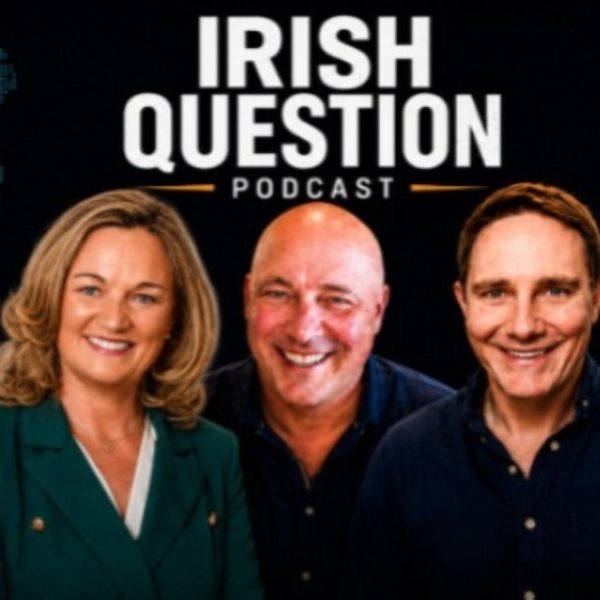
The Irish Question
- Folgen
- 44
- Erscheint
- mehrmals pro Woche
- Letzte Folge
- 11. Nov. 2026
Über den Podcast
We talk about the questions and topics that everyone is thinking about but most are afraid to say out loud. We don't hold back. We are not told what we can and can't say. You won't agree with everything we say, but we guarantee you the truth, honesty and a very unique podcast. SIgn up to all our social media platforms so we can build a group of like minded people
Folgen 44
The Transition Trap
Aisling's StoryWhat happens when a young person struggling with gender dysphoria enters the world of medical transition and later questions the decisions made?In this episode of The Irish Question, Elaine …
Shownotes
Aisling's StoryWhat happens when a young person struggling with gender dysphoria enters the world of medical transition and later questions the decisions made?In this episode of The Irish Question, Elaine Mullally speaks with Aisling O'Reilly Kane, who shares a deeply personal account of growing up with gender dysphoria, discovering transgender support organisations, and undergoing a double mastectomy and testosterone treatment in 2017.Nine years later, Aisling reflects on the medical decisions, the support and safeguarding she experienced, and the legal and personal complications that followed.The conversation explores the influence of schools and support organisations, the distinction between biological sex and legal gender recognition, and the questions Aisling believes should have been asked before medical intervention.A particularly powerful moment comes when Aisling is asked whether she is happy with her surgery. Her response: "I wish it was not available to me."This is a personal account of one individual's experience, raising important questions about informed consent, safeguarding, education and the long-term consequences of medical transition.Chapters00:00 – Introduction: Meet Aisling01:03 – Childhood and early gender dysphoria03:00 – Fear, identity and the desire to appear male05:00 – Discovering transgender organisations07:14 – Growing up and questioning transition10:47 – Did outside influences contribute to confusion?11:43 – Concerns about safeguarding12:33 – Medical referrals and the transition process14:22 – Double mastectomy and testosterone at 1814:36 – Nine years later: Legal complications16:16 – Gender recognition, employment and safeguarding22:44 – Life after transition and personal reflections24:47 – Gender identity teaching in schools28:15 – What advice would Aisling give teenagers?29:23 – Final thoughts and closingSubscribe to The Irish Question for more conversations exploring the issues affecting Irish society.#TheIrishQuestion #TheTransitionTrap #GenderDysphoria #Detransition #ElaineMullally #Safeguarding #InformedConsent
Can Ireland Be Saved? with Peadar Tóibín
Would Aontú put Simon Harris or Micheál Martin back in government? Would it work with People Before Profit? And what would the party actually do about Ireland’s falling birth rate?Aontú leader Peadar Tóibín …
Shownotes
Would Aontú put Simon Harris or Micheál Martin back in government? Would it work with People Before Profit? And what would the party actually do about Ireland’s falling birth rate?
Aontú leader Peadar Tóibín joins Paul Treyvaud, Elaine Mullally and Nick Delehanty on The Irish Question. Nick makes the case for tax cuts as the panel debates the public-sector pay offer, and Tóibín sets out where he wants performance-linked pay. The conversation turns to the cost of raising a family, with Nick putting a direct question to Tóibín on whether Aontú would reverse access to abortion.
Tóibín also takes aim at Simon Harris after the Fine Gael ard fheis, explains where Aontú sits on the left–right spectrum, and discusses cutting work permits, a possible pact with Independent Ireland and who he would rule out as a coalition partner.
00:00 Peadar Tóibín joins The Irish Question
01:11 Aontú’s polling and what it could mean for seats
04:08 Public-sector pay rises or tax cuts?
12:29 Should senior public servants and politicians have performance-linked pay?
19:18 Unions, the EU visit and government spending
23:24 Why is Ireland’s birth rate falling?
30:08 Would Aontú reverse access to abortion?
37:18 What would a pro-family policy look like?
41:21 Fine Gael’s ard fheis and the row over the dole
44:03 Tóibín takes aim at Simon Harris
52:26 Is Aontú left-wing or right-wing?
57:35 Immigration, asylum and work permits
1:03:09 Tóibín on his family and influences
1:09:01 Would Aontú do a deal with Independent Ireland?
1:12:46 Paul Murphy, Ruth Coppinger and People Before Profit
1:13:55 Who would Aontú go into government with?
1:16:19 Could there be an early general election?What are Irish Schools Teaching?
Unpacking Woke Ideology in Education with Kelly HenriquesA deep dive into how curriculum changes are shaping our children's futures.In this episode, Elaine Mullally sits down with Kelly Henriques to discuss the …
Shownotes
Unpacking Woke Ideology in Education with Kelly HenriquesA deep dive into how curriculum changes are shaping our children's futures.In this episode, Elaine Mullally sits down with Kelly Henriques to discuss the alarming presence of woke ideology in educational systems, particularly in Ireland. Their conversation highlights how educational reforms are shaping not just the curriculum, but the very values and beliefs of future generations.The Roots of Woke Ideology in EducationKelly reflects on her journey into this topic, pinpointing the junior cycle SPHE specification as a catalyst for her growing concern. "I wasn't really paying attention to what was happening in schools until I read that specification," she admits. This specification, she believes, is a precursor to a much larger agenda at play.Kelly argues that the push for gender ideology in schools is just a symptom of a broader ideological overhaul. "These theories bled out of the academy and were normalized in society, leading to division and chaos. We are witnessing the same thing happen here," she asserts. The Shift in Educational PurposeElaine and Kelly discuss the fundamental changes in education since 2019, which Kelly believes have altered the very purpose of schooling. Instead of fostering knowledge, the aim has shifted towards social transformation. "They want a revolution. It's really about social transformation more than it is about education in and of itself," Kelly explains.This transformation, according to Kelly, is not only about indoctrinating children but also about creating a generation that acts as "agents of change" in society. The Role of Teachers and CurriculumThe conversation turns to the role of educators in this shift. Kelly points out that many experienced teachers are leaving the profession due to dissatisfaction with the new curriculum, while younger teachers are being trained under these new ideological frameworks. "Whoever has control of the curriculum has control of the minds of the youth," Kelly states, emphasizing the broader implications of these changes on future society.Policie Enforcing ChangeElaine and Kelly address the policies that enforce these educational changes, such as the B Canalta policy and the well-being framework. These frameworks obligate schools to comply with Diversity, Equity, and Inclusion (DEI) initiatives, which Kelly argues often exclude dissenting views. The Content Exposed to ChildrenFinally, they discuss the content children are being exposed to and the age at which these ideas are introduced. Kelly stresses that the issue is not merely about discussing topics like gender or racism but rather the ideological lens through which these subjects are taught. "It's the way that they're teaching that becomes the issue," she notes.This insightful conversation sheds light on an urgent topic that affects us all, regardless of whether we have children in the education system. It prompts a reflection on how we can engage with these changes and advocate for a more balanced approach to education.For more insights and a deeper dive into the conversation, listen to the full episode.
Poland Crisis Continues
Crisis in Poland: Voices from the GroundInsights on the escalating political turmoil in Poland from activistsThe situation in Poland is dire, with ongoing protests and a government that seems increasingly …
Shownotes
Crisis in Poland: Voices from the GroundInsights on the escalating political turmoil in Poland from activistsThe situation in Poland is dire, with ongoing protests and a government that seems increasingly desperate. Anna Krukowska and Viktor Sudnik joins Elaine Mullally to unpack the current crisis.The Protests ContinueAnna emphasizes the resilience of the Polish people, noting the ongoing protests outside the Constitutional Tribunal. "Unfortunately, nothing seems like the government is looking for any sort of de-escalation. The protest keeps on going, with more and more people joining every day," she shares. This growing unrest is a response to what many see as a government coup, with the ruling party scrambling to secure power before the upcoming elections.A Government in CrisisBoth Anna and Viktor express concern over the government's tactics as they foresee losing control in the next elections. "They know they are losing the elections," Anna states, highlighting the urgency of the current protests. Viktor adds, "The Prime Minister started fighting for his life because he knows he's going to jail for a coup d'état." The fear is palpable as they discuss how the government is consolidating power, undermining key institutions like the Constitutional Tribunal, and stifling dissent.Media SilenceA concerning aspect of this crisis is the lack of coverage in mainstream media. "There's very little to practically zero reporting from mainstream media on this," Elaine notes. Anna points out that the government has taken control of the media landscape, leaving independent outlets to bear the burden of reporting the truth.The Future of Democracy in PolandAs the conversation unfolds, the looming question remains: how will this end? Viktor warns, "We cannot allow it to happen. We will be there every day, peacefully protesting, but still making our voices heard." Both guests are committed to holding those in power accountable, stating, "Once the government changes, we will prosecute them with the full extent of the law."The situation in Poland is evolving rapidly, but the determination of its citizens remains strong. The protests are not just about the present but about safeguarding the future of democracy in Poland.Stay informed on this critical issue as we continue to follow the developments in Poland.
Why is Ireland So Woke?
Why is Ireland so Woke? would Fine Gael moving to the centre-right actually change anything?Former Fine Gael councillor and dentist Keith Redmond joins Paul Treyvaud, Elaine Mullally and Nick Delehanty for a …
Shownotes
Why is Ireland so Woke? would Fine Gael moving to the centre-right actually change anything?
Former Fine Gael councillor and dentist Keith Redmond joins Paul Treyvaud, Elaine Mullally and Nick Delehanty for a lively debate about Simon Harris, the direction of Irish politics and the growing role of the State.
Keith and Elaine clash over public-sector strikes: do frontline workers deserve better pay, or should reform come before another across-the-board increase? The panel also discusses pressure on small businesses, media coverage of crimes involving asylum seekers, and demands for clearer crime statistics.
Plus: Community Notes and the fact-checkers, Simon Harris’s call for scrutiny of public spending, funding for advocacy NGOs, and what happened to Benefacts—the organisation that tracked Ireland’s nonprofit sector.
Finally, the panel challenges the framing of the “manosphere” as a public-health issue, debates Mary McAleese’s comments on infant baptism, and asks whether a smaller State could deliver better outcomes.
Join the debate in the comments, subscribe, and share the episode.
TIMESTAMPS
00:00 Welcome and last week’s audience milestone
01:08 Introducing guest Keith Redmond
01:45 Simon Harris under pressure: polls and party tensions
08:40 Fine Gael’s centre-right motion: real change or political spin?
14:08 Leadership, paternity leave and political accountability
16:40 Public-sector strikes: the case for better pay
18:39 Keith pushes back: spending, staffing and affordability
21:39 Small businesses, employment costs and the tax burden
24:54 Frontline workers versus across-the-board pay rises
28:08 Tralee, IPAS and changing media coverage
34:01 The debate over crime statistics and country of origin
39:25 Community Notes, fact-checkers and Harris’s spending pledge
42:53 NGO funding, political advisers and accountability
49:45 What happened to Benefacts—and could it return?
51:58 The manosphere: public-health issue or an attack on masculinity?
59:40 Anakin Skywalker and young men online
1:00:46 Elaine’s Poland mini-podcast
1:01:10 Mary McAleese, baptism and parents’ rights
1:04:47 Nick’s closing argument for a smaller State
1:05:37 Final thoughts and farewell#TheIrishQuestion #IrishPolitics #SimonHarris #FineGael #KeithRedmond
Constitutional Coup in Poland?
Poland's Constitutional Crisis: A Deep DiveUnderstanding the Constitutional TribunalFilip Styczynski outlines the role of the constitutional tribunal in Poland, likening it to a court that ensures laws passed …
Shownotes
Poland's Constitutional Crisis: A Deep DiveUnderstanding the Constitutional TribunalFilip Styczynski outlines the role of the constitutional tribunal in Poland, likening it to a court that ensures laws passed by parliament align with the constitution. Currently, Poland is experiencing significant political turmoil, with allegations that Prime Minister Donald Tusk has overstepped legal boundaries in an attempt to assert control over this tribunal. In a move reminiscent of authoritarian tactics, Tusk reportedly sent riot police to take over the court while President Karol Nierowski was out of the country, causing a major constitutional crisis.The political landscape in Poland has been shaken by a constitutional crisis that raises serious questions about the rule of law and democracy. In this mini-episode, Elaine Mullally engages with experts Filip Styczynski and Sebastian Meitz to unpack the complexities of the current situation.A Clash of LeadershipThe conflict between President Nierowski and Prime Minister Tusk stems from a power struggle that has evolved since the elections last year. Sebastian Meitz explains, "The current government is actually using whatever means they have in their power to overthrow a constitutional body." He describes Tusk’s actions as a potential ‘constitutional coup,’ highlighting a trend of undermining democratic institutions that began with the takeover of public broadcasting a few years back.The Role of MediaBoth speakers lament the lack of coverage by mainstream media, pointing out that crucial events are often ignored or downplayed. Elaine notes, "Mainstream media are bought by our government... they're not there to represent the people." This absence of reliable information hampers public awareness and discourse around the ongoing crisis.The Future of Polish DemocracyAs the situation develops, concerns grow about the government’s intentions and the possibility of further undermining democratic norms. Meitz warns that if the current trajectory continues, the very foundations of Polish democracy could be at risk. The discussion underscores the importance of vigilance in safeguarding democratic institutions and the need for transparent dialogue among political leaders.This mini-episode offers a crucial lens on the unfolding events in Poland, highlighting the delicate balance between power, law, and democracy. For those interested in understanding the implications of this crisis, the full episode provides deeper insights and analysis.
Is All Hope Lost? Guest Host: Ivan Yates
Is Ireland heading towards another fiscal crisis—and who is prepared to take responsibility?Ivan Yates joins Nick Delehanty, Paul Treyvaud and Elaine Mullally on The Irish Question for a frank discussion about …
Shownotes
Is Ireland heading towards another fiscal crisis—and who is prepared to take responsibility?
Ivan Yates joins Nick Delehanty, Paul Treyvaud and Elaine Mullally on The Irish Question for a frank discussion about public spending, political accountability, housing, immigration and the future of Irish media.
The former politician, businessman and broadcaster explains why he believes Ireland is building permanent spending commitments on unreliable tax revenues, describes the current Dáil as the worst he has seen, and sets out what he would change as Taoiseach.
There’s also a spirited debate over the triple lock and neutrality, his account of the controversy surrounding podcast regulation, and practical lessons from his new book, The Game of Life and How to Win.
What would YOU change first if you were Taoiseach? Let us know in the comments, and subscribe for more from The Irish Question.
TIMESTAMPS
00:00 Welcome to The Irish Question
00:43 Ivan Yates and The Game of Life and How to Win
04:39 “A Garda wouldn’t ask me that!” — Nick tests Ivan’s advice
05:35 Turning contacts into relationships
06:27 How do you get a politician sacked?
14:39 Welfare, public spending and Ivan’s fiscal warning
19:02 Mainstream media, housing statistics and RTÉ
26:56 What is a fiscal crisis?
28:05 “The worst Dáil I’ve ever seen”
32:05 The triple lock, defence spending and sovereignty
34:11 Ivan’s case on neutrality and Ireland’s defence responsibilities
41:30 If Ivan were Taoiseach: housing, planning and infrastructure
45:41 What the hosts would change: NGOs, energy and public spending
50:25 Leadership and renewable energy planning
52:20 Ivan’s views on immigration
53:38 Media power and the future of podcast regulation
55:38 Ivan’s experience with Coimisiún na Meán
56:38 Have Fianna Fáil and Fine Gael abandoned their core voters?
1:02:13 Ivan reflects on life, politics and Ireland’s future
1:06:26 A racing tip and final thoughtsWhat is a Woman? Challanging the Trans Debate
Elaine Mullally sits down to have a conversation with Sall Grover, founder of the app Giggle, as she shares her journey navigating the contentious landscape of gender identity and women's rights. In a recent …
Shownotes
Elaine Mullally sits down to have a conversation with Sall Grover, founder of the app Giggle, as she shares her journey navigating the contentious landscape of gender identity and women's rights. In a recent conversation, she reflects on her legal battles and the implications for women-only spaces.Birth of Giggle Sall Grover's journey began with the creation of Giggle, a social networking app designed exclusively for women. Grover describes it as a space where women could connect on various topics, from motherhood to politics. "It was a really lovely space... I was honored to run it," she shares. However, this endeavor led to unexpected legal challenges when a man attempted to access the app, prompting a significant legal battle that would test the limits of gender identity laws.Pivotal Legal BattleThe case, known as Tickle versus Giggle, became a landmark for gender identity discrimination. Grover faced accusations after removing a user who claimed to be a woman from the app. Despite her efforts, the Australian High Court recently declined to hear the case, leaving Grover to grapple with the financial and emotional fallout. "One of the positives that has come out of this case is that while we may have lost in the court of law, we have won... in the court of public opinion," she reflects.The Challenge of Advocacy In her discussion, Grover highlights the difficulty of maintaining hope in the face of systemic challenges. "Nothing prepares you for how much energy it takes to not become a really cynical person," she notes. Yet, she remains optimistic about the future of women's rights and the importance of public discourse. "We just need to make sure... that women were still included in the one piece of legislation in the country that was created for us."Address MisconceptionsGrover also addresses common misconceptions surrounding gender identity, particularly the narrative that sex is not binary. "Intersex is actually an incredibly outdated term... it doesn’t make you a third sex," she asserts. This underscores her belief in the importance of biological definitions in discussions about gender and rights.Call for ClarityThe conversation delves into the implications of current gender ideologies on societal norms, especially regarding children and education. Grover argues against the notion of fluid gender identity being taught in schools, emphasizing the need for clarity and protection of vulnerable groups. "There’s a fear among parents... that there is a serious push within our school system," she cautions.In the end, Grover’s journey is not just about one app or one legal case; it is about the broader struggle for women's rights in an evolving societal landscape. As she continues to advocate for clarity and women's spaces, her story serves as a poignant reminder of the ongoing conversation surrounding gender and identity. For a deeper dive into Sal Grover's insights and experiences, listen to the full episode.
Chapters
00:00Introduction to Sal Grover and her background
02:13The creation of Giggle for Girls and its purpose
04:00The incident with the man claiming to be a woman on the app
06:06The legal case: Tickle versus Giggle and its significance
07:59The Australian High Court's decision and its implications
10:54The societal and legal challenges of gender identity laws
13:08The debate over intersex and sex binary concepts
16:08The influence of gender ideology on language and law1
9:04The importance of free speech and public opinion in societal change
21:58The role of activism and speaking out against gender laws
24:53The future of women's rights and societal debates
29:53Sal Grover's ongoing fight and call for support
Is Ireland Next?
Is Ireland learning the right lessons from France? Are trade unions demanding policies their own members will have to pay for? And why is supporting young families so far down the political agenda?Paul …
Shownotes
Is Ireland learning the right lessons from France? Are trade unions demanding policies their own members will have to pay for? And why is supporting young families so far down the political agenda?
Paul Treyvaud, Elaine Mullally and Nick Delehanty return for a packed episode of The Irish Question, covering immigration, Ireland’s demographic future, public-sector strikes, gender legislation, climate politics and more.
The discussion opens with the tragic church accident in Ecuador before turning to footage of unrest in France. The panel debates integration, political leadership and social cohesion, asking what Ireland should learn from the experiences of other European countries.
Nick then discusses the Irish Government’s long-term demographic projections: falling fertility, an ageing population and the role of migration in sustaining the workforce. The conversation turns to housing costs, the pressures facing young couples and whether government should do more to make starting a family affordable. Paul proposes redirecting resources towards parents, while Elaine argues that decades of housing and economic policy have undermined family life.
A lively disagreement follows over public-sector strikes and the role of trade unions. Elaine makes the case for supporting nurses, teachers, prison officers and other workers seeking better pay. Nick challenges the unions’ wider spending and taxation agenda, discussing school meals, schoolbooks, childcare, welfare, carbon taxes and proposals affecting self-employed PRSI. Paul asks whether the self-employed should organise their own response, before the panel considers the relationship between public-sector pay and productivity.
On immigration and accommodation, Elaine discusses a renewed planning application in Durrow, County Laois, and calls for ministers to engage directly with local residents. Nick questions whether changes to IPAS spending represent an overall reduction in costs or a shift towards larger centres and other accommodation budgets. The discussion also covers sentencing, freedom of expression, reporting restrictions and the panel’s concerns about equal treatment before the law.
The hosts examine Ruth Coppinger’s proposed gender-recognition changes, including the proposed use of an “X” marker on official documents and birth certificates. They debate parental decision-making, children’s interests, the Government’s likely response and the wider influence of campaigning organisations and academia on policy.
Internationally, the panel discusses British military-readiness warnings, the war in Ukraine and the possibility of negotiations involving Trump, Putin and Xi. They then turn to Mary Robinson’s comments on gender and climate leadership, Greta Thunberg’s activism, Irish climate targets and Nick’s argument that affordable energy deserves greater political priority.
00:00 Welcome & the tragic church accident in Ecuador
02:02 Unrest in France: what should Ireland learn?
11:27 Falling birth rates, immigration & Ireland’s future
16:32 Welfare, solar grants & public-sector strikes
20:08 Trade unions: spending demands & who pays
24:54 Should higher public-sector pay mean more productivity?
25:52 IPAS in Durrow: planning & community concerns
30:36 IPAS spending, larger centres & homeless accommodation
32:28 Sentencing, free speech & equal treatment
37:37 Ruth Coppinger’s bill: “X” markers & birth certificates
43:33 Gender recognition & the wider legal debate
45:52 Academia, NGOs & family policy
48:15 Britain’s war warnings, Ukraine & diplomacy
52:31 Mary Robinson, Greta Thunberg & climate politics
55:16 Nick’s case for cheaper energy
57:05 Leo Varadkar: solutions from the sidelines?
59:00 NBC’s Today show comes to Kenmare
1:00:41 Final thoughts & goodbye#TheIrishQuestion #IrishPolitics #Ireland
Why is Ireland on Strike?
Why is Ireland on strike — and is the taxpayer getting value for money?This week on The Irish Question, Nick Delehanty, Elaine Mullally and Paul Treyvaud debate public-sector pay, trade unions, council …
Shownotes
Why is Ireland on strike — and is the taxpayer getting value for money?
This week on The Irish Question, Nick Delehanty, Elaine Mullally and Paul Treyvaud debate public-sector pay, trade unions, council performance and whether better pay should come with greater accountability.
We also discuss the confrontation with Ray D’Arcy, politicians’ salaries, court backlogs, RTÉ funding, social housing and the pressures on Ireland’s welfare state. Brendan Courtney’s comments spark a debate about double standards, while Brian Dowling and Arthur’s documentary raises questions about public scrutiny.
Plus: Elaine’s new eyebrows, the hosts’ Instagram follower stats — and Paul’s popularity with older women!
TIMESTAMPS
00:00 Welcome to The Irish Question
00:56 Public-sector strikes: pay demands and council performance
05:13 Trade unions, spending priorities and the taxpayer
08:49 The pay dispute: inflation and frontline workers
14:43 Government waste, benchmarking and spending transparency
17:25 The future of unions and working from home during strikes
19:58 Ray D’Arcy: questioning public figures or harassment?
25:51 Should politicians be paid more?
29:49 Elaine’s new eyebrows!
31:05 Instagram follower stats: who’s watching each host?
31:53 Court delays, overcrowded prisons and struggling services
36:21 Patrick O’Donovan, the culture card and RTÉ funding
37:52 The children’s hospital and political accountability
39:08 Ben Scallan, Gript and independent journalism
41:36 Social housing: who should qualify?
44:27 Welfare benefits and the incentive to work
47:56 Britain, France and Ireland’s reliance on corporation tax
51:09 Brendan Courtney’s comments and the double-standards debate
53:08 What is misandry? The Trinity College discussion
55:27 Brian Dowling and Arthur: parenting, surrogacy and public scrutiny
1:00:44 Global instability and emergency preparedness
1:03:38 Final thoughts and thanks to our listenersSubscribe, share the episode and tell us what you think: should public-sector pay increases be linked to performance?
#TheIrishQuestion #IrishPolitics #PublicSector #Ireland
Who is getting Irish Passports??
Are Ireland’s workers and small businesses paying more—and getting less?Eddie Punch returns to The Irish Question with Paul Treyvaud, Elaine Mullally and Nick Delehanty for a lively debate about citizenship …
Shownotes
Are Ireland’s workers and small businesses paying more—and getting less?
Eddie Punch returns to The Irish Question with Paul Treyvaud, Elaine Mullally and Nick Delehanty for a lively debate about citizenship, the cost of living and Ireland’s political direction.
Recorded ahead of the Budget 2027 announcement, the panel discusses minimum wage increases, employer PRSI, rising business costs and whether government spending is delivering value. Eddie makes the case for lower taxes, a longer-term economic plan and stronger leadership on EU fuel taxes.
Also up for discussion: multilingual housing and election guides, proposed citizenship changes, Garvaghy Road tensions, gender recognition proposals, developments in France and Spain, and Russian plague claims circulating online.
Is Ireland rewarding hard work? Let us know in the comments.
Subscribe to The Irish Question, share the episode and join the debate.
CHAPTERS
00:00 Welcome back, Eddie Punch
01:02 Housing, welfare and multilingual election guides
05:41 Citizenship: should the waiting period increase?
13:32 Garvaghy Road and the United Ireland debate
17:10 Budget 2027: will workers actually be better off?
21:33 Minimum wage, employer PRSI and rising prices
24:55 Eddie Punch: tax, spending and Ireland’s missing strategy
34:26 Why do voters keep backing the same parties?
37:30 Small businesses under pressure—and why Nick closed his
39:17 Gender recognition and political priorities
45:18 France, Spain and Europe’s political divisions
51:55 EU rules, carbon taxes and the cost of energy
58:28 Russian plague claims: concern or hype?
1:01:26 Paul’s closing conspiracy theory and sign-off#TheIrishQuestion #EddiePunch #Budget2027 #IrishPolitics
Who's Getting our Social Housing
The Irish Question Mini Podcast Series — No. 2Who is being allocated social and affordable housing in Louth?In this episode, Elaine is joined by Fianna Fáil Councillor Shane McGuinness to discuss his request …
Shownotes
The Irish Question Mini Podcast Series — No. 2Who is being allocated social and affordable housing in Louth?In this episode, Elaine is joined by Fianna Fáil Councillor Shane McGuinness to discuss his request for a breakdown, by nationality, of people allocated social and affordable housing by Louth County Council.We discuss why this information matters, the need for transparency, and how elected councillors can hold the council accountable on behalf of the communities they represent.We also examine the powers of local councillors. Have they lost influence over the decisions affecting their constituents? Where does decision making power now sit and can councillors get the information they need to do their jobs?Shane outlines his efforts to get answers for the people he represents. Whatever our political differences, asking questions and seeking clear, reliable figures is an essential part of public accountability.Watch the conversation and share your thoughts below. Should every council publish a breakdown of housing allocations based on nationality ?Subscribe to The Irish Question for more conversations about the issues affecting Ireland and our communities.#TheIrishQuestion #ElaineMullally #ShaneMcGuinness #SocialHousing #AffordableHousing #Louth #Transparency #LocalGovernment 00:00 Meet Fianna Fáil Councillor Shane03:38 Who Really Controls Planning and Housing?09:45 Who’s Getting Social Housing? The Data Debate14:58 Immigration, Citizenship and Housing Priority20:53 Speaking Out: Would Shane Leave Fianna Fáil?25:38 The Presidential Election and Maria Steen
Mind Your OWN Business. Guest Host Declan Ganley
Is Ireland making it impossible to run a small business—and giving its young people every reason to leave?Declan Ganley joins Nick Delehanty, Paul Treyvaud and Elaine Mullally for a fiery discussion about the …
Shownotes
Is Ireland making it impossible to run a small business—and giving its young people every reason to leave?
Declan Ganley joins Nick Delehanty, Paul Treyvaud and Elaine Mullally for a fiery discussion about the pressure on Irish businesses, the cost of living and the future facing the next generation.
Nick speaks candidly about closing his dog daycare business and responds to The Irish Times’ coverage. The panel debates minimum wage increases, VAT, employer costs and Ireland’s dependence on multinational tax revenues. Declan makes the case for rewarding hard work, entrepreneurship and risk-taking.
Also on the agenda: the Ireland–Israel football controversy, pressure on players, the Garvaghy Road dispute and prospects for a united Ireland. The episode closes with a discussion of the developing RAF Fairford story and the questions surrounding it.
CHAPTERS
00:00 Opening highlights
00:22 Welcome back, Declan Ganley
00:53 Ireland v Israel: should politics dictate sport?
04:02 Declan on political pressure and virtue signalling
10:21 Netanyahu, the UN and separating sport from government
12:58 Garvaghy Road: tensions and a united Ireland
19:45 Declan on reconciliation and common ground
25:50 Viewer support and the cost-of-living debate
27:13 Heating bills, budget promises and rising business costs
31:47 Why small businesses are running out of room
33:40 Nick on closing his business and The Irish Times’ coverage
38:34 Declan: “We need heroic risk taking”
43:27 Media coverage, housing statistics and business pressures
47:00 A message to business owners who are struggling
47:39 Young people, housing and emigration
53:40 Nick: where is Ireland’s vision for the future?
56:42 Rewarding work and giving young people reasons to stay
58:33 Home ownership and the broken social contract
59:22 Final topic: introducing the RAF Fairford story
1:00:05 RAF Fairford: reports, unanswered questions and speculation
1:01:52 Final thoughts and goodbyeWhat would you change first to make Ireland a better place to build a business, own a home and raise a family? Let us know in the comments.
Subscribe to The Irish Question, share the episode and hit Hype on YouTube to help more people find the conversation.
#TheIrishQuestion #DeclanGanley #IrishPolitics #SmallBusiness #CostOfLiving
Is Irish Media Biased? Guest Host: Eoin O'Malley
Political scientist and author Eoin O’Malley joins Paul Treyvaud, Elaine Mullally and Nick Delehanty for a lively debate about Ireland’s media, political leadership and the issues dividing the country.The panel …
Shownotes
Political scientist and author Eoin O’Malley joins Paul Treyvaud, Elaine Mullally and Nick Delehanty for a lively debate about Ireland’s media, political leadership and the issues dividing the country.The panel tackles the Ed Sheeran and Macklemore controversy, the backlash against Robbie Keane, coverage of Dublin’s housing statistics, rising fuel prices and whether carbon taxes are achieving anything.Eoin also discusses Ireland’s leadership problem, the Garda whistleblower controversy involving Helen McEntee, and whether Aontú and Independent Ireland could offer a credible alternative. Plus, a discussion on detransition, political consensus and what young people really think.
Is Irish Media Biased - with Eoin O'Malley
“I don’t want to agree with you… but I’m finding myself agreeing with you more than I should.”Political scientist and author Eoin O’Malley joins Paul Treyvaud, Elaine Mullally and Nick Delehanty for a lively …
Shownotes
“I don’t want to agree with you… but I’m finding myself agreeing with you more than I should.”Political scientist and author Eoin O’Malley joins Paul Treyvaud, Elaine Mullally and Nick Delehanty for a lively debate about Ireland’s media, political leadership and the issues dividing the country.The panel tackles the Ed Sheeran and Macklemore controversy, the backlash against Robbie Keane, coverage of Dublin’s housing statistics, rising fuel prices and whether carbon taxes are achieving anything.Eoin also discusses Ireland’s leadership problem, the Garda whistleblower controversy involving Helen McEntee, and whether Aontú and Independent Ireland could offer a credible alternative. Plus, a discussion on detransition, political consensus and what young people really think.CHAPTERS00:00 “I don’t want to agree with you…”00:26 Welcome to The Irish Question01:22 Introducing Eoin O’Malley and Charlie versus Garret02:14 Ed Sheeran, Macklemore and the media backlash04:26 Robbie Keane and the politics of boycotts06:10 Free speech — but only for views we agree with?09:59 Is the celebrity controversy a distraction?12:27 Irish media bias and Dublin housing statistics15:30 Eoin pushes back: coordination or shared consensus?22:04 Media funding and the future of podcast regulation22:44 French fuel protests and the diesel crisis25:26 Do carbon taxes actually change behaviour?27:57 Should carbon taxes be scrapped?29:09 Green policies, fuel taxes and pressure on businesses33:37 More protests — and what should people do with their anger?35:33 Where have Ireland’s strong political leaders gone?37:04 Eoin on leadership, red tape and getting things done40:42 Why are politicians afraid to speak their minds?43:02 Garda whistleblowers and Helen McEntee48:34 Accountability and Ireland’s political talent pool50:38 Aontú, Independent Ireland and political alternatives53:24 Detransition: the Leinster House discussion56:09 Eoin on gender, consensus and political change1:02:46 What do young people really think?1:04:45 A hopeful finish: Ireland’s next generationSubscribe to The Irish Question, share the episode and tell us what you think in the comments.#TheIrishQuestion #EoinOMalley #IrishPolitics #EdSheeran #MediaBias
Sweden or Somalia? Social Housing & Trump.
Who is getting Dublin’s social housing—and what can Ireland learn from Sweden’s election?This week on The Irish Question, Nick Delehanty, Elaine Mullally and Paul Treyvaud welcome special guest Donal Byrne …
Shownotes
Who is getting Dublin’s social housing—and what can Ireland learn from Sweden’s election?
This week on The Irish Question, Nick Delehanty, Elaine Mullally and Paul Treyvaud welcome special guest Donal Byrne, entrepreneur, founder of The Big Red Barn, beef farmer and publican.
We examine the Dublin City Council housing figures released by Councillor Gavin Pepper, question the media response, and debate immigration, citizenship and voting patterns in Sweden.
Donal explains the pressures facing Irish businesses, his ideas for tackling the housing shortage, and why he believes Ireland faces a “cost of survival” crisis. He also shares his account of the fuel protests and his arrest after introducing antigen testing at his pub during COVID restrictions.
Plus: Donald Trump’s Irish visit, whiskey tariffs, tourism, a united Ireland—and the reaction from politicians and protesters.
Subscribe, share and tell us what you think in the comments.
00:00 Welcome to The Irish Question
00:45 Meet special guest Donal Byrne
02:33 Dublin’s social housing figures: who gets housed?
05:01 The panel questions the media response
08:24 Factory-built homes, planning and the housing shortage
10:46 Does the system punish people for working more?
14:58 Apprenticeships and bringing back trade schools
17:45 Sweden’s election: immigration and voting patterns
24:32 Ireland, Sweden and the citizenship debate
31:54 The “cost of survival” for Irish businesses
36:39 Minimum wage, employer PRSI and rising employment costs
39:46 Political change, multinationals and funding barriers
42:53 Inside the fuel protests: Donal’s account
47:00 Diesel prices, the Budget and carbon tax
50:52 Donal’s COVID pub arrest and court case
54:44 Trump in Ireland: whiskey, tourism and political reaction
1:02:15 The Ploughing Championships and a message to listenersThe Right is Rising
This week on The Irish Question, Nick Delehanty, Elaine Mullally and Paul Treyvaud are joined by special guest David Quinn—one of Ireland’s best-known commentators on politics, religion, family and cultural …
Shownotes
This week on The Irish Question, Nick Delehanty, Elaine Mullally and Paul Treyvaud are joined by special guest David Quinn—one of Ireland’s best-known commentators on politics, religion, family and cultural change.
The panel celebrates Katie Taylor’s remarkable Croke Park homecoming and discusses the importance of faith throughout her career. They also examine the rise of AfD in Germany, Donald Trump’s visit to Ireland, proposed changes to Irish citizenship, concerns surrounding the new Leaving Cert maths curriculum, child poverty and the real cost of carbon taxes.
If you enjoy the show, please like, subscribe, share and hit the Hype button to help us reach a wider audience.
CHAPTERS
00:00 Introduction and special guest David Quinn
00:39 Muhammad Ali’s historic visit to Croke Park
02:12 Katie Taylor’s remarkable homecoming
05:00 Katie Taylor, faith and Ireland’s sporting heroes
09:42 Why is AfD surging in Germany?
13:10 Immigration and the failure of establishment parties
17:06 David Quinn on Merkel’s legacy and the rise of AfD
22:36 What would AfD actually do in government?
26:50 Donald Trump’s visit to Ireland
29:35 Ireland’s economic relationship with America
32:19 How will President Catherine Connolly handle Trump?
34:37 Resignations over the new Leaving Cert maths curriculum
39:21 Meritocracy, education and falling standards
43:33 Is ideology reshaping the wider school curriculum?
46:08 Proposed changes to Irish citizenship rules
49:46 Should citizenship require eight or ten years?
51:09 Integration, language and the media’s blind spot
55:29 Two hundred thousand Irish children living in poverty
57:38 Rising living costs and carbon taxes
1:00:05 Where does Ireland’s carbon-tax revenue go?
1:02:39 Climate change, green policies and working families
1:04:01 Closing thoughts and film recommendations
1:05:32 Outro#TheIrishQuestion #DavidQuinn #KatieTaylor #IrishPolitics #AfD #DonaldTrump
Republic of Woke
The Irish Question is back.In our first episode after the summer break, Paul Treyvaud, Elaine Mullally and Nick Delehanty discuss the controversy surrounding Dr Ebun Joseph, critical race theory, migration …
Shownotes
The Irish Question is back.
In our first episode after the summer break, Paul Treyvaud, Elaine Mullally and Nick Delehanty discuss the controversy surrounding Dr Ebun Joseph, critical race theory, migration across Europe, Ireland’s IPAS system and the influence of State-funded NGOs.
The conversation also covers the proposed male-lactation conference, climate policy, flooding and infrastructure, the debate over “tradwives” and the manosphere, tax individualisation, rising energy and fuel costs, and the latest movements in Irish politics.
Subscribe, share the episode and hit the Hype button if you want to help The Irish Question reach a wider audience.
CHAPTERS
0:00 – The Irish Question returns
1:17 – Dr Ebun Joseph controversy and the race debate
4:56 – Critical race theory and State-funded ideology
9:31 – UK migrant guidance and Channel crossings
12:51 – The growing scale of small-boat migration
14:28 – IPAS, crime and Ireland’s prison capacity
17:34 – Planning exemptions for IPAS centres
18:08 – Durrow residents secure a planning victory
20:50 – Ceuta, Spain and migration across Europe
26:10 – Controversy over the male-lactation conference
29:30 – Have Irish politicians challenged it?
30:27 – NGOs, universities and gender ideology
33:02 – Help support the podcast with YouTube Hype
34:33 – Climate change claims concerning children
37:58 – Killarney flooding, blocked drains and infrastructure
40:21 – Carbon taxes, retrofits and climate adaptation
42:56 – What is a “tradwife”?
45:23 – Elaine defends motherhood and traditional family life
48:36 – Tax individualisation and the growth of childcare
50:14 – The manosphere and “toxic masculinity” research
53:43 – The influence of Ireland’s NGO sector
55:03 – Fuel prices, carbon taxes and possible protests
58:49 – Business energy costs and conflicting government priorities
1:00:28 – Solar power, levies and electricity bills
1:01:53 – The hosts’ summer catch-up
1:03:55 – Political realignment and new alternatives
1:06:35 – Pressure building within Fianna Fáil
1:07:19 – Final thoughts and what’s coming nextDoctors Challenge The Irish Medical Council
In a recent discussion, with Elaine Mullally, Dr. Marcus De Brun and Dr. Billy Ralph shared their experiences with the Irish Medical Council hearings that have garnered significant attention. Their stories …
Shownotes
In a recent discussion, with Elaine Mullally, Dr. Marcus De Brun and Dr. Billy Ralph shared their experiences with the Irish Medical Council hearings that have garnered significant attention. Their stories reveal not just the personal toll of these hearings but also the broader implications for medical professionals and public health policies.The Context of the HearingsDr. Marcus De Brun began by detailing the background of his case. He faced complaints after publicly protesting against mask mandates and voicing concerns over COVID-19 policies in nursing homes. He humorously remarked on the frivolous nature of the complaints against him, which included allegations about not using hand sanitizer while shaking hands with protestors. "The purpose of it really was to send a message to the rest of the doctors... that any sort of complaining about vaccines, particularly COVID vaccines, wasn't going to be tolerated," he explained.Finding and RepercussionsThe hearings were lengthy and intense, lasting several days. Dr. De Brun was ultimately found guilty of undermining public health guidelines, a verdict he anticipated and even accepted. "I was entirely guilty of undermining public health guidelines and would do so again," he stated, reflecting on the gravity of the situation. Elaine Mullally, the host, pointed out a disturbing reality: the focus of the hearings was less about the correctness of the guidelines and more about the messaging surrounding them. Dr. De Brun concurred, emphasizing how the medical council was unwilling to question the validity of the guidelines themselves, regardless of their impact on public health.Right to Question GuidelinesBoth doctors lamented the apparent loss of the medical profession's ability to question guidelines. Dr. De Brun stated, "Doctors should be able to criticize guidelines and not administer drugs if they believe they are dangerous." This sentiment resonated with Dr. Ralph, who added that the current system often discourages doctors from stepping outside established guidelines, creating a culture of compliance over critical thinking.Role of Government in Health DecisionsThe conversation also touched on the concerning interference of government in doctor-patient relationships. Mullally expressed her fear at witnessing this shift, describing it as a terrifying breach of the sacred trust between doctor and patient. Dr. Ralph echoed this concern, stating that modern medical guidelines often come with vested interests, which can compromise patient care. "The question we should always ask is, 'Who benefits?" he urged. Call for Critical ThinkingThe dialogue concluded with a call for continued vigilance and critical thinking within the medical community. Both doctors underscored the importance of questioning established norms and remaining advocates for patient welfare, regardless of external pressures. Their experiences serve as a crucial reminder of the need for open discourse and the protection of medical professionals' rights to speak out against potentially harmful policies. As we reflect on these insights, it's vital to consider the implications of such hearings not just for individual doctors, but for the healthcare system as a whole.
Mayo Almighty, Dee Forbes, Elon Musk & More
Senator Sharon Keogan joins Paul Treyvaud, Elaine Mullally and Nick Delehanty for the final episode of The Irish Question before the summer break.The panel discusses Mayo’s historic All-Ireland victory, the …
Shownotes
Senator Sharon Keogan joins Paul Treyvaud, Elaine Mullally and Nick Delehanty for the final episode of The Irish Question before the summer break.The panel discusses Mayo’s historic All-Ireland victory, the renewed controversy surrounding former RTÉ Director-General Dee Forbes, Elon Musk’s clash with The Economist, Ireland’s attitude towards wealth and success, and the Government’s Summer Economic Statement.They also examine Ireland’s dependence on multinational tax revenue, the risks posed by Big Tech’s enormous AI gamble, government waste, universal basic income and the decline of small businesses.Finally, Senator Keogan explains why she still has hope for Ireland—and calls on ordinary people, councillors and aspiring politicians to step forward, abandon failing party structures and build a genuine independent alternative.Like, subscribe and share if you want to help grow The Irish Question.CHAPTERS00:00 – Senator Sharon Keogan joins the show01:04 – Mayo finally wins the All-Ireland06:41 – Dee Forbes, RTÉ and the accountability crisis11:48 – Can RTÉ be saved—or should it be privatised?17:59 – Elon Musk’s explosive Economist interview25:27 – Why Ireland resents wealth and success29:32 – The Summer Economic Statement explained35:48 – Tax cuts, investing and government waste42:36 – Can Ireland’s political system ever change?43:57 – Ireland’s tax base is leveraged on Big Tech’s AI gamble48:16 – Universal basic income and the destruction of small business
Has Ireland Lost Control? (Cllr Linda De Courcy)
Is Ireland becoming less safe—and has the political system lost control of crime, borders and public trust?This week on The Irish Question, Paul Treyvaud, Elaine Mullally and Nick Delehanty are joined by …
Shownotes
Is Ireland becoming less safe—and has the political system lost control of crime, borders and public trust?
This week on The Irish Question, Paul Treyvaud, Elaine Mullally and Nick Delehanty are joined by Councillor Linda de Courcy for a blunt discussion about public safety, policing shortages, bail, crime statistics and Ireland’s approach to citizenship.
The panel examines the violence witnessed in Skerries, asks whether crime data should include nationality, and debates whether Ireland’s combination of loose border controls and a weak criminal-justice system is creating a dangerous situation.
They also ask why so many young Irish people are leaving, why returning home is so difficult, and whether Simon Harris’s promised tax-cutting budgets will make ordinary people any better off. The proposed introduction of digital ID—and what it could mean for personal freedom—is also put under the microscope.
Linda explains how she went from deciding to run for office to being elected in just six weeks, her ambitions for Dáil Éireann, and a recent local incident that prompted her to issue an important child-safety warning to parents.
Do you believe Ireland has become less safe? Is Irish citizenship granted too easily? What would persuade our young emigrants to come home?
Let us know below—and please like, subscribe and share to help more people discover The Irish Question.
Make RTE Great Again
This week’s episode focuses on RTÉ, examining the broadcaster’s financial difficulties, leadership, editorial direction, and declining quality of programming. The hosts question RTÉ’s independence and …
Shownotes
This week’s episode focuses on RTÉ, examining the broadcaster’s financial difficulties, leadership, editorial direction, and declining quality of programming. The hosts question RTÉ’s independence and impartiality, raising concerns about perceived political favouritism, censorship, and bias in its coverage of immigration, crime, and other contentious issues.The discussion also explores the decline of Irish-produced entertainment, the loss of cultural identity in public broadcasting, and whether RTÉ still reflects the views and experiences of its audience. Alongside this, the hosts consider Ireland’s political landscape, asylum policy, EU influence, big tech, free speech, and the challenges facing local businesses.
Dog Cooked, Helen Ogbu, Crimewave
Ireland is asking hard questions.In this episode, Paul Treyvaud, Nick Delehanty, Declan Ganley, and Elaine Mullally discuss the alleged dog cruelty controversy, immigration and welfare concerns, political …
Shownotes
Ireland is asking hard questions.In this episode, Paul Treyvaud, Nick Delehanty, Declan Ganley, and Elaine Mullally discuss the alleged dog cruelty controversy, immigration and welfare concerns, political transparency, rising crime, pressure on small businesses, and the growing debate around Irish identity, culture, and national values.We also cover the Irish-filmed Hollywood project Young Washington and end with a lighter look at George Lee, vampires, and the heatwave.Timestamps:00:00 - Introduction02:00 - Alleged dog cruelty controversy in Ireland03:20 - Cultural differences around animal consumption04:45 - Trump, cats and dogs: misunderstanding or reality?06:00 - Public reaction to animal cruelty allegations07:00 - Is this an isolated incident or a sign of decline?08:00 - Helen Ogbu candidacy and transparency issues09:30 - Media bias and suppressed stories11:00 - Political accountability12:00 - Immigration fraud, welfare and policy loopholes14:00 - Rise in anti-immigration sentiment15:00 - Crime, violence and public safety concerns17:00 - Loss of respect, dignity and social cohesion19:00 - Irish film success: Young Washington20:30 - Small business struggles and rising costs23:00 - VAT cuts and government intervention25:00 - Employment taxes and pressure on entrepreneurs27:00 - Civic courage and standing up to systemic issues30:00 - Ireland’s monopsony-style government problem33:00 - Data transparency on crime and immigration36:00 - Immigration fraud and tougher regulations40:00 - Border controls and systemic reform45:00 - Urban crime, violence and gang activity52:00 - Irish identity, cultural values and spiritual crisis54:00 - Young Washington and future film opportunities55:00 - Ireland’s murder rates and public safety58:00 - George Lee, vampires and the heatwaveFeaturing Paul Treyvaud, Nick Delehanty, Declan Ganley, and Elaine Mullally
Immigration in Europe
In this episode, Irish MEP Michael McNamara shares candid views on Europe’s migration policies, Ireland’s political system, and the economic pressures facing the continent. He discusses the EU returns …
Shownotes
In this episode, Irish MEP Michael McNamara shares candid views on Europe’s migration policies, Ireland’s political system, and the economic pressures facing the continent. He discusses the EU returns directive, return hubs, immigration challenges, energy policy, industrial competitiveness, and Ireland’s role within the EU.KEY TOPICS
- The EU returns directive and Ireland’s opt-in/opt-out position
- Return hubs, deportation policy, and safeguards for minors
- Ireland’s immigration system, accommodation pressures, and population growth
- The role of migrant labour in Ireland’s economy
- Europe’s demographic decline and labour shortages
- Energy costs, regulation, and Europe’s industrial competitiveness
- Criticism of Ireland’s political structures, civil service influence, and local governance
- Ireland’s EU membership, sovereignty, neutrality, and the triple lock
- Reflections on Irish political leadership and the future of Fianna Fáil
01:15 – EU returns directive and Ireland’s position03:14 – Return hubs and deportation policy06:56 – Children, minors, and moral concerns13:21 – Ireland’s immigration and accommodation crisis15:08 – Migrant labour, housing, and workforce pressures20:00 – India trade deal and migration implications22:22 – Healthcare, emigration, and border control25:25 – Europe’s demographic decline27:21 – Energy policy and industrial competitiveness36:15 – Automotive industry challenges38:01 – Independent voices in Irish politics40:02 – Civil service influence and governance issues44:05 – Electoral reform and accountability48:39 – Political recruitment and public disengagement51:02 – Ireland’s role in EU lawmaking54:17 – European army debate, neutrality, and the triple lock58:39 – Media, political infighting, and EU presidency61:36 – Irish leadership and Fianna Fáil’s future
Who Controls Irish Media
This week on The Irish Question, Paul Treyvaud, Elaine Mullally, Nick Delehanty, and special guest Stephen “Cowboy” Kelly dig into another packed week of politics, media, social change, and life in modern …
Shownotes
This week on The Irish Question, Paul Treyvaud, Elaine Mullally, Nick Delehanty, and special guest Stephen “Cowboy” Kelly dig into another packed week of politics, media, social change, and life in modern Ireland.From the campaign to abolish the USC, to Nick’s visit to Leinster House, the growing power of social media voices, government funding of mainstream media, immigration concerns, NGOs, energy costs, phones for kids, and the future of Irish sport — nothing is off the table.Stephen Kelly joins the panel for a wide-ranging and honest conversation on lockdown, speaking out, comedy, family, Ireland’s future, and why more people are finding their voice online.👇 Let us know your thoughts in the comments.Do you agree, disagree, or think we missed something?
Belfast Be-heading... Beyond Belief
Nick, Paul, and Elaine examine the aftermath of the recent horror attack in Belfast and discuss its potential implications for security, community relations, and political cooperation across both the United …
Shownotes
Nick, Paul, and Elaine examine the aftermath of the recent horror attack in Belfast and discuss its potential implications for security, community relations, and political cooperation across both the United Kingdom and Ireland. They explore how leaders on both sides of the Irish Sea may respond and what the incident could mean for public confidence and future policy.The conversation also turns to the controversy surrounding comments and claims made in debates about children's books and education involving Norma Foley. The panel reviews the competing accounts, the political fallout, and the broader questions about transparency, curriculum oversight, and public trust.Finally, they analyze the EU Migration Pact, looking at its objectives, the concerns raised by supporters and critics, and the possible consequences for Ireland, the UK, and the wider European Union. Throughout the discussion, the speakers consider how security, education, and migration have become increasingly interconnected issues in contemporary politics.
Re-Turn to Sender
Paul, Elaine and Mark are joined by Dr. Marcus de Brun for a wide-ranging conversation on his personal journey, his public fight, and the issues shaping Ireland, the UK and the wider world.In this episode, the …
Shownotes
Paul, Elaine and Mark are joined by Dr. Marcus de Brun for a wide-ranging conversation on his personal journey, his public fight, and the issues shaping Ireland, the UK and the wider world.
In this episode, the panel discusses Dr. de Brun’s story and experiences, the controversy around Ireland’s Re-turn Deposit Return Scheme, the recent murders and public safety concerns in the UK and Ireland, and the accelerating dawn of artificial intelligence.
From political accountability to social change, technology and trust, this is a conversation about where we are now — and where we may be heading next.
Topics covered:
- Dr. Marcus de Brun’s journey and fight
- Ireland’s Re-turn Deposit Return Scheme
- Recent murders and public safety concerns in the UK and Ireland
- The rapid rise of AI and what it means for society
- Media, politics, trust and accountability
Guest: Dr. Marcus de Brun
Hosts: Paul Treyvaud, Elaine Mullally and MarkBye Election Knockout - with Eddie Punch
Join Nick, Paul, Elaine, and guest host Eddie Punch for the latest episode of Irish Question, as they unpack the recent by-elections and the political fallout that followed.The panel also looks at the very …
Shownotes
Join Nick, Paul, Elaine, and guest host Eddie Punch for the latest episode of Irish Question, as they unpack the recent by-elections and the political fallout that followed.The panel also looks at the very different media treatment of two killings in Dublin, asking what those contrasts reveal about politics, policing, and public debate in Ireland. Plus, there is plenty more discussion on the stories shaping the week.Follow Irish Question on all socials for clips, updates, and new episodes.
Paid To Leave
This week, Declan, Elaine and Paul dive into some of the biggest stories making headlines and sparking debate across Ireland and the UK. They discuss reports around Ukrainians being offered financial incentives …
Shownotes
This week, Declan, Elaine and Paul dive into some of the biggest stories making headlines and sparking debate across Ireland and the UK. They discuss reports around Ukrainians being offered financial incentives to return home, the growing political pressure on Keir Starmer and whether he can hold his position, and the shocking wave of staff resignations in protest at the ongoing issues surrounding the National Children’s Hospital project.
Expect sharp opinions, honest conversation, and plenty of debate as the trio break down the politics, public reaction, and what these stories could mean going forward.
🎙️ Topics covered:
* Ukrainians being paid to return home
* Keir Starmer under pressure
* Staff quitting in protest at the Children’s Hospital
* Irish and UK political fallout
* Public trust and government accountability
Subscribe for weekly discussions on politics, current affairs, and the stories everyone’s talking about.
Ireland Has Had Enough
This week on The Irish Question, Paul Treyvaud, Nick Delehanty and Elaine Mullally tackle some of the biggest issues facing Ireland and Europe right now — from terror warnings and rising public safety concerns …
Shownotes
This week on The Irish Question, Paul Treyvaud, Nick Delehanty and Elaine Mullally tackle some of the biggest issues facing Ireland and Europe right now — from terror warnings and rising public safety concerns to immigration policy, housing pressure, and the growing frustration with government leadership. The panel discuss recent attacks across Europe, Ireland’s changing social landscape, and why more people feel mainstream politics is no longer representing ordinary citizens.The conversation also dives into the upcoming by-elections, the future of protest movements in Ireland, fuel shortages linked to tensions in the Strait of Hormuz, and the economic uncertainty facing businesses and families across the country. Expect strong opinions, political debate, conspiracy theories, and plenty of straight talking from one of Ireland’s fastest-growing independent political podcasts.
Hier stehen die neuesten 40 von 44 Folgen. Ältere Folgen findest du im Feed des Podcasts.
Ähnliche Podcasts
Mehr Nachrichten-Podcasts

Ist das dein Podcast?
Bestätige es mit einem Eintrag in deinem Feed: Du bekommst hier einen Code, trägst ihn als podcast:txt in den Kanal deines Feeds ein, und wir prüfen ihn. Danach steht dein Podcast als „verifiziert“ bei SoundNode.