

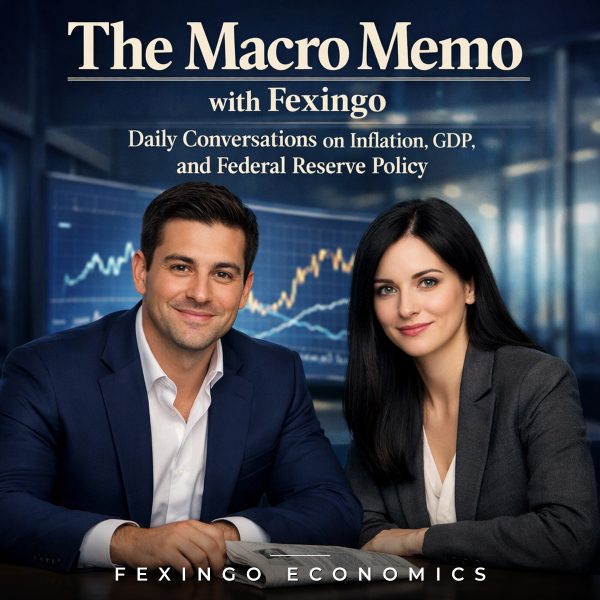
The Macro Memo with Fexingo: Daily Conversations on Inflation, GDP, and Federal Reserve Policy
- Folgen
- 250
- Erscheint
- täglich
- Letzte Folge
- 15. Nov. 2026
Über den Podcast
Each day, Lucas and Luna sit down with the latest macro data to decode what it actually means for markets, businesses, and your portfolio. They don't just report the CPI print or the Fed's dot plot — they argue about what the numbers imply for the yield curve, corporate borrowing costs, and the probability of a soft landing. Lucas pushes for historical context: how does today's inflation compare to the 1970s, and what does the Taylor rule suggest now? Luna counters with sector-level evidence: which industries are passing through costs, which are absorbing them, and where are margins actually compressing? Together, they walk through GDP revisions, employment cost indexes, and real-time fed funds futures to separate signal from noise. This is for listeners who already know the difference between M2 and M1 and want a conversation that treats them like professionals — not a primer. No guests, no hot takes, just two analysts who read the same Fed transcripts you do and disagree about what comes next. After each episode, you'll have a clearer sense of which macro risk actually keeps you up at night. #MacroMemo #FederalReserve #Inflation #GDP #MonetaryPolicy #YieldCurve #CPI #EmploymentData #InterestRates #EconomicForecasting #CentralBanking #BusinessCycle #Economics #FexingoBusiness #DailyPodcast #MarketData #MacroAnalysis #BusinessPodcast Keep every episode free: buymeacoffee.com/fexingo
Mitwirkende
- LucasModeration
- LunaCo-Moderation
Folgen 250
The AI Productivity Paradox Hiding In Plain Sight
With real GDP growth hitting 3.4 percent in the third quarter of 2026, the economy looks robust on paper. But look closer at the corporate balance sheets and you see a different story. Companies are pouring …
Shownotes
With real GDP growth hitting 3.4 percent in the third quarter of 2026, the economy looks robust on paper. But look closer at the corporate balance sheets and you see a different story. Companies are pouring billions into AI infrastructure while their operational efficiency metrics remain flat or declining. We explore why massive tech capex isn't translating to proportional output gains, how this is distorting capital allocation across sectors, and what the widening gap between AI hype and actual productivity tells us about the sustainability of current market valuations.
#AIProductivity #CapexSpike #GDPData #TechInvestment #EfficiencyGap #CorporateStrategy #EconomicAnalysis #InflationWatch #FederalReserve #MarketValuation #BusinessPodcast #FinanceNews #EconomicsToday #LucasAndLuna #FexingoBusiness #InvestorInsights #TechSectorTrends #MacroEconomy
Wholesale Prices Surge And The Fed's Quiet Panic
With wholesale prices rising at an annual rate of six point five percent in October, the Federal Reserve faces a new inflation headache. Lucas and Luna break down why this supply-side spike is different from …
Shownotes
With wholesale prices rising at an annual rate of six point five percent in October, the Federal Reserve faces a new inflation headache. Lucas and Luna break down why this supply-side spike is different from consumer price data, how it impacts the ten-year Treasury yield, and what it means for interest rate policy heading into November twenty twenty six.
#WholesalePrices #InflationData #FederalReserve #InterestRates #Economics #SupplyChain #TreasuryYields #FOMC #GDP #ConsumerPrices #BusinessPodcast #FinanceNews #Macroeconomics #MonetaryPolicy #FexingoBusiness #LucasAndLuna #InvestingTips #MarketAnalysis
Why Wholesale Prices Are Rewiring The Fed
Wholesale prices jumped 0.3 percent in October, pushing the annual rate to 6.5 percent, the highest reading in nearly four years. While consumer inflation feels sticky, this upstream surge signals a different …
Shownotes
Wholesale prices jumped 0.3 percent in October, pushing the annual rate to 6.5 percent, the highest reading in nearly four years. While consumer inflation feels sticky, this upstream surge signals a different kind of pressure. Lucas and Luna break down how rising input costs for businesses are setting up a potential conflict between corporate margins and Federal Reserve policy. We look at the divergence between wholesale data and core PCE, why Nvidia’s supply chain dynamics matter, and what this means for interest rates heading into the end of 2026.
#FexingoBusiness #BusinessPodcast #Economics #Inflation #FederalReserve #WholesalePrices #PCE #CPI #MonetaryPolicy #SupplyChain #Nvidia #CorporateMargins #InterestRates #MacroEconomics #FinanceNews #LucasAndLuna #US Economy #CostPush
Why The Fed Funds Rate Matters More Than You Think
We look at why the Federal Reserve's interest rate decisions are not just about inflation but also about how much money banks make from holding reserves. With the effective rate at 3.88 percent and the interest …
Shownotes
We look at why the Federal Reserve's interest rate decisions are not just about inflation but also about how much money banks make from holding reserves. With the effective rate at 3.88 percent and the interest on reserve balances at 3.90 percent, we explore the mechanics of monetary policy transmission.
#FexingoBusiness #BusinessPodcast #Economics #FederalReserve #InterestRates #MonetaryPolicy #Inflation #GDP #Banking #Reserves #FedFundsRate #MacroEconomy #LucasAndLuna #FinanceNews #MarketAnalysis #CentralBanking #FinancialMarkets #EconomicData
The October Inflation Surprise And The Fed's Dilemma
With the S&P 500 hitting new highs and the ten-year Treasury yield climbing past five percent, the macro picture is getting messy. We dig into why October’s Consumer Price Index rose 0.4 percent, beating …
Shownotes
With the S&P 500 hitting new highs and the ten-year Treasury yield climbing past five percent, the macro picture is getting messy. We dig into why October’s Consumer Price Index rose 0.4 percent, beating expectations and complicating the Federal Reserve’s path to rate cuts. Lucas and Luna break down the specific sectors driving that core PCE increase, why real GDP growth of 3.4 percent isn't solving the price pressure problem, and what this means for the December FOMC meeting. If you're trying to figure out whether the soft landing is turning into a hard bounce, this episode connects the dots between headline inflation, wage stagnation, and the market's current pricing.
#FexingoBusiness #InflationData #FederalReserve #EconomicsPodcast #ConsumerPrices #CorePCE #GDPGrowth #InterestRates #MonetaryPolicy #MarketAnalysis #OctoberJobsReport #TreasuryYields #BusinessNews #FinanceTalk #MacroEconomics #LucasAndLuna #FedDecision #PricePressure
Why China's Trade Surplus Is Changing The Game
China’s goods surplus has officially topped one trillion dollars for the second consecutive year, a structural shift that is reshaping global trade dynamics and pressuring Western economies to rebalance. Lucas …
Shownotes
China’s goods surplus has officially topped one trillion dollars for the second consecutive year, a structural shift that is reshaping global trade dynamics and pressuring Western economies to rebalance. Lucas and Luna break down what this massive imbalance means for inflation, supply chains, and monetary policy as we look ahead to November 2026. They explore how Beijing’s internal deflationary pressures are exporting value abroad while domestic consumption lags, creating a complex feedback loop for the Federal Reserve and global markets. This episode moves beyond simple protectionism debates to examine the mechanics of export-led growth in a slowing global environment.
#FexingoBusiness #BusinessPodcast #Macroeconomics #InternationalTrade #ChinaEconomy #TradeSurplus #GlobalSupplyChain #ExportGrowth #InflationDynamics #MonetaryPolicy #FederalReserve #ManufacturingSector #ConsumerDemand #EconomicRebalancing #TradeBalance #Geopolitics #FinancialMarkets #LucasAndLuna
Why The Fed Is Watching Wholesale Prices
With October jobs data showing 165,000 new hires and a dip in unemployment to 4.1 percent, the market is focused on wage growth. But Lucas and Luna argue the real signal for Federal Reserve policy lies in …
Shownotes
With October jobs data showing 165,000 new hires and a dip in unemployment to 4.1 percent, the market is focused on wage growth. But Lucas and Luna argue the real signal for Federal Reserve policy lies in China’s wholesale inflation, which has hit a four-year high. This episode explores how global supply-side pressures are bypassing consumer price controls, creating a hidden cost push that core CPI misses. We break down why the S&P 500 and bond yields are reacting to these upstream signals, and what a 2.23 percent breakeven inflation rate actually tells us about the next quarter.
#FexingoBusiness #BusinessPodcast #Macroeconomics #InflationData #FederalReserve #ChinaEconomy #WholesalePrices #CPIAnalysis #LaborMarket #BondYields #SupplyChain #GlobalTrade #EconomicPolicy #InvestmentStrategy #MonetaryPolicy #GDPGrowth #ConsumerPricing #MarketSignals
Why October Jobs Data Masks Wage Stagnation
Lucas and Luna dig into the October 2026 jobs report, where nonfarm payrolls rose by 165,000 and unemployment fell to 4.1 percent. But beneath the headline strength lies a quiet disconnect: average hourly …
Shownotes
Lucas and Luna dig into the October 2026 jobs report, where nonfarm payrolls rose by 165,000 and unemployment fell to 4.1 percent. But beneath the headline strength lies a quiet disconnect: average hourly earnings grew only slightly, masking a wage freeze for many workers. With real GDP accelerating to 3.4 percent annualized while core PCE remains sticky at 130.9, the hosts explore how labor hoarding is distorting productivity metrics. They examine what this divergence means for Federal Reserve policy as the Fed Funds rate holds near 3.88 percent, and whether the market’s recent pullback in the S&P 500 reflects a growing realization that job growth no longer guarantees income growth.
#FexingoBusiness #BusinessPodcast #Economics #LaborMarket #WageGrowth #JobsReport #FederalReserve #Inflation #GDP #Productivity #HiringTrends #October2026 #MonetaryPolicy #CorporateProfits #ConsumerSpending #MacroEconomics #LucasAndLuna #FinancialNews
Why Strong Jobs Hide Weak Wages
The October jobs report showed 165,000 new positions and a 4.1% unemployment rate, yet average hourly earnings growth has stalled. Lucas and Luna explore how labor hoarding is masking wage stagnation. With real …
Shownotes
The October jobs report showed 165,000 new positions and a 4.1% unemployment rate, yet average hourly earnings growth has stalled. Lucas and Luna explore how labor hoarding is masking wage stagnation. With real GDP up 3.4 percent year-over-year but core CPI sticky at 2.8 percent, we ask if the Fed's patience is pricing in a hidden cost for workers.
#FexingoBusiness #BusinessPodcast #EconomicsDaily #LaborMarket #WageStagnation #FederalReserve #JobsReport #InflationData #GDPGrowth #HiringTrends #CorporateStrategy #Macroeconomics #UnemploymentRate #ConsumerPrices #InterestRates #WorkforceData #LucasAndLuna #FinanceNews
Why Strong Jobs Mask A Quiet Wage Freeze
The October jobs report added 165,000 positions with unemployment falling to 4.1%, yet average hourly earnings barely budged. Lucas and Luna dissect the disconnect between robust hiring and stagnant wage …
Shownotes
The October jobs report added 165,000 positions with unemployment falling to 4.1%, yet average hourly earnings barely budged. Lucas and Luna dissect the disconnect between robust hiring and stagnant wage growth, exploring how labor hoarding and shifting job compositions are keeping paychecks flat despite a tight labor market. They examine what this means for consumer spending power and Federal Reserve policy as we head into November 2026.
#LaborMarket #WageGrowth #OctoberJobsReport #UnemploymentRate #FederalReservePolicy #InflationData #CPIIndex #CorePCE #AverageHourlyEarnings #NonfarmPayrolls #JOLTSData #EconomicAnalysis #Macroeconomics #BusinessPodcast #FinanceNews #FexingoBusiness #LucasAndLuna #EconTalk
The Fed Funds Rate And The Hidden Cost Of Waiting
With the Federal Reserve effective rate holding steady at 3.88 percent as of November fifth, 2026, we examine why the central bank is resisting further hikes despite core PCE inflation ticking up to 130.9 …
Shownotes
With the Federal Reserve effective rate holding steady at 3.88 percent as of November fifth, 2026, we examine why the central bank is resisting further hikes despite core PCE inflation ticking up to 130.9. Lucas and Luna unpack the mechanics of Interest on Reserve Balances, how that 3.90 percent floor impacts commercial real estate refinancing, and what a ten-year Treasury yield of 4.84 percent signals for corporate balance sheets in Q4.
#FederalReserve #InterestRates #MacroEconomics #InflationData #TreasuryYields #CorporateDebt #CommercialRealEstate #FedPolicy #PCEIndex #MonetaryPolicy #FexingoBusiness #BusinessPodcast #FinanceNews #EconomicOutlook #Investing #BondMarket #Liquidity #Q42026
The Silent Crisis Of Wage Stagnation Amid Job Growth
With real GDP accelerating to 3.4 percent and job openings hitting 7.5 million, the American labor market looks robust on paper. Yet average hourly earnings have barely budged past 37 dollars. We drill into why …
Shownotes
With real GDP accelerating to 3.4 percent and job openings hitting 7.5 million, the American labor market looks robust on paper. Yet average hourly earnings have barely budged past 37 dollars. We drill into why wage growth is decoupling from productivity, what this means for household budgets in late 2026, and whether the Federal Reserve's steady 3.88 percent funds rate is actually doing enough to spur real pay increases. The data suggests a disconnect that could reshape consumer spending before the year ends.
#WageGrowth #LaborMarket #InflationData #FederalReserve #EconomicsPodcast #GDPGrowth #ConsumerSpending #ProductivityGap #FexingoBusiness #BusinessPodcast #Macroeconomics #JobOpenings #HourlyEarnings #MonetaryPolicy #CostOfLiving #RealWages #LucasAndLuna #DailyEconomics
The Labor Hoarding Trap Distorting Wages
With Q3 real GDP jumping to three point four percent while the unemployment rate ticks up to four point two percent, Lucas and Luna dissect the paradox of labor hoarding. They explore how companies are holding …
Shownotes
With Q3 real GDP jumping to three point four percent while the unemployment rate ticks up to four point two percent, Lucas and Luna dissect the paradox of labor hoarding. They explore how companies are holding onto workers despite slowing demand, driving up average hourly earnings and keeping core inflation sticky. The conversation looks at why this wage rigidity matters for Federal Reserve policy as we head into November.
#LaborHoarding #WageGrowth #CoreInflation #FederalReserve #RealGDP #UnemploymentRate #AverageHourlyEarnings #JobOpenings #Q3GDP #PCEPriceIndex #FexingoBusiness #BusinessPodcast #Macroeconomics #MonetaryPolicy #InflationData #USLaborMarket #HiringTrends #EconomicAnalysis
The Hidden Tax Of Labor Hoarding
With US real GDP growth hitting 3.4% in the third quarter of 2026 while unemployment sits at 4.2%, we are seeing a paradox: companies are keeping workers they don't strictly need to avoid firing them. Lucas and …
Shownotes
With US real GDP growth hitting 3.4% in the third quarter of 2026 while unemployment sits at 4.2%, we are seeing a paradox: companies are keeping workers they don't strictly need to avoid firing them. Lucas and Luna break down how this labor hoarding is quietly inflating wage costs, distorting corporate margins, and setting up a fragile foundation for the next economic cycle. We look at why employers are holding onto staff despite softening job openings data, and what that means for your paycheck and the broader economy.
#LaborHoarding #ThirdQuarterGDP #WageInflation #CorporateMargins #UnemploymentRate #EconomicParadox #JobOpeningsData #FedPolicy #BusinessStrategy #FinanceNews #EconomicsExplained #HiringTrends #FexingoBusiness #BusinessPodcast #MacroEconomics #InvestmentInsights #CareerAdvice #MarketAnalysis
The Silent Crisis of Zero Firing Rates
With real GDP growth hitting 3.4 percent in the third quarter, the US economy looks robust on paper, but a deeper structural issue is emerging: companies are hoarding labor instead of letting go. Lucas and Luna …
Shownotes
With real GDP growth hitting 3.4 percent in the third quarter, the US economy looks robust on paper, but a deeper structural issue is emerging: companies are hoarding labor instead of letting go. Lucas and Luna dissect the paradox of low firing rates, examining how a 4.2 percent unemployment rate and falling job openings mask a rigid labor market that distorts wage growth and delays necessary economic adjustments.
#LaborHoarding #ZeroFiringRates #GDPGrowth #UnemploymentRate #WageGrowth #JobOpenings #JOLTSData #FedPolicy #EconomicResilience #BusinessStrategy #CorporateBalanceSheets #InflationControl #ProductivityParadox #HiringFreeze #LayoffMoratorium #FexingoBusiness #BusinessPodcast #MacroEconomics
The Hidden Cost Of America's Labor Hoarding
We examine why the US labor market remains tight despite cooling job openings, focusing on the structural shift toward 'labor hoarding' and its impact on corporate margins. With Q3 GDP hitting 3.4 percent and …
Shownotes
We examine why the US labor market remains tight despite cooling job openings, focusing on the structural shift toward 'labor hoarding' and its impact on corporate margins. With Q3 GDP hitting 3.4 percent and unemployment at 4.2 percent, we analyze how companies are retaining staff to avoid future hiring costs, creating a paradox where wage growth stays elevated while productivity lags. This episode breaks down the real cost of this behavior for investors and the broader economy in October 2026.
#LaborHoarding #USGDP #WageGrowth #CorporateMargins #FedPolicy #UnemploymentRate #ProductivityGap #HiringCycle #EconomicResilience #BusinessStrategy #InflationData #JobMarket #QuarterlyEarnings #FexingoBusiness #BusinessPodcast #EconomicsExplained #InvestingInsights #MacroTrends
Why US GDP Growth Is Hiding A Weakness Trap
Third-quarter U.S. GDP surprised to the upside at an annualized 3.4 percent growth rate, yet core inflation and wage data tell a different story. Lucas and Luna dissect the divergence between nominal headline …
Shownotes
Third-quarter U.S. GDP surprised to the upside at an annualized 3.4 percent growth rate, yet core inflation and wage data tell a different story. Lucas and Luna dissect the divergence between nominal headline strength and underlying economic fragility. With the Federal Reserve Funds rate holding near 3.75 percent and job openings falling, we explore how fiscal deficits and sticky service prices are masking a structural slowdown. This episode examines whether today's growth numbers reflect genuine productivity or simply unsustainable demand in a high-interest-rate environment.
#USGDP #FederalReserve #InflationData #EconomicSlowdown #WageGrowth #InterestRates #FiscalDeficit #ConsumerSpending #ServiceSector #Macroeconomics #LucasAndLuna #FexingoBusiness #BusinessPodcast #MarketAnalysis #EconomicIndicators #RealGDP #CoreCPI #FedPolicy
The Third Quarter GDP Surprise
The third quarter U.S. GDP growth hit a better-than-expected 3.4 percent annualized rate, driven by resilient consumer spending despite rising inflation pressures. Lucas and Luna dissect how this economic …
Shownotes
The third quarter U.S. GDP growth hit a better-than-expected 3.4 percent annualized rate, driven by resilient consumer spending despite rising inflation pressures. Lucas and Luna dissect how this economic momentum is reshaping Federal Reserve policy expectations and what it means for interest rates heading into the final quarter of 2026.
#USGDP #ThirdQuarterGrowth #FederalReserve #InflationData #ConsumerSpending #EconomicOutlook #InterestRates #MacroEconomics #FexingoBusiness #BusinessPodcast #LucasAndLuna #GDPReport #CorePCE #LaborMarket #MonetaryPolicy #EconomicIndicators #Q3GDP #FedPolicy
Why The Low Firing Rate Paradox Is Distorting Wages
With jobless claims near historic lows and firing rates at record troughs, the labor market is experiencing a unique structural lock. We break down how this 'low fire' dynamic is creating wage pressure without …
Shownotes
With jobless claims near historic lows and firing rates at record troughs, the labor market is experiencing a unique structural lock. We break down how this 'low fire' dynamic is creating wage pressure without corresponding productivity gains, driving up costs for businesses and complicating Federal Reserve policy as we head into late October 2026.
#LaborMarket #LowFiringRate #WagePressure #FederalReserve #Unemployment #Economics #Inflation #Productivity #BusinessStrategy #HiringFreeze #JobSecurity #Macroeconomics #CorporateCosts #MonetaryPolicy #FexingoBusiness #BusinessPodcast #FinanceNews #October2026
The Silent Crisis of Zero Firing Rates
With jobless claims near historic lows and the unemployment rate ticking to four point two percent, the US labor market is experiencing a dangerous form of stability. Lucas and Luna examine how zero firing …
Shownotes
With jobless claims near historic lows and the unemployment rate ticking to four point two percent, the US labor market is experiencing a dangerous form of stability. Lucas and Luna examine how zero firing rates are masking underlying weakness, trapping workers in mismatched roles, and inflating wage growth without productivity gains. They break down the economic mechanics of why companies are hoarding talent despite cooling demand and what this structural shift means for the Federal Reserve's inflation fight.
#LaborMarket #ZeroFiringRates #JoblessClaims #UnemploymentRate #FederalReserve #WageGrowth #Productivity #InflationData #EconomicStability #CorporateHiring #BusinessPodcast #Macroeconomics #FexingoBusiness #EconomicsNews #FinancialAnalysis #CareerStrategy #WorkforceTrends #MarketInsights
The Hidden Tax Of Low Firing Rates
Why are jobless claims hitting historic lows while unemployment creeps up? Lucas and Luna dissect the 'low-fire rate paradox' dominating October 2026. With initial claims near 194,000 and unemployment at 4.2 …
Shownotes
Why are jobless claims hitting historic lows while unemployment creeps up? Lucas and Luna dissect the 'low-fire rate paradox' dominating October 2026. With initial claims near 194,000 and unemployment at 4.2 percent, the labor market is sending conflicting signals. They explore how companies are retaining underperforming staff to avoid severance costs and regulatory friction, creating a zombie workforce that drags down productivity. The conversation links this structural shift to sticky wage growth and the Federal Reserve's latest policy stance, revealing why traditional inflation metrics might be misleading us right now.
#LaborMarket #InflationData #FederalReserve #EconomicParadox #WageGrowth #ProductivityCrisis #JoblessClaims #UnemploymentRate #FexingoBusiness #BusinessPodcast #Macroeconomics #CorporateStrategy #HiringFreeze #SeveranceCosts #FedPolicy #RealGDP #CoreCPI #EmploymentStats
The Low Fire Rate Paradox Explained
With jobless claims hitting lows not seen since the nineteen sixties and the unemployment rate ticking up to four point two percent, the US labor market is displaying a strange disconnect. Lucas and Luna unpack …
Shownotes
With jobless claims hitting lows not seen since the nineteen sixties and the unemployment rate ticking up to four point two percent, the US labor market is displaying a strange disconnect. Lucas and Luna unpack the low fire rate phenomenon, where employers are holding onto workers despite softening demand. We look at how this dynamic impacts wage growth, keeping average hourly earnings sticky, and why the Federal Reserve might be underestimating the inflationary pressure from retained staff. This is a deep dive into the mechanics of labor hoarding and what it means for interest rates heading into late twenty twenty six.
#LowFireRate #LaborHoarding #UnemploymentRate #WageGrowth #FederalReserve #InflationData #JoblessClaims #HiringFreeze #EconomicAnalysis #FexingoBusiness #BusinessPodcast #MacroEconomics #FedPolicy #CoreCPI #JOLTSReport #LucasAndLuna #MarketTrends #October2026
The Low Fire Rate Paradox Explained
Why initial jobless claims are hitting their lowest levels since the nineteen sixties while wage growth remains subdued. Lucas and Luna break down the 'low fire' phenomenon in the October twenty twenty six …
Shownotes
Why initial jobless claims are hitting their lowest levels since the nineteen sixties while wage growth remains subdued. Lucas and Luna break down the 'low fire' phenomenon in the October twenty twenty six labor market, analyzing how structural shifts in hiring practices and corporate risk aversion are creating a paradox of stability that masks underlying fragility. With claims at one hundred ninety four thousand and unemployment ticked up to four point two percent, we explore what this data means for the Federal Reserve's path forward and whether this tightness is sustainable or a leading indicator of a harder landing ahead.
#LaborMarket #JoblessClaims #FederalReserve #InflationData #EconomicsPodcast #FexingoBusiness #Macroeconomics #HiringTrends #WageGrowth #UnemploymentRate #CorporateStrategy #EconomicIndicators #MonetaryPolicy #LaborSupply #HiringFreezes #FinancialAnalysis #BusinessPodcast #EconomicForecast
The Paradox of Low Jobless Claims and Wage Growth
With the unemployment rate ticking to four point two percent but jobless claims hitting multi-decade lows, the US labor market is sending mixed signals. We break down why this divergence matters for inflation …
Shownotes
With the unemployment rate ticking to four point two percent but jobless claims hitting multi-decade lows, the US labor market is sending mixed signals. We break down why this divergence matters for inflation expectations and Fed policy as we look ahead to the next rate decision.
#FexingoBusiness #BusinessPodcast #Economics #LaborMarket #InflationData #FederalReserve #JoblessClaims #WageGrowth #UnemploymentRate #MacroEconomics #USJobs #CPIIndex #CorePCE #FedPolicy #InterestRates #HiringTrends #RealGDP #LucasAndLuna
The Paradox of Low Fire Rates and Labor Shortages
Lucas and Luna dissect the strange disconnect in today's labor market where initial jobless claims are near historic lows yet unemployment ticks up to four point two percent. With real GDP growth slowing to two …
Shownotes
Lucas and Luna dissect the strange disconnect in today's labor market where initial jobless claims are near historic lows yet unemployment ticks up to four point two percent. With real GDP growth slowing to two point two percent, they explore how companies are hoarding workers despite weak demand. Using data from September payrolls and JOLTS openings, the hosts analyze whether this 'low-fire' trend is a sign of productivity or impending structural inefficiency that will keep inflation sticky into late twenty twenty six.
#LaborMarket #JoblessClaims #UnemploymentRate #FedPolicy #InflationData #RealGDP #WageGrowth #HiringTrends #EconomicAnalysis #BusinessStrategy #CorporateLoyalty #FexingoBusiness #BusinessPodcast #Macroeconomics #FinanceNews #October2026 #EmploymentStats #ConsumerDemand
How UK Inflation Shocked The Global Markets
Lucas and Luna dissect the unexpected jump in UK inflation to three point five percent, analyzing how this shift challenges the global narrative of cooling prices. They explore the structural pressures from …
Shownotes
Lucas and Luna dissect the unexpected jump in UK inflation to three point five percent, analyzing how this shift challenges the global narrative of cooling prices. They explore the structural pressures from housing costs and supply chain frictions that are keeping price tags elevated despite central bank rate hikes. With US Treasury yields climbing to five point one five percent, the hosts examine what this transatlantic divergence means for investors and the Federal Reserve's upcoming policy decisions. This episode offers a concrete look at how localized inflation spikes can ripple through global capital flows.
#FexingoBusiness #BusinessPodcast #EconomicsNews #UKInflation #CPIData #FederalReserve #TreasuryYields #HousingMarket #SupplyChain #InterestRates #GlobalMarkets #MonetaryPolicy #ConsumerPrices #Macroeconomics #FinancialAnalysis #InvestmentStrategy #LucasAndLuna #DailyFinance
The Fed's October Rate Hike Surprise
With the Federal Reserve meeting this week, markets are bracing for a hold, but former Fed Governor Kevin Warsh suggests a surprise rate hike is possible. We dig into why an unexpected tightening move might …
Shownotes
With the Federal Reserve meeting this week, markets are bracing for a hold, but former Fed Governor Kevin Warsh suggests a surprise rate hike is possible. We dig into why an unexpected tightening move might actually be the right call given sticky core PCE at 130.5 and wage growth that isn't cooling fast enough. Lucas and Luna explore the mechanics of how a hawkish shock would ripple through housing, bond yields, and the labor market, and what it means for your portfolio if the central bank decides to break consensus.
#FexingoBusiness #BusinessPodcast #FederalReserve #KevinWarsh #InterestRates #MonetaryPolicy #InflationData #CorePCE #HousingMarket #BondYields #LaborMarket #EconomicForecast #FedMeeting #RateHikes #FinancialMarkets #Macroeconomics #TreasuryBonds #ConsumerPrices
The Quiet Crisis Of US Fiscal Deficits
With the U.S. budget deficit swelling to nearly two trillion dollars for fiscal 2026, Lucas and Luna examine why this number matters more than any single interest rate decision. They look at how a twelve …
Shownotes
With the U.S. budget deficit swelling to nearly two trillion dollars for fiscal 2026, Lucas and Luna examine why this number matters more than any single interest rate decision. They look at how a twelve percent jump in deficits collides with real GDP growth of just two point two percent, creating a structural tension that bond yields and inflation expectations are already pricing in. This episode moves past the political noise to analyze the mechanics of debt servicing costs, the role of the Federal Reserve's balance sheet, and what a persistent gap between nominal growth and borrowing costs means for long-term economic stability. It is a deep dive into the arithmetic of American governance and why markets are starting to whisper rather than scream about the nation's creditworthiness.
#FexingoBusiness #BusinessPodcast #USDeficit #FederalDebt #FiscalPolicy #Macroeconomics #BondMarket #InterestRates #GDP #Inflation #TreasuryBonds #PublicDebt #EconomicOutlook #MonetaryPolicy #FinancialMarkets #GovernmentSpending #LucasAndLuna #EconomicsExplained
Why Wholesale Prices Are Breaking The Inflation Narrative
Lucas and Luna dig into the September wholesale price data, which jumped 6.3 percent annually, the largest gain since 2022. With the S&P 500 down nearly two percent this week and bond yields falling, they …
Shownotes
Lucas and Luna dig into the September wholesale price data, which jumped 6.3 percent annually, the largest gain since 2022. With the S&P 500 down nearly two percent this week and bond yields falling, they explore why upstream costs are rising while consumer inflation appears to be cooling. They examine whether this divergence signals a temporary supply shock or a structural shift in how businesses manage inventory. The conversation anchors on the disconnect between producer prices and the core PCE index, asking what this means for the Federal Reserve's next move as the economy approaches a critical inflection point.
#WholesalePrices #PPIReport #InflationData #FederalReserve #MacroEconomics #SupplyChain #BusinessCosts #ConsumerPrices #CorePCE #EconomicGrowth #InterestRates #MarketVolatility #FexingoBusiness #BusinessPodcast #EconomicsShow #FinancialAnalysis #LucasAndLuna #DailyNews
Why Wholesale Prices Are Screaming About Sticky Inflation
The headline this week wasn't the soft CPI print but the 6.3 percent annual jump in wholesale prices for September, the biggest gain since 2022. Lucas and Luna break down why that number matters more than the …
Shownotes
The headline this week wasn't the soft CPI print but the 6.3 percent annual jump in wholesale prices for September, the biggest gain since 2022. Lucas and Luna break down why that number matters more than the consumer report you just skimmed. We look at how upstream costs are refusing to cooperate with the Federal Reserve's rate path, why the PPI is flashing red while retail shelves look calm, and what it means for your wallet if those margins don't compress. The economy is hiding its pressure points in the B2B channel.
#WholesalePrices #ProducerPriceIndex #InflationData #FederalReserve #EconomicAnalysis #SupplyChainCosts #MonetaryPolicy #BusinessPodcast #FexingoBusiness #LucasAndLuna #MacroEconomics #CPIVsPPI #RetailMargins #ConsumerSpending #InterestRates #October2026 #FinancialNews #MarketOutlook
Hier stehen die neuesten 40 von 250 Folgen. Ältere Folgen findest du im Feed des Podcasts.
Ähnliche Podcasts
Mehr Wirtschaft-Podcasts






Ist das dein Podcast?
Bestätige es mit einem Eintrag in deinem Feed: Du bekommst hier einen Code, trägst ihn als podcast:txt in den Kanal deines Feeds ein, und wir prüfen ihn. Danach steht dein Podcast als „verifiziert“ bei SoundNode.