

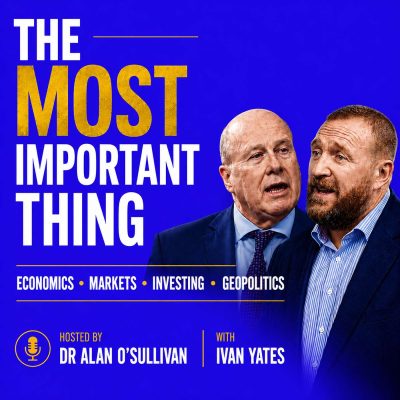
Do financial markets learn from their mistakes—or do fear and greed ensure that history keeps repeating itself?
Shownotes
In this episode of The Long & Short, Ivan Yates and Dr Alan O’Sullivan revisit the Wall Street Crash of 1929, the 2008 global financial crisis and today’s concerns around AI valuations, defence stocks and changing investment regimes. From speculative bubbles to excessive private debt, they explore why crashes happen, what investors can learn from previous cycles, and whether the old investment playbook still works.
Featuring insights from previous conversations with financial historian Edward Chancellor, economist Professor Steve Keen and investor Jesse Felder, alongside an additional perspective from financial historian Professor Russell Napier.
Topics covered: historical bubbles and market psychology; the role of private debt in 2008; falling interest rates and the shift towards real assets; bull and bear markets; AI and dot-com comparisons; contrarian positioning; economic cycles; and lessons from Ireland’s financial history.
Previous guest interviews featured in this episode:
Edward Chancellor — The Price of Time and historical market bubbles
Professor Steve Keen — How he predicted the 2008 crash
Jesse Felder — The market paradigm shift since the 1980s
Professor Russell Napier — The New Rules of Money (Part 1)
Subscribe to The MOST Important Thing for interviews and commentary on markets, investing, economics and geopolitics.
For information and educational purposes only. Nothing in this episode constitutes personal investment advice. Investments involve risk, including possible loss of capital.
#FinancialMarkets #Investing #MarketHistory #FinancialCrisis #AI #Economics