

Staying Relevant in a World That Won’t Sit Still: Introducing and Rewarding Changefulness
Shownotes
How can people and organizations stay relevant when change never stops?
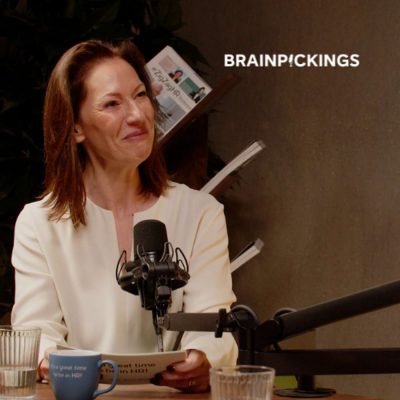
In this third episode of our four-part podcast series on Deloitte’s 2026 Global Human Capital Trends report, Lesley Arens speaks with Timothy Bruneel and Stephanie Baele from Deloitte Belgium about changefulness: the ability to continuously adapt, learn and evolve.
Traditional change management was developed for transformations with a clear beginning and end. Organizations prepared employees, implemented the change and eventually returned to a more stable situation. That model is under pressure as employees navigate new technologies, changing skill requirements and multiple overlapping transformations.
Deloitte’s research highlights a striking gap: 87% of organizations recognize the need for greater adaptability, while only 7% report making meaningful progress. Changefulness aims to close that gap by making learning and adaptation part of everyday work.
Timothy and Stephanie discuss four building blocks:
(1) Creating a surround-sound system of adaptive learning experiences
(2) Personalizing change and learning at the unit of one
(3) Building continuous feedback loops
(4) Empowering employees to sense, respond and experiment
AI can support this shift through personalized learning, real-time feedback, just-in-time guidance and safe digital environments for experimentation. Yet technology is only part of the answer. Leadership, trust and the freedom to act remain essential.
The conversation also explores a frequently overlooked part of transformation: reward. When performance and compensation systems remain tied to static job descriptions and annual evaluations, employees may be discouraged from experimenting, developing new skills or helping colleagues adapt. Reward can therefore become either a brake on change or a strategic lever for changefulness.
In this episode, you will learn:
✅ Why traditional change management is reaching its limits
✅ What changefulness means in practice
✅ How AI can bring learning into the flow of work
✅ Why real-time feedback matters
✅ How organizations can create room for experimentation
✅ Why reward systems need to recognize adaptability and learning
✅ How HR can start building a more adaptive organization through small, targeted experiments
The practical advice for HR is straightforward: start with one learning program, assess where it falls short and experiment on a manageable scale. Keep what works, leave behind what does not and build from there.
Watch the full conversation and discover how learning, AI, leadership and reward can help organizations remain relevant in a world that refuses to stand still.
===
Deloitte Global Human Capital Trends 2027 Survey
Which human capital trends will shape 2027, and how prepared are organizations to respond?
Share your perspective by completing Deloitte’s global survey. It takes approximately 10 minutes, and all responses remain confidential.
https://surveyna.qualtrics.com/jfe/form/SV_8cU4YI3oeQyiLT8?Channel=InternalComms
Honger naar meer?
- SCHRIJF JE IN VOOR DE NIEUWSBRIEF
- BLIJF OP DE HOOGTE VAN ALLE HR-ACTUA
- ABONNEER JE OP HET #ZIGZAGHR BOOKAZINE
It's a great time to be in HR!
www.zigzaghr.be