

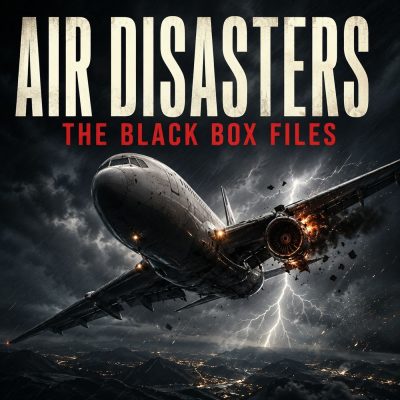
The rudder pedals slammed; could crews stop a falling tail fin in time?
Notas do episódio
A pilot trained to counter wake turbulence slammed the rudder pedals as an Airbus A300 climbed out of JFK-could crews stop a falling tail fin in time?
The rudder pedals slammed; could crews stop a falling tail fin in time?
In this episode, we present the sequence of events from takeoff to catastrophe on American Airlines Flight 587, showing the procedures, training, and forces at play as crews reacted in real time. What decisions and six seconds of training might explain how a routine departure became a deadly structural failure?
Person: Captain Edward States
Person: First Officer Sten Molin
Date: November 12, 2001
Aircraft: Airbus A300-600R, registration N14053
Location: Departure from John F. Kennedy International Airport over Belle Harbor, Queens
- At 09:15:36 the flight recorder logged an initial rolling jolt consistent with wake turbulence from a preceding Boeing 747.
- First Officer Sten Molin was the pilot flying and had completed American Airlines’ Advanced Aircraft Maneuvering Program training for wake turbulence encounters.
- A set of hard rudder pedal inputs applied forces of approximately 200 to 3,000 pounds to the fin's attachment bolts within seconds.
- The A300’s vertical tail is attached at six bolted points, each engineered to hold roughly 100,000 pounds of force, and the fin weighed about 2,000 pounds.
- The entire sequence from first pedal input to cockpit voice recorder silence lasted sixty-six seconds.
Tired of ads? Listen to this podcast and 200+ more ad-free on OBOMEDIA.
Try it free for 7 days, cancel anytime: https://obomedia.com/en/gratis?ref=desc-7317291
© 2026 Created by an independent creator of the OBOMEDIA Network. All rights reserved.
This episode and its content (audio, text, and related materials) are the property of their respective creator, who is solely responsible for them, and are distributed by the OBOMEDIA Network on platforms such as Apple Podcasts, Spotify, Amazon Music, and Pocket Casts. Reproduction, distribution, editing, or commercial use, in whole or in part, without the creator's prior written permission is prohibited. For permissions, licensing, and business inquiries: [email protected].