

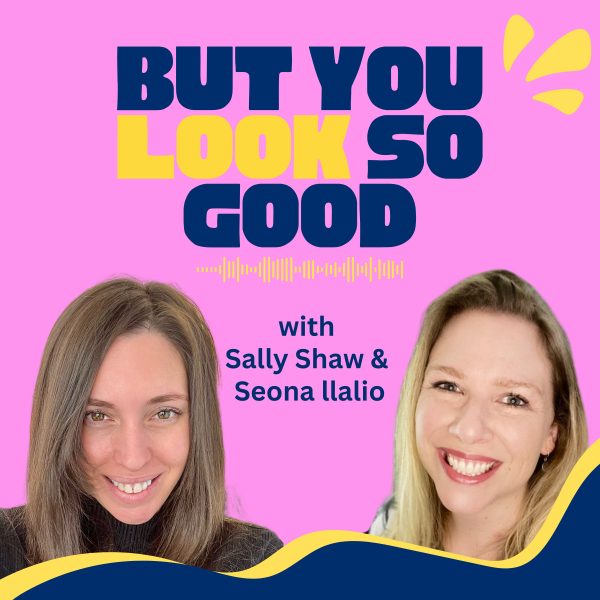
But You Look So Good
- Episódios
- 140
- Publicação
- semanal
- Último episódio
- 9 nov 2026
Sobre o podcast
Two psychologists on a mission to illuminate the realities of living with chronic health conditions. Hosted by Sally Shaw and Seona Ilalio, both living with chronic conditions themselves. They lead Livology, a private practice specialising in psychological support for those navigating chronic health challenges. Tune in to hear candid conversations and professional insights designed to create community and connection within the chronic health conditions population.
Episódios 140
Re-Release - The Pressure to Perform Wellness
Join Sally and Seona this week as they revisit the concept of 'performing wellness.' In a candid and humorous discussion, they reflect on their personal experiences and the societal pressures to project an …
Notas do episódio
Join Sally and Seona this week as they revisit the concept of 'performing wellness.' In a candid and humorous discussion, they reflect on their personal experiences and the societal pressures to project an image of perfect health and well-being. From the myth of needing to hit 10,000 steps a day to the challenges of managing chronic health conditions, Sally and Seona explore how internal and external expectations shape our behaviour. They talk about the balancing act of keeping up with exercise routines, sleep hygiene, dietary choices, and social connections—all without succumbing to the anxiety of "performing" wellness. Tune in for insights on maintaining self-compassion and finding balance in your journey toward well-being.
Livology (Psychology - Private Practice)
MS: Get Your Head Around It! (Online Course)
But You’ll Be OK (Online Course)
If you need any support after listening to our podcast, you can contact Lifeline in Australia at 13 11 14, available 24/7. For support in other locations, please visit Befrienders Worldwide.
Instagram @butyoulooksogoodpodcast
Re-Release - I Can Control It
Join us this week as we revisit the inherent human desire for control—why it's so deeply ingrained and how it plays out in the context of living with a chronic health condition. We highlight how our quest to …
Notas do episódio
Join us this week as we revisit the inherent human desire for control—why it's so deeply ingrained and how it plays out in the context of living with a chronic health condition. We highlight how our quest to control every aspect of our health can sometimes do more harm than good. We’ll discuss the delicate balance between control and management, offering practical insights on how to develop a healthy relationship with control that empowers rather than overwhelms. Join us as we unpack strategies for finding your footing in a world where not everything can be controlled but where some control can still make all the difference.
Livology (Psychology - Private Practice)
MS: Get Your Head Around It! (Online Course)
But You’ll Be OK (Online Course)
If you need any support after listening to our podcast, you can contact Lifeline in Australia at 13 11 14, available 24/7. For support in other locations, please visit Befrienders Worldwide.
Instagram @butyoulooksogoodpodcast
When the diagnosis is wrong
What happens when the diagnosis you’ve lived with for years is suddenly taken away? In this episode of But You Look So Good, we explore the psychological impact of delayed, incorrect or changing diagnoses, as …
Notas do episódio
What happens when the diagnosis you’ve lived with for years is suddenly taken away? In this episode of But You Look So Good, we explore the psychological impact of delayed, incorrect or changing diagnoses, as Christina Applegate has recently experienced.
A diagnosis can offer more than a medical explanation: it can bring validation, identity, community and a sense of certainty. So what happens when that disappears, but your symptoms remain? We discuss the emotional rollercoaster of searching for answers, the impact of medical invalidation, and the grief and uncertainty that can follow a changed diagnosis. Plus, we share five practical psychological strategies to help you navigate the unknown, advocate for yourself and remember that your experience is real, regardless of the label.
Livology (Psychology - Private Practice)
MS: Get Your Head Around It! (Online Course)
But You’ll Be OK (Online Course)
If you need any support after listening to our podcast, you can contact Lifeline in Australia at 13 11 14, available 24/7. For support in other locations, please visit Befrienders Worldwide.
Instagram @butyoulooksogoodpodcast
Where Did My Confidence Go?
Living with a chronic health condition can change how we feel about ourselves in ways we don't always recognise. Maybe you used to be confident at work, socially, in your body, or just making everyday …
Notas do episódio
Living with a chronic health condition can change how we feel about ourselves in ways we don't always recognise. Maybe you used to be confident at work, socially, in your body, or just making everyday decisions. But after years of unpredictable symptoms, cancelled plans, physical changes or having your experiences dismissed, that confidence can start to disappear.
In this episode, Sally and Seona explore why chronic illness can chip away at our confidence, how confidence differs from self-esteem, and what we can do to begin rebuilding trust in ourselves. Because confidence isn't necessarily about getting back to who you were. Sometimes it's about learning to believe in the person you are now.
Livology (Psychology - Private Practice)
MS: Get Your Head Around It! (Online Course)
But You’ll Be OK (Online Course)
If you need any support after listening to our podcast, you can contact Lifeline in Australia at 13 11 14, available 24/7. For support in other locations, please visit Befrienders Worldwide.
Instagram @butyoulooksogoodpodcast
Create a flare plan
What do you do when you wake up and realise a flare might be starting? When you’re exhausted, overwhelmed or feeling unwell, it can be incredibly difficult to make thoughtful decisions about what you need—and …
Notas do episódio
What do you do when you wake up and realise a flare might be starting? When you’re exhausted, overwhelmed or feeling unwell, it can be incredibly difficult to make thoughtful decisions about what you need—and what can wait.
In this episode, we’re talking about creating a flare plan when you’re well enough to make those decisions clearly. We’ll explore how to recognise your early warning signs, who you might need to contact, what you can cancel or postpone, and how to work out what genuinely helps (and what definitely doesn’t!).
We’ll also talk about the practical things that can make a flare easier—from asking for help with the kids to having messages ready for work, friends or family.
Because you don’t need to figure everything out when you’re feeling terrible. Create the plan now, so that when a flare comes along, you can move from “Oh no, what do I do?” to “Okay, I’ve been here before. I know what to do next.”
Livology (Psychology - Private Practice)
MS: Get Your Head Around It! (Online Course)
But You’ll Be OK (Online Course)
If you need any support after listening to our podcast, you can contact Lifeline in Australia at 13 11 14, available 24/7. For support in other locations, please visit Befrienders Worldwide.
Health Anxiety & Chronic Illness
When you live with a chronic health condition, paying attention to your body is important. But what happens when paying attention turns into constantly monitoring, checking, Googling and worrying? In this …
Notas do episódio
When you live with a chronic health condition, paying attention to your body is important. But what happens when paying attention turns into constantly monitoring, checking, Googling and worrying? In this episode, Sally and Seona explore health anxiety and why it can be particularly complicated when you already have a genuine health condition. We talk about the difference between sensible health vigilance and anxiety, why previous medical experiences can make us hyper-aware of symptoms, and how the anxiety–symptom cycle can keep us stuck. We also look at reassurance seeking, Dr Google and the challenge of living with uncertainty.
Most importantly, we share four practical and psychological strategies to help you manage health anxiety without ignoring your body or allowing worry to take over your life. Because managing a chronic illness is already a lot of work—we don't want worrying about our health to become another full-time job.
Livology (Psychology - Private Practice)
MS: Get Your Head Around It! (Online Course)
But You’ll Be OK (Online Course)
If you need any support after listening to our podcast, you can contact Lifeline in Australia at 13 11 14, available 24/7. For support in other locations, please visit Befrienders Worldwide.
It feels like a part time job (that i never applied for)
Managing a chronic health condition can sometimes feel like a part-time job — and on bad days, a full-time one! There are appointments to organise, medications to remember, symptoms to monitor, paperwork to …
Notas do episódio
Managing a chronic health condition can sometimes feel like a part-time job — and on bad days, a full-time one! There are appointments to organise, medications to remember, symptoms to monitor, paperwork to complete, decisions to make and endless energy calculations. And that’s before you’ve even started your actual job, looked after your family or tried to have a social life.
In this episode, Seona and Sally unpack the hidden physical, cognitive and emotional workload of chronic illness management, including the mental load of constantly planning around symptoms and uncertainty. We also talk about why “just resting” isn’t always as simple as it sounds. Finally, we share four practical and psychological strategies to reduce the workload, protect your energy and make sure managing your health doesn’t become your whole life.
Livology (Psychology - Private Practice)MS: Get Your Head Around It! (Online Course)
But You’ll Be OK (Online Course)
If you need any support after listening to our podcast, you can contact Lifeline in Australia at 13 11 14, available 24/7. For support in other locations, please visit Befrienders Worldwide.
Instagram @butyoulooksogoodpodcast
Social media: the good, the bad and the algorithm
When you live with chronic illness, social media can be a lifeline. Finding people who truly get it, discovering practical tips, feeling validated and connecting with a community can make an enormous …
Notas do episódio
When you live with chronic illness, social media can be a lifeline. Finding people who truly get it, discovering practical tips, feeling validated and connecting with a community can make an enormous difference. But there’s another side to the algorithm. Comparison, doomscrolling, symptom searching, scary stories and the pressure to be “doing illness right” can leave us feeling anxious, overwhelmed or inadequate.
In this episode, Sally and Seona explore both sides of social media and chronic illness, including why diagnosis-specific communities can sometimes become echo chambers. We’ll also share three psychological strategies to help you curate your feed, set information boundaries and protect the parts of your identity that have nothing to do with being unwell.
Livology (Psychology - Private Practice)MS: Get Your Head Around It! (Online Course)
But You’ll Be OK (Online Course)
If you need any support after listening to our podcast, you can contact Lifeline in Australia at 13 11 14, available 24/7. For support in other locations, please visit Befrienders Worldwide.
Instagram @butyoulooksogoodpodcast
Weaponising Competence
What happens when being capable starts being used as evidence that you’re not struggling?In this episode, we’re talking about weaponising competence—what happens when your ability to work, parent, socialise …
Notas do episódio
What happens when being capable starts being used as evidence that you’re not struggling?
In this episode, we’re talking about weaponising competence—what happens when your ability to work, parent, socialise, achieve, or simply get through the day is mistaken for proof that you’re doing fine. We explore the reality that you can be incredibly capable and completely overwhelmed; strong and exhausted; functioning and struggling.
Because competence tells us what someone accomplished, but it doesn’t tell us what it took to accomplish it.
We’ll unpack the hidden costs of chronic illness, the pressure to keep proving that you’re struggling, and why a good day, or a successful week, doesn’t mean you’re suddenly well. Plus, we share psychological strategies for separating your performance from your wellbeing, recognising the true cost of functioning, and embracing the power of “both/and” thinking.
Livology (Psychology - Private Practice)MS: Get Your Head Around It! (Online Course)
But You’ll Be OK (Online Course)
If you need any support after listening to our podcast, you can contact Lifeline in Australia at 13 11 14, available 24/7. For support in other locations, please visit Befrienders Worldwide.
Instagram @butyoulooksogoodpodcast
MS and Type 1 Diabetes: Rachel’s Voice
Today you are hearing from Rachel. Rachel was diagnosed with type one diabetes at age 19 in 1998, and after six years of searching for answers, she received a multiple sclerosis diagnosis in 2015. She also …
Notas do episódio
Today you are hearing from Rachel. Rachel was diagnosed with type one diabetes at age 19 in 1998, and after six years of searching for answers, she received a multiple sclerosis diagnosis in 2015. She also lives with an undiagnosed muscle condition that has affected her daily life for over a decade. In this episode, Rachel shares her journey through diagnosis, the emotional toll of chronic illness, and the lessons she's learnt about listening to her body, asking for help, and finding gratitude in the present moment. This is her story.
Livology (Psychology - Private Practice)
MS: Get Your Head Around It! (Online Course)
But You’ll Be OK (Online Course)
If you need any support after listening to our podcast, you can contact Lifeline in Australia at 13 11 14, available 24/7. For support in other locations, please visit Befrienders Worldwide.
Instagram @butyoulooksogoodpodcast
Re-Release - Pets & Health: The Power of Companionship
Join us this week as we revisit a fun, heart-warming dive into the world of pets and the surprising ways they can boost our wellbeing - especially when living with a chronic health condition. From loyal dogs …
Notas do episódio
Join us this week as we revisit a fun, heart-warming dive into the world of pets and the surprising ways they can boost our wellbeing - especially when living with a chronic health condition. From loyal dogs who get us out the door, to snuggly cats who know exactly when we need comfort, to fish, birds, and all the quirky critters in between, this episode explores why animals can make such a big difference to our daily lives.
Sally and Seona chat about the science behind companionship, the gentle motivation pets bring to move our bodies, and the small routines that help us feel grounded. They also keep it real, unpacking the less-fluffy side of pet ownership - the costs, the cleaning, and the challenges of caring for an animal when your own health is unpredictable.
Whether you’re a lifelong animal lover or pet-curious, this one’s for you!
Livology (Psychology - Private Practice)
MS: Get Your Head Around It! (Online Course)
But You’ll Be OK (Online Course)
If you need any support after listening to our podcast, you can contact Lifeline in Australia at 13 11 14, available 24/7. For support in other locations, please visit Befrienders Worldwide.
Instagram @butyoulooksogoodpodcast
Growing Up With Vision Loss: An Interview with Penny
Today you are hearing from Penny. Penny lives with retinitis pigmentosa, or RP, a genetic eye condition that causes progressive vision loss. She was diagnosed at 16 with the very same condition her mom has …
Notas do episódio
Today you are hearing from Penny. Penny lives with retinitis pigmentosa, or RP, a genetic eye condition that causes progressive vision loss. She was diagnosed at 16 with the very same condition her mom has lived without-- with the very same condition her mom has lived with throughout her life.
In this conversation, Penny takes us back to the moment she first realized something wasn't quite right and what it was like receiving that diagnosis as a teenager while her twin sister was getting her driver's license and planning for the future. We talk about relationships, motherhood, and the very real decision of whether to have children, knowing they could inherit RP. Penny also shares what living with low vision actually looks like day to day, the constant mental load, and the things that other people often misunderstand. And we talk about Penny's mom and the influence that watching her live with RP had on how Penny came to understand and navigate her own disability. This is Penny's story. We hope you enjoy.
Livology (Psychology - Private Practice)
MS: Get Your Head Around It! (Online Course)
But You’ll Be OK (Online Course)
If you need any support after listening to our podcast, you can contact Lifeline in Australia at 13 11 14, available 24/7. For support in other locations, please visit Befrienders Worldwide.
Instagram @butyoulooksogoodpodcast
How Do I Explain This Pain? When ‘0 to 10’ Just Isn’t Enough.
How do you explain pain when “it hurts” just doesn’t seem to cover it? In this episode, we’re talking about one of the most frustrating parts of living with chronic illness: trying to describe your pain to …
Notas do episódio
How do you explain pain when “it hurts” just doesn’t seem to cover it? In this episode, we’re talking about one of the most frustrating parts of living with chronic illness: trying to describe your pain to healthcare professionals. We unpack the difference between acute and chronic pain, why chronic pain can be so complex, and whether a 0–10 pain scale really tells the whole story.
We also introduce the Mankoski Pain Scale, which takes a different approach by looking at what pain actually stops you from doing. From burning, stabbing and electric pain to the hidden impact on sleep, work, relationships and everyday life, we explore why pain isn’t always visible—and why functioning doesn’t necessarily mean you’re not hurting. Plus, practical tips for communicating your pain more clearly at your next appointment.
Livology (Psychology - Private Practice)
MS: Get Your Head Around It! (Online Course)
But You’ll Be OK (Online Course)
If you need any support after listening to our podcast, you can contact Lifeline in Australia at 13 11 14, available 24/7. For support in other locations, please visit Befrienders Worldwide.
Instagram @butyoulooksogoodpodcast
Finding My Way Back - Mel’s Voice
Today you are hearing from Mel. Mel lives with multiple sclerosis, and in this episode, she shares what the experience has looked like for her, particularly the first year after diagnosis, when so much about …
Notas do episódio
Today you are hearing from Mel. Mel lives with multiple sclerosis, and in this episode, she shares what the experience has looked like for her, particularly the first year after diagnosis, when so much about her life and her body suddenly felt uncertain. She talks about the fear and frustration that came with those early days, the changes that she had to adjust to, and the process of gradually finding her way forward. Mel also reflects on the things that have helped, the small wins that can mean so much when you're living with a chronic condition, and what it has taken to build a life alongside MS. There is so much in Mel's story that will feel familiar to anyone who has had to adjust to a body, a diagnosis, or a life that they didn't expect. This is Mel's voice.
Livology (Psychology - Private Practice)
MS: Get Your Head Around It! (Online Course)
But You’ll Be OK (Online Course)
If you need any support after listening to our podcast, you can contact Lifeline in Australia at 13 11 14, available 24/7. For support in other locations, please visit Befrienders Worldwide.
Instagram @butyoulooksogoodpodcast
Are We Allowed to Have Fun When We’re Chronically Ill?
Can you be genuinely unwell and genuinely happy at the same time? Absolutely. But when you live with a chronic health condition, having fun can sometimes come with a surprising side order of guilt. Should you …
Notas do episódio
Can you be genuinely unwell and genuinely happy at the same time? Absolutely. But when you live with a chronic health condition, having fun can sometimes come with a surprising side order of guilt. Should you really be going out when you “should” be resting? Does a fantastic day somehow make your illness less real? And why can we feel like we need to look or behave sick to be believed?
In this episode, we unpack the complicated relationship between chronic illness, pleasure, identity and guilt. We talk about the post-fun crash, making space for joy within the realities of your body, and why fun isn't frivolous — it's part of living a meaningful life.
Because a good day doesn't cancel out your disability. And you don't have to earn the right to have fun.
Livology (Psychology - Private Practice)MS: Get Your Head Around It! (Online Course)
But You’ll Be OK (Online Course)
If you need any support after listening to our podcast, you can contact Lifeline in Australia at 13 11 14, available 24/7. For support in other locations, please visit Befrienders Worldwide.
Instagram @butyoulooksogoodpodcast
Complex Regional Pain Syndrome - Sacha’s story
Today you are hearing from Sacha.In 2020, a workplace injury to her right hand and wrist set in motion a chain of events that would completely change her life.What initially seemed like it might be a simple …
Notas do episódio
Today you are hearing from Sacha.
In 2020, a workplace injury to her right hand and wrist set in motion a chain of events that would completely change her life.
What initially seemed like it might be a simple fracture or sprain eventually led to a diagnosis of Complex Regional Pain Syndrome, or CRPS — a condition associated with severe and persistent pain.
Over the years that followed, Sacha's life became filled with appointments, surgeries, nerve blocks, ketamine infusions and rehabilitation — all while trying to navigate a healthcare system that, at times, left her feeling anything but heard and understood.
But as you'll hear, the hardest parts of Sacha's story aren't necessarily the medical ones.
She speaks incredibly honestly about grieving the life she once knew, living with pain that other people can't see, and the heartbreak of feeling like she can't always be the mum she imagined she would be to her daughter, Ivy.
Sacha's story is raw, honest and deeply human. It's about chronic pain, loss and adaptation, but also about what it means to feel genuinely seen and supported when life looks nothing like you thought it would.
So, with that, let's hand it over to Sacha.
Livology (Psychology - Private Practice)
MS: Get Your Head Around It! (Online Course)
But You’ll Be OK (Online Course)
If you need any support after listening to our podcast, you can contact Lifeline in Australia at 13 11 14, available 24/7. For support in other locations, please visit Befrienders Worldwide.
Instagram @butyoulooksogoodpodcast
Re-Release - Slow It Down
This week, we revisit this episode of But You Look So Good where Sally and Seona dive into the necessity and benefits of embracing slow living. They share personal stories and reflections on how living …
Notas do episódio
This week, we revisit this episode of But You Look So Good where Sally and Seona dive into the necessity and benefits of embracing slow living. They share personal stories and reflections on how living intentionally can help navigate a fast-paced world, especially while managing a chronic condition. From setting boundaries and reducing stress to practicing gratitude and mindful habits, this episode offers practical tips to help you slow down, reclaim your energy, and create a more fulfilling, balanced life.
Livology (Psychology - Private Practice)
MS: Get Your Head Around It! (Online Course)
But You’ll Be OK (Online Course)
If you need any support after listening to our podcast, you can contact Lifeline in Australia at 13 11 14, available 24/7. For support in other locations, please visit Befrienders Worldwide.
Instagram @butyoulooksogoodpodcast
Twenty and Everything Changed: Chloe’s Story
Chloe was just twenty years old when almost overnight, the life she knew changed. She woke up one morning and the world was spinning. Her vision was blurred. Her body wasn't doing what she had asked it to. And …
Notas do episódio
Chloe was just twenty years old when almost overnight, the life she knew changed. She woke up one morning and the world was spinning. Her vision was blurred. Her body wasn't doing what she had asked it to. And suddenly, at an age when you're supposed to be figuring out who you are, Chloe was trying to figure out what was happening to her body. What followed were months of appointments, tests, and uncertainty before she finally got answers. Chloe's story isn't just about diagnosis. It's about what happens when chronic illness arrives right at the beginning of adulthood. How do you navigate friendships, relationships, independence, and everything your twenties are supposed to hold when your body has suddenly changed the rules? With plenty of honesty and humour along the way, this is Chloe's voice.
Livology (Psychology - Private Practice)
MS: Get Your Head Around It! (Online Course)
But You’ll Be OK (Online Course)
If you need any support after listening to our podcast, you can contact Lifeline in Australia at 13 11 14, available 24/7. For support in other locations, please visit Befrienders Worldwide.
Overwhelmed much?
It can feel like we're carrying far more than our own lives right now.There are wars unfolding across the world, political instability, economic uncertainty, the relentless cost of living, the rapid rise of AI …
Notas do episódio
It can feel like we're carrying far more than our own lives right now.
There are wars unfolding across the world, political instability, economic uncertainty, the relentless cost of living, the rapid rise of AI changing the way we work and communicate, climate events, and a constant stream of breaking news designed to capture our attention.
For people living with chronic illness, all of that lands on top of an already full nervous system.
Today's episode is about recognising that feeling overwhelmed isn't a personal failing - it's often a very understandable response to living through extraordinarily uncertain times while managing the ongoing demands of chronic illness.
As always, we'll mix psychology with lived experience and a few laughs along the way.
Livology (Psychology - Private Practice)MS: Get Your Head Around It! (Online Course)
But You’ll Be OK (Online Course)
If you need any support after listening to our podcast, you can contact Lifeline in Australia at 13 11 14, available 24/7. For support in other locations, please visit Befrienders Worldwide.
Instagram @butyoulooksogoodpodcast
Having a child with a chronic health condition: An interview with Lainie
Today's guest is someone who knows firsthand what it means to support a child living with a chronic illness. Lainey is a mum of two daughters, and one of them, Samara, has faced more medical challenges in her …
Notas do episódio
Today's guest is someone who knows firsthand what it means to support a child living with a chronic illness. Lainey is a mum of two daughters, and one of them, Samara, has faced more medical challenges in her almost 13 years than most people experience in a lifetime.
Born prematurely at 33 weeks with a complex heart condition, Samara's journey has included serious complications, multiple hospital admissions, life-saving treatment, and years of uncertainty. Alongside it all, Lainey has navigated the emotional reality of being not just a mum, but also an advocate, a carer, and the steady presence her family needed.
In this conversation, we talk about the invisible weight of caring, the decisions no parent ever expects to make, and what it means to hold both fear and hope at the same time.
Lainey shares her story with such honesty and warmth, and whether you're a parent, a carer, or simply someone who loves a person living with chronic illness, I think you'll find much that resonates.
This is Lainey's story. We hope you enjoy.
Livology (Psychology - Private Practice)
MS: Get Your Head Around It! (Online Course)
But You’ll Be OK (Online Course)
If you need any support after listening to our podcast, you can contact Lifeline in Australia at 13 11 14, available 24/7. For support in other locations, please visit Befrienders Worldwide.
Instagram @butyoulooksogoodpodcast
Pathologising Normal
Have you ever cried in a medical appointment and felt like your emotions became the diagnosis? Living with a chronic illness brings real loss, uncertainty, fear and grief—and those emotions are often a healthy …
Notas do episódio
Have you ever cried in a medical appointment and felt like your emotions became the diagnosis? Living with a chronic illness brings real loss, uncertainty, fear and grief—and those emotions are often a healthy response to a difficult reality. In this episode, we explore how both healthcare professionals and society can sometimes mistake normal human reactions for depression or anxiety, and why that matters.
We discuss three common examples of emotional experiences being pathologized, the difference between understandable distress and mental illness, and why context is so important. We also talk about the other side of the conversation: when persistent or overwhelming emotions may signal that extra support is needed. It's an honest, compassionate discussion about validating emotions without dismissing the importance of mental health care.
Livology (Psychology - Private Practice)MS: Get Your Head Around It! (Online Course)
But You’ll Be OK (Online Course)
If you need any support after listening to our podcast, you can contact Lifeline in Australia at 13 11 14, available 24/7. For support in other locations, please visit Befrienders Worldwide.
Instagram @butyoulooksogoodpodcast
Learning to Love Your Body Alongside Chronic Illness: An interview with Talia
Today, you'll be hearing from Tahlia, whose health journey began when she was just 19 years old, after being diagnosed with cervical dystonia—a neurological condition that causes involuntary neck movements and …
Notas do episódio
Today, you'll be hearing from Tahlia, whose health journey began when she was just 19 years old, after being diagnosed with cervical dystonia—a neurological condition that causes involuntary neck movements and chronic pain. But, as is so often the case with chronic illness, that was only the beginning. Over the years, Tahlia was also diagnosed with hypermobile Ehlers-Danlos syndrome, severe POTS, and, most recently, a rare blood disorder. Each diagnosis brought its own wave of grief, uncertainty, and adjustment.
What makes Tahlia's story so compelling isn't just what she's been through, it's how she's navigated it. She shares her journey from hiding her illnesses out of shame to openly speaking about chronic illness and disability online - something, as she'll tell you herself, she never could have imagined doing just five years ago.
In this episode, we talk about internalised ableism, the grief that can accompany both expected and unexpected diagnoses, and what it really looks like to learn to love yourself - not in spite of your body, but alongside it.
Dr Talia:
LinksLivology (Psychology - Private Practice)
MS: Get Your Head Around It! (Online Course)
But You’ll Be OK (Online Course)
If you need any support after listening to our podcast, you can contact Lifeline in Australia at 13 11 14, available 24/7. For support in other locations, please visit Befrienders Worldwide.
Instagram @butyoulooksogoodpodcast
All the Feelings.
Living with a chronic illness isn't just physically exhausting—it can be emotionally confusing too. People often ask, "How are you?" and we answer, "Fine," because finding the words for what's really happening …
Notas do episódio
Living with a chronic illness isn't just physically exhausting—it can be emotionally confusing too. People often ask, "How are you?" and we answer, "Fine," because finding the words for what's really happening can feel impossible.
In this episode, we explore why emotions become so complicated after diagnosis and throughout life with chronic illness. We introduce the Feelings Wheel—a simple but powerful tool that helps people move beyond broad emotions like "sad" or "stressed" to better understand what they're actually experiencing.
We'll share our own experiences, discuss what the research tells us, and explain why being able to name emotions can actually improve emotional wellbeing, relationships, and coping.
Go to https://www.butyoulooksogood.com.au/podcast-resources to download your free Feelings Wheel!
Livology (Psychology - Private Practice)
MS: Get Your Head Around It! (Online Course)
But You’ll Be OK (Online Course)
If you need any support after listening to our podcast, you can contact Lifeline in Australia at 13 11 14, available 24/7. For support in other locations, please visit Befrienders Worldwide.
Instagram @butyoulooksogoodpodcast
An Interview with Isabel: Living with Endometriosis
Today's guest is Isabel, a woman who spent four years fighting to be believed before finally getting a diagnosis that explained everything. Isabelle lives with pelvic and thoracic endometriosis, a condition …
Notas do episódio
Today's guest is Isabel, a woman who spent four years fighting to be believed before finally getting a diagnosis that explained everything. Isabelle lives with pelvic and thoracic endometriosis, a condition that wasn't just affecting her periods, but her ability to breathe, to move, and to show up in her own life. Like so many women, she was told that she was anxious. She was even told that she needed different shoes, that this was just part of being a woman. But Isabelle kept showing up. She kept advocating, kept educating the very doctors who were supposed to be educating her. Isabel's story is one of resilience and self-trust, but also about the exhausting reality of navigating a medical system that still has so, so much to learn about women's bodies. We hope you enjoy.
What’s with the Weather?
Brrr, Melbourne! It is freezing down under, while our Northern Hemisphere friends are unseasonably melting. In this episode of But You Look So Good, we’re diving into the ways the weather crashes the chronic …
Notas do episódio
Brrr, Melbourne! It is freezing down under, while our Northern Hemisphere friends are unseasonably melting. In this episode of But You Look So Good, we’re diving into the ways the weather crashes the chronic illness party. As two psychologists living with chronic illness, we know a shift in the forecast can mean a total shift in how we function.
First, we tackle the cold front to unpack Seasonal Affective Disorder (SAD), sharing evidence-based psychological hacks for when winter hits an already fatigued brain. Then, we flip the thermostat to discuss heat sensitivity and Uhthoff’s phenomenon, validating the psychological toll of "summer FOMO" and sharing tips to keep your nerves from short-circuiting. Grab a cool/hot drink and join us for some candid, relatable science!
Livology (Psychology - Private Practice)
MS: Get Your Head Around It! (Online Course)
But You’ll Be OK (Online Course)
If you need any support after listening to our podcast, you can contact Lifeline in Australia at 13 11 14, available 24/7. For support in other locations, please visit Befrienders Worldwide.
Instagram @butyoulooksogoodpodcast
An Interview with Tessa: Living with Glossopharyngeal Neuralgia
What if the doctor tells you there's nothing wrong, but you know that there is? What if you spend two years being dismissed, misdiagnosed, and left without answers, all while living in some of the most …
Notas do episódio
What if the doctor tells you there's nothing wrong, but you know that there is? What if you spend two years being dismissed, misdiagnosed, and left without answers, all while living in some of the most excruciating pain imaginable? That's exactly what today's guest, Tessa, experienced when she was eventually diagnosed with glossopharyngeal neuralgia, a rare and devastating nerve condition sometimes known as the suicide disease. Tessa is a psychologist who specialises in chronic illness, eating disorders, and disability, so she brings not only her clinical expertise to this work, but her own profound lived experience as someone navigating multiple invisible and dynamic disabilities. In today's episode, Tessa takes us through her long road to diagnosis, the reality of living with chronic-- the reality of living with constant chronic pain, and what it means to be both the provider and the patient. She shares the tools and boundaries that help her live well, the unique gifts and challenges of working in a space you've personally inhabited, and why finding your howl-at-the-moon person might be one of the most important things that you can do. We hope you enjoy this episode.
Livology (Psychology - Private Practice)
MS: Get Your Head Around It! (Online Course)
But You’ll Be OK (Online Course)
If you need any support after listening to our podcast, you can contact Lifeline in Australia at 13 11 14, available 24/7. For support in other locations, please visit Befrienders Worldwide.
Can we all Benefit From Creativity, Even if We Are No Good at It?
Living with a chronic illness can shrink your world. Medical appointments, symptoms, fatigue, and uncertainty can begin to define your days. But creativity offers something illness often takes away: choice …
Notas do episódio
Living with a chronic illness can shrink your world. Medical appointments, symptoms, fatigue, and uncertainty can begin to define your days. But creativity offers something illness often takes away: choice, expression, purpose, and joy.
In this episode, Sally and Seona explore their own creativity, as well as chat about the science behind art therapy and creative activities, why they improve mental health, and how anyone—regardless of artistic ability or physical limitations—can benefit. Whether you pick up a paintbrush, a crochet hook, or a camera, creativity isn't about producing masterpieces—it's about healing your mind while your hands are busy.
An Interview with Clara: Being a GP and a patient
Today we're speaking with Clara, a GP from Scotland who was diagnosed with multiple sclerosis in 2014, just months after the birth of her first child.As a doctor, Clara had spent years recognising symptoms in …
Notas do episódio
Today we're speaking with Clara, a GP from Scotland who was diagnosed with multiple sclerosis in 2014, just months after the birth of her first child.
As a doctor, Clara had spent years recognising symptoms in other people. But when those symptoms appeared in her own body, she found every reason to explain them away. In fact, she admits she almost felt like she was humouring her neurologist by agreeing to the tests that would ultimately confirm her diagnosis.
In this episode, we explore what happens when medical knowledge collides with denial, why Clara chose to keep her diagnosis private for six years, and how becoming a patient reshaped not only her understanding of healthcare but also the conversations she now has with the people sitting across from her in the consulting room.
This is a thoughtful conversation about the complexity of being both the clinician and the patient and the assumptions we make about illness, even when we know better.
Livology (Psychology - Private Practice)
MS: Get Your Head Around It! (Online Course)
But You’ll Be OK (Online Course)
If you need any support after listening to our podcast, you can contact Lifeline in Australia at 13 11 14, available 24/7. For support in other locations, please visit Befrienders Worldwide.
Instagram @butyoulooksogoodpodcast
The Parent Guilt Trap
Does living with a chronic illness leave you feeling guilty about the kind of parent you are? Whether it's missing school events, cancelling family plans, needing extra rest, or feeling like your children are …
Notas do episódio
Does living with a chronic illness leave you feeling guilty about the kind of parent you are? Whether it's missing school events, cancelling family plans, needing extra rest, or feeling like your children are missing out, parental guilt can be overwhelming. In this episode, we explore why guilt is so common for parents living with chronic health conditions, the difference between guilt and shame, and how unrealistic expectations can keep us feeling like we're never enough.
We also discuss what children truly need to thrive, the surprising strengths families can develop through adversity, and practical strategies to let go of perfectionism and build meaningful connection. If you've ever questioned whether you're a "good enough" parent, this compassionate conversation is for you.
Livology (Psychology - Private Practice)MS: Get Your Head Around It! (Online Course)
But You’ll Be OK (Online Course)
If you need any support after listening to our podcast, you can contact Lifeline in Australia at 13 11 14, available 24/7. For support in other locations, please visit Befrienders Worldwide.
Instagram @butyoulooksogoodpodcast
An Interview with Jacqueline & Alexa: Dating, Disability and Building Dateability
What happens when you realise the dating world simply wasn't designed with people like you in mind?After years of navigating chronic illness, more than 40 surgeries, and life with a feeding tube, Jacqueline …
Notas do episódio
What happens when you realise the dating world simply wasn't designed with people like you in mind?
After years of navigating chronic illness, more than 40 surgeries, and life with a feeding tube, Jacqueline found that one of her biggest challenges wasn't her health—it was dating. Not because of who she was, but because dating apps weren't built with disabled and chronically ill people in mind.
Together with her sister Alexa, she set out to change that by creating Dateability—the world's first dating app designed specifically for the disabled and chronically ill community.
In this episode, we talk about dating with a disability, navigating disclosure, relationships, identity, inclusion, and what it's like building a business from lived experience.
This is a warm, funny, and refreshingly honest conversation about love, resilience, and creating the kind of world you wish already existed.
Livology (Psychology - Private Practice)
MS: Get Your Head Around It! (Online Course)
But You’ll Be OK (Online Course)
If you need any support after listening to our podcast, you can contact Lifeline in Australia at 13 11 14, available 24/7. For support in other locations, please visit Befrienders Worldwide.
Aqui estão os 40 episódios mais recentes de 140. Os mais antigos estão no feed do podcast.
Podcasts parecidos
Mais podcasts de Saúde e fitness


Este podcast é seu?
Confirme com uma entrada no seu feed: você recebe um código aqui, adiciona como podcast:txt no canal do seu feed e nós verificamos. Depois disso, seu podcast aparece como “verificado” no SoundNode.