

Episode 17 — Robotics — AI in the Physical World
Notas do episódio
While much of AI lives in code and data, robotics brings intelligence into the physical world. This episode examines how robots integrate sensing, reasoning, and action. We begin with perception technologies such as cameras, lidar, and tactile sensors, followed by motion planning, control systems, and kinematic models that enable movement. Manipulation, navigation, and localization are explained as key challenges in robotics, alongside reinforcement learning approaches that teach robots through trial and error.
Real-world examples illustrate the breadth of robotic applications. Industrial robots perform assembly and logistics, autonomous vehicles navigate cities, healthcare robots assist in surgery and rehabilitation, and military systems handle reconnaissance and hazardous tasks. We also discuss human–robot interaction, swarm robotics, and the ethical dilemmas of autonomous weapons. By the end, listeners will see robotics as the embodiment of AI — machines that not only think but act in the world around us. Produced by BareMetalCyber.com, where you’ll find more cyber prepcasts, books, and information to strengthen your certification path.
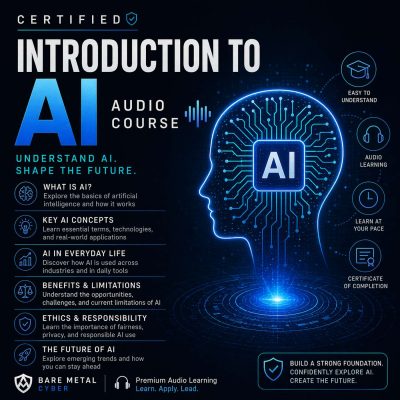
Todos os episódios de Certified – Introduction to AI Audio Course