

He went in smiling: From tragedy to a national movement
Notas do episódio
In this episode, Matthew Winn speaks with Julia Jones, co-founder of John’s Campaign, a movement born from personal tragedy and grown into a powerful national force for the rights of family carers in healthcare settings. Julia shares the story that started it all the experience of her co-founder Nicci Gerrard’s father, Dr. John Gerrard, a man living well with Alzheimer’s who was admitted to hospital for a varicose vein procedure.
When a norovirus outbreak triggered a blanket visiting ban, his family, not understanding the devastating impact hospitalisation could have, stayed away. The consequences were swift and catastrophic. As Julia describes it, “he went in alert, mobile, smiling”, but within weeks he had lost his speech, his continence, his ability to eat. By the time Nicci got him home, “it was as if he’d gone over a cliff.” He died within six months.
The question that galvanised Julia and Nicci into action was a simple one: “If it had been one of our children in that hospital, would we have allowed ourselves to be turned away?” The answer was no and from that conversation, John’s Campaign was born.
Starting in 2014 with nothing more than a friendship, a story that needed telling, and a relationship with a newspaper editor, Nicci wrote a piece for the Observer about what had happened to her father. The response was overwhelming with reader after reader recognising their own experience.
“I thought it was just us,” was the refrain. It wasn’t.
The campaign’s founding principle is disarmingly simple: that family carers should be welcomed and supported in hospitals and care homes as partners in care, not treated as visitors to be managed. Julia recalls a pivotal insight from a director of nursing at Birmingham Children’s Hospital: “The point is to get the principle across. Once you’ve got the principle across, then you allow the professionals and the people on the spot to put that into practice in whatever way is best to their circumstances.” It’s a philosophy Julia says she has clung to ever since.
Before the pandemic, all acute hospital trusts in England had signed John’s Campaign pledges, with strong adoption across Wales, Scotland, and Northern Ireland, and growing momentum in the Republic of Ireland and beyond. But Julia is clear eyed about the limits of a pledge on a page: “When I look at that and I see they’ve all got exactly the same wording for their pledge, I think to myself, oh yeah, some kind of person has just… copy paste.” The real test, as Matthew puts it, is whether a carer arriving at a ward at nine o’clock at night is welcomed or turned away.
The pandemic set the campaign back sharply. The blanket bans on visits, particularly in care homes had devastating consequences for people with dementia and other vulnerabilities. Julia is unflinching about what was lost: “You can, as it were, die of a broken heart because you can simply give up the struggle to keep living.” The experience also exposed a harder truth, that some people, in some settings, relished saying no. Coming out of the pandemic, John’s Campaign shifted to advocate for something more formal: the legal right for any person admitted to hospital or a care home to be supported by one person who matters to them.
Julia’s own experience with her mother June, fiercely independent, terrified of hospitals, and ultimately allowed to die at home on her own terms, speaks to the heart of the campaign’s values. When a GP advised hospital admission near the end of her mother’s life, Julia produced their agreed care plan. The GP, she recalls, “visibly relaxed” and said, “I had to give you that advice. If your mother had been taken in, I expect we would have cured her infection and she’d be out again, but within a month she would be in again and the trauma in the meantime would have been extreme and damaging.”
That experience, of risk being understood not just as clinical risk but as the whole-person cost of a decision, runs through everything Julia and John’s Campaign stand for.
On what makes change happen, Julia is emphatic: “Leadership happens at all levels.” The places where John’s Campaign has worked best are those where someone, at any level of an organisation, has understood the principle and simply acted on it. What enables that is a culture where staff are trusted. As she puts it, a healthcare assistant needs to know “that your ward manager or your director of nursing or your chief executive officer is not going to come down a ton of bricks” if they use their judgement to welcome a carer in.
The best leaders, Julia says, set the frame and then get out of the way allowing “individual conversations, individual to individual” to happen, guided by a clear and shared principle.
Her closing thought is as direct as the campaign itself: “It’s encouraging all the people in your organisation to look at the people that they are there to treat and to care for and say - that’s somebody’s mum - That’s somebody’s daughter - That could be my mum. How would I want my mum to be treated?”
John’s Campaign continues as a voluntary, unfunded movement. To find out more or to make a pledge, visit the John’s Campaign website.
https://johnscampaign.org.uk/
To get in touch, email Julia Jones: [email protected] and/or Nicci Gerrard: [email protected].
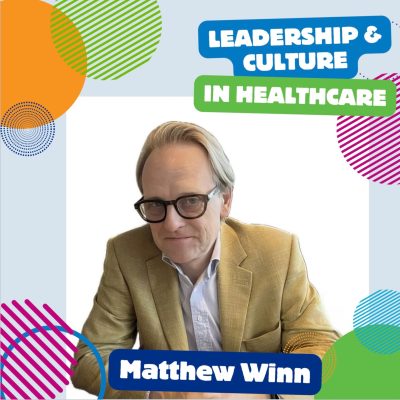
Matthew Winn, podcast host and an experienced leader in healthcare in the UK.