

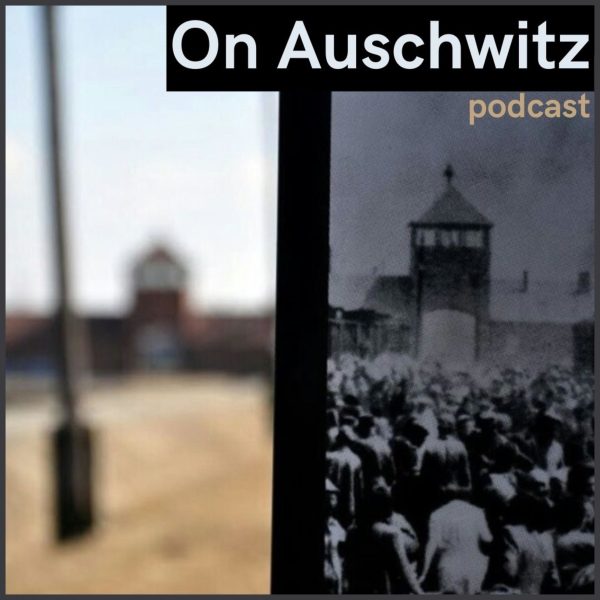
On Auschwitz
- Episódios
- 92
- Publicação
- diária
- Último episódio
- 26 out 2026
Sobre o podcast
The official podcast of the Auschwitz Memorial. The history of Auschwitz is exceptionally complex. It combined two functions: a concentration camp and an extermination center. Nazi Germany persecuted various groups of people there, and the camp complex continually expanded and transformed itself. In the podcast "On Auschwitz," we discuss the details of the history of the camp as well as our contemporary memory of this important and special place. We kindly ask you to support our mission and share our podcast in social media. Online lessons: http://lesson.auschwitz.org
Episódios 92
“Auschwitz. A Monograph on the Human”. Part 10. Hope
The book ‘Auschwitz. A Monograph on the Human’ is the first of its kind in the world to try to depict human emotions within the reality of Auschwitz camp. Its author, Museum Director Dr. Piotr Cywiński, draws …
Notas do episódio
The book ‘Auschwitz. A Monograph on the Human’ is the first of its kind in the world to try to depict human emotions within the reality of Auschwitz camp. Its author, Museum Director Dr. Piotr Cywiński, draws on fragments of memoirs and testimonies from more than 450 Survivors. It is the words of these direct witnesses that form the basis of this reflection on the human condition amid the process of dehumanization at the German Nazi concentration and extermination camp Auschwitz. In the podcast, we present ten chapters of this unique story about humanity facing the most extreme test.
Part 10. Hope
Read by: Grey Stafford
Adaptation for the podcast: Agnieszka Juskowiak-Sawicka
Music: JivexMusic
=====
Testimonies and memoirs used into the podcast:
Halina Birenbaum (48693), “Hope Is the Last to Die”, p. 114.
Victor Frankl (119104), “Man’s Search For Meaning”, p. 82.
Eugenia Kaczyńska (45887), in: „Byłem numerem”, p. 132.
Hermann Langbein (60355), “People in Auschwitz”, p. 91.
Samuel Althaus (73538), “Where is God?”, p. 74.
Raphael Esrail (173295), “L’espérance d’un baiser”, p. 146.
Dora Goland-Blaufoux (80593), “Un présent qui s’accroche a moi”, p. 94.
Andre Balbin (41796), “De Lodz a Auschwitz en passant par la Lorraine”, p. 67.
Bolesław Dziewięcki (125546), „Z dna piekła”, p. 43.
Shari Lebovitz (39439), [“Shari: A True Story”], p. 93.
Shlomo Venezia (182727), “Inside the Gas Chambers”, p. 104.
Victor Frankl (119104), “Man’s Search For Meaning”, p. 78.
Charlotte Delbo (31661), “None of Us Will Return”, p. 99.
Liliane Badour (75127), in: “Esrail, L’espérance d’un baiser”, p. 103.
Halina Birenbaum (48693), “Hope Is the Last to Die”, p. 119.
Liana Millu (A-5384), “Smoke Over Birkenau”, p. 148.
Rudolf Diem (10023), Account in: Memoirs, vol. 172, pp. 48-49.
Krystyna Żywulska (55908), “I Survived Auschwitz”, p. 90.
Natan Żelechower (127262), Account in: Memoirs, vol. 83, p. 66.
Leon Weintraub (n.n.), “The Arrival”, p. 170.
Maria Dziurdzia (7408), Account in: Testimonies, vol. 36, p. 93.
Simone Alizon (31776), “L’exercice de vivre”, p. 210.
Primo Levi (174517), “If This Is a Man”, p. 73.
Jerzy Brandhuber (87112), Account in: Testimonies, vol. 78, p. 226.
Zofia Kossak (64491), „Z otchłani”, pp. 211-212.
Jadwiga Apostoł-Staniszewska (26273), „Echa okupacyjnych lat”, p. 280.
Primo Levi (174517), “If This Is a Man”, p. 33.
Victor Frankel (161040), “I Survived Hell”, pp. 112-113.
Janina Sarnowska (29860), Account in Testimonies, vol. 35, p. 105.
Wacław Maliszewski (59195), Account in: Testimonies, vol. 16, pp. 69-70.
Krystyna Żywulska (55908), “I Survived Auschwitz”, p. 221 .
Jerzy Skotnicki (125762), Testimonies in the criminal trial of former SS staff [IPN GK 196/89], in: Chronicles of Terror, t. 5, p. 78.
Anna Kowalczykowa (27658), Account in: Testimonies, vol. 19, p. 67.
Lusia Haberfeld (48703), “Lauferin. The Runner of Birkenau” (Victoria, 2002), p. 51.
Raya Kagan (7984), “Des femmes au bureau de l’enfer”, p. 80.
Krystyna Żywulska (55908), „I Survived Auschwitz”, p. 106.
Zofia Kossak (64491), „Z otchłani”, p. 245.
=====
Illustration: An excerpt from a work by Marian Kołodziej from the series entitled ‘Labyrinths’.
“Auschwitz. A Monograph on the Human”. Part 9. Suicide
The book ‘Auschwitz. A Monograph on the Human’ is the first of its kind in the world to try to depict human emotions within the reality of Auschwitz camp. Its author, Museum Director Dr. Piotr Cywiński, draws …
Notas do episódio
The book ‘Auschwitz. A Monograph on the Human’ is the first of its kind in the world to try to depict human emotions within the reality of Auschwitz camp. Its author, Museum Director Dr. Piotr Cywiński, draws on fragments of memoirs and testimonies from more than 450 Survivors. It is the words of these direct witnesses that form the basis of this reflection on the human condition amid the process of dehumanization at the German Nazi concentration and extermination camp Auschwitz.
Part 9. Suicide
Read by: Grey Stafford
Adaptation for the podcast: Agnieszka Juskowiak-Sawicka
Music: JivexMusic
=====
Testimonies and memories used into the podcast:
Hadassah Rosensaft (52406), “Yesterday”, p. 39.
Victor Frankl (119104), “Man’s Search For Meaning”, p. 31.
Szymon Laks (49543), “Music of Another World”, pp. 18-19.
Dawid Wisnia (83526), “One Voice, Two Lives”, pp. 42-43.
Jan Marszałek (18857), cited in: Ryn, Kłodziński (20019), „Śmierć”, p. 63.
Charles Liblau (n.n.), “Les kapos d’Auschwitz”, p. 27
Leon Arditti (169738), “Vouloir vivre”, p. 85.
Jakub Wolman (33611), Testimonies in the trial of Rudolf Höss [IPN GK 196/87], in: Chronicles of Terror, vol. 5, p. 116.
Dov Paisikovic (A-3076), Account in: Testimonies, vol. 44, p. 105.
Miriam Harel (n.n.), „Teraz już możesz płakać”, pp. 126-127.
Bohumil Pohl (25632), Account in: Testimonies, vol. 78, p. 179.
Kitty Hart (39934), “I Am Alive”, p. 66.
Ruth Elias (73643), “Triumph of Hope”, p. 112.
Maria Żumańska (29940), Account in: Testimonies, vol. 4, p. 426.
Ernst Toch (70231), Account in: Testimonies, vol. 9, p. 1288.
Jerzy Tabeau (27273), Report in: ‘Raporty uciekinierów z KL Auschwitz’, p. 95.
Miklosz Nyiszli (A 8450), “I Was Doctor Mengele’s Assistant”, p. 54.
Elżbieta Wawrzyczek (33324), Account in: Testimonies, vol. 21, p. 9.
Avram Harshalom (99288), “Alive From the Ashes”, p. 83.
Raya Kagan (7984), “Des femmes au bureau de l’enfer”, p. 95.
Szymon Laks (49543), “Music of Another World”, p. 47.
=====
Illustration: An excerpt from a work by Marian Kołodziej from the series entitled ‘Labyrinths’.
“Auschwitz. A Monograph on the Human”. Part 8. Fear
The book ‘Auschwitz. A Monograph on the Human’ is the first of its kind in the world to try to depict human emotions within the reality of Auschwitz camp. Its author, Museum Director Dr. Piotr Cywiński, draws …
Notas do episódio
The book ‘Auschwitz. A Monograph on the Human’ is the first of its kind in the world to try to depict human emotions within the reality of Auschwitz camp. Its author, Museum Director Dr. Piotr Cywiński, draws on fragments of memoirs and testimonies from more than 450 Survivors. It is the words of these direct witnesses that form the basis of this reflection on the human condition amid the process of dehumanization at the German Nazi concentration and extermination camp Auschwitz.
Part 8. Fear
Read by: Grey Stafford
Adaptation for the podcast: Agnieszka Juskowiak-Sawicka
Music: JivexMusic
=====
Testimonies and memoirs used into the podcast:
Ruth Bindefeld Neray (75912), “To Auschwitz and Back”, p. 1.
Simone Alizon (31776), “L’exercice de vivre”, p. 193.
John Freund (168329), “La fin du printemps”, [n.d. (Canada)], 2009, p. 42.
Mieczysława Chylińska (44685), ‘Działania SS w Brzezince’, p. 157.
Abraham Kajzer (n.n.), „Za drutami śmierci”, p. 45.
Primo Levi (174517), “If This Is a Man”, p. 113.
Tadeusz Niedzielski (423), Account in: Memoirs, vol. 76, p. 119.
Victor Frankl (119104), “Man’s Search For Meaning”, p. 66.
Raphael Esrail (173295), “L’espérance d’un baiser”, pp. 85-86.
Zofia Czerwińska-Kossakiewicz (49973), Account in: Memoirs, vol. 16, p. 38.
Władysław Kowanetz (29638), Account in: Testimonies, vol. 5, p. 666.
Tadeusz Sobolewicz (23053), “But I Survived”, p. 177.
Miklosz Nyiszli (A 8450), “I Was Doctor Mengele’s Assistant”, p. 101.
Jan Kwiatkowski (Z-5573), Account in: Testimonies, vol. 3, p. 400.
Mietek Weintraub (n.n.), “The Arrival”, p. 166.
Ester Tencer (n.n.), Testimonies in the criminal trial of former SS staff [IPN GK 196/110], Chronicles of Terror, vol. 6, p. 210.
Simone Alizon (31776), “L’exercice de vivre”, p. 188.
Edward Ferenc (281), Account in: Testimonies, vol. 21, p. 91.
Stanisław Rubaszewski (83781), Account in: Testimonies, vol. 29, p. 30.
Franciszek Karwacki (14143), Account in: Memoirs, vol. 69, p. 54.
Jakub Wolman (33611), Testimonies in the trial of Rudolf Höss [IPN GK 196/87], Chronicles of Terror, vol. 5, p. 113.
Adam Ziemba (21855), “A Piece of Bread”, p. 66.
Max Eisen (A-9892), “By Chance Alone”, p. 115.
Romana Duracz (43544), in: Przekaz Oświęcimski, p. 43.
Bogusław Dąbrowski (18375), in: Dąbrowski, „Nietypowy więzień”, p. 37.
Anatol Adamczyk (23241), cited in: Ryn, Kłodziński (20019), „Na granicy”, p. 43.
=====
Illustration: An excerpt from a work by Marian Kołodziej from the series entitled ‘Labyrinths’.
“Auschwitz. A Monograph on the Human”. Part 7. Laugh and Joy
The book ‘Auschwitz. A Monograph on the Human’ is the first of its kind in the world to try to depict human emotions within the reality of Auschwitz camp. Its author, Museum Director Dr. Piotr Cywiński, draws …
Notas do episódio
The book ‘Auschwitz. A Monograph on the Human’ is the first of its kind in the world to try to depict human emotions within the reality of Auschwitz camp. Its author, Museum Director Dr. Piotr Cywiński, draws on fragments of memoirs and testimonies from more than 450 Survivors. It is the words of these direct witnesses that form the basis of this reflection on the human condition amid the process of dehumanization at the German Nazi concentration and extermination camp Auschwitz.
Part 7. Laugh and Joy
Read by: Grey Stafford
Adaptation for the podcast: Agnieszka Juskowiak-Sawicka
Music: JivexMusic
=====
Testimonies and memoirs used into the podcast:
Jerzy Brandhuber (87122), Account in: Testimonies, vol. 76, p. 141.
Victor Frankl (119104), “Man’s Search For Meaning”, p. 54.
Engelbert Fajkosz (37629), „Byłem numerem 37629”, p. 157.
Adolf Gawalewicz (9225), „Reflections”, p. 70-71.
Abraham Kajzer (n.n.), „Za drutami śmierci”, pp. 32-33.
Pierre Berg (172649), “Scheisshaus Luck”, p. 120.
Edwin Kuffel (2237), Account in: Testimonies, vol. 29, p. 99.
Victor Frankl (119104), “Man’s Search For Meaning”, pp. 51.
Zofia Kossak (64491), “Z otchłani”, p. 249.
=====
Illustration: An excerpt from a work by Marian Kołodziej from the series entitled ‘Labyrinths’.
“Auschwitz. A Monograph on the Human”. Part 6. Births
The book ‘Auschwitz. A Monograph on the Human’ is the first of its kind in the world to try to depict human emotions within the reality of Auschwitz camp. Its author, Museum Director Dr. Piotr Cywiński, draws …
Notas do episódio
The book ‘Auschwitz. A Monograph on the Human’ is the first of its kind in the world to try to depict human emotions within the reality of Auschwitz camp. Its author, Museum Director Dr. Piotr Cywiński, draws on fragments of memoirs and testimonies from more than 450 Survivors. It is the words of these direct witnesses that form the basis of this reflection on the human condition amid the process of dehumanization at the German Nazi concentration and extermination camp Auschwitz. In the podcast, we present ten chapters of this unique story about humanity facing the most extreme test.
Part 6. Births
Read by: Grey Stafford
Adaptation for the podcast: Agnieszka Juskowiak-Sawicka
Music: JivexMusic
=====
Testimonies and memoirs used into the podcast:
Wanda Urbańska (45811), Account in: Testimonies, vol. 72, p. 32.
Stefania Sikorska (32354), Account in: Testimonies, vol. 33, p. 34.
Janina Kowalczyk (32212), Testimonies in the criminal trial of former SS staff [IPN GK 196/161], Chronicles of Terror, vol. 6, p. 177.
Maria Ślisz-Oyrzyńska (40275), in: Ryn, Kłodziński (20019), „Śmierć”, s. 79.
Stanisława Leszczyńska (41335), Account in: Memoirs, vol. 10, p. 3.
Danuta Drzazga (26275), Account in: Testimonies, vol. 33, pp. 75-76.
Genowefa Pilecka (PH nn, 79435), Account in: Testimonies, vol. 16, p. 47.
Zofia Kalmus (83887), Testimonies in the criminal trial of former SS staff [IPN GK 196/110], Chronicles of Terror, vol. 6, pp. 255-256.
Alina Bacall-Zwirn (476490), “No Common Place” (Lincoln: University of Nebraska, 2000), pp. 73-74.
Charlotte Zucker (75140), “Les balcons fleuris d’Auschwitz” (Champrond en Gâtine: Colombier, 2000), p. 247.
Stefania Rojek (26817), Account in: Testimonies, vol. 32, pp. 20-21.
Bartnikowski (192731), “Childhood Behind Barbed Wire”, p. 136.
=====
Illustration: An excerpt from a work by Marian Kołodziej from the series entitled ‘Labyrinths’.
“Auschwitz. A Monograph on the Human”. Part 5. Friendship
The book ‘Auschwitz. A Monograph on the Human’ is the first of its kind in the world to try to depict human emotions within the reality of Auschwitz camp. Its author, Museum Director Dr. Piotr Cywiński, draws …
Notas do episódio
The book ‘Auschwitz. A Monograph on the Human’ is the first of its kind in the world to try to depict human emotions within the reality of Auschwitz camp. Its author, Museum Director Dr. Piotr Cywiński, draws on fragments of memoirs and testimonies from more than 450 Survivors. It is the words of these direct witnesses that form the basis of this reflection on the human condition amid the process of dehumanization at the German Nazi concentration and extermination camp Auschwitz.
Part 5. Friendship
Read by: Grey Stafford
Adaptation for the podcast: Agnieszka Juskowiak-Sawicka
Music: JivexMusic
=====
Testimonies and memories used into the podcast:
Jadwiga Apostoł-Staniszewska (26273), „Echa okupacyjnych lat”, p. 315.
Jan Marszałek (18857), cited in: Ryn, Kłodziński (20019), „Śmierć”, p. 63.
Maxime Antelin (145808), “Chronique maladroite d’un candide”, p. 43.
Suzan Cernyak-Spatz (34042), “Protective Custody”, p. 160.
Miklosz Nyiszli (A 8450), “I Was Doctor Mengele’s Assistant”, p. 78.
Ratya Kagan (7984), “Des femmes au bureau de l’enfer”, p. 295.
Adam Ziemba (21855), “A Piece of Bread”, p. 7.
Wanda Brzosko (64404), Account in: Memoirs, vol. 71, p. 21.
Jerzy Pozimski (1099), Account in: Memoirs, vol. 52, p. 176.
Jakub Wolman (33611), Testimonies in the trial of Rudolf Höss [IPN GK 196/87]:
Chronicles of Terror, vol. 5, p. 113.
Olga Lengyel (25403), “Five Chimneys”, p. 40.
Pelagia Lewińska (32292), “Oświęcim”, p. 29.
Primo Levi (174517), “If This Is a Man”, p. 33.
Zofia Kossak (64491), “Z otchłani”, p. 90.
Heinz Salvator Kounio (109565), “A Liter of Soup and Sixty Grams of Bread. The Diary of Prisoner Number 109565” (New York: Bloch Publishing, 2003), pp. 54-55.
Ajzyk Szwarc (92811), Account in: Testimonies, vol. 33, p. 103.
Max Eisen (A-9892), “By Chance Alone”, pp. 87-88.
Abraham Kajzer (n.n.), „Za drutami śmierci”, p. 35.
Władysław Bartoszewski (4427), “Mój Auschwitz”, p. 27.
Paula Gruber-Herszkopf (n.n.), “Lasting Pain”, p. 117.
Shlomo Venezia (182727), “Inside the Gas Chambers”, p. 101.
Ibid., p. 100.
Zofia Posmysz (7566), „Królestwo za mgłą”, p. 102.
Ryszard Friedman (B-4112), „Jeden spośród wielu” (Kraków: Znak, 2017), p. 183-184.
Zofia Kossak (64491), „Z otchłani”, p. 88.
Zofia Czerwińska-Kossakiewicz (49973), Account in: Memoirs, vol. 16, p. 46.
Halina Birenbaum (48693), “Hope Is the Last to Die”, pp. 147-148.
Victor Frankl (119104), “Man’s Search For Meaning”, p. 18.
Roch Wystrach (10241), cited in: Jagoda, Kłodziński (20019), Masłowski, “Przyjaźnie oświęcimskie,” p. 67.
Józefa Szkodzińska (32293), cited in: Jagoda, Kłodziński (20019), Masłowski, “Przyjaźnie oświęcimskie,” p. 43.
Jerzy Brandhuber (87122), Account in: Testimonies, vol. 76, p. 151.
Maurice Cling (A-5151), „Wy, co wchodzicie tutaj”, p. 86.
Henryk Jaworski (31071), Account in: Testimonies, vol. 13, p. 87.
Ludwik Rajewski (4217), Account in: Testimonies, vol. 21, p. 107.
Raphael Esrail (173295), “L’espérance d’un baiser”, p. 133.
Bożena Krzywobłocka (83264), Account in: Testimonies, vol. 15, p. 84.
Aleksander Giermański (716), Account in: Testimonies, vol. 74, p. 200.
Tadeusz Żaboklicki (21668), Account in: Testimonies, vol. 78, s. 146. The Kommando referred to here was the carpenters’ Kommando.
Michał Ziółkowski (1055), “Byłem od początku w Auschwitz”, p. 29.
Eva Libitzky (n.n.), “Out on a Ledge” (River Forest: Wicker Park Press, 2010), p. 114.
Hart-Moxon (39934), “Return to Auschwitz”, pp. 79-80.
Zofia Kossak (64491), „Z otchłani”, p. 89.
Ryszard Friedman (A-26615), „Daleka droga do domu”, p. 80.
Pelagia Lewińska (32292), “Oświęcim”, p. 34.
Józef Polak (3288), Account in: Testimonies, vol. 12a, p. 186.
Bolesław Dziewięcki (125546), „Z dna piekła”, p. 50.
Antoni Golemo (9256), cited in: Jagoda, Kłodziński (20019), Masłowski, “Przyjaźnie oświęcimskie,” pp. 42-43.
=====
Illustration: An excerpt from a work by Marian Kołodziej from the series entitled ‘Labyrinths’.
“Auschwitz. A Monograph on the Human”. Part 4. Emotions and Numbness
The book ‘Auschwitz. A Monograph on the Human’ is the first of its kind in the world to try to depict human emotions within the reality of Auschwitz camp. Its author, Museum Director Dr. Piotr Cywiński, draws …
Notas do episódio
The book ‘Auschwitz. A Monograph on the Human’ is the first of its kind in the world to try to depict human emotions within the reality of Auschwitz camp. Its author, Museum Director Dr. Piotr Cywiński, draws on fragments of memoirs and testimonies from more than 450 Survivors. It is the words of these direct witnesses that form the basis of this reflection on the human condition amid the process of dehumanization at the German Nazi concentration and extermination camp Auschwitz.
Part 4. Emotions and numbness
Read by: Grey Stafford
Adaptation for the podcast: Agnieszka Juskowiak-Sawicka
Music: JivexMusic
=====
Testimonies and memoirs used into the podcast:
Victor Frankl (119104), “Man’s Search For Meaning”, p. 30.
Paula Gruber-Herszkopf (n.n.), “Lasting Pain”, p. 123.
Krystyna Żywulska (55908), “I Survived Auschwitz”, p. 128.
Nate Leipciger (133628), “The Weight of Freedom”, p. 79.
Konrad Szweda (7669), Account in: Testimonies, vol. 32, p. 83.
Simone Alizon (31776), “L’exercice de vivre”, p. 181.
Stanisław Sattler (68652), “Prisoner of 68 Months”, pp. 100-101.
Anna Kowalczykowa (27658), Account in: Testimonies, vol. 19, p. 66.
Kazimierz Smoleń (1327), Account in: Testimonies, vol. 75, pp. 173-174.
Shaul Chasan (182527), Interview in: Greif, We Wept Without Tears, p. 273.
Leon Cohen (182492), Interview in: Greif, We Wept Without Tears, p. 305.
Adolf Gawalewicz (9225), “Reflections”, p. 51.
Witold Pilecki (4859), “Witold’s Report From Auschwitz”, p. 27.
Victor Frankl (119104), “Man’s Search For Meaning”, p. 33.
Ibid., p. 40.
Zofia Kossak (64491), „Z otchłani”, p. 86.
Peter Ornstein (174440), [Surviving Auschwitz and a Death March], USHMM Collection, 2009.336, p. 12.
Roman Taul (1108), Account in: Memoirs, vol. 62, p. 36.
Adam Ziemba (21855), “A Piece of Bread”, p. 65-66.
Tadeusz Niedzielski (423), Account in: Memoirs, vol. 76, p. 26.
Victor Frankl (119104), “Man’s Search For Meaning”, p. 34.
Stanisław Tyblewski (9605), Account in: Memoirs, vol. 68, p. 105.
Naparstek (65710), “J’ai vécu l’extermination des Juifs d’Europe au “Canada,” “p. 94.
Bogusław Dąbrowski (18375), in: Dąbrowski, „Nietypowy więzień”, p. 12.
Errikos Sevillias (182699), “Athens – Auschwitz”, p. 39.
Adolf Gawalewicz (9225), “Reflections”, p. 78.
Czesław Jaworski (31070), Account in: Memoirs, vol. 4, p. 170.
Edward Halek (39676), Account in: Testimonies, vol. 78, p. 35.
Konstanty Piekarski (4618), “Escaping Hell”, p. 98.
=====
Illustration: An excerpt from a work by Marian Kołodziej from the series entitled ‘Labyrinths’.
“Auschwitz. A Monograph on the Human”. Part 3. Inner Life
The book ‘Auschwitz. A Monograph on the Human’ is the first of its kind in the world to try to depict human emotions within the reality of Auschwitz camp. Its author, Museum Director Dr. Piotr Cywiński, draws …
Notas do episódio
The book ‘Auschwitz. A Monograph on the Human’ is the first of its kind in the world to try to depict human emotions within the reality of Auschwitz camp. Its author, Museum Director Dr. Piotr Cywiński, draws on fragments of memoirs and testimonies from more than 450 Survivors. It is the words of these direct witnesses that form the basis of this reflection on the human condition amid the process of dehumanization at the German Nazi concentration and extermination camp Auschwitz.
Part 3. Inner Life
Read by: Grey Stafford
Adaptation for the podcast: Agnieszka Juskowiak-Sawicka
Music: JivexMusic
=====
Testimonies and memoirs used into the podcast:
Zofia Kossak (64491), “Z otchłani”, p. 79.
Bogdan Bartnikowski (192731), “Childhood Behind Barbed Wire”, p. 86.
Victor Frankl (119104), “Man’s Search For Meaning”, p. 50.
Gerta Solan (A-27635), “ My Heart is at Ease”, p. 29.
Mieczysława Chylińska (44658), “Kobiety w Oświęcimiu-Brzezince,” Przegląd Lekarski – Oświęcim (1988) p. 157.
Primo Levi (174517), “If This Is a Man”, p. 113.
Camille Touboul (72420), “Le plus long des chemins”, p. 67.
Charlotte Delbo (31661), “None of Us Will Return”, p. 67.
Paula Gruber-Herszkopf (n.n.), “Lasting Pain. Memories of My Life”, trans. Yvette Joy
Blog (Create Space-Assigned 2013), p. 111.
Halina Birenbaum (48693), “Hope Is the Last to Die”, p. 173
Primo Levi (174517), “If This Is a Man”, p. 52.
Jerzy Brandhuber (87112), Account in: Memoirs, vol. 7, p. 61.
Liliane Badour (75127), in: Esrail, “L’espérance d’un baiser”, p. 104.
Léon Arditti (169738), “Vouloir vivre. Deux freres a Auschwitz” (Paris: Editions L’Harmattan, 1995), p. 67.
Anna Molnar Hegedűs (n.n.), “As the Lilacs Bloomed”, p. 64
David Wisnia (83526), “One Voice, Two Lives”, p. 43.
Maurice Cling (A-5151), „Wy, co wchodzicie tutaj”, p. 91.
Zofia Kossak (64491), „Z otchłani”, p. 78.
Dawid Pankowski (46333), „Z Auszwicu do Belsen”, p. 24.
Romana Duracz (43544), in: „Przekaz Oświęcimski”, p. 21.
Stefan Budziaszek (20526), Account in: Testimonies, vol. 88a, p. 28.
Maria Ślisz-Oyrzyńska (40275), cited in: Ryn, Kłodziński (20019), „Śmierć”, p. 73.
Mieczysława Chylińska (44658), cited in: Ryn, Kłodziński (20019), „Śmierć”, p. 74.
Eva Schloss (A-5272), “Eva’s Story” (London: Evelyn Kent Associates, 2008), p. 138.
Alojzy Fros (136223), cited in: Ryn, Kłodziński (20019), “Śmierć”, p. 74.
Willy Berler (117476), “Journey Through Darkness” (London: Vallentine Mitchell, 2004), p. 63.
Tadeusz Sobolewicz (23053), „But I Survived”, p. 174.
Kazimierz Piechowski (918), „Byłem numerem”, p. 46.
Ibid., p. 47.
Zofia Posmysz (7566), „Królestwo za mgłą”, p. 366.
Primo Levi (174517), “If This Is a Man”, p. 41.
Gracjan Fijałkowski (137632), “Odwszenie w Birkenau. BIId,” Zeszyty Oświęcimskie, No. 8 (1964), p. 72.
Maria Jezierska (24449), Account in: Memoirs, vol. 2, p. 404.
Mira Paszkiewicz (84722), Account in: Memoirs, vol. 1, p. 140.
August Kowalczyk (6804), “A Barbed Wire Refrain II”, p. 10.
Miklosz Nyiszli (A 8450), “I Was Doctor Mengele’s Assistant”, p. 52.
Victor Frankl (119104), “Man’s Search For Meaning”, p. 40-41.
Raphael Esrail (173295), “L’espérance d’un baiser”, p. 108.
Krystyna Żywulska (55908), “I Survived Auschwitz”, p. 40-41.
=====
Illustration: An excerpt from a work by Marian Kołodziej from the series entitled ‘Labyrinths’.
“Auschwitz. A Monograph on the Human”. Part 2. Death
The book ‘Auschwitz. A Monograph on the Human’ is the first of its kind in the world to try to depict human emotions within the reality of Auschwitz camp. Its author, Museum Director Dr. Piotr Cywiński, draws …
Notas do episódio
The book ‘Auschwitz. A Monograph on the Human’ is the first of its kind in the world to try to depict human emotions within the reality of Auschwitz camp. Its author, Museum Director Dr. Piotr Cywiński, draws on fragments of memoirs and testimonies from more than 450 Survivors. It is the words of these direct witnesses that form the basis of this reflection on the human condition amid the process of dehumanization at the German Nazi concentration and extermination camp Auschwitz. In the podcast, we present ten chapters of this unique story about humanity facing the most extreme test.
Part 2 – Death
Read by: Grey Stafford
Adaptation for the podcast: Agnieszka Juskowiak-Sawicka
Music: JivexMusic
=====
Testimonies and memoirs used into the podcast:
Filip Müller (29236), “Auschwitz Inferno. The Testimony of a Sonderkommando”, trans. Susanne Flatauer (London: Routledge & Kegan Paul, 1979), p. 12.
Hilda Hrabovecká (n.n.), “Arm With a Tattooed Number” (Bratislava: Marenčin PT, 2002), p. 39.
Ester Friedman (A-26615), „Daleka droga do domu”, p. 77.
Jadwiga Apostoł-Staniszewska (26273), „Echa okupacyjnych lat”, p. 307.
Jerzy Pozimski (1099), Account in: Testimonies, vol. 52, p. 170.
Maria Ślisz-Oyrzyńska (40275), cited in: Ryn, Kłodziński (20019), „Śmierć”, p. 82.
Bronisław Jureczek (26672), Account in: Testimonies, vol. 3, p. 404.
Jan Stawarz (39534), cited in: Ryn, Kłodziński (20019), „Śmierć”, p. 61.
Isidore Greengrass (87224), “Judaism Is Indestructible”, p. 83.
Stanisław Kobylański (575), Account in: Memoirs, vol. 2, p. 267.
Zalmen Gradowski (n.n.), “From the Heart of Hell”, p. 110.
Henryk Król (1183), Account in: Testimonies, vol. 75, p. 210.
Pelagia Lewińska (32292), Oświęcim, p. 58.
Mieczysław Bednarski (30951), „W szponach Gestapo”, p. 179.
Elisa Springer (A-24020), „Milczenie żywych”, pp. 82-83.
Jadwiga Apostoł-Staniszewska (26273), “Wobec śmierci w Brzezince i Ravensbrück,” Przegląd Lekarski – Oświęcim (1981), pp. 167-168.
Zofia Kossak (64491), „Z otchłani”, p. 42.
August Kowalczyk (6804), “A Barbed Wire Refrain II”, pp. 44-45.
Konstanty Piekarski (4618), “Escaping Hell”, p. 80.
Tadeusz Sobolewicz (23053), “But I Survived”, pp. 126-127.
Charlotte Delbo (31661), “None of Us Will Return”, pp. 64-65.
Aleksander Giermański (716), cited in: Ryn, Kłodziński (20019), „Śmierć”, pp. 62-63.
Ruth Bindefeld Neray (75912), To Auschwitz and Back (Sudbury: Sudbury Press, 1997), p. 75.
Shari Lebovitz (39439), [“Shari: A True Story”], p. 90.
Miriam Harel (n.n.), „Teraz już możesz płakać”, p. 123.
Raya Kagan (7984), “Des femmes au bureau de l’enfer”, p. 229.
Maria Jezierska (24449), Account in: Testimonies, vol. 8, p. 1145.
Józef Majchrzak (33204), cited in: Ryn, Kłodziński (20019), „Śmierć”, p. 65.
Zofia Posmysz (7566), „Królestwo za mgłą”, p. 141.
Alter Feinsilber (27675), Testimony in the Rudolf Höss trial, [IPN GK 196/82], in: Chronicles of Terror, vol. 5, p. 260.
Felix Rosenthal (176475), Account in: Testimonies, vol. 9, p. 1244.
Wanda Miszewska (44756), Account in: Testimonies, vol. 101, s. 146.
Shlomo Venezia (182727), “Inside the Gas Chambers”, p. 62.
Suzanne Birnbaum (74837), “Une Française juive est revenue” (Maulévrier: Hérault-Editions, 1991), p. 42
Bogusław Dąbrowski (18375), in: Dąbrowski, „Nietypowy więzień Auschwitz-Birkenau”, p. 43.
Julian Kiwała (9143), Account in: Testimonies, vol. 40, p. 171.
Hermann Langbein (60355), “People in Auschwitz”, p. 91.
Roman Taul (1108), Account in: Testimonies, vol. 9, p. 1265.
=====
Illustration: An excerpt from a work by Marian Kołodziej from the series entitled ‘Labyrinths’.
“Auschwitz. A Monograph on the Human”. Part 1. Loneliness
The book ‘Auschwitz. A Monograph on the Human’ is the first of its kind in the world to try to depict human emotions within the reality of Auschwitz camp. Its author, Museum Director Dr. Piotr Cywiński, draws …
Notas do episódio
The book ‘Auschwitz. A Monograph on the Human’ is the first of its kind in the world to try to depict human emotions within the reality of Auschwitz camp. Its author, Museum Director Dr. Piotr Cywiński, draws on fragments of memoirs and testimonies from more than 450 Survivors. It is the words of these direct witnesses that form the basis of this reflection on the human condition amid the process of dehumanization at the German Nazi concentration and extermination camp Auschwitz.
Part 1. Loneliness
Read by: Grey Stafford
Adaptation for the podcast: Agnieszka Juskowiak-Sawicka
Music: JivexMusic
=====
Testimonies and memoirs used into the podcast:
Helena Dunicz Niwińska (84118), Account in: Agnieszka Dauksza, „Klub Auschwitz i inne kluby”, Gdańsk, 2016, p. 55.
Lily Suser (n.n.) “Lili’s Story. My Memory of the Holocaust” (Colorado Springs, CO: Lili
Susser, 1998), pp. 71-72. The quote of a seven-year-old girl form Litzmannstadt Ghetto, 1944.
Minsky Sender (55082), “The Cage”, p. 169.
Krystyna Żywulska (55908), “I Survived Auschwitz”, p. 22.
Saba Feniger (n.n.), “Short Stories”, p. 97.
Shlomo Venezia (182727), “Inside the Gas Chambers”, p. 47.
Rudolf Vrba (44070), “I Escaped From Auschwitz” (Fort Lee: Barricade Books, 2002), p. 150.
Max Eisen (A-9892), “By Chance Alone”, p. 82.
Eugenia Kurzelowa (37574), Account in: Testimonies, vol. 36, p. 104.
Tadeusz Sobolewicz (23053), „But I Survived”, p. 77.
Charlotte Delbo (31661), “None of Us Will Return”, p. 50.
Raya Kagan (7984), “Des femmes au bureau de l’enfer”, p. 99.
Primo Levi (174517), “If This Is a Man”, p. 35.
Sim Kessel (130665), “Hanged at Auschwitz”, p. 81.
Rudolf Vrba (44070), “I Escaped From Auschwitz”, p. 116.
Mieczysław Bednarski (30951), „W szponach Gestapo”, p. 114.
Charlotte Delbo (31661), “None of Us Will Return”, p. 71.
Michał Ziółkowski (1055), „Byłem od początku w Auschwitz” (Gdańsk: Marpress, 2007),
p. 24. Mentioned in this quote are Jan Światłowski (1057) and Mieczysław Wojciechowski (1061).
Berndt Abraham (107783), “No Graves to Visit. A Survivor Remember at Last”, [n.d.] 1994, p. 13.
Mieczysława Chylińska (44685), “Działania SS w Brzezince przeciw węzłom społeczno-emocjonalnym więźniów,” Przegląd Lekarski – Oświęcim (1986), p. 155.
Stanisław Sattler (68652), “Prisoner of 68 Months”, p. 79.
Victor Frankl (119104), “Man’s Search For Meaning”, p. 61.
Tadeusz Sobolewicz (23053), “But I Survived”, p. 146.
Zofia Kossak (64491), “Z otchłani”, p. 84-85.
Ana Novac (17587), “The Beautiful Days of My Youth: Six Months in Auschwitz and Plaszow” (New York: Henry Holt & Company, 1997), p. 37.
Camille Touboul (72420), “Le plus long des chemins. De Marseille a Auschwitz” (Nice: Losagne, 1998), p. 67.
Władysław Bartoszewski (4427), “Mój Auschwitz”, p. 41.
Henryk Matuszewski (5860), Account in: Testimonies, vol. 22, p. 17.
Samuel Pisar (B-1713), “Of Blood and Hope” (New York: Macmillan, 1982), pp. 56-57.
Halina Birenbaum (48693), “Hope Is the Last to Die”, trans. David Welsh (Oświęcim:
Auschwitz-Birkenau State Museum, 2016), p. 135.
Doctor Jan Nowak’s Auschwitz Letters Donated to the Museum – An Interview with the Donor
A collection of letters and documents related to Jan Nowak, a physician from Kraków who, as a prisoner of German Nazi concentration camps, worked in camp hospitals and helped other prisoners, has been donated …
Notas do episódio
A collection of letters and documents related to Jan Nowak, a physician from Kraków who, as a prisoner of German Nazi concentration camps, worked in camp hospitals and helped other prisoners, has been donated to the Auschwitz Museum Archives.
The documents, including a letter sent from the camp and seven letters sent to the camp by his relatives, were donated to the Archives by Marek Trybulski, owner of the Kraków Numismatic Salon. We invite you to listen to a conversation with the donor and Dr Wojciech Płosa, head of the Auschwitz Museum Archives.
=====
Voiceovers: Mike Skagerlind, Grey Stafford and Michael Takiff
"On Auschwitz" (76): The First Thirty Prisoner Functionaries of Auschwitz
A special group of prisoners in the Auschwitz camp were prisoner functionaries, responsible, among other things, for maintaining discipline among prisoners, keeping order in the blocks, and supervising the work …
Notas do episódio
A special group of prisoners in the Auschwitz camp were prisoner functionaries, responsible, among other things, for maintaining discipline among prisoners, keeping order in the blocks, and supervising the work being carried out. Dr Wojciech Płosa, Head of the Auschwitz Museum Archive, talks about the first thirty functionary prisoners – Germans brought to Auschwitz on 20 May 1940 and assigned numbers from 1 to 30.
=====
Voiceovers: Kate Weinrieb, Tom Vamos
"On Auschwitz" (75): The Leisure Time of SS-Men from the KL Auschwitz Garrison in the Light of Documents from the Auschwitz Memorial Archives
Over the nearly five years of the operation of the Auschwitz camp, around 8,200 SS men and 200 SS female overseers served there. Dr Agnieszka Kita, Deputy Head of theAuschwitz Museum Archive, talks about what …
Notas do episódio
Over the nearly five years of the operation of the Auschwitz camp, around 8,200 SS men and 200 SS female overseers served there. Dr Agnieszka Kita, Deputy Head of theAuschwitz Museum Archive, talks about what their leisure time looked like, what they did after duty, when they returned to the barracks, and what their days off looked like.
=====Voiceovers: Sarah Edwards Weinstein, Kate Weinrieb
"On Auschwitz" (74): "Fairy Tales from Auschwitz" - unique witnesses to history
Among the unique artifacts held in the collections of the Auschwitz Memorial are fairy tales created while the camp was in operation. Crafted out of a heartfelt need, and in the hope of leaving behind a trace …
Notas do episódio
Among the unique artifacts held in the collections of the Auschwitz Memorial are fairy tales created while the camp was in operation. Crafted out of a heartfelt need, and in the hope of leaving behind a trace of their authors, these stories were smuggled out the camp. Their creators were prisoners employed in the camp’s Construction Office. With the help of people on the outside, they passed these fairy tales on to their loved ones. The story behind the fairy tales from Auschwitz is told by Jadwiga Kulasza, a retired employee of the Memorial Archives, as well as family members of the authors: Felicjan Świerczyna, son of Bernard Świerczyna, and Andrzej Czulda, son of Henryk Czulda.=====Voiceovers: Greg Littlefield, Michael Takiff, Kate Weinrieb
"On Auschwitz" (73): Auschwitz functionary prisoners. Selected postwar fates
We discussed the group of functionary prisoners at Auschwitz in one of our previous podcasts. You can find it at: podcast.auschwitz.org. In this episode Dr. Wojciech Płosa, the head of the Auschwitz Museum …
Notas do episódio
We discussed the group of functionary prisoners at Auschwitz in one of our previous podcasts. You can find it at: podcast.auschwitz.org. In this episode Dr. Wojciech Płosa, the head of the Auschwitz Museum Archives will talk about the post war fates of some of the functionary prisoners.
=====
Artwork: Mieczysław Kościelniak, Praca przy walcu (Working on the roller), Auschwitz Memorial Collectons.
=====
Voiceover: Therese Mc Laughlin, Mike Skagerlind
"On Auschwitz (72): The first transports of women to KL Auschwitz
The Germans established the Auschwitz concentration camp in the spring of 1940 for man prisoners. The first women were deported to the camp in March 1942. In total, more than 130,000 women prisoners were …
Notas do episódio
The Germans established the Auschwitz concentration camp in the spring of 1940 for man prisoners. The first women were deported to the camp in March 1942. In total, more than 130,000 women prisoners were registered there during the
camp’s existence. The history of the first transports of women is discussed by Dr. Teresa Wontor-Cichy from the Research Center of the Auschwitz Museum.
======
Online lesson about women in KL Auschwitz
======
Voiceover: Sarah Edwards, Kate Weinrieb
"On Auschwitz (71): Testimonies about expulsions of the local population in connection with the expansion of KL Auschwitz
Before the war, Oświęcim was a town inhabited mainly by Poles and Jews. During the Second World War it was annexed to Germany and the name of the town was changedto Auschwitz. At the end of 1939 the town had a …
Notas do episódio
Before the war, Oświęcim was a town inhabited mainly by Poles and Jews. During the Second World War it was annexed to Germany and the name of the town was changedto Auschwitz. At the end of 1939 the town had a population of over 12,500 people, about half of whom were Jews. Near Oświęcim there were several villages, which in December of 1939 were incorporated into the German administrative unitof Stadtbezirk Auschwitz. About 13,000 people lived in thesevillages.
Due to the establishment and expansion of the Auschwitz camp, several thousand Polish and Jewish residents of Oświęcim and nearby villages were forced to leave their homes. In the “On Auschwitz” podcast, we share fragments oftestimonies from witnesses and their relatives about these events.
=====
The podcast features material from the collections of:
The Auschwitz-Birkenau State Museum Archives:
- account by Zofia Przybyłowska
- account by Piotr Bielenin
- account by Marian Górnicki
- account by Sylwester Szałaśny
- account by Krystyna Szałaśny
- account by Sabina Rosenbach (transcribed, read by a narrator)
- account by Helena Mataniak (written down, read by a narrator)
- account by Helena Hoła (written down, read by a narrator)
Museum of Remembrance of the Residents of the Oświęcim Region:
- account by Helena Grzesło
- account by Aleksander Karkoszka
- account by Józefa Handzlik
- account by Wanda Saternus
- account by Maria Gawron
- account by Janina Stawowy
- account by Wanda Patyna
- account by Henryk Kuczek
- account by Maria Jurczyk
- account by Tadeusz Firczyk
Jewish Museum in Oświęcim:
- account by Abraham and Jerzy Feiner
- account by Lola Bodner
The Emanuel Ringelblum Jewish Historical Institute in Warsaw:
- account by Ewa Neiger (written down, read by a narrator)
- account by Sylwia Bachner (written down, read by a narrator)
- account by Anna Hönig (written down, read by a narrator)
- account by Tauba Grünn (written down, read by a narrator)
=====
Voiceover: Therese McLaughlin, Mike Skagerlind
"On Auschwitz" (70): Deportations of Jews from Slovakia
Among the many groups of people deported to the German camp Auschwitz, Slovakian Jews occupied a special place. They were brought to the camp at a time when it was undergoing fundamental, organizational and …
Notas do episódio
Among the many groups of people deported to the German camp Auschwitz, Slovakian Jews occupied a special place. They were brought to the camp at a time when it was undergoing fundamental, organizational and functional transformation. From a place of concentration and gradual destruction of prisoners through dramatic living conditions and hard labor to a center of mass extermination in gas chambers. Dr. Piotr Setkiewicz, the head of the research center of the Auschwitz Museum, recounts the details of this process.
=====
On-line lesson about the deportations of Jews from Slovakia
=====Voiceover: Michael Takiff
"On Auschwitz" (69): Contacts between SS garrison of KL Auschwitz and the local population of the Oświęcim area (1940-45)
How the demographic structure of the area around the camp changed and what contacts existed between the SS camp garrison members and the local civilian population is discussed by dr. Agnieszka Kita, deputy head …
Notas do episódio
How the demographic structure of the area around the camp changed and what contacts existed between the SS camp garrison members and the local civilian population is discussed by dr. Agnieszka Kita, deputy head of the Auschwitz Museum archives.
=====
Article published in the post-conference publication, "Face of War", Vol. 6, "City and the War".
=====
Voiceover: Therese McLaughlin, Kate Weinrieb
"On Auschwitz" (68): Evacuation marches in the accounts of Survivors and other witnesses
On 17 January 1945, the SS began evacuating the Auschwitz camp. Around 56,000 men and women, prisoners under the escort of armed SS men, marched out from various parts ofthe camp complex in the direction of …
Notas do episódio
On 17 January 1945, the SS began evacuating the Auschwitz camp. Around 56,000 men and women, prisoners under the escort of armed SS men, marched out from various parts ofthe camp complex in the direction of Wodzisław Śląski and Gliwice. Several thousand people were killed during these so-called Death Marches.
In this episode of the “On Auschwitz” podcast, we quote fragments of eyewitness accounts relating to these events.
=====
Illustration:
Zbigniew Otfinowski, Marsz ewakuacyjny [Evacuation march] (1946). Auschwitz-Birkenau State Museum Collections
=====
Excerpts from accounts read by narrators (Therese McLaughlin & Mike Skagerlind) come from the Auschwitz-Birkenau State Museum Archives:
Teofil Balcarek, APMA-B, Zespół Oświadczenia [Statements],t. 115, k. 204-205.
Israel Berkowski, APMA-B, Zespół Oświadczenia [Statements], t. 35, k. 29.
Wanda Bienioszek, APMA-B, Zespół Oświadczenia [Statements], t. 116, s. 176.
Wanda Błachowska-Tarasiewicz, APMAB, Zespół Wspomnienia [Memories], t. 1, k. 19-20.
Józef Ciepły, APMA-B, Zespół Oświadczenia [Statements], t.86, k. 48, 127-128.
Jan Dziopek, APMA-B, Zespół Oświadczenia [Statements], t.10, k. 29.
Jan Dziopek, APMA-B, Zespół Wspomnienia [Memories], t. 50, k. 138-143
Róża Dryjańska, APMA-B, Zespół Wspomnienia [Memories], t.88, k. 211, 233.
Ilona Engelova, APMA-B, Zespół Oświadczenia [Statements], t. 80, k. 171.
Abraham Dawid Feffer, APMA-B, Zespół Oświadczenia [Statements], t. 16, k. 54.
Jan Gabryś, APMA-B, Zespół Oświadczenia [Statements], t.104, k. 138-140.
Janina Hinczowa, APMA-B, Zespół Wspomnienia [Memories], t. 62, k. 60.
Irena Konieczna, APMAB. Zespół Oświadczenia [Statements],t. 113, k. 130.
Wanda Koprowska, APMA-B, Zespół Wspomnienia [Memories], t. 13, k. 66-68.
Eulalia Kurdej, APMA-B, Zespół Oświadczenia [Statements], t.66, k. 142.
Erwin Olszówka, APMA-B, Zespół Oświadczenia [Statements], t. 72, k. 138.
Antonina Piątkowska, APMA-B, Zespół Wspomnienia [Memories], t. 85, k. 45
Franciszka Pieczka, APMA-B, Zespół Oświadczenia [Statements], t. 88b, k. 133.
Ilona Strusińska, APMA-B, Zespół Oświadczenia [Statements],t. 80, k. 170.
Marii Śleziona, APMAB. Inne Zespoły [Others] (IZ) – 27/3.
Maria Ślisz, APMA-B, Zespół Oświadczenia [Statements], t.61, k. 134.
Zofia Stępień-Bator, APMAB, Zespół Wspomnienia [Memories], t. 74, k. 167.
Maria Świderska, APMA-B, Zespół Wspomnienia [Memories], t. 21, k. 85, 88.
Józef Tabaczyński, APMAB, Zespół Oświadczenia [Statements], t. 44, k. 60-63.
Anna Tytoniak, APMA-B, Zespół Oświadczenia [Statements], t.12a, k. 198
Jan Wawrosz, APMA-B, Zespół Wspomnienia [Memories]t. 1, k. 59.
Franciszek Wieszała, APMA-B, Zespół Oświadczenia [Statements], t. 16, k. 81.
Helena Włodarska, APMA-B, Zespół Wspomnienia [Memories], t. 66, k. 78.
Jadwiga Zając, APMA-B, Zespół Oświadczenia [Statements], t. 139, k. 13-15.
Leszek Zienc, APMA-B, Zespół Wspomnienia [Memories], t. 2, k. 226.
Natan Żelechower, „Siedem obozów”, [in:] Zespół Wspomnienia [Memories], t. 83, k. 68-72, APMA-B.
Maria Żumańska, APMA-B, Zespół Oświadczenia [Statements], t. 4, k. 420.
=====
"On Auschwitz" (67): The SS Hygiene Institute
The Waffen-SS and Police Hygiene Institute at Auschwitz was established in the autumn of 1942. Its tasks included conducting hygienic and bacteriological tests for SS units, the German army, the police, and …
Notas do episódio
The Waffen-SS and Police Hygiene Institute at Auschwitz was established in the autumn of 1942. Its tasks included conducting hygienic and bacteriological tests for SS units, the German army, the police, and concentration camps, including the entire Auschwitz camp complex. Teresa Wontor-Cichy from the Auschwitz Museum Research Centre talks about the activities of the institute, which used camp prisoners both for labour and as research subjects.
=====
Voiceover: Sarah Edwards, Therese McLaughlin
"On Auschwitz" (66): Ideological Training of the SS Garrison of the Camp
What did ideological training for SS personnel at the Auschwitz camp look like, and how did the ideology of national socialism influence the functioning of this SS formation? These questions are addressed in …
Notas do episódio
What did ideological training for SS personnel at the Auschwitz camp look like, and how did the ideology of national socialism influence the functioning of this SS formation? These questions are addressed in the podcast by Dr. Agnieszka Kita, Deputy Head of the Auschwitz Museum Archives.
====
Voiceovers: Therese McLaughlin and Kate Weinrieb
"On Auschwitz" (65): The trial of Rudolf Höss and other SS garrison members of Auschwitz
Some 8,200 SS men and 200 women overseers served in the camp garrison of the German Nazi camp Auschwitz between 1940 and 1945. How were the perpetrators from Auschwitz, including the first commandant, Rudolf …
Notas do episódio
Some 8,200 SS men and 200 women overseers served in the camp garrison of the German Nazi camp Auschwitz between 1940 and 1945.
How were the perpetrators from Auschwitz, including the first commandant, Rudolf Höss, and other garrison members, held accountable?
Dr. Wojciech Płosa, head of the Archives of the Memorial, explains.
=====
Voiceovers: Greg Littlefield, Mike Skagerlind
"On Auschwitz" (64): Block no. 11 in KL Auschwitz
Block 11 at Auschwitz I was isolated from the rest of the camp. It served as a prison, an execution site, and the quarters of the penal company. Dr. Adam Cyra from the Auschwitz Museum Research Centre talks …
Notas do episódio
Block 11 at Auschwitz I was isolated from the rest of the camp. It served as a prison, an execution site, and the quarters of the penal company. Dr. Adam Cyra from the Auschwitz Museum Research Centre talks about the unique history of the so-called Block of Death.
=====
Voiceovers: Toon Dressen and Grey Stanford.
"On Auschwitz" (63): Punishments in KL Auschwitz
At Auschwitz a system of punishments was in place for prisoners who broke camp regulations. In addition to official penalties, SS garrison members and functionary prisoners also imposed so-called unofficial …
Notas do episódio
At Auschwitz a system of punishments was in place for prisoners who broke camp regulations. In addition to official penalties, SS garrison members and functionary prisoners also imposed so-called unofficial punishments. Dr. Piotr Setkiewicz, head of the Research Center at the Auschwitz Museum, explains the types of punishments and the offenses for which men and women prisoners could be punished.
=====
Voiceover: Tom Vamos, Mike Skagerlind
"On Auschwitz" (62): Contemporary challenges of education at the Auschwitz Memorial
The International Center for Education about Auschwitz and the Holocaust, established as a result of the efforts of Auschwitz Survivors, has been operating at the Memorial since 2005. The Museum director Dr …
Notas do episódio
The International Center for Education about Auschwitz and the Holocaust, established as a result of the efforts of Auschwitz Survivors, has been operating at the Memorial since 2005. The Museum director Dr. Piotr Cywiński and Education Center director Andrzej Kacorzyk discuss what education at the Memorial looks like today and what challenges it faces in the context of modern times.
=====
Voiceover: Greg Littlefield, Grey Stafford
"On Auschwitz" (61): History of education at the Auschwitz Memorial
Education at the Auschwitz Memorial has been carried out since the Museum was established in 1947, and the first guides were Survivors who told visitors about the tragic history of the camp from their personal …
Notas do episódio
Education at the Auschwitz Memorial has been carried out since the Museum was established in 1947, and the first guides were Survivors who told visitors about the tragic history of the camp from their personal perspective. It was due to the efforts of the Survivors that the International Center for Education about Auschwitz and the Holocaust was established in 2005. Krystyna Oleksy, the first director of the Education Center, discusses its beginnings, the first educational projects, and significant challenges.
=====
Voiceover: Mary Castillo, Calum Melville
"On Auschwitz" (60): Paragraph 175 prisoners in Auschwitz
Paragraph 175 of the German Penal Code criminalized homosexual contacts between men. One possible punishment was imprisonment in a concentration camp. Also at Auschwitz, there was a small group of men convicted …
Notas do episódio
Paragraph 175 of the German Penal Code criminalized homosexual contacts between men. One possible punishment was imprisonment in a concentration camp. Also at Auschwitz, there was a small group of men convicted of homosexuality. Dr. Agnieszka Kita, deputy head of the Auschwitz Museum Archives, talks about the persecution of homosexual men in Nazi Germany and the postwar memory of their fate.
English voiceover: Kate Weinrieb
---
Our online lesson about this group of prisoners of Auschwitz by Bogdan Piętka from the Research Center of the Auschwitz Museum.
“On Auschwitz”: First Transport of Poles to Auschwitz in the accounts of Survivors
On June 14, 1940, the Germans deported a group of 728 Poles from a prison in Tarnow to Auschwitz. Among them were soldiers of the September campaign, members ofunderground independence organizations, high …
Notas do episódio
On June 14, 1940, the Germans deported a group of 728 Poles from a prison in Tarnow to Auschwitz. Among them were soldiers of the September campaign, members ofunderground independence organizations, high school and university students, as well as a small group of Polish Jews. They were registered with nos. from 31 to 758. The podcast "On Auschwitz" presents fragments of testimonies of:- Kazimierz Albin,
- Jan Baraś-Komski,
- Zbigniew Bentkowski,
- Włodzimierz Borkowski,
- Edward Ferenc,
- Adam Jurkiewicz,
- Stanisław Maliński,
- Eugeniusz Niedojadło,
- Wiktor Pasikowski,
- Tadeusz Pietrzykowski,
- Bronisław Wajda,
- Alfred Wilk
- Stanisław Zyguła.
=====
See also our online lesson about this topic:http://lekcja.auschwitz.org/en_17_deportacje/
=====
Voiceovers:Tom Vamos, Greg Littlefield, Grey Stanford, Mike Skagerlind, Michael Takiff, Toon Dressen
"On Auschwitz" (59): Block no. 10 in Auschwitz I and sterilization experiments
Block 10 at the Auschwitz I camp was the so-called experimental block. SS doctors conducted medical experiments there, including those focused on sterilization. Why was this particular block chosen for such …
Notas do episódio
Block 10 at the Auschwitz I camp was the so-called experimental block. SS doctors conducted medical experiments there, including those focused on sterilization. Why was this particular block chosen for such experiments, who were the doctors working there, and what happened to their victims? These questions are explored by Teresa Wontor-Cichy from the Research Center of the Museum.
Voiceover: Therese McLaughlin
=====
On-line lesson about medical crimes at Auschwitz: http://lekcja.auschwitz.org/2022_medycyna_en/
Aqui estão os 40 episódios mais recentes de 92. Os mais antigos estão no feed do podcast.
Podcasts parecidos
Mais podcasts de História




Este podcast é seu?
Confirme com uma entrada no seu feed: você recebe um código aqui, adiciona como podcast:txt no canal do seu feed e nós verificamos. Depois disso, seu podcast aparece como “verificado” no SoundNode.