

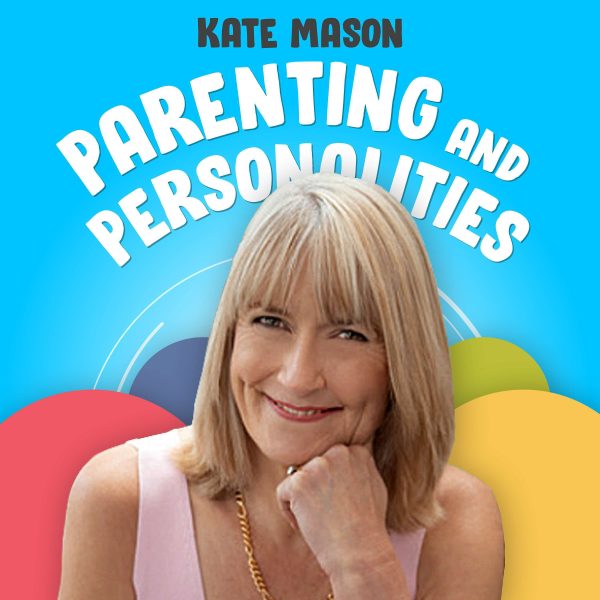
Parenting and Personalities
- Episódios
- 188
- Publicação
- semanal
- Último episódio
- 10 nov 2026
Sobre o podcast
One thing about being a parent – there’s no shortage of personalities to be surrounded by. Our kids, our partners, our family, our friends. They keep us laughing, growing, loving, and crying. If only they understood us. Like the musician Van Morrison once sang “When people understand what I mean, mama said there will be days like this.” Adelaide Australia’s Kate Mason is an author, wife, and mother who has spent her career studying personality and relationships. In this podcast she looks at why relationships work, and why some don't. She also looks at how our personalities impact our relationships and examines what compels our children, husbands, wives and others to behave the way they do. This podcast is designed to help you understand those you love. A half hour listening on your own, will connect you with the ones you care about the most.
Episódios 188
How to Parent a Picky Eater
What if the dinner table battle with your picky eater wasn’t a sign you’re getting it wrong, but a chance to give your child a skill for life? Kate Mason welcomes Katie Kimball, educator, mother of four, TEDx …
Notas do episódio
What if the dinner table battle with your picky eater wasn’t a sign you’re getting it wrong, but a chance to give your child a skill for life?
Kate Mason welcomes Katie Kimball, educator, mother of four, TEDx speaker, and author of The Picky Eater Playbook.
Katie shares her five P’s of picky eating, explaining why parenting styles can’t create a picky eater and how everyday behavior can actually point to sensory, physical, or developmental needs.
Discover practical tools for understanding your child’s behavior, from letting kids serve themselves to spacing out snacks and staying calm when nobody eats. Parents will leave empowered, hopeful, and ready to bring more ease, and even laughter, back to family meals.
Listen for:
07:22 Are children born picky eaters, or can parenting actually cause it?
08:55 Why does my child refuse food when it might not be behavior?
16:10 How can parents stop dinner table battles without pushing kids?
21:31 What should parents do when a child only eats mac and cheese?
26:03 How does Katie Kimball keep calm when nobody eats dinner?
Guest Professor Katie Kimball, CEO/ Founder | Raising Healthy Families
Website | LinkedIn | The Picky Eater PlaybookLeave a rating/review for this podcast with one click
Contact Kate:
Email | Website | Kate’s Book on Amazon | LinkedIn | Facebook | X
Capítulos (5)
What the Research Actually Says About Being a Good Parent
What if the guilt, self-doubt, and overwhelm you feel as a parent isn't a sign that you're failing, but a sign that nobody gave you the right tools?Kate Mason sits down with Professor Alina Morawska …
Notas do episódio
What if the guilt, self-doubt, and overwhelm you feel as a parent isn't a sign that you're failing, but a sign that nobody gave you the right tools?
Kate Mason sits down with Professor Alina Morawska, one of Australia's leading parenting researchers and a senior researcher at the University of Queensland's Parenting and Family Support Centre, the home of the globally renowned Triple P Positive Parenting Program.
With decades of research into prevention and early intervention, Alina brings rare clarity to one of parenting's biggest problems: the gap between the overwhelming amount of parenting information available today and the evidence-based knowledge parents actually need.
From busting the myth that mothering comes naturally, to why it's never too late to seek parenting support, this episode offers parents a warm, science-backed reminder that understanding your child begins with understanding yourself — and that help is always within reach.
Listen for:
7:48 What is evidence-based parenting and why does it matter more than social media advice?
17:33 What are the biggest parenting myths that decades of research have actually disproved?
19:16 Why dads aren't less capable parents — they just need more practice
21:16 What does research say really matters most in raising children well?
22:05 Is it ever too late to change the way you parent?
Guest Professor Alina Morawska, BA BSc (Hons) PhD MPH | Director | Parenting and Family Support Centre School of Psychology
WebsiteLeave a rating/review for this podcast with one click
Contact Kate:
Email | Website | Kate’s Book on Amazon | LinkedIn | Facebook | X
Capítulos (5)
How to Be the Grandparent Your Kids Actually Want
What if the most powerful thing a grandparent can offer isn't advice, but example? Kate Mason sits down with Karen-Tui Boyes, a teacher, author, parent educator and founder of Spectrum Online Academy, who …
Notas do episódio
What if the most powerful thing a grandparent can offer isn't advice, but example?
Kate Mason sits down with Karen-Tui Boyes, a teacher, author, parent educator and founder of Spectrum Online Academy, who is now a first time grandmother.
Karen-Tui shares how she models calm, clear parenting instead of lecturing, why she says "leave it" instead of "don't," and how a simple poster helped with bedtime.
Kate and Karen-Tui also explore boundaries, the pressure of endless parenting advice, and what young children need from the adults who love them.
Discover practical, hopeful insight for understanding the people in your family, and for loving the next generation without taking over.
Listen for:
04:43 What did Karen-Tui Boyes feel when she became a grandmother?
16:09 How can grandparents help without telling parents what to do?
17:16 Why does saying "leave it" work better than "don't touch"?
23:47 Why shouldn't we ask toddlers what they want for lunch?
30:44 What does Karen say crawling reveals about later reading skills?
Guest Karen Tui Boyes, CEO | Spectrum Education
Website | LinkedIn | Instagram
Leave a rating/review for this podcast with one click
Contact Kate:
Email | Website | Kate’s Book on Amazon | LinkedIn | Facebook | X
Capítulos
Carregando capítulos…
Are You Raising Independent Kids or Holding Them Back?
Are we protecting our children or preventing them from growing up?Letting go is one of parenting's greatest challenges, but could holding on too tightly be doing more harm than good? Kate welcomes …
Notas do episódio
Are we protecting our children or preventing them from growing up?
Letting go is one of parenting's greatest challenges, but could holding on too tightly be doing more harm than good?
Kate welcomes psychologist Dr Amy Todey for an insightful conversation about raising independent, resilient children while managing the fears that come with giving them freedom.
From helicopter parenting and age appropriate risks to the emotional challenges of watching children become adults, they explore why allowing mistakes, embracing discomfort and trusting children's abilities are essential for healthy development.
Amy shares personal experiences of giving her young son greater independence, while Kate reflects on navigating relationships with her adult children and setting boundaries as a grandparent.
Together, they discuss how overparenting can undermine confidence, why parents need to rediscover their own identities and how listening with empathy can strengthen family relationships.
It's a thoughtful reminder that successful parenting isn't about maintaining control forever. It's about giving children the confidence to find their own way while knowing they'll always have your love and support.
Listen for:
06:44 When should parents actually start letting go of their children?
11:03 How do you tolerate your anxiety when your child gains independence?
15:51 Why is letting children make their own mistakes so important?
19:59 Why does letting go feel like grief, even when kids thrive?
28:25 What does Dr. Amy Todey say adult children really want from parents?
Guest Dr. Amy Kincaid Todey | Psychologist
Website | InstagramLeave a rating/review for this podcast with one click
Contact Kate:
Email | Website | Kate’s Book on Amazon | LinkedIn | Facebook | X
Capítulos
Carregando capítulos…
How to Really Listen When Your Child Is Struggling
This episode discusses suicide, so please listen with care. If anything raises concerns for you or someone you love, in Australia contact Lifeline on 13 11 14, the Suicide Call Back Service on 1300 659 467, or …
Notas do episódio
This episode discusses suicide, so please listen with care. If anything raises concerns for you or someone you love, in Australia contact Lifeline on 13 11 14, the Suicide Call Back Service on 1300 659 467, or Kids Helpline on 1800 55 1800, or call 000 if someone is in immediate danger.
What if the child who says "I'm not coping" has actually been coping all along, and just needs someone to notice?
Kate Mason is joined by Dr Helen Stallman, a clinical psychologist, award-winning researcher, and mother.
Helen also created Care Collaborate Connect, a simple psychological first aid framework. She shares why our instinct to fix problems can shut down the very conversations our kids need, how naming emotions accurately gives children real power over them, and why everyone, no matter how overwhelmed, is coping.
Together they explore how to talk with children about big feelings, and even suicide, without fear.
This is a warm, practical roadmap for understanding your child, strengthening family relationships, and becoming the calm, caring person your child will want to talk to when it matters most.
Listen for:
7:41 What is Care Collaborate Connect and why did Helen Stallman create it?
10:38 Why do we rush to fix problems instead of really listening?
15:10 What does it mean that everyone is coping, even when struggling?
27:15 How can parents help children name and understand their emotions?
34:54 How do you talk to your child about suicide before a crisis?Guest Helen Stallman, Clinical psychologist | Founder Care Collaborate Connect
Website | LinkedIn |Instagram | FacebookLeave a rating/review for this podcast with one click
Contact Kate:
Email | Website | Kate’s Book on Amazon | LinkedIn | Facebook | X
Capítulos
Carregando capítulos…
How to Help Your Anxious Child Without Rescuing Them
What if helping your anxious child avoid something today is quietly making it harder for them tomorrow? Kate Mason sits down with Professor Vanessa Cobham, a clinical psychologist, University of Queensland …
Notas do episódio
What if helping your anxious child avoid something today is quietly making it harder for them tomorrow?
Kate Mason sits down with Professor Vanessa Cobham, a clinical psychologist, University of Queensland professor, and one of the minds behind Fearless Triple P, a free program for parents of anxious children.
Drawing on years of research and clinical work in Brisbane's public Child and Youth Mental Health Service, Vanessa reframes anxiety as a normal, useful part of being human and explains how the anxiety avoidance trap keeps fear alive.
Together, Kate and Vanessa explore why understanding your child's anxiety matters more than removing it, how "fear ladders" turn overwhelming challenges into manageable steps, and the one simple question every parent can ask.
You'll leave with practical, hopeful parenting tools to help your child discover they can cope.
Listen for:
05:55 Does childhood anxiety come from genetics, temperament, or stressful experiences?
12:15 What is the anxiety avoidance trap and why do parents fall in?
13:21 What should parents do when their anxious child begs to skip a sleepover?
19:20 What is a fear ladder and how does Vanessa Cobham use one?
21:04 Is your child's anxiety a real warning or a faulty smoke alarm?
Guest Vanessa Cobham, PhD Clin Psych | Professor in Clinical Psychology, The University of Queensland
Website | LinkedIn | University of Queensland | Email | Facebook | Instagram | YouTube
Leave a rating/review for this podcast with one click
Contact Kate:
Email | Website | Kate’s Book on Amazon | LinkedIn | Facebook | X
Capítulos
Carregando capítulos…
How to Become the Dad You Never Had a Roadmap For
What if feeling lost as a dad wasn't a sign of failure, but the first step toward becoming the father you truly want to be? Kate Mason is joined by Jeff Hittner, leadership expert, executive coach, founder …
Notas do episódio
What if feeling lost as a dad wasn't a sign of failure, but the first step toward becoming the father you truly want to be?
Kate Mason is joined by Jeff Hittner, leadership expert, executive coach, founder of Ambitious Dads, and devoted father of two boys.
After learning he could not become a biological father, Jeff discovered that changing his mindset about fatherhood meant we can change our minds about anything.
Today, he has interviewed more than 200 dads and uncovered six "dad gaps" that leave modern fathers without a roadmap.
Kate and Jeff explore shame, emotional regulation, co-parenting, and why fatherhood may be the best leadership lab there is.
This empowering conversation offers insight and practical hope for every parent seeking a deeper understanding of the dads in their family, and themselves.
Listen for:
4:11 How did infertility reshape what fatherhood means for Jeff Hittner?
7:47 What are the six dad gaps holding modern fathers back?
17:26 Why do so many dads feel shame about their parenting?
22:55 How can the hard moments of fatherhood make you a better leader?
34:46 Is there really such a thing as a naturally good dad?
Guest Jeff Hittner
Jeff Hittner Website | LinkedIn| Facebook | Instagram | Ambitious Dads| | Podcast | YouTube
Leave a rating/review for this podcast with one click
Contact Kate:
Email | Website | Kate’s Book on Amazon | LinkedIn | Facebook | X
Capítulos
Carregando capítulos…
What's Really Happening in Your Child's Brain During a Meltdown?
What if your child's most frustrating behavior wasn't defiance at all but their survival brain doing exactly what it was designed to do? Kate Mason sits down with Mary Willow, founder of Plum …
Notas do episódio
What if your child's most frustrating behavior wasn't defiance at all but their survival brain doing exactly what it was designed to do?
Kate Mason sits down with Mary Willow, founder of Plum Parenting, parent mentor, author, and educator with more than 35 years of experience supporting children and families.
With a remarkable background spanning nursing, midwifery, and early childhood education, Mary has helped thousands of parents across New Zealand, Australia, Canada, and the United Kingdom better understand what's really happening inside their child's developing brain.
Her new book, Breaking Through: How to Rescue Childhood and Heal the Parent-Child Relationship, introduces a transformative framework; the "true child" versus the "guard dog", that gives parents the language and insight to finally understand children's behavior at every stage.
This episode is a gift for every parent who has ever felt confused, exhausted, or like they're doing everything right and still missing something.
Listen for:
5:03 What made Mary Willow realize parents were missing something essential about child behavior?
10:13 What are the three stages every child moves through — and why do most parents not know about them?
28:21 Why do so many parents accidentally end up parenting the survival brain instead of the true child?
32:51 What is the "guard dog" brain and how does it hijack even the best parenting moments?
35:00 What is the one thing Mary wants every parent listening to take away and use today?
Guest Mary Willow
Website | Mary's Book| Facebook | Instagram
Leave a rating/review for this podcast with one click
Contact Kate:
Email | Website | Kate’s Book on Amazon | LinkedIn | Facebook | X
Capítulos
Carregando capítulos…
Why "Keeping the Peace" Is Destroying Your Family Relationships
What if the arguments in your relationship weren't signs of failure but invitations to finally understand yourself and the people you love most?Kate Mason sits down with Amy Armstrong, family resolution …
Notas do episódio
What if the arguments in your relationship weren't signs of failure but invitations to finally understand yourself and the people you love most?
Kate Mason sits down with Amy Armstrong, family resolution coach and founder of the Center for Family Resolution.
Amy's journey began not in a textbook, but on her bathroom floor… heartbroken, disconnected, and reaching for something she couldn't name.
That personal reckoning became the foundation for her powerful work helping individuals, couples, and families move from conflict to clarity.
Amy shares her transformative "pro-me, not anti-you" philosophy, the art of fighting well in front of your children, and how "care without carrying" can make you the kind of friend, partner, and parent everyone needs.
Whether you're navigating a difficult relationship, a co-parenting challenge, or simply want to understand those you love more deeply, this episode is a masterclass in connection.
Listen for:
1:53 How did Amy Armstrong's own heartbreak become the beginning of her life's work?
6:31 What does it really mean to go from being a peacemaker to a truth teller?
9:00 What is the "pro-me, not anti-you" approach and how does it change family conflict?
17:38 How do you disagree well in front of your children without damaging them?
24:13 What does it mean to "care without carrying" and how do parents use it today?
Guest Amy Armstrong, Conflict Resolution Specialist | Co-Founder |The Center for Family Resolution
Website | LinkedIn | Instagram | Facebook | TikTokLeave a rating/review for this podcast with one click
Contact Kate:
Email | Website | Kate’s Book on Amazon | LinkedIn | Facebook | X
Capítulos
Carregando capítulos…
What Every Parent Needs to Know About Child Influencers
What if the photos and videos you lovingly share of your children online are entering a world you never imagined… and can't fully see? Kate Mason sits down with Crystal Abidin; Malay-Australian professor …
Notas do episódio
What if the photos and videos you lovingly share of your children online are entering a world you never imagined… and can't fully see?
Kate Mason sits down with Crystal Abidin; Malay-Australian professor of internet studies at Curtin University, anthropologist, and mother, to explore one of the most pressing and least understood challenges facing modern families.
Crystal's new book, Child Influencers: How Children Become Entangled with Social Media Fame, pulls back the curtain on the world of child influencers, from the mummy-blogging origins of the 1990s to the AI-doctored dangers of today.
Whether you've casually shared a birthday photo or are raising a child who dreams of going viral, this conversation offers vital insight, a global perspective, and the practical understanding every parent urgently needs.
Listen for:
4:50 Where did child influencers actually come from and how did it all begin?
9:27 How do East Asian countries approach children and social media so differently to Australia?
12:35 What is "sharenting" and how does everyday family sharing become a risk?
15:47 What gaps in the law leave child influencers unprotected when filming at home?
29:02 What is Crystal's most important advice for parents sharing their children online?
Guest: Crystal Abidin, Professor of Internet Studies, Curtin University; Anthropologist and Ethnographer of Internet Cultures
Website | Publication | Instagram | Child Influencers
Leave a rating/review for this podcast with one click
Contact Kate:
Email | Website | Kate’s Book on Amazon | LinkedIn | Facebook | X
Capítulos
Carregando capítulos…
REPLAY - Unlocking Effective Communication Between Teens and Parents
This is an episode originally published in October 2023. It is one of my most popular.It’s so important for parents to have effective communication with their teenagers and using the Myers Briggs Type Indicator …
Notas do episódio
This is an episode originally published in October 2023. It is one of my most popular.
It’s so important for parents to have effective communication with their teenagers and using the Myers Briggs Type Indicator (MBTI) can help.
Kate and guest Jeanine Mouchawar discuss how understanding your own and your teen's personality type can improve communication and reduce conflict.
Jeanine shares a five-step process for effective communication: calming oneself before a conversation, stating observations without judgement, getting curious about the teen's feelings, validating their feelings, and asking for their ideas to make better choices.
Jeanine emphasizes the importance of removing the word "why" from conversations as it often puts the other person on the defensive.
Listen For:
10:30 Why parenting approaches differ for teens as opposed to younger children
18:24 Calming techniques (for calming down parents)
24:19 The importance of stating observations clearly
29:35 Avoiding the word “Why”
Guest: Jeanine Mouchawar, BA Stanford
Instagram | Facebook | TikTok | Website | Free Classes
Contact Kate:
Email | Website | Kate’s Book on Amazon | LinkedIn | Facebook | X
Capítulos
Carregando capítulos…
What Do Your Mistakes Reveal About Your Personality?
Have you ever forgotten something so obvious that all you could do was laugh and wondered whether your greatest frustrations might actually be the flip side of your greatest strengths? Kate Mason flies solo and …
Notas do episódio
Have you ever forgotten something so obvious that all you could do was laugh and wondered whether your greatest frustrations might actually be the flip side of your greatest strengths?
Kate Mason flies solo and bravely opens the door to life inside her spontaneous, flexible, perceiving brain.
After 30 years of teaching personality, Kate shares her most memorable mistakes: leading the wrong child away at the zoo, concert tickets for the wrong day, and watching her cruise ship sail off without her, alongside the deeply moving story of navigating her mum's dementia and move into nursing home care.
Warm, funny, and unexpectedly tender, this episode is an empowering invitation to understand your own personality, embrace your blind spots, celebrate the organised people who carry you, and discover the joy of living your best life… your way.
Listen for:
2:21 What happens when a teacher accidentally leads the wrong child away at the zoo?
4:48 How can parents turn a plan gone wrong into the best surprise ever?
12:02 How did Kate navigate her mum's dementia and the move to nursing home care?
20:11 What did Kate learn when her river cruise ship sailed away without her?
23:14 Why are your greatest frustrations the flip side of your greatest strengths?
Leave a rating/review for this podcast with one click
Contact Kate:
Email | Website | Kate’s Book on Amazon | LinkedIn | Facebook | X
Capítulos
Carregando capítulos…
REPLAY - A Cuppa With Kate n Tra – Why Opposites Attract
You don’t need to be opposites to attract. Sometimes two very like-minded people with like-personalities people find mutual attraction.But it does seem odd that it’s often two people are not the same in many …
Notas do episódio
You don’t need to be opposites to attract. Sometimes two very like-minded people with like-personalities people find mutual attraction.
But it does seem odd that it’s often two people are not the same in many, many ways who find attraction.
For example, why does the introvert find attraction in the extravert? Do they help them learn to speak up more and join the party? And why does the extravert fall for the introvert? Do they help them learn to listen and reflect?
Kate and Tracy are coming at this from experience. Grab a cuppa and join.
Listen for:
7:15 What really attracts introverts and extroverts to each other?
8:43 What does Tracy Noon find irresistible about introverted partners?
11:03 Why does an extrovert reopen an argument two days later?
13:18 Why did Tracy's eleven-year relationship end in total silence?
15:00 How many social outings are too many for an introverted partner?
Guest Co Host – Tracy Noon
Leave a rating/review for this podcast with one click
Contact Kate:
Email | Website | Kate’s Book on Amazon | LinkedIn | Facebook | X
Capítulos
Carregando capítulos…
Matrescence: The Identity Shift No One Warns Mums About
What if the exhaustion and lost sense of self in early motherhood aren't signs you're failing but signs you're being remade? Kate Mason welcomes Benita Bensch, author, certified Motherhood …
Notas do episódio
What if the exhaustion and lost sense of self in early motherhood aren't signs you're failing but signs you're being remade?
Kate Mason welcomes Benita Bensch, author, certified Motherhood Studies Practitioner, clarity coach, farmer, and mum of four boys, for a warm, honest conversation about matrescence, the profound identity shift of becoming a mother.
Benita shares her own journey through postnatal anxiety and burnout, the "black hole" she hit with four children under four, and the science and language that finally helped it all make sense.
Together they explore why understanding this transition matters, how to recognise when to seek help, and why reclaiming your identity makes you a wholer parent.
It's an empowering, hope-filled listen for anyone who has ever quietly wondered, "Who am I now?"
Listen for:
8:00 Why did Benita gradually start to lose her sense of self?
10:24 What do the physical symptoms of postnatal anxiety feel like?
11:57 What does hitting the "black hole" of motherhood look like?
16:52 What is matrescence and why aren't mothers told about it?
25:49 When should an overwhelmed mum reach out for help?
Guest Benita Bensch, Author, Speaker & Clarify Coach for Women
Website | LinkedIn | Email | Instagram | Facebook | Seen Again: Light on Matrescence Book
Leave a rating/review for this podcast with one click
Contact Kate:
Email | Website | Kate’s Book on Amazon | LinkedIn | Facebook | X
Capítulos
Carregando capítulos…
REPLAY - Empowering Parents: Tools for Raising Resilient Kids
This is an episode originally published in August 2024. It is one of my most popular.Have you ever wondered what builds resilience in us and our children?In this episode, Kate chats with Tania Johnson …
Notas do episódio
This is an episode originally published in August 2024. It is one of my most popular.
Have you ever wondered what builds resilience in us and our children?
In this episode, Kate chats with Tania Johnson, co-founder of the Institute of Child Psychology.
Tania shares her journey, from fostering four First Nations children to her academic accomplishments and her profound insights into attachment theory and resilience.
Together, they explore the power of purposeful parenting, the importance of allowing children to fail and learn, and practical strategies to foster resilience in our young ones.
Listen For:
4:44 Experiences as a Foster Mom
11:15 When Did We Start Protecting Children from Failure?
26:17 The Impact of Overpraising
35:51 Teaching Resilience
Leave a rating/review for this podcast with one click
Capítulos
Carregando capítulos…
Your Partner Isn't Gaslighting You. Or Are They?
Have you ever walked away from a disagreement with your partner absolutely certain of what was said…only to have them remember it completely differently? What if that isn't manipulation at all, but simply …
Notas do episódio
Have you ever walked away from a disagreement with your partner absolutely certain of what was said…only to have them remember it completely differently? What if that isn't manipulation at all, but simply the way human memory actually works?
Kate Mason welcomes back Associate Professor Celine Vangolde from the University of Sydney, whose research explores memory, trauma, child testimony, and psychological abuse.
Celine's work sits at the intersection of science and real-life relationships, examining how memories are formed, stored, retrieved, and yes, sometimes misremembered entirely…and what that means for the families and couples navigating those moments every day.
This conversation takes a deep, accessible dive into the term "gaslighting", where it came from, how it has evolved, and critically, when a normal memory disagreement ends and genuine psychological abuse begins.
Understanding personality types, memory distrust, and the role of intention gives parents and partners the insight they need to protect themselves and their families.
Listen for:
03:03 How does memory actually work and why don't two people ever remember the same event?
06:52 Where did the term gaslighting originate and how did it evolve over time?
13:43 What does Celine's research reveal about how couples misidentify memory conflicts as gaslighting?
17:11 How should someone decide if they are truly being gaslit or simply in a normal disagreement?
20:21 When does a caring, protective relationship cross the line into coercive control and abuse?
Leave a rating/review for this podcast with one click
Guest Celine Vangolde, Associate Professor University of Sydney School of Psychology, Faculty of Science, specializing in forensic psychology and memory research
Contact Kate:
Email | Website | Kate’s Book on Amazon | LinkedIn | Facebook | X
Capítulos
Carregando capítulos…
Your Child Doesn't Need Perfect Parents. They Need Connected Ones.
What if the secret to raising happier children wasn't about perfect parenting techniques…but about the quality of the relationship between you and your parenting partner? Kate Mason is joined by author …
Notas do episódio
What if the secret to raising happier children wasn't about perfect parenting techniques…but about the quality of the relationship between you and your parenting partner?
Kate Mason is joined by author, family therapist, and family systems expert Dr. Jenny Brown for a return visit that builds beautifully on their first conversation.
Jenny brings decades of clinical experience alongside her deeply personal journey of applying this work within her own marriage and family.
Drawing on the groundbreaking family systems theory developed by psychiatrist Dr. Murray Bowen, she and Kate explore what really happens to relationships when children arrive and why understanding your own role in relationship patterns is the most empowering shift any parent can make.
Whether you're feeling disconnected from your partner, frustrated by different parenting styles, or simply craving more connection in your family, this episode offers both the insight and the hope you've been looking for.
Listen For2:45 How did Jenny's own family experience shape her decades of work with families?
9:14 Why do couples stop truly connecting and become roommates managing kids' logistics?
12:21 How should parenting partners listen to each other without fixing, advising, or comparing?
21:22 What was the moment Jenny realised she was getting in the way of her husband's parenting?
28:23 Where should disconnected parents start when they feel overwhelmed and don't know what to do?
Leave a rating/review for this podcast with one click
Contact Dr Jenny Brown:
Email | Website | Dr Jenny's Book "The Parenting Paradox" | Instagram | Facebook | LinkedIn
Contact Kate:Email | Website | Kate’s Book on Amazon | LinkedIn | Facebook | X
Capítulos
Carregando capítulos…
Why Does Modern Family Life Feel So Overwhelming?
Modern life is fraying us. But we can learn how to come back to ourselves. In this thoughtful and deeply relatable episode Kate welcomes back educator, social worker, author, and speaker Stephanie Malia Krauss …
Notas do episódio
Modern life is fraying us. But we can learn how to come back to ourselves.
In this thoughtful and deeply relatable episode Kate welcomes back educator, social worker, author, and speaker Stephanie Malia Krauss to explore why so many parents, teachers, carers, and children feel overwhelmed, exhausted, and disconnected.
Drawing from her book How We Thrive: Caring for Kids and Ourselves in a Changing World, Stephanie explains how chronic busyness, overstimulation, technology, anxiety, and modern pressures pull families away from regulation, connection, and truly human living.
Together, Kate and Stephanie unpack how self-regulation develops, why children and young adults are still learning these skills well into their twenties, how dysregulation can be mistaken for “bad behaviour,” and why parents need practical tools like going “below calm,” using gentle cues, listening instead of fixing, and recognizing their own stress signals.
Listen For
6:26 Why Does Modern Family Life Feel So Overwhelming?
11:15 What Is Self-Regulation and Why Is It Still Developing Until the Mid-20s?
19:20 How Can Parents Calm Themselves When a Child Is Dysregulated?
28:11 Is Your Child’s Behaviour Actually a Discipline Issue or a Dysregulation Issue?
41:17 Could the Personality Trait You Dislike Actually Be Chronic Dysregulation?
Leave a rating/review for this podcast with one click
Connect with guest: Stephanie Malia Krauss
LinkedIn | Website | YouTube | Instagram | Book: How We Thrive
Contact Kate:
Email | Website | Kate’s Book on Amazon | LinkedIn | Facebook | X
Capítulos
Carregando capítulos…
The Truth About the Memory of a Child
Your memory might feel certain, but it is not a recording. In this fascinating episode of Parenting and Personalities, Kate speaks with Associate Professor Celine Vangolde from the University of Sydney about …
Notas do episódio
Your memory might feel certain, but it is not a recording.
In this fascinating episode of Parenting and Personalities, Kate speaks with Associate Professor Celine Vangolde from the University of Sydney about how memory really works, especially in children.
Celine explains why two people can live through the same moment and remember it differently, why memories are reconstructed rather than replayed, and how emotions, context, language, stress, and other people’s stories can change what we recall.
The conversation moves from everyday family misunderstandings to child testimony in legal settings, showing parents how to listen more carefully, ask better questions, and stay curious rather than jumping to conclusions.
Listen For
04:32 Is Memory Really Like a Video Recording in Our Brain?
06:56 Are We Ever Telling the Full Truth When We Remember Something?
10:35 Why Can Two People See the Same Thing So Differently?
14:49 How Do Children’s Memories Develop as They Grow?
19:26 Can Parents Trust What Their Children Remember?
Leave a rating/review for this podcast with one click
Guest: Celine Vangolde, Associate Professor University of Sydney School of Psychology, Faculty of Science | Forensic Psychology and Memory Research
Contact Kate:
Email | Website | Kate’s Book on Amazon | LinkedIn | Facebook | X
Capítulos
Carregando capítulos…
REPLAY - The Resilience Revolution: Raising Strong Kids
This is an episode originally published in November 2024. It is one of my most popular. Are you raising resilient children?In this episode, Kate Mason and Tania Johnson dive into the importance of building …
Notas do episódio
This is an episode originally published in November 2024. It is one of my most popular.
Are you raising resilient children?
In this episode, Kate Mason and Tania Johnson dive into the importance of building resilience and emotional strength in both parents and children.
From the benefits of play to the power of independent problem-solving, they explore how cultural differences impact our approach to parenting.
Discover practical strategies for fostering resilience and learn why it's crucial to let kids experience failure and take risks.
Listen For:
5:03 Teaching Conflict Resolution
9:22 Overprotection and Online Dangers
16:56 The Importance of Family Togetherness
27:00 Fostering Hope in Children
Leave a rating/review for this podcast with one click
Guest: Tania Johnson
Website | LinkedIn | The Parenting Handbook | Instagram |
Contact Kate:
Email | Website | Kate’s Book on Amazon | LinkedIn | Facebook | X
See omnystudio.com/listener for privacy information.
Capítulos
Carregando capítulos…
What Your Household Habits Reveal About Your Personality
What if the reason you and your partner drive each other absolutely crazy over the washing, the cushions, or even the toilet paper roll has nothing to do with bad habits and everything to do with …
Notas do episódio
What if the reason you and your partner drive each other absolutely crazy over the washing, the cushions, or even the toilet paper roll has nothing to do with bad habits and everything to do with personality?
Kate Mason takes a warm, witty, and surprisingly eye-opening dive into the everyday irritations that quietly shape our closest relationships.
Drawing on the melancholic and phlegmatic temperaments and the Myers-Briggs judging and perceiving preferences, Kate explores why some of us are natural organizers who feel genuine calm when things are in order, while others live happily in flexible, "good enough" mode.
Through hilarious real-life stories from laundry debates at a dinner party to her 94-year-old mother's enduring love of perfectly folded clothes, Kate reveals how understanding your partner's or family member's personality type can transform daily conflict into genuine connection.
This episode will leave you asking a different question: am I loving them, or am I reorganizing them?
Listen For4:14 What everyday moment reminded Kate how strongly our personalities show up in daily life?
6:07 Are you a folder or a scruncher and what does it actually reveal about your personality?
7:10 What are the key strengths and challenges of the melancholic and phlegmatic temperaments?
12:00 How do judging and perceiving types experience time differently and why does it cause conflict?
15:02 What does Kate's 94-year-old mother teach us about how deeply personality is woven into who we are?
Leave a rating/review for this podcast with one click
Contact Kate:Email | Website | Kate’s Book on Amazon | LinkedIn | Facebook | X
Capítulos
Carregando capítulos…
When “Good Parenting” Backfires
What if the real challenge in parenting is not about doing more, but about understanding how we show up? In this conversation, Kate Mason speaks with family therapist Dr Jenny Brown about the quiet pressure …
Notas do episódio
What if the real challenge in parenting is not about doing more, but about understanding how we show up?
In this conversation, Kate Mason speaks with family therapist Dr Jenny Brown about the quiet pressure many parents carry to get everything right and the self-doubt that often follows.
With decades of experience and a foundation in Bowen family systems theory, Jenny explores how a parent’s emotional responses, anxiety, and level of involvement shape a child’s development in powerful ways.
Rather than focusing only on changing children’s behaviour, she encourages parents to build awareness, steadiness, and confidence in themselves, creating an environment where children can develop resilience and independence.
Listen For3:20 What inspired Dr Jenny Brown to shift from law into social science and family therapy?
4:50 Why is understanding humans in their social context so important for parenting?
5:16 What do parents often realise later about what they wish they had known earlier?
5:42 Is it ever too late to improve your parenting approach and relationships?
6:13 Why did Dr Jenny Brown write The Parenting Paradox and who is it for?Leave a rating/review for this podcast with one click
Contact Dr Jenny Brown:
Email | Website | Dr Jenny's Book "The Parenting Paradox" | Instagram | Facebook | LinkedIn
Contact Kate:Email | Website | Kate’s Book on Amazon | LinkedIn | Facebook | X
Capítulos
Carregando capítulos…
Solo Mum By Choice: Lorena Otes on Redefining Family
What if the "right" path to parenthood looked nothing like the one you imagined and turned out to be exactly the one you were meant to take? Kate Mason sits down with Lorena Otes, author of Solo Mum By Choice …
Notas do episódio
What if the "right" path to parenthood looked nothing like the one you imagined and turned out to be exactly the one you were meant to take?
Kate Mason sits down with Lorena Otes, author of Solo Mum By Choice, dance teacher, and mother who made one of the most courageous choices a woman can make: to become a parent entirely on her own terms.
Lorena opens up about navigating 12 rounds of IVF, genetic discoveries she never expected, the emotional and financial reality of solo fertility treatment, and the quiet strength it takes to keep going when life doesn't follow the script.
Her story reframes what family can look like and will leave listeners understanding that love, consistency, and showing up are what truly define a parent.
Listen For:
2:52 Was becoming a parent always something Lorena had envisioned for herself?
7:03 What did Lorena discover about her own genetics when she began the IVF process?
13:46 What did 12 rounds of IVF really feel like emotionally and practically for Lorena?
20:06 How does a fiercely independent personality shape the solo parenting experience?
36:12 What advice does Lorena have for anyone considering the solo parenthood path?
Leave a rating/review for this podcast with one click
Contact Lorena Otes:
Email | Website | Lorena's Book | Instagram | Facebook | TikTok
Contact Kate:Email | Website | Kate’s Book on Amazon | LinkedIn | Facebook | X
Capítulos
Carregando capítulos…
When Shit Hits the Fan: A Guide to Surviving the Chaos
What if the hard weeks…the ones where nothing is catastrophically wrong, but everything still feels completely overwhelming…are actually telling you something important about yourself? Kate Mason invites you …
Notas do episódio
What if the hard weeks…the ones where nothing is catastrophically wrong, but everything still feels completely overwhelming…are actually telling you something important about yourself?
Kate Mason invites you into one of those weeks.
A solo episode unlike any other, Kate shares the real, raw, and sometimes messy experience of a family illness unfolding over Easter. Sick grandchildren, worried parents, a husband mistaken for a heart attack, and Kate herself, the last one standing.
With warmth and honesty, Kate connects everyday stress to the deeper work of understanding ourselves and those we love.
This episode offers personality-aware tools for getting through life's quietly destabilising moments.
Not by fixing everything, but by staying steady while it passes.
Listen For2:01 How did a vomiting bug over Easter turn into a week Kate will never forget?
5:24 What happens when you're the main caregiver for everyone and you can't even be near them?
8:53 How do other families quietly carry these kinds of exhausting, invisible weeks?
12:34 What practical tools can help you get through a week when everything feels like a lot?
15:22 Why does acknowledging your stress, rather than minimizing it, actually help you recover faster?
Leave a rating/review for this podcast with one click
Contact Kate:Email | Website | Kate’s Book on Amazon | LinkedIn | Facebook | X
Capítulos
Carregando capítulos…
Re-Humaning Your Family: Is Modern Life Stealing Your Family's Wellbeing?
What if the overwhelm you feel as a parent isn't a personal failing but a signal that something deeply human is missing from your family's life? Kate Mason sits down with Stephanie Malia Krauss, an …
Notas do episódio
What if the overwhelm you feel as a parent isn't a personal failing but a signal that something deeply human is missing from your family's life?
Kate Mason sits down with Stephanie Malia Krauss, an educator, social worker, author, and mother of teenage boys, to explore the revolutionary idea of "re-humaning": reclaiming the connections, love, and belonging that modern life has quietly stolen from our families.
Stephanie's latest book, How We Thrive: Caring for Kids and Ourselves in a Changing World, draws on decades of working with young people and thousands of conversations with overwhelmed parents and caregivers worldwide.
Together, Kate and Stephanie unpack the science behind why our children are struggling, and the beautifully simple, practical shifts that can transform your family's wellbeing starting today.
Understanding your child and those you love has never felt more urgent…or more hopeful.
Listen For2:59 What personal experiences shaped Stephanie's lifelong commitment to caring for children?
10:20 How did the pandemic reveal what overwhelmed parents and children truly need?
23:37 What does the science tell us about connection, love, and belonging as human essentials?
30:50 How does the story of Eastern European orphanages show us what children cannot survive without?
41:06 What small intentional actions can parents take this week to rebuild belonging in their family?
Leave a rating/review for this podcast with one click
Connect with guest: Stephanie Malia Krauss, M.Ed., MSW | Author | Speaker | Strategist
LinkedIn | Website | YouTube | Instagram | Book: How We Thrive
Contact Kate:
Email | Website | Kate’s Book on Amazon | LinkedIn | Facebook | X
Capítulos
Carregando capítulos…
What Happens When Your Child Stops Believing
What if the moment your child stops believing isn't an ending… but the beginning of something even more meaningful? Kate Mason takes a warmlook at one of family life's most tender rituals: Easter …
Notas do episódio
What if the moment your child stops believing isn't an ending… but the beginning of something even more meaningful?
Kate Mason takes a warmlook at one of family life's most tender rituals: Easter traditions.
From the egg hunts of her own Adelaide childhood to the night her son Jack and daughter Cassie discovered the truth behind the Easter Bunnyand the beautiful reframe that followed,Kate explores how traditions shape family identity across generations.
This episode is a gentle, heartfelt reflection on what makes family rituals matter, how to create ones that are doable and sustainable, and why understanding the people you love means holding the magic carefully… and then passing it on.
Listen For1:40 What makes Easter traditions worth keeping, even as life gets busier and children grow?
4:33 What does Kate say traditions actually need to be to last across the years?
9:21 How do you handle the moment a child starts questioning whether the Easter Bunny is real?
11:20 What happened the day Kate's children found out the truth — and how did the family recover?
15:59 How can grandparents, aunties, and uncles join in traditions without stepping on parents' toes?
Leave a rating/review for this podcast with one click
Contact Kate:
Email | Website | Kate’s Book on Amazon | LinkedIn | Facebook | X
Capítulos
Carregando capítulos…
The Science Behind Autism that Most Parents Never Hear
What if the biggest barriers to your autistic child's progress aren't the ones anyone told you about… and the solutions are already backed by science? Kate Mason welcomes back Theresa Lyons, PhD …
Notas do episódio
What if the biggest barriers to your autistic child's progress aren't the ones anyone told you about… and the solutions are already backed by science?
Kate Mason welcomes back Theresa Lyons, PhD, scientist, autism researcher, and founder of navigating AWEtism, for a conversation that goes beyond the diagnosis and into the biology.
Theresa unpacks three powerful areas that functional medicine research has identified as having real impact for children on the spectrum: gut health and diet (including gluten, dairy, and food additives), the role of genetics and environment in why two siblings in the same house can have completely different outcomes, and a groundbreaking discovery called cerebral folate deficiency… a condition affecting up to 70% of autistic children that may be dramatically limiting speech.
Parents who feel overwhelmed, confused, or like they've already tried everything will find this episode both deeply informative and genuinely hopeful.
Listen For
3:50 What is the real science behind going gluten-free for a child with autism?
7:31 Why is diet change so overwhelming for autism families, and how should parents approach it?
12:16 How can genetics and environment explain why two children in the same household experience autism so differently?
14:29 What is cerebral folate deficiency, and how could a simple blood test unlock speech in non-verbal children?
18:34 What should parents do right now if they think cerebral folate deficiency could be a factor for their child?
Leave a rating/review for this podcast with one click
Connect with guest: Theresa Lyons, MS, MS, PhD | Founder & CEO Navigating AWEtism
Website | LinkedIn | Instagram| YouTube| Facebook
Contact Kate:
Email | Website | Kate’s Book on Amazon | LinkedIn | Facebook | X
Capítulos
Carregando capítulos…
What Japan Taught Me About Personality (And Parenting)
What if the most powerful personality lesson of your life came not from a book or a podcast…but from a train in Tokyo? Kate Mason shares warm, witty, and surprisingly profound reflections from her holiday in …
Notas do episódio
What if the most powerful personality lesson of your life came not from a book or a podcast…but from a train in Tokyo?
Kate Mason shares warm, witty, and surprisingly profound reflections from her holiday in Japan.
Travelling with her family, Kate finds herself using the four temperaments: sanguine, choleric, melancholic, and phlegmatic, to make sense of everything from Tokyo's train etiquette to the way her travel companions plan (or don't plan) their days.
This episode is a beautiful reminder that understanding personalities isn't just an academic exercise, it's the daily practice of giving people grace.
You will come away with fresh insight into why the people you love move through the world differently, and why that difference is worth celebrating.
Listen For1:02 How does travelling to a very different culture reveal your own personality?
3:52 What does Japan's approach to rubbish and shared spaces teach us about parenting?
7:28 Why is riding a quiet Japanese train a surprisingly confronting experience for a sanguine?
9:49 What happens when a choleric personality meets the Tokyo train system?
11:44 How do temperament differences show up when a group travels together and what can that teach families?
Leave a rating/review for this podcast with one click
Contact Kate:Email | Website | Kate’s Book on Amazon | LinkedIn | Facebook | X
Capítulos
Carregando capítulos…
Are You Accidentally Raising Your Kids Differently Based on Gender?
What if the words you use every day…without even realising it…are quietly shaping who your children believe they can become? Kate Mason sits down with communications expert, author, and mother of two boys, Kate …
Notas do episódio
What if the words you use every day…without even realising it…are quietly shaping who your children believe they can become?
Kate Mason sits down with communications expert, author, and mother of two boys, Kate Mason, to explore the hidden power of gendered language in parenting.
From "be careful" on the playground to "give grandma a kiss," the two Kates unpack the subtle, everyday phrases that send very different messages to our sons and daughters…often without us even noticing.
Drawing on research, real-life stories, and her new book Powerfully Likeable, guest Kate Mason offers parents practical insight and a simple but transformative question: Would I say this to the other gender?
This episode is for every parent who wants to raise emotionally confident, connected, and capable children.
Listen For2:21 How can better listening instantly improve the way we communicate with others?
7:59 Why do we tell girls to be careful more often than boys?
14:31 How does praising girls for being pretty shape their identity over time?
18:44 Why are boys taught hierarchy while girls are taught rapport?
34:09 How can parents teach body autonomy without forcing children to hug or kiss relatives?
Leave a rating/review for this podcast with one click
Connect with guest: Kate Mason, Communications Coach | Author, Powerfully Likeable | World-champion Debater
Website | LinkedIn | Instagram | Linktree
Contact Kate:
Email | Website | Kate’s Book on Amazon | LinkedIn | Facebook | X
Capítulos
Carregando capítulos…
The Perfect Parent Trap: What If Your “Worst Moment” Is a Clue?
Parenting isn’t a performance, it’s a relationship, and the messiest moments might be your best clues. Kate talks with family therapist and educator Lisa Taylor about her new book The Perfect Parent Trap and …
Notas do episódio
Parenting isn’t a performance, it’s a relationship, and the messiest moments might be your best clues.
Kate talks with family therapist and educator Lisa Taylor about her new book The Perfect Parent Trap and why “losing it” doesn’t mean you’re failing. It may mean an old, tender part of you is getting “ignited.”
They explore Lisa’s “heartprint” framework (the deep beliefs we carry, like “I’m not enough”), how kids “borrow our nervous system,” and why the real shift often starts with regulating ourselves instead of “fixing” our children.
Listen For:00 Have you ever “lost it” and realized you weren’t parenting from today?
12:43 How do you tell if you’re reacting to your child—or the child within you?
24:59 What does a real repair sound like after you’ve messed up?
33:05 Why does one “difficult” child sometimes hold the whole family system together?
40:49 Can re-parenting your inner child change how you parent right now?Leave a rating/review for this podcast with one click
Connect with guest: Lisa Taylor
Website | Instagram | Facebook | LinkedIn | Email | Lisa’s Book
Contact Kate:
Email | Website | Kate’s Book on Amazon | LinkedIn | Facebook | X
Capítulos
Carregando capítulos…
Aqui estão os 40 episódios mais recentes de 188. Os mais antigos estão no feed do podcast.
Recomendado por Parenting and Personalities
Podcasts parecidos
Mais podcasts de Educação




Este podcast é seu?
Confirme com uma entrada no seu feed: você recebe um código aqui, adiciona como podcast:txt no canal do seu feed e nós verificamos. Depois disso, seu podcast aparece como “verificado” no SoundNode.