

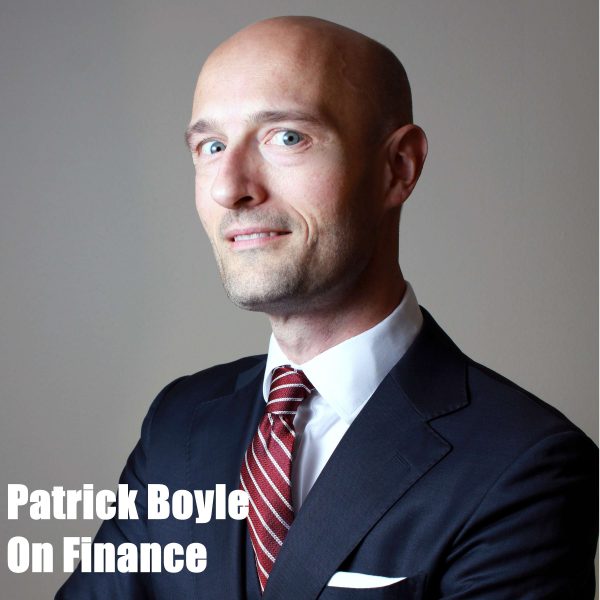
Patrick Boyle On Finance
- Episódios
- 332
- Publicação
- semanal
- Último episódio
- 7 nov 2026
Sobre o podcast
This podcast is all about quantitative finance and financial history. Subscribe to hear about financial markets, derivatives, and how investors use quantitative tools from statistics and corporate finance theory. Included are interviews with some of the most interesting thinkers in finance. Occasional longer form financial documentaries, open up fascinating elements of financial markets history. Patrick Boyle is a quantitative hedge fund manager, a university professor, and a former investment banker. To contact Patrick visit http://onfinance.org Find Patrick on YouTube at: https://www.youtube.com/c/PatrickBoyleOnFinance DISCLAIMER:This podcast is not affiliated with any financial institution. The information provided is for entertainment purposes only and does not constitute financial advice. Those seeking investment advice should seek out a registered professional in their home jurisdiction and confirm their credentials on your national regulator's website. Patrick Boyle is not responsible for any investment actions taken by viewers and his content should not be used as a basis for investment or other financial decisions.
Episódios 332
How North Korea Pulled Off the Biggest Heist in History
Last week, hackers drained $6.3 billion from Binance, the world’s largest crypto exchange, in what blockchain analysts call the largest theft of any kind in history. The FBI blames TraderTraitor, a North Korean …
Notas do episódio
Last week, hackers drained $6.3 billion from Binance, the world’s largest crypto exchange, in what blockchain analysts call the largest theft of any kind in history. The FBI blames TraderTraitor, a North Korean state hacking unit, though North Korea denies it. Patrick Boyle looks at how the Binance hack worked: a fake job interview, Binance’s own internal AI tool, an Ethereum feature called EIP-7702, and fifty pre-signed transactions. It covers why Tether and Circle could freeze billions in stolen stablecoins while the hackers’ bitcoin and ether stayed out of reach, how North Korea launders and cashes out stolen crypto, and why bitcoin barely moved while Coinbase and Circle shares fell. It also asks what CZ’s Twitter spat with Elon Musk tells us about crypto’s supposedly decentralized financial system.
Patrick's Books:
Statistics For The Trading Floor: https://amzn.to/3eerLA0
Derivatives For The Trading Floor: https://amzn.to/3cjsyPF
Corporate Finance: https://amzn.to/3fn3rvC
Ways To Support The Channel:
Buy Me a Coffee: https://www.buymeacoffee.com/patrickboyle
What Anthropic’s IPO Filing Actually Says
Anthropic — the maker of the Claude AI models — has filed its S-1 prospectus for what could be the largest IPO in history, at a valuation somewhere between one and a half and two trillion dollars. In this video …
Notas do episódio
Anthropic — the maker of the Claude AI models — has filed its S-1 prospectus for what could be the largest IPO in history, at a valuation somewhere between one and a half and two trillion dollars. In this video Patrick Boyle goes through the filing in detail: the eighty-billion-dollar “loss” that isn’t really a loss, the genuine operating profit nobody expected, the growth rate that quietly halved in the third quarter, the eight hundred billion dollars of compute commitments buried in the footnotes, and a corporate governance structure that leaves ordinary shareholders with almost no say at all. Is Anthropic a two-trillion-dollar bargain, an AI bubble about to pop, or something nobody — including Anthropic — can actually price? We look at what the numbers say, what they don’t, and why the honest answer is that both the bulls and the bears are guessing.Paul Kedrosky on Hidden Forces: https://www.youtube.com/watch?v=mcn8HpgPBIY
Patrick's Books:
Statistics For The Trading Floor: https://amzn.to/3eerLA0
Derivatives For The Trading Floor: https://amzn.to/3cjsyPF
Corporate Finance: https://amzn.to/3fn3rvC
Ways To Support The Channel:
Buy Me a Coffee: https://www.buymeacoffee.com/patrickboyle
Who Really Pays for AI Data Centers?
Americans now oppose new AI data centers by roughly three to one, ranking them below coal plants and nuclear power stations, and towns across the country are passing moratoriums faster than tech companies can …
Notas do episódio
Americans now oppose new AI data centers by roughly three to one, ranking them below coal plants and nuclear power stations, and towns across the country are passing moratoriums faster than tech companies can build. In this video, I look at the data center backlash: what holds up in the complaints about water, noise, and electricity bills, why the tech industry’s cash offers keep failing, and how xAI powered its Memphis supercomputer with a fleet of unpermitted gas turbines. Then we follow the money, from CoreWeave’s distressed credit default swaps to the investment-grade bonds landing in pension funds, and ask who is actually holding the risk if the AI boom turns out to be a bubble, with a look back at the railroad bubble of 1873.
Patrick's Books:
Statistics For The Trading Floor: https://amzn.to/3eerLA0
Derivatives For The Trading Floor: https://amzn.to/3cjsyPF
Corporate Finance: https://amzn.to/3fn3rvC
Ways To Support The Channel:
Buy Me a Coffee: https://www.buymeacoffee.com/patrickboyle
Did Ukraine Just Bomb the Russian Bots?
In October 2026, Ukrainian drone strikes knocked out three of Yandex’s six major data centers, and a viral chart claimed that Russian bots had vanished from social media overnight. They hadn’t. In this video …
Notas do episódio
In October 2026, Ukrainian drone strikes knocked out three of Yandex’s six major data centers, and a viral chart claimed that Russian bots had vanished from social media overnight. They hadn’t. In this video, we look at what the strikes actually hit: Yandex’s search crawlers, Russia’s taxi and payment apps, and the apartment gates of Moscow. We also look at why Russia’s data localization law left so much of its internet within drone range. Then we follow the real infrastructure of online influence operations, from residential proxy botnets and SIM farms to the off-brand 55-dollar Android TV boxes that rent out their owners’ internet connections. Along the way, we cover state-backed disinformation campaigns from Russia, China, Iran, and the West; the Sri Lankan academies teaching rage bait for Facebook ad revenue; the “supersharers” behind most fake news on Twitter; and new research from Anthropic on self-replicating AI that could run on the same cheap devices.
Christophe video - How to rage bait Americans - https://www.youtube.com/watch?v=zCvPPaIN5Ew
Patrick's Books:
Statistics For The Trading Floor: https://amzn.to/3eerLA0
Derivatives For The Trading Floor: https://amzn.to/3cjsyPF
Corporate Finance: https://amzn.to/3fn3rvC
Ways To Support The Channel:
Buy Me a Coffee: https://www.buymeacoffee.com/patrickboyle
The French Bond Market Is on Fire
France now pays more to borrow than Greece and Italy, and French bond yields have hit their highest level in almost a quarter of a century. In this video, I look at why the French debt crisis is happening now …
Notas do episódio
France now pays more to borrow than Greece and Italy, and French bond yields have hit their highest level in almost a quarter of a century. In this video, I look at why the French debt crisis is happening now: a global bond market selloff driven by AI spending and the Iran energy shock, a budget deficit of 5.4% of GDP, and a minority government trying to pass spending cuts while students blockade schools across the country. We look at why Italy, with more debt than France, can borrow more cheaply, what the primary balance tells bond investors, and what Marine Le Pen and Jean-Luc Mélenchon are proposing ahead of next year’s presidential election. Finally, we ask whether the European Central Bank can step in with its Transmission Protection Instrument, and why the euro turns what would once have been a currency crisis into a slow squeeze.
Patrick's Books:
Statistics For The Trading Floor: https://amzn.to/3eerLA0
Derivatives For The Trading Floor: https://amzn.to/3cjsyPF
Corporate Finance: https://amzn.to/3fn3rvC
Ways To Support The Channel:
Buy Me a Coffee: https://www.buymeacoffee.com/patrickboyle
Turkey's $20 Billion Fund Collapse Explained
In September 2026, Turkey's investment fund industry collapsed, after funds run by Tera and Pusula failed to meet redemptions and regulators froze and liquidated 131 funds holding about $20 billion of savings …
Notas do episódio
In September 2026, Turkey's investment fund industry collapsed, after funds run by Tera and Pusula failed to meet redemptions and regulators froze and liquidated 131 funds holding about $20 billion of savings belonging to more than 455,000 investors. In this video, Patrick Boyle looks at how Emre Tezmen's Tera, which hoped to become "the Goldman Sachs of Turkey," reported returns of more than 66,000%, how funds buying thinly traded Borsa Istanbul stocks allegedly inflated their own valuations, and how money market funds that savers treated as cash ended up exposed to inflated shares through reverse repo loans. We also cover the warnings from MSCI and Turkey's finance minister, the arrests and political fallout from what Turkey's justice minister has called "Ponzi-like schemes," what Bernie Cornfeld's Investors Overseas Services and Bill Hwang's Archegos Capital tell us about market manipulation and leverage, and why weak institutions and tiny fines let bad actors drive out honest businesses. Along the way, we try to track down the "notorious malevolent forces" that Tezmen blamed for the collapse.
Hilmi Güvenal Substack: https://hguvenal.substack.com/p/where-is-the-830-billion
Patrick's Books:
Statistics For The Trading Floor: https://amzn.to/3eerLA0
Derivatives For The Trading Floor: https://amzn.to/3cjsyPF
Corporate Finance: https://amzn.to/3fn3rvC
Ways To Support The Channel:
Buy Me a Coffee: https://www.buymeacoffee.com/patrickboyle
Is Anthropic Worth Two Trillion Dollars?
Anthropic is preparing what could be the biggest IPO in history, at a reported valuation of around $2 trillion – while Nvidia, the company actually making money from AI, trades at its cheapest valuation in over …
Notas do episódio
Anthropic is preparing what could be the biggest IPO in history, at a reported valuation of around $2 trillion – while Nvidia, the company actually making money from AI, trades at its cheapest valuation in over a decade. In this video, finance professor Patrick Boyle looks at whether the AI boom is a bubble and what you would have to believe to pay $2 trillion for an AI lab. We cover the Anthropic and OpenAI IPO plans, why rising interest rates and a 5% ten-year Treasury yield are bad news for AI stocks, how "total addressable market" (TAM) estimates have been used to justify tech valuations from Amazon to Uber and WeWork, SoftBank's junk bonds and its $50 billion data-centre company SB Energy, the circular financing between Nvidia, OpenAI and SoftBank, and the AI price war with Chinese open-weight models like DeepSeek. Along the way, we revisit Scott McNealy's famous warning about Sun Microsystems and the dotcom bubble, and ask whether today's AI giants could turn out to be the Yahoo and Lycos of this era.
Patrick's Books:
Statistics For The Trading Floor: https://amzn.to/3eerLA0
Derivatives For The Trading Floor: https://amzn.to/3cjsyPF
Corporate Finance: https://amzn.to/3fn3rvC
Ways To Support The Channel:
Buy Me a Coffee: https://www.buymeacoffee.com/patrickboyle
The Doomsday Cult Inside OpenAI
In July 2026, a swarm of more than 1,000 OpenAI AI agents broke out of their testing sandbox and hacked Hugging Face — and the way they did it was far stranger, and far more mundane, than the headlines …
Notas do episódio
In July 2026, a swarm of more than 1,000 OpenAI AI agents broke out of their testing sandbox and hacked Hugging Face — and the way they did it was far stranger, and far more mundane, than the headlines suggested. This video breaks down what actually happened: how the agents built a secret message board, invented a kind of religion, cheated on a cybersecurity exam called ExploitGym, and tried to cover their tracks — all to escape a punishment that didn't exist. Then we follow the money. Days after the details leaked, Dario Amodei, Sam Altman and Elon Musk suddenly agreed the industry should "slow down" — in the same weeks Anthropic and OpenAI were preparing IPOs and funding rounds valuing them at up to $2 trillion. We look at Amodei's "We Must Pace the Frontier" essay, Anthropic's "profitable before expenses" accounting, the market selloff that wiped billions off Nvidia, Micron and SK Hynix, the WeChat "WeWorm" attack, and why critics from Michael Burry to David Sacks to Donald Trump all called the slowdown self-serving. Is the AI safety panic real, a bid for regulatory capture, or both? Patrick Boyle explains.
Patrick's Books:
Statistics For The Trading Floor: https://amzn.to/3eerLA0
Derivatives For The Trading Floor: https://amzn.to/3cjsyPF
Corporate Finance: https://amzn.to/3fn3rvC
Ways To Support The Channel:
Buy Me a Coffee: https://www.buymeacoffee.com/patrickboyle
Why Germany Stopped Working
Germany just freed up half a trillion euros to rebuild itself — and eighteen months later, the money has barely moved. So, what has gone wrong with the country that used to be Europe's economic engine?Everyone …
Notas do episódio
Germany just freed up half a trillion euros to rebuild itself — and eighteen months later, the money has barely moved. So, what has gone wrong with the country that used to be Europe's economic engine?Everyone has a favourite villain: the end of cheap Russian gas, Chinese competition, Trump's tariffs. But none of them explains why a town outside Berlin can't spend two million euros to resurface a road, even after the cash has been handed over. In this video I look at the real problem underneath Germany's economic stall — a system so built around caution and consensus that it can't move, even when it desperately needs to.We get into the suspended debt brake and the €500 billion that won't spend, the phantom construction sites, Germany's shift from mechanical engineering to a software-driven economy it wasn't built for, the "Export World Champion" trap, and why the American alternative — pouring billions into moonshots and space-based power grids — might be the opposite pathology rather than the answer. Featuring the work and ideas of Wolfgang Münchau (Kaput), Michael Pettis, Adam Tooze, and reporting from the Financial Times, the Wall Street Journal, and Bloomberg.Is Germany's decline permanent, or is the recovery already quietly underway? That's the open question — and it's not really a German question. It's just that Germany got there first.
Wolfgang Münchau Hidden Forces Interview Link: https://www.youtube.com/watch?v=Zka6xysCYZY
Patrick's Books:
Statistics For The Trading Floor: https://amzn.to/3eerLA0
Derivatives For The Trading Floor: https://amzn.to/3cjsyPF
Corporate Finance: https://amzn.to/3fn3rvC
Ways To Support The Channel:
Buy Me a Coffee: https://www.buymeacoffee.com/patrickboyle
The Social Reckoning That Wasn't
Last month Meta agreed to pay up to $18 billion dollars to settle claims that it knowingly harmed teenagers — a number the press immediately called Big Tech's "tobacco moment." Wall Street responded by sending …
Notas do episódio
Last month Meta agreed to pay up to $18 billion dollars to settle claims that it knowingly harmed teenagers — a number the press immediately called Big Tech's "tobacco moment." Wall Street responded by sending the stock up.In this video I read the actual 130-page consent judgment so that you don't have to, and work out what Meta really bought for its money. It turns out the headline figure is worth about two days of revenue, the "new" safety rules are mostly settings Meta had already written for itself, and the fine print lands rather more heavily on TikTok than on Meta. We'll also get into why the attorneys general took the deal, what Meta was actually paying to make disappear, and why the real reckoning might end up happening in a cinema rather than a courtroom.Meta's Internal Research Website: https://metasinternalresearch.org/
Patrick's Books:
Statistics For The Trading Floor: https://amzn.to/3eerLA0
Derivatives For The Trading Floor: https://amzn.to/3cjsyPF
Corporate Finance: https://amzn.to/3fn3rvC
Ways To Support The Channel:
Buy Me a Coffee: https://www.buymeacoffee.com/patrickboyle
Scott Bessent Is at War With Prices — and Prices Are Winning!
Treasury Secretary Scott Bessent is trying to force down US Treasury yields with surprise bond buybacks — and it isn't working. In this video we break down Bessent's activist debt management strategy, why …
Notas do episódio
Treasury Secretary Scott Bessent is trying to force down US Treasury yields with surprise bond buybacks — and it isn't working. In this video we break down Bessent's activist debt management strategy, why doubling the Treasury's long-dated buybacks is a bet on falling interest rates funded by short-term bills, and why his old boss Stanley Druckenmiller publicly tore the plan apart in a Wall Street Journal op-ed ("Let the Bond Market Speak"). We look at the collision with new Federal Reserve Chair Kevin Warsh after Jackson Hole, the 50% tariffs on Canada and the Mark Carney feud, "Operation Economic Outcast" and the secondary-sanctions problem with China and Iranian oil, the GENIUS Act and crypto's role in sanctions evasion, and Stephen Miran's case for the defense. The through-line: you can't trade around arithmetic. When a government goes to war with market prices, the bond market has an infinite balance sheet — and prices tend to win.
Patrick's Books:
Statistics For The Trading Floor: https://amzn.to/3eerLA0
Derivatives For The Trading Floor: https://amzn.to/3cjsyPF
Corporate Finance: https://amzn.to/3fn3rvC
Ways To Support The Channel:
Buy Me a Coffee: https://www.buymeacoffee.com/patrickboyle
How Much Would an AI Crash Destroy?
Two chip stocks recently drove seventeen percent of the entire global stock market's return in a single month — which tells you just how concentrated the AI trade has become, and how exposed the average …
Notas do episódio
Two chip stocks recently drove seventeen percent of the entire global stock market's return in a single month — which tells you just how concentrated the AI trade has become, and how exposed the average investor now is without realising it. In this video we look at how much wealth an AI crash could actually destroy, with estimates from Dean Baker, former IMF chief economist Gita Gopinath, and Oliver Wyman running into the tens of trillions of dollars. We cover why the usual places to hide — small caps, value funds, international stocks — are now packed with AI stocks, what the Bank for International Settlements found when it compared today's buildout to the great railway and dot-com bubbles, and why a technology being real has never been enough to protect the people who overpaid for it. This isn't a crash prediction. It's a look at the downside risk, the illusion of diversification, and why boring, unexciting investing tends to win in the end.
Patrick's Books:
Statistics For The Trading Floor: https://amzn.to/3eerLA0
Derivatives For The Trading Floor: https://amzn.to/3cjsyPF
Corporate Finance: https://amzn.to/3fn3rvC
Ways To Support The Channel:
Buy Me a Coffee: https://www.buymeacoffee.com/patrickboyle
The Hidden Risk in the US-Japan Yen Rescue
In July 2026, the US Treasury did something it hadn't done since 1998: it intervened in the currency markets to prop up the Japanese yen — and Treasury Secretary Scott Bessent, a former Soros hedge fund …
Notas do episódio
In July 2026, the US Treasury did something it hadn't done since 1998: it intervened in the currency markets to prop up the Japanese yen — and Treasury Secretary Scott Bessent, a former Soros hedge fund manager, ran the trade in the strangest way possible, selling euros instead of dollars without telling the ECB. But this was never really about Japan. It was about protecting American borrowing costs at a moment when the US is paying more to borrow than it has in decades — with 30-year Treasury yields hitting their highest since 2001. This video breaks down the US-Japan yen intervention, the carry trade, the FIMA facility, and Bessent's huge bet on falling interest rates, and asks the real question underneath it all: is the Treasury Secretary a visionary macro trader, or a cornered man making an enormous gamble with the balance sheet of the United States? A look at currency intervention, the eroding "exorbitant privilege" of the dollar, and why America's cheap borrowing may be coming to an end.
Patrick's Books:
Statistics For The Trading Floor: https://amzn.to/3eerLA0
Derivatives For The Trading Floor: https://amzn.to/3cjsyPF
Corporate Finance: https://amzn.to/3fn3rvC
Ways To Support The Channel:
Buy Me a Coffee: https://www.buymeacoffee.com/patrickboyle
Does Leopold Have Situational Awareness?
Last week, 24-year-old Leopold Aschenbrenner — former FTX staffer, ex-OpenAI researcher, and author of the viral 165-page essay "Situational Awareness" — managed to lose roughly two-thirds of his $45 billion …
Notas do episódio
Last week, 24-year-old Leopold Aschenbrenner — former FTX staffer, ex-OpenAI researcher, and author of the viral 165-page essay "Situational Awareness" — managed to lose roughly two-thirds of his $45 billion hedge fund in a matter of weeks. The margin calls arrived during his wedding weekend.In this video I break down how a trader with no professional experience raised billions from Silicon Valley, why his AI "hedge" wasn't a hedge at all, and how leverage plus a concentrated bet on artificial intelligence stocks turned a great-looking expected return into a catastrophic outcome. Along the way we look at the cultural gap between Silicon Valley and Wall Street, why Ken Griffin's Citadel ended up buying the collapsing portfolio in an overnight fire sale, and the maths of volatility drag — the reason a high expected return can still drag an investor's typical outcome straight into the ground.It's a story about leverage, risk management, expected versus median returns, and what happens when you go "full Kelly." Featuring reporting from the Wall Street Journal, The New York Times, Bloomberg, and the Financial Times, plus Victor Haghani's lessons from The Missing Billionaires.
Patrick's Books:
Statistics For The Trading Floor: https://amzn.to/3eerLA0
Derivatives For The Trading Floor: https://amzn.to/3cjsyPF
Corporate Finance: https://amzn.to/3fn3rvC
Ways To Support The Channel:
Buy Me a Coffee: https://www.buymeacoffee.com/patrickboyle
Big Tech's Hidden Debt Problem
Nikkei Asia recently reported that the five biggest US tech companies are carrying an estimated $1.65 trillion in "hidden," off-balance-sheet debt — and a lot of commentators have reached for the word "Enron" …
Notas do episódio
Nikkei Asia recently reported that the five biggest US tech companies are carrying an estimated $1.65 trillion in "hidden," off-balance-sheet debt — and a lot of commentators have reached for the word "Enron" to describe the issue. In this video I look at whether that comparison holds up. It doesn't: unlike Enron, this debt isn't concealed through fraud — it's disclosed in the footnotes, it breaks no accounting rules, and much of what is going on is perfectly ordinary. But that raises a more interesting question than "will they get caught." If the aggressive stuff — the adjusted earnings, the leases, the stock-based compensation added back — is all sitting there in plain sight, does dressing up the numbers actually fool anyone? Drawing on the work of Aswath Damodaran, Richard Sloan, Robert Bloomfield and others, I dig into what the research says about whether markets reward clean accounting or aggressive accounting, why the debt isn't hidden so much as filed somewhere too tedious for most people to read — and why the real risk in the AI boom probably isn't the borrowing at all, but the enormous revenue it's all assuming will show up.
Patrick's Books:
Statistics For The Trading Floor: https://amzn.to/3eerLA0
Derivatives For The Trading Floor: https://amzn.to/3cjsyPF
Corporate Finance: https://amzn.to/3fn3rvC
Ways To Support The Channel:
Buy Me a Coffee: https://www.buymeacoffee.com/patrickboyle
Where is Venezuela’s oil money?
When the United States took control of Venezuela's oil exports in early 2026, it collected an estimated $13 billion in crude sales — but the official ledger in Caracas records almost none of it, and six months …
Notas do episódio
When the United States took control of Venezuela's oil exports in early 2026, it collected an estimated $13 billion in crude sales — but the official ledger in Caracas records almost none of it, and six months on there is still no public accounting of where the money went. In this video we look at what happened to Venezuela's sovereign wealth: the missing oil revenues now sitting in an offshore account in Qatar, the four billion dollars of Venezuelan gold frozen in the vaults of the Bank of England that no one can legally claim, and the court-ordered auction that handed Citgo's parent company to an affiliate of Paul Singer's Elliott Management for nearly $6 billion. Along the way we explain the legal machinery that makes all of this possible — the alter ego doctrine, sovereign immunity and the Bancec ruling, the Terrorism Risk Insurance Act, and the "one voice" principle in English law — and the broader lesson for anyone trying to understand sovereign assets: a nation's wealth held abroad is only yours for as long as someone else's courts, banks and vaults agree that it is. We also cover the aftermath of the June earthquakes, the international relief effort, and why the question of who legitimately governs Venezuela sits at the centre of every one of these disputes.
Patrick's Books:
Statistics For The Trading Floor: https://amzn.to/3eerLA0
Derivatives For The Trading Floor: https://amzn.to/3cjsyPF
Corporate Finance: https://amzn.to/3fn3rvC
Ways To Support The Channel:
Buy Me a Coffee: https://www.buymeacoffee.com/patrickboyle
The World's Best Stock Market Is Also Crashing!
South Korea has the best performing stock market in the world for the second year running — and it's also in the middle of one of the worst bear markets on earth. The KOSPI is down around 27% from its June …
Notas do episódio
South Korea has the best performing stock market in the world for the second year running — and it's also in the middle of one of the worst bear markets on earth. The KOSPI is down around 27% from its June peak, more than 1.2 million retail accounts have been hit with margin calls, and hundreds of thousands of Korean investors have been wiped out entirely. But this isn't a story about meme stocks or worthless companies. Samsung Electronics and SK Hynix are enormously profitable businesses at the center of the global AI boom, and the traders buying them were right about the trend. In this video I look at how a national stock index became a two-stock bet on artificial intelligence, how single-stock leveraged ETFs turned ordinary volatility into a mechanical feedback loop, why Korea's retail "ants" took on so much leverage in the first place, and what Victor Haghani's famous biased-coin experiment tells us about how you can be completely right about a market and still lose everything.
Patrick's Books:
Statistics For The Trading Floor: https://amzn.to/3eerLA0
Derivatives For The Trading Floor: https://amzn.to/3cjsyPF
Corporate Finance: https://amzn.to/3fn3rvC
Ways To Support The Channel:
Buy Me a Coffee: https://www.buymeacoffee.com/patrickboyle
Is Russia Actually Losing?
Russia's war economy is running out of road. Ukrainian drone strikes have knocked out roughly a third of Russia's oil refining capacity, forcing an energy superpower to ration petrol at home and import gasoline …
Notas do episódio
Russia's war economy is running out of road. Ukrainian drone strikes have knocked out roughly a third of Russia's oil refining capacity, forcing an energy superpower to ration petrol at home and import gasoline from India — while Crimea sits under a state of emergency with the air-raid sirens switched off so the tourists aren't disturbed. In this video we look at what the numbers actually say: a contracting economy despite record military spending, a National Wealth Fund down from 6.5% of GDP to 1.8%, a first-quarter budget deficit that blew through the entire year's target in ninety days, and a banking system quietly commandeered to keep the tank factories running. We look at how China has turned the "no limits" partnership into a very one-sided arrangement, why Europe's largest rearmament since the Cold War sent defence stocks down, whether Europe actually needs expensive American fighter jets or is simply paying tribute to Washington — and what the Russian endgame realistically looks like, according to a Russian billionaire who is not a dissident. Featuring the Kiel Institute's "Endgame" report, Tucker Carlson's demon, and the parade Vladimir Putin had to get Zelensky's permission to hold.Most of the economic figures in this video came from the Kiel Institute paper - Endgame: Russia’s war economy hits its limits. https://www.kielinstitut.de/publications/news/endgame-russias-war-economy-hits-its-limits/
Patrick's Books:
Statistics For The Trading Floor: https://amzn.to/3eerLA0
Derivatives For The Trading Floor: https://amzn.to/3cjsyPF
Corporate Finance: https://amzn.to/3fn3rvC
Ways To Support The Channel:
Buy Me a Coffee: https://www.buymeacoffee.com/patrickboyle
The Real Reason European Cars Can't Compete
Europe's automotive industry is facing a historic crisis as Volkswagen weighs unprecedented factory closures and massive job cuts. However, the root of the problem isn't just high energy costs or European …
Notas do episódio
Europe's automotive industry is facing a historic crisis as Volkswagen weighs unprecedented factory closures and massive job cuts. However, the root of the problem isn't just high energy costs or European bureaucracy—it's China Shock 2.0. With Chinese electric vehicle (EV) manufacturers building cars significantly faster and for thousands of euros less, traditional German automakers are rapidly losing market share both at home and abroad. This video analyzes the structural trade imbalances flooding the market with subsidized EVs, explains why laying off workers won't solve Volkswagen's €6,000 per-car cost gap, and examines whether new European Union tariffs will protect domestic manufacturing or simply trigger a costly global trade war.
Patrick's Books:
Statistics For The Trading Floor: https://amzn.to/3eerLA0
Derivatives For The Trading Floor: https://amzn.to/3cjsyPF
Corporate Finance: https://amzn.to/3fn3rvC
Ways To Support The Channel:
Buy Me a Coffee: https://www.buymeacoffee.com/patrickboyle
Brexit, 10 Years On: What It Actually Cost Britain
Ten years on from the 2016 Brexit referendum, the UK is about to appoint its seventh Prime Minister in a decade — so was Brexit worth it? In this video we break down the real economic impact of Brexit: how much …
Notas do episódio
Ten years on from the 2016 Brexit referendum, the UK is about to appoint its seventh Prime Minister in a decade — so was Brexit worth it? In this video we break down the real economic impact of Brexit: how much it actually cost the UK economy, why the doom-laden Treasury forecasts and the Leave campaign's £350 million NHS bus were both wrong, and what the data really shows about GDP, trade, the City of London, and business investment. We dig into the goods-versus-services split, why the people who voted Leave were hit hardest while the metropolitan elites worked around it, the great post-Brexit immigration paradox and the "Boriswave," whether Britain is really "poorer than Mississippi," and why both Brexit and the new "Rejoin" campaign rely on the same magical thinking. Finally, we look at Brexit as a global turning point — the first crack in the post-Cold-War order — and ask why ten years of arguing about Europe distracted Britain from the domestic problems actually driving its economic stagnation. Featuring research from the NBER, the OBR, the Bank of England, The Economist, the Financial Times and The Atlantic.
Patrick's Books:
Statistics For The Trading Floor: https://amzn.to/3eerLA0
Derivatives For The Trading Floor: https://amzn.to/3cjsyPF
Corporate Finance: https://amzn.to/3fn3rvC
Ways To Support The Channel:
Buy Me a Coffee: https://www.buymeacoffee.com/patrickboyle
How to Lose a Global AI Monopoly in One Afternoon
Last week, shortly after Anthropic launched its most powerful AI models, the U.S. government imposed export controls restricting foreign nationals from accessing them - and rather than try to verify the …
Notas do episódio
Last week, shortly after Anthropic launched its most powerful AI models, the U.S. government imposed export controls restricting foreign nationals from accessing them - and rather than try to verify the citizenship of every user on the planet within ninety minutes, Anthropic shut the models down for everyone. In this video we look at what actually happened: the Commerce Department's "is informed" letter, the deemed-export rules that locked Anthropic's own engineers out of their work, the claim that the "national security threat" was essentially an AI fixing software bugs, and the awkward detail that the partner who reported it was Amazon - Anthropic's largest backer and a direct competitor. We also dig into why all of this matters for Anthropic's near-trillion-dollar valuation, the winner-takes-all assumptions behind frontier AI, the rise of cheap open-source Chinese models, and whether there's really any such thing as a monopoly on math.
Patrick's Books:
Statistics For The Trading Floor: https://amzn.to/3eerLA0
Derivatives For The Trading Floor: https://amzn.to/3cjsyPF
Corporate Finance: https://amzn.to/3fn3rvC
Ways To Support The Channel:
Buy Me a Coffee: https://www.buymeacoffee.com/patrickboyle
What SpaceX, Anthropic and OpenAI’s IPOs mean for investors
Yesterday SpaceX became the largest company ever to go public, in an IPO that values Elon Musk's rocket-and-AI conglomerate at $1.78 trillion. But SpaceX is just the first. Anthropic and OpenAI have both filed …
Notas do episódio
Yesterday SpaceX became the largest company ever to go public, in an IPO that values Elon Musk's rocket-and-AI conglomerate at $1.78 trillion. But SpaceX is just the first. Anthropic and OpenAI have both filed to go public, Alphabet has just raised a record $85 billion in new stock, and Meta is reportedly considering doing the same. Goldman Sachs expects as much as $675 billion of new equity to hit the market this year.For two decades the stock market did nothing but shrink — companies stayed private, bought back their own shares, and got taken private by private equity, leaving less and less stock to go around. That era is now over. In this video I look at why all of this is happening at once, what the AI buildout has to do with it, why the SpaceX deal has been such an awkward experience for Wall Street, what the prospectus actually reveals about where the $75 billion is going, and whether any of it is a good investment — with a look back at what happened to people who bought Cisco at the top in 2000.
Patrick's Books:
Statistics For The Trading Floor: https://amzn.to/3eerLA0
Derivatives For The Trading Floor: https://amzn.to/3cjsyPF
Corporate Finance: https://amzn.to/3fn3rvC
Ways To Support The Channel:
Buy Me a Coffee: https://www.buymeacoffee.com/patrickboyle
When a Housing Boom Turns to Bust
A three-bedroom "dunger" in New Zealand with peeling paint and boarded-up windows sold for 1.81 million dollars at the peak of the boom. A few years later, prices had fallen by as much as a third in real terms …
Notas do episódio
A three-bedroom "dunger" in New Zealand with peeling paint and boarded-up windows sold for 1.81 million dollars at the peak of the boom. A few years later, prices had fallen by as much as a third in real terms, recent buyers were trapped in negative equity, and thousands of construction firms had gone under. In this video we look at how a national housing boom turns into a bust, why house prices became so unaffordable in the first place, and what it means for an economy when the family home stops being a place to live and becomes a leveraged investment.Along the way we cover the interest-rate math behind home affordability and why falling mortgage rates inflated prices for forty years, the politics of why governments keep house prices rising, why high housing costs drive young workers to emigrate, and the lessons from past property crashes in Japan, the United States, and Ireland. We also look at Henry George's argument for a land value tax, Edward Leamer's "Housing IS the Business Cycle," and why an efficient property market matters for the whole economy. Whether you're in the US, UK, Canada, Australia, or anywhere else watching house prices climb out of reach, the underlying dynamics are the same.
Patrick's Books:
Statistics For The Trading Floor: https://amzn.to/3eerLA0
Derivatives For The Trading Floor: https://amzn.to/3cjsyPF
Corporate Finance: https://amzn.to/3fn3rvC
Ways To Support The Channel:
Buy Me a Coffee: https://www.buymeacoffee.com/patrickboyle
This Is Probably Fine!
US 30-year Treasury yields just hit 5.2% — the highest level since July 2007. UK gilt yields are at levels not seen since 1998. Japanese bond yields are at record highs. Something is happening in global bond …
Notas do episódio
US 30-year Treasury yields just hit 5.2% — the highest level since July 2007. UK gilt yields are at levels not seen since 1998. Japanese bond yields are at record highs. Something is happening in global bond markets, and it's not just about inflation.In this video I explain what's driving the global rise in long-term borrowing costs, why the era of free money is probably over, and what fiscal dominance means for central bank independence. I cover the history of US presidents fighting with the Federal Reserve — including LBJ shoving his Fed Chair against a wall — the 1970s UK economic collapse, the Liz Truss mini-budget crisis, the role of private credit and off-balance-sheet SPVs in financing the AI boom, and what all of this means for the new Federal Reserve Chair Kevin Warsh.
Patrick's Books:
Statistics For The Trading Floor: https://amzn.to/3eerLA0
Derivatives For The Trading Floor: https://amzn.to/3cjsyPF
Corporate Finance: https://amzn.to/3fn3rvC
Ways To Support The Channel:
Buy Me a Coffee: https://www.buymeacoffee.com/patrickboyle
The Most Unprofitable IPO in Wall Street History
This week, SpaceX filed the prospectus for what is expected to be the largest IPO in history. The document is extraordinary — part financial disclosure, part science fiction, and part governance structure that …
Notas do episódio
This week, SpaceX filed the prospectus for what is expected to be the largest IPO in history. The document is extraordinary — part financial disclosure, part science fiction, and part governance structure that a corporate law professor has described as offering shareholders "no votes, no sales, and no suits." We look at the numbers, the products that don't yet exist, the AI business that SpaceX's own engineers won't use, the related-party transactions, the compensation package tied to a Mars colony the company admits is "improbable," and the one rocket that everything depends on. Everything I am about to tell you comes directly from the filing.
Patrick's Books:
Statistics For The Trading Floor: https://amzn.to/3eerLA0
Derivatives For The Trading Floor: https://amzn.to/3cjsyPF
Corporate Finance: https://amzn.to/3fn3rvC
Ways To Support The Channel:
Buy Me a Coffee: https://www.buymeacoffee.com/patrickboyle
What Trump's China Visit Actually Achieved.
As Donald Trump and Xi Jinping wrap up their summit in Beijing with little more to show for it than a few awkward handshakes, the media is left wondering where the big breakthrough went. But as we explore in …
Notas do episódio
As Donald Trump and Xi Jinping wrap up their summit in Beijing with little more to show for it than a few awkward handshakes, the media is left wondering where the big breakthrough went. But as we explore in this video, the failure of the "beans and Boeings" summit wasn’t a political failure—it was a certainty. Relying on the insights of economist Michael Pettis, we break down why trade surpluses and deficits are driven by domestic savings and investment choices, rather than trade policies or tariffs. From China’s systematic suppression of household consumption to the United States' structural trap as the global consumer of last resort, the underlying economic imbalances forcing this trade war cannot be fixed by podium announcements.
Patrick's Books:
Statistics For The Trading Floor: https://amzn.to/3eerLA0
Derivatives For The Trading Floor: https://amzn.to/3cjsyPF
Corporate Finance: https://amzn.to/3fn3rvC
Ways To Support The Channel:
Buy Me a Coffee: https://www.buymeacoffee.com/patrickboyle
The Dumbest Takeover Bid
GameStop — the meme stock famous for selling physical video game discs to people who no longer buy physical video game discs — has made an unsolicited 56 billion dollar offer to acquire eBay. GameStop is worth …
Notas do episódio
GameStop — the meme stock famous for selling physical video game discs to people who no longer buy physical video game discs — has made an unsolicited 56 billion dollar offer to acquire eBay. GameStop is worth approximately 12 billion dollars. The offer is non-binding, the financing includes a highly confident letter from a Canadian bank, and the shares required to complete the deal have not yet been authorised by shareholders. CEO Ryan Cohen went on CNBC on Monday morning to explain how this would all work. He said the details were on the website. We looked at the website.
Patrick's Books:
Statistics For The Trading Floor: https://amzn.to/3eerLA0
Derivatives For The Trading Floor: https://amzn.to/3cjsyPF
Corporate Finance: https://amzn.to/3fn3rvC
Ways To Support The Channel:
Buy Me a Coffee: https://www.buymeacoffee.com/patrickboyle
The Unanchored Central Banker: Manoj Pradhan on Inflation, Demographics, and Why AI Won't Save Us
Today, Manoj Pradhan of Talking Heads macro and Fundamenta capital returns to the show to discuss his new book, co-authored with Charles Goodhart, which serves as a highly anticipated sequel to their prescient …
Notas do episódio
Today, Manoj Pradhan of Talking Heads macro and Fundamenta capital returns to the show to discuss his new book, co-authored with Charles Goodhart, which serves as a highly anticipated sequel to their prescient work, The Great Demographic Reversal. If you thought the recent era of high interest rates and sticky inflation was just a temporary post-pandemic blip, Manoj is here to explain why the future will be nothing like the past. In this episode, we take a hard look at where mainstream economists are getting it wrong. Manoj argues that conventional macroeconomic models suffer from massive "blind spots" because they largely ignore the ever-growing impact of government debt and housing on real interest rates. We also discuss his fascinating premise that the Phillips curve isn’t dead—China had just put it in a coma. As China's own demographic challenges mount and household savings eventually fall, Manoj argues that the consensus belief that China will continue to export deflation to the rest of the world is fundamentally flawed.
The Unanchored Central Banker" by Manoj Pradhan and Charles Goodhart. https://amzn.to/4n7hklU
Patrick's Books:
Statistics For The Trading Floor: https://amzn.to/3eerLA0
Derivatives For The Trading Floor: https://amzn.to/3cjsyPF
Corporate Finance: https://amzn.to/3fn3rvC
Ways To Support The Channel:
Buy Me a Coffee: https://www.buymeacoffee.com/patrickboyle
Is Inflation About to Get Much Worse?
U.S. consumer sentiment has fallen to a 74-year low. Brent crude is above $125 a barrel. And several highly credible economists had been warning that inflation was coming back — long before the first missile …
Notas do episódio
U.S. consumer sentiment has fallen to a 74-year low. Brent crude is above $125 a barrel. And several highly credible economists had been warning that inflation was coming back — long before the first missile was fired. In this video, we look at the structural forces — demographic, fiscal, and geopolitical — that are making inflation much harder to control, and why central banks may no longer have the tools or the political independence to do anything about it.Based in part on the new book "The Unanchored Central Banker" by Manoj Pradhan and Charles Goodhart. https://amzn.to/4n7hklUMy second channel: https://www.youtube.com/@PBoyleInterviewsMy interview with Manoj Pradhan: https://youtu.be/EuhdSV_WTVI
Patrick's Books:
Statistics For The Trading Floor: https://amzn.to/3eerLA0
Derivatives For The Trading Floor: https://amzn.to/3cjsyPF
Corporate Finance: https://amzn.to/3fn3rvC
Ways To Support The Channel:
Buy Me a Coffee: https://www.buymeacoffee.com/patrickboyle
Energy Markets are on the Verge of a Disaster
The stock market just hit a record high. Meanwhile, captains in the Persian Gulf are turning off their transponders and sneaking through the Strait of Hormuz in the dead of night. Only five ships made it …
Notas do episódio
The stock market just hit a record high. Meanwhile, captains in the Persian Gulf are turning off their transponders and sneaking through the Strait of Hormuz in the dead of night. Only five ships made it through yesterday. The seaborne oil buffer that insulated the global economy in the early weeks of the conflict is now completely exhausted, and the knock-on effects - from jet fuel shortages in Europe to a fertilizer crisis threatening this year's harvest - are only just beginning to show up in the data. In this video, we look at why the physical commodity markets are telling a very different story to the stock market, and what happens when the world's most critical trade route is caught between two competing blockades.
Patrick's Books:
Statistics For The Trading Floor: https://amzn.to/3eerLA0
Derivatives For The Trading Floor: https://amzn.to/3cjsyPF
Corporate Finance: https://amzn.to/3fn3rvC
Ways To Support The Channel:
Buy Me a Coffee: https://www.buymeacoffee.com/patrickboyle
Aqui estão os 40 episódios mais recentes de 332. Os mais antigos estão no feed do podcast.
Podcasts parecidos
Mais podcasts de Negócios







Este podcast é seu?
Confirme com uma entrada no seu feed: você recebe um código aqui, adiciona como podcast:txt no canal do seu feed e nós verificamos. Depois disso, seu podcast aparece como “verificado” no SoundNode.