

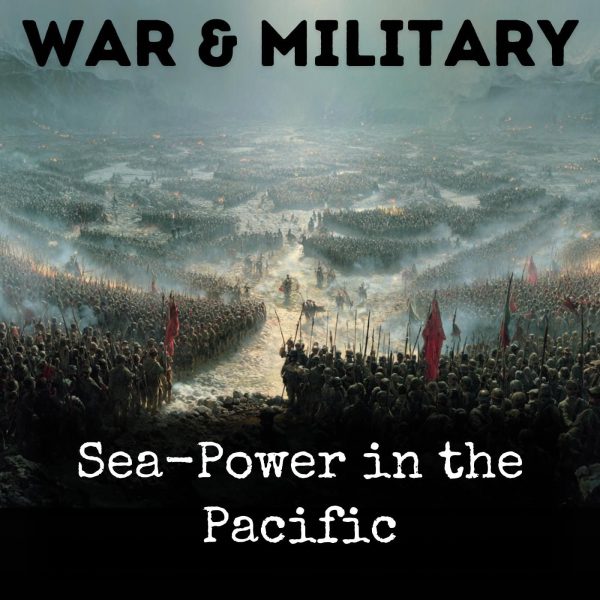
Sea-Power in the Pacific
- Episódios
- 40
- Publicação
- diária
- Último episódio
- 14 nov 2026
Sobre o podcast
In the three decades leading up to the Pacific War, the United States dedicated significant effort to envisioning what a conflict with Japan might entail. However, the reality of the Pacific War diverged sharply from these meticulously crafted plans, particularly War Plan Orange. Both American and Japanese strategies were heavily influenced by Alfred Thayer Mahans theories on sea power and decisive battles, despite the absence of such climactic naval confrontations in the Great War. The Pacific War further strayed from the Naval War Colleges expectations, as battleships were quickly overshadowed by aircraft carriers. Initially driven by necessity, the evolving capabilities of planes and the refinement of carrier doctrine soon illuminated the carriers dominance in shaping naval engagements. Hector Charles Bywaters Sea-Power in the Pacific, published in 1921, along with his 1925 novel The Great Pacific War, surprisingly predicts aspects of the conflict more accurately than many interwar naval strategies. While the extent of their influence in the United States remains uncertain, journalist William H. Honan noted in a 1970 article that both works were translated into Japanese and circulated among naval officers during this crucial time. The cover features Yamashita Gentarō, then chief of the Navy General Staff, who was part of the Fleet Faction opposing the contentious Washington Naval Treaty. This faction played a pivotal role in the Navy General Staffs swift translation and distribution of Bywaters book upon its release. Although the precise impact of Sea-Power in the Pacific on Japanese military thought is unclear, it undeniably influenced the political dynamics within the Imperial Navy throughout the 1920s. - Summary by Alister
This show includes AI-generated content.
Episódios 40
Radio Boys on the Pacific - Allen Chapman
Radio Boys on the Pacific - Allen Chapman.This episode includes AI-generated content.
Captain Salt in Oz (Version 2)-Ruth Plumly Thompson
Captain Salt in Oz (Version 2) by Ruth Plumly Thompson.A voyage on the famous Nonestic Ocean! What could be more thrilling than that? We—many of us—have taken trips on the prosaic Atlantic or even Pacific, but …
Notas do episódio
Captain Salt in Oz (Version 2) by Ruth Plumly Thompson.
A voyage on the famous Nonestic Ocean! What could be more thrilling than that? We—many of us—have taken trips on the prosaic Atlantic or even Pacific, but have we found a SEA FOREST with flying fish and swimming birds? Have we been pursued by a real SEA SERPENT, or had our ship transfixed by the immense ivory tusk of a NARWHAL? Have we come upon the glittering island of PEAKENSPIRE, or made friends with a charming talking hippopotamus? Yet all these things and more befall Captain Salt, one time Pirate and now Royal Explorer of Oz, and his merry crew. They come back with their hold bursting with unique and fascinating specimens, with their chart crowded with new islands, claimed for Ozma, and drawn so realistically by the delightful little boy Tandy, Cabin Boy and Artist of the Expedition.
Featured on Sea-Power in the Pacific.
Public-domain recording courtesy of LibriVox (librivox.org).
This episode includes AI-generated content.History of the Middle Ages-Dana Carleton Munro
"History of the Middle Ages" by Dana Carleton Munro offers a comprehensive exploration of a pivotal era that shaped the foundations of modern society. This audiobook delves into the complexities of medieval …
Notas do episódio
"History of the Middle Ages" by Dana Carleton Munro offers a comprehensive exploration of a pivotal era that shaped the foundations of modern society. This audiobook delves into the complexities of medieval life, examining the interplay of culture, politics, and religion that defined the time. Its themes of power dynamics, societal structure, and the evolution of institutions remain relevant today, as they echo in contemporary discussions about governance and community. By engaging with this rich historical narrative, listeners gain insight into the enduring legacies of the Middle Ages, making it a valuable addition to anyone's understanding of history and its impact on the present.
This episode includes AI-generated content.Nami-ko-Kenjiro Tokutomi
"Nami-ko-Kenjiro Tokutomi" invites listeners into a profound exploration of the human experience through the lens of its titular character, Nami-ko. This work captures the essence of resilience and the quest …
Notas do episódio
"Nami-ko-Kenjiro Tokutomi" invites listeners into a profound exploration of the human experience through the lens of its titular character, Nami-ko. This work captures the essence of resilience and the quest for identity, reflecting themes that resonate deeply in today's world. As listeners navigate the emotional landscape of Nami-ko's journey, they are reminded of the timeless struggles for understanding and connection that define us all. The narrative's enduring appeal lies in its ability to evoke empathy and introspection, making it a compelling choice for anyone seeking to reflect on their own path amidst life's challenges.
This episode includes AI-generated content.Bible (ASV) 38 Zechariah-American Standard Version
In the three decades leading up to the Pacific War, the United States dedicated significant effort to envisioning what a conflict with Japan might entail. However, the reality of the Pacific War diverged …
Notas do episódio
In the three decades leading up to the Pacific War, the United States dedicated significant effort to envisioning what a conflict with Japan might entail. However, the reality of the Pacific War diverged sharply from these meticulously crafted plans, particularly War Plan Orange. Both American and Japanese strategies were heavily influenced by Alfred Thayer Mahans theories on sea power and decisive battles, despite the absence of such climactic naval confrontations in the Great War. The Pacific War further strayed from the Naval War Colleges expectations, as battleships were quickly overshadowed by aircraft carriers. Initially driven by necessity, the evolving capabilities of planes and the refinement of carrier doctrine soon illuminated the carriers dominance in shaping naval engagements. Hector Charles Bywaters Sea-Power in the Pacific, published in 1921, along with his 1925 novel The Great Pacific War, surprisingly predicts aspects of the conflict more accurately than many interwar naval strategies. While the extent of their influence in the United States remains uncertain, journalist William H. Honan noted in a 1970 article that both works were translated into Japanese and circulated among naval officers during this crucial time. The cover features Yamashita Gentarō, then chief of the Navy General Staff, who was part of the Fleet Faction opposing the contentious Washington Naval Treaty. This faction played a pivotal role in the Navy General Staffs swift translation and distribution of Bywaters book upon its release. Although the precise impact of Sea-Power in the Pacific on Japanese military thought is unclear, it undeniably influenced the political dynamics within the Imperial Navy throughout the 1920s. - Summary by Alister
This episode includes AI-generated content.America's Part-Henry J. Reilly
In the three decades leading up to the Pacific War, the United States dedicated significant effort to envisioning what a conflict with Japan might entail. However, the reality of the Pacific War diverged …
Notas do episódio
In the three decades leading up to the Pacific War, the United States dedicated significant effort to envisioning what a conflict with Japan might entail. However, the reality of the Pacific War diverged sharply from these meticulously crafted plans, particularly War Plan Orange. Both American and Japanese strategies were heavily influenced by Alfred Thayer Mahans theories on sea power and decisive battles, despite the absence of such climactic naval confrontations in the Great War. The Pacific War further strayed from the Naval War Colleges expectations, as battleships were quickly overshadowed by aircraft carriers. Initially driven by necessity, the evolving capabilities of planes and the refinement of carrier doctrine soon illuminated the carriers dominance in shaping naval engagements. Hector Charles Bywaters Sea-Power in the Pacific, published in 1921, along with his 1925 novel The Great Pacific War, surprisingly predicts aspects of the conflict more accurately than many interwar naval strategies. While the extent of their influence in the United States remains uncertain, journalist William H. Honan noted in a 1970 article that both works were translated into Japanese and circulated among naval officers during this crucial time. The cover features Yamashita Gentarō, then chief of the Navy General Staff, who was part of the Fleet Faction opposing the contentious Washington Naval Treaty. This faction played a pivotal role in the Navy General Staffs swift translation and distribution of Bywaters book upon its release. Although the precise impact of Sea-Power in the Pacific on Japanese military thought is unclear, it undeniably influenced the political dynamics within the Imperial Navy throughout the 1920s. - Summary by Alister
This episode includes AI-generated content.H.M.S. Pinafore; Or, The Lass That Loved A Sailor-W. S. Gilbert
In the three decades leading up to the Pacific War, the United States dedicated significant effort to envisioning what a conflict with Japan might entail. However, the reality of the Pacific War diverged …
Notas do episódio
In the three decades leading up to the Pacific War, the United States dedicated significant effort to envisioning what a conflict with Japan might entail. However, the reality of the Pacific War diverged sharply from these meticulously crafted plans, particularly War Plan Orange. Both American and Japanese strategies were heavily influenced by Alfred Thayer Mahans theories on sea power and decisive battles, despite the absence of such climactic naval confrontations in the Great War. The Pacific War further strayed from the Naval War Colleges expectations, as battleships were quickly overshadowed by aircraft carriers. Initially driven by necessity, the evolving capabilities of planes and the refinement of carrier doctrine soon illuminated the carriers dominance in shaping naval engagements. Hector Charles Bywaters Sea-Power in the Pacific, published in 1921, along with his 1925 novel The Great Pacific War, surprisingly predicts aspects of the conflict more accurately than many interwar naval strategies. While the extent of their influence in the United States remains uncertain, journalist William H. Honan noted in a 1970 article that both works were translated into Japanese and circulated among naval officers during this crucial time. The cover features Yamashita Gentarō, then chief of the Navy General Staff, who was part of the Fleet Faction opposing the contentious Washington Naval Treaty. This faction played a pivotal role in the Navy General Staffs swift translation and distribution of Bywaters book upon its release. Although the precise impact of Sea-Power in the Pacific on Japanese military thought is unclear, it undeniably influenced the political dynamics within the Imperial Navy throughout the 1920s. - Summary by Alister
This episode includes AI-generated content.Who Burnt Columbia-Augustine T. Smythe
In the three decades leading up to the Pacific War, the United States dedicated significant effort to envisioning what a conflict with Japan might entail. However, the reality of the Pacific War diverged …
Notas do episódio
In the three decades leading up to the Pacific War, the United States dedicated significant effort to envisioning what a conflict with Japan might entail. However, the reality of the Pacific War diverged sharply from these meticulously crafted plans, particularly War Plan Orange. Both American and Japanese strategies were heavily influenced by Alfred Thayer Mahans theories on sea power and decisive battles, despite the absence of such climactic naval confrontations in the Great War. The Pacific War further strayed from the Naval War Colleges expectations, as battleships were quickly overshadowed by aircraft carriers. Initially driven by necessity, the evolving capabilities of planes and the refinement of carrier doctrine soon illuminated the carriers dominance in shaping naval engagements. Hector Charles Bywaters Sea-Power in the Pacific, published in 1921, along with his 1925 novel The Great Pacific War, surprisingly predicts aspects of the conflict more accurately than many interwar naval strategies. While the extent of their influence in the United States remains uncertain, journalist William H. Honan noted in a 1970 article that both works were translated into Japanese and circulated among naval officers during this crucial time. The cover features Yamashita Gentarō, then chief of the Navy General Staff, who was part of the Fleet Faction opposing the contentious Washington Naval Treaty. This faction played a pivotal role in the Navy General Staffs swift translation and distribution of Bywaters book upon its release. Although the precise impact of Sea-Power in the Pacific on Japanese military thought is unclear, it undeniably influenced the political dynamics within the Imperial Navy throughout the 1920s. - Summary by Alister
This episode includes AI-generated content.Art of War (version 3)-Sun Tzu 孙武
In the three decades leading up to the Pacific War, the United States dedicated significant effort to envisioning what a conflict with Japan might entail. However, the reality of the Pacific War diverged …
Notas do episódio
In the three decades leading up to the Pacific War, the United States dedicated significant effort to envisioning what a conflict with Japan might entail. However, the reality of the Pacific War diverged sharply from these meticulously crafted plans, particularly War Plan Orange. Both American and Japanese strategies were heavily influenced by Alfred Thayer Mahans theories on sea power and decisive battles, despite the absence of such climactic naval confrontations in the Great War. The Pacific War further strayed from the Naval War Colleges expectations, as battleships were quickly overshadowed by aircraft carriers. Initially driven by necessity, the evolving capabilities of planes and the refinement of carrier doctrine soon illuminated the carriers dominance in shaping naval engagements. Hector Charles Bywaters Sea-Power in the Pacific, published in 1921, along with his 1925 novel The Great Pacific War, surprisingly predicts aspects of the conflict more accurately than many interwar naval strategies. While the extent of their influence in the United States remains uncertain, journalist William H. Honan noted in a 1970 article that both works were translated into Japanese and circulated among naval officers during this crucial time. The cover features Yamashita Gentarō, then chief of the Navy General Staff, who was part of the Fleet Faction opposing the contentious Washington Naval Treaty. This faction played a pivotal role in the Navy General Staffs swift translation and distribution of Bywaters book upon its release. Although the precise impact of Sea-Power in the Pacific on Japanese military thought is unclear, it undeniably influenced the political dynamics within the Imperial Navy throughout the 1920s. - Summary by Alister
This episode includes AI-generated content.Love-at-Arms-Rafael Sabatini
In the three decades leading up to the Pacific War, the United States dedicated significant effort to envisioning what a conflict with Japan might entail. However, the reality of the Pacific War diverged …
Notas do episódio
In the three decades leading up to the Pacific War, the United States dedicated significant effort to envisioning what a conflict with Japan might entail. However, the reality of the Pacific War diverged sharply from these meticulously crafted plans, particularly War Plan Orange. Both American and Japanese strategies were heavily influenced by Alfred Thayer Mahans theories on sea power and decisive battles, despite the absence of such climactic naval confrontations in the Great War. The Pacific War further strayed from the Naval War Colleges expectations, as battleships were quickly overshadowed by aircraft carriers. Initially driven by necessity, the evolving capabilities of planes and the refinement of carrier doctrine soon illuminated the carriers dominance in shaping naval engagements. Hector Charles Bywaters Sea-Power in the Pacific, published in 1921, along with his 1925 novel The Great Pacific War, surprisingly predicts aspects of the conflict more accurately than many interwar naval strategies. While the extent of their influence in the United States remains uncertain, journalist William H. Honan noted in a 1970 article that both works were translated into Japanese and circulated among naval officers during this crucial time. The cover features Yamashita Gentarō, then chief of the Navy General Staff, who was part of the Fleet Faction opposing the contentious Washington Naval Treaty. This faction played a pivotal role in the Navy General Staffs swift translation and distribution of Bywaters book upon its release. Although the precise impact of Sea-Power in the Pacific on Japanese military thought is unclear, it undeniably influenced the political dynamics within the Imperial Navy throughout the 1920s. - Summary by Alister
This episode includes AI-generated content.Lives of Greek Statesmen-George William Cox
In the three decades leading up to the Pacific War, the United States dedicated significant effort to envisioning what a conflict with Japan might entail. However, the reality of the Pacific War diverged …
Notas do episódio
In the three decades leading up to the Pacific War, the United States dedicated significant effort to envisioning what a conflict with Japan might entail. However, the reality of the Pacific War diverged sharply from these meticulously crafted plans, particularly War Plan Orange. Both American and Japanese strategies were heavily influenced by Alfred Thayer Mahans theories on sea power and decisive battles, despite the absence of such climactic naval confrontations in the Great War. The Pacific War further strayed from the Naval War Colleges expectations, as battleships were quickly overshadowed by aircraft carriers. Initially driven by necessity, the evolving capabilities of planes and the refinement of carrier doctrine soon illuminated the carriers dominance in shaping naval engagements. Hector Charles Bywaters Sea-Power in the Pacific, published in 1921, along with his 1925 novel The Great Pacific War, surprisingly predicts aspects of the conflict more accurately than many interwar naval strategies. While the extent of their influence in the United States remains uncertain, journalist William H. Honan noted in a 1970 article that both works were translated into Japanese and circulated among naval officers during this crucial time. The cover features Yamashita Gentarō, then chief of the Navy General Staff, who was part of the Fleet Faction opposing the contentious Washington Naval Treaty. This faction played a pivotal role in the Navy General Staffs swift translation and distribution of Bywaters book upon its release. Although the precise impact of Sea-Power in the Pacific on Japanese military thought is unclear, it undeniably influenced the political dynamics within the Imperial Navy throughout the 1920s. - Summary by Alister
This episode includes AI-generated content.Faces and Places-Sir Henry W. Lucy
In the three decades leading up to the Pacific War, the United States dedicated significant effort to envisioning what a conflict with Japan might entail. However, the reality of the Pacific War diverged …
Notas do episódio
In the three decades leading up to the Pacific War, the United States dedicated significant effort to envisioning what a conflict with Japan might entail. However, the reality of the Pacific War diverged sharply from these meticulously crafted plans, particularly War Plan Orange. Both American and Japanese strategies were heavily influenced by Alfred Thayer Mahans theories on sea power and decisive battles, despite the absence of such climactic naval confrontations in the Great War. The Pacific War further strayed from the Naval War Colleges expectations, as battleships were quickly overshadowed by aircraft carriers. Initially driven by necessity, the evolving capabilities of planes and the refinement of carrier doctrine soon illuminated the carriers dominance in shaping naval engagements. Hector Charles Bywaters Sea-Power in the Pacific, published in 1921, along with his 1925 novel The Great Pacific War, surprisingly predicts aspects of the conflict more accurately than many interwar naval strategies. While the extent of their influence in the United States remains uncertain, journalist William H. Honan noted in a 1970 article that both works were translated into Japanese and circulated among naval officers during this crucial time. The cover features Yamashita Gentarō, then chief of the Navy General Staff, who was part of the Fleet Faction opposing the contentious Washington Naval Treaty. This faction played a pivotal role in the Navy General Staffs swift translation and distribution of Bywaters book upon its release. Although the precise impact of Sea-Power in the Pacific on Japanese military thought is unclear, it undeniably influenced the political dynamics within the Imperial Navy throughout the 1920s. - Summary by Alister
This episode includes AI-generated content.Israel and Hamas Conflict in Brief-Jeremy M. Sharp, Jim Zanotti
In the three decades leading up to the Pacific War, the United States dedicated significant effort to envisioning what a conflict with Japan might entail. However, the reality of the Pacific War diverged …
Notas do episódio
In the three decades leading up to the Pacific War, the United States dedicated significant effort to envisioning what a conflict with Japan might entail. However, the reality of the Pacific War diverged sharply from these meticulously crafted plans, particularly War Plan Orange. Both American and Japanese strategies were heavily influenced by Alfred Thayer Mahans theories on sea power and decisive battles, despite the absence of such climactic naval confrontations in the Great War. The Pacific War further strayed from the Naval War Colleges expectations, as battleships were quickly overshadowed by aircraft carriers. Initially driven by necessity, the evolving capabilities of planes and the refinement of carrier doctrine soon illuminated the carriers dominance in shaping naval engagements. Hector Charles Bywaters Sea-Power in the Pacific, published in 1921, along with his 1925 novel The Great Pacific War, surprisingly predicts aspects of the conflict more accurately than many interwar naval strategies. While the extent of their influence in the United States remains uncertain, journalist William H. Honan noted in a 1970 article that both works were translated into Japanese and circulated among naval officers during this crucial time. The cover features Yamashita Gentarō, then chief of the Navy General Staff, who was part of the Fleet Faction opposing the contentious Washington Naval Treaty. This faction played a pivotal role in the Navy General Staffs swift translation and distribution of Bywaters book upon its release. Although the precise impact of Sea-Power in the Pacific on Japanese military thought is unclear, it undeniably influenced the political dynamics within the Imperial Navy throughout the 1920s. - Summary by Alister
This episode includes AI-generated content.Democracy - An American Novel-Henry Brooks Adams
In the three decades leading up to the Pacific War, the United States dedicated significant effort to envisioning what a conflict with Japan might entail. However, the reality of the Pacific War diverged …
Notas do episódio
In the three decades leading up to the Pacific War, the United States dedicated significant effort to envisioning what a conflict with Japan might entail. However, the reality of the Pacific War diverged sharply from these meticulously crafted plans, particularly War Plan Orange. Both American and Japanese strategies were heavily influenced by Alfred Thayer Mahans theories on sea power and decisive battles, despite the absence of such climactic naval confrontations in the Great War. The Pacific War further strayed from the Naval War Colleges expectations, as battleships were quickly overshadowed by aircraft carriers. Initially driven by necessity, the evolving capabilities of planes and the refinement of carrier doctrine soon illuminated the carriers dominance in shaping naval engagements. Hector Charles Bywaters Sea-Power in the Pacific, published in 1921, along with his 1925 novel The Great Pacific War, surprisingly predicts aspects of the conflict more accurately than many interwar naval strategies. While the extent of their influence in the United States remains uncertain, journalist William H. Honan noted in a 1970 article that both works were translated into Japanese and circulated among naval officers during this crucial time. The cover features Yamashita Gentarō, then chief of the Navy General Staff, who was part of the Fleet Faction opposing the contentious Washington Naval Treaty. This faction played a pivotal role in the Navy General Staffs swift translation and distribution of Bywaters book upon its release. Although the precise impact of Sea-Power in the Pacific on Japanese military thought is unclear, it undeniably influenced the political dynamics within the Imperial Navy throughout the 1920s. - Summary by Alister
This episode includes AI-generated content.Religio Medici and Hydriotaphia-Thomas Browne
In the three decades leading up to the Pacific War, the United States dedicated significant effort to envisioning what a conflict with Japan might entail. However, the reality of the Pacific War diverged …
Notas do episódio
In the three decades leading up to the Pacific War, the United States dedicated significant effort to envisioning what a conflict with Japan might entail. However, the reality of the Pacific War diverged sharply from these meticulously crafted plans, particularly War Plan Orange. Both American and Japanese strategies were heavily influenced by Alfred Thayer Mahans theories on sea power and decisive battles, despite the absence of such climactic naval confrontations in the Great War. The Pacific War further strayed from the Naval War Colleges expectations, as battleships were quickly overshadowed by aircraft carriers. Initially driven by necessity, the evolving capabilities of planes and the refinement of carrier doctrine soon illuminated the carriers dominance in shaping naval engagements. Hector Charles Bywaters Sea-Power in the Pacific, published in 1921, along with his 1925 novel The Great Pacific War, surprisingly predicts aspects of the conflict more accurately than many interwar naval strategies. While the extent of their influence in the United States remains uncertain, journalist William H. Honan noted in a 1970 article that both works were translated into Japanese and circulated among naval officers during this crucial time. The cover features Yamashita Gentarō, then chief of the Navy General Staff, who was part of the Fleet Faction opposing the contentious Washington Naval Treaty. This faction played a pivotal role in the Navy General Staffs swift translation and distribution of Bywaters book upon its release. Although the precise impact of Sea-Power in the Pacific on Japanese military thought is unclear, it undeniably influenced the political dynamics within the Imperial Navy throughout the 1920s. - Summary by Alister
This episode includes AI-generated content.American Democrat; Or, Hints on the Social and Civic Relations of the United States of America-James Fenimore Cooper
In the three decades leading up to the Pacific War, the United States dedicated significant effort to envisioning what a conflict with Japan might entail. However, the reality of the Pacific War diverged …
Notas do episódio
In the three decades leading up to the Pacific War, the United States dedicated significant effort to envisioning what a conflict with Japan might entail. However, the reality of the Pacific War diverged sharply from these meticulously crafted plans, particularly War Plan Orange. Both American and Japanese strategies were heavily influenced by Alfred Thayer Mahans theories on sea power and decisive battles, despite the absence of such climactic naval confrontations in the Great War. The Pacific War further strayed from the Naval War Colleges expectations, as battleships were quickly overshadowed by aircraft carriers. Initially driven by necessity, the evolving capabilities of planes and the refinement of carrier doctrine soon illuminated the carriers dominance in shaping naval engagements. Hector Charles Bywaters Sea-Power in the Pacific, published in 1921, along with his 1925 novel The Great Pacific War, surprisingly predicts aspects of the conflict more accurately than many interwar naval strategies. While the extent of their influence in the United States remains uncertain, journalist William H. Honan noted in a 1970 article that both works were translated into Japanese and circulated among naval officers during this crucial time. The cover features Yamashita Gentarō, then chief of the Navy General Staff, who was part of the Fleet Faction opposing the contentious Washington Naval Treaty. This faction played a pivotal role in the Navy General Staffs swift translation and distribution of Bywaters book upon its release. Although the precise impact of Sea-Power in the Pacific on Japanese military thought is unclear, it undeniably influenced the political dynamics within the Imperial Navy throughout the 1920s. - Summary by Alister
This episode includes AI-generated content.Town is Drowning-C. M. Kornbluth, Frederik Pohl
In the three decades leading up to the Pacific War, the United States dedicated significant effort to envisioning what a conflict with Japan might entail. However, the reality of the Pacific War diverged …
Notas do episódio
In the three decades leading up to the Pacific War, the United States dedicated significant effort to envisioning what a conflict with Japan might entail. However, the reality of the Pacific War diverged sharply from these meticulously crafted plans, particularly War Plan Orange. Both American and Japanese strategies were heavily influenced by Alfred Thayer Mahans theories on sea power and decisive battles, despite the absence of such climactic naval confrontations in the Great War. The Pacific War further strayed from the Naval War Colleges expectations, as battleships were quickly overshadowed by aircraft carriers. Initially driven by necessity, the evolving capabilities of planes and the refinement of carrier doctrine soon illuminated the carriers dominance in shaping naval engagements. Hector Charles Bywaters Sea-Power in the Pacific, published in 1921, along with his 1925 novel The Great Pacific War, surprisingly predicts aspects of the conflict more accurately than many interwar naval strategies. While the extent of their influence in the United States remains uncertain, journalist William H. Honan noted in a 1970 article that both works were translated into Japanese and circulated among naval officers during this crucial time. The cover features Yamashita Gentarō, then chief of the Navy General Staff, who was part of the Fleet Faction opposing the contentious Washington Naval Treaty. This faction played a pivotal role in the Navy General Staffs swift translation and distribution of Bywaters book upon its release. Although the precise impact of Sea-Power in the Pacific on Japanese military thought is unclear, it undeniably influenced the political dynamics within the Imperial Navy throughout the 1920s. - Summary by Alister
This episode includes AI-generated content.Running Water-A. E. W. Mason
"Running Water" by A. E. W. Mason invites listeners into a captivating narrative that explores themes of love, ambition, and the complexities of human relationships. This timeless story resonates with …
Notas do episódio
"Running Water" by A. E. W. Mason invites listeners into a captivating narrative that explores themes of love, ambition, and the complexities of human relationships. This timeless story resonates with contemporary audiences as it delves into the struggles and triumphs of individuals navigating their desires and moral dilemmas. Mason's keen insights into the human condition and the emotional landscape of his characters make this audiobook a compelling experience for anyone interested in the enduring nature of personal conflict and the quest for fulfillment. The rich storytelling and profound themes ensure that "Running Water" remains relevant and engaging, offering listeners a chance to reflect on their own journeys.
This episode includes AI-generated content.House on the Borderland-William Hope Hodgson
"House on the Borderland" by William Hope Hodgson invites listeners into a haunting exploration of the boundaries between reality and the unknown. This classic tale delves into themes of isolation, cosmic …
Notas do episódio
"House on the Borderland" by William Hope Hodgson invites listeners into a haunting exploration of the boundaries between reality and the unknown. This classic tale delves into themes of isolation, cosmic horror, and the struggle against forces beyond comprehension, making it an enduring piece of literature that resonates with the human experience of fear and curiosity. Hodgson's vivid imagery and profound existential questions encourage reflection on our own place in the universe, a theme that remains relevant in today's world. As listeners journey through this eerie narrative, they will find themselves contemplating the nature of existence and the mysteries that lie just beyond the veil of perception.
This episode includes AI-generated content.Daughter of the Sioux-Charles King
"Daughter of the Sioux" by Charles King is a compelling tale that immerses listeners in the rich cultural tapestry of Native American life, exploring themes of identity, resilience, and the complexities of …
Notas do episódio
"Daughter of the Sioux" by Charles King is a compelling tale that immerses listeners in the rich cultural tapestry of Native American life, exploring themes of identity, resilience, and the complexities of cultural intersection. This enduring story resonates today as it reflects the ongoing dialogue about heritage and the struggles faced by indigenous communities. King's narrative captures the spirit of a time when understanding and respect between cultures were paramount, making it a poignant reminder of the importance of empathy and connection in our modern world.
This episode includes AI-generated content.Economic Consequences of the Peace-John Maynard Keynes
"Economic Consequences of the Peace" by John Maynard Keynes is a critical examination of the economic ramifications following World War I and the Treaty of Versailles. Keynes argues that the punitive …
Notas do episódio
"Economic Consequences of the Peace" by John Maynard Keynes is a critical examination of the economic ramifications following World War I and the Treaty of Versailles. Keynes argues that the punitive reparations imposed on Germany would not only cripple its economy but also destabilize Europe as a whole, leading to long-term consequences. The themes of economic interdependence, the impact of harsh policies on national stability, and the importance of foresight in economic planning resonate powerfully today, as nations grapple with similar challenges in a globalized world.
This episode includes AI-generated content.Diamond Sutra and Heart Sutra-Unknown
The "Diamond Sutra and Heart Sutra" presents profound teachings that delve into the essence of Buddhist philosophy, offering insights into the nature of reality and the path to enlightenment. These timeless …
Notas do episódio
The "Diamond Sutra and Heart Sutra" presents profound teachings that delve into the essence of Buddhist philosophy, offering insights into the nature of reality and the path to enlightenment. These timeless texts encourage listeners to reflect on the impermanence of life and the interconnectedness of all beings, themes that resonate deeply in today's fast-paced world. As we navigate modern challenges, the wisdom contained within these sutras serves as a guiding light, reminding us of the importance of mindfulness and compassion. Engaging with these teachings can inspire a greater understanding of ourselves and our place in the universe, making this audiobook a valuable addition to anyone's spiritual exploration.
This episode includes AI-generated content.018 - Chapter 11 War or Peace Political and Economic Factors
In the three decades leading up to the Pacific War, the United States dedicated significant effort to envisioning what a conflict with Japan might entail. However, the reality of the Pacific War diverged …
Notas do episódio
In the three decades leading up to the Pacific War, the United States dedicated significant effort to envisioning what a conflict with Japan might entail. However, the reality of the Pacific War diverged sharply from these meticulously crafted plans, particularly War Plan Orange. Both American and Japanese strategies were heavily influenced by Alfred Thayer Mahans theories on sea power and decisive battles, despite the absence of such climactic naval confrontations in the Great War. The Pacific War further strayed from the Naval War Colleges expectations, as battleships were quickly overshadowed by aircraft carriers. Initially driven by necessity, the evolving capabilities of planes and the refinement of carrier doctrine soon illuminated the carriers dominance in shaping naval engagements. Hector Charles Bywaters Sea-Power in the Pacific, published in 1921, along with his 1925 novel The Great Pacific War, surprisingly predicts aspects of the conflict more accurately than many interwar naval strategies. While the extent of their influence in the United States remains uncertain, journalist William H. Honan noted in a 1970 article that both works were translated into Japanese and circulated among naval officers during this crucial time. The cover features Yamashita Gentarō, then chief of the Navy General Staff, who was part of the Fleet Faction opposing the contentious Washington Naval Treaty. This faction played a pivotal role in the Navy General Staffs swift translation and distribution of Bywaters book upon its release. Although the precise impact of Sea-Power in the Pacific on Japanese military thought is unclear, it undeniably influenced the political dynamics within the Imperial Navy throughout the 1920s. - Summary by Alister
This episode includes AI-generated content.017 - Chapter 10 Possible Features of a War in the Pacific
In the three decades leading up to the Pacific War, the United States dedicated significant effort to envisioning what a conflict with Japan might entail. However, the reality of the Pacific War diverged …
Notas do episódio
In the three decades leading up to the Pacific War, the United States dedicated significant effort to envisioning what a conflict with Japan might entail. However, the reality of the Pacific War diverged sharply from these meticulously crafted plans, particularly War Plan Orange. Both American and Japanese strategies were heavily influenced by Alfred Thayer Mahans theories on sea power and decisive battles, despite the absence of such climactic naval confrontations in the Great War. The Pacific War further strayed from the Naval War Colleges expectations, as battleships were quickly overshadowed by aircraft carriers. Initially driven by necessity, the evolving capabilities of planes and the refinement of carrier doctrine soon illuminated the carriers dominance in shaping naval engagements. Hector Charles Bywaters Sea-Power in the Pacific, published in 1921, along with his 1925 novel The Great Pacific War, surprisingly predicts aspects of the conflict more accurately than many interwar naval strategies. While the extent of their influence in the United States remains uncertain, journalist William H. Honan noted in a 1970 article that both works were translated into Japanese and circulated among naval officers during this crucial time. The cover features Yamashita Gentarō, then chief of the Navy General Staff, who was part of the Fleet Faction opposing the contentious Washington Naval Treaty. This faction played a pivotal role in the Navy General Staffs swift translation and distribution of Bywaters book upon its release. Although the precise impact of Sea-Power in the Pacific on Japanese military thought is unclear, it undeniably influenced the political dynamics within the Imperial Navy throughout the 1920s. - Summary by Alister
This episode includes AI-generated content.016 - Chapter 9b Strategy in the Pacific Part Two
In the three decades leading up to the Pacific War, the United States dedicated significant effort to envisioning what a conflict with Japan might entail. However, the reality of the Pacific War diverged …
Notas do episódio
In the three decades leading up to the Pacific War, the United States dedicated significant effort to envisioning what a conflict with Japan might entail. However, the reality of the Pacific War diverged sharply from these meticulously crafted plans, particularly War Plan Orange. Both American and Japanese strategies were heavily influenced by Alfred Thayer Mahans theories on sea power and decisive battles, despite the absence of such climactic naval confrontations in the Great War. The Pacific War further strayed from the Naval War Colleges expectations, as battleships were quickly overshadowed by aircraft carriers. Initially driven by necessity, the evolving capabilities of planes and the refinement of carrier doctrine soon illuminated the carriers dominance in shaping naval engagements. Hector Charles Bywaters Sea-Power in the Pacific, published in 1921, along with his 1925 novel The Great Pacific War, surprisingly predicts aspects of the conflict more accurately than many interwar naval strategies. While the extent of their influence in the United States remains uncertain, journalist William H. Honan noted in a 1970 article that both works were translated into Japanese and circulated among naval officers during this crucial time. The cover features Yamashita Gentarō, then chief of the Navy General Staff, who was part of the Fleet Faction opposing the contentious Washington Naval Treaty. This faction played a pivotal role in the Navy General Staffs swift translation and distribution of Bywaters book upon its release. Although the precise impact of Sea-Power in the Pacific on Japanese military thought is unclear, it undeniably influenced the political dynamics within the Imperial Navy throughout the 1920s. - Summary by Alister
This episode includes AI-generated content.015 - Chapter 9a Strategy in the Pacific Part One
In the three decades leading up to the Pacific War, the United States dedicated significant effort to envisioning what a conflict with Japan might entail. However, the reality of the Pacific War diverged …
Notas do episódio
In the three decades leading up to the Pacific War, the United States dedicated significant effort to envisioning what a conflict with Japan might entail. However, the reality of the Pacific War diverged sharply from these meticulously crafted plans, particularly War Plan Orange. Both American and Japanese strategies were heavily influenced by Alfred Thayer Mahans theories on sea power and decisive battles, despite the absence of such climactic naval confrontations in the Great War. The Pacific War further strayed from the Naval War Colleges expectations, as battleships were quickly overshadowed by aircraft carriers. Initially driven by necessity, the evolving capabilities of planes and the refinement of carrier doctrine soon illuminated the carriers dominance in shaping naval engagements. Hector Charles Bywaters Sea-Power in the Pacific, published in 1921, along with his 1925 novel The Great Pacific War, surprisingly predicts aspects of the conflict more accurately than many interwar naval strategies. While the extent of their influence in the United States remains uncertain, journalist William H. Honan noted in a 1970 article that both works were translated into Japanese and circulated among naval officers during this crucial time. The cover features Yamashita Gentarō, then chief of the Navy General Staff, who was part of the Fleet Faction opposing the contentious Washington Naval Treaty. This faction played a pivotal role in the Navy General Staffs swift translation and distribution of Bywaters book upon its release. Although the precise impact of Sea-Power in the Pacific on Japanese military thought is unclear, it undeniably influenced the political dynamics within the Imperial Navy throughout the 1920s. - Summary by Alister
This episode includes AI-generated content.014 - Chapter 8 Japanese Sea-Power Torpedo-Craft Submarines and Aircraft
In the three decades leading up to the Pacific War, the United States dedicated significant effort to envisioning what a conflict with Japan might entail. However, the reality of the Pacific War diverged …
Notas do episódio
In the three decades leading up to the Pacific War, the United States dedicated significant effort to envisioning what a conflict with Japan might entail. However, the reality of the Pacific War diverged sharply from these meticulously crafted plans, particularly War Plan Orange. Both American and Japanese strategies were heavily influenced by Alfred Thayer Mahans theories on sea power and decisive battles, despite the absence of such climactic naval confrontations in the Great War. The Pacific War further strayed from the Naval War Colleges expectations, as battleships were quickly overshadowed by aircraft carriers. Initially driven by necessity, the evolving capabilities of planes and the refinement of carrier doctrine soon illuminated the carriers dominance in shaping naval engagements. Hector Charles Bywaters Sea-Power in the Pacific, published in 1921, along with his 1925 novel The Great Pacific War, surprisingly predicts aspects of the conflict more accurately than many interwar naval strategies. While the extent of their influence in the United States remains uncertain, journalist William H. Honan noted in a 1970 article that both works were translated into Japanese and circulated among naval officers during this crucial time. The cover features Yamashita Gentarō, then chief of the Navy General Staff, who was part of the Fleet Faction opposing the contentious Washington Naval Treaty. This faction played a pivotal role in the Navy General Staffs swift translation and distribution of Bywaters book upon its release. Although the precise impact of Sea-Power in the Pacific on Japanese military thought is unclear, it undeniably influenced the political dynamics within the Imperial Navy throughout the 1920s. - Summary by Alister
This episode includes AI-generated content.013 - Chapter 7b Japanese Sea-Power Its Men and Ships Part Two
In the three decades leading up to the Pacific War, the United States dedicated significant effort to envisioning what a conflict with Japan might entail. However, the reality of the Pacific War diverged …
Notas do episódio
In the three decades leading up to the Pacific War, the United States dedicated significant effort to envisioning what a conflict with Japan might entail. However, the reality of the Pacific War diverged sharply from these meticulously crafted plans, particularly War Plan Orange. Both American and Japanese strategies were heavily influenced by Alfred Thayer Mahans theories on sea power and decisive battles, despite the absence of such climactic naval confrontations in the Great War. The Pacific War further strayed from the Naval War Colleges expectations, as battleships were quickly overshadowed by aircraft carriers. Initially driven by necessity, the evolving capabilities of planes and the refinement of carrier doctrine soon illuminated the carriers dominance in shaping naval engagements. Hector Charles Bywaters Sea-Power in the Pacific, published in 1921, along with his 1925 novel The Great Pacific War, surprisingly predicts aspects of the conflict more accurately than many interwar naval strategies. While the extent of their influence in the United States remains uncertain, journalist William H. Honan noted in a 1970 article that both works were translated into Japanese and circulated among naval officers during this crucial time. The cover features Yamashita Gentarō, then chief of the Navy General Staff, who was part of the Fleet Faction opposing the contentious Washington Naval Treaty. This faction played a pivotal role in the Navy General Staffs swift translation and distribution of Bywaters book upon its release. Although the precise impact of Sea-Power in the Pacific on Japanese military thought is unclear, it undeniably influenced the political dynamics within the Imperial Navy throughout the 1920s. - Summary by Alister
This episode includes AI-generated content.012 - Chapter 7a Japanese Sea-Power Its Men and Ships Part One
In the three decades leading up to the Pacific War, the United States dedicated significant effort to envisioning what a conflict with Japan might entail. However, the reality of the Pacific War diverged …
Notas do episódio
In the three decades leading up to the Pacific War, the United States dedicated significant effort to envisioning what a conflict with Japan might entail. However, the reality of the Pacific War diverged sharply from these meticulously crafted plans, particularly War Plan Orange. Both American and Japanese strategies were heavily influenced by Alfred Thayer Mahans theories on sea power and decisive battles, despite the absence of such climactic naval confrontations in the Great War. The Pacific War further strayed from the Naval War Colleges expectations, as battleships were quickly overshadowed by aircraft carriers. Initially driven by necessity, the evolving capabilities of planes and the refinement of carrier doctrine soon illuminated the carriers dominance in shaping naval engagements. Hector Charles Bywaters Sea-Power in the Pacific, published in 1921, along with his 1925 novel The Great Pacific War, surprisingly predicts aspects of the conflict more accurately than many interwar naval strategies. While the extent of their influence in the United States remains uncertain, journalist William H. Honan noted in a 1970 article that both works were translated into Japanese and circulated among naval officers during this crucial time. The cover features Yamashita Gentarō, then chief of the Navy General Staff, who was part of the Fleet Faction opposing the contentious Washington Naval Treaty. This faction played a pivotal role in the Navy General Staffs swift translation and distribution of Bywaters book upon its release. Although the precise impact of Sea-Power in the Pacific on Japanese military thought is unclear, it undeniably influenced the political dynamics within the Imperial Navy throughout the 1920s. - Summary by Alister
This episode includes AI-generated content.011 - Chapter 6 Japanese Sea-Power Administration Dockyards and Shipbuilding Resources
In the three decades leading up to the Pacific War, the United States dedicated significant effort to envisioning what a conflict with Japan might entail. However, the reality of the Pacific War diverged …
Notas do episódio
In the three decades leading up to the Pacific War, the United States dedicated significant effort to envisioning what a conflict with Japan might entail. However, the reality of the Pacific War diverged sharply from these meticulously crafted plans, particularly War Plan Orange. Both American and Japanese strategies were heavily influenced by Alfred Thayer Mahans theories on sea power and decisive battles, despite the absence of such climactic naval confrontations in the Great War. The Pacific War further strayed from the Naval War Colleges expectations, as battleships were quickly overshadowed by aircraft carriers. Initially driven by necessity, the evolving capabilities of planes and the refinement of carrier doctrine soon illuminated the carriers dominance in shaping naval engagements. Hector Charles Bywaters Sea-Power in the Pacific, published in 1921, along with his 1925 novel The Great Pacific War, surprisingly predicts aspects of the conflict more accurately than many interwar naval strategies. While the extent of their influence in the United States remains uncertain, journalist William H. Honan noted in a 1970 article that both works were translated into Japanese and circulated among naval officers during this crucial time. The cover features Yamashita Gentarō, then chief of the Navy General Staff, who was part of the Fleet Faction opposing the contentious Washington Naval Treaty. This faction played a pivotal role in the Navy General Staffs swift translation and distribution of Bywaters book upon its release. Although the precise impact of Sea-Power in the Pacific on Japanese military thought is unclear, it undeniably influenced the political dynamics within the Imperial Navy throughout the 1920s. - Summary by Alister
This episode includes AI-generated content.
Podcasts parecidos
Mais podcasts de História






Este podcast é seu?
Confirme com uma entrada no seu feed: você recebe um código aqui, adiciona como podcast:txt no canal do seu feed e nós verificamos. Depois disso, seu podcast aparece como “verificado” no SoundNode.