

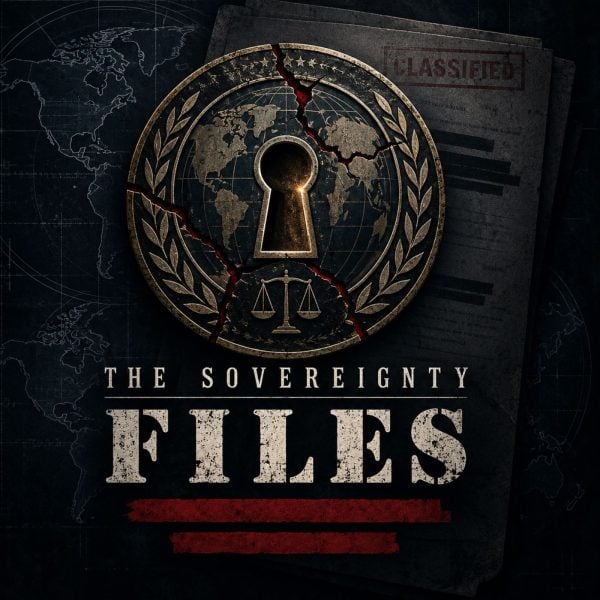
The Sovereignty Files
- Episódios
- 962
- Publicação
- várias vezes por semana
- Último episódio
- 22 nov 2026
Sobre o podcast
The Sovereignty Files explores the hidden machinery of global power—where governments, corporations, intelligence services, financiers, and criminals collide. Each episode begins with a remarkable true story and follows it into the larger world of sovereignty, international law, espionage, sanctions, borders, corruption, and geopolitical influence. From hedge funds seizing warships to billionaires purchasing citizenship and governments weaponizing international institutions, the show examines the strange ways power operates beyond the headlines. These are the stories that reveal who really holds power, how they use it, and what happens when the rules between nations begin to break down.
Episódios 962
Who Sells the Flag? Washington Turns on the Countries Behind the Shadow Fleet
For years, the fight against the shadow fleet went after ships, sanctioning one rusty tanker after another while new ones appeared under new flags. Now the head of the US Federal Maritime Commission says the …
Notas do episódio
For years, the fight against the shadow fleet went after ships, sanctioning one rusty tanker after another while new ones appeared under new flags. Now the head of the US Federal Maritime Commission says the agency is investigating the countries that sell those flags, and could use fines, port bans and sanctions against them. This episode asks what happens when a port regulator in Washington starts judging another country's right to decide which ships are its own.Libya's Missing Billions: Who Controls Gaddafi's Frozen Fortune?
When Muammar Gaddafi's government collapsed in 2011, Libya possessed one of Africa's largest sovereign wealth funds, with investments stretching from European banks to international corporations and real …
Notas do episódio
When Muammar Gaddafi's government collapsed in 2011, Libya possessed one of Africa's largest sovereign wealth funds, with investments stretching from European banks to international corporations and real estate. But as civil war consumed the country, billions of dollars in Libyan assets were frozen overseas. What followed was a prolonged struggle involving rival governments, international sanctions, allegations of corruption, and questions about who had the authority to manage Libya's national wealth. This episode examines the fate of Gaddafi-era investments and a fundamental question of sovereignty: When a country fractures, who controls the money belonging to its people?Leasing Statehood: The Billionaire's Island Inside an Island
On the Caribbean island of Nevis, a Belgian Bitcoin billionaire wants to build a city with its own dispute courts, its own security and its own rules. It's legal because a small country passed a law that allows …
Notas do episódio
On the Caribbean island of Nevis, a Belgian Bitcoin billionaire wants to build a city with its own dispute courts, its own security and its own rules. It's legal because a small country passed a law that allows it, and reporting says people close to the developer helped shape that law. This episode asks what happens when a nation rents out not just its land but the job of governing it.Who Controls the AI Chips? The Battle Between Corporate Power and National Security
Nvidia has become one of the most strategically important companies in the world, producing advanced semiconductors essential to artificial intelligence development. As Washington attempts to restrict China’s …
Notas do episódio
Nvidia has become one of the most strategically important companies in the world, producing advanced semiconductors essential to artificial intelligence development. As Washington attempts to restrict China’s access to powerful AI technology, American companies face competing pressures from national security officials, international customers, and their own commercial interests. This episode examines a fundamental question of technological sovereignty: who ultimately controls strategically important technology—the government that regulates it, the corporation that designs it, or the countries that manufacture and purchase it?Cartels Without Borders: How Mexican Drug Networks Exploit African Sovereignty
Mexican cartel-linked specialists are reportedly helping establish sophisticated methamphetamine laboratories across Africa without directly controlling the territory where they operate. By partnering with …
Notas do episódio
Mexican cartel-linked specialists are reportedly helping establish sophisticated methamphetamine laboratories across Africa without directly controlling the territory where they operate. By partnering with local criminal organizations, these networks can expand their influence while complicating national law enforcement and international cooperation. This episode examines how transnational organized crime challenges state sovereignty, exploits jurisdictional boundaries, and tests governments’ ability to control illicit activity within their borders.Across the Frozen Border: When Russian and Finnish Police Worked Together
For decades, Finnish and Russian authorities cooperated on criminal investigations along one of Europe’s most sensitive borders. Organized crime, smuggling, and human trafficking required information to move …
Notas do episódio
For decades, Finnish and Russian authorities cooperated on criminal investigations along one of Europe’s most sensitive borders. Organized crime, smuggling, and human trafficking required information to move between two countries with very different political and security systems. But what happens when a police investigation also becomes an intelligence operation? Inspired by the Finnish crime thriller Arctic Circle, this episode examines the reality of Russian–Finnish law enforcement cooperation, the counterintelligence risks of joint investigations, and how Russia’s invasion of Ukraine transformed a working relationship into a potential national security vulnerability.The Ghost Vault: Who Owns a Nation’s Wealth When Its State Dies?
When Kabul fell in August 2021, the Taliban took the presidential palace, the armories, and the territory. But they couldn’t touch the nation's wealth. Seven billion dollars of Afghan central bank reserves were …
Notas do episódio
When Kabul fell in August 2021, the Taliban took the presidential palace, the armories, and the territory. But they couldn’t touch the nation's wealth. Seven billion dollars of Afghan central bank reserves were locked inside the Federal Reserve Bank of New York—sparking an unprecedented legal and geopolitical tug-of-war between the new regime, American courts, 9/11 victims’ families, and a starving Afghan public. This week on The Sovereignty Files, we pull apart the ultimate crisis of statehood: when a government collapses, does a nation’s money belong to the men holding the guns, or does sovereignty evaporate the moment your capital falls?Who Owns Citgo? The Battle for Venezuela’s Crown Jewel in Delaware
Venezuela’s most valuable overseas oil asset is at the center of an extraordinary legal battle unfolding not in Caracas, but in a federal courtroom in Delaware. Citgo, the American refining company owned …
Notas do episódio
Venezuela’s most valuable overseas oil asset is at the center of an extraordinary legal battle unfolding not in Caracas, but in a federal courtroom in Delaware. Citgo, the American refining company owned through Venezuela’s state oil enterprise, has become the target of creditors seeking billions of dollars in unpaid debts and arbitration awards. From Canadian mining companies to international bondholders, the dispute raises a fundamental question about whether foreign courts can effectively dismantle a sovereign nation’s overseas commercial empire to satisfy its financial obligations. This episode examines the legal battle over Citgo, the limits of sovereign immunity, and the geopolitical consequences of allowing creditors to seize the assets of a foreign government.France Versus New Zealand: The Secret Attack That Violated a Nation’s Sovereignty
When French intelligence agents bombed the Rainbow Warrior in Auckland, they conducted a lethal operation inside the territory of another sovereign nation. This episode examines the international legal …
Notas do episódio
When French intelligence agents bombed the Rainbow Warrior in Auckland, they conducted a lethal operation inside the territory of another sovereign nation. This episode examines the international legal principles governing territorial sovereignty, state responsibility, and unlawful intervention. It explores France’s subsequent acknowledgment of responsibility, the diplomatic dispute with New Zealand, and the international arbitration that followed. The case raises a fundamental question about whether national security interests can ever justify clandestine violence within a friendly country.Who Owns Guyana’s Oil? Venezuela’s Fight Over a $100 Billion Prize
Beneath the waters off Guyana lies one of the world’s most significant recent oil discoveries, but a centuries-old territorial dispute threatens to complicate the country’s economic future. Venezuela claims …
Notas do episódio
Beneath the waters off Guyana lies one of the world’s most significant recent oil discoveries, but a centuries-old territorial dispute threatens to complicate the country’s economic future. Venezuela claims sovereignty over the oil-rich Essequibo region, while Guyana maintains that an international boundary established in 1899 settled the matter. This episode examines the historical origins of the dispute, the role of ExxonMobil, the International Court of Justice, and the legal question of who controls natural resources when neighboring countries disagree over their borders.Who Owns Russia’s Frozen Billions? The Global Battle Over Sovereign Wealth
In February 2022, Western allies locked down roughly $300 billion of Russia’s sovereign wealth overnight. But freezing assets is not the same as seizing them. This episode investigates the high-stakes legal …
Notas do episódio
In February 2022, Western allies locked down roughly $300 billion of Russia’s sovereign wealth overnight. But freezing assets is not the same as seizing them. This episode investigates the high-stakes legal tightrope over Russia’s foreign reserves, the mechanism diverting billions in "windfall profits" to arm and rebuild Ukraine, and the precedent-shattering question facing every central bank on Earth: when your money lives inside someone else’s borders, who really owns it?Who Owns a Country's Money? The Battle Over Venezuela's Gold
When a country holds billions of dollars in gold overseas, who actually controls it? Venezuela's political crisis created an extraordinary legal battle when rival governments claimed authority over the same …
Notas do episódio
When a country holds billions of dollars in gold overseas, who actually controls it? Venezuela's political crisis created an extraordinary legal battle when rival governments claimed authority over the same national reserves stored in the Bank of England. British courts were forced to confront a question that goes far beyond banking: who has the right to represent a sovereign nation when its leadership is disputed? This episode of The Sovereignty Files investigates the collision of international law, central banking, political recognition, and the ownership of a nation's wealth.Guatemala 1954: When a Fruit Company Helped Overthrow a Government
Episode Description: In 1954, Guatemala’s democratically elected president was overthrown in a CIA-backed operation. At the center of the controversy was an American corporation with enormous economic interests …
Notas do episódio
Episode Description: In 1954, Guatemala’s democratically elected president was overthrown in a CIA-backed operation. At the center of the controversy was an American corporation with enormous economic interests in the country: the United Fruit Company. This episode explores how land reform, Cold War fears, corporate lobbying, and covert intelligence operations collided, raising a troubling question about national sovereignty. What happens when a foreign corporation’s interests become intertwined with another government’s foreign policy?The Rare Earth War: How China Could Disrupt America’s Military and Technology
China controls much of the global processing capacity for rare earth elements, giving Beijing extraordinary influence over industries essential to American military power and technological development. From the …
Notas do episódio
China controls much of the global processing capacity for rare earth elements, giving Beijing extraordinary influence over industries essential to American military power and technological development. From the advanced electronics supporting special operations to the industrial computer systems that operate mineral-processing facilities, critical mineral supply chains have become a strategic vulnerability. This episode investigates how economic dependence, military readiness, and cybersecurity intersect in a growing struggle for geopolitical influence.Interpol Red Notices: When an International Police System Becomes a Political Weapon
Interpol was created to help police agencies pursue criminals across borders, but what happens when governments use that same system to pursue political enemies? At the center of the controversy is the Red …
Notas do episódio
Interpol was created to help police agencies pursue criminals across borders, but what happens when governments use that same system to pursue political enemies? At the center of the controversy is the Red Notice, an international alert that can follow a person from one country to another. Critics have documented cases in which authoritarian governments have attempted to use Interpol mechanisms against dissidents, journalists, activists, and business rivals. This episode of The Sovereignty Files examines how international policing works when legitimate law enforcement collides with political power.Islands for Rent: When a Country Begins Selling Pieces of Sovereignty
What happens when a country discovers that sovereignty itself may be one of its most valuable exports? Tuvalu offered an early glimpse when its accidental possession of the internet suffix .tv became a source …
Notas do episódio
What happens when a country discovers that sovereignty itself may be one of its most valuable exports? Tuvalu offered an early glimpse when its accidental possession of the internet suffix .tv became a source of national revenue, helping the tiny Pacific state finance development and its place on the international stage. (Readkong) Today, climate change, carbon markets, digital infrastructure, and private investment are creating far more complicated ways for small states to monetize rights associated with territory and jurisdiction. At the same time, low-lying island nations are confronting a legal question international law was never really designed to answer: can a sovereign country continue to exist if much of its habitable territory disappears? (OUP Academic) This is the strange new frontier where geography, money, technology, and sovereignty collide.Citizenship for Sale: Inside the Golden Passport Business
What if citizenship—the legal bond between a person and a country—could be acquired partly through investment? Around the world, citizenship-by-investment programs have allowed wealthy applicants to obtain new …
Notas do episódio
What if citizenship—the legal bond between a person and a country—could be acquired partly through investment? Around the world, citizenship-by-investment programs have allowed wealthy applicants to obtain new passports through government-approved contributions or investments. This episode of The Sovereignty Files examines why countries created these programs, what buyers gain, and why critics worry that citizenship itself can become an international commodity.Sovereign Debt for Sale: The Day a Hedge Fund Seized a Warship
In 2012, the Argentine naval training ship ARA Libertad sailed into Ghana and became trapped in an extraordinary battle between sovereign power and private finance. A creditor pursuing Argentina over defaulted …
Notas do episódio
In 2012, the Argentine naval training ship ARA Libertad sailed into Ghana and became trapped in an extraordinary battle between sovereign power and private finance. A creditor pursuing Argentina over defaulted bonds persuaded a Ghanaian court to detain the vessel as it attempted to collect on judgments against the country. Argentina responded that a military ship was protected by sovereign immunity, sending the dispute into international law. The confrontation raised a remarkable question: how far can a private creditor go when the debtor happens to be a country?Flying the Flag: What a Real Russian Ensign Does and Doesn't Buy
Analysis found 171 sanctioned vessels near UK waters between June 1 and August 26, with shadow traffic through the Channel almost daily. After the Smyrtos was boarded over a deregistered Cameroon flag, Moscow …
Notas do episódio
Analysis found 171 sanctioned vessels near UK waters between June 1 and August 26, with shadow traffic through the Channel almost daily. After the Smyrtos was boarded over a deregistered Cameroon flag, Moscow moved its routes north of Scotland, added warship escorts, and put more tankers under genuine Russian registration. False flags invite seizure, while a real one brings the protections of flag-state jurisdiction. The legal shield is real but narrower than Moscow may hope.Shadows of the Express: The Surge of Tactical Kidnappings in South Africa
Express kidnappings, once predominantly associated with Latin American criminal networks, have undergone rapid tactical adaptation and experienced a marked increase in South Africa, where short-duration …
Notas do episódio
Express kidnappings, once predominantly associated with Latin American criminal networks, have undergone rapid tactical adaptation and experienced a marked increase in South Africa, where short-duration abductions facilitate immediate financial exploitation. South African authorities have responded by deploying specialized anti-kidnapping task teams and multidisciplinary tracking units to address this evolving threat amid broader crime trends. This episode examines the phenomenon’s origins, current manifestations, law enforcement strategies, and implications for public safety in the region.The Phantom Fleet: Flags of Convenience and the Privatization of Sovereignty
Across the high seas, an unseen corporate architecture has dismantled the bedrock of international maritime law to establish a borderless shadow empire. Through the weaponization of open ship registries …
Notas do episódio
Across the high seas, an unseen corporate architecture has dismantled the bedrock of international maritime law to establish a borderless shadow empire. Through the weaponization of open ship registries, sovereign flags no longer denote territorial allegiance, but commercial immunity brokered by private administrators. Landlocked nations and tiny Pacific atolls command colossal paper fleets, granting covert operators an impenetrable legal perimeter to circumvent labor laws, environmental protocols, and wartime sanctions.The Passport That Comes With No Questions Attached
In The Ambassador, Mads Brügger buys a diplomatic title and hidden cameras his way into the Central African Republic to expose how easily state authority can be purchased. This piece connects that decade-old …
Notas do episódio
In The Ambassador, Mads Brügger buys a diplomatic title and hidden cameras his way into the Central African Republic to expose how easily state authority can be purchased. This piece connects that decade-old stunt to a recent global investigation showing honorary consular status is still being bought, abused, and weaponized today. It ends by asking what a symbol is actually protecting once its meaning can be acquired rather than earned.The Geopolitical Sandbox: Markets, Policy, and Global Friction
Modern warfare and diplomacy are fought just as much in the financial markets and supply chains as they are on physical battlegrounds. This episode dissects the complex global feedback loop where shifting U.S …
Notas do episódio
Modern warfare and diplomacy are fought just as much in the financial markets and supply chains as they are on physical battlegrounds. This episode dissects the complex global feedback loop where shifting U.S. economic data directly alters foreign trade policy and international equity markets. We break down how world leaders and central banks are adjusting their chess pieces to navigate the volatile economic crosscurrents defining global power today.Monetary Shockwaves: Fed Hawkishness, Tech Layoffs, and Global Economic Realignment
From the internal debates revealed in the latest FOMC minutes to massive structural layoffs at tech giants like Meta, the cracks in the global financial architecture are widening. We unpack how tightening …
Notas do episódio
From the internal debates revealed in the latest FOMC minutes to massive structural layoffs at tech giants like Meta, the cracks in the global financial architecture are widening. We unpack how tightening Western financial conditions intersect with escalating geopolitical tensions in the Middle East to reshape international trade and corporate resilience. Discover the strategic implications of these overlapping economic shocks and how global leaders are adjusting to a new era of high interest rates and fractured international markets.The Trump-Xi Summit: Geopolitical Volatility, Bond Pressures, and Global Market Shifts
As Washington and Beijing navigate a high-stakes diplomatic summit, how is rising geopolitical risk reshaping the global financial landscape? This episode analyzes the strategic friction between Donald Trump …
Notas do episódio
As Washington and Beijing navigate a high-stakes diplomatic summit, how is rising geopolitical risk reshaping the global financial landscape? This episode analyzes the strategic friction between Donald Trump and Xi Jinping against the backdrop of intensifying bond market pressures and a critical Federal Reserve leadership transition. Discover how international trade policy, supply chain security, and sovereign debt dynamics are forcing global asset managers to recalculate their risk premiums.Energy Shocks and Global Friction: The CPI Surge
As CPI climbs to 3.8% amid a volatile energy market, this episode examines how domestic inflation acts as a catalyst for shifting foreign policy priorities. We analyze the ripple effects of the energy shock on …
Notas do episódio
As CPI climbs to 3.8% amid a volatile energy market, this episode examines how domestic inflation acts as a catalyst for shifting foreign policy priorities. We analyze the ripple effects of the energy shock on international alliances and how a hawkish Fed outlook influences global capital flows. Understand the strategic implications of high-inflation environments on the West’s ability to project economic power abroad.Golden Breakout: Markets Surge on Peace Prospects
This episode dives into the technical catalysts behind gold’s massive 3% surge as the S&P 500 inches toward record highs, fueled by renewed optimism for a diplomatic resolution between the U.S. and Iran. We …
Notas do episódio
This episode dives into the technical catalysts behind gold’s massive 3% surge as the S&P 500 inches toward record highs, fueled by renewed optimism for a diplomatic resolution between the U.S. and Iran. We provide a deep-dive analysis into the day's critical economic data and how shifting geopolitical tensions are recalibrating investor sentiment across both safe-haven and equity markets. Tune in to understand the strategic intersection of technical chart breakouts and the macro-news driving the global financial landscape.Trump Pauses Hormuz Escort Operation Amid Iran Peace Progress, Beijing Diplomacy Intensifies
President Trump’s decision to pause U.S.-led efforts to escort ships through the Strait of Hormuz as diplomatic progress with Iran advances toward a potential agreement, alongside Iran’s Foreign Minister …
Notas do episódio
President Trump’s decision to pause U.S.-led efforts to escort ships through the Strait of Hormuz as diplomatic progress with Iran advances toward a potential agreement, alongside Iran’s Foreign Minister engaging in high-level talks in Beijing ahead of President Trump’s upcoming visit to China. This episode examines the broader implications for global energy security, Middle East stability, ongoing Russia-Ukraine conflicts, and U.S.-China strategic dynamics in a high-stakes environment.Teapot Lifeline: China’s Independent Refiners Fueling Iran Amid the Strait of Hormuz Crisis
This episode examines how China’s privately operated “teapot” refiners have emerged as Iran’s primary financial lifeline by purchasing the vast majority of its oil exports, channeling tens of billions of …
Notas do episódio
This episode examines how China’s privately operated “teapot” refiners have emerged as Iran’s primary financial lifeline by purchasing the vast majority of its oil exports, channeling tens of billions of dollars annually despite escalating U.S. sanctions. It integrates the latest developments in the Strait of Hormuz, where a fragile post-ceasefire environment has seen renewed military exchanges, U.S.-led reopening efforts, and sharply reduced tanker traffic. Listeners will gain a clear understanding of the interplay between energy trade, sanctions enforcement, and geopolitical risk in this critical chokepoint.
Aqui estão os 40 episódios mais recentes de 962. Os mais antigos estão no feed do podcast.
Podcasts parecidos
Mais podcasts de Notícias





Este podcast é seu?
Confirme com uma entrada no seu feed: você recebe um código aqui, adiciona como podcast:txt no canal do seu feed e nós verificamos. Depois disso, seu podcast aparece como “verificado” no SoundNode.