

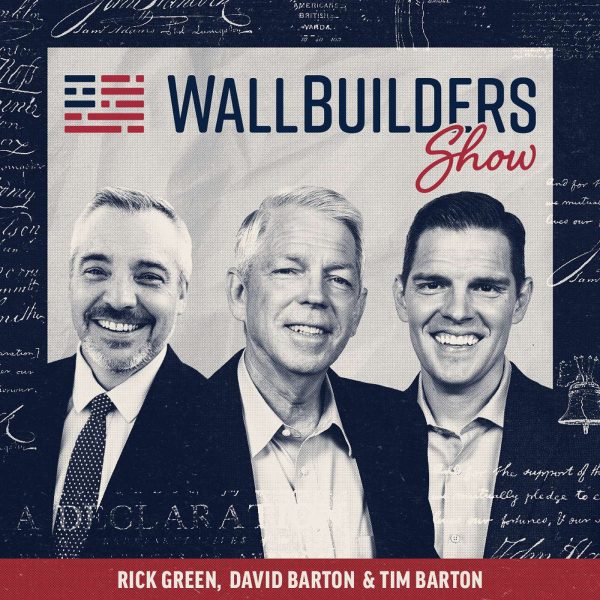
The WallBuilders Show
- Episódios
- 1.064
- Publicação
- diária
- Último episódio
- 13 nov 2026
Sobre o podcast
The WallBuilders Show is a daily journey to examine today's issues from a Biblical, Historical and Constitutional perspective. Featured guests include elected officials, experts, activists, authors, and commentators.
Participantes
Episódios 1.064
Why Conservative Ballot Measures Won In Blue States
The election recap most people heard is missing the part that actually tells you where voters are: the ballot initiatives. We walk through a stack of results that don’t fit the tidy “America just turned …
Notas do episódio
The election recap most people heard is missing the part that actually tells you where voters are: the ballot initiatives. We walk through a stack of results that don’t fit the tidy “America just turned progressive” storyline, including measures that protect women’s sports from biological males, statewide voter ID requirements, and constitutional limits on raising taxes. When even deep-blue places approve these kinds of policies, it raises a serious question: did voters embrace a leftward agenda, or did they simply reject certain candidates while keeping more conservative guardrails in place?
Then we dig into the cognitive dissonance that drives everyone nuts, how people can vote for conservative policies and still send lawmakers to office who oppose them. Our takeaway is blunt: too many voters treat politics like an individual sport and ignore that parties operate like teams with platforms, leadership, and marching orders. If you want fewer surprises, you have to read the playbook, not just the personality.
We also share genuinely encouraging updates from culture and the courts. The Ninth Circuit delivers a major win for common sense by confirming federal officers can use non-lethal crowd control to restore order without waiting to be assaulted. We highlight new data showing teen gender identification trends are dropping after years of rapid growth, and we celebrate a visible faith moment when Patriots quarterback Drake May shares Proverbs 16:9 on-air and explains why trusting God’s plan matters. Finally, we talk economics, including jobless claims hitting the lowest level since 1959 and what that means for the bigger picture.
If you like sharp analysis paired with real optimism, subscribe, share this with a friend, and leave a review so more people can find Good News Friday.Capítulos (9)
Short-Sighted Votes And Lasting Values
A single vote can reveal a whole worldview, and that’s where we start. After a listener shares raw post-election grief and a sobering passage from Hebrews 12, we talk honestly about the temptation to trade …
Notas do episódio
A single vote can reveal a whole worldview, and that’s where we start. After a listener shares raw post-election grief and a sobering passage from Hebrews 12, we talk honestly about the temptation to trade long-term biblical conviction for short-term financial relief. We challenge the “affordability first” mindset and ask what happens when Christians get the priorities backwards, especially on issues like abortion, marriage, and gender.
We also dig into why these moral questions are not side issues at all. For us, they point straight to the deeper question: is truth objective, and do our rights come from God or from government? That foundation shapes everything from how a candidate governs to how big they think the state should be. We connect the dots to the American founding, limited government, and the responsibility of citizens to vote with clarity instead of frustration or “stage one thinking.”
Then we shift into two practical Q&As: whether a US president can order an election audit (and why the Constitution puts election times, places, and manner primarily with the states), and how to make a biblical case for pastors to engage culture. We walk through a direct John 10 framework that contrasts a shepherd with a hireling when wolves threaten the flock, and we offer concrete ways to start that conversation in your church without turning it into a shouting match.
If this helped you think more clearly about Christian civic engagement, share it with a friend, subscribe, and leave a review so more people can find it. What’s one issue you believe Christians should never trade away for comfort?Capítulos (12)
Why Veterans Day Still Matters
Veterans Day forces a deeper question than “Do I feel thankful?” It asks, “What am I willing to do with the freedom someone else protected?” We start by honoring every man and woman who put on the uniform, then …
Notas do episódio
Veterans Day forces a deeper question than “Do I feel thankful?” It asks, “What am I willing to do with the freedom someone else protected?” We start by honoring every man and woman who put on the uniform, then push past surface level gratitude toward what Lincoln called increased devotion to the cause. Along the way, we untangle the difference between Veterans Day and Memorial Day, and we trace the history from Armistice Day after World War I to the federal Veterans Day holiday we recognize today.
Then we shift from remembrance to responsibility. If you’re a veteran, or you love someone who served, we talk about what a next mission can look like through civic engagement, leadership training, and defending the Constitution on the home front. We also give a clear eyed election analysis: why the results can look like a landslide while many races were actually narrow, how turnout changes everything, and why issues like voter ID can win even in places that elect Democratic leaders.
We close by looking ahead to the next chapter in Congress, including what Jim Jordan brings as House Minority Leader: strategic thinking, strong communication, and the kind of backbone that doesn’t fold under pressure. If you care about faith and culture, constitutional government, voter integrity, and practical action, this conversation is built for you. Subscribe, share this with a friend, and leave a review so more people can find the show and stay engaged.Capítulos (13)
Stay In The Fight - with Loran Baxter
Losing an election can make good people feel powerless, and that’s exactly when quitting starts to sound “reasonable.” We’re not buying it. We talk about the spiritual danger of disengagement, why perseverance …
Notas do episódio
Losing an election can make good people feel powerless, and that’s exactly when quitting starts to sound “reasonable.” We’re not buying it. We talk about the spiritual danger of disengagement, why perseverance is part of Christian maturity, and how the early church mindset helps us keep going when culture pushes back. The goal isn’t to produce “successful servants.” The goal is faithful servants who keep showing up.
Then we bring you a real-world case study from Alaska with our guest Loran Baxter, one of our Super Coaches with Patriot Academy. Loran walks us through how Biblical Citizenship training and constitutional education can wake people up, equip churches, and turn passive voters into active neighbors who door knock, phone bank, and step into leadership. He shares an incredible moment where constitutional literacy on the Commerce Clause helped shape a congressional campaign, plus what it looks like to build a long-term pipeline through Leadership Congress.
We also dig into Alaska’s ranked-choice voting chaos, including the “decoy” candidate controversy in a razor-thin U.S. Senate race, and why morality still matters in politics. If you care about faith and culture, election integrity, Christian civic engagement, and restoring constitutional principles, this conversation is for you.
Subscribe, share this with a friend who feels discouraged, and leave a review so more people find the show.Capítulos (9)
The Golden Calf Of Political Niceness
Something doesn’t add up for a lot of Americans after this election and the worst move we can make is to either swallow every rumor or shrug and quit. We sit down the Monday after Election Day to sort through …
Notas do episódio
Something doesn’t add up for a lot of Americans after this election and the worst move we can make is to either swallow every rumor or shrug and quit. We sit down the Monday after Election Day to sort through what we actually know, what questions are fair to ask about turnout and registration, and why frustration in the base can be just as decisive as any headline about “missing voters.” Along the way, we talk candidly about broken expectations, communication failures, and the way social media algorithms can trap good people inside a political echo chamber.
We also confront a harder reality for the church: millions of evangelicals not showing up is not a strategy, it is a surrender. Voting is a responsibility, and it takes discipleship to evaluate leaders by policies and worldview outcomes, not personality and “niceness.” If Christians are going to engage faith and culture with integrity, we have to know what biblical truth is and how to apply it to real ballots and real legislation.
Then we shift to the constitutional perspective: what impeachment can and cannot do, why Senate conviction matters, how veto power works when Congress shifts, and why rules like the filibuster and reconciliation shape everything. We close with what to watch next at the state level, including special sessions, and we ask for prayer as state leaders gather to plan how to rebuild.
If this helped you think more clearly, subscribe, share the episode with a friend, and leave a review so more people can find practical biblical and constitutional analysis.Capítulos
Carregando capítulos…
What Happens To A Nation When Values Stop Voting
A lot of people woke up after the election feeling blindsided, but our read is more specific: it wasn’t simply a “blue wave,” it was a red side no show. We walk through the numbers and the story underneath …
Notas do episódio
A lot of people woke up after the election feeling blindsided, but our read is more specific: it wasn’t simply a “blue wave,” it was a red side no show. We walk through the numbers and the story underneath them, including what appears to be a major drop in evangelical turnout and why that absence can make normal opposition turnout look like a political tsunami.
From there, we get honest about the church problem behind the politics problem. When Christians absorb culture’s definitions of love, acceptance, and tolerance without the full framework of Scripture, we become easier to persuade with Bible flavored slogans while overlooking what policies actually do to life, marriage, gender, and religious liberty. We also talk about why people rank the economy so high, how fear based “threat to democracy” branding shapes votes, and why we can’t afford to be personality driven in a party team system.
Then we shift into Good News Friday, because discouragement isn’t a strategy. We highlight a powerful Reformation Day proclamation that ties the Bible to America’s founding ideals and God given rights, plus a reminder that Christian holy days still matter in public life. We also share encouraging signs of an undercurrent of revival, including pro athletes who boldly speak about Jesus and the gospel on major stages.
If you want a clearer battle map, stronger biblical civic literacy, and real next steps for the next two years, hit play. Subscribe, share with a friend, and leave a review so more people can find the show.Capítulos
Carregando capítulos…
A Frequent Recurrence To Freedom
Freedom doesn’t disappear all at once. It fades when we stop remembering what makes it possible, and George Mason said it plainly: no free government and no blessings of liberty can last without a frequent …
Notas do episódio
Freedom doesn’t disappear all at once. It fades when we stop remembering what makes it possible, and George Mason said it plainly: no free government and no blessings of liberty can last without a frequent recurrence to fundamental principles. After an election week that leaves a lot of people frustrated or discouraged, we step back and talk about the deeper problem behind the headlines: civic neglect, weak education, and a culture that wants outcomes without duty.
We dig into post-election turnout insights that should wake up every listener who cares about biblical citizenship, constitutional government, and the future of the country. If people of faith sit elections out, someone else fills the vacuum. From there we lay out a practical framework, the Seven Core Principles of Conservatism often associated with Mike Johnson: individual freedom, limited government, rule of law, peace through strength, fiscal responsibility, free markets, and human dignity. We talk about why conservatives struggle to communicate what we’re for, not just what we’re against, and how that confusion makes it easier for bigger-government ideas to sound like quick fixes.
We also go one layer deeper and ask a worldview question: what anchors those principles? Drawing from George Washington’s warning about religion and morality, we explain why “rights” language breaks when it’s detached from a biblical moral foundation. Finally, we make it real with a grassroots success story and a reminder that local races and long-term investment in the next generation are how communities get healthy from the bottom up.
Subscribe for more, share this with a friend who’s ready to re-engage, and leave a review with the principle you think America most needs to recover.Capítulos
Carregando capítulos…
Steady After The Election
The results are in, emotions are high, and a lot of people are asking the same question: what do we do now? We sit down the day after the election to process what happened without letting shock, anger, or …
Notas do episódio
The results are in, emotions are high, and a lot of people are asking the same question: what do we do now? We sit down the day after the election to process what happened without letting shock, anger, or despair hijack our faith. If you’re feeling that pit in your stomach or you’re stunned by outcomes that didn’t seem possible, we walk through a steadier way to think and act.
We start with three anchors that reframe everything: nothing catches God by surprise, God cares about how we respond to what happens, and God can work even painful events for good (Romans 8:28). From there, we talk election analysis through a biblical worldview and a constitutional perspective. We look at historical patterns, why some narratives will try to spin the results into something they’re not, and why the Texas sweep stands out as a genuine surprise that deserves sober attention and learning, not paralysis.
Then we get practical about what may come next in Washington: impeachment chatter, messaging bills designed for veto headlines, increased spending, fights over education, pressure on parental rights, and the likelihood that socialist and progressive voices feel newly validated. We also explain why that “double down” can backfire by creating clearer contrast and waking up more pastors and churches to engage for the long haul. If you want Christian civic engagement that’s grounded, strategic, and hopeful without being naive, this conversation is for you. Subscribe, share WallBuilders with a friend, and leave a review to help more people find it.Capítulos
Carregando capítulos…
Why Christians Have A Moral Responsibility To Vote - with Dr. Everett Piper
Election Day pressure is real, but we’re not letting polls, headlines, or cynicism steal our responsibility. We talk straight about why your vote still matters even when the media tries to “black pill” people …
Notas do episódio
Election Day pressure is real, but we’re not letting polls, headlines, or cynicism steal our responsibility. We talk straight about why your vote still matters even when the media tries to “black pill” people into staying home, and why Christians cannot outsource civic engagement to someone else. If you’ve ever thought, “It’s rigged,” “My vote won’t count,” or “The candidates aren’t perfect,” this conversation meets that hesitation head-on with clarity and urgency.
We’re joined by Dr. Everett Piper to lay out the case that voting is more than a civic right. It’s a moral responsibility. He breaks down the numbers behind the Christian voting gap, explains how tens of millions of believers sit out elections, and connects the stakes to everyday realities: protecting life, defending women and children, resisting cultural indoctrination, and maintaining safe communities. We also dig into the “separation of church and state” myth, going back to Thomas Jefferson’s Danbury Baptists letter and the founding era mindset that faith belongs in the public square, not locked inside a building.
Then we bring it home with a principle that keeps us steady no matter what the returns look like tonight: duty is ours, results are God’s. That means we don’t quit if we lose, and we don’t coast if we win. We also touch on election integrity reforms and why transparent, timely results build public trust.
If this helped you think clearly, subscribe, share the episode with a friend who feels discouraged, and leave a review so more people can find it. What’s the biggest obstacle you see keeping Christians from voting?Capítulos
Carregando capítulos…
Election Day Game Plan
Tomorrow is not a day to “try to fit voting in.” We’re making the case for a real Election Day plan: block the time, expect delays, and treat your vote like it can decide the outcome, because in dozens of races …
Notas do episódio
Tomorrow is not a day to “try to fit voting in.” We’re making the case for a real Election Day plan: block the time, expect delays, and treat your vote like it can decide the outcome, because in dozens of races it truly can. We’ve been watching contests where the margin on paper is under 1,000 votes, and that kind of reality changes the way you think about turnout, church engagement, and what it means to do your civic duty with clarity and purpose.
We also dig into why early voting headlines are so often misleading. Party registration doesn’t guarantee party loyalty, and high early turnout doesn’t tell you who is actually winning. From Michigan examples to Texas concerns, we talk through how voters can break from old patterns and why you shouldn’t let confident pundit talk either inflate your hopes or crush your resolve. Then we share the election night “tells” we’re watching first, especially several US Senate races that can signal whether the night is trending better or worse than expected, while keeping expectations grounded.
From there, we get practical. Our “pray and act” checklist includes specific prayers for mercy, integrity, and exposure of corruption, plus tangible steps you can take during the day: text the people you know will vote, then reach out to the ones you’re not sure about, and don’t wait until after work to cast your own ballot. We also point you to voter guide tools to help you and your friends make informed choices fast. If you found this helpful, subscribe, share it with a friend who needs a nudge, and leave a review. What’s your “one more thing” you’re doing before polls close?Capítulos
Carregando capítulos…
Real Reform Starts With Enforcing Laws Again
A lot of people feel like the country is stuck in permanent decline, but the stories we bring on Good News Friday push back on that narrative with specifics you can verify. Rick Green, David Barton, and Tim …
Notas do episódio
A lot of people feel like the country is stuck in permanent decline, but the stories we bring on Good News Friday push back on that narrative with specifics you can verify. Rick Green, David Barton, and Tim Barton walk through a stack of headlines at the intersection of faith and culture, looking at what changes when leaders actually enforce laws, clean up broken systems, and tell the truth about what works.
We start with immigration and naturalization: a sharp drop in citizenship approvals paired with a clearer standard. Instead of open-ended processing, we talk through expanded background checks, the return of a more rigorous civics test, and the argument that citizenship is a privilege that comes with responsibilities. We also connect the dots to real-world pressures like housing availability, jobs, and assimilation.
From there, we dig into a DOJ report showing violent crime and property crime falling, plus why prosecution and public safety policy matter in everyday life. Then we cover a massive cleanup of Social Security records, why missing death dates and citizenship data invite fraud, and how basic accountability can protect the safety net.
Finally, we hit two culture stories: unexpected signs of Christian revival reaching even the rock music world, and a new THC study suggesting some “relaxation” benefits may be placebo-driven. If you care about biblical worldview, constitutional principles, and practical policy outcomes, hit subscribe, share the show with a friend, and leave a review so more people can find it.Capítulos
Carregando capítulos…
What Does Religious Liberty Mean If We Forget Its Roots
Somebody sends us a blunt warning sign: a movement openly calling to scrap the Constitution and abolish the Senate. That is where we start, because it forces a real question most headlines dodge: what happens …
Notas do episódio
Somebody sends us a blunt warning sign: a movement openly calling to scrap the Constitution and abolish the Senate. That is where we start, because it forces a real question most headlines dodge: what happens to federalism, state authority, and minority rights when you remove the very institutions designed to slow down raw majoritarian power? We walk through why the Senate exists in a constitutional republic, how the 17th Amendment already weakened state-level accountability, and why “pure democracy” sounds noble but has a long track record of collapsing into instability and coercion.
From there, we shift into a listener question sparked by the Museum of the Bible and the Founding Era’s public language. When early Americans said “religion,” were they talking about Buddhism, Islam, and Hinduism the way we often do today, or were they usually talking about Christian denominations? We explain why the historical record points strongly toward “religion” meaning denominational Christianity in many contexts, and why that matters for understanding the First Amendment, religious tests, and religious liberty debates.
We also dig into Maryland history: a Catholic-founded colony that becomes increasingly Protestant through population changes and political upheaval tied to England’s Glorious Revolution, including Cood’s Rebellion. Along the way, we highlight how religious conflict often carried political assumptions about centralized power versus decentralized self-government, and why figures like Charles Carroll of Carrollton still matter for the story of liberty. If you found this helpful, subscribe, share it with a friend who loves history and civic debate, and leave a review so more people can find the show.Capítulos
Carregando capítulos…
What If A Christmas Classic Could Reframe 1776 - with Joel Smallbone
A Revolutionary War story with drumlines, family fracture, and a Christmas heartbeat sounds like a gamble, but that’s exactly why we wanted to talk about it. We sit down with Joel Smallbone from For King and …
Notas do episódio
A Revolutionary War story with drumlines, family fracture, and a Christmas heartbeat sounds like a gamble, but that’s exactly why we wanted to talk about it. We sit down with Joel Smallbone from For King and Country to unpack Drummer Boy, a bold new Angel Studios film that leans into big music, big emotion, and a big moment in American history.
Joel walks us through how “The Little Drummer Boy” followed his band for years, then slowly turned into an idea that could carry an entire feature film. We get into the creative risk of making a period piece musical without losing the weight of the story, what it’s like collaborating with seasoned actors, and why music can say things dialogue simply cannot. If you’ve been searching for a family-friendly movie with strong production quality and a pro-faith, pro-America tone, this conversation gives you real context before you buy tickets.
We also talk honestly about the hard parts of telling Founding era stories today, including how Drummer Boy addresses slavery without turning the entire narrative into a cheap shot at the Founders. Then we zoom out to the practical side: opening weekend matters, theaters matter, and turnout determines whether movies like this stick around through the Christmas season.
Check out Drummer Boy, share this with a friend who loves history and great music, and if you enjoy the show, subscribe and leave a review so more people can find it.Capítulos
Carregando capítulos…
A Theology Of Voting - with Daniel Trippie
If you’ve ever heard a Christian say “politics is too nasty,” “my vote won’t count,” or “I can’t support anyone unless Jesus is on the ballot,” we’re tackling that head-on with a biblical framework that’s …
Notas do episódio
If you’ve ever heard a Christian say “politics is too nasty,” “my vote won’t count,” or “I can’t support anyone unless Jesus is on the ballot,” we’re tackling that head-on with a biblical framework that’s practical, direct, and hard to ignore. We zoom out from hot takes and ask a deeper question: what does God expect from us when we live in a representative republic where our neighbors feel the consequences of laws, courts, and executive power?
We’re joined by Dr. Daniel Trippie from America First Policy Institute (AFPI), who lays out a theology of voting rooted in Genesis 1 and the idea of dominion and stewardship. That means voting isn’t about finding a perfect spiritual leader; it’s about responsibly choosing the person, policies, platform, and appointees that most align with creation-order realities like human life, the difference between male and female, religious liberty, ordered society, work, and the limits of the state. We also dig into the “perfect vs good” problem and why checking out doesn’t create neutrality, it creates a vacuum.
We talk candidly about why party platforms matter in a party system, how caucusing and leadership picks ripple downstream, and why pastors and churches are waking up for the long haul, not just for one election cycle. You’ll also hear how AFPI Faith is resourcing churches through its Biblical Foundations initiative, plus why long-term cultural engagement starts with clear teaching and courageous action.
If this conversation challenges you, share it with a friend, subscribe for more, and leave a review so more people can find a biblical, historical, and constitutional perspective on the issues shaping our country.Capítulos
Carregando capítulos…
One Week To Turnout
One week. That’s all that’s left, and we can feel the pressure building in every conversation, every headline, and every poll that tries to tell you the story before a single vote is counted. We share what …
Notas do episódio
One week. That’s all that’s left, and we can feel the pressure building in every conversation, every headline, and every poll that tries to tell you the story before a single vote is counted. We share what we’re seeing firsthand while traveling and speaking across the country, and why the “on the ground” reality often clashes with the media narrative. If you care about faith and culture, biblical values, and the real-world impact of Christian voter turnout, this is the moment to lock in your plan.
We also talk about something bigger than politics: the rising generation. Tim shares what hit him at Liberty University, where 10,000 students packed an arena for worship and it felt unmistakably like God is stirring bold faith again. That encouragement matters because the stakes are real, and close elections can turn on a few thousand votes when churches stay silent or believers stay home.
From there, we dig into the mechanics: why early voting stats can be misread, how polling can create false confidence or needless panic, and what it looks like to strategically focus on competitive House races and key Senate races in places most people ignore. We also share why election integrity reforms at the state level matter, what to watch for on election night coverage, and where to find help researching candidates if you’re still deciding.
If you found this helpful, subscribe to the WallBuilders Show, share it with a friend who needs a clear head right now, and leave a review so more people can find faith-based, historically grounded election insight.Capítulos
Carregando capítulos…
Good News That Cuts Through The Noise
A “polling firm” gets quoted by major media outlets, pundits build narratives on top of it, and then the group admits the numbers were basically made up. That’s where we start, because it exposes a bigger …
Notas do episódio
A “polling firm” gets quoted by major media outlets, pundits build narratives on top of it, and then the group admits the numbers were basically made up. That’s where we start, because it exposes a bigger problem: too many people are being emotionally steered by information that was never verified in the first place. We’re Rick Green, David Barton, and Tim Barton, and we’re bringing a rapid-fire Good News Friday that replaces hot takes with tangible developments you can actually evaluate.
We move from media misinformation to the rule of law, including a deportation order involving a Wisconsin mosque leader described as a threat to US foreign policy and tied to support for terrorist organizations. We also dig into voter integrity, where an appeals court restores Ohio’s approach to requiring proof of citizenship for certain voter registration interactions at the BMV, and the challengers can’t point to real, eligible citizens who were blocked. Along the way, we talk early voting patterns, why polls can distort your mindset, and why doing your civic duty matters more than letting headlines set your confidence level.
We also hit a major policy shift around government accountability: a federal judge denies an attempt to block DHS from accessing welfare data so eligibility can be verified, strengthening trust that benefits go to lawful recipients. And we close with a striking free-market story: Elon Musk pledging a SpaceX share for every kid in America, and what that says about capitalism, opportunity, and generosity at scale.
If you like clear analysis at the intersection of faith and culture, subscribe, share this with a friend, and leave a review so more people can find the show. What story should we dig into deeper next Friday?What Happens When Courts Test Freedom By Tradition
A “historical” series can look authentic and still sell you a false story, and that matters because stories shape what we think America is. We respond to a listener question about the History Channel’s Sons of …
Notas do episódio
A “historical” series can look authentic and still sell you a false story, and that matters because stories shape what we think America is. We respond to a listener question about the History Channel’s Sons of Liberty and explain why accuracy is more than dates and costumes. We talk about the telltale signs of a modern, cynical lens that spotlights grime, vice, and cheap drama while flattening the founding era’s strongest motivations: faith, duty, courage, and a fierce sense of justice rooted in something bigger than politics.
From there, we zoom out into a bigger question that sits right at the intersection of faith and culture: after Dobbs and the Supreme Court’s renewed emphasis on “history and tradition,” could a state establish a religion or require a statement of faith for public officials the way some early states once did? We walk through the legal framework that complicates that idea, especially selective incorporation and how the Fourteenth Amendment has been used to apply the Bill of Rights to the states, shifting enormous authority to federal courts over time.
We also dig into religious tests for office and why Torcaso v. Watkins (1961) is still a key case for understanding church and state, the First Amendment, and why so many public expressions of religion were pushed out of schools and civic life in the 1960s. If you care about constitutional history, the American Revolution, and how to measure pop culture against primary sources, this conversation gives you tools you can use immediately. Subscribe, share this with a friend, and leave a review with your take: should “history and tradition” be the standard that guides the courts?Capítulos
Carregando capítulos…
How Pastors Can Swing Close Elections - with Chad Connelly
Your ballot is not a love letter, and it’s definitely not a place to nurse a grudge. We’re feeling a shift on the ground, and we talk through what we’re seeing as we travel: pastors showing unexpected courage …
Notas do episódio
Your ballot is not a love letter, and it’s definitely not a place to nurse a grudge. We’re feeling a shift on the ground, and we talk through what we’re seeing as we travel: pastors showing unexpected courage, churches waking up to how close elections really are, and turnout that can swing a congressional district with just a few hundred votes. Rick Green, David Barton, Tim Barton, and special guest Chad Connelly break down why Christian voter turnout is often the margin of victory, especially in districts decided by less than 1,000 votes.
We also dig into early voting numbers and the stories people are telling about them. Higher early turnout can be encouraging, but the real question is who is voting and whether new voters are actually entering the system. Along the way we tackle the hard part: what to do when you don’t like a candidate, when someone on “your side” tells you to sit it out, and why that kind of protest can backfire. One of the most memorable moments is a blunt metaphor for the stakes: not Diet Coke versus Diet Pepsi, but Diet Coke versus Drano.
Then we get practical with an election watchlist: New Hampshire, Maine, Ohio, Iowa, Michigan, and even Alaska, plus ranked choice voting and ballot measures that could shape abortion policy, women’s sports, and more. We also share where to find our election night coverage and analysis. If you want faith and politics commentary with a biblical worldview, clear strategy, and real-world data, hit subscribe, share this with a friend, and leave a review so more people can find the show.Capítulos
Carregando capítulos…
Policy Over Personality - with Dr. Jim Garlow
A “pastor” on the ballot sounds reassuring until you look at what they actually plan to do with power. Tim Barton sits down with Dr. Jim Garlow, calling in from Israel, to talk candidly about a growing …
Notas do episódio
A “pastor” on the ballot sounds reassuring until you look at what they actually plan to do with power. Tim Barton sits down with Dr. Jim Garlow, calling in from Israel, to talk candidly about a growing political trend: clergy and ministry leaders running for office while promoting policies that contradict basic biblical teaching on life, marriage, and God’s design for men and women.
We start with a grounding question that cuts through slogans: what is the purpose of government? From there, we walk through why protecting the citizenry matters, why abortion is a direct violation of that duty, and why Christians cannot outsource discernment to a title, a denomination, or a polished media presence. We also dig into why “nice” candidates can still advance destructive ideas, and why voters must judge fruit and policy, not vibe.
Along the way, we discuss the widening biblical worldview gap inside American churches, how that shapes elections, and a clear rubric for Christian voters that begins with the right to life. If you care about biblical principles of government, faith and politics, and how to vote with a biblically informed conscience, this conversation will challenge and equip you.
Subscribe for more, share this with a friend who is torn between personality and policy, and leave a review so more people can find it. What’s the first issue you check before you support a candidate?Capítulos
Carregando capítulos…
Vote Like It Matters
Polls are loud, but the ground truth is louder and what we’re hearing in battleground states is giving us cautious optimism. With the midterm elections just days away, we break down why national polling can …
Notas do episódio
Polls are loud, but the ground truth is louder and what we’re hearing in battleground states is giving us cautious optimism. With the midterm elections just days away, we break down why national polling can miss what local leaders and campaigns are actually seeing, and why the only number that finally matters is turnout. If you’ve ever felt tempted to sit out because “my vote won’t change anything,” this conversation is for you.
We also go deeper than horse-race politics and talk about the discipleship problem showing up in Christian voting habits. Plenty of churchgoing believers profess faith while supporting candidates and policies that conflict with biblical values on life, family, and moral clarity. We walk through how to think from a biblical worldview, why duty is ours even when results feel uncertain, and how to resist the discouragement that keeps good people on the sidelines.
Then we tackle election integrity head-on: what has changed in election law since 2020, why voter ID and ballot initiatives matter, and how cynicism can become a self-fulfilling prophecy. Finally, we highlight a high-stakes issue many voters overlook: federal judges. Senate control affects confirmations, and the courts shape religious liberty, constitutional rights, and public policy for decades.
Listen, get informed with ChristianVoterGuide.com, and if this helped you, subscribe, share with a friend, and leave a review. What’s the one issue you wish every voter would take seriously before they cast a ballot?Capítulos
Carregando capítulos…
Columbus Day Returns As Culture Fights Back
The news cycle is loud, but not everything happening in America is bad, and we refuse to act like it is. Good News Friday brings you stories that point to real shifts in culture, policy, and public courage …
Notas do episódio
The news cycle is loud, but not everything happening in America is bad, and we refuse to act like it is. Good News Friday brings you stories that point to real shifts in culture, policy, and public courage, plus a few practical ways you can help us keep moving forward.
We start with a candid request: pray for us. Between now and the election we’re traveling, speaking, doing interviews, and dealing with the same flight delays and disruptions everyone’s feeling. Your prayers matter as much as your financial support, and we’re grateful for both. Then we dig into a headline that surprised us in the best way: Southern Baptist Convention President Willie Rice pushes back hard on the idea that pastors must “stay out of politics.” We talk through why abortion, marriage, gender ideology, and immigration aren’t just political labels but theological issues that shape laws, families, and the nation’s future.
Next, we unpack a big Second Amendment win: the federal government stops enforcing certain registration rules tied to suppressors and short-barreled firearms. We explain the history of the NFA tax stamp, what changes for law-abiding buyers, what does not change (background checks and other legal limits still apply), and why suppressors are more about hearing protection than Hollywood “silencers.”
Finally, we take on Columbus Day, President Trump’s proclamation, and the bigger question underneath it all: how should we judge history without turning every imperfect person into a villain? If you care about faith, freedom, and facts, this conversation is for you. Subscribe, share this episode with a friend, and leave a review so more people can find the show.Capítulos
Carregando capítulos…
Who Gets To Rewrite Your Rules Of Government
A state constitutional convention can sound like a clean reset button, but it can also become the biggest political gamble voters never meant to take. We dig into Michigan’s ballot question and explain why some …
Notas do episódio
A state constitutional convention can sound like a clean reset button, but it can also become the biggest political gamble voters never meant to take. We dig into Michigan’s ballot question and explain why some states are required to periodically ask voters whether they want a convention, what a convention could change, and why “opening the whole constitution” is a very different move than pursuing a focused constitutional amendment. Along the way, we talk through a simple decision filter: what exact problem are you trying to fix, and do you actually have the votes and the cultural consensus to get a good outcome?
We also clear up a common confusion for anyone tracking constitutional news: a Michigan state constitutional convention is not the same thing as an Article V Convention of States for the US Constitution. The incentives, the risks, and the potential scope are different. If your goal is good governance and durable reform, narrower tools often beat sweeping rewrites, especially in an era when activists can steer a process far beyond what voters expected.
Then we pivot to culture and civics with a review of Adventures in Odyssey “The Measure of a Patriot”. We love values driven storytelling, but we ask a fair question: when you’re marking America’s 250th anniversary, does the framing leave kids more grateful and courageous, or just more skeptical? We wrap with a practical civics question about taxpayer funded lawsuits between governments and a reminder to vote principles and agendas, not personality. Subscribe, share this with a friend, and leave a review so more people can find these biblical, historical, and constitutional conversations.Capítulos
Carregando capítulos…
Why Your Vote Still Matters
Twenty days sounds like plenty of time until you realize how many elections get decided by a few thousand votes, sometimes less. We talk through the hard truth behind low-turnout midterm elections: when fewer …
Notas do episódio
Twenty days sounds like plenty of time until you realize how many elections get decided by a few thousand votes, sometimes less. We talk through the hard truth behind low-turnout midterm elections: when fewer people show up, your vote carries more weight, and organized groups can swing congressional districts, school boards, and statewide constitutional amendments.
We also take on the most common reasons Christians give for staying home. Politics feels dirty, the parties feel the same, and one vote feels small. We answer those objections with real numbers from toss-up districts and with a biblical lens on stewardship, accountability, and what it means to live in a nation built on “We the people.” If we really believe responsibility comes with authority, voting is not optional background noise, it is part of how we love our neighbors in practice.
Then we get practical. We run through major state ballot initiatives, including ranked choice voting, citizen-only voting rules, voter ID, protections for women’s sports, abortion amendments, and other policy questions that can shape your state constitution for decades. We also explain why third-party voting rarely changes outcomes in a two-party system and why incremental progress matters. Finally, we highlight why Senate control affects judicial confirmations and long-term court decisions.
If this conversation sharpens your thinking, subscribe, share the show with a friend, and leave a review so more people can find it.Vote Early With Confidence - with Doug Napier
Something big is happening at the same time in America and you can feel it in the voting numbers, the church, and even in the brands people are pushing back on. We start with a practical challenge: vote early …
Notas do episódio
Something big is happening at the same time in America and you can feel it in the voting numbers, the church, and even in the brands people are pushing back on. We start with a practical challenge: vote early while you still can. Candidates are known, but life is not predictable, so we talk through why early voting removes last minute obstacles and how tools like ChristianVoterGuide.com and iVoterGuide help you research candidates fast and share clear voter guides with friends, family, and your church.
Then we shift to a hopeful cultural signal that didn’t get nearly enough coverage: a massive prayer gathering at AT&T Stadium with tens of thousands of people showing up to pray for repentance and revival. We unpack the difference between revival as internal change and awakening as faith that starts shaping the public square, and why noticing “good news” matters when discouragement is easy.
Finally, we bring the marketplace into the conversation with guest Doug Napier from 1792 Exchange. He explains how they track corporate bias across thousands of companies and what it looks like for a business to respect constitutional rights like free speech, free exercise, and freedom of conscience while still serving customers well. We talk corporate stewardship, the cost of ideological activism, and why the 1792 Buttonwood Agreement is a powerful reminder that trust and integrity built the American economy in the first place. If you care about faith and culture, early voting, and the future of American business, listen, share this with a friend, and leave a review so more people can find the show.Stop Punishing Your Own Side - with Jordan Lorence
You can feel it in election season: the temptation to vote with your emotions, sit out November, or “send a message” because your candidate lost a primary. We don’t sugarcoat the stakes here. When we treat the …
Notas do episódio
You can feel it in election season: the temptation to vote with your emotions, sit out November, or “send a message” because your candidate lost a primary. We don’t sugarcoat the stakes here. When we treat the general election like a protest, we can end up empowering policies we strongly oppose and locking in consequences that last for years through courts, appointments, and executive power.
We also bring on attorney Jordan Lorence from First Liberty Institute to walk us through why the Democratic Socialists of America has so many constitutional conservatives alarmed. The issue isn’t just labels, it’s structure. We talk about checks and balances, separation of powers, federalism, the US Senate, the Electoral College, and why an independent Supreme Court is essential for protecting constitutional rights including religious liberty. If those guardrails disappear, minority rights get crushed under pure majority rule, and history shows that “more democracy” can quickly turn into something far darker.
Along the way, we get practical about how to think clearly when you don’t love the nominee, why a senator is part of a team vote, and why a governor can reshape an entire state through leadership and appointments. If you care about the Constitution, civic engagement, and biblical citizenship in modern America, this conversation is for you. Subscribe, share this with a friend who’s tempted to sit out, leave a review, and tell us: what helps you vote strategically when you don’t like the options?Capítulos
Carregando capítulos…
Surprising Polls And Clear Steps For Christian Voters
The headlines are trying to tell you the outcome is already decided, but the numbers we’re seeing hint at something very different. We dig into late-election reality, including a crucial correction on Idaho …
Notas do episódio
The headlines are trying to tell you the outcome is already decided, but the numbers we’re seeing hint at something very different. We dig into late-election reality, including a crucial correction on Idaho Proposition 1 and why ballot initiatives can quietly reshape abortion law and parental rights faster than any campaign ad can explain. If you care about pro-life policy and informed voting, this is your reminder to read the actual text and help your circle do the same.
We also react to a genuinely shocking polling headline: a Republican challenger running neck-and-neck with Oregon Governor Tina Kotek. Add in Barack Obama jumping into campaigning in Michigan and Georgia, and we ask the obvious question: why are “safe” states suddenly getting emergency attention? From pastor events to a multi-church rally in Colorado, we share what we’re seeing on the ground and why close races often come down to a few hundred votes. Christian civic engagement is not abstract; it’s showing up, bringing friends, and refusing to sit out because the media says your vote won’t matter.
Then we get practical about discernment in the social media age. We talk about research tied to Nature-style reporting that warns short-form feeds can degrade understanding over time, and why election season is exactly when 10-second clips and micro-ads can mislead the most. We point you to a free 21-day prayer guide, a live Biblical Citizenship course through Patriot Academy, and end with a culture moment we couldn’t ignore: Grok getting prompted to remove “false gods” and leaving only Jesus, then explaining why.
Subscribe for more Good News Friday momentum, share this with a friend who’s overloaded by election noise, and leave a review that tells us what topic you want next.Capítulos
Carregando capítulos…
How To Lead With Grace When You Are Under Attack - with Rob McCoy
When your name gets dragged, your motives get questioned, and the loudest voices seem determined to misrepresent you, what does faithful leadership actually look like? Tim Barton sits down with Pastor Rob McCoy …
Notas do episódio
When your name gets dragged, your motives get questioned, and the loudest voices seem determined to misrepresent you, what does faithful leadership actually look like? Tim Barton sits down with Pastor Rob McCoy for a candid, wide-ranging finale that starts with spiritual resilience and ends with a challenge to both younger and older generations to lead with courage. We talk about how to absorb criticism without becoming cynical, how to keep a clean heart when you feel justified in being angry, and why the Beatitudes still offer a practical framework for life in the public square.
From there, we zoom out to history and the cost of conviction. Rob reflects on lessons from figures like Dietrich Bonhoeffer and Martin Niemoller, then connects those ideas to modern moments when pastors had to decide whether government orders crossed constitutional and biblical lines. We also tackle the Romans 13 debate, religious liberty, and why standing for neighbors sometimes means refusing to call tyranny “obedience.” Along the way, we come back to one of the most important leadership ideas we can practice right now: people are not the enemy; they are the opportunity, even when they are wrong.
Finally, Rob explains the vision behind the American Pastors Guild, a pastor-focused network designed to equip church leaders with serious training, strong relationships, and clear standards, without the usual ministry pitching and platform building. If you care about biblical leadership, church engagement in culture, constitutional principles, and raising up the next generation with moral clarity, you will get a lot from this conversation. Subscribe, share this with a friend or your pastor, and leave a review with your biggest takeaway.Capítulos
Carregando capítulos…
Why Pastors Should Teach Culture And Government - with Rob McCoy
A lot of Christians have been trained to believe the Bible is “spiritual” while government and culture are “someone else’s job.” We push back on that idea with Rob McCoy as he lays out why expository preaching …
Notas do episódio
A lot of Christians have been trained to believe the Bible is “spiritual” while government and culture are “someone else’s job.” We push back on that idea with Rob McCoy as he lays out why expository preaching creates clarity, courage, and real discipleship, not just good feelings. When pastors avoid controversial moral issues, people don’t stay neutral, they get discipled anyway by the loudest voices in the culture.
We also dig into a hard question: how can churches see massive conversion growth while a place like California keeps accelerating toward social and moral collapse? Rob connects the dots between revival, awakening, and the practical public impact of biblical truth. That leads into American history, the Founders’ frequent use of Scripture, and why Deuteronomy mattered so much to the formation of a constitutional republic.
One of the most provocative moments comes from Matthew 16 and the meaning of ecclesia. Rob explains why Jesus used a term tied to a civic assembly concerned with the welfare of the community, and how that reframes the “I don’t do politics, I just preach the gospel” mindset. We also address why silence on issues like gender ideology and medical harm to minors is not compassion, and why fear-based leadership leaves the flock exposed.
Part two of this three-part conversation is direct, biblical, and practical. Subscribe so you don’t miss the conclusion, then share this with a friend and leave a review: what topic do you wish more pastors would address with clarity?Capítulos
Carregando capítulos…
A Pastor Can Shape A City Without Losing His Calling - with Rob McCoy
A pastor who becomes a mayor sounds like a headline, but Pastor Rob McCoy treats it like a calling problem: how do you love God, love people, and still tell the truth when the public square gets hostile? Tim …
Notas do episódio
A pastor who becomes a mayor sounds like a headline, but Pastor Rob McCoy treats it like a calling problem: how do you love God, love people, and still tell the truth when the public square gets hostile? Tim Barton sits down with Rob for a candid first part of a three-part conversation, tracing Rob’s unlikely path from the business world into decades of pastoral ministry at Calvary Chapel Godspeak in Thousand Oaks, California, and then into elected office.
Along the way, we talk about expository teaching, the verse-by-verse approach that refuses to “proof text” Scripture, and why that kind of Bible teaching forms deeper disciples. Rob also challenges a pattern many listeners will recognize in the American church: we emphasize evangelism but often neglect discipleship, and we’re shocked when there’s little cultural change to show for it. He connects those ideas to American history, spiritual renewal, and what it means to build durable convictions in a generation under constant pressure.
We also get the behind-the-scenes story of Rob’s friendship with Charlie Kirk, why Charlie called Rob “my pastor,” and the moment Charlie finally agreed to preach in a church and surprised everyone, including himself. If you care about biblical citizenship, Christian engagement in politics, and building faith that holds up in real life, this conversation is for you.
Subscribe so you don’t miss parts two and three, and if this helps you think more clearly, share it with a friend and leave a review.Capítulos
Carregando capítulos…
Ballot Initiatives You Cannot Ignore - with Michael Huffman and Byron Foxx
Ballot initiatives are quietly rewriting state law while most voters are distracted by the top of the ticket. We dig into why these measures matter so much, how they bypass stalled legislatures, and why the …
Notas do episódio
Ballot initiatives are quietly rewriting state law while most voters are distracted by the top of the ticket. We dig into why these measures matter so much, how they bypass stalled legislatures, and why the fine print can change your community faster than any campaign promise.
We focus on Virginia as a high stakes case study with Dr. Byron Foxx and Dr. Michael Huffman, walking through three proposed constitutional amendments and why they argue every voter needs to read past the marketing labels. We talk about the “reproductive freedom” language and the concerns raised about abortion policy, parental consent, medical safeguards, and conscience protections. We also cover the broader warning: once something is embedded in a state constitution, reversing it is a long, uphill process, so the real chance to stop a bad amendment is before it passes.
Then we zoom out to the national map. From voter ID questions to keeping men out of women’s sports, from abortion rollbacks to election systems like rank choice voting, states across the country are putting major policies directly on the ballot. We share how to find trustworthy information, why turnout is everything, and how one informed voter can multiply impact by bringing friends, family, and church communities along.
If you want a biblical, historical, and constitutional perspective on what your ballot is actually doing, hit play and share this with someone who votes but never reads the propositions. Subscribe, leave a review, and send this episode to one person who needs a clearer voter guide before they head to the polls.Capítulos
Carregando capítulos…
Aqui estão os 40 episódios mais recentes de 1.064. Os mais antigos estão no feed do podcast.
Podcasts parecidos
Mais podcasts de História
Este podcast é seu?
Confirme com uma entrada no seu feed: você recebe um código aqui, adiciona como podcast:txt no canal do seu feed e nós verificamos. Depois disso, seu podcast aparece como “verificado” no SoundNode.