

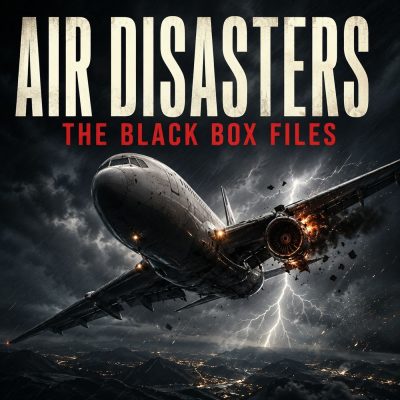
The bent pylon fitting failed six knots below stall - did they make it?
Show notes
A bent pylon fitting from a Tulsa shortcut cracks unseen as American Airlines Flight 191 climbs - did they make it in time?
The bent pylon fitting failed six knots below stall - did they make it?
In this episode, we present the documented sequence of maintenance decisions, damaged parts, and cockpit silence that preceded a catastrophic failure on May 25, 1979. What procedural shortcut and missed signals set up the crisis, and could anyone have known in time?
Date: May 25, 1979
Event: Engine separation during takeoff at O'Hare International Airport
Aircraft: McDonnell Douglas DC-10, registration N110AA
Maintenance: Engine and pylon removed together in Tulsa, March 29-30, 1979
Margin: Aircraft was six knots below stall with no cockpit warnings
- A $58 shortcut: Tulsa crew used a forklift to remove engine and pylon as one unit, cutting procedure steps from 79 to 27.
- A McDonnell Douglas representative warned that the combined removal method carried risk, but the procedure was used anyway.
- During the forklift operation a rear attachment fitting on the pylon was bent, damage invisible to naked-eye inspection.
- The aircraft flew for eight weeks and dozens of flights while a fatigue crack grew through the damaged fitting with each pressurization cycle.
- From engine separation to the aircraft rolling past the point of no return was 31 seconds, with no warning lights or alarms reaching the cockpit.
Tired of ads? Listen to this podcast and 200+ more ad-free on OBOMEDIA.
Try it free for 7 days, cancel anytime: https://obomedia.com/en/gratis?ref=desc-7317291
© 2026 Created by an independent creator of the OBOMEDIA Network. All rights reserved.
This episode and its content (audio, text, and related materials) are the property of their respective creator, who is solely responsible for them, and are distributed by the OBOMEDIA Network on platforms such as Apple Podcasts, Spotify, Amazon Music, and Pocket Casts. Reproduction, distribution, editing, or commercial use, in whole or in part, without the creator's prior written permission is prohibited. For permissions, licensing, and business inquiries: [email protected].