

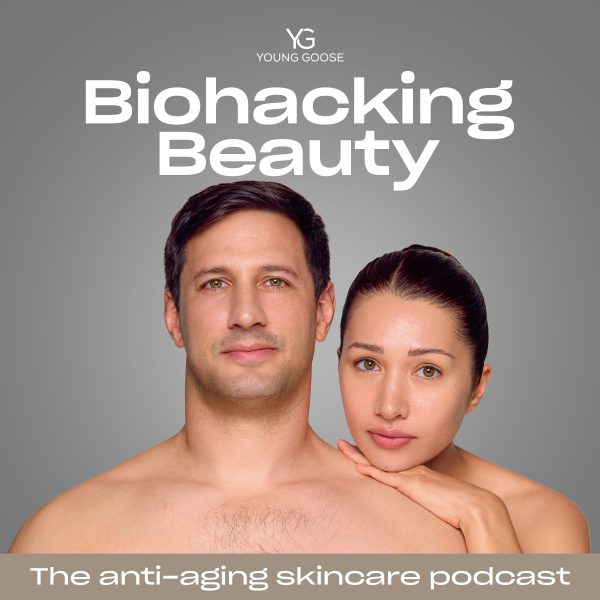
Biohacking Beauty: The Anti-Aging Skincare Podcast
- Episodes
- 279
- Released
- weekly
- Latest episode
- Nov 18, 2026
About the podcast
Welcome to Biohacking Beauty, the definitive exploration of skin health through the lens of longevity medicine and cellular biology. Hosted by the founders of Young Goose, Amitay Eshel and Anastasia Khodzhaeva, this podcast moves beyond "single-molecule" trends to uncover the multi-mechanism protocols required to optimize the body’s largest organ. We bridge the gap between systemic longevity research and topical application. By hosting world-renowned experts in mitochondrial health, epigenetic signaling, and regenerative medicine, we translate complex research into actionable strategies for biological recalibration. From the 12 Hallmarks of Aging to the latest in bio-harmonizing lifestyle shifts, Biohacking Beauty provides the molecular tools and insights needed to align your skin’s appearance with your body’s peak biological potential.
Episodes 279
280. McCall McPherson: Thyroid Health and Your Skin, From Puffiness and Dullness to Hair Loss
You can be sleeping 12 hours a day, losing hair, and looking puffy in the mirror while being told your thyroid labs are normal. That's because TSH is often the only marker checked, while free T3, the active …
Show notes
You can be sleeping 12 hours a day, losing hair, and looking puffy in the mirror while being told your thyroid labs are normal. That's because TSH is often the only marker checked, while free T3, the active hormone your skin, hair, and metabolism run on, is checked less than 4% of the time.
We dive deeper into this in the Biohacking Beauty Podcast with McCall McPherson, PA-C. We also chat about how low thyroid function shows up as dull skin, facial puffiness, and hair loss, the food group behind the most thyroid inflammation (it's not gluten), and the popular biohack she says can crash your thyroid.
McCall McPherson, PA-C, is the founder and CEO of Modern Thyroid Clinic, a telehealth practice serving patients in 46 states and named to the Inc. 5000 for three consecutive years. She was named to the Inc. Female Founders 500 in 2025, has spoken at TEDx and SXSW, and has been featured by CNN, Fortune, and TODAY. Her first book, Take Back Your Thyroid, publishes with Avery/Penguin Random House on February 9, 2027.
What’s Discussed:
(04:45) Why McCall says thyroid care is still in the "dark ages."
(07:37) How you can feel terrible with "normal" labs, and why ranges change from lab to lab.
(10:57) The cholesterol prescription McCall got at 27 instead of a thyroid fix.
(12:28) How low thyroid function shows up as dull, dry skin and hair loss.
(15:46) Why thyroid issues can make your face look puffy and saggy.
(17:41) TSH, free T4, free T3, and reverse T3, explained with a cup of coffee.
(20:38) Why TSH may reflect your active thyroid hormone just 1.7% of the time.
(29:53) How low thyroid function slows collagen repair and lets senescent cells build up.
(34:58) Why you should skip skin tightening over your thyroid.
(37:51) The #1 food group driving inflammation in thyroid patients (it's not gluten).
(40:51) What McCall sees in thyroid patients on microdosed GLP-1s.
(52:34) The TikTok thyroid advice and iodine trend she'd erase.
(56:02) What subclinical hypothyroidism may mean for your heart.
(58:40) The overhyped biohack she says crashes your thyroid.
Listen to this episode of Biohacking Beauty before you accept "your labs are normal" as the final word on how you feel.
Resources Mentioned:
Take Back Your Thyroid by McCall McPherson, PA-C: Preorder at book.modernthyroidclinic.com and get McCall's Thyroid Empowered Course ($399 value) free with purchase. In bookstores February 9, 2027.
Related Episodes:
Dr. Amie Hornaman: The Thyroid Mistake That Keeps Women From Getting Answers
Dave Asprey: The Uncomfortable Conversation About Aging Naturally vs. Biohacking
BLACK FRIDAY AT YOUNG GOOSE:
The more you stock up, the more you get free:
Spend $300 and receive Blue Peptide Spray for free ($65 value)
Spend $500 and receive Blue Peptide Spray + EyeC.A.R.E. for free ($164.50 value)
Spend $750 and receive Blue Peptide Spray, EyeC.A.R.E. + Neck and Chest for free ($364.50 value)
Shop now at younggoose.com
Find more from Young Goose:
Use code PODCAST10 to get 10% off your first purchase, and if you’re a returning customer use the code PODCAST5 to get 5% off at younggoose.com
Instagram: @young_goose_skincare
Find more from McCall McPherson & Modern Thyroid Clinic:
Instagram: @mccallmcphersonpa
TikTok: @mccallmcpherson
YouTube: @McCallMcPherson
Website: modernthyroidclinic.com
Book: book.modernthyroidclinic.com
Podcast: Modern Thyroid and Wellness
279. Hyaluronic Acid vs. Ectoin: The Hydration Ingredient That Actually Lasts
Hyaluronic acid has been the default answer to dry skin for years, which is why it shows up in serums, moisturizers, mists, and masks, often several on the same bathroom counter. But the claims that sold it …
Show notes
Hyaluronic acid has been the default answer to dry skin for years, which is why it shows up in serums, moisturizers, mists, and masks, often several on the same bathroom counter. But the claims that sold it, from holding 1,000 times its weight in water to working like a topical filler, have drifted a long way from what it actually does on your skin.
And some of the problems people blame on it, come from somewhere else. A serum that leaves skin tight by the afternoon usually has a formula problem, not an ingredient problem, and a lesser-known ingredient called ectoine has research showing hydration that holds for days after you stop applying it. So before you buy another hyaluronic acid product, it is worth knowing what it can and can't do, and what else deserves a place in your routine.
In this Biohacking Beauty Class, we break down hyaluronic acid vs. ectoine, from what each one actually does in the skin to why we've moved many of our formulas toward ectoine. We get into whether hyaluronic acid can make skin feel drier, why a topical serum can't work like filler, the truth about multi-weight hyaluronic acid, what ectoine research shows for eczema-prone skin, and what neither ingredient can do for aging skin.
What’s Discussed:
(03:18) Rapid fire: Is hyaluronic acid the next overrated skincare ingredient?
(08:17) What hyaluronic acid actually is, and why the "acid" doesn't mean exfoliant.
(15:51) What "holds 1,000 times its weight in water" really tells you.
(17:58) Why a topical hyaluronic acid serum can't work like an injectable filler.
(19:31) Can hyaluronic acid actually make your skin feel drier?
(20:42) The truth about multi-weight hyaluronic acid and "deeper penetration."
(27:13) What ectoine is and where it comes from.
(31:30) The research behind ectoine's longer-lasting hydration.
(35:24) What ectoine studies show for eczema-prone skin.
(36:32) Why ectoine quality varies so much from one supplier to the next.
(50:45) What neither hyaluronic acid nor ectoine can do for aging skin.
(54:58) What to do if you have five hyaluronic acid products on your counter.
Listen to this episode of Biohacking Beauty before you buy another serum just because hyaluronic acid is on the front of the bottle.
Products Mentioned:
L.A.D.R. SERUM
Related Episodes:
The Mitochondria Problem Behind Aging Skin + How to Recharge Your Skin and Look Younger
The NAD+ Thief Your Skin Can't Escape: CD38, Zombie Cells, and the Decline
BLACK FRIDAY AT YOUNG GOOSE:
The more you stock up, the more you get free:
Spend $300 and receive Blue Peptide Spray for free ($65 value)
Spend $500 and receive Blue Peptide Spray + EyeC.A.R.E. for free ($164.50 value)
Spend $750 and receive Blue Peptide Spray, EyeC.A.R.E. + Neck and Chest for free ($364.50 value)
Shop now at younggoose.com
Find more from Young Goose:
Website: Use code PODCAST10 to get 10% OFF your first purchase, and if you’re a returning customer use the code PODCAST5 to get 5% OFF at younggoose.com
Instagram: @young_goose_skincare
278. Dr. Amy Spizuoco: Ozempic Hair Loss, Biotin Myths, and Hair Treatments That Actually Work
Most people treat hair, scalp, and skin as three separate problems, each with its own shelf of products. But all three are built from keratin and run on the same growth signals, so thinning hair can say as much …
Show notes
Most people treat hair, scalp, and skin as three separate problems, each with its own shelf of products. But all three are built from keratin and run on the same growth signals, so thinning hair can say as much about how you're aging as a new wrinkle.
We dive deeper into this in the Biohacking Beauty Podcast with Dr. Amy Spizuoco. We also chat about what's really behind Ozempic hair loss, which hair loss treatments hold up in the evidence, and the popular hair supplement she calls the biggest waste of money.
Dr. Amy Spizuoco, DO, FAOCD, FAAD, is a board-certified dermatologist and dermatopathologist and the founder of True Dermatology in New York City. She is a Clinical Instructor of Dermatology at the Icahn School of Medicine at Mount Sinai, past president of the American Osteopathic College of Dermatology, and serves on the editorial boards of Practical Dermatology and Dermatology Times. She is also co-founder and co-chair of the DermVIP Summit, a dermatology conference dedicated to hair loss and scalp conditions.
What’s Discussed:
(01:25) Why hair, scalp, and skin are more connected than three product shelves suggest.
(04:14) How collagen 17 links thinning hair and thinning skin.
(07:17) Why the future of collagen is protecting what you have, not just rebuilding it.
(10:09) What gray hair and cell senescence reveal about aging in the rest of the body.
(15:26) When to start scalp care, and the scalp symptoms that need attention right away.
(20:33) How the hair growth cycle shortens as you age.
(29:31) What's really behind Ozempic hair loss, and what to put in place before starting a GLP-1.
(37:17) PRP, red light caps, and exosomes: which hair loss treatments actually hold up.
(45:46) The truth behind retinoid "thinning" and finasteride side effects.
(49:54) The hairline changes that mean you should see a dermatologist now.
(53:16) The hair supplement Dr. Amy calls the biggest waste of money.
Listen to this episode of Biohacking Beauty before you spend another dollar on biotin, scalp serums, or rosemary oil.
Resources Mentioned:
Xtressé Nutrient Hair Growth Gummies: shop.advancedderm.com
Related Episodes:
Dr. Alan Bauman: Why Biohackers Are Losing Their Hair Faster Than Everyone Else
Q&A: Your Questions Answered on Exosome Skincare (Everything You Need to Know Before You Try)
Find more from Young Goose:
Use code PODCAST10 to get 10% off your first purchase, and if you’re a returning customer use the code PODCAST5 to get 5% off at younggoose.com
Instagram: @young_goose_skincare
Find more from Dr. Amy Spizuoco & True Dematology:
Website: true-dermatology.com
Instagram: @drspizderm
277. Dr. Carrie Jones: Perimenopause Skin Changes, Hidden Histamine Triggers, and the Labs Worth Asking For
In your 40s, skin can suddenly turn red, itchy, flaky, or reactive, sometimes in random places, and most women assume it is just aging or blame their skincare. But the estrogen and progesterone shifts of …
Show notes
In your 40s, skin can suddenly turn red, itchy, flaky, or reactive, sometimes in random places, and most women assume it is just aging or blame their skincare. But the estrogen and progesterone shifts of perimenopause can change how mast cells release histamine at the skin barrier, which means the trigger may be happening inside the body, not inside the bottle.
We dive deeper into this in the Biohacking Beauty Podcast with Dr. Carrie Jones. We also chat about why a retinoid you have used for years can suddenly irritate your skin, why wine hits so differently in your 40s, and the overlooked lab that could explain hair loss and fatigue.
Dr. Carrie Jones, ND, FABNE, MPH, MSCP, is a naturopathic physician who completed a two-year residency in women's health and endocrinology, is board certified through the American Board of Naturopathic Endocrinology, and is a Menopause Society Certified Practitioner. She was the first medical director for Precision Analytical (the DUTCH Test) and the first head of medical education at Rupa Health. She has more than 20 years of experience in women's health and hormones and hosts the Hello Hormones podcast.
What’s Discussed:
(00:21) Why skin can suddenly turn red, itchy, and reactive in your 40s.
(02:20) Why a retinoid you have used for years can start irritating your skin in perimenopause.
(06:00) How mast cells and histamine create redness, welts, and itching that seem random.
(09:43) How bone broth and fermented foods can add to an already full histamine bucket.
(12:01) Why wine affects your liver, hormones, and skin differently in perimenopause.
(16:59) Alcohol-free ways to wind down at night, from holy basil tea to magnesium.
(20:50) What it means if an antihistamine before bed helps you wake up feeling better.
(23:28) Why progesterone is often the first hormone to drop and how that affects mast cells.
(27:46) The overlooked histamine trigger that can worsen PMS and skin, plus the biggest lever of all.
(35:01) Why ferritin belongs on your blood work, how low is too low, and when supplements are not enough.
(43:27) What to ask your doctor for, so you leave with more than another cortisone cream.
(48:27) Rapid fire: estrogen dominance, seed cycling, red wine, and the one thing every woman over 40 should stop doing.
Listen to this episode of Biohacking Beauty before you blame your next flare on aging or your skincare routine.
Resources Mentioned:
Mira Hormone Monitor: miracare.com
Find more from Young Goose:
Use code PODCAST10 to get 10% off your first purchase, and if you’re a returning customer use the code PODCAST5 to get 5% off at younggoose.com
Instagram: @young_goose_skincare
Find more from Dr. Carrie Jones:
Website: drcarriejones.com
Instagram: @dr.carriejones
YouTube: Dr. Carrie Jones
Podcast: Hello Hormones with Dr. Carrie Jones
276. Skincare Routine by Age: The Science-Backed Protocol for Your 20s, 30s, 40s and 50s
Most skincare routines are built by accumulation: a serum that went viral, a cream a friend swore by, whatever promised firmer skin that month. But what drives skin aging at 25 is not what drives it at 45, so a …
Show notes
Most skincare routines are built by accumulation: a serum that went viral, a cream a friend swore by, whatever promised firmer skin that month. But what drives skin aging at 25 is not what drives it at 45, so a routine that never changes its priorities can spend years working on the wrong problem.
And your birthday is only part of the picture. Some people's skin is running a decade ahead of their age, perimenopause can change what skin needs years before the 40s arrive, and the routine you will actually stick with is usually shorter than the one you think you need. So before you add another product, it is worth knowing what changes in your skin from one decade to the next and what each stage should prioritize.
In this Biohacking Beauty Class, we walk through a skincare protocol for every decade, from protection in your 20s to correction in your 30s and recovery in your 40s, 50s, and beyond. We get into the research tying sun exposure to 80% of visible facial aging, why NAD+ declines in aging skin, what makes many exosome formulas questionable, how to tell if your skin is aging ahead of your age, and the red light specs that actually matter.
What’s Discussed:
(02:17) Why your skin's age matters more than the number on your birthday.
(03:09) The "attention budget" and why a shorter routine often gets better results.
(04:44) The research linking sun exposure to 80% of visible facial aging.
(06:20) What happened when adults used sunscreen every day for four and a half years.
(12:06) Why NAD+ declines in aging skin and what changes after 30.
(15:03) How spermidine and autophagy help skin clear out what has expired.
(22:08) Why exosomes cannot survive alongside vitamin C, acids, and peptides in the same formula.
(24:04) The part of aging in your 40s that sunscreen cannot fully cover.
(26:10) Why perimenopause and menopause mean moving up a stage, whatever your age.
(31:22) A first look at the Youth Activating Ampoule and why some actives have to stay freeze-dried.
(42:05) What to use at home in the weeks around microneedling and laser treatments.
(45:25) What the research says about red light therapy and the specs worth paying for.
(51:53) How to find out if your skin is aging ahead of your age.
Listen to this episode of Biohacking Beauty before you add another product to your routine, so you know what your skin needs at the stage it is actually in.
Resources Mentioned:
Skincare by Age protocol: https://www.younggoose.com/pages/science
Decade-by-Decade Skincare Field Guide
Find a Young Goose Professional
Previous Episodes Mentioned:
Anastasia and Amitay with Dave Asprey on The Human Upgrade
Find more from Young Goose:
Website: Use code PODCAST10 to get 10% OFF your first purchase, and if you’re a returning customer use the code PODCAST5 to get 5% OFF at younggoose.com
Instagram: @young_goose_skincare
275. Dave Asprey: The Uncomfortable Conversation About Aging Naturally vs. Biohacking
There is an interesting contradiction in the way we talk about aging. We celebrate using technology to improve sleep, metabolism, cognition, recovery, and longevity, but when the same mindset is applied to …
Show notes
There is an interesting contradiction in the way we talk about aging. We celebrate using technology to improve sleep, metabolism, cognition, recovery, and longevity, but when the same mindset is applied to appearance, the conversation can suddenly become much more judgmental.
In this episode of Biohacking Beauty, we sit down with Dave Asprey to explore that tension. We get into why he chose a facelift after major weight loss, whether cosmetic procedures belong in the biohacking conversation, and why wanting to look younger is often treated differently from wanting the rest of your body to function younger.
Dave Asprey is a four-time New York Times bestselling author, founder of Bulletproof Coffee, CEO of Upgrade Labs, host of The Human Upgrade, and co-founder of Unlimited Life. We also talk about how he prepares his body before procedures, what he thinks people misunderstand about peptides, and his takes on GLP face, collagen supplements, Botox, stem cells, and the other tools people are using to change how they age.
What’s Discussed:
[13:02] Why Dave ultimately chose a facelift after major weight loss.
[15:24] Where non-surgical skin treatments reached their limit for the amount of excess skin he wanted to address.
[18:58] Why copying someone else’s longevity or supplement stack can backfire.
[28:59] Where to start when your biological-age markers look good but you still do not like what you see in the mirror.
[30:07] Why sleep, recovery, HRV, and other foundational markers still matter when thinking about aging.
[37:52] The stigma around cosmetic procedures in biohacking and why Dave questions where that line is drawn.
[44:56] Why he believes fear around aging and medical procedures can affect the body’s stress response.
[54:25] GLP-1s, muscle loss, and the changes people notice in facial appearance after weight loss.
Listen to this episode of Biohacking Beauty for a conversation about where “aging naturally” ends, where biohacking begins, and why that line becomes much more complicated when appearance enters the picture.
Find more from Young Goose:
Use code PODCAST10 to get 10% off your first purchase, and if you’re a returning customer use the code PODCAST5 to get 5% off atyounggoose.com
Instagram: @young_goose_skincare
Find more from Dave Asprey:
Website:daveasprey.com
LinkedIn: Asprey
Instagram:@dave.asprey
Facebook: Daveaspreyofficial
YouTube: DaveAspreyBPR
TikTok: @daveaspreyofficial
Book: “Heavily Meditated”: https://daveasprey.com/heavily-meditated/
274. The Peptide Skincare Boom: Separating Skin Science From Marketing
Peptides are everywhere in skincare right now. They are in serums, moisturizers, lip products, cleansers, body washes, and even shampoos, all promising some version of smoother skin, more collagen, or fewer …
Show notes
Peptides are everywhere in skincare right now. They are in serums, moisturizers, lip products, cleansers, body washes, and even shampoos, all promising some version of smoother skin, more collagen, or fewer visible signs of aging.
But seeing “peptides” on a label tells you very little about whether the product can actually deliver those results. Which peptide is being used? Is there research behind that specific ingredient? Is there enough of it in the formula? Can it get through the skin barrier? And what happens when it is combined with everything else inside the bottle? So before you buy another peptide serum because the ingredient sounds impressive, it is worth knowing what actually makes a peptide useful for your skin and how formulation, delivery, concentration, and the rest of your routine can affect whether it works at all.
In this Biohacking Beauty Class, we are separating the science from the marketing around topical peptides. We get into which ones have more evidence behind them, what “Botox in a bottle” gets wrong, why some peptide products make more sense than others, and what to look for if your goal is supporting collagen, softening fine lines, and keeping your skin functioning well as it ages.
What’s Discussed:
(01:47) Do peptides actually belong in everything from serums to body wash?
(05:17) The biggest red flag when a skincare product uses peptides as the main selling point.
(08:26) What should actually back up an anti-aging peptide claim.
(11:11) Which topical peptides have more evidence behind them.
(13:01) Why neuropeptides are not really “Botox in a bottle.”
(15:54) What to know about using peptide products with vitamin C, retinoids, and other actives.
(17:46) Why pH, concentration, and the other ingredients in a formula can affect peptide stability.
(21:14) What actually makes a topical peptide product more likely to work.
(22:45) Why healthy skin function still matters when you are trying to support collagen and repair.
(25:09) If you could only add one peptide product to your routine, which type should it be?
Listen to this episode of Biohacking Beauty before another peptide claim on a skincare label convinces you to spend more without knowing what is actually inside the formula.
Previous Episodes Mentioned:
Nathalie Niddam: Peptides, Bioregulators, and the Truth About Skin Longevity
Nathalie Niddam: The Potential of Peptides in Skin Health and Anti-Aging
Peptides episodes to watch:
Peptides, Bioregulators & The Truth About Skin Longevity | Nathalie Niddam:: https://www.youtube.com/watch?v=2AoqcXJ_MMc
Why Peptides Are Not the Shortcut Biohackers Think They Are with Chris Duffin: https://www.youtube.com/watch?v=UNPhDZXY6kw
Peptides, Hormones, and the Anti-Aging Protocol Most Women Start Too Late: https://www.youtube.com/watch?v=b_CTcFjeyqQ&t=428s
GHK-Cu Explained: The Copper Peptide That Signals Collagen Repair: https://www.youtube.com/watch?v=qGDNyVtZjl4
Find more from Young Goose:
Website: Use code PODCAST10 to get 10% OFF your first purchase, and if you’re a returning customer use the code PODCAST5 to get 5% OFF at younggoose.com
Instagram: @young_goose_skincare
273. Dr. Staci Whitman: The Surprising Oral Causes Behind Facial Asymmetry and How Your Face Ages | Part 2
You probably know which side of your face you prefer in photos. One jawline may look sharper. One cheek may sit differently. One under-eye may look darker. And while some facial asymmetry is completely normal …
Show notes
You probably know which side of your face you prefer in photos. One jawline may look sharper. One cheek may sit differently. One under-eye may look darker. And while some facial asymmetry is completely normal, the way you use your mouth can also influence how the two sides of your face function over time.
In Part 2 of our conversation with Dr. Staci Whitman, we look at facial aging from inside the mouth. We get into how one-sided chewing, bite patterns, tongue function, palate width, airway health, and jaw structure can influence facial symmetry and the way changes become visible in the face. We also explore what adults can realistically do when the issue is structural rather than purely cosmetic. Dr. Staci breaks down the conversations happening around mastic gum, myofunctional therapy, palate expansion, MARPE, oral appliances, and tongue-tie releases, including why changing the way the mouth functions is much more complicated than trying the latest jawline trend online.
Dr. Staci Whitman is a board-certified pediatric dentist and Functional Medicine Certified Practitioner whose work focuses on functional dentistry, airway health, craniofacial development, the oral microbiome, and the mouth-body connection. She is the co-founder of the Institute for Functional Dentistry and founder of Bloom + Brighten.
What’s Discussed:
[1:37] Why persistent dark under-eyes may sometimes point to airway issues, inflammation, and facial structure rather than pigmentation alone.
[3:32] What happens to the jaw and the bones supporting the face as we age.
[6:44] How chewing predominantly on one side may contribute to differences between the two sides of the face.
[10:55] What your chewing patterns, saliva, and cavities may reveal about how you are using your mouth.
[17:09] Whether mastic gum and jaw exercises can actually change the appearance of an adult face.
[20:00] How tongue function, swallowing, and breathing are addressed through myofunctional therapy.
[21:50] Why a narrow palate may require more than simply changing your tongue position.
[22:30] What adults should know about palate expansion, MARPE, and oral appliances.
[31:26] Why finding a tongue tie does not automatically mean releasing it is the first step.
[40:49] Who to see when you suspect your bite, tongue, airway, or jaw function may be affecting your face.
Listen to this episode of Biohacking Beauty to learn why facial asymmetry may be giving you clues about what is happening inside your mouth.
Find more from Young Goose:
Website: www.younggoose.com/
Use code PODCAST10 to get 10% OFF your first purchase, and if you are a returning customer use code PODCAST5 to get 5% OFF.
Instagram: @young_goose_skincare
Find more from Dr. Staci Whitman:
Website: doctorstaci.com
Instagram: @doctor_staci
TikTok: @doctor_staci
YouTube: youtube.com/channel/
Book: SPIT: Why Your Mouth-and Its Microbes-Are the Secret to Whole-Body, Lifelong Health
Read Dr. Staci’s newsletter: substack.com/@doctorstaci
ResourcesFind an oral-systemic health practitioner through AAOSH: aaosh.org/find-a-practitioner
Search the IAOMT directory for a biological dentist or health professional: iaomt.org/for-patients/Search/?ppage=dashboard
Find an airway-focused practitioner through AAPMD: aapmd.org/find-aapmd-professional
Search The Breathe Institute provider directory: breatheops.com/directory/the-breathe-institute
Learn more about the Institute for Functional Dentistry: functionaldentistry.org/
272. Dr. Staci Whitman: The “Harmless” Oral Habits That Could Be Reshaping Your Face and Aging Your Skin | Part 1
You can invest in your skincare, protect your collagen, and do everything you can to age well, while completely overlooking something that sits only a few inches away from your skin: your mouth. The way you …
Show notes
You can invest in your skincare, protect your collagen, and do everything you can to age well, while completely overlooking something that sits only a few inches away from your skin: your mouth. The way you breathe, chew, swallow, care for your gums, and support your oral microbiome can influence far more than your teeth.
In this episode of Biohacking Beauty, we sit down with Dr. Staci Whitman to explore how oral health connects to facial structure, airway health, under-eye darkness, inflammation, blood flow, and the appearance of your skin. We also get into the everyday oral habits that may be working against you, what actually matters in an oral routine, and the facial signs that can make Dr. Staci suspect something deeper is going on.
Dr. Staci Whitman is a board-certified pediatric dentist and Functional Medicine Certified Practitioner who specializes in the mouth-body connection, airway development, craniofacial growth, and the oral microbiome. She is the co-founder of the Institute for Functional Dentistry and founder of Bloom + Brighten, bringing functional medicine and systems biology into a part of health that is still often treated separately from the rest of the body.
What’s Discussed:
(01:17) Why humans chew dramatically less today and what that can mean for facial development.
(05:57) How mouth breathing, narrow airways, and modern eating habits can show up in the face.
(11:23) The oral bacteria involved in nitric oxide production and why blood flow matters for skin.
(13:02) Why saliva is one of the most overlooked parts of oral health and what happens when your mouth stays dry.
(16:50) Why Dr. Staci believes dentistry is missing a major piece of the longevity conversation.
(24:20) What actually matters in an oral-health routine, from meal timing and nasal breathing to flossing and microbiome testing.
(31:40) How hormones, pregnancy, perimenopause, and menopause can change oral health.
(40:52) What tongue scraping actually does and what your tongue may reveal about your health.
(46:02) What Dr. Staci notices about your face, eyes, lips, posture, and breathing before she even looks at your teeth.
Listen to this episode of Biohacking Beauty to learn why the way your face looks may be influenced by habits you have never considered part of your beauty routine.
Find more from Young Goose:
Website: www.younggoose.com/
Use code PODCAST10 to get 10% OFF your first purchase, and if you are a returning customer use code PODCAST5 to get 5% OFF.
Instagram: @young_goose_skincare
Find more from Dr. Staci Whitman:
Website: doctorstaci.com
Instagram: @doctor_staci
TikTok: @doctor_staci
YouTube: youtube.com/channel/
Book: SPIT: Why Your Mouth-and Its Microbes-Are the Secret to Whole-Body, Lifelong Health
271. Dr. Mamina Turegano: What Your Skin Reveals About Your Health, Aging & Hormones
Most of us assume that if something serious was happening inside our body, we would know. We would feel sick. Something would hurt. A blood test would catch it. But some health problems can develop quietly for …
Show notes
Most of us assume that if something serious was happening inside our body, we would know. We would feel sick. Something would hurt. A blood test would catch it. But some health problems can develop quietly for years, and sometimes the clue that finally gets your attention is sitting right where you can see it: on your skin.
In this episode of Biohacking Beauty, we get into the skin changes that can point to something happening beyond the surface, from psoriasis and multiple skin tags to persistent rashes, hair loss, and subtle signs of skin cancer. We also talk about what makes a dermatologist look deeper, how long sun damage can build before it becomes visible, and when a skin concern deserves more than another product or treatment.
Dr. Mamina Turegano is a triple board-certified dermatologist, internist, and dermatopathologist, giving her a unique perspective that connects what is happening on the skin with what may be happening throughout the body. Her background in internal medicine and dermatopathology allows her to look beyond the appearance of a skin change and consider the metabolic, autoimmune, inflammatory, and systemic conditions that may be connected to it.
What’s Discussed:
(01:25) Why you can feel perfectly healthy while something is already changing internally.
(02:48) Why psoriasis can warrant looking at cardiovascular and metabolic health too.
(04:49) What multiple skin tags may tell you about insulin resistance.
(16:07) When an unexplained rash or chronic itching deserves a deeper workup.
(19:18) The skin cancer signs people may overlook and when hair loss needs more attention.
(23:14) How sugar, alcohol, stress, sleep, and circadian disruption can accelerate skin aging.
(35:31) Why Dr. Mamina is comfortable with topical peptides but not injectable peptides yet.
(45:24) Whether Google, AI skin scanners, and self-diagnosis are helping or hurting.
(48:53) How long sun damage may be building before you finally see it.
Listen to this episode of Biohacking Beauty to learn which skin changes are worth paying closer attention to, and why treating what you see is not always the end of the conversation.
Resources mentioned:
Want to find out more about Autophagy?
Listen here: The Overlooked Side of Autophagy Causing Aging - Part 1
The Overlooked Side of Autophagy Causing Aging - Part 2
Find more from Young Goose:
Website: younggoose.com
Use code PODCAST10 to get 10% OFF your first purchase, and if you’re a returning customer use code PODCAST5 to get 5% OFF.
Instagram: @young_goose_skincare
Find more from Dr. Mamina Turegano:
Website: DrMamina.com
Instagram: @dr.mamina
TikTok: @dr.mamina
YouTube: @dr.mamina
270. Your Most-Asked Skincare Questions, Answered With Science
Social media has made skincare information easier to access than ever. One video can convince you to increase your retinol. Another influencer can tell you an ingredient is “toxic.” Then someone else swears …
Show notes
Social media has made skincare information easier to access than ever. One video can convince you to increase your retinol. Another influencer can tell you an ingredient is “toxic.” Then someone else swears your skin has stopped responding because you have used the same product for too long. But think about what that can do to your skin when you follow every new rule without understanding what the product is actually doing. More stimulation is not always better. …269. Cynthia Thurlow: What Midlife Gut Changes Have To Do With Your Skin
When your skin starts changing in midlife, it is easy to assume the products that used to work suddenly stopped working. And when changing the routine does not fix it, hormones usually get the blame. But there …
Show notes
When your skin starts changing in midlife, it is easy to assume the products that used to work suddenly stopped working. And when changing the routine does not fix it, hormones usually get the blame. But there is another shift happening at the same time that rarely gets brought into the skin conversation: your gut. …268. 10 Habits for Younger Skin That Have Nothing To Do With Skincare
Everyone wants skin that looks brighter, firmer, smoother, and healthier for longer. But sometimes the thing holding your skin back is not the serum you forgot to buy. It is the blood sugar spike you keep …
Show notes
Everyone wants skin that looks brighter, firmer, smoother, and healthier for longer. But sometimes the thing holding your skin back is not the serum you forgot to buy. It is the blood sugar spike you keep missing, the protein you are not getting enough of, the sleep window you keep pushing, the strength training you keep delaying, or the daily stress your skin has to keep recovering from. …267. Dr. Amie Hornaman: The Thyroid Mistake That Keeps Women From Getting Answers
Thyroid dysfunction is often treated like it is easy to rule out. You ask for labs, your doctor checks TSH, and if that one marker is not flagged, you are told your thyroid is fine. But what if that is the …
Show notes
Thyroid dysfunction is often treated like it is easy to rule out. You ask for labs, your doctor checks TSH, and if that one marker is not flagged, you are told your thyroid is fine. But what if that is the problem? In this episode of Biohacking Beauty, we sit down with Dr. Amie Hornaman to unpack what most thyroid conversations skip: the difference between being “normal” on paper and having enough active thyroid hormone available to your cells. …266. Q&A: Your Questions Answered on Exosome Skincare (Everything You Need To Know Before You Try)
Exosomes have become one of the most talked-about ingredients in advanced skincare, but the conversation around them can get confusing fast. Some people hear “cellular messaging” and worry about DNA. Others see …
Show notes
Exosomes have become one of the most talked-about ingredients in advanced skincare, but the conversation around them can get confusing fast. Some people hear “cellular messaging” and worry about DNA. Others see plant exosomes, stem cell claims, growth factors, or vampire facial comparisons and assume all exosome products are working the same way. The problem is that the word “exosome” does not tell you enough. Exosomes are messengers, and the message depends on the source. …265. Anastasia (Beauty Fascia) Part 2: The Hidden Cost of Fillers, Botox, and Skin Tightening Devices
A lot of beauty treatments are sold around the result people want most: tighter skin, fewer lines, more volume, and a face that looks refreshed without going under the knife. And because these treatments have …
Show notes
A lot of beauty treatments are sold around the result people want most: tighter skin, fewer lines, more volume, and a face that looks refreshed without going under the knife. And because these treatments have become so common, it can feel like the decision is simply about when to start, who to go to, or which device or injectable will give the most natural-looking result. But Anastasia looks at the face through a different lens. …264. Anastasia (Beauty Fascia) Part 1: Do Red Light Masks, Gua Sha, and Facial Devices Actually Work?
Red light masks, facial sculpting devices, gua sha tools, and at-home lifting treatments are everywhere. And when a tool promises less puffiness, a sharper jawline, or younger-looking skin, it is easy to …
Show notes
Red light masks, facial sculpting devices, gua sha tools, and at-home lifting treatments are everywhere. And when a tool promises less puffiness, a sharper jawline, or younger-looking skin, it is easy to believe the right device could finally create the change you have been looking for. But a face is not a collection of surface-level problems. …263. Q&A: The Skincare Trends Worth Questioning Before You Buy
Skincare trends are moving fast, and it can be hard to tell what is actually worth your attention. One day everyone is talking about red light masks, then peptide lip balms, at-home microneedling, men’s …
Show notes
Skincare trends are moving fast, and it can be hard to tell what is actually worth your attention. One day everyone is talking about red light masks, then peptide lip balms, at-home microneedling, men’s skincare, acne protocols, or another product claiming to be the next thing your skin needs. The problem is that some of these tools can be useful, but the way they are marketed often leaves out the context that matters most. A red light device is not just about wavelength. …262. Chris Duffin: The Peptide Mistake That Keeps Regenerative Protocols From Working
Peptides are being treated like the missing piece in recovery, skin longevity, fat loss, performance, and aging. The usual belief is that if you find the right compound, the right dose, or the right stack, the …
Show notes
Peptides are being treated like the missing piece in recovery, skin longevity, fat loss, performance, and aging. The usual belief is that if you find the right compound, the right dose, or the right stack, the body will finally respond the way you want it to. But what if the protocol is not the first thing that needs to be fixed? In this episode of Biohacking Beauty, I sit down with Chris Duffin to unpack what most peptide conversations skip: the state of the body receiving the signal. …261. Reacting To Allure’s LED Mask Advice: What To Know Before Spending Money On a LED Mask
If you have been thinking about buying a LED mask, the hardest part is knowing what actually matters. The price range is all over the place, every brand seems to have some version of “FDA cleared” on the page …
Show notes
If you have been thinking about buying a LED mask, the hardest part is knowing what actually matters. The price range is all over the place, every brand seems to have some version of “FDA cleared” on the page, and a lot of the buying advice sounds scientific enough to trust. But none of that automatically tells you whether the device is strong enough to do anything meaningful for your skin. That is why we wanted to take a closer look at an Allure post called So You Wanna Buy a LED Mask. …260. Dr. Jennifer Berman: Peptides, Hormones, and the Anti-Aging Protocol Most Women Start Too Late
We have been getting the same question in our DMs for months now. Peptides are everywhere. Everyone is talking about them. But what actually has evidence behind it, what is hype, and where do hormones fit into …
Show notes
We have been getting the same question in our DMs for months now. Peptides are everywhere. Everyone is talking about them. But what actually has evidence behind it, what is hype, and where do hormones fit into all of this? So we went and found someone who has been living this conversation for 35 years, not just talking about it. Dr. Jennifer Berman is a urologist, New York Times bestselling author, and one of the leading voices in female sexual and menopausal health. …259. Dr. Dan Pardi: How Creatine Supports Brain Function, Skin Health, and DNA Repair
Creatine has been boxed in as a gym-bro supplement for decades, but the latest research shows it's doing far more than building muscle. It buffers brain energy under sleep deprivation, supporting bone density …
Show notes
Creatine has been boxed in as a gym-bro supplement for decades, but the latest research shows it's doing far more than building muscle. It buffers brain energy under sleep deprivation, supporting bone density and mood stability through perimenopause, and freeing up methyl groups for detoxification and DNA repair. We dive deeper into this in the Biohacking Beauty Podcast with Dr. Dan Pardi. …258. SPF Is Not Enough: The Cellular Repair Protocol Your Skin Needs This Summer
When summer skin starts looking dull, congested, tired, or slower to recover, it is easy to blame the obvious things: heat, sweat, sunscreen, long days outside, or the wrong moisturizer. So the conversation …
Show notes
When summer skin starts looking dull, congested, tired, or slower to recover, it is easy to blame the obvious things: heat, sweat, sunscreen, long days outside, or the wrong moisturizer. So the conversation usually stays on the surface. Use SPF. Cleanse better. Switch to lighter products. Add antioxidants. But before we treat summer skin like another product problem, there is a deeper question worth asking: what is the sun doing to the cell before you ever see the damage in the mirror? …257. The Mitochondria Problem Behind Aging Skin + How to Recharge Your Skin and Look Younger
Every fibroblast inside your dermis right now is asking 200 to 2,000 mitochondria to power its work in real time, and those mitochondria are descendants of a free-living bacterium swallowed by a larger cell 2 …
Show notes
Every fibroblast inside your dermis right now is asking 200 to 2,000 mitochondria to power its work in real time, and those mitochondria are descendants of a free-living bacterium swallowed by a larger cell 2 billion years ago. As you age, those mitochondria run slower and your cells build fewer of them to replace the ones that fail. …Dr. Tyler Panzner: Hidden Trade-Offs of Longevity Supplements and the Advantage of Topical Delivery
Roughly 25% to 30% of the population carries slow variants in the MAOA or COMT genes, the two enzymes responsible for clearing adrenaline, dopamine, and serotonin from the brain. For these individuals, common …
Show notes
Roughly 25% to 30% of the population carries slow variants in the MAOA or COMT genes, the two enzymes responsible for clearing adrenaline, dopamine, and serotonin from the brain. For these individuals, common polyphenols marketed for inflammation and longevity, including curcumin, act as weak MAOA inhibitors that further slow neurotransmitter breakdown. …The Death of Anti-Aging Skincare & The Longevity Framework That Replaces It
Your skin has a biological age and for most people, it's not the same as their chronological one. Mayo Clinic published the SkinSpan framework this year specifically to quantify it, and the 12 Hallmarks of …
Show notes
Your skin has a biological age and for most people, it's not the same as their chronological one. Mayo Clinic published the SkinSpan framework this year specifically to quantify it, and the 12 Hallmarks of Aging now have a direct application to dermal tissue. This raises an uncomfortable question: if you're already optimizing everything below the neck with NAD IVs, peptides, and red light, why is the skincare on your face still operating on a paradigm from 1987? …The Overlooked Side of Autophagy Causing Aging - Part 2
The melanocytes giving pigment to your skin right now might be older than your car. They have been sitting in your dermis for decades, and unlike the cells on your skin's surface, they do not get replaced. They …
Show notes
The melanocytes giving pigment to your skin right now might be older than your car. They have been sitting in your dermis for decades, and unlike the cells on your skin's surface, they do not get replaced. They have to keep themselves clean which happens through autophagy. In Part 2 of our autophagy deep dive, we get specific about how skin handles autophagy differently from other parts of the body. …The Overlooked Side of Autophagy Causing Aging - Part 1
What if your skin could literally rebuild itself from the inside out? In this episode, we break down one of the most powerful and misunderstood biological processes in the human body: autophagy. From its Nobel …
Show notes
What if your skin could literally rebuild itself from the inside out? In this episode, we break down one of the most powerful and misunderstood biological processes in the human body: autophagy. From its Nobel Prize-winning discovery to the molecular machinery that drives it, we walk you through exactly what autophagy is, how it works at the cellular level, and why it matters far more than most people realize for skin aging. …Chris Mirabile: Why One Ingredient Will Never Stop You From Aging (And What Actually Does)
Most of what the supplement and skincare industry sells for aging targets one pathway at a time. But your biology does not age that way. It declines across 12 interconnected processes simultaneously, and by the …
Show notes
Most of what the supplement and skincare industry sells for aging targets one pathway at a time. But your biology does not age that way. It declines across 12 interconnected processes simultaneously, and by the time one of them shows up on your skin, the others have already been running for years. We at Young Goose believe that skin longevity is not a topical problem. …Biohackers React To Viral SkinTok Videos on Dermaroller, Red Light Therapy Wands & Tretinoin
Most of what goes viral on SkinTok is missing one thing. The part where someone actually checks if it works. In this bonus episode, Amitay and Anastasia break down three of the most viral skincare trends …
Show notes
Most of what goes viral on SkinTok is missing one thing. The part where someone actually checks if it works. In this bonus episode, Amitay and Anastasia break down three of the most viral skincare trends circulating today, red light therapy wands, at-home dermarolling, and tretinoin, and run each one through a biohacker's lens. Not to dismiss them outright. But to ask the questions the original videos never do. What is actually happening at the cellular level? What are the real risks? …
These are the latest 40 of 279 episodes. You’ll find older episodes in the podcast’s feed.
Similar podcasts
More Health & Fitness podcasts






Is this your podcast?
Confirm it with an entry in your feed: you get a code here, add it as podcast:txt to the channel of your feed, and we check it. Your podcast is then shown as “verified” on SoundNode.