

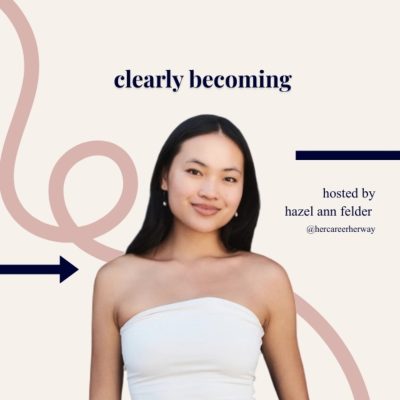
EP 51 — Storytelling is the Most Underrated Career Skill in Your 20s (be unforgettable)
Show notes
you can be the most qualified person in the room and still be the one nobody remembers.
this ep is for the ambitious + confused individuals who freeze at "so, what do you do?" and end up sounding like a dictionary. no highlight reel here, just the unfiltered psychology of why stories stick, plus the structure i use to tell mine.
IN THIS EPISODE, YOU'LL LEARN:
why "what do you do?" shouldn't sound like a dictionary (and what i say instead)
the internship moment that turned merchandising from a definition into a story
neural coupling and the brain chemistry behind why stories stick (the fun, simplified version)
how founders and pitches run on story (hi, blank street coffee)
weak ties: why your nonlinear career can create the most unexpected opportunities
how to talk about your wins in a performance review without sounding like a bullet list
a professor's very unhinged buried body story (it's about why we stop at the first answer, i promise)
the 8-random-words test that proves your brain prefers a plot
the narrative fallacy: when a story is so tidy it hides the messy truth
the 4-part story formula (setup, antagonist, insight, landing) for interviews, coffee chats and reviews
the checklist that makes sure it lands: audience-specific, contextualised, humanised, a real moment, action-oriented, humble
💬 QUOTE OF THE EPISODE – "your brain prefers a plot"
TIMESTAMPS00:00 why "what do you do?" shouldn't sound like a dictionary
02:11 my merchandising internship: the story behind the spreadsheet
03:54 your brain syncs up with a good story (neural coupling) 06:00 pitches, founders and the weak ties that open doors
08:43 humility, performance reviews and leading with warmth
11:04 the buried body story (yes, really)
12:47 the 8-random-words test: why stories beat lists
16:53 the narrative fallacy: when a story is too good
19:42 the 4-part career story: setup, antagonist, insight, landing
22:35 the checklist: does your story land?
23:16 how to use it this week: coffee chats, interviews and reviews
RESOURCES
Stephens, Silbert & Hasson (2010), speaker-listener neural coupling, PNAS
Green & Brock (2000), narrative transportation, JPSP
Granovetter (1973), “The Strength of Weak Ties,” AJS
Bower & Clark (1969), narrative mediation of recall, Psychonomic Science
Green & Donahue (2016), The Conversation
Gothelf, HBR on leadership storytelling; Newell tips
Charvet, Words That Change Minds
Zak (oxytocin/cortisol research)
RELEVANT EPISODES
try it this week: say your "what do you do?" answer as a story, then DM me how it went.
This is your reminder that you can be ambitious and confused.
DM Hazel Ann on Instagram your ONE non-negotiable habit and the WORD that describes who you are clearly becoming.
CONNECT WITH HAZEL ANN
Instagram: @clearlybecoming
TikTok: @clearlybecoming_
YouTube: youtube.com/@clearlybecoming
Substack: @hazelannfelder (urthoughtdaughterha)