

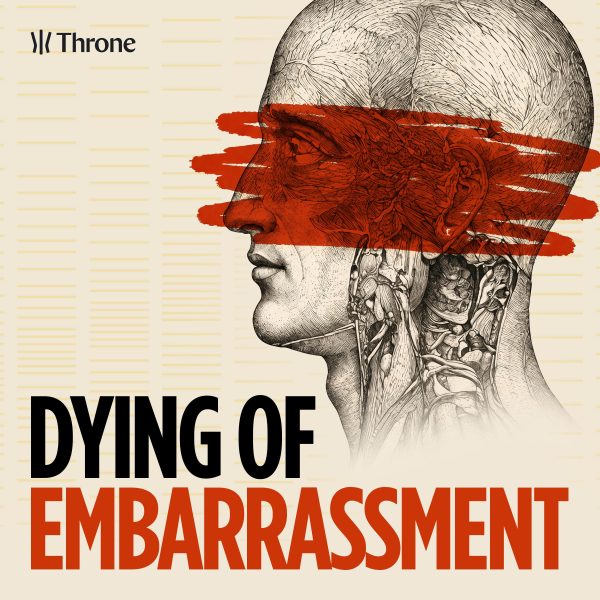
Dying of Embarrassment
- Episodes
- 6
- Released
- several times a week
- Latest episode
- Nov 12, 2026
About the podcast
Dying of Embarrassment is a Health & Wellness podcast about the awkward, avoided, and unspoken conversations that quietly shape our health—and sometimes save our lives. The podcast is hosted by Scott Hickle, Co-Founder and CEO of Throne, and each episode addresses the stuff most of us keep to ourselves—the bodily quirks, the doctor’s-office dread, the “is this normal?” questions you’d never Google on a shared computer. From gut health to grief, from the doctor’s office to the dinner table, we dig into the subjects buried under stigma and treat them like what they are: a normal, important part of being human. Scott founded Throne to bring passive, clinically meaningful health data into the home, and he started Dying of Embarrassment from the same belief: the conversations we avoid about our bodies, health, and lives are usually the ones that matter most. Because avoiding these conversations almost always costs us more than the embarrassment of having them. Learn more at http://dyingofembarrassment.com/
Episodes 6
What Nobody Tells You About Sex, Aging & Your Pelvic Floor | Dr. Sara Reardon
We've been taught to accept bladder leaks, painful sex, and constipation as normal parts of life. But common doesn't mean normal. In this episode, Scott sits down with Dr. Sara Reardon, pelvic floor physical …
Show notes
We've been taught to accept bladder leaks, painful sex, and constipation as normal parts of life. But common doesn't mean normal.
In this episode, Scott sits down with Dr. Sara Reardon, pelvic floor physical therapist and the woman behind The Vagina Whisperer, to uncover what we've been getting wrong about pelvic health. From bathroom habits we've never thought to question to the surprising truth about Kegels, Sara challenges what we've been told to accept as normal and reveals how much of our discomfort goes misunderstood, even by doctors.
Because some of the most embarrassing problems have solutions we never knew existed.
Chapters:
(01:05) Meet The Vagina Whisperer
(05:05) Your Most Overlooked Muscles
(10:00) You've Been Pooping Wrong
(14:49) The Pelvic Floor Doesn't Get a Break
(19:10) Inside Pelvic Floor Therapy
(21:50) The Problem With Kegels
(35:27) When Nighttime Peeing Turns Dangerous
(44:12) Painful Sex Isn't Inevitable
(54:54) Stop Suffering in Silence
(57:10) Mailbag: Kegels, Leaks & Poop Stools
(01:16:57) Who's Hogging the Toilet?
(01:19:14) Gut Check
Dr. Sara Reardon is a pelvic floor physical therapist, author of Floored, and the creator of The Vagina Whisperer, an educational platform dedicated to making pelvic health more accessible. With over 20 years of clinical experience, she helps people address bladder leakage, constipation, painful sex, and other pelvic floor concerns while challenging the stigma surrounding intimate health.
Still have questions? Nothing's too awkward around here. Dig deeper into the science, explore key takeaways from every episode, and get answers to the questions you were too embarrassed to ask at dyingofembarrassment.com.
What We Get Wrong About Cancer, Death & Hope | Dr. Arif Kamal
What if the pressure to be a “fighter” is stopping patients from getting the care they need? In this episode, Scott sits down with oncologist and palliative care physician Dr. Arif Kamal to explore the …
Show notes
What if the pressure to be a “fighter” is stopping patients from getting the care they need?
In this episode, Scott sits down with oncologist and palliative care physician Dr. Arif Kamal to explore the conversations we avoid when cancer enters the picture. They unpack why patients hide symptoms to appear strong, what we get wrong when supporting someone with cancer, and how embarrassment can delay life-saving care. From the alarming rise of colorectal cancer in younger adults to the surprising links between diet and cancer risk, Dr. Kamal shares what losing his mother taught him about medicine, why hope matters even at the end of life, and how small gestures can make a profound difference to someone facing serious illness.
Because sometimes, the bravest thing you can do is admit you're not okay.
Chapters:
(01:30) Meet Dr. Arif Kamal
(03:53) The Pressure to Be Strong
(10:18) Showing Up for Someone With Cancer
(21:00) Finding Hope at Life's End
(31:24) The Rise of Colon Cancer in Young Adults
(46:13) When Embarrassment Becomes a Cancer Risk
(55:50) The Future of Cancer Screening
(59:42) Mailbag: The Hidden Toll of Strength
(01:10:22) Gut Check: Cancer Facts vs. Fiction
Dr. Arif Kamal is an oncologist, palliative care physician, and former Chief Patient Officer of the American Cancer Society. An associate professor at Duke University and president of the American Academy of Hospice and Palliative Medicine, he has published over 225 peer-reviewed studies focused on cancer care, serious illness, and improving the patient experience.
Still have questions? Nothing's too awkward around here. Dig deeper into the science, explore key takeaways from every episode, and get answers to the questions you were too embarrassed to ask at dyingofembarrassment.com.
Too Much of a Good Thing: When Water Turns Dangerous | Dr. Tamara Hew-Butler
We've been told to drink more water, carry bigger bottles, and never wait until we're thirsty. But what happens when our obsession with staying hydrated goes too far? In this episode, Scott sits down with …
Show notes
We've been told to drink more water, carry bigger bottles, and never wait until we're thirsty. But what happens when our obsession with staying hydrated goes too far?
In this episode, Scott sits down with exercise physiologist Dr. Tamara Hew-Butler to explore the surprisingly dangerous side of drinking too much water. They unpack how overhydration can dilute sodium levels and cause life-threatening brain swelling, why dehydration and overhydration can look alarmingly similar, and whether our hydration habits are being shaped more by marketing than biology. From electrolyte packets and endurance athletes to emerging concerns about kidney damage, Dr. Hew-Butler challenges the idea that more is always better.
Along the way, she shares how an energy drink nearly cost her life, why even the healthiest habits can have dangerous extremes, and what it really means to trust your body's signals. Because sometimes, the healthiest thing you can do is stop trying so hard to be healthy.
Chapters:
(00:41) Meet Dr. Tamara Hew-Butler
(01:35) An Energy Drink Nearly Killed Her
(05:30) The Danger of Too Much Water
(11:19) When Water Makes Your Brain Swell
(20:31) Dehydration's Dangerous Lookalike
(26:08) The Electrolyte Packet Problem
(34:33) How Hydration Became an Obsession
(38:45) The Rising Risk of Kidney Damage
(43:34) When Exercise Goes Too Far
(50:10) Mailbag: Trusting Thirst Over Tech
(53:33) Gut Check: The Numbers Don't Add Up
Dr. Tamara Hew-Butler is an associate professor of Exercise and Sport Science at Wayne State University and a sports medicine specialist. A leading researcher in overhydration and exercise-associated hyponatremia, she has helped develop international guidelines on the dangers of excessive water intake and currently serves as Medical Research Director for the Western States Endurance Run.
Still have questions? Nothing's too awkward around here. Dig deeper into the science, explore key takeaways from every episode, and get answers to the questions you were too embarrassed to ask at dyingofembarrassment.com.
The Science of Hydration: Why Thirst Doesn't Tell the Whole Story | Dr. Stavros Kavouras
We've spent years counting calories, tracking protein, and obsessing over supplements. But have we overlooked the one nutrient our bodies can't survive without? In this episode, Scott sits down with Dr. Stavros …
Show notes
We've spent years counting calories, tracking protein, and obsessing over supplements. But have we overlooked the one nutrient our bodies can't survive without?
In this episode, Scott sits down with Dr. Stavros Kavouras, one of the world's leading hydration researchers, to explore why drinking enough water is more complicated than we think. They unpack how underhydration can impact blood sugar, stress hormones, and long-term health; why thirst isn't always a reliable signal; and what your pee can reveal about your hydration. From the surprising challenges of collecting urine samples to the truth about coffee, energy drinks, and everyday hydration habits, Dr. Kavouras makes the case for paying closer attention to the water we drink.
Because when it comes to your health, what you flush away might be telling you more than you think.
Chapters:
(00:59) Introduction: Meet Dr. Hydration
(02:33) Why Collecting Pee Is Harder Than Drawing Blood
(07:02) What Your Pee Color and Bathroom Habits Reveal
(11:44) Water: The Nutrient We've Forgotten
(18:36) The Hidden Health Risks of Underhydration
(30:02) Why Your Body Knows You Need Water Before You Do
(36:04) How Vasopressin Affects Blood Sugar and Stress
(42:41) Dehydration's Most Vulnerable Groups
(50:53) America's Hydration Problem
(56:00) Does Coffee Really Dehydrate You?
(01:05:02) Mailbag: Thirst, Brain Fog, and Pee Habits
(01:10:45) The Gut Check: What the Science Actually Supports
Dr. Stavros Kavouras is a professor at Arizona State University and founding director of its Hydration Science Lab. One of the world's most-cited scientists, he has published over 170 peer-reviewed papers exploring how water intake affects metabolic health, physical performance, and disease risk.
Still have questions? Nothing's too awkward around here. Dig deeper into the science, explore key takeaways from every episode, and get answers to the questions you were too embarrassed to ask at dyingofembarrassment.com.
The Bathroom Habits Your Gastroenterologist Wishes You'd Stop | Dr. Harish Gagneja
What if the most dangerous thing about your gut health isn't what's happening in your body, but what you're too embarrassed to say out loud? In this episode, Scott sits down with Dr. Harish Gagneja, a leading …
Show notes
What if the most dangerous thing about your gut health isn't what's happening in your body, but what you're too embarrassed to say out loud?
In this episode, Scott sits down with Dr. Harish Gagneja, a leading gastroenterologist with nearly 30 years of experience, to explore how embarrassment can stand in the way of life-saving care. They unpack why colorectal cancer is increasingly affecting younger adults, the warning signs you should never ignore, and how a routine colonoscopy can stop cancer before it starts.
Along the way, they get into the surprising science of farting, why your phone might be making your hemorrhoids worse, the truth about bloating and self-diagnosing gut conditions, and what really happens when doctors find a polyp. Dr. Gagneja also explains why he filmed his own colonoscopies to help patients feel less afraid of the procedure.
Because an uncomfortable conversation with your doctor could save your life.
Welcome to Dying of Embarrassment.
Chapters:
(00:40) Meet Dr. Harish Gagneja
(03:30) You're Farting More Than You Think
(07:14) 30 Years of Gut Health Confessions
(12:38) When Embarrassment Becomes Dangerous
(21:16) The Colon Cancer Warning Signs We Ignore
(30:40) Bidets, Bloating & Bathroom Mistakes
(39:01) Colonoscopies And A Preventable Cancer
(47:45) Mailbag: The Truth About Polyps & Screening
(52:39) Gut Check: Fact-Checking the Gut
Dr. Harish Gagneja is a board-certified gastroenterologist with nearly 30 years of experience in digestive health and colorectal cancer prevention. A Master of the American College of Gastroenterology, he specializes in advanced colonoscopy procedures, complex polyp removal, and inflammatory bowel disease.
Still have questions? Nothing's too awkward around here. Dig deeper into the science, explore key takeaways from every episode, and get answers to the questions you were too embarrassed to ask at dyingofembarrassment.com.
Introducing "Dying of Embarrassment"
Join Scott Hickle, Co-Founder and CEO of Throne, as he addresses the stuff most of us keep to ourselves — the bodily quirks, the doctor’s-office dread, the “is this normal?” questions you’d never Google on a …
Show notes
Join Scott Hickle, Co-Founder and CEO of Throne, as he addresses the stuff most of us keep to ourselves — the bodily quirks, the doctor’s-office dread, the “is this normal?” questions you’d never Google on a shared computer.
From gut health to grief, from the doctor’s office to the dinner table, we dig into the subjects buried under stigma and treat them like what they are: a normal, important part of being human.
New episodes every Thursday.
Learn more at https://dyingofembarrassment.com/
Similar podcasts
More Health & Fitness podcasts



Is this your podcast?
Confirm it with an entry in your feed: you get a code here, add it as podcast:txt to the channel of your feed, and we check it. Your podcast is then shown as “verified” on SoundNode.