

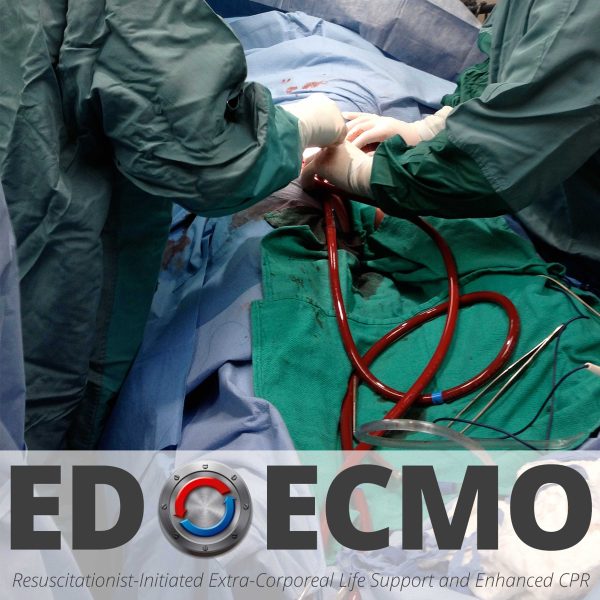
EDECMO Podcast
- Episodes
- 120
- Released
- irregularly
- Latest episode
- Nov 7, 2026
About the podcast
The ED ECMO Project is the work of Zack Shinar and Jon Marinaro to bring extracorporeal life support to EDs and ICUs around the world. This site aims to be the ultimate resource for the background, logistics, and evidence for resuscitative ECMO.
License: EDECMO 2013-
Episodes 120
EDECMO 108: On Scene Trial
In this groundbreaking EDECMO episode, Dr. Dinis Miranda joins Zack Shinar and John Marinaro to discuss the ON-SCENE trial, which demonstrated a dramatic improvement in cardiac arrest outcomes using prehospital …
Show notes
In this groundbreaking EDECMO episode, Dr. Dinis Miranda joins Zack Shinar and John Marinaro to discuss the ON-SCENE trial, which demonstrated a dramatic improvement in cardiac arrest outcomes using prehospital ECPR. By equipping the Netherlands’ existing helicopter emergency medical services with ECMO capabilities, the team achieved 40% survival to hospital discharge compared with 20% in the conventional care group, with favorable neurological outcomes of 36% versus 13%. Remarkably, physicians with little or no prior ECMO experience were trained through intensive simulation to perform field cannulation, achieving ECMO flow in an average of just 45 minutes from arrest. The discussion explores the importance of rapid reperfusion, standardized protocols, remote ECMO expertise, and the potential advantages of bringing ECMO to the patient rather than transporting the patient to ECMO. The ONSCENE trial challenges traditional ECPR systems and offers a compelling vision for the future of resuscitation: build the system around the patient, not the patient around the system.
EDECMO 107: Emotional Aspect of ECPR Survivorship
ED ECMO Podcast — Episode Synopsis This episode of ED ECMO, hosted by Zack Shinar, explores the emotional, neurological, and psychiatric outcomes of ECPR and ECMO survivors — going beyond survival statistics to …
Show notes
ED ECMO Podcast — Episode Synopsis
This episode of ED ECMO, hosted by Zack Shinar, explores the emotional, neurological, and psychiatric outcomes of ECPR and ECMO survivors — going beyond survival statistics to examine what it means for patients to truly live after ECMO.
Segment 1: ECPR Training & the Delphi Analysis (with Shan Modi) Shan Modi, critical care physician and associate ECMO medical director at Allegheny General Hospital, discusses a multinational Delphi analysis surveying 50–55 ECPR experts across 20–25 countries to establish standardized learning objectives for ECPR cannulators. He and Zack then pivot to Shan’s commentary on an EXCEL registry study that prospectively examined quality of life in ECMO patients — revealing that 70% of ECMO patients either develop a new disability or die from comorbidities, underscoring the gap between binary survival and meaningful recovery.
Segment 2: The Emotional Landscape of Survivors Zack and Shan discuss recurring emotional patterns in ECPR survivors:
- Fear of sleeping after arrest, worried it could happen again
- Survivor’s remorse — patients feeling disconnected from celebration because they “just went to sleep and woke up”
- Anxiety and depression months after discharge
- The ethical concern of advertising patients as “survivors” when they may prefer to simply return to normal life
Segment 3: Post-ICU Care & Caregiver Burden Shan advocates for dedicated post-ICU clinics for ECMO patients (modeled on Dr. Brad Butcher’s work at Pittsburgh), offering multidisciplinary follow-up with PT, OT, social work, and psychiatry. He also shares early findings from his ongoing caregiver interview study (24 caregiver-patient dyads), revealing that caregivers face acute-phase overwhelm and subacute-phase stress, financial strain, and guilt over struggling to care for themselves while caring for their loved one.
Segment 4: Neurological & Psychiatric Outcomes (with Dr. Sung Min Cho) Dr. Sung Min Cho, neurointensivist at Johns Hopkins and co-founder of the Whitman-Cho ECMO research lab, discusses:
- Acute Brain Injury (ABI) rates far exceeding ELSO registry reports — meta-analysis showing 17% in VA ECMO, 10% in VV, and 20–50% in ECPR
- Neuropsychiatric symptoms (insomnia, depression, anxiety) persisting in 30–40% of survivors at 6–12 months
- Lack of pulsatility in VA ECMO causing small vessel brain injury, analogous to known LVAD complications
- Rapid CO2 correction during ECMO initiation linked to hemorrhagic and ischemic stroke, confirmed in a swine model showing basal ganglia injury
- The Safe MRI ECMO Study — a multi-center trial using bedside low-field MRI (0.064 Tesla) on patients while on ECMO, finding a striking 44% ABI rate, far higher than any prior study, revealing subclinical injuries invisible on standard CT scans (cir-150-1955.pdf, Clinical Use of Bedside Portable Ultra-Low-Field Brain Magnetic Resonance Imaging in Patients on Extracorporeal Membrane Oxygenation: Results From the Multicenter SAFE MRI ECMO Study – PubMed)
Segment 5: VV vs. VA Differences & Take-homes VV ECMO patients showed higher neurocognitive impairment, likely due to longer hospitalization, heavier sedation, and prolonged paralysis. Key recommendations for ECMO programs:
- Optimize initiation parameters (sweep gas, CO2 correction rate, pulsatility monitoring)
- Minimize sedation and benzodiazepine duration
- Establish long-term follow-up and support groups for survivors
- Recognize that neurocognitive sequelae are common — patients should know they are not alone
The episode closes with both guests reflecting on how ECMO uniquely brings together diverse specialties — ED, surgery, critical care, engineering — unified around saving the sickest patients.
EDECMO 106: Working in the CT ICU with Mark Ramzy
What happens when emergency medicine, cardiac surgery, critical care, ECMO, and human factors collide in the highest-stakes environment imaginable? Mark Ramzy takes us inside the CTICU to explore the art of …
Show notes
What happens when emergency medicine, cardiac surgery, critical care, ECMO, and human factors collide in the highest-stakes environment imaginable? Mark Ramzy takes us inside the CTICU to explore the art of resuscitation—and why knowing when to move fast, when to slow down, and how to work as a team may matter as much as the technology itself..
In this episode of ED ECMO, Zack Shinar sits down with Mark Ramzy, an emergency medicine–trained cardiothoracic intensivist, to explore what resuscitation looks like when the patient is already surrounded by ECMO, LVADs, invasive hemodynamic monitoring, recent sternotomy, and a highly specialized multidisciplinary team.
Mark shares practical lessons from the CTICU, including how post-cardiac-surgery arrest algorithms differ from traditional ED resuscitation, when to shock rather than immediately perform chest compressions, how to recognize impending deterioration, and why knowing when to “speed up” and when to “slow down” can make all the difference. He discusses open-chest resuscitation, internal cardiac massage, VA ECMO as an exit strategy, and his experience with double sequential defibrillation.
The conversation then moves beyond procedures into the human factors of high-stakes medicine. Mark describes working alongside cardiothoracic surgeons, interventional cardiologists, intensivists, nurses, respiratory therapists, and emergency physicians—and argues that successful ECPR depends less on territorial boundaries and more on recognizing what each member of the team brings to the table.
Finally, Mark offers a cautionary perspective on the rapid expansion of ECMO and ECPR. As these technologies become increasingly accessible, he emphasizes the importance of quality control, mentorship, humility, and developing strong relationships across specialties. His overarching message is simple: medicine is a team sport, and the best resuscitation teams know not only what they can do, but when to listen, when to slow down, and when to let someone else lead.
EDECMO 105: Becoming an ECMO Coordinator
EDECMO 105: Becoming an ECMO Coordinator? In this episode, hosts Zack Shinar and Jon Marinaro are joined by Jonathan Goldstone, ECMO Coordinator at Sharp Memorial Hospital, and Rachel Wallace, ECMO Coordinator …
Show notes
EDECMO 105: Becoming an ECMO Coordinator?In this episode, hosts Zack Shinar and Jon Marinaro are joined by Jonathan Goldstone, ECMO Coordinator at Sharp Memorial Hospital, and Rachel Wallace, ECMO Coordinator at the University of Minnesota ECMO Program, to explore one of the least understood but most important roles in an ECMO program—the ECMO coordinator.
The discussion begins with recent advances in their own programs, including dramatic reductions in ECPR cannulation times at Sharp through improved teamwork, standardized equipment, and streamlined workflows. This sets the stage for a broader conversation about how successful ECMO programs are built and sustained.
Rachel provides a detailed overview of the ECMO coordinator’s responsibilities, including onboarding and training ECMO specialists, competency assessment, simulation education, quality assurance, ELSO registry management, physician education, equipment evaluation, and research support. Jonathan emphasizes that while coordinator responsibilities vary between institutions, the central mission is always the same: ensuring there are no weak links in the ECMO system that could compromise patient care.
The panel clarifies the often-confusing distinctions between perfusionists, ECMO specialists, ECMO coordinators, and ECMO managers, highlighting that ECMO specialists may come from nursing, respiratory therapy, perfusion, or advanced practice backgrounds, while coordinators oversee education, quality, systems improvement, and program development.
The conversation explores how hospitals should think about hiring an ECMO coordinator, arguing that programs should invest in leadership early—even before case volumes become large—to build the infrastructure necessary for safe and sustainable growth. The guests also discuss how coordinators influence equipment purchasing, mobile ECMO development, process optimization, billing, and multidisciplinary collaboration.
A recurring theme throughout the episode is that ECMO is fundamentally a team sport. The guests stress that efficient ECPR depends less on individual expertise and more on standardized processes, constant communication, simulation, and shared mental models among physicians, nurses, respiratory therapists, perfusionists, and ECMO specialists.
Finally, the discussion turns to professional development for new coordinators. The guests encourage listeners to leverage the ECMO community through conferences, podcasts, ELSO resources, WhatsApp discussion groups, and mentorship from experienced programs. They conclude by emphasizing that ECMO practice continues to evolve rapidly, requiring coordinators and physicians alike to remain curious, adaptable, collaborative, and committed to continuous improvement.
Key takeaways:
- The ECMO coordinator is the operational leader who integrates education, quality improvement, data management, research, equipment, and systems engineering into a cohesive ECMO program.
- Successful ECMO programs depend on standardized processes, simulation, and multidisciplinary teamwork rather than individual heroics.
- Every hospital must develop an ECMO program tailored to its own personnel, patient population, and resources rather than simply copying another institution’s model.
- Continuous learning, collaboration, and engagement with the broader ECMO community are essential for building and sustaining high-performing ECMO programs.
EDECMO 104: ECMO and the Cancer Patient
Jon Marinaro interviews Dr. Eric Nadler along with Dr. Gary Schwartz our guest for the second episode in a row Key Takeaways Cancer is increasingly becoming a chronic, manageable disease. ECMO may be …
Show notes
Jon Marinaro interviews Dr. Eric Nadler along with Dr. Gary Schwartz our guest for the second episode in a row
Key Takeaways- Cancer is increasingly becoming a chronic, manageable disease.
- ECMO may be appropriate in carefully selected oncology patients.
- Close collaboration between oncologists and ECMO teams is essential.
- Modern cancer therapies can work rapidly enough that ECMO may meaningfully change outcomes.
- Awareness and education gaps exist on both sides:
- intensivists may underestimate modern oncology,
- oncologists may underestimate ECMO capabilities.
Eric Nadler, M.D., MPP, is board certified in medical oncology. He serves as a medical director of US Oncology Health Outcomes. He remains active in US Oncology Network and Texas Oncology research committees in lung cancer, head and neck cancer, and sarcoma. Dr. Nadler’s passions are oncology research and oncology education.
EDECMO 103: HIV and ECMO
Critical Care ECMO with Dr. Jon Marinaro, Dr. Gary Schwartz and Dr. Cedrick Spak – Episode 103 Key Points: ECMO in HIV/AIDS Patients 1. HIV Is No Longer a Strong Contraindication to ECMO Historically, HIV and …
Show notes
Critical Care ECMO with Dr. Jon Marinaro, Dr. Gary Schwartz and Dr. Cedrick Spak – Episode 103Key Points: ECMO in HIV/AIDS Patients
1. HIV Is No Longer a Strong Contraindication to ECMO
Historically, HIV and severe immunosuppression were considered relative contraindications for ECMO.
With modern antiretroviral therapy (ART), outcomes have dramatically improved.
Patients with HIV who receive effective ART can recover immune function and achieve near-normal life expectancy.
Therefore, HIV alone should not exclude patients from ECMO candidacy.
2. Immune Reconstitution Makes Recovery Possible
ART can rapidly suppress viral load and restore immune function.
Patients with very low CD4 counts (even <10) can recover to normal CD4 counts (>800) over time.
This means even severely immunocompromised patients may recover if given time and support.
ECMO can act as a bridge to immune recovery.
3. ECMO Functions as a “Pause Button”
ECMO stabilizes respiratory or cardiac failure while clinicians:
Treat infections
Start ART
Manage complications
This buys time for reversible disease processes to recover.
4. Major Cause of Respiratory Failure: Pneumocystis Pneumonia
Common features in HIV patients requiring ECMO:
Pneumocystis jirovecii pneumonia (PJP)
Severe respiratory failure
Cystic lung destruction
Frequent bronchopleural fistulas and pneumothorax
Ventilation can worsen these conditions.
Thus ECMO is used to:
Reduce ventilator pressure
Prevent further lung damage
Allow lung healing.
5. Ventilator Strategy: Minimize Positive Pressure
Typical strategy:
Rapid ECMO initiation if ventilation causes lung injury
Attempt early extubation
If needed:
tracheostomy
minimal ventilator settings
Example “rest settings” described:
Driving pressure ≈ 10
PEEP ≈ 10 (often reduced further)
FiO₂ ≈ 50%
Goal: avoid further lung trauma.
6. ECMO Candidate Selection
Primary question:
Is the disease reversible?
If yes → ECMO should be considered.
Factors supporting ECMO:
Young patient
Treatable infection
Potential immune recovery
Possible relative contraindications:
Severe fungal infection
Multiple uncontrolled opportunistic infections
Extreme cachexia or severe systemic deterioration.
7. Early ART Should Be Started
Modern approach:
Start antiretroviral therapy during acute illness
Do not delay until after ICU discharge
Benefits:
Rapid viral suppression
Faster immune recovery
Risk:
Immune Reconstitution Inflammatory Syndrome (IRIS)
Temporary worsening of infection due to immune rebound.
8. Circuit and Infection Complications
Important ECMO considerations in HIV patients:
Increased risk of circuit thrombosis
Possible fungemia
If fungemia occurs:
circuit replacement
possible re-cannulation
These complications require careful monitoring.
9. Cannulation Strategy
Example high-volume center approach:
Bilateral femoral VV ECMO cannulation
Fast
Reliable flow
Allows later neck access if needed
Used especially during high-volume periods (e.g., COVID).
10. Outcomes and Indication Expansion
ECMO indications are evolving:
Older age
Longer ventilator times
HIV/AIDS
Cancer patients
All are examples of “indication creep” as experience grows.
The key principle remains:
ECMO should be used if there is a realistic chance of recovery.
11. Resource and Program Considerations
Decision-making must consider:
Resource availability
Program experience
Institutional risk tolerance
High-volume ECMO centers can often accept higher-risk patients.
12. Broader Lesson
Medical contraindications often change with new technology and therapies.
Example given:
HIV was once a contraindication for kidney transplantation
Now it is accepted due to improved treatment.
The same evolution may be happening with ECMO indications.
EDECMO 102: ECPR Patient’s Brains are DIFFERENT!
We need a major change in the way we think about the brains of ECPR patients. We have been duped into thinking that they are the same as regular resuscitation patients, and the answer is that they are not. On …
Show notes
We need a major change in the way we think about the brains of ECPR patients. We have been duped into thinking that they are the same as regular resuscitation patients, and the answer is that they are not. On EDECMO 102, we learn about this idea from two wonderful people: Ingrid Magnet and Michael Poppe. In addition to the inspirational ECPR program they have created in Vienna, they have published a paper showing just how different these two groups of patients are. They show that ECPR patients improve their neurologic function tremendously over the six months following their event. This really changes the way we need to think about these patients and how we discuss options with their families in the hospital.
EDECMO 101 – Paul Pepe and Jon Marinaro – Head Up CPR
How do we improve survival from cardiac arrest? Does Head-Up CPR improve outcomes? Paul Pepe, the premier expert in the field, gives us the data and reasons why head-up CPR can improve outcomes. Dr. Pepe also …
Show notes
How do we improve survival from cardiac arrest? Does Head-Up CPR improve outcomes? Paul Pepe, the premier expert in the field, gives us the data and reasons why head-up CPR can improve outcomes. Dr. Pepe also discusses estrogen and it’s potential to improve resuscitation outcomes.
100 – Sydney Prehospital ECPR Program with Nat Kruit
On this 100th episode of EDECMO, Sydney’s very own Nat Kruit tells us how they organized a prehospital system. She and her crew have a wonderful job organizing a cadre of new cannulators to now have a …
Show notes
On this 100th episode of EDECMO, Sydney’s very own Nat Kruit tells us how they organized a prehospital system. She and her crew have a wonderful job organizing a cadre of new cannulators to now have a functional system that can provide the residents of Sydney the opportunity to benefit from ECPR. Take a listen, she’s fantastic.
EDECMO 99: Charles Bruen: Becoming an Expert ECPR Cannulator
EDECMO – Episode 99 is a gem. Charles Bruen tells us how he has become an ECPR cannulator within the prestigious Minnesota Mobile Resuscitation Consortium. He shares pearls about cannulation as well as the next …
Show notes
EDECMO – Episode 99 is a gem. Charles Bruen tells us how he has become an ECPR cannulator within the prestigious Minnesota Mobile Resuscitation Consortium. He shares pearls about cannulation as well as the next steps for Minnesota’s innovative approach to bringing ECPR to largest population that is possible.
A couple of pearls from Dr. Bruen’s cannulation piece are holding pressure in the groin with the ultrasound probe, understanding that the inguinal fold does not represent the inguinal ligament, inserting the needle at a 45-degree angle, and insertion at the common femoral artery.
EDECMO 98: Eddy Fan – VV ECMO – Numbers, Nuance, and the Human Factor
Who Really Gets VV ECMO? Numbers, Nuance, and the Human Factor Is VV ECMO purely a numbers game? Or is there a softer, more human side to deciding who receives this life-saving therapy? In this candid and …
Show notes
Who Really Gets VV ECMO? Numbers, Nuance, and the Human Factor Is VV ECMO purely a numbers game? Or is there a softer, more human side to deciding who receives this life-saving therapy? In this candid and insightful interview, Jon Marinaro sits down with the legendary Dr. Eddy Fan—one of the most published and respected voices in the field of critical care. Together, they unpack the hard data and the gray areas: prognostic scoring, patient selection, and the ethical dilemmas that come with scarce resources. They also dive into the “sticky” dynamics of ECMO programs, including the subtle (or not-so-subtle) influence that a cannulating specialist can have on who actually gets the therapy. This is a must-listen for anyone working at the intersection of critical care, ethics, and real-world ECMO decision-making.97: Training an ECPR Cannulator Army with Joe Bellezzo
Is it better to rely on a few highly trained specialists—or an army of less experienced proceduralists? In this episode, Joe Bellezzo and Zack Shinar delve into the evolution of ECPR (Extracorporeal …
Show notes
Is it better to rely on a few highly trained specialists—or an army of less experienced proceduralists? In this episode, Joe Bellezzo and Zack Shinar delve into the evolution of ECPR (Extracorporeal Cardiopulmonary Resuscitation), exploring the pros and cons of each cannulation model. They examine how different cities face unique challenges and opportunities when implementing ECPR systems. San Diego’s approach, in particular, offers a replicable framework that may work for other urban centers. Joe and Zack break down the specific strategies that helped San Diego develop a successful and sustainable model.96: ECPR in India and China
Zack Shinar interviews Pranay Oza, an intensivist from Mumbai, and Simon Sin, an intensivist from Hong Kong, about the insights, necessities, and opportunities for ECPR in India and China. Both of these …
Show notes
Zack Shinar interviews Pranay Oza, an intensivist from Mumbai, and Simon Sin, an intensivist from Hong Kong, about the insights, necessities, and opportunities for ECPR in India and China. Both of these physicians are leading the charge in places where ECPR is exploding. Listen to this podcast to learn how they optimize their skills and resources to utilize this powerful tool.95: ECPR Organ Procurement with Stephen Wall
Jon interviews Dr. Stephen Wall from NYU on the podcast where they discuss the need for organs and how ECPR inclusion criteria can significantly impact the problem. Stephen P. Wall, MD MSHS MAEd, is Tenured …
Show notes
Jon interviews Dr. Stephen Wall from NYU on the podcast where they discuss the need for organs and how ECPR inclusion criteria can significantly impact the problem. Stephen P. Wall, MD MSHS MAEd, is Tenured Associate Professor in the Departments of Emergency Medicine and Population Health, NYU Grossman School of Medicine. Dr Wall was project manager and lead methodologist for the NYC uncontrolled donation after circulatory death (uDCD) program that attempted to increase kidney donation opportunities by considering those who die unexpectedly outside hospitals. Results showed the public was supportive of uDCD, so long as permission is obtained prior to any invasive procedures being performed on the deceased. Lessons learned from the Kidney uDCD program provided justification to attempt in-hospital Lung uDCD in NYC, a project funded by NHLBI (R61/R33HL156890 – PIs Wall and Robert Montgomery, MD PhD). These projects involve cross-disciplinary collaborations with bioethicists, clinical experts from medicine, surgery, emergency medicine, and transplantation, both within and external to hospitals and academic medical centers. Dr. Wall’s research was covered in news media including NPR, NBC, and the Atlantic.94: Blending Revisited with Aidan Burrell
In our last episode, Trina Augustin discussed whether we should use a blender in ECPR patients citing the Blender Trial. This month we got the first author of the Blender Trial, Aidan Burrell, to give us …
Show notes
In our last episode, Trina Augustin discussed whether we should use a blender in ECPR patients citing the Blender Trial. This month we got the first author of the Blender Trial, Aidan Burrell, to give us insight into the use of blenders for not only ECPR patients but also thoughts on patients on VA for cardiogenic shock and VV patients. Jon Marinaro interviews Aidan for this wonderful addition to this complex decision. Blender Trial - Burrell A, Ng S, Ottosen K, Bailey M, Buscher H, Fraser J, Udy A, Gattas D, Totaro R, Bellomo R, Forrest P, Martin E, Reid L, Ziegenfuss M, Eastwood G, Higgins A, Hodgson C, Litton E, Nair P, Orford N, Pellegrino V, Shekar K, Trapani T, Pilcher D. Blend to Limit OxygEN in ECMO: A RanDomised ControllEd Registry (BLENDER) Trial: Study Protocol and Statistical Analysis Plan. Crit Care Resusc. 2023 Aug 4;25(3):118-125. doi: 10.1016/j.ccrj.2023.06.001. Erratum in: Crit Care Resusc. 2024 Feb 01;26(1):60. doi: 10.1016/j.ccrj.2024.01.003. PMID: 37876374; PMCID: PMC10581278. Trina's editorial - Augustin K, Shinar ZM, Dos Reis Miranda D. Correspondence by Augustin et al. regarding the article "Conservative or liberal oxygen targets in patients on venoarterial extracorporeal membrane oxygenation". Intensive Care Med. 2025 Jan 21. doi: 10.1007/s00134-025-07791-7. Epub ahead of print. PMID: 39836262.EDECMO 93: Do you Blend? with Trina Augustin
This seems like such a basic question and yet the answer is not an answer at all. Rather it is an educated opinion. Today we ask the question - Should we blend ECPR patients? Here's the basic problem. We think …
Show notes
This seems like such a basic question and yet the answer is not an answer at all. Rather it is an educated opinion. Today we ask the question - Should we blend ECPR patients? Here's the basic problem. We think hyperoxemia in critically ill patients is bad (Remember hyperoxemia is high oxygen in blood, hyperoxia is high oxygen in the tissue). We think that hypoxemia in critically ill patients is bad. So if a patient gets put on ECMO and we can make the oxygen level coming out of the machine whatever level we want, what level should we set it at? Well, today, Trina Augustin teaches how this seemingly simple problem is actually quite complex. Trina is an ECMO superstar. She practices at Mayo in Rochester as CV Intensivist with a background in CC/EM. She teaches the most complex part of Reanimate - post pump critical care and yes she cannulates patients as well. Listen to Zack and Trina banter over this complex topic specifically focusing on the release of the Blender Trial.92 – Mark Dennis – Pearls from Sydney
EDECMO episode 92 features Dr. Mark Dennis, a cardiologist from Sydney, who has published extensively in the field of ECPR. Zack and Mark talk about so many subjects including pre-hospital considerations …
Show notes
EDECMO episode 92 features Dr. Mark Dennis, a cardiologist from Sydney, who has published extensively in the field of ECPR. Zack and Mark talk about so many subjects including pre-hospital considerations, algorithmic management of post ECMO initiation cardiac arrest patients, ventilation management of ECPR patients and much more. Prof Dennis would like to thank all the ambulance paramedics, ED docs, intensive care specialists, surgeons, radiologists, nurses and cardiologists across Sydney. Without their support none of the work would be possible. Also very special thanks to Natalie Kruit and Brian Burns for their immense efforts to bring ECPR to Sydney. Blender Trial - Conservative or liberal oxygen targets in patients on venoarterial extracorporeal membrane oxygenation | Intensive Care Medicine CO2 Drop in VA ECMO - ELSO Registry - Critical Care Medicine91 – Stay and Play to Shock, Shock, Go!!
Should we keep cardiac arrest patients on the scene when we have the ability to put them on ECMO in the hospital? That is the question we tackle this month on EDECMO. Brian Grunau and the great crew from Prague …
Show notes
Should we keep cardiac arrest patients on the scene when we have the ability to put them on ECMO in the hospital? That is the question we tackle this month on EDECMO. Brian Grunau and the great crew from Prague published a study looking at the Hyperinvasive trial data. They make some profound observations about the benefits of ECPR and some data supporting transporting patients early in functional ECPR systems. Saul Levine and Jonathan Goldstone from the SDRC join the podcast this month to give their insight into the formation of ECPR receiving centers as well as the paper.90 – ECMO in Trauma with Dr. Powell & Dr. O’Connor
In this episode of the ED ECMO Podcast, hosts Zack Shinar and Jon Marinaro interview Dr. Powell & Dr. O'Connor from Baltimore Shock Trauma, exploring ECMO's critical role in trauma care and its impact on …
Show notes
In this episode of the ED ECMO Podcast, hosts Zack Shinar and Jon Marinaro interview Dr. Powell & Dr. O'Connor from Baltimore Shock Trauma, exploring ECMO's critical role in trauma care and its impact on patient outcomes. They discuss patient selection criteria for ECMO, managing hemorrhage and anticoagulation considerations, choosing between veno-arterial and veno-venous ECMO, practical insights on vascular access, and strategies for team coordination during ECMO emergencies. This discussion is essential for trauma surgeons, emergency physicians, critical care teams, perfusionists, and anyone involved in trauma care or ECMO deployment.89 – What a Medical Student Should Know: Part 1
With the growing prevalence of ECPR, it is now more important than ever for all individuals in the medical community to understand what ECMO is, not just those providers who are directly involved with its use …
Show notes
With the growing prevalence of ECPR, it is now more important than ever for all individuals in the medical community to understand what ECMO is, not just those providers who are directly involved with its use. In this new podcast series, Zack Shinar and Jon Marinaro help Nathaniel Dennis-Benford, a first-year medical student, explore what a medical student should know about ECMO and ECPR. In this first episode of the series, we start from the basics: what is "cardiac arrest", how is it traditionally managed, and finally what even is ECMO?88 – ECMO Billing with John Mehall
If you are running or starting a US ECMO program, this episode is a must listen. John Mehall from Innovative ECMO Concepts goes through the financial aspects of ECMO care. He covers everything from hospital …
Show notes
If you are running or starting a US ECMO program, this episode is a must listen. John Mehall from Innovative ECMO Concepts goes through the financial aspects of ECMO care. He covers everything from hospital charges to physician reimbursement to areas where hospitals commonly fail. We all know that you cannot have a successful ECMO program unless you have sufficient funding to keep it going. Jon Marinaro, Zack Shinar, and an entire audience of Reanimate 9 attendees join the episode to ask questions and give their own insight. Web Pricer (cms.gov) - your hospital weight. Times it by DRG to get your hospital ECMO compensation.87 – Pearls From Prague and San Diego Resus Consortium with Saul Levine
This month Zack gives some pearls from his travels to Prague for Jan Behlolavek's ECPR school, Poland to meet with Marek Dabrowski, and ELSO with the entire crew. Zack also interviews Saul Levine for the first …
Show notes
This month Zack gives some pearls from his travels to Prague for Jan Behlolavek's ECPR school, Poland to meet with Marek Dabrowski, and ELSO with the entire crew. Zack also interviews Saul Levine for the first of what may be a recurring conversation about the San Diego Resuscitation Consortium. His efforts along with Kristi Koenig, Shawn Evans, Todd Baumbacher, and many others have paved the way for an OHCA ECPR protocol that may change more than just San Diego cardiac care. Listen to Saul explain how the first 3 months of this process has expanded the minds of what cardiac arrest care can look like.86: UCLA ECPR with Vadim Gudzenko
This episode is a follow up to last month's episode with Nichole Bosson. Zack interviews Vadim Gudzenko about the in-patient aspects and critical care doctor perspective on the Los Angeles OHCA ECPR program. A …
Show notes
This episode is a follow up to last month's episode with Nichole Bosson. Zack interviews Vadim Gudzenko about the in-patient aspects and critical care doctor perspective on the Los Angeles OHCA ECPR program. A few take homes are that EMS is critical to any OHCA ECPR program. Nurses need support for these intense patients with high mortality. And emergency physicians need to buy in to the idea of ECMO for cardiac arrest to make a successful program.85: Los Angeles County ECPR Program with Nichole Bosson
One of the biggest questions in ECPR right now is how do we organize our system to provide ECPR in an effective and streamlined approach? Nichole Bosson and her army of ECPR enthusiasts have successfully …
Show notes
One of the biggest questions in ECPR right now is how do we organize our system to provide ECPR in an effective and streamlined approach? Nichole Bosson and her army of ECPR enthusiasts have successfully implemented a multi-hospital ECPR receiving center program in Los Angeles. In this episode, Zack talks with Dr. Bosson about how they started, what they learned, and where they are going. A little about Dr. Bosson She is the Assistant Medical Director at the Los Angeles County EMS Agency. She is an Associate Clinical Professor at David Geffen School of Medicine at UCLA and faculty and EMS fellowship director in the Department of Emergency Medicine at Harbor-UCLA. Here is the link to her paper Bosson N, Kazan C, Sanko S, Abramson T, Eckstein M, Eisner D, Geiderman J, Ghurabi W, Gudzenko V, Mehra A, Torbati S, Uner A, Gausche-Hill M, Shavelle D. Implementation of a regional extracorporeal membrane oxygenation program for refractory ventricular fibrillation out-of-hospital cardiac arrest. Resuscitation. 2023 Jun;187:109711. doi: 10.1016/j.resuscitation.2023.109711. Epub 2023 Jan 30. PMID: 36720300. And here is Jason Bartos' editorial Bartos JA, Yannopoulos D. Starting an Extracorporeal cardiopulmonary resuscitation Program: Success is in the details. Resuscitation. 2023 Jun;187:109792. doi: 10.1016/j.resuscitation.2023.109792. Epub 2023 Apr 10. PMID: 37044354.84: Talking ELSO with CEO Christine Stead
Jon Marinaro takes EDECMO through another great podcast. This time he interviews Christine Stead, the CEO of ELSO. She talks about ELSO is setting up standards for ECMO programs to try to make ECMO care at all …
Show notes
Jon Marinaro takes EDECMO through another great podcast. This time he interviews Christine Stead, the CEO of ELSO. She talks about ELSO is setting up standards for ECMO programs to try to make ECMO care at all hospitals to be safer. She talks about how she works also with the device industry. This involves working with the FDA as well as for future innovations. She talks about the website and how to get your program certified. Christine as a person is amazing. She and her 5 person team runs an organization that has its hands in so many different areas. Also, she is avid runner having completed 12 Boston Marathons!83: Taking ECMO in Pulmonary Embolism to the Next Level
In this episode Jon Marinaro joins the ED ECMO team and interviews his colleague Sundeep Guliani, MD about the use of an ECMO first strategy for Massive Pulmonary Embolism. Jon and Sundeep review the data and …
Show notes
In this episode Jon Marinaro joins the ED ECMO team and interviews his colleague Sundeep Guliani, MD about the use of an ECMO first strategy for Massive Pulmonary Embolism. Jon and Sundeep review the data and processes from their institution and from other institutions in the United States. Could it be that ECLS could move the survival needle on this high mortality disease? Listen and find out! Hobohm L, Sagoschen I, Habertheuer A, Barco S, Valerio L, Wild J, Schmidt FP, Gori T, Münzel T, Konstantinides S, Keller K. Clinical use and outcome of extracorporeal membrane oxygenation in patients with pulmonary embolism. Resuscitation. 2022 Jan;170:285-292. doi: 10.1016/j.resuscitation.2021.10.007. Epub 2021 Oct 12. PMID: 34653550. Shinar Z, Hutin A. Pulmonary ECMO-ism: Let's add PEA to ECPR indications. Resuscitation. 2022 Jan;170:293-294. doi: 10.1016/j.resuscitation.2021.11.004. Epub 2021 Nov 10. PMID: 34774708. Pudil J, Rob D, Smalcova J, Smid O, Huptych M, Vesela M, Kovarnik T, Belohlavek J. Pulmonary embolism related refractory out-of-hospital cardiac arrest and extracorporeal cardiopulmonary resuscitation: Prague OHCA study post- hoc analysis. Eur Heart J Acute Cardiovasc Care. 2023 May 12:zuad052. doi: 10.1093/ehjacc/zuad052. Epub ahead of print. PMID: 37172033. Karami M, Mandigers L, Miranda DDR, Rietdijk WJR, Binnekade JM, Knijn DCM, Lagrand WK, den Uil CA, Henriques JPS, Vlaar APJ; DUTCH ECLS Study Group. Survival of patients with acute pulmonary embolism treated with venoarterial extracorporeal membrane oxygenation: A systematic review and meta-analysis. J Crit Care. 2021 Aug;64:245-254. doi: 10.1016/j.jcrc.2021.03.006. Epub 2021 Mar 24. PMID: 34049258.82: Inception Trial with Jon Marinaro
In this episode, Jon Marinaro and Zack Shinar go through the hot off the press Inception trial. The trial was touted as a negative ECPR study though many reasons make this trial different then the ARREST trial …
Show notes
In this episode, Jon Marinaro and Zack Shinar go through the hot off the press Inception trial. The trial was touted as a negative ECPR study though many reasons make this trial different then the ARREST trial. They go through several important take home points for practitioners starting or running an ECPR/ECMO program.81: In Hospital Cardiac Arrest ECMO Inclusion Criteria with Joe Tonna
In this podcast, Joe Tonna tells us how to approach hypothermia with ECPR patients. He also goes through his paper RESCUE-IHCA giving us an immediate way to prognosticate in patients to use of ECMO or not …
Show notes
In this podcast, Joe Tonna tells us how to approach hypothermia with ECPR patients. He also goes through his paper RESCUE-IHCA giving us an immediate way to prognosticate in patients to use of ECMO or not. Hypothermia - Resuscitation Nakashima T, Ogata S, Noguchi T, Nishimura K, Hsu CH, Sefa N, Haas NL, Bĕlohlávek J, Pellegrino V, Tonna JE, Haft J, Neumar RW. Association of intentional cooling, achieved temperature and hypothermia duration with in-hospital mortality in patients treated with extracorporeal cardiopulmonary resuscitation: An analysis of the ELSO registry. Resuscitation. 2022 Aug;177:43-51. doi: 10.1016/j.resuscitation.2022.06.022. Epub 2022 Jul 3. PMID: 35788020. Hypothermia Meta-Analysis Duan J, Ma Q, Zhu C, Shi Y, Duan B. eCPR Combined With Therapeutic Hypothermia Could Improve Survival and Neurologic Outcomes for Patients With Cardiac Arrest: A Meta-Analysis. Front Cardiovasc Med. 2021 Aug 13;8:703567. doi: 10.3389/fcvm.2021.703567. PMID: 34485403; PMCID: PMC8414549. In Hospital Cardiac Arrest and ECPR Inclusion Tonna JE, Selzman CH, Girotra S, Presson AP, Thiagarajan RR, Becker LB, Zhang C, Rycus P, Keenan HT; American Heart Association Get With the Guidelines–Resuscitation Investigators. Resuscitation Using ECPR During In-Hospital Cardiac Arrest (RESCUE-IHCA) Mortality Prediction Score and External Validation. JACC Cardiovasc Interv. 2022 Feb 14;15(3):237-247. doi: 10.1016/j.jcin.2021.09.032. Epub 2022 Jan 12. PMID: 35033471; PMCID: PMC8837656.80: The Expert Approved ECPR Procedure with Florian Schmitzberger
In this episode, Zack interviews Florian Schmitzberger who just published a fantastic study that incorporates fourteen leaders within the ECPR community to hash out the specific procedural steps associated with ECPR.
79: Prolonged Arrests and the Denmark Experience
This month Zack gives a few pearls from the recent Reanimate courses and annual ELSO meeting in Boston before he interviews Gawry Mork from Aarhus University about her fantastic recent paper. Pearl #1 is about …
Show notes
This month Zack gives a few pearls from the recent Reanimate courses and annual ELSO meeting in Boston before he interviews Gawry Mork from Aarhus University about her fantastic recent paper. Pearl #1 is about hand placement in cannulation. Hold the ultrasound in your left an d needle in right. Once in the vessel, drop the US probe and take your left hand and gently hold the needle. With your right hand grab the wire far enough up to be to insert into the vessel in one push. Gawry's paper has many interesting points. Probably the biggest is the reasonable survivorship for prolonger arrests. This is tied to equality of care for patient who live far from the closest ECMO center.
These are the latest 40 of 120 episodes. You’ll find older episodes in the podcast’s feed.
Similar podcasts
More Health & Fitness podcasts



Is this your podcast?
Confirm it with an entry in your feed: you get a code here, add it as podcast:txt to the channel of your feed, and we check it. Your podcast is then shown as “verified” on SoundNode.