

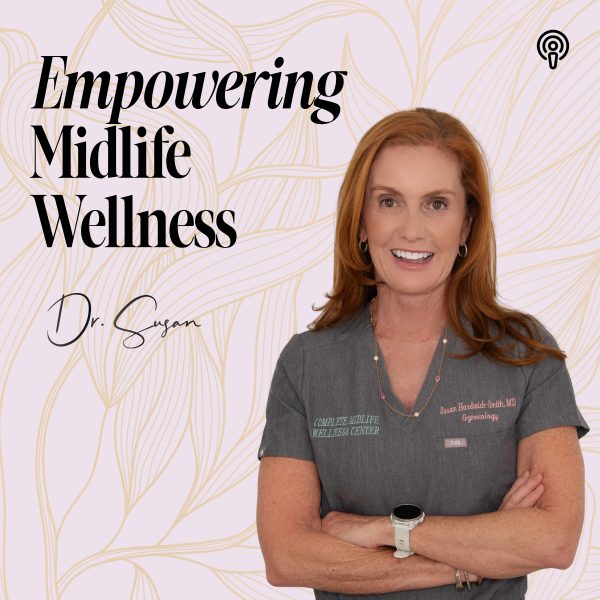
Empowering Midlife Wellness with Dr. Susan
- Episodes
- 265
- Released
- every two weeks
- Latest episode
- Nov 13, 2026
About the podcast
Dr. Susan Hardwick-Smith is a board-certified gynecologist and Certified Menopause Practitioner specializing in women’s midlife wellness, hormone optimization, and sexual wellness. After 20 years in traditional OB/GYN, she founded Complete Midlife Wellness Center in Houston, one of the first U.S. practices dedicated to menopause care. She collaborates with Baylor College of Medicine on research into testosterone dosing in women, hosts the podcast Empowering Midlife Wellness, and is the author of Sexually Woke. Her upcoming book, Create Her, will be available in February 2027.
Episodes 265
Everything You Need to Know About Cholesterol and Why It Matters
Cholesterol is one of the most misunderstood topics in heart health. We hear about “good” and “bad” cholesterol, but what do all those letters and numbers really mean? LDL, HDL, ApoB, Lp(a), triglycerides… and …
Show notes
Cholesterol is one of the most misunderstood topics in heart health. We hear about “good” and “bad” cholesterol, but what do all those letters and numbers really mean? LDL, HDL, ApoB, Lp(a), triglycerides… and which ones should we actually be paying attention to?In this episode of Empowering Midlife Wellness, I'm breaking down cholesterol in a way that makes sense, especially for women navigating perimenopause, menopause, and beyond.We'll explore:✓ What cholesterol actually is and why our bodies need it.✓ The difference between LDL, HDL, and the particles that carry cholesterol through our bloodstream.✓ Why ApoB may tell us more about cardiovascular risk than LDL-C alone.✓ What Lp(a) is and why genetics matter.✓ How menopause, insulin resistance, and triglycerides affect our cholesterol profile.✓ What cholesterol numbers we should aim for and why our lifetime exposure matters.✓ How lifestyle, testing, and early intervention can help us protect our heart health.One of the most important things I want you to understand is that cholesterol isn't just about one number on your lab report. It's about understanding your individual risk and taking action before cardiovascular disease develops.And here's something encouraging: We know so much more today about how to reduce that risk than we did even a decade ago.In my next episode, we'll take this conversation further and explore cholesterol-lowering medications, including statins, the myths surrounding them, and what the latest recommendations mean for you.I hope this conversation helps you feel more informed, confident, and empowered to take charge of your long-term health.If you find this episode helpful, please subscribe, share it with someone you care about, and join me next week!Interested in booking an appointment?Click here: https://completemidlifewellnesscenter.com In-person care in Houston and Cypress Virtual medical care across Texas, California, Colorado and New Mexico
Dr. Susan Hardwick-Smith is a board-certified gynecologist and Certified Menopause Practitioner specializing in women’s midlife wellness, hormone optimization, and sexual wellness. After 20 years in traditional OB/GYN, she saw the gap in care for midlife women and founded Complete Midlife Wellness Center in Houston, TX, one of the first menopause-specific practices in the country. In addition to clinical practice, she collaborates with Baylor College of Medicine on multiple research projects investigating optimal testosterone dosing and administration for women.
Her first book, Sexually Woke: Awaken the Secrets to Your Best Sex Life in Midlife and Beyond, was published in 2020, and her upcoming book, Create Her: Aging into the Healthiest Version of Yourself, will be available in February 2027. She also hosts the popular podcast and YouTube channel Empowering Midlife Wellness.
Dr. Susan is the recipient of the annual Texas Super Doctor award twenty times, as well as a multiple-time recipient of H-Texas magazine’s Top Doctor and Top Doctor for Women awards. She has also been chosen as one of Houston’s “3 Best Rated” gynecologists for several consecutive years. Dr. Susan is also an ICF-certified life and leadership coach, multiple-time marathoner, 45-time Ironman triathlete, and mother of three young adults.
Follow Dr. Susan on social media:Instagram: www.instagram.com/drsusanofficialFacebook: www.facebook.com/drsusanofficialPodcast: https://apple.co/3ePe5NJTikTok: www.tiktok.com/@drsusanofficial Bring Dr. Susan’s Voice to Your StageInterested in booking Dr. Susan for a keynote, panel discussion, podcast interview, media appearance, or special event? Speaking & Media Inquiries: https://drsusan.com/speaking-media/ Get Sexually Woke: Awaken the Secrets to Your Best Sex Life in Midlife & Beyond: https://amzn.to/3rm47IU Pre-order Create Her: Aging Into the Healthiest Version of Yourself:https://drsusan.com/create-her-book/ Join the Well Past Midlife
New ACOG Menopause Guidelines 2026: What’s Changing, What Matters & What You Need to Know
What do the new ACOG menopause guidelines actually mean for you—and for the care you should expect?In this video, I walk through the American College of Obstetricians and Gynecologists’ 2026 recommendations for …
Show notes
What do the new ACOG menopause guidelines actually mean for you—and for the care you should expect?In this video, I walk through the American College of Obstetricians and Gynecologists’ 2026 recommendations for managing menopause-related hot flashes, sleep disturbances, and mood symptoms. I explain what’s changing, how these recommendations compare with The Menopause Society’s guidance, and where, in my opinion, the conversation still needs to go further.As a board-certified gynecologist and certified menopause practitioner, I want you to understand both what the guidelines say and how they can inform a meaningful conversation about your own care.We discuss:• Hormone therapy: who may benefit, when to consider starting, and why your medical history matters• Continuing treatment over time—and the importance of individualized reassessment• Estrogen, progesterone, and other treatment options• Nonhormonal medications for hot flashes and related sleep concerns• What the evidence says about mood symptoms, supplements, and nonmedication approaches• Why testosterone deserves a separate conversation• Where the recommendations end and my clinical perspective beginsYour symptoms, priorities, and preferences belong in this discussion. Understanding the recommendations can help you ask better questions and make decisions with a clinician who considers your complete health history.Read the guidance discussed:ACOG Clinical Practice Guideline: Management of Menopause-Related Vasomotor, Sleep, and Mood Symptomshttps://bit.ly/4z7oqMyExplore personalized midlife care:https://completemidlifewellnesscenter.com/More education and resources from Dr. Susan:https://drsusan.com/Subscribe for more conversations about midlife health, and share this video with a woman who is looking for answers.This video provides general education and includes my clinical opinions. Treatment decisions should be made with your healthcare provider based on your individual benefits, risks, and needs.Interested in booking an appointment?Click here: https://completemidlifewellnesscenter.com In-person care in Houston and Cypress Virtual medical care across Texas, California, Colorado and New MexicoDr. Susan Hardwick-Smith is a nationally recognized, board-certified OB/GYN, Certified Menopause Practitioner, author, physician executive, and authority on menopause, hormone therapy, sexual wellness, and women’s healthspan. She founded Complete Midlife Wellness Center, serving women in Houston and through virtual care. Previously, she built Complete Women’s Care Center into the nation’s largest all-female OB/GYN group. Named a Texas Super Doctor 20 times, she is a member of the Texas Super Doctors Hall of Fame and a former national Physician Executive of the Year. Dr. Susan is the best-selling author of Sexually Woke, host of the Empowering Midlife Wellness podcast, and author of the forthcoming Create Her. She makes complex medical science practical, helping women live healthier, stronger lives in midlife and beyond. She has also completed nine full Ironman triathlons and more than a dozen marathons and supports women’s health initiatives in Sierra Leone and Malawi. Follow Dr. Susan on social media:Instagram: www.instagram.com/drsusanofficialFacebook: www.facebook.com/drsusanofficialPodcast: https://apple.co/3ePe5NJTikTok: www.tiktok.com/@drsusanofficial Bring Dr. Susan’s Voice to Your StageInterested in booking Dr. Susan for a keynote, panel discussion, podcast interview, media appearance, or special event? Speaking & Media Inquiries: https://drsusan.com/speaking-media/ Get Sexually Woke: Awaken the Secrets to Your Best Sex Life in Midlife & Beyond: https://amzn.to/3rm47IU Pre-order Create Her: Aging Into the Healthiest Version of Yourself:https://drsusan.com/create-her-book/ Join the Well Past Midlife
Can You Take Hormone Therapy After Breast Cancer? Examining the Evidence
For decades, women with a history of breast cancer have been told that menopausal hormone therapy is simply not an option. But what happens when we take a closer look at the research behind that …
Show notes
For decades, women with a history of breast cancer have been told that menopausal hormone therapy is simply not an option. But what happens when we take a closer look at the research behind that recommendation?In this video, I revisit one of the most debated questions in menopause medicine: Can women who have had breast cancer safely consider hormone therapy?Drawing on decades of research, including the work of Avrum Z. Bluming, MD, and other leading experts, I explore what we know about hormone therapy, breast cancer recurrence, mortality, and the differences between various types of risk.Some findings challenge long-standing assumptions, while other studies raise important safety concerns. And that's exactly why this conversation deserves more than a simple yes or no.We also need to consider what happens when women are left to manage significant menopausal symptoms without effective treatment. Sleep, sexual health, bone health, and overall quality of life matter, too.Does a history of breast cancer mean hormone therapy should always be ruled out? Or is there room for a more individualized conversation?The answer depends on many factors, including the type of cancer, its hormone receptor status, treatment history, individual risk factors, and the available evidence. Systemic hormone therapy is generally not recommended after breast cancer because of recurrence concerns, but that doesn't mean every patient's circumstances or treatment options are identical.My goal is not to tell every woman what decision to make. It's to encourage better questions, a deeper understanding of the evidence, and meaningful conversations with the physicians involved in her care.Because women deserve to understand both the potential benefits and the risks before making decisions about their health.Resources & ResearchHormone Replacement Therapy After Breast Cancer: It Is TimeAvrum Z. Bluming, MDhttps://bit.ly/4st0ujiMenopausal Hormone Therapy for Breast Cancer Patients: What Is the Current Evidence?Sarah Glynne, MBBS, MSc, MRCP, MRCGP; James Simon, MD; Anthony Branson, FRCP; Stephen Payne, FRCS; Louise Newson, MBChB; Isaac Manyonda, PhD; Susan Cleator, PhD; Michael Douek, MD; Sasha Usiskin, MRCP; Jeffrey S. Tobias, MD; Jayant S. Vaidya, PhDhttps://bit.ly/41leKytInterested in booking an appointment?Click here: https://completemidlifewellnesscenter.com In-person care in Houston and Cypress Virtual medical care across Texas, California, Colorado and New MexicoDr. Susan Hardwick-Smith is a nationally recognized, board-certified OB/GYN, Certified Menopause Practitioner, author, physician executive, and authority on menopause, hormone therapy, sexual wellness, and women’s healthspan. She founded Complete Midlife Wellness Center, serving women in Houston and through virtual care. Previously, she built Complete Women’s Care Center into the nation’s largest all-female OB/GYN group. Named a Texas Super Doctor 20 times, she is a member of the Texas Super Doctors Hall of Fame and a former national Physician Executive of the Year. Dr. Susan is the best-selling author of Sexually Woke, host of the Empowering Midlife Wellness podcast, and author of the forthcoming Create Her. She makes complex medical science practical, helping women live healthier, stronger lives in midlife and beyond. She has also completed nine full Ironman triathlons and more than a dozen marathons and supports women’s health initiatives in Sierra Leone and Malawi. Follow Dr. Susan on social media:Instagram: www.instagram.com/drsusanofficialFacebook: www.facebook.com/drsusanofficialPodcast: https://apple.co/3ePe5NJTikTok: www.tiktok.com/@drsusanofficial Bring Dr. Susan’s Voice to Your Stage
GLP-1 Agonists, Vision Loss & NAION: Should We Be Worried?
Can GLP-1 medications cause vision loss? And if you’re taking semaglutide or another GLP-1 agonist, is NAION something you should actually be worried about?In this video, I take a closer look at the emerging …
Show notes
Can GLP-1 medications cause vision loss? And if you’re taking semaglutide or another GLP-1 agonist, is NAION something you should actually be worried about?In this video, I take a closer look at the emerging research around GLP-1 agonists and NAION (non-arteritic anterior ischemic optic neuropathy), a rare but serious condition that can cause sudden vision loss.We’ll put the headlines into perspective by looking at relative risk versus absolute risk, how rare NAION actually is, and what the current evidence does—and does not—tell us about a possible connection with GLP-1 medications.And that context matters. GLP-1 medications have demonstrated important benefits that extend well beyond weight loss, including cardiovascular and metabolic benefits, with growing evidence across kidney disease, fatty liver disease/MASH, peripheral artery disease, and other areas of health.So should concerns about NAION change the way we think about these medications? As always, it comes down to understanding the actual risk, considering the potential benefits, and making an individualized decision with your healthcare provider.I’ll also discuss the latest expert guidance and why getting regular eye exams and paying attention to changes in your vision should be part of the conversation.Studies and resources discussed in this video are linked below:Glucagon-Like Peptide-1 Receptor Agonists and the Risk of Non-Arteritic Anterior Ischemic Optic Neuropathy: A Consensus Statement by the North American Neuro-Ophthalmology Society and the American Academy of Ophthalmologyhttps://www.aao.org/education/clinical-statement/glucagon-like-peptide-1-receptor-agonists-risk-of-GLP-1 Receptor Agonists: Cardioprotection Beyond Weight Loss and Longevity in Mice:https://drive.google.com/file/d/1lpo9-h8Ta52nVXHuvcWpz9ZMcKXrLeZ-/view?usp=sharingComplete Midlife Wellness CenterLearn More About Holistic Medical Optimization Program https://completemidlifewellnesscenter.com/holistic-medical-weight-optimization-program/info/Interested in booking an appointment?Click here: https://completemidlifewellnesscenter.com In-person care in Houston and Cypress Virtual medical care across Texas, California, Colorado and New Mexico
The Midlife Labs You Need—and What Your Numbers Really Mean
A lab result can fall within the “normal” range and still not answer the most important clinical question: Is this number optimal for your health—not only today, but for the years ahead?In this video, I take …
Show notes
A lab result can fall within the “normal” range and still not answer the most important clinical question: Is this number optimal for your health—not only today, but for the years ahead?In this video, I take you inside a patient’s Quest Diagnostics lab report and compare the standard reference ranges with the optimal ranges we use at Complete Midlife Wellness Center—a clinical protocol I developed to help us look beyond what is merely common and identify what may better support long-term health and longevity.Quest is a fantastic laboratory, but it is important to understand what a laboratory reference range actually means. For many tests, that range reflects where the vast majority of the laboratory’s reference population falls. It does not necessarily tell us what is optimal for a specific woman, nor does it account for her symptoms, medical history, age, or future health goals.In other words, being inside the reference range does not always mean there is nothing more to discuss.I walk through the key laboratory categories every woman should understand:• Lipids and cardiovascular risk, including ApoB and Lp(a)• Inflammation markers, including hs-CRP and homocysteine• Metabolic health, including glucose and insulin• Thyroid function• Iron, vitamins, and micronutrients• Estradiol, progesterone, FSH, testosterone, and cortisol• Liver and kidney functionI also explain when hormone testing should be performed if you are still having periods—and why timing can significantly affect how your results are interpreted.Download both documents below, take them to your healthcare provider, and use them to begin a more informed conversation about your health:HRT Labs: https://drive.google.com/file/d/15CGqzO6s-yE3Tf_ehCNgo4aUwasJ3rcu/view?usp=sharingOptimal Ranges: https://drive.google.com/file/d/1hRj9LAjPVkO8pvt2GgLI53ATmzFVHnFz/view?usp=sharingThese documents are educational tools and should always be reviewed with a qualified healthcare provider who understands your complete clinical picture.Interested in booking an appointment?Click here: https://completemidlifewellnesscenter.com In-person care in Houston and Cypress Virtual medical care across Texas, California, and New MexicoDr. Susan Hardwick-Smith is a nationally recognized, board-certified OB/GYN, Certified Menopause Practitioner, author, physician executive, and authority on menopause, hormone therapy, sexual wellness, and women’s healthspan. She founded Complete Midlife Wellness Center, serving women in Houston and through virtual care. Previously, she built Complete Women’s Care Center into the nation’s largest all-female OB/GYN group. Named a Texas Super Doctor 20 times, she is a member of the Texas Super Doctors Hall of Fame and a former national Physician Executive of the Year. Dr. Susan is the best-selling author of Sexually Woke, host of the Empowering Midlife Wellness podcast, and author of the forthcoming Create Her. She makes complex medical science practical, helping women live healthier, stronger lives in midlife and beyond. She has also completed nine full Ironman triathlons and more than a dozen marathons and supports women’s health initiatives in Sierra Leone and Malawi. Follow Dr. Susan on social media:Instagram: www.instagram.com/drsusanofficialFacebook: www.facebook.com/drsusanofficialPodcast: https://apple.co/3ePe5NJTikTok: www.tiktok.com/@drsusanofficial Bring Dr. Susan’s Voice to Your Stage Speaking & Media Inquiries: https://drsusan.com/speaking-media/ Get Sexually Woke: Awaken the Secrets to Your Best Sex Life in Midlife & Beyond: https://amzn.to/3rm47IU Pre-order Create Her: Aging Into the Healthiest Version of Yourself:https://drsusan.com/create-her-book/ Join the Well Past Midlife Masterclass:www.wellpastmidlife.com Join The Gathering Waiting List:https://drsusan.com/the-gathering-a-houston-womens-circle/
Living Well Means Doing Hard Things With Ease
I believe we need to keep doing hard things as we age.Not because life isn’t already hard enough. It is. And as we get older, some of the hard things coming our way won’t be things we get to choose.But there is …
Show notes
I believe we need to keep doing hard things as we age.
Not because life isn’t already hard enough. It is. And as we get older, some of the hard things coming our way won’t be things we get to choose.
But there is something powerful about repeatedly choosing to do difficult things. Every time we do, we create another piece of evidence for ourselves: I can do hard things. Do it often enough, and that evidence becomes self-trust.
I recently completed my 36th half IRONMAN. Swimming in cold water is particularly challenging for me because I have Raynaud’s syndrome, so you could reasonably ask: Why on earth would you keep doing this?
Because it’s incredibly rewarding to know that I can.
And here’s the interesting part: the more we do hard things, the easier doing hard things becomes. Not necessarily because the thing itself has changed, but because we have.
This connects to something I’ve been thinking and writing about for years: the difference between willpower and willingness.
Willpower is pushing yourself into another must-do habit. It requires effort and an ongoing internal fight. Willingness comes from somewhere different. You know why something matters to you. You consciously choose it. And with repetition, that choice can become increasingly easeful.
The hard thing may still be hard. But doing it no longer has to feel like a fight.
In this episode, I talk about why deliberately doing difficult things is part of how I think about living well—and how moving from wanting to willing can change our relationship with challenge, health, and ultimately ourselves.
This idea—learning to move from willpower to willingness, and creating a healthier future from a place of intention rather than obligation—is also at the heart of my upcoming book, Create Her, coming in February 2027. It’s not a book about how to be healthy. It’s about understanding why—and how taking care of ourselves can begin to feel less like something we have to force and more like something we genuinely choose.
Learn more about Create Her and pre-order the book:https://drsusan.com/create-her-book/https://www.amazon.com/exec/obidos/ASIN/1637636644?tag=simonsayscom
Dr. Susan Hardwick-Smith is a nationally recognized, board-certified OB/GYN, Certified Menopause Practitioner, author, physician executive, and authority on menopause, hormone therapy, sexual wellness, and women’s healthspan.
She founded Complete Midlife Wellness Center, serving women in Houston and through virtual care. Previously, she built Complete Women’s Care Center into the nation’s largest all-female OB/GYN group. Named a Texas Super Doctor 20 times, she is a member of the Texas Super Doctors Hall of Fame and a former national Physician Executive of the Year.
Dr. Susan is the best-selling author of Sexually Woke, host of the Empowering Midlife Wellness podcast, and author of the forthcoming Create Her.
She makes complex medical science practical, helping women live healthier, stronger lives in midlife and beyond.
She has also completed nine full Ironman triathlons and more than a dozen marathons and supports women’s health initiatives in Sierra Leone and Malawi.
Follow Dr. Susan on social media:
Instagram: www.instagram.com/drsusanofficial
Facebook: www.facebook.com/drsusanofficial
Podcast: https://apple.co/3ePe5NJ
TikTok: www.tiktok.com/@drsusanofficial
Bring Dr. Susan’s Voice to Your Stage
Interested in booking Dr. Susan for a keynote, panel discussion, podcast interview, media appearance, or special event?
Speaking & Media Inquiries: https://drsusan.com/speaking-media/ Get Sexually Woke: Awaken the Secrets to Your Best Sex Life in Midlife & Beyond: https://amzn.to/3rm47IU Pre-order Create Her: Aging Into the Healthiest Version of Yourself:https://drsusan.com/create-her-book/ Join the Well Past Midlife
Masterclass:www.wellpastmidlife.com Join The Gathering Waiting List:https://drsusan.com/the-gathering-a-houston-womens-circle/
Considering Labiaplasty in Midlife? What Every Woman Should Know
So many women quietly live with discomfort or self-consciousness about their most intimate anatomy, believing they shouldn’t talk about it—or that wanting to change something makes them vain. It doesn’t.I made …
Show notes
So many women quietly live with discomfort or self-consciousness about their most intimate anatomy, believing they shouldn’t talk about it—or that wanting to change something makes them vain. It doesn’t.I made this video because women deserve honest information about their bodies without embarrassment or judgment. I explain what labiaplasty is, why women consider it, and how changes in the labia can affect comfort, clothing, exercise, intimacy, and confidence.I understand personally how something that appears “cosmetic” can shape everyday life. After having my twins, I lived for years with excess abdominal skin that changed how I dressed, travelled, and felt during intimacy. Choosing to have it removed gave me back a sense of ease in my body.Having performed more than 600 labiaplasty procedures, I see this work as both surgery and artistry. Every woman’s anatomy is different, and every procedure requires careful attention to proportion, symmetry, function, sensation, and a natural result.You are already beautiful. You also have every right to make thoughtful decisions about your own body and what helps you feel most at home in it.Watch the video—and if it speaks to something you’ve been quietly wondering about, let’s talk. You can book a private consultation with me or share this with a woman who deserves to know she has choices, too.Interested in booking an appointment?Click here: https://completemidlifewellnesscenter.com In-person care in Houston and Cypress Virtual medical care across Texas, California, and New MexicoDr. Susan Hardwick-Smith is a nationally recognized, board-certified OB/GYN, Certified Menopause Practitioner, author, physician executive, and authority on menopause, hormone therapy, sexual wellness, and women’s healthspan. She founded Complete Midlife Wellness Center, serving women in Houston and through virtual care. Previously, she built Complete Women’s Care Center into the nation’s largest all-female OB/GYN group. Named a Texas Super Doctor 20 times, she is a member of the Texas Super Doctors Hall of Fame and a former national Physician Executive of the Year. Dr. Susan is the best-selling author of Sexually Woke, host of the Empowering Midlife Wellness podcast, and author of the forthcoming Create Her. She makes complex medical science practical, helping women live healthier, stronger lives in midlife and beyond. Follow Dr. Susan on social media:Instagram: www.instagram.com/drsusanofficialFacebook: www.facebook.com/drsusanofficialPodcast: https://apple.co/3ePe5NJTikTok: www.tiktok.com/@drsusanofficial Bring Dr. Susan’s Voice to Your StageInterested in booking Dr. Susan for a keynote, panel discussion, podcast interview, media appearance, or special event?Speaking & Media Inquiries: https://drsusan.com/speaking-media/ Get Sexually Woke: Awaken the Secrets to Your Best Sex Life in Midlife & Beyond: https://amzn.to/3rm47IU Pre-order Create Her: Aging Into the Healthiest Version of Yourself:https://drsusan.com/create-her-book/ Join the Well Past Midlife Masterclass:www.wellpastmidlife.com
Join The Gathering Waiting List:https://drsusan.com/the-gathering-a-houston-womens-circle/Is There a Place for Anabolic Steroids in Postmenopausal Women?
Muscle is increasingly recognized as central to healthy aging and longevity. Yet severe loss of muscle mass and strength remains a significant challenge for some women after menopause—and our therapeutic …
Show notes
Muscle is increasingly recognized as central to healthy aging and longevity. Yet severe loss of muscle mass and strength remains a significant challenge for some women after menopause—and our therapeutic options are limited.So I want to ask a question that may feel uncomfortable: Is there a place for anabolic-androgenic steroids (AAS) in carefully selected postmenopausal women?The evidence is limited, but it is not nonexistent. Small studies in older and postmenopausal women have shown promising signals around muscle protein synthesis, lean body mass, and bone density with anabolic therapies. Other research has explored whether adding testosterone to estrogen may provide additional benefits for bone and body composition.These studies are small, and they certainly don’t give us definitive answers. But I believe they give us enough to stay curious and keep asking questions.None of this means anabolic steroids should become routine treatment for postmenopausal women. This is not a recommendation. It is an exploration of the science we have, the science we are still missing, and whether anabolic therapies could someday have a carefully defined role for women experiencing severe muscle loss after menopause.Sometimes keeping an open mind is where better research—and better options for women—begin.Interested in booking an appointment?Click here: https://completemidlifewellnesscenter.com In-person care in Houston and Cypress Virtual medical care across Texas, California, and New MexicoDr. Susan Hardwick-Smith is a nationally recognized, board-certified OB/GYN, Certified Menopause Practitioner, author, physician executive, and authority on menopause, hormone therapy, sexual wellness, and women’s healthspan. She founded Complete Midlife Wellness Center, serving women in Houston and through virtual care. Previously, she built Complete Women’s Care Center into the nation’s largest all-female OB/GYN group. Named a Texas Super Doctor 20 times, she is a member of the Texas Super Doctors Hall of Fame and a former national Physician Executive of the Year. Dr. Susan is the best-selling author of Sexually Woke, host of the Empowering Midlife Wellness podcast, and author of the forthcoming Create Her. She makes complex medical science practical, helping women live healthier, stronger lives in midlife and beyond. She has also completed nine full Ironman triathlons and more than a dozen marathons and supports women’s health initiatives in Sierra Leone and Malawi.Follow Dr. Susan on social media:Instagram: www.instagram.com/drsusanofficialFacebook: www.facebook.com/drsusanofficialPodcast: https://apple.co/3ePe5NJTikTok: www.tiktok.com/@drsusanofficial Bring Dr. Susan’s Voice to Your StageInterested in booking Dr. Susan for a keynote, panel discussion, podcast interview, media appearance, or special event?Speaking & Media Inquiries: https://drsusan.com/speaking-media/ Get Sexually Woke: Awaken the Secrets to Your Best Sex Life in Midlife & Beyond: https://amzn.to/3rm47IU Pre-order Create Her: Aging Into the Healthiest Version of Yourself:https://drsusan.com/create-her-book/ Join the Well Past Midlife Masterclass:www.wellpastmidlife.com
Topical Testosterone: Gel vs. Cream—Does Formulation Matter?
Testosterone gel and testosterone cream may sound interchangeable—but does the formulation actually change how much testosterone gets into your bloodstream?I recently came across research that made me take a …
Show notes
Testosterone gel and testosterone cream may sound interchangeable—but does the formulation actually change how much testosterone gets into your bloodstream?
I recently came across research that made me take a much closer look at this question, and the difference surprised me.
In this video, I compare research looking at topical testosterone in postmenopausal women and explore why the same milligram dose does not necessarily produce the same blood testosterone level when delivered in different formulations.
We’ll talk about what the studies show about absorption and serum testosterone levels, why blood tests don’t always tell the whole story, and how factors including SHBG and protein binding, androgen receptor variation, and intracellular testosterone production can complicate the picture.
I also take a closer look at the Global Consensus recommendations for testosterone therapy in women—and an important limitation: much of the evidence behind current recommendations comes from studies using a low-dose testosterone patch that is not currently available.
I’m also currently participating in a large testosterone study in collaboration with Baylor College of Medicine. The study is still underway, so we don’t yet have final results, but we are already seeing preliminary data that adds another interesting piece to this conversation. I share some of those early numbers in the video and explain why they caught my attention.
The bigger point? Testosterone therapy in women is nuanced. Dose matters. Formulation matters. Blood levels matter. But so does the individual woman and how she responds.
This is something I just learned more about, and I couldn’t wait to share it with you.Studies discussed:
1. Fooladi E, et al.
Pharmacokinetics of a Transdermal Testosterone Cream in Healthy Postmenopausal Women
https://pubmed.ncbi.nlm.nih.gov/24845394/2. Heald A, et al.
Testosterone Gel and Serum Levels in Postmenopausal Women with HSDD
Clinical Endocrinology. First published March 15, 2026.https://onlinelibrary.wiley.com/doi/10.1111/cen.70119
3. Global Consensus Position Statement on the Use of Testosterone Therapy for Women
https://pubmed.ncbi.nlm.nih.gov/31474158/
Want to learn more about testosterone?Watch my must-see Testosterone for Women playlist, where I break down the science, myths, treatment options, emerging research, and the questions women should be asking about testosterone therapy.
Watch the Testosterone for Women playlist on YouTubehttps://www.youtube.com/playlist?list=PLXB0Z6uY3JgE
Interested in booking an appointment?
Click here: https://completemidlifewellnesscenter.com
In-person care in Houston and Cypress Virtual medical care across Texas, California, and New Mexico
GLP-1 Microdosing and Chronic Inflammation: An Emerging Conversation
When we talk about GLP-1 medications like semaglutide and tirzepatide, the conversation usually centers around diabetes and weight loss.But there may be a much bigger story unfolding.Researchers are …
Show notes
When we talk about GLP-1 medications like semaglutide and tirzepatide, the conversation usually centers around diabetes and weight loss.
But there may be a much bigger story unfolding.
Researchers are increasingly interested in the effects GLP-1 receptor agonists may have beyond the scale—including their relationship with systemic inflammation, cardiovascular health, metabolic function, and the brain.That raises an intriguing question: Could very low doses of GLP-1 medications eventually have a role in conditions where chronic inflammation is part of the problem?In this video, I explore why GLP-1 microdosing has caught my attention and the potential implications for conditions such as:
• Autoimmune disease• Chronic pain syndromes• PCOS• Mood and mental health conditions• Alzheimer's disease and cognitive decline• Cardiovascular disease
It's important to be very clear: GLP-1 microdosing for these conditions is not established medical therapy. We don't yet have large-scale clinical trials showing that microdosing treats or prevents these diseases.
What we do have is an expanding body of research into the broader biological effects of GLP-1 receptor agonists—and some fascinating questions worth following.
In this conversation, I'll explain what we're learning, what remains unknown, and why careful medical supervision is essential when considering any off-label approach.
At Complete Midlife Wellness Center, we believe good medicine requires both evidence and curiosity: following the science we have today while paying close attention to where it may take us tomorrow.
Interested in learning more about our approach to GLP-1 microdosing? Visit CompleteMidlifeWellnessCenter.com to learn more or schedule a consultation.
Click here: https://completemidlifewellnesscenter.com In-person care in Houston and Cypress
Virtual medical care across Texas, California, and New Mexico
Bleeding on Hormone Therapy: What Every Woman Should Know
Bleeding after menopause can be frightening—but not all bleeding means the same thing, especially if you're taking menopausal hormone therapy (MHT).In this video, I explain the updated guidance from the …
Show notes
Bleeding after menopause can be frightening—but not all bleeding means the same thing, especially if you're taking menopausal hormone therapy (MHT).
In this video, I explain the updated guidance from the American College of Obstetricians and Gynecologists (ACOG) on the evaluation of postmenopausal bleeding and what these recommendations mean for women both on and off menopausal hormone therapy.
This distinction is incredibly important. Women using a combination of estradiol and progesterone often require a different clinical approach than women who are not taking hormones. In many cases, bleeding while on MHT does not mean you should panic or stop your hormones. It may simply indicate that your hormone regimen needs to be adjusted.
I'll walk you through:
The latest ACOG recommendations When a transvaginal ultrasound and an endometrial biopsy are recommended How evaluation differs for women taking MHT versus those who are not Why individualized care is essential When bleeding is expected, when it should be evaluated, and what I recommend based on current evidence
Understanding these differences can help you make informed decisions and avoid unnecessary fear while ensuring that any concerning symptoms are appropriately evaluated.
Reference:Updated Guidance Regarding the Role of Transvaginal Ultrasonography and Endometrial Sampling in the Initial Evaluation of Postmenopausal Bleeding (ACOG, 2026)https://journals.lww.com/greenjournal/fulltext/10.1097/aog.0000000000006275
Interested in booking an appointment? Click here: https://completemidlifewellnesscenter.com
We offer virtual medical care in Texas, California, and New Mexico
The Shingles Vaccine and Dementia: A Surprising Connection
Can a shingles vaccine do more than prevent shingles?Emerging research suggests it might.A recent study published in Alzheimer's & Dementia found that older adults who received the two-dose recombinant shingles …
Show notes
Can a shingles vaccine do more than prevent shingles?
Emerging research suggests it might.
A recent study published in Alzheimer's & Dementia found that older adults who received the two-dose recombinant shingles vaccine (Shingrix®) had a significantly lower risk of developing dementia, including Alzheimer's disease and vascular dementia, compared with those who were not vaccinated. While this research does not prove that the vaccine prevents dementia, it adds to a growing body of evidence suggesting a potential protective effect on brain health.
In this video, I explain:
What shingles is and why it occurs
Who should receive the Shingrix® vaccine The latest research on shingles vaccination and dementia risk What these findings mean—and what they don't
As always, medical decisions should be individualized. Talk with your healthcare provider about whether the shingles vaccine is right for you.
Subscribe for evidence-based conversations about menopause, healthy aging, and women's health.
Read the research:Susan dos Reis, et al. Reduced Risk of Dementia with Recombinant Zoster Vaccine in US Adults Age 65 or Older.
Alzheimer's & Dementia. March 2026.
https://doi.org/10.1002/alz.71407
Interested in booking an appointment with me? Click here: https://completemidlifewellnesscenter.com
Creatine for Women in Midlife: The Supplement I Recommend Most | Muscle, Bone & Brain Health
Creatine has been part of the conversation in sports nutrition for decades, but it may be even more important for women in midlife.As estrogen declines, maintaining muscle becomes more difficult, bone loss …
Show notes
Creatine has been part of the conversation in sports nutrition for decades, but it may be even more important for women in midlife.
As estrogen declines, maintaining muscle becomes more difficult, bone loss accelerates, and many women notice changes in energy, strength, and even cognitive function. Creatine is one of the most extensively researched supplements available and has been shown to support muscle strength, healthy aging, bone health, and brain function.
In this video, I explain:
Why creatine matters for women in midlife The science behind its benefits Common myths and safety concerns Who should consider taking it—and how to use it
If you're looking for one evidence-based supplement that can make a meaningful difference as you age, creatine deserves your attention.
Interested in the creatine I personally recommend?
Thorne Creatine: https://bit.ly/4dfg6Po
Testosterone Gel vs. Pellets for Women: What New Research Says
Testosterone therapy for women is one of the most debated topics in modern menopause medicine—and one of the areas where misinformation is most common.Over the past year, I have been collaborating with Baylor …
Show notes
Testosterone therapy for women is one of the most debated topics in modern menopause medicine—and one of the areas where misinformation is most common.Over the past year, I have been collaborating with Baylor College of Medicine's world-renowned urologist and sexual medicine specialist Dr. Mohit Khera, to better understand how testosterone can be prescribed safely and effectively for women.One of the key questions we set out to answer is surprisingly simple: What testosterone blood levels do women actually achieve when using testosterone gel at the recommended female dose, and how do those levels compare with appropriately dosed pellet therapy?In this video, I discuss:Our research comparing blood levels with testosterone gel vs. pellet therapy in women. Why optimal testosterone therapy depends on appropriate dosing and careful monitoring, not simply the method of delivery. When to draw testosterone blood tests, which laboratory tests to order, and the differences between LC-MS and ELISA testing.I also discuss the following publications:Global Consensus Position Statement on the Use of Testosterone Therapy for Women (2019) Efficacy of Changing Testosterone Gel Preparations (AndroGel® or Testim®) Among Suboptimally Responsive Hypogonadal Men The 50-Year Amsterdam Transgender Cohort Study (long-term safety data)At Complete Midlife Wellness Center, we believe testosterone therapy should never follow a one-size-fits-all approach. Every woman deserves an individualized treatment plan, expert monitoring, and dose adjustments based on her unique needs and goals.Whether you choose to work with us or another provider, make sure your testosterone therapy is managed by clinicians with specialized expertise in women's hormone health. Testosterone affects much more than sexual function—it also plays an important role in cognition, bone density, muscle health, energy, mood, and overall quality of life.Learn more about Complete Midlife Wellness Center:www.completemidlifewellness.comSchedule a consultation:https://completemidlifewellnesscenter.com/book-your-appointment/
Vagina-Maxxing: Science or Social Media Nonsense?
The internet is buzzing about a new trend called "vagina-maxxing"—the idea that women should optimize their vaginal microbiome to achieve the "perfect" vaginal health profile.But how much of this trend is …
Show notes
The internet is buzzing about a new trend called "vagina-maxxing"—the idea that women should optimize their vaginal microbiome to achieve the "perfect" vaginal health profile.
But how much of this trend is actually supported by science?
In this video, I break down what we currently know about the vaginal microbiome, why certain Lactobacillus species are associated with vaginal health, and whether genetic testing, probiotics, supplements, and various vaginal wellness products truly deliver on their promises.
We'll discuss:
What "vagina-maxxing" actually means The role of the vaginal microbiome in women's health Why Lactobacillus crispatus gets so much attention The different vaginal community state types (CSTs) What the research says about vaginal probiotics The difference between evidence-based treatments and marketing claims Whether you really need microbiome testing Vaginal wellness treatments including the O-Shot®, PRP, Emsella®, vaginal laser therapies, labiaplasty, and vaginoplasty When these treatments may be appropriate—and when they may not What women should focus on instead of chasing the "perfect" vaginal microbiome
The truth is that vaginal health is far more complex than a single test result or social media trend. While the vaginal microbiome is an important part of women's health, there is no such thing as a perfect vagina, and many of the claims circulating online deserve a closer look.
If you are experiencing vaginal dryness, recurrent infections, discomfort, sexual concerns, pelvic floor symptoms, or simply have questions about your vaginal health, there are evidence-based options available. The right approach depends on your symptoms, goals, and stage of life.
As always, my goal is to help you separate science from hype so you can make informed decisions about your health.
If you'd like personalized guidance, we'd be happy to help. Schedule a consultation with our team at Complete Midlife Wellness Center to discuss your concerns and explore the options that may be right for you.
https://completemidlifewellnesscenter.com
RESOURCES:Live Vaginal Laser Therapy & O-Shot Procedurehttps://youtu.be/_ZZYgWAgUYI
Urinary Incontinence? Here are your optionshttps://youtu.be/BvN2-Z3SIdQ
Labiaplasty 101https://youtu.be/jRAsEXTPU9A
Amazon - VagiBiomhttp://bit.ly/4oTuzHX
Amazon - Genetic testinghttps://a.co/d/03BqtsZS
ARTICLES:Randomized Trial of Lactin-V to Prevent Recurrence of Bacterial Vaginosishttps://www.nejm.org/doi/full/10.1056/NEJMoa1915254
Vaginal Injection of Platelet-Rich Plasma for Sexual Function: A Randomized Controlled Trialhttps://pubmed.ncbi.nlm.nih.gov/41855531/
Progesterone Levels Explained: What Every Woman Should Know
Progesterone is one of the most important reproductive hormones in a woman's body, yet there is often confusion about what progesterone levels actually mean and whether they should be measured.In this video, I …
Show notes
Progesterone is one of the most important reproductive hormones in a woman's body, yet there is often confusion about what progesterone levels actually mean and whether they should be measured.
In this video, I explain what progesterone is, how it is produced, how levels change throughout a woman's reproductive life, and why interpreting a progesterone blood test is often more complex than many people realize.
We'll discuss
The role of progesterone in the menstrual cycle and reproductive health
How progesterone levels change from the reproductive years through perimenopause and menopause
The normal rise and fall of progesterone during a menstrual cycle
Why progesterone levels can vary dramatically from day to day in perimenopause
Common signs and symptoms associated with declining or fluctuating progesterone
When progesterone testing may provide useful information—and when it may not
Why symptoms and clinical context are often more informative than a single laboratory value
One of the most important concepts to understand is that progesterone is not a static hormone. Its levels change throughout the cycle and can fluctuate significantly during perimenopause, making a single blood test difficult to interpret in many situations.
My goal is to help you better understand the physiology of progesterone so you can make more informed decisions about your health and have more productive conversations with your healthcare provider.
Interested in booking an appointment? Click here: https://completemidlifewellnesscenter.com
Hormone Therapy Timing: When to Start, When to Stop, and Is It Ever Too Late?
Now that we understand much more about the potential health benefits of menopausal hormone therapy, I want to tackle one of the questions I hear most often: when should you start hormone therapy, when should …
Show notes
Now that we understand much more about the potential health benefits of menopausal hormone therapy, I want to tackle one of the questions I hear most often: when should you start hormone therapy, when should you stop it, and is there ever a point when it's too late to begin?
We know that starting estradiol close to menopause can help support healthy blood vessels and may reduce the risk of cardiovascular disease and other age-related conditions. But what if you weren't offered hormones when you first entered menopause and are now 10 or more years beyond it?
In this video, I discuss what the research actually shows about starting estrogen later in life, who may benefit, who may not, and why some of the perceived risks have often been overstated or misunderstood.
I'll also take a closer look at the Women's Health Initiative study that changed the course of hormone therapy conversations more than 20 years ago. We'll discuss what the study found, the limitations that were recognized over time, the lessons we learned from it, and why its conclusions do not apply equally to all women.
I'll also discuss the ELITE trial and what it taught us about the timing of hormone therapy, including findings that suggest estrogen may help preserve vascular health when started closer to menopause.
I'll explain what the researchers discovered, how these findings have influenced our understanding of hormone therapy today, and what they may mean for women who are considering treatment now or wondering whether they missed their opportunity to benefit from it.
Whether you're considering hormone therapy for the first time, wondering if you should continue taking it, or questioning whether you've missed your opportunity to benefit from it, I'll walk you through what we know today.
By the end of this video, you'll have a clearer understanding of the evidence behind starting, stopping, and starting hormone therapy later in life—and the questions you should be asking when making these decisions for yourself.
If you'd like personalized guidance, you can schedule an appointment with me or one of our Menopause Society Certified Practitioners. We offer in-person care in Houston and Cypress, Texas, as well as virtual appointments for patients throughout Texas, California, and New Mexico.
https://completemidlifewellnesscenter.comhttps://completemidlifewellnesscenter.com/on-hormone-
consultations/info/https://completemidlifewellnesscenter.com/virtual-medical-care/
Do I Still Need a Pap Smear? Brand-New ACOG Cervical Cancer Screening Guidelines Just Released
New cervical cancer screening recommendations have just been released and many women haven't heard about them yet. These brand-new ACOG guidelines are among the most important updates we've seen in years, and …
Show notes
New cervical cancer screening recommendations have just been released and many women haven't heard about them yet. These brand-new ACOG guidelines are among the most important updates we've seen in years, and they may change how often you need screening, which tests are recommended, and when screening can safely stop.
In this video, I'm breaking down these newly released recommendations and explaining what they mean for you.
We'll talk about the differences between Pap tests and HPV tests, how often screening is recommended at different ages, and why the guidelines have evolved as our understanding of cervical cancer prevention continues to improve.
My goal is to help you understand the science behind the guidelines so you can make informed decisions about your health with confidence.
One important takeaway:
even if you don't need a Pap smear every year, that doesn't mean you should skip your annual wellness visit. Cervical cancer screening is just one part of preventive care, and a comprehensive wellness exam should address many other aspects of your health as you move through midlife and beyond.
Learn more about our Annual Wellness Experience:
completemidlifewellnesscenter.com/annual-wellness/Interested in booking an annual wellness appointment?
completemidlifewellnesscenter.comWe offer in-person care in Houston and Cypress, Texas, as well as virtual medical care for patients throughout Texas, California, and New Mexico.
As always, this information is intended for educational purposes and should not replace personalized medical advice from your healthcare provider.
For more evidence-based information about women's health, menopause, hormone therapy, longevity, and thriving in midlife, be sure to subscribe to the channel.
RESOURCES:
New ACOG Cervical Cancer Screening Guidelines
drive.google.com/file/d/1IMPnlA7b…view?usp=sharingDetailed recommendations and information on exceptions (such as previous hysterectomies or high-risk history) can be viewed directly on the ACOG Cervical Cancer Screening page.
www.acog.org/womens-health/info…l-cancer-screeningWe'll talk about the differences between Pap tests and HPV tests, how often screening is recommended at different ages, and why the guidelines have evolved as our understanding of cervical cancer prevention continues to improve.My goal is to help you understand the science behind the guidelines so you can make informed decisions about your health with confidence.RESOURCES:New ACOG Cervical Cancer Screening Guidelineshttps://drive.google.com/file/d/1IMPnlA7blnGD2GsC-MHrj2OCfWAI3WSO/view?usp=sharing Detailed recommendations and information on exceptions (such as previous hysterectomies or high-risk history) can be viewed directly on the ACOG Cervical Cancer Screening page.https://www.acog.org/womens-health/infographics/cervical-cancer-screening
Testosterone for performance enhancement? Yes, please!
It’s time to move beyond the fear-based conversation around testosterone and start discussing the science. Testosterone is not simply a “male hormone.” It plays a critical role in women’s physiology — …
Show notes
It’s time to move beyond the fear-based conversation around testosterone and start discussing the science. Testosterone is not simply a “male hormone.” It plays a critical role in women’s physiology — influencing muscle mass, endurance, motivation, cognition, mood, metabolic health, sexual function, recovery, and overall vitality. In this video, I explore: • The evidence behind testosterone and physical performance • Significant improvements in muscle mass and time to exhaustion (running) • Why free testosterone matters more than total testosterone alone • SHBG, albumin binding, and equilibrium dialysis • Genetic differences in androgen receptor sensitivity (CAG repeats) • Why there is no single “optimal” testosterone number for every woman • The importance of individualized dosing and monitoring • Long-term safety data, including transgender testosterone research More than 95% of testosterone is bound to SHBG and albumin. Hormonal physiology is nuanced, individualized, and far more complex than many outdated narratives suggest. The reality is this: When properly prescribed, dosed, and monitored, testosterone therapy is remarkably safe. Referenced studies include: • British Journal of Sports Medicine (May 2020) Effects of moderately increased testosterone concentration on physical performance in young women: a double blind, randomised, placebo controlled study https://drive.google.com/file/d/1z8dvTerB0fnXRhYZ8Y2dwivRHgZKvu_6/view?usp=sharing • Louise Newson pilot study on cognition and mood Effect of transdermal testosterone therapy on mood and cognitive symptoms in peri- and postmenopausal women: a pilot study https://drive.google.com/file/d/1TxdsaiYIzKtsTmSD5NLBazeUeC250Bya/view?usp=sharing • Long-term transgender testosterone safety data Trans men can achieve adequate muscular development through low-dose testosterone therapy: A long-term study on body composition changeshttps://drive.google.com/file/d/1aoDrxl7rMUoHLEIgXI8KAM38pg9W6vhf/view?usp=sharing Bone Safety During the First Ten Years of Gender-Af rming Hormonal Treatment in Transwomen andTransmenhttps://drive.google.com/file/d/1D47vmWxnWr9I_DBMOGcfzakZ8dGNQUMF/view?usp=sharing The efficacy, safety, and outcomes of testosterone useamong transgender men patients: A review of the literaturehttps://drive.google.com/file/d/1M11Qvii1geSYaIr141iedD75IAKV-PAX/view?usp=sharing 💻 Interested in booking an appointment? Click here: https://completemidlifewellnesscenter.com Virtual medical care available in Texas, California, and New Mexico.How to host a women's circle | Empowering Midlife Wellness with Dr. Susan
In this conversation, I explore how women’s gatherings can become spaces for connection, reflection, honesty, and transformation. I created this video to gently encourage more women — wherever they are — to …
Show notes
In this conversation, I explore how women’s gatherings can become spaces for connection, reflection, honesty, and transformation. I created this video to gently encourage more women — wherever they are — to host these kinds of gatherings within their own homes, friendships, and communities. We need spaces where women can come together more intentionally, especially during seasons of transition, uncertainty, growth, and midlife change. Throughout this video, I walk through almost everything you need to thoughtfully host a meaningful women’s gathering — from inviting people, setting the tone, and arranging the space, to guiding conversation, creating emotional safety, and allowing deeper discussions to unfold naturally and authentically. I also share a few of the questions I personally love using during gatherings and conversations. https://drive.google.com/file/d/1nw_61gkBateSIULdD_Lpgr-S00_WTYjL/view?usp=sharingPerimenopause: The Missing Diagnosis
Perimenopause is one of the most misunderstood phases in a woman’s life—and too often, it’s missed entirely. Every day, I see women who have been told they’re “too young,” that their labs are “normal,” or that …
Show notes
Perimenopause is one of the most misunderstood phases in a woman’s life—and too often, it’s missed entirely. Every day, I see women who have been told they’re “too young,” that their labs are “normal,” or that what they’re experiencing is simply stress or something psychological. And yet, they know something is changing. Perimenopause is not a steady decline. It’s a phase of hormonal unpredictability—where estrogen can fluctuate significantly, progesterone declines, and testosterone gradually shifts. These changes can drive a wide range of symptoms that may seem unrelated, but are deeply connected. Yet many women find their symptoms are addressed in isolation—often without a comprehensive view of their hormonal landscape. I believe we can do better. This is where the concept of midlife baseline screening becomes essential. By measuring hormones thoughtfully and at the right time, we can move from assumption to clarity—and from generalized care to a more precise, individualized approach. In this video, I walk through: – Why perimenopause is often overlooked – What is actually happening hormonally – The limitations of symptom-only care – The role of baseline screening – How to find a provider trained in perimenopause and menopause care My goal is simple: to help you better understand your body, and to ensure you are met with the level of care and expertise you deserve. If you’re navigating perimenopause, you are not alone—and there are answers. 💻 Interested in booking an appointment? Click here: https://completemidlifewellnesscenter.com We offer care across three convenient locations—in the vibrant Houston Museum District, the heart of Tanglewood/Piney Point, and in Cypress, serving Northwest Houston. For those who prefer remote access, we provide secure virtual medical care across Texas, California, and New Mexico. Coaching programs in perimenopause and menopause are available nationwide and globally. Our services are thoughtfully designed by women who understand your journey and delivered by menopause-certified professionals.Testosterone for Women: When Dosing Is Right, You Have Options
Testosterone is often misunderstood in women—and too often reduced to oversimplified or fear-based messaging. The reality is this: testosterone can be a safe and effective therapy for women—particularly for …
Show notes
Testosterone is often misunderstood in women—and too often reduced to oversimplified or fear-based messaging. The reality is this: testosterone can be a safe and effective therapy for women—particularly for Hypoactive Sexual Desire Disorder (HSDD) and other symptoms of low testosterone—when it is dosed appropriately. And that’s the key. When dosing is right—meaning carefully adjusted for female physiology and monitored over time—women are not limited to a single option. They can choose the delivery method that fits their body and their life. In this video, I walk you through: 🌿 What testosterone actually does in the female body 🌿 Common symptoms of low testosterone 🌿 When therapy may be appropriate 🌿 The difference between FDA-approved testosterone products for men and the formulations commonly used in women 🌿 How dosing is approached in women (low, individualized, and not one-size-fits-all) 🌿 The pros and cons of different delivery methods, including gels, injections, and pellets We also touch on emerging clinical experience and ongoing research exploring pellet dosing in women, including work in collaboration with Baylor College of Medicine. Early observations suggest that, when dosing is appropriate, stable levels and low rates of side effects are achievable—and in some cases may compare favorably to the variability seen with topical therapies. This is not about one method being “right” and another being “wrong.” It’s about understanding that dose—not delivery—is what determines safety and outcomes. Testosterone is an important hormone in women. It affects libido, mood, energy, muscle, bone, and overall quality of life. We need more research. We need better education. And we need to move toward collaborative, patient-centered care—where women are informed, supported, and able to choose what works best for them. As always, hormone therapy should be individualized and guided by a qualified clinician. A must-watch video: Should Women Use Male Testosterone Products? | Real-Life Demo with Dr. Susan https://youtu.be/nQlrkWpZOAE Interested in booking an appointment? Click here: https://completemidlifewellnesscenter.com 💻 We offer virtual medical care in Texas, California, and New Mexico.Learn to Listen to Yourself: The Foundation of Aging Well
In this video, I talk about something that has quietly shaped my life—and continues to guide how I move through midlife today: learning how to truly listen to myself. This idea is deeply influenced by the work …
Show notes
In this video, I talk about something that has quietly shaped my life—and continues to guide how I move through midlife today: learning how to truly listen to myself. This idea is deeply influenced by the work of Martha Beck—quieting the noise of expectations, stepping away from “shoulds,” and reconnecting with a deeper, more honest inner voice. I share three ideas that have become anchors for me: • Learning to recognize when something feels like a true “yes” or a clear “no” • Understanding how going against yourself creates tension and internal friction • Making small, aligned choices that shape how you feel—and who you become over time. When I began to listen—really listen—things started to feel simpler, calmer, and more clear. I also talk about the importance of stepping out of your everyday environment. Retreats, gatherings, and intentional time away create space to reconnect, reflect, and learn new ways of moving through this phase of life. This is also the foundation of the work I’m building right now, including my upcoming book and a recent video: Become Your Best Elder Self — One Choice at a Time LINK - https://youtu.be/fhgEepyXGfs Because the way you age is not accidental. It’s shaped—quietly and consistently—by the choices you make every day. Martha Beck, PhD — sociologist, author, and life coach https://marthabeck.com/Menopausal Hormone Therapy After Breast Cancer: Navigating the Benefits and Risks
For many women, a history of breast cancer has meant an automatic “no” when it comes to menopausal hormone therapy. But is the story really that simple? In this video, we explore a more nuanced and evolving …
Show notes
For many women, a history of breast cancer has meant an automatic “no” when it comes to menopausal hormone therapy. But is the story really that simple? In this video, we explore a more nuanced and evolving conversation—one grounded in decades of research, including the work of Avrum Z. Bluming, MD, and other leading experts who have closely examined the data on hormone therapy after breast cancer. Across multiple studies and reviews spanning over 40 years, the evidence paints a more complex picture. While certain risks—such as thromboembolism with oral formulations—are well documented, the long-held belief that hormone therapy universally increases breast cancer recurrence or mortality is increasingly being questioned. In fact, most studies have not shown an increase in breast cancer–related death, and only one trial demonstrated a limited increase in local (not distant) recurrence. At the same time, menopausal hormone therapy remains the most effective treatment for symptoms that deeply affect quality of life—while also offering potential benefits for cardiovascular health, bone strength, cognitive function, and longevity. So where does this leave us? This video is not about giving a one-size-fits-all answer. It’s about encouraging thoughtful, informed decision-making. It’s about moving beyond fear-based assumptions and toward individualized care—where risks and benefits are carefully weighed, and where women feel empowered to ask questions, seek multiple perspectives, and have meaningful conversations with their physicians. Because the most important takeaway is this: you deserve to be fully informed. Resources: Hormone Replacement Therapy After Breast Cancer: It Is Time Avrum Z. Bluming, MD LINK - https://bit.ly/4st0uji Menopausal Hormone Therapy for Breast Cancer Patients: What Is the Current Evidence? Sarah Glynne, MBBS, MSc, MRCP, MRCGP; James Simon, MD; Anthony Branson, FRCP; Stephen Payne, FRCS; Louise Newson, MBChB; Isaac Manyonda, PhD; Susan Cleator, PhD; Michael Douek, MD; Sasha Usiskin, MRCP; Jeffrey S. Tobias, MD; Jayant S. Vaidya, PhD LINK - https://bit.ly/41leKyt 💻 Interested in booking an appointment? Click here: https://completemidlifewellnesscenter.comRegenerative Medicine Products Explained: PRP, Exosomes, Stem Cells & More
Regenerative medicine is one of the most talked-about areas in modern medicine — and also one of the most misunderstood. In this video, I explain several therapies that are often mentioned in the same …
Show notes
Regenerative medicine is one of the most talked-about areas in modern medicine — and also one of the most misunderstood. In this video, I explain several therapies that are often mentioned in the same conversation and clarify what they are, how they work, and what we currently know about them. Learning about these treatments can help us make wiser decisions about our health, our healing, and how we support our bodies as we age. In this video, I discuss the science and current understanding behind: • PRP (Platelet-Rich Plasma) — used since the 1990s in orthopedics, dermatology, hair restoration, and sexual wellness procedures. • Exosomes — tiny vesicles that act as cellular messengers, carrying proteins, RNA, lipids, and growth factors between cells. • Umbilical-derived growth factors — biologic regenerative products containing signaling molecules involved in tissue repair. • Stem cells — cells capable of differentiating into multiple cell types and releasing regenerative signals that support healing. • “Young blood” therapies — a term sometimes used when discussing regenerative products derived from younger tissues. • Plasmapheresis — a medical procedure that removes plasma from the blood and is used in certain autoimmune and toxic conditions. My goal in this video is to separate science from hype, bring clarity to a rapidly evolving field, and help you better understand the therapies that are often mentioned in conversations about longevity, healing, and regenerative medicine. When we understand the science behind these treatments, we gain something powerful — the ability to advocate for our health, ask better questions, and make informed decisions about our bodies and our wellbeing. 💻 Interested in booking an appointment? Click here: https://completemidlifewellnesscenter.com10 Dumb Things Women Are Told About Menopause
If you’ve ever been dismissed, minimized, or given outdated advice about menopause — this video is for you. Every week in my clinic, I hear the same myths repeated to intelligent, capable women who simply want …
Show notes
If you’ve ever been dismissed, minimized, or given outdated advice about menopause — this video is for you. Every week in my clinic, I hear the same myths repeated to intelligent, capable women who simply want to feel like themselves again. Unfortunately, misinformation around menopause and hormone therapy is still everywhere — even inside medical offices. Today, I’m addressing 10 of the most common (and harmful) things women are told about menopause — and explaining what the science actually says. We’ll discuss: • “Hormone replacement is dangerous. Just take birth control pills.” • “You’re only 42 — you’re too young for menopause.” • “Your labs are normal, so it can’t be menopause.” • “You must wait a full year after your last period to start hormones.” • “You can’t start hormones after 60 — or you must stop at 60.” • “Hormones aren’t FDA-approved for heart disease or Alzheimer’s, so they don’t help.” • “You can’t take hormones if you have a family history of breast cancer.” • “Testosterone is only for men.” • “Testosterone is just for libido.” • “You can never take estrogen or progesterone after breast cancer.” Menopause care is nuanced. It’s individualized. And it should be rooted in evidence — not fear. I’ll walk you through what we know today about menopausal hormone therapy, testosterone therapy for women, timing, safety, and why so many women are still being told outdated information. You deserve clarity. You deserve options. And you deserve a provider who understands midlife physiology. Further Reading & Trusted Resources The Menopause Society www.menopause.org Dr. Louise Newson www.drlouisenewson.co.uk Instagram: @menopause_doctor Study referenced in this video: Effect of transdermal testosterone therapy on mood and cognitive symptoms in peri- and postmenopausal women: a pilot study Full paper: http://bit.ly/4tWR9S5 If this video helped you, please share it with a woman who needs better information. Subscribe for evidence-based education on midlife health, hormone optimization, and longevity. Because menopause is not the end of vitality — it’s the beginning of informed power. 💛 💻 Interested in booking an appointment? Click here: https://completemidlifewellnesscenter.com In-person and virtual appointments available.Oral Semaglutide for Midlife Weight Optimization? What Women Need to Know
At Complete Midlife Wellness Center, many women ask us if there is a GLP-1 option that doesn’t involve injections. In this video, I walk you through what truly matters: ✅ How oral absorption differs from …
Show notes
At Complete Midlife Wellness Center, many women ask us if there is a GLP-1 option that doesn’t involve injections. In this video, I walk you through what truly matters: ✅ How oral absorption differs from injections. ✅ Why injectable GLP-1 medications are often more effective — and sometimes more affordable. ✅ Who is a good candidate for oral therapy, and who will likely need something stronger. 🌿 For women looking to lose about 10–20 pounds, oral semaglutide may be a thoughtful option. 🌿 For women seeking more significant weight loss — 15–50+ pounds — injectable therapies such as tirzepatide typically provide greater metabolic impact. But here is what we believe deeply: Medication is not the foundation. Hormone balance is. If estrogen, testosterone, insulin resistance, and cortisol are not addressed, weight loss in midlife becomes an uphill battle — no matter which medication is used. That’s why our 12-week Holistic Medical Weight Optimization Program begins with physiology. We layer hormone optimization, advanced nutrition, strength-focused movement, accountability, and medication. This is not a shortcut. It’s structured, medically guided care designed for midlife women. We offer both in-person and remote visits in Texas and California via telemedicine. If you’re ready for a comprehensive approach — we’re here. 💻 Interested in booking an appointment? Click here: https://completemidlifewellnesscenter.com5 Proven Ways to Bring Back Sexual Desire After 40
Decreased sexual desire is the most common concern I hear about changing sexuality during perimenopause and menopause. In this video, I discuss how we diagnose low libido, what may be contributing to it, and …
Show notes
Decreased sexual desire is the most common concern I hear about changing sexuality during perimenopause and menopause. In this video, I discuss how we diagnose low libido, what may be contributing to it, and the treatment options that can genuinely help. You may hear the term Hypoactive Sexual Desire Disorder (HSDD). This is a medical diagnosis used when a persistent drop in desire creates distress for a woman or strain within a relationship. Evaluation involves a thoughtful clinical conversation, review of health history, and often the use of a validated tool such as the Decreased Sexual Desire Screener (DSDS). The reasons desire changes are rarely simple. They often include a combination of: ✔️ hormonal shifts involving estrogen, progesterone, and testosterone ✔️ changes in brain chemistry and stress pathways ✔️ sleep and energy disruption ✔️ relationship or emotional dynamics ✔️ medical conditions or medication effects I walk you through five categories of treatment, combining published science with what I’ve learned from caring for thousands of midlife women — including which approaches tend to work best in real life. Most importantly, low desire is not something you are required to accept as an unavoidable part of aging. If it matters to you, there are meaningful, evidence-based ways to make it better. 📚 Get my best-selling book, Sexually Woke: Awaken the Secrets to Your Best Sex Life in Midlife & Beyond: https://amzn.to/3rm47IU 💻 Interested in booking an appointment? Click here: https://completemidlifewellnesscenter.comSermorelin 101: How This Peptide Stimulates Natural Growth Hormone | The Peptides Conversation
In this video, I review sermorelin, a growth hormone–elevating peptide, and explain where it fits physiologically within the growth hormone axis. I begin by defining what peptides are and what is meant by a …
Show notes
In this video, I review sermorelin, a growth hormone–elevating peptide, and explain where it fits physiologically within the growth hormone axis. I begin by defining what peptides are and what is meant by a growth hormone–elevating peptide, then clarify what sermorelin is — and what it is not. HOW SERMORELIN WORKS, Sermorelin is a synthetic analog of growth hormone–releasing hormone (GHRH). It acts at the level of the pituitary gland to stimulate endogenous, pulsatile growth hormone secretion, rather than providing exogenous growth hormone. I discuss the downstream effects of growth hormone signaling, including its role in: ❇️ sleep regulation ❇️ bone metabolism ❇️ muscle and body composition ❇️ skin integrity ❇️ cognitive function I also address a common question: Why don’t we simply administer growth hormone? This section reviews the physiologic risks of bypassing hypothalamic–pituitary regulation, including suppression of natural hormone signaling and elevations in IGF-1. Finally, I conclude with an overview of clinical considerations surrounding administration, including dosing, timing, and cost. My goal is to help you understand where sermorelin fits within normal hormone physiology, so you can make informed, thoughtful decisions about your care. If you would like a physician-guided evaluation, you can visit us at Complete Midlife Wellness Center https://completemidlifewellnesscenter.comAlcohol and Aging: The Risks We Rarely Question
January is often a time when many of us reassess our relationship with alcohol — whether through Dry January or simply by pausing to reflect. If you’re in that group, or even just quietly curious, this is a …
Show notes
January is often a time when many of us reassess our relationship with alcohol — whether through Dry January or simply by pausing to reflect. If you’re in that group, or even just quietly curious, this is a powerful moment to consider why you might choose to significantly reduce or eliminate alcohol long-term — not just for 30 days, but as a lasting lifestyle decision. Over the years, I’ve shared my personal journey with alcohol reduction, starting with one simple but honest step: taking inventory of how much alcohol I was actually drinking. From there, it became important to thoughtfully weigh the risks and perceived benefits of regularly consuming a substance we know is both toxic and carcinogenic. In today’s episode, I walk you through my own experience with reassessing alcohol use and outline eight key health risks to consider as you make your own informed decision about alcohol consumption. There is no single “right” answer for everyone. While alcohol may offer real social and cultural benefits, it’s well established that it provides no health benefit — and those social advantages must be weighed against the ways alcohol can negatively impact our health, especially as we move into midlife and beyond. Personally, when I significantly reduce or eliminate alcohol, I feel noticeably better — more clear, more energized, and more grounded. Each January serves as a reminder that, for me, life simply feels better without it. If this resonates, you might even consider joining me for an alcohol-free year, rather than just a month. If you found this helpful, subscribe for more conversations on midlife health, longevity, and informed choices.
These are the latest 40 of 265 episodes. You’ll find older episodes in the podcast’s feed.
Similar podcasts
More Health & Fitness podcasts





Is this your podcast?
Confirm it with an entry in your feed: you get a code here, add it as podcast:txt to the channel of your feed, and we check it. Your podcast is then shown as “verified” on SoundNode.