

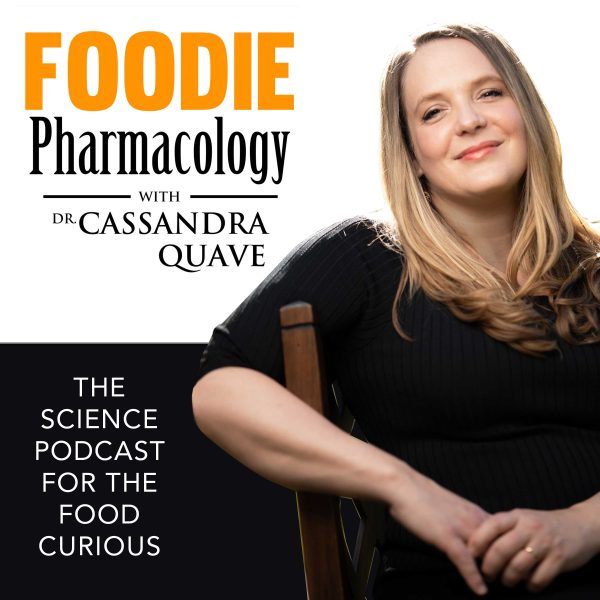
Foodie Pharmacology Podcast
- Episodes
- 100
- Released
- weekly
- Latest episode
- Nov 9, 2026
About the podcast
Foodie Pharmacology is the science podcast for the food curious! Dr. Quave is co-creator and host of the show. She speaks with leading experts on certain crops, sustainable farming methods, medicinal plants, and explores the pharmacology--or health impact--of our food through weekly episodes! You can also tune in through subscribing to the podcast on Apple Podcasts. Leave comments and ratings on episodes! Dr. Quave loves to hear from the #FoodiePharmacology fans!
Episodes 100
Edible Weeds with Dr. Roland Ebel and Dr. Fabian Menalled
What if some of the plants farmers spend hours pulling out of their fields belong on our plates? In this episode, Dr. Cassandra Quave talks with agroecologists Dr. Roland Ebel (College of Agricultural and …
Show notes
What if some of the plants farmers spend hours pulling out of their fields belong on our plates? In this episode, Dr. Cassandra Quave talks with agroecologists Dr. Roland Ebel (College of Agricultural and Environmental Education, Vienna) and Dr. Fabian Menalled (Montana State University) about edible weeds: the spontaneous plants that are wiped out in conventional farming but have long been valued as food in traditional farming systems, from Mexico’s quelites to the wild greens of southern Italy.
They start by asking what a weed actually is. From there they explain why traditional farmers often don’t separate crop from weed, and how ideas like “neutral weed communities,” selective weeding, and selective harvesting could fit these plants into modern organic farms. Along the way, they cover some promising species: purslane, which has more omega-3s than any other leafy green; lambsquarters, a close relative of quinoa; amaranth; thistles; mallows; and dandelions, which are prized as a delicacy in parts of Germany and France.
The conversation also covers what edible weeds offer for food security, pollinators, and climate resilience. Roland and Fabian talk about the limits of bringing them into large mechanized farms, and they give a preview of their upcoming book, which pairs the science with recipes from chefs.
#FoodiePharmacology #EdibleWeeds #Agroecology #SustainableAgriculture #FoodSystems #WildEdibles #Ethnobotany #OrganicFarming #FoodSecurity #Purslane
Chapters
Loading chapters …
How Plants Evolved to Exploit Humanity with Dr. Robert Spengler
Did humans domesticate plants, or did plants domesticate us? Paleoethnobotanist Dr. Robert Spengler joins Dr. Cassandra Quave to explain why ancient farmers likely had no idea they were changing the course of …
Show notes
Did humans domesticate plants, or did plants domesticate us? Paleoethnobotanist Dr. Robert Spengler joins Dr. Cassandra Quave to explain why ancient farmers likely had no idea they were changing the course of evolution. Key traits like the tough rachis in wheat and barley took 2,000 to 3,000 years to take hold, far longer than any one person, or any one generation, could have planned for.
From there, they follow the Silk Road, which Dr. Spengler describes as the spokes of a wagon wheel with Central Asia at the center. They cover millet and wheat crossing Eurasia, apples hybridized by bees and locked in by grafting, and chickens that spread across the ancient world once they began laying eggs year-round. They also cover spices and early cannabis burning, medieval barley farming in the Gobi, and why bugs were probably a normal part of the ancient menu.
Dr. Spengler directs the Fruits of Eurasia: Domestication and Dispersal project and oversees the paleoethnobotany laboratory at the Max Planck Institute of Geoanthropology. He is the author of Nature’s Greatest Success: How Plants Evolved to Exploit Humanity and Fruit from the Sands: The Silk Road Origins of the Food We Eat.
Learn more about his work at https://www.spenglerlab.com/
#FoodiePharmacology #Paleoethnobotany #Archaeobotany #PlantDomestication #SilkRoad #AncientFoods #Ethnobotany #FoodHistory #Apples
Chapters
Loading chapters …
The End of Cheap Food with Kristine Root
Why does “cheap” food cost us so much? In this episode of Foodie Pharmacology, Dr. Cassandra Quave talks with Kristine Root, founder of the branding and growth marketing agency Socha, about her new report, The …
Show notes
Why does “cheap” food cost us so much? In this episode of Foodie Pharmacology, Dr. Cassandra Quave talks with Kristine Root, founder of the branding and growth marketing agency Socha, about her new report, The End of Cheap Food. Kristine traces how U.S. farm policy and an all-out push for efficiency built a food system that looks inexpensive at the register. Along the way, the real costs moved into our healthcare systems, our soil, and our farmers’ livelihoods.
They dig into how what we grow and how we grow it shape the nutrition on our plates, from heirloom tomatoes to regeneratively raised beef. They also ask why a perfect-looking strawberry can leave us unsatisfied. Then they turn to marketing, and how transparency, a three-second hook, and a deeper story can help people choose foods that are better for their health and the planet. Along the way they cover beans as the next marketing hero, teaching kids to cook, food as medicine, and what it would take for the highest-quality food to also be the most accessible.
Read the free report, The End of Cheap Food: https://www.sochabranding.com/the-end-of-cheap-food-2026-report
#FoodiePharmacology #EndOfCheapFood #FoodSystems #RegenerativeAgriculture #SoilHealth #NutrientDensity #FoodMarketing #FoodAsMedicine
Chapters
Loading chapters …
Microbes for Sustainable Agriculture with Dr. Mariangela Hungria
Can bacteria be bred to feed crops, and do it for a fraction of the cost of chemical fertilizer? This week on the show, Dr. Cassandra Quave talks with Dr. Mariangela Hungria, a soil microbiologist at Embrapa …
Show notes
Can bacteria be bred to feed crops, and do it for a fraction of the cost of chemical fertilizer? This week on the show, Dr. Cassandra Quave talks with Dr. Mariangela Hungria, a soil microbiologist at Embrapa (the Brazilian Agricultural Research Corporation), 2025 World Food Prize laureate, and one of TIME’s 100 Most Influential People of 2026. They discuss how nitrogen-fixing bacteria partner with legumes, grasses, and sugarcane, and why chemical fertilizers added to the soil drive water pollution and greenhouse gas emissions.
Dr. Hungria explains how her work with soybeans helped make Brazil a global leader in agricultural biologicals. She shares field-trial results, the economic and climate savings, and what it takes to bring beneficial microbes to crops like tomatoes and potatoes.
They also cover restoring degraded pastures, bacteria that help crops tolerate drought, and why synthetic microbial communities are still hard to build. Dr. Hungria’s message is that biologicals can already replace much of the chemical input in farming, and that they can work in conventional and organic agriculture.
#SustainableAgriculture #SoilHealth #SoilMicrobiome #NitrogenFixation #Biologicals #RegenerativeAgriculture #FoodSecurity #WomenInScience #WorldFoodPrize #Microbiology #FoodScience
Chapters
Loading chapters …
Caves & CHAOS with Dr. Rachel Washburn
What can microbes living in the dark, mineral-rich corners of a cave tell us about the next generation of medicines? In this episode of Foodie Pharmacology, Dr. Cassandra Quave talks with biomedical …
Show notes
What can microbes living in the dark, mineral-rich corners of a cave tell us about the next generation of medicines?
In this episode of Foodie Pharmacology, Dr. Cassandra Quave talks with biomedical geoscientist Dr. Rachel Washburn, director of the Washburn CHAOS Lab (Complex Host and Abiotic Systems). Her team studies the whole system at once: which microbes are present, what chemistry they are making, and how minerals and water shape it. They take samples from wild caves, polluted caves, and tourist show caves across Kentucky.
Dr. Washburn explains how sequencing, geology, and metabolomics fit together, using a heavy metal concert analogy. She describes the lab’s early finding of new chemical classes in show caves and the recovery of Hidden River Cave after decades as a sewer. Her goal is a predictive “treasure map” that helps natural product researchers decide where to look for new antibiotics, anticancer compounds, and bioremediation tools.
Dr. Washburn also shares her path from Russian studies and Air Force intelligence, through cancer and a PhD, to geoscience. She talks about bringing citizen scientists into the field, and about Scientifically Speaking, her series that treats fictional worlds like real scientific observations.
Learn more about the Washburn CHAOS Lab at https://www.washburnchaoslab.com/.
Join a citizen science experience at https://washburnchaoslab.com/citizen-science-experience.
Follow Dr. Washburn on Instagram, TikTok, and YouTube at @WashburnCHAOSLab.
#FoodiePharmacology #NaturalProducts #Caves #Microbiome #Geomicrobiology #Metabolomics #CitizenScience #SciComm #Bioprospecting #Kentucky
Chapters
Loading chapters …
Sugar, Evolution, and the Human Brain with Dr. Jennie Brand-Miller
Why do humans have a sweet tooth, and what does the glycemic index actually tell us about food? Dr. Cassandra Quave talks with University of Sydney nutrition scientist Dr. Jennie Brand-Miller about the role of …
Show notes
Why do humans have a sweet tooth, and what does the glycemic index actually tell us about food? Dr. Cassandra Quave talks with University of Sydney nutrition scientist Dr. Jennie Brand-Miller about the role of fruit and sugar in human evolution, how different carbohydrates affect blood glucose, and why the type of rice you choose may matter more than whether it’s white or brown.
They also explore practical ways to build a balanced plate, what makes pasta a surprising low-GI food, and why Dr. Brand-Miller urges us to enjoy fruit rather than fear its sugar. It’s a conversation that challenges familiar assumptions about carbohydrates while making room for the pleasure of eating.
Learn more about her work at www.glycemicindex.com
#FoodiePharmacology #GlycemicIndex #NutritionScience #HumanEvolution #BloodGlucose #FoodAndHealth
Chapters
Loading chapters …
Feeding the World as if People Mattered with Dr. Andrew Flachs
What if the value of a farm were measured not only by what it produces, but also by the communities, skills, and ecosystems it sustains? This week on Foodie Pharmacology, Dr. Cassandra Quave welcomes …
Show notes
What if the value of a farm were measured not only by what it produces, but also by the communities, skills, and ecosystems it sustains? This week on Foodie Pharmacology, Dr. Cassandra Quave welcomes environmental anthropologist Dr. Andrew Flachs back to the show to discuss his new book, Feeding the World as if People Mattered: How Small Farms Produce Value Beyond Yields.
Drawing on research in India, Bosnia, and the American Midwest, Andrew challenges the assumption that producing more food will solve hunger. Industrial agriculture can generate enormous quantities of inexpensive commodities while obscuring its social and environmental costs. Small and diversified farms offer a different model—one that values skilled labor, ecological resilience, rural livelihoods, cultural knowledge, and the ability of future generations to continue farming.
The conversation explores the hidden labor beneath our food system, the risks of monoculture, and why hunger is often rooted in poverty, land ownership, and distribution rather than a simple shortage of calories. Cassandra and Andrew also examine the legacies of the Green Revolution, agricultural antibiotic use, and what it would mean to build a food system that measures success by more than yield and profit.
Learn more about Andrew’s work at https://www.andrewflachs.com/ and follow him on social media at @DrFlachsophone.
Order Feeding the World as if People Mattered from the University of Arizona Press: https://uapress.arizona.edu/book/feeding-the-world-as-if-people-mattered. Use discount code AZFLR for 30% off.
#FoodiePharmacology #SustainableAgriculture #SmallFarms #FoodSystems #FoodSecurity #RegenerativeAgriculture #Biodiversity #FoodJustice #SustainableFood
Chapters
Loading chapters …
From Motifs to Medicine: Can Nature and AI Transform Mental Health? with Dr. Jacob Hooker
Could centuries of traditional plant knowledge help scientists discover the next generation of medicines for the brain? In this episode of Foodie Pharmacology, Dr. Cassandra Quave speaks with chemist and …
Show notes
Could centuries of traditional plant knowledge help scientists discover the next generation of medicines for the brain? In this episode of Foodie Pharmacology, Dr. Cassandra Quave speaks with chemist and neuroscientist Dr. Jacob Hooker, co-founder and CEO of Sensorium Therapeutics, about a new approach to finding treatments for anxiety and other neurological and psychiatric conditions.
Dr. Hooker explains how Sensorium combines ethnobotanical records, chemical data, medicinal chemistry, and artificial intelligence in a vast computational knowledge graph. By mapping relationships among plants, molecules, human experiences, and biological activity, researchers can uncover patterns and prioritize promising natural products for investigation. The conversation also explores why so many medicines affecting the brain have roots in nature and why psychoactive compounds need not be psychedelic or hallucinogenic.
They examine Cobenfy, a recently approved schizophrenia treatment with roots in the chemistry of the betel nut palm, as an example of how plants can reveal unexpected therapeutic mechanisms. Drs. Hooker and Quave also discuss why natural molecules often require modification to improve their safety, dosing, and selectivity before becoming medicines. Sensorium is applying this “motifs to medicines” strategy to investigational programs for anxiety, drug-resistant epilepsy, and cognition, with its lead anxiety candidate now in early-stage clinical testing.
Learn more about Sensorium Therapeutics at https://www.sensorium.bio/.
Read Dr. Hooker’s essays and interviews on neuroscience, psychiatry, and the care of the mind at https://aetherinmind.substack.com/.
Follow Dr. Hooker on LinkedIn at https://www.linkedin.com/in/jacob-hooker-91341112/ and on X at @jmhooker.
#FoodiePharmacology #Ethnobotany #NaturalProducts #DrugDiscovery #Neuroscience #MentalHealth #AnxietyResearch #MedicinalPlants #AI #ChemicalBiology #Neuropharmacology
Chapters
Loading chapters …
The First 1,000 Days: How Your Baby’s Gut Microbes Shape Lifelong Health with Dr. Savita Srivastava
What if some of the most important foundations for lifelong health are established before a child’s second birthday? In this episode of Foodie Pharmacology, Dr. Cassandra Quave speaks with Yale-trained …
Show notes
What if some of the most important foundations for lifelong health are established before a child’s second birthday? In this episode of Foodie Pharmacology, Dr. Cassandra Quave speaks with Yale-trained gastroenterologist and microbiome specialist Dr. Savita Srivastava about how the gut microbiome develops during the first 1,000 days of life.
They explore how birth, skin-to-skin contact, breastfeeding, antibiotics, environmental exposures, and the introduction of solid foods help shape a baby’s developing microbial community. Dr. Srivastava explains the differences among probiotics, prebiotics, and postbiotics; why metabolites such as butyrate matter for the gut barrier and immune system; and what scientists are learning about connections between early microbial development and allergies, eczema, autoimmune conditions, metabolism, and brain health.
The conversation also examines vaginal seeding, the limits of probiotic supplements, and practical ways families can support microbial diversity through fiber-rich foods, fermented foods, and a varied diet. Most importantly, Dr. Srivastava offers reassurance: there is no single perfect formula for building a healthy microbiome, and parents have many opportunities to support their children’s health as they grow.
Learn more about Dr. Srivastava and her book and work at https://www.doctorsavita.com/.
Follow Dr. Srivastava on Instagram and Facebook: @gutdoctorsavita
#FoodiePharmacology #GutMicrobiome #GutHealth #Breastfeeding #FermentedFoods #ChildNutrition
Chapters
Loading chapters …
Alpha-gal Syndrome (Red Meat Allergy) with Gary Falcetano | Foodie Pharmacology with Dr. Cassandra Quave
We’d once again like to thank Thermo Fisher Scientific Incorporated for their sponsorship of this episode. What if a single tick bite could change the way you eat forever? In this episode, I sit down with …
Show notes
We’d once again like to thank Thermo Fisher Scientific Incorporated for their sponsorship of this episode.
What if a single tick bite could change the way you eat forever? In this episode, I sit down with allergy expert Gary Falcetano to explore alpha-gal syndrome, a strange and increasingly recognized condition triggered by tick bites that can lead to delayed allergic reactions to red meat and other mammalian products. We unpack the science behind this unusual immune response, why symptoms can emerge hours after eating, and why many cases go undiagnosed for years. From hidden sources of alpha-gal in foods and medications to the growing spread of tick species linked to the condition, this conversation reveals how a tiny bite can have surprisingly large consequences. We also share practical tips for prevention, diagnosis, and staying safe outdoors, whether you’re hiking in your backyard or heading out on your next adventure.
This Foodie Pharmacology podcast episode is part of a special two-part series sponsored by Thermo Fisher Scientific Incorporated. The views and opinions in this podcast are those of the presenters and represent the synthesis of the science.
Chapters
Loading chapters …
Pregnancy, Nutrition, and the Science of the Placenta with Dr. Cheryl Rosenfeld | Foodie Pharmacology with Dr. Cassandra Quave
Did you know that one of the most important organs shaping lifelong health is only temporary? In this episode of Foodie Pharmacology, I sit down with developmental biologist Dr. Cheryl Rosenfeld to explore the …
Show notes
Did you know that one of the most important organs shaping lifelong health is only temporary? In this episode of Foodie Pharmacology, I sit down with developmental biologist Dr. Cheryl Rosenfeld to explore the fascinating science of the placenta and its role as the communication hub between mother and developing baby. We discuss the emerging concept of the placenta-brain axis and discuss how maternal diet, the gut microbiome, environmental exposures, and even tiny molecular signals can influence fetal development long before birth. From serotonin and the microbiome to probiotics, inflammation, and the hidden impacts of modern life, this conversation reveals how the earliest environment we experience may shape health outcomes for years to come.
Chapters
Loading chapters …
The Ethnobotany of Candomblé with Dr. Bob Voeks
Journey to Brazil to uncover the hidden roots of Candomblé, an Afro-Brazilian spiritual tradition shaped by African plant knowledge, resilience, and cultural memory. In this episode, I speak with ethnobotanist …
Show notes
Journey to Brazil to uncover the hidden roots of Candomblé, an Afro-Brazilian spiritual tradition shaped by African plant knowledge, resilience, and cultural memory. In this episode, I speak with ethnobotanist Dr. Bob Voeks to explore how enslaved Africans preserved sacred healing traditions and foodways across the Atlantic, transforming plants into powerful symbols of identity and survival. From spiritual cleansing rituals with sacred leaves to the fascinating story of caruru, a revered okra dish tied to twin deities, we trace the remarkable journey of African plants through the diaspora. Along the way, we uncover surprising connections linking Candomblé, callaloo, and even Southern gumbo, revealing how food can carry history, spirituality, and culture across continents and generations. #Okra #Gumbo #Acarajé #DiasporaFood #AfricanCuisine #BlackEyedPeas
Chapters
Loading chapters …
How Pet Food Went Wrong with Dr. Judy Morgan
Pet nutrition has undergone a dramatic shift over the past century, moving from whole foods to highly processed convenience diets, and not always for the better. This week on Foodie Pharmacology, Dr. Cassandra …
Show notes
Pet nutrition has undergone a dramatic shift over the past century, moving from whole foods to highly processed convenience diets, and not always for the better. This week on Foodie Pharmacology, Dr. Cassandra Quave speaks with Dr. Judy Morgan, a veterinarian with over 40 years of experience in integrative and holistic care, about what’s gone wrong in the modern pet food industry and how to rethink what we feed our animals. The conversation explores the rise of ultra-processed kibble, gaps in regulation, and the health consequences linked to highly processed diets, while offering practical guidance on incorporating fresher, more species-appropriate foods. From understanding ingredient labels to simple additions like eggs, sardines, and fresh produce, this episode provides a grounded, accessible framework for pet owners looking to support long-term health and longevity in their animals.
LISTENER OFFER: Use discount code PHARMACOLOGY50 for 50% off Dr. Judy authored Books found on https://drjudymorgan.com/
Chapters
Loading chapters …
Genome Mining and the Quest for New Antibiotics with Dr. Nadine Ziemert
Antibiotic resistance is one of the most pressing challenges in modern medicine, raising the risk of a return to a pre-antibiotic era where common infections become life-threatening. This week on Foodie …
Show notes
Antibiotic resistance is one of the most pressing challenges in modern medicine, raising the risk of a return to a pre-antibiotic era where common infections become life-threatening. This week on Foodie Pharmacology, Dr. Cassandra Quave speaks with Dr. Nadine Ziemert about how scientists are turning to microbial genomes to discover the next generation of antibiotics. A professor of translational genome mining at the University of Tübingen, Nadine explains how bacteria themselves are prolific chemists, producing complex natural products that can be harnessed to fight infection. The conversation explores why traditional discovery methods have slowed, how genome mining reveals hidden “chemical dark matter” in the environment, and how computational tools are helping researchers predict new molecules before they are even isolated in the lab. From the vast, untapped diversity of soil microbes to the future potential of AI-driven discovery pipelines, this episode offers a hopeful look at how science is working to stay ahead in the race against antibiotic resistance. Learn more about Dr. Ziemert’s research on her lab’s YouTube channel.
Chapters
Loading chapters …
Legal Action for Nature with Dr. Jacob Phelps
The health of our environment underpins everything from food systems to future medicines, yet much of the damage done to nature goes unaddressed. This week on Foodie Pharmacology, Dr. Cassandra Quave speaks …
Show notes
The health of our environment underpins everything from food systems to future medicines, yet much of the damage done to nature goes unaddressed. This week on Foodie Pharmacology, Dr. Cassandra Quave speaks with Jacob Phelps about a new approach to conservation that brings science into the courtroom. Together, they explore how environmental litigation can move beyond small fines and toward holding offenders accountable for restoring damaged ecosystems, from illegal mining and deforestation to wildlife trafficking. The conversation highlights the gap between strong environmental laws on paper and their limited use in practice, and how interdisciplinary teams of scientists and lawyers are working to change that. From protecting biodiversity and safeguarding food systems to preserving resources that may hold future therapeutic value, this episode offers a powerful look at how legal action can be used as a tool to defend and repair the natural world. Learn more at https://www.conservation-litigation.org/
Chapters
Loading chapters …
Natural Remedies for Pets with Angela Ardolino
Spring is a time when many of us think about fresh starts and better health, including the well-being of our pets. This week on Foodie Pharmacology, Dr. Cassandra Quave speaks with Angela Ardolino about natural …
Show notes
Spring is a time when many of us think about fresh starts and better health, including the well-being of our pets. This week on Foodie Pharmacology, Dr. Cassandra Quave speaks with Angela Ardolino about natural approaches to supporting aging dogs. Angela, a formulator and educator specializing in cannabinoids, medicinal mushrooms, and adaptogens, explains how these compounds interact with the endocannabinoid system to regulate inflammation, neurological function, and overall balance. They discuss the differences between full-spectrum hemp extracts and isolated compounds, how cannabinoids may support joint pain, seizures, and cognitive decline, and the growing interest in functional mushrooms like lion’s mane, reishi, and cordyceps for brain health of our pets. The conversation also examines what cognitive decline looks like in aging pets, the role of inflammation and the gut-brain connection, and how diet and ultra-processed pet foods may contribute to disease. From reading supplement labels to understanding ingredient sourcing and quality, this episode offers a practical framework for pet owners interested in integrative approaches to animal health. Learn more about Angela’s work at https://angelaardolino.com/
Chapters
Loading chapters …
The Truth About Seed Oils with Cherie Calbom | Foodie Pharmacology with Dr. Cassandra Quave
Seed oils are everywhere. From salad dressings to snack foods, they’ve become a quiet staple of the modern diet. But how did they get there, and what do we really know about their impact on human health? This …
Show notes
Seed oils are everywhere. From salad dressings to snack foods, they’ve become a quiet staple of the modern diet. But how did they get there, and what do we really know about their impact on human health?
This week on Foodie Pharmacology, Dr. Cassandra Quave sits down with nutritionist Cherie Calbom, MS, known as “The Juice Lady,” to unpack the rise of industrial seed oils and the debate surrounding them. Cherie shares her personal journey into nutrition, which began with a serious health crisis and led her to rethink the role of food in healing.
Together, they explore what seed oils actually are, how they are processed, and why their chemical structure makes them vulnerable to oxidation. The conversation traces their history from industrial byproducts to “heart-healthy” staples, shaped by wartime supply chains, shifting dietary guidance, and powerful marketing.
They also dig into where these oils are hiding in everyday foods, why they can be difficult to avoid even when you are trying to eat well, and how to navigate labels in a highly processed food environment.
If you’ve ever wondered what’s really in the oils lining grocery store shelves, or why this topic has become so widely debated, this episode offers a deeper look at the science, history, and real-world implications of seed oils in today’s diet. Learn more about Cherie’s work at thejuiceladycherie.com
Chapters
Loading chapters …
Pollen Food Allergy Syndrome with Gary Falcetano | Foodie Pharmacology with Dr. Cassandra Quave
Spring is here, and seasonal pollen along with it! This week on Foodie Pharmacology, Dr. Cassandra Quave speaks with Gary Falcetano, PA-C, AE-C, Senior Manager of Global Medical & Scientific Affairs in Allergy …
Show notes
Spring is here, and seasonal pollen along with it! This week on Foodie Pharmacology, Dr. Cassandra Quave speaks with Gary Falcetano, PA-C, AE-C, Senior Manager of Global Medical & Scientific Affairs in Allergy at Thermo Fisher Scientific and a longtime clinician and educator in asthma and immunologic disorders, about pollen food allergy syndrome and why certain fresh foods can suddenly cause itching or irritation during allergy season.
Also known as oral allergy syndrome, this condition stems from cross-reactivity between pollen proteins and similar proteins found in plant foods. Gary explains how this immune mix-up happens, why symptoms are typically limited to the mouth and throat, and why something as simple as cooking an apple can make it more tolerable.
They also cover how common this syndrome is, why it is frequently overlooked, and how clinicians distinguish it from more serious food allergies using detailed history and targeted testing. The conversation highlights the role of IgE, component-resolved diagnostics, and the importance of understanding seasonal exposure. The episode closes with practical tips for managing symptoms, from reducing pollen exposure at home to simple food preparation strategies that can make a real difference during peak allergy season.
This Foodie Pharmacology podcast is part of a special two part series sponsored by Thermo Fisher Scientific Inc. The views and opinions in this podcast are those of the presenters and represent the synthesis of science.
#FoodiePharmacology #PollenAllergy #OralAllergySyndrome #AllergyAwareness #ItchyMouth #AllergySymptoms #SinusRelief #HealthyLiving #SeasonalAllergies #FoodAllergy
Chapters
Loading chapters …
Essential Food Preserving with Dr. Julia Skinner
What if the key to reducing food waste, strengthening community, and reconnecting with our food systems is already in your kitchen? In this episode of Foodie Pharmacology, Dr. Cassandra Quave speaks with Dr …
Show notes
What if the key to reducing food waste, strengthening community, and reconnecting with our food systems is already in your kitchen?
In this episode of Foodie Pharmacology, Dr. Cassandra Quave speaks with Dr. Julia Skinner, food writer, fermentation expert, and founder of the Culinary Curiosity School, to explore the practice of food preserving. From fermentation to freezing, Julia shares how preserving is not just a set of techniques but a way of thinking about food with intention and creativity.
They discuss her upcoming book, Essential Food Preserving, which takes an ingredient-first approach. Instead of rigid recipes, it asks a simple question: what can you do with what you have right now? That mindset opens the door to everything from fruit leathers and infused vinegars to fermented drinks and pantry staples built from scraps.
They also explore the deeper reasons preserving matters. These practices are rooted in food security, seasonality, and survival. Today, they offer a powerful way to reduce waste and reconnect with the sources of our food. Fermentation, in particular, plays an important role in building community. Sharing techniques, recipes, and traditions creates meaningful connections around food.
If you’ve ever felt intimidated by preserving, this episode offers an approachable place to begin. Start small, stay curious, and focus on practice rather than perfection. Essential Food Preserving will be released on May 19, 2026, and is available now for pre-orders!
Want to learn more? Enter Code “QUAVE” for a 30% discount to a class offered through the Culinary Curiosity School.
Chapters
Loading chapters …
How Flowers Made Our World with Dr. David George Haskell | Foodie Pharmacology
Flowers may seem delicate, but they have transformed the planet! In this episode of Foodie Pharmacology, Dr. Cassandra Quave speaks with Dr. David George Haskell, author of the new book How Flowers Made Our …
Show notes
Flowers may seem delicate, but they have transformed the planet! In this episode of Foodie Pharmacology, Dr. Cassandra Quave speaks with Dr. David George Haskell, author of the new book How Flowers Made Our World, about the revolutionary rise of flowering plants. They discuss how grasses helped shape human evolution as “grass apes,” why orchids rely on intimate fungal partnerships, and how floral chemistry communicates with pollinators through scent and even electrical fields! From the endosperm that feeds much of humanity to the cultural and aesthetic power of flowers, this conversation examines how flowering plants engineered ecosystems, nourished civilizations, and continue to shape our future. How Flowers Made our World: The Story of Nature’s Revolutionaries is available for pre-order now! Learn more at https://dghaskell.com/
Chapters
Loading chapters …
Ancient-biotics: Medieval Remedies Meet Modern Microbiology with Dr. Freya Harrison
What if the future of antimicrobial discovery lies buried in medieval manuscripts? In this episode of Foodie Pharmacology, Dr. Cassandra Quave speaks with microbiologist Dr. Freya Harrison of the University of …
Show notes
What if the future of antimicrobial discovery lies buried in medieval manuscripts? In this episode of Foodie Pharmacology, Dr. Cassandra Quave speaks with microbiologist Dr. Freya Harrison of the University of Warwick about the emerging field of “Ancient-biotics”. They examine how early medieval remedies such as Bald’s eyesalve are being reconstructed and tested against modern antibiotic-resistant biofilms. Dr. Harrison explains how her lab builds infection models that mimic the human body, why biofilms are so difficult to treat, and how combinations of natural products like honey and vinegar may hold clues to new antimicrobial strategies. This conversation bridges microbiology, Medieval texts, and pharmacology showcasing how historical knowledge can still inform modern medicine.
Chapters
Loading chapters …
Understanding Inflammation with Dr. Josh Redd | Foodie Pharmacology with Dr. Cassandra Quave
Inflammation is essential for healing, but when it becomes chronic, it can quietly drive joint pain, blood sugar imbalance, autoimmune conditions, and long-term disease. In this episode of Foodie Pharmacology …
Show notes
Inflammation is essential for healing, but when it becomes chronic, it can quietly drive joint pain, blood sugar imbalance, autoimmune conditions, and long-term disease. In this episode of Foodie Pharmacology, Dr. Cassandra Quave speaks with Dr. Josh Redd, founder of RedRiver Health and Wellness and author of The 30-Day Inflammatory Reset, about the root causes of chronic inflammation. They discuss how ultra-processed diets, environmental exposures, stress, hormonal imbalance, and even trauma contribute to inflammatory load, and what practical steps individuals can take to support immune balance through nutrition and lifestyle change. Learn more about Josh’s work at DrJoshRedd.com
Chapters
Loading chapters …
The Science of Sake: Fermentation, Culture, and History with Dr. Eric Rath
Sake sits at the intersection of fermentation science, ritual, and food culture. In this episode of Foodie Pharmacology, Dr. Cassandra Quave is joined by Dr. Eric C. Rath, professor of history at the University …
Show notes
Sake sits at the intersection of fermentation science, ritual, and food culture. In this episode of Foodie Pharmacology, Dr. Cassandra Quave is joined by Dr. Eric C. Rath, professor of history at the University of Kansas and author of Kanpai: The History of Sake. Together, they explore what sake really is, how fermentation with koji mold transforms rice into alcohol, and why sake has played such a central role in Japanese ritual, everyday life, and food culture. The conversation also traces the history of home brewing, the rise of izakaya gastropubs, and the emergence of American sake as both adaptation and innovation.
Chapters
Loading chapters …
North of Ordinary: Survival, Solitude, and Choosing Your Own Way with Sue Aikens | Foodie Pharmacology
In the remote Alaskan wilderness, survival is not a simple metaphor. It is an act of daily practice. In this episode of Foodie Pharmacology, Dr. Cassandra Quave reconnects with Sue Aikens, best known from …
Show notes
In the remote Alaskan wilderness, survival is not a simple metaphor. It is an act of daily practice. In this episode of Foodie Pharmacology, Dr. Cassandra Quave reconnects with Sue Aikens, best known from National Geographic’s Life Below Zero, to talk about her memoir North of Ordinary. Broadcasting from Alaska, Sue reflects on a life shaped by abandonment, fierce independence, and learning to endure both emotional and physical extremes—from brutal winters and isolation to surviving a grizzly bear attack. This conversation explores resilience, the role of helpers (human and animal), and what it means to build a sense of self when the wilderness strips everything else away.
Chapters
Loading chapters …
Doctored: Fraud, Arrogance and Tragedy in Alzheimer’s Research with Charles Piller
For decades, Alzheimer’s research has been shaped by a dominant hypothesis, enormous funding streams, and the promise of breakthrough cures. But what happens when the science itself is compromised? In this …
Show notes
For decades, Alzheimer’s research has been shaped by a dominant hypothesis, enormous funding streams, and the promise of breakthrough cures. But what happens when the science itself is compromised? In this episode of Foodie Pharmacology, Dr. Cassandra Quave sits down with investigative science journalist Charles Piller to unpack the revelations behind his book Doctored: Fraud, Arrogance, and Tragedy in the Quest to Cure Alzheimer’s. We examine how image manipulation, groupthink, and institutional failures distorted the Alzheimer’s research landscape for years, shaping clinical trials, drug approvals, and patient expectations. This conversation goes beyond a single disease to examine research integrity, reproducibility, and the human cost of getting science wrong.
Chapters
Loading chapters …
Kava Traditions and Modern Wellness with Douglas La Rose
This week on Foodie Pharmacology, we explore the cultural, scientific, and social dimensions of kava (Piper methysticum) with Douglas La Rose, Executive Director of the Kava Coalition. We discuss kava’s roots …
Show notes
This week on Foodie Pharmacology, we explore the cultural, scientific, and social dimensions of kava (Piper methysticum) with Douglas La Rose, Executive Director of the Kava Coalition. We discuss kava’s roots in Pacific Island traditions, how it’s prepared, what the new AHP monograph means for safety and standards, and why this non-alcoholic beverage is gaining global interest as a pro-social, calming alternative. Douglas shares insights from his work supporting education, responsible use, and sustainable industry growth, offering a grounded look at how this plant bridges community, culture, and modern wellness.
#FoodiePharmacology #Kava #Ethnobotany #PlantMedicine #WellnessCulture #NaturalProducts #KavaCoalition
Chapters
Loading chapters …
The Neuropharmacology of Ibogaine with Jonathan Dickinson
What makes ibogaine such a remarkable plant-derived compound? I sit down with Jonathan Dickinson, CEO and co-founder of Ambio Life Sciences, to explore the fascinating neuropharmacology of this alkaloid and its …
Show notes
What makes ibogaine such a remarkable plant-derived compound? I sit down with Jonathan Dickinson, CEO and co-founder of Ambio Life Sciences, to explore the fascinating neuropharmacology of this alkaloid and its profound impact on the brain. Jonathan is an expert on ibogaine, with more than 15 years of experience spanning clinical care, traditional practice, and psychedelic research.
We discuss iboga’s deep cultural roots in Central and West Africa, its role in Bwiti spiritual traditions, and how modern science is uncovering its potential in treating addiction, trauma, and neurological disease. Jonathan also shares insights from his pioneering work in ethical sourcing, including the first Nagoya-compliant export of iboga from Gabon, and highlights promising studies on neuroregeneration, multiple sclerosis, and traumatic brain injury. To learn more about his work, visit https://ambio.life/
#iboga #pscyhedelic #addiction #ibogaine #naturalproduct #addiction #podcast
Chapters
Loading chapters …
Humanely Hatched Hens and Ethical Egg Farming with Jasen Urena
What if the future of egg farming could eliminate one of the industry’s most difficult animal welfare issues—male chick culling? Thanks to in-ovo sexing technology, that future is here. This week on Foodie …
Show notes
What if the future of egg farming could eliminate one of the industry’s most difficult animal welfare issues—male chick culling? Thanks to in-ovo sexing technology, that future is here.
This week on Foodie Pharmacology, I talk with Jasen Urena, Vice President of NestFresh, about the launch of their Humanely Hatched™ eggs—the first in the U.S. to ensure only female chicks are incubated. It’s a groundbreaking step that transforms both animal welfare and consumer choice.
Jasen shares his journey at NestFresh and how the company has been at the forefront of ethical innovation, from pioneering Non-GMO Project Verified and Regenerative Organic Certified™ eggs to introducing reusable distribution systems that cut emissions and boost traceability. We discuss the promise of regenerative agriculture, how consumer demand is reshaping food systems, and why bold moves are often the catalyst for lasting change in legacy industries.
Whether you care about sustainability, farm animal welfare, or just want to understand where your food comes from, this episode offers a hopeful look at how science and ethics can come together to change what’s on our plates.
🔗 Learn more: nestfresh.com
☕ Support the show: buymeacoffee.com/foodiepharma
🎧 Listen to more episodes: foodiepharmacology.com#animalwelfare #eggs #chickens #podcast #nestfresh
Chapters
Loading chapters …
How Plants Make Medicine with Dr. Ryan Nett
Plants are master chemists. From caffeine and nicotine to powerful drugs like colchicine, they manufacture an incredible array of molecules that defend against pests, attract pollinators, and sometimes even …
Show notes
Plants are master chemists. From caffeine and nicotine to powerful drugs like colchicine, they manufacture an incredible array of molecules that defend against pests, attract pollinators, and sometimes even become lifesaving medicines for humans. But how exactly do plants build these complex compounds, and why do they make them in the first place?
This week, I sit down with Dr. Ryan Nett, Assistant Professor of Molecular and Cellular Biology at Harvard University, to explore the fascinating world of plant biosynthesis. We talk about how plants orchestrate molecular “assembly lines” using specialized enzymes, why some of the most promising medicines are so difficult to source from nature, and how advances in genetics and synthetic biology are opening new doors to sustainable drug production.
Dr. Nett shares insights from his research on alkaloids such as huperzine A, investigated for Alzheimer’s disease, and colchicine, a historic treatment for gout and inflammation. We also discuss the grand challenges of plant chemistry, from deciphering massive genomes to engineering microbes like yeast to produce rare medicinal compounds.
If you’ve ever wondered how plants turn simple building blocks into some of the most valuable medicines on Earth, you won’t want to miss this conversation! Learn more at https://www.nett-lab.com/
#botany #medicinalplants #chemistry #science #biosynthesis
Chapters
Loading chapters …
Understanding Food Allergies with Dr. Sarita Patil
Food allergies affect millions of children and adults worldwide—and the numbers are rising. This week on the show, Dr. Quave speaks with Dr. Sarita Patil, Assistant Professor of Medicine at Harvard Medical …
Show notes
Food allergies affect millions of children and adults worldwide—and the numbers are rising. This week on the show, Dr. Quave speaks with Dr. Sarita Patil, Assistant Professor of Medicine at Harvard Medical School and Co-Director of the MGH Food Allergy Center, to explore the science behind allergic reactions. They discuss the differences between food allergies and intolerances, the rise in childhood allergies, and how early exposure to allergenic foods can help prevent these conditions.
Dr. Patil shares insights from her latest research on peanut immunotherapy and the role of protective antibodies in reducing severe reactions. She also explains eosinophilic esophagitis, a chronic condition linked to food allergens that affects the esophagus. The conversation covers key topics such as the hygiene hypothesis, the influence of breastfeeding and the microbiome on food allergies, and the challenges of managing food allergies in the context of food insecurity.
Whether you are caring for someone with food allergies or interested in how the immune system interacts with our diet, this episode offers practical information and new perspectives on managing food-related health challenges.
#foodallergy #allergy #podcast #FoodiePharmacology #Peanuts
Chapters
Loading chapters …
These are the latest 40 of 100 episodes. You’ll find older episodes in the podcast’s feed.
Similar podcasts
More Health & Fitness podcasts


Is this your podcast?
Confirm it with an entry in your feed: you get a code here, add it as podcast:txt to the channel of your feed, and we check it. Your podcast is then shown as “verified” on SoundNode.