

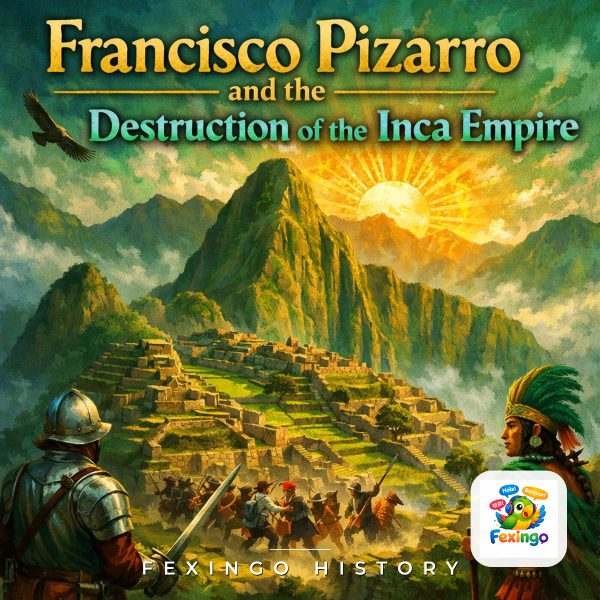
Francisco Pizarro and the Destruction of the Inca Empire — Fexingo History
- Episodes
- 282
- Released
- daily
- Latest episode
- Nov 20, 2026
About the podcast
In 1532, a small band of Spanish conquistadors led by Francisco Pizarro captured the Inca emperor Atahualpa at Cajamarca, setting off a chain of events that would topple the largest empire in the pre-Columbian Americas. Over the next four decades, the Inca civilization—spanning from modern-day Colombia to Chile, with its heart in the Peruvian Andes—was systematically dismantled through warfare, disease, and political manipulation. This show, hosted by Lucas and Luna, traces the full arc of that destruction: from the rise of the Inca under Pachacuti and the construction of Machu Picchu, to the brutal Spanish conquest, the execution of Atahualpa, the Inca resistance led by Manco Inca and the Neo-Inca state at Vilcabamba, and the eventual fall of the last stronghold in 1572. We explore the sophisticated Inca road system, terrace agriculture, and quipu record-keeping; the role of indigenous allies like the Cañari and Huanca; the infamous Requerimiento; the encomienda system; and the devastating impact of smallpox. Why does this history matter today? Because the conquest of the Incas is a stark lesson in how technological disparity, internal division, and European colonialism reshaped the Americas—and because the descendants of the Inca still fight for recognition of their heritage and land rights. Join us as we unravel one of history's most dramatic collisions of worlds, where gold, faith, and ambition erased an empire in a generation. #FranciscoPizarro #IncaEmpire #ConquestOfPeru #Atahualpa #MachuPicchu #SpanishConquistadors #Cajamarca #MancoInca #Vilcabamba #AndeanCivilization #Pachacuti #Encomienda #Smallpox #ColonialLatinAmerica #IndigenousHistory #RiseAndFall #FexingoHistory #WorldHistory Keep every episode free: buymeacoffee.com/fexingo
Contributors
- LucasHost
- LunaCo-host
Episodes 282
The Spanish Civil War That Preceded Pizarro
Before Francisco Pizarro ever set foot in Cajamarca, the Inca Empire was already tearing itself apart. This episode explores the brutal civil war between brothers Huáscar and Atahualpa, a conflict that …
Show notes
Before Francisco Pizarro ever set foot in Cajamarca, the Inca Empire was already tearing itself apart. This episode explores the brutal civil war between brothers Huáscar and Atahualpa, a conflict that devastated Tawantinsuyu just as smallpox had killed their father, Huayna Capac. We examine how the succession crisis fractured the loyalty of the curacas and military generals, turning the empire’s greatest strength—its centralized authority—into a fatal weakness. By looking at the political maneuvering, the betrayal of key allies like the Cañari, and the strategic blunders made by both claimants to the Sapa Inca throne, we uncover why the Spanish conquest was less about superior weaponry and more about exploiting an existing rupture. From the battles around Cusco to the final capture of Atahualpa, this is the story of how a family dispute became a national catastrophe.
#Huáscar #Atahualpa #IncaCivilWar #Tawantinsuyu #HuaynaCapac #Cusco #FranciscoPizarro #SapaInca #AndeanHistory #Cañari #QuispeTopa #Rumiñahui #MancoInca #SpanishConquest #SuccessionCrisis #IncaEmpire #FexingoHistory #History
The Khipu Rebellion: Decoding Atahualpa's Hidden Messages
While most episodes cover the battles of Cajamarca or the fall of Vilcabamba, this episode examines the linguistic and bureaucratic warfare waged by the Inca elite after their capture. We explore how Scribe …
Show notes
While most episodes cover the battles of Cajamarca or the fall of Vilcabamba, this episode examines the linguistic and bureaucratic warfare waged by the Inca elite after their capture. We explore how Scribe Quispe Topa utilized the complex knot-system of khipu to maintain administrative control while under Spanish house arrest in Cusco. By analyzing the discrepancies between Spanish records and surviving quipu fragments from the period 1534 to 1536, we uncover a covert network of resistance. The narrative focuses on the intellectual duel between Francisco Pizarro’s growing impatience and the Inca scribes’ ability to manipulate tax rolls and tribute data through encoded textile messages. This investigation reveals that the destruction of Tawantinsuyu was not just military but also an attempt to erase its informational infrastructure.
#Khipu #Quipucamayoc #IncaEmpire #Atahualpa #FranciscoPizarro #CuscoHistory #AndeanCivilization #PreColumbian #SpanishConquest #TextileCoding #Quinua #Tawantinsuyu #ColonialPeru #HistoricalDecryption #IncaBureaucracy #MancoInca #Vilcabamba #FexingoHistory #History
The Last Inca: How Manco Survived the Spanish Siege
In this episode, we explore the remarkable resilience of Manco Inca Yupanqui after his escape from Cajamarca and the subsequent fall of Cusco. While earlier episodes covered the initial conquest and the plague …
Show notes
In this episode, we explore the remarkable resilience of Manco Inca Yupanqui after his escape from Cajamarca and the subsequent fall of Cusco. While earlier episodes covered the initial conquest and the plague, we focus on the two-year siege of Cusco (1536–1537), where Manco mobilized an army of up to 100,000 warriors to retake the capital. We examine the engineering feats of the Inca assault on Sacsayhuamán, the brutal Spanish counterattack led by Almagro and Valdivia, and Manco’s strategic retreat to Vilcabamba. Through the accounts of Pedro Cieza de León and Juan de Betanzos, we reconstruct how the Inca used terrain, starvation tactics, and psychological warfare against their enemies. This is a story of imperial endurance, tactical brilliance, and the tragic fragmentation of Tawantinsuyu into a hidden kingdom that lasted for decades.
#MancoIncaYupanqui #SiegeOfCusco #Sacsayhuaman #Vilcabamba #Tawantinsuyu #FranciscoPizarro #DiegoDeAlmagro #PedroValdivia #IncaEmpire #AndeanHistory #SpanishConquest #PeruvianHistory #IncaMilitary #ColonialLatinAmerica #IndigenousResistance #FexingoHistory #HistoryPodcast #SouthAmericanHistory
The Sapa Inca's Final Journey to Cajamarca
While previous episodes have detailed the battle and the ransom, this episode traces the critical two-week march that brought Atahualpa directly into Pizarro’s trap. We explore how the Sapa Inca’s logistical …
Show notes
While previous episodes have detailed the battle and the ransom, this episode traces the critical two-week march that brought Atahualpa directly into Pizarro’s trap. We explore how the Sapa Inca’s logistical arrogance and refusal to send scouts turned a diplomatic summit into a massacre. By examining the terrain of the Napier Hill and the psychological weight of being the living god Inti, we see why Atahualpa walked unarmed into an ambush. The story reveals the fatal miscalculation of an empire that had never faced cavalry, focusing on the specific moments where hesitation became death.
#Atahualpa #FranciscoPizarro #Cajamarca #Tawantinsuyu #SapaInca #NapierHill #VicuñaPaccayas #SpanishConquest #AndesHistory #IncaEmpire #MilitaryHistory #PeruTravel #ColonialHistory #BattleOfCajamarca #Huascar #IncaRoads #HistoryPodcast #FexingoHistory
The Inca Scribe Who Outsmarted Pizarro
While Francisco Pizarro’s conquest of the Inca Empire is often told through the lens of military ambush and gold ransom, the true story of resistance was written in knots. This episode explores the role of the …
Show notes
While Francisco Pizarro’s conquest of the Inca Empire is often told through the lens of military ambush and gold ransom, the true story of resistance was written in knots. This episode explores the role of the khipukamayoc, the elite record-keepers of Tawantinsuyu, who used their mastery of the khipu to preserve imperial data even under Spanish rule. We examine how these scribes navigated a dual system of survival, secretly maintaining administrative records while outwardly complying with colonial demands. Through the specific case of Quispe Tipan, a high-ranking official who served as an interpreter and scribe for the conquistadors, we see how language and literacy became weapons of cultural preservation. The narrative traces the journey from the fall of Cusco to the hidden archives of Vilcabamba, revealing how the Incas managed to keep their history alive when their cities were burning. By focusing on the ink-and-knot bureaucracy rather than just sword fights, we uncover a quieter but more enduring victory: the survival of Inca knowledge against all odds.
#FranciscoPizarro #IncaEmpire #Khipu #Quipucamayoc #Tawantinsuyu #Vilcabamba #MancoIncaYupanqui #SpanishConquest #AndeanHistory #ColonialPeru #IndigenousResistance #Khipukamayoc #Atahualpa #Huáscar #Cusco #PreColumbian #HistoricalPreservation #FexingoHistory
The Inca Empire's Silent War: Disease and Decapitation
We’ve covered the battles of Cajamarca, the capture of Atahualpa, and the eventual fall of Vilcabamba, but there’s a ghost in the machine of Pizarro’s conquest that often gets overshadowed by Spanish steel …
Show notes
We’ve covered the battles of Cajamarca, the capture of Atahualpa, and the eventual fall of Vilcabamba, but there’s a ghost in the machine of Pizarro’s conquest that often gets overshadowed by Spanish steel. This episode dives into the invisible army that preceded Francisco Pizarro: smallpox. Arriving on the winds from Panama decades before the conquistadors marched north, this Eurasian pathogen shattered the Tawantinsuyu at its roots. We explore how Huayna Capac and his heir Ninan Cuyochi died in quick succession, triggering a civil war between Huáscar and Atahualpa that left the empire fractured and vulnerable. You’ll hear about the Cañari allies who joined Pizarro not out of love for Spain, but because they were enemies of the Incas, and we examine the chilling efficiency of the Spanish strategy to decapitate leadership rather than conquer land. From the crowded tambos of the Qhapaq Ñan to the political vacuum in Cusco, we look at how a microscopic organism did what thousands of soldiers eventually finished.
#Smallpox #IncaEmpire #FranciscoPizarro #Atahualpa #HuaynaCapac #NinanCuyochi #Huascar #Tawantinsuyu #Vilcabamba #Cainari #QhapaqÑan #CivilWar #ColonialHistory #Andes #Peru #SpanishConquest #EpidemicHistory #FexingoHistory
The Khipu Secret: Decoding Inca Records Without Writing
We often assume that a civilization without alphabetic writing is a civilization without history, but the Inca defied this notion through the khipu. This episode explores how these knotted cord devices served …
Show notes
We often assume that a civilization without alphabetic writing is a civilization without history, but the Inca defied this notion through the khipu. This episode explores how these knotted cord devices served as the administrative backbone of Tawantinsuyu, recording everything from census data to royal decrees. We examine the role of the khipukamayoc, the master knot-tiers who operated with immense authority, and investigate the recent scholarly breakthroughs suggesting some khipus may have encoded narrative or even phonetic information rather than just numbers. By looking at the Spanish conquest’s destruction of these records and the surviving examples in museums today, we uncover a sophisticated system of information storage that challenged European assumptions about literacy and power.
#Khipu #IncaEmpire #Tawantinsuyu #Khipukamayoc #FranciscoPizarro #Atahualpa #AndeanHistory #PreColumbian #InformationSystems #SpanishConquest #MachuPicchu #Cusco #MancoInca #ColonialPeru #Archaeology #HistoricalRecords #FexingoHistory #History
The Inca Scribe Who Outsmarted Pizarro
While most histories focus on Francisco Pizarro’s swords and the fall of Cajamarca, this episode examines the quiet, devastating resistance of the khipukamayoc—the Inca scribes who controlled the empire’s …
Show notes
While most histories focus on Francisco Pizarro’s swords and the fall of Cajamarca, this episode examines the quiet, devastating resistance of the khipukamayoc—the Inca scribes who controlled the empire’s memory. When Pizarro demanded the room filled with gold as ransom for Atahualpa, he didn’t just seize metal; he disrupted the complex administrative web held together by knotted cords. We explore how these unnamed bureaucrats used their knowledge of the Qhapaq Ñan road system and the mit’a labor draft to stall Spanish supply lines, hide treasure in the remote highlands of Vilcabamba, and eventually spark the great rebellion led by Manco Inca Yupanqui. Through the lens of a single, overlooked figure—a master of the khipu—we see how an empire can be dismantled not just by steel, but by the strategic erosion of its own information networks.
#FexingoHistory #IncaEmpire #FranciscoPizarro #Atahualpa #Khipu #Khipukamayoc #MancoIncaYupanqui #Vilcabamba #Cajamarca #QhapaqÑan #AndesHistory #SpanishConquest #Tawantinsuyu #Mit'a #IndigenousResistance #PreColumbian #HistoryPodcast #ColonialPeru
Pizarro's Gold: The Plunder of the Inca Empire
This episode examines the mechanics of Spanish looting in the Andes, focusing on the systematic extraction of gold and silver from the Inca Empire. We explore how Francisco Pizarro’s forces transformed sacred …
Show notes
This episode examines the mechanics of Spanish looting in the Andes, focusing on the systematic extraction of gold and silver from the Inca Empire. We explore how Francisco Pizarro’s forces transformed sacred temples into bullion through the *mit’a* labor system and the forced labor of indigenous artisans. Key figures include Hernando de Soto, who oversaw the minting process in Cusco, and local curacas who navigated the brutal encomienda system to survive. The narrative details the physical reality of the *rescate*—the ransom paid by Atahualpa—and traces the flow of wealth back to Spain via the Casa de Contratación. Listeners will encounter specific terms like Qollqa for storage and understand the administrative frameworks that turned conquest into a profitable enterprise for the Crown.
#FranciscoPizarro #IncaEmpire #AndeanHistory #SpanishConquest #Atahualpa #Cajamarca #Mit'a #Encomienda #QhapaqÑan #Tawantinsuyu #HernandoDeSoto #CasaDeContratacion #ColonialPeru #IncaGold #Vilcabamba #MancoInca #Huáscar #History #FexingoHistory
The Khipu Cipher: Decoding the Inca Record
Long before Spanish swords reached the Andes, the Inca Empire managed a vast territory of forty million people using nothing but knotted cords and color-coded strings. While previous episodes covered the fall …
Show notes
Long before Spanish swords reached the Andes, the Inca Empire managed a vast territory of forty million people using nothing but knotted cords and color-coded strings. While previous episodes covered the fall of Cusco and the betrayal of Atahualpa, this episode explores the sophisticated administrative technology that made Tawantinsuyu possible: the khipu. We look at how these quipu masters encoded everything from census data to royal lineage, creating a three-dimensional archive that baffled European scribes. Lucas and Luna examine the role of the Quipucamayoc, the elite scribes who memorized the knots, and why modern archaeologists are only now beginning to understand their potential as a written language rather than just accounting ledgers.
#Khipu #IncaEmpire #Tawantinsuyu #Quipucamayoc #AndeanHistory #PreColumbian #KnottedStrings #IncaAdministration #Archaeology #MachuPicchu #Cusco #IndigenousKnowledge #HistoryPodcast #FexingoHistory #SouthAmerica #WritingSystems #HistoricalRecords #SpanishConquest
Pizarro's Hidden Treasures: The Lost Mines of Vilcabamba
We left the story at the fall of Cusco and the establishment of Spanish rule, but the Inca resistance didn't end there. In this episode, we travel to the remote cloud forests of Vilcabamba, where Manco Inca …
Show notes
We left the story at the fall of Cusco and the establishment of Spanish rule, but the Inca resistance didn't end there. In this episode, we travel to the remote cloud forests of Vilcabamba, where Manco Inca Yupanqui retreated after his failed siege. For ten years, this hidden sanctuary became a ghost empire, preserving Inca culture while secretly mining gold and silver to fund a war against Pizarro. We explore how the Incas used their knowledge of the Qhapaq Ñan and local geography to hide these resources from the Spanish conquistadors who could never quite find them. You'll meet the curacas who managed these secret operations and hear about the specific mines that kept the rebellion alive. This is the story of economic warfare in the Andes, where gold wasn't just tribute—it was ammunition.
#Vilcabamba #MancoIncaYupanqui #FranciscoPizarro #Tawantinsuyu #AndeanHistory #IncaResistance #SecretMines #GoldSmuggling #QhapaqÑan #CuracaLeadership #SpanishConquest #PeruHistory #MilitaryStrategy #EconomicWarfare #CloudForest #IncaEmpire #ColonialPeru #History
The Inca Scribe Who Outsmarted Pizarro
This episode explores the untold story of a high-ranking Inca official, known as a khipukamayoc, who navigated the chaotic aftermath of Atahualpa's execution in Cajamarca. While Francisco Pizarro relied on …
Show notes
This episode explores the untold story of a high-ranking Inca official, known as a khipukamayoc, who navigated the chaotic aftermath of Atahualpa's execution in Cajamarca. While Francisco Pizarro relied on brute force and Spanish steel, this anonymous scribe used his mastery of the khipu system to document the empire's collapse from within. We examine how he managed to preserve critical data about Tawantinsuyu's resources and lineage during the initial years of Spanish occupation. The conversation details the specific strategies he employed to avoid immediate execution while secretly gathering information for Manco Inca Yupanqui's resistance movement. By analyzing the intersection of indigenous record-keeping and colonial bureaucracy, we reveal how one man’s quiet defiance helped sustain the spirit of rebellion that would later erupt at Sacsayhuamán. This narrative shifts focus from the battlefield to the administrative shadows where survival was negotiated through memory and coded truth.
#Khipukamayoc #Tawantinsuyu #FranciscoPizarro #Atahualpa #MancoIncaYupanqui #Cajamarca #IncaEmpire #AndeanHistory #SpanishConquest #KhipuSystem #IndigenousResistance #ColonialPeru #Vilcabamba #SapaInca #QuechuaCulture #SouthAmericanHistory #PreColumbian #FexingoHistory
Vilcabamba: The Inca Empire's Last Stand
While most accounts of the Spanish conquest end with Atahualpa’s execution or Manco Inca’s siege of Cusco, this episode explores the twenty-four years Vilcabamba endured as a sovereign resistance state. Lucas …
Show notes
While most accounts of the Spanish conquest end with Atahualpa’s execution or Manco Inca’s siege of Cusco, this episode explores the twenty-four years Vilcabamba endured as a sovereign resistance state. Lucas and Luna trace the flight from the highlands into the cloud forest, detailing how Manco Inca Yupanqui rebuilt Tawantinsuyu in isolation. We examine the geopolitical maneuvering that kept the Spanish at bay for decades, the internal purges that weakened the resistance, and the eventual betrayal by the Jesuits. This is not just a story of defeat, but of survival, diplomacy, and the complex legacy of the Neo-Inca State.
#Vilcabamba #MancoIncaYupanqui #Tawantinsuyu #IncaResistance #FranciscoPizarro #Atahualpa #Huascar #NeoIncaState #JesuitMissionaries #AndesHistory #SpanishConquest #Cusco #Cajamarca #QhapaqÑan #Khipu #Chasqui #HistoryPodcast #FexingoHistory
The Inca Rebellion That Almost Won Against Pizarro
Most histories end with Atahualpa’s execution in 1533, but the real story of the Inca resistance began then. This episode explores the uprising led by Manco Inca Yupanqui, who escaped Spanish custody in Cusco …
Show notes
Most histories end with Atahualpa’s execution in 1533, but the real story of the Inca resistance began then. This episode explores the uprising led by Manco Inca Yupanqui, who escaped Spanish custody in Cusco and rallied thousands to retake the imperial capital. We look at how he utilized the Qhapaq Ñan for rapid mobilization and turned the siege of Sacsayhuamán into a brutal contest of engineering and endurance. By examining the initial successes and the eventual failure due to disease and superior weaponry, we understand why the Inca state fractured rather than fell immediately. You will hear about the specific tactics used against Spanish horses, the role of allied indigenous groups like the Cañari, and how the Remachasi fortress became a symbol of prolonged defiance. The narrative moves from the immediate aftermath of Cajamarca to the establishment of Vilcabamba, offering a concrete look at military strategy and cultural survival in the face of conquest.
#MancoIncaYupanqui #FranciscoPizarro #Sacsayhuaman #CuscoSiege #Tawantinsuyu #QhapaqÑan #Vilcabamba #IncaResistance #SpanishConquest #AndeanHistory #CañariAllies #RemachasiFortress #Atahualpa #Huáscar #IndigenousWarfare #ColonialLatinAmerica #MilitaryStrategy #FexingoHistory
The Qhapaq Ñan: How the Inca Road Defied Geography
We left off with the brutal capture of Atahualpa in Cajamarca, but before we look at the siege of Cusco or the rebellion of Manco Inca, we need to understand the physical stage. This episode focuses on the …
Show notes
We left off with the brutal capture of Atahualpa in Cajamarca, but before we look at the siege of Cusco or the rebellion of Manco Inca, we need to understand the physical stage. This episode focuses on the Qhapaq Ñan, the Great Inca Road, which stretched over twenty-five hundred miles across some of the most dangerous terrain on Earth. Lucas and Luna explore how this network wasn't just a path for armies, but a complex system of suspension bridges, waystations called tambos, and staircases carved directly into vertical cliffs. We examine the engineering marvels that allowed the Tawantinsuyu to function as a single unit, the role of the chasqui runners who carried messages across impossible distances, and the strategic military importance of these roads during the Spanish conquest. From the high Andes to the Amazonian fringe, we look at how geography shaped empire, and how Pizarro’s small force managed to navigate a landscape designed to keep invaders out.
#QhapaqÑan #IncaEmpire #FranciscoPizarro #AndesMountains #ChasquiRunners #SuspensionBridges #Tambos #Tawantinsuyu #SapaInca #MancoIncaYupanqui #Atahualpa #Cajamarca #IncaEngineering #PeruHistory #ColonialConquest #MachuPicchu #Vilcabamba #History #FexingoHistory
The Spanish Disease That Conquered the Inca
Long before Francisco Pizarro’s soldiers ever reached the Andes, a silent army was already dismantling the Tawantinsuyu. This episode explores how smallpox arrived in Peru around 1528, five years before first …
Show notes
Long before Francisco Pizarro’s soldiers ever reached the Andes, a silent army was already dismantling the Tawantinsuyu. This episode explores how smallpox arrived in Peru around 1528, five years before first contact, and decimated the empire’s population. We look at the devastating impact on the royal line, including the death of Emperor Huayna Capac and his designated heir Ninan Cuyochi, which triggered a civil war between Huáscar and Atahualpa. By examining indigenous accounts and modern genetic studies, we uncover how this biological catastrophe created the political chaos that made Pizarro’s conquest possible. The story isn’t just about European weapons, but about an invisible pathogen that reshaped the Americas.
#SmallpoxInPeru #TawantinsuyuCollapse #HuaynaCapac #NinanCuyochi #FranciscoPizarro #AndeanHistory #IncaCivilWar #AtahualpaVsHuascar #EpidemiologyHistory #ColonialPeru #SpanishConquest #PreColumbianAmerica #VirusesInHistory #IncaEmpire #SapaInca #Cholontoyocmi #MachuPicchuHistory #FexingoHistory #History
The Plague That Conquered the Inca Empire
While Francisco Pizarro’s small band of conquistadors is often credited with toppling the Inca Empire through military brilliance and ambush, history tells a more devastating story. This episode explores how …
Show notes
While Francisco Pizarro’s small band of conquistadors is often credited with toppling the Inca Empire through military brilliance and ambush, history tells a more devastating story. This episode explores how smallpox, introduced by earlier Spanish expeditions, raced ahead of the sword. We trace the path of the disease from Tumbes to Cusco, examining its role in the civil war between Huáscar and Atahualpa. Through the accounts of chroniclers like Pedro Cieza de León, we see how the epidemic killed Emperor Huayna Capac and his heir Ninan Cuyochi, leaving the empire fractured and vulnerable. Luna and Lucas discuss the demographic collapse that preceded the Spanish arrival, the strategic advantages Pizarro exploited, and the tragic irony of a conquest achieved as much by microbes as by steel.
#Smallpox #IncaEmpire #FranciscoPizarro #Atahualpa #Huascar #HuaynaCapac #NinanCuyochi #Tumbes #Cusco #SpanishConquest #AndesHistory #EpidemicDisease #CivilWar #PedroCiezaDeLeon #Vilcabamba #DemographicCollapse #ColonialLatinAmerica #FexingoHistory #History
Pizarro's First Expedition: The Failed Inca Contact
Before Atahualpa fell at Cajamarca and before the great civil war fractured Tawantinsuyu, Francisco Pizarro made two desperate attempts to penetrate the Andes. This episode explores his first expedition in 1524 …
Show notes
Before Atahualpa fell at Cajamarca and before the great civil war fractured Tawantinsuyu, Francisco Pizarro made two desperate attempts to penetrate the Andes. This episode explores his first expedition in 1524 and the second in 1526-1528, where starvation, disease, and mutiny nearly ended the conquest before it began. We follow Pizarro, Diego de Almagro, and Hernando de Luque as they navigate the treacherous coast of modern-day Ecuador and Peru. We examine the pivotal moment when Pizarro drew a line in the sand at Panama, dividing men between wealth and life. We also look at the crucial role of the indigenous interpreter Felipillo and the early encounters with Inca scouts along the Qhapaq Ñan that revealed an empire far richer than the Spanish had imagined. This is the story of how greed and survival collided on the shores of the Pacific.
#FranciscoPizarro #DiegoDeAlmagro #HernandoDeLuque #Tawantinsuyu #IncaEmpire #QhapaqÑan #PanamaExpedition #LineInTheSand #Felipillo #AndesConquest #SpanishColonialHistory #PreColumbian #SouthAmericanHistory #IncaScouts #1524Expedition #1526Expedition #FexingoHistory #History
The Cañari Betrayal: How Pizarro Won With Inca Help
While Francisco Pizarro’s name dominates the history of the Spanish conquest, his victory at Cajamarca and the subsequent fall of the Inca Empire relied heavily on a crucial, often overlooked alliance. This …
Show notes
While Francisco Pizarro’s name dominates the history of the Spanish conquest, his victory at Cajamarca and the subsequent fall of the Inca Empire relied heavily on a crucial, often overlooked alliance. This episode explores the complex relationship between the Spanish conquistadors and the Cañari people, who had been long oppressed by the Tawantinsuyu. We examine how the Cañari curacas, or local leaders, provided Pizarro with essential intelligence, guides, and thousands of warriors to tip the scales against Atahualpa’s forces. By focusing on the political fractures within the Andean world—specifically the civil war between Huáscar and Atahualpa—we uncover how indigenous rivalries were exploited by European invaders. The narrative details the role of key figures like Quilicanta and Maraymarca, whose cooperation was driven by a desire for liberation from Inca rule rather than loyalty to Spain. This story challenges the traditional 'small band of adventurers' myth, revealing that the conquest was as much an internal Andean civil war as it was a foreign invasion. Listeners will learn about the strategic use of Cañari archers in the ambush at Cajamarca, the cultural tensions that persisted in Vilcabamba, and the lasting legacy of this betrayal on modern Peruvian identity.
#Cañari #FranciscoPizarro #Atahualpa #Huáscar #Tawantinsuyu #Cajamarca #Quilicanta #Maraymarca #IncaEmpire #SpanishConquest #AndesHistory #IndigenousAllies #MancoInca #Vilcabamba #CivilWar #ColonialPeru #Curaca #FexingoHistory #History
Pizarro's Plunder: The Andean Gold Rush
Francisco Pizarro’s conquest of the Inca Empire was fueled by an insatiable hunger for gold, but the true story lies in what happened to that metal once it crossed the Atlantic. This episode traces the journey …
Show notes
Francisco Pizarro’s conquest of the Inca Empire was fueled by an insatiable hunger for gold, but the true story lies in what happened to that metal once it crossed the Atlantic. This episode traces the journey of Atahualpa’s ransom and the subsequent looting of Cusco, examining how Spanish greed reshaped global economics. We explore the role of the Casa de Contratación in Seville, the minting of colonial currency, and the devastating impact on Andean communities forced into mining labor at Huancavelica and Potosí. Through the eyes of chroniclers like Pedro Cieza de León and Juan de Betanzos, we uncover the human cost behind the glittering treasures that built European empires. Discover how the flow of silver from the Andes influenced inflation across Europe and cemented Spain’s dominance for centuries.
#FranciscoPizarro #IncaEmpire #AndesHistory #SpanishConquest #AtahualpaRansom #ColonialEconomics #SilverMines #Huancavelica #Potosi #CasaDeContratacion #Seville #CuzcoLoot #PedroCiezaDeLeon #JuanDeBetanzos #MitASystem #Encomienda #FexingoHistory #History
The Inca Road That Foiled Pizarro's Horses
While previous episodes have explored the political machinations at Cajamarca and the tragic demographic collapse following the Spanish arrival, this episode shifts focus to the physical infrastructure that …
Show notes
While previous episodes have explored the political machinations at Cajamarca and the tragic demographic collapse following the Spanish arrival, this episode shifts focus to the physical infrastructure that defined the Tawantinsuyu: the Qhapaq Ñan. We examine how Francisco Pizarro’s small band of conquistadors navigated the treacherous Andean terrain without a single map, relying instead on captured chasqui runners and the brutal efficiency of the mit'a labor system. Lucas and Luna discuss the engineering marvels of suspension bridges like the one at Apurímac, the psychological warfare employed by Manco Inca Yupanqui when he severed these routes, and the specific role of indigenous allies like the Cañari in guiding the Spanish through mountains they could barely comprehend. This story reveals that the conquest was not just a battle of swords against spears, but a race against geography itself.
#FranciscoPizarro #IncaEmpire #QhapaqÑan #AndesMountains #ChasquiRunners #MancoIncaYupanqui #SpanishConquest #IncaEngineering #ApurimacBridge #Mit'aSystem #CañariAllies #SuspensionBridges #Tawantinsuyu #SapaInca #HistoricalGeography #ColonialHistory #FexingoHistory #HistoryPodcast #AncientRoads #AndeanCivilization
The Battle of Cajamarca: Pizarro's Ambush and Atahualpa's Capture
While previous episodes have explored the Inca civil war, the economic impact of the ransom, and the demographic collapse following the Spanish arrival, Episode 261 focuses on the pivotal moment that changed …
Show notes
While previous episodes have explored the Inca civil war, the economic impact of the ransom, and the demographic collapse following the Spanish arrival, Episode 261 focuses on the pivotal moment that changed everything: the Battle of Cajamarca in November 1532. We examine how Francisco Pizarro, with fewer than two hundred men, managed to capture the Sapa Inca Atahualpa amidst a crowd of thousands. The conversation details the military tactics used by the Spanish, including the use of horses and firearms for psychological shock rather than lethal force, and the specific sequence of events inside the plaza that led to the slaughter of the Inca elite. We also look at the role of Vicente Valverde and his attempt to present the Bible to Atahualpa, a gesture that became a catalyst for the violence. This episode clarifies the distinction between the initial ambush and the subsequent years of resistance, offering a granular view of the day that shattered Tawantinsuyu’s political center.
#FranciscoPizarro #Atahualpa #BattleOfCajamarca #IncaEmpire #SpanishConquest #Tawantinsuyu #SapaInca #VicenteValverde #PedroDeAlvarado #AndesHistory #PeruHistory #ColonialHistory #MilitaryStrategy #IndigenousResistance #1532 #Conquistadors #HorsebackWarfare #FexingoHistory
Pizarro's Decree: The Laws of the Indies and Inca Survival
While earlier episodes covered the military conquest and the capture of Atahualpa, this episode examines the legal machinery that followed. We explore the 1532 Capitulación de Toledo, the specific clauses …
Show notes
While earlier episodes covered the military conquest and the capture of Atahualpa, this episode examines the legal machinery that followed. We explore the 1532 Capitulación de Toledo, the specific clauses Francisco Pizarro signed with King Charles I, and how those documents attempted to regulate the treatment of indigenous populations in Tawantinsuyu. Lucas and Luna discuss the role of Bartolomé de las Casas, whose early writings influenced these laws, and the tension between the encomienda system and the Crown’s desire for order. We look at how Spanish officials in Cusco and Lima navigated these contradictory mandates, often ignoring them while publicly citing them. The conversation also touches on the resistance led by Manco Inca Yupanqui, who used Spanish legal arguments to challenge the invaders, and how the concept of repartimiento emerged as a labor system that blurred the lines between slavery and servitude. This is a deep dive into the bureaucratic side of the conquest, revealing how paper laws shaped the brutal reality of life in the Andes long after the battles ended.
#FranciscoPizarro #IncaEmpire #CapitulaciondeToledo #BartolomedelasCasas #EncomiendaSystem #Repartimiento #MancoIncaYupanqui #KingCharlesI #Tawantinsuyu #SpanishConquest #AndeanHistory #ColonialLaw #Cuzco #Lima #IndigenousRights #ViceroyaltyOfPeru #NewWorld #FexingoHistory
The Tumbes Scouts: Pizarro's First Inca Contact
We usually imagine Francisco Pizarro landing in Peru as a sudden, violent shock to the system, but the reality was far more gradual and deeply rooted in local politics. This episode traces Pizarro’s first …
Show notes
We usually imagine Francisco Pizarro landing in Peru as a sudden, violent shock to the system, but the reality was far more gradual and deeply rooted in local politics. This episode traces Pizarro’s first legitimate foothold not in Cusco or Cajamarca, but in the coastal town of Tumbes, where he found an empire already fracturing from within. We explore how the Spanish leveraged the bitter civil war between Atahualpa and Huáscar, using local informants like the nobleman Tocorpos to map a path toward conquest. You will hear about the strange cultural collision at the court of the local governor, the significance of the Spondylus shells that signaled imperial power, and the crucial role of the chasqui runners who carried news of the Spaniards’ arrival to the capital. By focusing on these early diplomatic maneuvers and the intelligence gathered by Pizarro’s scouts, we see how the destruction of the Inca Empire began long before the famous capture of Atahualpa.
#FranciscoPizarro #IncaEmpire #Tumbes #Atahualpa #Huascar #SpanishConquest #AndesHistory #Cajamarca #Chasqui #Spondylus #Tocorpos #CivilWar #IndigenousAllies #ColonialHistory #Peru #Ecuador #QhapaqÑan #HistoryPodcast #FexingoHistory
Pizarro's Broken Oath: The Betrayal of Atahualpa
In this episode, we look past the battlefield to the legal and moral collapse that allowed Francisco Pizarro to execute Atahualpa despite a formal pardon. We explore the Capitulation of Toledo, where King …
Show notes
In this episode, we look past the battlefield to the legal and moral collapse that allowed Francisco Pizarro to execute Atahualpa despite a formal pardon. We explore the Capitulation of Toledo, where King Charles I’s agents scrambled to contain Pizarro’s ambition while he secretly ordered the Sapa Inca’s death in Cajamarca on July 26, 1533. Lucas traces the path from Pizarro’s initial oath of loyalty to the moment Vicente de Valverde’s coerced conversion became a convenient pretext for murder. Luna helps unpack the terrifying efficiency of Spanish bureaucratic maneuvering, as Pizarro used his brother Gonzalo to hide evidence and manipulate the Crown’s representatives. We examine how the execution wasn't just an act of cruelty, but a calculated political move to decapitate Tawantinsuyu without waiting for royal permission, effectively turning a conquest into a rogue war funded by the very gold it stole.
#FranciscoPizarro #Atahualpa #Cajamarca #SapaInca #Tawantinsuyu #VicenteDeValverde #KingCharlesI #CapitulationOfToledo #SpanishConquest #IncaEmpire #ColonialPeru #GonzaloPizarro #July26 #ExecutionHistory #AndeanHistory #Betrayal #FexingoHistory #History
The Sapa Inca's Final Gambit: Atahualpa's Last Stand
We often hear about the Spanish conquest of the Inca Empire through the lens of Pizarro’s soldiers, but this episode shifts focus to the political architecture that made it possible. After the death of Huayna …
Show notes
We often hear about the Spanish conquest of the Inca Empire through the lens of Pizarro’s soldiers, but this episode shifts focus to the political architecture that made it possible. After the death of Huayna Capac and his heir Ninan Cuyochi, a devastating smallpox epidemic swept through the Andes, killing millions and shattering the stability of Tawantinsuyu. This biological catastrophe triggered a brutal civil war between two sons, Huáscar and Atahualpa, tearing the empire apart from within before the first European boots even touched the soil. We explore how Atahualpa used the chaos to consolidate power in Quito, only to walk into a trap at Cajamarca. But the story doesn't end with the capture; it dives deep into the months-long siege of Cusco by Manco Inca Yupanqui, which nearly erased the Spanish presence entirely. Through the eyes of chroniclers like Pedro de Cieza de León and Juan de Betanzos, we uncover the military strategies, the use of Cañari auxiliaries, and the psychological warfare that defined the early colonial period. You will learn why the Inca resistance was so effective, how the Spanish managed to hold on, and the complex web of alliances that determined who survived the collapse of an empire.
#FranciscoPizarro #Atahualpa #Huáscar #MancoIncaYupanqui #Tawantinsuyu #Cajamarca #Cusco #SapaInca #SpanishConquest #AndeanHistory #SmallpoxEpidemic #IncaCivilWar #QhapaqÑan #Khipu #Cañari #PedrodeAlmagro #DiegodeAlmagro #History #FexingoHistory
The Inca Scribe Who Outsmarted Pizarro
While history remembers Francisco Pizarro’s steel and smallpox, it often overlooks the quiet resilience of the khipukamayoc—the elite Inca record-keepers who held the empire together through memory and knot …
Show notes
While history remembers Francisco Pizarro’s steel and smallpox, it often overlooks the quiet resilience of the khipukamayoc—the elite Inca record-keepers who held the empire together through memory and knot. This episode explores how these scholars preserved Tawantinsuyu’s administrative reality long after the fall of Cajamarca. We follow the trail of a specific khipu found in the Andes, decoded not by Spanish eyes but by Indigenous scribes working in secret during the colonial repartimiento system. Lucas and Luna examine the tension between oral tradition and written decree, looking at how curacas navigated the new colonial hierarchy while keeping ancestral data alive. Through the lens of Juan de Betanzos’s interviews and modern archaeological finds, we uncover how the Khipu became a tool of survival rather than just conquest, challenging the narrative that Inca knowledge died with Atahualpa.
#IncaEmpire #Khipu #FranciscoPizarro #Tawantinsuyu #AndeanHistory #ColonialPeru #IndigenousResistance #Khipukamayoc #Cajamarca #MancoInca #JuanDeBetanzos #IncaRecords #SouthAmericanHistory #PreColumbian #SpanishConquest #Archaeology #FexingoHistory #History #Documentary
The Sapa Inca's Final Gambit: Atahualpa's Last Stand
In this episode, we explore the final days of Atahualpa, the last independent Sapa Inca, focusing on the moments after his capture by Francisco Pizarro at Cajamarca in November 1532. While previous episodes …
Show notes
In this episode, we explore the final days of Atahualpa, the last independent Sapa Inca, focusing on the moments after his capture by Francisco Pizarro at Cajamarca in November 1532. While previous episodes covered the ransom and the broader demographic collapse, here we examine the political vacuum left behind and how Pizarro manipulated the Inca succession crisis to legitimize his rule. We delve into the role of Vicente de Valverde, the Spanish friar who used a stolen Bible as a pretext for execution, and the chilling efficiency of the Spanish legal framework that justified regicide. Lucas walks us through the specific events of July 26, 1533, including the calculated provocation at the Plaza of Cajamarca, while Luna probes the moral and strategic complexities of Pizarro’s decision to execute rather than keep Atahualpa alive as a puppet. The conversation also touches on the immediate aftermath, including the flight of the royal family and the beginning of the long resistance from Vilcabamba. This episode provides a granular look at the intersection of religious dogma, imperial politics, and military conquest that sealed the fate of the Tawantinsuyu.
#Atahualpa #FranciscoPizarro #Cajamarca #SapaInca #Tawantinsuyu #VicenteDeValverde #SpanishConquest #IncaEmpire #Vilcabamba #MancoIncaYupanqui #Huascar #AndesHistory #ColonialPeru #IndigenousResistance #IncaSuccession #RansomOfAtahualpa #PlazaOfCajamarca #FexingoHistory
The Spanish Letters That Sealed Atahualpa's Fate
Most listeners know the drama of Cajamarca, but few understand the bureaucratic machinery that turned a prisoner into a corpse. In this episode, Lucas and Luna explore how Francisco Pizarro used the Spanish …
Show notes
Most listeners know the drama of Cajamarca, but few understand the bureaucratic machinery that turned a prisoner into a corpse. In this episode, Lucas and Luna explore how Francisco Pizarro used the Spanish legal system to justify execution. We look at the Capitulation of Toledo, which granted Pizarro rights to Peru, and the real-time political maneuvering in Spain. When news reached King Charles I that Atahualpa had been executed before trial, it triggered a crisis for the Crown. Lucas walks us through the testimony of Pedro de Cieza de León and the accounts of Juan de Betanzos, revealing how Pizarro’s scribe, Martín de Mora, forged documents to protect his boss. This wasn't just conquest; it was high-stakes corporate law played out with swords and ink in the Andes.
#FranciscoPizarro #Atahualpa #Cajamarca #SpanishConquest #IncaEmpire #KingCharlesI #CapitulationOfToledo #PedroDeCiezaDeLeon #JuanDeBetanzos #MartindeMora #Tawantinsuyu #SapaInca #RoyalAudience #SpanishLaw #AndesHistory #ColonialPeru #HistoricalEvidence #FexingoHistory
The Spanish Siege of Cusco: Manco's Last Stand
In the immediate aftermath of Atahualpa’s execution, Francisco Pizarro believed his conquest was complete. He was wrong. This episode explores the desperate, bloody siege of Cusco in 1536, led by the rebel Sapa …
Show notes
In the immediate aftermath of Atahualpa’s execution, Francisco Pizarro believed his conquest was complete. He was wrong. This episode explores the desperate, bloody siege of Cusco in 1536, led by the rebel Sapa Inca, Manco Inca Yupanqui. We examine how Manco unified the fractured Tawantinsuyu against the Spanish garrison in the Plaza de Armas, turning the imperial capital into a fortress under siege for months. The narrative focuses on the military tactics employed by both sides, from the Spanish use of steel and horses to the Incas' devastating control of the Qhapaq Ñan supply lines. We also look at the role of key indigenous allies like the Cañari who fought alongside Pizarro, and the brutal reality of the repatriamiento system that followed the failed uprising. This is a story of resistance, adaptation, and the complex web of loyalty that defined the Andean conquest.
#MancoIncaYupanqui #FranciscoPizarro #SiegeOfCusco #Tawantinsuyu #Sacsayhuaman #SpanishConquest #AndesHistory #Cañari #QhapaqÑan #Repartimiento #IncaResistance #CuscoPeru #1536 #ColonialLatinAmerica #IndigenousAllies #IncaEmpire #FexingoHistory #History
These are the latest 40 of 282 episodes. You’ll find older episodes in the podcast’s feed.
Similar podcasts
More Education podcasts







Is this your podcast?
Confirm it with an entry in your feed: you get a code here, add it as podcast:txt to the channel of your feed, and we check it. Your podcast is then shown as “verified” on SoundNode.