

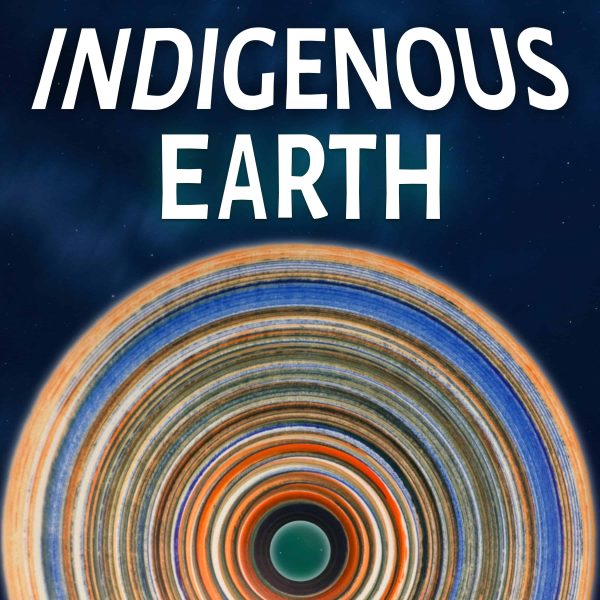
Indigenous Earth Community Podcast
- Episodes
- 60
- Released
- irregularly
- Latest episode
- Nov 16, 2026
About the podcast
Journey alongside Indigenous conservation heroes from around the world, as they share ancient wisdom for our modern environmental crisis. This podcast bridges traditional ecological knowledge with practical steps to turn eco-anxiety into meaningful action. On Indigenous Earth you’re not just a listener; you’re an active participant in a transformative mission to become true stewards of our planet. Unlike typical sustainability content that overwhelms, these episodes leave listeners feeling calmer and grounded while providing accessible ways to reconnect with nature. Indigenous Earth delivers upbeat yet honest conversations that remind us we don’t just live on this Earth—we are this Earth.
Indigenous Earth Community Podcast is powered by Indigenous Earth INC, a 501(c)(3) nonprofit dedicated to sharing Indigenous knowledge through storytelling to inspire action for a thriving planet.
Episodes 60
Why Our Ancestors Want Us to Be Mushrooms (with Madison Murphy Barney)
What if the answers to our climate crisis aren’t something we need to invent, but something we need to remember? Madison Murphy Barney is an author, doula, and public health storyteller with roots in Wind River …
Show notes
What if the answers to our climate crisis aren’t something we need to invent, but something we need to remember?
Madison Murphy Barney is an author, doula, and public health storyteller with roots in Wind River Shoshone and California Hoopa. In her new book, Our Ancestors Want Us to Be Mushrooms, she turns to the fungal world as a guide for living in balance with each other and the planet.
We talk about why the mycelial network is far more than a “wood wide web,” why land thrives under Indigenous stewardship, and the one practice anyone can start today. You’ll also hear the mushroom music of Bionic and the Wires, artists who connect bionic arms to fungi so they can play music.
“When we notice, we start to love, and when we love, we protect.” Madison Murphy Barney
What We Learned:
- We don’t need to invent our way out of the climate crisis. Our ancestors already left us the blueprint.
- Fungi connect us more deeply than the internet. Billions of people live without internet access, but no one lives without fungi.
- Humans belong on this Earth. Land thrives where people live in reciprocity with it.
- A fallen tree becomes a home, then soil. We don’t need to burn broken systems down; we can compost them into something better.
- Cities are a chance to live like mushrooms: sharing, borrowing, and caring for neighbors.
- The most powerful practice is curiosity.
Chapters:
0:00 Introduction
1:34 Meet Madison Murphy Barney
4:52 Why mushrooms?
7:24 More than the “wood wide web”
13:40 Why Indigenous stewardship helps land thrive
20:54 Decomposition as a teacher
25:21 The practice of curiosityResources:
Get the book and support our youth workshops: https://bookshop.org/shop/IndigenousEarth
Connect with Madison: https://madisonmurphybarney.com/our-ancestors-want-us-to-be-mushrooms
Music by Bionic and the Wires, used with permission: https://youtu.be/NbP2DgDp890 and https://www.bionicandthewires.comNewsletter: https://www.indigenousearth.org/newsletter/
Topics: Our Ancestors Want Us to Be Mushrooms, Madison Murphy Barney, mushrooms, fungi, mycelium, ancestral wisdom, Indigenous stewardship, interconnectedness, curiosity, Bionic and the Wires, nature and technology
Did Columbus Really Discover America? The Taíno Story and the Fight for Florida’s Sacred Places (with Robert Rosa)
What does it mean to “discover” a place where people have lived for thousands of years? And who is protecting the sacred places and waters that are still here today? Robert Rosa is a Taíno leader and a member …
Show notes
What does it mean to “discover” a place where people have lived for thousands of years? And who is protecting the sacred places and waters that are still here today?
Robert Rosa is a Taíno leader and a member of the American Indian Movement who has spent years protecting Native burial sites and wild places across Florida. On this Indigenous Peoples’ Day, he takes us back to where the Taíno story begins: who they were, how they lived, how they traded all the way to Florida, and why so many words we use every day came from them.
Then Robert explains why calling 1492 a “discovery” is so offensive, and corrects a myth about the Taíno that has been told for hundreds of years. Finally, we come home to Florida. Robert talks about his work using federal law to help the Seminole and Miccosukee protect burial sites from developers, and why Shingle Creek, the headwaters of the Everglades, matters for every person who drinks Florida’s water.
This episode is for students, teachers, and anyone who wants the real story behind Columbus Day, and practical ways to protect the land where they live.
The history behind the holiday
Columbus’s arrival in 1492 began one of the largest losses of human life in history. Through violence, forced labor in mines and fields, and new diseases, the Native population of the Caribbean fell by about 90 percent within a few generations. Spanish priest Bartolomé de las Casas, whom Robert mentions in this episode, wrote eyewitness accounts of the cruelty he saw. Still, the Taíno were never fully erased. As Robert shares, Taíno women carried the language, stories, and identity forward, and their descendants live on today in Puerto Rico, Cuba, the Dominican Republic, and across the diaspora.What You’ll Discover:
- Where the Taíno came from, and the other Caribbean peoples who lived alongside them
- Why Taíno society was matriarchal, and how women kept the culture alive
How the Taíno traded with Florida, using ocean currents historians said they couldn’t navigate - Why the Taíno settled disputes with a ball game before going to war
Taíno words you already use: hurricane, canoe, manatee, hammock, and more - Why “you can’t discover something that’s been there for thousands of years”
- The myth that the Taíno thought the Spanish were gods, and what really happened
- How Robert uses NAGPRA to help Florida tribes protect burial sites and sacred objects
- Why building on Shingle Creek’s wetlands affects floods, sinkholes, springs, and drinking water
- How you can get involved, even if you’re not Native
Chapters:
0:00 Introduction
1:18 Where the Taíno came from
3:59 Daily life in a Taíno village
8:35 Taíno words we use every day
11:21 What “discovery” looked like from the beach
13:55 The biggest myth about the Taíno
15:12 Protecting sacred sites in Florida
17:47 Shingle Creek and the headwaters of the Everglades
22:04 Robert’s advice: how to get involvedResources:
Protect Florida’s land and water
Protect Shingle Creek: [https://protectshinglecreek.com/
Friends of Split Oak Forest (Save Split Oak): https://friendsofsplitoak.org
Friends of the Everglades, founded by Marjory Stoneman Douglas: https://www.everglades.org
Florida Springs Council, a statewide coalition of springs groups: https://www.floridaspringscouncil.org
Florida Springs Institute and their Springs 101 guide: https://floridasprings.orgLearn about sacred sites and Native rights
What is NAGPRA? The 1990 federal law that protects Native burials, funerary objects, and sacred items (National Park Service): https://www.nps.gov/subjects/archeology/napgra.htm
Taíno: Native Heritage and Identity in the Caribbean (Smithsonian): https://www.smithsonianmag.com/smithsonian-institution/culture-once-believed-extinct-flourishing-180970101For teachers
Native Knowledge 360°, free lessons from the Smithsonian’s National Museum of the American Indian: https://americanindian.si.edu/nk360
The Taíno People of Boriken, a free classroom reading (Teaching for Change): https://www.teachingforchange.org/wp-content/uploads/2018/10/Taino-Lesson-Reading1-2.pdf
Young Friends of the Everglades and their Educators Exploration Kit: https://www.everglades.org
This podcast was reviewed by Common Sense Media: https://www.commonsensemedia.org/podcast-reviews/indigenous-earth-community-podcastClassroom discussion questions:
- Robert says you can’t discover something that’s been there for thousands of years. What word would you use instead?
- Which Taíno words did you already know? Why do you think they survived?
- Why do you think the Taíno story was left out of so many history books?
- Where does the rain at your school go? Trace it as far as you can.
A note for teachers and parents: this episode discusses colonization and genocide in age appropriate terms, suitable for middle school and up.
📚 Support This Podcast & Indigenous Youth Workshops: When you purchase books through our Indigenous Earth Bookshop, you directly support independent Indigenous booksellers AND fund our hands on workshops for Native youth worldwide. Every book purchase helps preserve traditional ecological knowledge for the next generation. 🌱
Connect with Indigenous Earth:
Newsletter: https://www.indigenousearth.org/newsletter/Topics: Taíno, Indigenous Peoples’ Day, Columbus Day, Columbus myth, Caribbean history, Boriken, Puerto Rico, Taíno words, NAGPRA, sacred sites, Tequesta, Seminole, Miccosukee, Shingle Creek, Everglades, Split Oak Forest, Florida springs, Floridan aquifer, wetlands, teaching resources, Native American Heritage Month
Cindy Wagner: An Alaska Elder on the Unuk River, the Savior Fish, and the dangerous of the mines upstream
What happens when the first fresh fish your people have eaten for ten thousand years stops coming up the river? And what do you lose when an entire generation grows up never tasting it? Cindy Wagner has lived …
Show notes
What happens when the first fresh fish your people have eaten for ten thousand years stops coming up the river? And what do you lose when an entire generation grows up never tasting it?
Cindy Wagner has lived on the Annette Island Reserve in Metlakatla, Alaska for 56 years, the only Native reserve in the state and the only one in the world sitting entirely on an island. Her husband Louie is known as the hooligan man. She is the Grease Lady. Together they have spent their lives on the Unuk River, teaching children, grandchildren and now great grandchildren how to live off the land.
In this episode, Cindy explains what the hooligan is and why people once called it the savior fish, lining up four blocks deep for eight hours to get a single bucket. She describes finding oil drums and pallets thirty miles up a river that only Canada sits above, watching two natural lakes fill with mine tailings until blood red water spills over the top with every rainfall, and losing the marbled blue glacier water where the best trout used to hold. She walks through what it takes to render pure hooligan grease, why the Unuk is the only river in Alaska closed to the very people whose inherent right it is to fish it, and what is coming next: a proposed tailings dam 780 feet tall, five thousand workers, fifty five years.
This is for anyone who wants to understand what a mine upstream actually does to the people downstream, told by someone who has watched it happen for a lifetime.
What You'll Discover:
- Why the hooligan is called the savior fish, and what makes it different from salmon
- How hooligan send scouts ahead, and why Cindy believes they can never go extinct
- What abandoned mine tailings look like twenty years later in a temperate rainforest that gets 14 feet of rain a year
- How to render hooligan grease, and why it is treated like truffles
- What one five gallon bucket per household per year means for a community that is 90 percent Native
- Why a closed fishery costs more than food, and what happens when a generation never learns the work
- The connection Cindy draws between mining, the herring collapse, and the last wild salmon runs on the continent
- What she says the Canadian government has to do, and what listeners anywhere can do
Resources:
- Southeast Alaska Indigenous Transboundary Commission (SEITC): https://www.seitc.org/
- B.C. mining in the Unuk watershed, from Salmon Beyond Borders: https://salmonbeyondborders.org/bc-mining-unuk
- ICT reporting on the transboundary mining boom, featuring Cindy and Louie Wagner: https://ictnews.org/news/modern-day-gold-rush-mining-projects-opposed-by-alaska-tribes-get-boost-from-canada-british-columbia-and-first-nation/
📚 Support This Podcast & Indigenous Youth Workshops: When you purchase books through our Indigenous Earth Bookshop, you directly support independent Indigenous booksellers AND fund our hands on workshops for Native youth worldwide. Every book purchase helps preserve traditional ecological knowledge for the next generation. 🌱
Connect with Indigenous Earth:
- Newsletter: https://www.indigenousearth.org/newsletter/
Topics: Unuk River, hooligan, eulachon, ooligan grease, Metlakatla, Annette Island Reserve, Southeast Alaska, transboundary mining, tailings dams, wild salmon, subsistence rights, Indigenous food sovereignty, SEITC, water protection
Chaco Canyon Uranium Mining: How a Sacred Site Is Being Fought For (with Sumaya Quitugua)
What happens when a place your people have prayed at for a thousand years becomes a uranium mining site? And what can one voice actually do to stop it? Sumaya Quitugua, a young woman from the Acoma Pueblo in …
Show notes
What happens when a place your people have prayed at for a thousand years becomes a uranium mining site? And what can one voice actually do to stop it?
Sumaya Quitugua, a young woman from the Acoma Pueblo in New Mexico and Chamorro from Guam, grew up at the Sky City, in traditional adobe homes on top of a mesa, where her grandfather taught her that we don't own the land or the water. We protect them.
In this episode, Sumaya breaks down the fight for Chaco Canyon, a place protected by President Theodore Roosevelt over a century ago and named a UNESCO World Heritage Site, now targeted for uranium mining right up against its borders. She explains what's really at stake, what mining does to land and water that can never be undone, and how a seven-day public comment window turned into a hundred and fifty days because people refused to stay silent.
This is for anyone who's ever wondered whether speaking up actually changes anything, and anyone who wants to understand sacred land from the people who carry it.
What You'll Discover:
- What actually makes a place sacred, and why it's a feeling, not a spot on a map
- Why the "buffer zone" around Chaco matters as much as the site itself
- What uranium mining really does to water, air, and the people who live there
- How seven days of public comment became a hundred and fifty
- How to visit a sacred site with respect, including what to do and what to say
- Why choosing not to learn is choosing to be part of the problem
Resources:
- Follow Sumaya Quitugua on Instagram
- Learn about the threat to Chaco Culture National Historical Park (NPCA)
- Discover Chaco Canyon's dark skies, stargazing, and archaeology (National Geographic)
📚 Support This Podcast & Indigenous Youth Workshops: When you purchase books through our Indigenous Earth Bookshop, you directly support independent Indigenous booksellers AND fund our hands-on workshops for Native youth worldwide. Every book purchase helps preserve traditional ecological knowledge for the next generation. 🌱
Connect with Indigenous Earth:
- Newsletter: https://www.indigenousearth.org/newsletter/
Topics: Chaco Canyon, uranium mining, sacred sites, Acoma Pueblo, Indigenous land rights, public lands, water protection, UNESCO World Heritage Site, environmental justice, tribal sovereignty, public comment, land conservation
PHOTOGRAPH COURTESY NATIONAL PARK SERVICE🎧 Soundscape | Amazon After Dark: A Night in Kichwa Territory, Ecuador
Hey friends, it's been a while. Like many of you, we've been navigating a lot on the environmental and overall news front lately, so today I'm doing something a little different. I think back to those early …
Show notes
Hey friends, it's been a while. Like many of you, we've been navigating a lot on the environmental and overall news front lately, so today I'm doing something a little different.
I think back to those early days kayaking with friends here in Florida, searching rivers for trash. Some days we'd arrive and the water was pristine. We almost felt bad, like we had nothing to do. My mentor smiled and said, "just enjoy it, sometimes we need to remember why we do what we do."
That's what this episode is. No interviews, no talking. Just the sounds of the living world.
This nocturnal soundscape was recorded deep inside Kichwa tribal territory in the Ecuadorian Amazon by artist Rafael Diogo. Bats cutting through the dark, insects surging into something almost electric, a monkey rustling unseen branches, a distant howl, and underneath it all a stream threading through the night.
A beautiful reminder of what we're working for.
Big thank you to Rafael and our friends at Earth.fm — a nonprofit repository of over 1,200 pure, immersive natural soundscapes from around the world, recorded by the best artists. Based on empirical evidence as well as numerousrecent studies from all over the world, listening to natural soundscapes has a great positive impact on our wellbeing, and potentially on our respect for nature. However, these soundscapes are increasingly scarce as we humans continue to destroy the natural ecosystems which produce them. That's where Earth.fm comes in: as well as sharing a new natural soundscape every day, they're actively helping the community go out in nature more often and discover a deeper, more direct connection with the wonders around us. Visit www.earth.fm and download their app on Android or Apple devices.
Stay tuned! exciting interviews are lined up. And if you have questions or just want to say hello, it genuinely means a lot to hear from you. (send me some good vibes!)
Find me on Instagram @frankoscarweaver or email [email protected]
aguye!
Why Native People Were the First Scientists (And What That Means Today) with Laylalanai Gocobachi
Feeling overwhelmed by climate change and disconnected from nature? What if the solutions we need have been here all along, in the wisdom our ancestors knew, in the plants growing in our backyards? Laylalanai …
Show notes
Feeling overwhelmed by climate change and disconnected from nature? What if the solutions we need have been here all along, in the wisdom our ancestors knew, in the plants growing in our backyards?
Laylalanai Gocobachi, a Pascua Yaqui woman and Unity Earth Ambassador, learned this from her grandfather who sent her into the Arizona desert with grocery bags to "shop" for dinner. He taught her the desert is like our pantry, and that Native people were the first scientists.
Today, Laylalanai shows us how to bridge traditional wisdom and modern science. You'll learn how she combines climate data with elder observations about disappearing plants, and why the Earth is constantly speaking to us, through snakes climbing trees before floods, through plants receding, we just need to remember how to listen.
This is for anyone who's felt like one person can't make a difference, anyone searching for hope in these challenging times.
What You'll Discover:
- How to start listening to what the Earth is trying to tell you (practical signs to observe)
- Why "water doesn't separate us, it connects us"—and what that means for your work
- The exact process for braiding Indigenous knowledge with Western science
- How to overcome imposter syndrome when you're the only one in the room
- Why showing up matters even when you doubt yourself
- Simple ways to reconnect with nature and find knowledge keepers in your community
Resources:
- Follow Laylalanai Gocobachi on LinkedIn and Instagram
- Watch for her documentary on Planet Forward about traditional crops across the border
📚 Support This Podcast & Indigenous Youth Workshops: When you purchase books through our Indigenous Earth Bookshop, you directly support independent Indigenous booksellers AND fund our hands-on workshops for Native youth worldwide. Every book purchase helps preserve traditional ecological knowledge for the next generation. 🌱
Connect with Indigenous Earth:
- Workshops: https://www.indigenousearth.org/p/indigenous-earth-workshops/
- Newsletter: https://www.indigenousearth.org/newsletter/
Music Credit: "Pascola Dance - Mamna Cialim (Green Spinach)" performed by Musicians and Singers from Old Pascua Village, Tucson and Rio Yaqui, Sonora from the album Yaqui Ritual and Festive Music (Canyon Records, 2002). Published by DMG Arizona Music/Public Domain.
Topics: Traditional ecological knowledge, intergenerational learning, Yaqui culture, climate assessment, Indigenous youth leadership, desert wisdom, water sovereignty, environmental science, knowledge braiding, listening to Earth
How to Start an Environmental Career (Without Losing Your Values) with Andrea Everett
Want a green career but worried you'll have to compromise your values? Andrea Everett from the Pueblo of Ysleta del Sur shows there's another way. Andrea shares how she turned her midnight business decision …
Show notes
Want a green career but worried you'll have to compromise your values? Andrea Everett from the Pueblo of Ysleta del Sur shows there's another way.
Andrea shares how she turned her midnight business decision into MatriARC PROJECTion LLC, a drone and GIS mapping company that serves communities instead of extracting from them. She reveals why she turns down high-paying work that doesn't align with her Pueblo values, and how that actually attracts better opportunities.
You'll also hear the inspiring story of how a group of Pueblo women came together after Feast Day to reclaim their traditional farming roles. They secured land, built two hoop houses, and are now growing ancestral seeds: Hopi corn for ceremonies, Pueblo chiles, tobacco, and marigolds for Day of the Dead. Healing in community while creating a foundation for the next generation.
What You'll Discover:
- How to break into GIS and drone careers
- Why staying true to your values attracts the right work
- Starting a business with just faith and a grant that showed up unexpectedly
- How youth learned to fly drones while connecting with sacred sites and elders
- Traditional farming techniques: three sisters planting, waffle gardens, soil preparation
- Why healing happens in community, not isolation
- The power of starting small, even a few plants in pots
Resources:
- Books: Braiding Sweetgrass, Radical Cartographies, Muskogee Tools of Futurity
- Video: Native Cartography - Challenging Western Notions of Place
Connect:
https://borderlore.org/a-sacred-rivers-sovereignty/
Topics: Green careers, GIS mapping, drone jobs, Indigenous agriculture, seed sovereignty, rematriation, traditional farming, values-based business, career advice for Native youth
How to Connect with Your Ancestors (And Why)
Environmentalist face devastating burnout rates - 96% experience high or very high exhaustion levels from working on environmental issues. BIPOC communities bear this burden even more heavily, standing on the …
Show notes
Environmentalist face devastating burnout rates - 96% experience high or very high exhaustion levels from working on environmental issues. BIPOC communities bear this burden even more heavily, standing on the frontlines of climate destruction.
For this Earth Warrior Challenge we are looking on how Indigenous wisdom offers a powerful antidote: connecting with your environmental ancestors.
What You'll Experience:
- The exercise from Dr. Sue Bell Chiblow's Indigenous science class
- Why connecting with environmental guardians in your lineage sustains planet work across generations
- Why this practice transforms climate anxiety into ancestral strength
The Connection Process:
- Identify family members who shaped your environmental calling - the bird watcher, the hiker, the gardener
- Interview relatives who knew them if they've passed on
- Learn their names and stories (names hold power)
- Honor them through daily practices and sacred space
- Spend time with them, experience nature together
Resources Referenced:
- NPR Article: "How to make an ancestral altar: A cross-cultural guide"
- Climate Burnout Research Report (96% statistic)
Special Thanks:
- Frank's mother for sharing the water diviner grandfather story
- My awesome cousin Joenna for the English translation
- Dr. Susan Bell Chiblow for the Indigenous wisdom classroom practice
Connect with Indigenous Earth:
Topics: Climate burnout, ancestral connection, environmental activism sustainability, Indigenous wisdom practices, water divining, intergenerational environmental calling, BIPOC climate trauma, spiritual ecology, activist resilience
How to Learn Indigenous Knowledge the Right Way (Dr. Susan (Sue) Chiblow)
Join us as we return with Professor Susan (Sue) Chiblow, one of our most beloved guests whose wisdom bridges Indigenous science with academic research. As an Ojibwe professor and International Joint Commission …
Show notes
Join us as we return with Professor Susan (Sue) Chiblow, one of our most beloved guests whose wisdom bridges Indigenous science with academic research. As an Ojibwe professor and International Joint Commission commissioner, Sue reveals the right way to learn from Indigenous knowledge—without appropriation or harm.
Discover how to respectfully access traditional wisdom, trace your own ancestral stories, and apply Indigenous practices to solve environmental problems in your own community.
What You'll Experience:
- Sue's groundbreaking work fighting harmful herbicides like glyphosate in Canadian forests 🌲
- Why Indigenous peoples aren't the only ones responsible for fixing environmental problems—it's all of us
- The powerful classroom exercise that helps students understand their own displacement stories
- How maple syrup, potatoes, and canoes are Indigenous innovations the world still uses today 🍁
- Traditional water ceremonies that connect us to our universal origin story
- The difference between saving the planet (impossible) and saving ourselves (essential)
- Practical ways to honor the Indigenous peoples of the land you currently live on
- Why trees teach us better coexistence than most humans ever manage
Essential Reading Mentioned:
- "Native Science: Natural Laws of Interdependence" by Gregory Cajete
- "Braiding Sweetgrass" by Robin Wall Kimmerer
- "Traditional Ecological Knowledge" (multiple authors)
- "Water Voices from Around the World" (2001)
📚 Support This Podcast & Indigenous Youth Workshops: When you purchase the books Sue recommends through our Indigenous Earth Bookshop, you directly support independent Indigenous booksellers AND fund our hands-on workshops for Native youth worldwide. Every book purchase helps preserve traditional ecological knowledge for the next generation. 🌱
🎬 Watch Recommended: "The Americas Before Christopher Columbus" series on APTN - 10 episodes showing the incredible innovations of Indigenous peoples across the continent
Connect with Indigenous Earth:
- Workshops: https://www.indigenousearth.org/p/indigenous-earth-workshops/
- Newsletter: https://www.indigenousearth.org/newsletter/
"We're not trying to save the planet—the earth will be fine. We're trying to save ourselves and learn to be better humans." - Sue
Topics: Water protection, Indigenous science, chemical contamination, glyphosate, traditional ecological knowledge, displacement trauma, academic-Indigenous knowledge bridge, Ojibwe wisdom, environmental justice, intergenerational healing
Ancient Hawaiian Practices to Transform Your Daily Connection with Nature (with Molly Mamaril)
Join us as we journey to the Hawaiian Islands with Molly Mamaril, a powerful voice bridging Hawaiian wisdom with modern environmental and economic solutions. Born in Hawaii but raised in Minnesota's Hawaiian …
Show notes
Join us as we journey to the Hawaiian Islands with Molly Mamaril, a powerful voice bridging Hawaiian wisdom with modern environmental and economic solutions. Born in Hawaii but raised in Minnesota's Hawaiian diaspora, Molly shares her transformative journey back to her ancestral home and reveals practical ways to apply the sacred values of aloha in your own life and community.
Discover how you can support local economies, restore damaged environments, and build stronger communities using time-tested Hawaiian principles of reciprocity and abundance. Learn why changing where you spend your money can be one of the most powerful actions you can take today.
What You'll Experience:- Simple daily practices inspired by aloha values that strengthen relationships and reduce stress
- Molly's personal journey from the Midwest back to her Hawaiian roots through hula dance 💃
- How one community removed 3 million pounds of invasive seaweed to restore an entire bay ecosystem 🌊
- Why supporting local farmers and businesses creates lasting change in your community
- Traditional Hawaiian economic models that prioritized abundance over scarcity
- The profound difference between ancient and modern hula as cultural storytelling
- Practical ways to honor your local environment and cultural heritage
🎧 Don't Miss Frank's Episode on Heartbeat Narratives!
Want to hear the other side of this incredible conversation? Frank was Molly's guest on Heartbeat Narratives where they dive deep into his passion for the sacred Ava drink, mind-bending sci-fi stories, the magic of his childhood nickname "The Storyteller," and so much more! It's a completely different conversation that reveals Frank's most personal stories and the experiences that shaped him into the storyteller he is today. Listen to Frank on Heartbeat Narratives - you'll discover sides of him you've never heard before!
Connect with Molly Mamaril:
- Above the Sides Podcast: Stories of how we weave the values of aloha into our personal and professional lives - Listen Here
- Heartbeat Narratives Podcast: Stories of joy about the people, places and passions we love - Listen Here
📚 Support This Podcast & Native Youth Workshops: When you purchase books on Indigenous wisdom, and environmental restoration through Bookshop.org, a portion of your purchase directly supports this podcast and our workshops for Native youth across the globe. Your book purchases help us continue sharing Indigenous stories and empowering the next generation of Indigenous leaders. 🌱
Stay Connected:
- Newsletter: https://www.indigenousearth.org/newsletter/
"If we speak through our purchases, that is one really tangible thing that we can do to make a difference." - Molly Mamaril
Topics: Hawaiian culture, Indigenous reconnection, hula dance, ocean restoration, sustainable economics, aloha values, environmental conservation, cultural storytelling, diaspora experience, community resilience 🌺
How to Experience Sacred Healing Using Ancient Bribri Wisdom" (Costa Rica Indigenous Tour)
Join us as we travel to the Caribbean rainforests of Costa Rica with Robert Mora, a proud Bribri community member and cultural guide. In this heartfelt conversation, Robert shares how the Bribri maintain their …
Show notes
Join us as we travel to the Caribbean rainforests of Costa Rica with Robert Mora, a proud Bribri community member and cultural guide. In this heartfelt conversation, Robert shares how the Bribri maintain their profound connection with water, healing traditions, and community rituals. Discover the spiritual significance of rivers and waterfalls, the sacred role of cacao ceremonies, and how shamanic practices provide healing for visitors from around the world. …5 Ways to Honor Our Green Spaces with Watson Whitford
5 Ways to Honor Our Green Spaces with Watson Whitford Episode Summary In this powerful episode, Frank Oscar Weaver is joined by Watson Whitford (Wapanatak), co-president of UNITY and member of the Chippewa Cree …
Show notes
5 Ways to Honor Our Green Spaces with Watson Whitford Episode Summary In this powerful episode, Frank Oscar Weaver is joined by Watson Whitford (Wapanatak), co-president of UNITY and member of the Chippewa Cree tribe and Navajo Nation. Together, they explore five essential ways to be a mindful visitor in parks and natural places, weaving together traditional wisdom and practical guidance for honoring our green spaces. …How to Farm using Traditional Seeds (with Alastair Bitsóí)
In this powerful episode, we meet Alastair Lee Bitsóí from Naschitti, Navajo Nation, New Mexico, a water clan storyteller whose journey weaves together traditional Indigenous wisdom and modern advocacy. From …
Show notes
In this powerful episode, we meet Alastair Lee Bitsóí from Naschitti, Navajo Nation, New Mexico, a water clan storyteller whose journey weaves together traditional Indigenous wisdom and modern advocacy. From the challenges of water access affecting one-third of Navajo households to the unexpected healing power of an ancient Four Corners potato, Alastair shares how returning to the land has become a path toward personal and community healing. …How to Get Indigenous Books into Native Youth Hands (Anagali Duncan)
We’re joined by Anagali Duncan, founder of the nonprofit Seven Ravens, who shares their inspiring mission to bring books written by Indigenous authors to Native youth. The Indigenous Book Drop initiative is …
Show notes
We’re joined by Anagali Duncan, founder of the nonprofit Seven Ravens, who shares their inspiring mission to bring books written by Indigenous authors to Native youth. The Indigenous Book Drop initiative is about more than just books—it’s about empowerment, representation, and fostering a deeper connection to culture and heritage. …How to Defend Sacred Lands Using Ancestral Ashanti Wisdom (Nana Kwesi Osei Bonsu)
In this episode, we’re joined by Nana Kwesi Osei Bonsu, a descendant of the Ashanti Empire, who shares his remarkable journey of cultural identity, ancestral heritage, and environmental advocacy. Growing up in …
Show notes
In this episode, we’re joined by Nana Kwesi Osei Bonsu, a descendant of the Ashanti Empire, who shares his remarkable journey of cultural identity, ancestral heritage, and environmental advocacy. Growing up in Ghana, Nana experienced a profound spiritual calling to lead his people and protect sacred lands. You can watch the podcast here: https://youtu.be/pZF3JtpQGvs?si=uCjn0gbvAfU6TK-M ✨ What You’ll Learn: • The power of ancestral wisdom and spiritual practices. …Indigenous Peoples’ Day: Defending the Earth and the Sacred
What if the answers to the climate crisis are here? In this special Indigenous Peoples’ Day episode, host Frank Oscar Weaver speaks with Indigenous leaders from across the world who are on the front lines of …
Show notes
What if the answers to the climate crisis are here? In this special Indigenous Peoples’ Day episode, host Frank Oscar Weaver speaks with Indigenous leaders from across the world who are on the front lines of the fight to protect their lands and our planet. Impirita, an Indigenous leader from Peru, shares the harsh reality her community faces as industrial mining contaminates rivers that have provided life and sustenance for generations. …How to Protect Living Rivers from Environmental Destruction (Impirita Samani)
What if rivers were more than just water—they were living beings with spirit, memory, and life? In this episode, Frank Oscar Weaver speaks with Impirita Samani, an Indigenous Ashaninka leader from Peru, about …
Show notes
What if rivers were more than just water—they were living beings with spirit, memory, and life?
In this episode, Frank Oscar Weaver speaks with Impirita Samani, an Indigenous Ashaninka leader from Peru, about her people's deep connection to rivers and the devastating impact of illegal mining.
"We treat the river as a living person, even though it may seem invisible, it is always present." – Impirita Samani
Impirita shares how environmental destruction not only pollutes their sacred waters but displaces Indigenous communities, severing cultural and spiritual ties to the land.
Learn how we can reconnect with rivers, not as guardians, but as children of the Earth, and take steps to protect these vital sources of life.
Impirita is sharing the beautiful Ikaro Ashaninka song “TSIROWANKO”, which pays homage to the magical bird Tsirotsi (Cacicus Cela). This bird is a spiritual guide in the Amazon, imitating the songs of the jungle and carrying messages from PAWA, the creator of the universe.
This song symbolizes the resilience of Ashaninka culture, the power of the feminine, and the deep bond with the natural world. Just as “TSIROWANKO” leads us to the heart of the Amazon, our episode delves into the threats Indigenous communities face from environmental destruction and cultural displacement, and how we can unite to protect the sacred rivers and lands.
🌟 Take Action:
- Support Impirita Samani’s work: Connect here.
- Join local river cleanups in Central Florida: Central Florida Recon Waterway Clean ups .
- Contribute to Native youth mental health initiatives: Donate here.
Credits:
Photo by Neil Giardino
Music By: Impirita Samani
Illegal gold mining thrives in Amazon, miners attack indigenous people | WION Climate Tracker | News
🎧 Listen now to discover how you can help protect rivers and support Indigenous communities: Indigenous Earth Podcast.
Chapters
Loading chapters …
Giving Back to the Earth: The Significance of Pachamama Day
We explore the tradition of Pachamama Day, celebrated on August 1st in Latin America. This day, originating from the Andean communities of South America, is dedicated to honoring Pachamama, the goddess of …
Show notes
We explore the tradition of Pachamama Day, celebrated on August 1st in Latin America. This day, originating from the Andean communities of South America, is dedicated to honoring Pachamama, the goddess of fertility and the earth. Growing up, Pachamama Day was one of my favorite holidays, a time to slow down and enjoy traditional drinks like Yerba mate drink of terere made with seven medicinal herbs and Carrulim, a Paraguayan beverage made from Caña, Ruda, and Limón. …Tangaroa Ara Rau: Māori Indigenous Wisdom for Ocean Governance
🌊 We have the honor of speaking with Beth Tupara-Katene, a dedicated champion of Māori rights and interests within the marine domain. Beth shares her profound connection to the ocean and the innovative Tangaroa …
Show notes
🌊 We have the honor of speaking with Beth Tupara-Katene, a dedicated champion of Māori rights and interests within the marine domain. Beth shares her profound connection to the ocean and the innovative Tangaroa Ararau Research Project, which aims to create an ocean-centric governance regime rooted in Māori customs and practices. …How Listening to Birds Can Help Save Them
In this episode of Indigenous Earth, we delve into the powerful story of the Kauaʻi ʻōʻō, the last bird of its kind, whose final song is a stark reminder of the silence left behind by extinction. Join Frank …
Show notes
In this episode of Indigenous Earth, we delve into the powerful story of the Kauaʻi ʻōʻō, the last bird of its kind, whose final song is a stark reminder of the silence left behind by extinction. Join Frank Oscar Weaver as he shares his journey into birdwatching during the pandemic and an inspiring van life adventure that brought him closer to birds and conservation.
Learn more about Global Big Day, where bird enthusiasts worldwide use the eBird app to record, cherish, and protect the melodies that make our planet vibrant. Discover how you, too, can help safeguard these beautiful songs by participating and collecting the melodies of birds around you.
Gain insights, find your passion, and be part of a global movement that strives to preserve the soundscape of our precious planet.
Download the eBird app, and visit Cornell Lab's Global Big Day page for more information.
Learn more about the Kauaʻi ʻōʻō bird.
🌏
Connect with us: Indigenous Earth
Hosted by Frank Oscar Weaver
Please help amplify Indigenous voices by sharing this episode with a friend! 💚
We would love to hear from you!
https://www.indigenousearth.org/contact/
✌️
Chapters
Loading chapters …
Earth Warrior Challenge: Mapping Where Our Water Comes From
Join us on a remarkable journey, as we launch our first Earth Warrior challenge, 'Mapping Where Our Water Comes From.' This challenge isn't just about water; it's about exploring your personal connection with …
Show notes
Join us on a remarkable journey, as we launch our first Earth Warrior challenge, 'Mapping Where Our Water Comes From.' This challenge isn't just about water; it's about exploring your personal connection with one of our planet's most essential resources—water. Embark on an adventure that will lead you to uncover the hidden pathways of water, tracing its incredible journey from your tap back to its source in the heart of nature. …Becoming Earth’s Guardian: Learn, Connect, and Champion Nature
Let's hear about the mysterious Florida Bigfoot, believed to be the revered guardian of Florida's wildlife. Journey with us deeper, as we unravel ways to truly honor and connect with Mother Earth. Beginning by …
Show notes
Let's hear about the mysterious Florida Bigfoot, believed to be the revered guardian of Florida's wildlife. Journey with us deeper, as we unravel ways to truly honor and connect with Mother Earth. Beginning by paying homage to the ancestral lands under our feet and appreciating the people they've seen. Grasp the depth of wisdom urging us to not just give back what we receive from nature but to recognize the immense energy she sacrifices for us. …From Mountain Springs to Classroom Dreams: Anagali’s ᎠᎾᎦᎵ ᏛᎩ Journey protecting water and championing native students
Ever found yourself scrolling through Instagram and suddenly confronted by images of devastating forest fires, unprecedented hurricanes, and record-breaking heatwaves? Or maybe you found yourself in the front …
Show notes
Ever found yourself scrolling through Instagram and suddenly confronted by images of devastating forest fires, unprecedented hurricanes, and record-breaking heatwaves? Or maybe you found yourself in the front lines of climate change? With 80% of the global population experiencing the hottest July ever recorded, it's natural to ask: Can anything be done to combat this escalating crisis? In the midst of such chaos, a beacon of hope emerges. …🌿 Fashions of the Forest: Indigenous Sustainable Design with Jm from DAHON FASHION
Let's meet Jm (him/her) from the Tboli people of the Philippines, a fashion designer using organic materials found in nature to craft stunning, sustainable fashion pieces. Jm's passion extends beyond just …
Show notes
Let's meet Jm (him/her) from the Tboli people of the Philippines, a fashion designer using organic materials found in nature to craft stunning, sustainable fashion pieces. Jm's passion extends beyond just fashion; she aspires to inspire the next generation of environmental leaders through his work. The conversations reveal her journey from a child dreaming of fashion design to his innovative approach to sustainable fashion today. …Indigenous Knowledge Meets Western Science with Susan (Sue) Bell Chiblow
🎤 Indigenous Knowledge Meets Western Science with Susan (Sue) Bell Chiblow 🌳In this inspiring and thought-provoking episode, we're joined by Susan (Sue) Chiblow, an assistant professor at the University of …
Show notes
🎤 Indigenous Knowledge Meets Western Science with Susan (Sue) Bell Chiblow 🌳In this inspiring and thought-provoking episode, we're joined by Susan (Sue) Chiblow, an assistant professor at the University of Guelph in their new Bachelor's of Science in Indigenous Knowledge program. Susan shares her unique journey growing up on a reservation and how her deep connection to nature and traditional indigenous practices shaped her life and career. …Using Music to Fight Plastic Pollution with Togbe Ghana
🎤 Using Music to Fight Plastic Pollution with Togbe Ghana Togbe Ghana is an Ewe activist, musician and entrepreneur on a mission to beat plastic pollution in Ghana. He founded Let's Go Clean the Beach Ghana and …
Show notes
🎤 Using Music to Fight Plastic Pollution with Togbe Ghana Togbe Ghana is an Ewe activist, musician and entrepreneur on a mission to beat plastic pollution in Ghana. He founded Let's Go Clean the Beach Ghana and uses his music to spread awareness about the harm of plastic waste on our planet. …A Blessing from a Nahuatl Medicine Man and a Special New Year’s Message
Hello! I want to wish you a Happy New Year! As we start this new spin around the sun, I wanted to share some updates with you, and most importantly, thank you for being a part of our journey. On a recent trip …
Show notes
Hello! I want to wish you a Happy New Year! As we start this new spin around the sun, I wanted to share some updates with you, and most importantly, thank you for being a part of our journey. On a recent trip to the Yucatan Peninsula I meet a Nahuatl medicine man. When I told him about our podcast, he was so inspired that he wanted to send a special blessing to our audience. …Connection to the ocean is ancient and essential for all humans - Earth Knowledge with Native Like Water ’s Marc Chavez
🎤 Connection to the ocean is ancient and essential for all humans - Earth Knowledge with Native Like Water ’s Marc Chavez Mark Chavez, founder of Native Like Water, has been working to reconnect Indigenous …
Show notes
🎤 Connection to the ocean is ancient and essential for all humans - Earth Knowledge with Native Like Water ’s Marc Chavez Mark Chavez, founder of Native Like Water, has been working to reconnect Indigenous youth with the oceans for the last two decades. In this episode of Indigenous Earth, he discusses the importance of looking within and connecting with nature to thrive. …“Until the bear gets to tell the story, the hunter is always going to be the hero” Dr. Don Dexter, a Modoc storyteller on injustices of the Modoc War and inspiring the next generation
🎤 Episode 32 - Dr Don Dexter , Modoc member of the Klamath Tribes of Southern Oregon In this episode of Indigenous Earth Community Podcast, we have Dr. Don Dexter, a Modoc storyteller. He will share his …
Show notes
🎤 Episode 32 - Dr Don Dexter , Modoc member of the Klamath Tribes of Southern Oregon In this episode of Indigenous Earth Community Podcast, we have Dr. Don Dexter, a Modoc storyteller. He will share his experience in pursuing higher education as an Indigenous person. He talks about the challenges of being the only one in his community who did so, and how he hopes to inspire others to follow in his footsteps. …From the concrete jungle to the Amazonian forest: Rescuing Indigenous Sounds with Antonio Teoli
On this episode we talk to Antonio Teoli from the Amazonic about: The start of the Amazonic Project, where Antonio Teoli—an award-winning game composer and sound designer—lived in the Amazon for 4 years and …
Show notes
On this episode we talk to Antonio Teoli from the Amazonic about: The start of the Amazonic Project, where Antonio Teoli—an award-winning game composer and sound designer—lived in the Amazon for 4 years and fell in love with the culture and musicality and decided to rescue the instruments sounds to share with the world. …
These are the latest 40 of 60 episodes. You’ll find older episodes in the podcast’s feed.
Similar podcasts
More Education podcasts


Is this your podcast?
Confirm it with an entry in your feed: you get a code here, add it as podcast:txt to the channel of your feed, and we check it. Your podcast is then shown as “verified” on SoundNode.