

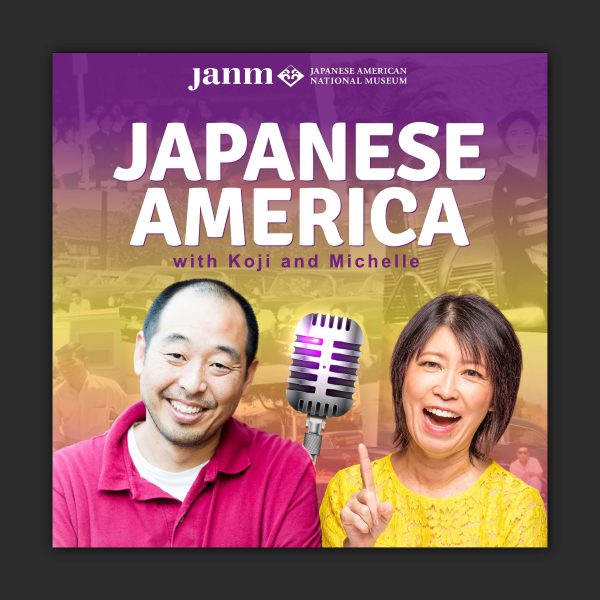
Japanese America
- Episodes
- 36
- Released
- monthly
- Latest episode
- Nov 12, 2026
About the podcast
Welcome to "Japanese America," where the Japanese American National Museum unveils captivating stories that add a Nikkei slant to the American narrative. In each episode, we explore the unique experiences, challenges, and triumphs of Japanese Americans, illuminating their rich contributions to the mosaic of American life. From historical milestones to contemporary perspectives, join us for an insightful journey through the curated collection of the Japanese American National Museum, showcasing the diverse tapestry of a community that has shaped the American story in extraordinary ways. Welcome to "Japanese America," where each story unfolds like a chapter in a living history book.
Contributors
Episodes 36
Japanese American Soldiers in WWII: The 442nd Regiment, Racism, and the Cost of Loyalty
Send us Fan MailDuring World War II, Japanese Americans were forced to prove their loyalty to a country that had imprisoned their families. For the men of the 442nd Regimental Combat Team, serving in the U.S …
Show notes
During World War II, Japanese Americans were forced to prove their loyalty to a country that had imprisoned their families. For the men of the 442nd Regimental Combat Team, serving in the U.S. military meant fighting for a country that didn't always consider them American.
In this episode of Japanese America, hosts Koji Steven Sakai and Michele Miyazaki explore the complicated history of Japanese American military service through firsthand accounts featured in the documentary Looking Like the Enemy.
We examine the racism Japanese American soldiers encountered during training in the segregated South, the impossible choices facing men whose families were held in incarceration camps, and the experiences of soldiers who found themselves fighting against people who could just as easily have been their friends or family.
From the legendary 442nd Regimental Combat Team and the rescue of the Lost Battalion to Japanese American soldiers serving in military intelligence in the Pacific, these stories reveal a history far more complicated than battlefield heroism alone.
We also hear from veterans who struggled to talk about the war after returning home and who questioned the way war is glorified while its human cost is forgotten.
How do we honor the courage of the 442nd while acknowledging the injustice these men endured? And what does it mean to prove your loyalty to a country that questions whether you belong?
WATCH THE DOCUMENTARY
Watch Looking Like the Enemy, the documentary featuring the firsthand accounts that inspired this episode.
🎬 Watch on YouTube: Looking Like the Enemy — Full Documentary
FOLLOW & SUPPORT US
Enjoyed the episode? Don't forget to rate and review Japanese America, subscribe wherever you listen to podcasts, and tell a friend!
Your support helps more people discover Japanese American history and the stories that deserve to be remembered.
CREDITS
Music: Jalen Blank
Written by: Koji Steven Sakai
Hosts: Michele Miyazaki and Koji Steven Sakai
Edited by: Koji Steven Sakai
Produced by: Koji Steven Sakai in conjunction with the Japanese American National MuseumThank you for listening to Japanese America. Until next time, take care, learn our history, and go for broke!
A New Audio Thriller from Koji Steven Sakai
Send us Fan MailA little something different from me! 🎙️Many of you know me through Japanese America, but I've also been working on a new narrative podcast with Milton: The Red Room.It's a fictional …
Show notes
A little something different from me! 🎙️
Many of you know me through Japanese America, but I've also been working on a new narrative podcast with Milton: The Red Room.
It's a fictional audio thriller that begins with an impossible 911 call and unravels into a mystery involving a missing teenager, disturbing secrets, and supernatural horror.
We've put a lot of work into bringing this story to life, and today is officially launch day! Huge thanks to Voyage Media for helping us get it out into the world.
If you enjoy audio dramas, mysteries, and thrillers, I'd love for you to check it out. And if you listen, please consider leaving a rating and review on Apple Podcasts. It really helps a new show find its audience!
🎧 Listen to The Red Room: https://podcasts.apple.com/us/podcast/the-red-room/id6820253320
Thanks for supporting the projects I create. ❤️
S3E09: Costumes and Consequences: Who Gets to Wear What?
Send us Fan MailEvery October, the leaves start falling, pumpkin spice hits the menus, and the internet gears up for the exact same annual screaming match: what is harmless fun, and what is straight-up cultural …
Show notes
Every October, the leaves start falling, pumpkin spice hits the menus, and the internet gears up for the exact same annual screaming match: what is harmless fun, and what is straight-up cultural appropriation?
In this special guest-free Halloween episode, co-hosts Koji Steven Sakai and Michelle MaliZaki bypass the tired internet finger-wagging to unpack the real cultural divide at the heart of this debate. Why do locals in Japan often love seeing tourists in kimono, while Asian Americans cringe when they see a polyester "geisha" robe at an American frat party?
Koji and Michelle conduct an autopsy on the classic aisles of Spirit Halloween—from funeral collars and kabuki stagehands to inflatable sumo suits—before stepping up as judge and jury in the Japanese America Court of Appeals to rule on anime cosplay, the Boston MFA "Kimono Wednesdays," and 2000s pop stars. Plus: a simple, three-point litmus test to keep your Halloween costume fun, respectful, and off call-out threads.
📸 Follow Along with the Costumes We Discussed
Want to see the exact photos, museum protests, and Spirit Halloween offenses we’re breaking down on the mic? Check out the visual references below:
- The "Sexy Geisha" [View Image]
- The "Ninja" Origin: [View Image Link]
- The Inflatable Sumo Suit: [Insert Link]
- The Boston MFA "Kimono Wednesdays": [View Archive / Photo Link]
- Pop Stars & Japonesque: [View Photos Link]
Follow & Support Us
Enjoyed the episode! Don't forget to rate, review, and tell a friend!
CREDITS
The music was created by Jalen Blank
Written by Koji Steven Sakai
Hosts: Michelle Malazaki and Koji Steven Sakai
Edited by Koji Steven Sakai
Produced by Koji Steven Sakai in conjunction with the Japanese American National Museum
S3E8: Unwanted Truth – John Okada and the Book That Wouldn't Stay Silent
Send us Fan MailWhen John Okada published No-No Boy in 1957, it was met by the Japanese American community with silence, discomfort, and outright rejection. Okada passed away in 1971 believing his novel was a …
Show notes
When John Okada published No-No Boy in 1957, it was met by the Japanese American community with silence, discomfort, and outright rejection. Okada passed away in 1971 believing his novel was a failure, unaware that it would later be rediscovered and hailed as a foundational classic of Asian American literature.
In this episode, Koji and Michelle are joined by author, filmmaker, and historian Frank Abe—author of the biography John Okada: The Life and Rediscovered Work of the Author of No-No Boy and director of the PBS documentary Conscience and the Constitution. Frank shares what it was like to accidentally become the cover model for the iconic 1976 CARP edition, how Okada drew inspiration from real-life draft resister Jim Akutsu, the critical historical differences between "No-No Boys" and draft resisters, and the tragic story behind Okada’s lost second novel. Plus, Frank discusses his current work adapting No-No Boy for the stage at the Seattle Repertory Theatre, followed by reflections on community trauma, healing, and post-war identity.
About Frank Abe
Frank Abe is a Sansei author, filmmaker, and journalist who has spent decades unearthing and preserving essential stories of Japanese American resistance and literary history. He wrote and directed the landmark PBS documentary Conscience and the Constitution, which chronicles the organized draft resistance at the Heart Mountain concentration camp.
Abe is the co-editor of the anthology John Okada: The Life and Rediscovered Work of the Author of No-No Boy (University of Washington Press) and The Literature of Japanese American Incarceration (Penguin Classics), as well as co-author of the graphic novel We Hereby Refuse: Japanese American Resistance to Wartime Incarceration. An early member of the Asian American Theater Workshop and collaborator with CARP (Combined Asian American Resources Project) in San Francisco, Abe famously served as the cover model for the groundbreaking 1976 republication of No-No Boy. He is currently developing a 21st-century stage adaptation of No-No Boy in collaboration with the Seattle Repertory Theatre.
To learn more about Frank’s background, browse his published books, and screen his documentary work, visit resisters.com/frank-abe-bio.
Follow & Support Us
Enjoyed the episode! Don't forget to rate, review, and tell a friend!
CREDITS
The music was created by Jalen Blank
Written by Koji Steven Sakai
Hosts: Michelle Malazaki and Koji Steven Sakai
Edited by Koji Steven Sakai
Produced by Koji Steven Sakai in conjunction with the Japanese American National Museum
S3E7: Kidnapped from Peru – The Naganuma Story & the Fight for JLA Redress
Send us Fan MailWelcome back to Japanese America! In Season 3, Episode 7, we step directly into one of the most monumental, legally complex, and deeply emotional chapters in our community’s history: the fight …
Show notes
Welcome back to Japanese America! In Season 3, Episode 7, we step directly into one of the most monumental, legally complex, and deeply emotional chapters in our community’s history: the fight for Japanese American Redress.
While most people think of Redress in terms of the landmark Civil Liberties Act of 1988 and the 120,000 Japanese Americans forced into domestic concentration camps, there is a massive parallel story of international kidnapping and legal limbo that took decades to bring to light. In this episode, we explore the extraordinary narrative of Japanese Latin American (JLA) deportees.
Through the rare, deeply personal oral histories of the three Naganuma Brothers—Jimmy, George Kazuharu, and Kazumu Julio Cesar—we trace a family’s journey from a thriving life in Callao, Peru, to being abducted by the U.S. military, fumigated with DDT upon arrival in New Orleans, and incarcerated at the Department of Justice internment camp in Crystal City, Texas.
We examine their multi-decade battle for basic legal status after being classified as "illegal entrants," and highlight the fierce advocacy of their sister Kiyo, whose bold confrontation with U.S. officials made her siblings some of the few Japanese Peruvians to receive the full $20,000 Redress settlement. Koji also shares his own personal connection to Crystal City, where his family was incarcerated after his grandfather gave up his citizenship, illustrating the diverse and irony-filled nature of that camp
Links & Resources Mentioned
Discover Nikkei & Densho Partnership: Listen to the full oral histories and read the complete transcripts for Jimmy Naganuma (https://ddr.densho.org/narrators/927/), George Naganuma (https://ddr.densho.org/narrators/928/), and Kazumu Julio Cesar Naganuma (https://ddr.densho.org/narrators/927/)
Learn More: Visit the Japanese American National Museum (JANM.org) for exhibitions, history, and community resources.
Follow & Support Us
Enjoyed the episode? Don't forget to rate, review, and tell a friend!
Credits
The music was created by Jalen Blank
Written by Koji Steven Sakai
Hosts: Michelle Malazaki and Koji Steven Sakai
Edited by Koji Steven Sakai
Produced by Koji Steven Sakai in conjunction with the Japanese American National Museum
S3E6: In the Dust Behind Barbed Wire — The Rhythm of FandangObon
Send us Fan MailWelcome back to Japanese America! In our annual July Obon Special, we explore how the traditional summer dance circle has expanded into a massive, multi-ethnic movement of resistance, collective …
Show notes
Welcome back to Japanese America! In our annual July Obon Special, we explore how the traditional summer dance circle has expanded into a massive, multi-ethnic movement of resistance, collective healing, and cross-cultural solidarity.
In this episode, we feature powerful clips from the new documentary Nobuko Miyamoto: A Song in Movement—a brilliant co-production between the Japanese American National Museum (JANM) and PBS. We trace the incredible journey of how an early 1980s request for the first English-language Obon song evolved into FandangObon: an iconic Los Angeles festival fusing Japanese Obon, Mexican Fandango, and West African drum traditions.
Along the way, Michelle shares her nostalgic memories of childhood Obon festivals in Japan (complete with a loophole for bad manners), while Koji stands firm on his lifelong stance that "gangsters don't dance"—unless, of course, a childhood crush was involved. We also dive into what our ancestors might think of Koji's legendary Minor League baseball dance moves.
What We Discuss in This Episode:
- The First English Obon Song: How Reverend Masao Kodani of Senshin Buddhist Temple challenged icon Nobuko Miyamoto to bridge a cultural gap in the early 1980s.
- Obon as Resistance: A poignant look at how Japanese Americans kept the Obon tradition alive behind barbed wire in WWII concentration camps, dancing in the camp dust as an act of survival.
- The Birth of FandangObon: The magical moment Nobuko stepped into a Mexican Fandango workshop, recognized the shared community structure of the participatory circle, and fused it with Obon.
- LA Cultural Synthesis: Artists Quetzal Flores and Martha Gonzalez reflect on what it means to find collective healing, beauty, and joy through intergenerational solidarity.
- Cultural Nuances & "The Rules": Michelle and Koji discuss the differences between Japanese and American street manners, the multi-layered nature of Japanese spirituality (Shinto shrines, Christmas, and Buddhist funerals), and sharing cross-cultural clothing like yukata and happi coats with respect.
- The Ultimate Dance-Off: Michelle challenges Koji's rhythm, prompting Koji to defend his skills using Minor League classics like "The Chicken Dance," "The Bus Driver," and "The Q-Tip".
Featured Voices & Film Credits
- Nobuko Miyamoto: Legendary activist, musician, dancer, and founder of Great Leap.
- Reverend Masao Kodani: Former head minister of Senshin Buddhist Temple.
- Quetzal Flores & Martha Gonzalez: Grammy Award-winning musicians and pillars of the LA Fandango/Son Jarocho movement.
- The Film: Audio clips featured in this episode are pulled directly from Nobuko Miyamoto: A Song in Movement, a co-production by the Japanese American National Museum (JANM) and PBS.
Links & Resources Mentioned
- Watch the Movie: Stream the full documentary right now on PBS: Nobuko Miyamoto: A Song in Movement on PBS. (https://www.pbs.org/video/nobuko-miyamoto-a-song-in-movement-gjvy7f/)
- Learn More: Visit the Japanese American National Museum for exhibitions, history, and community resources. (www.janm.org)
Follow & Support Us
Enjoyed the episode? Grab your uchiwa fan, head to your local temple, and step into the circle this summer! Don't forget to rate, review, and subscribe!
Season 3, Episode 5 (Special Uncut): Kouraku and the Taste of Home — Special Japanese Interview with Mamoru Tokuda-san (シーズン3・第5話 特別編: 後楽、故郷の味)
Send us Fan MailThis is the special, uncut companion episode to our main June 2026 feature on Kouraku, officially certified by the City of Los Angeles as America's oldest operating ramen shop. While our …
Show notes
This is the special, uncut companion episode to our main June 2026 feature on Kouraku, officially certified by the City of Los Angeles as America's oldest operating ramen shop. While our main episode features English translations, we wanted to share our entire raw, heartwarming conversation exactly as it happened on Second Street in Little Tokyo.
Listen in as host Michelle Malizaki sits down with Kouraku's owner, Mamoru Tokuda-san, speaking entirely in Japanese. Mamoru-san shares his personal journey from volunteering during the uncertainty of the 2020 pandemic to stepping up to preserve a 50-year-old culinary legacy after the tragic passing of the previous owner, Hiroshi Yamauchi. He also discusses the unique philosophy of Showa-era machi-chuka (Japanese-Chinese comfort food), the warmth of seeing four generations of customers return to the same tables, and how a high-tech cat delivery robot named Luna-chan found a permanent home alongside an irreplaceable piece of Little Tokyo history.
エピソード解説 (Japanese): ロサンゼルス市より「現存するアメリカ最古のラーメン店」として正式にストリートサインを授与された、リトルトーキョーの老舗「後楽(Kouraku)」。今回の配信は、新オーナーの徳田守( Mamoru Tokuda)さんをお迎えしたインタビューの模様を、編集なしのオリジナル日本語音声でお届けする特別編です。
2020年、パンデミックの混乱の中でボランティアとしてお店を手伝い始めたところから、先代の山内弘さんの急逝、そして2023年1月に伝統の暖簾を引き継ぐに至った経緯を徳田さんご自身の言葉で語っていただきました。さらに、専門店とは異なる「町中華(machi-chuka)」ならではの優しいスープの秘密や、35年以上の歴史を持つレトロな看板へのこだわり、そして今やお店のエンターテインメントとして大人気となっている猫型配膳ロボット「ルナちゃん(Luna-chan)」誕生の裏話まで、リトルトーキョーで紡がれる温かい歴史が詰まったインタビューをお楽しみください。
S3E5: Kouraku and the Taste of Home — Feeding a Community
Send us Fan MailWelcome back to Japanese America! In this episode, hosts Koji Steven Sakai and Michelle Malizaki take the podcast on location to Second Street in the heart of Little Tokyo, Los Angeles, to …
Show notes
Welcome back to Japanese America! In this episode, hosts Koji Steven Sakai and Michelle Malizaki take the podcast on location to Second Street in the heart of Little Tokyo, Los Angeles, to record inside a true culinary and cultural landmark: Kouraku.
Originally opened in 1976, Kouraku was recently honored by the City of Los Angeles with an official street sign certifying it as America's oldest operating ramen shop. To celebrate this incredible 50-year milestone, Koji and Michelle sit down with the restaurant's new owner, Mamoru Tokuda-san, who stepped in to take over the reins in January 2023.
Mamoru-san shares the deeply moving story of how he transitioned from a restaurant career to volunteering at Kouraku during the height of the COVID-19 pandemic, eventually stepping up to preserve the space after the tragic passing of the previous owner, Hiroshi Yamauchi. We also look at the historical roots of Showa-era machi-chuka (Japanese-Chinese comfort food) and why its gentle, balanced flavors have sustained families across four generations.
Note: For this episode, Koji reads the English translations of the interview so everyone can follow along with the history. However, we will also be releasing a separate, uncut companion episode featuring Mamoru-san's interview entirely in his own words in Japanese.
In this episode, we discuss:
- The Magic of Showa-Era Nostalgia: Michelle explains why old-school Showa-era aesthetic is suddenly "cool" again and how Kouraku’s vintage vibe instantly transports her back to her childhood in Japan.
- Preserving a 50-Year Legacy: How Mamoru-san balanced the pressure of taking over a historic business with the inspiration he drew from Kouraku's long-term staff—many of whom have dedicated 20 to 30 years to the kitchen.
- The Science of Machi-Chuka Flavors: The culinary reason Kouraku’s stock is kept balanced and gentle, utilizing a chashu-infused soy sauce base rather than the overwhelming flavors of modern specialty shops.
- High-Tech Meets History: The introduction of Luna-chan, Kouraku's famous cat-themed delivery robot, and how it coexists with an irreplaceable, historic 1980s neon signboard that modern makers can no longer replicate.
- Food as a Cultural Time Machine: Koji and Michelle share their ultimate childhood comfort foods. Michelle reflects on making homemade gyoza with her mother, while Koji opens up about his lifelong obsession with curry rice, sharing a poignant memory of how his father's experiences in the WWII incarceration camps shaped his relationship with the dish.
Links & Resources Mentioned:
- Visit the Restaurant: Kouraku, Little Tokyo (Los Angeles, CA)
- Learn more about Japanese American history: janm.org
S3E4: The People’s Government: George Takei on Democracy and the Tule Lake Legacy
Send us Fan MailIn honor of Asian American and Pacific Islander (AAPI) Heritage Month, hosts Koji Steven Sakai and Michelle Malizaki take the podcast on the road to the Japanese American National Museum (JANM) …
Show notes
In honor of Asian American and Pacific Islander (AAPI) Heritage Month, hosts Koji Steven Sakai and Michelle Malizaki take the podcast on the road to the Japanese American National Museum (JANM) in Little Tokyo. In this special archival episode, they dive into a landmark 2024 conversation with the legendary George Takei, recorded by Sharon Yamato during the Tule Lake Pilgrimage.
George reflects on his family's cross-country odyssey through the American concentration camp system, from the swamps of Rohwer, Arkansas, to the high-security Segregation Center at Tule Lake. He provides a visceral description of Tule Lake as the most militarized of all ten camps—complete with three layers of barbed wire, machine gun towers, and tanks patrolling the perimeter.
The heart of the episode explores the "logic of dissent" and the "no-win" nature of Question 28 in the government's Loyalty Questionnaire. George also shares the profound lessons he learned from his father about "participatory democracy" and the responsibility of citizens to ensure that a "government of the people" does not slide into autocracy.
Highlights include:
- The origins of his bestselling graphic novel, They Called Us Enemy, and his children's book, My Lost Freedom.
- The reality of life inside the Tule Lake stockade and the "incompetence of racism" found in the government's literacy traps.
- A powerful warning for 2026: Why democracy is a choice that requires active participation every single day.
Tune in for a deep look at the fragility of American ideals and the enduring strength of the Japanese American spirit.
CREDITS
The music was created by Jalen Blank
Written by Koji Steven Sakai
Hosts: Michelle Malazaki and Koji Steven Sakai
Edited by Koji Steven Sakai
Produced by Koji Steven Sakai in conjunction with the Japanese American National Museum
Special Presentation: Introducing "Un-History" with Koji Steven Sakai
Send us Fan Mail Koji here. I’m stepping away from our usual schedule for a moment to share a new project I’ve been building in my garage in South Pas.As a screenwriter and producer, I’ve realized that some of …
Show notes
Koji here. I’m stepping away from our usual schedule for a moment to share a new project I’ve been building in my garage in South Pas.
As a screenwriter and producer, I’ve realized that some of the biggest "plot holes" aren't in Hollywood—they’re in our history books. That’s why I’ve launched Un-History. Using a piece of analog hardware that picks up a ghostly frequency I call the "Dead Air," I’m pulling history’s biggest icons onto the hot seat for a final audit of their lives.
In this premiere episode, I’m cross-examining Thomas Jefferson. We’re digging into the massive contradictions of the man who wrote the vocabulary for freedom while running a 600-person forced labor camp and drowning in a $2,000 wine habit.
If you like the way we deconstruct stories here at Japanese America, I think you’re going to love this.
Listen to Episode 01 now and subscribe to the new "Un-History" feed wherever you get your podcasts.
S3E3: The Living Bridge: Hanako Wakatsuki-Chong and the Portland Sakura
Send us Fan MailIt is peak Sakura season in the Pacific Northwest. In this episode of Japanese America, Michelle and Koji beam up to the Rose City to sit down with Hanako Wakatsuki-Chong, the Executive Director …
Show notes
It is peak Sakura season in the Pacific Northwest. In this episode of Japanese America, Michelle and Koji beam up to the Rose City to sit down with Hanako Wakatsuki-Chong, the Executive Director of the Japanese American Museum of Oregon (JAMO).
Hanako shares her personal journey from growing up in Idaho—where her own family’s incarceration history was largely absent from her education—to becoming a self-described "steward of memory" and "translator" of the past. We dive into the "quietly defiant" identity of JAMO in its new home in the Flanders Building and the fascinating, diplomatic history behind the 100 Akebono cherry trees that line the Portland Waterfront.
Join us for a deep dive into resilience, undeniable belonging, and the "vibe" of planting something beautiful in the soil of a place that once tried to push you out.
Learn more about JAMO at jamo.org.
CREDITS
The music was created by Jalen Blank
Written by Koji Steven Sakai
Hosts: Michelle Malazaki and Koji Steven Sakai
Edited by Koji Steven Sakai
Produced by Koji Steven Sakai in conjunction with the Japanese American National Museum
S3E2 The Architect of Community: Irene Hirano Inouye
Send us Fan Mail"Irene made all of us believe that museums could be more than things that looked towards yesterday. They could be places that are central to today and tomorrow."To celebrate Women’s History …
Show notes
"Irene made all of us believe that museums could be more than things that looked towards yesterday. They could be places that are central to today and tomorrow."
To celebrate Women’s History Month, we are dedicating this episode to a true titan of the Japanese American community: the late Irene Hirano Inouye. As the longtime CEO of the Japanese American National Museum (JANM) and founder of the U.S.-Japan Council, Irene’s vision turned a "mess" of an old temple building into an international landmark and a permanent home for our stories.
In this deep dive, we explore Irene’s journey from a service-driven childhood in Gardena to leading national foundations like Ford and Kresge. We also get personal, discussing the "mundane" objects that connect us to our history.
Subscribe & Leave a Comment: If you were curated in a museum today, what mundane object would represent your heritage? Let us know in the comments!
Links & Resources:
· Learn more about JANM:Japanese American National Museum
· The US-Japan Council:Explore Irene’s Global Legacy
CREDITS
The music was created by Jalen Blank
Written by Koji Steven Sakai
Hosts: Michelle Malazaki and Koji Steven Sakai
Edited by Koji Steven Sakai
Produced by Koji Steven Sakai in conjunction with the Japanese American National Museum
S3E1: Beyond the Rink: Kristi Yamaguchi on Heritage, Resilience, and Gold
Send us Fan MailWhat happens when two distinct cultures become one lived experience? We’re kicking off Season 3 of Japanese America with a bit of a "chill" as we look ahead to the Winter Olympics starting next …
Show notes
What happens when two distinct cultures become one lived experience? We’re kicking off Season 3 of Japanese America with a bit of a "chill" as we look ahead to the Winter Olympics starting next month. In this premiere, hosts Michelle and Koji dive into the archives of the Japanese American National Museum (JANM) to revisit a powerful interview with an American icon: Kristi Yamaguchi.
Originally recorded for JANM’s landmark exhibition, More Than a Game: Sport in the Japanese American Community, this interview captures Kristi reflecting on her journey long after her historic 1992 gold medal win. We go beyond the skating highlights to explore the deeply personal stories that shaped her, including:
- The "Reading Rule": Why a young Kristi had to master her ABCs before she was allowed to hit the ice.
- A Hidden Challenge: Kristi’s early years dealing with clubfoot and how corrective braces and dance therapy eventually led her to the rink.
- The Silence of the Camps: A moving look at the Sansei/Yonsei experience and the reluctance of her grandparents to discuss the wartime incarceration.
- Resilience through Loss: The turning point in 1991 when, following the loss of her grandfather and coach, Kristi had to choose between giving up or going for gold.
- The Secret Result: A charming behind-the-scenes story of how she actually found out she won the Olympic Gold before the cameras were even rolling.
Stick around until the end as we tease our upcoming special episode for Women’s History Month featuring the late Irene Hirano Inouye, the visionary leader who made preserving these stories possible.
Links & Resources:
- Learn more about JANM: Japanese American National Museum
- Explore the Exhibition: More Than a Game: Sport in the Japanese American Community
CREDITS
The music was created by Jalen Blank
Additional Music by Maksym Malko and Ievgen Poltavskyi from Pixabay
Written by Koji Steven Sakai
Hosts: Michelle Malazaki and Koji Steven Sakai
Edited by Koji Steven Sakai
Produced by Koji Steven Sakai in conjunction with the Japanese American National Museum
S2E11 Blending Traditions Japanese American Holiday Customs and Unforgotten Voices
Send us Fan MailCelebrate the holidays through a Japanese American lens! 🎄🥢 From quirky Christmas traditions in Japan to the rich flavors of New Year’s osechi, this episode uncovers the meaning behind festive …
Show notes
Celebrate the holidays through a Japanese American lens! 🎄🥢 From quirky Christmas traditions in Japan to the rich flavors of New Year’s osechi, this episode uncovers the meaning behind festive rituals. Featuring moving performances from "Unforgotten Voices From Heart Mountain: An Oral History of the Incarceration," co-authored by Joanne Oppenheim and Nancy Matsumoto, and the diary of Stanley Hayami, we honor resilience, gift‑giving in hard times, and the enduring legacy of the Japanese Americans.
Season 2 returns this February—don’t miss it!
For more information about the Japanese American National Museum, please visit our website at www.janm.org.
CREDITS
The music was created by Jalen Blank
Additional Music by Maksym Malko and Ievgen Poltavskyi from Pixabay
Written by Koji Steven Sakai
Hosts: Michelle Malazaki and Koji Steven Sakai
Edited by Koji Steven Sakai
Produced by Koji Steven Sakai in conjunction with the Japanese American National Museum
S2E10 Thanksgiving Food Traditions and Japanese American Identity
Send us Fan MailJoin hosts Koji and Michelle as they explore the fusion of Japanese and American cultures through food in the latest episode of the Japanese America Podcast. They delve into their Thanksgiving …
Show notes
Join hosts Koji and Michelle as they explore the fusion of Japanese and American cultures through food in the latest episode of the Japanese America Podcast. They delve into their Thanksgiving traditions, unique culinary experiences, and the impact of Japanese cuisine on identity. Koji shares a personal essay about his relationship with food, including his thoughts on natto, while Michelle reflects on her family's cooking. Discover the flavors that shape their stories and the connection between cuisine, culture, and belonging.
For more information about the Japanese American National Museum, please visit our website at www.janm.org.
CREDITS
The music was created by Jalen Blank
Background music by music_for_video via Pixabay.
Written by Koji Steven Sakai
Hosts: Michelle Malazaki and Koji Steven Sakai
Edited by Koji Steven Sakai
Produced by Koji Steven Sakai in conjunction with the Japanese American National Museum
S2E9 Cruising J-Town: Exploring Japanese American Car Culture and Community
Send us Fan MailIn this episode, we ride through the heart of Southern California’s Japanese American car culture with Dr. Oliver Wang, curator of the Cruising J-Town exhibition at the Japanese American …
Show notes
In this episode, we ride through the heart of Southern California’s Japanese American car culture with Dr. Oliver Wang, curator of the Cruising J-Town exhibition at the Japanese American National Museum. From the sleek lines of import tuners to the slow roll of classic cruisers through Little Tokyo, we explore how cars became more than machines—they became mirrors of identity, pride, and belonging.
Through personal stories and historical snapshots, we uncover how Japanese American communities used car culture to carve out space, style, and self-expression. Whether it’s the legacy of lowriders or the rise of the JDM scene, this episode reveals how the road has always been a place to gather, to flex, and to remember.
For more information about the Japanese American National Museum, please visit our website at www.janm.org.
CREDITS
The music was created by Jalen Blank
Written by Koji Steven Sakai
Hosts: Michelle Malazaki and Koji Steven Sakai
Edited by Koji Steven Sakai
Produced by Koji Steven Sakai in conjunction with the Japanese American National Museum
S2E8 Legacy of Hope: Clara Breed's Letters and the Art of Compassion
Send us Fan MailIn this episode of the Japanese America Podcast titled "Legacy of Hope: Clara Breed's Letters and the Art of Compassion," hosts Koji and Michelle embark on a touching exploration of the …
Show notes
In this episode of the Japanese America Podcast titled "Legacy of Hope: Clara Breed's Letters and the Art of Compassion," hosts Koji and Michelle embark on a touching exploration of the enduring power of empathy and small acts of kindness. They begin by sharing personal anecdotes about the impactful teachers in their lives, setting the stage for the inspiring story of Clara Breed, a courageous children's librarian from San Diego during World War II. Clara Breed's quiet defiance against the forced incarceration of Japanese American families is highlighted through her thoughtful gestures of sending letters and supplies to children in camps, creating a vital link to the outside world. The episode draws poignant parallels between Breed's actions and the historical support of the Quakers, reflecting on the lost art of letter writing and its lasting impact on human connection. Through heartwarming excerpts from the letters exchanged between Miss Breed and the children, listeners are reminded of the profound impact small, compassionate acts can have, even amidst adversity. Join Koji and Michelle as they honor Clara Breed's legacy and inspire listeners to become beacons of hope in their own communities.
For more information about the Japanese American National Museum, please visit our website at www.janm.org.
CREDITS
The music was created by Jalen Blank
Written by Koji Steven Sakai
Hosts: Michelle Malazaki and Koji Steven Sakai
Edited by Michelle Malazaki
Produced by Koji Steven Sakai in conjunction with the Japanese American National Museum
S2E7 Nisei Week and Beyond: Uniting Generations Through Tradition with Helen Ota
Send us Fan MailIn this engaging episode of the Japanese America Podcast, hosts Michelle and Koji take listeners on a nostalgic journey through the vibrant summer festivities of Japanese American culture. They …
Show notes
In this engaging episode of the Japanese America Podcast, hosts Michelle and Koji take listeners on a nostalgic journey through the vibrant summer festivities of Japanese American culture. They share delightful anecdotes from events like Obon and Nisei Week, highlighting the unique traditions and foods that make these celebrations special. The episode features a captivating interview with Helen Ota, the 2025 Nisei Week Foundation President, who discusses her leadership journey and contributions to the community, including her work with the Cold Tofu improv group. For more information about the Japanese American National Museum, please visit our website at www.janm.org.
CREDITS
The music was created by Jalen Blank
Written by Koji Steven Sakai
Hosts: Michelle Malazaki and Koji Steven Sakai
Edited and produced by Koji Steven Sakai in conjunction with the Japanese American National Museum
S2E6 From Karate to Cuisine: Junki Yoshida's American Dream
Send us Fan MailIn this episode of the Japanese America podcast, we delve into the fascinating journey of Junki Yoshida, the mastermind behind Yoshida Sauce. Through humorous and candid storytelling, Mr …
Show notes
In this episode of the Japanese America podcast, we delve into the fascinating journey of Junki Yoshida, the mastermind behind Yoshida Sauce. Through humorous and candid storytelling, Mr. Yoshida recounts his remarkable transformation from a rebellious youth in Japan to a successful entrepreneur in the United States. As an immigrant facing numerous challenges, he carved a niche for himself by popularizing Japanese flavors in America with his sweet and savory marinade. Listeners will be inspired by his resilience and innovation, as well as his strategic business decisions that propelled his brand to international recognition. Alongside Mr. Yoshida's personal anecdotes, the episode explores the broader evolution of Japanese cuisine in America, offering insights into cultural fusion and entrepreneurial spirit.
For more information about the Japanese American National Museum, please visit our website at www.janm.org.
CREDITS
The music was created by Jalen Blank
Written by Koji Steven Sakai
Hosts: Michelle Malazaki and Koji Steven Sakai
Edited and produced by Koji Steven Sakai in conjunction with the Japanese American National Museum
S2E5 Blending Traditions and Finding Balance -- Michelle's Immigration Story
Send us Fan MailIn this engaging podcast episode, hosts Michelle and Koji explore the unique journey of Japanese immigrants adapting to life in the U.S. They delve into the cultural crossroads and identity …
Show notes
In this engaging podcast episode, hosts Michelle and Koji explore the unique journey of Japanese immigrants adapting to life in the U.S. They delve into the cultural crossroads and identity challenges faced by these individuals, from nostalgic childhood dreams influenced by American commercials to the bittersweet farewell to Japanese citizenship. Through humorous anecdotes and heartfelt stories, listeners gain insight into the resilience required to blend traditions and find a sense of home in a foreign land. The episode also highlights the small, everyday connections that define American culture and the warmth of shared experiences. With chapter discussions ranging from immigration hurdles to the nuances of cheering for athletes during international sports events, this episode offers a rich narrative of embracing new beginnings and balancing cultural identities.
S2E4 From Dachau to Salvation A Story of Unexpected Heroes
Send us Fan MailIn this poignant episode of the Japanese American Podcast, we explore the incredible journey of Holocaust survivor Solly Ganor and his unexpected salvation by Japanese American soldiers during …
Show notes
In this poignant episode of the Japanese American Podcast, we explore the incredible journey of Holocaust survivor Solly Ganor and his unexpected salvation by Japanese American soldiers during World War II. Through Solly's harrowing experiences on a death march from the Dachau death camp, listeners are introduced to the 522nd Field Artillery Battalion—soldiers who defied prejudice and became beacons of hope for many. Joined by guest Naoyuki Ikeda, the episode delves into the inner conflicts faced by these Japanese American soldiers, who were fighting abroad while their families faced internment back home. Featuring real stories of courage and kindness, including the actions of Sergeant Imamura and Chiune Sugihara, this episode highlights the complexities of wartime morality and the profound impact of individual acts of bravery.
For more information about the Japanese American National Museum, please visit our website at www.janm.org.
This episode the wonderful voice work of actor and friend of the podcast Naoyuki Ikeda.
Here are some of the links we used to help us write this episode:
https://www.pbs.org/wgbh/sugihara/readings/ganor.html
https://www.instagram.com/holocaustmuseum/p/C7pm-LxsAKy/?img_index=1
https://442sd.org/history/eric-saul-on-solly-ganor-and-the-holocaust/
https://blogs.chapman.edu/holocaust-education/2015/09/28/witness-heart-mountain/
https://www.sollyganor.com/unlikely-liberators-virtual-exhibit
CREDITS
The music was created by Jalen Blank
Written by Koji Steven Sakai
Hosts: Michelle Malazaki and Koji Steven Sakai
Additional Voice by Naoyuki Ikeda
Edited and produced by Koji Steven Sakai in conjunction with the Japanese American National Museum
S2E3 Bridging Generations: The Cultural Impact of Baseball in Japanese American Life
Send us Fan MailIn this captivating episode of "Bridging Generations: The Cultural Impact of Baseball in Japanese American Life," hosts Koji and Michelle explore the profound connections between baseball and …
Show notes
In this captivating episode of "Bridging Generations: The Cultural Impact of Baseball in Japanese American Life," hosts Koji and Michelle explore the profound connections between baseball and cultural identity within the Japanese American community. They delve into personal stories, from Koji's admiration for Hideo Nomo to Michelle's son's early baseball antics, highlighting how the sport serves as a bridge between generations. Special guest Jason Murai, president of the Japanese American Baseball Organization, shares insights into the Sansei Baseball League's vital role in fostering cultural identity and community spirit. Through engaging anecdotes and reflections, the episode underscores baseball's enduring impact on Japanese American heritage, resilience, and representation in sports, celebrating figures like Shohei Ohtani who inspire future generations.
For more about the Sansei baseball league go to: https://www.sanseibaseball.com/
To see some of JANM's baseball related programs click on this YouTube playlist https://www.youtube.com/@janmdotorg/search?query=baseball :
For more information about the Japanese American National Museum, please visit our website at www.janm.org.
CREDITS
The music was created by Jalen Blank
Written by Koji Steven Sakai
Hosts: Michelle Malazaki and Koji Steven Sakai
Edited and produced by Koji Steven Sakai in conjunction with the Japanese American National Museum
S2E2 Grace Under Fire: The Resilience of Japanese American Women in WWII
Send us Fan MailIn this poignant episode of the Japanese America Podcast, hosts Koji and Michelle delve into the incredible story of Grace Obata-Amemiya, a Japanese American woman whose resilience during World …
Show notes
In this poignant episode of the Japanese America Podcast, hosts Koji and Michelle delve into the incredible story of Grace Obata-Amemiya, a Japanese American woman whose resilience during World War II serves as a testament to strength and hope. Grace's journey from an aspiring public health nurse to enduring the hardships of the concentration camps highlights the often-overlooked contributions of Japanese American women during the war. Through personal anecdotes, Grace shares her unwavering positive outlook amidst adversity, embodying the philosophy of "shikata ga nai" or "it cannot be helped." As the episode honors Women's History Month, it pays tribute to the bravery of women who served in the Women's Army Corps and Army Nurses Corps, while also weaving in moments of humor and gratitude. Join this heartfelt exploration of the enduring spirit of women who faced unimaginable challenges with grace and strength.
You can watch Grace's public program here: https://youtu.be/wSD_1VuNeWI
For more information about the Japanese American National Museum, please visit our website at www.janm.org.
CREDITS
The music was created by Jalen Blank
Written by Koji Steven Sakai
Hosts: Michelle Malazaki and Koji Steven Sakai
Edited and produced by Koji Steven Sakai in conjunction with the Japanese American National Museum
S2E1 A Journey into Japan's Stationery Wonderland
Send us Fan MailIn this engaging episode of the Japanese America podcast, hosts Michelle and Koji dive into the captivating world of Japanese stationery with special guest Mark Sakaguchi from Kinokuniya …
Show notes
In this engaging episode of the Japanese America podcast, hosts Michelle and Koji dive into the captivating world of Japanese stationery with special guest Mark Sakaguchi from Kinokuniya Bookstore (https://usa.kinokuniya.com/) and Yuri Aida from Designphil America, Inc (https://travelerscompanyusa.com/). They explore the allure of Japanese pens, notebooks, and accessories, which have evolved from being perceived as cheap to becoming celebrated for their impeccable quality and craftsmanship. The episode offers insights into the cultural significance and growing popularity of Japanese stationery in the United States, highlighting unique products like washi tapes and the beloved Mitsubishi Jetstream pen. With an upcoming stationery festival in Santa Monica, listeners are invited to embrace the artful lifestyle inspired by these exquisite writing tools. Join Michelle, Koji, and their guests as they share personal stories, explore trends, and celebrate the meticulous art behind Japanese stationery.
For more information about the Japanese American National Museum, please visit our website at www.janm.org.
CREDITS
The music was created by Jalen Blank
Written by Michelle Malizaki
Hosts: Michelle Malizakiand Koji Steven Sakai
Edited and Produced by Koji Steven Sakai in conjunction with the Japanese American National Museum
S1E11 Quakers Acts of Kindness and Resistance: Japanese American Incarceration and Holiday Traditions
Send us Fan MailIn this enlightening podcast episode, "Acts of Kindness and Resistance: Japanese American Incarceration and Holiday Traditions," the hosts delve into the poignant history of Japanese American …
Show notes
In this enlightening podcast episode, "Acts of Kindness and Resistance: Japanese American Incarceration and Holiday Traditions," the hosts delve into the poignant history of Japanese American incarceration during World War II. They explore the powerful themes of kindness and resistance, highlighting the unwavering support of the Quakers and the American Friends Service Committee, who stood by the Japanese American community through advocacy and educational support. As the episode unfolds, listeners are treated to heartwarming stories of small gestures, such as receiving an avocado from a friend, and the rich tapestry of cultural traditions, including Japanese New Year's customs. The narrative celebrates figures like Gordon Hirabayashi and Ralph Lazo, who bravely opposed injustice, and educators like Claire Breed, who supported interned children. The episode concludes with a heartfelt thank you to listeners and a promise of fresh stories in the upcoming season.
To listen to the original public program, you can listen to it here: https://youtu.be/xHWcpw8SlFk
For more information about the Japanese American National Museum, please visit our website at www.janm.org.
CREDITS
The music was created by Jalen Blank
Written by Koji Steven Sakai
Hosts: Michelle Malazaki and Koji Steven Sakai
Edited and Produced by Koji Steven Sakai in conjunction with the Japanese American National Museum
Honoring Nisei Heroes: David Ono on Valor, Legacy, and Cultural Reflections
Send us Fan MailIn this insightful podcast episode, we delve into the incredible stories of Japanese American Nisei veterans who displayed extraordinary bravery and patriotism during World War II. Led by David …
Show notes
In this insightful podcast episode, we delve into the incredible stories of Japanese American Nisei veterans who displayed extraordinary bravery and patriotism during World War II. Led by David Ono, a renowned anchor from KABC-TV, the episode highlights the heroics of units like the 442nd Regimental Combat Team, the 100th Infantry Battalion, and the Military Intelligence Service. These soldiers faced significant prejudice and the injustice of incarceration, yet they chose to serve the United States with unparalleled valor, as exemplified by their swift capture of a strategic hill in Italy. The episode also honors figures such as Senator Daniel Inouye, whose leadership and courage left an indelible mark on history. Through poignant storytelling and personal reflections, the podcast not only celebrates these unsung heroes but also explores the broader Japanese American experience, emphasizing the enduring legacy of the Nisei soldiers and their significant contributions to America's diverse heritage.
ABOUT US
David Ono is the co-anchor for ABC7 Eyewitness News at 4 pm and 6 pm and was recently named Anchor of the Year in the U.S. by Broadcast and Cable.
David joined ABC7 in 1996 and, during that time, has witnessed history worldwide, covering Hurricane Katrina, Haiti's earthquake, and Japan's tsunami. He traveled across Europe and Asia, chronicling the brave acts of the Nisei soldier from World War II.
David has produced multiple award-winning documentaries, two of which have made their way to the Smithsonian Institution.
David has won 12 Edward R. Murrow awards, 31 Emmys, 2 RTDNA National Unity Awards, 6 AAJA National Journalism Awards, and was honored with the Distinguished Journalist Award by the Society of Professional Journalists. He has also received both the Journalist of the Year as well as the Lifetime Achievement Award from the LA Press Club.
For more information about the Japanese American National Museum, please visit our website at www.janm.org.
CREDITS
The music was created by Jalen Blank
Written by Koji Steven Sakai
Hosts: Michelle Malazaki and Koji Steven Sakai
Edited and Produced by Koji Steven Sakai in conjunction with the Japanese American National Museum
S1E9 Giant Robot with Eric Nakamura
Send us Fan MailIn this captivating episode, we delve into the rich tapestry of Asian American art and identity, exploring the journey of Eric Nakamura, the visionary behind Giant Robot. From his rebellious …
Show notes
In this captivating episode, we delve into the rich tapestry of Asian American art and identity, exploring the journey of Eric Nakamura, the visionary behind Giant Robot. From his rebellious beginnings as a zine creator to establishing a cultural hub that fuses Asian American identity with punk rock culture, Eric shares his inspiring story of family heritage and creative passion. The discussion highlights the evolving perceptions of Asian Americans in art and entertainment, noting a shift from stereotypes to a broader acceptance of diverse talents. We celebrate the rise of Asian American artists and their impact on the art scene, featuring dynamic talents like James Jean and Mike Shinoda. Through engaging narratives and personal anecdotes, this episode offers a vibrant exploration of artistic expression, cultural narratives, and the power of community in shaping a creative legacy.
ABOUT US
Welcome to "Japanese America," where the Japanese American National Museum unveils captivating stories that add a Nikkei slant to the American narrative. In each episode, we explore Japanese Americans' unique experiences, challenges, and triumphs, illuminating their rich contributions to the mosaic of American life. From historical milestones to contemporary perspectives, join us for an insightful journey showcasing the diverse tapestry of a community that has shaped the American story in extraordinary ways. Welcome to "Japanese America," where each story unfolds like a chapter in a living history book.
For more information about the Japanese American National Museum, please visit our website at www.janm.org.
CREDITS
The music was created by Jalen Blank
Written by Koji Steven Sakai
Hosts: Michelle Malazaki and Koji Steven Sakai
Edited and Produced by Koji Steven Sakai in conjunction with the Japanese American National Museum
S1E8 Reviving Tradition Through Manzanar's Historic Diamond
Send us Fan MailIn this captivating episode, we explore the profound impact of baseball on the Japanese-American community. From personal stories of youth baseball to the inspiring journey of special guest …
Show notes
In this captivating episode, we explore the profound impact of baseball on the Japanese-American community. From personal stories of youth baseball to the inspiring journey of special guest Joshua Morey, who played professionally in Japan, the episode delves into the cultural significance of the sport. We highlight the Manzanar Baseball Project, an initiative to revive a historic baseball diamond that once brought solace to Japanese Americans during WWII. Through discussions on representation, challenges, and the transformative power of baseball, this episode showcases how the sport bridges generations and cultures, fostering a sense of belonging and resilience within the community. Tune in for heartfelt stories, insightful conversations, and a celebration of baseball's enduring legacy.
ABOUT OUR GUEST
Joshua Morey is the chairperson of Ori-gen and president of The J Morey Company Inc. Ori-gen amplifies the voice of diverse communities throughout America by providing resources, services, and perpetuation planning for independent agents and brokers from diverse backgrounds. Morey serves on the board of directors for the U.S.-Japan Council, JANM, the Little Tokyo Community Council, and the Japanese Evangelical Mission Society. He was recently featured on the cover of Independent Insurance Agents and Brokers of America’s national magazine. He is co-founder of KODO Insurance Services (Insuretech) and chairman of the board of Arrowood Insurance Services. He has a BA in Business Economics, from Wheaton College and a MA in Intercultural Studies from Fuller Theological Seminary. In his free time he loves playing baseball and spending time with his wife and three kids.
ABOUT US
Welcome to "Japanese America," where the Japanese American National Museum unveils captivating stories that add a Nikkei slant to the American narrative. In each episode, we explore Japanese Americans' unique experiences, challenges, and triumphs, illuminating their rich contributions to the mosaic of American life. From historical milestones to contemporary perspectives, join us for an insightful journey showcasing the diverse tapestry of a community that has shaped the American story in extraordinary ways. Welcome to "Japanese America," where each story unfolds like a chapter in a living history book.
For more information about the Japanese American National Museum, please visit our website at www.janm.org.
CREDITS
The music was created by Jalen Blank
Written by Koji Steven Sakai
Hosts: Michelle Malazaki and Koji Steven Sakai
Edited and Produced by Koji Steven Sakai in conjunction with the Japanese American National Museum
S1E7 Civil Liberties Act of 1988
Send us Fan MailHosts Koji and Michelle delve into the intricate nature of genuine apologies and the actions that must accompany them to signify real growth and understanding. They share personal stories, such …
Show notes
Hosts Koji and Michelle delve into the intricate nature of genuine apologies and the actions that must accompany them to signify real growth and understanding. They share personal stories, such as Koji's challenging week with a broken-down car and a bat incident, and Michelle's temporary homelessness due to fumigation, to illustrate the complexity of apologies in everyday life. The discussion then shifts to the historical significance of the Civil Liberties Act of 1988, which provided reparations to Japanese Americans incarcerated during World War II.
Special guest Keiko Agena enriches the conversation by reading a part of the Act, emphasizing the importance of government acknowledgment and reparations. The episode offers a nuanced exploration of how official apologies can pave the way toward healing and understanding for marginalized communities, making it a must-listen for anyone interested in the power of words and deeds.
ABOUT OUR READER
Keiko Agena is best known for her series regular roles on the shows PRODIGAL SON where she played Dr. Edrisa Tanaka and GILMORE GIRLS, where she played Lane Kim for seven seasons and reprised the role in the Netflix GILMORE GIRLS revival. In between Agena has been a series regular on HULU’s THE FIRST and recurring on BETTER CALL SAUL, DIRTY JOHN, DOOM PATROL and 13 REASONS WHY. As a guest star she has appeared on such shows as SHAMELESS, SCANDAL and NCIS LOS ANGELES to name a few. Keiko has recently published an Artist Workbook titled NO MISTAKES through Penguin/Random house which is available wherever books are sold. As an improviser she’s performed numerous shows at UCB Sunset, UCB NY and IO WEST.
ABOUT US
Welcome to "Japanese America," where the Japanese American National Museum unveils captivating stories that add a Nikkei slant to the American narrative. In each episode, we explore Japanese Americans' unique experiences, challenges, and triumphs, illuminating their rich contributions to the mosaic of American life. From historical milestones to contemporary perspectives, join us for an insightful journey showcasing the diverse tapestry of a community that has shaped the American story in extraordinary ways. Welcome to "Japanese America," where each story unfolds like a chapter in a living history book.
For more information about the Japanese American National Museum, please visit our website at www.janm.org.
CREDITS
The music was created by Jalen Blank
Written by Koji Steven Sakai
Hosts: Michelle Malazaki and Koji Steven Sakai
Edited and Produced by Koji Steven Sakai in conjunction with the Japanese American National Museum
NEW SHOW: Lucidity Traier
Send us Fan MailIt's the app that helps you dream the way you want to dream...Fascinated by nightmares, journalist Jessica Suzuki pursues the truth behind a popular vivid dreaming app. Lucidity allows …
Show notes
It's the app that helps you dream the way you want to dream...
Fascinated by nightmares, journalist Jessica Suzuki pursues the truth behind a popular vivid dreaming app. Lucidity allows users to experience their wildest dreams and beyond, but Jessica discovers that for some users, it's just the beginning of their worst nightmare.
The show is released today. You can find the show wherever you normally download your podcasts. (https://linktr.ee/elucidity)
Check out this new show by writer/producer Koji Steven Sakai
Recommended by Japanese America

Similar podcasts
More History podcasts



Is this your podcast?
Confirm it with an entry in your feed: you get a code here, add it as podcast:txt to the channel of your feed, and we check it. Your podcast is then shown as “verified” on SoundNode.