

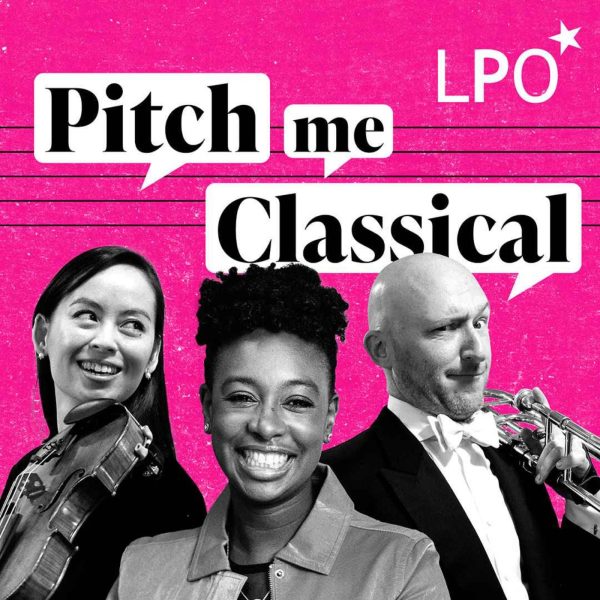
Pitch Me Classical
- Episodes
- 115
- Released
- every two weeks
- Latest episode
- Sep 17, 2026
About the podcast
Saxophonist and presenter YolanDa Brown and players from the London Philharmonic Orchestra pitch their thoughts on some of classical music’s most-asked questions, with plenty of chit-chat and laughter along the way.
Instagram: @londonphilharmonicorchestra
TikTok: @lporchestra
Facebook: @londonphilharmonicorchestra
Youtube: @londonphilharmonicorchestra
Hosted on Acast. See acast.com/privacy for more information.
Episodes 115
Rinse and repeat. Orchestras just play the same old stuff, right?
Beethoven, Tchaikovsky, Brahms... classical music's biggest names appear on concert programmes again and again. But does that mean orchestras are stuck in the past? YolanDa is joined by violinist Kate and …
Show notes
Beethoven, Tchaikovsky, Brahms... classical music's biggest names appear on concert programmes again and again. But does that mean orchestras are stuck in the past? YolanDa is joined by violinist Kate and cellist Henry to challenge one of the most common assumptions about classical music.
Together, they unpack the idea that classical music is endlessly recycling the same repertoire and ask whether that criticism really holds up. Along the way, they explore some big questions: how much new music do orchestras actually perform? Why do some pieces become classics while others disappear? Should audiences be tempted in with familiar favourites before discovering something new? And what responsibility do orchestras have to champion overlooked composers and commission the masterpieces of the future? They also reveal how a different conductor, a fresh interpretation, or simply hearing a piece live can make even the most familiar music feel completely new.
Plus, in the quiz, Kate and Henry test their knowledge of BBC Proms history, composer-led conservation efforts, and the pieces of music they could happily hear on repeat forever.
#PitchMeClassical
Instagram: @londonphilharmonicorchestra
TikTok: @lporchestra
Bluesky: @lporchestra
Facebook: @londonphilharmonicorchestra
YouTube: @londonphilharmonicorchestra
Hosted on Acast. See acast.com/privacy for more information.
Is it ok to be bored in a concert?
Classical music is often treated with a kind of reverence that suggests you should be captivated every second. But what if your mind wanders? YolanDa is joined by LPO trombonists Tempo and Dave to explore …
Show notes
Classical music is often treated with a kind of reverence that suggests you should be captivated every second. But what if your mind wanders? YolanDa is joined by LPO trombonists Tempo and Dave to explore whether boredom is really something to fear – or simply part of the listening experience.
Mahler symphonies, shopping lists, sleeping opera-goers, and a trip to Tesco might seem unrelated. But according to YolanDa, Tempo, and Dave, they can all tell us something about how we listen to music. Together, they tackle a surprisingly taboo question: is it actually okay to be bored at a concert? Drawing on psychology, personal experience, and life inside the orchestra, they unpack the difference between boredom, distraction, daydreaming, and deep listening. Along the way, they explore some big questions: does mind-wandering mean you've disengaged, or are you simply experiencing music in your own way? Can challenging music be rewarding even if it isn't immediately entertaining? And is a concert hall one of the few places left where we're allowed to sit still and let our thoughts roam?
#PitchMeClassical
Instagram: @londonphilharmonicorchestra
TikTok: @lporchestra
Bluesky: @lporchestra
Facebook: @londonphilharmonicorchestra
YouTube: @londonphilharmonicorchestra
Hosted on Acast. See acast.com/privacy for more information.
Classical music rituals (or who made all these classical music rules?)
From clapping etiquette to curtain calls, classical music is full of traditions that can seem mysterious to newcomers. YolanDa is joined by brass players Lee (tuba) and Lyndon (trombone) to explore which …
Show notes
From clapping etiquette to curtain calls, classical music is full of traditions that can seem mysterious to newcomers. YolanDa is joined by brass players Lee (tuba) and Lyndon (trombone) to explore which rituals still matter, which ones are misunderstood, and whether some deserve a rethink.
They delve into the strange, wonderful, and sometimes baffling rituals that surround classical music performance. Together, they unpack the hidden rules that audiences and musicians often follow without even thinking about them, from tuning notes and standing ovations to page-turning, applause, and the mysterious role of the personnel manager. Along the way, they debate some big questions: should audiences clap whenever they feel moved to? Are standing ovations becoming meaningless? Has the post-Covid habit of musicians drifting on stage before a concert changed the sense of occasion? And which traditions are essential to creating the magic of a live performance?
And in the quiz, Lee and Lyndon test their knowledge of Beethoven's coffee habits, Grieg's lucky charm, and a surprisingly specific pre-concert ritual involving red wine, crumpets, and dates.
#PitchMeClassical
Instagram: @londonphilharmonicorchestra
TikTok: @lporchestra
Bluesky: @lporchestra
Facebook: @londonphilharmonicorchestra
YouTube: @londonphilharmonicorchestra
Hosted on Acast. See acast.com/privacy for more information.
Lisztomania vs Swifties
Taylor Swift has the Swifties. Back in the 1800s, Franz Liszt inspired a phenomenon known as Lisztomania. YolanDa is joined by violinist Minn and violist Martin to explore fame, fandom, and the possibility of a …
Show notes
Taylor Swift has the Swifties. Back in the 1800s, Franz Liszt inspired a phenomenon known as Lisztomania. YolanDa is joined by violinist Minn and violist Martin to explore fame, fandom, and the possibility of a new generation of classical celebrities.
They dive into the surprisingly rich history of classical music fandom, uncovering stories of nineteenth-century audiences who fought over Liszt's possessions, collected his cigarette stubs, and reportedly fainted at his concerts. Together, they ask whether classical music is really as separate from celebrity culture as it can sometimes seem to be. Along the way, they discuss some big questions: what turns a musician into a superstar? Is it artistry, personality, social media, or clever self-promotion? Why do some classical performers attract devoted followings while others remain admired but anonymous? And could today's classical stars spark a new era of Lisztomania?
Plus, in the quiz, Minn and Martin test their knowledge of Taylor Swift's pets, celebrity conductors, and the concert innovations that helped make Liszt one of music's first global icons.
#PitchMeClassical
Instagram: @londonphilharmonicorchestra
TikTok: @lporchestra
Bluesky: @lporchestra
Facebook: @londonphilharmonicorchestra
YouTube: @londonphilharmonicorchestra
Hosted on Acast. See acast.com/privacy for more information.
The flute gives main character vibes
The flute often gets the big melodies, the soaring solos, and the spotlight. But does it really deserve its reputation as classical music's ultimate main character? YolanDa is joined by flautist Juliette and …
Show notes
The flute often gets the big melodies, the soaring solos, and the spotlight. But does it really deserve its reputation as classical music's ultimate main character? YolanDa is joined by flautist Juliette and bassoonist Simon to settle the debate.
The flute has the melodies, the solos and, some might argue, the best PR team in the orchestra. YolanDa, Juliette, and Simon explore the instrument's starring role in orchestral music, from its glittering appearance and bird-like melodies to the iconic solos that have made it a favourite with audiences and composers alike. Along the way, they ask some big questions: why do so many children start on the flute? Is it really easier to learn than other instruments? Does the flute's soaring sound automatically draw our attention? And where does that leave the bassoon – the dependable supporting character that can be everything from a romantic hero to a comic sidekick?
Plus, in the quiz, Juliette and Simon tackle questions about giant flute families, medieval word origins, and the eye-watering value of one of James Galway's famous golden flutes.
#PitchMeClassical
Instagram: @londonphilharmonicorchestra
TikTok: @lporchestra
Bluesky: @lporchestra
Facebook: @londonphilharmonicorchestra
YouTube: @londonphilharmonicorchestra
Hosted on Acast. See acast.com/privacy for more information.
Classical music is just so straight-laced
Classical music is sometimes seen as serious, formal, and maybe even a little intimidating. But is that image fair? YolanDa is joined by London Philharmonic Orchestra violinist Alice and trombonist Tempo to …
Show notes
Classical music is sometimes seen as serious, formal, and maybe even a little intimidating. But is that image fair? YolanDa is joined by London Philharmonic Orchestra violinist Alice and trombonist Tempo to uncover what really goes on behind the scenes of an orchestra.
Pirates, karaoke, beer cans, and a trombone-playing wedding guest aren't usually associated with classical music. But according to YolanDa, Alice, and Tempo, they're all part of the surprisingly un-stuffy world of orchestral life. Together, they explore why classical music is sometimes seen as formal and intimidating, and whether that reputation still holds up today. Along the way, they reveal the hidden culture of the orchestra: from inside jokes and rehearsal pranks to foot-tapping applause, improvisation, and even Rite of Spring raves. They also tackle some big questions: are classical musicians really all that different from athletes? Does concert dress make orchestras seem more exclusive than they are? And can a genre built on centuries-old music still be spontaneous and adventurous?
#PitchMeClassical
Instagram: @londonphilharmonicorchestra
TikTok: @lporchestra
Bluesky: @lporchestra
Facebook: @londonphilharmonicorchestra
YouTube: @londonphilharmonicorchestra
Hosted on Acast. See acast.com/privacy for more information.
Tchaikovsky: classical music’s most overrated composer?
Tchaikovsky is one of classical music's all-time favourites. But does he deserve his enduring appeal, or is he massively overrated? YolanDa is joined by LPO double bassist Hugh and cellist Waynne to determine …
Show notes
Tchaikovsky is one of classical music's all-time favourites. But does he deserve his enduring appeal, or is he massively overrated? YolanDa is joined by LPO double bassist Hugh and cellist Waynne to determine whether Tchaikovsky truly earns his place among the greats.
Together, they unpack Tchaikovsky's music to decide whether he's a timeless genius or an overhyped crowd-pleaser. Along the way, they explore some big questions: was Tchaikovsky a good storyteller? Was he an innovator? Is he the Walmart of composers? And can taking a different approach breathe new life into his most frequently played works? It's all up for debate. Plus, in the quiz, Hugh and Waynne face a tough challenge: which of Tchaikovsky's works would they banish to Room 101?
#PitchMeClassical
Instagram: @londonphilharmonicorchestra
TikTok: @lporchestra
Bluesky: @lporchestra
Facebook: @londonphilharmonicorchestra
YouTube: @londonphilharmonicorchestra
Hosted on Acast. See acast.com/privacy for more information.
Is classical music dead?
Is classical music dying, or is it just evolving? Most of its composers lived and died in centuries past, and the bulk of its repertoire is well over 100 years old, but does that mean classical music is on its …
Show notes
Is classical music dying, or is it just evolving? Most of its composers lived and died in centuries past, and the bulk of its repertoire is well over 100 years old, but does that mean classical music is on its last legs? For some, the tradition is losing relevance, but it’s also quietly thriving in surprising and unexpected ways. YolanDa, Claudia and Hugh explore why the genre carries such a reputation for decline, discuss ways in which classical music is reinventing itself, and wonder what its future might look like. Plus, in the quiz, Claudia and Hugh debate who gets more streams on Spotify - Mozart or the musical Hamilton?
#PitchMeClassical
Instagram: @londonphilharmonicorchestra
TikTok: @lporchestra
Bluesky: @lporchestra
Facebook: @londonphilharmonicorchestra
YouTube: @londonphilharmonicorchestra
Hosted on Acast. See acast.com/privacy for more information.
Nobody likes contemporary music, do they?
Contemporary music: bold, baffling, and often accused of scaring audiences away. But is it really as unlovable as its reputation suggests? In this episode, we explore why new music can feel alienating, and …
Show notes
Contemporary music: bold, baffling, and often accused of scaring audiences away. But is it really as unlovable as its reputation suggests? In this episode, we explore why new music can feel alienating, and whether it’s actually unpopular - or just misunderstood. Whether you’re a die-hard fan of extended techniques, a curious newcomer to the contemporary world, or you’ve always wondered why a piece of music might sound like a typewriter falling down the stairs, this conversation will give you a fresh perspective on why contemporary music matters. Plus, Helen and Stewart do their best to come up with a sequel for John Cage’s legendary 4’33”...
#PitchMeClassical
Instagram: @londonphilharmonicorchestra
TikTok: @lporchestra
Bluesky: @lporchestra
Facebook: @londonphilharmonicorchestra
YouTube: @londonphilharmonicorchestra
Hosted on Acast. See acast.com/privacy for more information.
Is Mahler having a moment?
Mahler’s music holds a towering place in classical music today, but that wasn’t always the case. So what changed? How did he explode into the classical zeitgeist in the 1960s - and stay there? Is he really …
Show notes
Mahler’s music holds a towering place in classical music today, but that wasn’t always the case. So what changed? How did he explode into the classical zeitgeist in the 1960s - and stay there? Is he really related to Beyoncé? And will his music continue to be popular, or will our dwindling attention spans make it harder to appreciate his epic symphonies? Perhaps Mahler’s appeal isn’t about passing trends, but about the raw emotion in his music and its deep connection with listeners... Plus, Andy reveals his go-to beverage for the ultimate Mahler symphony marathon.
#PitchMeClassical
Instagram: @londonphilharmonicorchestra
TikTok: @lporchestra
Bluesky: @lporchestra
Facebook: @londonphilharmonicorchestra
YouTube: @londonphilharmonicorchestra
Hosted on Acast. See acast.com/privacy for more information.
All orchestras sound the same
When you listen to an orchestra, what makes its sound distinctive? Is it the concert hall, the conductor, the players, or even their instruments? While some argue that most orchestras end up sounding alike …
Show notes
When you listen to an orchestra, what makes its sound distinctive? Is it the concert hall, the conductor, the players, or even their instruments? While some argue that most orchestras end up sounding alike, others insist each ensemble has its own unmistakable voice. In this episode, we dive into the subtle details that shape an orchestra’s sound and explore how different orchestras can sound worlds apart. Juliette and Lasma take on a listening challenge where they guess the conductor of a piece the LPO has recorded twice, and try to spot the differences between the two recordings. And in the quiz, we get to the bottom of a big question - what does the word ‘orchestra’ actually mean?
#PitchMeClassical
Instagram: @londonphilharmonicorchestra
TikTok: @lporchestra
Bluesky: @lporchestra
Facebook: @londonphilharmonicorchestra
YouTube: @londonphilharmonicorchestra
Hosted on Acast. See acast.com/privacy for more information.
Is Ravel’s Bolero the worst piece ever written?
Today, we’re unravelling a piece that’s as simple as it is spellbinding - one of the most well known and oddly mesmerising compositions of the 20th century. Some call it brilliant, others find it unbearable …
Show notes
Today, we’re unravelling a piece that’s as simple as it is spellbinding - one of the most well known and oddly mesmerising compositions of the 20th century. Some call it brilliant, others find it unbearable, and few sit on the fence. And the piece that’s at the heart of this marmite reputation? Ravel’s Bolero. We explore what makes this 15-minute loop so unforgettable, from its relentless snare drum rhythm to its slow-burning crescendo to determine what it is that keeps listeners hooked (or drives them mad). Plus, things get very heated between Andy and Sue in the end-of-episode quiz…
#PitchMeClassical
Instagram: @londonphilharmonicorchestra
TikTok: @lporchestra
Bluesky: @lporchestra
Facebook: @londonphilharmonicorchestra
YouTube: @londonphilharmonicorchestra
Hosted on Acast. See acast.com/privacy for more information.
Are some violinists more equal than others?
The violin section of an orchestra is split into two halves: first violins and second violins. Do the firsts really get all the glory while the seconds do the heavy lifting, or are the seconds the orchestra’s …
Show notes
The violin section of an orchestra is split into two halves: first violins and second violins. Do the firsts really get all the glory while the seconds do the heavy lifting, or are the seconds the orchestra’s unsung heroes? In an effort to decide whether some violinists are more equal than others, we explore the history behind this division, unpack stereotypes, and examine the unique challenges of playing in each section. We also look at how this structure can shape careers, and what it’s like to transition from one section to the other. Plus, Emma and Cassi face a violin-themed quiz, covering everything from calories burned while playing to musical world records set on bicycles…
#PitchMeClassical
Instagram: @londonphilharmonicorchestra
TikTok: @lporchestra
Bluesky: @lporchestra
Facebook: @londonphilharmonicorchestra
YouTube: @londonphilharmonicorchestra
Hosted on Acast. See acast.com/privacy for more information.
I’ll enjoy it more if I’m allowed my phone out
It’s a battle between technology and tradition: should mobiles phones be banned, tolerated, or even embraced in concert halls? Are phone-friendly performances the future of classical music, or are they a threat …
Show notes
It’s a battle between technology and tradition: should mobiles phones be banned, tolerated, or even embraced in concert halls? Are phone-friendly performances the future of classical music, or are they a threat to the sacred concert ritual? We’ve all heard a phone go off at the most inopportune moment, but increasingly the classical music world is finding more creative ways to integrate phones into the concert experience. In this episode, we explore how concert halls, composers, and performers are adapting - or resisting - the presence of mobiles phones and in concert venues. Plus, Minn and Martin reveal their ringtones (or lack thereof) and face off in a challenge: who can come up with the best phone-related superpower?
#PitchMeClassical
Instagram: @londonphilharmonicorchestra
TikTok: @lporchestra
Bluesky: @lporchestra
Facebook: @londonphilharmonicorchestra
YouTube: @londonphilharmonicorchestra
Hosted on Acast. See acast.com/privacy for more information.
By 2050, will all new pieces of classical music be written by AI?
In this episode, YolanDa and Francis are joined by AI expert Lora Aroyo to discuss artificial intelligence and its place in classical music. Their conversation covers everything from how AI developed to what …
Show notes
In this episode, YolanDa and Francis are joined by AI expert Lora Aroyo to discuss artificial intelligence and its place in classical music. Their conversation covers everything from how AI developed to what its current capabilities of composing classical music are. They touch on the ethical and artistic implications of AI-generated music, evaluate its strengths and limitations, and try to define what makes music composed by humans unique. Plus, in the quiz, Lora and Francis tell us how they would like AI to be used to improve their day to day musical lives…
#PitchMeClassical
Instagram: @londonphilharmonicorchestra
TikTok: @lporchestra
Bluesky: @lporchestra
Facebook: @londonphilharmonicorchestra
YouTube: @londonphilharmonicorchestra
Hosted on Acast. See acast.com/privacy for more information.
Do the brass really have the most fun?
What makes a typical brass player? What really happens on a ‘viola night’? Can the saxophone truly be considered a brass instrument? And just how do you clean a tuba? YolanDa, Lee and Claudia dive into the …
Show notes
What makes a typical brass player? What really happens on a ‘viola night’? Can the saxophone truly be considered a brass instrument? And just how do you clean a tuba? YolanDa, Lee and Claudia dive into the world of brass, weighing the pros and cons of being part of the brass section and comparing it to the rest of the orchestra. They share favourite brass moments, discuss the sometimes notorious reputation of brass players, and attempt to pinpoint the characteristics that make brass players unique. Plus, in the quiz, Lee and Claudia take a shot at guessing the collective noun for a group of brass players… Any guesses?
#PitchMeClassical
Instagram: @londonphilharmonicorchestra
TikTok: @lporchestra
Bluesky: @lporchestra
Facebook: @londonphilharmonicorchestra
YouTube: @londonphilharmonicorchestra
Hosted on Acast. See acast.com/privacy for more information.
Ba-ba-ba-baaaa… Does Beethoven 5 have the best opening?
It’s one of the most famous pieces of classical music, but why? The beginning of Beethoven’s Fifth Symphony has an iconic status, but is it one of the best openings to a piece of music? YolanDa, Tom and Cassi …
Show notes
It’s one of the most famous pieces of classical music, but why? The beginning of Beethoven’s Fifth Symphony has an iconic status, but is it one of the best openings to a piece of music? YolanDa, Tom and Cassi dig deeper into those famous four notes and along the way they share other opening bars which are just as recognisable, arresting, or scary. It’s a tricky passage to play in sync with other players, so they discuss tips and tricks to ensure it gets off to a successful start. Plus, in the quiz Tom makes a fruit-related promise he’s surely going to live to regret…
#PitchMeClassical
Instagram: @londonphilharmonicorchestra
TikTok: @lporchestra
Bluesky: @lporchestra
Facebook: @londonphilharmonicorchestra
YouTube: @londonphilharmonicorchestra
Hosted on Acast. See acast.com/privacy for more information.
Viola - what’s the joke?
Why is the viola the butt of so many jokes? Does the viola deserve to be mocked, or is it the unsung hero of the orchestra? YolanDa Brown is joined by Martin and Minn to unpack the origins of viola jokes and …
Show notes
Why is the viola the butt of so many jokes? Does the viola deserve to be mocked, or is it the unsung hero of the orchestra? YolanDa Brown is joined by Martin and Minn to unpack the origins of viola jokes and demystify why violas so often get the short end of the stick - or should we say bow? But for Martin and Minn the viola’s status as a comedic goldmine sometimes has wider implications that aren’t necessarily positive, for example putting people off learning the instrument, affecting the way composers write for it, and annoying viola players on a regular basis. If you like a good viola joke, you’ll find plenty in this episode, proving that the viola can absolutely play first fiddle in the world of comedy…
#PitchMeClassical
Instagram: @londonphilharmonicorchestra
TikTok: @lporchestra
Bluesky: @lporchestra
Facebook: @londonphilharmonicorchestra
YouTube: @londonphilharmonicorchestra
Hosted on Acast. See acast.com/privacy for more information.
All classical music sounds the same, right?
What makes classical music sound like classical music? And what does the word ‘classical’ mean anyway? YolanDa Brown is joined by Kristina and Mark to give their take on these big questions. They do their best …
Show notes
What makes classical music sound like classical music? And what does the word ‘classical’ mean anyway? YolanDa Brown is joined by Kristina and Mark to give their take on these big questions. They do their best to figure out where the line is between classical and non-classical music, whether film music is classical, and what makes classical music classical. And they attempt to pin down why the word ‘classical’ came to be used to describe this genre of music in the first place. Plus, Mark and Kristina each share three recommendations that they think demonstrate the breadth and variety of classical music - pieces that are ideal for anyone new to it!
#PitchMeClassical
Instagram: @londonphilharmonicorchestra
TikTok: @lporchestra
Bluesky: @lporchestra
Facebook: @londonphilharmonicorchestra
YouTube: @londonphilharmonicorchestra
Hosted on Acast. See acast.com/privacy for more information.
What should I wear?
Tails? Long black? Stilettos? A dinner jacket? Concert dress is an important part of the visual appearance of an orchestra, but what is the dress code, how flexible is it, and is it old-fashioned? YolanDa, Mark …
Show notes
Tails? Long black? Stilettos? A dinner jacket? Concert dress is an important part of the visual appearance of an orchestra, but what is the dress code, how flexible is it, and is it old-fashioned? YolanDa, Mark and Alice all have their preferences when it comes to what they like to wear on stage. This conversation covers everything from what happens when you ask a tailor to make you a new set of tails, whether you need to iron a shirt when only a sliver of it is visible, why orchestras dress the way they do, and common misunderstandings when it comes to pants and pop socks. Plus, how what you choose to wear on stage can give you confidence as a performer…
#PitchMeClassical
Instagram: @londonphilharmonicorchestra
TikTok: @lporchestra
Bluesky: @lporchestra
Facebook: @londonphilharmonicorchestra
YouTube: @londonphilharmonicorchestra
Hosted on Acast. See acast.com/privacy for more information.
When do I need to clap?
Round of applause, please! YolanDa, Hugh and Simon evaluate the pros and cons of applause, sharing their experiences both in the concert hall and beyond. Why do we clap, when should we clap, and what’s the …
Show notes
Round of applause, please! YolanDa, Hugh and Simon evaluate the pros and cons of applause, sharing their experiences both in the concert hall and beyond. Why do we clap, when should we clap, and what’s the etiquette? Together they cover pieces where people clap when they shouldn’t, pieces where it simply feels wrong to show your appreciation by clapping, and rock and jazz concerts where it’s common to clap every few minutes. But this episode isn’t just about putting your hands together - they also discuss whether fish should be allowed in concert halls and the simplistic beauty of painting a shed. Plus, there’s fierce competition to work out who has the best-sounding clap in the end-of-episode quiz…
#PitchMeClassical
Instagram: @londonphilharmonicorchestra
TikTok: @lporchestra
Bluesky: @lporchestra
Facebook: @londonphilharmonicorchestra
YouTube: @londonphilharmonicorchestra
Hosted on Acast. See acast.com/privacy for more information.
Is Mozart the G.O.A.T.?
When asked to name a classical composer, why does everyone always say Mozart? He’s one of classical music’s most famous composers (perhaps THE most famous), but does he deserve his reputation, and is he the …
Show notes
When asked to name a classical composer, why does everyone always say Mozart? He’s one of classical music’s most famous composers (perhaps THE most famous), but does he deserve his reputation, and is he the G.O.A.T.*? YolanDa, Mark and Alice discuss Mozart’s high points and low points, his best pieces and his worse, and how he writes for different instruments. They also touch on what’s special about him and whether other composers are more deserving of fame. Plus, this episode’s quiz reveals strong opinions on which of his three names would make the best name for a pet…
*Mark has now learnt a new acronym.
#PitchMeClassical
Instagram: @londonphilharmonicorchestra
TikTok: @lporchestra
Bluesky: @lporchestra
Facebook: @londonphilharmonicorchestra
YouTube: @londonphilharmonicorchestra
Hosted on Acast. See acast.com/privacy for more information.
Welcome to Pitch Me Classical
Welcome to Pitch Me Classical! Saxophonist and presenter YolanDa Brown and players from the London Philharmonic Orchestra pitch their thoughts on some of classical music’s most-asked questions, with plenty of …
Show notes
Welcome to Pitch Me Classical! Saxophonist and presenter YolanDa Brown and players from the London Philharmonic Orchestra pitch their thoughts on some of classical music’s most-asked questions, with plenty of chit-chat and laughter along the way.
Instagram: @londonphilharmonicorchestra
TikTok: @lporchestra
Facebook: @londonphilharmonicorchestra
Youtube: @londonphilharmonicorchestra
Hosted on Acast. See acast.com/privacy for more information.
Best of LPO Offstage: Series 7
YolanDa Brown takes us through some of the best bits of Series 7. Why do trumpets transpose, and do they enjoy it? How has recording film music changed over the years? And what does retirement look like for …
Show notes
YolanDa Brown takes us through some of the best bits of Series 7. Why do trumpets transpose, and do they enjoy it? How has recording film music changed over the years? And what does retirement look like for orchestral musicians?
Plus, singer Brindley Sherratt shares his top tips on preparing to sing an operatic role.
With trombonist Mark Templeton, violinist Minn Majoe, horn player Mark Vines, tuba player Lee Tsarmaklis, double bass player Simon Carrington, trumpeter Anne McAneney, bass Brindley Sherratt, clarinettist Thomas Watmough, conductor Ed Gardner, composer Colin Matthews, violinist Geoffrey Lynn, oboist Joan Graham, and bassoonist Gareth Newman.
That’s it for now from LPO Offstage. Thanks for joining us along the way and stay tuned as we’ll be back soon with a brand new podcast.
Produced by Tandem Productions for the London Philharmonic Orchestra.
#OffstagePod
Twitter: @LPOrchestra
Instagram: @londonphilharmonicorchestra
Facebook: @londonphilharmonicorchestra
Hosted on Acast. See acast.com/privacy for more information.
Retirement
YolanDa Brown sits down with three former LPO members - violinist Geoff Lynn, bassoonist Gareth Newman, and oboist Joan Graham - to explore retirement. When they retire, some musicians sell their instruments …
Show notes
YolanDa Brown sits down with three former LPO members - violinist Geoff Lynn, bassoonist Gareth Newman, and oboist Joan Graham - to explore retirement.
When they retire, some musicians sell their instruments and never play a note again. Others reduce the amount of performing they’re doing to make more time for teaching. The former LPO members chatting to YolanDa today all approached retirement in very different ways.
Geoff, Gareth and Joan tell YolanDa what they miss about their orchestral years, share the pits and troughs of their careers, and share hints and tips for anyone who might be thinking about their retirement whether it’s decades away or fast approaching.
Produced by Tandem Productions for the London Philharmonic Orchestra.
#OffstagePod
X: @LPOrchestra
Instagram: @londonphilharmonicorchestra
Facebook: @londonphilharmonicorchestra
Hosted on Acast. See acast.com/privacy for more information.
Holst’s The Planets Revisited
YolanDa Brown joins composer Colin Matthews, Principal Conductor of the LPO Edward Gardner and flautist Juliette Bausor to revisit Gustav Holst’s most famous work, The Planets.Faber recently published a new …
Show notes
YolanDa Brown joins composer Colin Matthews, Principal Conductor of the LPO Edward Gardner and flautist Juliette Bausor to revisit Gustav Holst’s most famous work, The Planets.
Faber recently published a new facsimile edition of Holst’s The Planets, edited by Colin Matthews, and today’s episode explores its significance and the unique insights that the original handwritten manuscript can give us.
Colin, Ed and Juliette also talk to YolanDa about their favourite and least favourite movements, their thoughts on the speed you should play the big tune in ‘Jupiter’, and tips on how best to achieve the famous choral fade at the end of Neptune.
Plus, what happened musically when Pluto lost its status as a planet…
Produced by Tandem Productions for the London Philharmonic Orchestra.
#OffstagePod
X: @LPOrchestra
Instagram: @londonphilharmonicorchestra
Facebook: @londonphilharmonicorchestra
Hosted on Acast. See acast.com/privacy for more information.
Music from the Movies
Today we’re dimming the lights, turning off our phones and filling up a giant bucket of popcorn to get the lowdown on music for film and TV.Film score production has changed a lot in recent years, and LPO …
Show notes
Today we’re dimming the lights, turning off our phones and filling up a giant bucket of popcorn to get the lowdown on music for film and TV.
Film score production has changed a lot in recent years, and LPO musicians timpanist Simon Carrington and tuba player Lee Tsarmaklis have seen it all; from Elmer Bernstein’s skilful, old school approach, to the meticulous modern day techniques of click tracks and multitrack recording.
Simon and Lee tell YolanDa about the film scores which soundtrack their earliest cinema outings and describe the joyful and awe-inspiring experiences playing the music of the legendary John Williams.
Plus, Lee and Simon reveal the soundtracks they wish they could have played on.
Be sure to listen to the Spotify playlist that accompanies this episode to inject some Hollywood dazzle into your day: https://open.spotify.com/playlist/6UuJau7Ew5d58hx4PbcO8g?si=b9970b912009443b
Produced by Tandem Productions for the London Philharmonic Orchestra.
#OffstagePod
X: @LPOrchestra
Instagram: @londonphilharmonicorchestra
Facebook: @londonphilharmonicorchestra
Hosted on Acast. See acast.com/privacy for more information.
Wagner’s Epic Ring Cycle
Today we’re going deep in the music of Wagner - and specifically The Ring cycle, his collection of 4 monumental operas: Das Rheingold, Die Walküre, Siegfried, and Götterdämmerung Even if you haven’t seen these …
Show notes
Today we’re going deep in the music of Wagner - and specifically The Ring cycle, his collection of 4 monumental operas: Das Rheingold, Die Walküre, Siegfried, and Götterdämmerung
Even if you haven’t seen these live, you’re probably aware that these are absolute behemoths of the opera house - with heroism, love, death, gigantic orchestras and big tunes that need big voices. Bass Brindley Sherratt is tackling the role of Hagen in Götterdämmerung, and he explains how memory, text and costume are just some of the challenges he grapples with.
Wagner wrote some stunning brass parts, and trombonist Dave Whitehouse explains the novelty of playing the bass trumpet in Götterdämmerung, and violinist Fiona Higham explains how to crack the string player’s code when tackling Wagner’s music.
Plus, how lifting weights can be a great training programme for a 6 hour opera.
Produced by Tandem Productions for the London Philharmonic Orchestra.
#OffstagePod
X: @LPOrchestra
Instagram: @londonphilharmonicorchestra
Facebook: @londonphilharmonicorchestra
Hosted on Acast. See acast.com/privacy for more information.
From the Archive: Saint-Saens’ “Organ” Symphony with Anna Lapwood
Today, another one of our top episodes from the archive… YolanDa Brown joins organist and conductor Anna Lapwood, piccolo player Stewart McIlwham and violinist Martin Höhmann to take a close look at Camille …
Show notes
Today, another one of our top episodes from the archive… YolanDa Brown joins organist and conductor Anna Lapwood, piccolo player Stewart McIlwham and violinist Martin Höhmann to take a close look at Camille Saint-Saëns’ Symphony No.3 - his organ symphony.
They discuss the challenges of communicating with the conductor from the organ, how to get the perfect tempo so those mammoth chords have maximum impact, and how the flutes and violins manage the difficult offbeat rhythms.
Anna also reveals how she’s able to practise on concert hall organs, gives some social media tips for musicians who want to share their own musical journeys, and our listener question zooms in on organ ‘stops’.
Plus, what it’s like to actually be inside a 32-foot organ pipe…
If you have any questions you’d like to put to the musicians, please email [email protected], and you might be featured in Series 7!
Produced by Tandem Productions for the London Philharmonic Orchestra.
#OffstagePod
X: @LPOrchestra
Instagram: @londonphilharmonicorchestra
Facebook: @londonphilharmonicorchestra
Hosted on Acast. See acast.com/privacy for more information.
Inside Brahms’ Four Symphonies
YolanDa Brown sits down with contrabassoonist Simon Estell and clarinettist Tom Watmough for a deep dive into Brahms’ Four symphoniesBrahms’ symphonies are right at the beating heart of orchestral repertoire …
Show notes
YolanDa Brown sits down with contrabassoonist Simon Estell and clarinettist Tom Watmough for a deep dive into Brahms’ Four symphonies
Brahms’ symphonies are right at the beating heart of orchestral repertoire for very good reason: audiences love their romanticism and drama, and players can’t get enough of those gorgeous melodies. But how do you keep the music fresh when it’s played so often? Tom and Simon reveal how every conductor creates new challenges for the orchestra, and how Brahms was inspired by the musicians he worked with.
Plus, what’s your favourite Brahms symphony? Simon and Tom discover that’s a very difficult question to answer.
If you have any questions you’d like to put to the musicians, please email [email protected], and you might be featured in Series 7!
Produced by Tandem Productions for the London Philharmonic Orchestra.
#OffstagePod
X: @LPOrchestra
Instagram: @londonphilharmonicorchestra
Facebook: @londonphilharmonicorchestra
Hosted on Acast. See acast.com/privacy for more information.
These are the latest 40 of 115 episodes. You’ll find older episodes in the podcast’s feed.
Similar podcasts
More Society & Culture podcasts





Is this your podcast?
Confirm it with an entry in your feed: you get a code here, add it as podcast:txt to the channel of your feed, and we check it. Your podcast is then shown as “verified” on SoundNode.