

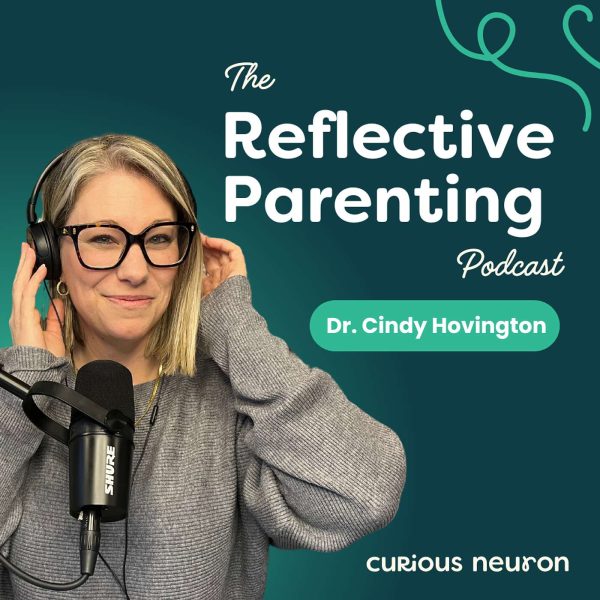
Reflective Parenting Podcast by Curious Neuron
- Episodes
- 277
- Released
- weekly
- Latest episode
- Nov 17, 2026
About the podcast
You don’t snap at your kids because you’re a bad parent. You snap because your stress builds faster than your awareness, and no one ever taught you how to handle that.
I’m Dr. Cindy Hovington, a mom of three with a doctorate in neuroscience and founder of Curious Neuron. I created The Reflective Parenting Podcast for parents who care deeply, know a lot, and still find themselves overwhelmed in the real moments.
This is not a podcast where I tell you how to be a perfect parent. I’m in it with you.
Each week, I invite you into my own reflections:
- what I’m learning from scientific articles and books,
- what I’m noticing in my nervous system and emotions,
- and what real parents and experts teach me in conversation.
Together, we get curious about why we snap, shut down, or over-function in conflict, and what’s actually happening in our brain and body when we do. We talk about stress, shame, repair, boundaries, playfulness, and the quiet moments no one sees—so you can start to recognize your patterns and gently shift them.
By listening, you’ll learn to:
- notice your stress and body signals earlier,
- understand the lenses and stories that intensify hard moments,
- regulate your nervous system when parenting feels like “too much”,
- and handle conflict with more calm, clarity, and repair.
- But more than that, you’ll have a companion in the work.
I’ll share where I struggle, what I’m practicing, and how I’m trying to grow, so you don’t feel like the only parent who finds this hard.
If you’re ready to move away from “perfect” parenting and toward reflective parenting—where every tough moment becomes data, not failure—pull up a chair.
Let’s learn, feel, and grow together.
Find out which book I will be covering next month:
https://curiousneuron.com/podcast/
Join the private group on Facebook:
www.facebook.com/groups/reflectiveparentingpodcast/
Start training your emotional awareness for FREE:
https://tremendous-hustler-7333.kit.com/84371dc0b2
Purchase my course The Emotionally Aware Parent.
https://curiousneuron.com/reflective-parent-club/
Follow us on Instagram @drcindyhovington or Facebook @curiousneuronparenting
Episodes 277
A neuroscientist shares a powerful way to make parenting feel less stressful: reflection
Send us Fan MailIn today's episode I m joined by neuroscientist Dr. Rachel de Barros, PhD and Postdoctoral Fellow at University of Calgary. Her research focuses on reflective functioning which is a skill …
Show notes
In today's episode I m joined by neuroscientist Dr. Rachel de Barros, PhD and Postdoctoral Fellow at University of Calgary. Her research focuses on reflective functioning which is a skill we can all work on as parents.
She is also one of my closest friends and so we share many real parenting moments where reflecting has helped us feel less overwhelmed in chaotic parenting moments.
If bedtime leads to lots of chaos in your home or morning routines drain you, then have a listen to today's episode!
Hope you enjoy this episode!
- Join the Reflective Parent Book Club for only $9.99 for the year: https://reflectiveparentclub.circle.so/checkout/reflective-parenting-book-club
- Watch my Tedx Talk on YouTube called The Over-Educated, Emotionally Underprepared Parent: https://www.youtube.com/watch?v=nDYJFY_9K9E&t=19s
- Grab my course for $99, The Emotionally Aware Parent: https://curiousneuron.com/reflective-parent-club/
How to use storytelling to help your child/student with difficult behavior
Send us Fan MailWhat if, instead of asking children why they did something, we helped them make sense of what happened through storytelling? In this episode, I speak with Dr. Elizabeth Roberts, Licensed School …
Show notes
What if, instead of asking children why they did something, we helped them make sense of what happened through storytelling? In this episode, I speak with Dr. Elizabeth Roberts, Licensed School Psychologist about how storytelling can help children identify their emotions, understand their reactions, and develop emotional regulation skills. We discuss how parents and teachers can use this simple approach to move beyond correcting behaviour and help children learn from their experiences.
In this episode, we discuss:
- How storytelling helps children understand the emotions behind their behaviour.
- Why asking "Why did you do that?" doesn't always lead to meaningful reflection.
- How to help children identify an emotion, understand its urge, and make a different choice.
- How to validate children's feelings while still setting boundaries.
- How parents and teachers can use storytelling to support their own emotional awareness.
Follow Dr. Roberts on Instagram and download her FREE Emotional Storytelling Scrips in her bio
https://www.instagram.com/drelizabethroberts/
A recommended book:
Raising An Emotionally Intelligent Child- Join the Reflective Parent Book Club for only $9.99 for the year: https://reflectiveparentclub.circle.so/checkout/reflective-parenting-book-club
- Watch my Tedx Talk on YouTube called The Over-Educated, Emotionally Underprepared Parent: https://www.youtube.com/watch?v=nDYJFY_9K9E&t=19s
- Grab my course for $99, The Emotionally Aware Parent: https://curiousneuron.com/reflective-parent-club/
You Are the Parent: How to raising capable kids without overparenting with Dr. Siggie
Send us Fan MailMany of us have absorbed the message that emotions matter, then ended up stuck in the moment, rescuing, fixing, and working hard to keep our kids happy. In this episode, I talk with Dr. Siggie …
Show notes
Many of us have absorbed the message that emotions matter, then ended up stuck in the moment, rescuing, fixing, and working hard to keep our kids happy. In this episode, I talk with Dr. Siggie, author of the new book You Are the Parent, about the missing piece: recognizing and validating a child’s feelings without letting those feelings run the household.
We talk about why overparenting leaves parents exhausted and kids more anxious, and why looking inward at your own triggers matters so much. We also get into how a child’s temperament (feisty, flexible, or fearful) changes the way you need to show up, and how to turn disagreements with your co-parent into conversations. Along the way, we tackle rudeness, morning power struggles, and why “your power is in your restraint.”
In this episode:
- Validation, not accommodation: all emotions are okay, but not all behaviors are, and kids build resilience when we let them struggle safely with us beside them as their coach.
- Know your child: the “easy” child may just be agreeable by nature, the feisty child isn’t flawed, and comparing or questioning a child’s shyness or fear can backfire.
- Rudeness and power struggles: correct the trigger underneath the behavior, skip the long “because” speeches, and stay on task with a brief, calm “I hear you, now let’s go.”
- Pause and try again: slowing down helps us respond instead of react, and “let’s try that again” works for parents and kids alike.
About our guest
Dr. Siggie is a parenting expert with over 1.6 million followers on Instagram and the author of You Are the Parent. She offers courses for parents of younger and older children, plus courses on siblings and anxiety, and a library of downloadable tips and tools.
Links
- You Are the Parent by Dr. Siggie US link: here
- Dr. Siggie’s website: here
- Dr. Siggie’s Instagram: here
- Join the Reflective Parenting Podcast Book Club to learn about her book all month: here
- Join the Reflective Parent Book Club for only $9.99 for the year: https://reflectiveparentclub.circle.so/checkout/reflective-parenting-book-club
- Watch my Tedx Talk on YouTube called The Over-Educated, Emotionally Underprepared Parent: https://www.youtube.com/watch?v=nDYJFY_9K9E&t=19s
- Grab my course for $99, The Emotionally Aware Parent: https://curiousneuron.com/reflective-parent-club/
You've tried everything but bedtime is still hard: Try Tiny Experiments!
Send us Fan MailHave you tried everything to make bedtime easier, yet it still ends in frustration? Or do you find yourself snapping at your child and wondering why the same patterns keep repeating?In this …
Show notes
Have you tried everything to make bedtime easier, yet it still ends in frustration? Or do you find yourself snapping at your child and wondering why the same patterns keep repeating?
In this episode, I explore ideas from Tiny Experiments by Anne-Laure Le Cunff and how we can apply them to parenting. Instead of searching for one perfect solution, I share how collecting simple “field notes” can help us understand the many factors influencing our child's behaviour, including our own stress, energy, and connection at home.
In this episode, I explore:
- Why parenting struggles rarely have one quick fix.
- How our stress and emotional capacity influence our reactions.
- How to collect field notes to recognize patterns.
- How tiny experiments can help us try small changes without expecting perfection.
A reflection to try: Choose one recurring parenting struggle and observe what happens before, during, and after it. What patterns do you notice? What is one small thing you could experiment with?
- Join the Reflective Parent Book Club for only $9.99 for the year: https://reflectiveparentclub.circle.so/checkout/reflective-parenting-book-club
- Watch my Tedx Talk on YouTube called The Over-Educated, Emotionally Underprepared Parent: https://www.youtube.com/watch?v=nDYJFY_9K9E&t=19s
- Grab my course for $99, The Emotionally Aware Parent: https://curiousneuron.com/reflective-parent-club/
How children learn to regulate emotions (and behaviours)
Send us Fan MailHi Reflective Parents,In today's episode, we chat about The Tripartite Model of Parental Socialization! Yes, that's nerd talk for "How do kids learn to regulate/cope with …
Show notes
Hi Reflective Parents,
In today's episode, we chat about The Tripartite Model of Parental Socialization! Yes, that's nerd talk for "How do kids learn to regulate/cope with emotions?"
This is important for all of us to learn because has a significant impact on our children's behaviour, our stress, their success in school and in building friendships and even their future well-being.
Learn how to create the best home environment that lowers your stress, teaches your child how to cope with emotions and supports healthier behaviour from all members of your family!
Don't miss my 8-week program starting October 27th! We meet every Tuesday at 12pm ET or 8pm ET (join with your partner at no extra cost!)
https://curiousneuron.com/reflective-parent-club/
Past episodes you might enjoy:
- Supporting a child's emotional development through play with Tina Payne Bryson
- Understanding a child's emotional development with Amanda Sheffield Moris
Blog post on curiousneuron.com
- Join the Reflective Parent Book Club for only $9.99 for the year: https://reflectiveparentclub.circle.so/checkout/reflective-parenting-book-club
- Watch my Tedx Talk on YouTube called The Over-Educated, Emotionally Underprepared Parent: https://www.youtube.com/watch?v=nDYJFY_9K9E&t=19s
- Grab my course for $99, The Emotionally Aware Parent: https://curiousneuron.com/reflective-parent-club/
Am I doing too much for my child (and is it impacting their confidence)?
Send us Fan MailAs parents, we often step in to help our children because we love them and want to make life easier for them. However, when we constantly solve their problems, prevent frustration, or take over …
Show notes
As parents, we often step in to help our children because we love them and want to make life easier for them. However, when we constantly solve their problems, prevent frustration, or take over tasks they could learn to manage, we may unintentionally limit their opportunities to develop emotional regulation, resilience, problem-solving skills, and confidence.
In this episode, I explore the research on over-parenting, Jessica Lahey's book The Gift of Failure, and reflect on why allowing children to experience uncomfortable emotions, make mistakes, and face appropriate consequences is an important part of their development.
Three reflections to consider:
- Is this truly a problem my child cannot handle, or a problem they are learning how to handle?
- What is happening inside me that makes me want to step in right now?
- What is the smallest amount of support I can offer my child that still lets them do the next part?
The goal isn't to let our children fail at everything. It's to create opportunities for them to struggle, learn, recover, and discover that they are capable of handling life's challenges.
**Join our book below to discuss this week's topics in school-aged children and get some tips!
Sources:
- The Gift of Failure by Jessica Lahey
- Podcast episode with Jessica Lahey
- Science Article: Childhood self-regulation as a mechanism through which early overcontrolling parenting is associated with adjustment in preadolescence
- Curious Neuron blogpost: Doing too much for our kids is having a negative impact on their development
- Join the Reflective Parent Book Club for only $9.99 for the year: https://reflectiveparentclub.circle.so/checkout/reflective-parenting-book-club
- Watch my Tedx Talk on YouTube called The Over-Educated, Emotionally Underprepared Parent: https://www.youtube.com/watch?v=nDYJFY_9K9E&t=19s
- Grab my course for $99, The Emotionally Aware Parent: https://curiousneuron.com/reflective-parent-club/
How understanding our nervous systems changes the way we parent | Laura Petix
Send us Fan MailI'm joined by occupational therapist and author Laura Petix to celebrate the launch of her new book, The Sensory Code. Laura shares the moment she took her own daughter to the ER because of …
Show notes
I'm joined by occupational therapist and author Laura Petix to celebrate the launch of her new book, The Sensory Code. Laura shares the moment she took her own daughter to the ER because of daily meltdowns, and how that experience shaped her work with parents.
In this episode, we talk about:
- The difference between a tantrum and a meltdown, and why length and recovery time matter
- Why gentle parenting still matters even when it doesn't stop the meltdown
- The eight sensory systems, including interoception, and why hunger or worry can trigger a "zero to 100" reaction
- Laura's "zoom in, zoom out" tool for finding the patterns behind a behavior
- How to talk to your child about an ADHD diagnosis without making it feel like something is wrong
- Why a diagnosis explains behavior but doesn't excuse it
- How to help siblings feel seen, and my wish list for schools
- Why we need accommodations too, as parents
Resources:
- Get The Sensory Code: [Canada link] | [US link]
- Join our book club, where we'll be discussing Laura's book all week: [link]
- Join the Reflective Parent Book Club for only $9.99 for the year: https://reflectiveparentclub.circle.so/checkout/reflective-parenting-book-club
- Watch my Tedx Talk on YouTube called The Over-Educated, Emotionally Underprepared Parent: https://www.youtube.com/watch?v=nDYJFY_9K9E&t=19s
- Grab my course for $99, The Emotionally Aware Parent: https://curiousneuron.com/reflective-parent-club/
How do we teach kids to think critically in a world full of misinformation?
Send us Fan MailAs parents, many of us want our children to do well in school, but what if one of the most important skills they need is not memorizing information, but learning how to question it?In this …
Show notes
As parents, many of us want our children to do well in school, but what if one of the most important skills they need is not memorizing information, but learning how to question it?
In this episode, you and I reflect on what it means to raise critical thinkers in a world filled with headlines, social media experts, AI-generated information, and endless opinions. Together, we explore how curiosity, thoughtful questions, and open conversations at home can help our children learn not just what to think, but how to think.
Drawing from Julie Bogart’s book Raising Critical Thinkers (the book I will discuss inside the book club this week) and the research of Dr. Mary Helen Immordino-Yang, in today's podcast episode, we will reflect on:
• Why curiosity may be one of the most important skills we can protect in our children
• How emotions, beliefs, and experiences shape the way we understand information
• Simple questions parents can ask to help children think more deeply
• How family conversations and respectful debates strengthen reasoning skills
• Why education is not only about learning facts, but about helping children become thoughtful, reflective human beings
• How we can model curiosity and critical thinking in our own everyday livesYou do not need to know all the answers to help your child become a critical thinker. Sometimes the most powerful thing we can do is pause, get curious together, and ask: Who says this? How do we know? What else could be true?
I hope this episode gives you a moment to reflect, learn, and continue growing alongside your child.
Listen to my conversation with Julie here:
- Join the Reflective Parent Book Club for only $9.99 for the year: https://reflectiveparentclub.circle.so/checkout/reflective-parenting-book-club
- Watch my Tedx Talk on YouTube called The Over-Educated, Emotionally Underprepared Parent: https://www.youtube.com/watch?v=nDYJFY_9K9E&t=19s
- Grab my course for $99, The Emotionally Aware Parent: https://curiousneuron.com/reflective-parent-club/
Am I Disciplining or Threatening My Child? What Science Says About Verbal Abuse
Send us Fan MailI'm back with part two of the conversation sparked by my episode with Georgiana but this time digging into one of the most misunderstood words in parenting: discipline.Pulling from Dan …
Show notes
I'm back with part two of the conversation sparked by my episode with Georgiana but this time digging into one of the most misunderstood words in parenting: discipline.
Pulling from Dan Siegel and Tina Payne Bryson's No-Drama Discipline, I challenge how most of us were taught to think about the word — punishment, stopping a behavior that's annoying us — versus what actually works: discipline as teaching.
I share a moment from my son's soccer practice that stopped me in my tracks: a dad switching to Italian mid-practice to threaten his seven-year-old with "wait until we get home." It's the kind of moment most of us have been in, on one side or the other and I use it to ask a harder question: is that discipline, or something else?
I also walk through a study most parents haven't heard of, showing that verbal abuse — yelling, threats, name-calling, belittling — can impact a child's development as significantly as physical discipline. Lastly, I introduce a simple framework — the aggressive tiger, the passive mouse, and the assertive owl — to help you recognize your own voice in the heat of the moment.
This episode isn't about guilt. It's an invitation to notice, reflect, and start showing your kids what accountability looks like... starting with yourself.
The 3 Reflections I Share
- Does my child still feel loved when I'm disciplining them (or when I'm angry)?
- Do I hold myself accountable for my own behavior in moments of discipline?
- What could my child have said or done differently? — the accountability question, turned outward, once everyone's calm.
- Join the Reflective Parent Book Club for only $9.99 for the year: https://reflectiveparentclub.circle.so/checkout/reflective-parenting-book-club
- Watch my Tedx Talk on YouTube called The Over-Educated, Emotionally Underprepared Parent: https://www.youtube.com/watch?v=nDYJFY_9K9E&t=19s
- Grab my course for $99, The Emotionally Aware Parent: https://curiousneuron.com/reflective-parent-club/
The Difference Between Discipline and Punishment | Georgianna Karamitos
Send us Fan MailIn this episode, I sit down with Georgianna Karamitos — a lawyer, educator, trauma-informed conflict resolution practitioner, and children's book author — to unpack the real difference …
Show notes
In this episode, I sit down with Georgianna Karamitos — a lawyer, educator, trauma-informed conflict resolution practitioner, and children's book author — to unpack the real difference between discipline and punishment. We dig into why repeating yourself doesn't work until a child feels heard, how power struggles hijack parent-child relationships, why "relational safety" is the missing piece in most conflict, and what the neuroscience actually says about spanking and harsh discipline. If you are a parent stuck in the loop of "I've said this ten times and nothing changes" then this episode is for you!
Resources:
Book: No Drama Discipline by Dan Siegal
Study: Spanking and Child Outcomes: Old Controversies and New Meta-Analyses
Guest Links:
- Join the Reflective Parent Book Club for only $9.99 for the year: https://reflectiveparentclub.circle.so/checkout/reflective-parenting-book-club
- Watch my Tedx Talk on YouTube called The Over-Educated, Emotionally Underprepared Parent: https://www.youtube.com/watch?v=nDYJFY_9K9E&t=19s
- Grab my course for $99, The Emotionally Aware Parent: https://curiousneuron.com/reflective-parent-club/
What if conflict were actually an invitation for intimacy?
Send us Fan Mail Hi Reflective Parents, Ever feel stuck arguing about the same thing over and over with your partner? In this episode, I break down a key concept from the Gottmans' book Fight Right: that …
Show notes
Send us Fan Mail Hi Reflective Parents, Ever feel stuck arguing about the same thing over and over with your partner? In this episode, I break down a key concept from the Gottmans' book Fight Right: that perpetual conflict often hides a deeper "dream" underneath it, and naming that dream can turn conflict into a chance for real intimacy. …Reflecting About the New School Year: Expectations, Slowing Down & Sparking Curiosity
Send us Fan Mail Hi Reflective Parents! As we jump into a new school year, I wanted to take some time to pause with you and reflect on how we can make this year feel a little less stressful and a lot more …
Show notes
Send us Fan Mail Hi Reflective Parents! As we jump into a new school year, I wanted to take some time to pause with you and reflect on how we can make this year feel a little less stressful and a lot more connected. This episode was inspired by a question from a mom that emailed me and I'm bringing in some unexpected inspiration — including a quote from a romance novel (Yours Truly) that changed the way I think about how we relate to our kids. …Reflecting on how mental heath care is failing us all
Send us Fan Mail Hi Reflective Parents, In today's episode, I share my honest thoughts about mental health care and honestly, they are not that positive. It's been feeling a little heavy these days with the …
Show notes
Send us Fan Mail Hi Reflective Parents, In today's episode, I share my honest thoughts about mental health care and honestly, they are not that positive. It's been feeling a little heavy these days with the Lindsay Clancy trial, a father that reached out who is struggle with depression and my own mental health from not having been in our home since January. I share my thought and as always, I share what I am doing to work through this hard season. …Reflections on what we need to teach our kids about conflict (which also applies to adults)
Send us Fan Mail In this episode, I reflect on what it really means to teach children how to handle conflict. Drawing from my own experience coaching my seven- and nine-year-old sons through months of sibling …
Show notes
Send us Fan Mail In this episode, I reflect on what it really means to teach children how to handle conflict. Drawing from my own experience coaching my seven- and nine-year-old sons through months of sibling conflict, I share practical ways to help children slow down, communicate their needs, listen to one another, and take responsibility for their part. …Reflections on Conflict: What If Conflict Is Actually Healthy?
Send us Fan Mail What if conflict isn't something we need to avoid—but something we need to learn how to do? In this episode, I reflect on Brené Brown's idea of “rumbling” from Dare to Lead and what it can …
Show notes
Send us Fan Mail What if conflict isn't something we need to avoid—but something we need to learn how to do? In this episode, I reflect on Brené Brown's idea of “rumbling” from Dare to Lead and what it can teach us about conflict at home. Instead of trying to win an argument, what if the goal was to unravel—to get curious, understand each other's perspectives, own our part, and work through the messy middle together? …Reflections on Daring to Lead as a Parent
Send us Fan Mail In this episode, I reflect on Brené Brown’s Dare to Lead and what it means to bring the principles of daring leadership into parenting. I explore how courage, vulnerability, self-awareness, and …
Show notes
Send us Fan Mail In this episode, I reflect on Brené Brown’s Dare to Lead and what it means to bring the principles of daring leadership into parenting. I explore how courage, vulnerability, self-awareness, and connection show up in our homes and in the way we lead our children. In this episode we reflect on: What it means to be a leader for our children and how parenting and leadership work overlap. …Reflections on resilience, freedom & identity from the book In Order to Live
Send us Fan Mail In this episode, I reflect on In Order to Live by Yeonmi Park and the deep questions it raised for me about freedom, identity, resilience, and what it means to think for ourselves. The book …
Show notes
Send us Fan Mail In this episode, I reflect on In Order to Live by Yeonmi Park and the deep questions it raised for me about freedom, identity, resilience, and what it means to think for ourselves. The book prompted powerful reflections on how we understand our own stories, how we support our children’s sense of self, and how freedom can feel both expansive and exhausting. …Reflections on loving more deeply and being present
Send us Fan Mail This week, I'm sharing six simple mantras from the book How to Love that made me stop, reflect, and think differently about the way I show up as a parent, partner, and person. Together, we'll …
Show notes
Send us Fan Mail This week, I'm sharing six simple mantras from the book How to Love that made me stop, reflect, and think differently about the way I show up as a parent, partner, and person. Together, we'll explore what it really means to be present, to recognize when someone we love is struggling, to ask for help when we're suffering, to notice the happy moments that are easy to overlook, and to remember that in conflict, two people can both be partly right. …Reflections on the Hidden Risks Inside Kids' Group Chats
Send us Fan Mail What does Toy Story 5 have to do with raising emotionally healthy kids? Trigger warning: masturbation is mentioned in this episode. Much more than I expected. After watching the movie with my …
Show notes
Send us Fan Mail What does Toy Story 5 have to do with raising emotionally healthy kids? Trigger warning: masturbation is mentioned in this episode. Much more than I expected. After watching the movie with my children, I found myself reflecting on something far bigger than screen time: the conversations we're not having about friendship, group chats, and cyberbullying. …3 reflections about how we take care of ourselves as parents
Send us Fan Mail Why do so many parents feel like they don't have time to take care of themselves? The answer isn't as simple as being busy. This week, we're reflecting on a passage from the book How to Love by …
Show notes
Send us Fan Mail Why do so many parents feel like they don't have time to take care of themselves? The answer isn't as simple as being busy. This week, we're reflecting on a passage from the book How to Love by Thich Nhat Hanh and exploring why our own needs slowly disappear after becoming parents. I'll also share a simple reflection exercise that helped me reconnect with the things that brought me joy before having children—and why gratitude may be more powerful than we think. …Reflections on Radicalization: Could It Happen to My Child?
Send us Fan Mail When we hear the word radicalization, we often think, "That could never happen to my family." But what if radicalization begins with something much more human—a need to belong, to feel …
Show notes
Send us Fan Mail When we hear the word radicalization, we often think, "That could never happen to my family." But what if radicalization begins with something much more human—a need to belong, to feel understood, or to make sense of emotional pain? In this episode, I sit down with men's coach and former counterterrorism professional James Stamatelos to explore why some young people become vulnerable to extremist ideas, how social media can amplify that vulnerability, and what parents can do…3 reflections on how you experience unpleasant emotions
Send us Fan Mail How do you allow yourself to feel, experience and move past unpleasant emotions? In this episode, I share how unpleasant emotions like worry, sadness, or even boredom can lead to some …
Show notes
Send us Fan Mail How do you allow yourself to feel, experience and move past unpleasant emotions? In this episode, I share how unpleasant emotions like worry, sadness, or even boredom can lead to some behaviours we might want to be more aware of. If you notice that you often get stuck in unpleasant emotions or that your anger or frustration leads to harder moments with loved ones, then this episode is for you. …3 reflections on what my grandma taught me about parenting
Send us Fan Mail This was a hard episode for me to record but I needed to honour my grandmother who passed away yesterday. Today's reflections are: Does my child feel loved and respected by me? Does my child …
Show notes
Send us Fan Mail This was a hard episode for me to record but I needed to honour my grandmother who passed away yesterday. Today's reflections are: Does my child feel loved and respected by me? Does my child feel like they belong? Do I help my child build their confidence by letting them fail or giving them opportunities to prove to themselves that they can do it I hope you enjoy this episode and that it helps you reflect on how you are showing up for your child in every day actions. …3 reflections on self-love (and how this will nourish your happiness)
Send us Fan Mail This week, we are reflecting on our self-love. This week's reflections are: How do I nourish my happiness? Do I see my body and mind as my home? How do you feed your mind and body? As parents I …
Show notes
Send us Fan Mail This week, we are reflecting on our self-love. This week's reflections are: How do I nourish my happiness? Do I see my body and mind as my home? How do you feed your mind and body? As parents I think we need to remember to pause, reflect, and reconnect with what truly nourishes us. This reminds us that we matter and that we do love ourselves. These reflections are inspired by the book How to Love. …Why self-care isn't working for you
Send us Fan Mail I'm Back! After five months away from the microphone, I'm finally back. If you've been wondering where I've been, thank you for checking in. Your emails, messages, and support meant more to me …
Show notes
Send us Fan Mail I'm Back! After five months away from the microphone, I'm finally back. If you've been wondering where I've been, thank you for checking in. Your emails, messages, and support meant more to me than you know. I explain what happened in this episode and share how this time away also gave me space to reflect. …You, Your Husband, and His Mother: Untangling a Tricky Family Dynamic with Dr. Tracy Dalgleish
Send us Fan Mail Family dynamics can feel especially intense around the holidays and one of the most challenging patterns many parents face is the triangle between you, your partner, and your mother-in-law. In …
Show notes
Send us Fan Mail Family dynamics can feel especially intense around the holidays and one of the most challenging patterns many parents face is the triangle between you, your partner, and your mother-in-law. In today’s episode, Dr. Tracy Dalgleish returns to the podcast to help us make sense of this dynamic with compassion, clarity, and evidence-based tools. In this conversation, I sit down with Dr. …Your Triggers Aren’t a Parenting Failure — They’re a Signal
Send us Fan Mail If you’ve ever ended a night thinking, “Why did I snap again?” — this episode is for you. Today, we’re diving into what’s really happening in your brain and body when your child pushes your …
Show notes
Send us Fan Mail If you’ve ever ended a night thinking, “Why did I snap again?” — this episode is for you. Today, we’re diving into what’s really happening in your brain and body when your child pushes your buttons. Because those intense reactions? They aren’t proof that you’re a bad parent. They’re signals from a nervous system in overdrive — and once you can recognize those signals, you can change the way you respond. …The reason you snap at your kids (and what you can try instead)
Send us Fan Mail Hi Reflective Parents! This week, we are talking about something I keep hearing from parents which is snapping at our kids even when we are working on ourselves by learning about parenting or …
Show notes
Send us Fan Mail Hi Reflective Parents! This week, we are talking about something I keep hearing from parents which is snapping at our kids even when we are working on ourselves by learning about parenting or even going to therapy. You are not failing your child. You are still learning many skills that lead to you becoming more aware of your own state before you snap. …Why parenting advice won't help you stop snapping at your kids
Send us Fan Mail If you keep snapping, shutting down, or feeling guilty, even though you “know” what to do... this episode will finally make it make sense. After speaking with more than 200 parents, I’ve …
Show notes
Send us Fan Mail If you keep snapping, shutting down, or feeling guilty, even though you “know” what to do... this episode will finally make it make sense. After speaking with more than 200 parents, I’ve noticed the same pattern: We are drowning in parenting advice, but no one is teaching parents the one skill that actually changes everything, how your nervous system works. …What all dads need to hear about emotions and their son's future mental health
Send us Fan Mail Today on the Reflective Parenting Podcast, I’m sitting down with Dr. Brendan Kwiatkowski-Hartman to talk about something many parents quietly wonder about: Why do boys sometimes pull away …
Show notes
Send us Fan Mail Today on the Reflective Parenting Podcast, I’m sitting down with Dr. Brendan Kwiatkowski-Hartman to talk about something many parents quietly wonder about: Why do boys sometimes pull away emotionally and how can we support them without pushing too hard? Brendan is a researcher who has spent years studying boys, masculinity, and emotional expression. …
These are the latest 40 of 277 episodes. You’ll find older episodes in the podcast’s feed.
Similar podcasts
More Kids & Family podcasts






Is this your podcast?
Confirm it with an entry in your feed: you get a code here, add it as podcast:txt to the channel of your feed, and we check it. Your podcast is then shown as “verified” on SoundNode.