

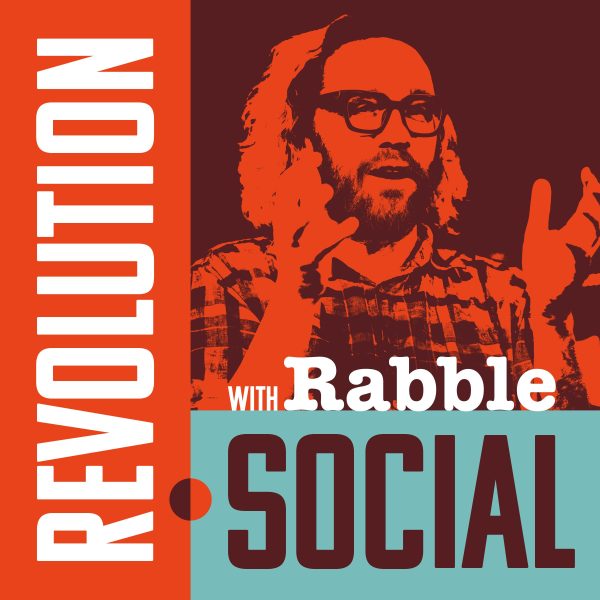
Revolution.Social
- Episodes
- 53
- Released
- every two weeks
- Latest episode
- Oct 8, 2026
About the podcast
A podcast about the future of social media and reclaiming our digital communities. Revolution.Social is hosted by technologist and community advocate Rabble, a.k.a. Evan Henshaw-Plath — who was Twitter’s first employee and hired Jack Dorsey. In weekly interviews, Rabble will interview thought leaders, technologists, academics, and more about the need for a new social media "bill of rights." Just as the original Bill of Rights protected individual freedoms from government overreach, we need fundamental protections from corporate control and surveillance capitalism. This is the start of a conversation about what developers are building, how they're building it, and what consumers need to be asking for. Guests will include Jack Dorsey (former CEO & co-founder of Twitter); Kara Swisher (host of On with Kara Swisher, co-host of Pivot); Cory Doctorow (science fiction author & former editor of Boing Boing); and Taylor Lorenz (founder of User Mag, host of Power User).
Episodes 53
Gary Vee Was Right About Social Media. Here’s What’s Next.
What can history teach us about surviving the AI era?Before Gary Vaynerchuk became a household name, he was running his family's wine business in New Jersey, pioneering digital marketing before most people knew …
Show notes
What can history teach us about surviving the AI era?
Before Gary Vaynerchuk became a household name, he was running his family's wine business in New Jersey, pioneering digital marketing before most people knew what it was. From launching one of the first e-commerce wine sites in 1996 to being one of Twitter's earliest power users, he was one of the first people to prove how social media could transform a business.
In this episode, Gary sits down with Rabble, CEO of Divine, to make sense of where social media has been and where AI is taking us next. They discuss why teen social media bans in countries including Australia aren’t working, the rise of interest media, and why the moral panic around AI is nothing new.
Chapters:
00:00 Introduction
05:03 Gary’s Early Days on Twitter
09:13 Why Gary Saw Social Media's Potential First
10:20 How Twitter Was Built
14:36 AI and the Future of Technology
17:16 Why AI Fear Is Being Weaponized
18:24 Moral Panics: From Comic Books to AI
23:43 Humans Will Always Be Human
26:08 How Google Killed the Yellow Pages
28:21 Why Technology Always Wins in the End
30:43 Social Media Bans and Parenting
33:10 Why Australia's Social Media Ban and Parenting
36:57 How Gary Maximizes for Joy
40:37 Bringing Back Vine with Divine
41:30 Why Algorithms Are Useful
44:58 Analog and the Future
Show notes:
Gary Vee on YouTube: https://www.youtube.com/channel/UCctXZhXmG-kf3tlIXgVZUlw
VaynerMedia: https://vaynermedia.com/
VaynerX: https://vaynerx.com/
VeeFriends: https://veefriends.com/
Gary Vaynerchuk: https://garyvaynerchuk.com/
Follow Rabble on Bluesky: https://bsky.app/profile/rabble.nz
Follow the podcast: https://episodes.fm/1824528874
This episode was executive produced by Alice Chan from Flock Marketing.
To learn more visit https://revolution.social/
Gary Vee Was Right About Social Media. Here’s What’s Next.
What can history teach us about surviving the AI era?Before Gary Vaynerchuk became a household name, he was running his family's wine business in New Jersey, pioneering digital marketing before most people knew …
Show notes
What can history teach us about surviving the AI era?
Before Gary Vaynerchuk became a household name, he was running his family's wine business in New Jersey, pioneering digital marketing before most people knew what it was. From launching one of the first e-commerce wine sites in 1996 to being one of Twitter's earliest power users, he was one of the first people to prove how social media could transform a business.
In this episode, Gary sits down with Rabble, CEO of Divine, to make sense of where social media has been and where AI is taking us next. They discuss why teen social media bans in countries including Australia aren’t working, the rise of interest media, and why the moral panic around AI is nothing new.
Chapters:
00:00 Introduction
05:03 Gary’s Early Days on Twitter
09:13 Why Gary Saw Social Media's Potential First
10:20 How Twitter Was Built
14:36 AI and the Future of Technology
17:16 Why AI Fear Is Being Weaponized
18:24 Moral Panics: From Comic Books to AI
23:43 Humans Will Always Be Human
26:08 How Google Killed the Yellow Pages
28:21 Why Technology Always Wins in the End
30:43 Social Media Bans and Parenting
33:10 Why Australia's Social Media Ban and Parenting
36:57 How Gary Maximizes for Joy
40:37 Bringing Back Vine with Divine
41:30 Why Algorithms Are Useful
44:58 Analog and the Future
Show notes:
GaryVee on YouTube: https://www.youtube.com/channel/UCctXZhXmG-kf3tlIXgVZUlw
VaynerMedia: https://vaynermedia.com/
VaynerX: https://vaynerx.com/
VeeFriends: https://veefriends.com/
Gary Vaynerchuk: https://garyvaynerchuk.com/
Follow Rabble on Bluesky: https://bsky.app/profile/rabble.nz
Follow the podcast: https://episodes.fm/1824528874
This episode was executive produced by Alice Chan from Flock Marketing.
To learn more visit https://revolution.social/
What if Social Media Was Good for You? Taylor Lorenz, Reggie COUZ, and Rabble
At VidCon 2026, journalist Taylor Lorenz, sat down with Rabble and creator, Reggie COUZ, to discuss social media’s bad reputation and explore whether it’s possible for social media to actually be good for you …
Show notes
At VidCon 2026, journalist Taylor Lorenz, sat down with Rabble and creator, Reggie COUZ, to discuss social media’s bad reputation and explore whether it’s possible for social media to actually be good for you.
In their chat, they make a case for a different path forward not just for creators, but for anyone who spends time on the internet. Reggie shares the disorienting experience of having his content flagged with no explanation and with no recourse, which Rabble points out is because the social media giants have consolidated all of the power to just a few key players.
The conversation covers what podcasting got right,, the difference between using AI as a creative tool and AI slop, and why providing people with ownership of their audiences, and content, is crucial to building a better internet.
Show notes:
Taylor Lorenz YouTube channel: @TaylorLorenz
Reggie COUZ YouTube channel: @ReggieCOUZOfficial
Follow Rabble on Bluesky: https://bsky.app/profile/rabble.nz
Follow the podcast: https://episodes.fm/1824528874
Our executive producer is Alice Chan from Flock Marketing.
To learn more about Rabble’s social media bill of rights, and sign up for our newsletter, visit https://revolution.social/
Learning from Twitter’s Chaos for Divines Comeback!
The tables have turned! In this episode, CEO of VidCon Jim Louderback asks Rabble about his time as Twitter’s first employee, the chaotic rise of social media, and what the future of a decentralized social …
Show notes
The tables have turned! In this episode, CEO of VidCon Jim Louderback asks Rabble about his time as Twitter’s first employee, the chaotic rise of social media, and what the future of a decentralized social media world can look like.
Rabble talks about what he learned and how he's using those learnings to revive Vine in a way where creators keep ownership of their content, their audience, and their income. He talks about Twitter's early days, why podcasting never fell into the same trap as the rest of internet media, and what Divine is doing to give creators the control they lost.
Show notes:
Jim Louderback on Twitter: https://x.com/jlouderb
Follow Rabble on Bluesky: https://bsky.app/profile/rabble.nz
Follow the podcast: https://episodes.fm/1824528874
Our executive producer is Alice Chan from Flock Marketing.
To learn more about Rabble’s social media bill of rights, and sign up for our newsletter, visit https://revolution.social/
Rebuilding Social Media From Scratch!
What happens when the person who once architected one of social media’s biggest platforms decides it needs to be entirely re-thought?From day one Blaine Cook helped build Twitter creating the @ mention, OAuth …
Show notes
What happens when the person who once architected one of social media’s biggest platforms decides it needs to be entirely re-thought?
From day one Blaine Cook helped build Twitter creating the @ mention, OAuth, and numerous technologies that still quietly power the internet. Disillusioned by what social media has become, he stepped back to rethink it entirely.
In this episode, he chats with Rabble about Twitter's early chaos, the decisions that shaped it, and why he refuses to accept that these platforms can't be changed. Today he’s building a better approach to online community called Roundabout, Blaine explains why he's betting on people to get this right.
Show notes:
Blaine Cook on Twitter: @blaine
Blaine Cook on Bluesky: @blaine.bsky.social
Blaine Cook on Mastodon: @[email protected]
Roundabout app: https://joinroundabout.com/
New_ Public foundation: https://newpublic.org/
Follow Rabble on Bluesky: https://bsky.app/profile/rabble.nz
Follow the podcast: https://episodes.fm/1824528874
Our executive producer is Alice Chan from Flock Marketing.
To learn more about Rabble’s social media bill of rights, and sign up for our newsletter, visit https://revolution.social/
Is the Saudification of America Underway?
From sitting next to Bezos to fighting from outside The Washington Post, Karen Attiah refuses to give up.Karen Attiah went from a grad student cheering on the Arab Spring to The Washington Post’s Global …
Show notes
From sitting next to Bezos to fighting from outside The Washington Post, Karen Attiah refuses to give up.
Karen Attiah went from a grad student cheering on the Arab Spring to The Washington Post’s Global Opinions editor who hired Jamal Khashoggi. When she was fired over benign comments about Charlie Kirk she took to the internet and continued to use her knowledge of technology to speak truth to power. In this episode, she chats with Rabble about how social media brought her to journalism, institutional power, the rise of authoritarianism, and how we could all use a little more fun in our lives.
Now teaching, writing, and tweeting on multiple social media platforms of her own, Karen explains why it’s important to keep fighting.
Show notes:
Karen’s Twitter: @KarenAttiah
Resistance Summer School: https://www.resistancestudiesseries.com/
The Golden Hour Substack: https://karenattiah.substack.com/
Follow Rabble on Bluesky: https://bsky.app/profile/rabble.nz
Follow the podcast: https://episodes.fm/1824528874
This episode was executive produced by Alice Chan from Flock Marketing.
To learn more about Rabble’s social media bill of rights, and sign up for our newsletter, visit https://revolution.social/
Vine Was Chaos. That’s Why It Worked.
What happens when you take Larry King’s studio, a crack production team, improv comedy, internet chaos, and the earliest generation of Vine creators?You got Behind The Vine.Eric Artell, the former host of …
Show notes
What happens when you take Larry King’s studio, a crack production team, improv comedy, internet chaos, and the earliest generation of Vine creators?
You got Behind The Vine.
Eric Artell, the former host of Behind the Vine, joins Rabble for a deep dive into the golden age of Vine, the birth of creator culture, and the internet before every platform became an engagement machine. From interviewing rising Vine stars to witnessing the mental health realities behind online fame, Eric shares stories from one of social media’s weirdest and most influential eras.
But most importantly: will we perhaps get a “Behind Divine” sequel?
In this episode:- 07:39 How “Behind The Vine” captured a generation of creators before influencers became an industry
- 15:35 Why authenticity still beats polished content, even in an algorithm-driven internet
- 23:39 What happened to Vine stars after the app disappeared, and how internet fame changed their lives
- 31:55 Can Divine bring back the creativity and community that made Vine special?
- 33:58 Why audiences connect more deeply with creators who feel human instead of optimized
- 35:47 The missing ingredient in today’s content economy: genuine human connection
- 40:40 The mental health realities creators face behind the pressure of constant visibility
- 46:11 Why social media platforms need stronger protections and healthier spaces for younger users
- 51:34 How Vine went from internet phenomenon to shutdown cautionary tale almost overnight
- 56:29 The future of content creation, creator ownership, and building platforms beyond the algorithm
Eric’s Instagram: https://www.instagram.com/ericartell/
Behind The Vine on YouTube: https://www.youtube.com/channel/UCCauu8QfE8Z4uvkTS2l9vNw
NerdHQ helps provide therapy for those who can’t afford it: https://nerdhq.org/
80-year Harvard mental health study showing that community leads to happier lives: https://news.harvard.edu/gazette/story/2017/04/over-nearly-80-years-harvard-study-has-been-showing-how-to-live-a-healthy-and-happy-life/Learn more about Divine: https://about.divine.video/
And download Divine in the App Store: https://apps.apple.com/us/app/divine-video/id6747959501
or Google Play: https://play.google.com/store/apps/details?id=co.openvine.app
OG Viner on How the Creator Economy is Broken
He hit a million followers on Vine before “creator” was even a job title. Now Reggie Couz (an OG Viner) sits down with Rabble to answer the question that haunts every creator: Wwhat happens when the platform …
Show notes
He hit a million followers on Vine before “creator” was even a job title. Now Reggie Couz (an OG Viner) sits down with Rabble to answer the question that haunts every creator: Wwhat happens when the platform you built your career on decides it doesn’t need you anymore?
From mustaches and wigs in his mom’s New Jersey house to Vine Meetups in LA, Reggie traces how he became an internet star and why he’s now leaning in on decentralization and the revival of 6-second looping videos on Divine. It’s a conversation about creativity, community, ownership, and refusing to keep renting your own followers back from Big Tech.In this episode
Chapters- 4:05 How Reggie talked his mom into taking a “gap year” that became his life to chase six-second fame—and hit a million followers before that year was up
- 11:11 Why Vine was six seconds (hint: it was a phone limitation, not a creative choice)
- 12:22 The secret history of how platforms actually get built—Twitter from protest text messages, Instagram from an abandoned check-in game, Vine from “what can we do with video?”
- 15:38 The Hollywood actors’ union as a blueprint for creator solidarity
- 24:09 Divine: rebuilding Vine on an open, decentralized protocol where you own your identity, your audience, and your work
- 26:45 What “enshittification” really means, and why creators are the value platforms keep extracting
- 41:43 What social media should look like in 2026 — and how to “just get weird again”
How Social Media Platforms Use Regulation To Stifle Competition
Are we regulating the wrong tech problems? Many opponents of Big Tech cheered recent lawsuits that found Meta and YouTube liable for violating consumer protection laws and designing their products to addict …
Show notes
Are we regulating the wrong tech problems? Many opponents of Big Tech cheered recent lawsuits that found Meta and YouTube liable for violating consumer protection laws and designing their products to addict kids and teens. But in the battle over user safety, is free expression going to end up as a casualty? In this episode of Revolution.Social, Rabble (Twitter’s first employee) sits down with two influential voices in digital media: Mike McCue (CEO of Flipboard) and Mike Masnick (Founder of Techdirt). McCue and Masnick explain why social media regulations could have unintended consequences. Masnick cites a 2016 carveout to Section 230 of America's Communications Decency Act, known as FOSTA-SESTA, that was supposed to crack down on online sex trafficking. In reality, it made it harder for police to track down sex traffickers, and pushed sex workers into taking more dangerous offline work. Today on the podcast: - Why is Section 230 — which provides limited immunity to online platforms for content posted by their users — the most misunderstood law on the internet? - Could regulations aimed at punishing Meta actually kill off its competitors? - And should governments be responsible for checking the power of AI giants? Plus: Why the right to exit has prevented Gmail from becoming "enshittified." Chapters: 0:00 Introduction 2:45 Section 230 and Regulatory Moats 7:10 The History of Moral Panics and Technology 10:25 From AOL Centralization to the Open Web 15:26 The Hidden Costs of Losing Section 230 22:17 GDPR and Unintended Consequences 27:36 Lessons from the Meta Privacy and Safety Trials 33:24 Internal Research Is Not a Scandal 38:22 How Content Moderation Gets Weaponized 45:31 The Case for Profile Portability 53:21 Regulating Incentives vs. Mandates 1:03:56 AI Regulation and the Risk of New Walled Gardens 1:10:38 Replicating the Open Web's Success Flipboard Techdirt Follow Rabble on Bluesky Follow the podcast This episode was produced and edited by Eric Johnson from LightningPod.fm. Alice Chan, Flock Marketing, is our exec producer. To learn more about Rabble’s Social Media Bill of Rights, and sign up for our newsletter, visit https://revolution.social/Can We Bring Vine Back From the Dead?
Is 2026 the new 2016? Back then, we didn't know that Facebook could win or lose elections, and become weaponized, that Gamergate-style harassment would take over politics, or that we were about to lose the …
Show notes
Is 2026 the new 2016? Back then, we didn't know that Facebook could win or lose elections, and become weaponized, that Gamergate-style harassment would take over politics, or that we were about to lose the creative, absurd, and sometimes brilliant short-form video platform Vine. Here's the good news: We're going to try to recapture the magic of Vine. Rabble’s new app, Divine, is available now at Divine.video and the links below. To celebrate Divine's launch, we brought back two of our favorite podcast guests: journalist & founder of User Mag, Taylor Lorenz; and the host of the podcast "There Are No Girls on the Internet," Bridget Todd. They talk with Rabble about the rise of Vine, why it failed as a business and got shut down by Twitter, and how that rise & fall rippled throughout the creator economy. Taylor & Bridget have spent years documenting the evolution of social platforms from the inside out, and Rabble adds some behind the scenes color about the big brains and egos at Twitter. They also talk about what makes Divine different from Vine and existing apps like TikTok and Snapchat. Here's to a joyful, creative, open internet. Join us on Divine! The link to download the app is below. Download the app: App Store Google Play ZapStore Chapters: 00:00 Introduction 01:42 The Rise and Impact of Vine 04:05 Simplicity and the Outward-Facing Camera 07:02 Evolution of the Proto-Influencer 11:27 Black Culture and Subverting Power Dynamics 15:08 Curation vs Algorithmic Feeds 20:21 Why Vine Collapsed 23:27 The Culture Gap Between Tech and Creators 28:13 Competition and the Birth of TikTok 33:14 Hope and the Future of Social Media 38:42 Decentralization and User Control 50:26 Bridging Humanity and Technology Taylor’s Substack, User Mag Her podcast, “Power User” Bridget’s Instagram Her podcast, “There Are No Girls on the Internet” Follow Rabble on Bluesky Follow the podcast This episode was produced and edited by Eric Johnson from LightningPod.fm, and executive produced by Alice Chan from Flock Marketing. To learn more about Rabble’s Social Media Bill of Rights, and sign up for our newsletter, visit https://revolution.social/Why the Algorithm Loves a Villain, And How to Beat It
When the internet is full of distortions, fake news, and AI-generated slop, how can facts and journalism rise to the top? Former BBC and Vice journalist Sophia Smith Galer has one possible way to beat the …
Show notes
When the internet is full of distortions, fake news, and AI-generated slop, how can facts and journalism rise to the top? Former BBC and Vice journalist Sophia Smith Galer has one possible way to beat the misinformation and exploitation. Her app Sophiana writes "algorithm-ready" video scripts for journalists and experts, to cut through the noise and help them go viral. In this episode of Revolution.Social, Rabble (Twitter’s first employee) sits down with Sophia to talk about her reporting on our broken digital discourse, as well as her new book "How to Kill a Language: Power, Resistance, and the Race to Save Our Words.” Today on the podcast, Sophia and Rabble explore: - How bad actors manipulate our feeds - The transition from traditional newsrooms to video journalism on TikTok - The decline of language diversity around the world due to "linguicide" Plus: What happened when Sophia discovered an AI-generated "autobiography" of herself. Chapters: 0:00 Introduction 3:53 Gaming the Algorithm and Content Moderation 9:39 Sophia's AI-Hallucinated Biography 13:12 From BBC News to Independent Journalism 16:27 Building Sophiana: AI Tools for Journalists 19:13 Longform Books vs. Short-Form Video 24:00 Platform Lock-in and Substack 26:12 Instagram and the Myth of "Exposure" 28:29 Labor Rights and Industry Chaos 32:05 How to Kill a Language 37:32 Saving Endangered Languages in California 40:21 Multilingualism and Cultural Identity Sophia’s book, “How to Kill a Language” Her Instagram Sophiana Follow Rabble on Bluesky Follow the podcast This episode was produced and edited by Eric Johnson from LightningPod.fm, and executive produced by Alice Chan from Flock Marketing. To learn more about Rabble’s Social Media Bill of Rights, and sign up for our newsletter, visit https://revolution.social/Why does the internet feel worse than it used to?
From scams and spam to platforms we don’t control, many of the systems shaping our online lives feel increasingly broken. In this episode of Revolution.Social, Rabble (Twitter’s first employee) sits down with …
Show notes
From scams and spam to platforms we don’t control, many of the systems shaping our online lives feel increasingly broken. In this episode of Revolution.Social, Rabble (Twitter’s first employee) sits down with Molly White, software engineer, Wikipedia editor, and creator of “Web3 is Going Just Great”, to unpack what’s actually gone wrong, and whether it can be fixed. Molly has spent years documenting the realities behind crypto and the modern internet, from high-profile collapses to the incentives that allow scams and bad actors to thrive. Together, they explore: Why Wikipedia still works as a model of the “digital commons” How crypto evolved from idealism into an ecosystem full of scams Whether the people building these systems truly believe in them Why prediction markets like Polymarket and Kalshi raise new risks Plus: how Rabble became the subject of a $50,000 prediction market bet. Can we rebuild an internet that’s more open, trustworthy, and user-controlled — or are these problems here to stay? Chapters: 0:00 Introduction 4:34 Wikipedia as a Commons 10:25 Resisting Authoritarian Attacks on Open Projects 14:05 The Rise and Fall of the Web3 Utopian Myth 18:23 Crypto Scams and Failures 20:34 Cozying Up to the White House 24:00 The Dangers of Online "Safety" Laws 30:19 Regulatory Capture and the Return of High-Risk Finance 38:23 "The Financialization of Everything" 45:51 Social Good vs. Token Value 55:26 Returning to the IndieWeb and Open Protocols 1:01:27 Why You Should Own Your Domain Name 1:05:09 Protocols Over Platforms as a Check on Power Molly’s website Her newsletter, Citation Needed Follow Rabble on Bluesky Follow the podcast This episode was produced and edited by Eric Johnson from LightningPod.fm, and executive produced by Alice Chan from Flock Marketing. To learn more about Rabble’s Social Media Bill of Rights, and sign up for our newsletter, visit https://revolution.social/Ethical Venture Capital: Why Social Media Needs a Conscience (with Brad Burnham & Zoe Weinberg)
In an era of hypergrowth and enshittification, can venture capitalists win by investing with conscience? Today on Revolution.Social, Rabble talks to Union Square Ventures co-founder Brad Burnham and ex/ante …
Show notes
In an era of hypergrowth and enshittification, can venture capitalists win by investing with conscience? Today on Revolution.Social, Rabble talks to Union Square Ventures co-founder Brad Burnham and ex/ante founder Zoe Weinberg about digital agency, human rights, and tech that makes the world more inclusive and democratic. "One of the broader objectives of ex/ante is to think about how do you move beyond surveillance capitalism?" Zoe says. "And the irony is not lost on me that venture itself is part of what created it. And so I think we have to be intellectually honest about that and also come up with a compelling reason why this time is going to be different." Brad is a legendary investor known for his work in the early Web 2.0 era, when Union Square Ventures backed companies such as Twitter, Tumblr, and Etsy. But with hindsight, he says VCs have a "moral responsibility" to anticipate the consequences of their investments. "The more time we spent with these companies, the better we understood that the more people in our network, the more valuable that network," Brad says. "What we didn't understand is that it was going to lead to the consolidation around Google, Apple, Facebook, Amazon. We didn't understand that it was so powerful and there was so much value ... that there was no way that a startup could compete with those dominant players." Chapters: 0:00 Introduction 6:13 Brad’s Early Career and the Birth of Web 2.0 9:05 The Early Days of Union Square Ventures 11:01 Zoe’s Path From Conflict Zones to Digital Freedom 13:45 How Venture Capital Actually Works 18:46 The Evolution of Digital Marketplaces 22:09 The Shift from Open Protocols to Walled Gardens 29:41 Crypto as a New Economic Incentive Model 36:53 Is Technology "Neutral?" 40:33 Public Benefit Corporations 44:16 Personal Data Ownership in the Age of AI 53:25 Centralization vs. Human Agency 57:18 The Future of Agents and Liberatory Technology Follow Rabble on Bluesky Follow the podcast This episode was produced and edited by Eric Johnson from LightningPod.fm, and executive produced by Alice Chan from Flock Marketing. To learn more about Rabble’s Social Media Bill of Rights, and sign up for our newsletter, visit https://revolution.social/Escaping Algorithmic Binds: Creators vs. Corporate Platforms (w/ Bridget Todd & Rudy Fraser at SXSW)
The biggest social media platforms in the world have alienated their users and trapped them inside algorithms that only serve corporate interests. But there is good reason to have hope for the future of …
Show notes
The biggest social media platforms in the world have alienated their users and trapped them inside algorithms that only serve corporate interests. But there is good reason to have hope for the future of decentralized social apps, made for and by their communities. In this live interview recorded at SXSW 2026 in Austin, Texas, Rabble speaks with Rudy Fraser, the creator of Blacksky Algorithms, and Bridget Todd, the host of the podcast There Are No Girls on the Internet and an affiliate at Harvard University's Berkman Klein Center for Internet and Society. "I want to see more optimistic visions of the future," Rudy says. "I want to see less dystopian visions. I want to see more Afrofuturism ... There's lots of people talk about 'let a thousand flowers bloom.' I think it [decentralization] does open up opportunities for people to be really creative." Rabble, Rudy, and Bridget spoke about the evolution of the creator economy, how to build a more equitable internet, and why podcasts are the most democratic form of social media. “If you've ever listened to a podcast at the end, you probably hear the host say something along the lines of, Oh, subscribe on Spotify, Apple Podcasts, or wherever you get your podcasts,” Bridget says. “It really means something kind of radical because that's not just something that people say. It is true … If I say something that Apple doesn't like, Apple can't shut down my podcast because it doesn't work that way, thanks to the RSS feed.” Chapters: 00:00 Introduction 02:40 Rudy Fraser and the Story of Blacksky 04:10 Bridget Todd on Identity and Technology 08:43 The Power of RSS Feeds 11:51 Rethinking Algorithms for Community Discovery 16:10 Explaining Decentralization to Mainstream Users 20:41 Economic Incentives and Monetization Models 24:46 Lessons from the Twitter Migration 27:57 Narrative Control and Cross-Platform Integration 31:34 Scalability and Digital Strikes 34:00 Rebuilding Infrastructure from First Principles 37:55 The Nuance Problem in Large-Scale Moderation 42:37 Beyond the Sharecropping System of Big Tech 46:58 The Right to Replatforming and Social Coding 51:56 Policy and Global Tech Regulation Learn more about Blacksky: https://blackskyweb.xyz/ Listen to There Are No Girls on the Internet: https://www.tangoti.com/ Watch Rudy’s previous interview: https://youtu.be/UA1DutGDVcs?si=KoGgvv-u5DAyh4UM Watch Bridget’s previous interview: https://youtu.be/lpXr_JvuVIw?si=zsiolnlf1OBaf1mt Follow Rabble on Bluesky: https://bsky.app/profile/rabble.nz Follow the podcast: https://revolution.social/episodes/ This episode was produced and edited by Eric Johnson from LightningPod.fm, and executive produced by Alice Chan from Flock Marketing. To learn more about Rabble’s Social Media Bill of Rights, and sign up for our newsletter, visit https://revolution.social/What Creators Can Do & AI Can’t (with Jim Louderback)
Jim Louderback is a media pioneer: a journalist and columnist who went on to become the CEO of the internet-based television network Revision3, and later of the global events business, VidCon. Today, as the …
Show notes
Jim Louderback is a media pioneer: a journalist and columnist who went on to become the CEO of the internet-based television network Revision3, and later of the global events business, VidCon. Today, as the editor of the popular Inside the Creator Economy newsletter, he is thinking a lot about how creators can respond to AI. "What are the things that they can uniquely do that AI can't?" he asks. "If you don't lean into the things that make you uniquely human ... I think we then just end up in this one-to-one world, where all media is crafted specifically 100% for us, and we have no fandom, we have no culture, we have no connections." Today on Revolution.Social, Jim and Rabble talk about the history of blogging, video, social media, and digital celebrities; the "tragedy of the platforms," that creators on TikTok and YouTube don't know enough about their audiences; and the benefits of having some kind of gatekeepers in a creative ecosystem. They also discuss the pivotal role VidCon played in uniting digital influencers, and how Gen Z is making fandom more and more niche. Chapters: 0:00 Introduction 5:43 The Impact of VidCon and Legitimatizing Creators 11:20 Community vs. Celebrity 14:19 Moving Beyond Platform Dependence 19:21 Parasocial Relationships and Personal Branding 22:19 Democratized vs. Institutional Gatekeepers 27:16 AI's Trust Crisis 34:40 Reclaiming Humanity with diVine 41:59 The Economics of Belonging 48:26 Streaming, Long-Form Content, and Real-Time Validation 56:54 The Failure of Video Replies 59:43 Nostalgia and the Future of Creator Ethics Learn more about Jim: https://louderback.com/ Inside the Creator Economy: https://insidethecreator.beehiiv.com/ Follow Rabble on Bluesky: https://bsky.app/profile/rabble.nz Follow the podcast: https://revolution.social/episodes/ This episode was produced and edited by Eric Johnson from LightningPod.fm, and executive produced by Alice Chan from Flock Marketing.An Alternate History of Social Media (with Ben Werdmuller)
Ben Werdmuller is the Senior Director of Technology at ProPublica and a seasoned technologist who has spent his career building platforms that prioritize social impact and integrity. In 2004, he co-founded the …
Show notes
Ben Werdmuller is the Senior Director of Technology at ProPublica and a seasoned technologist who has spent his career building platforms that prioritize social impact and integrity. In 2004, he co-founded the open-source social networking software Elgg, which for more than 20 years has served as an alternative to Facebook for governments, schools, and political movements around the world. "They are very similar," Ben says of Elgg and Facebook. "PHP-based social network[s], both heavily inspired by LiveJournal ... They took different paths and now Mark has a private Hawaiian island, and I don't. And also, Mark has undermined democracies and been culpable in a genocide." Today on Revolution.Social, Ben and Rabble talk about his career transitions from technologist to venture capitalist to his current technical leadership at ProPublica. They also discuss how the sensitivities with which journalists approach new technologies like AI; the ebbs and flows of the Indie Web movement; and how builders in tech, including vibe-coders, can choose to lean into ethics, community, and social good. Chapters: 0:00 Introduction 3:08 Investigating Power at ProPublica 7:32 Media and Venture Capital Don't Mix 13:53 Why Newsrooms Struggle with Innovation 17:15 AI Can't Do Journalism 22:15 Subpoenas and Data Privacy 25:09 The Rise of the IndieWeb 32:11 Vibe Coding and Agentic Programming 42:45 Human Intent in an AI-Built Web 45:32 Open-Source Social with Elgg 51:26 Mark Zuckerberg's Divergent Path 56:31 Co-Designing the Future of Work and AI Follow Rabble on Bluesky: https://bsky.app/profile/rabble.nz Follow the podcast: https://episodes.fm/1824528874 This episode was produced and edited by Eric Johnson from LightningPod.fm, and executive produced by Alice Chan from Flock Marketing. To learn more about Rabble’s Social Media Bill of Rights, and sign up for our newsletter, visit https://revolution.social/Ethics Have Become Optional in Big Tech. We Can Do Better. (with Alex Komoroske)
Alex Komoroske spent over a decade at Google overseeing key initiatives for ads, Chrome, and Maps, before running Corporate Strategy at Stripe. At heart, he's a champion for the open web. Today, as the CEO and …
Show notes
Alex Komoroske spent over a decade at Google overseeing key initiatives for ads, Chrome, and Maps, before running Corporate Strategy at Stripe. At heart, he's a champion for the open web. Today, as the CEO and co-founder of Common Tools, Alex says technologists must lean into ethics and away from short-term results. "We're in the late stage of this extractive kind of thing, where we're all just trying to wring more out of these walled gardens," Alex adds. "And what bothers me is that all of us seem to have forgotten that. And everyone's like, in this zombie state: 'Well, the thing says make number go up.'" Today on Revolution.Social, Alex and Rabble talk about the challenges of maintaining interoperability in an era of proprietary lock-in; the difference between "hollow" vs. "resonant" tech experiences; and the Resonant Computing Manifesto, which Alex co-drafted last year. They also discuss the rightward political shift of Silicon Valley, Alex's Lord of the Rings-inspired archetypes for understanding builders, and how to curate cozy offline communities. Chapters: 0:00 Introduction 5:24 The "Slime Mold" Theory of Organizations 10:53 The Fallacy of Measurement and KPIs 15:49 Christopher Alexander and Pattern Language 17:51 The Resonant Computing Manifesto 21:06 Chatbots vs. Agentic LLMs 26:54 Saruman vs. Radagast 31:53 Power Dynamics and "Money Disease" 38:45 How LLMs Change Software 42:52 The History of the Luddite Movement 47:54 APIs as Public Infrastructure 52:48 Lessons from the Open Web and Chrome 59:43 App Stores vs. The Web Sandbox 1:04:42 Balancing Open Systems with Speed 1:09:09 User-Driven Innovation at Twitter 1:10:53 Cloud Security Tiers and Data Privacy 1:16:44 The Power of Physical Salons and Curation 1:22:47 Hypersituated Software and Local Community Follow Rabble on Bluesky: https://bsky.app/profile/rabble.nz Follow the podcast: https://episodes.fm/1824528874 This episode was produced and edited by Eric Johnson from LightningPod.fm, and executive produced by Alice Chan from Flock Marketing. To learn more about Rabble’s Social Media Bill of Rights, and sign up for our newsletter, visit https://revolution.social/Silicon Valley Has Lost Its Moral Compass (with Anil Dash)
Anil Dash is a pioneering technologist, advocate for ethical tech, and former CEO of Glitch, who currently serves on the board of the Electronic Frontier Foundation. Looking back on his career, he says Silicon …
Show notes
Anil Dash is a pioneering technologist, advocate for ethical tech, and former CEO of Glitch, who currently serves on the board of the Electronic Frontier Foundation. Looking back on his career, he says Silicon Valley has lost its moral compass because it no longer responds to shame. "You stopped being able to say, don't do this thing, it makes you look bad," Anil says. "Facebook never cared about that. And most of the product managers at OpenAI used to work at Facebook.” “If [they] were a person that joined Meta after they enabled the Rohingya genocide and then [they] went to work at OpenAI,” he adds, “And you're like, 'Hey, why does your product tell teenagers to self-harm?' They're going to be like, 'What's the problem?'" Today on Revolution.Social, Anil and Rabble talk about the evolution of the independent web, the challenges of maintaining progressive values within the startup ecosystem, and how to use digital tools to foster a more democratic society. They also explore the backlash against AI, which Anil believes to be a manifestation of all the disruption the tech industry has caused in people's lives, and why that doesn't mean we have to give up on AI entirely. Chapters: 0:00 Introduction 5:12 The History of Decentralization 12:07 AI Ethics and Intellectual Property 16:57 The Silicon Valley Playbook: Economic Disruption 24:50 What We Can Learn from Prince and Taylor Swift 31:18 The Culture of Curation: From Reblogging to Vine 41:16 The Decline of Corporate Shame and Accountability 46:15 AI as a Tech Industry Fashion Trend 54:15 Why Coding in AI Feels Better than Making Art 1:03:01 We Need a Rubric for Ethical, Human-Centric AI 1:08:46 Grassroots Resistance to Big Tech Follow Rabble on Bluesky: https://bsky.app/profile/rabble.nz Follow the podcast: https://episodes.fm/1824528874 This episode was produced and edited by Eric Johnson from LightningPod.fm, and executive produced by Alice Chan from Flock Marketing. To learn more about Rabble’s social media bill of rights, and sign up for our newsletter, visit https://revolution.social/“I've Never Been More Optimistic” (Flipboard’s Mike McCue On the Open Social Web)
Mike McCue has seen a lot of changes over the years to the open web. He was an executive at Netscape, which helped liberate the web from AOL's walled garden; he served on the board of Twitter but wasn’t able to …
Show notes
Mike McCue has seen a lot of changes over the years to the open web. He was an executive at Netscape, which helped liberate the web from AOL's walled garden; he served on the board of Twitter but wasn’t able to prevent it from abandoning its open API ecosystem; and now, as the CEO of Flipboard, he's building towards a more open future. “I've never been more optimistic than I am now about how the internet is going to develop and how the social media world and ecosystem is going to develop into a much more open, connected experience for people, independent of app, independent of platform,” McCue says. But there are still big problems to fix, and today on Revolution.Social, Mike and Rabble talk about most of them, including the devaluation of follower counts, how rage bait economics poison platform incentives, and how AI-generated content lacks soul. As a board member at Patreon, McCue says he’s seeing a renewed demand for authentic human craft & niche communities; at this perilous and promising moment, which vision of the future will win? Chapters: 0:00 Introduction 5:14 From Netscape to the Fediverse 8:49 Elon, Zuckerberg, and the push toward alternatives 14:22 The shutdown of Twitter’s API and the birth of the AT Protocol 19:38 Follower counts don’t matter 22:12 Rage bait economics and platform incentives 25:51 Bluesky and Mastodon 27:50 Niche communities vs. the global town square 30:57 The craft of being human in an AI world 38:09 How to explain the open web to regular users 43:33 Surf and open protocols for social media 54:08 Patreon and business models for the internet 1:02:14 diVine and AI backlash Follow Rabble on Bluesky: https://bsky.app/profile/rabble.nz Follow the podcast: https://episodes.fm/1824528874 This episode was produced and edited by Eric Johnson from LightningPod.fm, and executive produced by Alice Chan from Flock Marketing. To learn more about Rabble’s social media bill of rights, and sign up for our newsletter, visit https://revolution.social/Building Community vs. Building an Audience (with VidCon’s Jacques Keyser)
VidCon programming director Jacques Keyser says there’s a big shift happening in social media: Creators who once lived and died by the algorithm are increasingly looking for ways to “own” their audiences. “No …
Show notes
VidCon programming director Jacques Keyser says there’s a big shift happening in social media: Creators who once lived and died by the algorithm are increasingly looking for ways to “own” their audiences. “No one can take your podcast away, no one can take your newsletter away,” Keyser says. “Once you've built that audience, that is yours, you own that … if you are on YouTube, if you're on TikTok, if you're on Meta, at any point you could violate one of the T's and C's [and lose your account].” VidCon got its start as a small event in a hotel lobby organized by Hank and John Green, and today it’s one of the largest gatherings of digital creators, fans, and industry in the world. Today on Revolution.Social, recorded at the 1 Billion Followers Summit in Dubai, Rabble and Jacques talk about what has changed in the intervening years, both at VidCon and inside the creator economy as a whole. They also talk about how follower counts have become meaningless, how creators actually make money, and why the rise of AI might paradoxically make real-life connection and human authenticity more valuable than ever. Follow Rabble on Bluesky Follow the podcast This episode was produced and edited by Eric Johnson from LightningPod, and executive produced by Alice Chan from Flock Marketing. To learn more about Rabble’s social media bill of rights, and sign up for our newsletter, visit https://revolution.social/The Battle for Digital Freedom and Why KOSA Ain’t It (with Evan Greer)
Evan Greer is a director at Fight for the Future, the digital rights organization that helped organize the SOPA blackout and continues to fight for an internet where ordinary people have a voice. As a parent, a …
Show notes
Evan Greer is a director at Fight for the Future, the digital rights organization that helped organize the SOPA blackout and continues to fight for an internet where ordinary people have a voice. As a parent, a trans activist, and someone who's spent over a decade in the trenches of internet policy, she brings a unique perspective to the debate over how we protect kids online. “So many of these folks that say they want to protect kids are just not actually interested in listening to kids,” Evan says. “And it's really hard to protect kids when you don't listen to them… The amount of videos about Minecraft that I have subjected myself to just so that my kid doesn't feel ashamed coming and talking to me about what kind of content she's consuming has rotted my brain. But what it actually has led to is we do have a trusting relationship.” Today on Revolution.Social, Evan and Rabble talk about how well-intentioned legislation such as KOSA, the Kids Online Safety Act, could become a powerful tool for censorship; why age verification requirements would make digital surveillance even worse; and why our ability to choose the apps we can install on our phones is set to become a “foundational human rights issue.” They also talk about the monopoly power of app stores, the hidden world of data brokers, and why the same politicians who claim to be tough on Big Tech refuse to pass basic privacy legislation. Follow Rabble on Bluesky Follow the podcast This episode was produced and edited by Eric Johnson from LightningPod, and executive produced by Alice Chan from Flock Marketing. To learn more about Rabble’s social media bill of rights, and sign up for our newsletter, visit https://revolution.social/An Update on diVine: Joyscrolling, AI Filtering, and Trust & Safety
Rabble and Alice Chan, Revolution.Social's host and executive producer, share an update on diVine, the new social video app that's bringing back the spirit of Vine and real human creativity (no AI content …
Show notes
Rabble and Alice Chan, Revolution.Social's host and executive producer, share an update on diVine, the new social video app that's bringing back the spirit of Vine and real human creativity (no AI content allowed!). "We're not anti-AI," Alice says. "We just believe that there is great power in human creativity and that humans have kind of had that power taken away from them involuntarily." Recording at the 1 Billion Followers Summit in Dubai, Rabble and Alice talk about how the diVine team is preparing to handle potentially millions of users, and how it’s partnering with trust and safety experts like Yoel Roth, and the team at Bluesky. They also discuss AI content detection, the forthcoming Android beta, and why we need to replace doomscrolling with “joyscrolling.” Follow Rabble on Bluesky: https://bsky.app/profile/rabble.nz Follow the podcast: https://episodes.fm/1824528874 This episode was produced and edited by Eric Johnson from LightningPod.fm, and executive produced by Alice Chan from Flock Marketing. To learn more about Rabble’s social media bill of rights, and sign up for our newsletter, visit https://revolution.social/Open Source Safety Tools for Everyone (with Camille François)
Camille François, assistant professor at Columbia University’s School of International and Public Affairs, has spent her career at the frontlines of trust and safety, including as a principal researcher at …
Show notes
Camille François, assistant professor at Columbia University’s School of International and Public Affairs, has spent her career at the frontlines of trust and safety, including as a principal researcher at Google and the Senior Director of Trust & Safety at Niantic; now the founding president of ROOST (Robust Open Online Safety Tools), she's working to make the safety tools used by big tech companies accessible to everyone. “What children face online right now, the state of the threat is so far ahead from the current state of the defenses,” Camille says. “We know the defenses are brittle. We know the defenses are hypercentralized. We know the defenses are not accessible to the people who want them. And open source is also a hack to build faster together.” Today on Revolution.Social, Camille and Rabble talk about how open source safety tools can strengthen our digital spaces, the impact of the AI moment, and why safety will look different across different platforms … and why that's desirable. Plus: Why “nudifying” apps, similar to the controversial Grok features that unleashed global outrage, have been able to proliferate on social media and app stores. Follow Rabble on Bluesky Follow the podcast This episode was produced and edited by Eric Johnson from LightningPod, and executive produced by Alice Chan from Flock Marketing. To learn more about Rabble’s social media bill of rights, and sign up for our newsletter, visit https://revolution.social/Social Media Should Be Public Infrastructure (with Ben Cerveny)
"My thesis is that humans invent things all the time, and for the first 30 years, we call them technology," says Ben “Neb” Cerveny, president of the Foundation for Public Code. "And then if they work, we call …
Show notes
"My thesis is that humans invent things all the time, and for the first 30 years, we call them technology," says Ben “Neb” Cerveny, president of the Foundation for Public Code. "And then if they work, we call them infrastructure." Ben was part of the original team that built one of the defining Web 2.0 platforms, Flickr, and he even gave Flickr its name. Currently, he is applying what he learned from building digital communities to the next wave of software, web services, and urban planning; Foundation for Public Code, he says, has helped convince most of Europe’s governments that tech solutions don’t need to be privately owned and controlled. Today on Revolution.Social, Ben and Rabble discuss the loss of human curation, which made early social media special; why software has just as much “terroir” as film or food; and how we might govern digital spaces by consensus. They also talk about the origins of Flickr, why Facebook is the fast food of social media, and how to build social platforms with civic intentionality. Follow Rabble on Bluesky Follow the podcast This episode was produced and edited by Eric Johnson from LightningPod, and executive produced by Alice Chan from Flock Marketing. To learn more about Rabble’s social media bill of rights, and sign up for our newsletter, visit https://revolution.social/AI Slop Is Killing the Joy of the Internet (with Bridget Todd)
Bridget Todd is the host of the podcast There Are No Girls on the Internet, a fellow at Harvard's Berkman Klein Center, and a longtime commentator on how platforms shape culture. And she says the rise of …
Show notes
Bridget Todd is the host of the podcast There Are No Girls on the Internet, a fellow at Harvard's Berkman Klein Center, and a longtime commentator on how platforms shape culture. And she says the rise of AI-generated videos has turned her — an OG superfan of Vine — against short-form video altogether. "I can't trust that any of these are real cats doing cute things," Bridget says. "It's completely turned me off of a kind of content that I've been enjoying for decades." Today on Revolution.Social, Bridget and Rabble discuss what diVine needs to do to bring back the joy of Vine; how AI slop triggers real physiological responses, even when we know it's fake; the disconnect between Silicon Valley's AI enthusiasm and everyone else's horror; and why movements like #MeToo and Black Lives Matter might not be possible in today's algorithmic landscape. They also explore the moral panic around kids online, why legislation aimed at "protecting children" often harms them most, and what it would take to build an internet rooted in love and joy instead of extraction. Follow Rabble on Bluesky Follow the podcast This episode was produced and edited by Eric Johnson from LightningPod, and executive produced by Alice Chan from Flock Marketing. To learn more about Rabble’s social media bill of rights, and sign up for our newsletter, visit https://revolution.social/[Re-Air] What's Next for Jack Dorsey After Twitter and Bluesky
Happy new year to all! Today, we're re-airing the first episode of Revolution.Social, an interview with Jack Dorsey. We'll be back next week with a new interview about the future of social media. Twitter never …
Show notes
Happy new year to all! Today, we're re-airing the first episode of Revolution.Social, an interview with Jack Dorsey. We'll be back next week with a new interview about the future of social media. Twitter never should have been a traditional tech company, says Twitter co-founder and former CEO Jack Dorsey. Instead, it should have been designed as a protocol — like email, or podcasting. “That was the pure expression of it from day one,” Dorsey says. “And it was never really allowed to be that because it was on this fast track to becoming a public company.” Today on Revolution.Social, Dorsey explains why it’s still possible to build a successful business on top of open protocols and decentralized social platforms like Nostr. He and Rabble also discuss why Jack doesn’t regret encouraging Elon Musk to buy Twitter; why he left Bluesky; the problem with centralized AI firms; and the evolution of cryptocurrencies such as Bitcoin. Follow Rabble on Bluesky Follow the podcast This episode was produced and edited by Eric Johnson from LightningPod, and executive produced by Alice Chan from Flock Marketing. To learn more about Rabble’s social media bill of rights, and sign up for our newsletter, visit https://revolution.social/Decentralized Social Media for 40 Million+ Users (with Bluesky’s Jay Graber)
When Bluesky hit its millionth user, it had fewer than 10 employees; today, it has more than 40 million users, but only 30 workers; that means that “everyone on the team wears a lot of hats,” says Bluesky CEO …
Show notes
When Bluesky hit its millionth user, it had fewer than 10 employees; today, it has more than 40 million users, but only 30 workers; that means that “everyone on the team wears a lot of hats,” says Bluesky CEO Jay Graber. It also makes it much harder to comply with regulations like the new wave of age verification laws, which have been designed for Meta-sized social media companies. “There's a whole patchwork of legislation [in different jurisdictions] … these massive nation state-sized corporations are just going to throw 10,000 people at it and comply,” Jay says. “And we have a tiny team of five product devs trying to comply, and that means in some cases we just can't.” Today on Revolution.Social, she and Rabble talk about the unique benefits of the AT Protocol, which powers Bluesky; permissionless social media and the right to exit; vibe coding social apps in a day; and why pluralistic democracy requires pluralistic communication systems. Follow Rabble on Bluesky Follow the podcast This episode was produced and edited by Eric Johnson from LightningPod, and executive produced by Alice Chan from Flock Marketing. To learn more about Rabble’s social media bill of rights, and sign up for our newsletter, visit https://revolution.social/Team Human vs. Tech Monopolies (with Douglas Rushkoff)
Douglas Rushkoff is a media theorist, author, and host of the Team Human podcast, who has been advocating for human-centered technology since the early '90s. He believes venture capital turned social media into …
Show notes
Douglas Rushkoff is a media theorist, author, and host of the Team Human podcast, who has been advocating for human-centered technology since the early '90s. He believes venture capital turned social media into a strip mall, but that its fundamental values can be reclaimed and re-invented. “It was a wonderful chaotic thing,” Douglas says about Twitter. “It was not a mean, treacherous, troll-baiting, horrible thing … the bias was towards collaboration, cooperation, and certain social norms that emerged naturally. It didn't turn fucked-up and evil until the platform became about monetizing things." Today on Revolution.Social, Doug and Rabble discuss how the internet became an advertising-driven hellscape; what platform cooperatives could look like if workers owned the means of digital production; and why Mastodon failed where it should have succeeded. They also discuss te reo Maori Twitter, diVine’s anti-AI slop stance, AGI mythology, Peter Thiel’s craziest ideas, and why professional journalists are losing to professional liars. 00:00:00 Introduction 00:04:44 Renaissance vs. Simulation 00:08:29 Throwing Rocks at the Google Bus 00:12:29 Ev Williams' $4.3 Billion Problem 00:16:05 Jack Dorsey's Original Sin 00:19:43 Platform Co-ops 00:24:09 Interest-Bearing Currency and AGI 00:26:22 Peter Thiel's AI Monarchy 00:33:32 Do People Want Social Media to Be Social? 00:38:06 Te Reo Maori Twitter 00:40:40 diVine and Medium Follow Rabble on Bluesky: https://bsky.app/profile/rabble.nz Follow the podcast: https://episodes.fm/1824528874 This episode was produced and edited by Eric Johnson from LightningPod.fm, and executive produced by Alice Chan from Flock Marketing. To learn more about Rabble’s social media bill of rights, and sign up for our newsletter, visit https://revolution.social/Defending Digital Rights in the Surveillance Era (with Jillian York)
We need a more diverse approach to internet governance, says Jillian York, the director of International Freedom of Expression at the Electronic Frontier Foundation (EFF). At the EFF, Jillian has studied the …
Show notes
We need a more diverse approach to internet governance, says Jillian York, the director of International Freedom of Expression at the Electronic Frontier Foundation (EFF). At the EFF, Jillian has studied the global impact of social media policies and advocated on behalf of global activists and others whose voices are often suppressed. Today on Revolution.Social, she and Rabble talk about the challenges of content moderation, the importance of end-to-end encryption, and the unintended consequences of age-verification legislation aimed at protecting minors on the internet. They also discuss the theft of copyrighted works that helped train AI large language models, and the necessity of grassroots activism to preserve digital freedoms. Follow Rabble on Bluesky: https://bsky.app/profile/rabble.nz Follow the podcast: https://episodes.fm/1824528874 This episode was produced and edited by Eric Johnson from LightningPod.fm, and executive produced by Alice Chan from Flock Marketing. To learn more about Rabble’s social media bill of rights, and sign up for our newsletter, visit https://revolution.social/Enshittification and “Breaking Kings” (with Cory Doctorow at Web Summit)
In this live interview recorded in November at Web Summit 2025 in Lisbon, Cory Doctorow returns to Revolution.Social to talk about building alternatives to “enshittified” digital platforms. "Apps are websites …
Show notes
In this live interview recorded in November at Web Summit 2025 in Lisbon, Cory Doctorow returns to Revolution.Social to talk about building alternatives to “enshittified” digital platforms. "Apps are websites that are illegal to protect your privacy while you use them," Cory explains. "The reason companies are so horny to get you to use their apps is because they can't be modified in that way. No one's ever installed an ad blocker for an app." Cory and Rabble also discuss how Europe could export jailbreaking tools as industrial policy, why other countries should respond to American tariffs with a targeted strike against the tech industry, and why tech workers should have unionized when they had leverage. Chapters: 00:00:00 Introduction 00:03:06 Anticircumvention Laws & GDPR 00:06:54 Apple and Google's DRM Controls 00:09:14 Chokepoint Capitalism and the EuroStack 00:11:10 Adversarial Interoperability 00:14:09 Printer Ink vs. Stallion Semen 00:15:38 The AI Bubble Will Pop 00:18:48 Tech Bosses Aren't Afraid of Their Workers Read Cory’s new book, Enshittification: Why Everything Suddenly Got Worse and What to Do About It https://bookshop.org/p/books/enshittification-why-everything-suddenly-got-worse-and-what-to-do-about-it-cory-doctorow/d3f8483b158906ce Follow Rabble on Bluesky: https://bsky.app/profile/rabble.nz Follow the podcast: https://episodes.fm/1824528874 This episode was produced and edited by Eric Johnson from LightningPod.fm, and executive produced by Alice Chan from Flock Marketing. To learn more about Rabble’s social media bill of rights, and sign up for our newsletter, visit https://revolution.social/
These are the latest 40 of 53 episodes. You’ll find older episodes in the podcast’s feed.
Similar podcasts
More Technology podcasts




Is this your podcast?
Confirm it with an entry in your feed: you get a code here, add it as podcast:txt to the channel of your feed, and we check it. Your podcast is then shown as “verified” on SoundNode.