The Oath and The Office
- Episodes
- 91
- Released
- weekly
- Latest episode
- Oct 22, 2026
About the podcast
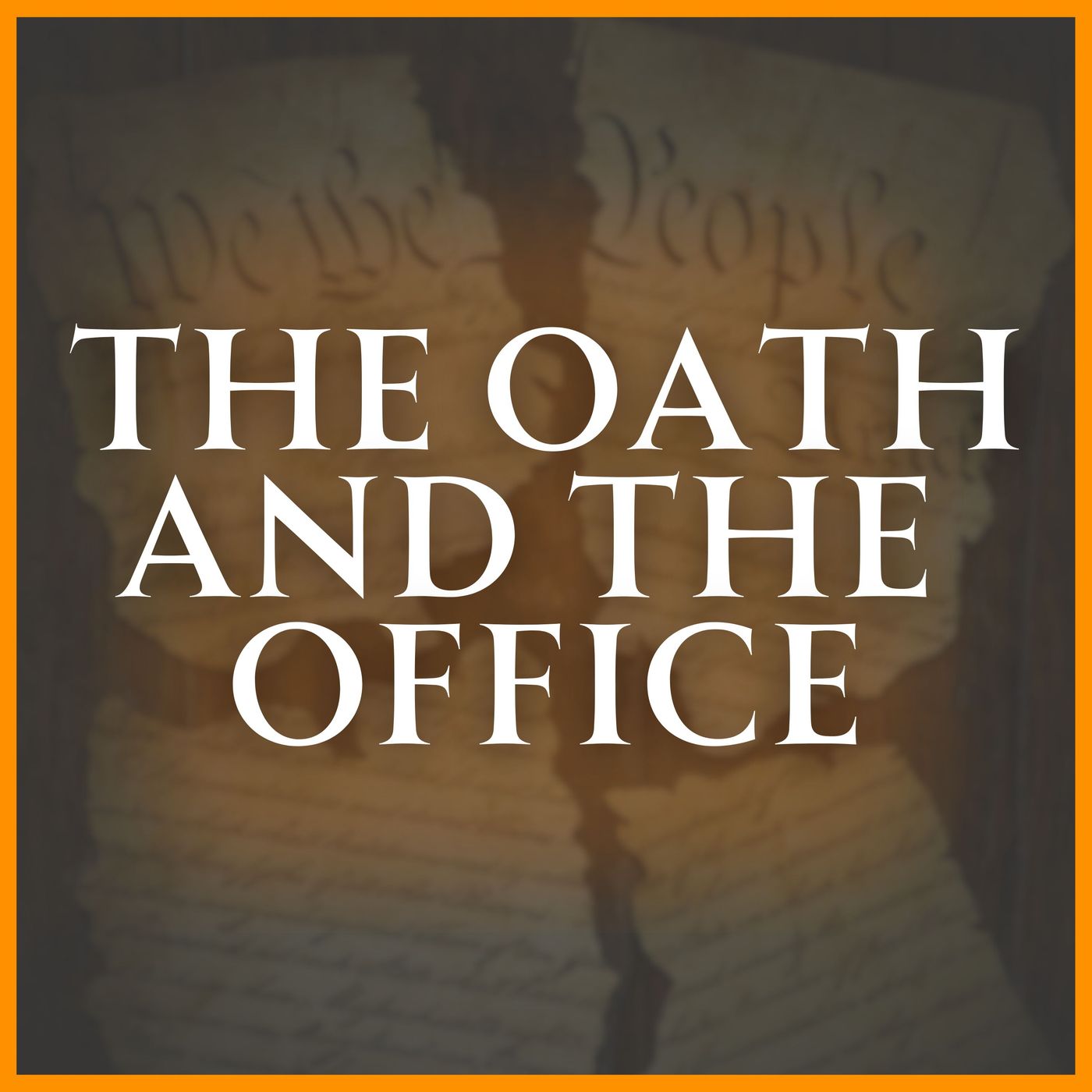
Mixing sharp wit and serious political fire, The Oath and The Office is where hard-hitting constitutional analysis meets razor-sharp comedy. Distinguished political science professor Corey Brettschneider teams up with comedian John Fugelsang to break down the most powerful 35 words in American democracy—the presidential oath of office. Every president swears to “preserve, protect, and defend” the Constitution, but what happens when one openly attacks democracy and the rule of law itself? Each week, Corey and John pull no punches, exposing the latest threats to the rule of law and demanding accountability. Smart, fearless, and wickedly funny—this is the civics lesson you can’t afford to miss.
Episodes 91
Report the News, Risk Deportation? Stanford Students Take On Trump
Can writing an article put you at risk of deportation? The Stanford Daily editor George Porteous joins Corey Brettschneider and John Fugelsang to explain how deportation fears are silencing student …
Show notes
Can writing an article put you at risk of deportation? The Stanford Daily editor George Porteous joins Corey Brettschneider and John Fugelsang to explain how deportation fears are silencing student journalists—and why his newspaper took the Trump administration to court. After a major district-court victory, the administration is appealing. At stake: freedom of the press and the First Amendment rights of noncitizens.
Plus: Mahmoud Khalil’s deportation fight, harassment of Rep. Ilhan Omar, the revolving door in the Trump administration, the golf-course controversy involving Judge Reyes, and the battle over Russian sanctions.
Timestamps:
00:11 – Intro
01:43 – How Noncitizens’ First Amendment Rights are Under Attack
06:28 – The Push to Denaturalize Representative Omar
17:38 – Trump’s New Friend in Putin
21:48 – Musk’s Impact on the Midterms
23:30 – The DC Golf Course Controversy
30:35 – One Student Paper Fought Back Against Trump (with George Porteous)
Here is a link to The School Board Project: act.link/gi-schools
Read George Porteous' essay here: https://www.thenation.com/article/society/stanford-speech-student-press-ozturk-the-stanford-daily/Impeach Trump? Rep. Al Green Makes the Case
Congress has the power to impeach Trump. Will it use it?John Fugelsang and Corey Brettschneider discuss the attack on Ilhan Omar, calls to impeach Defense Secretary Pete Hegseth, and Elon Musk’s DOGE assault on …
Show notes
Congress has the power to impeach Trump. Will it use it?
John Fugelsang and Corey Brettschneider discuss the attack on Ilhan Omar, calls to impeach Defense Secretary Pete Hegseth, and Elon Musk’s DOGE assault on USAID and Congress’s constitutional powers. Why should accountability stop with the president’s subordinates?
Then Congressman Al Green joins the show to make his case for impeaching Trump. From Nixon to Trump, we examine Congress’s responsibility to confront presidential abuses—and the danger of treating any president as above the law.
Support our sponsor today at https://FFRF.us/officeJack Smith Fights Back—and Why the Midterms Matter (with Rep. Ted Lieu)
Jack Smith turns the tables on his congressional questioners and doubles down on why he indicted Donald Trump. Corey Brettschneider and John Fugelsang break down the fiery hearing, the threats of prosecution …
Show notes
Jack Smith turns the tables on his congressional questioners and doubles down on why he indicted Donald Trump. Corey Brettschneider and John Fugelsang break down the fiery hearing, the threats of prosecution against Smith, and what this battle over accountability reveals about the upcoming midterms. Plus: Can Democrats win in red states, and what would taking back Congress actually accomplish?
Then, Congressman Ted Lieu joins Corey to discuss his proposed AI “kill switch” legislation, the dangers of unchecked artificial intelligence, and federal efforts to stop the sale of presidential pardons.
Learn more about our sponsor, Americans United for Separation of Church and State: https://www.au.org/tenc/
Timestamps:
00:52 – Intro
05:02 – Jack Smith is Grilled in the Senate
23:32 – Which States We’re Watching in the Midterms
46:07 – Congressman Lieu on AI Regulation
55:31 – What Legislation Do We Need to Restrain the Pardon Power?
01:01:16 – How Congress Can Keep Trump in LineDeported to Torture? The Supreme Court Greenlights Trump
What if the government sends you to a country you've never known—where you fear persecution or torture—and you never get a real chance to challenge it?The Supreme Court has allowed Trump's third-country …
Show notes
What if the government sends you to a country you've never known—where you fear persecution or torture—and you never get a real chance to challenge it?
The Supreme Court has allowed Trump's third-country deportations to continue while the case is pending. Corey Brettschneider and John Fugelsang examine the human stakes, and what it means when the government acts first and the courts decide later.
Also this week: taxpayer-funded ads pushing Trump's political message, the fight over a federal voter database, and the White House's ongoing restrictions on the press.
Learn more about our sponsor, Americans United for Separation of Church and State: https://www.au.org/tenc/
00:51 – Third-Party Removals
17:06 – Donald Trump’s Taxpayer-Funded Campaign Ads
31:41 – SCOTUS is Letting States Use the SAVE DatabasesTrump’s White House Press Ban & Religious Coercion (with Mickey Dollens)
Can a president shut out reporters because he doesn’t like their coverage? Corey Brettschneider and John Fugelsang take on Donald Trump’s sudden ban on CNN, MS NOW, and Politico from the White House. They …
Show notes
Can a president shut out reporters because he doesn’t like their coverage? Corey Brettschneider and John Fugelsang take on Donald Trump’s sudden ban on CNN, MS NOW, and Politico from the White House. They explore the constitutional stakes of revoking press credentials, why press freedom protects the public as well as journalists, and whether federal courts will hold the line against a president determined to punish his critics.
Then, Oklahoma state representative and Freedom From Religion Foundation (FFRF) official Mickey Dollens joins the conversation to examine the spreading threat of religious coercion and Christian nationalism, from coaches pressuring student athletes to pray to government sponsorship of prayer in statehouses. When does an invitation to participate become pressure to conform? And what happens to freedom of conscience when those in power expect you to share their faith?
Two fights over the First Amendment, connected by one critical question: Can those in authority force the rest of us to fall in line?
Support our sponsor today at https://FFRF.us/office
Timestamps:
01:13 – Trump Banned CNN, Politico, and MSNow from the White House
12:07 – The Push to Impeach Pete Hegseth
19:28 – An Update on the Kennedy Center Naming Debacle
26:27 – Trump’s DC Arch
33:37 – Prayer and School Sport with Mickey DollensBonus Episode: Is Bipartisanship Still Possible? With Governors Bill Haslam and Phil Bredesen
One Republican. One Democrat. Two former governors asking whether Americans can still find common ground.In this special bonus episode of The Oath and the Office, Corey Brettschneider welcomes former Tennessee …
Show notes
One Republican. One Democrat. Two former governors asking whether Americans can still find common ground.In this special bonus episode of The Oath and the Office, Corey Brettschneider welcomes former Tennessee governors Bill Haslam and Phil Bredesen, hosts of You Might Be Right, for a conversation about political division, democratic principles, and the possibilities and limits of bipartisan cooperation.
What brought these two governors together? What can Americans accomplish across party lines? And where should compromise end when fundamental principles are at stake? We explore what it means to listen to political opponents, reconsider your own assumptions, and stand firm when democracy demands it.Did the Supreme Court Just Save the Election? With Skye Perryman
Can Trump use the Postal Service to control how Americans vote by mail? And when does a campaign promise cross the line into an attempted bribe? Democracy Forward President and CEO Skye Perryman joins Corey …
Show notes
Can Trump use the Postal Service to control how Americans vote by mail? And when does a campaign promise cross the line into an attempted bribe? Democracy Forward President and CEO Skye Perryman joins Corey Brettschneider and John Fugelsang to discuss the Supreme Court’s order keeping Trump’s Postal Service restrictions on mail voting blocked ahead of the midterms. She also provides an update on her organization’s challenge to Trump’s slush fund and discusses her new book, Ordinary People, Extraordinary Times. Before the interview, Corey and John break down the news:- The Postal Ruling: What the Supreme Court’s decision means for voters this November.
- Pardons & Bribes: Trump’s promise of $5,000 checks if Republicans keep Congress and the big business of pardon lobbying. Does calling the pardon power “plenary” excuse corrupt use?
- AI & Autocracy: Mike Johnson’s hands-off approach to AI safety, and what Hungary’s fight against corruption can teach us about defeating authoritarianism.
7:18 – The $5,000 Dividend
14:32 – Trump is Selling Pardons
23:52 – The Call to Slow AI Progress
32:37 – An AFD Victory in Germany: What Does This Mean for Us?
40:14 – The Courts Kept Trump’s Mail-In Ballot Interference At Bay (With Skye Perryman)
51:11 – Democracy Forward’s Suit Against Trump’s Slush Fund & A Peek Into Skye’s New Book
Support our sponsor today at https://FFRF.us/office
Skye Perryman’s book: Ordinary People, Extraordinary TimesWill the Court Help Trump Steal the 2026 Election?
Could the Supreme Court help Trump disrupt the 2026 election?In this episode of The Oath and The Office, Corey Brettschneider and John Fugelsang examine a new fight over mail ballots and postal rules that could …
Show notes
Could the Supreme Court help Trump disrupt the 2026 election?
In this episode of The Oath and The Office, Corey Brettschneider and John Fugelsang examine a new fight over mail ballots and postal rules that could create chaos, disenfranchise lawful voters, and give the administration new leverage over the election process.
We also look at why the Supreme Court’s shadow docket matters so much here, what happens when major election rules are decided without full briefing or argument, and why the Court’s own effort to restrict access to its historical records matters for democratic accountability.Plus, we examine a separate legal strategy that could threaten the tax exempt status of major institutions.
Subscribe to The Oath and The Office for weekly analysis of Trump, presidential power, the Supreme Court, democracy, and the Constitution.
Timestamps:
0:30 – SCOTUS Will Decide if Trump’s Mail-In Voting Restrictions are Constitututional
28:00 – Why Are Supreme Court Records Sealed for Decades?
38:07 – House Democrats’ Push to Expand the Court
45:40 – The Treasury Wants to Revoke Tax-Exempt Status For Anti-Racist Universities
56:36 – Why These Conversations Give Us HopeTrump’s Mafia Presidency, with Barbara McQuade
Trump’s abuses of power keep colliding with the law. But even when courts recognize the danger, procedural barriers can prevent them from stopping it.Corey and John examine how standing doctrine blocked a …
Show notes
Trump’s abuses of power keep colliding with the law. But even when courts recognize the danger, procedural barriers can prevent them from stopping it.
Corey and John examine how standing doctrine blocked a challenge to Trump’s ballroom project, despite an unusual dissent from Chief Justice John Roberts. They also discuss a major free speech victory at Stanford that, like the Khalil case, was weakened by procedural limits. Next, they turn to Trump’s effort to seize control of the Postal Service and refuse delivery of valid mail ballots, using the unitary executive theory to threaten voting rights.
Then, former U.S. Attorney Barbara McQuade joins the show to explain why Trump governs less like a president and more like a mafia boss. Drawing from her new book, "The Fix", she connects Trump’s mob style campaign against dissent to the attack on the Southern Poverty Law Center, the Justice Department’s subpoenas targeting New York Times journalists, and the administration’s attempt to undermine voting by mail.
Barbara McQuade’s new book, The Fix: Saving America from the Corruption of a Mob-Style Government: https://www.barbaramcquade.com/The Christian Nationalism Behind January 6, with Rep. Jared Huffman
Why did the January 6 Committee underplay the role of Christian nationalism in its final report?Rep. Jared Huffman, the only openly nonbelieving member of Congress, joins Corey Brettschneider for a deep dive …
Show notes
Why did the January 6 Committee underplay the role of Christian nationalism in its final report?
Rep. Jared Huffman, the only openly nonbelieving member of Congress, joins Corey Brettschneider for a deep dive into the Christian nationalist movement threatening American democracy. Drawing from his new book, No Prophets, Huffman breaks down the specific factions that make up this movement, how they are capturing political power, what they want, and what comes next. We also examine the central role Christian nationalism played in January 6 and why that crucial part of the story was largely left out of the Committee’s final report.
Support our sponsor today at https://FFRF.us/office
You can find Rep. Jared Huffman’s new book, No Prophets, here: https://wwnorton.com/books/9781324130499
3:43 – Religious Nationalism & January 6th
11:40 – Who Are the Christian Nationalists?
18:18 – Where Christian Nationalism Appears in Congress
24:43 – The Policy Implications of Theocratic Movements
29:42 – Why Congressman Huffman Still Has HopeTrump’s Presidency for Sale?
This week on The Oath and the Office, we follow four stories that raise one question: what happens when the restraints on presidential power start disappearing?Donald Trump is being sued over a service offering …
Show notes
This week on The Oath and the Office, we follow four stories that raise one question: what happens when the restraints on presidential power start disappearing?
Donald Trump is being sued over a service offering paying customers early access to his Truth Social posts, including market-moving announcements, for as much as $100,000 a month. Is official presidential information becoming a private commodity?
Then Trump goes back to the Supreme Court after two lower court losses, asking the justices to revive his plan to impose new conditions on mail ballots ahead of the midterms. Corey Brettschneider and John Fugelsang break down what the fight means for presidential power over elections.
We also look at ICE’s reported plan to spend millions on electric shock gloves and the Treasury Department’s decision to dismantle major beneficial ownership disclosure rules designed to expose anonymous shell companies, rules originally championed by Marco Rubio as a weapon against money laundering, trafficking, and terrorism.
From presidential self-enrichment to elections, immigration enforcement, and financial secrecy, the question is the same: who is left to constrain executive power?
1:50 – Paid Early Access to Trump’s Truth Social Posts
12:56 – The Death of the Foreign Corrupt Practices Act
19:30 – The Corporate Transparency Act
30:18 – Trump’s Supreme Court Appeal on Mail Voting
43:25 – ICE’s New Electric Shock GlovesTrump vs. the Supreme Court. Again.
Trump already lost on birthright citizenship. Now he is testing the limits of constitutional law with two narrower executive orders. We explain the high-stakes game of chicken underway: can a president just …
Show notes
Trump already lost on birthright citizenship. Now he is testing the limits of constitutional law with two narrower executive orders. We explain the high-stakes game of chicken underway: can a president just keep pushing after the courts and the Constitution say no?
Plus, a rapid-fire breakdown of this week’s legal chaos:- Vanity Plates: A bizarre but critical free speech fight.
- DOJ Takeover: Todd Blanche officially steps in as Attorney General after a bruising confirmation fight over Trump, DOJ independence, and a $1.8 billion slush fund.
- The $400 Million Ballroom: A court abruptly blocks Trump’s massive White House construction plan.
- Targeting Fauci: Senate Republicans vote to hold Anthony Fauci in contempt.
Timestamps:
2:41 - Trump Renews Attack on Birthright Citizenship
10:25 - Profanity, License Plates, and Free Speech
21:56 - Senate Confirms Todd Blanche as Attorney General
35:25 - Court Temporarily Halts Construction on Trump's Ballroom
41:26 - Senate Committee Holds Dr. Anthony Fauci in Contempt of CongressBlanche’s Confirmation Deal: Trump’s Weaponization Fund Could Return
Acting Attorney General Todd Blanche appears to have secured the committee votes needed to advance his nomination. He cleared the path by agreeing to rescind Donald Trump’s controversial $1.8 billion …
Show notes
Acting Attorney General Todd Blanche appears to have secured the committee votes needed to advance his nomination. He cleared the path by agreeing to rescind Donald Trump’s controversial $1.8 billion “anti-weaponization” fund and narrow sweeping IRS audit protections for Trump and his family.
But does the deal truly kill the fund—or merely clear a political hurdle while leaving the door open for its return? Corey and John argue that walking back these dangerous policies does not erase Blanche’s complicity in advancing them, nor does it prove him fit to lead the Justice Department.
They also break down a consequential week for executive power and the nation’s democratic guardrails:
Elections: Trump’s escalating attempt to expand federal control over mail voting.
Press Freedom: Withdrawn Justice Department subpoenas that sought testimony and phone records from New York Times journalists.
Media Pressure: The FCC’s continuing pressure campaign against ABC.
Surveillance: Allegations that the Secret Service illegally tracked James Comey and his wife.
Intelligence: The Senate’s party-line confirmation of Jay Clayton to lead the intelligence community.
The checks on executive power are being tested in real time. Some are holding. Others may prove temporary.
Timestamps:
1:20 – Todd Blanche Confirmation Proceedings
18:03 – Trump Cheating in the Midterms
28:03 – Federal Agencies Aren’t Sticking to Their Purpose
28:56 – Jawboning and Media Censorship
47:39 – Why Everyone Should See “The Odyssey”
51:08 – Trump is a Threat to Democracy; the Courts Can Help
54:26 – Trump is Suffering in the PollsWhat Trump and the New Right Really Believe | David French
What does Trump actually believe, and how does his worldview connect to the New Right? Corey Brettschneider and John Fugelsang look beyond the latest outrages to the ideology linking them. Then New York Times …
Show notes
What does Trump actually believe, and how does his worldview connect to the New Right? Corey Brettschneider and John Fugelsang look beyond the latest outrages to the ideology linking them. Then New York Times columnist David French joins Corey to discuss the forces reshaping the American right.
Inside the episode:
David French on birthright citizenship, the postliberal right, and whether there is a path out of America’s democratic crisis.
The attack on the Smithsonian and the fight over who counts as truly American.
Trump’s ties to the manosphere and the grievance politics driving the New Right.
The pressure on New York Times journalists, the disappearance of a Whitney Cummings joke, and the fight to stop Penn Station from being renamed for Trump.
Timestamps:- 02:06 – White House Correspondents' Dinner
- 09:34 – Tate Brothers Arrested
- 16:22 – Trump, the Smithsonian, and American History
- 22:28 – Attacks on Free Speech: NYT & Kennedy Center
- 31:43 – Interview: David French Joins
- 41:20 – The New Right and Vichy France
- 52:56 – The Future of MAGA After Trump
Trump’s Media Threats & Todd Blanche’s $1.8B Slush Fund (with Skye Perryman)
Threatening the broadcast licenses of news networks is a direct assault on the free press. Corey Brettschneider and John Fugelsang tear down Trump’s extraordinary primetime speech and explain why standard media …
Show notes
Threatening the broadcast licenses of news networks is a direct assault on the free press. Corey Brettschneider and John Fugelsang tear down Trump’s extraordinary primetime speech and explain why standard media fact-checking is no longer enough to protect democracy. They also break down Todd Blanche’s attorney general confirmation hearing and a judge’s condemnation of Trump’s IRS self-dealing.
Then, Democracy Forward President and CEO Skye Perryman joins Corey to expose the administration’s hidden $1.8 billion "anti-weaponization" fund. Blanche told senators the fund was dead, but Perryman explains why the receipts say otherwise—and why this controversy could derail his confirmation.
What we cover in this episode:
• Media Extortion: The legal reality behind threats to network broadcast licenses.
• The $1.8 Billion Loophole: Why the admin's secret fund might still be alive.
• IRS Self-Dealing: A federal judge’s blistering condemnation of administrative overreach.
• ICE Misconduct: Why state prosecutors must step in when the feds refuse to act.
Timestamps:
1:54 – Trump’s Election Interference Speech
16:53 – Todd Blanche Confirmation Proceedings
22:05 – Federal Judge on the Trump–IRS Agreement
31:51 – FBI to Stop Investigating Confrontations Involving ICE
38:48 – Interview with Skye PerrymanTrump Targets the Press—and Spies on Americans (with Sen. Ron Wyden)
Trump’s Justice Department subpoenaed New York Times reporters after they exposed security problems with the Qatari jet Trump accepted for use as Air Force One. The prosecutor who issued those subpoenas, Jay …
Show notes
Trump’s Justice Department subpoenaed New York Times reporters after they exposed security problems with the Qatari jet Trump accepted for use as Air Force One. The prosecutor who issued those subpoenas, Jay Clayton, is now Trump’s nominee to lead the nation’s intelligence agencies.
Corey Brettschneider and John Fugelsang trace the line from the “bribe plane” to a broader attack on democratic accountability, including another fatal ICE shooting in Maine and the White House pressure campaign against the Smithsonian.
Then Senator Ron Wyden joins the show to explain how Section 702 allows the FBI to search Americans’ private communications without a warrant, why putting those searches in the hands of political operatives such as Dan Bongino is so dangerous, and how the bipartisan JAWBONE Act would let those targeted by government coercion fight back in court.
The interview was recorded as the Senate Intelligence Committee, on which Wyden serves, prepared to begin Clayton’s confirmation hearing. Wyden and Corey discuss whether Clayton’s decision to subpoena journalists should disqualify him from overseeing the nation’s intelligence agencies.
The through line is unchecked executive power: targeting journalists, coercing speech, and searching Americans without a warrant.Trump’s $2.2 Billion Presidency: The Corruption the Constitution Saw Coming
Trump’s latest financial disclosure points to something far bigger than another ethics scandal: a presidency being used as a vehicle for private financial gain. From crypto windfalls and foreign-linked deals to …
Show notes
Trump’s latest financial disclosure points to something far bigger than another ethics scandal: a presidency being used as a vehicle for private financial gain. From crypto windfalls and foreign-linked deals to branding revenue, settlements, and the continued monetization of political power, the numbers raise a constitutional question hiding in plain sight: what happens when the Emoluments Clauses are not enough?
Corey Brettschneider and John Fugelsang break down the corruption story behind Trump’s reported $2.2 billion haul, why the Constitution contains two Emoluments Clauses, and why those protections remain dangerously underdeveloped because Congress has never clearly codified them into modern criminal law. Corey argues that using public office for private gain must be treated as a central abuse of presidential power — and that making anti-corruption reform a campaign issue is essential to restoring the rule of law.
Then they turn to the FBI’s reported new push into Georgia 2020 election matters, the Supreme Court’s major ruling on transgender athletes, the Supreme Court’s refusal to disturb the E. Jean Carroll verdict, and the extraordinary NPR correction involving Justice Alito.
This is not just a story about Trump’s money. It is a story about whether American law is prepared to stop a president from turning the office itself into a profit machine — and why Congress must finally make that abuse unmistakably illegal.Trump Loses Birthright, Wins a Power Grab (with Joyce Vance)
The Supreme Court dealt Trump a major defeat by rejecting his effort to end birthright citizenship. It also refused to let him fire the head of the Federal Reserve. But in the same week, the Court handed him …
Show notes
The Supreme Court dealt Trump a major defeat by rejecting his effort to end birthright citizenship. It also refused to let him fire the head of the Federal Reserve. But in the same week, the Court handed him sweeping new authority by allowing presidents to remove commissioners at independent agencies.
We break down what these landmark decisions mean, along with the Court’s ruling on Temporary Protected Status, its latest campaign finance decision expanding the influence of wealthy donors, the legal fight over mail voting, and the latest developments in the E. Jean Carroll case.
Then, former U.S. Attorney Joyce Vance joins us to explain why the birthright citizenship ruling matters so much, what comes next for campaign finance and mail voting, and how these cases are reshaping American democracy.Trump’s DOJ Is Hiding the Epstein Files. Katie Phang Is Suing.
Katie Phang joins The Oath and the Office to discuss her legal fight to force Trump’s DOJ to release the Epstein files. This is not about money. It is about whether Trump’s DOJ can defy the law and keep records …
Show notes
Katie Phang joins The Oath and the Office to discuss her legal fight to force Trump’s DOJ to release the Epstein files. This is not about money. It is about whether Trump’s DOJ can defy the law and keep records from the public.
Phang explains how she is using the Epstein Files Transparency Act, her role as a journalist, and statutory interpretation to challenge DOJ secrecy. We get into the harm Epstein caused, why transparency matters, and what it means when a citizen uses the law to fight for democracy.
But first, Corey Brettschneider and John Fugelsang break down three alarming stories about presidential power: Trump tying FISA surveillance renewal and a national intelligence confirmation to his SAVE Act voter bill, Gavin Newsom’s claim that Trump’s DOJ is investigating him and his wife, and Pete Hegseth’s alleged loyalty tests in military promotions.
This episode is about secrecy, retaliation, loyalty, and the fight to make law matter again.
Subscribe to The Oath and the Office wherever you get your podcasts.
The Presidents and the People: Five Leaders Who Threatened Democracy and the Citizens Who Fought to Defend ItTrump’s War on Habeas Corpus and DOJ Independence — with Harry Litman
Corey Brettschneider and John Fugelsang open with explosive new reporting that Stephen Miller pushed a plan for President Trump to suspend habeas corpus — the fundamental constitutional safeguard that allows …
Show notes
Corey Brettschneider and John Fugelsang open with explosive new reporting that Stephen Miller pushed a plan for President Trump to suspend habeas corpus — the fundamental constitutional safeguard that allows people detained by the government to challenge their imprisonment in court.
They explain what habeas corpus is, why it has been central since the Founding, and why suspending it to speed mass deportations would mark an extraordinary expansion of presidential power.
Then Harry Litman joins Corey and John to discuss the crisis at the Justice Department: the fight over Trump’s so-called “anti-weaponization” fund, the destruction of DOJ culture, the role of Todd Blanche, and what it would take to rebuild a Justice Department committed to law rather than personal loyalty.
Plus: threats to mail ballots, the Epstein files, and whether courts and Congress can still constrain an increasingly unbound presidency.
https://harrylitman.substack.com/p/its-the-fraud-stupid
https://harrylitman.substack.com/p/playing-chicken-in-a-pintoTrump Melts Down as Congress Pushes Back
Trump melts down in a chaotic Meet the Press interview, lashing out when pressed on his “anti-weaponization” fund and his false claims of rigged elections. Corey Brettschneider and John Fugelsang break down …
Show notes
Trump melts down in a chaotic Meet the Press interview, lashing out when pressed on his “anti-weaponization” fund and his false claims of rigged elections. Corey Brettschneider and John Fugelsang break down what the moment reveals about Trump’s larger project: turning government power into personal protection, personal revenge, and an attack on democratic legitimacy.
Then: Congress pushes back. The House rebukes Trump over Iran war powers and passes new Ukraine aid over his objections, raising a central constitutional question: can Congress finally reclaim its role in foreign policy?
Corey and John also look at the next front in the separation-of-powers fight: appointments. Todd Blanche may be headed for a permanent attorney general nomination, while William Pulte’s appointment as acting DNI avoids Senate confirmation despite serious concerns about experience and politicized investigations.
Plus: the crisis at 60 Minutes, John Bolton’s guilty plea, selective prosecution worries, and a federal judge blocking Trump’s $100,000 H-1B visa fee.
It’s a week of meltdown, weaponization, war powers, appointments, and resistance — with the constitutional stakes coming into sharper focus.Trump’s Bad Week Is Democracy’s Opening
Donald Trump’s revenge politics hit resistance this week — not by accident, but because citizens, journalists, lawyers, judges, and lawmakers kept pushing.This week on The Oath and The Office, Corey …
Show notes
Donald Trump’s revenge politics hit resistance this week — not by accident, but because citizens, journalists, lawyers, judges, and lawmakers kept pushing.
This week on The Oath and The Office, Corey Brettschneider and John Fugelsang break down a rare hopeful stretch for democracy: a judge blocks payouts from Trump’s so-called “anti-weaponization” fund, another judge reopens questions around Trump’s IRS settlement, courts reject Trump’s attempt to put his name on the Kennedy Center, and thousands of federal lawyers are leaving rather than serve an authoritarian agenda.
Corey and John also discuss the fight inside CBS and 60 Minutes, the role of independent journalism, and why democracy depends not just on courts, but on citizens willing to expose corruption, demand accountability, and keep the constitutional system alive.Trump’s Imperial Presidency: Bogus Charges and Foreign Wars
Trump’s claim of power above the law is showing up on every front: bogus prosecutions, deportation threats, attacks on speech, war powers, and military escalation abroad.This week on The Oath and The Office …
Show notes
Trump’s claim of power above the law is showing up on every front: bogus prosecutions, deportation threats, attacks on speech, war powers, and military escalation abroad.
This week on The Oath and The Office, Corey Brettschneider and John Fugelsang start with the dismissal of human trafficking charges against Kilmar Abrego Garcia. A federal judge found the prosecution vindictive and selective, a major rebuke to a Trump DOJ that tried to punish a man after he fought back against his unlawful deportation.
Then Corey and John turn to Mahmoud Khalil, where the Trump administration is pushing another dangerous claim: that noncitizens can be detained and deported for political speech. They also discuss new congressional pushback against Trump’s war in Iran and the DOJ indictment of Raúl Castro, as the administration invokes “law and order” while expanding American military power in Latin America.
Then filmmaker Andrew Glazer joins the show to discuss "Spring of the Vanishing", his investigative documentary on the American military’s alleged complicity in killings of innocent civilians by the Mexican military during the drug war. The conversation becomes a broader warning about how the war on drugs has been used to destroy civil liberties at home and abroad.
The theme running through all of it: Trump’s imperial presidency is not just a foreign policy problem. It is a threat to constitutional democracy here at home.
Subscribe to The Oath and The Office wherever you get your podcasts, and help us expose abuses of presidential power before they become the new normal.
Watch Spring of the Vanishing: https://www.primevideo.com/detail/0LAGR1QS4QZ2PIWOMLFK18KJ2KThe Secret Memos Behind the Supreme Court’s Shadow Docket (with Jodi Kantor)
What is the Supreme Court doing when it acts without full briefing, oral argument, or a real explanation?This week on The Oath and The Office, Pulitzer Prize-winning New York Times reporter Jodi Kantor joins …
Show notes
What is the Supreme Court doing when it acts without full briefing, oral argument, or a real explanation?
This week on The Oath and The Office, Pulitzer Prize-winning New York Times reporter Jodi Kantor joins the podcast to explain the Court’s shadow docket: the emergency orders process that has become one of the most powerful and least understood parts of American government.
Kantor discusses the Supreme Court memos she obtained with Adam Liptak, what they reveal about Chief Justice John Roberts, and how they relate to the Court’s supposed image as a neutral “umpire".
Corey and John also discuss Trump’s proposed “anti-weaponization” compensation fund, the politics of abortion and the abortion pill at the Supreme Court, and the Court’s emergency order allowing Alabama to move forward with redrawn congressional maps.
In this episode:- What the shadow docket is and why it matters
- Jodi Kantor on Supreme Court memos
- The two sides of John Roberts
- Why the “umpire” model of judging has collapsed
- Abortion, Alabama, and emergency Supreme Court power
- Trump’s “anti-weaponization” fund and the politics of grievance
- The immunity case and presidential power
Link to Jodi Kantor and Adam Liptak's reporting on the secret memos of the Supreme Court: https://www.nytimes.com/2026/04/18/us/politics/supreme-court-shadow-docket.htmlCan Trump Undo Our Citizenship Rights? (with ACLU’s Cecilia Wang)
This week on The Oath and The Office, Corey Brettschneider and John Fugelsang begin with the new redistricting wars, as southern states move to dilute Black Americans’ voting power after a green light from the …
Show notes
This week on The Oath and The Office, Corey Brettschneider and John Fugelsang begin with the new redistricting wars, as southern states move to dilute Black Americans’ voting power after a green light from the Supreme Court. They look at Tennessee, Alabama, and the Virginia Supreme Court’s decision striking down a voting plan approved by voters.
Then, they turn to citizenship itself: DOJ support for stripping citizenship from naturalized citizens and Trump’s attacks on his own Supreme Court justices.
Corey then speaks with Cecilia Wang, National Legal Director of the ACLU, who argued before the Supreme Court against Trump’s executive order attacking birthright citizenship, with Trump himself watching from the courtroom. Wang explains why the text and history of the Fourteenth Amendment are on her side, how Reconstruction transformed the Constitution, and why the fight over citizenship is part of the larger battle for voting rights, civil liberties, and democracy itself.The Supreme Court’s Assault on Our Rights (with Kate Shaw)
The Supreme Court is reshaping American democracy — weakening voting rights, empowering the presidency, and narrowing the protections that have defined modern civil rights law.John Fugelsang and Corey …
Show notes
The Supreme Court is reshaping American democracy — weakening voting rights, empowering the presidency, and narrowing the protections that have defined modern civil rights law.
John Fugelsang and Corey Brettschneider begin with the Court’s assault on the Voting Rights Act of 1965 and the fallout for democratic participation across the country. They also discuss Trump’s attacks on James Comey, threats against ABC and Jimmy Kimmel, and the broader campaign of intimidation against critics and dissenters.
Then constitutional law scholar Kate Shaw joins the show to discuss how the Court is enabling Trump’s authoritarianism, including the pending fight over Temporary Protected Status, the shadow docket, emergency rulings on immigration and executive power, and her recent exchange with Senator Josh Hawley over nationwide injunctions.
What happens when the courts weaken voting rights while expanding presidential power? And what does it mean for the future of constitutional democracy?
Subscribe to The Oath and The Office wherever you get podcasts.Trump’s War on Truth and Science (with James Morone)
Trump briefly talked about “cooling things down.” Then came the escalation.This week on The Oath and The Office, Corey Brettschneider and John Fugelsang look at how President Trump is using political violence …
Show notes
Trump briefly talked about “cooling things down.” Then came the escalation.
This week on The Oath and The Office, Corey Brettschneider and John Fugelsang look at how President Trump is using political violence not as a reason for restraint, but as a weapon against his opponents. Jimmy Kimmel and Trevor Noah are targeted for jokes. A 60 Minutes interview becomes another venue for attacking the press. And the administration’s suit against the Southern Poverty Law Center raises a larger question: is law enforcement being turned into a tool of political retaliation?
We also turn to the Supreme Court’s major Fourth Amendment case over geofence warrants and cell location data. The old law-school hypotheticals about government surveillance no longer feel hypothetical. With companies like Palantir helping build the modern surveillance state, the threat of databases tracking protesters, dissidents, and political opponents is suddenly very real.
Then Corey is joined by James A. Morone, Professor Emeritus at Brown University and one of the country’s leading political scientists, to discuss his new book with David Blumenthal, "Whiplash: From the Battle for Obamacare to the War on Science". The book tells the inside story of how Obama, Trump, and Biden transformed health care politics, from the fight over Obamacare to COVID, Operation Warp Speed, anti-poverty policy, and Trump’s war on science itself.
Get the book from Yale University Press:
https://yalebooks.yale.edu/book/9780300263480/whiplash/Trump’s Supreme Court, the Shadow Docket, and the New Normal (with Aaron Parnas)
Has Trump changed American politics so deeply that what once seemed dangerous now feels normal?In this episode of The Oath and The Office, we begin with the Supreme Court: the shadow docket, Clarence Thomas …
Show notes
Has Trump changed American politics so deeply that what once seemed dangerous now feels normal?
In this episode of The Oath and The Office, we begin with the Supreme Court: the shadow docket, Clarence Thomas, and a judiciary that increasingly operates with extraordinary power and too little accountability.
We then turn to the case against the former CIA director, along with the resignation of a Justice Department prosecutor, and ask what these developments reveal about the state of law, accountability, and political pressure inside the justice system.
Then Aaron Parnas joins us. Parnas has built a massive audience by reporting breaking political news to a younger generation in real time, often outside traditional media. We ask him a bigger question: can the news be reported outside the wider context of the threat to democracy? And when Parnas argues that much of this feels normal to people who grew up in the Trump era, Corey asks what it means when democratic crisis starts to feel ordinary.
We also discuss Trump’s reported pressure on the IRS, the questions surrounding Kash Patel and the FBI, and why these stories may be part of a much broader pattern.
This is a conversation about power, accountability, and the risk of treating democratic erosion as the new normal.Trump vs. the Pope
Trump says the pope should stay out of politics. But when Trump posts himself as Jesus, attacks independent moral authority, and demands loyalty from every institution, the real goal is not religious …
Show notes
Trump says the pope should stay out of politics. But when Trump posts himself as Jesus, attacks independent moral authority, and demands loyalty from every institution, the real goal is not religious neutrality. It is control.
In this episode of The Oath and The Office, Corey Brettschneider and John Fugelsang begin with Trump’s clash with the pope and what it reveals about the authoritarian impulse: not keeping religion out of politics, but bending religion to serve power.
Then they turn to Hungary, where Viktor Orbán’s loss offers a real sign of hope. Even after gerrymandering and years of democratic erosion, autocrats can still be challenged and defeated.
They also break down two more revealing stories: a judge throwing out Trump’s defamation suit over the Epstein birthday-card report, and the administration’s move to abandon civil-rights settlements protecting trans students. Taken together, these stories show the same pattern: attacks on truth, attacks on vulnerable people, and attacks on any institution unwilling to bend to raw power.
This episode is about more than one controversy. It is about the larger authoritarian playbook — and why resistance still matters.Is Trump Committing War Crimes? Lawrence Douglas on Hegseth, Nuremberg, and the Criminal State
Can a president commit war crimes? Can a defense secretary? And what would it take to hold either one accountable?Corey Brettschneider and John Fugelsang open with the Supreme Court showdown over Trump’s attack …
Show notes
Can a president commit war crimes? Can a defense secretary? And what would it take to hold either one accountable?
Corey Brettschneider and John Fugelsang open with the Supreme Court showdown over Trump’s attack on birthright citizenship. After Trump became the first sitting president to attend oral arguments at the Court, Solicitor General D. John Sauer faced tough questioning from several justices, including Chief Justice John Roberts, who delivered the line of the day: “It’s a new world. It’s the same Constitution.” Corey and John break down why the administration’s argument looked weak, why Wong Kim Ark remains the key precedent, and what the hearing may signal about the fate of Trump’s effort to gut birthright citizenship.
They also discuss the latest chaos inside Trump’s Justice Department after Pam Bondi was pushed out as attorney general and replaced, for now, by Todd Blanche, another Trump loyalist. From there, they turn to the Supreme Court’s move that could wipe away Steve Bannon’s contempt conviction, and what it says about accountability in Trump’s Washington.
Then Corey and John are joined by Lawrence Douglas of Amherst College, professor of law, jurisprudence, and social thought, and author of "The Criminal State", for a chilling conversation about whether Trump is committing war crimes, whether Pete Hegseth could face exposure as a war criminal, and how leaders who authorize brutality can be held to account. They explore the continuing relevance of Nuremberg, the legal meaning of crimes carried out by the state, and whether American institutions still have the power to confront criminality at the top. This is a sober, urgent discussion about impunity, presidential violence, and the future of the rule of law