

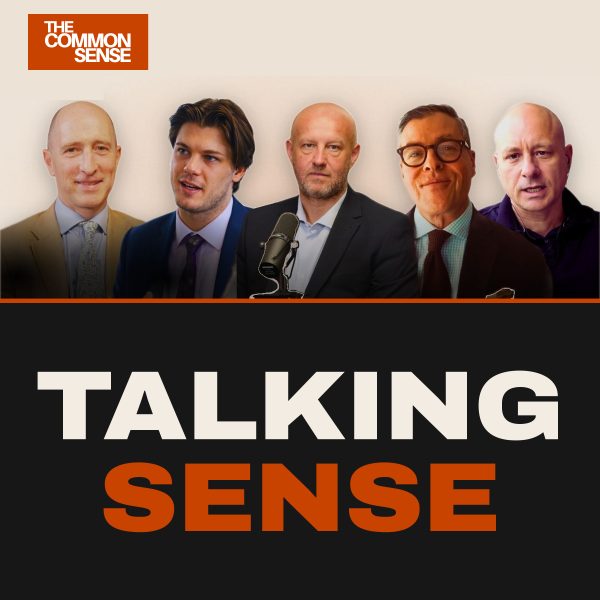
The Talking Sense Podcast
- Episodes
- 54
- Released
- weekly
- Latest episode
- Nov 13, 2026
About the podcast
The Common Sense's main weekly podcast focusing on the state of the world.
Episodes 54
ANC Below 31%, Should Ramaphosa Resign?, ActionSA Courts the MKP and EFF, and UCT's Crisis
The ANC won just under 31% in the local elections, its worst result ever, down from 46% in 2021 and 40% in last year's national election. The Talking Sense panel asks what comes next. Marius Roodt sets out the …
Show notes
The ANC won just under 31% in the local elections, its worst result ever, down from 46% in 2021 and 40% in last year's national election. The Talking Sense panel asks what comes next. Marius Roodt sets out the two coalitions that could cover the country: the ANC with the DA, or the ANC with its offshoots, the MKP and the EFF. Mark Oppenheimer explains the confidence-and-supply option, where the ANC lets the DA run the cities without joining it. James Myburgh says voters are rejecting the ANC's patronage politics.
The panel also looks at the DA's gains in uMngeni and Emfuleni, why municipalities such as Mangaung are far too big to run, how the ANC ended up with almost no proportional seats in Gauteng, and ActionSA's talks with the ANC, the MKP and the EFF. Then: should Ramaphosa resign?
Before the show, Mark Oppenheimer on the alumni call for UCT's council chair to step down and why convocation matters. In the second half, Simon Lincoln Reader on why so many young men turn to the online manosphere.
On the panel: host Gabriel Makin, Marius Roodt, Mark Oppenheimer, James Myburgh and Simon Lincoln Reader.
Become a member for all the facts and analysis (R99/month): https://www.thecommonsense.co.za/subscribe
Watch on YouTube: https://youtu.be/p3HjznVtOMUChapters:
0:00 Pre-show: Tatjana Smith and Swimming South Africa
1:56 UCT: the call for the council chair to go
7:15 UCT Renewal and the convocation vote
10:30 Welcome to Talking Sense
11:53 The election: the ANC falls below 31%
15:49 Voters reject patronage politics
19:21 The DA's gains in uMngeni and Emfuleni
22:59 The small parties take their bite
24:49 Coalitions: ANC and DA, or the ANC's offshoots?
28:49 Confidence and supply
33:25 Municipalities that are far too big
37:30 Can the ANC choose a partner?
40:59 All-ward councils and the regional ballot
44:31 Overhang seats
47:22 Reform or patronage
51:52 ActionSA's choice
57:53 The case for ActionSA's strategy
1:04:55 If Ramaphosa resigned
1:06:05 Should Ramaphosa resign?
1:12:12 Why young men follow online influencers
1:27:59 The manosphere
1:34:58 Consent and the criminal law
1:38:50 Wrap-upFollow the show so you don't miss next week's panel.
ANC Crashes to 32%, Democrats Sweep the Midterms, the $33 Trillion Reparations Bill
The ANC is heading for about 32% in the local government elections, down from 62% in 2011. Frans Cronje explains where its voters went: not to the DA, which has held steady at around 26%, but to MK, the EFF and …
Show notes
The ANC is heading for about 32% in the local government elections, down from 62% in 2011. Frans Cronje explains where its voters went: not to the DA, which has held steady at around 26%, but to MK, the EFF and ActionSA. In Johannesburg the ANC is projected under 20%, and in Tshwane it sits third behind the DA and ActionSA. For the first time, the ANC, MK and EFF together fall short of 50%. The panel asks whether the DA should do a deal with the ANC, or whether the DA and ActionSA can put their feud aside long enough to run Gauteng's metros.
Richard Tren on the US midterms: a Republican wipeout bigger than the polls predicted, James Talarico's win over Ken Paxton in Texas, Susan Collins's defeat in Maine, Abdul El-Sayed in Michigan, and Alaska's two Dan Sullivans. Why the Republicans lost, JD Vance's verdict, and what the Democrats do next. Simon Lincoln Reader on Britain's budget and the Caribbean's $33 trillion demand for slavery reparations, and the panel on the West Africa Squadron, the Royal Navy patrol that freed some 150,000 people from slave ships.
Become a member of The Common Sense for R99 a month and get all the facts and analysis: https://www.thecommonsense.co.za/subscribe
Watch or listen on Spotify: https://open.spotify.com/show/3BPffxR8ZZLUByFmsRCz7BOn the panel: host Gabriel Makin, Frans Cronje, James Myburgh, Simon Lincoln Reader and Richard Tren.
Chapters:
0:00 Pre-show: deadlock everywhere
7:35 Welcome to Talking Sense: this week's panel
9:05 The US midterms: a Republican wipeout
14:21 Alaska's two Dan Sullivans
18:09 Why the Republicans lost
23:21 The ballot measures went conservative
26:25 JD Vance's verdict and the race for 2028
30:47 Good ideas taken too far: borders, tariffs and Iran
37:53 What the Democrats do next
44:46 The end of MAGA and the race to the centre
47:18 South Africa: the ANC at 32%, halved since 2011
53:28 The liberation movements fall below 50%
56:05 Johannesburg, Bloemfontein, Gqeberha and East London
1:00:53 The polls got it right
1:02:54 ActionSA in the townships
1:05:24 Limpopo and the Free State
1:08:55 MK, the PA and ActionSA win councils
1:10:50 Should the DA do a deal with the ANC?
1:17:36 The DA and ActionSA: an open goal in Gauteng?
1:23:18 Britain's budget: managed decline
1:27:54 The $33 trillion reparations bill
1:34:21 The sins of the fathers
1:36:09 The West Africa Squadron
1:44:19 History without nuance
1:49:26 Wrap-upNew SRF Poll: ANC at 32%, MK Takes Durban, Britain's 1,000 Days to War, Roelf Meyer
The new SRF and Common Sense poll puts the ANC at 31% to 33% nationally, its lowest yet. Gabriel Makin reads the results. The DA leads in Johannesburg on 36% to 38% and in Tshwane on 31% to 35%, where its …
Show notes
The new SRF and Common Sense poll puts the ANC at 31% to 33% nationally, its lowest yet. Gabriel Makin reads the results. The DA leads in Johannesburg on 36% to 38% and in Tshwane on 31% to 35%, where its support has fallen since July. MK leads in eThekwini on 42% to 43%, with the ANC third on 12% to 13%. Voters are split on whether a BEE compliant newcomer should build a new school, but 79% say the best company should get the job.
James Myburgh explains why the ANC calls it disinformation when Mark Oppenheimer and AfriForum quote the ANC's own words on expropriation in Washington. Simon Lincoln Reader on Wes Streeting, the web outage that took down 32 UK government websites, and Streeting's warning that Britain has 1,000 days to war. Richard Tren on the US midterms a week out, Vivek Ramaswamy's race for governor of Ohio, and Barack Obama's speech for the Democrats. James reviews Roelf Meyer's memoir and what it leaves out about the 1992 referendum.
Become a member of The Common Sense for R99 a month and get all the facts and analysis: https://www.thecommonsense.co.za/subscribe
Read the articles discussed:
LGE 2026: Latest Polling: https://www.thecommonsense.co.za/Editorials/lge-2026-latest-polling
Fewer Than a Third of South Africans Support the ANC: https://www.thecommonsense.co.za/Politics/fewer-than-a-third-of-south-africans-support-the-anc
DA Leads in Jo'burg, But Likely Short of a Majority: https://www.thecommonsense.co.za/Politics/da-leads-in-jo-burg-but-likely-short-of-a-majority
Tshwane Remains on the Brink in Latest Polling: https://www.thecommonsense.co.za/Politics/tshwane-remains-on-the-brink-in-latest-polling
MKP Dominates in eThekwini, ANC Support Craters: https://www.thecommonsense.co.za/Politics/mkp-dominates-in-ethekwini-anc-support-craters
Farmer Shot, Tortured, Even as Legacy Media Continues to Deny Farm Attack Crisis: https://www.thecommonsense.co.za/Politics/farmer-shot-tortured-even-as-legacy-media-continues-deny
Netanyahu Leads Israel Vote but Falls Short of Majority: https://www.thecommonsense.co.za/Global/netanyahu-leads-israel-vote-falls-short-majority
Dispatch from Washington: https://www.thecommonsense.co.za/Global/dispatch-washingtonOn the panel: host Gabriel Makin, James Myburgh, Simon Lincoln Reader and Richard Tren.
Chapters:
0:00 Pre-show: Israel's election and the farm attack coverage
4:46 Gabriel's retraction: Jackdaw, Rosebank and North Sea oil
9:45 Welcome to Talking Sense: this week's panel
11:12 The new SRF poll: national results
12:38 Johannesburg: the DA leads, short of a majority
13:11 Tshwane: the DA slips as ActionSA rises
13:38 eThekwini: MK takes Durban
17:07 Can the non-liberation parties govern Joburg and Tshwane?
20:48 Would an ANC and DA deal end the coalition chaos?
24:27 Voters back the state in theory, not in practice
26:21 BEE and the new school: what voters really want
29:55 James Myburgh on the citizenship fight and 'disinformation'
37:43 Who is Wes Streeting, Britain's Defence Secretary?
43:23 The web outage that took down 32 government websites
47:41 '1,000 days to war'
51:41 Britain's military, Hegseth and DEI
56:37 A week out from the US midterms
57:19 Vivek Ramaswamy's Ohio advert
1:02:56 Newsom caught on camera
1:05:41 Obama's speech for the Democrats
1:09:29 The Democrats' November surprise
1:16:07 James Myburgh on Roelf Meyer's memoir
1:19:50 The 1992 referendum and de Klerk's promises
1:24:41 What the panel makes of Meyer
1:32:29 Wrap-upUCT Moves to Oust Mark Oppenheimer, the Mini-Budget's Smoke and Mirrors, France Burns, Russian Oil
UCT's Council is deciding whether to remove advocate Mark Oppenheimer over a podcast he recorded with Ayaan Hirsi Ali. Mark explains the Navsa report, the R200 million the Donald Gordon Foundation withdrew over …
Show notes
UCT's Council is deciding whether to remove advocate Mark Oppenheimer over a podcast he recorded with Ayaan Hirsi Ali. Mark explains the Navsa report, the R200 million the Donald Gordon Foundation withdrew over the university's Israel boycott, and why 300 Jewish students chose Stellenbosch over UCT this year.
Frans Cronje reads the medium-term budget, released an hour before recording. Debt is revised down to 78.4% of GDP and the deficit to 3.9%. But spending rises to 33.4% of GDP and revenue to 29.5%. "It looks good. It's very bad."
Simon Lincoln Reader explains the riots in France and Jean-Luc Mélenchon's part in them. Richard Tren is angry about Trump allowing Russian diesel imports, and explains why median household incomes in America are rising while young people's real wages are flat. Mark on Supra Mahumapelo's threat to strip his citizenship and why Parliament backed down. Frans closes on new polling: 80% of South Africans back AfriForum and March and March working together.
Become a member of The Common Sense for R99 a month: thecommonsense.co.za/subscribe
Read the articles discussed:
US Ambassador Says South Africa Can Be as Successful as America
UCT Should Reject the Punishment of Dissent
Why South Africans Loathe News24 and What to Do About It
The Madness of King Zack (and his Greens)
Dispatch from Washington (Russian diesel)
Expect a Very Good Mini-Budget Next Week
Free Speech Union Demands Mahumapelo Drop Citizenship Threat
South Africans Back Cooperation Between AfriForum and March and March
Voters Want ANC and DA to Work Together in MunicipalitiesOn the panel: host Gabriel Makin, Frans Cronje, Mark Oppenheimer, Simon Lincoln Reader and Richard Tren.
Chapters:
0:00 Pre-show: Harlan Crow, Clarence Thomas and the Harvard case
8:03 Mark on the Johannesburg Bar's race quotas
9:29 Welcome to Talking Sense: this week's panel
11:09 Mark Oppenheimer on the UCT Council and the move to remove him
17:56 Is UCT leading the woke takeover of universities?
21:13 What the Israel boycott has cost UCT
25:02 Why Wits and Stellenbosch kept their sanity
28:07 Simon on Ayaan Hirsi Ali
31:47 France on fire: debt, the education budget and Mélenchon
39:48 What the riots mean for Europe
42:37 Would Marine Le Pen fix France?
49:36 Trump allows Russian diesel imports
55:47 Frans: should Ukraine settle on territory?
1:03:14 US incomes are rising, young Americans' wages are flat
1:08:39 The mini-budget: 'It looks good. It's very bad.'
1:12:44 Mark: South Africa needs Milei-style reforms
1:18:23 Lamola, Mahumapelo and the threat to Mark's citizenship
1:25:51 Why deny the expropriation policy exists?
1:31:30 Frans's plan for black and white farming partnerships
1:34:20 Has the ANC stripped anyone's citizenship before?
1:36:59 South Africa's greatest strength: AfriForum and March and March
1:41:02 Wrap-upWill Zuma's Death Boost MK? DA's Rubio Blunder, Guilfoyle, Ilhan Omar, the IMF and the Mini-Budget
Ryan Coetzee answered Marco Rubio's speech at the Acropolis by calling the tradition Rubio defended "the wrong one" that must be defeated. Simon Lincoln Reader takes him apart, and Frans Cronje argues the DA …
Show notes
Ryan Coetzee answered Marco Rubio's speech at the Acropolis by calling the tradition Rubio defended "the wrong one" that must be defeated. Simon Lincoln Reader takes him apart, and Frans Cronje argues the DA now has to let Coetzee go if it wants to repair South Africa's relationship with the United States. Bheki Mahlobo then makes the case that Jacob Zuma's death would not see the MK Party wither, because of how seriously most South Africans treat death and because Duduzane Zuma is a capable successor.
Become a member of The Common Sense for R99 a month and get all the facts and analysis: thecommonsense.co.za/subscribe
Read the articles discussed:
The Impossible Economics of Domestic Work
Lamola's Ill-Considered Jaunt to the US
Why a $100 Oil Price is Manageable for the Global Economy
The Global Economy Keeps Defying the Wars, Tariffs, and Pessimists
South Africa Less Politically Polarised Than Most Other Countries
Taking the MKP Seriously
The Amazing Story of the Fall and Rise of South Africa's Government Debt Level
The Common Sense's DiaryOn the panel: host Gabriel Makin, Frans Cronje, Bheki Mahlobo, Simon Lincoln Reader and Richard Tren.
Chapters:
0:00 Pre-show: Cape Town, a fighter jet and the new White House press secretary
3:45 Frans's friend who bought an oil rig, and Simon on Dallas's boom
11:27 Welcome to Talking Sense: this week's panel
13:02 Who is Jacinta Ngobese-Zuma, and why are the elites blaming her?
18:25 Simon on News24's 'huge story' about her husband's tenders
20:26 Marco Rubio's speech at the Acropolis: why it mattered
25:39 Richard Tren and Frans: Rubio, Vance and the Republican centre ground
28:57 Bheki Mahlobo on Rubio, risk-taking and why the West demonises winners
30:25 Was Rubio's speech a warning to Europe?
32:22 Ryan Coetzee calls Rubio's tradition 'the wrong one': Simon replies
36:43 Frans Cronje: Coetzee's remarks are 'fatally bad' for the DA and America
42:05 Kimberly Guilfoyle, 'Fancy James' and the end of an ambassadorship
49:13 Ilhan Omar: the federal raid and the immigration questions
56:00 Diplomats behaving badly: the US ambassador to Nepal
59:45 Is Trump baiting the Democrats into defending Ilhan Omar?
1:01:26 The IMF's global outlook: why the bullish call held up
1:07:17 Where South Africa fits: growth cut to 1% and investment below 15%
1:10:06 V-Dem study: South Africa is less polarised than most democracies
1:16:16 Death: would Jacob Zuma's passing sink the MK Party?
1:21:03 How death is honoured in Black South African culture, and the Buthelezi poll
1:25:25 Western elites, Charlie Kirk and celebrating a political opponent's death
1:30:42 Taxes: why Frans expects the mini-budget to surprise the markets
1:35:52 The Laffer curve in practice: Thomas Sowell on 1920s America
1:37:29 Could a strong mini-budget set up a credit upgrade?
1:42:07 Bheki's forecasting record and Schlemmer's block of marble
1:43:44 Wrap-upShould the DA Refuse to Govern Joburg? Record Diesel Prices and Mbalula's Expropriation Lies
New News24/SABI polling puts the DA at about 40% in Johannesburg. Frans Cronje makes the case that the DA should refuse to govern the city on those numbers, win Gauteng in 2029 and fix it from a position of …
Show notes
New News24/SABI polling puts the DA at about 40% in Johannesburg. Frans Cronje makes the case that the DA should refuse to govern the city on those numbers, win Gauteng in 2029 and fix it from a position of strength. James Myburgh asks whether this is the moment to seize.
Also this week: why the diesel price is at a record high while oil sits at $100, Simon Lincoln Reader on Margaret Thatcher and whether Andy Burnham ends Thatcher capitalism, Richard Tren on the US Supreme Court's new term, Frans on the classical liberals and the Black Consciousness Movement, and James Myburgh on Fikile Mbalula's misleading defence of the Expropriation Act. Plus three years on from October 7.
Become a member of The Common Sense for R99 a month and get all the facts and analysis: https://www.thecommonsense.co.za/subscribe
Read the articles discussed:
How Do News24/SABI Polls Compare to The Common Sense/SRF Polls?: https://www.thecommonsense.co.za/politics/how-do-news24-sabi-polls-compare-to-the-common-sense-srf-polls
New Poll Shows DA on Track to be Biggest in Gauteng but Jo'burg: https://www.thecommonsense.co.za/politics/new-poll-shows-da-track-be-biggest-gauteng-jo-burg
This is Why the Diesel Price is So High: https://www.thecommonsense.co.za/economics_and_policy/why-diesel-price-so-high
ANC Lies to the US About Expropriation Without Compensation: https://www.thecommonsense.co.za/editorials/anc-lies-us-about-expropriation-without-compensation
Three Years After October 7, We Will Not Apologise for Standing: https://www.thecommonsense.co.za/editorials/three-years-after-october-7-we-will-not-apologise-standing
October 7 Three Years On: A Pearl Harbour Moment in the Middle East: https://www.thecommonsense.co.za/editorials/october-7th-three-years-pearl-harbour-moment-middle-east
Mbuyiseni Ndlozi: South Africans Must Stop Waiting For The State to Save Them: https://www.thecommonsense.co.za/listen/conversations-with-gabriel/mbuyiseni-ndlozi-south-africans-must-stop-waiting-for-the-state-to-save-them
Princy Mthombeni Wants to Rewrite the South African Constitution: https://www.thecommonsense.co.za/listen/conversations-with-gabriel/princy-mthombeni-wants-to-rewrite-the-south-african-constitutionOn the panel: host Gabriel Makin, Frans Cronje, James Myburgh, Simon Lincoln Reader and Richard Tren.
Chapters:
0:00 A Pierneef-inspired AI painting, October 7 and the Green Party
3:51 George Galloway in Cape Town and the Greens' 'Zionism is racism' motion
8:33 Welcome to Talking Sense: why diesel is at a record price
15:11 The new News24/SABI poll and how it compares with ours
18:58 Should Helen Zille govern Johannesburg on 40%?
22:03 Coalition options, ActionSA and the ANC's sabotage strategy
26:15 James Myburgh: is this the moment for the DA to seize?
32:08 Can the DA fix Johannesburg without a real majority?
35:19 Lessons from the DA's last time in Johannesburg
39:57 Has the GNU helped the DA? Black voters and the Zille gap
44:19 Simon Lincoln Reader: what Thatcher capitalism was
48:52 How Thatcher remade Britain: the City, finance and common sense
51:56 Is Andy Burnham the final nail in Thatcher capitalism's coffin?
56:19 Richard Tren: Thatcher, Reagan and the moral case for freedom
1:03:06 Richard Tren: what to watch in the US Supreme Court's new term
1:10:43 Is this a Trump court? Roberts, compromise and free speech
1:12:29 Frans Cronje: the liberals and the Black Consciousness Movement
1:19:23 A third way? Ndlozi, Princy Mthombeni and the two nationalisms
1:23:49 Fikile Mbalula's misleading defence of the Expropriation Act
1:27:23 Who is the ANC's weasel language meant to persuade?If this was worth your time, subscribe and like the video. It costs you nothing and helps The Common Sense reach more South Africans.
Mbeki's Counter-Revolution Theory, Myburgh in Washington and the 10 Million SA Left in Poverty
Thabo Mbeki's 120-page thesis says a counter-revolution planted inside the ANC brought the party down. Frans Cronje explains why its own policies did it, and why growing at 5% a year since 2008 would have …
Show notes
Thabo Mbeki's 120-page thesis says a counter-revolution planted inside the ANC brought the party down. Frans Cronje explains why its own policies did it, and why growing at 5% a year since 2008 would have lifted more than 10 million South Africans out of poverty.
Also this week: James Myburgh on his National Press Club speech on the history of farm attacks and why the violence was normalised, how the foot-and-mouth crisis was fixed once farmers could buy their own vaccines, Ronald Lamola questioning debt repayments within earshot of Wall Street, Andy Burnham and the UK's bond market problem, and Richard Tren on how US student loans drove up university fees.
Become a member of The Common Sense for R99 a month and get all the facts and analysis: https://www.thecommonsense.co.za/subscribe
Watch or listen on Spotify: https://open.spotify.com/show/3BPffxR8ZZLUByFmsRCz7BRead the articles discussed:
Mbeki Says the ANC was Brought Down by an Orchestrated Counter-Revolution: https://www.thecommonsense.co.za/politics/mbeki-says-anc-was-brought-down-orchestrated-counter
Ask Not for Whom the Revolution Bays, It Bays for You: https://www.thecommonsense.co.za/Editorials/ask-not-whom-revolution-bays-bays-you
If SA Had Grown at Emerging-Market Rates, More Than 10 Million People Would Have Been Lifted Out of Poverty: https://www.thecommonsense.co.za/economics_and_policy/if-sa-had-grown-emerging-market-rates-more-than-10-million
Rethinking Empowerment Policy for South Africa's Future: https://www.thecommonsense.co.za/editorials/rethinking-empowerment-policy-for-south-africas-future
Expert Explains Origins, History, and Consequences of South Africa's Farm Attack Crisis to America: https://www.thecommonsense.co.za/politics/expert-explains-origins-history-consequences-south-africa-s
Just How Dangerous Is a South African Farm? We Ran the Numbers: https://www.thecommonsense.co.za/politics/just-how-dangerous-south-african-farm-we-ran-numbers
Special Report: South Africa's Predatory Crime Problem: https://www.thecommonsense.co.za/politics/special-report-south-africas-predatory-crime-problem
Blow for Steenhuisen as Free State Agriculture Wins for Farmers: https://www.thecommonsense.co.za/politics/blow-steenhuisen-as-free-state-agriculture-wins-farmers
Simon Lincoln-Reader, Lamola's Ill-Considered Jaunt to the US: https://www.thecommonsense.co.za/editorials/lamola-s-ill-considered-jaunt-us
Investors Think South Africa Is Safe Again. November's Elections Could Prove Them Wrong (Bheki Mahlobo on the bond market): https://www.thecommonsense.co.za/videos/investors-think-south-africa-is-The GNU Risk Markets Are Missing, the DA Takes SA's Cities, AI Doomers, and Germany's Split
Markets have priced South African risk down to almost zero on the belief that the GNU holds after November. Frans Cronje and Bheki Mahlobo explain why the foundations are weaker than in 2024, what would reprice …
Show notes
Markets have priced South African risk down to almost zero on the belief that the GNU holds after November. Frans Cronje and Bheki Mahlobo explain why the foundations are weaker than in 2024, what would reprice SA's bonds overnight, and how that reaches your bond and credit card rates.
Also this week: Marius Roodt's research showing the DA is bigger than the ANC in the eight metros, more than 100 hung councils ahead, Cape Town's ConCourt win against racial procurement rules, Simon Lincoln-Reader on Dario Amodei's push to regulate AI, Ronald Lamola with Bernie Sanders in New York, and why Germany's hard left and hard right both won.
Become a member of The Common Sense for R99 a month and get all the facts and analysis: https://www.thecommonsense.co.za/subscribe
Read the articles discussed:
SA's Cities Have Moved Away from the ANC: Is the Country Next? https://www.thecommonsense.co.za/Politics/sa-s-cities-have-moved-away-anc-country-next
Court Blocks Government's Most Prescriptive Racial Procurement Regime Yet: https://www.thecommonsense.co.za/Politics/court-blocks-government-s-most-prescriptive-racial
Hard Right, Hard Left Each Win State Election in Germany: https://www.thecommonsense.co.za/Global/hard-right-hard-left-each-win-state-election-germany
The enclave guide, What Families Must Do to Thrive in South Africa's Enclave Future: https://www.thecommonsense.co.za/Politics/special-report-a-guide-to-what-families-must-do-to-thrive-in-south-africa-s-enclave-future
Simon Lincoln-Reader, Are Calls for AI Regulations Just an Excuse for More Government Control? https://www.thecommonsense.co.za/columns/are-calls-ai-regulations-just-excuse-more-government-controlOn the panel: host Gabriel Makin, Frans Cronje and Simon Lincoln-Reader, with guests Bheki Mahlobo, The Common Sense's economics editor, and Marius Roodt, its deputy editor.
Chapters:
0:00 Why markets are so optimistic about the GNU
9:28 Welcome to Talking Sense
11:22 Is the GNU still what it was in 2024?
17:26 Overhang and the Constitutional Court wildcard
22:53 Markets have priced South African risk at zero
25:48 Why bond yields reach your bond and credit card
28:21 Why the DA may be right to leave the GNU
35:47 Cape Town's ConCourt win on racial procurement
42:09 If the 8 metros were a country, the DA would win
45:11 Why the ANC is losing rural South Africa too
52:55 More than 100 hung councils in November
55:09 Why the markets are complacent this time
58:03 Dario Amodei, AI regulation and the effective altruists
1:17:25 Lamola, Bernie Sanders and the national interest
1:27:39 Germany: the AfD and Die Linke both win
1:32:19 How bad policy compounds, from Berlin to MK
1:36:41 Thanks and goodbyeIf this was worth your time, subscribe and like the video. It costs you nothing and helps The Common Sense reach more South Africans.
Springboks For Sale, America Sanctions the ANC, a Serial Killer, Somaliland, and the Enclave Future
Become a member of The Common Sense for R99 a month: https://thecommonsense.co.za/subscribeThis week the Talking Sense panel talks about the Springboks' Baltimore experiment and the bid to buy the Boks, the …
Show notes
Become a member of The Common Sense for R99 a month: https://thecommonsense.co.za/subscribe
This week the Talking Sense panel talks about the Springboks' Baltimore experiment and the bid to buy the Boks, the United States' first sanctions against South Africa, the serial killer in Ekurhuleni, Reform's £72 million weekend in UK party donations, two good things out of Britain, Somaliland's pitch to the West, The Common Sense's special report on the enclave future, and why the DA is a middle-class party.
Chapters:
0:00 Bongani Baloyi, MK and the ANC's electoral court defeat
5:58 Intro
7:20 The Springboks for sale: Baltimore and the diaspora
17:52 The United States sanctions South Africa
25:52 The serial killer in Ekurhuleni
37:25 Reform's £72 million weekend: UK party donations
55:26 Two good things out of Britain: Jackdaw and assisted dying
1:02:52 Somaliland's pitch to the West
1:12:41 The Common Sense's enclave special report
1:25:44 The DA is a middle-class party
1:28:20 OutroRead the pieces discussed in this episode:
The Diary — A Summer Night's Eve in Baltimore: https://www.thecommonsense.co.za/Columns/common-sense-s-diary-summer-night-s-eve-baltimore
US Announces Sanctions Against South Africa Over Racial Policies: https://www.thecommonsense.co.za/Politics/us-announces-sanctions-against-south-africa-over-racial
Severe Blow to ANC in Six Municipalities Ahead of the Local Government Elections: https://www.thecommonsense.co.za/Politics/severe-blow-anc-six-municipalities-ahead-local-government
SPECIAL REPORT — What Families Must Do to Thrive in South Africa's Enclave Future: https://www.thecommonsense.co.za/Politics/special-report-a-guide-to-what-families-must-do-to-thrive-in-south-africa-s-enclave-future
Members video — How To Thrive In South Africa's Enclave Future: https://www.thecommonsense.co.za/videos/how-to-thrive-in-south-africa-s-enclave-future-members-specialWatch Gabriel's interview with Bongani Baloyi of MK: https://youtu.be/bnOBffnfNXk
South Africa's Election Maths Problem, the Black Vote Shatters, the Falklands, and Wouter Basson
Become a member of The Common Sense for just R99 a month: https://www.thecommonsense.co.za/subscribeThis week on Talking Sense: the election maths problem that could throw November's local government results …
Show notes
Become a member of The Common Sense for just R99 a month: https://www.thecommonsense.co.za/subscribe
This week on Talking Sense: the election maths problem that could throw November's local government results into chaos — how a party that loses the vote can still end up running the council — plus the fragmenting Black vote in our latest poll, the Falklands back in the news (and what Milei is playing at), the Chagos giveaway, the American midterms and Trump's own goals, the strange return of Wouter Basson, and a rare piece of good news — the Supreme Court of Appeal clears the way for the Western Cape's school reforms.
Timestamps:
0:00 Pre-show: drinks and banter
1:50 The overhang problem: November's election maths
10:52 Welcome and this week's menu
12:10 The Black vote fragments
17:50 How not to read a poll: Ipsos and the SRF
24:48 The Falklands: a brief history
30:18 Why now? Milei, oil and a weakened Britain
40:27 The South African angle: Simon's Town and the South Atlantic
43:48 The Chagos giveaway
57:42 The American midterms
1:09:16 Trump's own goals
1:15:09 The strange return of Wouter Basson
1:18:48 Basson, Libya and the ANC
1:31:02 Good news: the courts clear the Western Cape's school reforms
1:36:24 Connect the dots: who funds the obstruction?
1:43:52 Wrap-upRead the articles discussed in this episode:
— Black Vote Fragments: https://www.thecommonsense.co.za/Politics/black-vote-fragments
— How Equal Education and SADTU Work to Stunt Poor Black Children: https://www.thecommonsense.co.za/Editorials/how-equal-education-sadtu-work-stunt-poor-black-children
— Estimating What South Africa Would Gain from Exploiting Its Oil and Gas Reserves: https://www.thecommonsense.co.za/Economics%20&%20Policy/estimating-what-south-africa-would-gain-exploiting-its-oilOn the panel this week: Gabriel Makin (host, London), Frans Cronje, Richard Tren (Washington, D.C.), James Myburgh (Bremen) and Simon Lincoln-Reader (London).
The Common Sense is South Africa's home of independent news and analysis: https://www.thecommonsense.co.za
Milei's Argentina, the US Bond Spike, SA's Strange Crime Stats and Nike Going Woke.
Richard Tren reports from Buenos Aires on Milei's revolution, Frans Cronje explains what the US bond yield spike actually means, James Myburgh unpacks South Africa's mysterious murder decline and the party …
Show notes
Richard Tren reports from Buenos Aires on Milei's revolution, Frans Cronje explains what the US bond yield spike actually means, James Myburgh unpacks South Africa's mysterious murder decline and the party funding declarations, and Simon Lincoln-Reader tells the story of how Nike went woke and lost its way. Plus: the ANC misses its own candidate registration deadline, the impossible economics of being a domestic worker, and Helen Zille's water project.
Articles referenced in this episode:
Just How Dangerous Is a South African Farm? We Ran the Numbers: https://www.thecommonsense.co.za/politics/just-how-dangerous-south-african-farm-we-ran-numbers
What's Driving the US Yield Spike — And the Bessent-Warsh Standoff Behind It: https://www.thecommonsense.co.za/economics_and_policy/what-s-driving-us-yield-spike-bessent-warsh-standoff-behind
The Impossible Economics of Domestic Work: https://www.thecommonsense.co.za/economics_and_policy/impossible-economics-domestic-work
Richard Tren — President Trump's Misread of South Africa (RealClearWorld): https://www.realclearworld.com/articles/2026/09/02/president_trumps_misread_of_south_africa_1203862.htmlBecome a member of The Common Sense and get all the facts and analysis for R99 a month: https://www.thecommonsense.co.za/subscribe
Sign up for the newsletter: https://www.thecommonsense.co.za/newslettersTalking Sense is The Common Sense's weekly panel: host Gabriel Makin with James Myburgh, Frans Cronje, Richard Tren and Simon Lincoln-Reader.
Chapters
0:00 Before the show: Trump's misread of South Africa and the farm murders data
9:31 Show open and this week's rundown
10:57 Richard in Argentina: Milei's revolution up close
30:14 What is a bond? Frans explains from first principles
39:48 Why are US yields spiking? The Common Sense breakdown
1:04:51 The UK's gilt problem: 5.89% and climbing
1:09:14 Nike goes woke: Shoe Dog, share prices and shutting up
1:24:18 South Africa's crime stats: the mysterious murder decline
1:36:52 The ANC misses its own candidate registration deadline
1:43:08 Party funding declarations: who funds whom, and who declares nothing
1:50:06 The impossible economics of domestic work
1:56:32 Helen Zille's water project and the battle for Johannesburg
2:03:02 Wrap-up: a record-length episodeIf this was worth your time, like the video and subscribe for the full weekly episode.
The ANC's Two Eras | The Water Bill | Shell | Jason Arday | SA's Verdict on US Companies
In the latest episode of Talking Sense, with James Myburgh, Richard Tren, and Simon Lincoln-Reader, and hosted by Gabriel Makin, the panel looks at new SRF polling showing that South Africans support closer …
Show notes
In the latest episode of Talking Sense, with James Myburgh, Richard Tren, and Simon Lincoln-Reader, and hosted by Gabriel Makin, the panel looks at new SRF polling showing that South Africans support closer alignment with the United States. Majorities back exemptions for American companies from BEE, guarantees against expropriation, and protecting America’s security interests. Black voters were also more supportive than white voters on BEE exemptions, with 60% backing the policy compared with 55% of white voters.The panel also also looks at the ANC's two eras, the new Water Bill, the Constitutional Court's Shell ruling, primaries in the United States, and the Jason Arday affair. Become a member and support The Common Sense — Common Sense Plus is 99 rand a month and gets you the full archive of articles, explainers and the data behind South Africa's most important trends: https://www.thecommonsense.co.za/subscribeSite: https://www.thecommonsense.co.zaPanel: Gabriel Makin (host), James Myburgh, Richard Tren, Simon Lincoln-ReaderChapters:0:00 Pre-show: the AI wunderkind vs Wall Street4:25 March on March and the AfriForum model8:32 US fundraising spam and ActBlue12:03 Show start: this week's stories13:14 Did the ANC ever really deliver? (subscriber question)22:35 The new Water Bill25:59 The Shell ruling, Eskom and net zero36:29 The United States' primaries: Florida50:01 Jason Arday and the DEI reckoning1:06:14 New poll: South Africans on American companies1:11:52 Closing thoughtsIf this was worth your time, like the video and subscribe for a new episode every week.
Talking Sense I Duduzane Zuma, the DA Manifesto, and America’s Cost of Living
Black South Africans are more willing than white South Africans to move to the US as refugees, according to new polling discussed in this week’s episode of Talking Sense. The panel discusses South Africa's …
Show notes
Black South Africans are more willing than white South Africans to move to the US as refugees, according to new polling discussed in this week’s episode of Talking Sense. The panel discusses South Africa's "useless men" problem and why young men are abandoning women to leave them to raise children alone. The panel also examines Duduzane Zuma’s appearance at the BizNews conference, where he told Alec Hogg that the MKP is real and here to stay, with Frans Cronje arguing that South Africans should take the party seriously. Simon Lincoln Reader looks at the Church of England’s £100 million slavery reparations pledge and asks what happens when the church stops being a church. The panel delves into the deep splits within the Church of England which has seen its Global South leadership break away, stressing the Bible should be at the centre of its work, whereas its Western community stresses socialist dogma and ideology. Bheki Mahlobo discusses US inflation and why young Americans feel alienated from their country’s economy, while James Myburgh analyses the DA’s local government manifesto and the fight inside UCT’s council. The panel also looks at questionable US climate data.Gabriel Makin hosts. Panel: Frans Cronje, James Myburgh, Simon Lincoln Reader, Bheki Mahlobo.Common Sense Plus is R99 a month.https://www.thecommonsense.co.za/subscribeChapters0:00 Female-headed households3:03 Richard Tren, Yorktown, Kings Mountain6:57 Clacton and Count Binface8:36 Fake polls12:29 Show open14:08 Duduzane Zuma on BizNews, MK and the ANC24:36 Church of England reparations45:22 US inflation, jobs, cost of living1:00:24 DA local government manifesto1:14:11 UCT council and the vice-chancellor1:19:13 America’s “hottest month”1:28:34 Refugee poll1:31:21 Closethecommonsense.co.za
ANC at 34%, the Third Force Returns, Jason Arday, News24's IDAC Apology.
Read the full analysis and more data-driven insights: https://www.thecommonsense.co.za/Become a Common Sense Member for R99/pm https://bit.ly/3QJWRIdThis week the panel discusses the Social Research Foundation …
Show notes
Read the full analysis and more data-driven insights: https://www.thecommonsense.co.za/Become a Common Sense Member for R99/pm https://bit.ly/3QJWRIdThis week the panel discusses the Social Research Foundation and The Common Sense new national and Johannesburg, Durban and Pretoria polling. The ANC sits at 34% nationally and under 20% in Johannesburg. Frans Cronje explains why Phala Phala and the immigration campaigns have become a vice around the ANC, why MK now commands two thirds of the ANC's support among black voters, and what a party polling below 50% in every one of its historical constituencies means for November.Also on the show: the reinstatement of Tshwane city manager Johan Mettler after Solidarity and the DA went to court; Willie Aucamp's approach to the foot-and-mouth crisis and the return of Dawie Oudendaal and Theo de Jager to the industry coordinating council; News24's partial climbdown on IDAC and the still-unanswered question of who exposed the Pretoria safe house; the death of Rod Liddle; and Abdul El-Sayed's razor-thin victory in the Michigan Democratic Senate primary.
IDAC Captured, Fauci's Diaries Exposed, and the Secret War Under South Africa | Talking Sense
Read the full analysis and more data-driven insights: https://www.thecommonsense.co.za/Become a Common Sense Member for R99/pm https://bit.ly/3QJWRIdSouth Africa's new anti-corruption body, IDAC, was supposed …
Show notes
Read the full analysis and more data-driven insights: https://www.thecommonsense.co.za/Become a Common Sense Member for R99/pm https://bit.ly/3QJWRIdSouth Africa's new anti-corruption body, IDAC, was supposed to clean up the state. Instead it appears to have run interference against the people investigating one of the country's most murderous criminal syndicates.The panel works through IDAC's capture, and the media complicity around that, and what the Madlanga Commission has exposed about it all, and then traces the same playbook back to the SARS "rogue unit" operation against Johann van Loggerenberg in 2014.Also this week: the SANDF is training a special warfare unit to fight deep underground in an effort to win back the mineral resources the state expropriated 20 years ago and then lost control of. Richard Tren goes through Anthony Fauci's newly released diaries and what Fauci knew about the origins of COVID - whilst the panel suggests what those origins most likely were. Simon Lincoln Reader takes apart The Economist's interview with Elon Musk. And Frans Cronje explains why South Africa already has the electricity it needs to grow at 4 percent.0:00 — Opening banter and setup9:14 — Show intro and guest lineup10:11 — IDAC capture and the Madlanga Commission24:21 — Media complicity and the SARS rogue unit playbook30:04 — South Africa’s underground military unit and illicit mining43:03 — Dr. Fauci’s diaries and the COVID response61:15 — Elon Musk’s Economist interview76:33 — South Africa’s energy needs and growth potential94:45 — Closing remarks
Financial Mail Row, The DA's Western Cape Disaster and UK Cabinet Reshuffle
Read the full analysis and more data-driven insights: https://www.thecommonsense.co.za/Become a Common Sense Member for R99/pm https://bit.ly/3QJWRIdThis episode opens with the Financial Mail controversy then …
Show notes
Read the full analysis and more data-driven insights: https://www.thecommonsense.co.za/Become a Common Sense Member for R99/pm https://bit.ly/3QJWRIdThis episode opens with the Financial Mail controversy then examines the Ann Widdecombe murder and political violence. Next it covers UK think tanks, the new prime minister and the policy rebuild. The discussion to the Hopefield environmental dispute. It analyses the Democratic Socialists of America and elite left politics, looks at Israel, public opinion and the war of ideas. It compares China’s improving global image with the West and addresses the Madlanga Commission and IDAC concerns. It ends with a discussion on black engineering graduates.Chapters0:00 — Opening and Financial Mail controversy4:02 — The Ann Widdecombe murder and political violence8:31 — UK think tanks, the new prime minister, and policy rebuild12:04 — Introducing the week’s topics and Hopefield environmental dispute23:23 — The UK’s new prime minister and cabinet reshuffle41:21 — The Democratic Socialists of America and elite left politics68:16 — Israel, public opinion, and the war of ideas77:26 — China’s improving global image versus the West85:35 — The Madlanga Commission and IDAC concerns89:44 — Black engineering graduates in South Africa95:13 — Closing remarks and sign-off
ICC Exit, 15% Middle Class, 66% JSE Black Ownership, & Mettler State Capture
Read the full analysis and more data-driven insights: https://www.thecommonsense.co.za/Become a Common Sense Member for R99/pm https://bit.ly/3QJWRIdIn this episode of Talking Sense, the panel breaks down the …
Show notes
Read the full analysis and more data-driven insights: https://www.thecommonsense.co.za/Become a Common Sense Member for R99/pm https://bit.ly/3QJWRIdIn this episode of Talking Sense, the panel breaks down the week's biggest stories: South Africa’s push to exit the ICC following Trump’s crackdown, the true size of SA’s middle class (just 15% — and how it could have doubled), black ownership of the JSE (66% of local capital), the suspension of honest Tshwane municipal manager Johan Mettler amid fresh state capture attempts, elite school politics at Bishops, sports quotas and Bokkieweek, and shocking data on South Africa’s children and collapsing family structures.Plus: Ro Khanna’s Israel stunt, the passing of Senator Lindsey Graham, and the growing weakness of the West.Chapters00:00 American weather panic and Western resilience04:55 The Bishops Pride flag dispute08:18 Should schools promote political causes12:22 Bokweek and racial requirements in youth rugby21:57 The main discussion begins23:51 Why America is targeting the ICC28:07 Sovereignty and international courts32:01 How the United States could pressure the ICC35:29 How international institutions expand their power39:56 How South Africa’s middle class was measured42:38 New car sales and middle class growth45:18 What weak growth cost South Africa49:01 Why the earlier growth strategy was abandoned52:44 Black ownership of the JSE58:26 Why wealth per person remains unequal01:03:37 How mining policy drove out investment01:06:42 How The Common Sense approaches data journalism01:07:33 Why Johan Mettler was suspended01:10:43 The competing political coalitions01:14:21 Mettler, Tony Leon and media priorities01:17:18 What happened during Ro Khanna’s Israel visit01:21:13 The Graham Platner scandal and Democratic politics01:24:55 The death of Lindsey Graham01:29:15 The decline of strong American foreign policy01:30:28 South African children and broken families01:32:37 Children growing up without employed adults01:34:48 Grants, hunger and childhood development01:36:00 Why children cannot read for meaning01:37:10 School dropout and mathematics failure01:38:45 How the education system deteriorated01:39:48 Closing remarks
Trans Flags In Schools, Tony Leon "State Capture" Smear, Nigel Farage & SA's 2034 Future Scenarios
Read the full analysis and more data-driven insights: https://www.thecommonsense.co.za/Become a Common Sense Member for R99/pm https://bit.ly/3QJWRIdIn this week's Talking Sense Podcast, the panel breaks down …
Show notes
Read the full analysis and more data-driven insights: https://www.thecommonsense.co.za/Become a Common Sense Member for R99/pm https://bit.ly/3QJWRIdIn this week's Talking Sense Podcast, the panel breaks down the Bishop's School Pride flag controversy and elite institutions playing politics, the collapsing Iran ceasefire and its implications, and the politically motivated attacks on Tony Leon over lobbying and alleged "state capture." They explore The Common Sense 2034 scenarios for South Africa, Nigel Farage's resignation in the UK and the by-election farce against Count Binface, the Graham Platner scandal exposing Democratic standards, the Constitutional Court ruling on a Western Cape property sale, threats to free speech via a potential X ban in Britain, and positive data on rising black ownership of the JSE.Like, subscribe, and visit www.thecommonsense.co.za for full articles and more sharp analysis.00:35 — Bishops school flags controversy begins03:13 — Pride flag, political statements, and school values05:20 — El Salvador, prisons, crime, and investment06:58 — Intro to the episode and topic rundown08:23 — Iran ceasefire collapse and renewed conflict11:43 — Discussion on whether the “war” in Iran is really over15:00 — Tony Leon / state capture allegations begin18:18 — Why the allegations against Tony Leon surfaced20:15 — What counts as wrongdoing versus legitimate lobbying25:47 — Clean governance, lobbying, and political strategy in South Africa30:34 — Explanation of real state capture and how it worked34:00 — Ramaphosa, funding, and political influence39:53 — DA leadership tested by political pressure42:49 — Transition to South Africa 2034 scenario planning43:15 — Scenario planning history and method46:49 — Three South Africa 2034 scenarios51:03 — Nigel Farage resigns and recontests his seat58:02 — Clarification of UK politics and Farage’s move63:10 — Graham Platner scandal in the US66:39 — Rape allegations and campaign collapse72:04 — How the story may have been timed politically76:33 — Constitutional Court ruling on Cape Town property sale78:18 — Investment, housing, and economic consequences81:47 — District Six and housing discussion86:35 — UK free speech and social media ban concerns95:25 — JSE ownership and South Africa’s progress97:10 — Episode wrap-up and closing remarks
Mandelson's Russia Scandal, ANC Polling Collapse, Steenhuisen vs Tony Leon, Joburg's Hidden Riches
Read the full analysis and more data-driven insights: https://www.thecommonsense.co.za/Become a Common Sense Member for R99/pm https://www.thecommonsense.co.za/subscribeThis week on Talking Sense: The Panel …
Show notes
Read the full analysis and more data-driven insights: https://www.thecommonsense.co.za/Become a Common Sense Member for R99/pm https://www.thecommonsense.co.za/subscribeThis week on Talking Sense: The Panel dives into the MI6 file labelling Lord Mandelson a "privileged contact" and the mechanics of Western influence. Marius breaks down a new by-election model forecasting an ANC collapse to the low thirties, while the panel reviews how private-sector security cooperation maintained stability through the June 30 deadline. The panel unpacks John Steenhuisen’s explosive exit interview and the state capture allegations surrounding Tony Leon. From London, the panel explores a UBS report on the UK’s massive wealth loss. Plus, striking data on South Africa’s voter turnout, a sobering look at what 5% growth since 2007 would have achieved, and the economic potential of Johannesburg. 0:00 Privileged contacts and influence4:02 By-election analysis and ANC trends8:00 Johannesburg vs Cape Town property prices11:45 30 June deadline and unrest risk19:18 Steenhuisen interview and lobbying debate40:03 UK wealth loss and inflation58:26 Voter registration and turnout66:37 South Africa’s lost growth74:47 Johannesburg economy and turnaround84:46 Closing remarks
30 June March, Keir Starmer Resigns, The ARC Conference And Is Johannesburg Better Than London?
Read the full analysis and more data-driven insights: https://www.thecommonsense.co.za/Become a Common Sense Member for R99/pm https://www.thecommonsense.co.za/subscribeIn this episode of Talking Sense the …
Show notes
Read the full analysis and more data-driven insights: https://www.thecommonsense.co.za/Become a Common Sense Member for R99/pm https://www.thecommonsense.co.za/subscribeIn this episode of Talking Sense the panel gather together in person for the first time in London, with Gabriel absent. The conversation starts on the controversial article the Common Sense wrote about whether Johannesburg is a better city for a young professional to live in than London. The panel puts forward the case that Johannesburg affords young professionals a much higher standard of living for a fraction of the cost of London, as well as offering a much clearer path to home ownership than is available in London. There is some disagreement over whether this analysis weighs in the incredibly high rates of violent crime in South Africa.The conversation then moves on to the panel's experience of the Alliance for Responsible Citizenship (ARC). They explain that it is essentially the anti-WEF as it offers a global vision based on the sovereign value of the individual and not in the Davos' top down vision of control. In the discussion on ARC the panel touches on how the conference put forward very convincing arguments on the importance of energy abundance and therefore the use of hydrocarbons in the energy system. The panel reflects on how the media and political discussion on climate does not reflect the actual scientific evidence. The conversation then turns to South Africa as Frans explains what he understands about the danger of the 30 June deadline for foreigners to leave the country, set by march4march. He lays out his assessment of whether there is legitimate cause for concern about mass violence across South Africa.The panel ends by addressing Keir Starmer's resignation as Prime Minister of the United Kingdom. They explain why he decided to step down and assess his presumed heir: Andy Burnham. The panel do not think that the change is likely to address the problems of modern Britain.
Iran Peace Deal, SpaceX IPO, DA Cabinet Reshuffle and News24 VS Afriforum
Read the full analysis and more data-driven insights: https://www.thecommonsense.co.za/Watch Omry's podcast: https://www.youtube.com/watch?v=4AesSrjPptI&t=18sBecome a Common Sense Member for R99/pm …
Show notes
Read the full analysis and more data-driven insights: https://www.thecommonsense.co.za/Watch Omry's podcast: https://www.youtube.com/watch?v=4AesSrjPptI&t=18sBecome a Common Sense Member for R99/pm https://www.thecommonsense.co.za/subscribeThe episode opens with the reported Iran memorandum of understanding and whether the Trump administration has pulled back too early. Richard argues that Iran may have negotiated its way back from the brink, while Frans makes the counter case that the oil clock, the Strait of Hormuz, and America’s growing energy leverage made an exit strategically necessary.The panel then turns to Elon Musk and SpaceX’s extraordinary valuation. Simon explains why Musk is not sitting on $1 trillion in cash, why the valuation reflects paper wealth and ownership stakes, and why the media reaction to Musk reveals more about elite resentment than economics. Frans links Musk’s success to South Africa’s failure to build, invest, innovate, and reward competence.Back home, the discussion moves to the DA’s proposed Cabinet reshuffle and John Steenhuisen’s expected move out of agriculture. Frans argues that the DA’s real competitor is no longer just the ANC, but the growing enclave future in which South Africans stop expecting the state to work and make private arrangements instead.Finally, James Myburgh explains News24’s latest attack on AfriForum and why the real story is not AfriForum, but the deeper history of BEE, ANC-linked investment vehicles, the Batho Batho Trust, Chancellor House, and South Africa’s opaque party funding system.Chapters00:00 Introduction 02:29 Reflections on the June 16th Interview05:16 Youth Unemployment and Historical Context08:27 Overview of Current Affairs Topics09:12 Iran Peace Deal Discussion26:23 SpaceX's IPO and Elon Musk's Wealth34:38 The Role of Regulation and Consumer Power37:08 Elon Musk: A Complex Persona40:44 Economic Success vs. Political Critique44:58 DA's Cabinet Reshuffle and Political Dynamics51:12 The Future of South Africa's Political Landscape58:03 Afriforum vs News24
The Western Cape Ecological Catastrophe, South Africa's Illicit Economy, LA's Crazy Election System
Read the full analysis and more data-driven insights: https://www.thecommonsense.co.za/Become a Common Sense Member for R99/pm https://www.thecommonsense.co.za/subscribeIn this episode of Talking Sense, Gabriel …
Show notes
Read the full analysis and more data-driven insights: https://www.thecommonsense.co.za/Become a Common Sense Member for R99/pm https://www.thecommonsense.co.za/subscribeIn this episode of Talking Sense, Gabriel Makin is joined by Frans Cronje, James Myburgh, Simon Lincoln Reader, and Richard Tren to discuss South Africa’s ecological risks, American election dysfunction, Russian money in London, South Africa’s illicit economy, and why cold weather may help trigger unrest.The panel opens with an awful proposed synthetic fuel and green hydrogen project near Hopefield on the West Coast. James explains why the site sits in one of South Africa’s most sensitive ecological zones, near aquifers feeding Langebaan Lagoon and the Berg River estuary. Gabriel adds the local tourism and environmental stakes, while Richard and Frans question whether European green mandates are pushing environmental costs onto South Africa.The discussion then turns to California’s elections, where Richard explains the Los Angeles mayoral primary, mail-in ballots, ballot harvesting, voter ID rules, and why delays in vote counting are damaging trust in democratic outcomes. Simon compares the Los Angeles contest to wider left-wing urban politics in the United States.Simon then introduces London Falling, Patrick Radden Keefe’s book about the death of Zach Brettler, the influence of Russian oligarch money in London, and the way dirty capital reshaped parts of British society. The panel discusses Russian wealth, elite schools, organised crime, policing failures, and the broader contamination of London by foreign oligarchic money.Link to the book: https://www.amazon.co.uk/London-Falling-Mysterious-Gilded-Familys/dp/1035056275The conversation returns to South Africa with James unpacking the latest crime statistics, including declines in murder and aggravated robbery, alongside the rise of kidnappings and digital crime. Frans then explains The Common Sense’s work on the illicit economy, arguing that illegal mining, tobacco, alcohol, and counterfeit goods are no longer just economic problems, but signs of a shadow state challenging South Africa’s sovereignty.Finally, Frans discusses why winter cold may matter in South Africa’s protest cycles. He explains how prolonged cold stress may weaken impulse control and increase threat response, making already strained communities more vulnerable to violent unrest when food, transport costs, and incitement are also present.Chapters00:00 Intro and cold weather in London and Johannesburg01:44 The DA, John Steenhuisen, and foot-and-mouth politics05:18 Welcome to Talking Sense06:39 The proposed insane Hopefield green hydrogen project07:13 West Coast ecological risk15:27 Who is behind the project and why the West Coast was chosen17:35 European green mandates and South Africa’s environmental cost24:34 Langebaan tourism versus synthetic fuel infrastructure29:51 Europe exporting environmental harm to Africa33:13 California and Los Angeles election controversy37:16 Mail-in ballots, ballot harvesting, and voter ID41:44 Why Los Angeles remains difficult terrain for Republicans47:58 California vs South Africa’s election system52:10 Patrick Radden Keefe’s London Falling55:45 Russian money, London, and oligarch influence01:04:33 South Africa’s latest crime statistics01:07:12 South Africa’s illicit economy01:12:00 The illicit economy as a shadow state01:14:28 COVID rules and the growth of illicit markets01:18:29 South African Revenue Service and enforcement01:21:27 Frans on the brain and protest risk01:25:23 Republican and Democrat puppies01:26:45 Closing remarks
No Factories, No Votes, No Accountability, South Africa and the West Are Failing the Same Way
Talking Sense Podcast Gabriel Makin is joined by James Myburgh, Simon Lincoln Reader, Richard Tren, and Frans Cronje for this week's wide-ranging panel discussion covering South African politics and global …
Show notes
Talking Sense Podcast Gabriel Makin is joined by James Myburgh, Simon Lincoln Reader, Richard Tren, and Frans Cronje for this week's wide-ranging panel discussion covering South African politics and global affairs.This week the panel covers:South Africa's Deindustrialisation — Manufacturing's share of GDP has fallen from a peak of 25% to just 12% since the 1940s. Frans Cronje explains what this collapse means for social mobility, skills development, and the prospects of young South Africans trying to build a path to the middle class.Blair's 5,000-Word Essay — Labour's post-mortem through the lens of the radical centre. The panel examines Blair's diagnosis of a party that prioritised moral posturing over economic management, and what his advice means for centre-left parties navigating a changed global order.The Henry Nowak Stabbing — The 18-year-old was handcuffed by police while dying, after officers believed his attacker's false account. The panel examines ideology-driven policing and the real-world consequences of misapplied anti-racism doctrine.Democrats' 2024 Post-Mortem — A draft internal report that failed to seriously engage with inflation, immigration, or the party's leftward drift. How Democratic leaders focused on the wrong problems — including a push to pack the Supreme Court — while voters moved on.ANC-DA Coalition Polling — New Social Research Foundation data shows that if no party wins a majority in November's local elections, most voters back an ANC-DA coalition government. What this tells us about a maturing, pragmatic South African electorate.Subscribe for weekly episodes delivering clear analysis of South African politics, international affairs, and current events.Full articles, charts, and data: www.thecommonsense.co.zaTony Blair Essay: https://institute.global/insights/politics-and-governance/the-labour-party-is-playing-with-fire-over-its-future-and-the-future-of-the-countryChapters00:00 Exploring Historical Narratives: Slavery and Literature03:07 Contrasting Perspectives: South Africa's Regional Divides05:30 Political Dynamics: Trump's Congressional Challenges08:04 The Left's Conference: A Shift in Political Alliances10:00 DA's Schoolyard Spat: Political Strategy and Consequences15:51 Understanding Afrikaner Identity: Inclusion vs. Exclusivity21:35 The DA's Political Landscape: Historical Context and Future Implications29:27 The DA's Organizational Shift and Its Impact30:36 Manufacturing Data: A Historical Perspective35:22 Tony Blair's Essay: A Call for Labour's Reflection48:01 Democrats' Autopsy: Lessons from the 2024 Election01:00:43 The Henry Nowak Case: A Reflection on Race and Justice01:14:22 Hope for South Africa: A Call for Unity in Governance
Talking Sense About Phala Phala, Steenhuisen In Court, AI Data Centers And Andy Burnham
The episode opens on Phala Phala and the unanswered questions around the foreign currency found at President Cyril Ramaphosa’s farm. James explains the official version involving a Sudanese businessman and the …
Show notes
The episode opens on Phala Phala and the unanswered questions around the foreign currency found at President Cyril Ramaphosa’s farm. James explains the official version involving a Sudanese businessman and the alleged purchase of buffalo, while Frans notes that several versions of the story point toward cash, couriers, and links to the Middle East. The discussion asks why Ramaphosa has gone to such lengths to avoid a full parliamentary process if there is a simple and legitimate explanation for the money. Frans argues that if the money was lawful, even if there had been poor administration at the farm, the country would likely understand. The deeper problem, he suggests, is the president’s apparent effort to delay and avoid having to testify.From there, the panel places Phala Phala in the broader history of ANC foreign funding. James explains that large foreign cash flows into the liberation movement are not new, and recalls earlier funding relationships involving figures such as Muammar Gaddafi and other states in North Africa and the Middle East. The issue, he argues, is not merely the existence of foreign money, but the political favours, diplomatic positioning, and accountability questions that may follow. The panel asks whether the reaction to Phala Phala is therefore as revealing as the scandal itself.The discussion also covers Free State Agriculture’s Foot and Mouth Disease victory and what it says about state overreach, farming, and the ability of civil society to push back against irrational regulation. The issue is framed as part of a wider struggle over whether farmers, businesses, and communities should be allowed to solve practical problems, or whether they must wait for a failing state to grant permission.The panel then moves to international politics, including Andy Burnham and the direction of British Labour politics. The conversation examines what Burnham’s rise says about working class voters, political repositioning, and the wider crisis of parties that lose touch with their natural constituencies.The episode also looks at American data centres and the energy demands of the artificial intelligence boom. The panel considers how data centres, electricity demand, and industrial policy are becoming central to the next phase of global economic competition. Finally, the panel asks whether the DA should even want to govern Johannesburg. The discussion considers the political risk of taking over a broken metro, the administrative burden of inherited collapse, and the danger that a party can be blamed for problems it did not create. Chapters00:00 – Opening discussion07:20 – Where did the Phala Phala cash come from13:28 – The historical influence of foreign funding of the ANC 25:00 - Steenhuisen in court38:08 – AI data centers in America50:14 – The US midterm election outlook and global political implications54:30 – UK political landscape: Andy Burnham’s potential rise and the future of British politics01:11:01 – The DA in Johannesburg
Talking Sense About Ramaphosa, Mining And BEE, Cricket SA's Failure, US Primaries, Unite The Kingdom
This week the panel starts with Cricket South Africa’s Newlands ticket debacle, where ordinary fans were largely shut out of the England Test while expensive tour packages dominated access. Marius Roodt …
Show notes
This week the panel starts with Cricket South Africa’s Newlands ticket debacle, where ordinary fans were largely shut out of the England Test while expensive tour packages dominated access. Marius Roodt explains how only about 10 000 of roughly 70 000 tickets for the first four days were reportedly available to ordinary fans, while many supporters were pushed towards costly package deals.The discussion then moves to the United States, where Richard Tren breaks down the midterm primaries, Donald Trump’s continued grip on the Republican Party, and the risks this creates in key races such as Texas. The panel also discusses the rise of the horseshoe right, the overlap between extreme left and extreme right politics, and the growing problem of anti Semitism in American political life. Simon Lincoln Reader then takes the conversation to London, where the Unite the Kingdom march and the Nakba rally revealed the deepening cultural and political divide in Britain. The panel discusses Keir Starmer’s response, the use of facial recognition technology, the future of Reform and Restore Britain, and whether British politics is moving from a normal party contest into something more cultural and more volatile. Back home, the team examines Cyril Ramaphosa’s latest defence of BEE, especially in the mining sector. James Myburgh explains why the mining charter damaged South Africa’s gold industry, how the nationalisation of mining rights created long term uncertainty, and why Ramaphosa appears unable to admit the economic cost of the policy from which he personally benefited. The episode closes with the MK Party’s brief and chaotic attempt to create a new Brains Trust, before rapidly insisting that Jacob Zuma remains firmly in charge. It is a wonderfully South African ending to a discussion about state failure, political confusion, broken institutions, and the strange comedy of modern public life.
Chapters00:00 The Constitutional Court's Landmark Ruling02:50 Cricket South Africa's Ticketing Controversy05:24 Understanding the U.S. Midterm Primaries08:06 The Political Landscape of the U.S.10:57 Marches in London: A Divided Society13:58 The Underlying Issues of Division30:32 Understanding Economic Mismanagement33:13 The Political Landscape in the UK40:16 Cultural Shifts and Political Representation45:19 The Impact of BEE on South Africa's Economy59:37 The Future of the MK Party and Jacob Zuma's Influence
Talking Sense About Phala Phala, Shelley Garland, Trump In China And The UK Local Elections
In this episode the panel begin by revisiting the Shelley Garland affair, where the Deputy Editor of The Common Sense, Marius Roodt, under the pseudonym "Shelley Garland", managed to publish an article in the …
Show notes
In this episode the panel begin by revisiting the Shelley Garland affair, where the Deputy Editor of The Common Sense, Marius Roodt, under the pseudonym "Shelley Garland", managed to publish an article in the South African edition of the Huffington Post which called for white men to lose the right to vote for 20 years. The point of the article was to expose the woke madness that had infected media houses and it was more than successful in doing so, as the article gained worldwide traction (even making Steve Bannon apoplectic). In response the editor of the Huffington Post at the time wrote in defense of the article, stating that everything that "Shelley" wrote was actually standard feminist theory. This was a step too far as it turned out and within a few months of the Shelley Garland affair, the Huffington Post was gone from South Africa. After Shelley, the panel spend a significant time discussing the revived Phala Phala affair. James explains the context that leads to the Constitutional Court ruling that parliament must initiate impeachment proceedings against Cyril Ramaphosa. Frans unpacks the implications for the ANC and what they should be doing to try and recover the disastrous situation. He insists that this is the moment for the DA to make a full press on reform in exchange for supporting Ramaphosa, otherwise, the country is very likely to see an ANC under Mashatile move quickly to bring the EFF and MK parties into government. James counters that it may not be worth supporting political moves taken by scoundrels such as Arthur Fraser, because you do not know their motivations. Frans then ends by discussing his theory of balkanisation, that as state power recedes, private enclaves become stronger in direct proportion to state failure. After Phala Phala, the panel move on to last week's elections across the United Kingdom. Simon unpacks the results, explaining that Labour lost over 1 400 council seats. Simon then unpacks the implications of the disastrous results for labour and the broader British political context. The conversation then ends with Frans explaining the significance of Trump's visit to China. As has been discussed on the show before Frans explains that the real battle is over the future of the global reserve currency, with China hoping to end the dollar's position as the global reserve currency.
Chapters00:00 Introduction 04:23 The Shelley Garland Affair: A Satirical Exposé18:56 The Implications of the Paula Paula Scandal29:09 Political Strategies and Future of the ANC and DA43:09 Navigating Political Choices in South Africa48:50 The Enclave Phenomenon and Its Implications59:25 The Future of South Africa: Enclaves and Economic Resilience01:19:17 Global Dynamics: Trump, China, and the Dollar's Status
Talking Sense About Fake Polls, Xenophobia, UK Elections, US Midterms, Max Du Preez And The Pope
In this episode, the panel begin by celebrating the momentous achievement of the parliamentary DA caucus in proposing a well-thought through alternative to South Africaa's existing empowerment legislation. From …
Show notes
In this episode, the panel begin by celebrating the momentous achievement of the parliamentary DA caucus in proposing a well-thought through alternative to South Africaa's existing empowerment legislation. From there the panel explain how there have been a few doctored SRF poll results that have been doing the rounds on social media. Frans points out that if people are taken in by what is very clearly disinformation then that is completely fine, however, for anyone who wants real, well-researched survey data with the methodology included then that can be found directly on The Common Sense website. Following that, Frans and Richard provide a quick update to the war in Iran. Frans explains that a deal is likely to be struck along the lines first suggested in The Common Sense's Iran War scenarios 2 and 4. Richard then points out that while the US public seems to be split on Trump's handling of the war, he believes that the strategic vision demonstrated by the Trump admin should be enough to quash the idea that this war was started without a plan. After that the panel moves on to the potential for waves of violence in South Africa. Frans points out that many of the same indicators that preceded widespread violence in 2008, 2015 and 2021 seem to be coalescing in South Africa once again - cold weather, a rapid lift in food and energy prices which put extreme stress on households on the margins and, lastly, active incitement to xenophobic or other violence. All three of which are now present in South Africa. Following from this discussion James points out that Julius Malema gave an exemplary speech on the topic of xenophobia. In the speech Malema berates those that mistreat foreign nationals, as that does not achieve anything worthwhile. However, James then points out the contradiction at the heart of Malema's African nationalism - his political goals make violence against foreigners more likely, despite the fact that he seems to abhor it. After this section the panel turns its attention internationally with Simon and Gabriel discussing the importance and likely results of the British local elections. Staying on the theme of elections Richard Tren provides an update on the current state of play in the US, trying to answer the question: why does the very solid economic data not translate into more support for Trump and the Republicans? Richard continues after the question on midterms to explain the US Supreme Court's decision on racial gerrymandering. The conversation then turns back to South Africa as James puts forward the case that Max Du Preez is up to something suspect in a recent article he wrote about AfriSol. James points out how in this latest article, Du Preez seems to ignore many of the realities in modern South Africa that he has written about throughout his career. The conversation ends with Frans discussing how the Pope is now more popular amongst atheists and democrats than he is amongst catholics.
Chapters00:00 Introduction to Political Dynamics01:56 Elliot's Political Aspirations04:57 Labour Party Leadership Speculations07:47 DA's Empowerment Policy Proposal10:53 Fake Polling and Political Manipulation13:47 Iran War Update and Strategic Implications16:45 Potential Violence in South Africa19:37 Xenophobia and Nationalism in South Africa33:03 The Impact of Political Rhetoric on Immigrant Communities35:19 Understanding Local Elections in the UK38:47 The Dynamics of UK Political Sentiment47:53 Midterm Elections in the United States: An Overview56:14 Economic Sentiment and Political Consequences in America59:56 Racial Dynamics in American Politics01:05:25 Critique of Media Narratives on Afrikaners01:22:52 The Pope's Political Stance and Its Reception
Talking Sense About Trump Assasination Attempt, The DA's GNU Troubles, Elon Musk VS OpenAI And OPEC
In this episode, the panel tries to understand the record-breaking third assassination attempt against President Trump. They examine how the constant raising of the temperature and slander by the media …
Show notes
In this episode, the panel tries to understand the record-breaking third assassination attempt against President Trump. They examine how the constant raising of the temperature and slander by the media, celebrities and politicians have created an enabling environment for deranged people to feel as though they are doing something heroic. The panel also unpacks how the same dynamic is not playing out on the current right of politics, because the right are willing to denounce and excise the radicals from their side. After this, the panel turn to some market news as they unpack the case of Elon Musk Vs Sam Altman, the CEO of OpenAI. From there the panel discuss whether an AI bubble exists and what may cause it to burst. After that, the panel turns its attention to the history of OPEC and the decision by the UAE to leave that institution. They demonstrate that this marks a seismic shift in the balance of power of the global energy system, with a turn away from dominance by the gulf states, towards the United States. The conversation ends with a discussion about the DA's continued failings inside of the GNU. From a dodgy education tender, John Steenhuisen being reprimanded by the courts again, to an AI policy written by hallucinating AI, the frequency of DA failure in government seems to have increased. The panel examines why this is the case and what the DA may do to actually leverage the position in which that party finds itself.
Chapters00:00 Lunch and Political Optimism02:48 The King's Diplomatic Masterclass05:44 Assassination Attempts on Trump11:40 Political Violence and Radicalization17:34 The SPLC and the Demand for Racism20:54 The Misrepresentation of Trump's Statements23:58 The Role of the SPLC in Political Narratives27:41 The Impact of Policing on Black Lives29:44 Elon Musk vs. Sam Altman: The Legal Battle35:38 Advancements in AI Technology42:43 The Future of AI and Market Dynamics50:23 OPEC's Resurgence and Global Energy Dynamics55:36 The DA's Challenges in GovernanceTalking Sense About Geordin Hill-Lewis In The Cabinet, Legacy Media Doom-Mongers And Mandelson
In this episode, the panel explains why all the doom-mongering about the current state of the world is entirely unjustified. They explain data showing how much safer, more prosperous, and free the world has …
Show notes
In this episode, the panel explains why all the doom-mongering about the current state of the world is entirely unjustified. They explain data showing how much safer, more prosperous, and free the world has become over the past 500 years. For example, Frans explains that whereas a person had to labour for more than 50 hours 500 years ago to light their home for an hour, today the same amount of light is earned in less than a second of work. From there, James explains how, on Iran, Trump may understand something about revolutionary theory that many Westerners do not. Simon explains how UK Prime Minister Keir Starmer sent a known national security risk to be the UK's ambassador to America. The panel then discuss Geordin Hill-Lewis and the DA and whether it was the right decision for him to prioritise running Cape Town over joining the national government. James says he was right. Frans is less sure. The discussion ends with Frans saying that Roelf Meyer is a good guy who will be well received in Washington, but whether he succeeds in securing a trade deal and investment pact will depend on whether he has Pretoria's, and not America's, support to do that.
Chapters00:00 Introduction to Talking Sense Podcast02:17 Debunking the Doom and Gloom Narrative14:12 Revolutionary Strategy and the Iran War23:21 Political Turmoil in the UK: The Mandelson Scandal36:07 Security Vetting and Political Intrigue37:20 Bizarre Happenings in Extremism41:28 The DA Leadership and Political Strategy45:21 The Role of Outsiders in Politics52:07 Roelf Mayer's Diplomatic Challenges01:02:14 China's Economic Opportunities for South Africa
Talking Sense AboutGeordin Hill-Lewis, IRR Polling Data And South Africa's New Ambassador To The US
In this episode, the panel explains the new polling data released by the Institute of Race Relations. They unpack how the findings are in line with the theory that South African public opinion is by and large …
Show notes
In this episode, the panel explains the new polling data released by the Institute of Race Relations. They unpack how the findings are in line with the theory that South African public opinion is by and large moderate and sensible. From there the panel turns its attention to the new leader of the DA, Geordin Hill-Lewis. They give a very positive reception to his acceptance speech, but then touch on his harsh commentary about the American admistration, questioning the rationale behind the move. The discussion ends on a new report on the British economy which shows how ideas anthithetical to economic growth overtook British politics.
These are the latest 40 of 54 episodes. You’ll find older episodes in the podcast’s feed.
Similar podcasts
More News podcasts




Is this your podcast?
Confirm it with an entry in your feed: you get a code here, add it as podcast:txt to the channel of your feed, and we check it. Your podcast is then shown as “verified” on SoundNode.