

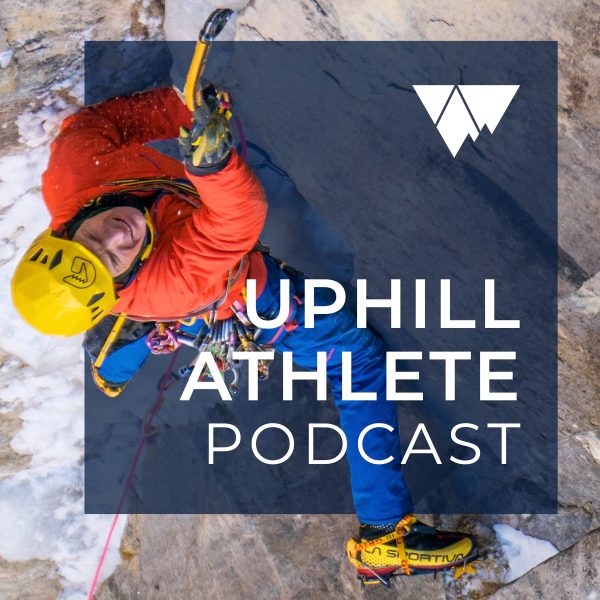
Uphill Athlete Podcast
- Episodes
- 9
- Released
- weekly
- Latest episode
- Nov 10, 2026
About the podcast
We educate and inspire you to be the best mountain athlete you can be with unmatched experience and proven training knowledge.
Episodes 9
The 80/20 Rule: Why Most of Your Training Should Be Easy, in conversation with Dr. Stephen Seiler
Dr. Stephen Seiler has spent decades measuring what the world's best endurance athletes actually do, and one of his most consistent findings is how little time they spend in the middle zone. Steve House asks …
Show notes
Dr. Stephen Seiler has spent decades measuring what the world's best endurance athletes actually do, and one of his most consistent findings is how little time they spend in the middle zone. Steve House asks him why that zone is the mistake most mountain athletes make, how to tell when an easy day has drifted too hard, and why Seiler wouldn't use the "zone 2" label for mountain athletes. They also get into heart rate reserve, breathing as a stress signal, load versus stress, rest days, durability, and training as we age.
Read more:
Dr. Stephen Seiler on Intensity, Rest, and the Mountain Athlete: coming soon
Training Groups: https://uphillathlete.com/training-groups/
Full transcript: https://uphillathlete.com/podcast/the-80-20-rule-why-most-of-your-training-should-be-easy/The Long Way Around with Krissy Moehl
In 2000, Krissy Moehl said she wanted to run the day she dies. Twenty-five years later, she tells Steve House it still holds true. The two-time UTMB champion and Chuckanut 50K race director talks about running …
Show notes
In 2000, Krissy Moehl said she wanted to run the day she dies. Twenty-five years later, she tells Steve House it still holds true. The two-time UTMB champion and Chuckanut 50K race director talks about running the first UTMB in a garbage bag, the trophy she cleared a shelf for, learning at 40 that her cycle had shaped her training since 13, and why running is her answer rather than her escape. At the end, she reveals a second calling: work as a death doula.
Read more:
The duty to remain, Mark Twight: https://uphillathlete.com/voiceofthemountains/the-responsibility-to-remain-podcast/
Training for the female athlete: https://uphillathlete.com/female-athlete/
Personal coaching: https://uphillathlete.com/coaching/personal-coaching/
Full transcript: https://uphillathlete.com/voiceofthemountains/the-long-way-around-krissy-moehl-podcast/Fat Oxidation, Fasted Training, and Low-Carb, High-Fat Diets (Replay)
Uphill Athlete no longer recommends fasted training. Steve House explains why, then RD Alyssa Leib and host Alyssa Clark dig into fat oxidation, metabolic flexibility, low energy availability and RED-S, and …
Show notes
Uphill Athlete no longer recommends fasted training. Steve House explains why, then RD Alyssa Leib and host Alyssa Clark dig into fat oxidation, metabolic flexibility, low energy availability and RED-S, and what research says about low-carb, high-fat diets for endurance and altitude. The takeaway: aerobic training builds your fat-burning engine, carbs fuel performance and recovery, and there are no shortcuts. Originally released November 2024, with a new introduction.
Read more:
Fat adaptation: https://uphillathlete.com/nutrition/fat-adaptation/
Fasted training and performance: https://uphillathlete.com/nutrition/the-impact-of-fasted-training-on-performance/
Low-carb, high-fat diets: https://uphillathlete.com/nutrition/high-fat-low-carb-diet-ultra-endurance-performance/
Nutrition coaching with Alyssa Leib: https://uphillathlete.com/coaching/nutrition-coaching/Full transcript: https://uphillathlete.com/podcast/fat-oxidation-fasted-training-and-low-carb-high-fat-diets/
Your First Ultra
Signed up for your first ultra? Coach Alexa Hasman, who has run 40+ ultras including seven 200-milers, joins Steve House to cover what first-timers need to know: why you don’t need a road marathon first, how …
Show notes
Signed up for your first ultra? Coach Alexa Hasman, who has run 40+ ultras including seven 200-milers, joins Steve House to cover what first-timers need to know: why you don’t need a road marathon first, how much runway to give yourself, why hiking is part of the plan, the minimum strength training that works, fueling, poles, dress rehearsals, and the two keys she wants you to remember: consistency and adaptability.
No One to Tell with Buzz Burrell
Buzz Burrell coined the term "fastest known time," and he's spent his life honoring the athletes who never tell anyone what they did. Steve House talks with Buzz about his 1969 run to Lake Michigan with no …
Show notes
Buzz Burrell coined the term "fastest known time," and he's spent his life honoring the athletes who never tell anyone what they did. Steve House talks with Buzz about his 1969 run to Lake Michigan with no food, no water, and no one to tell; pushing multi-day FKTs on the Colorado Trail and the John Muir Trail; surviving a "widowmaker" heart blockage his doctors kept missing; and why, once goals and expectations fall away, what's left is simple: keep moving.
Multi-Sport and Seasonal Planning
Trail running, climbing, skiing, riding: can you train for all of them without getting worse at each? Steve House and Director of Coaching Chantelle Robitaille share the framework Uphill Athlete coaches use …
Show notes
Trail running, climbing, skiing, riding: can you train for all of them without getting worse at each? Steve House and Director of Coaching Chantelle Robitaille share the framework Uphill Athlete coaches use with multi-sport athletes. Pick one priority per season, run an honest gap analysis, and harmonize your sports instead of balancing them. They also cover the interference effect, layering sports through the year, when to set one aside, and why strength training is non-negotiable.
Concussion Fundamentals with Dr. Eliza Sampey
Steve House talks with Dr. Eliza Sampey, a Doctor of Physical Therapy specializing in brain injury rehab, former professional endurance athlete, and concussion survivor herself about why mountain and endurance …
Show notes
Steve House talks with Dr. Eliza Sampey, a Doctor of Physical Therapy specializing in brain injury rehab, former professional endurance athlete, and concussion survivor herself about why mountain and endurance athletes so often underestimate head injuries, and what science-backed recovery actually looks like.
Dr. Sampey explains that concussions are especially easy to dismiss in the backcountry because the injury is invisible and athletes are conditioned to push through pain. She walks through the neurometabolic cascade that occurs after a head or body impact — how stretched axons flood the brain with misplaced neurochemicals, disrupt blood flow, and trigger an "energy crisis" that takes three to six weeks to resolve, regardless of how mild or severe the initial injury seemed. She stresses why getting hit again during that window is dangerous, even life-threatening in rare cases of second impact syndrome, and can turn a six-week recovery into six to nine months.
The conversation covers red-flag symptoms that warrant emergency evacuation, why "rest in a dark room" is outdated and harmful advice, the real role of relative rest and sleep in the first 48 hours, and why low-intensity, sub-symptom-threshold exercise (not standard heart-rate training zones) is the cornerstone of active rehab. Dr. Sampey introduces the seven systems affected by concussion (autonomic, metabolic, visual, vestibular, cervical, cognitive, and affective) and explains why treating them in isolation fails — recovery requires integrating them back together. She also discusses the Buffalo Concussion Bike/Treadmill Test for gauging exercise tolerance, common mistakes endurance athletes make in returning to training too fast, how old, "resolved" concussions can resurface under new training stress, and how to vet a qualified concussion provider. The episode closes with practical guidance on symptom tracking, supporting a partner or teammate through recovery, and her core message: concussion is a treatable injury — most long-term problems come from how it's managed, not how bad it was to begin with.
Voice of the Mountains: Who Says Yes? with Kílian Jornet
Steve House sits down with elite mountain athlete Kílian Jornet, calling in from his home in Norway, for a wide-ranging conversation about what draws people to high-risk mountain pursuits. They explore …
Show notes
Steve House sits down with elite mountain athlete Kílian Jornet, calling in from his home in Norway, for a wide-ranging conversation about what draws people to high-risk mountain pursuits. They explore mountains not as a destination but as a sense of home and identity, the fine line between earned confidence and dangerous complacency, and how fear and euphoria can each distort decision-making in exposed terrain. Jornet reflects on his upbringing; being "born into the mountains," his mother's nighttime forest walks, a family trek across the Pyrenees; and how he's now passing that connection to nature on to his own children with his wife, Emily. The two discuss the blurred lines between mountaineering, alpinism, and running as labels; the philosophy behind going fast and light versus slow and immersive; and the particular psychology of "accepting" mortal risk versus fighting to survive an emergency. The conversation turns deeply personal as Kílian opens up about the loss of his friend and climbing partner Stefane Brosse and how grief and loss reshapes friendships, risk tolerance, and one's relationship with death across cultures. They close on parenthood, legacy, and the freeing realization that, ultimately, no one will be remembered. What matters is being present, honest, and good to the people around you now.
Making Sense of the Data with Dr. Marco Altini
Steve House sits down with Dr. Marco Altini — data scientist, physiologist, and founder of HRV4Training — for a deep-dive into one of the most misunderstood tools in endurance athletics: heart rate variability …
Show notes
Steve House sits down with Dr. Marco Altini — data scientist, physiologist, and founder of HRV4Training — for a deep-dive into one of the most misunderstood tools in endurance athletics: heart rate variability. With over 50 peer-reviewed papers to his name, Dr. Altini brings rare scientific rigor to a space crowded with oversimplified wearable metrics. The conversation opens by challenging the industry's obsession with single-number readiness scores, which Dr. Altini argues dilute nuanced physiological signals into deterministic assumptions that don't reflect the complexity of the human body.
The episode unpacks the fundamentals of HRV — what it actually measures, why morning is the optimal measurement window for endurance athletes, and how to interpret it as a marker of stress response rather than performance capacity. Steve and Marco also cover hardware accuracy across chest straps, optical sensors, and phone cameras; HRV research at altitude; and the broader question of how biometric data should support — not replace — the athlete's own sense of feel.
Special Offer to Listeners: Receive free four week samples of our most popular training plans, visit uphillathlete.com/letsgo
Write to us at [email protected]
Similar podcasts
More Health & Fitness podcasts





Is this your podcast?
Confirm it with an entry in your feed: you get a code here, add it as podcast:txt to the channel of your feed, and we check it. Your podcast is then shown as “verified” on SoundNode.