

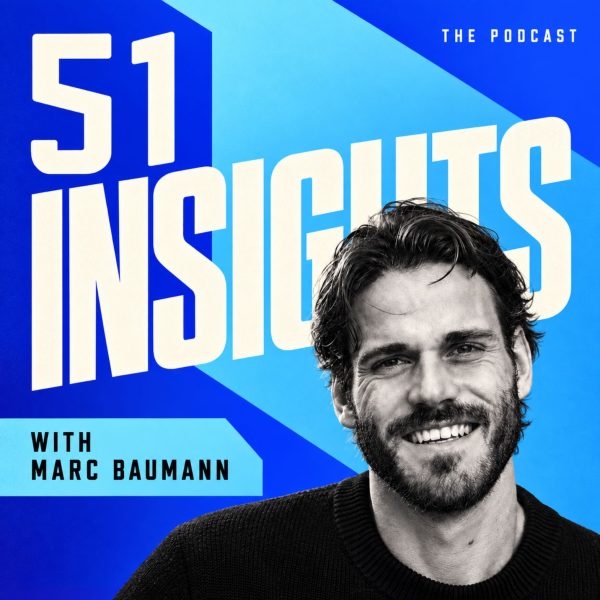
51 Insights – What’s next in digital assets, AI and markets.
- Episodios
- 68
- Se publica
- cada semana
- Último episodio
- 12 Nov 2026
Sobre el podcast
We talk with digital asset, AI and technology leaders about what's next in finance and commerce. Subscribe to our newsletter & join 35k+ others: https://join.fiftyone.xyz/
Episodios 68
Illia Polosukhin: "Not Your AI, Not Your Intelligence"
Illia Polosukhin, co-founder of NEAR Protocol and co-author of "Attention Is All You Need," on why AI is the front end and blockchain is the back end, why agents will need more than a payments rail, and why he …
Notas del episodio
Illia Polosukhin, co-founder of NEAR Protocol and co-author of "Attention Is All You Need," on why AI is the front end and blockchain is the back end, why agents will need more than a payments rail, and why he left Google to build for that future.
In this episode of 51 Insights, Marc Baumann speaks with Illia Polosukhin about writing the first working Transformer with Ashish Vaswani, why NEAR started as an AI company before it became a blockchain, the Bitwise NEAR ETF, Delta League, how value accrues to the NEAR token, what Wall Street needs for agentic finance, continual learning, cybersecurity and formal verification, and why NEAR can rotate keys to post-quantum signatures without moving assets.
Watch or listen to the full 51 Insights podcast:
https://www.51insights.xyz
CHAPTERS
00:00 Introduction
01:26 What he saw that the other Transformer authors didn't
03:22 First neural net at 14, and the path to Google
08:04 Was ChatGPT a surprise?
10:38 AI is the front end, blockchain is the back end
14:35 Why agents need more than Stripe
18:42 When agentic commerce hits the real economy
21:00 Agents that already work
22:36 Delta League: editing model weights without a GPU cluster
29:13 Why NEAR, not Ethereum or Solana
32:40 Connecting NEAR to the real world
36:19 How value accrues to the NEAR token
40:59 What Wall Street needs for agentic finance
44:00 The next AI breakthrough: continual learning
47:10 Cybersecurity, uncensored models and formal verification
52:42 Why NEAR is quantum-safe
55:03 Lightning round
ABOUT ILLIA POLOSUKHIN
Illia Polosukhin is co-founder of NEAR Protocol and a co-author of "Attention Is All You Need," the 2017 paper that introduced the Transformer architecture behind modern large language models. Before NEAR he was an engineering manager at Google, where he worked on natural language research and TensorFlow. He holds a master's degree in applied mathematics and computer science from the National Technical University "Kharkiv Polytechnic Institute."
LINKS
NEAR: https://near.org
NEAR AI: https://near.ai
Delta League: https://deltaleague.ai
X: https://x.com/ilblackdragon
LinkedIn: https://www.linkedin.com/in/illia-polosukhin-77b6538
51 Insights: https://www.51insights.xyz
Newsletter: https://join.fiftyone.xyz
Spotify: https://open.spotify.com/show/6g2Wl9QKAbHJoyPeCmDVJn
CORRECTIONS
- 01:08, 01:34 and the intro: NEAR started as an AI company in 2017, teaching machines to code. The blockchain work began in 2018. Illia says this at 01:49.
- 08:04: OpenAI released GPT-1 in 2018, not 2022. ChatGPT, released in 2022, was GPT-3.5. Illia corrects this on air.
- 36:19: "The Fat Protocol Thesis Is Dead" was published on July 15, 2026, about three and a half months before this conversation, not two months.
- 41:14: DTCC announced its tokenization service on October 28, 2026, the week before this recording, not "this week."
ABOUT 51 INSIGHTS
51 Insights provides institutional research and conversations on digital assets, AI, finance, and emerging technology.Zach Pandl: Why Grayscale Says It's Time to Buy Bitcoin
Zach Pandl, Head of Research at Grayscale, on why Grayscale gave clients the green light to buy Bitcoin, why he thinks the June low marked the bottom, and why Bitcoin rallied even after the Fed hiked and the …
Notas del episodio
Zach Pandl, Head of Research at Grayscale, on why Grayscale gave clients the green light to buy Bitcoin, why he thinks the June low marked the bottom, and why Bitcoin rallied even after the Fed hiked and the CLARITY Act stalled.
In this episode of 51 Insights, Marc Baumann speaks with Zach Pandl about whether the four-year cycle still holds, why the big crypto assets trade like commodities, how the ETFs lowered the risk for allocators, interest rates and Bitcoin, Strategy's balance sheet, how a Goldman Sachs FX strategist ended up in Bitcoin, the debasement trade and what to own beyond Bitcoin, why transaction fees are the best single measure of a layer one, the fat protocol thesis, Ethereum, Solana, BNB, Sui and Avalanche, why central banks buy gold and not Bitcoin, privacy and Zcash, quantum computing, the AI compute layer and Bitcoin miners, crypto AI tokens like NEAR and Bittensor, and being wrong in public.
Watch or listen to the full 51 Insights podcast:
https://www.51insights.xyz
CHAPTERS
00:00 Introduction
01:29 The green light to buy Bitcoin
03:35 Is the four-year cycle dead?
06:35 What's different this cycle: lower risk and the ETFs
10:28 Why Bitcoin is rising after a Fed hike
13:41 Strategy, leverage and the recent rally
14:52 From Goldman Sachs FX strategist to Bitcoin
18:08 The debasement trade and what to own beyond Bitcoin
21:54 Stablecoins and where crypto fees accrue
24:03 Transaction fees: the desert island indicator
26:39 Is the fat protocol thesis dead?
30:22 Ethereum, Solana, BNB and the next layer-one leaders
31:44 A multi-chain world with strong network effects
33:15 Why central banks buy gold, not Bitcoin
36:11 Privacy and the Zcash case
38:10 Quantum computing and Bitcoin
42:02 Where we are in the AI build-out
44:47 Bitcoin miners and the AI compute layer
46:28 Why crypto AI tokens rallied
48:45 NEAR and Bittensor
50:29 The most mispriced asset: Zcash
51:49 Being wrong in public
52:38 Lightning round
ABOUT ZACH PANDL
Zach Pandl is Head of Research at Grayscale, where he writes The Stack, the firm's research blog. Before Grayscale he spent close to two decades as a macroeconomist and markets strategist on Wall Street at Lehman Brothers, Nomura Securities and Goldman Sachs, where he was co-head of global foreign exchange, rates and emerging markets strategy. He holds a bachelor's degree in international economics from the University of St. Thomas and a master's degree in economics from New York University.
LINKS
The Stack: https://www.grayscale.com/the-stack
X: https://x.com/LowBeta
51 Insights: https://www.51insights.xyz
Newsletter: https://join.fiftyone.xyz
CORRECTIONS
- 01:17 and 01:36: Grayscale's "green light" call to clients came in mid-September 2026, right after the September 16 Fed hike and the September 15 CLARITY Act vote. That was about five weeks before this conversation was recorded, not a week.
ABOUT 51 INSIGHTS
51 Insights provides institutional research and conversations on digital assets, AI, finance, and emerging technology.Chris Giancarlo: "The Real Choice Will Be Freedom or Control"
Chris Giancarlo, the former CFTC chairman known as CryptoDad, on why the real choice in digital money is freedom or control, why stablecoins offer no more privacy than a Chinese or European CBDC, and why he …
Notas del episodio
Chris Giancarlo, the former CFTC chairman known as CryptoDad, on why the real choice in digital money is freedom or control, why stablecoins offer no more privacy than a Chinese or European CBDC, and why he predicts the entire financial system will move onto digital networks within 12 to 15 years.
In this episode of 51 Insights, Marc Baumann speaks with Chris Giancarlo about why crypto lost nothing when the CLARITY Act stalled, Niall Ferguson's tower and square, how the 2008 crisis led him to blockchain, whether the tower is winning, the Biden years, lessons from launching Bitcoin futures, the David Sacks call and the number-two offer he turned down, Trump coin and Melania coin, why stablecoins are no more private than a CBDC, the digital euro as a surveillance instrument, choosing your own monetary system, Polymarket and why prediction markets are not casinos, and what the US needs to win in crypto.
Watch or listen to the full 51 Insights podcast:
https://www.51insights.xyz
CHAPTERS
00:00 Introduction
01:42 Who is winning the fight for the future of money?
04:02 The tower vs. the square
07:16 How the 2008 crisis led Chris to blockchain
12:20 Is crypto still a libertarian idea?
15:38 The Biden years: darkness at noon
19:03 Lessons for regulators from launching Bitcoin futures
21:53 The David Sacks call and the crypto czar role
23:58 The Crypto Ball, Trump coin and Melania coin
26:44 Freedom vs. control: are stablecoins private?
30:53 China's CBDC, the digital euro and a private dollar
32:21 Choosing your own monetary system
35:00 Polymarket and the call with Shayne Coplan
38:31 Why prediction markets are not casinos
41:11 Hedging real-world risk with prediction markets
43:55 What the US needs to win in crypto
44:56 The entire financial system on digital networks in 12-15 years
45:29 Lightning round
ABOUT CHRIS GIANCARLO
J. Christopher Giancarlo was the 13th Chairman of the US Commodity Futures Trading Commission (2017-2019), where he oversaw the launch of the first regulated Bitcoin futures. Known as "CryptoDad," he co-founded the Digital Dollar Project and is a Senior Strategic Advisor at Patomak Global Partners. He is the author of CryptoDad: The Fight for the Future of Money (2021) and The New Adventures of CryptoDad: The Quest for Financial Freedom in the 21st Century (Wiley, October 2026).
LINKS
Chris Giancarlo: https://www.christophergiancarlo.com
The New Adventures of CryptoDad: https://www.amazon.com/New-Adventures-CryptoDad-Digital-Century/dp/1394431228
X: https://x.com/giancarloMKTS
LinkedIn: https://www.linkedin.com/in/j-christopher-giancarlo-77257111
51 Insights: https://www.51insights.xyz
Newsletter: https://join.fiftyone.xyz
CORRECTIONS
- 04:37: Niall Ferguson's book is titled The Square and the Tower (2017). He is a senior fellow at the Hoover Institution.
- 40:44: slot machines are the largest share of casino gaming revenue, but well below 98%.
ABOUT 51 INSIGHTS
51 Insights provides institutional research and conversations on digital assets, AI, finance, and emerging technology.Jeff Booth: Money Is Theft and the Debt Can't Be Repaid
Jeff Booth (Ego Death Capital, author of The Price of Tomorrow) on why a debt-based money system has to quietly take from you to stay solvent, why $365 trillion of global debt can never be repaid, and why only …
Notas del episodio
Jeff Booth (Ego Death Capital, author of The Price of Tomorrow) on why a debt-based money system has to quietly take from you to stay solvent, why $365 trillion of global debt can never be repaid, and why only Bitcoin and open-source AI escape the control system.
In this episode of 51 Insights, Marc Baumann speaks with Jeff Booth about why rates are rising everywhere at once, Bitcoin as the first free market, why the AI infrastructure debt is already insolvent, gold vs Bitcoin, why pricing Bitcoin in dollars makes no sense, Core Scientific and AI's 15-year payback problem, whether the frontier labs survive open source, why open networks always win, the war and debt cycle, his own hypocrisy moment, and how to start running open-source AI yourself.
Watch or listen to the full 51 Insights podcast:
https://www.51insights.xyz
CHAPTERS
00:00 Introduction
02:09 Why money is getting more expensive everywhere
04:45 Bitcoin as the first free market
05:21 Why the AI debt is already insolvent
07:09 Can governments just inflate the debt away?
08:31 $365 trillion of global debt that can't be repaid
10:28 Who votes on how much money gets printed?
13:01 Why not just buy gold?
14:20 Why do you need an asset at all?
16:45 Are there any assets beyond Bitcoin?
17:58 Why pricing Bitcoin in dollars makes no sense
19:04 AI's 15-year payback problem
21:43 AI fear, regulation and who controls the models
24:32 Will the frontier labs survive open source?
26:55 The paper-folding analogy and fold 37
29:57 Why the internet got monopolized
33:10 Open networks win: Bitcoin as the new TCP/IP
36:03 Debt cycles, war and Iran
37:53 Jeff's hypocrisy moment and moving his time
39:50 Billions of AI agents: what's coming
43:34 How to prepare
45:06 How to start with open-source AI
47:04 Lightning round: the dollar in 2040
47:34 Private money on Bitcoin with Fedi
ABOUT JEFF BOOTH
Jeff Booth is a founding partner of Ego Death Capital, a Bitcoin venture capital firm, and the author of the bestselling book The Price of Tomorrow: Why Deflation Is the Key to an Abundant Future. He sits on the board of Core Scientific and co-founded ORANGE JUICE, which buys cash-flowing businesses and builds a Bitcoin treasury. He previously founded and ran BuildDirect.
LINKS
Jeff Booth: https://jeffreybooth.com
Ego Death Capital: https://egodeath.capital
X: https://x.com/JeffBooth
LinkedIn: https://www.linkedin.com/in/jeffdbooth
51 Insights: https://www.51insights.xyz
Newsletter: https://join.fiftyone.xyz
JOIN THE MORPHEUS FEDERATION (private money on Bitcoin, as Jeff mentions at the end)
1. Download the Fedi app: https://www.fedi.xyz (make sure it is the official Fedi app in your app store)
2. Join Morpheus with this invite code:
fed11qgqyj3mfwfhksw309ajnwenyxycrzdpnvfjnxdfnxa3xvefsxg6kzvpjxucxzd35v5enydmyvyunwvryv5ekycenvgmrxcenx3jnqv3489nrze3ev9jkze34qvqjqe204yde9r45kw4sv95ra50q3jh5zf2x36ynqz28a22fghxjdn5ccjazkw
Sign up here: https://app.fiftyone.xyz/companies/consortia
ABOUT 51 INSIGHTS
51 Insights provides institutional research and conversations on digital assets, AI, finance, and emerging technology.Matt Hougan: If the AI Trade Breaks, Bitcoin Is a Generational Buy
Matt Hougan (Bitwise CIO) on why the most complex macro setup in 30 years still points to seven-figure Bitcoin, and what to own in crypto now that the zombie chains are dying off.In this episode of 51 Insights …
Notas del episodio
Matt Hougan (Bitwise CIO) on why the most complex macro setup in 30 years still points to seven-figure Bitcoin, and what to own in crypto now that the zombie chains are dying off.
In this episode of 51 Insights, Marc Baumann speaks with Matt Hougan, Chief Investment Officer of Bitwise, about the four forces moving markets (the Western debt limit, AI, energy-driven inflation, and Bitcoin going mainstream), what happens to Bitcoin if the AI trade breaks, why a new crypto cycle has already started, revenue tokens and Hyperliquid, why Bitwise launched a NEAR ETF, quantum risk, and his case that all of finance moves on-chain.
Watch or listen to the full 51 Insights podcast:
Watch the full episode on YouTubeTokenizing $100T in Treasuries and equities without breaking the market, with Nadine Chakar
Nadine Chakar (DTCC) on why market infrastructure that safekeeps $100T+ can't afford a bad day — and what it takes to tokenize Treasuries and equities without breaking settlement.In this episode of 51 Insights …
Notas del episodio
Nadine Chakar (DTCC) on why market infrastructure that safekeeps $100T+ can't afford a bad day — and what it takes to tokenize Treasuries and equities without breaking settlement.
In this episode of 51 Insights, Marc Baumann speaks with Nadine Chakar, Managing Director and Global Head of DTCC Digital Assets, about July 15's live production tokenized Treasuries and equities, the October full launch, atomic settlement vs netting at quadrillion-dollar scale, technology-agnostic chains (Canton, AppChain/Besu, Chainlink, Stellar), Clarity Act timing, and what institutional DeFi actually needs to work.
Note: Nadine says a quadrillion is 16 zeros — it's actually 15 on the US short scale (1,000,000,000,000,000 = 10¹⁵).
Watch or listen to the full 51 Insights podcast:
https://www.51insights.xyz
CHAPTERS
00:00 Introduction
01:00 DTCC at $100T+ scale — four quadrillion in settlements
04:00 Why DTCC can't afford a bad day
07:00 July 15: live tokenized Treasuries and equities
11:00 Old rails and new rails living together
15:00 Mapping the stack: Canton, AppChain, Besu, Chainlink, Stellar
21:00 How many chains matter by 2030
25:00 Atomic settlement vs netting at market scale
29:00 Clarity Act and the October launch
33:00 Lightning round
ABOUT NADINE CHAKAR
Nadine Chakar is Managing Director and Global Head of DTCC Digital Assets, and a member of DTCC's Executive Committee. Previously CEO of Securrency (acquired by DTCC) and Head of State Street Digital / Global Markets.
LINKS
Nadine Chakar: / nchakar
DTCC: https://www.dtcc.com
DTCC bio: https://www.dtcc.com/about/leadership...
51 Insights: https://www.51insights.xyz
Newsletter: https://join.fiftyone.xyz
ABOUT 51 INSIGHTS
51 Insights provides institutional research and conversations on digital assets, AI, finance, and emerging technology.Scott Melker (Wolf of All Streets): Clarity, Robinhood, XRP, $250K Bitcoin
In this episode of 51 Insights, Marc Baumann speaks with Scott Melker about Bitcoin as a “liquidation sale,” why most tokens never needed to exist, zombie layer-ones, Robinhood’s chain bet, the Clarity Act, and …
Notas del episodio
In this episode of 51 Insights, Marc Baumann speaks with Scott Melker about Bitcoin as a “liquidation sale,” why most tokens never needed to exist, zombie layer-ones, Robinhood’s chain bet, the Clarity Act, and crypto as a parallel financial system for people outside traditional rails.
Watch or listen to the full 51 Insights podcast:
LINKS
X: https://x.com/scottmelker
LinkedIn: https://www.linkedin.com/in/scottmelker
Website: https://www.thewolfofallstreets.io
Newsletter: https://join.fiftyone.xyz
51 Insights: https://www.51insights.xyz
CHAPTERS
00:00 Introduction
00:31 From DJing for Rihanna to crypto
03:15 Crypto’s pipe dreams came true for Wall Street
05:21 Why utility and earnings beat token narratives
09:33 Most projects never needed a token
11:14 DCA Bitcoin and ignore the short-term price
16:23 Robinhood chain and the crypto barbell
23:03 Why most L1s become zombie chains
31:31 Clarity Act: procedural vote vs real passage
35:07 Political tokens and industry grift
40:08 The real win: global access beyond Wall Street
42:52 Lightning round: Clarity, Robinhood, XRP, $250K Bitcoin
ABOUT SCOTT MELKER
Scott Melker, known as the Wolf of All Streets, is one of crypto’s most followed voices.The Next Trillion Dollar Crypto Opportunity with Anthony B. (Coinbase Asset Management)
This is a free preview of a paid episode. To hear more, visit 51insights.substack.com Hi, it’s Marc. ✌️ “The next cycle is gonna be defined by on-chain asset management and what does it mean to be a fiduciary …
Notas del episodio
This is a free preview of a paid episode. To hear more, visit
Hi, it’s Marc. ✌️
“The next cycle is gonna be defined by on-chain asset management and what does it mean to be a fiduciary for your customers on chain.”
My guest this week is Anthony Bassili, who runs Coinbase Asset Management. He spent a decade at BlackRock selling institutions the most traditional products in finance, the iShares pension business. Now he sells the same institutions Bitcoin and digital asset strategies. We recorded this deep in the bear market, with Bitcoin down roughly 50% from its November 2025 peak of $126,000.
His big idea is simple. The last cycle settled whether a token is a security. The next one settles a harder question: what does it mean to manage other people’s money on-chain? Whoever answers that first gets to manage the money.
About Anthony Bassili: Anthony Bassili runs Coinbase Asset Management, the institutional asset management arm of Coinbase. He spent ten years at BlackRock in the iShares pension business before joining Coinbase in 2021 with a simple pitch: pensions should hold Bitcoin. He led Coinbase’s institutional business before moving over to run the asset manager, where his team’s backgrounds span BlackRock, Millennium, AQR, and Bridgewater. He is the author of “Get Off Zero,” a paper urging every investor to hold at least a small Bitcoin allocation. He is active on X at @smartestbeta.
“You’re not gonna catch the low. You just need to start allocating and do it consistently over time.”
Why this matters: Bitcoin peaked at $126,000 in November 2025 and is down about 50%. The October 10 leverage wipeout took out $25+ billion and started this bear market. Meanwhile, the incumbents aren’t waiting for the recovery: JPMorgan announced vaults on Kinexys, Grayscale announced on-chain asset management, Bitwise is in, and Anthony expects Fidelity and everyone else to follow. The fight over who gets to be a fiduciary on-chain is starting now, in the bear market, exactly when nobody is watching. This is the map.
This ad could belong to you. 🚀 Build credibility. Drive pipeline and revenue. We position you among 100,000+ digital asset decision-makers.
🎯 Jump to the best parts
00:00 The Next Big Crypto Opportunity01:00 Anthony B.'s Journey from BlackRock to Coinbase02:11 Is This a Good Time to Buy Bitcoin?07:16 The Fat Protocol Thesis Is Dead?08:36 Where Does Crypto Value Actually Accrue?12:00 How Bitcoin Yield Works18:07 Coinbase's Stablecoin Credit Strategy23:08 Managing Onchain Credit Risk26:21 The Future of Onchain Asset Management32:56 What Regulators Need to Fix35:08 When Bitcoin Became a Real Asset Class39:23 Lightning Round40:03 What Anthony B. Is Excited About for 202740:15 Stablecoin Credit vs Tokenized Treasuries40:19 Crypto's Most Underrated Narrative41:51 Where to Learn More
Important Links
* LinkedIn: https://www.linkedin.com/in/anthonybassili/
* Coinbase Asset Management: https://www.coinbase.com/institutional/asset-management
* X: https://x.com/smartestbeta
Watch or listen now: YouTube • Apple Podcasts
🔒 The full breakdown is for subscribers
Our biggest takeaways from this conversation
1. The next cycle is on-chain asset management
The last four years were spent arguing whether a token is a security. The Clarity Act is codifying the answer. Anthony says the next fight is bigger: what does it mean to be a fiduciary on-chain?
“The next cycle is gonna be defined by on-chain asset management and what does it mean to be a fiduciary for your customers on chain.”
* The test case is DeFi vaults. Lenders park stablecoins permissionlessly, and the dollars get allocated against collateral through smart-contract rules written by engineers. Is that discretionary asset management, with fiduciary duties and custody rules? Or just technology, user beware? Nobody knows yet.
* Hester Peirce’s recent comments on vaults opened the dialogue without settling it. Anthony’s read: that alone is progress. “We did not think that we’d get that kind of treatment back in the Gensler era.”
* The incumbents aren’t waiting: JPMorgan announced vaults on Kinexys, Grayscale announced on-chain asset management, Bitwise is in. “Everyone recognizes in the asset management community from BlackRock down that we need vault infrastructure.”
* Expect the old fight to reignite: “not your keys, not your coins” collides directly with “if you want risk management, I need discretion over some of your assets.”
What to do with this: vaults are a settled technology and an unsettled legal category. Watch the fiduciary framework, not the tech. That’s where the next cycle’s winners get decided.
Related reads:→ Banks went onchain
2. Coinbase’s stablecoin fund is 80% off-chain
In April 2026, CBAM launched CUSHY, its stablecoin high-yield credit strategy. Investors subscribe with stablecoins, and the fund shares are tokenized by Superstate on Base, Solana, and Ethereum mainnet. The crypto-native wrapper hides a very traditional core, and that’s the point.
“Everything in crypto is floating rate.”
* On-chain and off-chain credit are two parallel worlds that haven’t intersected. On-chain: floating rate, transparent, crypto-backed (staking, lending pools, basis-trade products). Off-chain: fixed rate, longer duration, wrapped in funds that don’t work on-chain.
* There isn’t enough high-quality credit on-chain to fill a fund that wants to be billions. So the portfolio is 80% traditional structured credit (CLOs, trade finance, asset-backed securities, receivables) and 20% tokenized, diversified across hundreds of names with 90 to 100 day liquidity.
* The core tenet: only work with originators, like Apollo, that are on a tokenization pathway. When the two worlds connect, CBAM can hold the tokenized or the traditional version of the same asset and arb the spread between them.
* And on-chain leverage cuts both ways. Looped positions in tokenized credit can unwind and force selling: “I may choose to just wait for the unwind to happen in the on-chain market and then go in and buy everything at a discount.”
What to do with this: treat the 80/20 as a live gauge of tokenization’s real progress. When that ratio flips, the two credit worlds have actually merged. Until then, the alpha is in straddling both.
Related reads:→ Same loans, better rails: the tokenized private credit opportunity
3. Tokens are cheap equity, and that’s why protocols don’t earn
Two weeks before this episode we published our case that the fat protocol thesis is dead: ten years on, value hasn’t accrued to the base layers. Ethereum earned about $1,500 from Robinhood’s launch on $600 to 700 million of daily volume. I put the thesis to a man whose employer is the strongest counterargument, the biggest distribution platform in crypto.
“It’s very cheap equity. It’s probably the lowest cost of capital financing you could utilize.”
* His explanation of why protocols don’t earn is the sharpest I’ve heard: tokens aren’t a business model, they’re financing. Protocols pay customer acquisition costs with tokens created out of thin air, granting distribution platforms hundreds of millions in tokens for priority access to customers.
* TVL grows, usage grows, customers grow. But “where does the revenue switch turn on?” The moment it does, a competitor with a fresh token undercuts you.
* And the thesis eats itself: crypto was supposed to be a public good, nearly free. A protocol that captures enormous value stops being the thing it claimed to be.
* The direction of travel: “it’s the distribution platforms who have the customer relationship” that accrue value. His honest caveat: jury’s still out. Some once crypto-native protocols are now integrating into fintechs and brokerages serving hundreds of millions of customers.
What to do with this: when you underwrite a token, ask who pays the revenue and who owns the customer. If the answer to both is “someone else,” you’re holding the financing, not the business.
Related reads:→ There Won’t Be Another Cycle: the fat protocol thesis is dead
4. How Bitcoin pays you without being sold
The $2T market still running on spreadsheets
Hi, it’s Marc. ✌️ “Now my balance sheet as an originator drops from a week’s worth of production to one loan’s worth of production.” Mike Manning, Head of Institutional Finance, Ava Labs That is the most useful …
Notas del episodio
Hi, it’s Marc. ✌️
“Now my balance sheet as an originator drops from a week’s worth of production to one loan’s worth of production.”
Mike Manning, Head of Institutional Finance, Ava Labs
That is the most useful way I have heard someone explain the promise of onchain private credit.
Private credit has grown to roughly $2 trillion. Yet many facilities still run on spreadsheets, monthly reports, emailed PDFs, and weekly funding cycles. An originator may make a loan today and wait days for the money that funds it.
I sat down with Juan Montero, co-founder and CEO of Fence, Anant Matai, Investments & Product at Grove, and Mike Manning, Head of Institutional Finance at Ava Labs. We talked about what changes when the loan and the money move on the same rails, why most tokenization still stops at the wrapper, and what code should never be trusted to decide.
This is a playbook for building working private-credit rails, not a podcast about putting old assets inside new tokens.
This ad could belong to you. 🚀 Build credibility. Drive pipeline and revenue. We position you among 100,000+ digital asset decision-makers.
Why this matters now
The first wave of tokenization changed the ownership wrapper. A fund share or bond became a token, but the underlying loans, servicing, covenants, and cash movements often stayed in the old system.
The second wave is trying to change the operating model. A loan is created digitally. Its legal documents point to an authoritative record. Eligibility and covenant rules can be checked continuously. Repayment can arrive in digital cash and map back to that exact loan.
That distinction separates a faster transfer rail from a faster credit business. Our 51 Insights report estimates that working rails can compress funding from 5 to 15 days to 1 to 3 days, distributions from T+5 to T+30 to near real time, and refinancing from 4 to 8 weeks to 1 to 2 weeks. The loan does not become safer because it is onchain. The capital around it can move with less waiting and less clerical work.
About the guests
* Juan Montero is co-founder and CEO of Fence. The company builds operating infrastructure for asset-backed finance, from loan onboarding and borrowing-base calculations to covenants, cash flows, and reporting. Fence says it administers about $1.5 billion across live facilities.
* Anant Matai works across investments and product at Grove, an institutional credit protocol backed by Sky. Grove allocates onchain capital to tokenized credit and provides financing against eligible digital assets.
“The lenders are here ... what we’re really looking for is that end to end originators to originate assets that are on chain and borrow against them on chain.”
* Mike Manning is Head of Institutional Finance at Ava Labs, which develops the Avalanche network. He previously led blockchain and digital-currency work at Amazon and held roles at Provenance and Symbiont.
“This is a settlement and operational technology. It’s not a judgment technology.”
The discussion was part of Same Loans, Better Rails: The Institutional Rebuild of Private Credit, presented by 51 Insights and Avalanche.
Chapters
00:00 The $2 Trillion Private Credit Problem00:56 Meet the Panel02:38 Why Private Credit Still Runs on Spreadsheets06:38 Blockchain Without the Hype09:44 Bringing Institutional Credit Onchain12:41 Tokenization vs Onchain Lifecycle Management15:04 The Money Rail Meets the Asset Rail17:28 How Banks Save 80% in Operational Costs19:06 Can Blockchain Prevent Double Pledging?21:59 Is Regulation Holding Blockchain Back?25:01 Why Banks Will Adopt This26:50 Which Blockchain Should Institutions Use?29:00 What Really Needs to Go Onchain?31:56 The Future of Onchain Credit34:13 Final Thoughts
Important links
* Event page and guest details
* 51 Insights report: The tokenized private credit opportunity
* Fence case study: BBVA and Payflow
* Grove’s $250 million Avalanche deployment target
1. The wrapper is not the product
Thesis: A tokenized claim is useful. A digitally native loan lifecycle changes the economics.
Mike drew a clean line between putting an ownership wrapper onchain and moving issuance, servicing, covenants, repayment, and settlement onto the same system.
“Asset-backed finance and securitization is composable finance without a composable stack.”
A wrapper gives investors a new way to hold an asset. It does not automatically change how the loan is originated, checked, funded, serviced, or enforced.
* The underlying loan needs a durable digital identity.
* The credit agreement needs machine-readable eligibility, covenant, and waterfall rules.
* Cash movements need to reconcile to the same loan record.
* The legal documents need to say which record controls ownership.
What to do with this: When someone pitches a tokenized credit product, ask where the underlying loan, covenants, servicing events, and repayments live. If the answer is still email, PDF, and spreadsheet, the token changed the wrapper, not the operating model.
Related read: The tokenized private credit opportunity
🚀 Build credibility. Drive pipeline. Win in digital assets. We produce institutional-grade research that helps digital asset companies own a category, then distribute it to 100,000+ decision-makers. Let’s talk.
2. Capital velocity is the business case
Thesis: The most valuable output is not a token. It is less time between creating an eligible loan and receiving the capital that funds it.
In a weekly borrowing-base process, an originator may carry days of new loans on its own balance sheet. If each loan enters the facility as soon as it passes the agreed rules, that inventory can fall sharply.
“Now my balance sheet as an originator drops from a week’s worth of production to one loan’s worth of production.”
“It turns a capital intensive model into a capital light model.”
Juan used a Fence facility with BBVA as the proof point. Fence’s published case study says the system handles 100,000 transactions a month, reduced interest expense by about 30%, and increased the advance rate by more than 10%. Fence separately reports up to 80% lower operating overhead and up to 40% lower cost of capital across clients. These are company-reported outcomes and should be read that way.
What to do with this: Measure idle funding days, reconciliation hours, advance rates, and the cost of carrying unfunded loans. Those numbers tell you whether new rails changed the business.
Related read: Inside JPMorgan’s $3T tokenization machine
3. One ledger does not stop every double pledge
Thesis: A ledger can prevent two claims against one digital asset only when that asset is the authoritative legal record from origination.
The panel discussed the alleged double and triple pledging in the collapses of First Brands and Tricolor. A shared record can make duplicate claims visible, but only inside the system that everyone recognizes.
“You can prevent double pledging of an asset once that it is on chain, but then the question is, well, how do I know the asset that’s on chain is the original one?”
A digital twin can still be pledged on one chain, another chain, and a traditional facility. A signature can prove who submitted a record. It cannot prove that the offchain asset exists or that no competing claim sits elsewhere.
* Origination must create the first authoritative asset record.
* Legal documents must define control and priority.
* All relevant lenders need access to the same ownership state.
* Servicing data and cash need to reconcile to the asset continuously.
What to do with this: Ask which record has legal priority, whether the same receivable can still exist offchain, and what happens when a servicer or borrower disputes the data.
Related read: DTCC’s $20T October debut
4. Lenders are ready. Originators are the bottleneck
Thesis: Capital is already willing to move onchain. The missing piece is a deeper supply of loans that are created, funded, and serviced onchain from the start.
“The lenders are here ... what we’re really looking for is that end to end originators to originate assets that are on chain and borrow against them on chain.”
Grove shows the allocator side of the market. As of August 2026, its site shows $2.80 billion in TVL and 16 active allocations. Its first Sky mandate put more than $1 billion into Janus Henderson’s JAAA strategy. On Avalanche, Grove announced a $250 million deployment target, which is different from saying the full amount has already been deployed.
The harder step is moving beneath the fund token. Originators need loan data, documents, controls, servicing events, and payment rails that lenders can rely on without rebuilding the deal by hand.
What to do with this: Build the allocator roadmap around originators who can create a legally native loan record and keep it current. Separate capital allocated to tokenized wrappers from capital funding digitally native loans.
Related read: Same loans, better rails
5. Code should run operations, not judge credit
Thesis: Smart contracts can execute the agreed rules. They should not decide whether a borrower deserves capital.
“Code should do ninety nine percent, we should flag that one percent.”
“This is a settlement and operational technology. It’s not a judgment technology.”
There is plenty to automate: eligibility checks, concentration limits, payment status, waterfalls, borrowing bases, and defined covenants. Future-receivables facilities are especially clean examples. A missed payment can remove a receivable from the borrowing base, while a digital-cash repayment maps to that loan and releases capital for the next one.
Underwriting, audited accounts, change-of-control analysis, bespoke waivers, and enforcement remain human work. The system also needs a controlled way to handle exceptions. A rigid smart contract that cannot process a sensible waiver creates a new operating problem.
What to do with this: Draw a line through the workflow. Put deterministic checks and cash movements below it. Keep credit judgment, legal interpretation, and exception approval above it, with a clear audit trail between the two.
Related read: Where automation ends in tokenized private credit
6. Serious counterparties beat endless chain choice
Thesis: Institutions choose a market, not a feature list.
Mike argued that optionality can become fragmentation. A bank does not care that a product can move across 100 networks if the counterparties, cash rails, legal arrangements, and liquidity it needs are scattered across all of them.
“What opportunity through optionality does is it ... institutionalizes fragmentation.”
Juan and Anant added the practical tests: resilience, uptime, security, observable infrastructure, builders who can support the product, and reliable on- and off-ramps. Distribution comes from depth in a room that serious participants already want to enter.
What to do with this: Choose infrastructure by the counterparties it can convene, the legal and cash workflows it can support, and the reliability it has proved. Maximum portability is a poor substitute for one market that works.
Related read: Banks went onchain
The bottom line
The skeptic has a strong case. A bad loan does not become a good loan because its data is onchain. Enforcement still happens in courts. Bespoke credit still needs judgment. And one important question from the discussion went unanswered after the connection dropped: how does an allocator offer fast withdrawals when the underlying loans may take weeks to sell? Better records do not remove the liquidity mismatch.
But that is not the main claim these systems need to prove. They need to show that a good loan can be funded, monitored, paid, and transferred with less idle cash and less clerical work. Fence’s live facilities suggest that operating gain can be large. Grove shows that institutional capital is already willing to use the rails. Avalanche is betting that the market will gather around a small number of networks with enough depth to support it.
Underwriting decides whether the loan deserves capital. The rails decide how long that capital sits still.
That’s all for now, folks.
– Marc & Team
This is a public episode. If you'd like to discuss this with other subscribers or get access to bonus episodes, visit
why a KKR partner left for DeFi (with Xiao-Xiao, President of Jupiter)
This is a free preview of a paid episode. To hear more, visit 51insights.substack.com Hi, it’s Marc. ✌️ “We did over $1.2 trillion of onchain trading volume across spot and perps.” One app on Solana processed …
Notas del episodio
This is a free preview of a paid episode. To hear more, visit
Hi, it’s Marc. ✌️
“We did over $1.2 trillion of onchain trading volume across spot and perps.”
One app on Solana processed $1.2 trillion in trading volume. Not an exchange with servers and order books. An app that runs entirely on a blockchain. Its president spent years at KKR, one of the largest private equity firms in the world, before he switched sides.
His name is Xiao-Xiao J. Zhu, President of Jupiter, the biggest DeFi platform on Solana.
At KKR he led the firm’s digital assets and blockchain strategy. Now he runs a company with 20+ onchain products, $3 billion in TVL, and a plan to put US stocks, a stablecoin, a neobank, and AI agents on the same rails. His core argument is simple: the value in crypto has moved from blockchains to applications. He calls it the fat app thesis. And he thinks onchain finance is still 10x to 100x smaller than its real market.
This isn’t a recap. It’s the playbook: the six best ideas from the conversation, the exact quotes, and what to do with each one.
About Xiao-Xiao J. Zhu: Xiao-Xiao J. Zhu is President of Jupiter, Solana’s largest onchain finance platform. Before Jupiter, he was Digital Operating Partner at KKR, where he led technology value creation across the portfolio and ran the firm’s global digital assets and blockchain strategy, backing crypto funds and companies including Anchorage Digital. He has seen both sides: how value gets built in traditional private equity, and how it gets built onchain.
“The biggest companies in crypto are basically centralized exchanges or market makers who are extremely intransparent and are running on centralized databases.”
Why this matters: Jupiter is what the next generation of financial institutions might look like. It started as a DEX aggregator three or four years ago. Today it is the number one trading venue and the number one TVL protocol on Solana, it launched a stablecoin backed by BlackRock’s BUIDL fund, and in May it put regulated US equities onchain with Jump Trading and Securitize. Robinhood, Coinbase and OKX already route through its APIs. We recorded this live at Proof of Talk in Paris. Here it is in six ideas.
🎯 Jump to the best parts
[00:00] Cold open: $1.2 trillion and the road map[00:30] Live from Proof of Talk in Paris[01:05] From KKR to the biggest DeFi app on Solana[02:26] The inflection point: blockchains finally got fast[03:12] The fat app thesis[03:43] What Jupiter is: 20+ products, $1.2T in volume[04:44] Jupiter Lend, JLP, and their own stablecoin[05:52] Why “onchain finance,” not DeFi[07:56] The 100x gap: millions of users vs. Binance’s 300M[09:00] The two unlocks: RWAs and agentic finance[10:31] Agents don’t do KYC[11:39] The Jupiter agent kit is live[12:37] How institutions plug in today[14:29] Bitwise and up to $1B into Jupiter Lend[15:11] Jupiter Global: the onchain neobank[15:40] Tokenized US equities with Jump and Securitize[17:07] What tokenized stocks actually unlock[17:52] The road map: super app, neobank, JupNet[18:38] Wrap
Important Links
* Jupiter: https://jup.ag
* Securitize / Jump / Jupiter tokenized equities announcement: PR Newswire
* Jupiter Lend x Bitwise (Ethena market): PR Newswire
* LinkedIn: https://www.linkedin.com/in/xiao-xiao-j-zhu-12078730
Watch or listen now: YouTube • Apple Podcasts
🔒 The full breakdown is for subscribers
Our biggest takeaways from this conversation
1. The value moved from blockchains to apps.
For years the money in crypto was made at the protocol layer. You bought the chain, not the things built on it. Zhu says that flipped, and it flipped because blockchains finally got fast enough to build real products on.
“Value was initially in crypto created at the protocol level, at the blockchain level, to now really an era of the fat app thesis.”
The irony he points out: everyone came to crypto for decentralization, but the biggest crypto companies are centralized exchanges and market makers running on ordinary databases. Not because they were lazy. Five to seven years ago, chains simply couldn’t handle the volume.
* The inflection came in the last two to three years, when Solana and newer L1s and L2s solved most of the scalability problems.
* The result is a new generation of apps like Jupiter and Hyperliquid: permissionless, self-custodial, and built fully onchain, at global scale.
* The question he thinks matters now: what applications, brands and user experiences can you build at scale on top of blockchains? Not which chain wins.
What to do with this: if your digital asset exposure is all protocol-level, you own the last cycle’s thesis. Look at where usage and fees actually accrue now: the application layer.
Related reads:→ 184: Kraken is buying DeFi
This ad could belong to you. 🚀 Build credibility. Drive pipeline and revenue. We position you among 100,000+ digital asset decision-makers.
2. Jupiter is Robinhood, rebuilt fully onchain.
"waiting isn't a strategy", with Christian Schmid, Global Banking Lead, BCG
This is a free preview of a paid episode. To hear more, visit 51insights.substack.com Hi, it’s Marc. ✌️ “Waiting and seeing is not a strategy.” A senior partner and global banking lead at BCG just put a number …
Notas del episodio
This is a free preview of a paid episode. To hear more, visit
Hi, it’s Marc. ✌️
“Waiting and seeing is not a strategy.”
A senior partner and global banking lead at BCG just put a number on the thing every bank CEO is nervous about: up to 15% of bank revenue and 30% of profits at risk by 2035. But the opportunity is bigger than the threat.
His name is Christian Schmid, Managing Director and Senior Partner at BCG, where he leads the global banking business. He is the lead author of BCG’s biggest ever digital assets report, The Future of Digital Assets.
He calls the whole shift the iPhone of money, and he thinks the real fight is not stablecoins versus deposits. It is who owns the screen the customer taps.
About Christian Schmid: Christian Schmid is a Managing Director and Senior Partner at BCG, based in Zurich, where he leads the firm’s global commercial banking, capital markets and investment banking business and chairs the board of BCG Expand. He trained as an engineer at ETH, came up through IBM, and has spent 27 years advising the CEOs of the world’s biggest banks. He is the lead author of The Future of Digital Assets.
“That’s probably the most interesting topic I have seen in my whole consulting career, which is twenty seven years almost by now.”
Why this matters: This is the year banks stopped watching from the sidelines. The GENIUS Act gave stablecoins a US rulebook, the market is now north of $300B, and the biggest US banks, JPMorgan, Citi and Bank of America, are building a shared tokenized-deposit network aimed at around 2027. BCG puts the tokenization prize near $88 trillion. So when the person who advises these CEOs tells you what he actually thinks, in plain language, it is worth 40 minutes. Here it is in six ideas.
🎯 Jump to the best parts
00:50 Introduction01:59 Why BCG Published Its Biggest Digital Assets Report04:13 How Banking Conversations Have Changed05:46 Is Tokenization Bigger Than Digital Banking?08:13 Why Banks Could Lose 30% of Their Profits13:08 Are Digital Assets Replacing Banks?16:15 The Three Types of Digital Assets20:08 Where Banks Should Invest23:20 The Biggest Real World Use Cases26:00 What Banks Are Actually Doing27:30 AI vs Digital Assets30:18 Why Waiting Is Not a Strategy32:03 Four Futures for Digital Assets35:14 Stablecoins vs Tokenized Deposits37:41 The Future of Programmable Money38:36 Lightning Round39:50 Where To Learn More
Important Links
* BCG profile: https://www.bcg.com/about/people/experts/christian-schmid
* LinkedIn: https://www.linkedin.com/in/schmidchristianzuerich
🔒 The full breakdown is for PRO subscribers
Our biggest takeaways from this conversation
1. The threat is real, the opportunity is bigger
Most consultant reports are built to scare you into buying a project. Schmid’s does the opposite. He gives you the scary number, then tells you not to over-index on it.
“Whether this number is completely correct or not is actually a bit irrelevant, I would say. But there is a threat.”
The threat comes in two parts. Banks lose fee income and net interest margin as deposits and transactions drift toward stablecoins. Then they pay again to run two sets of rails at once.
“They also need to maintain the dual rails, which increases the cost base for those banks. And so it’s almost a bit a double whammy.”
* The model: up to 15% of revenue and 30% of profit at risk by 2035, versus a world where digital assets barely develop.
* The catch he keeps repeating: it is a simulation, not a forecast. The point is the size of the stake, not the decimal.
* The upside is the part banks miss. In BCG’s numbers the biggest wins are in asset management and trading. Tokenization makes it easier to wrap more assets, and trading could need less capital and liquidity, which lifts return on equity. BCG pegs the trading upside at up to a 4% RoE bump or $1B+ for an average G-SIB.
What to do with this: don’t argue about whether it’s 30% or 12%. Run the model on your own book. The industry number hides a huge spread from one bank to the next.
Related reads:→ BCG’s new digital asset playbook: The $88 Trillion Question
This ad could belong to you. 🚀 Build credibility. Drive pipeline and revenue. We position you among 100,000+ digital asset decision-makers.
2. Stop calling it crypto
The word “crypto” hides the most important distinction in the whole report. Schmid splits digital assets into three: tokenized securities, digital money, and cryptocurrency. They are not the same animal, and they don’t have the same future.
“Cryptocurrency per se is a very different thing because it’s not backed with any value, and that’s very different from digital money or digital real world assets.”
* Tokenized securities and digital money look a lot like what we already have, just in a new wrapper. In 20 years, he says, no one will care whether a security was tokenized or not.
* Cryptocurrency itself he barely grows in the model, roughly 2%. His line: “in today’s world that’s where the money is made,” but it “will not be so significant going forward.”
* The bigger point is to stop thinking in use cases and start seeing the technology as one general-purpose thing. That’s the “iPhone of money.”
“The iPhone of money, which combines all the technologies in one thing through the programmability, through DLT.”
What to do with this: when someone says “our crypto strategy,” ask which of the three they mean. If they can’t answer, they don’t have a strategy, they have a headline.
Related reads:→ 186: banks went on-chain
3. The real fight is who owns the screen, not the instrument
"Europe's biggest problem is Europe", with Michael Every, Global Strategist at Rabobank
This is a free preview of a paid episode. To hear more, visit 51insights.substack.com Hi, it’s Marc. ✌️ “And they fail to see that sometimes the madness is actually the method.” Germany is losing about 10,000 …
Notas del episodio
This is a free preview of a paid episode. To hear more, visit
Hi, it’s Marc. ✌️
“And they fail to see that sometimes the madness is actually the method.”
Germany is losing about 10,000 factory jobs a month. Most people call that an energy problem. My guest this week says that’s the wrong way to look at it. He thinks it’s the result of other countries’ trade policy, and Europe has no answer for it.
His name is Michael Every, Global Strategist at Rabobank. The day Trump won again, he wrote that the US would “go back a century or two” in how it runs its economy. Tariffs. The government acting like an investment bank. A new spheres-of-influence foreign policy he calls the “Donroe Doctrine.” He called all of it before it happened.
His big idea is simple. Stop asking what GDP will be next year. Start asking what GDP is for.
This isn’t a recap. It’s the playbook: the six best ideas from the conversation, the exact quotes, and what to do with each one.
POLL: When you look at US policy chaos, what do you see?
About Michael Every: Michael Every is Global Strategist at Rabobank, where he analyses major financial and geopolitical developments for RaboResearch. Based in Asia for much of his career, he is one of the few sell-side strategists who reads tariffs, chip bans, sanctions, and stablecoins as a single toolkit of national power rather than separate policy files. He publishes daily and is active on X at @TheMichaelEvery.
“Economic statecraft is when you look at every single tool that you have as part of a toolkit, which collectively can be used to gain national power in a zero sum international environment.”
Why this matters: Every says we now get “three or four headlines” a day that each would have been the whole story five years ago. Europe is heading into its own trade war with China, and this China is stronger than the one Trump first took on. The Iran talks run on 60-day clocks that he thinks lead back to war. And the US has written its goals straight into its national security strategy: biggest economy, strongest military, energy dominance, AI dominance, factories back home. If your models treat these as separate stories, you’re reading the wrong map. This is the fix.
🎯 Jump to the best parts
00:00 Why the U.S. Entered the Iran Conflict00:46 Introduction01:28 Economic Policy vs. Economic Statecraft03:36 America's Grand Strategy05:48 Why Tariffs Are Back06:57 America, China & Europe08:35 The Iran Conflict Explained14:57 Taiwan & Semiconductor Geopolitics16:45 Europe's Biggest Strategic Weakness21:47 What Is GDP Actually For?22:59 Do Tariffs Really Work?24:56 Europe's Structural Crisis29:41 Why Michael Is Optimistic32:33 Is Free Trade Broken?35:59 Why Inequality Keeps Growing37:24 Lightning Round42:22 Where To Learn More
Important Links
* LinkedIn: https://www.linkedin.com/in/michael-every-38983214
* RaboResearch: https://www.rabobank.com/knowledge/our-experts/011085368/michael-every
* X: https://x.com/TheMichaelEvery
Watch or listen now: YouTube • Apple Podcasts
This ad could belong to you. 🚀 Build credibility. Drive pipeline and revenue. We position you among 100,000+ digital asset decision-makers.
Our biggest takeaways from this conversation
1. Ask what GDP is for
This sounds academic. It isn’t. Economic policy is one person turning one dial for one goal. Statecraft is every dial at once, all pointed at national power. Miss the difference and a set of planned moves looks like chaos.
“The question that you ask if you are using economic statecraft is what is GDP for? Not what is GDP going to be to 2.1. What is GDP for? If you’re not asking that question, you’re not doing economic statecraft.”
* Policy is one tool for one job: tweak a tax, or raise rates to defend the currency. One dial.
* Statecraft turns every dial at once, tax, money, budgets, currency, energy, defense, transport, all aimed at beating other countries.
* His sharpest line: “confusion and bewilderment can actually be a deliberate policy.” Sometimes the market’s confusion is the goal, not an accident.
What to do with this: when a headline looks irrational, ask which national-power goal it could serve before pricing it as noise. If you can’t find one, then it’s noise.
Related reads:→ How the U.S. Weaponized the Dollar (And Stablecoins), with Eddie Fishman
This ad could belong to you. 🚀 Build credibility. Drive pipeline and revenue. We position you among 100,000+ digital asset decision-makers.
2. America is going back a century
Every wrote this the day Trump won again, and says he was the first on Wall Street to call it. The point isn’t that tariffs are new. It’s that the years without them were the odd ones out.
“Fasten your seatbelt because the US is going to go back a century or two in terms of how it does things going forward.”
* Tariffs are “as American as apple pie”: the only era without significant US tariffs was the last few decades.
the $4 quadrillion switch
“We are done with POCs, we’re done with experiments. This is about real world assets moving on real rails to make a real difference.” - Nadine Chakar Last week, July 15, DTCC processed the first live tokenized …
Notas del episodio
“We are done with POCs, we’re done with experiments. This is about real world assets moving on real rails to make a real difference.” - Nadine Chakar
Last week, July 15, DTCC processed the first live tokenized stock, ETF, and Treasury trades in its history. Not a sandbox. Real shares, real cash, inside the depository that holds $115 trillion in assets and settles four quadrillion dollars of securities a year.
Weeks before that switch flipped, we sat down with the person who flipped it: Nadine Chakar, Global Head of DTCC Digital Assets.
Joining her: Christian Schmid and Roy Choudhury, the BCG senior partners behind “The Future of Digital Assets in Finance”, the firm’s biggest digital asset report yet. Its core claim: this is an infrastructure transition, not an innovation theme, and up to 30% of bank profits are exposed by 2035.
What follows isn’t a recap. It’s the operating picture: what actually went live, what scales first, and the moves BCG is telling bank boards to make now.
📊 Get the report we co-hosted this webinar around: BCG’s full 2026 flagship on digital assets, with the models behind the $88 trillion forecast.
About the guests: Nadine Chakar runs DTCC Digital Assets. Before that she was CEO of Securrency (acquired by DTCC in 2023) and built State Street Digital after running State Street Global Markets, close to 30 years in capital markets plumbing. Roy Choudhury leads BCG’s capital markets practice in North America and has worked with the CFTC on US digital asset policy. Christian Schmid leads BCG’s global banking business from Zurich and has advised banks for 27 years.
“It’s really like driving on the Autobahn and changing the wheels at the same time.” - Nadine Chakar
Why this matters: The three things Nadine calls the “Holy Trinity” converged in eight months.
* Infrastructure: DTCC, Nasdaq and NYSE all moved into tokenized securities.
* Digital cash: stablecoins passed $300B and a coalition of major banks is launching a shared tokenized deposit platform.
* Regulation: the SEC’s December no-action letter gave DTCC a three-year runway, on top of the GENIUS and Clarity Acts.
That’s why 50+ firms, from BlackRock to JPMorgan to Citadel Securities, are now testing live trades ahead of the October launch. The ambiguity phase is over.
🚀 Build credibility. Drive pipeline and revenue. We produce institutional-grade research that positions you as the authority in your category, then distribute it to 100,000+ decision-makers.
🎯 Jump to the best parts
00:00 Will DTCC Tokenize $50 Trillion?01:00 Introduction02:37 Why DTCC Is Building New Market Rails04:25 Live Tokenization Starts07:30 Why This Isn't Another Pilot11:24 How Banks View Tokenization17:15 The Digital Asset Landscape Explained20:32 Where The Biggest Opportunities Are25:26 What's Stopping Adoption?32:31 Why Banks And Crypto Must Work Together37:33 BCG's $88 Trillion Prediction42:11 Why The Future Is Multi Chain48:18 Risk, Compliance & Smart Contracts52:13 How Small Banks Should Respond57:42 Lightning Round58:59 Final Thoughts
Important Links
* 📊 The BCG report: The Future of Digital Assets in Finance
* Nadine Chakar: LinkedIn
* Roy Choudhury: LinkedIn
* Chris Schmid: LinkedIn
* DTCC Digital Assets: dtcc.com/digital-assets
* Our breakdown of the report: The $88 trillion question
Watch or listen now: YouTube • Apple Podcasts
🔒 The full breakdown is for PRO subscribers. This time, thanks to BCG, it’s free.
Our biggest takeaways from this conversation
1. This is an infrastructure transition, not a crypto bet.
Chris has advised banks for 27 years. His frame for what’s happening isn’t the dot-com boom, it’s telecoms moving from circuit-switched to packet-switched networks: a full rebuild of the rails that took twenty-plus years and quietly decided who captured the profit pool.
“There is no reason to get very nervous right now, but really a reason to do strategy and to think hard where to invest.” - Christian Schmid
* BCG’s model: up to 15% of bank revenues and 30% of profits exposed by 2035 as money, assets, and settlement become programmable.
* The pattern Chris has seen twice before (internet, neobanks): “we overestimate them in the short term, but we underestimate them in the long term.”
* The open question isn’t direction. It’s speed, and “who is gonna pay in the end.”
What to do with this: Stop asking “is tokenization real?” Ask: which of our revenue lines sit on rails that are being replaced?
Related reads:→ BCG’s new digital asset playbook: the $88 trillion question
2. Atomic settlement is a downgrade.
The crypto-native dream is instant, trade-by-trade settlement. The woman who runs the actual depository says the math doesn’t work, and the numbers she uses to prove it are the most clarifying in the whole conversation.
“Just in the US market alone, there’s $115 trillion in assets, and we settle four quadrillion dollars worth of securities a year. I’ve had to Google how many zeros are in a quadrillion in order to wrap my head around that.” - Nadine Chakar
“We are so efficient that we net 98% of our trades. So there’s not enough money on the planet that would allow us to take all that money and settle it in real time gross settlement.” - Nadine Chakar
* Netting compresses 98% of gross obligations. Full atomic settlement would require pre-funding volumes that exceed available liquidity, globally.
* DTCC’s design choice: digital and traditional shares share one CUSIP, so liquidity never fragments between the old rail and the new one.
* The new rails supplement the old, they don’t replace them. “It took us fifty-five years to get to where we are today.”
What to do with this: When a tokenization pitch promises atomic settlement as the headline benefit, ask what happens to netting. If there’s no answer, it’s a demo, not infrastructure.
Related reads:→ Wall Street is tokenizing itself
3. Collateral is tokenization’s first super app.
Forget retail tokenized stocks. All three guests, independently, pointed at the same unglamorous corner of finance as the place tokenization pays off first: collateral and repo.
“The biggest super app right now for tokenization is around collateral. The ability of moving money at the speed of the network, to be able to pretty much mark to market in real time, that reduces a lot of capital, the cost of capital.” - Nadine Chakar
* Trillions of dollars in derivatives margin move between counterparties every day; the US Treasury repo market alone runs above $1 trillion.
* These are concentrated markets: “15 to 20 counterparties drive a huge amount of volume” (Roy). A handful of firms agreeing is enough to flip the whole market.
* 24/7 markets change risk itself: a weekend crisis no longer means waiting until Monday to cover exposure.
* Lightning-round verdict: asked what scales first, collateral/repo or fund distribution, Roy didn’t hesitate: collateral and repo.
What to do with this: Track intraday repo and tokenized collateral volumes, not tokenized equity headlines. That’s where the adoption flywheel actually starts.
Related reads:→ Inside JP Morgan’s $3T tokenization machine
📊 The full collateral and repo analysis is in the report. BCG breaks down the value case business line by business line. Download “The Future of Digital Assets in Finance” →
4. $88 trillion assumes just 16% penetration.
BCG’s forecast is the most bullish we’ve tracked from any major consultancy. So I asked Chris directly how they got there. His answer was refreshingly unguarded.
“You can truly debate whether this should be sixteen in ten years from now or whether it’s like eight percent. We don’t have a crystal ball. I would take it with a grain of salt. It’s not the absolute truth, but simply, 16%, it’s not unthinkable.” - Christian Schmid
* The mechanics: 16% of roughly $300 trillion in real-world assets tokenized by 2035, with exponential growth toward the end, and penetration differentiated by asset class (bonds and commodities high, native tokenized equities low).
* Today’s ladder runs a factor of ten per layer: crypto in the trillions, tokenized money around $300B, tokenized RWAs a rounding error against $300T.
* Nadine’s counter is telling: “I’d be happy with a trillion in the next couple of years... if it’s seven, it’s eighty, it’s a hundred, it really doesn’t matter.” Momentum matters, the point estimate doesn’t.
What to do with this: Don’t debate the number, use the scenario. If 16% happens, what does it do to your trading ROE, your NIM, your fund ops? That’s the exercise BCG is actually selling.
Related reads:→ The $400 trillion migration, with Securitize CEO Carlos Domingo
5. The winners will be structural orchestrators.
Every chain wants to be the standard. DTCC is refusing to pick one, and that refusal is the strategy.
“The clients don’t care. So in the end, those institutions that can shield all this complexity from clients will actually win.”
* DTCC is already live or building on Canton, Stellar, and Besu, with a harmonization layer on top so assets move between chains without fragmenting liquidity or data.
* The hard problem isn’t settlement, it’s data: every chain treats data differently, and someone still has to process dividends, interest, and corporate actions on an Apple share trading across multiple chains.
* Roy’s end state: a multi-chain world held together by shared standards, “not one chain that conquers it all.”
What to do with this: In any digital asset strategy, separate the bet on chains (unknowable) from the bet on orchestration (structural). The second is where durable margin lives.
Related reads:→ DTCC’s $20T October debut
6. Risk management is becoming code.
The least discussed chapter of the report may be the most consequential for how banks are actually run: AML checks, transfer limits, and freeze authority move from post-trade processes into the token itself.
“A lot of the risk processes that are done offline today can now be integrated within code... You could have risk by design integrated within the core of some of these infrastructures.” - Roy Choudhury
* DTCC’s tokens are “compliance aware”: whitelisting, blacklisting, and risk logic embedded in the smart contract, not bolted on afterward.
* New risk classes come with it: smart contract risk, cyber, and quantum, which BCG and DTCC/Euroclear have started codifying into a formal risk taxonomy.
* Chris’s honest caveat: code enforces rules strictly, but crises need discretion. “Here it’s put in code, and I think that’s something which is not completely solved yet.”
What to do with this: If you’re building or buying tokenization infrastructure, ask one question: where does human discretion re-enter the system in a crisis? Nobody has fully answered it yet.
Related reads:→ 12 signals the ambiguity is over
Bottom line
The skeptic’s case writes itself, and the guests made half of it for you: ten years of “innovation via press release,” tokenized RWAs still a factor of 10,000 smaller than the asset pool they’re supposed to absorb, client adoption admitted to be “early stages,” and BCG’s own author saying the headline number could plausibly be half. Banks also have a louder fire alarm ringing: AI ranks above digital assets on nearly every board agenda Roy sees.
But that case quietly conceded its central point this week. The debate was never really about whether tokenization works, it was about whether the core of the system would move. On July 15, the depository holding $115 trillion processed live tokenized trades with the largest firms on Wall Street, on a regulatory runway the SEC already granted. When the deepest, most conservative node in global finance switches rails, “wait and see” stops being the safe option and becomes the expensive one.
The infrastructure question is settled. The only thing left to price is the timeline.
📊 One more time, because it’s worth your weekend: the full BCG flagship report behind this conversation, including the risk taxonomy and the business-line impact models. Download “The Future of Digital Assets in Finance” →
That’s all for now, folks.
– Marc & Team
This is a public episode. If you'd like to discuss this with other subscribers or get access to bonus episodes, visit
Most AI investors are backing the wrong layer, with Stephen Messer (Internet & AI Pioneer)
This is a free preview of a paid episode. To hear more, visit 51insights.substack.com Hi, it’s Marc. ✌️ “Nobody really wants to talk about the hedge that all the buildup of data centers is.” Stephen Messer …
Notas del episodio
This is a free preview of a paid episode. To hear more, visit
Hi, it’s Marc. ✌️
“Nobody really wants to talk about the hedge that all the buildup of data centers is.”
Stephen Messer thinks the trillion-dollar data center buildout makes sense even if the frontier labs never earn it back, because a stockpile of general-purpose GPUs is a strategic asset the day China moves on Taiwan. He puts it plainly: even at a 3% probability, those chips are “worth gold.” Nobody in the market is pricing the buildout that way.
Stephen is worth listening to on calls like this. Last time he sat in that chair, he told us large language models would end up like web browsers: free, everywhere, and worthless as a moat. That’s roughly what happened. He invented affiliate marketing, sold LinkShare for $425 million, and has spent 18 years building Collective[i], an AI company that predicts economic outcomes instead of next words. He wrote up the pricing side of his argument as “Peak Token” on his blog, and jokes he’s been in witness protection from frontier-lab investors ever since.
This one is a playbook, not a podcast: why token pricing power is collapsing, what the forward-deployed engineer push is really about, and the one question a CEO should ask before spending an AI budget.
About Stephen Messer: Stephen is co-founder and vice chairman of Collective[i], one of the earliest AI companies (founded 2008), which trains models on pooled, proprietary transaction data to predict economic outcomes: which deals close, which buyers are real, what demand does next. Before that he co-founded LinkShare, effectively inventing affiliate marketing, and sold it to Rakuten for $425 million. He publishes two posts a week at reloadnyc.com.
“If your gap and the premium you’re asking people to pay for a language model disappears in two weeks, but it took you a year to make, that is not the sign of a moat that is going to be defensible.”
Why this matters: The enterprise revolt against token pricing went public last week. Palantir’s Alex Karp told CNBC that CEOs are “livid,” paying for “tokens that create no value” while handing their proprietary data to the labs charging them. Uber reportedly burned its annual AI coding budget in four months. Meanwhile AI agents are getting credit cards and Stripe is building payment rails for them, which means token costs are about to become a line item in every P&L, not just engineering budgets. Stephen’s framework explains what’s underneath: the models are commodities, the data is the moat, and the market has put 90% of its money on the commodity.
🎯 Jump to the best parts
00:00 Why Everyone Is Investing In The Wrong AI00:44 Introduction01:47 Why LLMs Are Becoming Commodities03:16 Why Bigger Models Won't Win05:48 Compute vs Software07:42 The Real AI Moat09:04 OpenAI's Business Challenge12:09 Economic Foundation Models Explained15:50 Building Collective[i]17:24 Why Proprietary Data Wins21:16 Predicting Business Outcomes With AI24:44 The Biggest Enterprise AI Mistake26:24 Why Most AI Wrappers Will Die28:13 Is AI In A Bubble?30:00 The Taiwan Chip Risk32:25 AI, Geopolitics & National Security34:38 Should Frontier Models Be Restricted?36:10 Where CEOs Should Actually Invest In AI37:46 The Most Mispriced AI Opportunity38:40 Advice For AI Founders40:58 Lightning Round42:07 Where To Learn More
Important Links
* LinkedIn: https://www.linkedin.com/in/stephenmesser/
* Collective[i]: https://www.collectivei.com
* Stephen’s blog: https://www.reloadnyc.com
* Last episode with Stephen: Beyond LLMs: How AI is set to reshape global business
Watch or listen now: YouTube • Apple Podcasts
See our last episode with Stephen:
Our biggest takeaways from this conversation
1. Peak Token is here.
Stephen’s core thesis: a language model’s training data is public, so the model is a commodity, and open-source distillation now closes any frontier lead in weeks. The question that kills the business model isn’t whether frontier models are better. It’s how much you can charge for the difference.
“If your gap and the premium you’re asking people to pay for a language model disappears in two weeks, but it took you a year to make, that is not the sign of a moat that is going to be defensible.”
“How much can you charge for that little incremental improvement? ... My question is, can that cover the cost of everything else?”
* The pattern: a frontier release looks untouchable for two or three weeks, then open-source models from China and Japan distill their way to an indistinguishable gap at a fraction of the cost. DeepSeek was the preview, a year ago.
* New laptop-class hardware can run high-parameter models locally. Stephen’s estimate: 90% of workloads run local, and you pay frontier prices only for the rare job your machine can’t handle. That ratio breaks the labs’ economics.
* The labs’ escape route is narrow premium niches, security and biology, where one result is worth real money. Hence the talent fights over those teams.
What to do with this: Price every AI vendor as if their underlying model becomes free in 18 months. If the pitch still works, it’s a real business.
Related reads:→ Beyond LLMs, with Stephen Messer (his first appearance)
🚀 Build credibility. Drive pipeline. Win in digital assets. We produce institutional-grade research that positions you as the authority in your category, then distribute it to 100,000+ decision-makers. Let’s talk.
2. Forward-deployed engineers are a lock-in play.
The labs’ answer to commoditization is sending engineers into enterprises to build agents, positioned as a replacement for Accenture and McKinsey. Stephen’s read: those engineers have no incentive to build the one thing a token-cost-literate buyer would demand first, an abstraction layer:
The government seized his $110B bank, with Scott Shay (Ex Signature Bank Chairman)
This is a free preview of a paid episode. To hear more, visit 51insights.substack.com Hi, it’s Marc. ✌️ “If you gave people the choice between full reserve banking and fractional banking, they’d take full …
Notas del episodio
This is a free preview of a paid episode. To hear more, visit
Hi, it’s Marc. ✌️
“If you gave people the choice between full reserve banking and fractional banking, they’d take full reserve banking in a minute.”
The person building it is Scott Shay, who has founded four banks the traditional way, including Signature Bank, and created Signet, the first 24/7 payment system inside a US bank. We sat down live at Proof of Talk in Paris.
His argument is simple: for years the industry has tried to make crypto behave more like a bank. The better trade is making a bank behave more like crypto.
Think about it: Almost every bank in the world works the same way. You deposit money, the bank lends most of it out, and your balance is a promise to pay, settled in batches, often a day later. N3XT does neither. Every deposited dollar sits in short-term Treasuries. Nothing gets lent. The core banking system is a blockchain, so when a client moves a dollar, they move the actual dollar, any hour, any day, in seconds. It’s the first full-reserve “narrow bank” in the US, and it raised $72 million from Paradigm, HACK VC, and Winklevoss Capital to prove the model works.
This one is a playbook, not a podcast: how a bank without lending makes money, why the number of stablecoins will be small, and how on-chain payments would have caught a $2.3 billion fraud.
About Scott Shay: Scott is founder and chairman of N3XT, a full-reserve, blockchain-native bank that launched in December 2025 under a Wyoming SPDI charter. Before that he co-founded Signature Bank in 2001 and chaired it for 22 years as it grew past $110 billion in assets, created Signet, co-founded Ranieri & Co. with Lew Ranieri, and helped found Bank United of Texas and Merrick Bank. He is also the author of In Good Faith: Questioning Religion and Atheism.
“Taking a system like Bitcoin and putting it into a bank was a lot like stapling paper to cardboard.”
Why this matters: The race to put dollars on-chain has two established camps. Stablecoins are a ~$311 billion market, and the GENIUS Act (July 2025) bars issuers from paying interest or lending. Banks are answering with tokenized deposits: JP Morgan’s JPMD is live on Base, and 17 banks including Citi, BofA, and Wells Fargo are building a shared tokenized-deposit network through The Clearing House for H1 2027. Scott’s model is a third option: not a token that represents a dollar, and not a claim on a fractional balance sheet, but a bank where the on-chain balance is the dollar itself.
🎯 Jump to the best parts
00:00 Why Signature Bank Was Shut Down00:24 Introduction01:13 Building Signature Bank02:58 Signet Explained05:00 What Really Happened During The Banking Crisis08:37 Why Scott Built NEXT09:16 Full Reserve Banking Explained11:20 Can This Banking Model Work?14:33 Why Traditional Banks Resist Change17:07 Why Choose NEXT Over JP Morgan?20:02 Building A Blockchain Native Bank21:35 Tokenized Dollars Explained23:01 DeFi Meets Banking24:27 Stablecoins vs Tokenized Deposits25:47 What's Next For NEXT?27:09 Lightning Round29:05 Why Scott Never Feared Blockchain29:41 Where To Learn More
🚀 Build credibility. Drive pipeline. Win in digital assets. We position you as the authority among 100,000+ digital asset decision-makers who act on what we publish.
Important Links
* LinkedIn: https://www.linkedin.com/in/scott-shay/
* N3XT: https://n3xt.io
* Scott’s books: https://www.scottshay.com
Watch or listen now: YouTube • Apple Podcasts
🔒 The full breakdown is for PRO subscribers
Our biggest takeaways from this conversation
1. A deposit is a promise to pay. N3XT’s product is removing the promise.
The clearest way to understand N3XT is one distinction. When you hold a bank deposit, you hold an IOU that gets settled in overnight batches. When you hold a dollar at N3XT, the dollar is there, in short-term Treasuries, all of it, all the time. Scott’s point is that this isn’t a technical detail. It’s the actual product.
“Fractional banking started as a three-card Monte sleight of hand.”
“All banks at the bottom are debits and credits and batch processing. ... If you gave people the choice between full reserve banking and fractional banking, they’d take full reserve banking in a minute.”
* The design comes from the Bitcoin white paper: transfer the whole asset, not a claim on it. Signet, which Scott built at Signature, moved a promise to pay. N3XT moves the dollar.
* No lending means no FDIC, no lender of last resort, and no maturity mismatch, because there is nothing to mismatch. Short-term governments only: no interest rate risk, no credit risk.
* Where the revenue comes from: Treasury float and payment fees, B2B only. Clients who want yield lend explicitly, on the platform, knowing exactly what they’re funding, instead of the bank doing it silently with their balance.
What to do with this: For any “digital dollar” product, ask one question: am I holding the asset or a promise to pay? Your counterparty risk follows from the answer.
Related reads:→ How banks are beating stablecoins
Inside JP Morgan's $3T tokenization machine, with Dennis Cristallo, Head of Wealth Management at Kinexys, JPMorgan
This is a free preview of a paid episode. To hear more, visit 51insights.substack.com Hi, it’s Marc. ✌️ “Blockchain doesn’t solve all problems. It solves some problems really, really well.” JP Morgan has …
Notas del episodio
This is a free preview of a paid episode. To hear more, visit
Hi, it’s Marc. ✌️
“Blockchain doesn’t solve all problems. It solves some problems really, really well.”
JP Morgan has quietly moved $3T in cumulative notional value through its private blockchain, settles roughly $5B every day, and just became the largest global systemically important bank (G-SIB) to launch a tokenized money market fund on public Ethereum, MONY.
We sat with Dennis Cristallo, the person responsible for digital asset wealth management at JPMorgan to unpack the recent rebrand to Kinexys, why they are moving beyond private networks to public chains like Ethereum and Base, and the "Fundflow" pilot that just proved tokenization can move capital 38 times faster than the legacy system. This was more of a playbook than a podcast.
In this conversation, we break down why the $400T tokenization opportunity lives or dies not in the boardroom or the legislature, but in the UX of a wallet app.
About Dennis: Dennis Cristallo is the Head of Wealth Management Engagement for Kinexis Digital Assets at J.P. Morgan. He designs and scales blockchain tokenization solutions for the private bank and its global clients. Prior to joining the Kinexis team three and a half years ago, Dennis spent a decade building portfolios of hedge funds, private credit, and co-investments. He co-authored the seminal Bain & Company paper on the $400T tokenization opportunity and is a key driver behind JPM’s "Fundflow" and "MONY" (tokenized money market fund) initiatives.
Dennis joined the Kinexis team, then called Onyx, about three and a half years ago, coming from a decade of building hedge fund and private credit portfolios.
“We came up with the Onyx name. It sounded cool, it sounded mysterious. People didn’t really know what was going on.”
The rebrand to Kinexys: It was a signal that JPMorgan is moving from internal blockchain lab to commercial business unit.
Why this matters: Tokenized real-world assets on public blockchains crossed $32B in May 2026, roughly tripling year-over-year. The GENIUS Act became law in July 2025, formally distinguishing payment stablecoins from tokenized bank deposits and creating the first US regulatory lane for both. Since then, JP Morgan has deployed JPMD on Base, announced expansion to Canton, launched the MONY fund on Ethereum, and completed the first transaction on Kinexys Fund Flow with Citco. The conversation is now shifting from infrastructure to adoption and distribution.
🎧 Jump to the best parts
00:00 Introduction01:00 Why JP Morgan Started Building On Chain03:39 The $400 Trillion Tokenization Opportunity06:17 From Onyx To Kinexys07:45 Blockchain vs Crypto Inside JP Morgan09:35 Public vs Private Blockchains12:53 Kinexys Fundflow Explained17:31 Why Tokenization Matters18:42 JP Morgan's MONY Fund22:10 Deposit Tokens vs Stablecoins24:15 The Stablecoin Endgame25:33 Tokenized Private Markets28:47 What Is Actually Holding Tokenization Back28:59 Multi Chain Strategy31:09 Wealth Management In Five Years32:55 Lessons From Building Blockchain At JP Morgan33:50 Lightning Round
Important Links
* LinkedIn: https://www.linkedin.com/in/dcristallo/
* Kinexys: https://www.jpmorgan.com/kinexys/index
* Morgan Money: https://am.jpmorgan.com/us/en/asset-management/liq/resources/morgan-money/
Watch or listen now:YouTube • Apple Podcasts
Our biggest takeaways from this conversation:
1. Public chains are distribution networks, private chains are for operations
There is a constant debate about permissioned vs. permissionless blockchains. Dennis frames this not as a philosophical war, but as a product segmentation strategy.
“We look at them as distribution mechanisms. You have on Ethereum 60% of all stablecoins issued. You have a ton of users... we want to ultimately deploy tokens and assets where people are there to buy them.”
If the goal is to tap into crypto-native pools of capital, you deploy on Ethereum or Base (like JPM did with their “MONY” tokenized money market fund). But if a client wants to bring an asset on-chain strictly to eliminate back-office friction, without forcing their end-investors to manage crypto wallets, pay gas fees, or undergo redundant AML screening, the private permissioned network is the vastly superior choice.
Kinexys Digital Assets processes roughly $5B daily, primarily through an intraday repo application that allows wholesale lending with the borrowing leg and cash leg settling on the same infrastructure.
“If they borrow for an hour, they only pay an hour’s worth of interest, and there’s no overnight capital charge because it’s an intraday loan.”
The JPM team is explicit that private and public chains serve different purposes. It also established the pattern Dennis returns to throughout the conversation: tokenization earns its keep by solving a specific operational pain point precisely, not by being generically “on blockchain.”
Related reads:
🚀 Build credibility. Drive pipeline. Win in digital assets. We produce institutional-grade research that positions you as the authority in your category, then distribute it to 100,000+ decision-makers who act on what we publish. Let’s talk.
2. Blockchain is just a better database for broken plumbing
J.P. Morgan Asset & Wealth Management and Citco completed the first live transaction using Kinexys Fund Flow in October 2025. [RELEASE]
The problem it solves is structural: in private equity and private credit, fund managers, fund administrators, and wealth management distributors run on incompatible systems with no common data standard. Capital calls are slow, manually intensive, and routinely underfunded.
“There’s no DTCC in the middle, there’s no standards around how data is shared, how capital calls are processed.”
Fund Flow addresses this in two stages:
* A discrepancy-surfacing data layer that doesn't require blockchain at all, just better-connected data management across the three parties.
* Tokenized settlement: when a capital call hits, cash moves from the investor's brokerage account, becomes tokenized, and settles against a fund token in near-real time.
“Honestly, you don’t need a blockchain for that. It’s helpful, but you don’t need a blockchain for that. You just need better data management.”
Result: Money moved from client accounts to the fund manager 38 times faster than the existing process, and labor associated with file processing, mapping and reconciliation dropped by approximately 93%. These numbers were verified by Citco, one of the largest fund administrators in the world.
3. MONY was launched on Ethereum for one reason
Stablecoin issuance is overrated, with Tony McLaughlin, Founder & CEO at Ubyx
This is a free preview of a paid episode. To hear more, visit 51insights.substack.com Hi, it’s Marc. ✌️ “I’m not a fan of stablecoins being co-opted by the cards world. I’m not a fan of cards on the front end …
Notas del episodio
This is a free preview of a paid episode. To hear more, visit
Hi, it’s Marc. ✌️
“I’m not a fan of stablecoins being co-opted by the cards world. I’m not a fan of cards on the front end of stablecoins because then the stablecoin is just another account feeding the legacy beast. This is not the intended future.”
Tony McLaughlin spent two decades at Citigroup as managing director of emerging payments, where he authored the Regulated Liability Network whitepaper, the conceptual scaffolding the Fed prototyped in its RLN proof of concept and the BIS extended into Project Agora. He then founded Ubyx, where he raised $10M to build the the clearing system for tokenized money.
In this conversation, we unpack why the “Tether/Circle duopoly” is a temporary trend, why every bank on earth is about to become a wallet provider, and why the “general-purpose” technology of blockchains will inevitably subsume special-purpose rails like ACH and SWIFT.
“I disagree with anyone who believes there’s going to be an oligopoly in stablecoin issuance.”
About Tony: Tony McLaughlin spent 20+ years at Citigroup, most recently as Managing Director of Emerging Payments. Earlier in his career he worked on continuous linked settlement at ABN AMRO and travelers' checks at Barclays in 1993, three decades of building payment infrastructure across every form factor that has ever existed. In March 2025 he left Citi to found Ubyx, the first global clearing system for stablecoins and tokenized deposits, with backing from Galaxy, Founders Fund, Coinbase Ventures, VanEck, Paxos, LayerZero, Monerium and as of January 2026, Barclays, in what was the British bank's first-ever direct stablecoin infrastructure investment. He also convened the Tokenized Cash Management Advisory Group, a 20-corporate body that published its core principles for digital money in April.
Why is it important: The total stablecoin float crossed $323B in May 2026. Barclays just took its first stablecoin equity position in Ubyx. JPMorgan moved JPMD onto Canton in January and is now processing $5B in daily transactions through Kinexys. Citi’s tokenized deposit volumes went from millions to billions in a year. Genius Act issuers are queuing up in the US. Europeans banks are racing with Qivalis. And the Bank of England's proposed £20,000 retail holding cap on systemic stablecoins.
Proof of Talk is known as the Davos of Web3, bringing together the core 2500 decision-makers in Web3, happening on the 2nd and 3rd of June at the Louvre Palace in Paris.
Major speakers include Jenny Johnson (CEO, Franklin Templeton), Tom Lee (Chairman, Fundstrat), Stani Kulechov (Founder & CEO, Aave), Tom Zschach (CIO, Swift), Adam Back, Elliot Hentov (State Street, Chief Macro Policy Strategist) and more.
🎧 Jump to the best parts
* 00:00 Tony McLaughlin Introduction
* 01:29 Why Tony Left Citi
* 03:38 Why Stablecoin Monopolies Will Fail
* 07:16 Why Tony Built Ubyx
* 09:20 Why Stablecoins Could Collapse Payment Rails
* 13:19 Why Banks Need Stablecoin Deposits
* 17:27 The Real Stablecoin Business Model
* 22:14 Consortium Stablecoins and CBDCs
* 25:32 Building Ubyx
* 29:14 AI Agents and Stablecoin Payments
* 31:38 What Could Kill the Stablecoin Thesis
* 34:00 TThe BlackBerry Comparison
* 38:00 Corporate Adoption of Tokenized Money
* 42:58 Lightning Round
Proof of Talk is known as the Davos of Web3, bringing together the core 2500 decision-makers in Web3, happening on the 2nd and 3rd of June at the Louvre Palace in Paris. 51 Insights will be the official research partner.
👉 A few days to go: Grab your ticket now!
Important Links
* LinkedIn: https://uk.linkedin.com/in/tony-mclaughlin-7b627a3
* X: https://x.com/stablemaximus
* Whitepaper: https://www.ubyx.xyz/whitepaper
* Website: https://ubyx.xyz/
Watch or listen now:YouTube • Apple Podcasts
Our biggest takeaways from this conversation:
1. The stablecoin duopoly is not the endgame
More than 82% of the stablecoin market sits with two issuers: Tether ($189B) and Circle ($76B). And, almost everyone is looking at them as the dominate players even in the future. Tony’s argument and it’s the most important reframe of the conversation, is that this is exactly what every adolescent payment network looks like before it pluralises. There was a point in time when there were only a few credit card issuers, all dollar-denominated, all US-based. Today, there are roughly 16,000 card issuers globally and the market shows no fragmentation. The acceptance layer absorbs all of them invisibly.
“Hundreds, and then thousands, of issuers. Hundreds of thousands, and then millions, of accepting points. I’ll be judged by that prediction over time.”
Tony's analogy to AOL and CompuServe is sharp: walled-garden pioneers always look unassailable until the open network arrives and the moat turns out to have been the entire business.
“America Online was the pre-internet portal to the information superhighway as we used to call it. There was something called CompuServe … All I'm saying is that what you observe at a point of time at the early stages of a market, if you extrapolate forward, you're probably making a mistake. And I think what's a far more likely outcome is that we will have eventually, and in the not too distant future, hundreds and then thousands … then millions of accepting points for tokenized money.
Why do we agree with him: Currently, Stablecoin accounts for 0.02% of global payments volumes. We are just at the start.
Related reads:
🚀 Build credibility. Drive pipeline. Win in digital assets. We produce institutional-grade research that positions you as the authority in your category, then distribute it to 100,000+ decision-makers who act on what we publish. Let’s talk.
2. General-purpose technology always subsumes special-purpose technology
Tony uses the “iPhone vs. Walkman” analogy to explain the future of payment rails. ACH, SWIFT, and Card Networks are special-purpose devices, they only do one thing (carry low-value messages, high-value messages, or authorizations).
“In the same way that we don’t have physical alarm clocks and calculators and Walkmans anymore, I think the business case to build a special-purpose payments rail... will become difficult to justify.”
Blockchains are general-purpose. They can represent a dollar, a stock, a piece of real estate, or a contract on the same infrastructure. Tony’s bet is that the cost-efficiency of general-purpose rails will eventually make special-purpose rails (like the current banking stack) obsolete.
Related reads:
3. Banks are running the wrong playbook (Issue vs. Accept)
How stablecoins saved the dollar, with Brent Johnson, Santiago Capital
This is a free preview of a paid episode. To hear more, visit 51insights.substack.com Hi, it’s Marc. ✌️ Brent Johnson has spent roughly 25 years in financial markets, and he has one of the cleanest frameworks …
Notas del episodio
This is a free preview of a paid episode. To hear more, visit
Hi, it’s Marc. ✌️
Brent Johnson has spent roughly 25 years in financial markets, and he has one of the cleanest frameworks afor thinking about the dollar. Back in 2018, when the "de-dollarization" narrative was just starting to simmer, he stepped onto the global stage with a theory that sounded almost arrogant at the time. He called it the Dollar Milkshake Theory.
But one phrase that made me more curious was:
“Stablecoins are a stealth weapon of empire. They are quietly re-dollarizing the world from the bottom up. They do something no military base or trade agreement ever could.”
That is a strong phrase, but in this conversation, it was not used for effect. It was used as a description of what is already happening. The logic is straightforward. If people around the world want to hold dollars, but they want them in a form that is faster, cheaper, and easier to move than the legacy banking system allows, stablecoins become the obvious answer. And because dollar stablecoins have to be backed by dollar assets, that creates new demand for U.S. Treasury securities.
Dollar Milkshake Theory, a framework he first laid out in 2018 that argued, against almost universal consensus at the time, that the U.S. dollar would strengthen precisely as the rest of the world printed more money. It was controversial then. It looks prescient now. The DXY is hovering around 99.66 even as gold has already crossed $5,000, which is, strangely, exactly what Brent said would happen.
So I sat down with him to ask the next question. Now that the milkshake thesis has largely played out, what is the new chapter? And where do stablecoins, tariffs, a $39 trillion national debt, and a potential sovereign crisis all fit together?
His answer was one of the most coherent explanations I have heard of, where the dollar actually goes from here, and why the U.S. government’s decision to let private companies issue dollar-backed stablecoins may be the smartest geopolitical move of the decade.
About Brent: Brent Johnson is the founder and CEO of Santiago Capital, a San Francisco-based registered investment advisor founded in 2011. He holds an MBA in International Business from the Thunderbird School of Global Management and began his career as an auditor at Philip Morris before moving through Donaldson, Lufkin & Jenrette in New York City. He has spent roughly 25 years in global macro markets and is the creator of the Dollar Milkshake Theory, first articulated publicly in 2018. Alongside his RIA practice, he runs a standalone institutional research subscription at research.santiagocapital.com. In June 2025, he joined Monetary Metals' advisory board, advising on the distribution of gold-backed fixed-income products, including gold leases and bonds. He hosts a weekly show called Milkshakes, Markets and Madness on YouTube.
🚨We’re opening sponsorships for our next podcast series. Top guests. Serious listeners. Claim your spot →
🎧 Jump to the best parts
* 02:37 Understanding the Dollar Milkshake Theory
* 05:38 The Relationship Between Inflation and Dollar Strength
* 08:27 The Role of Gold in the Dollar Milkshake Theory
* 11:00 Stablecoins as a Stealth Weapon of Empire
* 16:16 The Global Demand for Stablecoins
* 21:51 Bitcoin’s Role in the Financial Landscape
* 27:10 Potential Sovereign Debt Crisis
* 32:29 Looking Ahead: Economic Outlook and Global Events
Important Links
* Website: https://santiagocapital.com/about/
* LinkedIn: https://www.linkedin.com/in/brent-johnson-40a8461/
* YouTube: https://www.youtube.com/channel/UChvlmVy6Q0a9uC1jRFRpp8Q
Watch or listen now:YouTube • Apple Podcasts
Our biggest takeaways from this conversation:
1. The milkshake was never about the dollar being great, it was about everything else being worse
When Brent first presented the Dollar Milkshake Theory in 2018, most people in macro were calling for dollar decline. The argument against him was simple: the U.S. had too much debt, was printing too much money, and the world was moving toward alternatives. He was not arguing against any of that. He was arguing that none of it mattered if everyone else was in worse shape.
The name itself comes from the film There Will Be Blood, in which an oil executive tells a rival landowner that he does not need to buy the land to get the oil beneath it. He just puts his straw in from his side of the fence.
“The United States has the straw. And when the rest of the world prints money, the United States sucks up all that capital into their own markets.”
That is largely what happened over the following six years. The U.S. attracted more foreign capital than any other country in the world. The Fed raised rates from zero to five percent in under a year, something many observers said was impossible without breaking the economy. It did not break it, at least not in the way people expected. And through all of it, the dollar stayed stronger than almost anyone predicted.
The most common misreading of the theory, Brent says, is that people thought he was predicting dollar strength at the expense of everything else. He was not.
“I never said the dollar was going to go higher and everything else was going to collapse. I said the dollar would go higher, but gold would go higher, that U.S. equities would go higher, that U.S. dollar assets would go higher.”
His original price targets were a DXY of 150 and gold at $5,000. Gold hit $5,000. The dollar never reached 150, it peaked around 114 in 2022 and currently sits near 99.66. By his own accounting, the gold call was a 400% return from where he made it; the dollar call was a 50-60% move. He never claimed the dollar would outperform gold. Most of his critics did not notice that distinction.
The deeper point is the difference between relative strength and absolute purchasing power. The dollar can be losing value against real goods while simultaneously rising against every other currency. Both things are true at once.
“You can have a rising dollar on a relative basis, but still have it lose purchasing power versus real things. And this is something that people need to understand, when I talk about a strong dollar, I don’t mean your purchasing power. What I mean is versus foreign currencies.”
This matters enormously if you live outside the United States. When the dollar strengthens, every country that has to import goods or services dollar-denominated debt feels the squeeze, often violently. The U.S. middle class might feel richer on paper, while people in Turkey, Argentina, or Nigeria find that their savings have quietly been cut in half.
Related podcast and reads:
2. Gold ultimately wins, but you still need dollars to operate right now
Brent is not against gold. He thinks gold is the ultimate beneficiary of the global monetary system’s dysfunction.
“The dollar doesn’t ultimately win. Gold ultimately wins. So for anybody who needs to hear me say that again, gold is the ultimate winner of the milkshake. But in the short term, you still need dollars to operate on the global stage.”
The proof of this showed up in real time during the recent escalation in the Middle East. As the Strait of Hormuz disruptions sent oil prices sharply higher, gold and silver pulled back. So did Bitcoin. The reason was: countries that needed to buy now-expensive energy had to sell whatever they held to get dollars first. The mechanism was visible, live, in the market.
“Those who needed to transact on the global stage had to sell their gold to get dollars to buy the oil that was now priced 50% higher than it was a month ago. And I think that’s a demonstration that to operate on the global stage, you still need dollars.”
Gold going to $10,000 is still possible in Brent’s view. But a voluntary return to the gold standard is not. Governments will not willingly put financial handcuffs on themselves, because a gold standard limits how much they can spend, and politicians do not win elections by saying no.
“If governments did go back to a gold standard, they would have to massively devalue their currencies against gold when they did it. A lot of people would lose all of their savings. And once they had that constraint, their gold holdings would put a restriction on how much money they could spend. But politicians get elected by saying yes.”
If a gold standard ever comes back, Brent believes it will be forced on governments from the outside, not chosen. A reset after a crisis, not a planned reform.
Related podcast and reads:
3. Stablecoins are not an escape from the dollar system; they are the dollar system, upgraded
Why “DeFi is dead” and what replaces it with Sidney Powell, CEO of Maple Finance
This is a free preview of a paid episode. To hear more, visit 51insights.substack.com Hi, it’s Marc. ✌️ In January 2026, Sidney Powell went on record with CoinDesk and said a high-profile on-chain credit …
Notas del episodio
This is a free preview of a paid episode. To hear more, visit
Hi, it’s Marc. ✌️
In January 2026, Sidney Powell went on record with CoinDesk and said a high-profile on-chain credit default was coming. Three months later, Aave, one of the largest crypto lending platforms in the world, found itself sitting on up to $230M it might never get back, following the Kelp cascade. [Read CEO Notes]
Sid didn’t predict Aave specifically. But he understood why something like it was inevitable. He’s the co-founder and CEO of Maple Finance, one of the biggest DeFi protocols. Maple has done more than $21B in loans under its newer model, with zero credit losses on overcollateralized lending since 2023.
When I sat down with him, I wanted to understand two things: what actually went wrong at Aave, and why Maple had managed to avoid anything like it.
The answers turned out to be the same: DeFi is dead.
“My view was in saying DeFi is dead, that DeFi is this kind of niche product category with an insular community. That concept is dead... Over time, it won’t be referred to as DeFi. It’ll just be referred to as finance.”
How Maple survived 2022: 2022 was when the idea of crypto lending almost died. The big names, Celsius, BlockFi, and Genesis, all collapsed. They’d been making loans backed by promises and assumptions rather than real collateral in real custody. When prices fell, the collateral wasn’t there.
Most people looking at that wreckage concluded that crypto lending was done.
Maple concluded the opposite.
“Everybody was saying crypto lending was done. But we took the contrarian view that this is literally the oldest profession in finance, lending, and what are the odds it’s not going to be around in the next couple of years?”
They rebuilt around collateralized loans, kept the legal structures that most of DeFi ignores, and waited. The competitors never came back. Maple did.
By April 2026, it manages over $4B in assets. Monthly transfer volume is running at $9.6B. Active loans are at $2.4B, up 48% over 2025.
About Sidney: Sidney Powell grew up in Australia, worked in securitization at a major bank, then became Treasurer at a commercial fintech lender. He’s been involved in more than a billion dollars in corporate bond issuance. He co-founded Maple in 2019 with Joe Flanagan.
Under his leadership, the platform has facilitated more than $20B in total loan originations as of early 2026, with assets under management (AUM) reaching approximately $5B. Powell has positioned Maple as a key player in the "on-chain credit" sector, focusing on bringing high-grade institutional structures like automated margin calls and tri-party custody to the digital asset space.
🚨We’re opening sponsorships for our next podcast series. Top guests. Serious listeners. Claim your spot →
🎧 Jump to the best parts
* 00:00 Why DeFi Matters
* 02:37 DeFi Is Dead or Evolving
* 04:21 What Happened with Kelp and Aave
* 08:44 Can DeFi Handle Risk
* 11:05 How Institutions Should View This Crisis
* 14:36 Maple vs Aave Models
* 19:12 Permission less vs Permissioned Finance
* 22:13 Institutional Lending Explained
* 27:19 Future of DeFi Architecture
* 30:13 Regulation and the US Market
* 32:16 Global Institutional Adoption
* 34:44 What Comes Next for Maple
* 36:22 Key Trends to Watch
Important Links
* LinkedIn: https://www.linkedin.com/in/sidneypowell/
* Maple: https://maple.finance/about
* Syrup: https://maple.finance/syrup
* CfC St. Moriz: https://cfc-stmoritz.com/profiles/sidney-powell
Watch or listen now:YouTube • Apple Podcasts
Our biggest takeaways from this conversation:
1. The problem with crypto lending was never the crypto part
It was the lending part. Specifically, the parts that make lending work, who takes the first loss, what happens when collateral falls, and who you can go after if things go wrong, got skipped in the rush to make everything open and automatic.
Ignoring these questions is why Celsius collapsed, why BlockFi collapsed, and why Aave is now working through hundreds of millions in potential bad debt.
"More things can happen than will happen."
Sidney explained the gap of Aave: Aave is built to handle falling collateral. When the value of what you’ve deposited drops, automated systems kick in and start selling it before the loan goes underwater. The whole thing depends on having enough time to do that.
The Kelp DAO hack removed that time completely.
“The asset was worth $100 one minute, and then roughly $80 the next. So it bypassed the level at which it could have been liquidated without a loss.”
And because Aave doesn’t have contracts with its borrowers, anyone can deposit anything, no paperwork, there was nobody to go after once the damage was done.
What made it worse: because Aave is designed to run itself with no human override, other users could see what was happening and made rational decisions that made things worse. They pulled their own collateral. They borrowed more while they still could. The platform wasn’t hacked. It just worked exactly as designed, in a situation nobody had fully planned for.
“If I give you $100 of collateral and borrow $80 from you, if you default, I have a problem. I can either try and withdraw my surplus collateral from you, or I can try and borrow more from you. Ordinarily, if you’re having bad debt issues, you wouldn’t do that for me, but because Aave is an immutable protocol, users could do that.”
Related podcast and reads:
2. The banks need Maple more than Maple needs them
The $700T blueprint, with Robert Leshner, Co-Founder and CEO of Superstate
This is a free preview of a paid episode. To hear more, visit 51insights.substack.com Hi, it’s Marc. ✌️ Robert Leshner is one of the rare founders who built one of DeFi’s defining protocols, Compound, in 2017 …
Notas del episodio
This is a free preview of a paid episode. To hear more, visit
Hi, it’s Marc. ✌️
Robert Leshner is one of the rare founders who built one of DeFi’s defining protocols, Compound, in 2017 and then walked away from it to do something harder. His pitch was simple: The crypto-native market is capped at $2T. The real prize is the $700T of stocks, bonds, real estate, and private credit still living in spreadsheets. Superstate is the rail he's building to move it.
That’s why he built Superstate. Three years later, that thesis has become a reality and is building the market structure. From BlackRock to Morgan Stanley, all the major U.S. banks and asset managers have entered the space, and the total value of RWAs has crossed $55.7B (excluding stablecoin and repurchase agreement).
“The ceiling for DeFi is too low if all we have are native tokens of other crypto projects. We need the $700T of stuff, of wealth, of assets, of ownership to make its way on-chain.”
About Robert: Robert Leshner is a prominent entrepreneur and investor, serving currently as the CEO of Superstate, a SEC-registered asset tokenisation platform. In 2017, he also founded Compound, the DeFi lending protocol and grew it into one of the largest in crypto, with billions in deposits at peak.
Superstate is now the issuer-led tokenization layer behind two on-chain Treasury and basis funds with roughly $1B in combined AUM and Opening Bell, the platform tokenizing the SEC-registered shares of NASDAQ-listed public companies. On March 24, Invesco took over portfolio management of Superstate’s USTB fund, a $967M tokenized Treasury vehicle. Three weeks later, Invesco invested in Superstate’s $82.5M Series B. This is the first time a global asset manager has plugged into someone else’s tokenization stack instead of building its own.In April 2026,
By the data: The tokenised U.S. Treasuries market crossed $15B in the first quarter of 2026, with USTB now ranking among the 7 largest tokenised Treasury funds globally.
NYSE, NASDAQ, Coinbase, Kraken, and Binance have all publicly committed to listing tokenized securities. The SEC’s Project Crypto initiative is drafting the rules that will define how regulated securities behave on blockchains. And Forward Industries (NASDAQ: FWDI), the largest Solana digital asset treasury company at 6.8M SOL, has ~8% of its public shares now living as tokens on Solana via Superstate’s Opening Bell, actively used as collateral on Kamino.
🚨We’re opening sponsorships for our next podcast series. Top guests. Serious listeners. Claim your spot →
🎧 Jump to the best parts
00:00 Why Institutions Came for Tokenization03:05 What SuperState Actually Does07:57 How SuperState Differs From Other Players12:50 Where We Are in the Tokenization Race17:54 Inside the Invesco Partnership22:12 What Tokenized Funds Unlock29:14 Opening Bell Explained32:16 How This Differs From ICOs34:07 Tokenized Shares as DeFi Collateral35:54 Regulation, Project Crypto and Clarity Act40:01 Message to Corporate Leaders
Important Links
* Superstate: https://superstate.com/about
* Compound: https://compound.finance/
* Opening Bell platform: https://superstate.com/opening-bell
Watch or listen now:YouTube • Apple Podcasts
Our biggest takeaways from this conversation:
1. Tokenization isn't a new asset class. It's a record-keeping change.
Most people hear “tokenized stock” and picture a synthetic. A digital wrapper around a real share, sitting on a chain somewhere, with a startup holding the actual paper. Robert is quick to correct that framing.
“The token on the blockchain is the same share of a company as the one that’s trading on the Nasdaq. And you can actually bridge shares back and forth between those two systems.”
What Superstate does is operate as the public company's SEC-registered transfer agent. The transfer agent is the entity that legally records who owns what. Move that record onto a blockchain, and the token is the share. Same rights, same dividends, same proxy votes. You can move it from your brokerage account into a wallet on Solana, and back, and nothing about the underlying ownership changes.
“The token on the blockchain is the same share of a company as the one that’s trading on the Nasdaq. And you can actually bridge shares back and forth between those two systems.”
Why this upgrade: In traditional financial markets, transferring shares between parties, settling trades, and using assets as collateral all involve layers of intermediaries, delays, and batch processes tied to business-day cycles.
Blockchain infrastructure eliminates much of this friction. As Robert explains, interest on tokenised T-bills through SuperState's USTB product accrues in real time, by the block, not by the business day.
“Something as simple as transferring shares between two parties is just clunky in traditional markets. But trying to get between two wallets, it’s trivial. It’s like one click.”
A watershed moment came with SuperState's recent partnership with Invesco, one of Wall Street's largest asset managers. It became the first major incumbent asset manager to run a product on SuperState's tokenisation platform. Invesco has also invested in SuperState.
“What we’re swapping is our own products for someone else’s products... This is us finally opening our platform to those asset managers.”
Related reads:
2. Superstate’s job is to lift it to $700T
The whole industry has spent the last cycle arguing about which crypto-native chain wins. According to Robert, the crypto-native race is capped at $2T (with respect to Compound Finance) and he sees $700T as the real prize, which includes stocks, bonds, real estate, and private credit currently sitting in spreadsheets, paper contracts, and DTC databases.
Right now, the total DeFi TVL is $83.27B and tokenised RWAs already sits at $55.7B (excluding stablecoin and repurchase agreement). And, the TAM is traditional finance.
“The upper bound of DeFi is $700 trillion. If that doesn’t happen, the upper bound of DeFi is roughly the same as it was in 2019.”
One of the important things I liked about Superstate is that they are trying to make sure his company is the regulated intermediary issuers use when they decide to bring their assets on-chain. The entire thesis sits or falls on whether off-chain securities meaningfully migrate.
Related podcast and reads:
3. Native shares versus wrappers is the architectural choice
How the U.S. Weaponized the Dollar (And Stablecoins), with Eddie Fishman, New York Times Bestseller
This is a free preview of a paid episode. To hear more, visit 51insights.substack.com Hi, it’s Marc. ✌️ In 2025, Eddie Fishman, a former State Department and Treasury official who helped design the sanctions …
Notas del episodio
This is a free preview of a paid episode. To hear more, visit
Hi, it’s Marc. ✌️
In 2025, Eddie Fishman, a former State Department and Treasury official who helped design the sanctions against Russia after the 2014 annexation of Crimea, wrote the playbook on economic warfare, Chokepoints. It not only became a New York Times Bestseller, but a blueprint of what would follow.
So I sat down with Eddie to ask the obvious question. If the dollar and the chip supply chain are the new weapons, what happens when adversaries finally build their own? His answer reframed how I think about stablecoins, China, and the next ten years of geopolitics.
His core insight: the most powerful weapons in modern geopolitics aren't military. They're financial and technological. And they include stablecoins.
“The choke points that the US uses, that China uses, that Europe uses may change over time, but economic warfare will continue. All of our businesses may soon be completely dependent on LLMs from OpenAI and Anthropic, and guess what, all three are US companies.”
* China (2026): The U.S. controls advanced AI chips and chipmaking tools sales.
* Venezuela (2026): The U.S. military utilised Claude, an AI model developed by Anthropic, to capture then-Venezuelan President Nicolás Maduro.
* Russia (2022): The U.S. and G7 froze roughly $300B of Russia’s foreign currency reserves held in Western jurisdictions after the Ukraine invasion. Whereas, U.S. and EU sanctions forced companies like Boeing and GE to stop providing spare parts, maintenance, and technical support to Russian airlines.
Interestingly, America doesn’t need to fire a single missile to bring a country to its knees. It just needs to cut off access to the dollar.
* FX: ~90% of all global foreign exchange transactions involve the U.S. dollar.
* Clearing: Almost all dollar transactions, even those between two non-U.S. banks, must eventually clear through a U.S.-based correspondent bank. These settlements typically pass through two U.S. payment rails: Fedwire & CHIPS.
* Because of sanctions, Iran started using Bitcoin as a toll booth for 20% of the world’s oil. [Full story]
* Stablecoins: ~99% of the global stablecoin market is denominated in U.S. dollars.
What made this conversation more worthwhile is that Eddie doesn’t just describe the system. He diagnoses where it’s breaking, and he’s specific about why.
On sanction overuse, he mentioned:
“Every single US president in the 21st century, from Bush to Obama to Trump to Biden, has imposed sanctions at twice the rate of their predecessor. There has to be a structural driver.”
About Edward: Edward Fishman is a former U.S. diplomat and a leading authority on economic statecraft and international sanctions.
* Current roles: Senior Fellow and Director of the Geoeconomics Center at the Council on Foreign Relations (CFR), and an educator at Columbia University.
* Government service (2011–2017): Held strategic roles at the State Department, Pentagon, and Treasury. He was a central architect of U.S. sanctions regarding Russia’s 2014 annexation of Crimea and the Iran nuclear negotiations.
* Thought leadership: New York Times-bestselling author of Chokepoints and a frequent geopolitical analyst for Foreign Affairs, The NY Times, and WSJ.
🚨We’re opening sponsorships for our next podcast series. Top guests. Serious listeners. Claim your spot →
🎧 Jump to the best parts
* 00:00 What Are “Choke Points”?
* 01:29 The Hidden Power of the Dollar
* 05:09 What Happens When Sanctions Hit
* 07:49 Why Countries Are Moving Away from the Dollar
* 10:50 The End of Globalization?
* 13:56 Are Sanctions Losing Power?
* 16:09 AI, Chips, and the Next Economic Weapon
* 19:18 China’s Real Strategy
* 21:33 China’s Choke Points vs America’s
* 25:01 The AI Race: Who Wins?
* 28:18 Iran, Sanctions, and Escalation
* 32:53 Europe’s Position in Economic Warfare
* 36:20 More Sanctions or More Wars?
* 39:09 Bitcoin, Stablecoins & the Dollar
* 42:06 What to Watch Next
Important Links
* LinkedIn: https://www.linkedin.com/in/edward-fishman
* X: https://x.com/edwardfishman
* CFR: https://www.cfr.org/experts/edward-fishman
* Wikipedia: https://en.wikipedia.org/wiki/Edward_Fishman
* Chokepoints: Buy on Amazon
Watch or listen now:YouTube • Apple Podcasts
My biggest takeaways from this conversation:
1. The dollar is a passport. But alternatives are emerging as well.
According to Eddie, a choke point requires three things: dominant market share (80–90%+), no real substitute, and the ability to inflict asymmetric pain without hurting yourself. By that bar, the U.S. dollar is the most powerful economic weapon in history. It also has the legal authority to lock any company, bank, or government on Earth.
“You usually need 80-90% market share at least. The dollar, 90% of foreign exchange transactions. Rare earth minerals, China controls about 90% of global refining capacity. AI chips, Nvidia has over 90% global market share.”
February 2022 showed what happens when Washington decides to actually use it. Russians lined up at ATMs. The Moscow stock exchange closed for nearly a month. Major Western banks predicted the Russian economy would shrink up to 15%. It shrank ~2%, because Russia clamped down on capital and kept selling oil to whoever would buy it. The chokepoint worked. It just didn’t work as well as people expected.
* Russia: After the initial 2014 sanctions over Crimea, it built SPFS (connects over 557 financial institutions across 20 countries) to serve as an alternative to SWIFT, alongside NSPK and the Mir (476M+ cards) payment card network.
* China: It built CIPS ($24.47T annual volume) to clear transactions in yuan. The e-CNY is China’s central bank digital currency, and Project m-Bridge is a collaborative platform to move digital money directly between global central banks.
The dominance will not change overnight, but the world is progressing, and power is shifting, with new blockchain-based plumbing, and nations like the UAE, Hong Kong, and Singapore are trying to attract builders.
“If you were to fall asleep today and wake up next year, you’d probably say not much has changed. If you went to sleep today and woke up ten years from now, the world would look totally different.”
Related reads:
2. Stablecoin is not an escape; it is the next layer of US dominance
the scalability trade-off is dead, with Bryan Pellegrino, CEO of LayerZero
This is a free preview of a paid episode. To hear more, visit 51insights.substack.com Hi, it’s Marc. ✌️ I watched the DTCC’s CTO go on stage and say one sentence that reframed everything I thought about …
Notas del episodio
This is a free preview of a paid episode. To hear more, visit
Hi, it’s Marc. ✌️
I watched the DTCC’s CTO go on stage and say one sentence that reframed everything I thought about blockchain scalability. He said it was real.
The “it” was a live demo. 2 million transactions per second (that’s roughly 100,000 times Ethereum’s throughput). Running on a network of Raspberry Pis. Built by Bryan Pellegrino and the LayerZero labs team, the guy who went from professional poker player to selling AI models to the Oakland A’s to running LayerZero, the protocol that moves 85% of all cross-chain messages.
On February 10, Bryan unveiled Zero, a new layer-one blockchain. Citadel Securities, DTCC, and the parent company of the NYSE all backed the announcement.
The pitch: a system fast enough for the New York Stock Exchange to run on-chain. Not in theory. In production.
“We believe we can actually bring the entire global economy onchain with this technology.”
We dug into the technical architecture, the $10B stablecoin distribution bet nobody expected to work, and why Bryan thinks AI agents will need payment rails that make Visa look like a fax machine.
About Bryan: Bryan Pellegrino is the co-founder and CEO of LayerZero Labs. Before crypto, he was one of the top heads-up poker players on the planet (screen name: Primordial AA) and built AI models for MLB teams, including Billy Beane’s Oakland A’s. LayerZero now secures close to $100B in value and has processed hundreds of billions in cross-chain transfers. His investors include Sequoia, a16z, and Citadel Securities.
🚨We’re opening sponsorships for our next podcast series. Top guests. Serious listeners. Claim your spot →
🎧 Jump to the best parts
* 00:00 From Poker to Crypto: A Journey of Obsession
* 06:08 Risk Management Lessons from Poker
* 11:48 The Birth of Layer Zero Labs
* 18:09 Building a Layer One Blockchain: The Zero Architecture
* 24:00 Privacy in Blockchain: The Three Zones of Zero
* 29:56 Advisory Board Insights and Future Plans
* 32:08 The Rapid Rise of USDT Zero
* 35:49 Choosing the Right Interoperability Standard
* 39:25 The Strategic Acquisition of Stargate
* 41:39 The Future of Machine-to-Machine Payments
* 46:36 Adapting Traditional Institutions to New Realities
* 49:02 The Evolution of the Crypto Mission
* 53:09 The Case for In-Person Collaboration
* 55:04 Lightning Round: Quick Insights
Important Links
* LinkedIn: https://ca.linkedin.com/in/bryanpellegrino
* X: https://x.com/PrimordialAA
* Instagram: https://www.instagram.com/bryanpellegrino/
* LayerZero: https://layerzero.network/
* Zero: https://layerzero.network/zero
* Sequoia spotlight: https://sequoiacap.com/founder/bryan-pellegrino/
Watch or listen now:YouTube • Apple Podcasts
My biggest takeaways from this conversation:
1. The scalability trade-off is dead for blockchains
For years, blockchain infrastructure has operated under a simple constraint: you can optimize for speed, or you can optimize for decentralization, but not both.
* Solana chose throughput, processing thousands of transactions per second (TPS), but relying on a relatively small set of high-cost validator nodes.
* Ethereum took the opposite approach, prioritizing decentralization with a vast network of nodes, at the cost of limited throughput, around 15 TPS.
Every architectural decision over the past decade has been a trade-off within these constraints. Pellegrino argues that this trade-off is no longer fundamental.
Zero’s architecture, built natively around zero-knowledge proofs, removes the requirement for every node to re-execute every computation. Instead, computation is verified, not replicated.
“There’s been almost five billion dollars of bridge hacks. We said, could we build a better bridge? And that led us to realise that was the generalisable problem.”
The result: a system that reportedly achieves 2M TPS while maintaining decentralization comparable to Ethereum.
This wasn’t presented as a theory. In a live demonstration to the Depository Trust & Clearing Corporation (DTCC), the system ran on a distributed network of Raspberry Pis. DTCC CTO publicly confirmed the demonstration and described it as real.
“You could not have the New York Stock Exchange on chain in any system that exists prior. And now they’re saying, wow, that is possible.”
What makes this notable is a stack of interdependent innovations:
* QMDB (verifiable database): Processes up to 3 million state updates per second, roughly 100× faster than existing verifiable databases and significantly faster than traditional systems like RocksDB.
* FAFO (execution scheduler): Enables over one million EVM transactions per second by optimizing transaction ordering and parallelism.
* SVID (data compression layer): Uses ZK-based compression so nodes only download partial data (a shard plus a transaction commitment), addressing bandwidth constraints that limit high-throughput systems.
Pellegrino describes this as a compounding system, each layer unlocking the next.
Related reads:
2. Stablecoins are the “distribution” wedge for institutions
Tether had about $186B in circulation. Nearly all of it, around $180B, was concentrated on just two networks: Ethereum and Tron.
The prevailing assumption was simple: once you’re live on the major chains, distribution is effectively maxed out. That assumption is now being challenged.
USDT-0, built on LayerZero, expanded Tether’s presence to 20+ additional networks. In less than a year, it enabled roughly $70–75 billion in cross-chain transfers.
More importantly, it drove $10 billion in incremental AUM.
At typical reserve yields (~4%), that translates to $400–450M in annual revenue from ecosystems most teams had written off.
“There is immense value, even in the longer tail of distribution, much more than people give it credit for.”
The usage pattern matters:
* A high volume of small retail transfers
* A smaller number of very large institutional flows
* Including a single $800M transfer
“The most memorable number was a single transfer of $800M. And then the AUM growth alone was about $400 million directly to Tether’s bottom line.”
This mix signals something important: once access improves, professional capital follows. Market makers, in particular, are using this expanded reach to capture arbitrage across chains that were previously too slow or too costly to access. As a result, the total economic activity, not just user count, has expanded.
Related podcast and reads:
3. Immutability is the security model institutions actually need
The man who co-wrote HTTP/2 just IPO'd a crypto bank, with Mike Belshe, CEO of BitGo
Hi, it’s Marc. ✌️ The man who co-wrote HTTP/2, the protocol loading this page right now, just IPO’d a crypto bank. Priced at $18 in January, trading at ~$10 today. And he doesn’t care. Mike Belshe started BitGo …
Notas del episodio
Hi, it’s Marc. ✌️
The man who co-wrote HTTP/2, the protocol loading this page right now, just IPO’d a crypto bank. Priced at $18 in January, trading at ~$10 today. And he doesn’t care.
Mike Belshe started BitGo in 2013 and spent 13 years doing the boring work nobody wanted to do: multi-sig wallets, cold storage, SOC audits, trust company licenses in seven jurisdictions. While every other crypto firm was chasing volume or yield or hype, BitGo was filing paperwork.
Now the firm custodies over $100 billion in digital assets, holds an OCC federal bank charter, runs the reserve infrastructure behind the Trump-linked USD1 stablecoin ($4.8B market cap), and just launched regulated crypto services across 30 European countries under MiCAR. First crypto IPO of 2026. First federally chartered digital asset bank owned by a public company.
The thing that stuck with me from this conversation: Mike’s argument that the entire debate about FDIC insurance is backwards. That an uninsured reserve bank is structurally safer than an insured depository. That the banking lobby is fighting interest-bearing stablecoins not to protect consumers, but to protect a spread. And that the Clarity Act, if it passes with market structure intact, is the last excuse institutions have for sitting on the sidelines.
About Mike: Co-creator of HTTP/2 at Google. One of the first ten engineers on Chrome. Founded BitGo in 2013. Pioneered two-of-three multi-sig, still the gold standard for Bitcoin custody. Navigated seven regulatory jurisdictions across the US, Europe, the Middle East, and Singapore. Took BitGo public on the NYSE (BTGO) in January 2026.
🚨We’re opening sponsorships for our next podcast series. Top guests. Serious listeners. Claim your spot →
🎧 Jump to the best parts
00:00 The Evolution of Crypto: From Fringe to Mainstream06:30 Building a Secure Future: The Birth of Bitco12:48 Navigating Regulatory Waters: The Impact of Bank Charters18:14 Crypto as a Service: Expanding Horizons in Europe21:52 Going Public: The Strategic Move for Bicco23:41 Navigating Public Company Challenges26:02 The Intersection of Politics and Digital Assets28:24 Revolutionizing Banking with Stablecoins32:30 The Future of Interest-Bearing Stablecoins41:20 Envisioning the Future of Digital Assets
Important Links
* BitGo: https://www.bitgo.com/mike-belshe/
* Medium: https://medium.com/@mikebelshe
* Belshe: https://www.belshe.com/author/mike/
* goUSD: https://design.bitgo.com/gousd
Watch or listen now:YouTube • Apple Podcasts
My biggest takeaways from this conversation:
1. The "uninsured bank" is the safe one
This is the part of the conversation I keep coming back to. Mike’s argument is hard to argue with: FDIC insurance exists because depositories take risks with your money. They lend it out. They run fractional reserves. They need a backstop because the money might not be there when you ask for it.
BitGo doesn’t do that. 100% reserves, segregated, audited, bankruptcy remote. The money is there because they never lent it to anyone.
“Ironically, an uninsured bank is actually safer than an insured bank because the insured bank is taking risks that need insurance. We hold the reserves. We don’t need the insurance because the money is actually there.”
Most institutional due diligence checklists still ask “is this FDIC insured?” as a proxy for safety. The better question: what’s the actual reserve model? If a custodian holds 100% of client assets, fully segregated, and a depository lends yours out and carries insurance to cover the downside, which counterparty do you actually trust more?
“Ironically, an uninsured bank is actually safer than an insured bank because the insured bank is taking risks that need insurance. We hold the reserves. We don’t need the insurance because the money is actually there.”
There’s a version of this story where BitGo is just another crypto custodian that survived long enough to get relevant. That version is wrong.
Mike built the security layer first, deliberately, before it was commercially urgent, because he understood that everything else depends on it. Two-of-three multi-sig, cold storage, SOC audits, seven regulated trust companies across four continents. That’s a 13-year foundation.
For institutions evaluating counterparty risk, this matters more than it probably shows up in procurement checklists. Most crypto firms that failed, failed at the foundation. They had the product without the infrastructure.
Related reads:
2. Stablecoins are repricing a $4 trillion spread
Here’s the math Mike laid out. The risk-free rate is roughly 4%. Banks take your deposits, invest at that rate, and return 0.1% to you. The rest is margin. It’s been this way for decades.
Stablecoin issuers like Circle and Tether currently keep the full spread for themselves too. Mike thinks that model is temporary. Interest-bearing stablecoins are coming, and the banking lobby is fighting them not because they’re dangerous, but because they’re competitive.
“The risk-free rate is 4%. The bank gives you 0.1% while taking risks with your money. Stablecoins can pass that 4% back to you with lower risk and 24/7 liquidity. The idea that we are passing laws to prevent that is effectively against the American people.”
The fragmentation you’re seeing right now, every institution launching its own stablecoin to capture the spread, goes away the moment interest-bearing coins become legal. One or two well-run issuers charging a small management fee, like an ETF, and passing the rest through. The issuer proliferation problem solves itself.
Related podcast and reads:
3. Market structure is the “last straw” for institutional trust
Mike’s critique of crypto market structure is precise and worth sitting with. In traditional finance, your bank and your broker are separate. There are conflict-of-interest protections. Regulatory separation between custody, trading, and lending.
In crypto, until recently, one vendor did everything. Held your deposits, ran the exchange, matched your trades, held your collateral, settled your transactions. When it worked, nobody asked questions. When it didn’t, you got FTX.
“You should be able to have both security and liquidity and you should be able to have choice of where you store it, who is your bank and who is your broker. And yet what’s happening in crypto without market structure, you don’t get any of those things.”
BitGo has been building the separated version: regulated custody in one entity, trading and financial services through independently regulated affiliates. The Clarity Act, if it passes with market structure provisions intact, codifies this in law. That’s probably the catalyst for the next wave of institutional flow, not because it’s new information, but because it removes the last compliance objection for institutions that have been waiting for permission to move.
Related reads:
4. Going public was a transparency play, not a liquidity event
BitGo priced at $18 in January, hit $24 intraday, and now trades around $10. Easy to read as a flop. Mike framed it differently.
Private companies, however well audited, carry an information gap that public companies don’t. The 300-plus pages of SEC filings create a transparency standard that procurement teams at the largest financial institutions rely on. Multiple investors on the roadshow told Mike they’d been using a competitor not because it was better, but because it was public. That was the entire decision factor.
“Many of our private competitors are, maybe most, losing a lot of money. And it’s difficult to suss that out as a public company. Can I use this company which is a private company when I can’t really see exactly how well they’re operating?”
That says more about where institutional crypto adoption actually is than any conference keynote. It’s not a conviction problem. It’s a procurement problem.
Related Reads:
Related reads:
Bottom line
Mike Belshe is a systems builder who recognised the patterns for the need for institutional digital asset infrastructure.
What's striking about this conversation is how much of it is about things that aren't visible: reserve models, regulatory separation, custody architecture, the difference between insured and uninsured banks. These are not the narratives that generate headlines. But they are the questions that determine which firms institutional capital actually flows to. The Clarity Act, interest-bearing stablecoins, 24/7 equity markets, all of these are incoming changes that require exactly the kind of infrastructure BitGo has been building.
Take care,Marc
* Check out our Crypto Treasury Alpha newsletter here.
* Check out our AI newsletter, AI Operator, here.
This is a public episode. If you'd like to discuss this with other subscribers or get access to bonus episodes, visit
"I apologize", SEC Commissioner Hester Peirce on Crypto's New Rules
This is a free preview of a paid episode. To hear more, visit 51insights.substack.com Hi, it’s Marc. ✌️ An SEC Commissioner just apologized to the crypto industry. On the record. To us. “The regulatory approach …
Notas del episodio
This is a free preview of a paid episode. To hear more, visit
Hi, it’s Marc. ✌️
An SEC Commissioner just apologized to the crypto industry. On the record. To us.
“The regulatory approach made your lives a lot more difficult. I’ve talked to people who really were hurt. I do apologize for that.”
That’s Hester Peirce, who spent eight years as the SEC’s lone crypto dissenter and now leads its entire Crypto Task Force. The woman who quoted the cypherpunk manifesto from a government podium and wore protest t-shirts during commission meetings just filed the first-ever token classification framework with the White House.
The timing is perfect. This week, the SEC and CFTC published their first joint digital asset guidance. The stablecoin capital haircut dropped from 100% to 2%. And the token taxonomy Peirce helped architect is now sitting in the federal regulatory pipeline, potentially live by mid-2026.
I wanted to understand what’s actually changing inside the building, not the press releases, the thinking. Here’s what she told me.
About Hester: Yale Law. Former Goldman-era SEC staff attorney. Counsel to Paul Atkins (now SEC Chairman). Directed the Financial Markets Working Group at George Mason’s Mercatus Centre. She’s led the Crypto Task Force since January 2025 and co-authored Project Crypto, steering the agency from enforcement-first to rules-based.
🚨We’re opening sponsorships for our next podcast series. Top guests. Serious listeners. Claim your spot →
🎧 Jump to the best parts
* 00:00 Introduction to Hester Purse and Her Journey
* 01:50 Balancing Regulation and Freedom in Finance
* 04:35 Understanding Project Crypto and Its Goals
* 06:54 The SEC's Token Taxonomy Submission
* 08:47 Progress and Challenges in Crypto Regulation
* 10:48 The Shift in SEC's Stance on Crypto
* 12:14 Legislative Developments: Genius Act and Clarity Act
* 15:49 Political Influence on Crypto Regulation
* 18:52 Surveillance and Privacy in the Financial System
* 22:11 Meme Coins: Risks and Opportunities
* 26:44 Stablecoin Haircuts and Regulatory Guidance
* 28:22 Project Crypto's Institutional Credibility
* 30:38 The Impact of Stablecoins on U.S. Treasuries
* 31:21 NFTs and DeFi: Future Innovations
* 34:26 Learning from Past Regulatory Mistakes
* 35:55 Hester's Goals Before Her Term Ends
* 37:19 Innovation Exemption and Market Dynamics
* 38:27 Looking Forward: The Future of Crypto Regulation
* 42:15 Final Thoughts for Innovators in Crypto
Important Links
* Wikipedia: https://en.wikipedia.org/wiki/Hester_Peirce
* SEC: https://www.sec.gov/about/sec-commissioners/hester-m-peirce
* X: https://x.com/HesterPeirce
* SEC Crypto Task Force: https://www.sec.gov/featured-topics/crypto-task-force
Watch or listen now:YouTube • Apple Podcasts
On this topic
My biggest takeaways from this conversation:
1. The SEC isn't pro-crypto. It's pro-rules. That's more valuable.
Don’t confuse what’s happening here. The SEC didn’t wake up bullish. It stopped being hostile. And for capital allocation purposes, that distinction matters more than any endorsement ever could.
Peirce put it plainly:
“We went from being anti-crypto to not pro-crypto, but proactive in the sense that we’re trying to get to clarity. We’re not trying to put our thumb on the scale in favor of any particular asset or even any particular technology.”
Peirce’s position is that the SEC’s existing authority is broad enough to provide meaningful clarity right now, without waiting for Congress to resolve its internal politics.
“Getting it right is important, and I think if Congress can do that, then it will really form the basis for this sector of the economy for many years to come.”
The jurisdictional map is finally being drawn. Tokenised securities land with the SEC. Everything else lands with the CFTC, now headed by Mike Selig, the former chief counsel of the very crypto task force Peirce leads. That alignment between the two regulators is not accidental. It is the architecture.
Related reads:
2. The token taxonomy might be the most important crypto document nobody’s read
On March 3, the SEC submitted a Commission-level classification framework to the White House for interagency review. Four categories: digital commodities and network tokens, digital collectibles, digital tools, and tokenized securities. Only the last one stays under SEC jurisdiction.
The conceptual shift that matters: an investment contract can expire. A token sold as part of a securities transaction doesn’t remain a security forever just because it keeps trading.
“We’ll help people understand how we’re thinking about what an investment contract is, when it ceases to travel with a token.”
If the White House completes its 90-day review on schedule, this framework goes live by mid-2026. That gives the industry its first real regulatory map. Not guidance-by-enforcement. An actual map.
Peirce was careful not to preview the details, but she confirmed the taxonomy is coming soon and aligns with what Congress is working on in the CLARITY Act. If the White House completes its review within the standard 90-day window, this framework could be live by mid-2026, giving the industry its first real regulatory map.
“We’ll help people understand how we’re thinking about what an investment contract is, when it ceases to travel with a token.”
Related reads:
He ran the NYSE, now he's putting it on a blockchain, with Michael Blaugrund, VP at ICE
This is a free preview of a paid episode. To hear more, visit 51insights.substack.com Hi, it’s Marc. ✌️ We sat down with Michael Blaugrund, the man bridging the world’s most important equity market, the NYSE …
Notas del episodio
This is a free preview of a paid episode. To hear more, visit
Hi, it’s Marc. ✌️
We sat down with Michael Blaugrund, the man bridging the world’s most important equity market, the NYSE, on-chain. The platform goes live later in 2026. It’s the biggest change to capital market since electronic trading.
“Irrespective of where crypto asset prices are, the infrastructure momentum at this point is unstoppable.”
All US equities on-chain by 2030? Michael thinks not quite. By 2035? He’s betting yes.
“For a crypto-native investor, the idea of markets being unavailable or the inability to get your funds out at any given moment is a bug, not a feature.”
As the former COO of the New York Stock Exchange and now VP of Strategic Initiatives at Intercontinental Exchange (ICE), Michael ran all seven of NYSE's exchanges through the pandemic, the meme stock frenzy, and the shift to electronic-only trading. He testified before the US House Financial Services Committee in 2021 following the GameStop saga.
If you’re a bank, an asset manager, or a broker still waiting for “clarity” before acting on tokenization, here’s Michael’s advice:
“You better find another industry. It’s just not going to be a sustainable worldview.”
Today, he’s building ICE’s on-chain future. And this isn’t ICE’s first move:
* The firm quietly invested in Coinbase in its early rounds,
* launched the digital custodian Bakkt,
* helped bring Bitcoin ETFs to market through the NYSE Arca platform,
* put $2 billion into Polymarket at an $8 billion valuation, one of the largest investments by any traditional exchange in the crypto space,
* partnered with BNY and Citi on tokenized deposits across six clearinghouses,
* joined LayerZero's Zero blockchain initiative alongside Citadel Securities, DTCC, Google Cloud, and ARK Invest
And yesterday, it invested in one of the biggest crypto exchanges on the planet: OKX, valued at $25 billion.
In short: ICE has been watching this space for over a decade. Now it's moving it into the core of the business, and Michael is steering the wheel.
🚨We’re opening sponsorships for our next podcast series. Top guests. Serious listeners. Claim your spot →
About this episode: We get into what the NYSE’s 24/7 tokenized trading venue actually means, why the real transformation isn’t the trading platform but the collateral infrastructure, what ICE sees in Polymarket, and why Michael thinks the shift will be slow until it’s suddenly very fast.
🎧 Jump to the best parts
00:00 The Future of Trading: Tokenization at NYSE01:16 Challenges in Equity Markets and Solutions through Tokenization08:46 Understanding NYSE's Tokenization Platform14:59 Layer Zero and Blockchain Innovations21:15 Decentralization vs. Regulation in Blockchain23:39 Tokenizing US Treasuries vs. Equities26:01 The Role of DeFi in Future Markets28:31 Transformative Potential of Tokenized Deposits32:54 Investing in Prediction Markets: The Polymarket Case35:24 Looking Ahead: ICE's Strategic Focus37:04 Preparing for the Future of Capital Markets
Important Links
* LinkedIn: https://www.linkedin.com/in/michael-blaugrund
* NYSE: https://nyse.com/
* Instagram: https://www.instagram.com/michaelblaugrund/
* SIFMA: https://www.sifma.org/people/michael-blaugrund
Watch or listen now:YouTube • Apple Podcasts
My biggest takeaways from this conversation:
The liquidity cycle just broke bitcoin, with Michael Howell, Founder at CrossBorder Capital
This is a free preview of a paid episode. To hear more, visit 51insights.substack.com Hi, it’s Marc. ✌️ There's a chart making the rounds right now. Gold at $5,400. Bitcoin at $66,000. One is at an all-time …
Notas del episodio
This is a free preview of a paid episode. To hear more, visit
Hi, it’s Marc. ✌️
There's a chart making the rounds right now. Gold at $5,400. Bitcoin at $66,000. One is at an all-time high. The other is down 47% from its October peak of ~$126,000. Same "store of value" thesis that the crypto community sold to investors over the last 5 years. Wildly different outcomes. We sat down with the man who saw it coming.
Dr. Michael Howell, one of the world’s foremost authorities on global liquidity, founder of CrossBorder Capital and creator of the Global Liquidity Index, told us why: the 65-month liquidity cycle peaked in Q3 2025. The downswing is just beginning and will likely last through 2027. Every risk asset is exposed.
“Bitcoin is the most liquidity-sensitive asset on the planet. If liquidity goes down, you’ll see it first in Bitcoin.”
About Michael: Dr Howell spent decades at Salomon Brothers and Barings. He has advised the World Bank on capital flows and pioneered the Global Liquidity Index, a framework that tracks money flowing through financial markets across nearly 90 countries. He runs Capital Wars, one of the top-ranked financial publications on Substack. His institutional service provides data to quant funds and investment managers globally.
In short: When Howell says the liquidity cycle has peaked and risk assets face a rough ride into 2027, he’s not guessing. He’s reading a framework that has called every major inflection point for decades.
Bitcoin is down over 50% from its highs. Crypto markets lost over $2 trillion in capitalisation. Every risk asset got hit at once. Michael’s model forecasts the peak, and now it’s forecasting the duration and depth of the downturn.
“Markets have trends, and those trends could be actually really quite exciting. I’m very upbeat about gold and Bitcoin in the long term. I think they’re fantastic assets. But the problem is there’s a cycle, and we can’t forget the cycle.”
🚨We’re opening sponsorships for our next podcast series. Top guests. Serious listeners. Claim your spot →
🎧 Jump to the best parts
* 02:45 Understanding the Global Liquidity Cycle
* 05:35 The Impact of Global Debt on Liquidity
* 06:56 China and the US: A Bifurcating Monetary System
* 10:02 The Future of Bitcoin and Monetary Inflation
* 12:30 Government Debt and Monetization Strategies
* 20:16 The Impact of Stablecoins on China's Monetary System
* 21:46 The Dollar's Role in Global Trade and Devaluation
* 23:07 Understanding Asset Allocation Cycles
* 24:32 Liquidity Cycles and Market Predictions
* 29:20 Building a Resilient Investment Portfolio
* 32:05 AI Infrastructure Spending and Market Liquidity
* 33:57 Misconceptions About Gold and Market Cycles
* 37:40 China's Monetary Policy and Its Global Implications
* 42:32 The Future of US Debt and Economic Outlook
* 43:40 Investment Strategies for the Coming Year
Important Links
* LinkedIn: https://uk.linkedin.com/in/michael-howell-357b1416
* Instagram: https://www.instagram.com/michaelhowell_official/
* Google Research: https://research.google/people/michaeldhowellmdmph/
* CrossBorder Capital: https://www.crossbordercapital.com/
* Capital Wars: Substack
Watch or listen now:YouTube • Apple Podcasts
My biggest takeaways from this conversation:
Why Polygon chose payments, with Marc Boiron, CEO of Polygon Labs
This is a free preview of a paid episode. To hear more, visit 51insights.substack.com Hi, it’s Marc. ✌️ “The idea of general purpose blockchains or blockchains where all block space is worth the same is going …
Notas del episodio
This is a free preview of a paid episode. To hear more, visit
Hi, it’s Marc. ✌️
“The idea of general purpose blockchains or blockchains where all block space is worth the same is going to go away. Within a year, maybe two years, you can guarantee they’re pretty much identical. In that world, we recognized a need to differentiate ourselves again.”
That’s Marc Boiron, the CEO of Polygon Labs, explaining why being just “another fast L2” is no longer a viable business model.
For years, Polygon owned DeFi. Fast, cheap transactions. $10 billion TVL at peak. Then FTX collapsed, enterprises fled, and competitors caught up on speed. Polygon faced a choice: become irrelevant or get ruthlessly focused.
The answer: Stop being everything to everyone. Start being the best at one thing.
And that one thing is payments.
About Marc: Marc Boiron is the Chief Executive Officer of Polygon Labs, a prominent developer of Ethereum scaling infrastructure. A lawyer by training, he has become a leading voice in the Web3 industry, overseeing the strategic development of the Polygon and AggLayer ecosystems. He’s the man tasked with navigating Polygon through its “rebuilding” phase, moving from the DeFi boom of 2021, surviving the enterprise exodus post-FTX, and now doubling down on ZK-tech and global money movement.
In our conversation, we explore why Polygon is betting on B2B2C, how they plan to out-distribute Fintech giants like Stripe, and why the “App Layer” (like Polymarket) is finally becoming more valuable than the “Infrastructure Layer.”
🚨We’re opening sponsorships for our next podcast series. Top guests. Serious listeners. Claim your spot →
🎧 Jump to the best parts
* (04:30) → The Death of General Purpose: Why block space is becoming a commodity and how Polygon is differentiating.
* (11:20) → The Institutional Reality: Do big banks care if you’re a Layer 2 or a Sidechain? (Spoiler: No).
* (16:18) → Competing with “Corporate” Chains: Marc’s take on ARK, Tempo, and the threat of Wall Street-backed blockchains.
* (21:40) → The Cross-Border Killer App: Why B2B treasury and creator payouts are the low-hanging fruit of 2026.
* (33:02) → The “Package” Strategy: How Polygon plans to simplify the “convoluted” onboarding process for enterprises in Q1.
* (43:40) → The Polymarket Effect: What happens when an app built on your chain becomes more valuable than the chain itself?
Important Links
* LinkedIn: https://www.linkedin.com/in/marcboiron
* Polygon: https://polygon.technology/contact-us
Watch or listen now:YouTube • Apple Podcasts
My biggest takeaways from this conversation:
Leading economist on why Bitcoin’s biggest risk isn’t regulation, with Garrick Hileman
This is a free preview of a paid episode. To hear more, visit 51insights.substack.com Hi, it’s Marc. ✌️ “Everyone has a boss. The central bank’s boss is a devil known as inflation. When inflation is tame, they …
Notas del episodio
This is a free preview of a paid episode. To hear more, visit
Hi, it’s Marc. ✌️
“Everyone has a boss. The central bank’s boss is a devil known as inflation. When inflation is tame, they can tune the economy and bail out the system. But when price pressure stays steady, the central bank gets constrained. That’s the environment crypto sits in today.”
That’s Garrick Hileman, one of the few Bitcoin advocates who’s deeply skeptical about what Bitcoin will actually become.
🚨We’re opening sponsorships for our next podcast series. Top guests. Serious listeners. Apply here →
About Garrick: Ranked as one of the 100-most influential economists in the UK and Ireland. For over a decade, Garrick Hileman has occupied a unique position in crypto. He was publishing research on Bitcoin in 2013 (pseudonymously, to appease his PhD supervisors). He authored University of Cambridge’s first major crypto benchmark study in 2017. He was Head of Research Blockchain.com and was a visiting fellow at the London School of Economics. He studied under economic historians such as Niall Ferguson.
In short: He’s seen crypto from the very beginning. And now, he’s warning us about something uncomfortable.
Bitcoin won’t be money. It might be digital gold. And if institutions keep accumulating it, it could become neither.
“I am one of the only Bitcoiners who consistently rails against ‘Hyper-Bitcoinization.’ People only think one chess move ahead. A dollar collapse wouldn’t just make Bitcoin go up; it would trigger a government response so catastrophic and restrictive that you might not like the exit you’re running toward. You want the frog to boil slowly in the kettle, not a crisis-driven rush.”
In our conversation, we dive into why Bitcoin isn’t “money” by traditional definitions, why the AI bubble might be the biggest threat to your portfolio, and why the massive concentration of Bitcoin in the hands of Wall Street institutions like BlackRock might actually break the “cypherpunk” dream.
🚨 We just opened new sponsorship slots for our podcast. Want to reach 35k+ digital asset leaders? Contact us here.
🎧 Jump to the best parts
* (02:25) → The central bank’s boss: Why inflation is the only thing that can stop the money printer and what that means for asset markets.
* (05:16) → Dollar dominance, stablecoins and payments in the context of financial history
* (11:45) → Is Bitcoin money? Garrick explains why his students are always split 50/50 on this question and why Bitcoin currently fails the “Unit of Account” test.
* (18:10) → The hyper-Bitcoinization fallacy: Why a dollar collapse would be bad for Bitcoin
* (21:40) → The biggest systemic risk: Why the real risk to the economy isn’t a bank run, but ChatGPT-6 “underwhelming” the markets.
* (27:04) → Why CBDC’s failed vs private stablecoins
* (38:05) → Corporate blockchains vs open blockchains
* (46:15) → The Wall Street concentration risk: What happens to Bitcoin’s soul when BlackRock and Michael Saylor own more than Satoshi?
Important Links
* LinkedIn: https://www.linkedin.com/in/hileman
* X: https://x.com/GarrickHileman
* Website: https://www.garrickhileman.com/
* ITIF: https://itif.org/person/garrick-hileman/
* Google Scholar: https://scholar.google.com/citations?user=0SuZhjwAAAAJ&hl=en
* RePEc: https://ideas.repec.org/e/phi155.html
Watch or listen now:YouTube • Apple Podcasts
My biggest takeaways from this conversation & who to bet on:
Why the application layer is crypto’s next $10T opportunity, with Richard Galvin, CIO of DACM
This is a free preview of a paid episode. To hear more, visit 51insights.substack.com Hi, it’s Marc. ✌️ "We think the space now moves to a growth phase where the underlying build-out is largely done and value …
Notas del episodio
This is a free preview of a paid episode. To hear more, visit
Hi, it’s Marc. ✌️
"We think the space now moves to a growth phase where the underlying build-out is largely done and value really shifts to the applications that sit on top.”
That’s Richard Galvin, Executive Chairman and Chief Investment Officer at Digital Asset Capital Management (DACM), describing the most compelling arbitrage in crypto right now.
Richard’s thesis is simple but profound: The era of investing only in "Blockchains" (Layer 1s) is ending. The era of "Applications" is beginning.
In our conversation, he breaks down a staggering statistic: Application revenue now represents nearly 70% of the entire crypto revenue pool, yet these apps account for only 7% of total market value.
“We’ve built the supply. Block space is now cheap, fast, and commoditized. We don’t need more blockchains; we need more users. The value is migrating from the ‘pipes’ to the ‘services’ and the market hasn't priced it in yet.”
About Richard: Richard Galvin is the Executive Chairman and Chief Investment Officer (CIO) of Digital Asset Capital Management (DACM), a global investment firm specialising in digital assets and cryptocurrencies. He co-founded DACM in 2017 after a 20-year career in senior investment banking. His previous roles include serving as Head of Equity & Derivative Capital Markets (Australia) at JPMorgan and as Co-Head of TMT Investment Banking at Goldman Sachs JBWere.
As of late 2025, he also serves as a member of the Board of Directors at Bakkt Holdings, Inc. (NYSE: BKKT), a digital asset services platform.
🚨 We just opened new sponsorship slots for our podcast. Want to reach 35k+ digital asset leaders? Contact us here.
🎧 Jump to the best parts
* (02:09) → The Canary in the Coal Mine: Why crypto is the leading indicator for macro liquidity and what it’s telling us about the next 12 months.
* (05:49) → The Great Altcoin Devaluation: Why fundamentals (users, revenue) are up triple digits while token prices are down 70%—and why this is a “value investor’s dream.”
* (10:50) → The Dotcom Parallel: Why L1s (Solana, Ethereum) are the “Cisco” of this cycle, and why the “Amazon” of crypto is currently sitting in the application layer.
* (13:02) → The 70/7 Mispricing: Richard breaks down the math: 70% of industry revenue comes from apps, but they hold only 7% of the market cap.
* (18:37) → From Lending to Meme Coins: Why Richard is bullish on both the “serious” (Aave) and the “speculative” (Pump.fun) as drivers of mass adoption.
* (33:52) → The 2035 End State: Why your grandmother will use DeFi without ever knowing what a “private key” is.
Important Links
* LinkedIn: https://au.linkedin.com/in/richard-galvin-b336808
* X: https://x.com/richwgalvin
* Medium: https://medium.com/@richard.galvin
* DACM: https://www.dacm.io/
* AIMA: https://www.aima.org/
🎙️ In our conversation, we discussed:
* The 4-year cycle is dead (but the market hasn't caught up yet): Unlike previous boom-bust cycles where the same retail cohort chased returns, today's crypto is dominated by sophisticated institutions with fundamentally different investment behaviors. This should compress volatility and extend growth cycles.
* Why he's bearish on 2025 (but still bullish long-term): Crypto is currently weaker than most asset classes, driven by a drop in corporate treasury buying (which artificially propped up prices) and capitulation from investors front-running a non-existent cycle. This is actually healthy, it's removing speculation.
* The internet parallel everyone gets wrong: In the 1990s, people thought infrastructure companies would hold all the value. But infrastructure (Cisco, Nortel) became commoditized. Applications (Google, Amazon) captured the upside. Same thing is happening in crypto right now. We explore how.
* Why Solana applications are the most mispriced: Solana has the fastest growth, highest revenues, lowest transaction costs (~$0.00001), yet applications trade at discounts to other ecosystems. The market sees volatility and competition as downsides. Richard sees them as proof of health.
Watch or listen now:YouTube • Apple Podcasts
Recommended podcasts:
My biggest takeaways from this conversation & who to bet on:
1. The dot-com parallel (& the 10x mispricing)
Why altcoins will be bigger than Bitcoin, with Yat Siu, Co-founder of Animoca Brands
This is a free preview of a paid episode. To hear more, visit 51insights.substack.com Hi, it’s Marc. ✌️ “Capitalism is the superior system broadly. But when left unchecked, it has a lot of problems. And the …
Notas del episodio
This is a free preview of a paid episode. To hear more, visit
Hi, it’s Marc. ✌️
“Capitalism is the superior system broadly. But when left unchecked, it has a lot of problems. And the reason communism and socialism have become more popular is because most people in the world are not participating in the capitalist system.”
That’s Yat Siu, Co-founder and Executive Chairman of Animoca Brands, outlining what drives Animoca Brand’s investment thesis. Animoca has quietly built a $1.4 billion portfolio of over 600 companies. Their bet? That while Bitcoin is the reserve asset, the “Altcoin” economy, representing culture, gaming, and data, will ultimately be the larger asset class
In our conversation, he breaks down why Animoca Brands is looking to go public on the NASDAQ and why “digital property rights” are the only viable path to re-enfranchise the global population into the capitalist machine.
And here is his biggest take:
“No king willingly gives up their kingdom. Spotify won’t decentralize. Facebook won’t tokenize. It’s not innovation from incumbents, it’s creative destruction. A new company will disrupt them, and they’ll have to adapt or die.”
In this episode, we sit down with Yat to unpack the philosophy of digital property rights and the future of Animoca.
About Yat: Yat Siu is a Hong Kong-based technology entrepreneur, investor, and a leading advocate for Web3 and digital property rights. He is best known as the co-founder and executive chairman of Animoca Brands, a global leader in gamification and blockchain with a portfolio of over 600 companies.
He’s been investing in blockchain since the earliest days and is known for his philosophical approach to technology and economics. Before Animoca, he was an early investor in mobile gaming and founded multiple companies.
🚨 We just opened new sponsorship slots for our podcast. Want to reach 35k+ digital asset leaders? Contact us here.
🎧 Jump to the best parts
* (00:52) → From Checkpoint Charlie to Web3: Yat Siu grew up crossing between East and West Berlin. He explains how seeing “scarcity vs. abundance” side-by-side shaped his belief that property rights are the foundation of freedom.
* (05:16) → The problem with modern capitalism: Why real estate, compound earnings, and the stock market have become impossible for most people and how QE destroyed the savings mechanism.
* (13:06) → John Locke’s labor theory in the digital age: Why your data and ideas are the new “apples you plucked” and why Big Tech is essentially enslaving creators.
* (30:59) → The Altcoin Thesis: Why Animoca views itself as a leveraged bet on the altcoin market, and why Yat believes the collective market cap of altcoins will eventually surpass Bitcoin’s “digital gold” status.
* (36:30) → From NFTs to digital identity to stablecoins: Why Animoca invests across every layer of tokenization.
* (44:47) → The vision for the next 5-10 years: Why tokenization will make everyone financially literate.
Important Links
* LinkedIn: https://hk.linkedin.com/in/yatsiu
* X: https://x.com/ysiu
* Instagram: https://www.instagram.com/ysiu/
* Animoca Brands: https://www.animocabrands.com/
* Wikipedia: https://en.wikipedia.org/wiki/Yat_Siu
🎙️ In our conversation, we discussed:
* Why capitalism is dying (and how to save it): The failure of antitrust, the rise of tech monopolies, and why data (the new oil) needs to be owned by the people who create it, not the platforms that exploit it.
* The NASDAQ Strategy: Why Animoca plans to go public to allow broad retail participation, contrasting with the closed nature of VC funds.
* Where to tokenize: Tokenizing liquid assets (like Treasuries) adds utility. Tokenizing illiquid assets (like real estate) doesn’t magically make them liquid, it just wraps the same problem in a token.
* Digital identity as the killer app: Why privacy ≠ anonymity, and why blockchain needs reputation (what Animoca is building) before it can scale trust.
Watch or listen now:YouTube • Apple Podcasts
Recommended podcasts:
Recommended reports:
My biggest takeaways from this conversation & who to bet on:
1. Altcoins will be larger than Bitcoin
Aquí están los 40 episodios más recientes de 68. Los anteriores están en el feed del podcast.
Podcasts similares
Más podcasts de Tecnología





¿Es tu podcast?
Confírmalo con una entrada en tu feed: aquí recibes un código, lo añades como podcast:txt en el canal de tu feed y nosotros lo comprobamos. Después tu podcast aparecerá como «verificado» en SoundNode.