

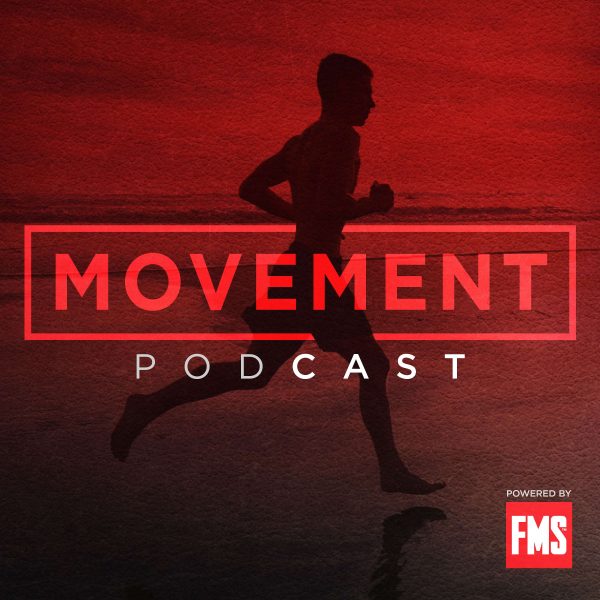
Movement Podcast
- Épisodes
- 114
- Parution
- toutes les deux semaines
- Dernier épisode
- 5 Nov 2026
À propos du podcast
Human movement is complex, fascinating, and affects us all. Our hosts, Gray Cook and Dr. Lee Burton, have dedicated their lives to understanding movement and have trained thousands of fitness and healthcare professionals worldwide with their holistic philosophy and approach. Listen as they discuss topics, speak with other industry experts, answer questions & give practical advice on how you can optimize the human body to be the best it can be.
Épisodes 114
Greg Dea: Stop Trying to Prevent Injuries. Start Reducing Risk.
What if the best way to improve performance isn't to train harder—but to remove what's holding an athlete back?In this episode of the Movement Podcast, Gray Cook and Lee Burton welcome Australian …
Notes de l’épisode
What if the best way to improve performance isn't to train harder—but to remove what's holding an athlete back?
In this episode of the Movement Podcast, Gray Cook and Lee Burton welcome Australian sports physiotherapist and longtime FMS educator Greg Dea to discuss movement screening, injury risk reduction, athlete availability, and the barriers that limit performance.
Drawing on work with the Australian and British military, EXOS in China, elite volleyball, and Australian football, Greg explains why he prefers injury risk identification and reduction to the promise of “injury prevention.”
He also shares findings from four years with an Australian football club. During that period, the program reported:
- 25% fewer games missed due to injury
- 7% higher weekly player availability
- 20% lower overall care costs
- Hamstring injuries declining from five to two in a season
These are observations from one club—not proof that screening alone caused the results. But they illustrate why identifying risk factors, tracking outcomes, and directing resources toward the right athletes matter.
Gray, Lee, and Greg explore the difference between screening, testing, and assessment; why movement competence should come before capacity; how ankle dorsiflexion and the inline lunge can inform decisions; and why better readiness may begin with a few minutes of targeted movement work.
Greg closes with a simple framework: before chasing strength, speed, or power, identify barriers related to health, mobility, motor control, and capacity. Remove the biggest barriers first.LEARN MORE
Greg Dea / Prepare to Perform: https://www.preparetoperform.com.au/about-greg
Greg Dea / Virtus Performance: https://www.virtusperformance.com.au/blog/meet-the-team-greg-dea
Functional Movement Systems: https://www.functionalmovement.com/
#MovementPodcast #GregDea #FunctionalMovementSystems #MovementScreening #InjuryRiskReductionSubscribe to the FMS Newsletter
Mike Boyle & Gray Cook: The Joint-by-Joint Approach, 20 Years Later
In this episode of the Movement Podcast, Gray Cook and Lee Burton welcome legendary strength and conditioning coach Mike Boyle to revisit one of the most influential concepts in functional training: **the …
Notes de l’épisode
In this episode of the Movement Podcast, Gray Cook and Lee Burton welcome legendary strength and conditioning coach Mike Boyle to revisit one of the most influential concepts in functional training: **the Joint-by-Joint Approach**.
What began as a conversation between Mike Boyle and Gray Cook at a conference in Chicago—and a few notes scribbled on a bar napkin—became a framework that helped coaches, trainers, and rehabilitation professionals rethink the relationship between mobility, stability, and human movement.
Nearly 20 years later, they're revisiting the original idea.
Mike, Gray, and Lee discuss how the Joint-by-Joint Approach developed, why it has been both praised and criticized, and how their thinking has evolved through decades of coaching, clinical experience, and working with athletes.
The conversation moves beyond the familiar mobile-stable-mobile-stable sequence to explore how the approach can inform movement screening, program design, corrective exercise, single-leg training, functional anatomy, and the progression from rehabilitation to performance.
Mike also shares how his training philosophy has changed over the years, why he embraced unilateral training, and why good coaches must be willing to rethink their methods as they gain new information.
Topics include:
- The original story behind the Joint-by-Joint Approach
- How a conversation between Mike Boyle and Gray Cook became a widely used training framework
- Mobility versus stability and why both matter
- The ankle, knee, hip, and lumbar spine relationship
- Why movement should be evaluated in function, not isolation
- Movement screening as a filter for identifying potential limitations
- Responding to criticism of the FMS and Joint-by-Joint Approach
- Why movement asymmetries deserve attention
- How Mike Boyle incorporates mobility and stability into programming
- Why single-leg training changed his approach to strength and conditioning
- Progressions from step-ups to split squats and single-leg exercises
- Functional anatomy, diagonal movement, and rotational patterns
- The role of stability, stiffness, and motor control in athletic performance
- How landing mechanics prepare athletes for more reactive movement
- The relationship between rehabilitation, load, and speed
- Why communication between clinicians and strength coaches is essential
- The importance of learning, adapting, and evolving as a professional
The key takeaway: The Joint-by-Joint Approach was never intended to be a rigid rule for every joint or every individual. It provides a practical way to think about common movement needs, recognize potential limitations, and make more informed training decisions.
And perhaps the most important lesson from this conversation is that great coaches and clinicians don't stop learning. They challenge their assumptions, refine their methods, and continue looking for better ways to help people move and perform.
Learn more about Mike Boyle Strength & Conditioning:
https://www.bodybyboyle.com/
Learn more about Functional Movement Systems:
https://www.functionalmovement.com/Subscribe to the FMS Newsletter
Movement, Breath, Sleep & Resilience with Dr. Arianne Missimer
In this episode of the Movement Podcast, Gray Cook and Lee Burton sit down with Dr. Arianne Missimer, founder of The Movement Paradigm, to talk about movement, resilience, nervous system regulation, airway …
Notes de l’épisode
In this episode of the Movement Podcast, Gray Cook and Lee Burton sit down with Dr. Arianne Missimer, founder of The Movement Paradigm, to talk about movement, resilience, nervous system regulation, airway, sleep, functional medicine, and what it really means to treat the whole person.
Arianne’s story begins with a deep appreciation for movement and health after losing her brother to cancer. That experience helped shape her mission to help people stop taking their health and movement for granted. Later, after her own diagnosis with stage 3 liposarcoma, she adopted the motto “Challenge Accepted” and competed on American Ninja Warrior just months after treatment.
That personal and professional journey led her to build an integrative model of care that brings together movement, nutrition, physical therapy, functional medicine, nervous system regulation, and root cause thinking.
Gray, Lee, and Arianne discuss why health is not a hack, why resilience is not just about calming down, and why so many people need a better framework for understanding stress, recovery, breathing, sleep, pain, and movement.
They also explore the role of the vagus nerve, heart rate variability, chronic inflammation, airway screening, sleep apnea, broken sleep, and why movement professionals should understand when a client or patient may need a bigger team around them.
Topics include:
• Dr. Arianne Missimer’s background and personal health journey
• Why movement and health should never be taken for granted
• Resilience as adaptability, not just relaxation
• Nervous system regulation and chronic burnout
• Functional medicine, holistic physical therapy, and root cause care
• Why “health is not a hack”
• The vagus nerve and the gut-brain connection
• HRV, breathing, tone, and feedback loops
• How airway issues can affect sleep, recovery, pain, and movement
• Simple airway screening concepts
• Why sleep apnea and broken sleep are often overlooked
• The connection between inflammation, recovery, and musculoskeletal pain
• What comes after a reset
• Building capacity from surviving to thriving
• Team-based care and when to refer
• Why movement is freedom
• Health span, walking speed, and independence
• Helping patients build awareness without overwhelming them
The key takeaway: better health is not about chasing one magic solution. It is about understanding the person in front of you, identifying the biggest opportunity for change, and creating a realistic path that helps them move better, recover better, and live with more freedom.
Join Dr. Arianne Missimer at the FMS Summit
https://www.performbetter.com/2027-FMS-Summit-January-29-30-2027/
Learn more about The Movement Paradigm:
https://themovementparadigm.com/
Learn more about Functional Movement Systems:
https://www.functionalmovement.com/Subscribe to the FMS Newsletter
Thomas Dewey on Wearables, Movement Quality & Readiness
In this episode of the Movement Podcast, Gray Cook and Lee Burton sit down with Thomas Dewey to talk about data, wearables, movement health, and the future of human performance.Thomas is an athletic trainer and …
Notes de l’épisode
In this episode of the Movement Podcast, Gray Cook and Lee Burton sit down with Thomas Dewey to talk about data, wearables, movement health, and the future of human performance.
Thomas is an athletic trainer and strength coach by background, with experience across Functional Movement Systems, Naval Special Warfare, Sparta Science, and ŌURA. His career has focused on helping professionals turn complex human performance information into practical decisions.
The conversation explores one of the biggest challenges in health, fitness, sports medicine, tactical performance, and wearable technology:
We have more data than ever.
But what do we do with it?
Gray, Lee, and Thomas discuss how force plates, wearables, readiness scores, sleep data, balance, movement screens, and performance metrics can all help professionals better understand the person in front of them — but only if that information is organized, interpreted, and applied in a meaningful way.
They also explore why movement quality is still one of the missing pieces in the wearable technology conversation. Wearables can track a lot of movement quantity, recovery, sleep, heart rate variability, and physiological stress, but understanding how someone moves — their balance, symmetry, mobility, stability, and readiness to move — is still a major opportunity.Topics include:
• Thomas Dewey’s background in athletic training, strength and conditioning, military human performance, Sparta Science, and ŌURA
• Why data needs to become actionable, not overwhelming
• How Sparta Science helped make force-plate data more useful
• Load, explode, and drive as simplified movement metrics
• Fast responders versus slow responders
• Movement quality versus movement quantity
• Why balance may become a future vital sign
• How wearables can support better sleep, recovery, and readiness decisions
• Why movement health still needs to be part of the data conversation
• How data can help create better feedback loops
• Why professionals need data literacy
• How AI, large language models, and integrated platforms may shape the future
• Why the best data should lead to better questions, better trials, and better decisions
The key takeaway: data alone is not the answer. The real opportunity is learning how to filter it, simplify it, and use it to help people move better, recover better, and make more informed decisions about their health and performance.Learn more about Functional Movement Systems:
https://www.functionalmovement.com/
https://ouraring.com/
Symmio: https://www.symmio.com/whats-your-wellness-score
FMS Courses: https://www.functionalmovement.com/store?category=online_coursesSubscribe to the FMS Newsletter
Low Back Pain: Awareness, Protection & Better Movement
What are the best exercises for low back pain?Gray Cook says that may be the wrong first question.In this episode of the Movement Podcast, Gray is joined by Dr. Kyle Kiesel, one of the leading researchers in …
Notes de l’épisode
What are the best exercises for low back pain?
Gray Cook says that may be the wrong first question.
In this episode of the Movement Podcast, Gray is joined by Dr. Kyle Kiesel, one of the leading researchers in rehabilitation and low back pain, for a deeper conversation about why low back pain is not always a simple weakness problem — and why “strengthen your core” does not always solve the issue.
Gray and Kyle discuss inhibition, the multifidus, high-threshold strategies, pain, inflammation, movement patterns, breathing, rolling, and the importance of individualizing care instead of handing every person the same low back pain exercise list.
The conversation starts with a common question: what are your three favorite exercises for low back pain?
But instead of giving a generic answer, Gray and Kyle explain why professionals need to ask better questions first:
What movement patterns are painful?
What movement patterns are dysfunctional?
Is this a mobility problem?
Is this a stability problem?
Is the person weak — or is something being inhibited?
Can the body roll, breathe, squat, touch the toes, and balance?
What needs to be protected before it can be corrected?
They also explore how the multifidus can be affected by pain, inflammation, trauma, compensation, and long-standing movement issues — and why restoring better movement is often about more than simply adding exercises.This episode covers:
• Why low back pain is not always a weakness problem
• The difference between weakness and inhibition
• Why the multifidus matters
• How pain and inflammation can change muscle function
• High-threshold strategies and “planking your way through life”
• Why toe touch, squat, and single-leg stance matter in low back pain
• Breathing and rolling as key awareness tools
• Why movement patterns can reveal whether the back is ready
• How tape, touch, and position can provide useful feedback
• Why awareness and protection come before correction
• The difference between generic protocols and individualized care
• Why evidence-based care still needs to be personalized
The key takeaway: low back pain deserves more than a generic exercise list. The goal is to understand the person, identify the movement pattern, protect what needs protection, and build the right path back to better function.
Learn more about Functional Movement Systems:
https://www.functionalmovement.com/
Clinical Integration: The LBP Solutions Online Masterclass
https://www.functionalmovement.com/Store/1271/clinical_integration_the_lbp_solutions_online_masterclass
FMS Quick Screen Course
https://www.functionalmovement.com/Store/1275/quick_screen_movement_readiness_screenSubscribe to the FMS Newsletter
What It Really Takes to Become a Movement Expert
In this episode of the Movement Podcast, Gray Cook and Lee Burton explore what it really takes to become more than an exercise professional, clinician, coach, or practitioner who simply applies protocols.The …
Notes de l’épisode
In this episode of the Movement Podcast, Gray Cook and Lee Burton explore what it really takes to become more than an exercise professional, clinician, coach, or practitioner who simply applies protocols.
The conversation begins with a question Gray has been reflecting on for years: what separates someone who works with movement from someone who has developed true movement expertise?
Gray and Lee discuss imposter syndrome, professional growth, mentorship, confirmation bias, movement screening, self-screening, corrective trials, protection, retesting, and the importance of building systems that help professionals check their own work.
They also outline a practical process for developing movement expertise:
Start with the big picture
Use filters before going specific
Look at lifestyle, recovery, breathing, pain, and previous injury history
Screen movement before prescribing exercise
Use trials to determine whether change happens quickly or slowly
Create awareness through experience
Clarify what needs protection
Vet the correction instead of simply issuing exercises
Build a development path that supports the person’s goals
The key message: movement expertise is not about knowing more exercises.
It is about knowing how to observe, filter, test, retest, protect, correct, and develop the person in front of you without missing the bigger picture.
Learn more about Functional Movement Systems:
https://www.functionalmovement.com/Subscribe to the FMS Newsletter
Gray Cook on FMS, Movement Screening & What People Get Wrong
In this episode of the Movement Podcast, Gray Cook and Lee Burton answer some of the most common questions they have received about Functional Movement Systems, the Functional Movement Screen, movement …
Notes de l’épisode
In this episode of the Movement Podcast, Gray Cook and Lee Burton answer some of the most common questions they have received about Functional Movement Systems, the Functional Movement Screen, movement assessment, research criticism, SFMA, corrective exercise, and where the future of movement screening is headed.
The conversation starts with a simple question:
What is the FMS?
Gray and Lee explain that the FMS is more than a set of movements. It is part of a systematic way of looking at movement so professionals can make better decisions. Like an eye chart for movement, the screen helps determine what a person can do, what they cannot do, and whether movement creates pain.
From there, they address some of the biggest misconceptions around the Functional Movement Screen, including the idea that it is only about finding problems, that it is too conservative, or that the research says it does not matter.
They also discuss why screening is not the same as assessment, how the SFMA helps professionals go deeper when pain is present, and why the goal is not to explain every test on the front end, but to create awareness and communicate the findings in a way that is personal and actionable.
This episode also looks ahead to the future of movement screening, including AI, computer vision, insurance reimbursement, wearable data, decision trees, and the need to avoid turning movement analysis into another generic exercise prescription.Topics include:
What the FMS is and how to explain it
The “eye chart for movement” analogy
Screening, testing, and assessment
What the FMS can and cannot tell you
Common criticisms and misconceptions
Why the FMS is not just about red flags
How to communicate findings to clients and athletes
Why pain changes the decision tree
When to use the SFMA
How breakouts help identify the root of the problem
Why test/retest matters
How to build confidence using the system
The future of FMS, AI, computer vision, and decision support
The key takeaway: movement screening is not about labeling someone as broken. It is about identifying the most important movement information so the next recommendation is safer, smarter, and more specific to the person in front of you.
Learn more about Functional Movement Systems:
https://www.functionalmovement.com/Subscribe to the FMS Newsletter
Running, Movement Screens, & Elite Athlete Readiness with Dr. Todd Arnold
In this episode of the Movement Podcast, Gray Cook and Lee Burton are joined by Dr. Todd Arnold, a board-certified sports medicine physician with more than two decades of experience caring for athletes at every …
Notes de l’épisode
In this episode of the Movement Podcast, Gray Cook and Lee Burton are joined by Dr. Todd Arnold, a board-certified sports medicine physician with more than two decades of experience caring for athletes at every level — from high school and collegiate sports to NCAA Championships, World Championships, and elite international competition.
Dr. Arnold serves as the medical officer for elite athlete healthcare for USA Track & Field, where his role is not simply to react to injuries, but to help athletes stay healthy enough to train, compete, and perform when it matters most.
This conversation explores how movement assessment fits into modern sports medicine and why runners need more than mileage, strength, or biomechanics alone. Dr. Arnold shares how he uses movement screening, Y Balance, table exams, biomechanics, recovery conversations, and individual baselines to better understand each athlete’s state of readiness.
The discussion covers:
Why sports medicine needs to move from reactive to proactive care
How Dr. Arnold applies movement systems with elite runners
Why every runner needs an individual baseline
The three things Dr. Arnold does not want to miss in runners
Ankle dorsiflexion asymmetry
Glute sequencing and timing
Thoracic extension
Why running is repetitive, predictable, and demanding
How movement screens help create athlete buy-in
Why table exams still matter
How Faber and Thomas testing relate to running mechanics
The relationship between movement readiness and wearable data
Why recovery may be the biggest mistake many runners make
How coaches, clinicians, sports psychologists, dietitians, and biomechanics teams can use movement as a shared language
The key takeaway: running performance is not just about training harder. It is about understanding whether the athlete is ready to absorb, adapt, and repeat the work.
Learn more about Functional Movement Systems:
https://www.functionalmovement.com/Subscribe to the FMS Newsletter
GORUCK Founder Jason McCarthy on Sustainable Toughness
In this episode of the Movement Podcast, Gray Cook sits down with Jason McCarthy, founder and CEO of GORUCK, former Green Beret, and one of the leading voices behind the modern rucking movement.Jason and Emily …
Notes de l’épisode
In this episode of the Movement Podcast, Gray Cook sits down with Jason McCarthy, founder and CEO of GORUCK, former Green Beret, and one of the leading voices behind the modern rucking movement.
Jason and Emily McCarthy started GORUCK in 2008 while Jason was serving in Special Forces and Emily was working with the CIA. Their original goal was to build a rucksack to life-or-death quality standards—gear capable of performing in demanding environments around the world.
What began as a rucksack company has grown into a larger movement built around gear, training, events, GORUCK Clubs, teamwork, service, and the belief that ordinary people are capable of extraordinary things.
In this conversation, Gray and Jason explore the deeper lessons behind rucking and military physical culture, including the difference between productive discomfort and unnecessary damage, why running has often been overemphasized in demanding training environments, and how readiness should guide the way we prepare for challenging work.
They also discuss:
• Jason’s path into Special Forces after September 11
• How GORUCK grew from an idea into a global rucking community
• The Green Beret mission of working by, with, and through others
• Why rucking is foundational to military preparation
• The difference between pain and productive discomfort
• Why overtraining can become an ego problem
• Tendon health, connective tissue, and sustainable strength
• The role of yoga, mobility, and breathing in high-intensity cultures
• Why risk and readiness should be evaluated separately
• How movement screening can reveal hidden physical vulnerabilities
• Rucking as a lifelong health and fitness practice
• Why children naturally run, jump, carry, and climb
• Health span, service, and staying capable for life
This conversation is about more than backpacks or workouts. It is about building a physical culture that challenges people while helping them stay capable, resilient, connected, and ready for the long term.
Learn more about the GORUCK story:
https://www.goruck.com/pages/about-goruck
Explore GORUCK:
https://www.goruck.com/
Learn more about Functional Movement Systems:
https://www.functionalmovement.com/Subscribe to the FMS Newsletter
Gray Cook on Progressing Movement the Right Way
Progressing an exercise sounds simple: make it harder, add load, increase reps, or move to a more challenging variation.But in rehab, performance, and corrective exercise, progression is not always that …
Notes de l’épisode
Progressing an exercise sounds simple: make it harder, add load, increase reps, or move to a more challenging variation.
But in rehab, performance, and corrective exercise, progression is not always that straightforward.
In this episode of the Movement Podcast, Gray Cook and Lee Burton discuss how to think through exercise progression and regression using movement baselines, postural positions, neurodevelopmental sequencing, and real-time feedback.
They break down why a person may need to move backward before moving forward, how supported, suspended, stacked, and standing spine positions create a roadmap for exercise selection, and why the goal is not always to coach harder — sometimes it is to change the posture, reduce the task, and let the person become more aware.
This conversation also explores:
Why movement changes from day to day
How corrective exercise can become a personal “movement floss”
Why regression is often the key to better progression
How to use supported, quadruped, kneeling, and standing positions
Why bird dog, rolling, bridging, half kneeling, and get-ups matter
How to know when an exercise is too hard or too easy
Why fast responders and slow responders need different strategies
How to bake corrective work into a real training program
The key message: progression should not be random. It should be guided by the person’s movement baseline, their response to the exercise, and whether the drill creates a manageable friction point that helps them improve.
Whiteboard Talk
https://www.youtube.com/watch?v=xImFU1GuzaQ
Corrective Strategies Bundle:
https://functionalmovement.com/Store/261/corrective_strategies_bundle
Quick Screen + Corrective Strategies Bundle:
https://functionalmovement.com/Store/1287/quick_screen__corrective_strategies_bundleSubscribe to the FMS Newsletter
The Performance Pyramid: Movement, Capacity & Skill
Performance is not just about strength, power, conditioning, or sport-specific skill.In this episode of the Movement Podcast, Gray Cook and Lee Burton revisit one of the foundational ideas behind Functional …
Notes de l’épisode
Performance is not just about strength, power, conditioning, or sport-specific skill.
In this episode of the Movement Podcast, Gray Cook and Lee Burton revisit one of the foundational ideas behind Functional Movement Systems: the performance pyramid.
At the base is movement.
Above that is performance.
At the top is skill.
The conversation explores why performance cannot be understood by looking at one test, one lift, one movement, or one sport-specific task in isolation. Before asking how to improve power, speed, conditioning, or workload, we need to understand whether the body has the fundamental movement and capacity to support it.
Gray and Lee discuss the difference between movement screening and performance testing, why the overhead deep squat alone is not enough, and how capacity tests like motor control, carries, jumps, and impact control can help identify hidden energy leaks.
They also break down why athletes, workers, and active adults often chase the obvious goal — more power, more endurance, more strength — when the real opportunity may be found in movement quality, postural control, asymmetry, or foundational capacity.
This episode is a practical look at how to stop guessing, test more systematically, and make better recommendations for the person in front of you.
Learn more about Functional Movement Systems:
https://www.functionalmovement.com/Subscribe to the FMS Newsletter
Knee Pain, ACL Risk & the Movement Patterns Behind the Problem
Knee pain is one of the most common issues in sports, fitness, rehab, and everyday life — but the knee is rarely the only place to look.In this episode of the Movement Podcast, Gray Cook and Lee Burton break …
Notes de l’épisode
Knee pain is one of the most common issues in sports, fitness, rehab, and everyday life — but the knee is rarely the only place to look.
In this episode of the Movement Podcast, Gray Cook and Lee Burton break down why knee pain is often driven by what is happening above and below the joint. From ankle dorsiflexion and foot control to hip mobility, core stability, tone, alignment, and movement strategy, this conversation takes a deeper look at the systems that influence how the knee behaves.
They discuss common knee issues in youth athletes, female athletes, ACL risk, patellar tracking, quad dominance, total knee replacement, and the importance of using movement screens to better understand the difference between symptoms and underlying dysfunction.
The key message: before assuming the knee needs more strength, more quad work, or more isolated treatment, we need to ask better questions.
Is the ankle moving well?
Is the hip doing its job?
Is the core providing stability?
Is the person using tone, compensation, or alignment strategies that keep irritating the knee?
Whether you work with athletes, active adults, rehab patients, or people trying to stay functional as they age, this episode offers a practical framework for looking at knee pain through a functional movement lens.
Learn more about Functional Movement Systems:
https://www.functionalmovement.com/Subscribe to the FMS Newsletter
Why Protocols Aren’t Enough with Gina Schatz
In this episode of the Movement Podcast, Gray Cook sits down with Gina M. Schatz, clinician, educator, founder of The Schatz Method®, and creator of the Practitioner Mastery Program.Gina trains manual and …
Notes de l’épisode
In this episode of the Movement Podcast, Gray Cook sits down with Gina M. Schatz, clinician, educator, founder of The Schatz Method®, and creator of the Practitioner Mastery Program.
Gina trains manual and movement practitioners to move beyond protocols and develop the clinical reasoning required for complex orthopedic cases, hypermobility, and long-term practitioner mastery.
Together, Gray and Gina explore what separates protocol-driven care from true clinical reasoning. They discuss the importance of feedback loops, accurate assessment, root-cause thinking, and the ability to make clearer treatment decisions in real time.
This conversation also dives into hypermobility, practitioner burnout, movement behavior versus impairment, and why the best clinicians are not just applying techniques — they are constantly asking better questions.
For practitioners ready to elevate their work, this episode offers a deeper look at what it means to assess more accurately, think more critically, and develop the mastery needed for better long-term outcomes.
Learn more about Gina Schatz and the Practitioner Mastery Program:
https://theschatzmethod.com/practitioner-mastery-program/
Learn more about Functional Movement Systems:
https://www.functionalmovement.com/Subscribe to the FMS Newsletter
The Missing Piece in Shoulder Rehab & Performance
Most people train their shoulders by chasing strength, but completely miss the foundation that creates durable, pain-free movement.In this episode of the Movement Podcast, Gray Cook and Lee Burton break down …
Notes de l’épisode
Most people train their shoulders by chasing strength, but completely miss the foundation that creates durable, pain-free movement.
In this episode of the Movement Podcast, Gray Cook and Lee Burton break down why shoulder problems are so common, why shoulder pain is often more than “just a shoulder issue,” and how posture, spinal stability, reflexive control, and movement quality all influence shoulder health.
They dive into:
Rotator cuff function and shoulder stability
Why impingement happens long before tears
The importance of scapular control and posture
Closed-chain vs open-chain shoulder training
Why push-ups, pull-ups, carries, and Turkish get-ups matter
How the neck, spine, hips, and posture affect shoulder pain
The difference between strength and reflexive stability
Why functional training should prioritize movement quality first
If you work with athletes, rehab patients, or simply want healthier shoulders that last, this episode offers a practical framework you can apply immediately.Learn more about our Academy:
https://functionalmovement.com/fmsacademy
The Shoulder Pain Solutions Online Masterclass:
https://functionalmovement.com/Store/1274/clinical_integration_the_shoulder_pain_solutions_online_masterclass
Listen to more episodes:
https://www.movementpod.com/Subscribe to the FMS Newsletter
The Hidden Cause of Neck Pain No One Talks About
Neck pain is one of the most common issues people deal with—but what if the neck isn’t actually the problem?In this episode of the Movement Podcast, we break down why the neck acts as a “crossroads” in the …
Notes de l’épisode
Neck pain is one of the most common issues people deal with—but what if the neck isn’t actually the problem?
In this episode of the Movement Podcast, we break down why the neck acts as a “crossroads” in the body—and how issues with breathing, posture, mobility, and even lifestyle habits can all show up as neck pain.
You’ll learn why treating the symptom isn’t enough…
and what to look for if you actually want lasting results.
We cover:
Why the neck is a secondary problem more often than a primary one
How breathing, posture, and movement influence neck pain
The connection between the neck, shoulders, and low back
Why “fixing posture” alone often fails
Simple ways to screen your neck (and what it really tells you)
How lifestyle habits like sleep, stress, and work setup play a role
If you’ve ever had neck pain—or work with people who do—this episode will change how you think about it.FMS Quick Screen
The Quick Screen Online Course introduces a streamlined approach to evaluating movement quality and identifying key limitations that may affect performance, training progression, and injury risk. Designed for busy fitness and healthcare professionals, this screen helps you gather meaningful information in minimal time—without sacrificing clarity or usefulness.
Online Course
https://functionalmovement.com/Store/1275/quick_screen_movement_readiness_screen
Live Course May 15th, 2026
https://functionalmovement.com/events/4568/register
Take a deeper dive into Cervical Pain
https://functionalmovement.com/Store/198/clinical_overview_approach_into_the_classification_and_management_of_patients_with_cervical_painSubscribe to the FMS Newsletter
Why Low Back Pain Keeps Coming Back
Low back pain is one of the most common problems people deal with—but most people are still asking the wrong question.Instead of only asking:“What’s wrong with my back?”This episode explores a better …
Notes de l’épisode
Low back pain is one of the most common problems people deal with—but most people are still asking the wrong question.
Instead of only asking:
“What’s wrong with my back?”
This episode explores a better question:
“What am I doing that keeps this problem going?”
In this conversation, we break down why low back pain is rarely just about one body part—and why pain is often the result of a bigger mix of movement issues, lifestyle habits, stress, recovery, and accumulated risk factors.
In this episode, we cover:
Why low back pain is often more than an anatomy problem
The difference between acute vs chronic low back pain
Why medication may help symptoms—but not function
How sleep, stress, diet, inactivity, and body composition affect back pain
Why movement quality and lifestyle both matter
The difference between correlation and causation
How to think about low back pain through a functional wellness lens
Why consistency matters more than a “quick fix”
This episode is especially valuable for:
Physical therapists
Chiropractors
Athletic trainers
Strength coaches
Fitness professionals
Anyone dealing with recurring low back pain
Key takeaway:
Your back may be where the pain shows up…
…but it may not be where the real problem starts.
If you want to improve outcomes, reduce risk, and help people move better for the long term, you have to look beyond the symptom.
Learn more / Explore the tools mentioned
Try Symmio:
https://symmio.com
Explore Functional Movement Systems:
https://www.functionalmovement.com
Movement Podcast:
https://www.movementpod.com
Subscribe for more conversations on:
Movement
Injury risk
Functional wellness
Corrective strategies
Performance and rehabSubscribe to the FMS Newsletter
Building Better Coaches: Inside FMS with Almir Maljević
In this episode, we sit down with Almir Maljević—FMS partner in Bosnia, educator, and instructor for FMS courses—who has built a thriving system by doing one thing differently:He starts with the person, not the …
Notes de l’épisode
In this episode, we sit down with Almir Maljević—FMS partner in Bosnia, educator, and instructor for FMS courses—who has built a thriving system by doing one thing differently:
He starts with the person, not the program.
From rebuilding his own path after injury…
to realizing strength and power weren’t the missing piece…
to going all-in on screening, systems, and education…
This is a real conversation about what actually works—and what most people get wrong.
You’ll learn:
• Why strength and power aren’t enough
• The moment he realized he needed to “empty the cup”
• How screening changed everything
• Why most coaches skip the most important step
• How to build trust before training
• The difference between being busy vs effective
• Why education—not exercise—is the real value
• How he built a business from zero clients to a scalable system
This isn’t theory.
This is what it looks like when you apply the principles—and stick to them.
---
More about our guest
Website: https://www.pfhsc.ba/
Instagram: https://www.instagram.com/team_pfhsc/
Facebook: https://www.facebook.com/ProFit.Health.StrengthAndConditioning/
---
#FMS #MovementPodcast #SFMA #Coaching #FunctionalTraining #PerformanceSubscribe to the FMS Newsletter
Why Fixing Your Gait Starts With These 5 Movements
Your gait—how you walk—can reveal a lot about your health, movement quality, and even your risk for injury or falls.In this episode of the Movement Podcast, Gray Cook and Lee Burton break down why gait analysis …
Notes de l’épisode
Your gait—how you walk—can reveal a lot about your health, movement quality, and even your risk for injury or falls.
In this episode of the Movement Podcast, Gray Cook and Lee Burton break down why gait analysis alone doesn’t tell the full story. Many people focus on the way someone walks, but the real problem often lies deeper in fundamental movement patterns like squatting, bending, rotating, balancing, and breathing.
As our population ages, gait problems are becoming a major predictor of falls, joint replacements, and loss of independence. But identifying poor gait is only the first step. The real question is: what is causing the gait problem in the first place?
In this conversation, we explore:
• Why gait deviations happen
• How compensations develop subconsciously
• Why muscle strengthening alone often fails
• The movement patterns that drive healthy walking
• How developmental patterns and breathing can restore movement
• Why functional movement matters more than isolated exercises
If you want to better understand how gait connects to movement health, injury prevention, and long-term mobility, this episode is a must-watch.
Learn more about Functional Movement Systems and our tools for assessing movement:
https://www.functionalmovement.comSubscribe to the FMS Newsletter
The Future of Movement Assessment | Kinetisense
In this episode of the Movement Podcast, Gray Cook and Lee Burton sit down with Ryan Como, CEO of Kinetisense, to talk about where movement screening is headed next.Ryan shares how his background as a …
Notes de l’épisode
In this episode of the Movement Podcast, Gray Cook and Lee Burton sit down with Ryan Como, CEO of Kinetisense, to talk about where movement screening is headed next.
Ryan shares how his background as a chiropractor—and as an injured D1 hockey athlete—pushed him beyond “treat the painful joint” toward multi-segment, 3D movement assessment. The conversation covers how objective scoring, population comparisons, and AI-driven recommendations can enhance—not replace—clinical expertise.
We dig into:
• Why FMS breakpoints hold up when compared to lab-grade systems
• Turning movement screening into trend data (0–100 scoring vs. only 0/1/2/3)
• Using data loops to learn what correctives work best for who
• Planar plasticity: why elite athletes move well in all three planes
The long game: movement epidemiology—catching risk before injury happens
Learn more: https://www.kinetisense.com/fms-kinetisense/Subscribe to the FMS Newsletter
Asymmetries: When They’re Normal vs. When They Become a Risk Factor
Asymmetries are normal — but not all asymmetries are created equal. In this episode of the Movement Podcast, Gray Cook and Lee Burton break down the difference between anatomical, functional, and developmental …
Notes de l’épisode
Asymmetries are normal — but not all asymmetries are created equal. In this episode of the Movement Podcast, Gray Cook and Lee Burton break down the difference between anatomical, functional, and developmental asymmetry, and explain when asymmetry becomes a slippery slope that impacts performance, durability, and injury risk.
They also discuss why the goal isn’t “perfect symmetry,” but keeping asymmetries from getting worse, and how movement screening helps coaches and clinicians make smarter training decisions.
In this episode:
• The 3 types of asymmetry: anatomical, functional, developmental
• When asymmetry becomes a risk factor (and when it’s just sport-specific)
• Why “don’t let it get worse” is the real goal
• Key impairment asymmetries to watch: ankle dorsiflexion + grip strength
• Why dynamic balance + functional patterns matter more than isolated measures
• Practical ways to “scrub the corners” and restore awarenessMore from the Movement Podcast: https://www.movementpod.com/
Subscribe to the FMS Newsletter
Rehab Revolution: Lisa Chase Breaks Down Her 5 Pillars of Healing
In this episode of the Movement Podcast, Lisa Chase returns—this time as an author. Drawing from decades of work with professional athletes and everyday patients, Lisa dives deep into the importance of …
Notes de l’épisode
In this episode of the Movement Podcast, Lisa Chase returns—this time as an author. Drawing from decades of work with professional athletes and everyday patients, Lisa dives deep into the importance of addressing the whole person in rehab, not just the symptoms.
She and Gray discuss:
• The inspiration behind her new book Be Responsible
• Why heart rate variability (HRV) is a game changer in patient care
• How nervous system regulation must come before movement
• Using technology like Newbie, BFR, and Oura Ring to guide interventions
• The five wellness pillars: nervous system regulation, sleep, biology, movement, and environment
Whether you're a clinician or someone navigating your own healing journey, this episode will change how you view recovery and patient outcomes.
-Lisa’s Book: Be Responsible — Because the System Isn’t: https://beresponsiblebook.com/home
-Learn more about Lisa and her clinic
-Tools Mentioned: HRV scanner, BFR, Newbie, New Calm, Oura RingMore from the Movement Podcast: https://www.movementpod.com/
Subscribe to the FMS Newsletter
Beyond the Symptoms: What Wellness Data Really Tells Us
In this episode of the Movement Podcast, Gray Cook and Lee Burton dig into what the data really says about wellness. From widespread sleep issues and shoulder mobility limitations to the surprising role of …
Notes de l’épisode
In this episode of the Movement Podcast, Gray Cook and Lee Burton dig into what the data really says about wellness. From widespread sleep issues and shoulder mobility limitations to the surprising role of stress, posture, and breathing, they explore how movement and lifestyle are deeply connected.
Learn how Functional Movement Systems uses its Functional Wellness Screen to identify patterns—not just problems—and why tracking individual trends is more effective than chasing general advice.
Topics include:
Why population-level data can’t define your personal health
The top 3 wellness issues FMS is seeing across the board
Why pain is often the hidden culprit sabotaging sleep
Real-world examples from athletes and first responders
The critical need to “track it before you attack it”If you're a coach, clinician, or just trying to improve your own health, this episode will change how you think about lifestyle change, movement health, and the power of personalized screening.
Get your free wellness assessment today!
https://www.symmio.com/whats-your-wellness-score
Subscribe for more episodes, and don’t forget: First Move Well, Then Move Often.Subscribe to the FMS Newsletter
How Physical Education Can Save the Next Generation | Rick Vittum
What happens when a seasoned physical educator brings 31 years of experience into a conversation about the future of fitness, wellness, and youth health? In this episode of the Movement Podcast, we sit down …
Notes de l’épisode
What happens when a seasoned physical educator brings 31 years of experience into a conversation about the future of fitness, wellness, and youth health? In this episode of the Movement Podcast, we sit down with Massachusetts Physical Education Teacher of the Year Rick Vittum to talk about the state of youth movement, what’s broken in the system, and how we can fix it.
Rick shares real stories from the trenches of high school PE, how the Functional Movement Screen is changing the game, and why kids need more than just fitness—they need awareness, mentorship, and a physical problem-solving skillset that lasts a lifetime.
Whether you're a teacher, coach, parent, or practitioner, this conversation is packed with insights on movement screening in schools, how technology and culture are reshaping physical health, and what the future of PE should look like.https://www.functionalmovement.com
Subscribe to the FMS Newsletter
Inside 20 Years in the NBA: Movement, Data & Athlete Development
Former Indiana Pacers strength coach Shawn Windle joins the Movement Podcast to unpack 20+ years in the NBA and his evolution from athletic trainer to performance director. This episode explores the integration …
Notes de l’épisode
Former Indiana Pacers strength coach Shawn Windle joins the Movement Podcast to unpack 20+ years in the NBA and his evolution from athletic trainer to performance director. This episode explores the integration of sports science, the dangers of over-coaching, individualized athlete care, and the realities of modern NBA player development.
Topics include:
Early career challenges in a siloed sports culture
Why HRV isn’t practical in pro sports
Real-world vs. lab testing
Achilles tendon injuries in the NBA
Youth sports burnout and early specialization
How to earn trust and communicate across disciplines
Using movement screening in daily performance strategyA must-listen for strength coaches, physical therapists, sports scientists, and anyone working in high performance environments.
https://www.functionalmovement.comSubscribe to the FMS Newsletter
Creating a Performance Culture with Bob Alejo
In this episode of the Movement Podcast, Gray Cook and Lee Burton sit down with Bob Alejo, a leader in the world of strength and conditioning with over 40 years of experience across professional sports …
Notes de l’épisode
In this episode of the Movement Podcast, Gray Cook and Lee Burton sit down with Bob Alejo, a leader in the world of strength and conditioning with over 40 years of experience across professional sports, collegiate athletics, and Olympic training. This episode is a masterclass in leadership, collaboration, and the reality of applying science, data, and wisdom in high-performance settings.
Whether you're a veteran coach, young professional, or healthcare provider, Bob’s perspective will challenge how you view risk, readiness, and results in sport and movement.👉 If you're a coach, clinician, or movement professional, this episode offers insights on:
The power of collaboration in sport
The dangers of chasing data without context
How to grow leadership skills in performance environments
Mentorship, ego, and humility in the strength and conditioning professionSubscribe to the FMS Newsletter
Can Functional Movement Predict Athlete Performance?
In this episode of the Movement Podcast, Gray Cook and Lee Burton explore one of the most complex and debated topics in sports and rehabilitation: predicting athletic performance and ranking talent.With AI and …
Notes de l’épisode
In this episode of the Movement Podcast, Gray Cook and Lee Burton explore one of the most complex and debated topics in sports and rehabilitation: predicting athletic performance and ranking talent.
With AI and machine learning beginning to shape how we analyze athletes, the conversation unpacks:
• How performance is measured—and why it’s more than just speed and strength.
• The rise of durable performers: athletes who stay healthy, consistent, and coachable.
• What new research says about FMS scores and their ability to predict performance—not just prevent injury.
• The growing need to consider psychological readiness, engagement, and self-awareness as critical metrics.
• Why looking at movement quality, not just quantity, is essential in both elite and youth sports.
Whether you're a coach, trainer, healthcare provider, or performance nerd, this discussion will help you rethink how we define, assess, and develop talent.
Curious what your wellness score is? Check it out for free!
https://www.symmio.co/whats-your-wellness-score
Become an FMS Academy Member. Your all-access membership to FMS online education
https://www.functionalmovement.com/fmsacademy
Referenced Research Articles:
Predictive Athlete Performance Modeling with Machine Learning and Biometric Data Integration
Prediction and Injury Risk Based on Movement Patterns and Flexibility (2023)
#FMS #MovementPodcastSubscribe to the FMS Newsletter
The Corrective Exercise Paradigm Shift
Are the corrective exercise guys bashing correctives? Maybe . . . Lee and Gray take the time to step back, define what correctives are, and detail how they should be used to restore whole movement. Screening …
Notes de l’épisode
Are the corrective exercise guys bashing correctives? Maybe . . . Lee and Gray take the time to step back, define what correctives are, and detail how they should be used to restore whole movement. Screening plays an important role in identifying movement dysfunction and pain with movement, but the next step doesn’t have to be corrective exercise.
In this episode of the Movement Podcast, Gray Cook and Dr. Lee Burton challenge the industry’s reliance on corrective routines and reveal a smarter, more effective approach to improving movement and performance.
From overprescribed "fixes" to missed opportunities in warmups and workouts, the discussion dives into:
• The true purpose of corrective exercises
• How to screen and interpret movement patterns
• When to ditch the corrective—and just adjust the workout
• Lessons from Pavel Tsatsouline, Huberman Lab, and NFL-level programming
• Practical tips to build programs that restore function and develop strengthWhether you’re a coach, clinician, or just someone who trains hard—this conversation will shift the way you view programming, warmups, and performance prep.
Watch, learn, and rethink what you call "corrective."
Curious what your wellness score is? Check it out for free!
https://www.symmio.co/whats-your-wellness-score
Become an FMS Academy Member. Your all-access membership to FMS online education
https://www.functionalmovement.com/fmsacademySubscribe to the FMS Newsletter
From NYC to Beijing: Danyue Zhang on Building a Movement Culture in China
In this episode of the Movement Podcast, Gray Cook and Lee Burton are joined by Danyue Zhang, FMS Director of Education in China and a key figure in expanding Functional Movement Systems globally. Danyue shares …
Notes de l’épisode
In this episode of the Movement Podcast, Gray Cook and Lee Burton are joined by Danyue Zhang, FMS Director of Education in China and a key figure in expanding Functional Movement Systems globally. Danyue shares her unique journey—from personal trainer in New York to translating and teaching FMS courses across China.
They dive into:
• Cultural challenges of translating movement concepts
• The power of calibration over instruction
• How personal trainers in China are embracing corrective exercise
• Why movement screening works across language and borders
• Lessons from introducing FMS to sports institutes, universities, and rural communities
Danyue offers valuable insights into movement, communication, and building trust in a growing global movement health community.Whether you're a coach, therapist, or educator, this episode will shift your thinking on how we teach and talk about human movement—no matter where you are in the world.
Curious what your wellness score is? Check it out for free!
https://www.symmio.co/whats-your-wellness-score
Become an FMS Academy Member. Your all-access membership to FMS online education
https://www.functionalmovement.com/fmsacademySubscribe to the FMS Newsletter
What is “Wellness,” Really—and How Do We Measure It?
In this episode of the Movement Podcast, Gray Cook and Lee Burton dive into the real meaning of wellness and why current approaches are failing us. They unpack how wellness is traditionally defined (think …
Notes de l’épisode
In this episode of the Movement Podcast, Gray Cook and Lee Burton dive into the real meaning of wellness and why current approaches are failing us. They unpack how wellness is traditionally defined (think: sleep, nutrition, exercise), and why function—particularly functional movement—needs to be part of the equation.
From pre-diabetes in adolescents to movement dysfunction in military populations, this candid discussion explores the role of risk factors, behavioral health, and how cultural shifts must happen if we want to make a lasting impact.
Why wellness must be functional
How pain and movement drive deeper health issues
Why measuring what's missing matters most
What 10,000+ wellness screens have revealedCurious what your wellness score is? Check it out for free!
https://www.symmio.co/whats-your-wellness-score
Become an FMS Academy Member. Your all-access membership to FMS online education
https://www.functionalmovement.com/fmsacademySubscribe to the FMS Newsletter
Dr. Cortney Herndon: Bridging the Gap Between Therapy & Training
Dr. Cortney Herndon, DPT, COMPT reunites with Lee and Gray to discuss the importance of her internship and early employment in the midst of the development of Functional Movement Systems and how that …
Notes de l’épisode
Dr. Cortney Herndon, DPT, COMPT reunites with Lee and Gray to discuss the importance of her internship and early employment in the midst of the development of Functional Movement Systems and how that understanding of the movement screening process shaped her career. Dr. Herndon offers guidance on Women’s Health issues, from incontinence in runners and post-partum and peri/post-menopause training to breast cancer and osteoporosis considerations. A look at the pitfalls of GLP-1 meds lands them back at the importance for movement professionals to network and build their own healthcare team.
Curious what your wellness score is? Check it out for free!
https://www.symmio.co/whats-your-wellness-score
Become an FMS Academy Member. Your all-access membership to FMS online education
https://www.functionalmovement.com/fmsacademy
Movement Masterclass: Mobility
https://www.functionalmovement.com/Store/246/movement_masterclass_mobility
Movement Masterclass: Stability
https://www.functionalmovement.com/Store/247/movement_masterclass_stabilitySubscribe to the FMS Newsletter
Voici les 40 derniers épisodes sur 114. Les épisodes plus anciens se trouvent dans le flux du podcast.
Podcasts similaires
Plus de podcasts : Forme et santé




C’est votre podcast ?
Confirmez-le avec une entrée dans votre flux : vous recevez ici un code, vous l’ajoutez comme podcast:txt dans le canal de votre flux, et nous le vérifions. Votre podcast apparaît ensuite comme « vérifié » sur SoundNode.