

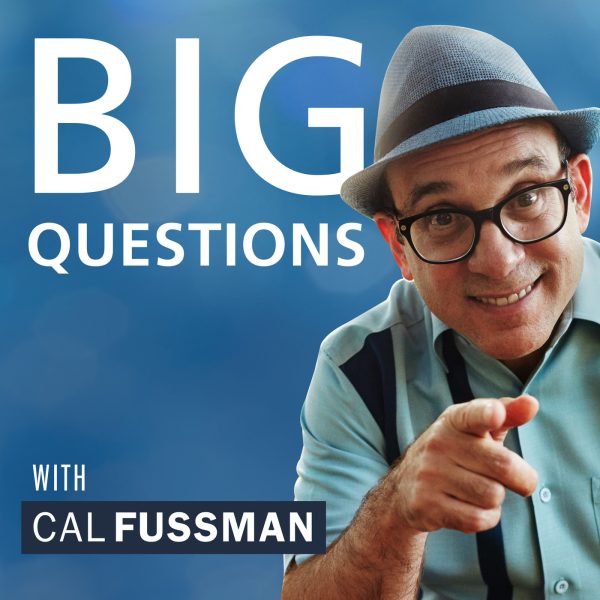
Big Questions with Cal Fussman
- Folgen
- 464
- Erscheint
- wöchentlich
- Letzte Folge
- 10. Nov. 2026
Über den Podcast
As a bestselling author, speaker and one of the greatest interviewers of this generation, Cal Fussman has sat down with some of the world's most influential individuals: Muhammad Ali, Mikhail Gorbachev, Serena Williams, Jeff Bezos, Jack Welch, John Wooden, Al Pacino and hundreds of others, digging deep into their hearts and delivering their wisdom to the rest of the world. Now, in Big Questions, Cal continues his journey. Uncovering the heart, head, and soul of his guests in thoughtful, deep and entertaining conversations.
Folgen 464
How Not to Be Stupid
Igor Sibaldi is one of Italy's most original minds. He is a philosopher and scholar of religion who has translated War and Peace from the Russian and the Gospel of John, Genesis and Exodus from the original …
Shownotes
Igor Sibaldi is one of Italy's most original minds. He is a philosopher and scholar of religion who has translated War and Peace from the Russian and the Gospel of John, Genesis and Exodus from the original Greek and Hebrew. His books have sold more than 600,000 copies, and his talks have drawn more than 24 million views. Now, with How Not to Be Stupid, English-speaking readers get their first chance to see why. Most of us assume stupidity means not being smart enough. Not so, says Igor. Listen, and find out why. Igor and Cal also take on the big question at the center of this moment: How do we get the best out of AI while avoiding the worst? The answer isn't found in a manual. Part of the answer lies in learning to notice when you've stopped thinking for yourself, and in having the curiosity to start again. This is a rare conversation with a rare thinker. Fun, too.
Who Would You Break Bread With?
This is one of Cal's favorite interview questions over the years. Marc Champagne and Kelly Noonan Gores have used AI to take it to a whole new level with their book: You're Invited. Steve Jobs once said he'd …
Shownotes
This is one of Cal's favorite interview questions over the years. Marc Champagne and Kelly Noonan Gores have used AI to take it to a whole new level with their book: You're Invited. Steve Jobs once said he'd trade all of his technology for an afternoon with Socrates. Marc and Kelly found a way to use technology to make that kind of afternoon possible. They gathered 14 sages from across the centuries around a single table, including Carl Jung, Lao Tzu, Marcus Aurelius, Rumi, Harriet Tubman, and, in a special appearance, Nikola Tesla. Rather than asking AI for the most predictable answer, they drew out the distinct wisdom of each guest and let them talk to one another about a question we're all facing: How do you get to where you want to go when you feel adrift between places? Cal talks with Marc and Kelly about how the book came together, what surprised them when the sages started speaking to each other, and how you can use AI to build your own table of wisdom, a personal Board of Advisors made up of anyone, living or long gone. And out of pure curiosity, Cal asks a few of the sages where they'd go if they won a Moments vacation. Pull up a chair. You're invited.
Take On the World in the Age of AI
When Cal first heard PTTOW! described as the Dalai Lama + Coca-Cola + will.i.am + General Electric + Elon Musk, he didn't quite know what it meant but he thought: That certainly says a lot. It also says a great …
Shownotes
When Cal first heard PTTOW! described as the Dalai Lama + Coca-Cola + will.i.am + General Electric + Elon Musk, he didn't quite know what it meant but he thought: That certainly says a lot. It also says a great deal about this week's guest on Big Questions. The co-founder of Plan To Take On The World!: Roman Tsunder. Cal found out firsthand how Roman brings executives, influencers and artists together to activate a room and ripple out messaging across the globe. Roman's book, Plan To Take On The World, is out now. It's filled with human success stories that can lift us all in the age of AI. Cal has talked for months now about the dance between humans and AI. This week, he sends a thank you to OpenArt.ai for smoothing out his authentic video and audio footage in the introduction. You might find the AI movie maker beneficial in your own way.
The Psychology of Leadership Meets AI
In all of Cal's years of interviewing, no guest has come in prepared quite like Sébastien Page, Chief Investment Officer of T. Rowe Price. With the help of AI, Sébastien came to share wisdom, and Cal walked …
Shownotes
In all of Cal's years of interviewing, no guest has come in prepared quite like Sébastien Page, Chief Investment Officer of T. Rowe Price. With the help of AI, Sébastien came to share wisdom, and Cal walked away learning something about himself. They talk about leading through change, what it was like introducing an AI agent into an important recurring meeting usually reserved for humans, and lessons from Sébastien's book, The Psychology of Leadership. It all circles back to the words T. Rowe Price lived by: Change is the investor's only certainty.
Let's Go Vs. Whoa Whoa Whoa . . .
Larry Cheng on AI's Unlimited Upside Last week, the call was for regulation to keep AI from going too far. This week, the other side of the tug of war. Larry Cheng, co-founder of Volition Capital, sees a …
Shownotes
Larry Cheng on AI's Unlimited Upside Last week, the call was for regulation to keep AI from going too far. This week, the other side of the tug of war. Larry Cheng, co-founder of Volition Capital, sees a company go from zero to $100 million in a week and can't help but say: Let's go! Larry has been powering up since he became Apple's youngest certified technician at 13. He survived 200 rejections launching Volition, then backed Chewy with $15 million when its founder was facing rejection of his own. That led to a $3 billion exit. Larry talks about the unlimited possibilities he's seeing in AI, the data center power needed to unleash them, why so many people don't want that power in their backyard as well as the societal implications of watching this all unfold. And more than that. Larry offers simple steps YOU can take to build out your own ideas with AI.
Gollum Goes to Silicon Valley: How SNL Framed AI
When a CEO who most of America wouldn't recognize on the street gets impersonated by Saturday Night Live, he stops being an expert on the news. He becomes a character in the great drama of our time. Cal starts …
Shownotes
When a CEO who most of America wouldn't recognize on the street gets impersonated by Saturday Night Live, he stops being an expert on the news. He becomes a character in the great drama of our time. Cal starts there and then runs through the week the AI conversation changed, all curated into short clips so you can get caught up without scrolling YouTube at 2 a.m.
What? Relationships Outperform Algorithms?
Cal becomes curious when he hears about a book that proves just that. He learns from The New Social Code that the most successful people aren't the ones who get the most social media likes – but the ones who …
Shownotes
Cal becomes curious when he hears about a book that proves just that. He learns from The New Social Code that the most successful people aren't the ones who get the most social media likes – but the ones who have three or four powerful human connections. Authors Greg Pryor and Michael Arena show how those types of connections came together to enable Robert Prevost to become Pope Leo. And they also prove how success in our time can be attained by getting the most out of AI while doubling down on human connections that are based on deep trust.
Mentors In The Age Of AI
Cal's ongoing look at how humans can get the best out of AI while avoiding the worst goes to an unanticipated place: Mentorship. In the time of a loneliness crisis, will young people rely on AI too much for …
Shownotes
Cal's ongoing look at how humans can get the best out of AI while avoiding the worst goes to an unanticipated place: Mentorship. In the time of a loneliness crisis, will young people rely on AI too much for guidance? Will those who refuse all interaction with AI miss out on its benefits and pay a price? It turns out there's never been a more important time for humans to find the people who can put them on the right path. A conversation with Georgetown professor Eric Koester, author of Super Mentors, shows us where ambition meets guidance in our time. And we're in luck! Eric reveals the best ways humans can connect with the right mentors and use AI as an accelerant, whether you're 18 or 52.
The Trip That Beats The Bonus
Three young girls leave the United States for the first time and head to Paris on a trip that has been awarded to their mother for extraordinary work. It lands them in a restaurant where they encounter escargot …
Shownotes
Three young girls leave the United States for the first time and head to Paris on a trip that has been awarded to their mother for extraordinary work. It lands them in a restaurant where they encounter escargot for the first time. Do they devour the snails? Drown them in lemon juice to avoid the taste? Or scramble for the nearest detour?!!! The story is a portal into how the workplace has changed through a report called the Recognition Disconnect. Now, with more than 50 percent of employees surveyed feeling burned out and many fearful of being replaced by artificial intelligence, people desire workplace rewards that are about time with family that actually replenishes. The human connection in this trip shifts the narrative away from the dystopian nightmare of AI taking everybody's jobs. It's told through Xceleration CEO Ben Levenbaum – who commissioned the survey. And seasoned by Frank Congiu, a global thought leader at Randstad – which helped 1.7 million people find jobs last year. In the end, it defines how this podcast has evolved into ways of getting the best out of AI and avoiding the worst. For these reward trips are an innovative way of enabling humans to feel confident and thrive in the age of artificial intelligence.
Building New Muscles With AI
Cal goes to the heartland to talk with a man who's spent decades teaching kids how to build strength the right way for a conversation on how his training approach overlaps with AI. Turns out, Michael Ockrim …
Shownotes
Cal goes to the heartland to talk with a man who's spent decades teaching kids how to build strength the right way for a conversation on how his training approach overlaps with AI. Turns out, Michael Ockrim uses the same disciplined tactics to build digital muscles that can wrestle down insurance payments. This episode is a real-world look at how anyone (not just tech people) can start putting AI to work in their own life. Michael is a husband, father of four and founder of Mighty Oak Athletic in Westmont, Illinois. Consider this episode solid advice from the heartland.
Tower 2 Fell On His Head: 25 Years Later
As the 25th anniversary of 9/11 approaches, Cal replays one of the most powerful conversations in Big Questions' archive: his interview with Michael Wright, a survivor who was buried alive when Tower 2 of the …
Shownotes
As the 25th anniversary of 9/11 approaches, Cal replays one of the most powerful conversations in Big Questions' archive: his interview with Michael Wright, a survivor who was buried alive when Tower 2 of the World Trade Center collapsed on him.
Michael was a 30-year-old account executive on an ordinary Tuesday morning when the hijacked planes hit. Cal interviewed him for Esquire Magazine just days after the attack and has replayed his taped recollections every year since Big Questions started.
This year, Cal introduces curated archival images from that day, synced to Michael's narrative. The visuals can be found on youtube.com/@bigquestionspodcast. This is the story of how Michael survived after being buried alive near a fireman. He crawled to the fireman and stuck to him "like a sticky burr on a bear's ass." The fireman hacked them both out with an axe.
When the story was first published, Esquire called it "the fastest 3,863 words you will ever read." It's a story about adaptation under the worst possible pressure, and about the connection between two strangers that made survival possible. Twenty-five years later, all of those involved still have everything to teach us.
The Future, Interrupted by a Tornado
Mike Bechtel doesn't just study the future — he makes a living seeing it before the rest of us. As a historian, futurist, and professor at the University of Notre Dame, he spends his days tracing the …
Shownotes
Mike Bechtel doesn't just study the future — he makes a living seeing it before the rest of us. As a historian, futurist, and professor at the University of Notre Dame, he spends his days tracing the throughlines between what's come before and what's coming next in technology and corporate innovation. In this conversation, Cal and Mike go deep. It's the kind of conversation that makes you lean forward, laugh and stop to ponder. But then a tornado warning cut it short. As Mike went off to safety, Cal realized he'd been in on a treasure of a conversation. We can all be grateful that Mike and his family came through the storm okay . . . and that Mike will be back for some more Big Questions.Seeing the Path
Lachi is a blind musician who has produced GRAMMY nominated projects. She's also a GRAMMY trustee. And the voice behind Diseducation — a song built on the idea that the world needs a new way of thinking about …
Shownotes
Lachi is a blind musician who has produced GRAMMY nominated projects. She's also a GRAMMY trustee. And the voice behind Diseducation — a song built on the idea that the world needs a new way of thinking about disabilityHer latest album, Magnificent, features more than 70 human collaborators at a moment when many in the music industry worry about how AI might be coming to replace them. Cal sits down with her to work through the question at the center of this podcast: How do we get the best out of AI without taking on the worst? For Lachi, AI can open vistas that are closed to the disabled. For a musician, it can also take away a livelihood and steal IP. Lachi and Cal talk about accessibility, authorship, the environmental cost of the data centers powering the future, and what happens when we let AI do the thinking our minds were built to do. It's a conversation about what we all need to do to recognize our best path forward.
From A Chicken To Infinite
"If you want to know what life's like when you're not the apex of intelligence, ask a chicken."That's the line that Geoffrey Hinton, the Nobel Prize-winning "Godfather of AI" dropped on Steven Bartlett's …
Shownotes
"If you want to know what life's like when you're not the apex of intelligence, ask a chicken."That's the line that Geoffrey Hinton, the Nobel Prize-winning "Godfather of AI" dropped on Steven Bartlett's podcast. It stopped Cal cold. Along with a lot of other people. One of them was a digital anthropologist and best-selling author named Brian Solis, who's spent decades watching technology unfold. To Solis, Hinton's statement felt in the moment like we had reached The End. But when Cal caught up with Brian a year later, he found that the anthropologist had adapted and made a case for what's possible. It's all in the book he co-wrote with Dave Wright that's titled: Infinite. Cal's conversation with Brian did something he never expected. It made him think about himself, for the first time, as a leader. Stay tuned . . .
Be Happy, Kevin's Here!
Everybody's telling you that AI is coming for your job. Kevin Surace is here to tell you what they're not telling you. Kevin's the father of the artificial assistant. A CNBC Top Innovator of the Decade. He's …
Shownotes
Everybody's telling you that AI is coming for your job. Kevin Surace is here to tell you what they're not telling you. Kevin's the father of the artificial assistant. A CNBC Top Innovator of the Decade. He's the holder of more than 90 patents. And now he's the author of The Joy-Success Cycle – a book that is going to make you happy. Kevin has spent decades watching new technology arrive, and he's never once seen it destroy more than it creates. The headlines may chase the 90,000 jobs lost to AI. Kevin's counting the 364,000 jobs that didn't exist three years ago. That's because they didn't have "AI" in the title at the time. Cal makes a case that the coming labor shortage nobody's talking about is a much bigger story than the layoffs everybody is. Kevin has the numbers to prove it. So be joyful. In 30 minutes you're going to see the world in a new way.
Can't Automate What She Did Next
A patient kept showing up in the Emergency Room. Most insurance reps would approve or decline each claim and move on. One customer service representative at Devoted Health called to ask the patient why there …
Shownotes
A patient kept showing up in the Emergency Room. Most insurance reps would approve or decline each claim and move on. One customer service representative at Devoted Health called to ask the patient why there were so many repeated visits. Didn't take long for the rep to discover the problem. It was created by mold in the patient's home. The deeper problem was the patient had no money to move. The rep didn't just flag it. She got the company to help the patient move to a new and safe place. Eric Ries tells this story in his latest book, Incorruptible, as proof of something AI can't replicate: the instinct to ask the right question and respond to the answer as if the patient were a family member. On this episode, Cal and Eric talk about what happens when a business defines its product as love. And why there are no algorithms that can compete with the human touch when it comes to generating supreme loyalty.
Decoding The World
Cal has a suspicion that the little-known K Economy explains more about where the world is headed than most of what you hear on the news. So he reaches out to one of the world's most masterful interpreters of …
Shownotes
Cal has a suspicion that the little-known K Economy explains more about where the world is headed than most of what you hear on the news. So he reaches out to one of the world's most masterful interpreters of geopolitics and finance to break it down for the Big Questions audience. As founder of Tanto Capital, Ozan Ozkural flies from one city to the next — advising boards, governments, and investors across the globe, meeting kings, presidents, and financial leaders along the way. Cal met Ozan a decade ago through his pal Larry King, and Ozan became a regular at their breakfast table whenever he was in LA. Ozan is that rare guest who can jump from quantum computing to the Medici family in Renaissance Italy to the future of Chinese demographics in the same conversation. In this episode, Ozan decodes the K Economy down to a level of human evolution that leaves even Cal stunned.
AI Takes Jobs. Byron Builds Them.
We've all heard how AI has been eliminating entry level jobs. Byron V. Garrett has a different story to tell. He's a Time Magazine Visionary Honoree and CEO of Genesys Works, and he runs a draft day. Not for …
Shownotes
We've all heard how AI has been eliminating entry level jobs. Byron V. Garrett has a different story to tell. He's a Time Magazine Visionary Honoree and CEO of Genesys Works, and he runs a draft day. Not for football. Not for basketball. For high school students from the most underserved zip codes in the country, drafted by JP Morgan, Target, Deloitte, and 240 other companies across 9 cities. Seventy five percent of these students start earning more than one of their parents, sometimes both, for internships while they're still in high school. Ninety percent go on to college. Since 2002, more than 14,000 kids have come through this pipeline. This isn't the AI story you've been told. There's no doomsday. No dystopia. Just proof that the right training turns kids who might be overlooked into in-demand hires.
Welcome To Authentic AI
For the first time, you can ask Cal what you want to know about asking better questions. About your next podcast. A business move. A personal situation. Cal will get back to you personally with the help of AI …
Shownotes
For the first time, you can ask Cal what you want to know about asking better questions. About your next podcast. A business move. A personal situation. Cal will get back to you personally with the help of AI. AI Cal isn't trained on the internet. It's trained on Cal. On five decades of conversations with U.S. presidents, world leaders like Nelson Mandela and Mikhail Gorbachev, Muhammad Ali, Serena Williams, Robert De Niro, Kobe Bryant, and thousands of others who've shaped how he thinks about questions, trust, and listening. The man who made it possible is Rob LoCascio. Rob built the first web chat and turned it into a company worth $3.5 billion. After outside investors squeezed him out, his response was to build something entirely new: UARE.ai. You'll hear Rob's story in this episode and understand why it gripped Cal as he prepares to become a grandfather. UARE.ai is how he plans to pass on what he knows, long after he's gone. You can have access to it now at UARE.ai.
You Are Stronger Than Steel
The change in front of all of us right now may be the most radical humans have ever faced. Who do you want guiding you through it? Courtney Harrison would be an intriguing choice. She's a rare breed of HR …
Shownotes
The change in front of all of us right now may be the most radical humans have ever faced. Who do you want guiding you through it? Courtney Harrison would be an intriguing choice. She's a rare breed of HR leader — one who doesn't just advise organizations on change, but who puts people inside the experience of it and shows them they're capable of far more than they believed. She once strapped corporate leaders into Olympic bobsleds hurtling at 90 miles an hour while gravity made their bodies feel four times as heavy. And then there's the match she and her colleague, Alicia Mandel. arranged between a group of high-flying CEOs and the USA Olympic women's volleyball team — with a dramatic twist that made the CEOs see themselves in a new light. This episode is all about stepping through fear and navigating the change we're seeing right now. Courtney is talking straight to you . . . and everyone else.
The AI Teaching Template
Every teacher struggling with AI use in the classroom needs to hear this episode. Jamie Metzl has a Ph.D. from Oxford, a law degree from Harvard, and has run 60 marathons. He spent nine years writing his first …
Shownotes
Every teacher struggling with AI use in the classroom needs to hear this episode. Jamie Metzl has a Ph.D. from Oxford, a law degree from Harvard, and has run 60 marathons. He spent nine years writing his first book. When he sat down to co-write The AI Ten Commandments with GPT-5 he didn't surrender his thinking, creativity or his soul. Jamie doubled down by documenting the process. It's the first major published book to list a human and an AI as co-authors. Steve Wozniak, one of the founders of Apple, summed it up like this: "If you care about the future, read this book." To which I'll add: It not only takes the best from our collective past. It draws a roadmap for students to get the most out of themselves by working with AI instead of hiding behind it. Teachers can use the process to see how and what students have learned. Please pass this podcast and Jamie's book on to every teacher you know. And students, too.
Learn Faster. Remember More. (Part 2)
Cal resumes his conversation with Dr. David Bach, the Harvard-trained neuroscientist who is about to give you an opportunity to upgrade your brain. Dr. Bach is the founder of Optios. His company's work is …
Shownotes
Cal resumes his conversation with Dr. David Bach, the Harvard-trained neuroscientist who is about to give you an opportunity to upgrade your brain. Dr. Bach is the founder of Optios. His company's work is unlocking a door to a new kind of human potential. Cal learns how Optios will help him get in the zone to learn about the science he could never pay attention to when he was in junior high school. His conversations with Dr. Bach are starting to pay off. Cal is now fascinated with how Rory McIlroy will be able to shave strokes off his golf game. And how you'll be able to get better at learning whatever matters most to you by dancing with AI. The simulation Dr. Bach describes in this episode works in the lab. Soon it'll be coming to you. In the meantime, Big Questions has upgraded to allow you to watch visually. If you'd like, check it out on youtube.com/bigquestionspodcast.
Your Job Just Got Bigger. So Did You.
Charles Gaudet has coached thousands of CEOs over the years. Yahoo Finance has called him "The CEO Whisperer." In this episode, Cal asks him to turn what he's learned toward a big question: What can everybody …
Shownotes
Charles Gaudet has coached thousands of CEOs over the years. Yahoo Finance has called him "The CEO Whisperer." In this episode, Cal asks him to turn what he's learned toward a big question: What can everybody do to protect their jobs in the age of AI? Charles has some answers. The employees who thrive will be the ones who use AI to make themselves more valuable by leveling up their productivity. Here's the best part. To do so, you don't need the right answers. You just need to come up with the right questions.
YOUR BRAIN. YOUR GUT. YOUR EDGE.
Graduation stages across America erupted in boos this spring when AI came up. That anxiety isn't just for new grads. It's felt by anyone wondering whether they still have a place in a world being reshaped by …
Shownotes
Graduation stages across America erupted in boos this spring when AI came up. That anxiety isn't just for new grads. It's felt by anyone wondering whether they still have a place in a world being reshaped by technology. This episode of Big Questions: The Future of Work tackles that fear head-on. Cal brings in Jay Samit — former Independent Vice Chairman of Deloitte Digital and bestselling author of Disrupt You, Future Proofing You, and most recently Second Act Advantage — for a conversation that's less about artificial intelligence and more about human intelligence: how to think, adapt, and find your edge no matter where you are in life or career. And that's not all, there's a travel story from our sponsor, Moments, by LuxuryConciergeTravel.com that starts like a Chevy Chase National Lampoon film and ends up with real life smiles. If you're walking across a graduation stage, fearful of a "job-pocalypse" in midlife or wondering what your next chapter looks like in retirement, this episode will give you a lift.
Big Questions: The Future Of Work
In an age when AI has everyone asking what's next for humans, Cal goes looking for answers. He finds them in some unexpected places. A five-year-old girl who walked through a Transylvanian forest to save her …
Shownotes
In an age when AI has everyone asking what's next for humans, Cal goes looking for answers. He finds them in some unexpected places. A five-year-old girl who walked through a Transylvanian forest to save her sister's life. A New York publicist who followed a hunch to Charlotte and built something nobody had ever seen before. And a guy with a borrowed bicycle who turned a single crazy idea into a quarter-century movement that has raised $31 million for cancer victims. These aren't tech stories. They're human ones. And the thing that connects them is that irreplaceable gut instinct that no algorithm can replicate. It just might be the most important skill you have right now. Big Questions: The Future of Work with Cal Fussman. Every Tuesday. Powered by Moments.
Where Grief Meets Promise
Cal opens this deeply personal episode of Big Questions with a flood of remarkable medical breakthroughs. 3D-printed windpipes. A pancreatic cancer drug that doubles survival rates. Nanotechnology clearing …
Shownotes
Cal opens this deeply personal episode of Big Questions with a flood of remarkable medical breakthroughs. 3D-printed windpipes. A pancreatic cancer drug that doubles survival rates. Nanotechnology clearing toxic proteins from the body. And he explains why he's sharing them: to balance the grief of losing his friend Sally, a highly-ranked senior tennis player taken too soon by gallbladder cancer. Out of that grief, Cal finds promise. From a man who rode a bike for 24 straight hours 25 years ago who's gone on to raise $31 million for cancer patients. To a vision of the future where technology doesn't kill jobs — it creates them. This episode is exactly what Cal is promising as his podcast evolves toward the Future of Work. Sunshine. Even through difficult times. It'll be a Central Park for the soul. See you every Tuesday.
Old School Rules, New Age Tools.
A professor at an elite university noticed something alarming: every student's work was flawless . . . and nearly identical. All of it generated by AI. So she did the unthinkable (for the students, anyway). She …
Shownotes
A professor at an elite university noticed something alarming: every student's work was flawless . . . and nearly identical. All of it generated by AI. So she did the unthinkable (for the students, anyway). She banned devices and allowed only pen and paper. What happened next surprised everyone, including her students. But going Old School isn't the overall point of this episode. Cal uses this story to give a taste of the evolution of his podcast Big Questions: The Future of Work. In this episode, best-selling author Jamie Metzl describes how he used the work ethic he'd developed over decades to combine with the speed and scope of AI in the writing of his new book: The AI Ten Commandments. Meanwhile CEO coach Charles Gaudet predicts how we are close to a day when people will apply for jobs with AI at their side. Job applicants will soon hear the phrase BYOA. That's: Bring Your Own Agents. In both cases, this runway answers the question of how to get the best out of ourselves and AI together. With Old School values and New Age tools.
The Man Who Wanted to Live Forever . . . And The $3 AI That Might Let Him
Cal stumbles on a Chinese company offering to digitally resurrect the dead for three dollars. His first thought? Larry King would have loved this. In this episode, Cal sits down with Larry King Jr. to explore …
Shownotes
Cal stumbles on a Chinese company offering to digitally resurrect the dead for three dollars. His first thought? Larry King would have loved this. In this episode, Cal sits down with Larry King Jr. to explore what it really means to preserve a life. The stories. The voice. The questions. From Larry Sr's relentless chase for immortality. To the Larry King Cardiac Foundation that literally saved hundreds of hearts. To the bobblehead-sized AI facsimile that might one day let your great-great- grandchildren hear your voice. It all adds up to a conversation about legacy, technology, and what we leave behind. Plus! The story of how Larry Zeiger became Larry King in ten minutes flat through a liquor ad and a door that was kicked down.
He Could Be Golfing. Instead, He's Upgrading Your Brain.
What if AI didn't replace you — it made you a better you? Dr. David Bach, Harvard-trained neuroscientist and founder of Optios, is using artificial intelligence to help people think faster, learn better, retain …
Shownotes
What if AI didn't replace you — it made you a better you? Dr. David Bach, Harvard-trained neuroscientist and founder of Optios, is using artificial intelligence to help people think faster, learn better, retain more, and perform at their peak. He's stepping into what is his most consequential work yet while others his age are out on the golf course. From walking on fire to unlocking the science of "the zone" this conversation offers something rare in the age of AI: genuine hope. Cal says: If you know someone who feels unsettled by artificial intelligence, send them this episode.
The Stranger Inside of You
Cal was 12 years old, bored out of his mind in junior high science class, waiting for the bell to ring. He had no idea his wandering brain was doing exactly what it was built to do – tell stories. We all carry …
Shownotes
Cal was 12 years old, bored out of his mind in junior high science class, waiting for the bell to ring. He had no idea his wandering brain was doing exactly what it was built to do – tell stories. We all carry the most extraordinary thing in the known universe around with us every day — and never really stop to look into it. This episode of Big Questions does just that. Cal sits with Claude — Anthropic's AI — for a chat about consciousness, memory, gut intelligence, and what the brain is actually up to when we think it's doing nothing. Along the way, Cal finds out how a boy from Michigan who also wasn't paying attention in class changed the digital world. And how a scientist on the cutting edge is asking the most important performance question of our time. But mostly, this episode is an invitation. To slow down and get acquainted with the blob between your ears that has been with you every moment of your life. You might be surprised by what you find. . .
Hier stehen die neuesten 40 von 464 Folgen. Ältere Folgen findest du im Feed des Podcasts.
Ähnliche Podcasts
Mehr Bildung-Podcasts


Ist das dein Podcast?
Bestätige es mit einem Eintrag in deinem Feed: Du bekommst hier einen Code, trägst ihn als podcast:txt in den Kanal deines Feeds ein, und wir prüfen ihn. Danach steht dein Podcast als „verifiziert“ bei SoundNode.