

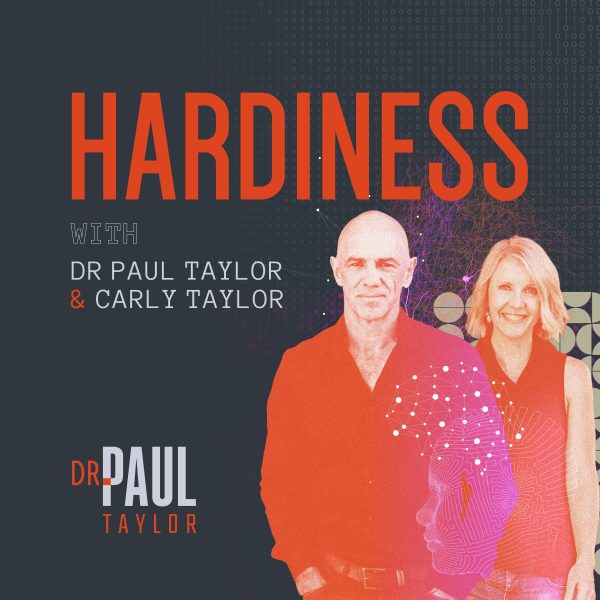
Hardiness with Dr Paul Taylor
- Folgen
- 747
- Erscheint
- mehrmals pro Woche
- Letzte Folge
- 13. Nov. 2026
Über den Podcast
Host Dr Paul Taylor, a Psychophysiologist, Neuroscientist, Exercise Scientist, and Nutritionist interviews experts from around the world on cutting edge research and practices related to improving hardiness in your mind, body and brain to become your best self.
Folgen 747
From Imposter Syndrome to “Learn-It-All” Leadership: Damon Lembi on Confidence, Curiosity and AI
In this episode, Dr Paul Taylor speaks with Damon Lembi about the lessons that shaped his approach to leadership, from college baseball and business setbacks to living with a progressive eye condition. Damon …
Shownotes
In this episode, Dr Paul Taylor speaks with Damon Lembi about the lessons that shaped his approach to leadership, from college baseball and business setbacks to living with a progressive eye condition. Damon reflects on resilience, the value of showing up and doing the work, and why confidence often follows action rather than arriving before it. They also discuss how AI is changing the workplace and why leaders need to model curiosity and adaptability. Damon shares the difference between a “know-it-all” and a “learn-it-all” mindset, and offers a practical four-step approach to imposter syndrome: name the fear, take the leap, practise deliberately, then let go and learn from the outcome. The conversation is a reminder that growth comes not just from gathering knowledge, but from putting it into practice and staying open to what each experience can teach us.
Key Takeaways
- Sport can teach teamwork, discipline and how to keep going after setbacks.
- A challenge doesn’t have to become your identity; focus on what you can do next.
- Leaders help teams adapt by staying curious, learning themselves and modelling change, especially with AI.
- Learning sticks when you put it into practice, step outside your comfort zone and reflect on the result.
- Confidence grows from preparation and action, not just from waiting to feel ready.
- Treat experience as a chance to improve: you can succeed, or take a lesson forward
Time Stamps
0:45 Why college sports hold such a big place in American culture
6:07 Lessons from Damon’s athletic career: teamwork, discipline and perseverance
8:04 How sport can help young people build resilience
13:02 Learning through business setbacks and personal challenges
14:30 Damon’s experience with a progressive eye condition
18:33 Responding to adversity without letting it define you
25:39 How organisations’ learning needs have changed
26:00 Adapting to AI at work—and the importance of leaders setting the example
31:42 A “learn-it-all” mindset versus a “know-it-all” mindset
34:02 Curiosity, openness and putting learning into practice
40:06 Imposter syndrome and building authentic confidence
42:14 Damon’s four-step approach: label the fear, leap in, practise deliberately, then let go and learn
47:43 Why Damon wrote a children’s book about learning and leadership
Resources
Podcast: The Learn-It-All™
Website: https://www.thelearnitallleader.com/ Learnit: https://www.Learnit.com
The Learn-It-All Leader: https://a.co/d/5oebQ6a
The Learn-It-All Leader for Kids: https://a.co/d/eQ5D2nl
Instagram: @damonlembi Linkedin: linkedin.com/in/damonlembi Youtube: @thelearnitallpodcast X: @damonlembiSupport the Podcast
If you found this conversation valuable, consider subscribing and leaving a review on your preferred podcast platform. Your feedback helps us continue to bring you insightful discussions on important health topics.
See omnystudio.com/listener for privacy information.
This simple habit has a big effect on your dementia risk: Wisdom Wednesdays
See omnystudio.com/listener for privacy information.
Hardiness: The Path To Resilience With Carly Taylor
We all want our kids to be resilient, but the word is used so widely that it’s hard to know what it is, or how you get it. In this Mojo Monday, Carly looks at what drives resilience: hardiness. What's covered …
Shownotes
We all want our kids to be resilient, but the word is used so widely that it’s hard to know what it is, or how you get it. In this Mojo Monday, Carly looks at what drives resilience: hardiness.
What's covered:
- Why resilience is an outcome, a label we give after we’ve seen how someone handles a challenge
- Where hardiness research began, with Suzanne Kobasa and Salvatore Maddi
- The 3Cs of commitment, control and challenge, with examples for parents and young people
- The fourth C, connection, and how to help kids through friendship conflict
- The one question that can change how we respond to stress.
- The questions Carly uses herself when life hits hard
Paul’s research shows hardiness can be developed at any age, and the people who start lowest often improve the most.
Want to dive deeper? Check ou The Hardiness Effect by Dr Paul Taylor (Wiley)
Carly is a counsellor and coach who specialises in building psychological hardiness, which is the ability to navigate challenge, stay engaged, and take meaningful action under pressure. Her work integrates modern psychology with Eastern and Stoic approaches, helping people build resilience, live with purpose, and respond to life’s challenges with greater clarity, courage and steadiness.See omnystudio.com/listener for privacy information.
Can the Brain Heal? Neuroregeneration and Brain Health with Dr Greg Eckel
Dr Greg Eckel joins Dr Paul Taylor to discuss brain health, neurodegeneration and the possibility of brain repair. Greg shares how his wife’s rapid decline from dementia shaped his work and led him to develop …
Shownotes
Dr Greg Eckel joins Dr Paul Taylor to discuss brain health, neurodegeneration and the possibility of brain repair. Greg shares how his wife’s rapid decline from dementia shaped his work and led him to develop the ECHO protocol. They explore potential contributors to brain health, including metabolic and gut health, inflammation, trauma and environmental factors, as well as emerging approaches involving light, sound and other therapies. They also discuss practical foundations such as exercise, sleep, nutrition and blood-sugar balance.
Key takeaways
- Look beyond symptoms to possible drivers. Greg describes a “detect, then correct” approach, considering factors such as infections, environmental exposures and physical or emotional trauma. He emphasises that care should be tailored to the individual.
- Brain health is connected to whole-body health. The conversation highlights the gut–brain connection, sleep, blood flow, metabolic health and inflammation as areas worth discussing with a qualified clinician.
- Build the basics first. Regular exercise, restorative and consistent sleep, hydration, time outdoors and nutritious food are presented as foundations—not extras to skip in search of a quick fix.
- Movement may support brain function. They discuss exercise, coordination and fast-twitch activity in relation to neuroplasticity and brain-derived growth factors.
- Personalise nutrition and supplements. Paul discuss blood-sugar responses, omega-3s, magnesium, glutathione, plasmalogens and creatine, while stressing the value of individual assessment and medical guidance.
- Emerging therapies need careful context. Light-based therapies, sound and CO₂-tolerance training come up as areas of interest; the episode distinguishes these discussions from established, universal recommendations.
- A diagnosis or genetic risk isn’t the whole story. Greg’s perspective is that risk factors don’t necessarily determine an individual’s future, and it’s worth seeking appropriate assessment and support rather than giving up hope.
Time Stamps
- 1:18 The personal experience that redirected Eckel’s work
- 8:42 Misfolded proteins and the questions behind his neuroregeneration work
- 11:13 Mitochondria, sound and light
- 18:15 Photobiomodulation and the gut–brain connection in Parkinson’s
- 24:17 A “detect, then correct” approach and possible contributing factors
- 27:28 The ECHO protocol and combining different therapies
- 34:05 Neuroplasticity and neurogenesis
- 37:32 Exercise, brain-derived growth factors and fast-twitch muscle fibres
- 42:22 CO₂-tolerance breathing and brain circulation
- 44:38 Everyday foundations: blood-sugar balance, sleep, hydration and exercise
- 50:01 Trauma and its possible role in health
- 52:44 Hormones, genetic testing and personalised care
- 55:12 Omega-3s, magnesium, glutathione and plasmalogens
- 58:19 Post-viral effects and a discussion of the evidence
- 1:01:04 Glutathione and laser therapy
- 1:04:41 Creatine and brain health
- 1:06:08 Eckel’s view on whether the brain can regenerate
Resources
Books: Defying Parkinson’s
Website: https://brainregen.com/
Website: https://bvital.com/
LinkedIn: https://www.linkedin.com/in/drgregeckel/
Instagram: https://www.instagram.com/drgreckel/?hl=en
Facebook: https://www.facebook.com/thebrainregen/
YouTube: https://www.youtube.com/channel/UCT2WJiLU_4BcbAKy-Z-4Epg
This episode is for general information, not personal medical advice. Talk with a qualified healthcare professional before changing treatment or starting supplements.
Support the Podcast
If you found this conversation valuable, consider subscribing and leaving a review on your preferred podcast platform. Your feedback helps us continue to bring you insightful discussions on important health topics.
See omnystudio.com/listener for privacy information.
Running on Empty: Your Brain's Power Stations and Depression - Wisdom Wednesdays
See omnystudio.com/listener for privacy information.
Can We Really Choose Our Attitude?
Viktor Frankl wrote that the last of the human freedoms is “to choose one’s attitude in any given set of circumstances.” But when we're going through challenges, our emotions show up automatically, so what can …
Shownotes
Viktor Frankl wrote that the last of the human freedoms is “to choose one’s attitude in any given set of circumstances.” But when we're going through challenges, our emotions show up automatically, so what can we actually choose?
In this episode, Carly draws on Frankl’s Man’s Search for Meaning and Morita Therapy to explore what choosing our attitude looks like in practice. We can’t choose our first reaction. We can choose what we do next.
Carly is a counsellor and coach who specialises in building psychological hardiness, which is the ability to navigate challenge, stay engaged, and take meaningful action under pressure. Her work integrates modern psychology with Eastern and Stoic approaches, helping people build resilience, live with purpose, and respond to life’s challenges with greater clarity, courage and steadiness.
See omnystudio.com/listener for privacy information.
Your Brain Runs on Your Body: A Whole-Body Approach to Cognitive Health with Dr Christobelle Yeoh
In this episode, Dr Paul Taylor talks with integrative practitioner Dr Christobelle Yeoh about protecting cognitive health. They start with the rise of early cognitive decline, brain fog and stress, including …
Shownotes
In this episode, Dr Paul Taylor talks with integrative practitioner Dr Christobelle Yeoh about protecting cognitive health. They start with the rise of early cognitive decline, brain fog and stress, including during menopause. Dr Yeoh's central idea is that thinking depends on the body. Cognition rests on the lower-order systems that feed the brainstem: the gut, vascular tone, blood chemistry, breathing and the cranial nerves that read signals of safety. They explain how chronic stress and the brain's constant threat prediction affect it. They also cover why top-down approaches like CBT work best alongside bottom-up, body-based ones. The second half is practical. They look at common mismatches and what to do about them: get morning sunlight and keep a circadian rhythm, eat at regular times in daylight hours and prioritise protein and whole foods, and fix the basics before relying on supplements such as DHA, creatine and ubiquinol. They also cover CO₂-tolerance breathing, and movement that challenges balance and coordination to support neuroplasticity.
Key takeaways
- Brain and body are not separate. Cognition depends on the health of the body's regulation systems.
- Get outside for morning light soon after waking, and top up with light through the day.
- Eat in daylight hours, include protein early, favour seasonal whole foods, and cut ultra-processed food.
- Sort out the basics (light, food, sleep, hydration) before relying on supplements.
- Combine top-down tools like CBT and ACT with bottom-up work like breathing, movement and gut health.
- Choose movement that challenges balance and coordination, such as boxing combinations, dancing or crawling.
- Start gently with breathwork. CO₂ tolerance practice is a safe place to begin, and cathartic breathwork needs guidance.
Time Stamps
0:59 Why cognitive health matters, with dementia now overtaking cardiovascular disease in Australia 1:34 What's going on: brain fog, early cognitive decline (MCI), and stress in menopause 4:02 Is getting more forgetful in your 40s, 50s and 60s a warning sign? 5:35 Reframing cognition as an emergent property of whole-system regulation 10:52 Chronic stress, the brain as a prediction engine, and early-life influences 17:20 Five key inputs to the brainstem: cranial nerves, gut, vascular tone, blood pH/redox, and breathing 21:59 Threat vs challenge stress appraisal, and cortisol vs adrenaline 24:48 Top-down (CBT, ACT) and bottom-up (body-based) approaches, and neuroplasticity 27:23 Functional brain networks, and why complex, cross-body movement matters 31:52 The big mismatches: circadian biology, supplements before fundamentals, cell membrane and bioelectricity, CO₂ tolerance, and psychology without physiology 40:31 Circadian basics: morning sunlight, "clocking in" with the sun, ditching sunglasses 43:30 Red and near-infrared light, and light-based therapy for neurodegenerative conditions 47:07 Food timing, protein and the protein leverage idea, seasonal eating, leptin and insulin resistance 51:54 Supplements: DHA, phospholipids, organ meats and liver capsules, electrolytes and minerals 54:09 Creatine and hydration, including the dehydration and cortisol study 57:14 Ubiquinol: dosing and its role in the electron transport chain 58:31 Urolithin A, B vitamins, and matching supplements to the person 1:00:12 Breathing: CO₂ tolerance and Buteyko-style training vs cathartic and holotropic breathwork 1:05:23 Psychology–physiology mismatch: somatic work, vitamin D, creatine and psychotherapy
Mentioned in this episode
Dr Dale Bredesen's work on reversing cognitive decline
- UCLA Health: news release on the original 2014 study. The paper was “Reversal of cognitive decline: A novel therapeutic program” (UCLA/Buck Institute, 2014).
- ScienceDaily: the 2016 follow-up study. It used quantitative MRI and neuropsychological testing before and after the program, following a protocol called ‘metabolic enhancement for neurodegeneration’.
Dr Stephen Porges (polyvagal theory and neuroception)
- stephenporges.com: official site and timeline. The first paper describing the theory was Porges (1995), “Orienting in a defensive world,” published in Psychophysiology.
Prof. Mark Seery (challenge and threat appraisal)
- Seery’s lab publications, University at Buffalo. The two key papers are Seery (2013), “The biopsychosocial model of challenge and threat: Using the heart to measure the mind,” and Seery (2011), “Challenge or threat? Cardiovascular indexes of resilience and vulnerability to potential stress in humans”
Dr Konstantin Buteyko and Patrick McKeown (CO₂ tolerance breathing)
- Oxygen Advantage: how to measure your BOLT score
- Oxygen Advantage: McKeown on breath-holding and the science behind it
- Buteyko Clinic International podcast. McKeown founded the clinic in 2002
Dr Rosalba Courtney (breath and healing)
The Human Connectome Project
Previous episode with Dr Yeoh on mitochondria
- Omny – Part 1 - Why You Need To Be A MITOchondriac Part 1 with Dr. Christabelle Yeoh
- Omny – Part 2 - Why You Need to be A MITOchondriac Part 2 with Dr. Christabelle Yeoh
Resourses:
Next Practice Genbiome, Sydney (genbiome.nextpracticehealth.com)
Mitocore, Sydney (mitocore.com.au)
This episode is for general education and isn't personal medical advice. Speak with a qualified practitioner before changing your health routine or starting supplements.
See omnystudio.com/listener for privacy information.
Science just decided the best type of exercise training - and it's compelling: Wisdom Wednesdays
See omnystudio.com/listener for privacy information.
Your Inner Coach With Carly Taylor
Most of us spend a lot of time listening to the voice in our heads, especially when it turns negative. This week Carly looks at what happens when you start answering back instead. She explores research by …
Shownotes
Most of us spend a lot of time listening to the voice in our heads, especially when it turns negative. This week Carly looks at what happens when you start answering back instead.
She explores research by psychologist Ethan Kross showing that talking to yourself using “you” or your own name helps you perform better under stress and see challenges as less threatening. She also looks at how Marcus Aurelius used his private journal to coach himself.
In this episode:
- Why we listen to our negative self-talk as if it’s the truth
- How using your own name creates helpful distance
- The sage and the gremlin
- A simple way to coach yourself in the moment
Sources:
- Martyn Lloyd-Jones, Spiritual Depression: Its Causes and Cure (1965)
- Kross et al. (2014), “Self-talk as a regulatory mechanism: How you do it matters,” Journal of Personality and Social Psychology
- Moser et al. (2017), “Third-person self-talk facilitates emotion regulation without engaging cognitive control,” Scientific Reports
- Ethan Kross, Chatter (2021)
- Marcus Aurelius, Meditations
See omnystudio.com/listener for privacy information.
Mega Focus and the Attention Revolution with Adam Williams
Your attention is being hijacked every day, and it is quietly shaping the life you get. Dr Paul Taylor and Adam Williams reveal how to spot the hidden cost of distraction, reclaim control, and start directing …
Shownotes
Your attention is being hijacked every day, and it is quietly shaping the life you get. Dr Paul Taylor and Adam Williams reveal how to spot the hidden cost of distraction, reclaim control, and start directing your attention toward what actually matters. Adam Williams, author of Mega Focus: Join the Attention Revolution, spent 30 years working inside the attention economy in advertising, innovation, promotions, and events before switching sides when he realised he was checking emails instead of being present with his daughter.That shift led him to build a practical framework for understanding why we reach for our phones, why we avoid hard things, and why so much of modern life runs on autopilot.
You will discover:
- Why attention matters more than talent, intelligence, or motivation
- The difference between the "builder" and the "architect" in your brain
- How the "attention tax" exposes the opportunity cost of distraction
- Why a quick email or "quick question" can destroy deep work for nearly half an hour
- How sleep, energy, and environment shape the amount of attention you really have
- The four core purchasing triggers that advertisers use to win your focus
- Why boredom, discomfort, and effort are not enemies, but the raw material of creativity and progress
Paul and Adam also unpack the psychology behind social media, status signalling, happiness chasing, and the arrival fallacy, making the case that contentment beats endless pursuit every time. If you have ever felt busy but not truly effective, connected but not present, or productive but strangely off-course, this conversation will hit hard. Perfect for anyone who wants to work smarter, think more clearly, and stop outsourcing their life to algorithms, alerts, and other people's goals. If you are ready to take back control of your attention, this one belongs at the top of your queue.
Time Stamps
03:23 - From advertising to studying attention
04:06 - The moment Adam noticed his own attention problem
06:07 - Attention audits and the idea of an attention heat map
07:00 - Calculating the lifetime cost of phone use
08:15 - What attention tax really means
10:21 - Why attention matters more than talent or motivation
11:53 - The hidden cost of workplace interruptions
14:25 - What drives distraction and comfort-seeking
15:15 - The builder and architect model of attention
16:38 - Three things the fast brain tries to do
18:22 - Why busywork feels easier than meaningful work
19:23 - Remove to improve
20:26 - Who am I, what do I want, what do I do
22:22 - Conditions of happiness and the arrival fallacy
24:24 - Why chasing happiness can backfire
25:30 - Relevance, signalling, and how attention is captured
29:51 - Frequency, timing, and context in advertising
32:43 - Reclaiming attention through awareness and alignment
32:51 - The four key purchasing criteria
37:44 - How emotion beats logic in buying decisions
39:54 - Giving attention versus getting attention
40:14 - Infobesity, infomania, and digital overload
43:06 - Why many people cannot sit with their own thoughts
45:21 - The dark side of getting attention online
48:03 - Why understanding your brain helps you take back control
50:00 - Satisfaction, contentment, and goals without deferring life
51:43 - Attention as the upstream driver of thought and action
53:48 - Mega Focus as macro and micro attention management
55:10 - Perfectionism, energy, and attention tax in daily life
56:13 - The end of effort and why hard things matter
58:26 - Tools, calculators, and exercises on Adam's websiteQuote:
“Attention lives upstream of everything in your life.”
Resources
Website: https://theattentionarchitect.au/
LinkedIn: https://www.linkedin.com/in/theattentionarchitect/
Support the Podcast
If you found this conversation valuable, consider subscribing and leaving a review on your preferred podcast platform. Your feedback helps us continue to bring you insightful discussions on important health topics.
See omnystudio.com/listener for privacy information.
Exercise First, Drugs Second
What if one of the most effective treatments for depression and anxiety in young people needs no prescription, has no withdrawal and makes you stronger? In this episode, Dr Paul Taylor unpacks a 2024 …
Shownotes
What if one of the most effective treatments for depression and anxiety in young people needs no prescription, has no withdrawal and makes you stronger?
In this episode, Dr Paul Taylor unpacks a 2024 meta-analysis from Victoria University. It found that resistance training produced large reductions in depression and anxiety symptoms in people aged 26 and under. He then sets it against the largest analysis of its kind, a BMJ network meta-analysis of 218 trials and more than 14,000 people. In that analysis, walking, jogging, yoga and strength training matched therapy and outperformed SSRIs.
In this episode:
- Why strength training was overlooked for decades in mental health research
- The training “recipe” behind the biggest effects: sets, reps, intensity and duration
- Why harder exercise and clear structure produced better results
- How few young people in Australia, the UK and the US meet activity guidelines
- The case for prescribing exercise before medication for young people
Key studies:
- Marinelli et al. (2024). Resistance training and combined resistance and aerobic training as a treatment of depression and anxiety symptoms in young people. Early Intervention in Psychiatry. https://doi.org/10.1111/eip.13528
- Noetel et al. (2024). Effect of exercise for depression: systematic review and network meta-analysis. BMJ. https://doi.org/10.1136/bmj-2023-075847
Survey data:
- ABS National Nutrition and Physical Activity Survey 2023
- Sport England Active Lives Children and Young People Survey 2024-25
- CDC Youth Risk Behavior Survey 2025
This episode is for education, not medical advice. If you or your child takes medication, talk to your doctor before making any changes.
More at paultaylor.biz
See omnystudio.com/listener for privacy information.
The Trap of Perfectionism and What To Do About It With Carly Taylor
See omnystudio.com/listener for privacy information.
Counterpunch, reality therapy, and giving young people real tools for life with Mercedas Taaffe-Cooper
The biggest mistake in youth mental health? Treating kids like they’re broken instead of teaching them how to move, act, and build resilience. Mercedes Taaffe Cooper reveals why early intervention and …
Shownotes
The biggest mistake in youth mental health? Treating kids like they’re broken instead of teaching them how to move, act, and build resilience. Mercedes Taaffe Cooper reveals why early intervention and education, not endless labels and talk therapy, are changing the game for young people. Paul and Mercedes unpack the deeper problem with the medical model, how normal adolescent struggles get turned into diagnoses, and why that can create more harm than help. Mercedes shares the personal journey that took her from elite boxing and coaching the Irish team to clinical psychology, reality therapy, and ultimately building Counterpunch, a program designed to help kids learn through action, not just conversation.
You’ll discover:
- Why reality therapy and choice theory focus on doing rather than overthinking
- How the "front two wheels" car analogy helps kids understand thinking, feeling, and behaviour
- Why combat sports can be powerful tools for confidence, regulation, and self-awareness
- How a 24-week, three-phase program moves kids from connection to leadership
- Why peer mentoring is often more powerful than adult advice for adolescents
Mercedes also explains how Counterpunch works in boxing gyms and youth-facing settings, why it’s especially effective for kids who feel isolated, and how the program is now scaling online so more facilitators can deliver it. From goal-setting and embodied learning to social connection and self-efficacy, this episode makes a compelling case for giving young people practical tools before problems become crises. Essential listening for parents, coaches, teachers, and anyone working with young people who wants to create real change, not just another conversation. If you care about building confidence, resilience, and lifelong skills, this one is for you.
Timestamps
(02:11) Mercedas Taaffe Cooper’s background in boxing, coaching, psychology, and moving to Australia
(03:59) Discovering reality therapy and choice theory through research and training
(05:48) Building Counterpunch from pilot program to scalable youth model
(07:56) Reality therapy explained - focusing on action instead of just thinking
(10:19) Why action is the real engine of change for young people
(13:43) Why Mercedas rejected the medical model and built a strengths-based program
(15:05) The harm of overusing labels and diagnoses with kids
(18:05) The original research, the boxing component, and the first curriculum ideas
(20:21) Moving from government pilot to a private program in South Australia
(21:19) Taking the training online and building a replicable system
(23:03) What a Counterpunch session looks like from induction to a 24-week structure
(24:21) VSMART goals and linking values to physical progress
(26:16) The three phases - body awareness, relationships, and leadership
(27:13) Why martial arts and team sport build resilience and confidence
(32:38) Why group connection and peer mentoring matter so much
(34:15) Why combat sports work for youth communication and trust-building
(36:31) Battle in the Hills and using boxing as a progression pathway
(39:03) How embodied learning and physical challenge reinforce psychological tools
(42:11) Why boxing is used as a medium, not the end goal
(43:29) Why combat sports are different from professional violence
(45:49) Respect, manners, and life skills learned through martial arts
(47:15) Who the program is for and how youth-facing professionals can use it
(49:08) How to get involved and the four Ps for potential facilitators
(50:12) Final reflections on skills, not labels, for young peopleQuote “The biggest difference between reality therapy and cognitive behavioural therapy is that it very much focuses on the doing rather than the thinking.”
Resources
Website: https://counterpunch.com.au/
LinkedIn: https://www.linkedin.com/in/mercedas-taaffe-cooper-3b3623117/
Instagram: https://www.instagram.com/counterpunch_life
Facebook: https://www.facebook.com/counterpunchAU/
YouTube: https://www.youtube.com/@counterpunchlife
Support the Podcast
If you found this conversation valuable, consider subscribing and leaving a review on your preferred podcast platform. Your feedback helps us continue to bring you insightful discussions on important health topics.
See omnystudio.com/listener for privacy information.
Stop Arguing with Reality With Carly Taylor
How often do we get caught up in our thoughts, emotions and the stories we tell ourselves about what's happening? In this week's Mojo Monday, Carly explores how easily we can find ourselves fighting reality …
Shownotes
How often do we get caught up in our thoughts, emotions and the stories we tell ourselves about what's happening?
In this week's Mojo Monday, Carly explores how easily we can find ourselves fighting reality, whether it's uncomfortable feelings, other people's behaviour or situations that don't go our way.
Drawing on Japanese Morita Therapy, she shares why acceptance doesn't mean approval or giving up. It's about allowing our feelings to be there, seeing situations as they actually are, and choosing how we respond rather than letting our emotions make the decisions for us.
A simple reminder that we can't always control what happens or how we feel, but we can practise responding with greater awareness and intention.
Carly is a counsellor and coach who specialises in building psychological hardiness, which is the ability to navigate challenge, stay engaged, and take meaningful action under pressure. Her work integrates modern psychology with Eastern and Stoic approaches, helping people build resilience, live with purpose, and respond to life’s challenges with greater clarity, courage and steadiness.
See omnystudio.com/listener for privacy information.
Preventive cardiology, exercise, nutrition, stress, and longevity with Dr. Ross Walker
This podcast explores practical ways to protect your heart and support healthy aging. Dr. Paul Taylor talks with preventive cardiologist Dr. Ross Walker about the everyday habits that shape cardiovascular …
Shownotes
This podcast explores practical ways to protect your heart and support healthy aging. Dr. Paul Taylor talks with preventive cardiologist Dr. Ross Walker about the everyday habits that shape cardiovascular health, how to make sense of cholesterol and other risk markers, and where tests, medication, and supplements can help. Together, they cut through common health claims and discuss exercise, stress, diet, and emerging approaches to preventing heart disease.
The conversation focuses on practical prevention rather than late-stage treatment, with an emphasis on how much heart disease risk can be reduced before medication is considered. Ross explains what he thinks about cholesterol, coronary calcium scoring, statins, LP(a), MTHFR, and the future of cardiovascular medicine. It’s a wide-ranging, practical discussion for anyone interested in health span, not just lifespan.
Key topics
- Dr. Ross Walker shares his background as a cardiologist of 47 years who shifted into prevention about 30 years ago after seeing repeated cardiac surgeries without lifestyle change.
- The pair discuss his 80/10/10 model: 80 percent lifestyle, 10 percent orthodox medicine, and 10 percent evidence-based supplements.
- Dr. Ross Walker outlines his five keys to health:
- No addictions
- Good-quality sleep
- Simple nutrition
- Regular exercise
- Happiness and relationships
Five categories of stress
- Emotional stress
- Mental stress
- Physical stress
- Pharmacologic stress
- Infective stress
Metabolic syndrome markers
- High triglycerides
- Low HDL
- High blood pressure
- Belly fat
- Insulin resistance or diabetes tendency
- Exercise is presented as one of the strongest interventions for heart disease, dementia, diabetes, depression, osteoporosis, and healthy aging.
Timestamps
(00:59) From 47 years in medicine to a prevention-first career
(02:31) The moment he realized surgery without prevention was not enough
(03:54) Why his 80/10/10 approach puts lifestyle first
(04:23) The five keys to health: sleep, food, exercise, happiness, and no addictions
(06:22) Why relationships and social connection matter for longevity
(07:46) Why exercise may be the most important topic in the whole discussion
(09:10) Sarcopenia, frailty, grip strength, and resistance training in older adults
(10:37) Exercise as an antidepressant and the brain benefits of training
(11:15) The Dallas bed rest study and how fast the body deconditions
(12:42) Why aging is a disease process and exercise must be adjusted over time
(14:29) How much exercise is too much and the risk of overdoing it
(16:12) Vasodilation, dementia, and why exercise helps the brain
(17:38) Viagra, Cialis, and the vasodilation conversation
(18:35) Why extreme athletes can develop more coronary calcification
(19:05) Genes load the gun, environment pulls the trigger
(20:32) Why genetics can be overridden by phenotype and lifestyle
(21:55) The brain’s “challenge muscle” and why hard things matter
(23:55) Stress appraisal, challenge versus threat, and cardiovascular effects
(25:07) The five categories of stress and how each affects the heart
(27:00) Drugs, marijuana, cocaine, caffeine, and cardiovascular risk
(30:11) Alcohol, coffee, and why context matters more than single ingredients
(32:00) Infective stress, COVID, and cardiovascular complications
(33:26) Chronic inflammation and the plaque formation process
(35:21) LDL particle size, ApoB, LP(a), and better risk markers
(36:19) Why coronary calcium scoring is central to Dr. Walker’s approach
(39:43) Statin side effects, real-world experience, and individual decision-making
(41:39) A case study: lifelong high cholesterol, zero calcium score, and no statin
(42:09) Statins versus PCSK9 inhibitors and when each makes sense
(44:29) What statins do and don’t reduce, and the unfinished LP(a) story
(46:09) Why calcium score should guide statin decisions more than cholesterol alone
(47:45) Why CT coronary angiograms and plaque analysis may change risk assessment
(49:14) Radiation risk, age, and the value of imaging after 50
(50:13) Nutrition basics: eat less, eat more natural food
(51:48) Processed food and reading labels
(52:18) Saturated fat, the PURE study, and why fear of fat is overblown
(54:17) Ancel Keys, sugar, and the history of bad nutrition advice
(55:48) Triglyceride-to-HDL ratio, insulin resistance, and metabolic syndrome
(56:56) Genetic insulin resistance and why some populations are more vulnerable
(58:09) What the MTHFR gene does and why folic acid can be a problem
(60:39) Activated folate, folinic acid, and personalized supplementation
(63:27) Why supplements need to be individualized and evidence-based
(64:01) The future: gene therapy, vaccinations against heart disease, and transcatheter valves
(65:23) Blue zones, movement, community, and the real drivers of longevity
(66:26) Stem cells, cardiac regeneration, and what may still be years away
(68:12) Why the five keys still matter more than any future technology“The best treatment of heart disease, cancer, Alzheimer’s, osteoporosis, diabetes is not to get them in the first place.”
Resources
Website - https://www.drrosswalker.com/
LinkedIn - https://www.linkedin.com/in/dr-ross-walker/?isSelfProfile=false
Facebook - https://www.facebook.com/DrRossWalkerCardiologist
Website - https://wlife.co/
Support the Podcast
If you found this conversation valuable, consider subscribing and leaving a review on your preferred podcast platform. Your feedback helps us continue to bring you insightful discussions on important health topics.
See omnystudio.com/listener for privacy information.
Here's how to make your carbs healthier - Wisdom Wednesdays
See omnystudio.com/listener for privacy information.
Calm Your Nervous System With This Short Breathing Technique With Carly Taylor
Carly is a counsellor and coach who specialises in building psychological hardiness, which is the ability to navigate challenge, stay engaged, and take meaningful action under pressure. Her work integrates …
Shownotes
Carly is a counsellor and coach who specialises in building psychological hardiness, which is the ability to navigate challenge, stay engaged, and take meaningful action under pressure. Her work integrates modern psychology with Eastern and Stoic approaches, helping people build resilience, live with purpose, and respond to life’s challenges with greater clarity, courage and steadiness.
See omnystudio.com/listener for privacy information.
From Trauma to Resilience: The Stress Continuum and the Power of Reappraisal, with Dr Eamonn McCarthy
This conversation explores how early life stress shapes the brain, why complex trauma is different from a single traumatic event, and how people can build resilience over time. Dr Paul Taylor speaks with Dr …
Shownotes
This conversation explores how early life stress shapes the brain, why complex trauma is different from a single traumatic event, and how people can build resilience over time. Dr Paul Taylor speaks with Dr Eamonn McCarthy about forensic psychology, trauma work, performance psychology, and the practical ways therapy, exercise, sleep, and mindset can support change.
Stress can break you—or build you into someone stronger than you thought possible. Dr Eamonn McCarthy reveals why some people unravel under pressure while others turn hardship into resilience, and how trauma, recovery, and reappraisal shape that outcome. Paul and Eamonn trace the full stress continuum, from early life adversity and complex trauma to elite performance psychology. They unpack why uncertainty is so corrosive, how hyper arousal and hypo arousal show up in real life, and why the brain’s survival strategies can be both brilliant and heartbreaking.
They also discuss Larita Academy, a program helping disadvantaged young people unlock their potential, and Mind Your Monkey, which applies resilience and performance principles to executives and high performers.
You’ll discover:
- Why adverse childhood experiences can rewire stress responses long into adulthood
- The difference between hypervigilance, freeze responses, and emotional numbing
- How reappraisal turns shame and trauma into post-traumatic growth
- Why resilience is more like a muscle than a trait
- How exercise, sleep, nutrition, and even creatine can support psychological change
- Why trigger warnings and over-labelling mental health can backfire for some people
Time Stamps
01:47 - From undergraduate psychology to forensic practice
02:36 - Moving from adult offending to childhood trauma
04:27 - Child protection, youth justice, and executive leadership
05:43 - Transference, countertransference, and emotional protection
07:26 - Concerned detachment and what clients actually need
09:54 - The lasting impact of traumatic work on the clinician
11:25 - Why black humour can fail in child trauma settings
12:37 - Why social status changes stress biology
14:03 - Early life stress, the womb, and adverse childhood experiences
15:34 - Complex trauma versus single-event trauma
17:25 - Caregivers as both source of safety and danger
19:02 - Predictability, uncertainty, and survival adaptations
20:54 – Hyper arousal, hypo arousal, and the window of tolerance
24:59 - Stress inoculation, recovery, and building resilience
28:12 - Genes, environment, and why people respond differently
30:11 - How resilience can be trained over time
32:09 - Challenge mindset and self-belief under stress
34:00 - Stress as a muscle and the case against overprotection
35:55 - Why trigger warnings can worsen hypervigilance
38:19 - Mental health versus mental illness
41:37 - Helping people reframe childhood trauma in adulthood
45:02 - Reappraisal and post-traumatic growth
47:17 - Lifestyle, neuroplasticity, and psychotherapy support
49:49 - SSRIs, exercise, and why combined approaches may work better
51:39 - Severe depression, low cortisol, and burnout patterns
52:52 - How Larita Academy was founded and what it does
57:48 - Why Mind Your Monkey was created
59:57 - What “forensic” means in this business context
60:46 - Who the typical client is nowResources
Website: mindyourmonkey.com.au
LinkedIn: https://www.linkedin.com/in/dr-eamonn-mccarthy-7705aa221/
Instagram: https://www.instagram.com/mind_your_monkey_/
Website: https://www.larita.com.au/
Instagram: https://www.instagram.com/larita_academy/
Support the Podcast
If you found this conversation valuable, consider subscribing and leaving a review on your preferred podcast platform. Your feedback helps us continue to bring you insightful discussions on important health topics.
See omnystudio.com/listener for privacy information.
Are you growing microbial cannibals in your gut? Wisdom Wednesdays
See omnystudio.com/listener for privacy information.
Your Fear Isn't the Truth With Carly Taylor
Most of the fear we live with isn't physical. It's the old thinking we carry from past experiences: the fear of criticism, of not being good enough, of getting it wrong. In this Mojo Monday, Carly explores how …
Shownotes
Most of the fear we live with isn't physical. It's the old thinking we carry from past experiences: the fear of criticism, of not being good enough, of getting it wrong. In this Mojo Monday, Carly explores how fear becomes our reality when we're on autopilot, and how becoming the observer of our conditioned responses creates space to choose what happens next.
Drawing on Krishnamurti and Morita Therapy, Carly looks at fear and desire as two sides of the same coin, and how turning that coin over shifts your focus to what you really want.
In this episode:
- Why fear and the truth are not the same thing
- How past experiences shape perfectionism and the fear of not being good enough
- Becoming the observer of your conditioned response
- Fear and desire as two sides of one coin
- Doing what needs to be done while the fear runs its own course
Carly is a counsellor and coach who specialises in building psychological hardiness, which is the ability to navigate challenge, stay engaged, and take meaningful action under pressure. Her work integrates modern psychology with Eastern and Stoic approaches, helping people build resilience, live with purpose, and respond to life’s challenges with greater clarity, courage and steadiness.
See omnystudio.com/listener for privacy information.
Mitochondria, Fertility, Menopause, and The Hidden Biology of Hormones with Dr Leah Hechtman
This conversation with Dr Leah Hechtman explores how mitochondria influence far more than energy production, including fertility, aging, brain health, and hormone regulation. It also unpacks the differences …
Shownotes
This conversation with Dr Leah Hechtman explores how mitochondria influence far more than energy production, including fertility, aging, brain health, and hormone regulation. It also unpacks the differences between male and female reproductive biology, the effects of hormonal contraception, and what hormone replacement may mean for longevity. Leah brings a rare mix of clinical experience, genetics training, ovarian biology research, and fertility expertise, making this a practical and provocative discussion for anyone interested in reproductive health and healthy aging.
Key topics
- Leah explains why mitochondria are far more than the “powerhouse of the cell” and describes them as central regulators of physiology, aging, and even signalling patterns tied to trauma and emotion.
- We discuss maternal inheritance of mitochondria and why the egg, not the sperm, carries the major mitochondrial legacy that shapes offspring health.
- Leah breaks down how the oocyte actively selects sperm, using signalling, electrical charge, and mitochondrial function to influence which sperm succeeds and what genetic material is accepted.
- The discussion covers declining sperm counts, including the claim that global sperm quality has fallen sharply over recent decades, along with the challenge of changing reference ranges and assay variability.
- Leah shares why semen analysis can function as an early longevity marker for men, reflecting health roughly 2.5 to 3 months earlier and sometimes revealing issues long before other markers do.
- The conversation explores the aging trajectory in women and men, including how ovarian mitochondrial loss contributes to menopause and how men experience a slower decline in testicular function and testosterone production.
- We discuss hormonal contraception, especially starting the pill too early, and Leah outlines concerns about disruption of the brain-ovary axis, amygdala changes, and effects on mood, perception, and identity.
- Leah and Paul examine menopause, andropause, and hormone replacement therapy, including why timing, formulation, and individual context matter more than one-size-fits-all messaging.
- The episode also covers DHEA, testosterone, cholesterol, stress, and why hormone decline can open the “gates” to disease processes that hormones were helping keep in check.
- Leah explains how microbiome health, environmental toxins, nutrition, hydration, and lifestyle all affect reproductive health in both men and women, including sperm quality, implantation, and miscarriage risk.
- The conversation closes with Leah’s excitement about emerging research in embryology, reproductive biology, and the growing recognition that men’s health needs more attention.
Timestamps
04:09 - Why mitochondria are much more than cellular “powerhouses”
06:04 - Maternal inheritance of mitochondria and why mum matters so much
07:04 - How the oocyte selects sperm and what the egg is “looking for”
11:17 - Sperm count decline and why reference ranges can mislead
12:36 - Semen analysis as a longevity marker for men
15:05 - Why sperm testing reflects health from months earlier
17:41 - Female mitochondrial aging and the crossover into menopause
19:11 - Male mitochondrial and testicular decline with age
20:09 - Why regular ejaculation may improve sperm quality
21:18 - How starting the pill too early may disrupt the brain-ovary axis
22:15 - The amygdala, mood changes, and the effects of hormonal contraception
25:35 - Bioidentical versus synthetic hormones and why it matters
27:22 - Hormonal contraception and mate selection, smell, and genetics
29:00 - What menopause and andropause look like biologically
33:35 - HRT myths, timing, and the importance of body-identical hormones
36:19 - How women and men produce testosterone, estrogen, and progesterone
38:29 - Testosterone therapy in men and its fertility implications
40:49 - Why some clinicians are considering testosterone earlier in men
42:27 - DHEA, energy, stress, sleep, and the hormone cascade
44:08 - Why baseline testing around 35 can be useful for both sexes
45:24 - How stress, hydration, and even the blood draw setting affect hormone results
48:41 - The Y chromosome, aging, and why men feminize over time
50:52 - Environmental toxins, nutrition, and sperm health
55:03 - Microbiome health and its role in fertility, implantation, and miscarriage
56:14 - Caesarean birth, microbiome transfer, and downstream health effects
58:14 - What Leah is most excited about in the next wave of research“The mitochondria is how we transmit emotional patterns, neurological patterns, trauma patterns.”
Action items
- If you are trying to conceive, consider both partners’ health, not just the woman’s.
- Treat semen analysis as a meaningful health marker, not only a fertility test.
- Pay attention to sleep, hydration, stress, nutrition, and environmental exposure before testing hormones or sperm.
- For women, avoid assuming all contraceptive or hormone decisions are biologically neutral.
- For men, think about testosterone, DHEA, and semen quality as part of broader longevity planning.
Resources
Website - https://drleahhechtman.com/
LinkedIn - https://www.linkedin.com/in/dr-leah-hechtman-phd-7828607/?isSelfProfile=false
Facebook - https://www.facebook.com/LeahHechtman
YouTube - https://www.youtube.com/channel/UCR07U_vqfe8Haa7GO7AEDpA/playlists
Instagram - https://www.instagram.com/drleahhechtman/
Support the Podcast
If you found this conversation valuable, consider subscribing and leaving a review on your preferred podcast platform. Your feedback helps us continue to bring you insightful discussions on important health topics.
See omnystudio.com/listener for privacy information.
The Protein Tug-of-War: Does Eating Less Protein Really Switch On Autophagy? Wisdom Wednesdays
See omnystudio.com/listener for privacy information.
Who Are You Showing Up For?
n this episode, Carly unpacks why the instinct to rescue the people we love is often more about our own discomfort than their growth, what love looks like when you treat it as a verb instead of a feeling, and …
Shownotes
n this episode, Carly unpacks why the instinct to rescue the people we love is often more about our own discomfort than their growth, what love looks like when you treat it as a verb instead of a feeling, and why real commitment sometimes means holding back rather than stepping in. It's a personal, practical episode about showing up for the people in your life, and what that actually looks like in action.
Key takeaways
- Real growth often comes from struggle, not from being protected from it.
- The urge to rescue someone you love can be more about easing your own discomfort than helping them.
- Love as a verb means letting people fall and encouraging them to get back up, not clearing every obstacle out of their path.
- Commitment isn't about being a perfect parent, partner, or friend. It's about showing up again and again, including the days you have to hold back.
- How you show up for the people in your life, kids, friends, partners, is one of the biggest differences you get to make.
Carly is a counsellor and coach who specialises in building psychological hardiness, which is the ability to navigate challenge, stay engaged, and take meaningful action under pressure. Her work integrates modern psychology with Eastern and Stoic approaches, helping people build resilience, live with purpose, and respond to life’s challenges with greater clarity, courage and steadiness.
See omnystudio.com/listener for privacy information.
AI, Imaging, and the Future of Preventing Heart Attacks Early with Dr James Thompson
Dr James Thompson joins me for a practical conversation about why heart disease still leads as a global killer, why cholesterol and calcium scoring have limits, and how advanced imaging is changing prevention …
Shownotes
Dr James Thompson joins me for a practical conversation about why heart disease still leads as a global killer, why cholesterol and calcium scoring have limits, and how advanced imaging is changing prevention. We also cover exercise, lifestyle, and the role AI is starting to play in cardiac imaging.
Heart disease often starts silently years before a scan or cholesterol test raises the alarm. Dr. James Thompson reveals why a zero-calcium score can still miss dangerous plaque, and why the future of prevention may depend on looking much earlier, and much deeper. We break down the limits of total cholesterol, LDL, and calcium scoring, then show how APO B, LP little A, CT coronary angiography, and cardiac MRI change the picture. If you have ever been told you are "fine" because your cholesterol is normal or your calcium score is low, this conversation will make you rethink what that actually means.
Key topics
- Heart disease remains the biggest killer
- Dr Thompson explains why cardiovascular disease is still the number one public health issue and why it affects men and women differently, especially after menopause.
- Why cholesterol is only part of the picture
- They discuss why total cholesterol and LDL can miss risk, and why APO B and Lp(a) can be more useful markers in specific cases.
- What a calcium score can and cannot tell you
- A calcium score detects calcified plaque in the coronary arteries, but it can miss non-calcified, high-risk plaque.
- The problem with false reassurance
- A zero calcium score does not always mean zero disease, especially in younger people or those with early, vulnerable plaque.
- Why CT coronary angiography is more revealing
- Dr Thompson explains how contrast-enhanced CTA can show the actual coronary arteries, plaque burden, plaque composition, and flow-related risk.
- How CT imaging works in practice
- They cover heart-rate control, breath-holding, EKG gating, IV contrast timing, and why coronary CTA is technically demanding but highly informative.
- MRI of the heart brings different strengths
- Cardiac MRI is described as the best tool for tissue characterization, function, fibrosis, and flow, while CT still wins for spatial resolution of the coronary arteries.
- Exercise and movement are part of prevention
- Paul and Dr Thompson connect imaging with lifestyle, arguing that inactivity is not neutral and that movement is fundamental to cardiovascular health.
- AI is accelerating cardiac imaging
- Dr Thompson explains how AI is helping quantify plaque, flow, and inflammation, and why radiology is one of the main areas where AI is already being applied.
- Why early detection matters
- The conversation repeatedly returns to prevention, especially for people in their 30s, 40s, and 50s who may feel well but already have disease.
Timestamps
(01:36) Dr Thompson’s background in radiology and cardiovascular imaging
(06:43) Why no imaging test is perfect and what each modality does best
(09:16) Why MRI found the injury that X-ray and ultrasound missed
(11:49) Cholesterol as a screening tool and its limitations
(16:45) APO B and Lp(a) as more useful markers for some patients
(18:18) What a calcium score actually measures
(20:31) Why calcified plaque is different from vulnerable non-calcified plaque
(23:27) Why a zero calcium score can still miss dangerous disease
(29:53) How calcium scoring lost ground to contrast CT angiography
(33:14) What contrast-enhanced CTA reveals about plaque burden and composition
(35:04) How coronary CTA is performed, including heart-rate control and breath-holding
(37:49) How AI is being layered onto CT imaging
(40:25) Why CTA can see both inside and outside the coronary artery
(41:37) The heart as a pump and why the coronary arteries are so important
(44:08) Why stenting and bypass are not perfect solutions
(46:19) Exercise as prevention and inactivity as an active problem
(49:22) The Dallas bed rest study and how quickly the heart can decondition
(53:23) Why vigorous exercise may be far more protective than light movement
(55:06) What “lung burn” means in Dr Thompson’s training language
(57:18) What cardiac MRI adds beyond CT
(60:36) Paul’s own cardiac imaging story and how MRI found scar tissue
(63:55) Why coronary CTA is now a class 1A test for low-risk patients with no known disease
(69:48) What’s next for AI, plaque characterization, and inflammation imaging
(74:23) Why prevention is cheaper, easier, and more effective than late-stage treatmentAction items
- Ask your doctor whether your current heart-risk assessment is enough for your age, family history, and symptoms.
- Consider whether cholesterol alone is giving you a false sense of reassurance.
- If you have questions about calcium scoring or CTA, discuss the difference with a clinician who understands cardiac imaging.
- Treat exercise and daily movement as non-negotiable parts of heart prevention.
- If you are in your 30s, 40s, or 50s, do not assume heart disease is a problem for later in life.
Resources
Website - https://drjamesthomps.com/
LinkedIn - https://www.linkedin.com/in/drjamesthomps/
X - https://x.com/DrJamesThomps
Facebook - https://www.facebook.com/drjamesthomps
YouTube - https://www.youtube.com/@gamingcardiaccta
Instagram - https://www.instagram.com/drjamesthomps
Support the Podcast
If you found this conversation valuable, consider subscribing and leaving a review on your preferred podcast platform. Your feedback helps us continue to bring you insightful discussions on important health topics.
See omnystudio.com/listener for privacy information.
Fascinating research on how breathwork can clean your brain: Wisdom Wednesdays
See omnystudio.com/listener for privacy information.
How to reduce the toxic load on your body, with Dr Nicole Bijlsma
Dr. Nicole Bijlsma explains why the built environment matters for health, from mould and air quality to electromagnetic fields and chemical exposures. She shares practical, high-impact changes for bedrooms …
Shownotes
Dr. Nicole Bijlsma explains why the built environment matters for health, from mould and air quality to electromagnetic fields and chemical exposures. She shares practical, high-impact changes for bedrooms, water, skincare, cleaning, and home setup that can reduce everyday exposure and support better sleep, immunity, and wellbeing. We discuss why old homes and new homes each have different risks, how Wi-Fi and electrical wiring can affect sleep, and why water filtration is a non-negotiable if you want to reduce chlorine, PFAS, and fluoride exposure. Nicole also covers the biggest chemical exposures on skin, the most useful cleaning swaps, and why over-sanitising may be backfiring on allergy risk.
Key topics
- Nicole shares how personal health issues led her into building biology and why she started training people to assess homes for environmental hazards.
- The difference between old homes and new homes, including condensation, mould, poor maintenance, tight building envelopes, and off-gassing from imported furnishings.
- Why carpets can act like a reservoir for dust, pest debris, asbestos, lead paint, and chemicals, especially for infants crawling on the floor.
- The three EMF categories Nicole prioritises - radio frequencies, AC magnetic fields, and dirty electricity.
- Why a Wi-Fi router in the bedroom is a major issue, and why hardwiring or powering routers down at the wall is the best fix.
- Why the bedroom is the top health priority, and how to set it up for better sleep by removing Wi-Fi devices, phones, extenders, and boosters.
- Why inverter and solar battery placement matters, and why distance is the main defense against magnetic fields.
- Why reverse osmosis is the best option for drinking water when fluoride is a concern, while whole-house filtration helps with chlorine, sediment, PFAS, and many other contaminants.
- Nicole shares why alkaline water is not her recommendation, and why stomach acid matters for digestion, protein breakdown, and nutrient absorption.
- The biggest chemical exposures on the body, especially perfumes, aftershaves, artificial fragrances, and air fresheners.
- Why jojoba oil, rose hip oil, wool, hemp, cotton, and fragrance-free basics are the safer everyday choices for skin and home use.
Timestamps
00:32 - The personal health story that led to building biology
01:54 - Discovering environmental triggers in the home
03:21 - Training clinicians to look at air quality and built-environment hazards
04:07 - Old homes versus new homes: where the risks differ
05:54 - Maintenance, roof leaks, drainage, and rising damp in older houses
06:50 - Why carpets collect dust, toxins, and biological debris
07:28 - Why infants are the highest-risk group on carpeted floors
08:25 - Tight new homes, hidden condensation, and off-gassing from furnishings
10:59 - Natural materials and Australian-made products for lower exposure
11:35 - The EMF problem in the bedroom
12:44 - Why a router in the room can be a major radio-frequency exposure
14:30 - Sleep, melatonin, and why hardwiring beats Wi-Fi
15:32 - How to measure Wi-Fi properly with the right meter
16:24 - Inverters, batteries, and magnetic fields from solar systems
17:45 - Dirty electricity and why some people become electrically sensitive
20:30 - Bedroom setup: no Wi-Fi devices, no extenders, no boosters
21:20 - Building a master switch system to shut down bedroom fields
22:47 - Why phones in the bedroom are a bad idea
23:29 - The bedroom first rule: sleep before everything else
24:55 - Timer switches and reducing router exposure
26:00 - Electricity coming into the house and the importance of distance
27:09 - The inverse square law and why bed position matters
28:19 - Why shielding does not solve magnetic field exposure
29:04 - Water as a major chemical exposure
30:27 - PFAS and fluoride in water supplies
32:48 - Why chlorine is a problem for the gut microbiome
33:18 - What a basic but effective water filter should remove
34:10 - Reverse osmosis, remineralisation, and why alkaline water is controversial
36:40 - Skin exposure: why chlorine affects eczema and skin irritation
37:32 - Whole-house filtration versus point-of-use RO
40:26 - Skincare, moisturizers, deodorants, and sunscreen
41:22 - Why jojoba and rose hip oil are better skin options
42:19 - Parabens, detergents, and reducing cosmetic load
43:18 - Sunscreen controversy and why covering up often works better
46:29 - Perfume, phthalates, and why fragrance is a major exposure
48:43 - Cleaning the home with detergent, microfiber, and HEPA filtration
50:11 - Why white vinegar works well in the dishwasher rinse-aid compartment
51:35 - Detoxification: sweat, sauna, and exercise
52:50 - Why some chemicals need plasma donation or binders
54:44 - The need for supervision when using binders
55:41 - Why mould deserves its own conversation
56:06 - Allergies, pet dander, and the role of dust mites
58:17 - Birth, breastfeeding, microbes, and why farm exposure lowers allergy risk
59:29 - Why over-cleaning and sanitizers can raise allergy risk
61:00 - Where to find Dr. Nicole B and her training
61:42 - Healthy Home, Healthy Family and the upcoming updated editionAction items
- Remove Wi-Fi enabled devices, extenders, boosters, and phones from the bedroom.
- Put the router on a timer or power it down at the wall overnight.
- Move the bed away from the wall closest to the meter panel or incoming electrical supply.
- Prioritise whole-house water filtration, and add reverse osmosis at the kitchen sink if fluoride is a concern.
- Switch to fragrance-free personal care and cleaning products.
- Use microfiber cloths, detergent, and a sealed HEPA vacuum for routine cleaning.
- Favor natural materials like wool, hemp, cotton, and jojoba-based skin care where possible.
- Reduce over-sanitising at home and let kids get normal outdoor dirt exposure.
Resources
Website: https://www.buildingbiology.com.au/
Instagram - https://www.instagram.com/homehealthdoc/
Facebook - https://www.facebook.com/nicolebijlsma1/?fref=ts
Support the Podcast
If you found this conversation valuable, consider subscribing and leaving a review on your preferred podcast platform. Your feedback helps us continue to bring you insightful discussions on important health topics.
See omnystudio.com/listener for privacy information.
Not all cholesterol particles carry the same risk - here's what to really look out for: Wisdom Wednesdays
See omnystudio.com/listener for privacy information.
A Thirty Thousand Day Life With Carly Taylor
A birthday, a bit of simple maths, and an idea borrowed from Gregg Krech of Vermont's ToDo Institute, whose own birthday falls the same week as Carly's. What happens when you put an actual number on the days …
Shownotes
A birthday, a bit of simple maths, and an idea borrowed from Gregg Krech of Vermont's ToDo Institute, whose own birthday falls the same week as Carly's. What happens when you put an actual number on the days you've got left.
Carly is a counsellor and coach who specialises in building psychological hardiness, which is the ability to navigate challenge, stay engaged, and take meaningful action under pressure. Her work integrates modern psychology with Eastern and Stoic approaches, helping people build resilience, live with purpose, and respond to life’s challenges with greater clarity, courage and steadiness.
See omnystudio.com/listener for privacy information.
The science of behaviour change and addiction, with Tara Hurster
Most addiction advice is built for rock bottom. Tara Hurster says that misses the vast majority of people - the high-functioning drinkers, gamblers, and users who still have jobs, houses, and families, but know …
Shownotes
Most addiction advice is built for rock bottom. Tara Hurster says that misses the vast majority of people - the high-functioning drinkers, gamblers, and users who still have jobs, houses, and families, but know something is off. If you’ve ever wondered where “just a bit too much” becomes a real problem, this conversation gives you a clearer answer than shame ever could. Paul speaks with Tara Hurster, psychologist and founder of The TARA Clinic, about the low-to-high risk continuum of addiction, the 12 DSM criteria, and why “stopping” is not the same as changing. . Her approach is practical, non-judgmental, and built around helping people make real choices with real tools - not just white-knuckle their way through. Tara breaks down how tolerance, repeated failed attempts to cut down, negative consequences, and defensiveness can all signal a deeper issue, even when life still looks functional from the outside.
You’ll discover:
- Why addiction can be invisible in high performers and professionals
- How the stages of change model explains denial, preparation, action, and maintenance
- The “stop you swap” trap and why focusing only on abstinence creates a void
- Why relapse is better understood as recycling, and relapse as a lesson
- How identity, values, and stress management drive the behaviours people keep repeating
Time Stamps
01:15 - Risk continuum and the question of where addiction begins
02:12 - The clearest signs: tolerance, failed attempts, and consequences
03:28 - Why questioning a behavior is already a signal worth taking seriously
04:23 - Stages of change and why defensiveness matters
05:34 - Why stopping is not the same as changing
06:32 - “If you stop, you swap” and finding the driver behind the behavior
08:34 - The myth that addiction only looks like rock bottom
09:49 - Only two DSM criteria are needed over 12 months
10:54 - Tara reads the DSM style addiction criteria in plain English
13:25 - Why The Tara Clinic uses the criteria as education, not self diagnosis
14:07 - Why Tara does not align with the 12 step model
15:29 - Tara’s personal story: bullying, tallness, and smoking in year six
17:02 - Why stopping smoking can coincide with a change stage, not just willpower
18:02 - Recovery as a long term redefinition of stress and distress
19:19 - How addiction looks from the outside versus the inside
20:56 - Minimizing the problem and the brain’s self protection mechanisms
21:27 - The brain’s threat response and why stress drives habitual behavior
24:41 - Being the expert in your own life and using lifestyle as a mirror
25:33 - Hello Sunday Morning and the power of noticing hangover regret
26:25 - Tara’s non prescriptive approach: helping clients see their own choices
27:06 - Why smart people often struggle more with change
28:22 - How education works in pre-contemplation without shame
29:25 - Why shame and guilt can push people backwards
30:21 - The survival wiring behind addictive behavior
31:50 - Early stage support and why community matters
32:35 - Preparation stage and why The Tara Clinic starts there
33:22 - The danger of stopping before change has actually happened
34:16 - Dry drunk thinking and the limits of willpower
35:47 - Real change means new routines, people, and environments
36:11 - Why lapse and relapse are reframed as lesson and recycling
37:35 - Can moderation work after addiction? Tara’s non absolute answer
38:14 - Choice, agency, and not becoming another external force
39:23 - Different substances and how the method of use changes the effect
42:22 - Why ice is the hardest substance to manage socially
43:26 - Ice detox, brain recovery, and the physical versus neurological timeline
45:23 - The recurring “wobbles” in recovery from ice use
47:32 - Why early recovery for ice effectively starts after a much longer practice period
48:43 - Common drivers: pressure, stress, identity, and relief
50:16 - Why Tara avoids labels and focuses on language, thought, and identity
53:57 - Values work and why goals and values are not the same thing
55:25 - Tara’s core values: justice, nonconformity, and safety
56:26 - Why value incongruence creates major stress in work and life
57:52 - Questions to ask yourself: have I questioned this, and what happens if I pause it?
59:37 - Reality pants, judgment pants, and honest behavior tracking
60:04 - How to track patterns in drinking and spot triggers
61:37 - Using patterns to find gaps in knowledge, skills, and awareness
62:32 - Where to go next: The Tara Clinic, Smart Recovery, and the ADIS phone lineResources
Website - https://www.thetaraclinic.com/
LinkedIn - https://www.linkedin.com/in/tarahurster/
Instagram - https://www.instagram.com/thetaraclinic/
Facebook - https://www.facebook.com/thetaraclinic
SMART Recovery – https://smartrecoveryaustralia.com.au/
ADIS phone line: 1800 250 015 available 24/7
The National Alcohol & Other Drug Hotline is a free and confidential phone service that provides counselling, advice, and information for those struggling with addiction. Call 1800 250 015.
Support the Podcast
If you found this conversation valuable, consider subscribing and leaving a review on your preferred podcast platform. Your feedback helps us continue to bring you insightful discussions on important health topics.
See omnystudio.com/listener for privacy information.
Hier stehen die neuesten 40 von 747 Folgen. Ältere Folgen findest du im Feed des Podcasts.
Ähnliche Podcasts
Mehr Bildung-Podcasts



Ist das dein Podcast?
Bestätige es mit einem Eintrag in deinem Feed: Du bekommst hier einen Code, trägst ihn als podcast:txt in den Kanal deines Feeds ein, und wir prüfen ihn. Danach steht dein Podcast als „verifiziert“ bei SoundNode.