

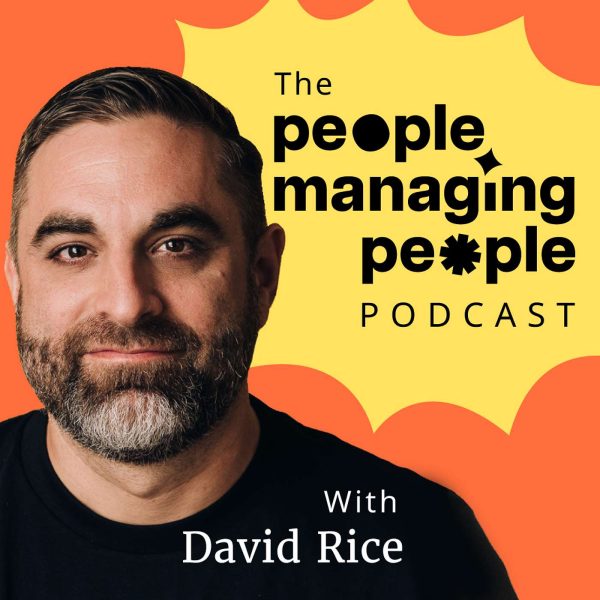
People Managing People
- Folgen
- 218
- Erscheint
- wöchentlich
- Letzte Folge
- 10. Nov. 2026
Über den Podcast
The People Managing People podcast equips forward-thinking leaders to thrive in the AI era—reshaping teams, systems, and strategy without losing what makes work human. Hosted by David Rice, each episode brings real-world insights from innovators, executives, and people leaders on topics like AI in practice, people-first leadership, performance systems, and workplace culture.
Mitwirkende
Folgen 218
Why Human Oversight Isn’t Enough to Keep AI in Check
AI isn't the first technology to promise better decisions by removing messy human judgment. But generative AI brings something different: the ability to sound convincing, authoritative, and remarkably …
Shownotes
AI isn't the first technology to promise better decisions by removing messy human judgment. But generative AI brings something different: the ability to sound convincing, authoritative, and remarkably human. And that makes questioning its recommendations harder than organizations might want to admit.
David Rice sits down with Claire Maiers to explore why context matters more than ever in AI-assisted decision-making, what healthcare's experience with predictive systems can teach business leaders, and how organizations risk quietly redesigning themselves through thousands of automated decisions. The challenge isn't simply keeping humans in the loop. It's building organizations where human judgment still means something.
Related Links:
- Join the People Managing People Community
- Subscribe to the newsletter to get our latest articles and podcasts
- Check out this episode’s sponsor: Teamflect
- Connect with Claire on LinkedIn
Kapitel (12)
How to Manage People Based on Who They Are, Not Just What They Do
We've all taken a workplace personality assessment that tells us something vaguely accurate about ourselves. We read the report, nod along, and promptly forget about it. So why do organizations keep …
Shownotes
We've all taken a workplace personality assessment that tells us something vaguely accurate about ourselves. We read the report, nod along, and promptly forget about it. So why do organizations keep investing in self-awareness tools that rarely change how people actually work?
In this episode of People Managing People, host David Rice sits down with Dr. Jay Harrison, Co-Founder and Director of Behavioral Intelligence at Align, to explore the gap between behavioral insight and meaningful change. They discuss why treating everyone the same isn't necessarily fair, how managers can better understand the people they lead, and how behavioral intelligence can help teams anticipate friction before it becomes a problem. They also confront an important question: When does understanding someone's behavior help them grow, and when does it become another label that limits their potential?
Related Links:
- Join the People Managing People Community
- Subscribe to the newsletter to get our latest articles and podcasts
- Visit Align
Kapitel (9)
Why Improving Productivity Starts With Understanding The Work
Most executives think they understand how work gets done. They've got the org charts, process documents, and dashboards to prove it. The problem? Those neat diagrams bear little resemblance to the work …
Shownotes
Most executives think they understand how work gets done. They've got the org charts, process documents, and dashboards to prove it. The problem? Those neat diagrams bear little resemblance to the work employees actually do. And when organizations start automating processes they don't fully understand, they're just making flawed systems run faster.
In this episode, David Rice speaks with Heidi Farris, CEO of ActivTrak, about the gap between AI adoption and actual business impact. They explore why employee workarounds are often what keep organizations functioning, how AI-driven productivity gains can simply move bottlenecks elsewhere, and why saving time means very little unless someone decides what to do with it.
Related Links:
- Join the People Managing People Community
- Subscribe to the newsletter to get our latest articles and podcasts
- Check out this episode’s sponsor: ActivTrak
- Connect with Heidi on LinkedIn
Kapitel
Kapitel werden geladen …
Should We Still Build Careers Around Deep Specialization?
For decades, career advice has been simple: specialize, build deep expertise, and become indispensable. But what happens when AI makes that expertise accessible to almost anyone? The value of knowing how to do …
Shownotes
For decades, career advice has been simple: specialize, build deep expertise, and become indispensable. But what happens when AI makes that expertise accessible to almost anyone? The value of knowing how to do something is shifting toward knowing what should be done, why it matters, and whether the result is actually any good.
In this episode of People Managing People, host David Rice speaks with Tony Castellanos, Head of People at Nextdoor, about why judgment, curiosity, and taste are becoming critical leadership capabilities. They explore how AI could invert the traditional hierarchy of specialists and generalists, why organizing teams around business problems makes more sense than defending functional boundaries, and what happens when the org chart stops dictating who gets to solve what.
Related Links:
- Join the People Managing People Community
- Subscribe to the newsletter to get our latest articles and podcasts
- Check out this episode’s sponsor: Teamflect
- Connect with Tony on LinkedIn
- Visit Nextdoor
Kapitel
Kapitel werden geladen …
The Human-AI Handoff Is More Complicated Than Companies Think
Most enterprise AI strategies start with the same question: What can we automate? It's a reasonable question if your ambition is to make the existing workplace run faster. It's a much less useful one …
Shownotes
Most enterprise AI strategies start with the same question: What can we automate? It's a reasonable question if your ambition is to make the existing workplace run faster. It's a much less useful one if you're trying to build something better.
In this episode, David Rice speaks with Paula Goldman, Chief Ethical and Humane Use Officer at Salesforce, about why human-AI collaboration demands a different approach to organizational design. They explore the hidden value of workplace friction, why employees need a seat at the table when redesigning work, and the danger of measuring AI success exclusively through efficiency. Because saving time is one thing. Preserving the judgment, relationships, and expertise that make an organization effective is another.
Related Links:
- Join the People Managing People Community
- Subscribe to the newsletter to get our latest articles and podcasts
- Check out this episode’s sponsor: Teamflect
- Connect with Paula on LinkedIn
- Visit Salesforce
Kapitel
Kapitel werden geladen …
How Do You Prove AI ROI When The Return Is Only 1%?
Most companies are still figuring out what an AI agent should actually do. JLL has moved well past that question. With agents operating across facilities management, brand communications, and corporate …
Shownotes
Most companies are still figuring out what an AI agent should actually do. JLL has moved well past that question. With agents operating across facilities management, brand communications, and corporate functions, the company is learning that the hardest problems aren’t necessarily technical—they’re about proving value, building trust, and making sure AI solves an actual business problem instead of becoming another expensive corporate science project.
Recorded at the AI4 conference in Las Vegas—with some of the inevitable conference-floor background noise—this conversation between host David Rice and Carlin Power, Global VP of AI and Platform Technology Enablement at JLL, explores what it actually takes to deploy AI at scale. They discuss why ROI needs to live inside the P&L, how decentralized AI development can accelerate useful innovation, and why eliminating entry-level roles in the name of efficiency may be exactly the wrong lesson to take from AI.
Related Links:
- Join the People Managing People Community
- Subscribe to the newsletter to get our latest articles and podcasts
- Connect with Carlin on LinkedIn
- Visit JLL
Kapitel
Kapitel werden geladen …
Is AI Making Your Employees Worse At Thinking?
Recorded live at the AI4 conference in Las Vegas, this conversation puts David Rice and Dr. Lilian Ajayi Ore—AI lead faculty and lecturer in strategic communication at Columbia University and co-author of The …
Shownotes
Recorded live at the AI4 conference in Las Vegas, this conversation puts David Rice and Dr. Lilian Ajayi Ore—AI lead faculty and lecturer in strategic communication at Columbia University and co-author of The Power of the Learning Mindset—in the middle of one of the biggest questions surrounding workplace AI: Are companies gaining efficiency while quietly weakening their people’s ability to think? With the energy of a live conference comes some background noise, but the discussion cuts through it.
David and Dr. Ore explore cognitive debt, skill decay, and why the usual AI metrics—seats, logins, prompts, adoption rates—say very little about whether workforce capability is actually improving. They discuss the risks of outsourcing judgment and critical thinking, the loss of institutional knowledge when organizations replace people rather than reskill them, and why AI transformation needs to be treated as a talent priority alongside a technology priority. Because faster work isn’t much of a win if the people doing it are slowly losing the skills that made them valuable in the first place.
Related Links:
- Join the People Managing People Community
- Subscribe to the newsletter to get our latest articles and podcasts
- Connect with Lilian on LinkedIn
- Check out Lilian’s book — The Power of the Learning Mindset: How the Best Leaders Foster Curiosity, Develop Innovative Teams, and Achieve Exponential Growth
Kapitel
Kapitel werden geladen …
Are Leaders Trading Future Capability For Short-Term AI Efficiency?
AI may be changing the work, but the bigger risk is what happens when organizations optimize so aggressively for today’s efficiency that they stop building tomorrow’s capability.Recorded live at the AI4 …
Shownotes
AI may be changing the work, but the bigger risk is what happens when organizations optimize so aggressively for today’s efficiency that they stop building tomorrow’s capability.
Recorded live at the AI4 conference in Las Vegas, host David Rice sits down with Dr. Jana Brown, Chief Human Resources Officer at eHealth, to unpack the long-term consequences of shrinking entry-level pipelines, why HR needs “transformation fluency” rather than technical expertise alone, and what separates useful AI initiatives from expensive corporate hobbies. They also explore the human and operating systems that have to move together if transformation is going to stick—and why the technology itself is rarely the thing that sinks an AI project. Listeners may hear a little more conference-floor noise than usual, but that’s the price of capturing these conversations where they’re actually happening.
Related Links:
- Join the People Managing People Community
- Subscribe to the newsletter to get our latest articles and podcasts
- Connect with Jana on LinkedIn
- Check out eHealth
Kapitel
Kapitel werden geladen …
How Do You Automate Recognition Without Making It Feel Automated?
AI in HR has a credibility problem: the technology is getting better at spotting patterns, summarizing data, and automating work, but none of that guarantees a better employee experience. In this conversation …
Shownotes
AI in HR has a credibility problem: the technology is getting better at spotting patterns, summarizing data, and automating work, but none of that guarantees a better employee experience. In this conversation, Motivosity Chief Product Officer Jesse Dowdle and VP of Engineering Dano Gillette make the case for “appreciation intelligence”—using AI to remove administrative friction without automating the human moments that actually make recognition meaningful.
The bigger opportunity isn’t an AI-generated thank-you note. It’s giving HR and frontline managers a richer picture of employees, surfacing signals before problems become crises, and turning data into useful action. But there’s an important line running through the conversation: AI can recommend, filter, moderate, and nudge. Humans still need to own the judgment.
Related Links:
- Join the People Managing People Community
- Subscribe to the newsletter to get our latest articles and podcasts
- Connect with Jesse and Dano on LinkedIn
- Visit Motivosity
Kapitel
Kapitel werden geladen …
What Happens When Employees Stop Speaking Up
When people stay quiet at work, organizations lose more than participation. They lose ideas, warnings, customer insight, process improvements, and market intelligence that never make it into the room. Seema …
Shownotes
When people stay quiet at work, organizations lose more than participation. They lose ideas, warnings, customer insight, process improvements, and market intelligence that never make it into the room. Seema Bhansali calls this the silence tax—the hidden cost companies pay when their environments make self-censorship the safer option.
In this episode, Seema joins David Rice to unpack why “speak up” advice misses the real problem. Employee voice isn’t simply a confidence issue; it’s shaped by systems, social risk, management behavior, and the environments leaders create. They also explore why this matters even more as companies adopt AI, and why communication needs to be treated less like a soft skill and more like an operational capability tied to performance.
Related Links:
- Join the People Managing People Community
- Subscribe to the newsletter to get our latest articles and podcasts
- Check out this episode’s sponsor: TeamPulse
- Connect with Seema on LinkedIn
- Check out evolvEQ Strategies
Kapitel
Kapitel werden geladen …
Why AI Transformation Starts With Organizational Clarity
AI transformation has a funny way of becoming an organizational X-ray. The companies getting real value from it aren’t necessarily the ones buying the most tools or burning the most tokens. They’re the ones …
Shownotes
AI transformation has a funny way of becoming an organizational X-ray. The companies getting real value from it aren’t necessarily the ones buying the most tools or burning the most tokens. They’re the ones that understand what they’re trying to accomplish, what excellence looks like, and which problems are actually worth solving.
In this episode of People Managing People, David Rice speaks with Zapier’s Chief People and AI Transformation Officer, Brandon Sammut, about why AI ROI starts with organizational clarity, how to build experimentation that survives contact with actual workloads, and why adoption eventually needs to give way to impact. They also explore AI coaching, the growing value of judgment and wisdom, and why the best employers may increasingly be defined by how much more capable people become while working there.
Related Links:
- Join the People Managing People Community
- Subscribe to the newsletter to get our latest articles and podcasts
- Connect with Brandon on LinkedIn
- Check out Zapier
Kapitel
Kapitel werden geladen …
How to Turn Employee Engagement Into a Business Case
HR has been told for years to “speak the language of the business,” usually as code for proving it deserves to be in the room. But Dr. Shindale Seale makes a stronger case: this isn’t about self-defense. It’s …
Shownotes
HR has been told for years to “speak the language of the business,” usually as code for proving it deserves to be in the room. But Dr. Shindale Seale makes a stronger case: this isn’t about self-defense. It’s about leadership. If disengagement, poor management, weak culture, and badly handled transformation all carry measurable financial costs, HR needs to connect the human consequences to the numbers executives use to make decisions.
In this episode, host David Rice and Dr. Seale unpack the “disengagement tax,” why engagement metrics without business impact can become little more than dashboard theater, and what it actually means for HR to become bilingual. They also explore the impossible job organizations have created for managers, why AI tends to amplify the culture it lands in, and whether the CHRO role is big enough for the human side of the transformation ahead.
Related Links:
- Join the People Managing People Community
- Subscribe to the newsletter to get our latest articles and podcasts
- Connect with Dr. Shindale on LinkedIn
- Check out SEADE Coaching & Consulting
Kapitel
Kapitel werden geladen …
HR Has the Skills to Lead the AI Era—But Will It?
There are two ways the AI transformation of work can go. We can hand the keys to the efficiency obsessives and spend the next decade trying to engineer the humanity out of organizations. Or HR can recognize …
Shownotes
There are two ways the AI transformation of work can go. We can hand the keys to the efficiency obsessives and spend the next decade trying to engineer the humanity out of organizations. Or HR can recognize that understanding motivation, organizational design, and how people actually experience work is suddenly a strategic advantage—and start acting like it.
Jessica Zwaan, VP of People Strategy and Operations at Leapsome and author of Built For People and Purpose In Work, joins David Rice to talk about why HR has the raw materials to lead this moment, but also some baggage to lose. They get into purpose washing, why not everyone needs a calling disguised as a job, what AI means for early-career development, and why designing better work requires considerably more than putting a mission statement on the wall and hoping everyone believes it.
Related Links:
- Join the People Managing People Community
- Subscribe to the newsletter to get our latest articles and podcasts
- Connect with Jessica on LinkedIn
- Visit Leapsome
Kapitel
Kapitel werden geladen …
What AI Surveillance Can’t Tell You About Your Employees
Nobody sets out to build a workforce surveillance system. It usually arrives dressed up as optimization, productivity, wellness, or efficiency. But as AI makes it possible to monitor everything from keystrokes …
Shownotes
Nobody sets out to build a workforce surveillance system. It usually arrives dressed up as optimization, productivity, wellness, or efficiency. But as AI makes it possible to monitor everything from keystrokes and mouse movements to emotions and physical behavior, the line between legitimate measurement and invasive surveillance gets harder to ignore.
In this episode, I speak with Lynn Parramore, Director of Special Projects at the Institute for New Economic Thinking, about what gets lost when leaders assume everything valuable at work can be measured. We dig into why constant monitoring erodes trust, how algorithms strip context from human behavior, why younger workers have good reason to be skeptical of AI, and why leaders need to get philosophical—not just practical—about where this technology belongs.
Related Links:
- Join the People Managing People Community
- Subscribe to the newsletter to get our latest articles and podcasts
- Connect with Lynn on LinkedIn
- Check out Lynn’s book — Reading the Sphinx: Ancient Egypt in Nineteenth-Century Literary Culture
Kapitel
Kapitel werden geladen …
Why The EU Pay Transparency Directive Is More Than A Compliance Exercise
The EU Pay Transparency Directive isn’t just another reporting requirement. As pay reporting expert Tom Heys puts it, it’s closer to the UK gender pay gap regime “on steroids”—combining organization-wide …
Shownotes
The EU Pay Transparency Directive isn’t just another reporting requirement. As pay reporting expert Tom Heys puts it, it’s closer to the UK gender pay gap regime “on steroids”—combining organization-wide reporting with individual employee rights, restrictions on recruitment practices, and requirements to group jobs of equal value and explain the pay differences within them.
The bigger issue is what happens when organizations are finally required to show their work. Pay transparency exposes weak job architecture, outdated job descriptions, excessive manager discretion, and analytical models nobody can explain. And there’s a broader AI lesson buried in all of this: technology can accelerate analysis, but it can’t absorb accountability. Leaders still have to understand—and defend—the decisions made in their name.
Related Links:
- Join the People Managing People Community
- Subscribe to the newsletter to get our latest articles and podcasts
- Check out this episode’s sponsor: QuickBooks Online
- Connect with Tom on LinkedIn
- Visit Lewis Silkin
Kapitel
Kapitel werden geladen …
Why AI Isn’t Delivering The Productivity Gains We Expected
AI spending continues to hit record highs, yet most organizations are still struggling to translate that investment into better work. In this conversation, David Rice sits down with Ofir Bloch of WalkMe to …
Shownotes
AI spending continues to hit record highs, yet most organizations are still struggling to translate that investment into better work. In this conversation, David Rice sits down with Ofir Bloch of WalkMe to unpack the findings from the State of Digital Adoption 2026 report and explore why the problem isn't model capability—it's everything surrounding it.
From the massive disconnect between what executives believe employees experience and the reality of day-to-day work, to the growing importance of contextual support and workflow orchestration, this episode argues that the companies seeing results aren't necessarily using the smartest AI. They're removing friction faster than everyone else.
Related Links:
- Join the People Managing People Community
- Subscribe to the newsletter to get our latest articles and podcasts
- Connect with Ofir on LinkedIn
- Visit WalkMe
- WalkMe's State of Digital Adoption 2026
Kapitel
Kapitel werden geladen …
The New Leadership Test: What Makes Someone AI-Native?
AI is quickly becoming the new test of executive credibility—but there's a growing gap between leaders who use AI and leaders who've fundamentally rebuilt how they work around it. In this episode …
Shownotes
AI is quickly becoming the new test of executive credibility—but there's a growing gap between leaders who use AI and leaders who've fundamentally rebuilt how they work around it. In this episode, David Rice sits down with JC Christian, President of executive search firm Christian & Timbers, to explore why "AI-enabled" is no longer enough and what it actually means to be AI-native at the executive level.
Together, they unpack how executive hiring is changing, why demonstrating real AI deployment experience now matters more than talking strategy, and why adaptability—not decades of experience alone—is becoming the defining leadership capability. As today's competitive advantage rapidly becomes tomorrow's baseline expectation, leaders in every function will need to rethink not just the tools they use, but how they lead.
Related Links:
- Join the People Managing People Community
- Subscribe to the newsletter to get our latest articles and podcasts
- Connect with JC on LinkedIn
- Visit Christian & Timbers
Kapitel
Kapitel werden geladen …
Why Traditional AI Risk Frameworks Are Breaking Down
AI adoption isn't slowing down—and neither are the risks. The challenge isn't that organizations don't know AI can create problems. It's that employees are already using it in ways leaders …
Shownotes
AI adoption isn't slowing down—and neither are the risks. The challenge isn't that organizations don't know AI can create problems. It's that employees are already using it in ways leaders can't fully anticipate, while governance models built for yesterday's technology struggle to keep pace.
In this episode, David Rice sits down with AI ethics expert and The Ethical Nightmare Challenge author Reid Blackman to explore why traditional AI governance is falling behind the rise of generative and agentic AI. Rather than treating ethics as a bureaucratic exercise or a brake on innovation, Reid argues that the organizations moving fastest are the ones that learn how to identify potential "nightmares" before they become public failures. The conversation offers a practical framework leaders can begin using immediately—without waiting for enterprise-wide policies or perfect alignment.
Related Links:
- Join the People Managing People Community
- Subscribe to the newsletter to get our latest articles and podcasts
- Connect with Reid on LinkedIn
- Visit Virtue Consultants
- Check out Reid’s book – "The Ethical Nightmare Challenge: How to Avoid the Worst of AI"
Kapitel
Kapitel werden geladen …
The Team Habit That Separates High Performers From Everyone Else
AI isn't creating high-performing teams—it’s exposing the difference between teams that already know how to work well together and those that don’t. In this episode, David Rice sits down with social …
Shownotes
AI isn't creating high-performing teams—it’s exposing the difference between teams that already know how to work well together and those that don’t. In this episode, David Rice sits down with social psychologist and Superteams author Ron Friedman to unpack new research on what separates the top 8% of teams from everyone else. The conversation challenges the assumption that AI is a universal productivity boost, revealing instead how it can amplify poor habits, deepen burnout, and create false confidence when used without judgment.
They also explore why the best teams protect focus over busyness, replace brainstorming with brainwriting, rethink meetings entirely, and create cultures where experimentation—not perfection—drives performance. If you're leading people through the AI era, this episode offers a practical blueprint for building stronger teams instead of simply working faster.
Related Links:
- Join the People Managing People Community
- Subscribe to the newsletter to get our latest articles and podcasts
- Connect with Ron on LinkedIn
- Check out Ron’s website and book “Superteams”
- Free masterclass and discussion guide
Kapitel
Kapitel werden geladen …
Why AI Usage Reports Don’t Mean Much
AI transformation doesn't fail because the technology isn't good enough. It fails because organizations try to layer it on top of cultures that were already struggling with trust, learning …
Shownotes
AI transformation doesn't fail because the technology isn't good enough. It fails because organizations try to layer it on top of cultures that were already struggling with trust, learning, experimentation, and leadership. In this conversation, David Rice sits down with Meagan Bond, Founder and CEO of The Human Method, to unpack why psychological readiness—not technical readiness—is the real foundation of successful AI adoption.
Together they explore the hidden costs of dysfunctional culture, why managers play an outsized role in determining whether AI succeeds or fuels burnout, and why organizations chasing quick AI wins often undermine their long-term competitive advantage. If culture is treated as an afterthought instead of infrastructure, AI simply accelerates the problems that were already there.
Related Links:
- Join the People Managing People Community
- Subscribe to the newsletter to get our latest articles and podcasts
- Connect with Meagan on LinkedIn
- Visit The Human Method
Kapitel
Kapitel werden geladen …
Your Best Candidate Might Have The Worst Resume
Resumes still matter—but not for the reasons we think. In a world where AI can polish anyone’s experience into a compelling narrative, the traditional hiring signals many organizations have relied on are losing …
Shownotes
Resumes still matter—but not for the reasons we think. In a world where AI can polish anyone’s experience into a compelling narrative, the traditional hiring signals many organizations have relied on are losing their value. Heather Krueger, Chief People Officer at Engine, joins David Rice to explore what comes next when a polished resume becomes proof of tool usage rather than proof of talent.
Their conversation challenges hiring leaders to rethink where and how they evaluate candidates, shifting from credentials and company logos toward judgment, learning velocity, resilience, and real-world decision-making. They also unpack why pedigree is often an expensive shortcut, how experimentation should influence both hiring and leadership, and what actually predicts success in an AI-driven workplace.
Related Links:
- Join the People Managing People Community
- Subscribe to the newsletter to get our latest articles and podcasts
- Connect with Heather on LinkedIn
- Visit Engine
Kapitel
Kapitel werden geladen …
AI Is Forcing Everyone To Become Their Own Economy
AI isn’t arriving as a gradual workplace evolution—it’s arriving as a societal shift that many leaders are still struggling to describe honestly. In this conversation, David Rice sits down with Leap Academy …
Shownotes
AI isn’t arriving as a gradual workplace evolution—it’s arriving as a societal shift that many leaders are still struggling to describe honestly. In this conversation, David Rice sits down with Leap Academy founder and CEO Ilana Golan to explore what happens when skills expire in one to two years, organizations expect dramatically higher productivity, and career stability becomes the exception rather than the rule.
Together, they unpack why adaptability is becoming the defining professional skill, how portfolio careers may become a necessity rather than a choice, and why the future belongs to people who can continuously reinvent themselves. From the “pattern interrupt” needed to escape career pigeonholes to the practical 5-5-5 framework for making faster decisions, this episode offers a candid look at what it will take to stay relevant in an era of relentless change.
Related Links:
- Join the People Managing People Community
- Subscribe to the newsletter to get our latest articles and podcasts
- Connect with Ilana on LinkedIn
- Visit Leap Academy
Kapitel
Kapitel werden geladen …
Why Making Employees Work The Same Way Backfires
David Kolbe argues that most organizations are only measuring two-thirds of what drives performance. We assess what people know (skills) and how they tend to behave (personality), but often ignore how they …
Shownotes
David Kolbe argues that most organizations are only measuring two-thirds of what drives performance. We assess what people know (skills) and how they tend to behave (personality), but often ignore how they instinctively take action. That missing piece—what Kolbe calls conation—shapes how people gather information, solve problems, make decisions, and navigate uncertainty.
In this conversation, David Rice and David Kolbe explore why burnout is often a mismatch problem rather than a motivation problem, why high-performing employees can be the most at risk of quietly disengaging, and why leaders who want better results may need to stop trying to standardize how work gets done and focus more on creating environments where different working styles can thrive.
Related Links:
- Join the People Managing People Community
- Subscribe to the newsletter to get our latest articles and podcasts
- Connect with David on LinkedIn
- Visit Kolbe Corp
- Check out David’s book: Do More, More Naturally
Kapitel
Kapitel werden geladen …
AI Is Rewarding The Loudest Employees
Most reward systems were built for a world where speed, volume, and visible output were reliable signals of performance. But AI now produces all three at scale. That leaves organizations facing an uncomfortable …
Shownotes
Most reward systems were built for a world where speed, volume, and visible output were reliable signals of performance. But AI now produces all three at scale. That leaves organizations facing an uncomfortable question: if AI can generate more output than ever, what exactly are you rewarding?
In this episode, David Rice sits down with Anju Choudhary, Chief People Officer at Xoxoday, to explore why recognition systems need a redesign for the AI era. They discuss the growing gap between productivity and impact, the importance of recognizing human-centered behaviors like judgment and collaboration, and why the most important question leaders can ask isn't "What do we want people to do?" but "What do we want people to feel?"
Related Links:
- Join the People Managing People Community
- Subscribe to the newsletter to get our latest articles and podcasts
- Connect with Anju on LinkedIn
- Visit Xoxoday
Kapitel
Kapitel werden geladen …
Your Employees Stop Thinking The Moment They Feel Unsafe
What if the leadership skills we've spent decades rewarding are no longer the ones that matter most?In this conversation, mediator, peacemaker, and author Douglas Noll argues that AI is making critical …
Shownotes
What if the leadership skills we've spent decades rewarding are no longer the ones that matter most?
In this conversation, mediator, peacemaker, and author Douglas Noll argues that AI is making critical thinking, emotional intelligence, and human connection more valuable—not less. As technology takes over more analytical work, leaders who can regulate trust, create psychological safety, and keep people engaged will have a growing advantage.
Doug challenges some of the deepest assumptions in modern management, including the idea that people are primarily rational actors. From emotional contagion in the workplace to the three questions every nervous system is constantly asking, this discussion explores why leadership in the AI era may be less about technical expertise and more about understanding human behavior.
Related Links:
- Join the People Managing People Community
- Subscribe to the newsletter to get our latest articles and podcasts
- Connect with Douglas on LinkedIn
- Check out Douglas’ website
- Visit Noll Associates
Kapitel
Kapitel werden geladen …
AI Saved Oyster’s HR Team 400+ Hours a Year — Here’s How
AI promises efficiency, but the real question is what teams do with the time they get back. In this conversation from Transform in Las Vegas, Oyster’s Erin Goodey joins David Rice to unpack how global HR teams …
Shownotes
AI promises efficiency, but the real question is what teams do with the time they get back. In this conversation from Transform in Las Vegas, Oyster’s Erin Goodey joins David Rice to unpack how global HR teams are balancing automation with human connection—especially when managing distributed workforces across countries, compliance requirements, and sensitive employee situations.
Erin shares how Oyster is using AI to eliminate repetitive administrative work, freeing HR teams to focus on the moments that actually require empathy, judgment, and strategic thinking. From global expansion challenges to the evolving role of HR business partners, this episode explores what “human-centric” HR really looks like in an AI-enabled workplace.
Related Links:
- Join the People Managing People Community
- Subscribe to the newsletter to get our latest articles and podcasts
- Connect with Erin on LinkedIn
- Visit Oyster HR
Kapitel
Kapitel werden geladen …
Is Leadership Experience Becoming a Liability?
Most leaders think they’re navigating another wave of disruption. Sara Loncka argues we’re in something far more unsettling: discontinuity. The old assumptions don’t just need tweaking—they’ve stopped working …
Shownotes
Most leaders think they’re navigating another wave of disruption. Sara Loncka argues we’re in something far more unsettling: discontinuity. The old assumptions don’t just need tweaking—they’ve stopped working altogether. Past experience, the thing leaders have spent entire careers building confidence around, is suddenly less reliable as a guide for the future. And that’s creating a strange kind of friction: teams keep pushing harder with familiar playbooks while the terrain underneath them quietly changes shape.
In this conversation, David Rice and Sara unpack why experienced leaders are often the most vulnerable in moments like this, how organizations get trapped by expertise, and why the future of strategy looks less like certainty and more like continuous inquiry. They also explore collective intelligence, learning agility, and why redesigning work now requires leaders to think more like designers than operators.
Related Links:
- Join the People Managing People Community
- Subscribe to the newsletter to get our latest articles and podcasts
- Connect with Sara on LinkedIn
- Visit Experience Institute and NYU Stern
Kapitel
Kapitel werden geladen …
Fewer Jobs, Higher Pay: The AI Compensation Paradox
Kyle Holm has spent 25 years advising companies on compensation, and right now he’s watching the logic of corporate hierarchy break in real time. Not because executives suddenly discovered organizational …
Shownotes
Kyle Holm has spent 25 years advising companies on compensation, and right now he’s watching the logic of corporate hierarchy break in real time. Not because executives suddenly discovered organizational theory, but because AI is collapsing the distance between capability and influence. The old model—slow progression through management layers, credential accumulation, carefully staged promotions—is running into a technology that rewards direct value creation instead. And executives are noticing.
In this conversation from Transform Las Vegas, Kyle and David unpack what happens when AI-native companies stop hiring “mid-level” talent altogether, why compensation systems built on titles and tenure are struggling to keep up, and how the next generation of workers may leapfrog traditional career ladders entirely. It’s a conversation about compensation on the surface, but underneath it’s really about power: who gets heard, who creates leverage, and who gets left behind when organizations flatten faster than expected.
Related Links:
- Join the People Managing People Community
- Subscribe to the newsletter to get our latest articles and podcasts
- Connect with Kyle on LinkedIn
- Visit Sequoia Consulting Group
Kapitel
Kapitel werden geladen …
Community Is the New Buzzword—But We’re Doing It Wrong
Most companies say they’re building community. What they often mean is: they launched a Slack channel no one reads, hosted an event with a neon sign and a DJ, watched people post about it on Instagram, and …
Shownotes
Most companies say they’re building community. What they often mean is: they launched a Slack channel no one reads, hosted an event with a neon sign and a DJ, watched people post about it on Instagram, and called the whole thing a success. Meanwhile, the people in the room never actually connected.
In this episode, David sits down with Jessie Jacob, Culture First Community Manager at Culture Amp, to unpack why relational atrophy is becoming one of the defining workplace problems of the AI era. Jessie manages a global community of more than 100,000 people, and her argument is simple: if people don’t feel safe, welcomed, or genuinely connected, no amount of “community strategy” will save you. In a world increasingly optimized for efficiency, automation, and performative engagement, human connection is quickly becoming the real competitive advantage.
Related Links:
- Join the People Managing People Community
- Subscribe to the newsletter to get our latest articles and podcasts
- Connect with Jessie on LinkedIn
- Visit Culture Amp
Kapitel
Kapitel werden geladen …
AI Is Making People Decisions Worse—Here’s Why
AI is speeding up people decisions at exactly the moment those decisions require more care, more context, and frankly, more humility. In this episode, Matt Poepsel from The Predictive Index joins David Rice at …
Shownotes
AI is speeding up people decisions at exactly the moment those decisions require more care, more context, and frankly, more humility. In this episode, Matt Poepsel from The Predictive Index joins David Rice at Transform to unpack the growing gap between what AI can do and what organizations actually understand about the people data they’re feeding into it. Because while everyone is obsessed with automation, agents, and productivity gains, most managers still don’t know how to ask the most important question: “Do we actually have the right context for this decision?”
The conversation digs into the uncomfortable reality underneath modern workplace AI adoption. Companies are compressing timelines because AI can generate outputs faster, but they’re still operating from old assumptions about productivity, management, and collaboration. The result? Burnout, shallow decision-making, and what Matt calls “work slop” — endless AI-generated summaries, presentations, and outputs that create distance between people while pretending to improve teamwork. The deeper challenge isn’t technological. It’s behavioral. And most organizations still aren’t equipped to deal with that.
Related Links:
- Join the People Managing People Community
- Subscribe to the newsletter to get our latest articles and podcasts
- Connect with Matt on LinkedIn
- Visit The Predictive Index
Kapitel
Kapitel werden geladen …
Hier stehen die neuesten 40 von 218 Folgen. Ältere Folgen findest du im Feed des Podcasts.
Ähnliche Podcasts
Mehr Bildung-Podcasts



Ist das dein Podcast?
Bestätige es mit einem Eintrag in deinem Feed: Du bekommst hier einen Code, trägst ihn als podcast:txt in den Kanal deines Feeds ein, und wir prüfen ihn. Danach steht dein Podcast als „verifiziert“ bei SoundNode.