

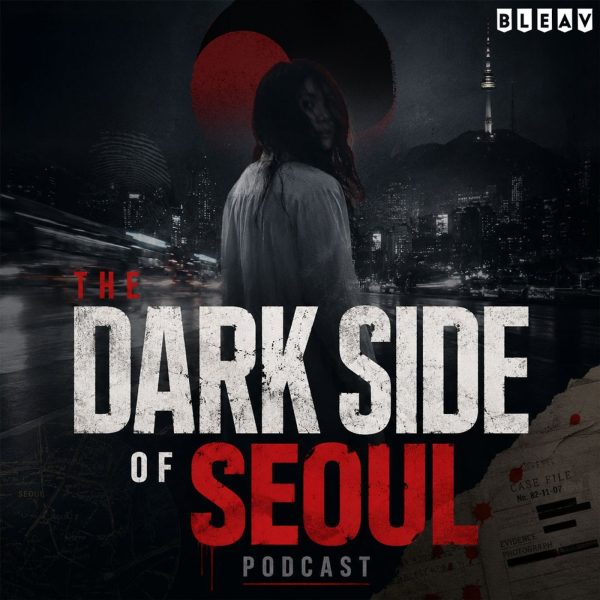
The Dark Side of Seoul Podcast
- Folgen
- 330
- Erscheint
- alle zwei Wochen
- Letzte Folge
- 13. Nov. 2026
Über den Podcast
Korean dark history, ghost tales, folklore, serial killers, true crime, and more. You are about to discover why Korea has the spookiest stories and darkest history.Folklorist Shawn and history buff Joe delve into Korea's gruesome stories of massacres, betrayals, and blood. It's like "Game of Thrones" in Asia. We share our passion for Korea and its struggles throughout time. If you enjoy shows like "Kingdom," this is the podcast for you. Even if you know nothing about Korea, its history will become your new addiction.Subscribe, sit back, and enjoy.
Folgen 330
Fall of Joseon, part 20: Drought, Fire, and Rebellion
The Fall of Joseon, Part 20 (1800-1812) Queen Dowager Jeongsun’s regency is over, and the Andong Kims have the court in their pocket. Out in the countryside, things are falling apart. New farming methods let …
Shownotes
The Fall of Joseon, Part 20 (1800-1812)
Queen Dowager Jeongsun’s regency is over, and the Andong Kims have the court in their pocket. Out in the countryside, things are falling apart. New farming methods let wealthy landowners swallow smaller farms. Droughts hit almost every year of King Sunjo’s reign, followed by floods, epidemics and fires that wiped out thousands of homes. In the north, a region Seoul had looked down on for centuries, a marginalized scholar named Hong Gyeongrae put together a crew of wealthy outsiders and an army of miners and launched the biggest rebellion of the era.
Joe and Shawn cover the social and economic pressures behind the revolt, the people who financed and led it, how quickly it spread, how brutally it ended, and why calling it a “peasant rebellion” may miss what actually happened.
Topics discussed:
The Andong Kims and sedo jeongchi
Wealthy commoners without status and literati without prospects
Rice transplanting, ridge-and-furrow plowing and land consolidation
Drought, flood, epidemic and fire under King Sunjo
The later fate of King Sunjo’s royal portrait
Anti-northern prejudice in Joseon
Hong Gyeongrae, Kim Changsi, U Gunchik, Yi Huijeo and Na Daegon
The rebellion of 1811 to 1812 and its aftermathTimestamps
00:00 Intro and tour news
06:15 The Fall of Joseon, Part 20
06:56 Previously on Fall of Joseon
09:26 Growing political and social discontent
10:21 Farming technology and displaced peasants
11:37 Droughts, floods, epidemics and fires
13:14 The strange fate of King Sunjo’s portrait
15:13 Anti-northern prejudice
19:21 Hong Gyeongrae’s Rebellion
22:02 The uprising spreads
22:59 The rebellion is crushed
23:46 Why it failed
25:25 Aftermath and the 1812 coup plot
26:08 Support the show
27:14 What’s coming in the Fall of JoseonWebsite and Ghost Walk tours: https://darksideofseoul.com
Patreon: https://patreon.com/darksideofseoul
Contact: [email protected]Music: Seoraksan by Jeju Digital (Bandcamp)
About the Podcast
The Dark Side of Seoul explores Korea’s hidden history, true crime, folklore, ghost stories, urban legends, disasters, political scandals, and the strange corners of Korean culture that rarely make it into guidebooks. Hosted by long-time Korea residents Joe McPherson and Shawn Morrissey, the show blends historical research, cultural analysis, and firsthand experience to examine the people, events, beliefs, and mysteries that have shaped the Korean peninsula.Some episodes take deep dives into forgotten historical events, serial killers, political intrigue, and supernatural traditions. Others tackle current events and unusual news stories through our shorter ‘Fun Sized’ episodes, connecting today’s headlines to larger patterns in Korean society.
Whether we’re discussing Joseon-era conspiracies, haunted mountains, cults, disasters, ghost encounters, or modern social issues, our goal is always the same: to explore the darker side of Korea with curiosity, skepticism, and historical context.
Hosted by Simplecast, an AdsWizz company. See pcm.adswizz.com for information about our collection and use of personal data for advertising.
Korean Ghost Stories 2026
Korean Ghost Stories 2026, The Dark Side of Seoul’s annual ghost-story episode, returns with four stories spanning five centuries. Shawn tells a tale from the 1525 Yongjae Chonghwa about a fortune-telling ghost …
Shownotes
Korean Ghost Stories 2026, The Dark Side of Seoul’s annual ghost-story episode, returns with four stories spanning five centuries. Shawn tells a tale from the 1525 Yongjae Chonghwa about a fortune-telling ghost living in a noble household’s crossbeams and explains why its real target was the Joseon aristocracy. Joe reads two modern stories from Korean horror message boards, one about a girl outside a rural window in midwinter and one about a woman peering around a funeral hall door. Shawn closes with an alleged true haunting recorded by a Buddhist monk, involving a crowded inn near the border in Gangwon-do and three figures that followed a man home.
Content note: the Gangwon-do account includes references to a suicide attempt and an alleged murder-suicide.
Topics discussed: Shawn’s “I Hate Spooky Season” essay and why the term bugs him Travel writers, influencers and free stuff The Yongjae Chonghwa, Seong Hyeon and a ghost that exposes a secret Joseon household gods and the Seongju in the roof beams The Handprints Inside the Window Why ghost children land across cultures An alleged 1990s haunting in Gangwon-do What shamans charge, and what that says about folk religion The Woman at the Funeral Hall Door How Korean urban legends spread online
Timestamps: 00:00:06 Welcome, masks and costumes 00:02:33 Shawn’s Substack and “I Hate Spooky Season” 00:04:58 Influencers and free stuff 00:08:18 Four stories for Korean Ghost Stories 2026 00:11:40 The Yongjae Chonghwa and Seong Hyeon 00:16:56 The ghost and the missing hairpin 00:20:19 Why the story was a warning to the nobility 00:24:38 The Seongju and the crossbeams 00:26:06 The Handprints Inside the Window 00:30:09 Why children are creepy, and M.R. James 00:34:08 An alleged haunting in Gangwon-do 00:48:13 Shamans, exorcisms and what they charge 00:57:37 Korea 40 years ago and the old-timers who remember it 01:00:50 The Woman at the Funeral Hall Door 01:05:13 Where these stories come from 01:08:34 The Ghost Walk, plugs and goodbyes
Mentioned in this episode: Yongjae Chonghwa, by Seong Hyeon (published 1525) Shawn’s Substack, Welcome to Savage Hollar, including “I Hate Spooky Season” and the series “Not the Korean Ghosts You May Know” Supernatural Encounters in South Korea, by Shawn Morrissey Lost Hearts and Ghost Stories of an Antiquary, by M.R. James The Haunting of Hill House, by Shirley Jackson The Old Dark House (1932) Joe’s stories are adapted from anonymous accounts on Korean horror sites. The Handprints Inside the Window and The Woman at the Funeral Hall Door are from a 2021 repost on the blog 내돈내산 (ndns.tistory.com/213), credited there to MSKA Audio. The ZenKimchi Food and Travel Podcast
Dark Side of Seoul Ghost Walk: darksideofseoul.com Contact: [email protected]
About the podcast: The Dark Side of Seoul explores Korea’s hidden history, true crime, folklore, ghost stories, urban legends, disasters, political scandals, and the strange corners of Korean culture that rarely make it into guidebooks. Hosted by long-time Korea residents Joe McPherson and Shawn Morrissey, the show blends historical research, cultural analysis, and firsthand experience to examine the people, events, beliefs, and mysteries that have shaped the Korean peninsula.
Some episodes take deep dives into forgotten historical events, serial killers, political intrigue, and supernatural traditions. Others tackle current events and unusual news stories through our shorter ‘Fun Sized’ episodes, connecting today’s headlines to larger patterns in Korean society.
Whether we’re discussing Joseon-era conspiracies, haunted mountains, cults, disasters, ghost encounters, or modern social issues, our goal is always the same: to explore the darker side of Korea with curiosity, skepticism, and historical context.
Hosted by Simplecast, an AdsWizz company. See pcm.adswizz.com for information about our collection and use of personal data for advertising.
Ghost Science
Can a place remember? In this episode, Shawn answers a listener question from his Seoul ghost walk and explains stone tape theory, the idea that ghosts may be imprinted memories rather than the souls of the …
Shownotes
Can a place remember? In this episode, Shawn answers a listener question from his Seoul ghost walk and explains stone tape theory, the idea that ghosts may be imprinted memories rather than the souls of the dead. He applies it to two encounters on the grounds of Gyeonghuigung Palace: a boy in white hanbok who plays around a nearly 400-year-old zelkova tree, and a sudden, unexplained smell of burning hair and flesh that stopped an entire tour group in 2018.
Topics discussed:
What stone tape theory and the electrical impulse wave theory claim
Why cultural explanations don’t tell us what ghosts are
Psychometry in pop culture, from The Dead Zone to Millennium to Chew
Why ghosts that don’t know they’re dead might be the safest kind
EVP, ghost apps, and why Shawn isn’t buying them
The 2018 smell on the Gyeonghuigung grounds and the search for its source
Gyeonghuigung’s fire history and its 19th-century decline
The woman in the Ikseon-dong alleyTimestamps:
00:00 Intro and a question from a ghost walk guest
02:07 What stone tape theory is
03:05 Why culture doesn’t explain ghosts
05:00 Ghosts as imprinted memories, and psychometry
06:26 The Dead Zone, Chew, Millennium, and Key and Peele
09:17 Murder, joy, and memories in the landscape
12:06 The electrical impulse wave theory
14:32 Where the theory breaks down
15:01 EVP and ghost apps
16:20 The zelkova tree at Gyeonghuigung
17:48 New sightings since Shawn’s book
20:07 Ghosts that don’t know they’re dead, han and won
22:34 Bonus story: Gyeonghuigung, 2018
24:00 Palace renovations and the old concrete slab
27:29 The smell
30:24 Ruling out fire, smoke, and wind
32:20 Searching the palace’s fire history
35:15 Gyeonghuigung, Gwanghaegun, and the Mulberry Palace
38:27 Memory or ghost?
39:58 The woman in the Ikseon-dong alley
41:30 Wrap-up, Substack, and ZenKimchi Travel and Food podcastMentioned in this episode:
Our earlier episodes “The Problem with Korean Ghosts,” on Gyeonghuigung, and on Gwanghaegun
Shawn’s Substack article “A Lingering Scent of Ghosts” on Welcome to Savage Hollar
ZenKimchi Travel and Food podcast
The Dead Zone, Millennium, Chew, Key and Peele
Folklorist George GommeSupport the show and get extra content: patreon.com/darksideofseoul
Website and merch: darksideofseoul.com
Contact: [email protected]
Find us on Instagram and Facebook as Dark Side of Seoul.About the Podcast
The Dark Side of Seoul explores Korea’s hidden history, true crime, folklore, ghost stories, urban legends, disasters, political scandals, and the strange corners of Korean culture that rarely make it into guidebooks. Hosted by long-time Korea residents Joe McPherson and Shawn Morrissey, the show blends historical research, cultural analysis, and firsthand experience to examine the people, events, beliefs, and mysteries that have shaped the Korean peninsula.Some episodes take deep dives into forgotten historical events, serial killers, political intrigue, and supernatural traditions. Others tackle current events and unusual news stories through our shorter ‘Fun Sized’ episodes, connecting today’s headlines to larger patterns in Korean society.
Whether we’re discussing Joseon-era conspiracies, haunted mountains, cults, disasters, ghost encounters, or modern social issues, our goal is always the same: to explore the darker side of Korea with curiosity, skepticism, and historical context.
Hosted by Simplecast, an AdsWizz company. See pcm.adswizz.com for information about our collection and use of personal data for advertising.
Slaves, Bastards, and Bureaucrats | The Fall of Joseon, Part 19 (1801-1803)
King Jeongjo is barely in the ground and his entire reform project is already under threat. This episode covers 1801–1803: the regency of Queen Dowager Jeongsun, two significant but fatally incomplete reform …
Shownotes
King Jeongjo is barely in the ground and his entire reform project is already under threat. This episode covers 1801–1803: the regency of Queen Dowager Jeongsun, two significant but fatally incomplete reform measures, and the beginning of the Andong Kim clan’s century-long stranglehold on the Joseon court.
Topics covered:
- The political situation Queen Dowager Jeongsun inherited when the eight-year-old King Sunjo took the throne
- The emancipation of 66,067 public government slaves in January 1801 — and why private slavery was left entirely untouched
- The 1801 law allowing men born out of wedlock to sit the gwageo civil service examination — and the institutional resistance that made the law almost meaningless until 1823
- The gwageo’s centuries-long history of elite gatekeeping, legacy admissions, and the growing divide between well-connected city families and rural candidates
- The rise of the Andong Kim clan as Joseon’s ultimate power brokers
- Sedo jeongchi — government-by-in-law — and how King Sunjo’s marriage to Kim Jo-sun’s daughter handed the Andong Kims the keys to the entire administrative apparatus
- The end of Jeongsun’s regency in December 1803, and what it actually changed (not much)
- The seeds of the Donghak movement and the rebellions that are coming
Resources mentioned:
- ZenKimchi Korea Food and Travel Podcast (Joe McPherson)
- Welcome to Savage Holler Substack (Shawn Morrissey) — soju article
Website: darksideofseoul.com
Email: [email protected]
Available on all major podcast platformsAbout the Podcast
The Dark Side of Seoul explores Korea’s hidden history, true crime, folklore, ghost stories, urban legends, disasters, political scandals, and the strange corners of Korean culture that rarely make it into guidebooks. Hosted by long-time Korea residents Joe McPherson and Shawn Morrissey, the show blends historical research, cultural analysis, and firsthand experience to examine the people, events, beliefs, and mysteries that have shaped the Korean peninsula.
Some episodes take deep dives into forgotten historical events, serial killers, political intrigue, and supernatural traditions. Others tackle current events and unusual news stories through our shorter “Fun Sized” episodes, connecting today’s headlines to larger patterns in Korean society.
Whether we’re discussing Joseon-era conspiracies, haunted mountains, cults, disasters, ghost encounters, or modern social issues, our goal is always the same: to explore the darker side of Korea with curiosity, skepticism, and historical context.
Hosted by Simplecast, an AdsWizz company. See pcm.adswizz.com for information about our collection and use of personal data for advertising.
The History of Korean Horror
Joe and Shawn are joined by Justin Kyle, co-host of the weekly horror film podcast Straight Chilling, for a decade-by-decade guide to Korean horror cinema. Starting from a lost 1924 silent film made under …
Shownotes
Joe and Shawn are joined by Justin Kyle, co-host of the weekly horror film podcast Straight Chilling, for a decade-by-decade guide to Korean horror cinema. Starting from a lost 1924 silent film made under Japanese occupation and running through Na Hong-jin's divisive 2024 creature feature, Justin leads a structured tour of the films, directors, themes, and historical forces that shaped one of world cinema's most distinctive horror traditions.
Guest
Justin Kyle, Straight Chilling Podcast
straightchilling.com
Also writes for koreanfilm.org and Korea TimesTopics discussed
The 1924 silent horror film adaptation of the Tale of Two Sisters, made during Japanese occupation around the same time as Nosferatu and The Cabinet of Dr. Caligari, now a lost film
The Korean Film Archive's YouTube channel and Blu-ray releases for older films, and the ongoing problem of lost or damaged Korean films even from relatively recent decades
Why Korean horror rarely produces slashers, monster films, or vampire stories, and what it produces instead
The femme fatale and the vengeful female ghost as recurring figures in Korean horror, and the argument that these women have genuine narrative agency rather than existing simply as threats to be defeated
The 1960s as the first golden age of Korean horror, and the unusually high cinematographic quality of films from that era
How Park Chung-hee's nationalist cultural policies in the 70s inadvertently created a boom in shaman-themed cinema
The censorship era of the 70s and 80s, what it did to Korean filmmaking, and why the 80s produced so few horror films
The shamanism film tradition in Korean cinema and why claims that it is a new trend are wrong
Whispering Corridors (1998) as the beginning of the second golden age of Korean horror
Why the end of censorship in the mid-to-late 90s unlocked a new era of ambitious Korean filmmaking
The Quiet Family, A Tale of Two Sisters, The Host, and Thirst as the peak of 2000s Korean horror
The debate over whether Park Chan-wook or Bong Joon-ho is the better filmmaker
Train to Busan and the argument about whether it is a great zombie film, a mediocre horror film, or an accessible action film that Koreans don't even classify as horror
The Wailing as the conclusion of the second golden age
Seire (2021) as the best Korean horror film of the current decade, and the Korean folk traditions around birth and death it draws on
Exhuma and what happens when horror films prioritize accessibility over atmosphere
Na Hong-jin's Hope and why it's deeply divisive
The Netflix and K-pop effect on Korean cinema and the argument that chasing international accessibility has drained the daring out of mainstream Korean horror
A Halloween party on October 24, 2026 at Dyson Comics Cafe in Seoul with horror board games, movie trivia, and a Halloween magic show
Korean horror film timeline by decade
Korean Horror Film Timeline by Decade Silent Era1924 — Untitled Tale of Two Sisters adaptation — director unknown — lost film
1960s
1960 — The Housemaid (하녀) — Kim Ki-young
1960 — Madam White Snake (백사부인) — Shin Sang-ok
1964 — The Evil Stairs / The Devil's Stairway (마의 계단) — Lee Man-hee
1965 — A Bloodthirsty Killer / Devilish Homicide (살인마) — Yi Yong-min
1967 — Public Cemetery Under the Moon (월하의 공동묘지) — Kwon Cheol-hwi
1967 — Yongary, Monster from the Deep (대괴수 용가리) — Kim Kee-duk
1969 — The Devil and the Beauty (악마와 미녀) — Yi Yong-min1970s
1970 — Ghosts of Joseon (이조괴담) — Shin Sang-ok
1975 — The Man with Two Faces (공포의 이중인간) — Yi Yong-min
1977 — Io Island / Ieodo (이어도) — Kim Ki-young
1978 — A Woman Chasing a Killer Butterfly (살인나비를 쫓는 여자) — Kim Ki-young
1979 — The Divine Bough (신궁) — Im Kwon-taek1980s
1981 — Suddenly in the Dark / Suddenly at Midnight (깊은 밤 갑자기) — Go Yeong-nam
1981 — The Hut (피막) — Lee Doo-yong
1981 — A Monstrous Corpse (괴시) — Kang Beom-gu
1982 — Dracula in a Coffin — director unconfirmed1990s
1995 — 301, 302 (삼공일 삼공이) — Park Chul-su
1997 — The Hole — director unconfirmed
1998 — Whispering Corridors (여고괴담) — Park Ki-hyung
1998 — The Quiet Family (조용한 가족) — Kim Jee-woon
1999 — Memento Mori (여고괴담 두번째 이야기) — Kim Tae-yong and Min Kyu-dong
1999 — The Ring Virus (링) — Kim Dong-bin
1999 — Tell Me Something (텔 미 썸딩) — Chang Yoon-hyun
1990s — Deep Scratch — director unconfirmed2000s
2001 — Sorum (소름) — Yoon Jong-chan
2003 — A Tale of Two Sisters (장화, 홍련) — Kim Jee-woon
2004 — R-Point (알 포인트) — Kong Su-chang
2006 — The Host (괴물) — Bong Joon-ho
2009 — Thirst (박쥐) — Park Chan-wook2010s
2010 — I Saw the Devil (악마를 보았다) — Kim Jee-woon
2010 — Bedevilled (김복남 살인사건의 전말) — Jang Cheol-su
2012 — Horror Stories (무서운 이야기) — Min Kyu-dong, Jung Bum-shik, Hong Ji-young, Kim Gok and Kim Sun, Lim Dae-woong
2015 — The Silenced (경성학교: 사라진 소녀들) — Lee Hae-young
2016 — Train to Busan (부산행) — Yeon Sang-ho
2016 — The Wailing (곡성) — Na Hong-jin2020s
2021 — Seire (세이레) — Park Kang
2022 — The Fifth Thoracic Vertebra — Park Se-young
2024 — Exhuma / Pamyo (파묘) — Jang Jae-hyun
2024 — Hopeu (호프) — Na Hong-jinResources mentioned
Straight Chilling Podcast: straightchilling.com
Korean film database: koreanfilm.org
Korean Film Archive YouTube: Korean Classic Film
Korea Times film coverage: search Justin KyleTimestamps not available for this episode.
About the podcast
The Dark Side of Seoul explores Korea's hidden history, true crime, folklore, ghost stories, urban legends, disasters, political scandals, and the strange corners of Korean culture that rarely make it into guidebooks. Hosted by long-time Korea residents Joe McPherson and Shawn Morrissey, the show blends historical research, cultural analysis, and firsthand experience to examine the people, events, beliefs, and mysteries that have shaped the Korean peninsula.
Some episodes take deep dives into forgotten historical events, serial killers, political intrigue, and supernatural traditions. Others tackle current events and unusual news stories through our shorter "Fun Sized" episodes, connecting today's headlines to larger patterns in Korean society.
Whether we're discussing Joseon-era conspiracies, haunted mountains, cults, disasters, ghost encounters, or modern social issues, our goal is always the same: to explore the darker side of Korea with curiosity, skepticism, and historical context.
Hosted by Simplecast, an AdsWizz company. See pcm.adswizz.com for information about our collection and use of personal data for advertising.
The Problem with Korean Ghosts
Why do ghosts conveniently conform to the culture of the people seeing them? Korean folklore gives us the cheonyeo gwishin, Western traditions have their own recognizable specters, and decades of movies have …
Shownotes
Why do ghosts conveniently conform to the culture of the people seeing them? Korean folklore gives us the cheonyeo gwishin, Western traditions have their own recognizable specters, and decades of movies have taught us that ghosts should be translucent, vaporous, and obviously dead.
Joe and Shawn question whether any of those images are useful when examining claims of actual ghost encounters. If ghosts represent a genuine phenomenon, Shawn argues, their basic characteristics should remain consistent across cultures. The conversation moves from Korean folklore and Shakespeare to filmmaking, Newfoundland ghost traditions, the concept of han, trauma as an explanation for hauntings, and the surprisingly mundane descriptions that appear in some of the more convincing alleged encounters.
More in Shawn’s newsletter article The Most Haunted Place on Earth!
Topics Discussed- The problem with culturally specific ghosts
- Folklore versus alleged paranormal phenomena
- Korea's cheonyeo gwishin
- Women in white and long-haired ghosts
- Similar ghost imagery outside Asia
- Why folklore shouldn't be treated as scientific explanation
- Shakespeare and ghosts on stage
- How theater and cinema shaped the translucent ghost
- Alleged ghosts that look completely human
- The possibility of encountering a ghost without realizing it
- Newfoundland ghost traditions
- The Irish and Newfoundland "fetch"
- What makes somewhere "the most haunted place on Earth"
- Trauma as an explanation for hauntings
- Han and Korean ghost folklore
- Why claims that han is uniquely Korean create a logical problem
- Skepticism and paranormal research
00:00 Introduction
Mentioned During the Episode
06:00 Defining the problem with ghosts
10:00 Folklore as explanation
11:36 What if ghosts are real?
13:00 Korean ghost imagery
15:00 Fictional ghosts versus alleged encounters
17:30 Ghost imagery across cultures
20:00 The mundane ghost
22:00 Theater, film, and translucent spirits
25:00 Ghosts we may not recognize
27:00 Newfoundland's "fetch" tradition
29:00 The most haunted place on Earth
31:00 Trauma and restless spirits
33:00 Han and Korean ghosts
34:50 Final discussion
36:30 Listener shout-out- Cheonyeo gwishin
- Hamlet
- Watership Down
- Newfoundland ghost folklore
- St. John's Haunted Hike
- The Irish/Newfoundland "fetch"
- Han (한)
- The Korean Ghost and Mr. Skeptic
- Shawn Morrissey's newsletter, Welcome to Savage Haller
- The Most Haunted Place on Earth (Depending on Who You Ask)
The Dark Side of Seoul explores Korea's hidden history, true crime, folklore, ghost stories, urban legends, disasters, political scandals, and the strange corners of Korean culture that rarely make it into guidebooks. Hosted by long-time Korea residents Joe McPherson and Shawn Morrissey, the show blends historical research, cultural analysis, and firsthand experience to examine the people, events, beliefs, and mysteries that have shaped the Korean peninsula.
Hosted by Simplecast, an AdsWizz company. See pcm.adswizz.com for information about our collection and use of personal data for advertising.
The Museum That Won't Tell You Its Own Story
Joe visited a brand-new free museum in Seoul's Insadong neighborhood built on a six-year archaeological excavation. The dig exposed a layer of the city from the late 1590s, right before the Japanese invasions …
Shownotes
Joe visited a brand-new free museum in Seoul's Insadong neighborhood built on a six-year archaeological excavation. The dig exposed a layer of the city from the late 1590s, right before the Japanese invasions reduced large parts of Seoul to rubble. The artifacts are fascinating. The signage is a list of measurements. The actual story, that this neighborhood was frozen in the moment before catastrophe, is buried in a set of video interviews near the back that most visitors probably walk past.
Topics discussed:
Shawn's Substack newsletter Welcome to Savage Hollar, a follow-up Korean urban legends book in progress, and a new book about hauntings in Newfoundland
A new Korea concierge service helping travelers book KTX tickets, baseball tickets, and navigate Korean websites built exclusively for Korean IDs and Korean phone numbers
A live music venue in Nagwon called EDLS with a brew pub, live jazz, rock, and experimental music Thursday through Saturday, 10,000 to 15,000 won cover
The Insadong Urban Heritage Exhibition Hall: what it is, what it contains, and why it fails to explain itself
The history of pimgol, Seoul's network of back alleys designed so commoners could work and move around the city without bowing to aristocrats on horseback
The Gongpyeong regulation requiring archaeological digs before any construction in the Insadong-Jongno area, and the cluster of small underground museums it has produced
A clay jar full of metal movable type, some cast in Hangeul, deliberately buried underground, not lost in a fire but hidden intentionally
Bronze hand cannons stockpiled nearby, and what that stockpile suggests about the circumstances
Why the dig focused on the late 1590s layer specifically: almost nothing from that era survives elsewhere in the city
The Japanese invasions of 1592 as the explanation for everything buried, abandoned, or burned in that layer
Joseon-era astronomical instruments and a water clock of significant mechanical complexity found at the site
Why Korean heritage interpretation consistently describes physical dimensions instead of telling the story, and why a brand-new museum opened in 2026 still has this problem
Practical information:
Insadong Urban Heritage Exhibition Hall (인사동 도시유적전시관) GI Tower basement, Insadong, Jongno-gu, Seoul Tuesday to Sunday, 9am to 6pm, last admission 5:30pm Free admission
Resources mentioned:
Shawn's Substack: Welcome to Savage Hall Korea Concierge: concierge.zenkimchi.com Dark Side of Seoul tours: darksideofseoul.com
Timestamps not available for this episode.
About the podcast
The Dark Side of Seoul explores Korea's hidden history, true crime, folklore, ghost stories, urban legends, disasters, political scandals, and the strange corners of Korean culture that rarely make it into guidebooks. Hosted by long-time Korea residents Joe McPherson and Shawn Morrissey, the show blends historical research, cultural analysis, and firsthand experience to examine the people, events, beliefs, and mysteries that have shaped the Korean peninsula.
Some episodes take deep dives into forgotten historical events, serial killers, political intrigue, and supernatural traditions. Others tackle current events and unusual news stories through our shorter "Fun Sized" episodes, connecting today's headlines to larger patterns in Korean society.
Whether we're discussing Joseon-era conspiracies, haunted mountains, cults, disasters, ghost encounters, or modern social issues, our goal is always the same: to explore the darker side of Korea with curiosity, skepticism, and historical context.
Hosted by Simplecast, an AdsWizz company. See pcm.adswizz.com for information about our collection and use of personal data for advertising.
Tourist Season: How is Insa-dong?
Topics Discussed Insa-dong as one of Joe and Shawn’s first experiences of SeoulHow the neighborhood has changed since the early 2000sTraditional Korean incense and surviving specialty shopsThe hidden waterways …
Shownotes
Topics DiscussedInsa-dong as one of Joe and Shawn’s first experiences of Seoul
Timestamps
How the neighborhood has changed since the early 2000s
Traditional Korean incense and surviving specialty shops
The hidden waterways that shaped Insa-dong’s streets
Insa-dong during the late Joseon period and Korean Empire
How Japanese colonial rule helped create the antiques district
Looted temple and palace artifacts entering the antique trade
The rise of artists, galleries, tea houses, and literary culture
Crime and kidnapping in old Insa-dong
Poet Chun Sang-byeong and his abduction by the Korean intelligence services
Torture, political repression, and Chun’s disappearance
Insa-dong’s designation as Korea’s first cultural district
Starbucks, Hangul signage, and the commercialization of “traditional” Seoul
Ssamziegil and the transformation of Insa-dong into a shopping destination
Dragon’s Beard candy and Insa-dong’s changing street-food culture
The 2013 Insa-dong fire
Museums, galleries, traditional crafts, and what remains worth visiting
How nostalgia shapes the way longtime residents remember Insa-dong00:00 Tourist Season introduction
02:10 Introducing Insa-dong and memories of old Seoul
05:00 How Insa-dong has changed
08:00 Traditional Korean incense and surviving old shops
25:10 The geography of Insa-dong and its buried waterways
30:00 Insa-dong during the Korean Empire
35:00 How Insa-dong became Seoul’s antiques district
39:00 Japanese colonial dealers and looted cultural artifacts
42:00 Crime and kidnapping in old Insa-dong
47:05 Poet Chun Sang-byeong and Seoul’s literary culture
48:55 Chun Sang-byeong’s abduction and torture
55:00 The legacy of Chun Sang-byeong
1:00:25 Insa-dong becomes Korea’s first cultural district
1:00:55 Starbucks and the famous Hangul sign
1:04:55 Ssamziegil and the commercialization of Insa-dong
1:09:00 Insa-dong street food
1:10:45 Dragon’s Beard candy
1:36:05 The 2013 Insa-dong fire
1:48:30 What remains worth seeing in Insa-dong
2:00:00 Museums, crafts, tea, and surviving cultural attractions
Mentioned During the EpisodeInsa-dong
Follow The Dark Side of Seoul
Cheonggyecheon
Jongno
Joseon Dynasty
Korean Empire
Japanese colonial period
Chun Sang-byeong
Ssamziegil
Starbucks Insa-dong
Dragon’s Beard candy
Korean traditional incense
Insa-dong antique dealers
Insa-dong art galleries
Traditional Korean tea houses
The 2013 Insa-dong fireWebsite
https://darksideofseoul.comPatreon
https://patreon.com/darksideofseoulInstagram
https://instagram.com/darksideofseoulFacebook
https://facebook.com/darksideofseoulYouTube
About The Dark Side of Seoul
https://youtube.com/@darksideofseoulThe Dark Side of Seoul explores Korea's hidden history, true crime, folklore, ghost stories, urban legends, disasters, political scandals, and the strange corners of Korean culture that rarely make it into guidebooks. Hosted by long-time Korea residents Joe McPherson and Shawn Morrissey, the show blends historical research, cultural analysis, and firsthand experience to examine the people, events, beliefs, and mysteries that have shaped the Korean peninsula.
Hosted by Simplecast, an AdsWizz company. See pcm.adswizz.com for information about our collection and use of personal data for advertising.
Tourist Season: Nami Island & Tourist Trap River
Topics Discussed Nami Island’s origins, General Nami and the false tomb, Korea’s domestic tourism boom, Winter Sonata and the early Korean Wave, K-drama tourism, artist Kang Woo-hyon’s transformation of the …
Shownotes
Topics DiscussedNami Island’s origins, General Nami and the false tomb, Korea’s domestic tourism boom, Winter Sonata and the early Korean Wave, K-drama tourism, artist Kang Woo-hyon’s transformation of the island, the Republic of Naminara, tourism marketing, Gapyeong attractions, Instagram tourism, overtourism, and whether Nami Island is actually worth visiting.
Useful Timestamps00:00 Tourist Season summer replay introduction
Mentioned During the Episode
00:31 Why are we talking about Nami Island?
02:01 Nami Island wasn’t originally an island
03:07 General Nami and the false tomb
04:22 The Bukhangang “land of tourist traps”
05:28 Winter Sonata changes everything
06:43 How Winter Sonata helped launch the Korean Wave
07:12 K-dramas as tourism marketing
08:17 The artist who reinvented Nami Island
~12:00 The Republic of Naminara and its tourism gimmicks
~18:00 What Nami Island is actually like to visit
~21:00 Other Gapyeong tourist attractions
25:40 Who should actually visit Nami Island?
26:37 The contradiction of “eco-tourism” and mass tourism
27:10 Instagram, influencers, and manufactured destinations
28:01 Closing and Dark Side of Seoul tours
29:34 Final travel adviceNami Island / Republic of Naminara, Winter Sonata, Bae Yong-joon, Choi Ji-woo, Korean Tourism Organization, Bukhangang, Cheongpyeong Dam, General Nami, Gapyeong, Petite France, K-drama filming locations, the Korean Wave, Korean domestic tourism, Instagram tourism, Dark Side of Seoul tours, and ZenKimchi Experiences.
LinksDark Side of Seoul:
darksideofseoul.comZenKimchi Experiences:
zenkimchi.comYouTube:
Dark Side of Seoul on YouTubePatreon:
About The Dark Side of Seoul
Dark Side of Seoul PatreonThe Dark Side of Seoul explores the strange, hidden, and occasionally disturbing sides of Korean history, folklore, culture, crime, and travel. Hosted by Joe McPherson and Shawn Morrissey, the show draws on decades of experience living, researching, writing, and guiding in Korea.
Hosted by Simplecast, an AdsWizz company. See pcm.adswizz.com for information about our collection and use of personal data for advertising.
Tourist Season: The Dark Side of Korean Tourist Sites
Tourist brochures rarely tell the whole story. In this Tourist Season replay, Joe and Shawn revisit one of the podcast's most popular travel episodes, uncovering the wars, massacres, murders, ghost stories, and …
Shownotes
Tourist brochures rarely tell the whole story. In this Tourist Season replay, Joe and Shawn revisit one of the podcast's most popular travel episodes, uncovering the wars, massacres, murders, ghost stories, and redevelopment controversies hidden behind some of Korea's best-known tourist destinations.
Topics Discussed- Tourist Season summer replay series
- Why famous destinations deserve deeper historical context
- Incheon and the Battle of Incheon during the Korean War
- The 2017 Incheon child murder case
- Jeju Island and the Bukchon Massacre
- The Jeju Uprising
- Bukchon Hanok Village and developer Jeong Se-gwon
- Ghost legends surrounding Bukchon
- Ikseon-dong before it became Seoul's trendiest neighborhood
- Operation Butterfly and Seoul's former red-light district
- Gentrification and commercialization of Ikseon-dong
- The anonymous donor of Jeonju's Tree of Hope
- The restoration of Cheonggyecheon and its impact on merchants
- Listener mail: Why do Korean hikers wear bells?
00:00 Tourist Season introduction
02:30 Horror movie watch parties and summer updates
10:15 Why every tourist site has a darker history
13:30 Incheon and the Korean War
24:00 The 2017 Incheon child murder
37:45 Jeju's Bukchon Massacre
50:00 Bukchon Hanok Village beyond the postcards
1:02:00 Ikseon-dong before the cafés
1:22:00 Jeonju's anonymous Christmas donor
1:33:30 Cheonggyecheon before restoration
1:50:00 Listener mail: Korean hiking bells
Mentioned During the Episode- Incheon
- Wolmido
- Jeju Island
- Bukchon
- Bukchon Hanok Village
- Ikseon-dong
- Cheonggyecheon
- Jeonju
- Jeong Se-gwon
- Lee Myung-bak
- Operation Butterfly
- The Dark Side of Seoul Ghost Walk
Website https://darksideofseoul.com
Patreon https://patreon.com/darksideofseoul
Instagram https://instagram.com/darksideofseoul
Facebook https://facebook.com/darksideofseoul
YouTube https://youtube.com/@darksideofseoul
About The Dark Side of SeoulThe Dark Side of Seoul explores Korea's hidden history, true crime, folklore, ghost stories, urban legends, disasters, political scandals, and the strange corners of Korean culture that rarely make it into guidebooks. Hosted by long-time Korea residents Joe McPherson and Shawn Morrissey, the show blends historical research, cultural analysis, and firsthand experience to examine the people, events, beliefs, and mysteries that have shaped the Korean peninsula.
Hosted by Simplecast, an AdsWizz company. See pcm.adswizz.com for information about our collection and use of personal data for advertising.
Tourist Season: Tourists from Hell
This week kicks off our summer rerun series, digging up the best tourism episodes from the archive while we take a break from new true crime deep dives. First up: 141, Tourists from Hell. Years of running …
Shownotes
This week kicks off our summer rerun series, digging up the best tourism episodes from the archive while we take a break from new true crime deep dives. First up: 141, Tourists from Hell.
Years of running walking tours and food tours in Seoul means years of collecting the worst behavior tourism has to offer. Hand holders who never read their confirmation emails. Tour-splainers who think they know the history better than the guide telling it. The no-show who ghosted, left a one-star review, then demanded a refund anyway. A hotel concierge (the irony) who wanted a private tour at group rates, only ate at Michelin-level places, and ended the day eating bread from a bakery because nothing else met his standards.
Plus, why Joe stopped taking media fixer gigs after some genuinely great experiences with names like Bourdain and Zimmern, and a stack of tourist horror movie recommendations to close things out.
If you've ever worked in hospitality, this one's for you. If you've ever been that guest, you might recognize yourself.
Topics Discussed- Introducing the "Tourist Season" summer replay series
- The most memorable difficult guests from years of leading tours
- "Hand holders" who never read booking information
- Tourists who showed up at the wrong location and demanded refunds
- Guests who tried to explain Korean history to the guides
- No-shows and last-minute cancellations
- Refund requests after missed tours
- Hecklers and guests with personal agendas
- The infamous "Touché!" guest
- Drunk guests and disruptive tour behavior
- Guests distracted by phones and Pokémon Go
- Problems unique to hiking tours
- Food tour horror stories
- Vegetarians booking Korean BBQ tours
- The worst guest ever: a hotel concierge with impossible expectations
- Working as media fixers for international television productions
- Positive experiences with Anthony Bourdain, Andrew Zimmern, National Geographic, and Milk Street
- Horror film recommendations for travelers
- ZenKimchi Experiences
- The Dark Side of Seoul Tour
- Korean BBQ Experience
- Anthony Bourdain
- Andrew Zimmern
- National Geographic
- Milk Street
Website: https://darksideofseoul.com
Apple Podcasts: https://podcasts.apple.com/us/podcast/the-dark-side-of-seoul-podcast/id1504623984
Spotify: https://open.spotify.com/show/1lZBXNX79kwH2NXcJWNcb8
Patreon: https://patreon.com/darksideofseoul
YouTube: https://youtube.com/@darksideofseoul
Instagram: https://instagram.com/darksideofseoul
Facebook: https://facebook.com/darksideofseoul
Contact: [email protected]
About The Dark Side of SeoulThe Dark Side of Seoul explores Korea's hidden history, folklore, true crime, urban legends, supernatural traditions, and the overlooked stories that shaped the peninsula. Alongside deep dives into Korea's darker past, the podcast also explores life in modern Korea through travel, culture, and the often hilarious realities of working as professional tour guides.
Hosted by Simplecast, an AdsWizz company. See pcm.adswizz.com for information about our collection and use of personal data for advertising.
The Ulsan Family Tragedy
Episode Summary A father and his four children were found dead in their home in Ulsan after months of severe financial hardship. While the case was ruled a murder-suicide, the discussion quickly expands beyond …
Shownotes
Episode Summary A father and his four children were found dead in their home in Ulsan after months of severe financial hardship. While the case was ruled a murder-suicide, the discussion quickly expands beyond the crime itself into the failures of Korea's welfare system, the stigma surrounding mental health, and the bureaucratic obstacles that can leave vulnerable families without meaningful support.Joe and Shawn examine how the family had already been identified as a high-risk household and had been visited by schools, welfare officials, police, and child protection workers. Despite multiple warning signs, no agency ever developed a complete picture of the family's crisis. The episode explores whether this tragedy represents an isolated incident or a broader failure of institutions designed to protect children and families.
Topics Discussed- The Ulsan family murder-suicide
- Carbon monoxide deaths using charcoal briquettes
- Poverty and financial collapse
- Single fathers in Korea
- Mental health stigma
- Child welfare investigations
- Bureaucratic barriers to assistance
- In-kind support versus direct cash assistance
- Coordination failures between government agencies
- Korea's suicide rate
- Proposed welfare reforms
02:00 The Ulsan case
06:00 Financial hardship and the family's circumstances
12:00 Welfare assistance and why it wasn't enough
19:00 Single fathers and asking for help
24:00 Child protection and looking for the wrong warning signs
31:00 Mental health, stigma, and caregiver burnout
37:00 Bureaucracy and agency coordination failures
43:00 Possible reforms and remaining concerns
Mentioned During the Episode- Korea's Basic Livelihood Security Program
- Korea's child protection system
- Previous Dark Side of Seoul episodes on K-Poverty, child abuse, Yoo Young-chul, and the WaWo Apartment collapse
- Shawn's book on ghost encounters in Korea
- Dark Side of Seoul Ghost Walk
Apple Podcasts: https://podcasts.apple.com/us/podcast/the-dark-side-of-seoul-podcast/id1504623984
Spotify: https://open.spotify.com/show/1lZBXNX79kwH2NXcJWNcb8 Patreon: https://patreon.com/darksideofseoul
YouTube: https://youtube.com/@darksideofseoul
Instagram: https://instagram.com/darksideofseoul
Facebook: https://facebook.com/darksideofseoul
Contact: [email protected]
About The Dark Side of Seoul The Dark Side of Seoul explores Korea's darker history, folklore, true crime, urban legends, supernatural traditions, forgotten places, and the cultural stories that don't usually appear in guidebooks. New episodes include deep historical dives alongside our "Fun Sized" discussions of current events, controversies, and unusual aspects of life in Korea.Hosted by Simplecast, an AdsWizz company. See pcm.adswizz.com for information about our collection and use of personal data for advertising.
The Weird Science Behind Korean Food Nationalism
Dark Side of Seoul Podcast Episode 316 The Weird Science Behind Korean Food Nationalism Episode Description A 2023 paper published in the Journal of Ethnic Foods argues that Korean cuisine developed in …
Shownotes
Dark Side of Seoul Podcast
Episode 316
The Weird Science Behind Korean Food Nationalism
Episode Description A 2023 paper published in the Journal of Ethnic Foods argues that Korean cuisine developed in isolation, authentic Korean food isn't spicy, and even that royal court cuisine isn't truly Korean. In this episode, we examine the paper's historical, linguistic, archaeological, and scientific claims to see where the evidence supports the authors and where nationalism appears to outweigh scholarship. Topics Discussed- Why Korean food doesn't need exaggerated origin stories
- The concept of food nationalism
- The "Hermit Kingdom" myth
- Did Korean cuisine really develop in isolation?
- Is banchan unique to Korea?
- Claims that Korean food has no sugar or oil
- Korean language and the outdated Ural-Altaic theory
- Ancient DNA and whether genetics can explain cuisine
- The debate over chili peppers and Korean food history
- Why the paper argues royal court cuisine isn't Korean
- How academic papers should distinguish evidence from advocacy
- Science and Philosophy of Korea Traditional Foods (K-food) (Journal of Ethnic Foods, 2023)
- Traditional Korean cuisine
- Kimchi
- Banchan
- Joseon royal cuisine
- Korean food history
- The Columbian Exchange
- Ural-Altaic language theory
Apple Podcasts: https://podcasts.apple.com/us/podcast/the-dark-side-of-seoul-podcast/id1504623984
Spotify: https://open.spotify.com/show/1lZBXNX79kwH2NXcJWNcb8 Patreon: https://patreon.com/darksideofseoul
YouTube: https://youtube.com/@darksideofseoul
Instagram: https://instagram.com/darksideofseoul
Facebook: https://facebook.com/darksideofseoul
Contact: [email protected]
About The Dark Side of Seoul The Dark Side of Seoul explores Korea's darker history, folklore, true crime, urban legends, supernatural traditions, forgotten places, and the cultural stories that don't usually appear in guidebooks. New episodes include deep historical dives alongside our "Fun Sized" discussions of current events, controversies, and unusual aspects of life in Korea. Notes Science and philosophy of Korea traditional foods (K-food)- Dae Young Kwon,
- Kim Soon-Hee,
- Kyung Rhan Chung,
- James W. Daily &
- Sunmin Park
https://link.springer.com/article/10.1186/s42779-023-00194-3
Introduction Why This Paper Matters On the surface, this looks like an ordinary academic paper.It was published in 2023 in the Journal of Ethnic Foods, an open-access journal published by BioMed Central. It has multiple authors, references dozens of sources, and presents itself as a scientific examination of Korean food history and philosophy.
But once you start reading it closely, something becomes obvious.
The paper repeatedly makes sweeping historical, linguistic, archaeological, genetic, and anthropological claims that either go well beyond the available evidence or directly contradict mainstream scholarship. Rather than weighing competing explanations, it almost always arrives at the same conclusion: Korean food is uniquely independent, uniquely original, and fundamentally separate from neighboring cultures.
That is what makes this paper interesting.
Not because it's simply "wrong." Plenty of academic papers contain mistakes.
It's interesting because it reflects a broader pattern that occasionally appears in Korean public discourse, media, and even academia: the desire to demonstrate Korean exceptionalism through scientific language.
The Bigger Pattern Much of the paper revolves around proving things don't merely exist in Korea.They must be:
- older than everyone else's
- more original than everyone else's
- scientifically superior
- impossible to have borrowed from neighboring cultures
- Korean is uniquely logical.
- Korean relationships are deeper because of speech levels.
- Metal chopsticks create better surgeons.
- Koreans excel at archery because of chopsticks.
- Kimchi predates chili peppers.
- Everything distinctive must have originated in Korea.
Others find their way into books, museums, newspapers, documentaries, and occasionally academic publications.
Why This Happens None of this appeared in a vacuum.Modern Korea emerged from colonization, war, dictatorship, and decades of being culturally overshadowed by larger neighbors. Building a strong national identity was an understandable project.
The problem comes when pride begins driving the research instead of the research informing the pride.
Good scholarship starts with evidence and follows wherever it leads.
Nationalistic scholarship often starts with the conclusion and works backwards.
That doesn't make every conclusion false.
It does make readers ask a very different question:
"Is this trying to discover the truth?"
Or
"Is this trying to prove something?"
This paper often feels like the latter.
1. The Authors Set Themselves Up as the Correctors of History Page 1"Nevertheless, until now, the history of food on the Korean Peninsula has been mainly studied by history scholars who can read Chinese characters rather than by natural scientists, resulting in errors and distortions in our understanding of the identity, history, and originality of Korean food.
In this paper, we aim to correct these errors and distortions and to present scientifically validated research... Furthermore, we also aim to provide scientific truths..."
Problems- The paper begins by declaring that historians have distorted Korean food history while positioning the authors as the ones who possess the "scientific truths."
- Throughout the paper they continue using historical texts whenever those texts support their conclusions while dismissing them when they do not.
- It's an unusual way to frame an academic paper. Most research begins with questions, not with a declaration that previous scholarship is fundamentally wrong.
"The early Korean population developed their characteristic foods in relative isolation from other regions of Asia due to the oceans and rugged mountains surrounding the country.
Therefore, we must be very careful when discussing the culture and history of Korean food through Chinese books...
Korea has historically been geographically isolated... it was also so historically resistant to outside influences and interactions that it was commonly called the 'Hermit Kingdom.'"
Problems- This compresses thousands of years of Korean history into an isolation narrative.
- Korea maintained continuous contact with China, Japan, Jurchens, Mongols, and others through diplomacy, trade, religion, migration, and warfare.
- "Hermit Kingdom" describes a particular period of late Joseon diplomacy, not Korea's entire historical development.
"Another distinctive feature of Korean cuisine is the unique presentation of bap and banchan...
We call this banchan culture, and it is a food culture that does not exist in any other country in the world."
Problems- Korea's version is distinctive.
- The concept of eating a staple grain with multiple shared side dishes exists throughout East and Southeast Asia.
- The paper turns a distinctive tradition into an absolute claim.
"Not only do we have a different ethnic root than China, but we also do not have oil or sugar as elements to make food delicious agriculturally."
...
"In an environment where livestock and dairy products did not exist, where sugar to provide a sweet taste was unavailable, and where there was no oil to enhance the flavor..."
Problems- Traditional Korean cooking uses sesame oil, perilla oil, honey, rice syrup (조청), and malt syrup.
- Traditional desserts like yakgwa depend on both oil and sweeteners.
- The paper repeatedly describes Korea as lacking ingredients that are well documented in Korean culinary history.
"As with all vegetables and herbs, they have less flavor when they do not contain salt, fat, or protein.
The essence of Korean cuisine lies in the spirit and wisdom of Korean ancestors on how to eat these tasteless vegetables deliciously, which can be said to be the soul of Korean food."
Problems- This is philosophy rather than food science.
- It's a perfectly reasonable cultural reflection.
- It should not be presented as scientific evidence.
"The earthenware vessels found in Korea during the ancient times were... mostly different from that of China.
From this alone, we can tell that the food culture of ancient times in Korea was independently formed from that of China."
Problems- "From this alone" is an enormous leap.
- Archaeologists do not infer entire culinary traditions from pottery styles alone.
- Different pottery demonstrates different pottery.
"The Korean and Chinese peoples are ethnologically different nations."
...
"Korea has continued to develop independently thereby developing and preserving its own culture and history without being culturally absorbed by the country of China."
Problems- Korean civilization certainly developed its own identity.
- But history also documents centuries of exchange in religion, administration, philosophy, literature, technology and cuisine.
- The paper repeatedly frames influence as something that either happened completely or not at all.
"Korean is classified as Ural-Altaic (Trans-Eurasian), which is completely different from the Chinese language system (India-Europe).
Korean belongs to the same linguistic family as Manchurian, Mongolian, Japanese, Hungarian, and Finnish."
Problems- Chinese is not Indo-European.
- The Ural-Altaic hypothesis has largely been abandoned by historical linguists.
- This entire linguistic discussion has little bearing on culinary history.
"The rapid decline in male genetic diversity... suggests that during the war, the invaders slaughtered men and humiliated women."
...
"Therefore, it is a false claim that Korean food came from either China or Japan through men's communication.
Wars have not advanced the development of food.
Had mothers' languages not changed after the war, their food would not have changed either."
Problems- This is probably the biggest logical leap in the paper.
- Population genetics cannot determine where recipes originated.
- The authors move directly from Bronze Age Y-chromosome bottlenecks to twentieth-century arguments about Korean cuisine.
"In an environment where livestock and dairy products did not exist... where sugar... was unavailable... and where there was no oil to enhance the flavor..."
Problems- This repeats and expands an earlier claim.
- Historically Korea had livestock.
- It had oils.
- It had traditional sweeteners.
- The statement is presented far more absolutely than the historical record supports.
"Foreigners who do not understand this come to believe that Korean food is very spicy.
In reality, authentic Korean food is never hot because chili pepper varieties cultivated in Korea are not hot."
Problems- Korean peppers are generally milder than many Southeast Asian varieties.
- That does not make Korean food "never hot."
- This swings from one extreme myth to the opposite extreme.
"Royal court cuisine and jongka cuisine are not Korean food; they are based on Chinese food."
Problems- One of the paper's most extraordinary conclusions.
- Royal cuisine developed inside Korean courts, by Korean cooks, over centuries.
- Cultural influence does not erase cultural identity.
The paper argues wars and foreign influence did not shape Korean food.
Then later it writes:
"Inexpensive wheat flour from the USA replaced the more expensive rice with flour, which has greatly contributed to the development of pajeon, tteokbokki, and kuksu."
Problems- This is exactly the kind of foreign influence the paper spends earlier chapters minimizing.
- It acknowledges that American food aid transformed important Korean dishes after the Korean War.
- Korean food is uniquely independent.
- Korean food is uniquely original.
- Korean food is uniquely healthy.
- Korean food is fundamentally separate from neighboring cuisines.
It doesn't need exaggerated origin stories.
It doesn't become less Korean because chili peppers came from the Americas.
It doesn't become less Korean because Buddhism came through China.
It doesn't become less Korean because dumplings arrived with the Mongols.
Every great cuisine is built through centuries of borrowing, adapting, refining, and making ideas its own.
Ironically, that's exactly what makes Korean food so interesting.
The strongest case for Korean cuisine isn't that it developed in complete isolation.
It's that Korea took influences from around the world and transformed them into something unmistakably Korean. That story is both more believable and far more impressive.
Hosted by Simplecast, an AdsWizz company. See pcm.adswizz.com for information about our collection and use of personal data for advertising.
The Korean Ghost and Mr. Skeptic
Send us Fan Mail After the release of his book Supernatural Encounters in South Korea, one of the comments Shawn received surprised him. Several readers expected a book about ghosts to be written by a true …
Shownotes
After the release of his book Supernatural Encounters in South Korea, one of the comments Shawn received surprised him.
Several readers expected a book about ghosts to be written by a true believer. Instead, they found a surprisingly skeptical approach to paranormal claims. One reviewer described the book as "a rather clever turn," while another called Shawn "a more discerning Peter Underwood."
In this episode, Joe and Shawn discuss why skepticism is essential when researching ghost encounters, supernatural folklore, shamanism, and alleged hauntings. They explore pareidolia, memorates, social media ghost hunters, fraudulent psychics, and why cultural traditions should never be treated as automatic evidence for the supernatural.
Korea's #1 ghost and dark history walking tour. Book at DarkSideOfSeoul.com
Get your comic at DarkSideOfSeoul.com
Join our Patreon to get more stuff
https://patreon.com/darksideofseoul
Book a tour of The Dark Side of Seoul Ghost Walk at https://darksideofseoul.com
Pitch your idea here. https://www.darksideofseoul.com/expats-of-the-wild-east/
Credits
Produced by Joe McPherson and Shawn Morrissey
Music by Soraksan
Top tier PatronsAngel Earl
Joel Bonomini
Devon Hiphner
Gabi Palomino
Steve Marsh
Eva Sikora
Ron Chang
Mackenzie Moore
Hunter Winter
Cecilia Löfgren Dumas
Josephine Rydberg
Devin Buchanan
Ashley Wright
George IrionHosted by Simplecast, an AdsWizz company. See pcm.adswizz.com for information about our collection and use of personal data for advertising.
Paper Problems: South Korea's Election Fiasco Explained
Send us Fan MailSouth Korea just held its 9th nationwide local elections on June 3, 2026, and what should have been a routine referendum on President Lee Jae-myung's first year turned into a genuine mess …
Shownotes
South Korea just held its 9th nationwide local elections on June 3, 2026, and what should have been a routine referendum on President Lee Jae-myung's first year turned into a genuine mess. Polling stations in Seoul started running out of ballot paper mid-day. Voters waited hours. Some gave up and left. In Songpa and Gangnam, people were still voting at 10 p.m. And then the protesters showed up to block the ballot boxes.
Joe and Shawn break down what actually happened, why the National Election Commission's explanation is both accurate and embarrassing, and why "we ran out of paper" is such a uniquely devastating failure for an institution that was already under scrutiny. They also take a longer look at Korea's post-1987 democratic history, a list of election fiascos that includes vote-buying rice bags, NIS agents running smear campaigns online, COVID ballot chaos, and a 2022 election where the main controversy was that ballots were being transported in plastic baskets you'd buy at Daiso.
Korea's democracy is real. It's also messy, loudly contested, and occasionally embarrassing. This episode is about both of those things being true at the same time.
Korea's #1 ghost and dark history walking tour. Book at DarkSideOfSeoul.com
Get your comic at DarkSideOfSeoul.com
Join our Patreon to get more stuff
https://patreon.com/darksideofseoul
Book a tour of The Dark Side of Seoul Ghost Walk at https://darksideofseoul.com
Pitch your idea here. https://www.darksideofseoul.com/expats-of-the-wild-east/
Credits
Produced by Joe McPherson and Shawn Morrissey
Music by Soraksan
Top tier PatronsAngel Earl
Joel Bonomini
Devon Hiphner
Gabi Palomino
Steve Marsh
Eva Sikora
Ron Chang
Mackenzie Moore
Hunter Winter
Cecilia Löfgren Dumas
Josephine Rydberg
Devin Buchanan
Ashley Wright
George IrionHosted by Simplecast, an AdsWizz company. See pcm.adswizz.com for information about our collection and use of personal data for advertising.
Burned Twice
Send us Fan MailA car exploded in Shawn’s neighborhood, setting off a chain reaction that destroyed multiple vehicles and exposed a brutal insurance loophole in Korea.In this Fun Sized episode, Joe and Shawn …
Shownotes
A car exploded in Shawn’s neighborhood, setting off a chain reaction that destroyed multiple vehicles and exposed a brutal insurance loophole in Korea.
In this Fun Sized episode, Joe and Shawn discuss the recent fire involving a smoking vehicle that erupted near a GS25 convenience store, igniting a nearby van and damaging surrounding buildings. The discussion quickly turns to the aftermath, where the owner of the destroyed van discovered his insurance would not pay because the vehicle had allegedly been parked improperly.
The result: roughly 20 million won out of pocket, business disruption, and another example of how small legal technicalities in Korea can suddenly become life-changing disasters.
Korea's #1 ghost and dark history walking tour. Book at DarkSideOfSeoul.com
Get your comic at DarkSideOfSeoul.com
Join our Patreon to get more stuff
https://patreon.com/darksideofseoul
Book a tour of The Dark Side of Seoul Ghost Walk at https://darksideofseoul.com
Pitch your idea here. https://www.darksideofseoul.com/expats-of-the-wild-east/
Credits
Produced by Joe McPherson and Shawn Morrissey
Music by Soraksan
Top tier PatronsAngel Earl
Joel Bonomini
Devon Hiphner
Gabi Palomino
Steve Marsh
Eva Sikora
Ron Chang
Mackenzie Moore
Hunter Winter
Cecilia Löfgren Dumas
Josephine Rydberg
Devin Buchanan
Ashley Wright
George IrionHosted by Simplecast, an AdsWizz company. See pcm.adswizz.com for information about our collection and use of personal data for advertising.
The Dark Side of Finger Hearts - Fun Sized
Send us Fan MailAI scams are getting weirder.In this Fun Sized episode, Joe and Shawn discuss the rise of biometric crime in Korea and how AI tools can now potentially lift fingerprints from ordinary photos …
Shownotes
AI scams are getting weirder.
In this Fun Sized episode, Joe and Shawn discuss the rise of biometric crime in Korea and how AI tools can now potentially lift fingerprints from ordinary photos posted online. Korean security experts are warning that common hand gestures like peace signs and finger hearts may expose enough detail for criminals to recreate biometric data.
The hosts explore why Korea is especially vulnerable due to its high-tech culture, selfie habits, and long history with phishing and cybercrime. They also look at how AI is rapidly changing the future of identity theft and why “just don’t show your fingertips” might soon become normal online safety advice.
Get your comic at DarkSideOfSeoul.com
Join our Patreon to get more stuff
https://patreon.com/darksideofseoul
Book a tour of The Dark Side of Seoul Ghost Walk at https://darksideofseoul.com
Pitch your idea here. https://www.darksideofseoul.com/expats-of-the-wild-east/
Credits
Produced by Joe McPherson and Shawn Morrissey
Music by Soraksan
Top tier PatronsAngel Earl
Joel Bonomini
Devon Hiphner
Gabi Palomino
Steve Marsh
Eva Sikora
Ron Chang
Mackenzie Moore
Hunter Winter
Cecilia Löfgren Dumas
Josephine Rydberg
Devin Buchanan
Ashley Wright
George IrionHosted by Simplecast, an AdsWizz company. See pcm.adswizz.com for information about our collection and use of personal data for advertising.
Korean Myths that Won’t Die, and Some New Myths We Created | FUN SIZED!
Send us Fan Mail“Koreans are better surgeons because they use metal chopsticks.”“Korean grammar makes people more emotionally intelligent.”“Korean relationships are deeper because the language has …
Shownotes
“Koreans are better surgeons because they use metal chopsticks.”
“Korean grammar makes people more emotionally intelligent.”
“Korean relationships are deeper because the language has honorifics.”
You’ve probably heard some version of these before.
In this Fun Sized episode, we look at some of the strangest Korean nationalist myths, where they come from, why people believe them, and how “gukbbong” culture keeps creating new ones.
Inspired by a satirical flyer by Michael Hurt of Seoul Street Studios.
Get your comic at DarkSideOfSeoul.com
Join our Patreon to get more stuff
https://patreon.com/darksideofseoul
Book a tour of The Dark Side of Seoul Ghost Walk at https://darksideofseoul.com
Pitch your idea here. https://www.darksideofseoul.com/expats-of-the-wild-east/
Credits
Produced by Joe McPherson and Shawn Morrissey
Music by Soraksan
Top tier PatronsAngel Earl
Joel Bonomini
Devon Hiphner
Gabi Palomino
Steve Marsh
Eva Sikora
Ron Chang
Mackenzie Moore
Hunter Winter
Cecilia Löfgren Dumas
Josephine Rydberg
Devin Buchanan
Ashley Wright
George IrionHosted by Simplecast, an AdsWizz company. See pcm.adswizz.com for information about our collection and use of personal data for advertising.
Korea's Flashing Problem
Send us Fan Mail Flashing and public indecency have been a problem in Korea for decades, but recent cases suggest the issue may be getting worse. In this Fun Sized episode, we look at the rise in flashing …
Shownotes
Flashing and public indecency have been a problem in Korea for decades, but recent cases suggest the issue may be getting worse.
In this Fun Sized episode, we look at the rise in flashing incidents across South Korea, including cases involving schools, parks, buses, apartment complexes, and public transportation. We also explore the psychology behind exhibitionism, the surprisingly light punishments often given to offenders, and why Korea refers to flashers as “Burberry Men.”
Yes. Really.
Korea's #1 ghost and dark history walking tour. Book at DarkSideOfSeoul.com
Get your comic at DarkSideOfSeoul.com
Join our Patreon to get more stuff
https://patreon.com/darksideofseoul
Book a tour of The Dark Side of Seoul Ghost Walk at https://darksideofseoul.com
Pitch your idea here. https://www.darksideofseoul.com/expats-of-the-wild-east/
Credits
Produced by Joe McPherson and Shawn Morrissey
Music by Soraksan
Top tier PatronsAngel Earl
Joel Bonomini
Devon Hiphner
Gabi Palomino
Steve Marsh
Eva Sikora
Ron Chang
Mackenzie Moore
Hunter Winter
Cecilia Löfgren Dumas
Josephine Rydberg
Devin Buchanan
Ashley Wright
George IrionHosted by Simplecast, an AdsWizz company. See pcm.adswizz.com for information about our collection and use of personal data for advertising.
The Composer Korea Tried to Execute
Send us Fan MailIsang Yun was one of Korea’s most important composers, blending traditional Korean sounds with modern European music.But in 1967, he was kidnapped off the streets of West Berlin by South Korean …
Shownotes
Isang Yun was one of Korea’s most important composers, blending traditional Korean sounds with modern European music.
But in 1967, he was kidnapped off the streets of West Berlin by South Korean agents, tortured, and sentenced to death.
In this episode, we explore Yun’s life, his music, and the political forces that turned a composer into a target. From his early years under Japanese rule to his exile in Germany, this is the story of an artist caught between ideology, identity, and power.
Korea's #1 ghost and dark history walking tour. Book at DarkSideOfSeoul.com
Get your comic at DarkSideOfSeoul.com
Join our Patreon to get more stuff
https://patreon.com/darksideofseoul
Book a tour of The Dark Side of Seoul Ghost Walk at https://darksideofseoul.com
Pitch your idea here. https://www.darksideofseoul.com/expats-of-the-wild-east/
Credits
Produced by Joe McPherson and Shawn Morrissey
Music by Soraksan
Top tier PatronsAngel Earl
Joel Bonomini
Devon Hiphner
Gabi Palomino
Steve Marsh
Eva Sikora
Ron Chang
Mackenzie Moore
Hunter Winter
Cecilia Löfgren Dumas
Josephine Rydberg
Devin Buchanan
Ashley Wright
George IrionHosted by Simplecast, an AdsWizz company. See pcm.adswizz.com for information about our collection and use of personal data for advertising.
Fun Size: Why Teachers in Korea Can’t Take Sick Days
Send us Fan Mail We’re back with another Fun Size episode. This time, we’re looking at something that sounds simple on paper: sick leave. In Korea, it’s legally guaranteed. In reality, it’s often difficult …
Shownotes
We’re back with another Fun Size episode.
This time, we’re looking at something that sounds simple on paper: sick leave. In Korea, it’s legally guaranteed. In reality, it’s often difficult, discouraged, or just not used at all.
From teachers paying out of pocket for substitutes to cultural pressure to keep working no matter what, the system doesn’t work the way it’s supposed to.
We also talk about a recent case that brought attention to the issue and why change may finally be coming.
Get your comic at DarkSideOfSeoul.com
Join our Patreon to get more stuff
https://patreon.com/darksideofseoul
Book a tour of The Dark Side of Seoul Ghost Walk at https://darksideofseoul.com
Pitch your idea here. https://www.darksideofseoul.com/expats-of-the-wild-east/
Credits
Produced by Joe McPherson and Shawn Morrissey
Music by Soraksan
Top tier PatronsAngel Earl
Joel Bonomini
Devon Hiphner
Gabi Palomino
Steve Marsh
Eva Sikora
Ron Chang
Mackenzie Moore
Hunter Winter
Cecilia Löfgren Dumas
Josephine Rydberg
Devin Buchanan
Ashley Wright
George IrionHosted by Simplecast, an AdsWizz company. See pcm.adswizz.com for information about our collection and use of personal data for advertising.
The Korean Cherry Blossom Controversy
Send us Fan Mail Cherry blossoms might seem like the most harmless part of spring in Korea. But behind the crowds, festivals, and photo spots, there’s a deeper story that most people don’t notice. In this …
Shownotes
Cherry blossoms might seem like the most harmless part of spring in Korea. But behind the crowds, festivals, and photo spots, there’s a deeper story that most people don’t notice.
In this episode, we explore the quiet controversy surrounding cherry blossoms in Korea, from their role during Japanese colonial rule to the modern debates about whether they should even be celebrated at all.
We also talk about the now-familiar “Cherry Blossom Ajosshi,” a one-man protester who appears every spring to remind people of that history.
From nationalist myths to modern science, this is a story about how something as simple as a flower can carry layers of meaning.
Korea's #1 ghost and dark history walking tour. Book at DarkSideOfSeoul.com
Get your comic at DarkSideOfSeoul.com
Join our Patreon to get more stuff
https://patreon.com/darksideofseoul
Book a tour of The Dark Side of Seoul Ghost Walk at https://darksideofseoul.com
Pitch your idea here. https://www.darksideofseoul.com/expats-of-the-wild-east/
Credits
Produced by Joe McPherson and Shawn Morrissey
Music by Soraksan
Top tier PatronsAngel Earl
Joel Bonomini
Devon Hiphner
Gabi Palomino
Steve Marsh
Eva Sikora
Ron Chang
Mackenzie Moore
Hunter Winter
Cecilia Löfgren Dumas
Josephine Rydberg
Devin Buchanan
Ashley Wright
George IrionHosted by Simplecast, an AdsWizz company. See pcm.adswizz.com for information about our collection and use of personal data for advertising.
Fun Size: The Gwanghwamun Sign Controversy
Send us Fan Mail We’re trying something new. This is our first Fun Size episode—a shorter format where we tackle current topics that spark debate in Korea. This time, we’re looking at the controversy …
Shownotes
We’re trying something new.
This is our first Fun Size episode—a shorter format where we tackle current topics that spark debate in Korea.
This time, we’re looking at the controversy surrounding the sign at Gwanghwamun. Should it be written in Hangul or Hanja? It sounds like a simple design choice, but it opens up deeper questions about history, identity, and how Korea presents itself today.
We break down the history of Korean writing systems, why Chinese characters were used for centuries, and why Hangul matters so much today. We also look at why this debate keeps coming back—and whether the current push for change is really about culture, or something else.
Join us as we unpack a small change with surprisingly big implications.
Get your comic at DarkSideOfSeoul.com
Join our Patreon to get more stuff
https://patreon.com/darksideofseoul
Book a tour of The Dark Side of Seoul Ghost Walk at https://darksideofseoul.com
Pitch your idea here. https://www.darksideofseoul.com/expats-of-the-wild-east/
Credits
Produced by Joe McPherson and Shawn Morrissey
Music by Soraksan
Top tier PatronsAngel Earl
Joel Bonomini
Devon Hiphner
Gabi Palomino
Steve Marsh
Eva Sikora
Ron Chang
Mackenzie Moore
Hunter Winter
Cecilia Löfgren Dumas
Josephine Rydberg
Devin Buchanan
Ashley Wright
George IrionHosted by Simplecast, an AdsWizz company. See pcm.adswizz.com for information about our collection and use of personal data for advertising.
The Korea “Would You Rather” Episode You Didn’t Know You Needed
Send us Fan Mail This episode takes a lighter turn with a “This or That” game that somehow turns into strong opinions about Korean food, hiking, cities, and history. We compare Bukhan-san and Inwang-san, break …
Shownotes
This episode takes a lighter turn with a “This or That” game that somehow turns into strong opinions about Korean food, hiking, cities, and history.
We compare Bukhan-san and Inwang-san, break down bibimbap preferences, and get into the difference between taxi buffets and mountain restaurants. Along the way, we talk about cooking at home versus eating out, the cultural weight of the Goryeo period, and why Busan quietly wins a lot of these debates.
There are also a few detours into movies, comedians, and the kinds of places in Korea that don’t show up in guidebooks.
A relaxed episode, but with plenty of opinions.
Korea's #1 ghost and dark history walking tour. Book at DarkSideOfSeoul.com
Get your comic at DarkSideOfSeoul.com
Join our Patreon to get more stuff
https://patreon.com/darksideofseoul
Book a tour of The Dark Side of Seoul Ghost Walk at https://darksideofseoul.com
Pitch your idea here. https://www.darksideofseoul.com/expats-of-the-wild-east/
Credits
Produced by Joe McPherson and Shawn Morrissey
Music by Soraksan
Top tier PatronsAngel Earl
Joel Bonomini
Devon Hiphner
Gabi Palomino
Steve Marsh
Eva Sikora
Ron Chang
Mackenzie Moore
Hunter Winter
Cecilia Löfgren Dumas
Josephine Rydberg
Devin Buchanan
Ashley Wright
George IrionHosted by Simplecast, an AdsWizz company. See pcm.adswizz.com for information about our collection and use of personal data for advertising.
Why You Can't Bury Your Pet in Korea
Send us Fan Mail Pet ownership in Korea is growing rapidly, but what happens when a beloved animal dies? In this episode, Joe and Shawn explore the surprising and often emotional world of pet funerals in Korea …
Shownotes
Pet ownership in Korea is growing rapidly, but what happens when a beloved animal dies?
In this episode, Joe and Shawn explore the surprising and often emotional world of pet funerals in Korea. From strict burial laws that classify animal remains as “waste” to private cremation services that hold full memorial ceremonies, the reality of pet death reveals an unusual intersection of law, culture, and changing attitudes toward animals.
Shawn shares personal experiences with cremating two of his pets and explains why pets almost never appear in Korean cemeteries, despite their growing role as family members. The episode also explores pet ownership trends, historical attitudes toward cats, and the ongoing debate about whether pets should be allowed to rest beside their humans.
As Korea’s pet culture continues to expand, pressure is building to rethink how the country treats animals in death as well as life.
Korea's #1 ghost and dark history walking tour. Book at DarkSideOfSeoul.com
Get your comic at DarkSideOfSeoul.com
Join our Patreon to get more stuff
https://patreon.com/darksideofseoul
Book a tour of The Dark Side of Seoul Ghost Walk at https://darksideofseoul.com
Pitch your idea here. https://www.darksideofseoul.com/expats-of-the-wild-east/
Credits
Produced by Joe McPherson and Shawn Morrissey
Music by Soraksan
Top tier PatronsAngel Earl
Joel Bonomini
Devon Hiphner
Gabi Palomino
Steve Marsh
Eva Sikora
Ron Chang
Mackenzie Moore
Hunter Winter
Cecilia Löfgren Dumas
Josephine Rydberg
Devin Buchanan
Ashley Wright
George IrionHosted by Simplecast, an AdsWizz company. See pcm.adswizz.com for information about our collection and use of personal data for advertising.
SEAblings vs. K-netz: When K-pop Fandom Turned Into a Regional Reckoning
Send us Fan Mail A minor concert rule violation at a Day6 show in Kuala Lumpur ignites a much larger confrontation between Southeast Asian K-pop fans, known online as SEAblings, and Korean netizens, or K-netz …
Shownotes
A minor concert rule violation at a Day6 show in Kuala Lumpur ignites a much larger confrontation between Southeast Asian K-pop fans, known online as SEAblings, and Korean netizens, or K-netz.
What began as frustration over DSLR camera use quickly escalated into accusations of racism, ingratitude, and cultural superiority. In this episode, Joe and Shawn explore what this clash reveals about Korean hierarchy, Confucian social order, ethnic “pure blood” nationalism, development pride, and the uneasy place of Southeast Asia within Korea’s mental map of the world.
From migrant labor and marriage migration to multicultural children and the politics of gratitude, this episode examines how fandom became a mirror reflecting deeper regional tensions.
Korea's #1 ghost and dark history walking tour. Book at DarkSideOfSeoul.com
Get your comic at DarkSideOfSeoul.com
Join our Patreon to get more stuff
https://patreon.com/darksideofseoul
Book a tour of The Dark Side of Seoul Ghost Walk at https://darksideofseoul.com
Pitch your idea here. https://www.darksideofseoul.com/expats-of-the-wild-east/
Credits
Produced by Joe McPherson and Shawn Morrissey
Music by Soraksan
Top tier PatronsAngel Earl
Joel Bonomini
Devon Hiphner
Gabi Palomino
Steve Marsh
Eva Sikora
Ron Chang
Mackenzie Moore
Hunter Winter
Cecilia Löfgren Dumas
Josephine Rydberg
Devin Buchanan
Ashley Wright
George IrionHosted by Simplecast, an AdsWizz company. See pcm.adswizz.com for information about our collection and use of personal data for advertising.
Reading the Dead: What Korean Graves Tell Us
Send us Fan Mail Winter is cemetery season in Korea. With the grass dead, snakes gone, and sightlines open, this is when Korea’s hillside cemeteries quietly reveal their stories. In this episode, Joe and Shawn …
Shownotes
Winter is cemetery season in Korea.
With the grass dead, snakes gone, and sightlines open, this is when Korea’s hillside cemeteries quietly reveal their stories. In this episode, Joe and Shawn talk about what they see every year while wandering through Korean burial grounds: traditional mounds and stone guardians, Christian symbols mixed with Confucian motifs, rare Western-style graves, pet burials, collective graves, and the occasional unsettling sign of vandalism.
This isn’t a guide to death rituals. It’s an exploration of how memory, belief, class, and modern pressure quietly reshape how Koreans remember the dead.
Korea's #1 ghost and dark history walking tour. Book at DarkSideOfSeoul.com
Get your comic at DarkSideOfSeoul.com
Join our Patreon to get more stuff
https://patreon.com/darksideofseoul
Book a tour of The Dark Side of Seoul Ghost Walk at https://darksideofseoul.com
Pitch your idea here. https://www.darksideofseoul.com/expats-of-the-wild-east/
Credits
Produced by Joe McPherson and Shawn Morrissey
Music by Soraksan
Top tier PatronsAngel Earl
Joel Bonomini
Devon Hiphner
Gabi Palomino
Steve Marsh
Eva Sikora
Ron Chang
Mackenzie Moore
Hunter Winter
Cecilia Löfgren Dumas
Josephine Rydberg
Devin Buchanan
Ashley Wright
George IrionHosted by Simplecast, an AdsWizz company. See pcm.adswizz.com for information about our collection and use of personal data for advertising.
Who Should Still Be Driving in Korea?
Send us Fan Mail South Korea became a super-aged society in 2025. The effects are showing up everywhere, but nowhere more visibly than on the roads. In this episode, Joe and Shawn talk about the sharp rise in …
Shownotes
South Korea became a super-aged society in 2025. The effects are showing up everywhere, but nowhere more visibly than on the roads.
In this episode, Joe and Shawn talk about the sharp rise in accidents involving elderly drivers, including several deadly incidents in Seoul and beyond. They dig into the numbers, the government’s largely ineffective license return programs, and why simply telling seniors to stop driving ignores deeper issues like poverty, work necessity, and isolation.
This is not a blame episode. It’s about how Korea went from automatic respect for elders to open ageism, and how fear-driven policy risks making the problem worse instead of safer.
Korea's #1 ghost and dark history walking tour. Book at DarkSideOfSeoul.com
Get your comic at DarkSideOfSeoul.com
Join our Patreon to get more stuff
https://patreon.com/darksideofseoul
Book a tour of The Dark Side of Seoul Ghost Walk at https://darksideofseoul.com
Pitch your idea here. https://www.darksideofseoul.com/expats-of-the-wild-east/
Credits
Produced by Joe McPherson and Shawn Morrissey
Music by Soraksan
Top tier PatronsAngel Earl
Joel Bonomini
Devon Hiphner
Gabi Palomino
Steve Marsh
Eva Sikora
Ron Chang
Mackenzie Moore
Hunter Winter
Cecilia Löfgren Dumas
Josephine Rydberg
Devin Buchanan
Ashley Wright
George IrionHosted by Simplecast, an AdsWizz company. See pcm.adswizz.com for information about our collection and use of personal data for advertising.
Where Have All the Soju Tents Gone? Part 2
Send us Fan Mail Our 300th episode! Pojangmacha didn’t disappear by accident. In Part 2 of Where Have All the Soju Tents Gone, Joe and Shawn trace how Seoul’s soju tents went from survival spaces to cultural …
Shownotes
Our 300th episode!
Pojangmacha didn’t disappear by accident.
In Part 2 of Where Have All the Soju Tents Gone, Joe and Shawn trace how Seoul’s soju tents went from survival spaces to cultural nuisances, then to nostalgic props. From Olympic-era crackdowns and hired enforcers to violent evictions, gentrification, and sanitized “sensibility pocha streets,” this episode looks at how modernization erased a vital part of everyday life.
This isn’t a story about food. It’s about power, class, gender, and who gets to stay visible in a global city.
Korea's #1 ghost and dark history walking tour. Book at DarkSideOfSeoul.com
Get your comic at DarkSideOfSeoul.com
Join our Patreon to get more stuff
https://patreon.com/darksideofseoul
Book a tour of The Dark Side of Seoul Ghost Walk at https://darksideofseoul.com
Pitch your idea here. https://www.darksideofseoul.com/expats-of-the-wild-east/
Credits
Produced by Joe McPherson and Shawn Morrissey
Music by Soraksan
Top tier PatronsAngel Earl
Joel Bonomini
Devon Hiphner
Gabi Palomino
Steve Marsh
Eva Sikora
Ron Chang
Mackenzie Moore
Hunter Winter
Cecilia Löfgren Dumas
Josephine Rydberg
Devin Buchanan
Ashley Wright
George IrionHosted by Simplecast, an AdsWizz company. See pcm.adswizz.com for information about our collection and use of personal data for advertising.
Where Have All the Soju Tents Gone? Part 1
Send us Fan Mail There is no Waffle House in Korea. For decades, the pojangmacha was the last line of defense against going home hungry, broke, or blackout drunk. It was cheap, social, messy, and human. And …
Shownotes
There is no Waffle House in Korea.
For decades, the pojangmacha was the last line of defense against going home hungry, broke, or blackout drunk. It was cheap, social, messy, and human. And then it slowly disappeared.
In Part 1 of Where Have All the Soju Tents Gone, we trace the origins of the pojangmacha from Japanese yatai and Joseon-era taverns to its explosion after the Korean War. We talk about why these tents mattered, who ran them, what people ate there, and why they became one of the most important informal social spaces in modern Korean history.
This is not just a story about street food dying. It is a story about how Seoul systematically removed the spaces that ordinary people built for themselves.
Korea's #1 ghost and dark history walking tour. Book at DarkSideOfSeoul.com
Get your comic at DarkSideOfSeoul.com
Join our Patreon to get more stuff
https://patreon.com/darksideofseoul
Book a tour of The Dark Side of Seoul Ghost Walk at https://darksideofseoul.com
Pitch your idea here. https://www.darksideofseoul.com/expats-of-the-wild-east/
Credits
Produced by Joe McPherson and Shawn Morrissey
Music by Soraksan
Top tier PatronsAngel Earl
Joel Bonomini
Devon Hiphner
Gabi Palomino
Steve Marsh
Eva Sikora
Ron Chang
Mackenzie Moore
Hunter Winter
Cecilia Löfgren Dumas
Josephine Rydberg
Devin Buchanan
Ashley Wright
George IrionHosted by Simplecast, an AdsWizz company. See pcm.adswizz.com for information about our collection and use of personal data for advertising.
Hier stehen die neuesten 40 von 330 Folgen. Ältere Folgen findest du im Feed des Podcasts.
Ähnliche Podcasts
Mehr Geschichte-Podcasts





Ist das dein Podcast?
Bestätige es mit einem Eintrag in deinem Feed: Du bekommst hier einen Code, trägst ihn als podcast:txt in den Kanal deines Feeds ein, und wir prüfen ihn. Danach steht dein Podcast als „verifiziert“ bei SoundNode.