

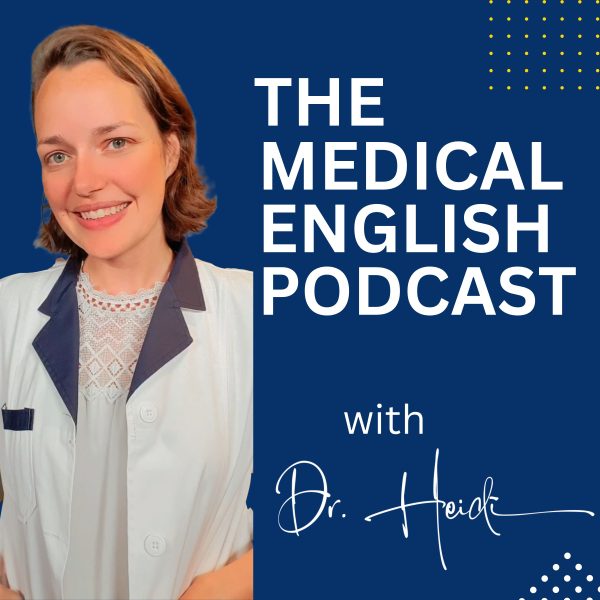
The Medical English Podcast
- Folgen
- 109
- Erscheint
- mehrmals pro Woche
- Letzte Folge
- 11. Nov. 2026
Über den Podcast
Welcome to The Medical English Podcast, designed to help healthcare professionals sharpen their English language skills. Hosted by Dr. Heidi, this podcast delves into vital medical terminology, common phrases, and specialised language across diverse healthcare settings. From patient consultations to medical conferences, we break down complex jargon, share real-life scenarios, and offer practical tips to elevate your language proficiency. Tune in and elevate your professional communication with The Medical English Podcast!
Folgen 109
Explaining Anaesthesia Clearly | Medical English Podcast (S5E25)
In this episode of the Medical English Podcast, we do a deep dive into anaesthesia — not the clinical administration, but the precise English you need to discuss it confidently in preoperative consultations …
Shownotes
In this episode of the Medical English Podcast, we do a deep dive into anaesthesia — not the clinical administration, but the precise English you need to discuss it confidently in preoperative consultations, handovers, and documentation.
You'll learn how to:
- Pronounce and use "general anaesthesia," "local anaesthesia," "regional anaesthesia," "sedation," and "induction" with clinical confidence
- Explain each type of anaesthesia to a patient in natural, spoken language rather than textbook definitions
- Distinguish anaesthesia from anaesthetic, and understand why the difference matters in documentation
- Avoid mixing up sedation and anaesthesia, which describe very different depths of consciousness
- Steer clear of the classic slip between "conscious" and "conscience" in clinical notes
We explore the essential language of anaesthesia and how small, precise word choices set the right expectations for a patient before a procedure.
This episode is perfect for doctors, nurses, anaesthetic and surgical teams, international medical graduates, and healthcare professionals preparing for exams like the OET, who want to sharpen both their clinical English vocabulary and patient communication skills.
Enhance your practical medical English with the Medical English Collection:
https://australiabiomed.com/med
🎧 Free transcript & practice quiz for this episode:
https://australiabiomed.com/mep-s5e25/Structured lessons, real-world clinical communication, medical vocabulary, and exam preparation — all designed for healthcare professionals who want to communicate with confidence.
Disclaimer: This podcast is for educational purposes only and does not provide medical advice.
Syncope: Fainting, Red Flags, and Patient Conversations | Medical English Podcast (S5E24)
In this episode of the Medical English Podcast, we do a deep dive into syncope — the medical word for fainting — unpacking why it's so often mistaken for a seizure and which red flags separate a harmless faint …
Shownotes
In this episode of the Medical English Podcast, we do a deep dive into syncope — the medical word for fainting — unpacking why it's so often mistaken for a seizure and which red flags separate a harmless faint from a cardiac emergency.
You'll learn how to:
- Use key vocabulary including "syncope," "prodrome," "vasovagal," "orthostatic hypotension," and "arrhythmia"
- Distinguish reflex, orthostatic, and cardiac syncope, and understand why cardiac causes carry the highest risk
- Recognise convulsive syncope and explain why brief jerking movements don't always mean a seizure
- Translate diagnostic terms like Holter monitor and tilt table test into language a patient can actually picture
- Adapt the same explanation across three different patients: a first-time fainter, a long-term vasovagal patient, and someone mid-workup for a cardiac cause
We explore the clinical reasoning behind a syncope workup and how matching your language to the patient in front of you builds trust at every stage.
This episode is perfect for doctors, nurses, ED and cardiology teams, international medical graduates, and healthcare professionals preparing for exams like the OET, who want to sharpen both their clinical English vocabulary and patient communication skills.
Enhance your practical medical English with the Medical English Collection:
https://australiabiomed.com/med
🎧 Free transcript & practice quiz for this episode:
https://australiabiomed.com/mep-s5e24/Structured lessons, real-world clinical communication, medical vocabulary, and exam preparation — all designed for healthcare professionals who want to communicate with confidence.
Disclaimer: This podcast is for educational purposes only and does not provide medical advice.
Sepsis and Clinical Communication | Medical English Podcast (S5E23)
In this episode of the Medical English Podcast, we follow a consultation with Robert, a patient admitted to the emergency department after a chest infection develops into sepsis, and his daughter Emma, as the …
Shownotes
In this episode of the Medical English Podcast, we follow a consultation with Robert, a patient admitted to the emergency department after a chest infection develops into sepsis, and his daughter Emma, as the doctor explains what's happening and why every hour of treatment matters.
You'll learn how to:
- Use key vocabulary including "sepsis," "septic shock," "deteriorating," "fluid resuscitation," and "broad-spectrum antibiotics"
- Explain how a manageable infection can spiral into organ dysfunction, and why early recognition changes outcomes
- Discuss falling blood pressure and the warning signs of septic shock with a frightened family member
- Translate urgent treatment steps like IV fluids and empirical antibiotics into language a worried carer can follow
- Reassure a family while being honest about the seriousness of a patient's condition
We explore a full sepsis consultation from initial explanation through to escalation of care and family reassurance, and how clear, calm communication makes a high-pressure situation easier for everyone involved.
This episode is perfect for doctors, nurses, ED and ICU teams, international medical graduates, and healthcare professionals preparing for exams like the OET, who want to sharpen both their clinical English vocabulary and patient communication skills.
Enhance your practical medical English with the Medical English Collection:
https://australiabiomed.com/med
🎧 Free transcript & practice quiz for this episode:
https://australiabiomed.com/mep-s5e23/Structured lessons, real-world clinical communication, medical vocabulary, and exam preparation — all designed for healthcare professionals who want to communicate with confidence.
Disclaimer: This podcast is for educational purposes only and does not provide medical advice.
Pneumonia and Respiratory Communication | Medical English Podcast (S5E22)
In this episode of the Medical English Podcast, we explore pneumonia — a common lung infection encountered across general practice, emergency departments, and hospital wards — with a focus on the English you …
Shownotes
In this episode of the Medical English Podcast, we explore pneumonia — a common lung infection encountered across general practice, emergency departments, and hospital wards — with a focus on the English you need for consultations, handovers, and clinical documentation.
You'll learn how to:
• Use key vocabulary including "consolidation," "sputum," "crackles," "hypoxia," and "antibiotics"
• Describe common pneumonia findings such as consolidation on a chest X-ray, sputum production, abnormal breath sounds, and low oxygen levels
• Translate technical respiratory terminology into clear patient-friendly explanations
• Distinguish crackles from wheezes and understand why using the correct breath-sound terminology matters in clinical handovers
• Avoid common English mistakes, including saying "a pneumonia" and confusing productive with non-productivecoughs
We explore the essential language used when discussing pneumonia and show how to move confidently between formal clinical terminology and simple explanations that patients can easily understand.
This episode is perfect for doctors, nurses, GPs, ED and respiratory teams, international medical graduates, and healthcare professionals preparing for exams like the OET, who want to sharpen both their clinical English vocabulary and patient communication skills.
Enhance your practical medical English with the Medical English Collection:
https://australiabiomed.com/med🎧 Free transcript & practice quiz for this episode:
https://australiabiomed.com/mep-s5e22/Structured lessons, real-world clinical communication, medical vocabulary, and exam preparation — all designed for healthcare professionals who want to communicate with confidence.
Disclaimer: This podcast is for educational purposes only and does not provide medical advice.
Acute Coronary Syndrome (ACS) | Medical English Podcast (S5E21)
In this episode of the Medical English Podcast, we explore acute coronary syndrome (ACS) — from unstable angina through to myocardial infarction — with a focus on the precise English needed to communicate …
Shownotes
In this episode of the Medical English Podcast, we explore acute coronary syndrome (ACS) — from unstable angina through to myocardial infarction — with a focus on the precise English needed to communicate clearly in fast-moving cardiac situations.
You'll learn how to:
• Use key vocabulary including "myocardial infarction," "troponin," "ST elevation," "non-ST elevation myocardial infarction," and "PCI"
• Understand how ACS describes a spectrum of conditions caused by a sudden reduction in blood flow to the heart muscle
• Discuss ECG findings, troponin results, and PCI clearly during clinical conversations and handovers
• Translate technical cardiac terminology into patient-friendly explanations, including how to explain a heart attack, blood tests, ECG findings, and stent procedures
• Avoid common communication mistakes such as confusing heart attack with cardiac arrest or mixing up troponin elevation with ST elevation on an ECG
We explore the essential language of acute coronary syndrome and how precise terminology becomes especially important when communicating under pressure with patients and healthcare teams.
This episode is perfect for doctors, nurses, ED and cardiology teams, international medical graduates, and healthcare professionals preparing for exams like the OET, who want to sharpen both their clinical English vocabulary and patient communication skills.
Enhance your practical medical English with the Medical English Collection:
https://australiabiomed.com/med🎧 Free transcript & practice quiz for this episode:
https://australiabiomed.com/mep-s5e21/Structured lessons, real-world clinical communication, medical vocabulary, and exam preparation — all designed for healthcare professionals who want to communicate with confidence.
Disclaimer: This podcast is for educational purposes only and does not provide medical advice.
Appendicitis and Clinical Communication | Medical English Podcast (S5E20)
In this episode of the Medical English Podcast, we explore appendicitis — a common acute condition you'll encounter across general practice, emergency departments, and surgical wards — with a focus on the …
Shownotes
In this episode of the Medical English Podcast, we explore appendicitis — a common acute condition you'll encounter across general practice, emergency departments, and surgical wards — with a focus on the English you need to discuss abdominal findings, possible complications, and surgery clearly and confidently.
You'll learn how to:
• Use key vocabulary including "rebound tenderness," "guarding," "peritonitis," "nil by mouth (NBM)," and "appendectomy"
• Describe important abdominal examination findings such as tenderness and guarding accurately during clinical handovers
• Explain terms like peritonitis, NBM, and appendectomy to patients using clear, natural language
• Understand the important difference between appendix (the organ) and appendicitis (the condition)
• Avoid common English mistakes such as confusing tender with tense or saying "operate the appendix" instead of "operate on the appendix"
We explore the essential language used when discussing appendicitis with colleagues and patients, and how small differences in terminology, grammar, and patient-friendly phrasing can make clinical communication much clearer.
This episode is perfect for doctors, nurses, ED and surgical teams, international medical graduates, and healthcare professionals preparing for exams like the OET, who want to sharpen both their clinical English vocabulary and patient communication skills.
Enhance your practical medical English with the Medical English Collection:
https://australiabiomed.com/med🎧 Free transcript & practice quiz for this episode:
https://australiabiomed.com/mep-s5e20/Structured lessons, real-world clinical communication, medical vocabulary, and exam preparation — all designed for healthcare professionals who want to communicate with confidence.
Disclaimer: This podcast is for educational purposes only and does not provide medical advice.
Wound Care: Lacerations, Abrasions and Sutures | Medical English Podcast (S5E19)
In this episode of the Medical English Podcast, we explore wound care — from lacerations and abrasions to sutures and necrosis — with a focus on using precise clinical terminology and translating it into clear …
Shownotes
In this episode of the Medical English Podcast, we explore wound care — from lacerations and abrasions to sutures and necrosis — with a focus on using precise clinical terminology and translating it into clear, patient-friendly English.
You'll learn how to:
• Use key vocabulary including "laceration," "abrasion," "hemostasis," "suture," and "necrosis"
• Distinguish a traumatic laceration from a surgical incision, and understand why the difference matters clinically
• Describe the four phases of wound healing: hemostasis, inflammation, proliferation, and maturation
• Translate clinical terminology into patient-friendly language, such as "graze or scrape" for abrasion, "stitches" for sutures, and "dead skin" when explaining necrosis
• Avoid common communication mistakes, including using incision for a traumatic wound or suggesting that a superficial abrasion needs suturing
We explore the essential language of wound assessment and wound care, and how switching between precise clinical terminology and simple patient-friendly English can improve understanding and build trust.
This episode is perfect for doctors, nurses, ED and wound-care teams, international medical graduates, and healthcare professionals preparing for exams like the OET, who want to sharpen both their clinical English vocabulary and patient communication skills.
Enhance your practical medical English with the Medical English Collection:
https://australiabiomed.com/med🎧 Free transcript & practice quiz for this episode:
https://australiabiomed.com/mep-s5e19/Structured lessons, real-world clinical communication, medical vocabulary, and exam preparation — all designed for healthcare professionals who want to communicate with confidence.
Disclaimer: This podcast is for educational purposes only and does not provide medical advice.
Explaining Food Poisoning to Patients | Medical English Podcast (S5E18)
In this episode of the Medical English Podcast, we do a deep dive into food poisoning — covering causes, red flags, and treatment — with a focus on adapting the same explanation across three very different …
Shownotes
In this episode of the Medical English Podcast, we do a deep dive into food poisoning — covering causes, red flags, and treatment — with a focus on adapting the same explanation across three very different patient conversations.
You'll learn how to:
- Use key vocabulary including "gastroenteritis," "dehydration," "toxin," "incubation period," "stool sample," "cross-contamination," and "oral rehydration"
- Explain the difference between infection and toxin-mediated illness, and why some cases hit faster than others
- Recognise red-flag symptoms that separate a straightforward case from one needing urgent attention
- Discuss why antibiotics aren't always appropriate, particularly with certain E. coli strains
- Adapt your explanation for a newly unwell patient, a recovering patient asking about work, and a patient showing red flags
We explore three completely different conversations built around the same illness, and how matching your language to the patient in front of you builds trust at every stage.
This episode is perfect for doctors, nurses, GPs, ED and triage staff, international medical graduates, and healthcare professionals preparing for exams like the OET, who want to sharpen both their clinical English vocabulary and patient communication skills.
Enhance your practical medical English with the Medical English Collection: https://australiabiomed.com/med 🎧 Free transcript & practice quiz for this episode: https://australiabiomed.com/mep-s5e18/
Structured lessons, real-world case dialogues, pronunciation practice, and exam preparation — all designed for healthcare professionals who want to communicate with confidence.
Disclaimer: This podcast is for educational purposes only and does not provide medical advice.
Explaining Inflammatory Bowel Disease (IBD) | Medical English Podcast (S5E17)
In this episode of the Medical English Podcast, we do a deep dive into inflammatory bowel disease — covering both Crohn's disease and ulcerative colitis — with a focus on adapting the same explanation for very …
Shownotes
In this episode of the Medical English Podcast, we do a deep dive into inflammatory bowel disease — covering both Crohn's disease and ulcerative colitis — with a focus on adapting the same explanation for very different patients at very different stages of their journey.
You'll learn how to:
- Pronounce and use "inflammation," "chronic," "flare," "remission," "endoscopy," "biologics," and "malabsorption" with clinical confidence
- Explain the key difference between Crohn's disease and ulcerative colitis in plain terms
- Discuss risk factors, including genetics, environment, and immune involvement
- Simplify a new diagnosis without dumbing it down for a patient who's never heard of IBD
- Shift tone and language for a long-term patient managing a flare versus a patient anxiously awaiting test results
We explore three completely different patient conversations built around the same condition, and how the right vocabulary and tone make each one land the way it should.
This episode is perfect for doctors, nurses, GPs, gastroenterology teams, international medical graduates, and healthcare professionals preparing for exams like the OET, who want to sharpen both their clinical English vocabulary and patient communication skills.
Enhance your practical medical English with the Medical English Collection: https://australiabiomed.com/med 🎧 Free transcript & practice quiz for this episode: https://australiabiomed.com/mep-s5e17/
Structured lessons, real-world case dialogues, pronunciation practice, and exam preparation — all designed for healthcare professionals who want to communicate with confidence.
Disclaimer: This podcast is for educational purposes only and does not provide medical advice.
Kidney Stones and Renal Colic | Medical English Podcast (S5E16)
In this episode of the Medical English Podcast, we follow a consultation with Daniel, a patient presenting with sudden severe flank pain, as his doctor works through the diagnosis, imaging, and management of a …
Shownotes
In this episode of the Medical English Podcast, we follow a consultation with Daniel, a patient presenting with sudden severe flank pain, as his doctor works through the diagnosis, imaging, and management of a kidney stone.
You'll learn how to:
- Use key vocabulary including "renal colic," "hematuria," "ureteric stone," "analgesia," and "CTKUB"
- Take a pain history that distinguishes the classic wave-like pattern of renal colic
- Explain imaging choices to a patient, including what a CT KUB involves
- Discuss when a stone is likely to pass on its own versus requiring further intervention
- Advise patients on home care, fluid intake, and red-flag symptoms that need urgent review
We explore a full kidney stone consultation from presentation through to pain management, imaging, and safety-netting, and how clear explanations ease a patient through a genuinely painful experience.
This episode is perfect for doctors, nurses, GPs, ED and urology teams, international medical graduates, and healthcare professionals preparing for exams like the OET, who want to sharpen both their clinical English vocabulary and patient communication skills.
Enhance your practical medical English with the Medical English Collection: https://australiabiomed.com/med 🎧 Free transcript & practice quiz for this episode: https://australiabiomed.com/mep-s5e16/
Structured lessons, real-world case dialogues, pronunciation practice, and exam preparation — all designed for healthcare professionals who want to communicate with confidence.
Disclaimer: This podcast is for educational purposes only and does not provide medical advice.
Understanding and Explaining Dehydration | Medical English Podcast (S5E15)
In this episode of the Medical English Podcast, we do a deep dive into dehydration — one of the most common presentations in clinical practice — with a focus on explaining causes, symptoms, and treatment in …
Shownotes
In this episode of the Medical English Podcast, we do a deep dive into dehydration — one of the most common presentations in clinical practice — with a focus on explaining causes, symptoms, and treatment in language patients can actually understand.
You'll learn how to:
- Pronounce and use "diuretics," "electrolytes," "skin turgor," "orthostatic hypotension," and "oral rehydration solutions" with clinical confidence
- Explain why thirst can become an unreliable warning sign as dehydration worsens
- Translate technical terms like "reduced skin turgor" into patient-friendly phrasing
- Recognise the escalating signs from mild dehydration through to severe, dangerous cases
- Practise a real patient role-play covering assessment, explanation, and treatment advice
We explore the clinical context behind dehydration, the essential vocabulary for ward conversations, and how small, deliberate word choices make technical explanations land clearly with patients.
This episode is perfect for doctors, nurses, allied health workers, international medical graduates, and healthcare professionals preparing for exams like the OET, who want to sharpen both their clinical English vocabulary and patient communication skills.
Enhance your practical medical English with the Medical English Collection: https://australiabiomed.com/med 🎧 Free transcript & practice quiz for this episode: https://australiabiomed.com/mep-s5e15/
Structured lessons, real-world case dialogues, pronunciation practice, and exam preparation — all designed for healthcare professionals who want to communicate with confidence.
Disclaimer: This podcast is for educational purposes only and does not provide medical advice.
Urticaria (Hives) and Angioedema | Medical English Podcast (S5E14)
In this episode of the Medical English Podcast, we follow a consultation with Liam, a young patient who breaks out in itchy hives after a birthday party, and his dad, Tom, as the doctor works through triggers …
Shownotes
In this episode of the Medical English Podcast, we follow a consultation with Liam, a young patient who breaks out in itchy hives after a birthday party, and his dad, Tom, as the doctor works through triggers, treatment, and when hives become a medical emergency.
You'll learn how to:
- Use key vocabulary including "wheals," "angioedema," "trigger," "antihistamine," and "chronic spontaneous urticaria"
- Take a history from both a young patient and a parent to identify a likely trigger
- Explain the difference between simple wheals and deeper, more serious swelling
- Ask the right screening questions to rule out a severe allergic reaction
- Advise families on trigger avoidance and warning signs to watch for at home
We explore a full urticaria consultation from first presentation through to treatment and safety-netting, and how calm, clear communication reassures both patient and parent.
This episode is perfect for doctors, nurses, GPs, paediatric teams, international medical graduates, and healthcare professionals preparing for exams like the OET, who want to sharpen both their clinical English vocabulary and patient communication skills.
Enhance your practical medical English with the Medical English Collection: https://australiabiomed.com/med 🎧 Free transcript & practice quiz for this episode: https://australiabiomed.com/mep-s5e14/
Structured lessons, real-world case dialogues, pronunciation practice, and exam preparation — all designed for healthcare professionals who want to communicate with confidence.
Disclaimer: This podcast is for educational purposes only and does not provide medical advice.
Lyme Disease and Tick-Borne Illness | Medical English Podcast (S5E13)
In this episode of the Medical English Podcast, we follow a consultation with James, a patient with a spreading rash and flu-like symptoms after a recent bushwalk, as his doctor works through the diagnosis and …
Shownotes
In this episode of the Medical English Podcast, we follow a consultation with James, a patient with a spreading rash and flu-like symptoms after a recent bushwalk, as his doctor works through the diagnosis and treatment of Lyme disease.
You'll learn how to:
- Use key vocabulary including "tick bite," "erythema migrans," "flu-like symptoms," "antibiotic," and "Lyme serology"
- Take a history that identifies outdoor exposure and tick contact as a key diagnostic clue
- Recognise the classic bullseye rash and explain it in patient-friendly terms
- Discuss why treatment sometimes starts before blood test results are back
- Advise patients on prevention strategies for future outdoor activity
We explore a full Lyme disease consultation from history-taking through to treatment and prevention advice, and how a thorough outdoor-exposure history can make all the difference to an early diagnosis.
This episode is perfect for doctors, nurses, GPs, international medical graduates, and healthcare professionals preparing for exams like the OET, who want to sharpen both their clinical English vocabulary and patient communication skills.
Enhance your practical medical English with the Medical English Collection: https://australiabiomed.com/med 🎧 Free transcript & practice quiz for this episode: https://australiabiomed.com/mep-s5e13/
Structured lessons, real-world case dialogues, pronunciation practice, and exam preparation — all designed for healthcare professionals who want to communicate with confidence.
Disclaimer: This podcast is for educational purposes only and does not provide medical advice.
Psoriasis and Its Common Symptoms | Medical English Podcast (S5E12)
In this episode of the Medical English Podcast, we follow a consultation with Rachel, a patient with worsening scaly patches on her elbows and knees, as her doctor explains psoriasis, its triggers, and the …
Shownotes
In this episode of the Medical English Podcast, we follow a consultation with Rachel, a patient with worsening scaly patches on her elbows and knees, as her doctor explains psoriasis, its triggers, and the step-up approach to treatment.
You'll learn how to:
• Use key vocabulary including "plaques," "flare-up," "topical treatment," "biologic," and "autoimmune"
• Take a history that identifies common flare-up triggers like stress, illness, and skin injury
• Explain psoriasis as an autoimmune condition in clear, understandable terms
• Discuss the step-up treatment pathway from topical creams to light therapy to biologic therapy
• Advise patients on self-care strategies to reduce the frequency and severity of flares
We explore a full psoriasis consultation from history-taking through to treatment planning and follow-up, and how clear language helps a self-conscious patient feel understood.
This episode is perfect for doctors, nurses, dermatology teams, international medical graduates, and healthcare professionals preparing for exams like the OET, who want to sharpen both their clinical English vocabulary and patient communication skills.
Enhance your practical medical English with the Medical English Collection: https://australiabiomed.com/med
🎧 Free transcript & practice quiz for this episode: https://australiabiomed.com/mep-s5e12/
Structured lessons, real-world case dialogues, pronunciation practice, and exam preparation — all designed for healthcare professionals who want to communicate with confidence.
Disclaimer: This podcast is for educational purposes only and does not provide medical advice.
Off My Food, Shivery, Sweaty and Clammy | Medical English Podcast (S5E11)
In this episode of the Medical English Podcast, we translate three everyday patient expressions — off my food, shivery, and sweaty and clammy — into the correct clinical documentation, so nothing important gets …
Shownotes
In this episode of the Medical English Podcast, we translate three everyday patient expressions — off my food, shivery, and sweaty and clammy — into the correct clinical documentation, so nothing important gets lost between what a patient says and what you write.
You'll learn how to:
• Recognise "off my food" as reduced appetite, not necessarily nausea, and document it as "decreased oral intake"
• Use "shivery" for cold trembling before a fever, while reserving "rigors" for severe, uncontrollable shaking
• Take "sweaty and clammy" seriously as a possible sign of shock, low blood sugar, or acute stress response
• Ask the right follow-up questions instead of dismissing vague symptoms as routine tiredness
• Translate all three into correct formal terms: "reports chills," "reports rigors," and "diaphoresis"
We explore the pronunciation, meaning, and documentation requirements behind three phrases you'll hear on nearly every shift, and why getting them right matters for patient safety.
This episode is perfect for doctors, nurses, ED and triage staff, international medical graduates, and healthcare professionals preparing for exams like the OET, who want to sharpen both their clinical English vocabulary and documentation skills.
Enhance your practical medical English with the Medical English Collection: https://australiabiomed.com/med
🎧 Free transcript & practice quiz for this episode: https://australiabiomed.com/mep-s5e11/
Structured lessons, real-world case dialogues, pronunciation practice, and exam preparation — all designed for healthcare professionals who want to communicate with confidence.
Disclaimer: This podcast is for educational purposes only and does not provide medical advice.
Discussing Pulmonary Fibrosis | Medical English Podcast (S5E10)
In this episode of the Medical English Podcast, we do a deep dive into pulmonary fibrosis, a progressive lung disease, with a focus on the precise English vocabulary you need to explain it clearly to both …
Shownotes
In this episode of the Medical English Podcast, we do a deep dive into pulmonary fibrosis, a progressive lung disease, with a focus on the precise English vocabulary you need to explain it clearly to both colleagues and patients.
You'll learn how to:
• Pronounce and use "idiopathic," "fibrosis," "alveoli," "exacerbation," and "interstitial" with clinical confidence
• Explain how thickened, scarred lung tissue makes oxygen transfer harder over time
• Translate dense terminology into patient-friendly language like "scarring," "air sacs," and "a sudden flare-up"
• Avoid frightening direct translations like "your interstitial is ruined"
• Use gentler, more accurate alternatives such as "the tissue around your air sacs is stiff"
We explore the clinical context behind pulmonary fibrosis, the essential terminology for handovers and case presentations, and how patient-friendly language builds trust during a serious diagnosis.
This episode is perfect for doctors, nurses, respiratory teams, international medical graduates, and healthcare professionals preparing for exams like the OET, who want to sharpen both their clinical English vocabulary and patient communication skills.
Enhance your practical medical English with the Medical English Collection: https://australiabiomed.com/med
🎧 Free transcript & practice quiz for this episode: https://australiabiomed.com/mep-s5e10/
Structured lessons, real-world case dialogues, pronunciation practice, and exam preparation — all designed for healthcare professionals who want to communicate with confidence.
Disclaimer: This podcast is for educational purposes only and does not provide medical advice.
Hepatitis and Liver Inflammation | Medical English Podcast (S5E9)
In this episode of the Medical English Podcast, we follow a consultation with David, a patient presenting with fatigue and yellowing eyes, as his doctor works through a differential between hepatitis A, B, and …
Shownotes
In this episode of the Medical English Podcast, we follow a consultation with David, a patient presenting with fatigue and yellowing eyes, as his doctor works through a differential between hepatitis A, B, and C based on his travel and tattoo history.
You'll learn how to:
• Use key vocabulary including "jaundice," "liver function tests (LFTs)," "transmission," "antiviral treatment," and "cirrhosis"
• Take a history that identifies risk factors for different hepatitis types
• Explain the difference in treatment approach between acute hepatitis A and chronic hepatitis B or C
• Discuss modern antiviral therapy and its high cure rates for hepatitis C
• Advise patients on precautions to protect their liver and reduce transmission risk to family
We explore a full hepatitis consultation from history-taking through to diagnosis, treatment planning, and safety-netting, and how clear explanations ease a worried patient's mind.
This episode is perfect for doctors, nurses, gastroenterology and hepatology teams, international medical graduates, and healthcare professionals preparing for exams like the OET, who want to sharpen both their clinical English vocabulary and patient communication skills.
Enhance your practical medical English with the Medical English Collection: https://australiabiomed.com/med
🎧 Free transcript & practice quiz for this episode: https://australiabiomed.com/mep-s5e9/
Structured lessons, real-world case dialogues, pronunciation practice, and exam preparation — all designed for healthcare professionals who want to communicate with confidence.
Disclaimer: This podcast is for educational purposes only and does not provide medical advice.
Rundown, Under the Weather, Wiped Out | Medical English Podcast (S5E8)
In this episode of the Medical English Podcast, we map out the everyday spectrum of fatigue — from mild to severe — through three expressions patients and colleagues use constantly: rundown, under the weather …
Shownotes
In this episode of the Medical English Podcast, we map out the everyday spectrum of fatigue — from mild to severe — through three expressions patients and colleagues use constantly: rundown, under the weather, and wiped out.
You'll learn how to:
• Use "rundown" correctly as an adjective, not a verb ("I'm rundown," not "I'm running down")
• Recognise "under the weather" as mild, short-term unwellness with no specific diagnosis
• Reserve "wiped out" for intense, event-driven exhaustion rather than everyday tiredness
• Translate all three casual expressions into correct clinical documentation like "malaise" and "fatigue"
• Choose the right expression depending on severity and context
We explore the pronunciation, grammar, and golden rule behind this fatigue spectrum: speak in idioms with your patients, but document like a clinician.
This episode is perfect for doctors, nurses, allied health workers, international medical graduates, and healthcare professionals preparing for exams like the OET, who want to sound more natural and confident in everyday clinical conversations.
Enhance your practical medical English with the Medical English Collection: https://australiabiomed.com/med
🎧 Free transcript & practice quiz for this episode: https://australiabiomed.com/mep-s5e8/
Structured lessons, real-world case dialogues, pronunciation practice, and exam preparation — all designed for healthcare professionals who want to communicate with confidence.
Disclaimer: This podcast is for educational purposes only and does not provide medical advice.
Gastrointestinal (GI) Exams | Medical English Podcast (S5E7)
In this episode of the Medical English Podcast, we do a deep dive into endoscopy and colonoscopy — two procedures patients often find intimidating — with a focus on explaining them clearly so patients can …
Shownotes
In this episode of the Medical English Podcast, we do a deep dive into endoscopy and colonoscopy — two procedures patients often find intimidating — with a focus on explaining them clearly so patients can safely prepare and consent.
You'll learn how to:
• Pronounce and use "endoscopy," "colonoscopy," "sedation," "biopsy," and "polyp" with clinical confidence
• Explain fasting and bowel preparation instructions in a way that avoids dangerous misunderstandings
• Replace technical terms with patient-friendly alternatives like "a camera test" and "a tiny tissue sample"
• Avoid the direct-translation trap of telling a patient to "drink nothing" before bowel prep
• Reassure anxious patients about sedation and what to expect during recovery
We explore the patient's journey through a GI exam from fasting to sedation to recovery, and how the right words prevent complications, cancellations, and unnecessary fear.
This episode is perfect for doctors, nurses, gastroenterology teams, international medical graduates, and healthcare professionals preparing for exams like the OET, who want to sharpen both their clinical English vocabulary and patient communication skills.
Enhance your practical medical English with the Medical English Collection: https://australiabiomed.com/med
🎧 Free transcript & practice quiz for this episode: https://australiabiomed.com/mep-s5e7/
Structured lessons, real-world case dialogues, pronunciation practice, and exam preparation — all designed for healthcare professionals who want to communicate with confidence.
Disclaimer: This podcast is for educational purposes only and does not provide medical advice.
Urinary Tract Infections (UTIs) | Medical English Podcast (S5E6)
In this episode of the Medical English Podcast, we follow a consultation with Sophie, a teenage patient, and her mum, Karen, as they describe classic UTI symptoms and work through diagnosis and treatment …
Shownotes
In this episode of the Medical English Podcast, we follow a consultation with Sophie, a teenage patient, and her mum, Karen, as they describe classic UTI symptoms and work through diagnosis and treatment together.
You'll learn how to: • Use key vocabulary including "dysuria," "urinary frequency and urgency," "cloudy or foul-smelling urine," "midstream urine sample (MSU)," and "a course of antibiotics" • Take a clear symptom history from both a young patient and a parent • Explain why a midstream sample reduces contamination and improves test accuracy • Discuss why finishing a full antibiotic course matters, even once symptoms improve • Recognise the warning signs that suggest an infection may be spreading to the kidneys
We explore a full UTI consultation from first complaint through to home-care advice and safety-netting, and how clear communication reassures both patient and parent.
This episode is perfect for doctors, nurses, GPs, paediatric teams, international medical graduates, and healthcare professionals preparing for exams like the OET, who want to sharpen both their clinical English vocabulary and patient communication skills.
Enhance your practical medical English with the Medical English Collection: https://australiabiomed.com/med
🎧 Free transcript & practice quiz for this episode: https://australiabiomed.com/mep-s5e6/
Structured lessons, real-world case dialogues, pronunciation practice, and exam preparation — all designed for healthcare professionals who want to communicate with confidence.
Disclaimer: This podcast is for educational purposes only and does not provide medical advice.
Blacked Out, Fainted, Not Quite Right, Out of It | Medical English Podcast (S5E5)
In this episode of the Medical English Podcast, we tackle four expressions patients use every day to describe altered consciousness and vague symptoms — and why treating them as interchangeable is a mistake …
Shownotes
In this episode of the Medical English Podcast, we tackle four expressions patients use every day to describe altered consciousness and vague symptoms — and why treating them as interchangeable is a mistake that can affect your clinical notes and your diagnosis.
You'll learn how to:
• Distinguish "blacked out" (a memory gap or possible syncope) from "fainted" (a true collapse with loss of consciousness)
• Translate a patient's spoken report of blacking out into correct formal documentation
• Take "not quite right" seriously as a potential early warning sign, especially in elderly patients
• Use open-ended questions instead of closed questions when a patient's complaint is vague
• Recognise "out of it" as reduced alertness while still awake — not full unconsciousness
We explore the subtle but clinically important differences between these four everyday phrases, and how mastering them sharpens both your history-taking and your documentation.
This episode is perfect for doctors, nurses, ED staff, international medical graduates, and healthcare professionals preparing for exams like the OET, who want to sharpen both their clinical English vocabulary and documentation skills.
Enhance your practical medical English with the Medical English Collection: https://australiabiomed.com/med
🎧 Free transcript & practice quiz for this episode: https://australiabiomed.com/mep-s5e5/
Structured lessons, real-world case dialogues, pronunciation practice, and exam preparation — all designed for healthcare professionals who want to communicate with confidence.
Disclaimer: This podcast is for educational purposes only and does not provide medical advice.
Communicating Clearly About Vitamin D | Medical English Podcast (S5E4)
In this episode of the Medical English Podcast, we break down vitamin D deficiency — one of the most common findings in clinical practice — with a focus on explaining it to patients without reaching for …
Shownotes
In this episode of the Medical English Podcast, we break down vitamin D deficiency — one of the most common findings in clinical practice — with a focus on explaining it to patients without reaching for intimidating jargon.
You'll learn how to:
• Pronounce and use "deficiency," "osteoporosis," "supplement," "hypercalcemia," and "rickets" with confidence
• Explain how vitamin D deficiency shows up differently across children, adults, and older adults
• Translate technical terms like "osteomalacia" and "cholecalciferol" into language patients can actually digest • Avoid alarming direct translations like "your vitamin D is toxic"
• Use simple, reassuring alternatives such as "not having enough of a vitamin" and "too much calcium in your blood"
We explore the clinical context behind vitamin D deficiency, the key terminology you need on the ward, and how patient-friendly phrasing lowers anxiety and builds understanding.
This episode is perfect for doctors, nurses, dietitians, international medical graduates, and healthcare professionals preparing for exams like the OET, who want to sharpen both their clinical English vocabulary and patient communication skills.
Enhance your practical medical English with the Medical English Collection: https://australiabiomed.com/med
🎧 Free transcript & practice quiz for this episode: https://australiabiomed.com/mep-s5e4/
Structured lessons, real-world case dialogues, pronunciation practice, and exam preparation — all designed for healthcare professionals who want to communicate with confidence.
Disclaimer: This podcast is for educational purposes only and does not provide medical advice.
Nicotine Dependence and Smoking Cessation | Medical English Podcast (S5E3)
In this episode of the Medical English Podcast, we follow a real consultation with Mark, a patient with a twenty pack-year smoking history, as he works with his doctor to try quitting again — this time with the …
Shownotes
In this episode of the Medical English Podcast, we follow a real consultation with Mark, a patient with a twenty pack-year smoking history, as he works with his doctor to try quitting again — this time with the right support in place.
You'll learn how to:
• Use key vocabulary including "nicotine withdrawal," "cravings," "nicotine replacement therapy (NRT)," "cold turkey," and "relapse"
• Discuss withdrawal symptoms like irritability, difficulty concentrating, and intense cravings
• Explain how NRT and prescription medications work, and why combining medication with behavioural counselling roughly doubles quit success
• Identify a patient's personal triggers and build a quit plan around them
• Reframe a relapse, or "slip," as a normal part of quitting rather than a failure
We explore the full arc of a smoking cessation consultation — from withdrawal and cravings through to treatment planning and follow-up — and how the right language builds trust and motivation.
This episode is perfect for doctors, nurses, GPs, international medical graduates, and healthcare professionals preparing for exams like the OET, who want to sharpen both their clinical English vocabulary and patient communication skills.
Enhance your practical medical English with the Medical English Collection: https://australiabiomed.com/med
🎧 Free transcript & practice quiz for this episode: https://australiabiomed.com/mep-s5e3/
Structured lessons, real-world case dialogues, pronunciation practice, and exam preparation — all designed for healthcare professionals who want to communicate with confidence.
Disclaimer: This podcast is for educational purposes only and does not provide medical advice.
Lightheaded, Seeing Stars, and Spinning | Medical English Podcast (S5E2)
In this episode of the Medical English Podcast, we untangle three patient-reported symptoms that sound similar but mean very different things clinically: lightheaded, seeing stars, and spinning. Getting these …
Shownotes
In this episode of the Medical English Podcast, we untangle three patient-reported symptoms that sound similar but mean very different things clinically: lightheaded, seeing stars, and spinning. Getting these right matters — the wrong word can point you toward the wrong diagnosis.
You'll learn how to:
• Distinguish a woozy, pre-syncope "lightheaded" feeling from true rotational vertigo
• Use "seeing stars" correctly for brief, momentary flashes of light — and know when it's the wrong phrase
• Recognise why "spinning" describes the environment moving, not the patient's own body
• Avoid common ESL mistakes like "I am light head" or "I am spinning"
• Choose the correct verb tense depending on whether a symptom is happening now or already happened
We explore the pronunciation, grammar traps, and clinical significance behind each of these three expressions, and why context is everything when a patient describes dizziness.
This episode is perfect for doctors, nurses, ED and triage staff, international medical graduates, and healthcare professionals preparing for exams like the OET, who want to sharpen both their clinical English vocabulary and patient communication skills.
Enhance your practical medical English with the Medical English Collection: https://australiabiomed.com/med
🎧 Free transcript & practice quiz for this episode: https://australiabiomed.com/mep-s5e2/
Structured lessons, real-world case dialogues, pronunciation practice, and exam preparation — all designed for healthcare professionals who want to communicate with confidence.
Disclaimer: This podcast is for educational purposes only and does not provide medical advice.
Thyroid Disorders and Patient Communication | Medical English Podcast (S5E1)
In this episode of the Medical English Podcast, we do a deep dive into hyperthyroidism and hypothyroidism — two of the most common endocrine conditions you'll encounter on the ward — with a focus on translating …
Shownotes
In this episode of the Medical English Podcast, we do a deep dive into hyperthyroidism and hypothyroidism — two of the most common endocrine conditions you'll encounter on the ward — with a focus on translating clinical terminology into language your patients will actually understand.
You'll learn how to:
• Pronounce and use "hyperthyroidism," "hypothyroidism," "goiter," "palpitations," and "autoimmune" with natural clinical rhythm
• Explain an overactive vs. underactive thyroid to patients without relying on frightening jargon
• Describe Graves' disease and Hashimoto's disease as the autoimmune drivers behind each condition
• Avoid alarmist direct translations like "your gland is broken"
• Swap terms like "thyrotoxicosis" for reassuring, patient-friendly phrasing
We explore the clinical context behind these two extremes of thyroid function, the key vocabulary you need to sound confident in the clinic, and how small language choices can make a big difference to a worried patient.
This episode is perfect for doctors, nurses, endocrinology teams, international medical graduates, and healthcare professionals preparing for exams like the OET, who want to sharpen both their clinical English vocabulary and patient communication skills.
Enhance your practical medical English with the Medical English Collection: https://australiabiomed.com/med
🎧 Free transcript & practice quiz for this episode: https://australiabiomed.com/mep-s5e1/
Structured lessons, real-world case dialogues, pronunciation practice, and exam preparation — all designed for healthcare professionals who want to communicate with confidence.
Disclaimer: This podcast is for educational purposes only and does not provide medical advice.
Cluster Headaches and Patient Communication | Medical English Podcast (S4E32)
In this episode of the Medical English Podcast, we do a deep dive into cluster headaches — one of the most painful conditions in medicine — with a focus on how to communicate clearly and compassionately with …
Shownotes
In this episode of the Medical English Podcast, we do a deep dive into cluster headaches — one of the most painful conditions in medicine — with a focus on how to communicate clearly and compassionately with patients who are in the middle of a severe attack. When a patient is terrified and in agony, the right words are the first dose of medicine.
You'll learn how to:
• Replace clinical jargon with simple, patient-friendly language that de-escalates panic and builds immediate trust
• Explain "unilateral pain," "Horner syndrome," and "nasal congestion" in terms patients instantly understand
• Describe the intensity of cluster headache pain using descriptive language patients can relate to
• Explain oxygen therapy and occipital nerve blocks without causing unnecessary alarm
• Switch confidently between formal clinical language for documentation and simple explanations for patients
We explore why patient-friendly communication matters especially in high-pain emergencies, the anatomy behind cluster headache symptoms, and how mastering this vocabulary helps you connect with patients experiencing some of the most intense pain imaginable.
This episode is perfect for doctors, nurses, neurologists, international medical graduates, and healthcare professionals preparing for exams like the OET, who want to improve both their clinical English vocabulary and patient communication skills.
Enhance your practical medical English with the Medical English Collection: https://australiabiomed.com/med
🎧 Free transcript & practice quiz for this episode: https://australiabiomed.com/mep-s4e32/
Structured lessons, real-world case dialogues, pronunciation practice, and exam preparation — all designed for healthcare professionals who want to communicate with confidence.
Disclaimer: This podcast is for educational purposes only and does not provide medical advice.
Run down, pins and needles, and numb | Medical English (S4E31)
In this episode of the Medical English Podcast, we tackle one of the most practical challenges for healthcare professionals: how to translate what patients are actually saying into precise clinical language — …
Shownotes
In this episode of the Medical English Podcast, we tackle one of the most practical challenges for healthcare professionals: how to translate what patients are actually saying into precise clinical language — and how to document it correctly. Bridging this gap is essential for accurate records, professional communication, and confident clinical practice.
You'll learn how to:
• Recognise and translate three key patient phrases — "run down," "pins and needles," and "numb" — into their correct clinical equivalents
• Document patient complaints using professional terms: fatigue, malaise, lethargy, paresthesia, hypoesthesia, and anesthesia
• Understand the important clinical difference between numbness and tingling, and why specificity matters in your notes
• Avoid common mistakes including using patient slang in clinical documentation
• Pronounce key terms correctly, including the silent "b" in "numb"
We cover a practical cheat sheet for direct translation, real practice sentences, and the key rule that underpins all of it: understand your patient's language, but always document like a clinician.
This episode is perfect for doctors, nurses, international medical graduates, and healthcare professionals preparing for exams like the OET, who want to improve both their clinical English vocabulary and documentation skills.
Enhance your practical medical English with the Medical English Collection: https://australiabiomed.com/med
🎧 Free transcript & practice quiz for this episode: https://australiabiomed.com/mep-s4e31/
Structured lessons, real-world case dialogues, pronunciation practice, and exam preparation — all designed for healthcare professionals who want to communicate with confidence.
Disclaimer: This podcast is for educational purposes only and does not provide medical advice.
Bruising and Bleeding Explained | Medical English | S4E30
In this episode of the Medical English Podcast, we do a deep dive into the everyday but surprisingly complex world of bruising and bleeding. Our focus isn't just the clinical facts — it's on how to explain …
Shownotes
In this episode of the Medical English Podcast, we do a deep dive into the everyday but surprisingly complex world of bruising and bleeding. Our focus isn't just the clinical facts — it's on how to explain these concepts clearly and confidently to English-speaking patients, without sounding like a medical textbook.
You'll learn how to:
• Use the plumber analogy to explain how the body's clotting system works in simple, memorable terms
• Describe the different types of bruising — petechiae, purpura, ecchymosis, and hematoma — and translate each into patient-friendly language
• Explain the blanching test and what it means, using a phrase patients can actually understand and use at home
• Identify the red flags that suggest a clotting system problem, including large unexplained bruises and bleeding gums
• Advise patients on the ice-then-heat rule and explain why ageing and medications can increase bruising
We explore why some patients bruise more easily than others, the role of the liver and vitamin K in clotting, and how to explain the colour changes of a healing bruise in a way that's reassuring rather than alarming.
This episode is perfect for doctors, nurses, pharmacists, international medical graduates, and healthcare professionals preparing for exams like the OET, who want to sharpen both their clinical English vocabulary and patient communication skills.
Enhance your practical medical English with the Medical English Collection: https://australiabiomed.com/med
🎧 Free transcript & practice quiz for this episode: https://australiabiomed.com/mep-s4e30/
Structured lessons, real-world case dialogues, pronunciation practice, and exam preparation — all designed for healthcare professionals who want to communicate with confidence.
Disclaimer: This podcast is for educational purposes only and does not provide medical advice.
Hearing Test | Medical English Podcast (S4E29)
In this episode of the Medical English Podcast, we tackle an important and often overlooked area of clinical communication: how to talk to patients about hearing tests. Getting this right matters — hearing loss …
Shownotes
In this episode of the Medical English Podcast, we tackle an important and often overlooked area of clinical communication: how to talk to patients about hearing tests. Getting this right matters — hearing loss affects quality of life, safety, and family connection, and clear communication is the first step to helping patients understand and engage with their care.
You'll learn how to:
• Explain what a hearing test is and why it matters, in language patients can easily understand
• Use five key clinical terms — audiologist, tinnitus, audiogram, conductive hearing loss, and sensorineural hearing loss — correctly and with confident pronunciation
• Translate complex terminology into simple patient-friendly explanations • Recognise the signs that suggest a hearing test may be needed, in both adults and children
• Avoid three common communication mistakes including jargon overuse, incorrect word stress, and unnatural phrasing
We cover the difference between conductive and sensorineural hearing loss, how to spot red flags in paediatric patients, and how to make even the most technical vocabulary feel accessible and reassuring for your patients.
This episode is perfect for doctors, nurses, audiologists, international medical graduates, and healthcare professionals preparing for exams like the OET, who want to improve their clinical English vocabulary and patient communication skills.
Enhance your practical medical English with the Medical English Collection: https://australiabiomed.com/med
🎧 Free transcript & practice quiz for this episode: https://australiabiomed.com/mep-s4e29/
Structured lessons, real-world case dialogues, pronunciation practice, and exam preparation — all designed for healthcare professionals who want to communicate with confidence.
Disclaimer: This podcast is for educational purposes only and does not provide medical advice.
Nasal Fractures (Broken Nose) | Medical English Podcast (S4E28)
In this episode of the Medical English Podcast, we explore clear and patient-friendly language for managing and explaining nasal fractures (broken nose). Perfect for healthcare professionals who learned English …
Shownotes
In this episode of the Medical English Podcast, we explore clear and patient-friendly language for managing and explaining nasal fractures (broken nose). Perfect for healthcare professionals who learned English as a second language, we break down key vocabulary and natural expressions used in emergency and ENT consultations:
• Nasal fracture – The precise medical term for a broken nose • Deviation & realignment (reduction) – How to describe a crooked nose and the straightening procedure • Swelling, bruising & black eyes – Reassuring explanations for common symptoms
We cover pronunciation, patient-friendly explanations, ideal timing for reduction, home care advice, and how to manage patient concerns about breathing and appearance.
You’ll learn how to combine clinical accuracy with calm, reassuring language — essential for emergency departments, GP clinics, and ENT settings.
🎧 Practice with the full transcript and quiz here: https://australiabiomed.com/mep-s4e28/
Enhance your medical English further with the Medical English Collection: real-world dialogues, exam prep courses, and practical patient communication tools for healthcare professionals. Explore at: https://australiabiomed.com/med
Structured lessons, self-paced practice, and confidence-building exercises—all designed to help you communicate clearly and naturally in your clinical environment.
Disclaimer: This podcast is for educational purposes only and does not provide medical advice.
Hier stehen die neuesten 40 von 109 Folgen. Ältere Folgen findest du im Feed des Podcasts.
Ähnliche Podcasts
Mehr Bildung-Podcasts





Ist das dein Podcast?
Bestätige es mit einem Eintrag in deinem Feed: Du bekommst hier einen Code, trägst ihn als podcast:txt in den Kanal deines Feeds ein, und wir prüfen ihn. Danach steht dein Podcast als „verifiziert“ bei SoundNode.