

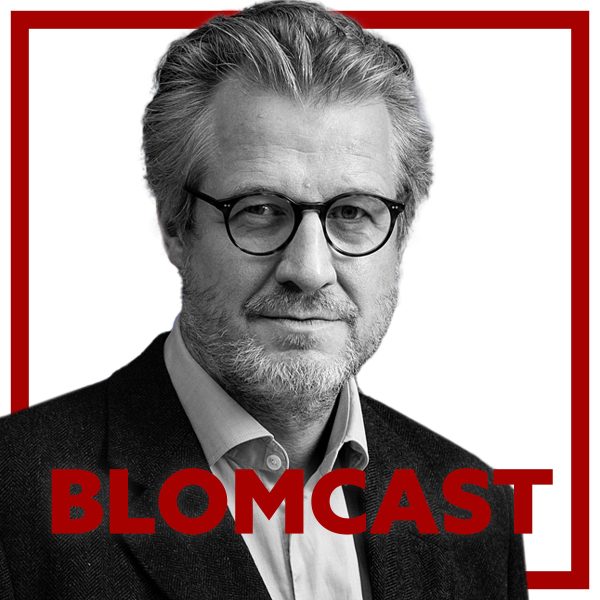
BlomCast
- Episódios
- 89
- Publicação
- semanal
- Último episódio
- 13 nov 2026
Sobre o podcast
The BlomCast looks at turning points in history, which have always fascinated me. My name is Philipp Blom, I am a historian and broadcaster and author of many books about the Enlightenment, the story of modernity and climate history. The climate catastrophe places us at the greatest historical turning point hin human history. What, if anything, can we learn from moments in the past in which a model of life seemed to change, or had to change, in which whole societies were transformed?
If you want to support my work:
https://buymeacoffee.com/blomcast
https://www.buzzsprout.com/2104173/support
https://www.youtube.com/channel/UCOowcMCQ_oJtdJeZu3oK6og/join
Episódios 89
[76] Geraldine Schwarz — wo liegt Europa?
Was hält Europa zusammen, und was kann seine Geschichte über seine Zukunft verraten? Philipp Blom spricht im BlomCast mit der deutsch-französischen Autorin Géraldine Schwarz über ihr Buch „Europa. Wer wir …
Notas do episódio
Was hält Europa zusammen, und was kann seine Geschichte über seine Zukunft verraten? Philipp Blom spricht im BlomCast mit der deutsch-französischen Autorin Géraldine Schwarz über ihr Buch „Europa. Wer wir waren, wer wir sind“. Im Mittelpunkt stehen drei prägende Kräfte: Christentum, Kapitalismus und Freiheit. Wie wirken religiöse Traditionen bis heute nach? Warum gehören Unterdrückung und Emanzipation gleichermaßen zum europäischen Erbe? Und wie lässt sich Gemeinsamkeit jenseits nationaler Selbstbilder entdecken? Ein Gespräch über historische Widersprüche, kulturelle Unterschiede und die Verantwortung jedes Einzelnen. Gerade am gegenwärtigen Wendepunkt könnte Europas vermeintliche Schwäche seine Stärke sein: Menschlichkeit, Erfahrung und die Fähigkeit, der Macht Grenzen zu setzen.
[70] Helena Rosenblatt – The Death of Liberalism?
What happened to liberalism’s promise—and can its forgotten history help us reclaim it? In this episode of the BlomCast, Philipp Blom speaks with historian Helena Rosenblatt, author of The Lost History of …
Notas do episódio
What happened to liberalism’s promise—and can its forgotten history help us reclaim it? In this episode of the BlomCast, Philipp Blom speaks with historian Helena Rosenblatt, author of The Lost History of Liberalism, about a tradition that once understood freedom as inseparable from generosity, civic responsibility, and the common good. From Roman liberalitas to Madame de Staël’s salon, from the French Revolution and Napoleon to industrialisation and the rise of market fundamentalism, they explore how liberal ideas have been reshaped by successive crises—and how individual rights came to overshadow obligations to others. Their conversation turns to globalisation, the erosion of working-class political power, and the prospect of AI displacing the professional classes, asking what freedom means without the conditions to exercise it. Could education, self-cultivation, and a renewed commitment to human flourishing help liberalism reinvent itself once more? Presented in cooperation with DATUM magazine.
[74] Bernd Roeck – über Wallenstein
Er wurde reich durch den Krieg – und zu mächtig für seinen Kaiser. Philipp Blom spricht mit Bernd Roeck über Wallenstein, das Geschäft mit der Gewalt und den religiösen Fanatismus im Dreißigjährigen Krieg. Ein …
Notas do episódio
Er wurde reich durch den Krieg – und zu mächtig für seinen Kaiser. Philipp Blom spricht mit Bernd Roeck über Wallenstein, das Geschäft mit der Gewalt und den religiösen Fanatismus im Dreißigjährigen Krieg. Ein Gespräch über Macht, Geld und Glauben – und die Frage, was Europa aus dieser Katastrophe gelernt hat.
[73] Philippe Sands — There is a global law
In this episode of the BlomCast, Philipp Blom talks to international lawyer and author Philippe Sands about his German Book Trade Peace Prize speech and his criticism of Germany’s stance on Israel and Gaza …
Notas do episódio
In this episode of the BlomCast, Philipp Blom talks to international lawyer and author Philippe Sands about his German Book Trade Peace Prize speech and his criticism of Germany’s stance on Israel and Gaza. Drawing on his family’s Holocaust history, Sands explores antisemitism, the contested meaning of genocide, and the tension between individual rights and group identity. They discuss how fear, inequality and fading historical memory undermine social trust—and why Sands remains cautiously hopeful about international law. The conversation closes with reconciliation, ecocide and artificial intelligence, asking what it will take for humanity to act collectively and rethink its relationship with the natural world.
[72] Die strauchelnde Welt – Teil 5
Im fünften und abschließenden Teil der Gesprächsreihe zur Globalgeschichte Die strauchelnde Welt ziehen Historiker Philipp Blom und DATUM-Herausgeber Sebastian Loudon die Bilanz der Jahre 2001 bis 2014. Das …
Notas do episódio
Im fünften und abschließenden Teil der Gesprächsreihe zur Globalgeschichte Die strauchelnde Welt ziehen Historiker Philipp Blom und DATUM-Herausgeber Sebastian Loudon die Bilanz der Jahre 2001 bis 2014. Das Gespräch beleuchtet die vielschichtigen Umbrüche der frühen 2010er-Jahre – vom Hoffnungsschimmer des Arabischen Frühlings über die Reaktorkatastrophe von Fukushima bis hin zu Edward Snowdens Enthüllungen über den globalen Überwachungsstaat. Mit der völkerrechtswidrigen Annexion der Krim durch Russland im Jahr 2014 schließt sich der Kreis einer dramatischen Transformation: Die Illusion vom dauerhaften Frieden und der Alternativlosigkeit der westlichen Ordnung zerbricht endgültig und macht den Weg frei für die geopolitischen und ökologischen Konflikte der Gegenwart.
[71] Die strauchelnde Welt – Teil 4
Im vierten Teil der Gesprächsreihe zur Globalgeschichte Die strauchelnde Welt führen Historiker Philipp Blom und DATUM-Herausgeber Sebastian Loudon ihre Analyse der Epoche zwischen 2001 und 2014 fort. Im …
Notas do episódio
Im vierten Teil der Gesprächsreihe zur Globalgeschichte Die strauchelnde Welt führen Historiker Philipp Blom und DATUM-Herausgeber Sebastian Loudon ihre Analyse der Epoche zwischen 2001 und 2014 fort. Im Mittelpunkt stehen die tiefgreifenden Erschütterungen seit der globalen Finanzkrise von 2008, der durch das Smartphone ausgelöste digitale Wandel sowie die grundlegenden Verschiebungen der Geopolitik. Das Gespräch beleuchtet, wie der Kollaps von Lehman Brothers das Vertrauen in die Märkte nachhaltig erschütterte, während der rasante Aufstieg Chinas und das Erstarken autoritärer Systeme das endgültige Ende der Illusion einer stabilen, liberalen Weltordnung einläuteten.
[70] Die strauchelnde Welt – Teil 3
Im dritten Teil der Gesprächsreihe zur Globalgeschichte Die strauchelnde Welt setzen Historiker Philipp Blom und DATUM-Herausgeber Sebastian Loudon ihre Analyse der Jahre 2001 bis 2014 fort. Im Zentrum stehen …
Notas do episódio
Im dritten Teil der Gesprächsreihe zur Globalgeschichte Die strauchelnde Welt setzen Historiker Philipp Blom und DATUM-Herausgeber Sebastian Loudon ihre Analyse der Jahre 2001 bis 2014 fort. Im Zentrum stehen die geopolitischen und innenpolitischen Erschütterungen der 2000er-Jahre: Der US-Angriff auf den Irak im Jahr 2003 und das moralische Verspielen westlicher Glaubwürdigkeit sowie der Aufstieg Silvio Berlusconis in Italien als Prototyp einer neuen Verschränkung von Milliardenvermögen, Medienimperien und politischer Macht. Das Gespräch zeigt eindringlich, wie der schleichende Rückzug des Gemeinwohls zugunsten entfesselter Märkte und neuer Machtkonstellationen den Nährboden für die globalen Krisen unserer Gegenwart legte.
[69] Die strauchelnde Welt – Teil 2
BlomCast und das Monatsmagazin DATUM machen neuerdings gemeinsame Sache: In dieser Folge spricht DATUM-Herausgeber Sebastian Loudon mit Philipp Blom über dessen neues Buch „Die strauchelnde Welt“.Ausgehend vom …
Notas do episódio
BlomCast und das Monatsmagazin DATUM machen neuerdings gemeinsame Sache: In dieser Folge spricht DATUM-Herausgeber Sebastian Loudon mit Philipp Blom über dessen neues Buch „Die strauchelnde Welt“.
Ausgehend vom Kapitel zum Jahr 2002 – der Einführung des Euro mit ihren synthetischen Fantasiegebäuden und dem Tausch der D-Mark für die Wiedervereinigung – spannt das Gespräch den Bogen über die institutionellen Sollbruchstellen der Europäischen Union, den Brexit und den Aufstieg populistischer Vorreiter wie Silvio Berlusconi und Viktor Orbán bis hin zu aktuellen geopolitischen Krisen und den Herausforderungen für Europas Zukunft.
[68] Die strauchelnde Welt – Teil 1
BlomCast und das Monatsmagazin DATUM machen neuerdings gemeinsame Sache: In dieser Folge spricht DATUM-Herausgeber Sebastian Loudon mit Philipp Blom über dessen neuestes Buch „Die strauchelnde Welt“.Im Fokus …
Notas do episódio
BlomCast und das Monatsmagazin DATUM machen neuerdings gemeinsame Sache: In dieser Folge spricht DATUM-Herausgeber Sebastian Loudon mit Philipp Blom über dessen neuestes Buch „Die strauchelnde Welt“.
Im Fokus steht 2005: Benedikt XVI., die Krise der katholischen Kirche und Ray Kurzweils Vision vom transhumanen Menschen. Der Podcast verbindet Religion, KI, Smartphones, Demografie und Machtpolitik zu einer provokanten Diagnose unserer Gegenwart – und zeigt, warum 2014 womöglich nicht das Ende einer Geschichte, sondern der Beginn eines globalen Konflikts war.[67] Ralph Janik — das Völkerrecht, eine Illusion?
Nachdem Ursula van der Leyen offen die Frage stellt, wie wichtig und wie realistisch es für Europa ist, das Völkerrecht zu verteidigen, und nachdem internationale Institutionen wie die UN und der International …
Notas do episódio
Nachdem Ursula van der Leyen offen die Frage stellt, wie wichtig und wie realistisch es für Europa ist, das Völkerrecht zu verteidigen, und nachdem internationale Institutionen wie die UN und der International Criminal Court marginalisiert werden ist es Zeit, auch diesen Wendepunkt zu besprechen. Ralph Janik ist Völkerrechtler und mein Gast für dieses Gespräch über die Frage, ob das Völkerrecht tot ist, wie Macht eigentlich funktioniert und was das alles mit Gewalt und Zivilisiertheit zu tun hat. Ist es naiv, um Zeitalter von Trump und Putin über das Völkerrecht zu sprechen, oder ist es wichtiger denn je?
[66] Innovation – Segen oder Fluch?
Innovation wird oft als Lösung für gesellschaftliche Probleme gepriesen, vom Klimawandel bis hin zum Wirtschaftswachstum. Aber ist sie wirklich das Wundermittel, für das wir sie halten? In diesem Beitrag …
Notas do episódio
Innovation wird oft als Lösung für gesellschaftliche Probleme gepriesen, vom Klimawandel bis hin zum Wirtschaftswachstum. Aber ist sie wirklich das Wundermittel, für das wir sie halten? In diesem Beitrag untersuche ich, wie verschiedene Gesellschaften im Laufe der Geschichte auf Innovation reagiert haben, welche Vorteile und Herausforderungen sie mit sich bringt und was wir heute aus diesen Beispielen lernen können. Was können uns die Erfindung der Druckerpresse, die Weigerung der Osmanen, den Druck arabischer Bücher zuzulassen, die Ludditen in Großbritannien und Chinas Jahrhundert der Demütigung über die technologischen Innovationen unserer eigenen Gesellschaften und den Umgang mit ihnen sagen?
[66] Innovation – a blessing, and a curse?
Innovation is often hailed as the solution to many of society's problems, from climate change to economic growth. But is it really the silver bullet we think it is? In this rant, I examine how different …
Notas do episódio
Innovation is often hailed as the solution to many of society's problems, from climate change to economic growth. But is it really the silver bullet we think it is? In this rant, I examine how different societies have responded to innovation throughout history, the benefits and challenges it brings, and what we can learn from these examples today. What can the invention of the printing press, the Ottoman reticence to allow Arabic book printing, the Luddites in Britain and China’s century of humiliation tell us about the technological innovations of our own societies and how to cope with them?
[65] Anton Howes — Why did the industrial Revolution happen, and why in England?
In this episode of the BlomCast I speak to economic historian Anton Howes. The question is as simple as the answer is complex: Why did the Industrial Revolution not happen in ancient Rome or China, but in …
Notas do episódio
In this episode of the BlomCast I speak to economic historian Anton Howes. The question is as simple as the answer is complex: Why did the Industrial Revolution not happen in ancient Rome or China, but in Britain? And why not earlier? Together we delve into the complexities of the Industrial Revolution, exploring why it occurred in Britain and the various factors that contributed to this pivotal moment in history. We discuss the unlikely path of England towards industrialization, the impact of demographic changes, the enclosure movement, and the crucial role of knowledge and ideas in fostering innovation. The conversation also touches on technological developments in the 1600s, environmental consequences, and the significance of capital and investment in driving change. Ultimately, we reflect on the mentality of improvement that characterized this era and its relevance to understanding historical turning points. And what was the role played by the improving mentality Anton speaks about?
[64] Jörg Baberowski II — Wie Demokratien sterben
Am Volk vorbei heißt Jörg Baberowskis neues Buch, ein wunderbarer Anlass für das zweite Gespräch mit dem deutschen Historiker. Es ist ein Missverständnis, die Demokratie vor sich selbst bewahren zu wollen …
Notas do episódio
Am Volk vorbei heißt Jörg Baberowskis neues Buch, ein wunderbarer Anlass für das zweite Gespräch mit dem deutschen Historiker. Es ist ein Missverständnis, die Demokratie vor sich selbst bewahren zu wollen, argumentiert er. Politische und akademische Eliten, die meinen die Demokratie zu definieren und zu kontrollieren, laufen selbst Gefahr, die Demokratie abzuschaffen. Der Populismus ist in dieses Spiel zwischen Macht und Repräsentation immer schon eingeschlossen, er behauptet, das einfache Volk gegen die Eliten zu verteidigen. Aber auch sie werden durch die Macht korrumpiert, von der Elite vereinnahmt — oder sie zerstören die Demokratie tatsächlich. Nur Offenheit kann das verhindern, meint Baberowski in unserem faszinierenden Gespräch.
[63] Kerry Brown — The Great Reversal, China and the West
In this episode of the BlomCast, host Philipp Blom engages with Kerry Brown, a prominent expert on China, to explore the historical and cultural dynamics that have shaped China's relationship with the …
Notas do episódio
In this episode of the BlomCast, host Philipp Blom engages with Kerry Brown, a prominent expert on China, to explore the historical and cultural dynamics that have shaped China's relationship with the West. They discuss Brown's personal journey with China, the significance of language and culture, and the historical context of the Opium Wars and the Taiping Rebellion. The conversation delves into the modern implications of China's economic transformation, the clash of values between East and West, and the pragmatic nature of Chinese society. Brown emphasizes the need for the West to reassess its understanding of China and to recognize the complexities of its culture and governance.
[62] Daniel Marwecki — Die Welt nach dem Westen
Der Politologe Daniel Marwecki lehrt in Hong Kong und schreibt über den Westen. Das gibt ihm eine wertvolle Außenperspekive: Wir denken mehr über die Chinesen nach als die über uns, sagt er. Wir sprechen …
Notas do episódio
Der Politologe Daniel Marwecki lehrt in Hong Kong und schreibt über den Westen. Das gibt ihm eine wertvolle Außenperspekive: Wir denken mehr über die Chinesen nach als die über uns, sagt er. Wir sprechen darüber, wie der Westen zu diesem Punkt gekommen ist, vom seinem frühen Erfolgsmodell, Nationalstaat plus industrieller Kapitalismus, bis zu seinen gegenwärtigen Ringen um Orientierung und Möglichkeiten. Aber bleibt dem Westen wirklich nur “würdevolles Abstiegsmanagement” oder gibt es neue Dynamiken? Können westliche Staaten eine neue Idee einer positiven Zukunft entwickeln, oder gehen sie auf ein Jahrhundert der Demütigung zu , wie China im 19. Jahrhundert? Ich hoffe, dieses Gespräch macht Ihnen so viel Spaß, wie es mir gemacht hat, ich habe viel gelernt.
[61] Bonus Episode — Spinoza and the Art of Organising Knowledge
Recently, I was honoured to give the Spinoza Lecture in Den Haag, Netherlands, a wonderful opportunity to pay homage to a truly great thinker, as well as for a few reflections on knowledge and how it has been …
Notas do episódio
Recently, I was honoured to give the Spinoza Lecture in Den Haag, Netherlands, a wonderful opportunity to pay homage to a truly great thinker, as well as for a few reflections on knowledge and how it has been organised throughout history. In the course of my reflections, we meet Spinoza in his house in The Hague, the great scholar and dictionary writer Pierre Bayle, as well as Denis Diderot and his favourite friends and enemies. We follow revolutions in writing and thinking through Bayle’s Dictionnaire historique et critique and Diderot and d’Alembert’s Encycopédie, and their inversion during the nineteenth century, when dictionaries were no longer instruments of intellectual subversion, but empire building. Knowledge and its organisation are always contested. Who gets to chose? To describe? To value? Whose authority? And what about today, about Wikipedia and increasingly about AI engines, the questions we ask them and the ways we trust them? Where does autonomy go?
[60] Natasha Wheatley — How States Live and Die
Yes, sometimes history has echos, and sometimes they become almost deafening. What does it take to make as state? It is not just the borders. What makes people into citizens, what gives the whole legitimacy? …
Notas do episódio
Yes, sometimes history has echos, and sometimes they become almost deafening. What does it take to make as state? It is not just the borders. What makes people into citizens, what gives the whole legitimacy? For the Habsburg empire in its dying days just before the end of World War I these were very urgent questions. Natasha Wheatley has analysed the end of empire and the beginning of the republic of Austria and shows brilliantly why the new state and its laws were both far sighted and deeply flawed. In the course of the discussion we touch on issues from The Voice in Australia to today’s changing world order and the use of collective fictions — and what happens when they break down.
[59] Georgios Varouxakis — The West, History of an Idea
In this wide ranging conversation, Georgios and I delve into the history of the concept of the west, as opposed to Christendom or Europe, its two predecessors. When did people start talking about the West and …
Notas do episódio
In this wide ranging conversation, Georgios and I delve into the history of the concept of the west, as opposed to Christendom or Europe, its two predecessors. When did people start talking about the West and when did it become a thing? And what on earth did they mean by it? Beginning with the ancient Greeks we tried to tease out different ways in which this concept was filled. On the way we encounter an amazing gallery of protagonists, from French philosophers such as Simone Weil and Auguste Comte to John Stuart Mill, Alexis de Tocqueville, and Hannah Ahrendt. Recording this a few days after the new US National Security Strategy, we also ask whether this is the point, at which we can bury this idea, which role cultural elites played in its decline, and what may come after it.
[58] Mark Galeotti — On Russia, Historical Continuity, and the Business of Diplomacy
In this episode of the BlomCast, I engage with historian Mark Galeotti to explore the complexities of Russian history, military strategy, and the interplay of crime and society. They discuss the continuities in …
Notas do episódio
In this episode of the BlomCast, I engage with historian Mark Galeotti to explore the complexities of Russian history, military strategy, and the interplay of crime and society. They discuss the continuities in Russian military tactics, the cultural narratives that shape Russian identity, and the role of the Orthodox Church. The conversation also delves into the impact of globalization on organized crime and the challenges Russia will face post-war, and into the remarkable connections between crime, state-building, and societal norms.
[57] Europa 2050 — die Herausforderungen
Europa findet sich in einer neuen Welt, in der große Imperien alles untereinander aufteilen: Wer keinen Platz am Tisch hat, ist auf der Speisekarte. Aber wie können europäische Demokratien überleben? In dieser …
Notas do episódio
Europa findet sich in einer neuen Welt, in der große Imperien alles untereinander aufteilen: Wer keinen Platz am Tisch hat, ist auf der Speisekarte. Aber wie können europäische Demokratien überleben? In dieser Folge denke ich über drei fundamentale Säulen nach: Autonomie, Nachhaltigkeit und Demokratie. Die Herausforderungen sind enorm und die Europäer:innen werden sich entscheiden müssen, ob sie bereit sind, sich für ihre Autonomie einsetzen, oder ob der Kontinent der Kolonisatoren jetzt endlich zur Kolonie anderer Mächte wird.
[57] Europe 2050 — the Challenges
In an imperial world in which a few powers divide the globals spoils among them, Europe is faced with huge challenges. Those who do not have a place at the table find themselves on the menu. In this episode I …
Notas do episódio
In an imperial world in which a few powers divide the globals spoils among them, Europe is faced with huge challenges. Those who do not have a place at the table find themselves on the menu. In this episode I think about the fundamental challenges of autonomy, sustainability and democracy. Europeans will have to decide whether they are willing to fight for their autonomy or whether they are happy to see the continent of the former colonisers finally turn into a colony itself.
[56] Stuart Gillespie — Food Fight: How Corporate Profit Overwhelmed Farming
The current regime of agriculture leads to a paradoxical situation: not only does this system destroy more in terms of natural resources than it creates in terms of food, it also leads to hundreds of millions …
Notas do episódio
The current regime of agriculture leads to a paradoxical situation: not only does this system destroy more in terms of natural resources than it creates in terms of food, it also leads to hundreds of millions of people being overfed while simultaneously being undernourished. There are now more obese children in the world than undernourished ones, and the effects on their physical and mental health are severe. But how did we get here? Stuart’s changing point lies at the end of the Second World War, when the international food market was ordered anew and the production of calories became top priority. What comes afterwards is almost too familiar: the rise of industrially produced agricultural products which locks farmers into a product palette from particular seeds to fertilisers, pesticides and other products to the rise of highly processed foods, which are designed to exploit our evolutionary craving for sugar, fat, and salt. The result of these developments have brought global food production to a crisis point. But what has to be done to change this destructive system?
[55] Philippe Sands — Impunity: International Justice in an Age of Lawlessness
Few people have shaped the public perception and debate about with as much eloquence and precision as Philippe Sands, who combines a distinguished career as a human rights lawyer with writing a series of books …
Notas do episódio
Few people have shaped the public perception and debate about with as much eloquence and precision as Philippe Sands, who combines a distinguished career as a human rights lawyer with writing a series of books on themes such as justice, memory, and personal and family history. During the discussion series MQ Gespräche a the Museumsquartier in Vienna I spoke to Philippe about his new book 38 Londes Street, Nazi War Criminals and the Pinochet dictatorship, and about the arch of history that spans form 1930s Lemberg to London in 2025. In the second part of our conversation, we touch more contemporary developments about international law and lawlessness, the delicate question of when a mass killing must be considered genocide and whether it matters, and the importance of pragmatism in the pursuit of justice.
The MQ Gespräche is a series of public discussions in which I invite prominent intellectuals to reflect about current questions. Allow me to say thank you to the Bruno Kreisky Forum, the IWM in Vienna, and the Museumsquartier, wonderful partners in this project.[54] Sarah Newman — Did We Learn Culture from Animals?
Sarah Newman is a zooarcheologist, specialising in animal remains and what they tell about the interaction between humans and animals in the distant past. Her research projects took her to investigate the …
Notas do episódio
Sarah Newman is a zooarcheologist, specialising in animal remains and what they tell about the interaction between humans and animals in the distant past. Her research projects took her to investigate the impact of humans on the landscape and on natural systems among the ancient Mayans and the inhabitants of ancient Jordan. Working on ancient beaver dams and early wooden buildings in which humans had clearly reused tree trunks felled by beavers, she had a fascinating idea: what if early humans got inspiration from special animal skills such as felling trees, damming water, building with wood, and even creating art? What if the division between culture and nature that seemed essential for centuries simply melts away if we allow the idea that there was collaboration and even co-creation between humans and animals, as animal culture and skills were acquired and combined by early humanity?
[53] Colombe Cahen-Salvador — A New Age of Democracy?
Colombe Cahen-Salvador is driven by the vision to create a turning point in the near future: to reform not only the European Union to make it stronger, more federal, and above all more democratic, but to create …
Notas do episódio
Colombe Cahen-Salvador is driven by the vision to create a turning point in the near future: to reform not only the European Union to make it stronger, more federal, and above all more democratic, but to create a global political movement. Oh, and she is also standing to become secretary general of the United Nations. This is not megalomania, but tactic, she explains. It is not about being elected, but about making a statement about the democratisation of an institution that is no longer fit for purpose. To effect the changes she is pursuing, she has co-founded Volt, the first pan-European political party, and almost impossible enterprise, she says, and Atlas, a global movement for progressive politics that is operating not only in Europe, but also on other continents. Colombe’s analysis of Europe, the old Left, and the project of the liberal West is as scathing as it is compelling and we had plenty to discuss.
[52] Karl Schlögel — Der Historiker und die Annexion
Karl Schlögel, Träger des Friedenspreises des deutschen Buchhandels 2025, ist einer der ganz wichtigen historischen Autoren in Europa. Er hat sein Lebenswerk der intellektuellen Geschichte Russlands gewidmet …
Notas do episódio
Karl Schlögel, Träger des Friedenspreises des deutschen Buchhandels 2025, ist einer der ganz wichtigen historischen Autoren in Europa. Er hat sein Lebenswerk der intellektuellen Geschichte Russlands gewidmet, eine Geschichte, die er immer wieder als eine Topografie beschreibt, die sich in großen Städten lesen lässt. Sein Wendepunkt ist die Annexion der Krim 2014, ein Moment, in dem sich seine eigene, tiefe Beziehung zu Russland radikal änderte. Wir sprechen über die kulturelle Geographie Russlands, die Blindheit westlicher Eliten und Schlögels eigene intellektuelle Neuorientierung hin zur Ukraine und einer alternativen Geschichte und Grammatik Osteuropas.
[51] Ussama Makdisi — Creating the Modern Middle East: The Peace Conference of 1919
Present political structures, powers, and peoples are better understood through their history. Ussama Makdisi, a historian of the Middle East and distinguished professor at the University of California at …
Notas do episódio
Present political structures, powers, and peoples are better understood through their history. Ussama Makdisi, a historian of the Middle East and distinguished professor at the University of California at Berkeley, has spent much of his research on the formation of the modern Middle East out of the ruins of the Ottoman empire. He now writes on the peace conference of 1919 and its effects on the lands of the collapsing Ottoman empire, including the often-ignored fact finding mission that asked local inhabitants of Syria, Lebanon, Jordan and Palestine about their own visions of their future governance. The report was quietly shelved, as a story of colonial domination played itself out and the region was carved up between Britain and France. The historical consequences, including the orientalist gaze that depicted Arabs and Muslims as less than human or at least less than civilised second-class citizens seen through a series of stereotypes. This orientalism still dominates Western policy towards the Middle East, Ussama Makdisi argues in this fascinating discussion.
[50] Beatrice de Graaf – 1815 and the Security State
Beatrice de Graaf is fascinated by the tensions between terror and statehood and she asks what it really takes to maintain vibrant democracies in a neo-imperial world. Her turning point lies in the early 19th …
Notas do episódio
Beatrice de Graaf is fascinated by the tensions between terror and statehood and she asks what it really takes to maintain vibrant democracies in a neo-imperial world. Her turning point lies in the early 19th century. When Napoleon was finally defeated at Waterloo in 1815, the allies drew up a new political order in Europe. Its architecture not only shaped the patterns of alliances of Western powers and Russia engaged in a series of more or less difficult dances while leaving the Russian partners feeling betrayed, it also redefined the idea of terror and terrorism and answered the loss of metaphysical authority with a secular authority based not on democratic legitimacy, but on systematic surveillance and information gathering. Welcome to the modern nation state. In the early 21st century, the question remains how and indeed weather security and democratic freedoms can be reconciled, especially in an age of AI and digital self surveillance on an unprecedented scale. Could a fight against inequality be the only possibility for democracy to survive? And can we learn from history, after all?
[49] Luke Kemp — Elites and the Collapse of Empires
Luke Kemp works at the Center for the study of existential risk at Cambridge University, the kind of place that works out how close humanity is to killing itself and what the strategies might be for avoiding …
Notas do episódio
Luke Kemp works at the Center for the study of existential risk at Cambridge University, the kind of place that works out how close humanity is to killing itself and what the strategies might be for avoiding this. In his new book, Goliath’s Curse — Pst and Future of Societal Collapse, he makes a brilliant case for the role of elites in hastening the end of empire. But how did empires and even states come about? Are they a natural state of human development? Not so, says Luke, and points to the fact that throughout history empire collapse was actually a good thing for most people, and that it was usually triggered through elites hogging resources and accumulating more an more wealth at the cost of everyone else. There are certain echoes with the present here, and our conversation pivots from the distant past into the not so distant future.
Aqui estão os 40 episódios mais recentes de 89. Os mais antigos estão no feed do podcast.
Podcasts parecidos
Mais podcasts de História



Este podcast é seu?
Confirme com uma entrada no seu feed: você recebe um código aqui, adiciona como podcast:txt no canal do seu feed e nós verificamos. Depois disso, seu podcast aparece como “verificado” no SoundNode.