

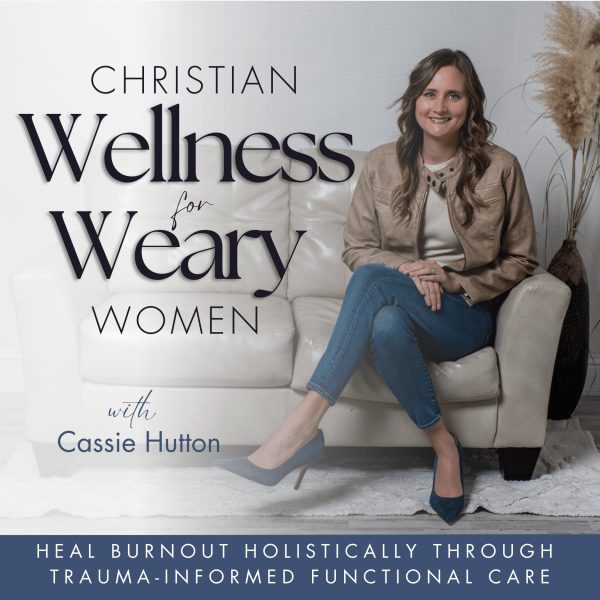
Christian Wellness for Weary Women | Burnout, Trauma, Emotional Regulation, Functional Health, Fatigue, Hormones
- Episódios
- 100
- Publicação
- semanal
- Último episódio
- 17 nov 2026
Sobre o podcast
Do you wake up tired no matter how early you go to bed?
Do your emotions swing hard and fast and you can’t explain why?
Do you feel guilty for snapping at your kids… yet completely tapped out and running on fumes?
Do you wonder if your hormones, your faith, or your life is falling apart — and you’re the only one who can’t keep up?
You’re in the right place.
This podcast gives you what you’re desperate for: steady energy, emotional stability, clearer thinking, a calmer home, and a body that finally feels like it’s on your side again. You’ll learn how to recover from burnout at the root, regulate your hormones naturally, support your nervous system, and rebuild a life that doesn’t drain you.
Hi, I’m Cassie — HTMA practitioner, trauma-informed wellness coach, homeschooling and home-birthing momma of five, and wife to a seriously solid man.
Eight weeks postpartum, stuffed into a tiny cabin with four kids, I was bleeding every two weeks, crying for no reason, raging over everything, and feeling like the walls were closing in. I kept trying to convince my husband to understand. I even wondered if I’d hit perimenopause. Nothing changed.
The shift came when someone said, “Your estrogen is probably high.” That one sentence made me realize my body needed deeper help than anything I could Google or explain away. Once I started addressing the root — hormones, gut, minerals, stress load — everything changed. I went from crashing constantly and drowning in my emotions to having steady energy and a grounded, clear mind.
I understand your burnout on a level most coaches don’t because I’ve lived it — and I found what actually works.
If you’re ready to finally break free from constant fatigue, emotional overwhelm, and hormonal chaos…
To get steady energy, calm your emotions, and feel in control of your body and mind…
To finally have practical, faith-aligned strategies that actually work — no Googling, no guesswork, no endless supplements…
This podcast is for you.
So, grab your not-coffee, take the only quiet breath you’ll get today, and let’s dive in — because the “perfect moment” isn’t happening in this lifetime.
🌿 Work With Me: https://join.cassiehutton.com
🌐 Website: https://cassiehutton.com
💌 Email: [email protected]
📸 Instagram: https://www.instagram.com/cassiehuttonwellness
💗 Join My Facebook Community: https://www.facebook.com/groups/cassiehuttonwellness
Episódios 100
Ep. 124 | Is Your Only Me Time After Bedtime? Break the Fatigue Cycle and Find Joy Again
You've been exhausted all day, counting down the hours until bedtime. But once the kids are finally asleep and nobody needs anything from you, suddenly you don't want to go to bed. You start scrolling, watching …
Notas do episódio
You've been exhausted all day, counting down the hours until bedtime. But once the kids are finally asleep and nobody needs anything from you, suddenly you don't want to go to bed. You start scrolling, watching TV, reading, or catching up on everything you couldn't finish earlier. Before you know it, another hour has passed, and tomorrow's fatigue is practically guaranteed.
What if bedtime procrastination isn't really about poor sleep habits? For women experiencing burnout, chronic stress, and constant overwhelm, staying up late can feel like the only opportunity to have a life outside of everyone else's needs. But that cycle of sacrificing sleep for personal time can contribute to burnout fatigue, low energy, and the emotional exhaustion you're desperately trying to overcome.
In this episode, I'm sharing how my own experience with motherhood and burnout helped me recognize the connection between our daily responsibilities, emotional health, and the need for personal enjoyment. We'll talk about why women experiencing burnout symptoms often lose touch with what brings them joy, how chronic stress can leave us craving uninterrupted time, and why meaningful burnout healing involves more than improving your bedtime routine.
I'll also challenge what you consider self care, including the difference between maintaining your health, fulfilling responsibilities, spending time with God, and doing something simply because you enjoy it. We'll look at how guilt, expectations, and a lack of boundaries can keep you stuck in the fatigue from the stress cycle, and how reclaiming just 15 minutes of your day can help you begin making room for yourself again.
Because overcoming burnout isn't just about getting more sleep or finding better emotional regulation strategies. It's also about recognizing when you've spent so much of your energy caring for everyone else that you've forgotten to make room for your own joy.
In this episode, you’ll learn:
Why bedtime procrastination can become a cycle of burnout fatigue, sleep deprivation, and exhaustion.
How chronic stress and the demands of motherhood can leave you feeling like nighttime is your only opportunity for personal freedom.
The connection between burnout symptoms, emotional health, and losing touch with what genuinely makes you happy.
Why reading your Bible, exercising, eating healthy, and completing chores aren't necessarily the same as making time for personal enjoyment.
How setting boundaries with your children can help you reclaim uninterrupted time during the day.
What you can do in just 15 minutes to begin breaking the cycle of fatigue from stress and rediscovering joy.
Why honoring God and loving your family doesn't require constantly putting your own needs last.
Cassie Hutton Wellness Resources:
📘 Download your free guide: The Overwhelm Detox Planner: https://cassiehutton.aweb.page/
🌿 Learn more about working with me: https://join.cassiehutton.com/
🤍 Join my free community: https://www.facebook.com/groups/cassiehuttonwellness
🎧 Follow me on social media: https://www.facebook.com/thecassiehutton
📩 Email: [email protected]Ep. 123 | HTMA Isn't Just About Minerals: A Blueprint for Nervous System Regulation
You can spend years learning how to manage stress, take care of everyone around you, and push through exhaustion without realizing how much those learned patterns are influencing your health. Maybe you struggle …
Notas do episódio
You can spend years learning how to manage stress, take care of everyone around you, and push through exhaustion without realizing how much those learned patterns are influencing your health. Maybe you struggle with emotional regulation, find it difficult to slow down, or feel uncomfortable receiving help. What if understanding those patterns could give you a better starting point for nervous system regulation and emotional healing?
In this episode, I'm sharing why HTMA (Hair Tissue Mineral Analysis) is about so much more than identifying mineral deficiencies. Through my approach to functional health and trauma informed care, I use mineral patterns to explore how your body responds to chronic stress, how your nervous system handles everyday demands, and how experiences from childhood may still influence the way you show up in your marriage, motherhood, and relationships.
I'll walk you through how I interpret calcium, magnesium, sodium, and potassium patterns in an HTMA hair test, including what my husband's results helped me recognize about his stress responses, nervous system dysregulation, and need for mineral support. Understanding his results gave me a new perspective on his behaviors and helped me approach our relationship with more grace. We'll also discuss how mineral balancing, nutrition, and greater awareness of your stress patterns can be part of supporting nervous system healing.
But this conversation goes beyond physical health. We'll explore how childhood relationships shape our understanding of love, safety, boundaries, and responsibility. From people pleasing and suppressing emotions to taking control when receiving support feels uncomfortable, these learned behaviors can affect our emotional health, contribute to burnout symptoms, and influence the way we connect with our husbands and children.
We'll also look at masculine and feminine qualities, the difference between asserting your needs and becoming controlling, and why recognizing a trauma response can be an important part of changing long standing patterns. My goal isn't to use HTMA analysis to tell you what happened in your past. It's to help you ask better questions about your present so you can begin making changes that support your physical, emotional, and spiritual health.
In this episode, you’ll learn:
Why HTMA hair tissue mineral analysis is about more than mineral deficiency and how I use mineral patterns to better understand chronic stress effects on the body.
How calcium, magnesium, sodium, and potassium ratios can provide insight into stress responses, mineral depletion, and nervous system regulation.
What my husband's HTMA results taught me about nervous system dysregulation, relationships, and extending grace when someone struggles to slow down.
How childhood experiences can influence emotional regulation issues, people pleasing behavior, and boundaries in relationships.
Why suppressed emotions, unresolved anger, and learned trauma responses may contribute to emotional exhaustion and burnout.
The connection between masculine and feminine qualities, receiving support, and the roles we take on in marriage and motherhood.
How emotional health questions and self reflection can help you recognize learned behaviors and begin changing patterns that no longer serve you.
Cassie Hutton Wellness Resources:
📘 Download your free guide: The Overwhelm Detox Planner: https://cassiehutton.aweb.page/
🌿 Learn more about working with me: https://join.cassiehutton.com/
🤍 Join my free community: https://www.facebook.com/groups/cassiehuttonwellness
🎧 Follow me on social media: https://www.facebook.com/thecassiehutton
📩 Email: [email protected]Ep. 122 | Trapped in a Life You're Trying to Maintain Despite Chronic Stress and Burnout?
You can love your family, have a beautiful home, and be doing everything you believe God has called you to do, yet still feel exhausted by the life you're living. You're managing the household, meeting …
Notas do episódio
You can love your family, have a beautiful home, and be doing everything you believe God has called you to do, yet still feel exhausted by the life you're living. You're managing the household, meeting everyone's needs, maintaining relationships, and trying to take care of your health. But somewhere along the way, you've become so focused on keeping everything running that you've forgotten what it feels like to actually enjoy your life.
Sometimes burnout isn't just about how much you're doing. It's about why you're doing it. In this episode, I'm challenging the people pleasing, unhealthy expectations, and patterns of self-neglect that contribute to mom burnout, emotional exhaustion, and chronic stress. Because you can spend years working toward the life you thought you wanted, only to realize you're not actually happy living it.
We'll talk about how Christian women sometimes confuse being a good wife, mother, or Christian with putting themselves last. I'll share a conversation about submission, discernment, and the consequences of ignoring your own convictions. We'll also explore how people pleasing in relationships, difficulty setting boundaries in marriage, fear of disappointing others, and the need for control can contribute to resentment, mental exhaustion, and emotional outbursts.
And when it comes to your health, we'll discuss why adding supplements, improving your diet, or practicing nervous system regulation isn't always enough to address burnout fatigue. Sometimes the circumstances you're continually tolerating are contributing to your nervous system overload. If you're experiencing chronic stress symptoms, low energy, or exhaustion, adding another healthy habit to an already overwhelming schedule may not address what needs to change.
We'll also look at the connection between self-criticism, emotional regulation, and the guilt that comes from continually overriding your own needs. Whether you're struggling with people pleasing burnout, unhealthy relationship patterns, or simply feeling stuck in survival mode, I want you to consider whether you're building a life you genuinely enjoy or just becoming better at maintaining one that leaves you depleted.
Most importantly, I'll walk you through practical questions to help you recognize what you're tolerating, where you need healthier boundaries in relationships, and what actually brings you joy. Because burnout recovery isn't about becoming more disciplined at managing an exhausting life. Sometimes it's about changing how you're living, learning to receive help, and making room for enjoyment without turning self-care into another responsibility.
In this episode, you’ll learn:
Why mom burnout and emotional exhaustion aren't always caused by doing too much, but sometimes by the expectations and motivations behind what you're doing.
How people pleasing in relationships and difficulty setting boundaries can contribute to chronic stress, resentment, and mental exhaustion.
The connection between Christian expectations, submission, healthy boundaries in marriage, and trusting your own discernment.
Why self-criticism, guilt, and fear of disappointing others can make emotional regulation and moving forward after painful experiences more difficult.
How nervous system overload and burnout fatigue may be connected to circumstances and responsibilities you continually tolerate.
Why adding more healthy habits isn't always the answer when you're experiencing low energy, exhaustion, and chronic stress symptoms.
What practical changes can help you recognize your needs, release unnecessary obligations, and begin enjoying the life you're working so hard to maintain.
Cassie Hutton Wellness Resources:
📘 Download your free guide: The Overwhelm Detox Planner: https://cassiehutton.aweb.page/
🌿 Learn more about working with me: https://join.cassiehutton.com/
🤍 Join my free community: https://www.facebook.com/groups/cassiehuttonwellness
🎧 Follow me on social media: https://www.facebook.com/thecassiehutton
📩 Email: [email protected]Ep. 121 | Your Mental Load Is Self-Inflicted and It's Fueling Mom Burnout
You can love your family, have a supportive husband, and still feel completely overwhelmed by the responsibility of keeping everything running. Between managing schedules, making financial decisions …
Notas do episódio
You can love your family, have a supportive husband, and still feel completely overwhelmed by the responsibility of keeping everything running. Between managing schedules, making financial decisions, anticipating everyone's needs, and worrying about whether you're doing enough, the mental load of motherhood can become a major contributor to emotional exhaustion, decision fatigue, and mom burnout.
But what if some of that mental load isn't actually yours to carry? And what if your own expectations, mom guilt, and need to make the right decisions are contributing to the very burnout you're trying to recover from?
In this episode of Christian Wellness for Weary Women, I'm sharing a conversation with one of my clients that revealed how easily we take responsibility for everyone else's physical, emotional, and even spiritual well-being. We'll explore how people pleasing, self-criticism, and difficulty setting boundaries in relationships can create chronic stress, mental exhaustion, and resentment, even when the people around us are willing to help.
I'm also sharing practical changes I've been making in my own home to reduce decision fatigue, including delegating responsibilities to my children, creating systems for recurring household decisions, and learning to stop managing everything myself. We'll talk about why rest alone doesn't always relieve burnout fatigue when your mind never stops working, how to share the mental load in your marriage, and why letting someone else take ownership means giving up control over how they do things.
If you're struggling with exhaustion, low energy, or the feeling that you're responsible for keeping everyone happy, this conversation may challenge how you've been approaching burnout recovery. Sometimes reducing your stress load isn't about becoming more organized or developing better emotional regulation skills. It's about recognizing which responsibilities are actually yours, questioning the guilt attached to your decisions, and giving yourself permission to do less.
In this episode, you’ll learn:
Why the invisible mental load of motherhood contributes to chronic stress, decision fatigue, and emotional exhaustion.
How mom guilt, people pleasing, and self-criticism can keep you overwhelmed even when you're trying to make positive changes.
The connection between constant decision-making, mental exhaustion, and burnout symptoms that don't necessarily improve with physical rest.
Why boundaries in marriage and family relationships matter when you're carrying responsibility for everyone's happiness and well-being.
How to delegate ownership instead of individual tasks so your husband and children can take on more responsibility.
What simple household systems, shared calendars, and spending boundaries can do to reduce everyday decisions.
How to recognize when guilt, fear of disappointing others, or unrealistic expectations are influencing your decisions.
Cassie Hutton Wellness Resources:
📘 Download your free guide: The Overwhelm Detox Planner: https://cassiehutton.aweb.page/
🌿 Learn more about working with me: https://join.cassiehutton.com/
🤍 Join my free community: https://www.facebook.com/groups/cassiehuttonwellness
🎧 Follow me on social media: https://www.facebook.com/thecassiehutton
📩 Email: [email protected]Ep. 120 | Stop Chasing Weight Loss: What Grief and Emotional Exhaustion May Be Costing You
You've tried eating healthier, cutting calories, exercising more, and doing everything you're supposed to do to lose weight. But the scale isn't moving, you're exhausted, and you're beginning to wonder what …
Notas do episódio
You've tried eating healthier, cutting calories, exercising more, and doing everything you're supposed to do to lose weight. But the scale isn't moving, you're exhausted, and you're beginning to wonder what you're doing wrong. What if the missing piece isn't another diet or workout program, but the chronic stress, grief, and emotional exhaustion you've been carrying?
In last week's episode, we explored the connection between burnout, reducing stress, gut healing, and weight loss. Today, I'm taking that conversation a little deeper because your emotional health deserves just as much attention as your physical health. When you're constantly pressuring yourself to do better, questioning every decision, or feeling disappointed by your progress, that internal dialogue can become another source of stress.
I'll share my own experience with a weight loss program that left me feeling worse, why healing isn't always linear, and how shifting my attention toward gut health and nourishment eventually led to unexpected weight loss. We'll also explore how chronic stress can affect metabolism, digestion, blood sugar regulation, and the nervous system, and why the same approach doesn't work for every woman.
But there's another part of this conversation that I especially want to share. In Isaiah 61:3, Scripture talks about exchanging a spirit of heaviness for a garment of praise. We'll explore this passage, the connection I see between emotional burdens and physical heaviness, and what grief healing and surrender might look like when you've spent so long trying to control the outcome. This isn't about claiming that grief or trauma automatically causes weight gain. It's about recognizing that your emotional and spiritual well-being matter, too.
If you're experiencing burnout, fatigue, stubborn weight gain, or frustration with your healing progress, I want to help you consider a different approach to functional health. One that makes room for nutrition, mineral support, emotional healing, and caring for yourself without making every healthy choice another measurement of whether you're succeeding.
In this episode, you’ll learn:
Why chronic stress and emotional exhaustion deserve attention when you're struggling with weight loss
How grief, disappointment, trauma, and self criticism can add to the stress you're already carrying
The connection between gut healing, metabolism, blood sugar regulation, and your body's response to stress
Why healing isn't linear and what to remember when symptoms return or your progress seems to stall
What Isaiah 61:3 says about the spirit of heaviness and how I connect this Scripture to grief healing and surrender
How shifting your focus from losing weight to supporting your overall health changed my own experience
What it looks like to release the pressure to control results while still taking practical steps toward better health
Cassie Hutton Wellness Resources:
📘 Download your free guide: The Overwhelm Detox Planner: https://cassiehutton.aweb.page/
🌿 Learn more about working with me: https://join.cassiehutton.com/
🤍 Join my free community: https://www.facebook.com/groups/cassiehuttonwellness
🎧 Follow me on social media: https://www.facebook.com/thecassiehutton
📩 Email: [email protected]Ep. 119 | Weight Loss After Years of Chronic Stress: Could Gut Healing Be the Missing Piece?
You’ve counted macros, cut calories, and tried diet after diet, but the weight still isn’t coming off. Meanwhile, you’re dealing with fatigue, cravings, bloating, and an afternoon energy crash that makes caring …
Notas do episódio
You’ve counted macros, cut calories, and tried diet after diet, but the weight still isn’t coming off. Meanwhile, you’re dealing with fatigue, cravings, bloating, and an afternoon energy crash that makes caring for everyone else even harder. When you’ve spent years under chronic stress, another restrictive diet can feel like one more demand you don’t have the energy to meet.
In this episode, I’m answering a listener’s question about whether healing burnout can lead to weight loss. I share what three studies suggest about stress management and weight loss, including why improving stress doesn’t automatically mean the scale will change. We explore the stress hormone cortisol, mineral depletion, and nervous system dysregulation, along with how stress can affect blood sugar, appetite, and sleep.
Through a functional health lens, I explain why gut healing and blood sugar regulation deserve attention before you add more restriction. We talk about blood sugar imbalance symptoms, including sudden hunger, jitteriness, and brain fog, plus why fatigue after eating and digestive discomfort are worth noticing. I share my approach to blood sugar balancing meals, protein, healthy fats, and food choices that work for your digestion.
I also share my experience with the GAPS diet, changes in my mood swings and energy, and a client’s recent experience after adjusting her meals. From meat stock and fermented foods to your mindset at mealtime, this conversation looks at nourishment beyond a “healthy” diet label. We discuss self criticism, emotional regulation, and making room to rest and digest, so pursuing better health doesn’t become another source of pressure.
In this episode, you’ll learn:
What three studies suggest about stress management and weight loss, and where the findings differ.
The connection between chronic stress, cortisol, mineral depletion, and blood sugar dysregulation.
How to recognize patterns that may point to a blood sugar crash, including brain fog and sudden hunger.
Why I prioritize blood sugar balance and gut healing before adding more dietary restriction.
What I changed through the GAPS diet, including my use of meat stock, fermented foods, and fewer starchy carbohydrates.
How fatigue after eating, bloating, and constipation can help you notice which foods aren’t working well for you.
Why your mindset and the way you eat matter, including slowing down and praying before meals.
Studies discussed in this episode:
Cassie Hutton Wellness Resources:
📘 Download your free guide: The Overwhelm Detox Planner: https://cassiehutton.aweb.page/
🌿 Learn more about working with me: https://join.cassiehutton.com/
🤍 Join my free community: https://www.facebook.com/groups/cassiehuttonwellness
🎧 Follow me on social media: https://www.facebook.com/thecassiehutton
📩 Email: [email protected]Ep. 118 | Marriage Secrets for Burnout Days and the Chronic Stress You Both Carry
Burnout can make the everyday demands of marriage feel overwhelming, especially when you’re carrying years of hurt you never said out loud. You need help with dinner, bedtime, and the running list in your head …
Notas do episódio
Burnout can make the everyday demands of marriage feel overwhelming, especially when you’re carrying years of hurt you never said out loud. You need help with dinner, bedtime, and the running list in your head, but instead of naming what you need, you wonder why your husband can’t see it. Meanwhile, he may be carrying his own chronic stress, and you both end the day feeling unheard.
In this anniversary episode, I’m sharing what burnout brought to the surface in our marriage and what helped us begin working through it. From crying, anger, and self criticism to the resentment that grew around unspoken needs, I’m talking honestly about how burnout symptoms affected our relationship. I also share the moment a conversation about my HTMA results helped my husband understand my physical depletion and made me feel seen.
We’ll look at emotional regulation in the middle of conflict, why listening before defending matters, and how to ask for support before frustration builds. When you’re experiencing burnout fatigue or fatigue from stress, hard conversations can feel even harder, but exhaustion doesn’t remove either person’s responsibility for how you treat each other. Repair requires honest communication, ownership, and a willingness to work through unresolved hurt.
I’m also sharing practical ways to support each other on depleted days, including checking in before unloading your frustrations, sharing daily responsibilities, and making specific requests. As my physical capacity improved, I had more room to work on my emotional health and the hurts I had kept quiet about. For me, caring for my body, soul, and spirit belonged in the same conversation, and both of us had to participate in changing our marriage.
In this episode, you’ll learn:
Why burnout can bring old hurts and unspoken resentment to the surface
How a conversation about my HTMA results helped my husband understand my exhaustion
What emotional regulation can look like when a hard conversation becomes defensive
How to name a specific need instead of waiting for your spouse to notice
Why willingness to forgive gives marriage repair somewhere to begin
How shared responsibilities, regular meals, rest, and daily check ins can support you both
What taking responsibility for your part in a conflict actually requires
Cassie Hutton Wellness Resources:
📘 Download your free guide: The Overwhelm Detox Planner: https://cassiehutton.aweb.page/
🌿 Learn more about working with me: https://join.cassiehutton.com/
🤍 Join my free community: https://www.facebook.com/groups/cassiehuttonwellness
🎧 Follow me on social media: https://www.facebook.com/thecassiehutton
📩 Email: [email protected]Ep. 117 | Functional Health Starts at Home Before You Reach for Another Remedy with Camila Johnson
When you’re exhausted, another herb or supplement can sound like the answer. But Camila Johnson and I kept coming back to a simpler place to start: Are you sleeping, eating enough, drinking water, getting …
Notas do episódio
When you’re exhausted, another herb or supplement can sound like the answer. But Camila Johnson and I kept coming back to a simpler place to start: Are you sleeping, eating enough, drinking water, getting outside, and making room for rest?
If you’re dealing with fatigue all the time, these questions can be easy to overlook. We talk about how a natural remedy can become another way to quiet a symptom before asking what might be contributing to it, especially when burnout has left you with little energy to spare.
Camila is a homeschool mom and educator who created a Bible rooted herbalism curriculum for parents and children to learn together. She shares how she teaches her daughters to notice everyday signals, like a headache when they may need water, and how studying one plant at a time brings botany, history, geography, and Scripture to the table.
We also discuss functional health at home and the daily habits that support it. I share why I look at food, hydration, sunlight, sleep, rest, and connection before using HTMA to guide more targeted mineral support. If you’ve been looking for burnout help, this conversation offers practical questions for your own day and for the way you teach your kids about health.
In this episode, you’ll learn:
- Why burnout symptoms can send you looking for another remedy when a basic need deserves attention first
- How to take a closer look at sleep, food, hydration, and rest when you’re dealing with fatigue
- What it can look like to teach children to think through a symptom instead of immediately reaching for a fix
- Why Camila created a Bible rooted herbalism curriculum that parents can learn alongside their children
- How I place HTMA and mineral support after the daily foundations in my work
Connect with Camila Johnson:
- Website and curriculum: https://www.edeninstitute.health
- Free one week curriculum sample: https://edeninstitute.health/homeschool
- Facebook: https://www.facebook.com/EdensTableHomeschoolCurriculum
- Instagram: https://www.instagram.com/edenstablehomeschoolcurriculum/
- Substack: https://substack.com/@camilajohnson1
Cassie Hutton Wellness Resources:
📘 Download your free guide: The Overwhelm Detox Planner: https://cassiehutton.aweb.page/
🌿 Learn more about working with me: https://join.cassiehutton.com/
🤍 Join my free community: https://www.facebook.com/groups/cassiehuttonwellness
🎧 Follow me on social media: https://www.facebook.com/thecassiehutton
📩 Email: [email protected]Ep. 116 | Low Vitamin D Despite Sunshine? Why Functional Health Testing Looks Beyond One Number
A low vitamin D result can make taking a supplement feel like the obvious next step. But I want to ask a bigger question: what else is happening with your calcium and minerals? In this episode, I share the …
Notas do episódio
A low vitamin D result can make taking a supplement feel like the obvious next step. But I want to ask a bigger question: what else is happening with your calcium and minerals?
In this episode, I share the story of a client who had been diagnosed with osteoporosis and was taking vitamin D and calcium. Her HTMA results showed very high tissue calcium alongside low potassium. That result raised questions we would have missed by looking at one number alone. I explain how vitamin D affects calcium absorption, why absorbing calcium is different from using it well, and why I consider the broader mineral picture before recommending more supplements.
We also talk about the vitamin D blood test most people receive and the active form that can be tested separately. I’ll walk you through the questions I would ask about sunlight, food, supplements, and whether further functional health testing could help you understand a low result. My goal is to help you investigate what the number means for you, rather than assume every low result has the same explanation.
In this episode, you’ll learn:
Why a low vitamin D result deserves a closer look before you automatically supplement
How vitamin D affects calcium absorption and why other minerals matter
What one client’s osteoporosis diagnosis and HTMA hair tissue mineral analysis showed about her mineral pattern
The difference between the storage and active forms of vitamin D testing
How sunlight, food, and supplement choices fit into the conversation
What questions to ask when considering functional health blood work and an HTMA test
Cassie Hutton Wellness Resources:
📘 Download your free guide: The Overwhelm Detox Planner: https://cassiehutton.aweb.page/
🌿 Learn more about working with me: https://join.cassiehutton.com/
🤍 Join my free community: https://www.facebook.com/groups/cassiehuttonwellness
🎧 Follow me on social media: https://www.facebook.com/thecassiehutton
📩 Email: [email protected]Ep. 115 | When Rejection Makes You Question God: Finding Trauma Healing in His Word with Angie Baughman
Rejection can shape far more than the way you relate to other people. It can affect how you see yourself, how you respond to conflict, and even whether you believe God will be there when you need Him most. In …
Notas do episódio
Rejection can shape far more than the way you relate to other people. It can affect how you see yourself, how you respond to conflict, and even whether you believe God will be there when you need Him most.
In this episode, I’m joined by Angie Baughman, licensed pastor, Bible teacher, and founder of Steady On Ministries. Angie shares how being groomed and abused by a teacher as a teenager, followed by rejection from her community, left her battling anxiety, perfectionism, physical symptoms, and the persistent belief that she would never truly belong.
We talk about how past rejection can create a trauma response that keeps you guarded in relationships and hyperaware of anything that feels like abandonment. When you are already experiencing burnout or nervous system dysregulation, even a canceled lunch or difficult conversation can bring old fear rushing back as though the original rejection is happening again.
Angie explains how studying Scripture helped her recognize the difference between God’s voice, the enemy’s lies, and the harsh self criticism happening inside her own mind. We also discuss how choosing a Bible verse for anxiety and fear can give you something concrete to return to when you begin spiraling or questioning what God says about you.
This conversation is about trauma healing, emotional health, and learning to trust God’s character even when disappointment has made His presence difficult to feel. Angie shares how therapy, Scripture, boundaries, and honest communication helped her regain agency, respond to her younger self with compassion, and stop allowing fear of rejection to control her relationships.
In this episode, you’ll learn:
How rejection can affect your beliefs, relationships, and physical health
Why a past trauma response can make small disappointments feel like major rejection
How to distinguish God’s voice from fear, shame, and self criticism
How to use a Bible verse for anxiety and fear when overwhelm begins to take over
Why nervous system dysregulation can keep you responding to present situations through past experiences
How self awareness, boundaries, and honest communication can support trauma healing
What Angie’s simple step by step Bible study method can help you discover in God’s Word
Connect with Angie Baughman:
Website: https://livesteadyon.com/
Download the free Step By Step Starter Kit or Family Kit: https://steadyon.myflodesk.com/stepbystep
Listen to the Understand Your Bible podcast: Search for Understand Your Bible wherever you listen to podcasts.Cassie Hutton Wellness Resources:
📘 Download your free guide: The Overwhelm Detox Planner: https://cassiehutton.aweb.page/
🌿 Learn more about working with me: https://join.cassiehutton.com/
🤍 Join my free community: https://www.facebook.com/groups/cassiehuttonwellness
🎧 Follow me on social media: https://www.facebook.com/thecassiehutton
📩 Email: [email protected]Ep. 114 | What HTMA Reveals About Self-Criticism: 10 Signs It’s More Than Overwhelm
Burnout does not always look like falling apart. You may still be cooking, working, parenting, and keeping everything moving while your capacity is quietly deteriorating. Small responsibilities begin to feel …
Notas do episódio
Burnout does not always look like falling apart. You may still be cooking, working, parenting, and keeping everything moving while your capacity is quietly deteriorating. Small responsibilities begin to feel disproportionately difficult, interruptions set you off, and you judge yourself for struggling with things you used to handle easily.
In this episode, I’m walking you through 10 burnout warning signs that can show up long before you completely shut down. These burnout symptoms can look like procrastinating over ordinary tasks, resenting people for needing you, feeling exhausted but unable to rest, fantasizing about escaping, and continuing to function on anxiety, caffeine, adrenaline, and urgency.
I also explain how chronic stress, mineral deficiency, and nervous system dysregulation can affect your energy, emotional health, relationships, and ability to adapt. When your nervous system is stuck in fight or flight and your body is running on burnout fatigue, reduced capacity can begin to feel like laziness, selfishness, or spiritual failure.
We’ll also look at HTMA hair tissue mineral analysis and what Dr. Rick Malter called the inner judge. I explain the connection he made between a high sodium to potassium ratio, an intensified stress pattern, magnesium loss, anxiety, and the self criticism that tells you to push harder and earn your rest.
Instead of turning burnout recovery into another complete life overhaul, I’ll help you recognize how you may be compensating through pushing, controlling, numbing, escaping, or overcommitting. You’ll leave with practical ways to reduce pressure and begin supporting one physical need you have consistently ignored.
In this episode, you’ll learn:
Why small tasks can become difficult when burnout and fatigue reduce your available capacity
How irritability, resentment, control, and people pleasing can become burnout symptoms
Why nervous system fight or flight can leave you exhausted but unable to slow down
What spiritual disconnection can look like when chronic stress affects your concentration
The connection between HTMA, a high sodium to potassium ratio, magnesium loss, and self criticism
How to recognize whether you are pushing, controlling, numbing, escaping, or overcommitting
Why burnout recovery should begin with reducing pressure and meeting one consistently ignored physical need
Cassie Hutton Wellness Resources:
📘 Download your free guide: The Overwhelm Detox Planner: https://cassiehutton.aweb.page/
🌿 Learn more about working with me: https://join.cassiehutton.com/
🤍 Join my free community: https://www.facebook.com/groups/cassiehuttonwellness
🎧 Follow me on social media: https://www.facebook.com/thecassiehutton
📩 Email: [email protected]Ep. 113 | Stop Treating Your Symptoms Like Problems to Fix: What Your Body Says About Chronic Stress and Anxiety
What if your anxiety symptoms, emotional exhaustion, or physical reactions are not problems you need to immediately fix? They may be part of what your body is trying to tell you about chronic stress, burnout …
Notas do episódio
What if your anxiety symptoms, emotional exhaustion, or physical reactions are not problems you need to immediately fix? They may be part of what your body is trying to tell you about chronic stress, burnout, and an overwhelmed nervous system.
When you have been stuck in survival mode, it is easy to treat every uncomfortable feeling or symptom as evidence that something is wrong with you. You may respond by searching for another supplement, changing your routine again, or trying even harder to control how you feel. But constantly trying to fix yourself can add pressure to a system that is already overloaded.
In this episode of Christian Wellness Weary Women, we’re looking at how the self-fixing mindset affects emotional health, nervous system regulation, and chronic stress recovery. You’ll learn how to observe anxiety symptoms and physical reactions without immediately judging or suppressing them. We’ll also discuss how slowing down long enough to notice patterns can help you understand what may actually need support.
This does not mean ignoring symptoms or refusing appropriate treatment. It means gathering information before treating every symptom like an emergency.
IN THIS EPISODE, YOU’LL LEARN:
- Why burnout and mental exhaustion can make every symptom feel urgent
- How nervous system dysregulation can keep you focused on controlling uncomfortable reactions
- Why eliminating symptoms is not always the same as addressing their root cause
- How to recognize when your nervous system is overwhelmed
- A practical reflection exercise for observing symptoms without attaching them to your identity
- How small changes can support nervous system healing without turning recovery into another performance
READY TO GO DEEPER?
Download the free 7 Day Overwhelm Detox Planner to identify what is contributing to your emotional overwhelm, draining your energy, and keeping you stuck in survival mode: 📘 The Overwhelm Detox Planner: https://cassiehutton.aweb.page/
Subscribe for weekly conversations about functional health, fatigue, burnout recovery, anxiety, chronic stress symptoms in women, nervous system regulation, and faith based healing.
Cassie Hutton Wellness Resources:
📘 Download your free guide: The Overwhelm Detox Planner: https://cassiehutton.aweb.page/
🌿 Learn more about working with me: https://join.cassiehutton.com/
🤍 Join my free community: https://www.facebook.com/groups/cassiehuttonwellness
🎧 Follow me on social media: https://www.facebook.com/thecassiehutton
📩 Email: [email protected]
Ep. 112 | Why Healthy Changes Feel Impossible: How Trauma Response and Emotional Health Play a Role
You know you need to eat better, slow down, set boundaries, or finally put your needs first. So why does making healthy changes feel nearly impossible? It might not be a lack of discipline. A trauma response …
Notas do episódio
You know you need to eat better, slow down, set boundaries, or finally put your needs first. So why does making healthy changes feel nearly impossible?
It might not be a lack of discipline. A trauma response can make change feel unsafe, especially when your emotional health has been shaped by chronic stress, people-pleasing, perfectionism, and years of putting everyone else first.
If you’re experiencing burnout symptoms, ongoing fatigue, or nervous system dysregulation, even simple changes can feel overwhelming. Your body may resist unfamiliar routines—not because you’re incapable of healing, but because you need the right support to move forward.
In this episode, we’re talking about:
- Why a trauma response can make healthy changes feel uncomfortable or unsafe.
- How chronic stress and nervous system dysregulation keep you stuck in exhausting patterns.
- Five conditions that make burnout healing and lasting change possible.
- Why nervous system regulation, emotional health, and feeling supported matter more than willpower.
- How prayer can help change your desires before you change your habits.
- Simple, manageable steps to move forward without demanding perfection.
If you’re tired of knowing what you need to do but struggling to follow through, this episode will help you understand what’s keeping you stuck and identify your next step.
Cassie Hutton Wellness Resources:
📘 Download your free guide: The Overwhelm Detox Planner: https://cassiehutton.aweb.page/
🌿 Learn more about working with me: https://join.cassiehutton.com/
🤍 Join my free community: https://www.facebook.com/groups/cassiehuttonwellness
🎧 Follow me on social media: https://www.facebook.com/thecassiehutton
📩 Email: [email protected]
Ep. 111 | Are You Suppressing Your Voice? The Functional Health Connection to Burnout & Vitality
What if your burnout isn’t only about what you’re eating, what supplements you’re taking, or how much sleep you’re getting? In this episode, we’re talking about the connection between suppressing your voice …
Notas do episódio
What if your burnout isn’t only about what you’re eating, what supplements you’re taking, or how much sleep you’re getting?
In this episode, we’re talking about the connection between suppressing your voice, chronic stress, and burnout and why constantly overriding what you need can keep your body stuck in an over-functioning state.
I’m sharing several real breakthroughs from my client calls this week, including what happened when women began recognizing where they were people-pleasing, searching for the “next thing” in their health, minimizing their needs, and staying quiet out of fear of rejection or someone else’s reaction.
We’ll also explore some of the transformational questions I use alongside HTMA and functional health to look beyond mineral levels and get curious about the stressors underneath them.
In this episode, you’ll consider:
- Where are you pushing beyond your capacity?
- Where have you felt the need to protect or armor yourself?
- Where have you stayed quiet because you feared rejection or backlash?
- Who or what is draining you?
- What are you afraid would happen if you actually honored what you need?
Because you can support your body with nutrition, minerals, and supplements but you can’t supplement your way out of a life that continually requires you to abandon yourself.
Cassie Hutton Wellness Resources:
📘 Download your free guide: The Overwhelm Detox Planner: https://cassiehutton.aweb.page/
🌿 Learn more about working with me: https://join.cassiehutton.com/
🤍 Join my free community: https://www.facebook.com/groups/cassiehuttonwellness
🎧 Follow me on social media: https://www.facebook.com/thecassiehutton
📩 Email: [email protected]Ep. 110 | Perimenopause Is Burnout in Disguise: Rethinking the Midlife Crisis
If your labs look fine but your body feels like a stranger, this episode is for you. I want to challenge something that too many women are being told: that what you are experiencing is just perimenopause, and …
Notas do episódio
If your labs look fine but your body feels like a stranger, this episode is for you. I want to challenge something that too many women are being told: that what you are experiencing is just perimenopause, and you need to wait it out. Because what I see over and over again in my work with women is that these symptoms are not a hormonal inevitability. They are the body's way of telling you that your mineral reserves are gone and your adrenals have been carrying far more than they were designed to carry.
This is burnout recovery work, and it starts with understanding what is actually driving your symptoms.
In this episode I am walking you through the real physiology behind why burnout and perimenopause can look nearly identical on a Hair Tissue Mineral Analysis, and what your HTMA results actually reveal about what is going on beneath the surface.
Here's what we cover:
- Why a burned out 35 year old and a perimenopausal 48 year old can show the same pattern on a Hair Tissue Mineral Analysis test
- The cortisol steal and how chronic stress depletes progesterone long before menopause even begins
- What magnesium depletion actually looks like: hot flashes, heart palpitations, anxiety, poor sleep, and muscle tension
- Why low zinc means the body cannot make enough progesterone even when the hormonal signal is there
- How copper bound in the tissues drives estrogen dominance, rage, brain fog, and the feeling of not having your own thoughts
- The NaK ratio, which is the burnout ratio on HTMA, and what it means when it falls under a two
- The thyroid ratio and why hair loss and weight that won't move often have nothing to do with estrogen
- The one supplement I feel comfortable recommending without testing, and why I keep recommending liquid magnesium from Trace Minerals
- Why blindly supplementing with methylated vitamins can actually make anxiety worse
- Simple nervous system regulation practices that speak safety to the body so healing can actually begin
If you are a Christian woman navigating exhaustion, hormonal chaos, or symptoms that no one has been able to explain, this episode will help you understand why guessing at supplements is not the answer, and what to actually look at instead. Christian women's health deserves more than a pill for every ill, and that is exactly what we are getting into today.
Cassie Hutton Wellness Resources:
📘 Download your free guide: The Overwhelm Detox Planner: https://cassiehutton.aweb.page/
🌿 Learn more about working with me: https://join.cassiehutton.com/
🤍 Join my free community: https://www.facebook.com/groups/cassiehuttonwellness
🎧 Follow me on social media: https://www.facebook.com/thecassiehutton
📩 Email: [email protected]Ep. 109 | Are You Ignoring Your Body's Signals? Nervous System Regulation for Burnout Recovery
From the moment we put a diaper on a baby, we begin teaching them not to feel their own signals. And it doesn't stop there. By the time we're grown women trying to heal our bodies, we've been so conditioned to …
Notas do episódio
From the moment we put a diaper on a baby, we begin teaching them not to feel their own signals. And it doesn't stop there. By the time we're grown women trying to heal our bodies, we've been so conditioned to look outward for answers that sitting with our own body's wisdom feels almost impossible, and following someone else's rules feels like the only safe option.
In this episode, I'm breaking down why that impulse makes complete sense, and why it's quietly working against your healing.
Using the GAPS diet as a real-world example from two client conversations I had this week, I unpack why healing was never designed to fit inside a 30-, 60-, or 90-day protocol. I also share a personal story from my third pregnancy that brought this lesson home in the most unexpected way, and explain why our nervous system regulation patterns are the real reason rigid rules feel safer than trusting yourself.
If you've ever asked "how long do I need to do this?" or felt like you were failing because your healing didn't look like someone else's, this episode is for you.
In this episode:
- Why disposable diapers are one of the earliest ways we're taught to stop listening to our bodies
- How the demand for timelines and finish lines in health protocols is rooted in nervous system regulation
- What the GAPS diet actually teaches about listening to your body instead of following a box
- A personal birth story about choosing peace over someone else's prescription
- How to shift from rule-following to body-led curiosity in your own healing journey
Cassie Hutton Wellness Resources:
📘 Download your free guide: The Overwhelm Detox Planner: https://cassiehutton.aweb.page/
🌿 Learn more about working with me: https://join.cassiehutton.com/
🤍 Join my free community: https://www.facebook.com/groups/cassiehuttonwellness
🎧 Follow me on social media: https://www.facebook.com/thecassiehutton
📩 Email: [email protected]Ep. 108 | Ready to Give Up on Healing? Why Burnout Recovery May Be Working
If you're four years into your healing journey and still waiting to feel better, this episode is for you. Burnout recovery is not a straight line, and if you're feeling discouraged, frustrated, or ready to …
Notas do episódio
If you're four years into your healing journey and still waiting to feel better, this episode is for you. Burnout recovery is not a straight line, and if you're feeling discouraged, frustrated, or ready to throw in the towel, I want you to know: your body is not broken. It's working exactly the way God designed it to.
In this episode I break down what functional health actually looks like over time, share what your HTMA results can reveal about your healing speed, and get vulnerable about a moment from my own journey earlier this year that nearly broke my hope.
In this episode we cover:
- Why healing takes longer than Western medicine told you and how to reset your expectations
- A simple timeline framework for understanding how long burnout recovery actually takes
- What your HTMA pattern reveals about slow vs. fast metabolizers and why it matters
- How God's biblical design shows up in the science of cellular healing
- Practical ways to stay consistent when you're discouraged and ready to quit
- What happened to me in January and why I now see it as a sign my body is healing
Cassie Hutton Wellness Resources:
📘 Download your free guide: The Overwhelm Detox Planner: https://cassiehutton.aweb.page/
🌿 Learn more about working with me: https://join.cassiehutton.com/
🤍 Join my free community: https://www.facebook.com/groups/cassiehuttonwellness
🎧 Follow me on social media: https://www.facebook.com/thecassiehutton
📩 Email: [email protected]Ep. 107 | Burnout Recovery: When Silence Becomes Resentment — And What It’s Costing Your Body
A lot of us grew up learning that speaking up wasn't safe. Maybe every time you said how you really felt, it created an explosion. Maybe you got shut down, dismissed, or punished for it. So you stopped. You …
Notas do episódio
A lot of us grew up learning that speaking up wasn't safe. Maybe every time you said how you really felt, it created an explosion. Maybe you got shut down, dismissed, or punished for it. So you stopped. You kept the peace. You smiled and moved on. And that pattern followed you right into adulthood and right into your relationships.
But here's what nobody tells you: staying silent has a cost. Not just emotionally, but physically. Your body hears everything you don't say. And over time, all of that suppression turns into resentment, bitterness, and a nervous system that doesn't feel safe enough to speak up even when it wants to.
In this episode we're talking about the connection between silence, resentment, and what it's actually doing to your body at a mineral level. We're also looking at what the Bible has to say about it, because Ephesians 4:25 tells us to speak the truth, but what if you were never given a safe place to do that?
In this episode:
- Why resentment starts with self-protection and not bitterness
- How the gap between what you feel and what you say becomes a lie that feeds manipulation, even when it's unintentional
- How anger and resentment are stored in the liver and why that matters for your health - What magnesium depletion and your sodium to potassium ratio have to do with all of this
- What the hill pattern on an HTMA retest tells us about healing and coming back to your voice If you've ever felt like you lost yourself trying to keep everyone else comfortable, take a listen!
Cassie Hutton Wellness Resources:
📘 Download your free guide: The Overwhelm Detox Planner: https://cassiehutton.aweb.page/
🌿 Learn more about working with me: https://join.cassiehutton.com/
🤍 Join my free community: https://www.facebook.com/groups/cassiehuttonwellness
🎧 Follow me on social media: https://www.facebook.com/thecassiehutton
📩 Email: [email protected]Ep. 106 | Why Are Old Symptoms Coming Back? Burnout Recovery, Retracing & Returning Vitality
Now that I'm stepping into genuine healing, why are old symptoms coming back? In this episode, I'm breaking down what retracing actually is and why it feels so much like relapse, even though it's proof your …
Notas do episódio
Now that I'm stepping into genuine healing, why are old symptoms coming back? In this episode, I'm breaking down what retracing actually is and why it feels so much like relapse, even though it's proof your body is working.
In this episode:
- What retracing is and why symptoms resurface in reverse order when you heal
- How mineral depletion crashes cellular energy and locks your nervous system into survival mode
- The difference between immune suppression (shingles during burnout) and immune reconstitution (shingles during healing)
- Why people who never get sick might actually have suppressed immune systems
- My story: GAPS protocol, shingles outbreak, and the shallow breathing that proved I was retracing trauma from high school
- How to know if you're retracing or relapsing (the energy and capacity test)
- Why fevers kill viruses and why suppressing them can leave dormant pathogens hiding in your tissues
just how much healing has actually taken place in my nervous system, and how to tell the difference between old burnout patterns and true recovery.
In this episode, I share:
- Why rest can look like avoidance, stillness can look like shutdown, and slowness can look like falling behind, even when it's actually healing
- The moment I realized decorating our new home slowly, room by room, without rushing to finish, was a sign of real nervous system healing
- A breakthrough with my two-year-old that showed me the difference between forcing myself through stillness and actually being at peace in it
- Three burnout patterns explained: avoidance, freeze, and forcing/rushing to finish, and the discernment question for each one
- Why constant motion is the counterfeit most people mistake for healing
- A teaser for next week's episode on retracing symptoms as your body heals
This episode is for the Christian woman in burnout recovery who is learning to trust her body again, one slow, unhurried step at a time.
Cassie Hutton Wellness Resources:
📘 Download your free guide: The Overwhelm Detox Planner: https://cassiehutton.aweb.page/
🌿 Learn more about working with me: https://join.cassiehutton.com/
🤍 Join my free community: https://www.facebook.com/groups/cassiehuttonwellness
🎧 Follow me on social media: https://www.facebook.com/thecassiehutton
📩 Email: [email protected]Ep. 105 | What If Rest Isn't Laziness? 3 Signs You’re Burnout Recovery Is Working
What if the thing you're calling laziness right now is actually your body finally healing? In this episode, I'm walking through some real moments from my own life this past week that showed me just how much …
Notas do episódio
What if the thing you're calling laziness right now is actually your body finally healing? In this episode, I'm walking through some real moments from my own life this past week that showed me just how much healing has actually taken place in my nervous system, and how to tell the difference between old burnout patterns and true recovery.
In this episode, I share:
- Why rest can look like avoidance, stillness can look like shutdown, and slowness can look like falling behind, even when it's actually healing
- The moment I realized decorating our new home slowly, room by room, without rushing to finish, was a sign of real nervous system healing
- A breakthrough with my two-year-old that showed me the difference between forcing myself through stillness and actually being at peace in it
- Three burnout patterns explained: avoidance, freeze, and forcing/rushing to finish, and the discernment question for each one
- Why constant motion is the counterfeit most people mistake for healing
- A teaser for next week's episode on retracing symptoms as your body heals
This episode is for the Christian woman in burnout recovery who is learning to trust her body again, one slow, unhurried step at a time.
Cassie Hutton Wellness Resources:
📘 Download your free guide: The Overwhelm Detox Planner: https://cassiehutton.aweb.page/
🌿 Learn more about working with me: https://join.cassiehutton.com/
🤍 Join my free community: https://www.facebook.com/groups/cassiehuttonwellness
🎧 Follow me on social media: https://www.facebook.com/thecassiehutton
📩 Email: [email protected]Ep. 104 | Iron Doesn’t Sharpen Iron: The HTMA Secret Behind Low Iron That Never Resolves
I'm tackling one of the most frustrating patterns I see in women's health: you're told your iron is low, you get handed a supplement, your levels nudge up for a bit, and then they fall right back down. Nobody …
Notas do episódio
I'm tackling one of the most frustrating patterns I see in women's health: you're told your iron is low, you get handed a supplement, your levels nudge up for a bit, and then they fall right back down. Nobody ever asks why your body can't hold onto iron in the first place, and that's exactly what we're digging into today through the lens of functional health and faith-based wellness.
This episode breaks down why the iron supplement you were likely given (synthetic, non-heme ferrous sulfate) is part of the problem, and why heme iron from real food sources absorbs so much more efficiently. But the real story is the cofactors your body needs to actually regulate iron: copper, vitamin A, vitamin C, the B vitamins, zinc, and molybdenum all play a role, and when they're out of balance, iron gets stuck in the tissues instead of doing its job. This is exactly the kind of pattern Hair Tissue Mineral Analysis (HTMA) testing reveals when standard blood work comes back looking fine.
We'll also look at how chronic stress and burnout quietly drain these same cofactors, which means low iron is often a downstream symptom of an unsupported nervous system rather than a standalone deficiency. Burnout recovery and mineral balance are deeply connected, and for Christian women's health specifically, this conversation matters because so many of us have been told to just push through exhaustion instead of asking what our bodies actually need.
In this episode:
- Why iron supplements often fail to fix low iron long term
- The difference between synthetic ferrous sulfate and heme iron from food
- The key cofactors your body needs to regulate iron: copper, vitamin A, vitamin C, B vitamins, zinc, and molybdenum
- How burnout recovery and mineral balance are connected
- What an HTMA (Hair Tissue Mineral Analysis) can reveal about iron toxicity, even when blood work seems fine
- Practical, faith-based next steps for supporting healthy iron levels through functional health and nutrition
If you've been stuck in the cycle of low iron that won't resolve no matter what you try, this episode will help you understand what your body is actually asking for, body, mind, and spirit.
Cassie Hutton Wellness Resources:
📘 Download your free guide: The Overwhelm Detox Planner: https://cassiehutton.aweb.page/
🌿 Learn more about working with me: https://join.cassiehutton.com/
🤍 Join my free community: https://www.facebook.com/groups/cassiehuttonwellness
🎧 Follow me on social media: https://www.facebook.com/thecassiehutton
📩 Email: [email protected]Ep. 103 | What PMDD Really Says About Your Hormones and Mind: Mineral Depletion, Not Madness
This episode is a sequel to last week's conversation about intrusive thoughts, but we're going even deeper into what happens when those thoughts and self-sabotaging moments are tied directly to your cycle …
Notas do episódio
This episode is a sequel to last week's conversation about intrusive thoughts, but we're going even deeper into what happens when those thoughts and self-sabotaging moments are tied directly to your cycle. We're talking about PMDD, premenstrual dysphoric disorder, and why it gets classified as a mood disorder when it is so often something much deeper happening in the body.
I am going to walk you through the real difference between PMS and PMDD, because they are not the same thing, even though they get treated like they are. PMDD is a cyclical, severe form of premenstrual symptoms that can leave you feeling like a completely different person for a week out of every month. I am sharing my own story with this, including how it resurfaced even after I thought I had already worked through it, because healing is not always a straight line.
We are also diving into the physiology behind it, specifically how copper interacts with estrogen and progesterone, and why mineral depletion is so often the upstream cause that gets missed. You do not have to settle for a label that tells you this is just in your head. There is a root cause, and there is a way out.
In this episode, you will learn:
- The real difference between PMS and PMDD, and why intensity is what separates them
- What dysphoria actually feels like and why it is more than just feeling "off"
- My own story of PMDD resurfacing months after I thought it had passed
- How copper, estrogen, and progesterone interact across your cycle
- Why mineral depletion is so often the missing piece in the hormone conversation
- Practical steps you can start taking this month, including cycle tracking and reducing xenoestrogen exposure
If you have ever felt like you lose yourself for a week every month, I want you to know there is real hope here, and you do not have to live this way.
Cassie Hutton Wellness Resources:
📘 Download your free guide: The Overwhelm Detox Planner: https://cassiehutton.aweb.page/
🌿 Learn more about working with me: https://join.cassiehutton.com/
🤍 Join my free community: https://www.facebook.com/groups/cassiehuttonwellness
🎧 Follow me on social media: https://www.facebook.com/thecassiehutton
📩 Email: [email protected]Ep. 102 | Self-Sabotage Isn’t Spiritual Failure: Burnout, Intrusive Thoughts, and Your Brain on Empty
In this episode, I share a raw and vulnerable piece of my own story: the season after my fourth baby when I was breastfeeding, cycling every two weeks, running a household of seven, and barely surviving each …
Notas do episódio
In this episode, I share a raw and vulnerable piece of my own story: the season after my fourth baby when I was breastfeeding, cycling every two weeks, running a household of seven, and barely surviving each day. The intrusive thoughts got dark. The anger at God got loud. And no matter how hard I tried to take every thought captive, my body simply did not have the capacity to do it.
What I didn’t know then, and what I want you to know now, is that what I was experiencing was not a failure of faith. It was a depleted brain doing exactly what a depleted brain does. This is what burnout recovery actually looks like from the inside, and it starts with understanding what is happening in the body first.
If you have been reaching for anxiety Bible verses, rebuking the thoughts, and wondering why nothing is working, this episode will give you a framework rooted in functional health and Christian women’s health that finally makes sense of what is happening and what to do about it.
In this episode:
- Why self-sabotage and intrusive thoughts are often a physiological response to burnout recovery, not a character flaw or spiritual failure
- How to tell the difference between spiritual warfare and your body’s stress response, and why context is everything when it comes to Christian women’s health
- What an HTMA test (Hair Tissue Mineral Analysis) can reveal about the mineral patterns underneath your mental and emotional spiral
- What magnesium depletion and low cobalt actually do to your brain’s ability to regulate mood, produce neurotransmitters, and hold a thought
- The prefrontal cortex vs. the amygdala, what goes offline in burnout and why grace disappears when it does
- Why the nervous system fight or flight response makes it feel impossible to calm the nervous system no matter how hard you try
- Why “take every thought captive” (2 Corinthians 10:5) can feel impossible when your brain is running on empty and what that means for how we read that verse as Christian women
- Philippians 4:6 and 2 Timothy 1:7 reframed, the verses are true AND your body still needs to be resourced to receive them
- Why high sodium and chronically elevated cortisol make intrusive thoughts feel louder and more true than they are
- The weapon order in holistic women’s health: physical stability first, then emotional regulation and trauma, then the biblical truth and lies work
- Five reflection questions to help you start giving your body what it needs this week
Verses referenced:
- 2 Corinthians 10:5 - taking every thought captive
- Philippians 4:6 - be anxious for nothing
- 2 Timothy 1:7 - God has not given us a spirit of fear
- John 1:16 - grace upon grace
- 1 John - the spirit of error
Five reflection questions from this episode:
- What would change for you if you stopped treating this as a character flaw and started treating it as a body signal?
- Where have you been the hardest on yourself for something that may have been your biology all along?
- What have you been white-knuckling spiritually that your body may actually need support with?
- If depletion has been driving this, what is one thing you could do this week to start resourcing your body?
- What would change if you stopped treating the pattern as a spiritual verdict and started treating it as a body signal?
📘 Download your free guide: The Overwhelm Detox Planner: https://cassiehutton.aweb.page/ 🌿 Learn more about working with me: https://join.cassiehutton.com/ 🤍 Join my free community: https://www.facebook.com/groups/cassiehuttonwellness 🎧 Follow me on social media: https://www.facebook.com/thecassiehutton 📩 Email: [email protected]Ep 101 | Burnout Broke My Marriage: The Pattern That Finally Forced Us to Change
Burnout doesn't just exhaust your body. It quietly dismantles the way you show up in your closest relationships. In this episode, I'm getting vulnerable about what burnout did to my marriage, how physical …
Notas do episódio
Burnout doesn't just exhaust your body. It quietly dismantles the way you show up in your closest relationships. In this episode, I'm getting vulnerable about what burnout did to my marriage, how physical depletion collapsed my voice, and the relational pattern I didn't have language for until it was almost too late to ignore.
Through the lens of Karpman's Drama Triangle, I walk through how burnout locked me into the victim role — not because I was a victim by nature, but because my nervous system had nothing left to fight back with. I open up about what it looked like to walk on eggshells, to freeze every time things escalated, and what it finally took to start using my voice again even when the response wasn't safe.
If you're a Christian woman who feels her marriage or close relationships fraying under the weight of chronic stress and nervous system shutdown, this episode is for you. You need permission to name what's happening without villainizing the people you love, and that's exactly what we're doing here.
In this episode you'll hear:
- How burnout triggers the victim, persecutor, and rescuer roles in your closest relationships
- Why nervous system shutdown looks like rejection to the people around you
- What Karpman's Drama Triangle reveals about the patterns keeping you stuck
- How recovery sometimes means the relationship has to crack open before it can heal
- The practical language I used to start de-escalating and reclaiming my voice
📘 Download your free guide: The Overwhelm Detox Planner: https://cassiehutton.aweb.page/ 🌿 Learn more about working with me: https://join.cassiehutton.com/ 🤍 Join my free community: https://www.facebook.com/groups/cassiehuttonwellness 🎧 Follow me on social media: https://www.facebook.com/thecassiehutton 📩 Email: [email protected]Ep. 100 | Why Perfect Macros Still Won't Fix Your Blood Sugar | Calcium to Magnesium Ratio on HTMA
Have you been doing everything right — cutting the carbs, tracking your macros, eating enough protein — and still can't get your blood sugar stable? This episode might be the missing piece you have been looking …
Notas do episódio
Have you been doing everything right — cutting the carbs, tracking your macros, eating enough protein — and still can't get your blood sugar stable? This episode might be the missing piece you have been looking for.
Today we are talking about the calcium to magnesium ratio on the HTMA (Hair Tissue Mineral Analysis) test and why it is called the blood sugar ratio. Most conversations around blood sugar focus entirely on macronutrients and while food choices absolutely matter, they are never going to fix the underlying root cause if your mineral foundation is out of balance and that is what we are unpacking today.
Here is what most people have never been told: both carbs and protein trigger insulin release in the body and your cells need very specific minerals in place to actually respond to that insulin and utilize glucose effectively. When that mineral balance is off, insulin resistance can take hold and no amount of perfect eating is going to fully override it.
In this episode we cover:
- Why the calcium to magnesium ratio is one of the single most important indicators of blood sugar balance on the HTMA test
- What the ideal ratio looks like and why just looking at high or low levels alone is not enough
- Calcium's specific role in triggering insulin secretion from the pancreas
- How magnesium improves insulin sensitivity and why it is critical for glucose to actually enter your cells
- Why magnesium is the intracellular mineral that helps nutrients penetrate the cell and what happens to blood sugar when it is imbalanced
- The fact that it takes over 50 milligrams of magnesium to metabolize just one milligram of sugar and what that means for your mineral reserves
- How stress depletes magnesium and why that directly impacts your blood sugar stability
- Other HTMA markers we look at for blood sugar balance including chromium, zinc, potassium, and copper
- Why Hair Tissue Mineral Analysis gives you a picture that blood work simply cannot and why your blood work can come back normal while your tissues are depleted
- Why Cassie never recommends calcium or vitamin D supplementation without testing first
This is functional women's health and holistic women's health that asks the deeper question — not just what your blood sugar is doing, but why it got off in the first place and what your body actually needs to heal.
If you have been stuck in the cycle of managing symptoms without getting to the root, this episode is for you.
🎙️ Ready to look at your own calcium to magnesium ratio? Reach out to learn more about HTMA testing and what your mineral pattern is telling you.
Cassie Hutton Wellness Resources:
📘 Download your free guide: The Overwhelm Detox Planner: https://cassiehutton.aweb.page/ 🌿 Learn more about working with me: https://join.cassiehutton.com/ 🤍 Join my free community: https://www.facebook.com/groups/cassiehuttonwellness 🎧 Follow me on social media: https://www.facebook.com/thecassiehutton 📩 Email: [email protected]Ep. 99 | Is High Magnesium Causing Your Chronic Pain and Burnout? The HTMA Pattern Most Women Miss
Have you ever wondered if your body is just wired to never stop? If slowing down feels impossible and over-functioning has become your default mode, this episode is going to give you language for what your body …
Notas do episódio
Have you ever wondered if your body is just wired to never stop? If slowing down feels impossible and over-functioning has become your default mode, this episode is going to give you language for what your body has been trying to tell you.
Most women assume that high magnesium is a good thing and if that number looks elevated on a test it must mean you have plenty. But on an HTMA (Hair Tissue Mineral Analysis) test, high magnesium tells a completely different story and it is one that standard blood work will never catch.
In functional health we call this a loss pattern. The magnesium is showing up in your tissues but your body cannot actually use it and when that happens you can experience a peculiar mix of symptoms that look like both excess and deficiency at the same time. Chronic pain, fibromyalgia, muscle weakness, depression, confusion, insomnia and that relentless wired but exhausted feeling are all connected to this pattern.
And here is something most women never hear about: magnesium is a natural inhibitor of glucose absorption, meaning it helps regulate how quickly sugar enters your bloodstream. When magnesium becomes biounavailable that inhibiting effect is lost and blood sugar dysregulation can follow, adding yet another layer to your burnout symptoms and energy crashes. We will go even deeper on this next week when we look at the calcium to magnesium ratio and what it reveals about blood sugar patterns on the HTMA test.
In this episode we cover:
- What high magnesium on an HTMA actually means and why it is not the good news it appears to be
- The magnesium shell pattern and why it creates burnout signs even when levels look elevated
- Why this is one of the HTMA patterns most women never hear about from conventional providers
- The connection between biounavailable magnesium, chronic pain, and nervous system dysregulation
- How magnesium's role as a glucose inhibitor connects to your energy and burnout symptoms
- Why over-functioning can look like a personality trait when it is actually a mineral and nervous system pattern
- The connection between childhood patterns, emotional unsafety, and why your body gets stuck in fight or flight
- Reflection questions to help you identify if this is your pattern
- A closing verse from Zephaniah 3:17 for the woman who has not felt quiet on the inside in a very long time
This is holistic women's health that goes beyond the surface and looks at what your body is actually trying to communicate through your symptoms, your behaviors and your story.
If chronic pain, overwhelm, confusion and exhaustion have been your normal for too long, this episode is for you.
🎙️ Next week: The calcium to magnesium ratio and what it reveals about blood sugar on your HTMA test
📩 Ready to find out what your own HTMA is showing? Reach out and let's look at your pattern together.
Cassie Hutton Wellness Resources:
📘 Download your free guide: The Overwhelm Detox Planner: https://cassiehutton.aweb.page/ 🌿 Learn more about working with me: https://join.cassiehutton.com/ 🤍 Join my free community: https://www.facebook.com/groups/cassiehuttonwellness 🎧 Follow me on social media: https://www.facebook.com/thecassiehutton 📩 Email: [email protected]Ep. 98 | Pelvic Floor Dysfunction Isn’t Just Physical: What Chronic Stress Is Really Doing to Your Body with Jenn Lormand
What if your pelvic floor symptoms aren’t just a physical problem but they’re a stress response your body has been running for years? In this episode, Cassie sits down with Jenn Lormand, published researcher …
Notas do episódio
What if your pelvic floor symptoms aren’t just a physical problem but they’re a stress response your body has been running for years?
In this episode, Cassie sits down with Jenn Lormand, published researcher, exercise physiologist, and co-founder of Tighten Your Tinkler, who has been living and thriving with stage two pelvic organ prolapse for over a decade without surgery.
Together they unpack why so many women struggling with leaking, urgency, prolapse, painful intimacy, and incomplete emptying aren’t just dealing with a weak pelvic floor. They’re dealing with a body stuck in chronic stress and a nervous system that never got the signal it was safe to let go.
In this episode you’ll learn:
- Why your pelvic floor can’t relax or heal when your body is in fight or flight.
- How chronic stress creates downward pressure on your pelvic organs.
- The connection between burnout, mineral depletion, and pelvic floor dysfunction.
- Why Kegels alone aren’t the answer and what actually works.
- Simple tools you can start using today to begin the healing process.
📘 Download your free guide: The Overwhelm Detox Planner: https://cassiehutton.aweb.page/ 🌿 Learn more about working with me: https://join.cassiehutton.com/ 🤍 Join my free community: https://www.facebook.com/groups/cassiehuttonwellness 🎧 Follow me on social media: https://www.facebook.com/thecassiehutton 📩 Email: [email protected] Connect with Jenn: Website: www.tightenyourtinkler.com Socials: @tighten.your.tinkler YouTube: Tighten Your Tinkler Free Resources: https://www.tightenyourtinkler.com/supportEp. 97 | Why Your Labs Look Normal But You Feel Awful: Low Magnesium & HTMA
Have you ever walked out of a doctor's appointment with "normal" blood work but still feel completely awful? If you're exhausted but can't slow down, struggling with burnout symptoms you can't explain, and your …
Notas do episódio
Have you ever walked out of a doctor's appointment with "normal" blood work but still feel completely awful? If you're exhausted but can't slow down, struggling with burnout symptoms you can't explain, and your nervous system feels like it's stuck in fight or flight even when nothing is wrong, this episode is for you.
Today we're diving deep into low magnesium as it appears on the HTMA (Hair Tissue Mineral Analysis) test, and why this one mineral may be at the root of the wired-but-tired pattern so many women are living in.
As a functional health practitioner, I work with Christian women every day who are carrying heavy loads and their labs keep coming back "fine." But HTMA tells a completely different story. It catches what blood work misses: the truth about what's happening inside your tissues before it becomes a crisis.
In this episode we cover:
- What low magnesium actually looks like on an HTMA test and why blood work won't catch it
- The connection between low magnesium and burnout signs like exhaustion, anxiety, and muscle tension
- Why your body literally cannot calm the nervous system when magnesium is depleted
- The nervous system regulation patterns that show up alongside low magnesium
- Emotional reflection questions to help you identify if this is your pattern
- How motherhood, postpartum seasons, and chronic stress drain magnesium faster than you think
- The faith-based truth about why rest isn't weakness. It's what your body is asking for
This is holistic women's health the way it was meant to be. Looking at the whole person, body, mind, and spirit, not just chasing symptoms with another supplement.
If you've been told your vitality and energy should be fine but your body says otherwise, this episode will finally give you language for what you've been feeling.
🎙️ Mentioned in this episode: Trace Minerals Liquid Magnesium
📩 Ready to run your own HTMA test? Reach out to work with me and let's rebuild your vitality wellness from the ground up.
Cassie Hutton Wellness Resources:
📘 Download your free guide: The Overwhelm Detox Planner: https://cassiehutton.aweb.page/ 🌿 Learn more about working with me: https://join.cassiehutton.com/ 🤍 Join my free community: https://www.facebook.com/groups/cassiehuttonwellness 🎧 Follow me on social media: https://www.facebook.com/thecassiehutton 📩 Email: [email protected]Ep. 96 | Mental Load in Burned Out Women: Why Clutter Keeps You Running on Empty with Tracy Hoth
Most women are not just tired because they have too much to do. They’re tired because they’re carrying the invisible mental load of the entire household. In this episode, I’m joined by certified organizing …
Notas do episódio
Most women are not just tired because they have too much to do. They’re tired because they’re carrying the invisible mental load of the entire household.
In this episode, I’m joined by certified organizing coach Tracy Hoth to talk about the mental load women carry, how clutter silently adds to stress, and why your home can feel like a never-ending to-do list. We talk about how physical clutter impacts cortisol, why transitions like motherhood, moving, grief, or business growth can throw your systems off, and how getting organized is not just about a cleaner home, but about freeing up mental space.
Tracy also shares her simple 15-minute daily decluttering habit and explains how small, consistent steps can help you stop feeling frozen, overwhelmed, and behind.
In this conversation, we talk about:
- What the invisible mental load looks like in real life
- How clutter affects your stress, focus, and energy
- Why organizing is both a skill issue and a mindset issue
- How to stop trying to overhaul your whole house at once
- The power of 15 minutes a day
- How to share household responsibilities without nagging
- Why your irritation can become a reminder to pray instead of resent
If your home, schedule, paperwork, or mental tabs feel like too much right now, this episode will help you take one simple step forward without shame or pressure.
Cassie Hutton Wellness Resources:
📘 Download your free guide: The Overwhelm Detox Planner: https://cassiehutton.aweb.page/ 🌿 Learn more about working with me: https://join.cassiehutton.com/ 🤍 Join my free community: https://www.facebook.com/groups/cassiehuttonwellness 🎧 Follow me on social media: https://www.facebook.com/thecassiehutton 📩 Email: [email protected] Connect with Tracy Hoth: Website: https://simplysquaredaway.com/ Download the 15-minute Declutter Challenge: https://simplysquaredaway.com/declutterEp. 95 | The Calcium Lie Part 2: High vs Low Calcium—Are You in Shutdown or Burnout? (HTMA)
If calcium isn’t just a deficiency issue, then what is your body actually doing? In this episode, we’re breaking down high vs low calcium patterns through the lens of HTMA (Hair Tissue Mineral Analysis), and …
Notas do episódio
If calcium isn’t just a deficiency issue, then what is your body actually doing?
In this episode, we’re breaking down high vs low calcium patterns through the lens of HTMA (Hair Tissue Mineral Analysis), and why these two mineral patterns show up very differently in the body.
Because not all burnout looks the same.
Some women feel anxious, reactive, and like they’re running on empty.
Others feel numb, shut down, and disconnected, like they’re just going through the motions.These are two completely different patterns, and they need completely different support.
In this episode, you’ll learn:
• What high calcium (shutdown) looks like physically and emotionally
• What low calcium (burnout) feels like in real life
• Why one pattern leaves you withdrawn, while the other leaves you on edge
• How chronic stress and nervous system patterns drive bothThis isn’t about diagnosing yourself. It’s about helping you recognize what your body has been trying to communicate so you can stop guessing and start supporting it in a way that actually works.
If you’ve been stuck between exhaustion, anxiety, or feeling completely shut down, this will help you start connecting the dots.
Cassie Hutton Wellness Resources:
📘 Download your free guide: The Overwhelm Detox Planner: https://cassiehutton.aweb.page/ 🌿 Learn more about working with me: https://join.cassiehutton.com/ 🤍 Join my free community: https://www.facebook.com/groups/cassiehuttonwellness 🎧 Follow me on social media: https://www.facebook.com/thecassiehutton 📩 Email: [email protected]
Aqui estão os 40 episódios mais recentes de 100. Os mais antigos estão no feed do podcast.
Podcasts parecidos
Mais podcasts de Saúde e fitness




Este podcast é seu?
Confirme com uma entrada no seu feed: você recebe um código aqui, adiciona como podcast:txt no canal do seu feed e nós verificamos. Depois disso, seu podcast aparece como “verificado” no SoundNode.