

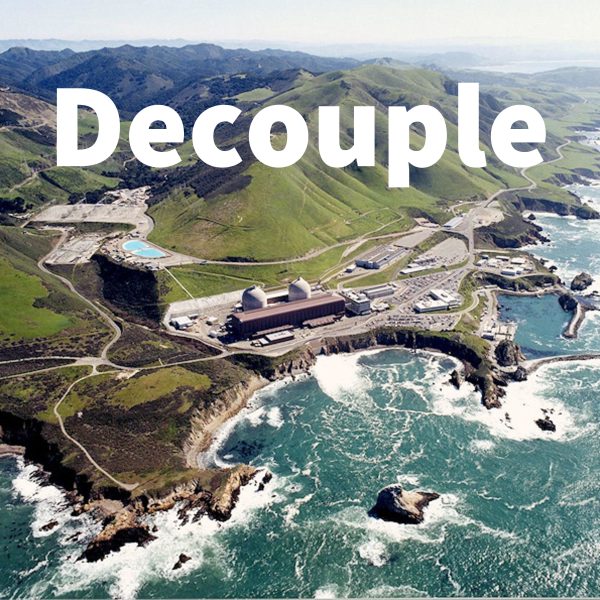
Decouple
- Episódios
- 335
- Publicação
- semanal
- Último episódio
- 12 nov 2026
Sobre o podcast
There are technologies that decouple human well-being from its ecological impacts. There are politics that enable these technologies. Join me as I interview world experts to uncover hope in this time of planetary crisis.
Episódios 335
The Race to Build the World's Next Great Uranium Mine w/ Leigh R. Curyer
In the aftermath of the Fukushima disaster, when much of the world was turning away from nuclear energy, Leigh Curyer made a contrarian bet on uranium. He founded NexGen Energy and began exploring the largely …
Notas do episódio
In the aftermath of the Fukushima disaster, when much of the world was turning away from nuclear energy, Leigh Curyer made a contrarian bet on uranium. He founded NexGen Energy and began exploring the largely overlooked western Athabasca Basin in Saskatchewan. The result was Arrow, one of the world's most extraordinary high-grade uranium discoveries. Now, NexGen is attempting to turn that geological prize into a producing mine capable of supplying roughly 20% of global mined uranium and more than half of Western production. With an estimated annual output of 30 million pounds of uranium from a remarkably small underground mining operation, Arrow could fundamentally reshape the global uranium market.Decouple host Chris Keefer speaks with NexGen founder and CEO Leigh Curyer about the discovery of Arrow, the unusual geology that makes it so valuable, and the formidable challenge of bringing a new uranium mine into production. They examine construction risks, engineering and labour constraints, escalating capital costs, and the lessons of troubled megaprojects. Curyer also explains his unconventional approach to uranium contracting, his expectations for future uranium prices, and why he believes NexGen can succeed where established producers have struggled. With nuclear power expanding and concerns mounting over future uranium supplies, the stakes extend well beyond a single mining project.Listen to Decouple on:• Spotify: https://open.spotify.com/show/6PNr3ml8nEQotWWavE9kQz• Apple Podcasts: https://podcasts.apple.com/us/podcast/decouple/id1516526694?uo=4• Overcast: https://overcast.fm/itunes1516526694/decouple• Pocket Casts: https://pca.st/ehbfrn44• RSS: https://anchor.fm/s/23775178/podcast/rssWebsite: https://www.decouple.media
Can South Korea Rescue America's Nuclear Renaissance? w/ Dr. Eunjung Lim
South Korea emerged from the devastation of the Korean War as one of the world's poorest countries. Within a generation, it had become an industrial powerhouse, mastering nuclear technologies originally …
Notas do episódio
South Korea emerged from the devastation of the Korean War as one of the world's poorest countries. Within a generation, it had become an industrial powerhouse, mastering nuclear technologies originally imported from the United States and Canada. Today, Korean firms are among the world's most capable nuclear constructors, having delivered four APR1400 reactors at the UAE's Barakah nuclear power plant. Now the tables may be turning. With Washington pursuing an ambitious nuclear revival, the United States is looking to South Korea for the manufacturing expertise, skilled workforce and construction capabilities needed to turn its nuclear ambitions into reality.Chris Keefer is joined by Eun Jung Lim, professor at Kongju National University and visiting scholar at Stanford's Asia-Pacific Research Center, to explore Korea's extraordinary nuclear odyssey. They trace its origins in the developmental state of Park Chung-hee, the unlikely collaboration with North Korea through KEDO, and the industrial achievements that made Barakah possible. They also examine the controversial intellectual property dispute and global settlement between Westinghouse and KEPCO, the proposed $120 billion Korean investment in American nuclear projects, and whether demographic decline threatens Korea's hard-won industrial advantage. Can the former apprentice help rebuild the nuclear industry of its American teacher?Listen to Decouple on:• Spotify: https://open.spotify.com/show/6PNr3ml8nEQotWWavE9kQz• Apple Podcasts: https://podcasts.apple.com/us/podcast/decouple/id1516526694?uo=4• Overcast: https://overcast.fm/itunes1516526694/decouple• Pocket Casts: https://pca.st/ehbfrn44• RSS: https://anchor.fm/s/23775178/podcast/rssWebsite: https://www.decouple.media
How America Gave Away Its Industrial Superpower w/ Stefan Link
By 1927, the United States had more than 22 million motor vehicles on its roads, compared with just 18,000 in the Soviet Union. This staggering disparity reflected one of the greatest productivity revolutions …
Notas do episódio
By 1927, the United States had more than 22 million motor vehicles on its roads, compared with just 18,000 in the Soviet Union. This staggering disparity reflected one of the greatest productivity revolutions in human history: the mass production of machines capable of multiplying human labour hundreds or even thousands of times over. I'm joined by Dartmouth historian Stefan Link, author of Forging Global Fordism, to explore how Henry Ford and his engineers transformed automobile manufacturing from a skilled craft into an industrial system capable of producing millions of affordable vehicles. We examine the technological foundations of the assembly line, the transformation of unskilled labour into an extraordinarily productive industrial workforce, and the distinctive Midwestern culture that gave birth to this revolution.But Fordism was more than a manufacturing technique. Ford championed a radical producerist philosophy that elevated industrial production above shareholder returns, attracting admirers across the political spectrum, from social democrats to Nazis and Soviet communists. Remarkably, Ford opened his factories to Soviet engineers and helped transfer America's extraordinary industrial capabilities to its future geopolitical rivals. We trace how this technology transfer transformed Soviet and German industry, shaped the outcome of the Second World War, and offers lessons for understanding China's industrial rise, Western deindustrialization, and the struggle to rebuild productive capacity in an age of financialized capitalism.Listen to Decouple on:• Spotify: https://open.spotify.com/show/6PNr3ml8nEQotWWavE9kQz• Apple Podcasts: https://podcasts.apple.com/us/podcast/decouple/id1516526694?uo=4• Overcast: https://overcast.fm/itunes1516526694/decouple• Pocket Casts: https://pca.st/ehbfrn44• RSS: https://anchor.fm/s/23775178/podcast/rssWebsite: https://www.decouple.media
The Story of the Israeli Bomb w/ Avner Cohen
How did a tiny, impoverished country whose principal exports included Jaffa oranges become the world's sixth nuclear power? Nuclear historian Avner Cohen, author of Israel and the Bomb and The Worst-Kept …
Notas do episódio
How did a tiny, impoverished country whose principal exports included Jaffa oranges become the world's sixth nuclear power? Nuclear historian Avner Cohen, author of Israel and the Bomb and The Worst-Kept Secret, joins Decouple to tell the extraordinary story of Israel's clandestine nuclear weapons program. From David Ben-Gurion's determination to prevent another Holocaust to Shimon Peres's secret dealings with France during the Suez Crisis, we explore how Israel acquired the technology, financed the construction of Dimona, bypassed its own democratic institutions, and deceived American inspectors determined to establish whether its nuclear ambitions were peaceful.We examine Israel's improvised nuclear preparations during the Six-Day War, the alleged nuclear alert of 1973, the mysterious 1979 Vela incident in the South Atlantic, and the secret understanding between Nixon and Golda Meir that institutionalized Israel's policy of nuclear opacity. Cohen explains how Israel has maintained an arsenal that everyone knows exists but nobody officially acknowledges, and how this extraordinary arrangement has shaped Middle Eastern geopolitics for more than half a century. Finally, we turn to Iran, Israel's determination to preserve its regional nuclear monopoly, and the terrifying strategic vulnerability captured in former Iranian president Rafsanjani's description of Israel as a "one-bomb state."Listen to Decouple on:• Spotify: https://open.spotify.com/show/6PNr3ml8nEQotWWavE9kQz• Apple Podcasts: https://podcasts.apple.com/us/podcast/decouple/id1516526694?uo=4• Overcast: https://overcast.fm/itunes1516526694/decouple• Pocket Casts: https://pca.st/ehbfrn44• RSS: https://anchor.fm/s/23775178/podcast/rssWebsite: https://www.decouple.media
The Canada-US Trade War: A Bridge Too Far? w/ Jesse Huebsch
The Canada-US trade war is escalating, threatening to unravel decades of economic integration between two of the world's closest allies. Chris Keefer is joined by returning guest Jesse Hoops to examine how we …
Notas do episódio
The Canada-US trade war is escalating, threatening to unravel decades of economic integration between two of the world's closest allies. Chris Keefer is joined by returning guest Jesse Hoops to examine how we got here, what Washington hopes to achieve, and how Canada can respond to an increasingly unpredictable neighbour. From tariffs on aluminum and autos to the potential collapse of Canadian manufacturing, they explore the consequences of economic warfare between countries whose industries and supply chains have become deeply intertwined. Can Canada defend its economic sovereignty without inflicting even greater damage on itself, and what might ultimately force an end to the conflict?The conversation explores Canada's critical vulnerabilities, including the Gordie Howe Bridge, Line 5, American-controlled financial infrastructure and the F-35 fighter program. Chris and Jesse examine whether Canada needs to sacrifice some economic efficiency to secure greater strategic autonomy, including through new pipelines, domestic industrial capacity and a more independent nuclear supply chain. With billions of dollars in new nuclear construction on the horizon, what does the trade war mean for Canada's choice between CANDU and the American-designed AP1000? And if the current rupture in Canada-US relations becomes a recurring feature of American politics, how much should Canada be prepared to spend to ensure it cannot be held hostage by its largest trading partner?Listen to Decouple on:• Spotify: https://open.spotify.com/show/6PNr3ml8nEQotWWavE9kQz• Apple Podcasts: https://podcasts.apple.com/us/podcast/decouple/id1516526694?uo=4• Overcast: https://overcast.fm/itunes1516526694/decouple• Pocket Casts: https://pca.st/ehbfrn44• RSS: https://anchor.fm/s/23775178/podcast/rssWebsite: https://www.decouple.media
Megaprojects: Some Assembly Required w/ Ian MacGregor
Canada is once again attempting to build nuclear megaprojects after a long pause, making the experience of people who have actually delivered recent large industrial projects increasingly valuable. Ian McGregor …
Notas do episódio
Canada is once again attempting to build nuclear megaprojects after a long pause, making the experience of people who have actually delivered recent large industrial projects increasingly valuable.
Ian McGregor is a veteran Alberta engineer, entrepreneur and industrial project developer who helped conceive and build the $12 billion Northwest Sturgeon Refinery and the Alberta Carbon Trunk Line.In this episode we use that project to explore the realities of megaproject delivery: incomplete engineering, supply-chain delays, labour bottlenecks, cost escalation and the challenge of coordinating thousands of critical components across a vast industrial site.
We also dive into the refinery’s near-disastrous gasifier burner failure, where a mission-critical component designed to last thousands of hours failed after just 40, forcing McGregor and a small team of engineers and tradespeople to redesign it themselves. From there the conversation broadens into the economics of nation-building infrastructure, why governments often have to play a role in projects with century-long paybacks, and what Canada’s nuclear revival can learn from one of the country’s most ambitious recent industrial megaprojects.Listen to Decouple on:• Spotify: https://open.spotify.com/show/6PNr3ml8nEQotWWavE9kQz• Apple Podcasts: https://podcasts.apple.com/us/podcast/decouple/id1516526694?uo=4• Overcast: https://overcast.fm/itunes1516526694/decouple• Pocket Casts: https://pca.st/ehbfrn44• RSS: https://anchor.fm/s/23775178/podcast/rssWebsite: https://www.decouple.media
The State of Fusion Energy w/ Gerrit Bruhaug
Fusion has spent nearly a century as the energy source of the future. In this episode, I’m joined by fusion scientist Gerrit Bruhaug to ask what has actually been achieved, what remains unsolved, and why …
Notas do episódio
Fusion has spent nearly a century as the energy source of the future. In this episode, I’m joined by fusion scientist Gerrit Bruhaug to ask what has actually been achieved, what remains unsolved, and why progress has taken so much longer than the early pioneers expected. We start from first principles, how fusion differs from fission, why the Lawson criterion matters, and how magnetic and inertial confinement take radically different routes to the same goal. Gerrit provides an in-depth analysis of the National Ignition Facility’s breakthrough and why ignition is better understood as fusion’s Chicago Pile moment, rather than the near-term arrival of a commercial power plant.From there we get into the engineering realities behind the headlines: laser efficiency, plasma instabilities, neutron damage, divertor heat loads, tritium breeding and inventory, target manufacturing, parasitic loads, engineering breakeven and the enormous gap between making fusion happen and making cheap electricity.Gerrit also takes us through fusion’s surprisingly long history, from the optimism of the first private laser-fusion startup, KMS Fusion, to today’s new wave of heavily capitalized companies, and explains why the two constraints he watches most closely are tritium inventory and engineering gain.Listen to Decouple on:• Spotify: https://open.spotify.com/show/6PNr3ml8nEQotWWavE9kQz• Apple Podcasts: https://podcasts.apple.com/us/podcast/decouple/id1516526694?uo=4• Overcast: https://overcast.fm/itunes1516526694/decouple• Pocket Casts: https://pca.st/ehbfrn44• RSS: https://anchor.fm/s/23775178/podcast/rssWebsite: https://www.decouple.media
Sunk Costs & Diminishing Returns of Iran's Nuclear Program w/ Farzan Sabet
Iran’s nuclear program is now more than seven decades old, stretching from the Shah’s ambitious Atoms for Peace-era plans to the Islamic Republic’s pursuit of enrichment, missile capability and nuclear latency …
Notas do episódio
Iran’s nuclear program is now more than seven decades old, stretching from the Shah’s ambitious Atoms for Peace-era plans to the Islamic Republic’s pursuit of enrichment, missile capability and nuclear latency. Iran historian Farzan Sabet joins Decouple to explain how energy development, techno-nationalism, the trauma of the Iran–Iraq War and a persistent sense of strategic isolation transformed a civilian nuclear project into an increasingly important national-security instrument.We trace the program through the Shah’s plans for 23,000MW of commercial nuclear power, the revolution, the AQ Khan network, the AMAD weapons effort, the JCPOA and the collapse of Iran’s traditional deterrence architecture. Farzan also examines the extraordinary price Iran has paid: sanctions-related economic damage measured in the hundreds of billions of dollars and, by one estimate, comparable to the economic cost of the Iran–Iraq War, yet with neither substantial nuclear power generation nor a nuclear deterrent to show for it.Listen to Decouple on:• Spotify: https://open.spotify.com/show/6PNr3ml8nEQotWWavE9kQz• Apple Podcasts: https://podcasts.apple.com/us/podcast/decouple/id1516526694?uo=4• Overcast: https://overcast.fm/itunes1516526694/decouple• Pocket Casts: https://pca.st/ehbfrn44• RSS: https://anchor.fm/s/23775178/podcast/rssWebsite: https://www.decouple.media
Biomass Masterclass w/ Mark Nelson
For almost the whole of human history, wood was the main act. It was the fuel that cooked food and smelted iron, the material that framed every house and hull, and the first bulk commodity ever moved at scale …
Notas do episódio
For almost the whole of human history, wood was the main act. It was the fuel that cooked food and smelted iron, the material that framed every house and hull, and the first bulk commodity ever moved at scale over long distances. In this episode Chris Keefer talks with energy analyst Mark Nelson about a material we almost entirely take for granted, starting with a fact hiding in plain sight: the grasping hands, binocular vision, and colour sight that define us were all built by an ancestry lived in the trees. From there the conversation turns to why wood, of all the products of photosynthesis, became civilization's battery, storing a century of sunlight in a form that can be felled and hauled away.
That storage came with a hard ceiling, because the energy available to any pre-industrial society was set by its land area multiplied by how fast the sun could regrow a forest. Chris and Mark trace that single constraint through the iron furnaces that each needed a forest standing behind them to the oak fleets that turned a Baltic chokepoint into the 19th century equivalent of the Straits of Hormuz.
Listen to Decouple on:
• Spotify: https://open.spotify.com/show/6PNr3ml8nEQotWWavE9kQz
• Apple Podcasts: https://podcasts.apple.com/us/podcast/decouple/id1516526694?uo=4
• Overcast: https://overcast.fm/itunes1516526694/decouple
• Pocket Casts: https://pca.st/ehbfrn44
• RSS: https://anchor.fm/s/23775178/podcast/rss
Website: https://www.decouple.media
Ernie Moniz: Reflections on the JCPOA
Former U.S. Secretary of Energy Ernest Moniz joins Decouple to examine the history of Iran’s nuclear program and the negotiations that produced the 2015 Joint Comprehensive Plan of Action. As the agreement’s …
Notas do episódio
Former U.S. Secretary of Energy Ernest Moniz joins Decouple to examine the history of Iran’s nuclear program and the negotiations that produced the 2015 Joint Comprehensive Plan of Action. As the agreement’s lead American technical negotiator, Moniz offers a rare inside account of his intensive discussions with Iranian nuclear chief Ali Akbar Salehi, explaining how personal trust helped make an extraordinarily difficult negotiation possible. He details the JCPOA’s restrictions on uranium enrichment and argues that its unprecedented inspection, verification and transparency provisions were even more important than its limits on nuclear technology.
The conversation also explores the origins of Iran’s nuclear ambitions, including the formative impact of the Iran–Iraq War, the country’s former structured weapons program and its subsequent accumulation of uranium enriched to 60 percent. Moniz assesses the consequences of the United States’ 2018 withdrawal from the JCPOA, the limits of military action, the weakening of Iran’s civilian leadership and the increasingly difficult prospects for renewed negotiations. Despite these obstacles, he argues that diplomacy remains the only durable path to resolving Iran’s nuclear program, and potentially the wider challenges posed by its missiles, drones and regional proxies.
Listen to Decouple on:
• Spotify: https://open.spotify.com/show/6PNr3ml8nEQotWWavE9kQz
• Apple Podcasts: https://podcasts.apple.com/us/podcast/decouple/id1516526694?uo=4
• Overcast: https://overcast.fm/itunes1516526694/decouple
• Pocket Casts: https://pca.st/ehbfrn44
• RSS: https://anchor.fm/s/23775178/podcast/rss
Website: https://www.decouple.media
Fission Impossible? Financing New Nuclear w/ Michael Seely
Why are nuclear power plants so difficult to finance, and who ultimately pays when megaprojects run late or over budget? Chris Keefer is joined by returning guest Michael Seely, The Atomic Blender, for a deep …
Notas do episódio
Why are nuclear power plants so difficult to finance, and who ultimately pays when megaprojects run late or over budget? Chris Keefer is joined by returning guest Michael Seely, The Atomic Blender, for a deep dive into the capital costs, construction risks and financing structures that determine whether nuclear projects move forward or collapse. They examine the troubled European EPR experience at Olkiluoto, Flamanville and Hinkley Point C, where delays and cost overruns repeatedly pushed risk back onto reactor vendors and national governments.
The conversation then turns to Sizewell C’s regulated asset-base model, which allows investors to earn returns during construction while shifting more risk onto ratepayers and the British state. Chris and Michael also explore Vogtle, VC Summer, NuScale and UAMPS, asking whether private capital can realistically finance new nuclear construction, why government guarantees remain essential, and whether nuclear power should ultimately be treated less like a merchant investment and more like long-lived public infrastructure.
Listen to Decouple on:
• Spotify: https://open.spotify.com/show/6PNr3ml8nEQotWWavE9kQz
• Apple Podcasts: https://podcasts.apple.com/us/podcast/decouple/id1516526694?uo=4
• Overcast: https://overcast.fm/itunes1516526694/decouple
• Pocket Casts: https://pca.st/ehbfrn44
• RSS: https://anchor.fm/s/23775178/podcast/rss
Website: https://www.decouple.media
CANDU: The Truly Modular Reactor w/ Navid Badie
In this reactor deep dive, Chris Keefer is joined by Navid Badie, Chief Nuclear Engineer at Candu Energy Inc, to explain the inner workings of the distinctive CANDU reactor. They trace how Canada’s decision to …
Notas do episódio
In this reactor deep dive, Chris Keefer is joined by Navid Badie, Chief Nuclear Engineer at Candu Energy Inc, to explain the inner workings of the distinctive CANDU reactor. They trace how Canada’s decision to use natural uranium led to heavy-water moderation, horizontal pressure tubes, separate coolant and moderator systems, and the ability to refuel continuously while operating. Navid breaks down the reactor’s fuel channels, steam generators, online fueling machines, and the remarkable operating experience behind a technology that has completed nearly a million online refuelling operations.
The conversation also examines CANDU safety and longevity: large inventories of water, natural thermosiphon cooling during a station blackout, and the engineering behind reactor refurbishment. Chris and Navid discuss pressure-tube metallurgy, robotic inspection and maintenance, cobalt-60 and other isotope production, and why locally manufacturable natural-uranium fuel can offer importing countries greater fuel-cycle sovereignty. A technically grounded introduction to one of the world’s most unusual and capable reactor lineages.
Listen to Decouple on:
• Spotify: https://open.spotify.com/show/6PNr3ml8nEQotWWavE9kQz
• Apple Podcasts: https://podcasts.apple.com/us/podcast/decouple/id1516526694?uo=4
• Overcast: https://overcast.fm/itunes1516526694/decouple
• Pocket Casts: https://pca.st/ehbfrn44
• RSS: https://anchor.fm/s/23775178/podcast/rss
Website: https://www.decouple.media
The Birth of America’s Nuclear Power Industry
James Krellenstein returns to take apart one of the most persistent myths in energy discourse: the idea that there was a golden age when nuclear power was cheaper than coal. The plants people point to, Oyster …
Notas do episódio
James Krellenstein returns to take apart one of the most persistent myths in energy discourse: the idea that there was a golden age when nuclear power was cheaper than coal. The plants people point to, Oyster Creek, Dresden, Point Beach, Quad Cities, were cheap to the utilities that bought them, but they were not cheap to build. General Electric and Westinghouse sold them as fixed-price turnkey projects at a deliberate loss, eating roughly 1 billion in 1960s dollars, more than 10 billion adjusted for inflation, across about a dozen plants. This loss leader strategy paid off. Between 1962 and 1976 the US nuclear fleet doubled its capacity roughly every 2 years, a stretch of sustained growth that rivals anything in American industrial history and still constitutes the largest nuclear fleet on earth in 2026.
The conversation traces how turnkey era prices distorted every nuclear cost comparison that followed, why the utilities themselves pushed to abandon turnkey contracts, and how regulatory change, slowing load growth, and across-the-board cost inflation turned the boom into a wave of cancellations. Krellenstein closes on the fundamental question for the present moment: if we want to set off another ordering cycle, someone has to absorb first-of-a-kind risk with a balance sheet large enough to guarantee a firm fixed price, and it is not obvious who that is. Back then GE and Westinghouse could swallow the losses because they were two of the largest industrial conglomerates on earth and commercial reactors were a single-digit percentage of their business. No comparable actor today has shown any willingness to take that risk on, which explains both how the world's largest nuclear fleet got built and why nobody has been willing to repeat the trick since.
Listen to Decouple on:
• Spotify: https://open.spotify.com/show/6PNr3ml8nEQotWWavE9kQz
• Apple Podcasts: https://podcasts.apple.com/us/podcast/decouple/id1516526694?uo=4
• Overcast: https://overcast.fm/itunes1516526694/decouple
• Pocket Casts: https://pca.st/ehbfrn44
• RSS: https://anchor.fm/s/23775178/podcast/rss
Website: https://www.decouple.media
Limits to Growth of LLMs w/ David Helmer
AI hype has bled deep into the nuclear sector, and in this episode, Chris Keefer sits down with returning guest David Helmer, an engineer and AI advisory consultant with a decade advising the US government on …
Notas do episódio
AI hype has bled deep into the nuclear sector, and in this episode, Chris Keefer sits down with returning guest David Helmer, an engineer and AI advisory consultant with a decade advising the US government on machine learning and autonomous systems, to examine what the technology can actually do, who benefits from inflating those claims, and what a correction would mean for nuclear's investment story.
The conversation covers the ELIZA effect and why human brains are hardwired to anthropomorphize language models; the structural gap between frontier lab costs and revenues; why hallucination and reliability problems are embedded in LLM architecture rather than solvable through scaling; and why the AGI narrative functions primarily as a justification for otherwise unjustifiable capital concentration. For nuclear advocates, the question is not whether AI demand is real today, but whether the speculative reactor developers pricing in hyperscaler contracts will still have a business if the AI bubble deflates.
Listen to Decouple on:
• Spotify: https://open.spotify.com/show/6PNr3ml8nEQotWWavE9kQz
• Apple Podcasts: https://podcasts.apple.com/us/podcast/decouple/id1516526694?uo=4
• Overcast: https://overcast.fm/itunes1516526694/decouple
• Pocket Casts: https://pca.st/ehbfrn44
• RSS: https://anchor.fm/s/23775178/podcast/rss
Website: https://www.decouple.media
The Gas Turbine: The Final Revelation in Humanity’s Pantheon of Prime Movers (w/ David Helmer)
David Helmer spent years working on cooling systems for GE jet turbines before moving to Boston Consulting Group, the Applied Physics Laboratory, and West Point. He joins Decouple to explain why the gas …
Notas do episódio
David Helmer spent years working on cooling systems for GE jet turbines before moving to Boston Consulting Group, the Applied Physics Laboratory, and West Point. He joins Decouple to explain why the gas turbine, despite being conceptually understood for centuries, only became buildable in the crucible of the Second World War, and why mastering it remains beyond the reach of all but a handful of institutions on earth.The conversation covers the materials science at the heart of the technology, where turbine blades operate above their own melting point and components in continuous distress are kept flying for hundreds of additional cycles before refurbishment. We examine why innovation cycles in aviation are measured in decades rather than years, drawing direct comparisons to nuclear's certification constraints and contrasting both with the faster but higher-risk iteration model of the rocket sector. The discussion moves from aviation into power generation, tracing the combined cycle plant's efficiency gains, the AI-driven demand surge now stretching turbine order books to 7 years, and what the scramble to convert end-of-life commercial jet engines for data center power reveals about supply chain limits. The episode closes on geopolitics: why only 3 companies produce competitive commercial jet engines, what reverse engineering cannot unlock, and why Russia's turbine capability was always more dependent on Western materials, machine tools, and maintenance expertise than anyone acknowledged until the sanctions arrived.Listen to Decouple on:• Spotify: https://open.spotify.com/show/6PNr3ml8nEQotWWavE9kQz• Apple Podcasts: https://podcasts.apple.com/us/podcast/decouple/id1516526694?uo=4• Overcast: https://overcast.fm/itunes1516526694/decouple• Pocket Casts: https://pca.st/ehbfrn44• RSS: https://anchor.fm/s/23775178/podcast/rssWebsite: https://www.decouple.media
Understanding the World's Most Unusual Commodity Cycle
Grant Isaac, President and COO of Cameco, joins Decouple to explain why uranium behaves unlike any other commodity. With essentially zero fundamental in-year demand, a spot market that reports prices rather …
Notas do episódio
Grant Isaac, President and COO of Cameco, joins Decouple to explain why uranium behaves unlike any other commodity. With essentially zero fundamental in-year demand, a spot market that reports prices rather than discovering them, and a long-term contracting structure that ties producers directly to the utilities using the fuel, uranium operates by rules that confound anyone who approaches it through the lens of oil, gas, or base metals. Grant walks through Cameco's history as an integrated nuclear fuel company spanning mining, milling, conversion, and now fuel fabrication and reactor services through its Westinghouse partnership, explaining why that vertical integration reflects genuine customer intimacy rather than financial engineering.
The conversation covers the full sweep of uranium market cycles from the post-Atoms for Peace inventory buildup through the post-Fukushima bear market, Cameco's decision to curtail 70% of its production rather than sell into a floor, and what is structurally different about the current cycle. The historic secondary supply buffer that held prices down for 30 years is gone, Kazakhstan has learned the lesson that producing more into a weak market destroys national asset value, and geopolitical fragmentation is bifurcating what was once a seamlessly globalized commodity into distinct western and non-western supply chains. Grant argues that the long-term price signal, steady rather than saw-toothing, reflects a more durable demand base than any previous cycle.
Listen to Decouple on:
• Spotify: https://open.spotify.com/show/6PNr3ml8nEQotWWavE9kQz
• Apple Podcasts: https://podcasts.apple.com/us/podcast/decouple/id1516526694?uo=4
• Overcast: https://overcast.fm/itunes1516526694/decouple
• Pocket Casts: https://pca.st/ehbfrn44
• RSS: https://anchor.fm/s/23775178/podcast/rss
Website: https://www.decouple.mediaThe Absolute Best Water Reactor: What Happened to the World’s Fastest Constructed Reactor?
Nuclear construction once hit timelines that today sound implausible. First of a kind reactors completed in under four years, delivered at lower cost than mature designs, and executed with a level of …
Notas do episódio
Nuclear construction once hit timelines that today sound implausible. First of a kind reactors completed in under four years, delivered at lower cost than mature designs, and executed with a level of coordination that the modern industry has largely lost. This episode uses the Advanced Boiling Water Reactor (ABWR) as a lens to examine that moment, not as a historical curiosity, but as a proof point that the constraints shaping today’s projects are not inherent to nuclear technology. The focus is on the underlying conditions that made that outcome possible, disciplined design completion before construction, tight integration between utility, vendor, and supply chain, and a development culture oriented around execution rather than iteration.
Amid growing frustration in Washington with the pace and performance of Westinghouse, there are signs the Trump administration is at least considering whether the ABWR deserves a second look. That tension opens a broader question explored in this episode: whether the industry’s problem is technological, or organizational. The discussion examines how fragmented ownership, incomplete designs, and weak competitive pressure have reshaped project delivery, and what might change if utilities reclaimed the role of developer. It closes by asking whether the path forward lies in new designs, or in rediscovering how to actually build the ones that already worked.
Listen to Decouple on:
• Spotify: https://open.spotify.com/show/6PNr3ml8nEQotWWavE9kQz
• Apple Podcasts: https://podcasts.apple.com/us/podcast/decouple/id1516526694?uo=4
• Overcast: https://overcast.fm/itunes1516526694/decouple
• Pocket Casts: https://pca.st/ehbfrn44
• RSS: https://anchor.fm/s/23775178/podcast/rss
Website: https://www.decouple.media
Nuclear Reprocessing: Promise vs Reality
In this episode of Decouple, Chris Keefer is joined once again by Michael Seely of the Atomic Blender to explore nuclear fuel reprocessing and the promise of unlocking vastly more energy from existing nuclear …
Notas do episódio
In this episode of Decouple, Chris Keefer is joined once again by Michael Seely of the Atomic Blender to explore nuclear fuel reprocessing and the promise of unlocking vastly more energy from existing nuclear waste. We deep dive how processes like PUREX attempt to separate and reuse valuable materials like uranium and plutonium. Using real-world examples such as France’s La Hague reprocessing plant and the EBR-2 sodium fast reactor experiment, the episode situates reprocessing within its historical roots in perceptions of uranium scarcity and energy security.
While reprocessing is technically impressive, it is complex, expensive, and delivers only modest gains when used with today’s reactor fleet. Keefer and Seely unpack why issues like fuel degradation, handling challenges, and economics limit its impact, and what would need to change, such as the deployment of economic fast reactors, for reprocessing to live up to is most seductive narratives.
Listen to Decouple on:
• Spotify: https://open.spotify.com/show/6PNr3ml8nEQotWWavE9kQz
• Apple Podcasts: https://podcasts.apple.com/us/podcast/decouple/id1516526694?uo=4
• Overcast: https://overcast.fm/itunes1516526694/decouple
• Pocket Casts: https://pca.st/ehbfrn44
• RSS: https://anchor.fm/s/23775178/podcast/rssWebsite: https://www.decouple.media
Greenwashing with Chinese Characteristics
In this episode we are joined by Seaver Wang to discuss the physical foundations of China’s industrial dominance in solar, batteries, electric vehicles, semiconductors, rare earth magnets, and aluminum. We …
Notas do episódio
In this episode we are joined by Seaver Wang to discuss the physical foundations of China’s industrial dominance in solar, batteries, electric vehicles, semiconductors, rare earth magnets, and aluminum. We examine how these sectors are presented as evidence by climate activists that clean technology is delivering a new kind of green industrial superpower and interrogate that claim at the level of production.
What sits upstream of the electrotech stack is not a network of modular green technologies, but large scale industrial systems that turn electricity into materials. These products are best understood as “congealed electricity.” In China industrial electricity, in particular, is still predominantly coal fired, often anchored in captive, mine-mouth coal plants tied directly to industrial clusters producing polysilicon, graphite, metals, and intermediates.
These are not flexible, marginal power sources that can be easily displaced by wind and solar but rather capital intensive systems built for continuous output, with emissions embedded deep in the supply chain and largely invisible at the point of use.
The disconnect between hope and physical reality sustains a form of greenwashing that many climate commentators continue to reproduce, despite the underlying industrial system pointing in a very different direction.
Listen to Decouple on:
• Spotify: https://open.spotify.com/show/6PNr3ml8nEQotWWavE9kQz
• Apple Podcasts: https://podcasts.apple.com/us/podcast/decouple/id1516526694?uo=4
• Overcast: https://overcast.fm/itunes1516526694/decouple
• Pocket Casts: https://pca.st/ehbfrn44
• RSS: https://anchor.fm/s/23775178/podcast/rssWebsite: https://www.decouple.media
The Luxury Beliefs That Broke Europe’s Energy System | Doomberg
Europe once treated energy as the foundation of civilization. After the oil shocks of the 1970s, it built nuclear at scale, opened the North Sea, and secured long term pipeline supply. That system produced …
Notas do episódio
Europe once treated energy as the foundation of civilization. After the oil shocks of the 1970s, it built nuclear at scale, opened the North Sea, and secured long term pipeline supply. That system produced resilience, surplus, and industrial strength. Today, the arithmetic has flipped. Europe consumes roughly 38 exajoules of hydrocarbons and produces about 6. This episode examines how that reversal happened, not as an accident, but as the result of political choices that prioritized higher order goals while eroding the physical base that supports them.
This conversation connects that shift to a broader framework. Maslow’s hierarchy applied to energy systems. When policy moves up the pyramid while the base weakens, fragility follows. We walk through the numbers behind Europe’s dependence, compare the current crisis to the 1970s, and contrast Europe’s trajectory with countries that optimized for resilience instead of efficiency. The result is a clear picture of what happens when an advanced economy loses sight of the molecules that keep it running.
Listen to Decouple on:
• Spotify: https://open.spotify.com/show/6PNr3ml8nEQotWWavE9kQz
• Apple Podcasts: https://podcasts.apple.com/us/podcast/decouple/id1516526694?uo=4
• Overcast: https://overcast.fm/itunes1516526694/decouple
• Pocket Casts: https://pca.st/ehbfrn44
• RSS: https://anchor.fm/s/23775178/podcast/rss
Website: https://www.decouple.mediaWhat's happening with CANDU?
This episode features Joe St. Julian, President of Nuclear at AtkinsRéalis, outlining why Canada may be closer to a new nuclear fleet build than most observers realize. Drawing on his background delivering …
Notas do episódio
This episode features Joe St. Julian, President of Nuclear at AtkinsRéalis, outlining why Canada may be closer to a new nuclear fleet build than most observers realize. Drawing on his background delivering complex U.S. nuclear megaprojects, St. Julian explains why the recent refurbishment programs at Darlington and Bruce have rebuilt the workforce, supply chain, and execution capability needed for repeatable construction. The conversation explores the Monark concept, the strategy of replicating Darlington to minimize first-of-a-kind risk, and the licensing work required to bring legacy designs into alignment with modern standards.
The discussion then turns to export markets and geopolitical strategy, including projects in Romania, Poland, and Asia. St. Julian contrasts Canada’s position, a fully active supply chain without a coordinated national build program, with emerging U.S. efforts to align policy, financing, and deployment around Westinghouse’s AP1000. The episode closes on the central question shaping Canada’s nuclear future, whether the country will mobilize its existing industrial base into a sustained build program or allow that capability to remain underutilized.
Listen to Decouple on:
• Spotify: https://open.spotify.com/show/6PNr3ml8nEQotWWavE9kQz
• Apple Podcasts: https://podcasts.apple.com/us/podcast/decouple/id1516526694?uo=4
• Overcast: https://overcast.fm/itunes1516526694/decouple
• Pocket Casts: https://pca.st/ehbfrn44
• RSS: https://anchor.fm/s/23775178/podcast/rss
Website: https://www.decouple.media
The Week LNG Became a Target
The Iranian drone strike on Qatar’s Ras Laffan industrial complex has sent shockwaves through global energy markets, triggering force majeure on 20 percent of the world’s LNG supply and closing the Strait of …
Notas do episódio
The Iranian drone strike on Qatar’s Ras Laffan industrial complex has sent shockwaves through global energy markets, triggering force majeure on 20 percent of the world’s LNG supply and closing the Strait of Hormuz to commercial shipping. To understand what just happened and what comes next, Decouple is joined by Stephen Stapczynski, Bloomberg’s leading LNG correspondent and one of the few journalists who has spent years tracking the shadow fleets, supply chains, and geopolitics that sit behind the world’s fastest-growing fossil fuel market.
This conversation traces how Qatar came to sit atop the world’s most consequential gas reservoir, why Iran was never able to monetize its side of the same field, and how the shale revolution gave Washington the geopolitical freedom to let this crisis unfold. Stephen discusses the Arctic Metagas, the first LNG carrier ever successfully attacked, and what its destruction in the Mediterranean signals about a world in which the affordable, reliable LNG that was supposed to be the bridge fuel for the developing world was always premised on freedom of navigation holding.
Listen to Decouple on:
• Spotify: https://open.spotify.com/show/6PNr3ml8nEQotWWavE9kQz
• Apple Podcasts: https://podcasts.apple.com/us/podcast/decouple/id1516526694?uo=4
• Overcast: https://overcast.fm/itunes1516526694/decouple
• Pocket Casts: https://pca.st/ehbfrn44
• RSS: https://anchor.fm/s/23775178/podcast/rss
Nuclear Fuel: The Most Sophisticated Industrial Product You've Never Learned About
Nuclear fuel is nothing like the coal or gas it replaces. Where fossil fuels are destroyed in combustion, nuclear fuel must survive years of continuous fission inside a reactor and come out the other end …
Notas do episódio
Nuclear fuel is nothing like the coal or gas it replaces. Where fossil fuels are destroyed in combustion, nuclear fuel must survive years of continuous fission inside a reactor and come out the other end looking almost exactly as it went in. In this episode, fuel engineer Michael Seely breaks down how uranium dioxide pellets are made, why the fuel rod is one of the most sophisticated manufactured objects in the world, and how an industry that once ran more than half its fleet on leaking fuel pins methodically engineered its way to near-zero failure rates by 2010.
We also get into enrichment economics, the bespoke nature of reactor fuel design, the post-Fukushima push toward accident-tolerant and higher-burnup LEU Plus fuel, and why high-assay low-enriched uranium (HALEU), the feedstock required by most advanced reactor concepts, requires 40 kilograms of natural uranium and six times the separative work of conventional fuel just to produce a single kilogram. If you want to understand why nuclear plants are built the way they are, why the water cooled reactor won, and what the fuel supply chain challenge really means for the advanced reactor industry, this is the episode to start with.
Listen to Decouple on:
• Spotify: https://open.spotify.com/show/6PNr3ml8nEQotWWavE9kQz
• Apple Podcasts: https://podcasts.apple.com/us/podcast/decouple/id1516526694?uo=4
• Overcast: https://overcast.fm/itunes1516526694/decouple
• Pocket Casts: https://pca.st/ehbfrn44
• RSS: https://anchor.fm/s/23775178/podcast/rss
Website: https://www.decouple.mediaThe Most Boring Path to 10 Gigawatts: Why Nuclear Uprates Matter Right Now
For two decades the nuclear conversation has revolved around new builds, advanced reactors, and megaproject risk. Meanwhile, forty Westinghouse pressurized water reactors continue operating at roughly the same …
Notas do episódio
For two decades the nuclear conversation has revolved around new builds, advanced reactors, and megaproject risk. Meanwhile, forty Westinghouse pressurized water reactors continue operating at roughly the same thermal output they were commissioned at decades ago, leaving six to ten gigawatts of potential capacity sitting inside existing plants. In this episode, I speak with Robb Stewart and James Krellenstein of Alva Energy about why power uprates may be the fastest and most capital efficient way to expand nuclear generation in the United States. Rather than chasing first of a kind reactor designs, they argue that modern steam generator technology, improved thermal hydraulic modeling, and standardized secondary side upgrades can unlock the equivalent of twenty to thirty 300 megawatt small modular reactors within three to five years.
We examine why boiling water reactors captured most historical uprates while pressurized water reactors remained largely untouched, how balance of plant constraints rather than reactor physics often limit output, and why diverting additional steam to a separate turbine island changes both risk and economics. With hyperscalers willing to pay premium prices for reliable, low carbon power, incremental nuclear megawatts now carry real market value. The question is whether the industry can prioritize disciplined industrial execution over novelty and finally harvest the gigawatts hiding in plain sight.
Listen to Decouple on:
• Spotify: https://open.spotify.com/show/6PNr3ml8nEQotWWavE9kQz
• Apple Podcasts: https://podcasts.apple.com/us/podcast/decouple/id1516526694?uo=4
• Overcast: https://overcast.fm/itunes1516526694/decouple
• Pocket Casts: https://pca.st/ehbfrn44
• RSS: https://anchor.fm/s/23775178/podcast/rss
Website: https://www.decouple.mediaAI with Chinese Characteristics
In this episode of Decouple, Chris sits down with Kyle Chan of the High Capacity Substack to unpack what “AI with Chinese characteristics” actually means. Rather than framing artificial intelligence as a simple …
Notas do episódio
In this episode of Decouple, Chris sits down with Kyle Chan of the High Capacity Substack to unpack what “AI with Chinese characteristics” actually means. Rather than framing artificial intelligence as a simple US–China race to AGI, they explore how each country is building AI inside very different institutional systems. The conversation covers DeepSeek, compute constraints, quantization, and the surprising reality that many Chinese AI labs operate with far less capital than their American counterparts while still publishing at the frontier.
They dig into China’s AI enabling stack, from universities and state-backed labs to energy buildout and the Western Data, Eastern Compute strategy, and examine how AI is being embedded into manufacturing, logistics, grid management, and public services as a tool of state capacity. The discussion also tackles regulatory differences, CCP oversight, training data controls, and the disciplining of China’s tech sector, alongside contrasts with US AI development shaped by venture capital, platform economics, and liability management. This is a deep dive into how institutions shape technology, and why the real story may not be who wins the race, but how AI is absorbed into two very different political economies.
Listen to Decouple on:
• Spotify: https://open.spotify.com/show/6PNr3ml8nEQotWWavE9kQz
• Apple Podcasts: https://podcasts.apple.com/us/podcast/decouple/id1516526694?uo=4
• Overcast: https://overcast.fm/itunes1516526694/decouple
• Pocket Casts: https://pca.st/ehbfrn44
• RSS: https://anchor.fm/s/23775178/podcast/rss
Website: https://www.decouple.media
A Case Study of Excellence from Canada’s Nuclear Golden Age
In this special episode of Decouple, Chris Keefer speaks with Ken Petrunik, one of the few leaders in the Western nuclear industry who has taken large reactors from first concrete to operation under budget and …
Notas do episódio
In this special episode of Decouple, Chris Keefer speaks with Ken Petrunik, one of the few leaders in the Western nuclear industry who has taken large reactors from first concrete to operation under budget and ahead of schedule. Petrunik’s career spans Canada’s nuclear golden age and its export era, with senior roles in Romania, Argentina, and China, including leading the Qinshan Phase III CANDU reactors, delivered ahead of schedule and under budget under a fixed price engineering, procurement, and construction contract. The conversation traces how Canada once built nuclear plants at scale and how that environment shaped project managers capable of carrying real responsibility.
We deep dive how nuclear projects are actually delivered, including construction sequencing, labor productivity, schedule control, and on site authority. Petrunik recounts moments when projects nearly failed and explains how early decisions and transparent coordination allowed recovery before delays became irreversible. The episode also examines what was lost as Canada’s build capability faded and what today’s nuclear programs can still learn from the people who led projects when reactors were routinely built.
Listen to Decouple on:
• Spotify: https://open.spotify.com/show/6PNr3ml8nEQotWWavE9kQz
• Apple Podcasts: https://podcasts.apple.com/us/podcast/decouple/id1516526694?uo=4
• Overcast: https://overcast.fm/itunes1516526694/decouple
• Pocket Casts: https://pca.st/ehbfrn44
• RSS: https://anchor.fm/s/23775178/podcast/rss
Website: https://www.decouple.media
EPR: The Reactor That Tried to Please Everyone and Satisfied No One
In this episode of Decouple we deep dive the European Pressurised Reactor and what its troubled construction history reveals about the real constraints on nuclear build out in the modern West. The conversation …
Notas do episódio
In this episode of Decouple we deep dive the European Pressurised Reactor and what its troubled construction history reveals about the real constraints on nuclear build out in the modern West. The conversation traces how a design intended to satisfy every regulator through a design philosophy of extreme redundancy and conservative safety margins instead exposed the limits of Western construction capacity, supply chain readiness, and project management culture.
The episode also places the EPR in context alongside other large reactor designs, including AP1000 and APR 1400, highlighting how different philosophies around active redundancy, passive safety, modularity, and operational flexibility shape construction risk and cost. We explore why Germany and Korea were able to execute reactors with highly redundant active safety systems successfully when industrial capacity was warm, and why the EPR pushed that same philosophy beyond the point of diminishing returns.
Listen to Decouple on:
• Spotify: https://open.spotify.com/show/6PNr3ml8nEQotWWavE9kQz
• Apple Podcasts: https://podcasts.apple.com/us/podcast/decouple/id1516526694?uo=4
• Overcast: https://overcast.fm/itunes1516526694/decouple
• Pocket Casts: https://pca.st/ehbfrn44
• RSS: https://anchor.fm/s/23775178/podcast/rss
Website: https://www.decouple.media
Why Nuclear Shipping Is Inherently Niche
Why have we built nuclear ships before, proven they can operate, and still not made them commonplace? Nick Touran breaks down the history of maritime nuclear power, from the Nuclear Ship Savannah and Otto Hahn …
Notas do episódio
Why have we built nuclear ships before, proven they can operate, and still not made them commonplace?
Nick Touran breaks down the history of maritime nuclear power, from the Nuclear Ship Savannah and Otto Hahn to Japan’s Mutsu and Russia’s Sevmorput, then pivots to floating nuclear power concepts such as the MH 1A Sturgis and the Offshore Power Systems program. We explore what worked, what failed, and what keeps blocking adoption, including port access rules, indemnity and international agreements, staffing costs, containerization economics, shielding and public reaction, and the unique operational demands of running reactors at sea.
Listen to Decouple on:
• Spotify: https://open.spotify.com/show/6PNr3ml8nEQotWWavE9kQz
• Apple Podcasts: https://podcasts.apple.com/us/podcast/decouple/id1516526694?uo=4
• Overcast: https://overcast.fm/itunes1516526694/decouple
• Pocket Casts: https://pca.st/ehbfrn44
• RSS: https://anchor.fm/s/23775178/podcast/rss
Website: https://www.decouple.mediaJanus: The Army’s Second Attempt at Fielding Microreactors
In this episode of Decouple, Dr. Jeff Waksman, Principal Deputy Assistant Secretary of the Army for Installations, Energy and Environment, explains how the U.S. Army is making a second attempt at making …
Notas do episódio
In this episode of Decouple, Dr. Jeff Waksman, Principal Deputy Assistant Secretary of the Army for Installations, Energy and Environment, explains how the U.S. Army is making a second attempt at making microreactors great again. The discussion situates the Janus microreactor program in the long history of the Army Nuclear Power Program and Project Pele, highlighting why earlier small reactor deployments failed to compete with diesel and grid power even in extreme environments, and why Janus represents a fundamentally different approach.
Janus is best understood as an attempt to apply the Commercial Orbital Transportation Services model to nuclear energy, using milestone-based funding, hard downselects, and vendor replaceability to subsidize learning rather than electricity sales. The conversation explores the severe economic constraints facing one to ten megawatt reactors, the limits of the SpaceX analogy, and the unglamorous but decisive challenges of fuel logistics, waste removal, and slow nuclear learning cycles that will ultimately determine whether microreactors can ever move beyond demonstration and into durable military let alone commercial service.
Listen to Decouple on:• Spotify: https://open.spotify.com/show/6PNr3ml8nEQotWWavE9kQz
• Apple Podcasts: https://podcasts.apple.com/us/podcast/decouple/id1516526694?uo=4
• Overcast: https://overcast.fm/itunes1516526694/decouple
• Pocket Casts: https://pca.st/ehbfrn44
• RSS: https://anchor.fm/s/23775178/podcast/rss
Website: https://www.decouple.media
Aqui estão os 40 episódios mais recentes de 335. Os mais antigos estão no feed do podcast.
Podcasts parecidos
Mais podcasts de Ciência







Este podcast é seu?
Confirme com uma entrada no seu feed: você recebe um código aqui, adiciona como podcast:txt no canal do seu feed e nós verificamos. Depois disso, seu podcast aparece como “verificado” no SoundNode.