

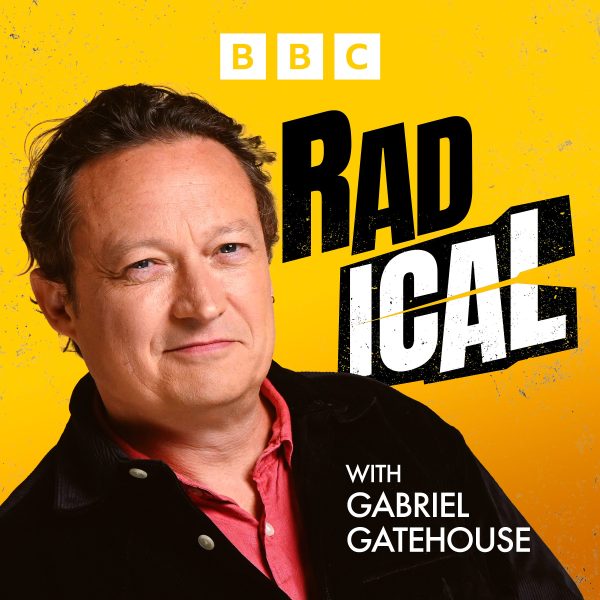
Radical with Gabriel Gatehouse
- Episódios
- 252
- Publicação
- semanal
- Último episódio
- 12 nov 2026
Sobre o podcast
Open mind, critical lens.
Conversations with radical people about radical ideas to change the world.
At a time of radical change, in politics and technology, in culture and the natural environment, Radical with Gabriel Gatehouse is a twice-weekly podcast where thinkers, innovators and heretics explore bold ideas reshaping our world.
Can these ideas, and the people driving them, really change the world? And if so, will it be for better, or worse?
Award-winning journalist and podcaster Gabriel Gatehouse (host of The Coming Storm and former Newsnight International Editor) approaches every conversation with an open mind and a critical eye, exploring what happens when radical ideas collide with reality.
LISTEN: Listen to Radical every Monday and Thursday on BBC Sounds or wherever you get your podcasts. You can also listen on your smart speaker. Just say: "Ask BBC Sounds to play Radical".
WATCH: You can also catch Radical with Gabriel Gatehouse on YouTube at www.youtube.com/bbcnews.
GET IN TOUCH: WhatsApp: 0330 123 9480 Email: [email protected]
Or join the conversation on social media using the hashtag #BBCRadical
Episódios 252
End Of Ageing: Do You Want To Live To 1000? (Aubrey de Grey)
Ageing is often viewed as an unavoidable part of life - and death - but Aubrey de Grey believes it should be treated as a medical condition that can be cured, thus extending our lives potentially by hundreds of …
Notas do episódio
Ageing is often viewed as an unavoidable part of life - and death - but Aubrey de Grey believes it should be treated as a medical condition that can be cured, thus extending our lives potentially by hundreds of years. He argues that ageing is responsible for the vast majority of human suffering and death, and that rather than accepting growing old as inevitable, scientists should focus on repairing the cellular damage that accumulates in our bodies over time. Aubrey, a gerontologist and president of the Longevity Escape Velocity Foundation, tells Gabriel how close he thinks we are to future generations routinely living far longer than people do today, and why the first person to reach the age of 1,000 may already have been born. But what would a world of dramatically extended lifespans actually look like? Would longer lives deepen inequality, strain resources and concentrate power in the hands of a fortunate few? Would the global economy need to be completely reshaped? Would people want to live that long anyway?
Producer: Ivana Davidovic Series Producer: Simon Tulett Technical Producer: Stephen Bailey Senior News Editor: Sam Bonham
LISTEN:
Listen to Radical every Thursday on BBC Sounds or wherever you get your podcasts.
You can also listen on your smart speaker. Just say: "Ask BBC Sounds to play Radical".
WATCH:
You can also catch Radical with Gabriel Gatehouse on YouTube at www.youtube.com/bbcnews.
GET IN TOUCH:
• WhatsApp: 0330 123 9480 • Email: [email protected] • Or join the conversation on social media using the hashtag #BBCRadical
Climate Violence: Has Peaceful Protest Failed? (Andreas Malm)
Environmental activists have long been committed to non-violent protest, but as global emissions continue to rise Andreas Malm thinks they should change their tactics. The climate scholar, and author of 'How to …
Notas do episódio
Environmental activists have long been committed to non-violent protest, but as global emissions continue to rise Andreas Malm thinks they should change their tactics. The climate scholar, and author of 'How to Blow Up a Pipeline', thinks the destruction and sabotage of fossil fuel infrastructure is now a legitimate and necessary weapon in the fight against climate change.
One of the most controversial figures in climate politics, Andreas argues that decades of marches, petitions and symbolic protest have failed. He tells Gabriel Gatehouse how he draws on examples from history - like anti-slavery campaigns or the suffragette movement - where violence played a key role in bringing about change (although he does not advocate violence against people). If governments refuse to phase out fossil fuels quickly enough, Andreas argues, then damaging the infrastructure driving climate breakdown may be morally justified.
But can such illegal acts be justified, and how do you convince activists to commit them, risking lengthy prison sentences in the process? Plus, would destruction garner support or resentment from everyone else?
Producer: Ivana Davidovic Series Producer: Simon Tulett Technical Producer: Dafydd Evans Senior News Editor: Sam Bonham LISTEN: Listen to Radical every Thursday on BBC Sounds or wherever you get your podcasts. You can also listen on your smart speaker. Just say: "Ask BBC Sounds to play Radical". WATCH: You can also catch Radical with Gabriel Gatehouse on YouTube at www.youtube.com/bbcnews. GET IN TOUCH: • WhatsApp: 0330 123 9480 • Email: [email protected] • Or join the conversation on social media using the hashtag #BBCRadical
Unschooling: Do Children Need School? (Naomi Fisher)
As school attendance falls and concerns grow about children’s mental health and special educational needs, is it time to rethink what education should look like? Clinical psychologist, Naomi Fisher believes the …
Notas do episódio
As school attendance falls and concerns grow about children’s mental health and special educational needs, is it time to rethink what education should look like? Clinical psychologist, Naomi Fisher believes the problem may not lie with children struggling to attend school, but with a system that is failing to meet their needs. Specialising in trauma and neurodiversity, she has spent years working with children and families who struggle with mainstream education. She has also chosen to home educate her own children.
Drawing on her professional and personal experience, Naomi argues that rising levels of school avoidance should be seen as feedback about the education system, rather than a problem with children’s behaviour. She explains why she believes families should have far greater freedom over how their children learn, and what a more flexible education system could look like. Her radical thought is that while every child deserves an education, not every child needs to go to school.
Series Producer: Simon Tulett Producers: Ivana Davidovic and Farhana Haider Technical Producer: Jonny Hall Senior News Editor: Sam Bonham
LISTEN:
Listen to Radical every Thursday on BBC Sounds or wherever you get your podcasts.
You can also listen on your smart speaker. Just say: "Ask BBC Sounds to play Radical".
WATCH:
You can also catch Radical with Gabriel Gatehouse on YouTube at www.youtube.com/bbcnews.
GET IN TOUCH:
• WhatsApp: 0330 123 9480 • Email: [email protected] • Or join the conversation on social media using the hashtag #BBCRadical
Future of Film: Can AI Turn Anyone into a Movie Maker? (Jenny Krakovsky)
Jenny Krakovsky has spent years trying to get her films made the traditional way. A working-class girl from South London, who was kicked out of school aged 14, she trained as a filmmaker and built a career …
Notas do episódio
Jenny Krakovsky has spent years trying to get her films made the traditional way. A working-class girl from South London, who was kicked out of school aged 14, she trained as a filmmaker and built a career making documentaries and adverts for high-end brands. But after repeatedly hitting a wall trying to get her feature scripts financed, she decided to take a radical gamble: could she make an entire feature film with AI, using only her laptop, in just a few weeks?
Jenny tells Gabriel about the tech behind the female-driven 1960s crime caper, how she documented the process online, and how she then found herself at the centre of a fierce debate about the future of cinema. She explains why she believes AI could be a democratising force for filmmaking, giving outsiders the chance to bypass industry gatekeepers and tell stories that Hollywood might never make.
Series Producer: Simon Tulett Producer: Ivana Davidovic Technical Producer: Jonny Hall Senior News Editor: Sam Bonham
LISTEN:
Listen to Radical every Thursday on BBC Sounds or wherever you get your podcasts.
You can also listen on your smart speaker. Just say: "Ask BBC Sounds to play Radical".
WATCH:
You can also catch Radical with Gabriel Gatehouse on YouTube at www.youtube.com/bbcnews.
GET IN TOUCH:
• WhatsApp: 0330 123 9480 • Email: [email protected] • Or join the conversation on social media using the hashtag #BBCRadical
End Times Capitalism: How Much Wealth Is Too Much Wealth? (Activist Naomi Klein)
Naomi Klein has been writing critiques of capitalism and globalisation for more than 20 years. But now, for one of the most influential and outspoken figures on the political left, things are getting desperate …
Notas do episódio
Naomi Klein has been writing critiques of capitalism and globalisation for more than 20 years. But now, for one of the most influential and outspoken figures on the political left, things are getting desperate. In her latest book 'End Times Fascism' she writes about how the global economic order is combining with other powerful forces to hasten the end of the world as we know it.
The author and social activist tells Gabriel Gatehouse about the religious fundamentalists, tech bros and white supremacists that keep her up at night, and her ideas about how to stop them - including dismantling capitalism, and why it hasn't happened yet. Series Producer: Simon Tulett Technical Producer: Jonny Hall Senior News Editor: Sam Bonham LISTEN: Listen to Radical every Thursday on BBC Sounds or wherever you get your podcasts. You can also listen on your smart speaker. Just say: "Ask BBC Sounds to play Radical". WATCH: You can also catch Radical with Gabriel Gatehouse on YouTube at www.youtube.com/bbcnews. GET IN TOUCH: • WhatsApp: 0330 123 9480 • Email: [email protected] • Or join the conversation on social media using the hashtag #BBCRadical
Introducing... Radical With Gabriel Gatehouse
Award-winning journalist and podcaster Gabriel Gatehouse is the new host of Radical, the podcast exploring the people and ideas trying to change the world.At a time of radical change, in politics and …
Notas do episódio
Award-winning journalist and podcaster Gabriel Gatehouse is the new host of Radical, the podcast exploring the people and ideas trying to change the world.
At a time of radical change, in politics and technology, in culture and the natural environment, Radical with Gabriel Gatehouse is a twice-weekly podcast where thinkers, innovators and heretics explore bold ideas reshaping our world. Can these ideas, and the people driving them, really change the world? And if so, will it be for better, or worse? LISTEN: Listen to Radical every Monday and Thursday on BBC Sounds or wherever you get your podcasts. You can also listen on your smart speaker. Just say: "Ask BBC Sounds to play Radical". WATCH: You can also catch Radical with Gabriel Gatehouse on YouTube at www.youtube.com/bbcnews. GET IN TOUCH: WhatsApp: 0330 123 9480 Email: [email protected] Or join the conversation on social media using the hashtag #BBCRadical
Cost of Living: Should Government Pay For Life's Essentials? (Anna Coote)
What if housing, childcare, transport and social care were no longer treated as things to buy and sell but as services everyone was entitled to, regardless of their ability to pay?Social policy analyst Anna …
Notas do episódio
What if housing, childcare, transport and social care were no longer treated as things to buy and sell but as services everyone was entitled to, regardless of their ability to pay?
Social policy analyst Anna Coote believes the market has failed to provide many of life's essentials. Her answer is universal basic services: a system where access to housing, care, education, transport and other necessities are free or genuinely affordable.
She tells Gabriel Gatehouse about a proposal that challenges the assumption that markets are the best way to allocate resources. From housing shortages to childcare costs, Anna explains what universal basic services would mean in practice and whether Britain could ever afford them.
WhatsApp: 0330 123 9480 Email: [email protected]
Episodes of Radical are released every Thursday.
Series Producer: Simon Tulett Producer: Ivana Davidovic Technical Producer: Ben Andrews Senior News Editor: Sam Bonham
Care Crisis: Could Volunteer Teenagers Fix It? (Paul Sagar)
Paul Sagar depends on carers 24 hours a day, seven days a week. He could die without them. It's been that way ever since the academic at King's College London fell in a rock climbing accident three years ago …
Notas do episódio
Paul Sagar depends on carers 24 hours a day, seven days a week. He could die without them. It's been that way ever since the academic at King's College London fell in a rock climbing accident three years ago and was paralysed from the neck down. His experiences in England's adult social care system - and the stories he has heard from others - have led him to a radical plan for how to address its spiralling costs, staff shortages, and increasing demand. Paul thinks that, before they go to university, students should be offered the chance to volunteer in the care sector for at least a year, in exchange for a discount on their future university tuition fees.
Gabriel Gatehouse hears Paul's remarkable story and puts his solution to the test: how many teenagers would actually go for it, and would they make a big enough difference?
This episode was recorded before Andy Burnham announced plans to end the pensions triple lock by 2030 to help fund a National Care Service in England.
WhatsApp: 0330 123 9480 Email: [email protected]
Episodes of Radical are released every Thursday.
Series Producer: Simon Tulett Producer: Bob Howard Technical Producer: Jonny Hall Digital Producer: Daniel Raza Senior News Editor: Sam Bonham
Rights for the Unborn: How Should We Protect Future Generations? (Sophie Howe)
Politicians are always making decisions that impact future generations, but how often do they really consider whether they are making life better, or worse, for people who haven’t been born yet?Rarely, thinks …
Notas do episódio
Politicians are always making decisions that impact future generations, but how often do they really consider whether they are making life better, or worse, for people who haven’t been born yet?
Rarely, thinks Sophie Howe, but she is part of a movement aiming to change that. She was the first future generations commissioner for Wales - at the time, the first role of its kind anywhere in the world - and her job was to make sure that decisions taken by the Welsh government would benefit its people in the long-term.
She tells Gabriel Gatehouse about some of the key things she made happen, and one big thing she stopped happening, as well as her current work to encourage other countries to appoint future generations commissioners. Also, she explains why she thinks it’s sometimes necessary to put the needs of the unborn over those of the living, at least in the short-term.
WhatsApp: 0330 123 9480 Email: [email protected]
Episodes of Radical are released every Thursday.
Series Producer: Simon Tulett Producer: Bob Howard Technical Producer: Dafydd Evans Digital Producer: Daniel Raza Senior News Editor: Sam Bonham
Disaster Prepping: Should We All Stock Up? (Mike Chappell, prepper)
Prepper Mike Chappell is ready for disaster to hit the UK, and he believes everyone else should be prepared too.Mike is worried that blackouts, food supply disruption, and extreme weather could seriously …
Notas do episódio
Prepper Mike Chappell is ready for disaster to hit the UK, and he believes everyone else should be prepared too.
Mike is worried that blackouts, food supply disruption, and extreme weather could seriously disrupt normal life, potentially leaving people to fend for themselves for weeks or months at a time. He believes those threats are growing and thinks everyone should have enough supplies to last them at least two weeks - a message he spreads on his YouTube channel, UK Urban Prepper.
The UK government recently urged people to stock up on tinned food and bottled water to build resilience in case of a national emergency, so have preppers like Mike been right all along?
Gabriel Gatehouse asks Mike what exactly he is prepping for and gets some tips on how to start building a stockpile. Plus, does the prepper mindset leave any room for community spirit, or is it all about looking after yourself?
- WhatsApp: 0330 123 9480 - Email: [email protected]
Episodes of Radical are released every Thursday.
Series Producer: Simon Tulett Producer: Bob Howard Technical Producer: Dafydd Evans Digital Producer: Daniel Raza Senior News Editor: Sam Bonham
Human Composting: A New Way to Deal with Death? (Kristoffer Hughes)
Former mortuary technician Kristoffer Hughes wants to bring terramation - or human composting - to the UK. He believes it's a more natural and hopeful way for our bodies to be disposed of, and a more …
Notas do episódio
Former mortuary technician Kristoffer Hughes wants to bring terramation - or human composting - to the UK. He believes it's a more natural and hopeful way for our bodies to be disposed of, and a more environmentally friendly alternative to burial and cremation.
Kristoffer tells Gabriel Gatehouse about the "epiphany" he had when he first witnessed the practice in the USA, his own experience of being 'buried alive' in a terramation facility, and what human compost can actually be used for.
The practice isn't legal in the UK yet - the Law Commission has suggested it could be explored as an option in England and Wales - but how much appeal would it really have, how much would it cost, and is it safe?
- WhatsApp: 0330 123 9480 - Email: [email protected]
Episodes of Radical are released every Thursday and Monday.
Series Producer: Simon Tulett Producers: Bob Howard and Ivana Davidovic Technical Producer: Ben Andrews Digital Producer: Daniel Raza Senior News Editor: Sam Bonham
What Should The Minimum Age For Drugs Be? (Your Radical Questions with Neil Woods)
Neil Woods is a former undercover police officer who used to infiltrate drug gangs, but he now believes drugs should be legalised and the market regulated by government. He's a board member of the Law …
Notas do episódio
Neil Woods is a former undercover police officer who used to infiltrate drug gangs, but he now believes drugs should be legalised and the market regulated by government. He's a board member of the Law Enforcement Action Partnership (LEAP), which campaigns for drug policy reform around the world.
In the main episode Neil explained why he thinks prohibition of illicit drugs has failed and outlined his plan for the government to source and supply drugs like cannabis, cocaine and heroin through pharmacies or via sales in regulated shops.
In this special Q&A, Neil answers your questions on minimum ages for these drugs, the experiences of other countries, and the thorny moral question.
- WhatsApp: 0330 123 9480 - Email: [email protected]
Episodes of Radical are released every Thursday and Monday.
Series Producer: Simon Tulett Producer: Nathan Gower Technical Producer: Mike Regaard Senior News Editor: Sam Bonham
Legalisation: Has The War On Drugs Failed? (Neil Woods, ex-police officer)
As an undercover police officer Neil Woods' job was to infiltrate drug gangs and put their leaders behind bars, but he says his work gradually convinced him that he was doing more harm than good. Since leaving …
Notas do episódio
As an undercover police officer Neil Woods' job was to infiltrate drug gangs and put their leaders behind bars, but he says his work gradually convinced him that he was doing more harm than good. Since leaving the force he has become one of the UK's foremost campaigners for drug policy reform.
Neil tells this week's host, Jenny Kleeman, why he believes the war on drugs has failed, and sets out his alternative vision for legalising and regulating the use of cannabis, cocaine, heroin and other products. He thinks drugs on prescription or sold with age and dose restrictions, as well as health advice, would be the best way to keep users safe and wrest control of the market away from organised crime.
But, of course, Neil has his opponents. We ask whether the war on drugs really is failing, if legalisation would really eradicate crime and the black market, and whether legalisation might actually increase drug use and deaths.
- WhatsApp: 0330 123 9480 - Email: [email protected]
Episodes of Radical are released every Thursday and Monday.
Series Producer: Simon Tulett Producer: Nathan Gower Technical Producer: Mike Regaard Senior News Editor: Sam Bonham
Are Politicians Too Focused on Older Generations? (Your Radical Questions with Professor Sarah Harper)
Sarah Harper is Professor of Gerontology at the University of Oxford and one of the world's leading experts on demographic change. She challenges the widespread belief that ageing populations are primarily a …
Notas do episódio
Sarah Harper is Professor of Gerontology at the University of Oxford and one of the world's leading experts on demographic change. She challenges the widespread belief that ageing populations are primarily a social and economic burden, arguing instead that longer lives represent one of humanity's greatest achievements and an opportunity to rethink how society is organised.
In the last episode, Sarah explained why many of the pressures associated with ageing societies stem from institutions that were designed for a very different era. She argued that our welfare systems, labour markets and expectations around retirement no longer reflect the realities of modern life, where people are living longer, healthier lives than previous generations.
In this week's Q&A, Sarah joins James Marriott to answer your questions about the future of retirement, pensions and work in an ageing society. She explores generational resentment and how we can bridge the gap between old and young, whether inequality is more important than age, and whether politicians disproportionately focus on older voters.
- WhatsApp: 0330 123 9480 - Email: [email protected]
Episodes of Radical are released every Thursday and Monday.
Series Producer: Rufus Gray Producers: Nathan Gower and Ivana Davidovic Digital Producer: Gabriel Purcell-Davis Technical Producer: Dafydd Evans Senior News Editor: Sam Bonham
Redefining Retirement: Is Our Ageing Population an Untapped Asset? (Professor Sarah Harper)
This week, James Marriott talks to Sarah Harper, Professor of Gerontology at the University of Oxford and one of the world's leading experts on demographic change. She challenges the increasingly common …
Notas do episódio
This week, James Marriott talks to Sarah Harper, Professor of Gerontology at the University of Oxford and one of the world's leading experts on demographic change. She challenges the increasingly common narrative that ageing populations represent an inevitable economic and social burden, arguing instead that longer lives should be seen as an achievement that requires us to rethink the way society is organised. As birth rates fall and life expectancy increases, governments across the world face growing concerns about pensions, healthcare and shrinking workforces. Yet Harper believes many of these pressures stem from institutions that were designed for a very different era. She argues that our welfare systems, labour markets and assumptions about retirement are still based on outdated ideas about ageing and no longer reflect the realities of modern life. She wants us to be more radical, and makes the case for a fundamental rethink of the state pension, proposing that eligibility should be linked to years of contribution rather than chronological age. More broadly, she argues that we need to move beyond rigid age-based milestones and develop new ways of understanding work, contribution and later life in an ageing society. Can ageing populations drive prosperity rather than decline? Should age continue to determine when we stop working and start receiving support from the state? And what would it take to build a society that not only adapts to longer lives, but thrives because of them?
- WhatsApp: 0330 123 9480 - Email: [email protected]
Episodes of Radical are released every Thursday and Monday.
Series Producer: Rufus Gray Producers: Nathan Gower and Ivana Davidovic Digital Producer: Gabriel Purcell-Davis Technical Producer: Dafydd Evans Senior News Editor: Sam Bonham
Is Britain's Military Still Fit For Purpose? (Your Radical Questions with Brendan Simms)
Brendan Simms is Professor of the History of International Relations at the University of Cambridge and the author of The Return of the Great Powers. He challenges the widespread belief that Britain is in …
Notas do episódio
Brendan Simms is Professor of the History of International Relations at the University of Cambridge and the author of The Return of the Great Powers. He challenges the widespread belief that Britain is in terminal decline, arguing that the UK remains one of the world’s four true Great Powers.
In the main episode, Brendan explained why Britain’s resources, global reach, reputation and resilience still give it significant international influence. He also argued that great power politics has returned as the dominant force shaping global affairs.
In this special Q&A, Brendan answers your questions on what steps Britain needs to take to stay relevant, whether its military is fit for purpose, and whether our soft power is overlooked.
- WhatsApp: 0330 123 9480 - Email: [email protected]
Episodes of Radical are released every Thursday and Monday.
Series Producer: Rufus Gray Producers: Nathan Gower and Ivana Davidovic Digital Producer: Joe Wilkinson Technical Producer: Jonny Baker Senior News Editor: Sam Bonham
Influence After Empire: Is Britain Still a Great Power? (Professor Brendan Simms)
Is Great Britain really still great? Is it in decline, or has the UK underestimated its own status in the world?In his latest book The Return of the Great Powers, Brendan Simms, Professor of the History of …
Notas do episódio
Is Great Britain really still great? Is it in decline, or has the UK underestimated its own status in the world?
In his latest book The Return of the Great Powers, Brendan Simms, Professor of the History of International Relations at the University of Cambridge, challenges one of the most deeply rooted current assumptions in British public life and argues that the UK is still a significant player on the world stage.
While much of the national conversation focuses on economic stagnation, geopolitical uncertainty and the fading legacy of empire, Simms argues that the UK remains one of only four true Great Powers in the world today, alongside the United States, China and Russia.
Drawing on a framework of resources, reach, reputation and resilience, he joins Radical to make the case that Britain retains many of the characteristics that define global power: a strong economy, worldwide diplomatic influence, significant military capabilities and an overseas presence that allows it to project influence far beyond its shores.
Sophia Smith Galer hosts this week, and find out why Brendan Simms believes that great power politics has returned as the dominant force shaping international affairs. What does it mean to be a Great Power in the 21st century? Does Britain still belong at the top table? And how the growing rivalry between the US and China is reshaping the global order?
- WhatsApp: 0330 123 9480 - Email: [email protected]
Episodes of Radical are released every Thursday and Monday.
Series Producer: Rufus Gray Producers: Nathan Gower and Ivana Davidovic Digital Producer: Joe Wilkinson Technical Producer: Jonny Baker Senior News Editor: Sam Bonham
Will British Farming Pay the Price for Rewilding? (Your Radical Questions with Derek Gow)
Derek Gow is a farmer, conservationist, author and leading rewilding advocate who has become one of the UK's most vocal champions of large-scale species reintroductions. In this special Q&A, he tackles some of …
Notas do episódio
Derek Gow is a farmer, conservationist, author and leading rewilding advocate who has become one of the UK's most vocal champions of large-scale species reintroductions. In this special Q&A, he tackles some of your most challenging and provocative questions. In the main episode, Derek explained why he breeds native British species and argued that rewilding is a vital tool in addressing the biodiversity and climate crises. In this follow-up discussion, listeners ask whether turning farmland into wildlife habitat can ever be financially sustainable and how he responds to critics who believe conservation is a luxury. He also explains how investing in nature can deliver long-term benefits for communities, the economy and the environment. Next week, Sophia Smith-Galer talks to Brendan Simms, Professor of the History of International Relations at the University of Cambridge. He argues that, contrary to received wisdom, the UK is still a great power in the world. We’ll be putting your radical questions to Professor Simms for a Q&A episode, so please get in touch. * WhatsApp: 0330 123 9480 * Email: [email protected]
Britain's Lost Species: Should We Resurrect Our Extinct Wildlife? (Derek Gow)
This week, John Burn-Murdoch speaks with Derek Gow, the British farmer, conservationist, author and rewilding pioneer who has become one of the UK's most outspoken advocates for large-scale species …
Notas do episódio
This week, John Burn-Murdoch speaks with Derek Gow, the British farmer, conservationist, author and rewilding pioneer who has become one of the UK's most outspoken advocates for large-scale species reintroductions.
From his farm in Devon, Derek breeds native British animals, including species that have been absent from the UK for centuries. His goal is to demonstrate what is possible when conservation ambition matches the scale of the ecological challenges we face.
A passionate supporter of reintroducing beavers across the country, Derek argues that restoring them into the wild can play a crucial role in tackling climate change, reducing flood risk, reviving wetlands and making landscapes more resilient to extreme weather.
His views have frequently brought him into conflict with parts of the farming establishment. Yet Derek insists that productive agriculture and ambitious rewilding are not mutually exclusive, and that with the right political leadership, the two can thrive side by side.
* WhatsApp: 0330 123 9480 * Email: [email protected]
Episodes of Radical are released every Thursday and Monday.
Series Producer: Rufus Gray Producers: Nathan Gower, Ivana Davidovic Digital Producer: Gabriel Purcell-Davis Technical Producer: Jonny Baker Senior News Editor: Sam Bonham
Should Politicians Have to Pass Competence Tests? (Your Radical Questions with David Runciman)
David Runciman, podcaster and former politics Professor, answers Your Radical Questions. In the main episode, David argued that lowering the voting age to six is a true expression of universal suffrage and …
Notas do episódio
David Runciman, podcaster and former politics Professor, answers Your Radical Questions. In the main episode, David argued that lowering the voting age to six is a true expression of universal suffrage and could help reinvigorate our stagnant democracy. Now, our listeners challenge him on whether kids would just vote how their parents tell them, and whether there’s any evidence or precedent to support his radical proposal.
Plus, should knowledge and competence be rewarded in our democratic system? Should some votes count more than others and should our politicians have to pass tests before they stand for office?
Next week, our Radical guest is Derek Gow, a conservationist, rewilder and outspoken advocate of large-scale species re-introductions. He argues that we should give much more of our land back to nature and away from conventional farming, using the innate behaviour of native species – in particular beavers – to restore natural ecosystems which could help protect against the devastating effects of climate change.
We want your radical questions for him, so please get in touch.
* WhatsApp: 0330 123 9480 * Email: [email protected]
Episodes of Radical are released every Thursday and Monday.
Series Producer: Rufus Gray Producers: Nathan Gower, Ivana Davidovic Digital Producer: Gabriel Purcell-Davis Technical Producer: Philip Bull Senior News Editor: Sam Bonham
Votes for Six-Year-Olds: Could Child Suffrage Revive Democracy? (David Runciman)
This week, guest presenter Sophia Smith Galer speaks to David Runciman, a podcaster and former politics academic, about his radical proposition to lower the voting age to six.It’s a position that has been met …
Notas do episódio
This week, guest presenter Sophia Smith Galer speaks to David Runciman, a podcaster and former politics academic, about his radical proposition to lower the voting age to six.
It’s a position that has been met with laughter, scorn, and even anger, but he believes it’s not just in accordance with our democratic principles - it could also help give our stale and fractious democracy a much-needed shot in the arm. David talks us through the history of the arguments about suffrage (some of which have echoes now in the debate around children), his work talking to children in schools about politics and voting, and how he thinks his radical proposal could shake-up democracy.
Next week, John Burn-Murdoch talks to the conservationist Derek Gow, one of the country’s leading Rewilders, who argues that we should be reintroducing indigenous but long-vanished species to the UK countryside.
We’ll be putting your radical questions to Derek for a Q&A episode, so please get in touch.
* WhatsApp: 0330 123 9480 * Email: [email protected]
Episodes of Radical are released every Thursday and Monday.
Series Producer: Rufus Gray Producers: Nathan Gower, Ivana Davidovic Digital Producer: Gabriel Purcell-Davis Technical Producer: Philip Bull Senior News Editor: Sam Bonham
Is Christianity Becoming Countercultural Again? (Your Radical Questions with Lamorna Ash)
Writer Lamorna Ash, author of Don’t Forget We’re Here Forever, answers Your Radical Questions. In the main episode, Lamorna told James Marriott what she discovered while travelling around Britain and meeting …
Notas do episódio
Writer Lamorna Ash, author of Don’t Forget We’re Here Forever, answers Your Radical Questions. In the main episode, Lamorna told James Marriott what she discovered while travelling around Britain and meeting young Christians across the religious and political spectrum. Now, you ask her why some people under 40 are finding faith in older and more ritualistic churches, and whether Christianity is beginning to feel countercultural.
Lamorna is also challenged on whether Christianity offers genuine help to people experiencing psychological distress, or if it allows them to surrender their agency. And have modern forms of spirituality, from tarot and astrology to manifestation and energy, made a return to traditional religion less likely?
GET IN TOUCH:
- WhatsApp: +44330 123 9480 - Email: [email protected]
Episodes of Radical are released every Thursday and Monday.
Series producer: Rufus Gray Producers: Oscar Pearson, Nathan Gower Technical producer: Robin Schroder Senior news editor: Sam Bonham
Gen Z and God: Is the Church Answering Young People's Prayers? (Lamorna Ash)
This week, James Marriott speaks to the writer Lamorna Ash about her journey through the changing world of British Christianity. Raised with little religious belief, Lamorna spent a year visiting churches …
Notas do episódio
This week, James Marriott speaks to the writer Lamorna Ash about her journey through the changing world of British Christianity.
Raised with little religious belief, Lamorna spent a year visiting churches, festivals, monasteries and Christian communities across the country. What began as an investigation into why young people were rediscovering faith gradually became a much more personal search for meaning and belief. James and Lamorna discuss the decline of organised religion, the loneliness and uncertainty of modern life, and Christianity’s surprising appeal to a new generation with diverse beliefs and politics. Is Britain witnessing a genuine religious revival? And could answers to very modern problems be found in our old, religious institutions?
Next week, Sophia Smith Galer speaks to David Runciman, an honorary Professor of Politics at the University of Cambridge, about his very radical proposal to lower the voting age to six years old.
GET IN TOUCH * WhatsApp: 0330 123 9480 * Email: [email protected]
Episodes of Radical are released every Thursday and Monday.
Series producer: Rufus Gray Producers: Oscar Pearson, Nathan Gower Digital producers: Gabriel Purcell-Davis Technical producer: Robin Schroder Senior news editor: Sam Bonham
Could Climate Engineering Do More Bad Than Good for the Environment? (Your Radical Questions with Professor David Keith)
Professor David Keith, one of the world’s leading researchers in geoengineering, answers Your Radical Questions. In the main episode, David told Gabriel Gatehouse why deliberately reflecting a small amount of …
Notas do episódio
Professor David Keith, one of the world’s leading researchers in geoengineering, answers Your Radical Questions. In the main episode, David told Gabriel Gatehouse why deliberately reflecting a small amount of sunlight away from Earth could slow global warming. Now, you ask him whether we could ever know the unintended consequences before trying it, and whether sunlight reflection could be stopped safely once it had begun.
David’s also challenged on whether carbon capture and carbon removal genuinely help tackle climate change, or if they offer oil companies an excuse to continue operating as usual. And is continued economic growth compatible with protecting the planet?
GET IN TOUCH:
- WhatsApp: +44330 123 9480 - Email: [email protected]
Episodes of Radical are released every Thursday and Monday.
Series producer: Rufus Gray
Producers: Oscar Pearson, Nathan Gower
Technical producer: Michael Regaard
Senior news editor: Sam Bonham
Engineering the Climate: Can Injecting Chemicals in the Sky Help Save the Planet? (Professor David Keith)
What if the answer to climate change is not only to cut carbon emissions, but to make the Earth more resilient using tech?Professor David Keith is one of the world’s leading researchers of geoengineering which …
Notas do episódio
What if the answer to climate change is not only to cut carbon emissions, but to make the Earth more resilient using tech?
Professor David Keith is one of the world’s leading researchers of geoengineering which aims to do just that. Efforts to capture carbon are already underway, but Professor Keith is particularly interested in sunlight reflection - the controversial idea of cooling the planet by reflecting the sun’s rays back into space. To do this, he wants to release sulphur high into the atmosphere, and believes governments should consider starting within years.
To critics, it’s an arrogant and potentially disastrous attempt to interfere with a climate system we don’t fully understand. But, Professor Keith is now willing to say that we should be more radical in the face of the scale of our climate problem, and that a carefully managed intervention would be worth the downsides.
Gabriel Gatehouse sits in this week, and asks who would control the technology, who would be liable if it went wrong, and whether humanity should have the power to redesign the climate.
Next week, James Marriott speaks to Lamorna Ash about why Generation Z are turning to religion for answers to the problems of the modern world.
GET IN TOUCH * WhatsApp: 0330 123 9480 * Email: [email protected] Episodes of Radical are released every Thursday and Monday.
Series producer: Rufus Gray Producers: Oscar Pearson, Nathan Gower Digital producers: Leona Gasper, Gabriel Purcell-Davis Technical producer: Jonny Hall Senior news editor: Sam Bonham
The Best of Radical with Amol Rajan
On Amol’s last day as the host of Radical, he shares five conversations that really stand out. Matt Clifford, Emma Grede, Jacob Dunne, Katherine Birbalsingh and James Marriott.Next week, Gabriel Gatehouse …
Notas do episódio
On Amol’s last day as the host of Radical, he shares five conversations that really stand out. Matt Clifford, Emma Grede, Jacob Dunne, Katherine Birbalsingh and James Marriott.
Next week, Gabriel Gatehouse speaks to Professor David Keith about geoengineering, deliberate large-scale interventions in the Earth’s climate system designed to fight human-caused climate change.
If you have a Radical question for Professor Keith, get in touch:
- WhatsApp: 0330 123 9480 - Email: [email protected]
Episodes of Radical are released every Thursday and Monday.
Series producer: Rufus Gray
Producer: Oscar Pearson
Technical producer: Jonny Hall
Senior news editor: Sam Bonham
Why Do People Pretend to Be Working Class? (Your Radical Questions with Sophie Pender)
Sophie Pender, founder of The 93% Club, returns to answer your questions on class, privilege and education. In the main episode, Sophie told Amol why she thinks Britain needs to stop talking politely about …
Notas do episódio
Sophie Pender, founder of The 93% Club, returns to answer your questions on class, privilege and education.
In the main episode, Sophie told Amol why she thinks Britain needs to stop talking politely about social mobility and confront the power of private schools. Now, listeners ask whether class identity has become too slippery, whether people downplay their own privilege, and whether support for state-school students risks helping those who are already advantaged.
Sophie also discusses oracy, accent and confidence in the classroom, the culture shock of elite universities, the case for and against grammar schools, and why she thinks vocational education should be about aptitude rather than origin.
GET IN TOUCH:
* WhatsApp: 0330 123 9480
* Email: [email protected]
Episodes of Radical with Amol Rajan are released every Thursday and Monday.
Amol Rajan presents the Today programme on BBC Radio 4 and hosts University Challenge on BBC One. Before that, Amol was the BBC’s media editor and the editor of The Independent newspaper.
Series producer: Rufus Gray
Producers: Oscar Pearson, Julian Paszkiewicz
Digital producers: Leona Gasper, Joe Wilkinson
Technical producer: Jonny Hall
Senior news editor: Sam Bonham
We Need to Talk About Class: Is It Time to Abolish Private Schools? (Sophie Pender)
Sophie Pender grew up on council estates in North London, became the first in her family to go to university, trained as a corporate lawyer - then walked away from a six-figure salary to fight Britain’s class …
Notas do episódio
Sophie Pender grew up on council estates in North London, became the first in her family to go to university, trained as a corporate lawyer - then walked away from a six-figure salary to fight Britain’s class problem.
She’s the founder of ‘The 93% Club’, a network for state-educated students and professionals, named after the proportion of people in Britain who go to state schools. But Sophie argues that “social mobility” has become too polite a phrase for something much deeper: how much class, accent, money and private education shapes who gets power – and who doesn’t.
In Amol’s final Radical interview, Sophie explains why she’s made it her life’s mission to make private schools redundant, why networks matter as much as talent, and what it would take to build an old boys’ network for everyone else.
GET IN TOUCH:
* WhatsApp: 0330 123 9480
* Email: [email protected]
Episodes of Radical are released every Thursday and Monday.
Amol Rajan presents the Today programme on BBC Radio 4 and hosts University Challenge on BBC One. Before that, Amol was the BBC’s media editor and the editor of The Independent newspaper.
Series producer: Rufus Gray
Producers: Oscar Pearson, Julian Paszkiewicz
Digital producers: Leona Gasper, Joe Wilkinson
Technical producer: Jonny Hall
Senior news editor: Sam Bonham
What Is The Secret To Happiness? (Your Radical Questions with Lord Richard Layard)
For this week’s Q&A, Amol is joined by the economist, author, Labour peer, and happiness champion Lord Richard Layard. In their previous conversation, Lord Layard outlined his radical idea; that government …
Notas do episódio
For this week’s Q&A, Amol is joined by the economist, author, Labour peer, and happiness champion Lord Richard Layard. In their previous conversation, Lord Layard outlined his radical idea; that government policymaking should be decided first and foremost by how it impacts overall happiness and wellbeing.
Now, he answers your questions on the NHS and mental health, how we should measure success, the ethics of farming animals for food, and whether pacifism is the answer for how we achieve greater happiness around the world.
GET IN TOUCH * WhatsApp: 0330 123 9480 * Email: [email protected] Episodes of Radical with Amol Rajan are released every Monday and Thursday. Amol Rajan is a presenter of the Today programme on BBC Radio 4. He is also the host of University Challenge on BBC One. Before that, Amol was media editor at the BBC and editor at The Independent.
Radical with Amol Rajan is a Today Podcast. It was made by Rufus Gray and Oscar Pearson. Technical production was by Jonny Baker. The senior news editor is Sam Bonham. The series producer is Rufus Gray.
Happiness Rules: Should Wellbeing Dictate Government Policy? (Lord Richard Layard)
This week, Amol sits down with Lord Richard Layard, the author, economist, and Labour peer who has spent decades making the case for happiness and wellbeing. He successfully helped implement talking therapy to …
Notas do episódio
This week, Amol sits down with Lord Richard Layard, the author, economist, and Labour peer who has spent decades making the case for happiness and wellbeing. He successfully helped implement talking therapy to the NHS, and was a key figure in persuading the UK government to measure wellbeing.
But he wants to go further - in this conversation, Lord Layard outlines why he wants happiness to become the main objective of all government policy, and argues that this radical change would even pay for itself.
But what actually are happiness and wellbeing? How can we make ourselves happier? And why are young people less happy than ever before?
GET IN TOUCH * WhatsApp: 0330 123 9480 * Email: [email protected] Episodes of Radical with Amol Rajan are released every Monday and Thursday. Amol Rajan presents the Today programme on BBC Radio 4 and hosts University Challenge on BBC One. Before that, Amol was the BBC’s media editor and the editor of The Independent newspaper. Radical with Amol Rajan is a Today Podcast. It was made by Rufus Gray and Oscar Pearson. Technical production was by Jonny Baker. The senior news editor is Sam Bonham. The series producer is Rufus Gray.
Aqui estão os 40 episódios mais recentes de 252. Os mais antigos estão no feed do podcast.
Podcasts parecidos
Mais podcasts de Sociedade e cultura





Este podcast é seu?
Confirme com uma entrada no seu feed: você recebe um código aqui, adiciona como podcast:txt no canal do seu feed e nós verificamos. Depois disso, seu podcast aparece como “verificado” no SoundNode.