

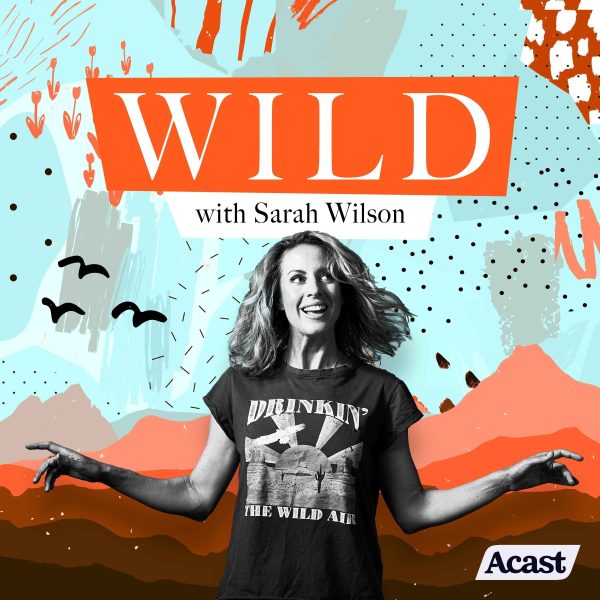
Wild with Sarah Wilson
- Episódios
- 218
- Publicação
- semanal
- Último episódio
- 10 nov 2026
Sobre o podcast
Sarah Wilson chats wild ideas for a fired up life.
The multi-New York Times bestselling author, activist, minimalist and former news journalist who founded the global phenomenon ‘I Quit Sugar’ travelled the world for 10 years (living out of one bag) to explore the freshest ways to live fully…and to save this one wild and precious life we have together.
She riffs with philosophers, creatives, poets, scientists (and at least one nun!) on the Big Questions that haunt us. What goes through the mind of a prisoner on death row? How does Sia invent her art? Will we die from climate change and can our rage save us? Is being Australian a mental health crisis? Join Sarah as she wrestles a path to the answers…
Hosted on Acast. See acast.com/privacy for more information.
Episódios 218
NAOMI KLEIN: End Times Fascism (an enlivening chat with a legend)
Naomi Klein (No Logo author, journalist, filmmaker) wants to warn us about what the tech billionaire edgelords are *really* up to. Her new book, End Times Fascism, cowritten with political organiser and author …
Notas do episódio
Naomi Klein (No Logo author, journalist, filmmaker) wants to warn us about what the tech billionaire edgelords are *really* up to. Her new book, End Times Fascism, cowritten with political organiser and author Astra Taylor, explains the seemingly bizarre (and chaotic) alliance between far-right Christians, the megalomanic tech bros, Israel and MAGA (and, increasingly, many other nation states). And why they are gunning for an apocalypse. The book, which became an instant bestseller in the US, Canada and UK when it came out two months ago, issues a wake-up call, but also serves as a guidebook to where the vulnerabilities lie in the mad, evil plot (so that we can exploit them, and flip the story).
I’ve been wanting to talk with Naomi… for most of my adult life! I’ve followed her work since No Logo came out in 2000. All of her books have identified dangerous shifts in the Zeitgeist, coined terms and served as portents. So, too, End Times Fascism. It covers the collapsing phenomenon I track in I Eat the Stars but coming at things through a specific lens, getting into the guts of what is motivating the Musks, Vances and Thiels of the world.
Naomi is also Professor of Climate Justice at the University of British Columbia and co-director of its Centre for Climate Justice. Her other books include The Shock Doctrine: The Rise of Disaster Capitalism (2007); This Changes Everything: Capitalism vs. the Climate (2014); and the brilliant Doppelganger: A Trip into the Mirror World (2023), which I reference in this conversation.
SHOW NOTES
Here’s the chapter on Israel and Palestine from Doppelgänger
I invite you to follow Aja Barker over on Patreon, Britt Wrey and Harrison Gardener on Subtack.
Here’s the book trailer video that Naomi mentions…it sets up the thesis super well by showing what the main players themselves are actually saying.
---
If you need to know a bit more about me… head to my "about" page
For more such conversations, subscribe to my Substack newsletter, it’s where I interact the most!
Let’s connect on Instagram
Hosted on Acast. See acast.com/privacy for more information.
LIZZIE WADE: It’s the end of the world as we know it, and it might just be…fine
Lizzie Wade (anthropology journalist, author of Apocalypse) has studied history’s most notorious civilizational collapses and has arrived at a bold conclusion: catastrophe and metacrises don’t always have to …
Notas do episódio
Lizzie Wade (anthropology journalist, author of Apocalypse) has studied history’s most notorious civilizational collapses and has arrived at a bold conclusion: catastrophe and metacrises don’t always have to spell human wipeout. Instead, they can be the very thing that creates the future…even a better one.
Lizzie is an award-winning science journalist and correspondent for Science, one of the world's most prestigious scientific journals. She covers archaeology, anthropology, and Latin America for the journal and also writes for Wired, The Atlantic, Slate, The New York Times, etc. Her recent book, Apocalypse: How Catastrophe Transformed Our World and Can Forge New Futures, came out as I was finishing edits on my book, and it explores a range of apocalyptic events, like El Niño disasters from 5000 years ago and the Black Death.
Drawing on archaeology and anthropology, it talks us through what we can urgently learn from our ancestors today. And it’s not necessarily what you’d expect.
I was super keen to have this chat because Lizzie’s thesis stretches what we already know about our predicament in challenging, and quite heartening, ways.
SHOW NOTES
- You might also like to listen to my interview with Luke Kemp, who covers a few of these ideas through an historical lens
- Get your copy of Apocalypse: How Catastrophe Transformed Our World and Can Forge New Futures
--
If you need to know a bit more about me… head to my "about" page
For more such conversations, subscribe to my Substack newsletter, it’s where I interact the most!
Let’s connect on Instagram
Hosted on Acast. See acast.com/privacy for more information.
MARGARET WHEATLEY: How to keep going as the world becomes more troubled
Margaret (Meg) Wheatley (collapse theorist, leadership elder), after working in systems change for more than 50 years, wants to warn us that our current moment demands that we learn how to persevere. Many of us …
Notas do episódio
Margaret (Meg) Wheatley (collapse theorist, leadership elder), after working in systems change for more than 50 years, wants to warn us that our current moment demands that we learn how to persevere. Many of us have been “struggling” to “fix” what’s going on in the world and we’re angry, sad, exhausted and despondent with all our efforting.
In this follow-up conversation to the very confronting one we recorded three years ago (in which she says when collapse will occur, and how), Meg talks us through a unique thesis for staying on the “warrior of the human spirit” path…and deriving joy and energy from it. We talk about what to do with our anger, how to handle abject stupidity from others, and techniques for staying vigilant (we go through my terrible morning routine). It’s an episode to pass around all your activist, empathetic, engaged - or otherwise just deeply human - friends.
Meg has worked with global leaders (in the US Army, business, disaster zones, etc.) for five decades, guiding them to see the world through a systems and spiritual lens. She’s published more than a dozen books on her wisdoms, including her 2010 book of consolations Perseverance: A Companion for the Journey, which has just been re-released.
SHOW NOTES
- Get your copy of Perseverance: A Companion for the Journey by Margaret J. Wheatley
- Here's the first Wild chat with Meg: An episode on civilization collapse (warning: truly confronting)
- Meg and I also recorded a second and even more challenging episode that can be found over at my Substack. In this extra episode, we cover how long we've got left, and how collapse will play out.
- Other Wild conversations with awesome elders: Stephen Jenkinson, Sister Helen Prejean, John Seed and Margaret Atwood
- Learn more about Meg and her work here.
--
If you need to know a bit more about me… head to my "about" page
For more such conversations, subscribe to my Substack newsletter, it’s where I interact the most!
Let’s connect on Instagram
Hosted on Acast. See acast.com/privacy for more information.
INDY JOHAR: "How do we prepare the world for what’s coming?"
Indy Johar (founder of Dark Matter Labs, systems designer) closes this 12-part series on the life-enhancing “what comes next” that we need (and want) to be creating. Indy is one of the world’s most original …
Notas do episódio
Indy Johar (founder of Dark Matter Labs, systems designer) closes this 12-part series on the life-enhancing “what comes next” that we need (and want) to be creating. Indy is one of the world’s most original voices on redesigning societies and he has a radical thesis that brings together most of the themes we’ve discussed so far. He calls it “civilisational optionality”. Our job is not to save civilisation or to know what comes next…. It’s to preserve or expand the capacity for life (that is, humanity and the living world) to adapt to whatever comes next.
Indy is an architect and Professor of Planetary Civics at Melbourne’s RMIT and the University of Sheffield. He has advised organisations including the United Nations, the World Economic Forum, and governments across Europe and the UK, helping them solve all kinds of complex, entangled problems.
In this very wild conversation, Indy returns to Wild to loop together many of the themes of this series – emergence, fascism, steering AI to a pro-human future and, importantly, wrestling with what it means to be human. An expansive, fun and very real finale, to be sure!
SHOW NOTES
- You can listen to our previous conversation: The Starkest Collapse Prognosis I’ve Heard
- We discuss game theory, and I point to a former Wild interview that explains this, specifically “Moloch”. Catch up here.
- I reference Indy’s Substack essay on the collapse of the self.
---
If you need to know a bit more about me… head to my "about" page
For more such conversations, subscribe to my Substack newsletter, it’s where I interact the most!
Let’s connect on Instagram
Hosted on Acast. See acast.com/privacy for more information.
SARAH STEIN LUBRANO: How do we change people’s minds about what’s happening to the world?
Sarah Stein Lubrano (neuroscientist, political scientist, former obituary writer!) is an expert in how to change people’s minds most effectively and for the betterment of all beings. In this chat, we talk …
Notas do episódio
Sarah Stein Lubrano (neuroscientist, political scientist, former obituary writer!) is an expert in how to change people’s minds most effectively and for the betterment of all beings. In this chat, we talk through why the techniques that dominated the “old world” – debate, reason, bludgeoning people with facts – no longer serve us. We then go through how persuasion and change will need to work going forward, as we find ourselves needing to cooperate and communicate more effectively than ever before.
We cover the role of third spaces, why fascist governments always want to shut down cafes, the “gateway” rituals, practices and spaces that get people to open into change as well as how to talk about collapse with people still stuck in a linear mindset (essentially the content of her new book Don’t Talk About Politics, How to Change 21st Century Minds).
Sarah is the head of research for The Future Narratives Lab, which focuses on narratives about social and political change, and serves on the Institute of Imagination’s Global Imagination Board. She was previously the head of content at Alain de Botton’s School of Life.
SHOW NOTES
- You can get your copy of Sarah’s book Don’t Talk About Politics: How to Change 21st-Century Minds here. You can also follow her work on socials.
- Here’s the Substack post that Sarah mentions toward the end: "Don't Talk About Politics"
- Alain de Botton was also a Wild guest, and you can listen to his episode here.
----
If you need to know a bit more about me… head to my "about" page
For more such conversations, subscribe to my Substack newsletter, it’s where I interact the most!
Let’s connect on Instagram
Hosted on Acast. See acast.com/privacy for more information.
JOHN SEED: Is Deep Ecology the answer?
John Seed (Deep Ecology OG, global rainforest steward) says we can’t save the world. And that the planetary crisis is not a failure of information or awareness; it’s a failure of human identity. We have the …
Notas do episódio
John Seed (Deep Ecology OG, global rainforest steward) says we can’t save the world. And that the planetary crisis is not a failure of information or awareness; it’s a failure of human identity. We have the story, the mindset, all wrong. And we need to change it (from human chauvinism to deep ecological connection) if we’re to keep spinning in the Earth’s embrace.
John is a globally respected Australian rainforest activist and one of the foundational figures of the global Deep Ecology movement. He collaborated for decades with the late Joanna Macy – they co-wrote How To Think Like a Mountain and developed a “re-earthing” technique called Council of All Beings. John’s activist work - via the Rainforest Information Centre he founded - has seen rainforests around the world receive various forms of protection status, including World Heritage listings.
In this chat, John and I get to “the work that reconnects”, how to use our despair and numbness to lift into action and how to get around our fear of “woo woo”.
SHOW NOTES
- Here is the Features of Narara Ecovillage that John mentions at the end of the episode.
- You can subscribe to John’s Substack
- Learn more about the Rainforest Information Centre here, and follow him on Instagram and YouTube
- You can catch up on my episode with Meg Wheatley (in which we discuss “islands of sanity”) here
---
If you need to know a bit more about me… head to my "about" page
For more such conversations, subscribe to my Substack newsletter, it’s where I interact the most!
Let’s connect on Instagram
Hosted on Acast. See acast.com/privacy for more information.
JEREMY LENT: Can humans build a (beautiful) new civilisation?
Jeremy Lent (author, systems thinker) is a leading authority on civilisations and has just created a manifesto on how to shift from the current crumbling one to what he calls an Ecocivilization. He joins me to …
Notas do episódio
Jeremy Lent (author, systems thinker) is a leading authority on civilisations and has just created a manifesto on how to shift from the current crumbling one to what he calls an Ecocivilization. He joins me to discuss how we can actually get there, drawing on real-life, tangible examples and a bunch of concepts that tend to get people excited. In this chat, we cover: fractal flourishing, phase transition, mutually beneficial symbiosis and the Basque self-governing cooperative Mondragón.
Jeremy is the founder of the Deep Transformation Network, an online discussion community, and convenes the Ecocivilization Coalition. He has been described by George Monbiot as “one of the greatest thinkers of our age”. Lent’s latest book, Ecocivilization: Making a World that Works for All, follows two previous award-winning books, The Patterning Instinct and The Web of Meaning.
SHOW NOTES
- You can learn more about Jeremy Lent’s work via his website.
- Get your copy of his book Ecocivilization: Making a World that Works for All here.
---
If you need to know a bit more about me… head to my "about" page
For more such conversations, subscribe to my Substack newsletter, it’s where I interact the most!
Let’s connect on Instagram
Hosted on Acast. See acast.com/privacy for more information.
FRANCIS WELLER: “Grief will wake us up”…so how do we do good grief again?
Francis Weller (psychotherapist, bestselling author + “soul activist”) believes we have entered a “Long Dark”, a multi-decade (century?) period of collapse and psychological pain that will demand we learn to …
Notas do episódio
Francis Weller (psychotherapist, bestselling author + “soul activist”) believes we have entered a “Long Dark”, a multi-decade (century?) period of collapse and psychological pain that will demand we learn to grieve deeply, messily, fully.
In this episode, I ask Francis whether grief is the missing piece of the impasse we’re at. If we finally drop into our grief, will we wake up, will we finally let ourselves move into a new way of being that ditches the destructive soul-sucking paradigms, and prioritises our aliveness? Because that’s what I think we all know we’re aching for.
Francis has worked for more than four decades, bringing together psychology, anthropology, mythology, alchemy, indigenous cultures and poetic traditions to educate communities on how to metabolise loss and grief. He’s also written a bunch of books, including The Wild Edge of Sorrow, which Anderson Cooper repeatedly raves about.
As he is famous for saying, “The work of the mature person is to carry grief in one hand and gratitude in the other and to be stretched large by them.”
SHOW NOTES
- You might also enjoy one of my all-time favourite episodes, this one with James Hollis: The Jungian take on 2021
- I really loved this chat with death walker Stephen Jenkinson, too. It covers similar, still and deep themes.
- You can find links to grief circles run by therapists who were trained under Francis here.
---
If you need to know a bit more about me… head to my "about" page
For more such conversations, subscribe to my Substack newsletter, it’s where I interact the most!
Let’s connect on Instagram
Hosted on Acast. See acast.com/privacy for more information.
RUTH BEN-GHIAT: How do we create a values-led politic from this mess?
Ruth Ben-Ghiat (historian of fascism +NYT bestselling author of Strongmen) is an internationally recognised expert in how psychologically unstable men come to power and use corruption, sexual predation, staged …
Notas do episódio
Ruth Ben-Ghiat (historian of fascism +NYT bestselling author of Strongmen) is an internationally recognised expert in how psychologically unstable men come to power and use corruption, sexual predation, staged victimhood and violence to rule. She’s recently, however, turned her focus to how societies subjected to such tyranny have survived and fought back…using moral authority.
Ruth is an American history professor at New York University and a political commentator with an expertise in fascism and authoritarian leaders. Her 2020 book Strongmen: Mussolini to the Present was a global bestseller. She publishes the hugely popular Substack Lucid, a newsletter on threats to democracy and will publish her next book, Resisting Autocracy: What History Teaches About Fighting Back, next year.
SHOW NOTES
- Be sure to check out her Substack Lucid
- Purchase Strongmen: Mussolini to the Present here
- You can catch up on the Ece Temelkuran episode here
- This episode with Lindsey Stonebridge on Hannah Arendt’s ideas on resistance might also interest you
-----
If you need to know a bit more about me… head to my "about" page
For more such conversations, subscribe to my Substack newsletter, it’s where I interact the most!
Let’s connect on Instagram
Hosted on Acast. See acast.com/privacy for more information.
ZAK STEIN: How do we raise kids in a metacrisis?
Zak Stein (Harvard philosopher of education, AI + kids expert) is worried that we are not raising and educating our kids for the kind of wobbly, harsh future they will be inheriting. Zak is a Harvard …
Notas do episódio
Zak Stein (Harvard philosopher of education, AI + kids expert) is worried that we are not raising and educating our kids for the kind of wobbly, harsh future they will be inheriting. Zak is a Harvard philosopher of education and co-founder of the Centre for World Philosophy and Religion. He is also the co-founder of the Civilisation Research Institute and the Consilience Project, and the author of Education in a Time Between Worlds.
I asked Zak to join me to answer the kinds of questions parents and teachers everywhere are asking. What kind of education matters now? Is it about being keyed into AI or radically rejecting it? What should young people be studying at college/university if entry-level jobs are now being wiped? Should we be pushing success or adaptability onto kids? What should be done with the social media bans?
SHOW NOTES
- Learn more about Zak's work here.
- Get your copy of Education in a Time Between Worlds: Essays on the Future of Schools, Technology, and Society
- If you want more ideas about raising kids amid…all of this…you might enjoy this chat with Anya Kamenetz: AMA: How do I parent in the face of so much existential crisis?
--
If you need to know a bit more about me… head to my "about" page
For more such conversations, subscribe to my Substack newsletter, it’s where I interact the most!
Let’s connect on Instagram
Hosted on Acast. See acast.com/privacy for more information.
MICHAEL MUTHUKRISHNA: Can we cooperate our way out of this? (Warning: a tricky episode!)
Michael Muthukrishna (behavioural scientist, cultural evolution researcher) has a unified “theory of everyone” that says we evolved as a species, surviving crises and collapses, through cooperative norms that …
Notas do episódio
Michael Muthukrishna (behavioural scientist, cultural evolution researcher) has a unified “theory of everyone” that says we evolved as a species, surviving crises and collapses, through cooperative norms that made sure inequality did not blow out, in conditions of energy abundance.
Michael is Professor of Economic Psychology at New York University (NYU) and the London School of Economics, co-founder of London School of Artificial Intelligence (LSAI), technical director of The Database of Religious History and co-founder of the London School of Artificial Intelligence (LSAI). He’s also the author of A Theory of Everyone: The New Science of Who We Are, How We Got Here, and Where We Are Going, and in this episode I ask how everyone – humanity – can survive this multi-crisis pile-up when energy is running out. The answer is…complex.
Show Notes
- Get your copy of A Theory of Everyone: The New Science of Who We Are, How We Got Here, and Where We Are Going
- Learn more about Michael’s work here and his video trailer here
You can catch up on my episode about Moloch I mentioned: LIV BOEREE: Explaining Moloch, the mysterious game theory force breaking the world (plus a fix!)
And these episodes on how we’re fundamentally more cooperative than we tend to get told might be of interest, too.
- ADAM MASTROIANNI: Do we need to make the world great (and kinder) again?
- RUTGER BREGMAN: Author of Humankind on how to trust each other
--
If you need to know a bit more about me… head to my "about" page
For more such conversations, subscribe to my Substack newsletter, it’s where I interact the most!
Let’s connect on Instagram
Hosted on Acast. See acast.com/privacy for more information.
ECE TEMELKURAN: How to save ourselves from fascism
Ece Temelkuran (fascism expert, political exile, journalist) first began reporting on the global slide into fascism as a journalist witnessing it happen in her home country, Turkey. In 2016, she was forced into …
Notas do episódio
Ece Temelkuran (fascism expert, political exile, journalist) first began reporting on the global slide into fascism as a journalist witnessing it happen in her home country, Turkey. In 2016, she was forced into exile and went on to write the bestselling book How to Lose a Country: The 7 Steps From Democracy to Authoritarianism that warned the rest of the world just how close it was to the same perilous descent.
In her new book, Nation of Strangers, Rebuilding Home in the 21st Century, Ece argues we are entering “an age of survival” and that we are all about to become exiles of sorts, “unhomed” from our sense of belonging to the world as authoritarianism rips us from our sense of collective meaning as humans. Pivoting her focus to how we can best move through this moment, she says we need to turn to those who’ve already been exiled (the immigrants, the refugees, the victims of fascism) to learn how to rebuild our “what comes next”.
This is a fascinating thesis and Ece, who lives nomadically between Berlin and Greece, gives us a very raw and vulnerable take on it.
About Ece
Ece Temelkuran is an award-winning Turkish novelist, political thinker, and public speaker. Her work has appeared in publications including The Guardian, The New York Times, Le Monde, El País, New Statesman, and Der Spiegel.
Show Notes
Get your copy of How to Lose a Country: The 7 Steps From Democracy to Authoritarianism and Nation of Strangers, Rebuilding Home in the 21st Century
You can connect with Ece on Instagram here and on X here.
--
If you need to know a bit more about me… head to my "about" page
For more such conversations, subscribe to my Substack newsletter, it’s where I interact the most!
Let’s connect on Instagram
Hosted on Acast. See acast.com/privacy for more information.
SHELDON SOLOMON: Can we gamify all the denial around us and save humanity?*
Dr Sheldon Solomon (psychologist, founder of terror management theory) has spent 45 years proving that our fear of death is responsible for the structures of civilisation, such as religion, education, our moral …
Notas do episódio
Dr Sheldon Solomon (psychologist, founder of terror management theory) has spent 45 years proving that our fear of death is responsible for the structures of civilisation, such as religion, education, our moral laws, myths, consumerism, distraction technologies etc. Such structures keep us from being (fatally) overwhelmed by the uniquely human awareness that we will die one day. But what happens in a moment like this one, when so much death and annihilation looms? Well, our seductive death-denial efforts can drag us either way – into a tribal, fascist, self-destructive descent, or toward radical compassion and a life-affirming future.
In this episode, I ask Sheldon to tell me how we (all of us here) can use his terror management theory to urgently steer things to the latter. This chat goes into juicy, philosophical territory but emerges with beautifully tangible answers for everyone in the “collapse aware” space. It’s a fun one!
*Hint: yes, it would appear we can!
About Sheldon
Sheldon Solomon is a professor of psychology at Skidmore College in Saratoga Springs, New York. Solomon is best known for co-developing “terror management theory” and is the co-author of Wake of 9/11: The Psychology of Terror and The Worm at the Core: On the Role of Death in Life. Sheldon is also an American Psychological Society Fellow.
Show notes
You can get hold of Wake of 9/11: The Psychology of Terror and The Worm at the Core: On the Role of Death in Life here
You might also like to listen to this Wild episode with “death walker” Stephen Jenkinson, which also goes into some of the themes in this chat.
--
If you need to know a bit more about me… head to my "about" page
For more such conversations, subscribe to my Substack newsletter, it’s where I interact the most!
Let’s connect on Instagram
Hosted on Acast. See acast.com/privacy for more information.
AUDREY TANG: Can we wrangle AI off the techno-fascists (and make it a force for good)?
Audrey Tang (“civic hacker", Taiwan’s Cyber Ambassador-at-Large, polymath) is one of the world’s most influential thinkers and she has a vision for pro-social AI that is exciting leaders around the world …
Notas do episódio
Audrey Tang (“civic hacker", Taiwan’s Cyber Ambassador-at-Large, polymath) is one of the world’s most influential thinkers and she has a vision for pro-social AI that is exciting leaders around the world.
Audrey became Taiwan’s former Digital Minister after she hacked the government to turn around a trade deal with China. The result was so ridiculously effective that, instead of arresting her, they gave her a gig in the government! During her 8-year tenure, she engaged almost half the country in co-creating democratic policies through technology. The upshot? Trust in the government went from 9% to a peak of 91% during the pandemic.
I’ve asked Audrey to join us to answer this wild question that burns for many of us:
Is it still possible to save AI – and ourselves - from technofascist doom?
Which is to ask, can we wrestle AI off the tech bros and turn it all around to make it a force for good?
And if so, how? And what would it look like?
About Audrey
Audrey Tang is an activist hacker and was the first Digital Minister of Taiwan (and the world’s first transgender government minister), instrumental in shaping Taiwan's internationally acclaimed COVID-19 response and in safeguarding the 2024 presidential and legislative elections from foreign cyber interference. She’s been named one of TIME's "100 Most Influential People in AI" (2023), is now Taiwan’s cyber Ambassador-at-large and has just published a book, Plurality: The Future of Collaborative Technology and Democracy
Show Notes
Here’s the link to Audrey’s short film titled Good Enough Ancestor, and you can read about Civic AI — 6-Pack of Care here.
You can get hold of her book Plurality: The Future of Collaborative Technology and Democracy here.
---
If you need to know a bit more about me… head to my "about" page
For more such conversations, subscribe to my Substack newsletter, it’s where I interact the most!
Let’s connect on Instagram
Hosted on Acast. See acast.com/privacy for more information.
SAMANTHA SWEETWATER: How do we *actually* emerge our way into “the what comes next”?
Samantha Sweetwater (systems thinker, Gaian futurist, expert facilitator) draws on complexity science, deep ecology, indigenous wisdom, and 30+ years of experience guiding embodied transformation to help humans …
Notas do episódio
Samantha Sweetwater (systems thinker, Gaian futurist, expert facilitator) draws on complexity science, deep ecology, indigenous wisdom, and 30+ years of experience guiding embodied transformation to help humans navigate civilizational transition. She joins me to talk us through how we can best emerge our way out of the current fiasco and toward the world we’d like to create, what it might look like and what we might want to start doing – or being – to be part of it all. We cover how to use our dreams, our intuition, psychedelics, “the local news" as well as the place of AI and technology in this emergent transition we’re in.
This is a beautiful, emotional and real conversation that launches “series 2” of Wild in which we’ll be exploring “the what comes next” - the “new world” - that we will take the place of the “old” self-destructing, tech-addled, carbon-based, linear world order that’s on its way out.
About Samantha
Samantha is a systems thinker, executive coach, wisdom teacher, and founder of One Life Circle. She pioneered the conscious dance movement, built a global community of practice, and has been initiated into indigenous lineages of Africa, Latin America, and Turtle Island. Her recently published book True Human: Reimagining Ourselves at the End of the World tackles exactly what we're speaking of here.
Show notes
In this episode, we mention previous Wild chats with collapsed academic Luke Kemp and Adam Mastroianni
Samantha’s new book is called True Human: Reimagining Ourselves at the End of the World
---
If you need to know a bit more about me… head to my "about" page
For more such conversations, subscribe to my Substack newsletter, it’s where I interact the most!
Let’s connect on Instagram
Hosted on Acast. See acast.com/privacy for more information.
WE’RE BACK! Series 2 of Wild is here
After a long-ish hiatus, we’re returning with a fresh series of Wild. This second series will be taking a slightly new direction and is now “watchable” on YouTube and Substack.There will be no fancy studios, no …
Notas do episódio
After a long-ish hiatus, we’re returning with a fresh series of Wild. This second series will be taking a slightly new direction and is now “watchable” on YouTube and Substack.
There will be no fancy studios, no professional gear…Sarah will be getting straight to the important, “life-generating” conversations that steer us through the coming challenging years and decades of what is now understood of complex systems' collapse.
Please hit “follow” or “subscribe” on whatever platform you’re now on so you don’t miss an episode and share the link with, say, at least a dozen of your friends and family.
Catch up on the Wild conversation with these previous episodes:
- IAIN MCGILCHRIST: Our “wretchedness” is a left-brain issue
- GAYA HERRINGTON: Complete global collapse by 2040? The prediction is “right on track”
- VANESSA ANDREOTTI: And now we have hospice modernity
- LUKE KEMP: Will our global civilisation go the way of the Roman Empire?
----
If you need to know a bit more about me… head to my "about" page
For more such conversations, subscribe to my Substack newsletter, it’s where I interact the most!
Let’s connect on Instagram
Hosted on Acast. See acast.com/privacy for more information.
BEST OF: IAIN MCGILCHRIST - Our “wretchedness” is a left-brain issue
As many of us move into the holiday season and slower days, I wanted to reshare this conversation with Iain McGilchrist. It’s a spacious, illuminating exploration of how we’ve come to live as we do — and a …
Notas do episódio
As many of us move into the holiday season and slower days, I wanted to reshare this conversation with Iain McGilchrist. It’s a spacious, illuminating exploration of how we’ve come to live as we do — and a reminder that meaning and beauty are still available to us, even when solutions feel out of reach.
Dr Iain McGilchrist (neuroscientist, psychiatrist, polymath, author of The Master and His Emissary) devised a thesis that sets out how the two sides of our brains can affect the way we both interact and create the world. The left hemisphere is a narrow, extractive, problem-solving “machine” that divides and conquers things, fails to see our part in the world and to fathom beauty, awe and responsibility. Our civilisation, Iain says, has become ruled by a left-brain mentality, which is killing us and leaving us “wretched”; we need to put the right side back in charge!
Iain is an associate of Green Templeton College in Oxford and a fellow of the Royal College of Psychiatrists and the Royal Society of Arts. His 2009 book Master and his Emissary became a cult read and the recent follow-up, The Matter with Things took him 12 years to write (and is 600,000 words long!).
In this chat, we cover why societies start out creative, happy and flourishing (right-brained!) but switch left and destructive as they expand; the secret to living a well and happy life and how to find meaning and beauty in a world we possibly can’t “fix” (in the left-brain sense of the word).
SHOW NOTES
Learn more about Iain's work via his website and watch his videos here.
Buy Master and his Emissary and The Matter with Things here.
Listen to Dr. Jill Bolte Taylor's Wild episode.
--
If you need to know a bit more about me… head to my "about" page
For more such conversations, subscribe to my Substack newsletter, it’s where I interact the most!
Get your copy of my book, This One Wild and Precious Life
Let’s connect on Instagram and WeAre8
Hosted on Acast. See acast.com/privacy for more information.
BEST OF: MARTHA BECK - Only the most nourishing chat I’ve had about anxiety ever
As many of us head into the holiday season — travelling, slowing down, or looking for something good to listen to — I wanted to reshare this conversation with Martha Beck. It’s a thoughtful, generous discussion …
Notas do episódio
As many of us head into the holiday season — travelling, slowing down, or looking for something good to listen to — I wanted to reshare this conversation with Martha Beck. It’s a thoughtful, generous discussion about anxiety as a guide rather than a problem, and one I have a feeling will land right now.
Dr. Martha Beck (author; “best-known life coach in America”) is about to release a book on anxiety. The international best-selling author – who holds three Harvard degrees in social science and was described by Oprah as “one of the smartest women I know” – specialises in helping people find meaning and integrity in their lives.
In this episode, Sarah and Martha reconnect after 15 years to discuss their takes on the role of anxiety in our lives, and how it can be used to create purpose and direction (tune in to hear about the time Martha “bent a spoon with her mind” for Sarah!). They also share tangible techniques for using creativity to switch out of anxious spirals. Martha’s book, Beyond Anxiety: Curiosity, Creativity, and Finding Your Life’s Purpose, is available now.
SHOW NOTES
Order your copy of Beyond Anxiety: Curiosity, Creativity, and Finding Your Life's Purpose
Here’s the newspaper column I wrote about my first meeting with Martha in 2010
I refer to previous podcasts with Dr Jill Bolte Taylor and Iain McGilchrist, and another on the role of creativity with Ian Leslie
You can read more about Martha's work here and connect on IG here
--
If you need to know a bit more about me… head to my "about" page
For more such conversations, subscribe to my Substack newsletter, it’s where I interact the most!
Get your copy of my book, This One Wild and Precious Life
Let’s connect on Instagram
Hosted on Acast. See acast.com/privacy for more information.
A Wild Live with Dr Sharon Blackie about… fairytales and collapse
Wild has been on hiatus while I finish my most recent book. We’ll be back with a fresh direction and new guests in the coming months, but in the meantime, I’m dropping in a small handful of interviews I’ve been …
Notas do episódio
Wild has been on hiatus while I finish my most recent book. We’ll be back with a fresh direction and new guests in the coming months, but in the meantime, I’m dropping in a small handful of interviews I’ve been doing on Substack that you might find interesting. They’re far more rustic and casual than my usual offerings. You can, of course, watch the video versions over on Substack.
My guest today is Dr Sharon Blackie a psychologist, mythologist, and author whose work lives at the meeting point of story, psyche, and ecology. In this conversation, we explore the role of fairytales and myths in hard and disorienting times, and what these old stories can teach us about the deeply human act of hospitality, how we welcome others, and ourselves, in moments of fear, change, and uncertainty. You can also watch the chat here.
We anchor the discussion around a beautiful essay of Sharon’s, The Meaning of Hospitality, which she has generously made available for free.
A bit about Dr Sharon Blackie: An award-winning writer and teacher working at the intersection of psychology, mythology, and ecology. She’s the author of the bestselling If Women Rose Rooted, and her work has appeared in The Guardian, The Irish Times, and The Scotsman. She lives on a smallholding in the mountains of Wales, where she continues to explore how myth and story can guide us through modern life.
PS: My new book, I Eat the Stars, will be out worldwide in May/June 2026. If you’re curious, you can read the serialised version over on Substack. Today’s chat touches on a few of the themes I explore in that work.
--
If you need to know a bit more about me… head to my "about" page
For more such conversations, subscribe to my Substack newsletter, it’s where I interact the most!
Let’s connect on Instagram
Hosted on Acast. See acast.com/privacy for more information.
A Wild Live with Ohh that’s RICH on "extinction burst"
Wild has been on hiatus while I finish my most recent book. We’ll be back with a fresh direction and new guests in the coming months, but in the meantime, I’m dropping in a small handful of interviews I’ve been …
Notas do episódio
Wild has been on hiatus while I finish my most recent book. We’ll be back with a fresh direction and new guests in the coming months, but in the meantime, I’m dropping in a small handful of interviews I’ve been doing on Substack that you might find interesting. They’re far more rustic and casual than my usual offerings. You can, of course, watch the video versions over on Substack.
My guest today is Rich from Ohh That’s RICH, who dissects the intersections of culture, politics, and privilege - and pretty much everything that’s unfolding in real time across the progressive landscape. A former MTV News political correspondent, he now writes the Substack Ohh That’s RICH, where his rapid-fire commentary has built a loyal, quietly fired-up following.
In this chat, we dive into a concept he unpacked that has given him a whole new lens on our current moment: the “extinction burst.” It describes that temporary spike in behaviour right before it finally collapses…or, as Rich puts it, “the last frantic gasp of a system losing its grip.” Here’s the post we reference in the conversation, and you can watch our chat here.
A bit about Ohh That’s RICH: Rich describes himself as a Liberal member of the silent majority. He covers culture, politics and power structures with sharpness, humour, and a kind of grounded clarity. You’ll also find him over on Instagram and TikTok.
PS: My new book, I Eat the Stars, will be out worldwide in May/June 2026. If you’re curious, you can read the serialised version over on Substack. Today’s chat touches on a few of the themes I explore in that work.
--
If you need to know a bit more about me… head to my "about" page
For more such conversations, subscribe to my Substack newsletter, it’s where I interact the most!
Let’s connect on Instagram
Hosted on Acast. See acast.com/privacy for more information.
A Wild Live with Grace Blakeley about neoliberalism and collapse
Wild has been on hiatus while I finish my most recent book. We’ll be back with a fresh direction and new guests in the coming months, but in the meantime I’m dropping in a small handful of interviews I’ve been …
Notas do episódio
Wild has been on hiatus while I finish my most recent book. We’ll be back with a fresh direction and new guests in the coming months, but in the meantime I’m dropping in a small handful of interviews I’ve been doing on Substack that you might find interesting. They’re far more rustic and casual than my usual offerings. You can, of course, watch the video versions over on Substack.
My guest today is Grace Blakeley, who explores the intersections of capitalism, politics, and economics… and pretty much everything that’s happening right now — from tariffs to collapsing stock markets on her Substack, Grace Blakeley. She is the author of Stolen, The Corona Crash, and Vulture Capitalism, and edited Futures of Socialism.
In this chat, we cover specifically her commentary about what the Left can do to respond to the rise of the oligarchs. You can read her original call-to-arms essay here.
PS: My new book, I Eat the Stars, will be out worldwide in May/June 2026. If you’re curious, you can read the serialised version over on Substack. Today’s chat touches on a few of the themes I explore in that work.
--
If you need to know a bit more about me… head to my "about" page
For more such conversations, subscribe to my Substack newsletter, it’s where I interact the most!
Let’s connect on Instagram
Hosted on Acast. See acast.com/privacy for more information.
VANESSA ANDREOTTI: And now we have hospice modernity…(and a goodbye from Wild)
Dr Vanessa Andreotti (Indigenous Knowledge advocate; author) is a Brazilian academic who has developed a radical thesis for how to move through the multi-crises we face. In her book Hospicing Modernity: Facing …
Notas do episódio
Dr Vanessa Andreotti (Indigenous Knowledge advocate; author) is a Brazilian academic who has developed a radical thesis for how to move through the multi-crises we face. In her book Hospicing Modernity: Facing Humanity's Wrongs and the Implications for Social Activism she draws on Indigenous wisdoms and entanglement theory to steer humanity through the destruction, grief and uncertainty as democracy, the growth model, “the West” crumbles around us.
Dr Andreotti is the Dean of the Faculty of Education at the University of Victoria, Canada where she is also one of the designers of the Facing Human Wrongs: Climate Complexity and Relational Accountability course. She has written 100-plus papers on climate education, global justice and race.
In this chat – the last in the current Wild series – she talks through how modernity is the most “adolescent” civilisation in history, how Indigenous cultures have the knowledge to assist us, how the West won’t act until “the water is up to their bum” and the value of “black belt aunties”.
Get your copy of Hospicing Modernity: Facing Humanity's Wrongs and the Implications for Social Activism.
Find out more about Gesturing Towards Decolonial Futures
--
If you need to know a bit more about me… head to my "about" page
For more such conversations subscribe to my Substack newsletter, it’s where I interact the most!
Get your copy of my book, This One Wild and Precious Life
Let’s connect on Instagram
Hosted on Acast. See acast.com/privacy for more information.
MARTHA BECK: Only the most nourishing chat I’ve had about anxiety ever
Dr. Martha Beck (author; “best-known life coach in America”) is about to release a book on anxiety. The international best-selling author – who holds three Harvard degrees in social science and was described by …
Notas do episódio
Dr. Martha Beck (author; “best-known life coach in America”) is about to release a book on anxiety. The international best-selling author – who holds three Harvard degrees in social science and was described by Oprah as “one of the smartest women I know” – specialises in helping people find meaning and integrity in their lives.
In this episode, Sarah and Martha reconnect after 15 years to discuss their takes on the role of anxiety in our lives, and how it can be used to create purpose and direction (tune in to hear about the time Martha “bent a spoon with her mind” for Sarah!). They also share tangible techniques for using creativity to switch out of anxious spirals. Martha’s book, Beyond Anxiety: Curiosity, Creativity, and Finding Your Life’s Purpose comes out in early 2025.
SHOW NOTES
Here’s the newspaper column I wrote about my first meeting with Martha in 2010.
I refer to previous podcasts with Dr Jill Bolte Taylor and Iain McGilchrist, and another on the role of creativity with Ian Leslie.
You can read more about Martha's work here and connect on IG here.
Preorder a copy of her upcoming book Beyond Anxiety: Curiosity, Creativity, and Finding Your Life's Purpose
--
If you need to know a bit more about me… head to my "about" page
For more such conversations subscribe to my Substack newsletter, it’s where I interact the most!
Get your copy of my book, This One Wild and Precious Life
Let’s connect on Instagram
Hosted on Acast. See acast.com/privacy for more information.
INDY JOHAR: The starkest collapse prognosis I’ve heard
Indy Johar (founder of Dark Matter Labs, systems designer) re-imagines and redesigns systems for a changed world. The architect and Professor of Planetary Civics at Melbourne’s RMIT and the University of …
Notas do episódio
Indy Johar (founder of Dark Matter Labs, systems designer) re-imagines and redesigns systems for a changed world. The architect and Professor of Planetary Civics at Melbourne’s RMIT and the University of Sheffield has worked with and advised organisations worldwide. Including the Scottish Government, the Mayor of London and WikiHouse, solving complex, entangled problems. Using complexity, emergence and entanglement theories he is a rare expert in this space to provide the (only) path to fixing the world, which is to say fixing our relationship with the world.
This conversation goes to a level I’ve not been to before publicly. On his modelling, we don’t have any choice but to start building the world that comes next, for the current one has no viable pathway. He gives a vision for this this. And he gives a timeframe, too.
For this episode, I’m providing a forum where you can talk through how you feel about the ideas and your feelings with others. Indy has offered to chime in too: Join the chat on Substack HERE.
SHOW NOTES
If you are new to this collapse topic you might want to catch up via this conversation with Luke Kemp, the one with Meg Wheatley and this one with Corey Bradshaw.
There are some previous guests and topics that are referenced in this chat:
- Nate Hagens on the future of fossil fuels
- Kate Raworth on Doughnut Economics
- We talk about zero-sum theory. I talked about this with Liv Boeree, former world poker champion.
- We also cover the Blue Zones concept. I interviewed the man behind this, Dan Buettner, here.
- Indy also references the work of Iain McGilchrist, a guest a few weeks back.
You can learn more about Indy's work via DarkMatterLabs
Connect with Indy on socials @DarkMatter_Labs and @indy_johar
Hosted on Acast. See acast.com/privacy for more information.
LYNDSEY STONEBRIDGE: How would Hannah Arendt explain Trump?
Lyndsey Stonebridge (Humans rights academic, Hannah Arendt biographer) was worried about the banality of evil she was observing in the world and so dug down into the work of controversial philosopher and …
Notas do episódio
Lyndsey Stonebridge (Humans rights academic, Hannah Arendt biographer) was worried about the banality of evil she was observing in the world and so dug down into the work of controversial philosopher and political theorist Hannah Arendt for insights. Her new book, We Are Free to Change the World: Hannah Arendt’s Lessons in Love and Disobedience is a guide on how to live--and think--through a moment like the one we’re in now in the wake of the US election. It draws on Arendt’s ideas about totalitarianism, loneliness, the dulling of the mind, capitalism, as well as the imperative to love the world. Lyndsey is a Professor of Humanities and Human Rights at the University of Birmingham in the U.K. and writes and broadcasts about a range of topical subjects: refugees, feminism and the moral mind. In 2023, she was elected a Fellow of the British Academy.
SHOW NOTES
I mention the Wild episode with BBC Washington correspondent Nick Bryant
Get your copy of Lyndsey's new book, We Are Free to Change the World: Hannah Arendt’s Lessons in Love and Disobedience
Read more about Lyndsey's work here and follow her on IG here
--
If you need to know a bit more about me… head to my "about" page
For more such conversations subscribe to my Substack newsletter, it’s where I interact the most!
Get your copy of my book, This One Wild and Precious Life
Let’s connect on Instagram
Hosted on Acast. See acast.com/privacy for more information.
LUKE KEMP: Will our global civilisation go the way of the Roman Empire?
Luke Kemp (historical collapse expert; associate at the Centre for the Study of Existential Risk) has studied past civilisations and mapped out a picture of how long they tend to last before they collapse, what …
Notas do episódio
Luke Kemp (historical collapse expert; associate at the Centre for the Study of Existential Risk) has studied past civilisations and mapped out a picture of how long they tend to last before they collapse, what tends to tip them and what (if anything) can be done to stall their demise. Luke works alongside Lord Martin Rees and Yuval Noah Harari, is an honorary lecturer in environmental policy at the Australian National University and his collapse insights have been covered by the BBC, the New York Times and the New Yorker. His first book, 'Goliath's Curse: The History and Future of Societal Collapse' will be published in June 2025.
In this episode I get Luke to provide a bit of a 101 on how civilisations do indeed decline and perish and to update us on the latest theories on how and whether ours might make it through. The answer is surprising.
SHOW NOTES
Here’s Luke’s original report on complex civilisation’s lifespans.
Keep up to date with Luke's work here
A few past Wild guests are referenced by Luke. You can catch the episode on Moloch with Liv Boeree here, the interview with Adam Mastroianni here and my chat with Nate Hagens here
The first chapter of my book serialisation – about hope – is available to everyone here
And here are the two chapters that I reference at the end
--
If you need to know a bit more about me… head to my "about" page
For more such conversations subscribe to my Substack newsletter, it’s where I interact the most!
Get your copy of my book, This One Wild and Precious Life
Let’s connect on Instagram
If you need to know a bit more about me… head to my "about" page
For more such conversations subscribe to my Substack newsletter, it’s where I interact the most!
Get your copy of my book, This One Wild and Precious Life
Let’s connect on Instagram
Hosted on Acast. See acast.com/privacy for more information.
AMA: A post on how I write a book about collapse on Substack
Recently, I’ve been getting a lot of “Ask Me Anything” questions about the minutiae of writing about - and having to live through - collapse. I try to cover most of these kinds of questions as we work through …
Notas do episódio
Recently, I’ve been getting a lot of “Ask Me Anything” questions about the minutiae of writing about - and having to live through - collapse. I try to cover most of these kinds of questions as we work through the book Serialisation process, but a few get left behind. And so this week’s Wild episode covers these off.
You are welcome to join the 55,000 subscribers who are following the book, chapter by chapter, week by week, here. You’ll be invited to upgrade (sorry to have to use such commercial language) to a paid subscription…this helps me to be able to dedicate most of my working week to writing said book. But don’t feel obligated. You can stay a free subscriber and read these first few chapters here and a preview of every other one!
SHOW NOTES
Here’s where you can start reading the first chapter of the Book Serialisation
And here’s the link to subscribe to my Substack newsletter
Want to ask me your own question…post it here
--
If you need to know a bit more about me… head to my "about" page
For more such conversations subscribe to my Substack newsletter, it’s where I interact the most!
Get your copy of my book, This One Wild and Precious Life
Let’s connect on Instagram and WeAre8
Hosted on Acast. See acast.com/privacy for more information.
JOEL PEARSON: Do we have free will? Is anything our fault?
Prof. Joel Pearson (Neuroscientist; AI and cognition scientist) returns to Wild, this time to discuss whether free will is an illusion. In our last chat (about intuition) the subject was raised and Joel …
Notas do episódio
Prof. Joel Pearson (Neuroscientist; AI and cognition scientist) returns to Wild, this time to discuss whether free will is an illusion. In our last chat (about intuition) the subject was raised and Joel promised to come back to discuss it further, particularly in the context of AI, algorithms, the rise of totalitarianism and our agency in systems collapse.
Joel is the founder and Director of Future Minds Lab which applies neuroscience findings to art, AI, media, advertising and various philosophical quandaries. He’s also a National Health and Medical Research Council fellow and Professor of Cognitive Neuroscience at the University of New South Wales, Australia. He developed the first scientific test to measure intuition and wrote The Intuition Toolkit. In this conversation, we also cover the science of manifesting!
SHOW NOTES
I mention the chapter on Blame and the very robust discussion the Substack community had around it. You can join this here
Here’s the previous episode where Joel talks about the scientific proof of intuition
Get Joel’s book The Intuition Toolkit: The New Science of Knowing What without Knowing Why
Follow Joel on his Future Minds Lab Substack
I previously had willpower expert Roy Baumeister on Wild to talk about how the female orgasm shapes the world!
--
If you need to know a bit more about me… head to my "about" page
For more such conversations subscribe to my Substack newsletter, it’s where I interact the most!
Get your copy of my book, This One Wild and Precious Life
Let’s connect on Instagram and WeAre8
Hosted on Acast. See acast.com/privacy for more information.
CHRISTIANA FIGUERES: On “stubborn optimism”
Christiana Figueres (the woman behind the Paris Agreement) is possibly the best-known official in the global climate change movement. The former Costa Rican diplomat and Executive Secretary of the United …
Notas do episódio
Christiana Figueres (the woman behind the Paris Agreement) is possibly the best-known official in the global climate change movement. The former Costa Rican diplomat and Executive Secretary of the United Nations Framework Convention on Climate Change (2010-2016), managed to bring together 195 nations to sign the historical 2015 agreement that set the “1.5C” target/warning. She wrote The Future We Choose, cohosts the Outrage + Optimism podcast, has a moth, a wasp and an orchid named after her, and has won countless international awards for her work.
In this episode, we challenge each other on whether hope and optimism are still useful given we’ve passed the 1.5C threshold in February, whether the Paris Agreement is still viable almost 10 years on and the viability of the green energy transition. We don’t agree on a number of points, but we come together on what keeps us in the “fight” …love. Listen to the end with this one.
SHOW NOTES
The work of rare earth minerals expert Olivia Lazard and energy futurist Nate Hagens supports the energy points I make in this episode.
This international team of researchers and this team working out of France show fossil fuels will become net-energy negative in the future.
We are spending more energy to get less energy than before—our net energy is “plummeting”.
The world’s consumption of fossil fuels climbed to a record high last year according to the University of Exeter's Global Carbon Project and NASA.
A Finnish Geological Survey finds that “global reserves are not large enough to supply enough metals to build the renewable non-fossil fuels industrial system”.
According to a study on societal tipping points, a peak and fall in global oil production would bring down the entire financial and trade system like a house of cards.
This chapter of my book outlines the argument in detail.
And here are the first two chapters of my book, that outline my position on hope v truth.
Hosted on Acast. See acast.com/privacy for more information.
ELIZABETH OLDFIELD X ME: How to be Fully Alive in a collapsing world
In this SPECIAL EPISODE British coach, author and broadcaster Elizabeth Oldfield and I sit down in her London intentional community home and interview EACH OTHER on…what is sacred (and how we access it), acedia …
Notas do episódio
In this SPECIAL EPISODE British coach, author and broadcaster Elizabeth Oldfield and I sit down in her London intentional community home and interview EACH OTHER on…what is sacred (and how we access it), acedia ( the moral loneliness we feel in turbulent times), how we sit in the grief and despair of things, losing friends to the cause, how to be of service, how to be Fully Alive (the title of her book) and honour This One Wild and Precious Life (mine!).
Elizabeth’s book has been endorsed by Krista Tippett; she’s written and broadcast for the BBC, The Times, and The Economist; was the Director of Theos, the UK’s leading religion and society think tank; and her podcast The Sacred has featured Nick Cave, Jonathan Haidt and an incredible array of spiritualists and existential thinkers. This was a joyous meeting of spirits!
SHOW NOTES
Visit Elizabeth's website and subscribe to her Substack
Buy your copy of Fully Alive: Tending to the Soul in Turbulent Times here
This One Wild and Precious Life is available here
--
If you need to know a bit more about me… head to my "about" page
For more such conversations subscribe to my Substack newsletter, it’s where I interact the most!
Get your copy of my book, This One Wild and Precious Life
Let’s connect on Instagram and WeAre8
Hosted on Acast. See acast.com/privacy for more information.
Aqui estão os 40 episódios mais recentes de 218. Os mais antigos estão no feed do podcast.
Podcasts parecidos
Mais podcasts de Sociedade e cultura





Este podcast é seu?
Confirme com uma entrada no seu feed: você recebe um código aqui, adiciona como podcast:txt no canal do seu feed e nós verificamos. Depois disso, seu podcast aparece como “verificado” no SoundNode.