

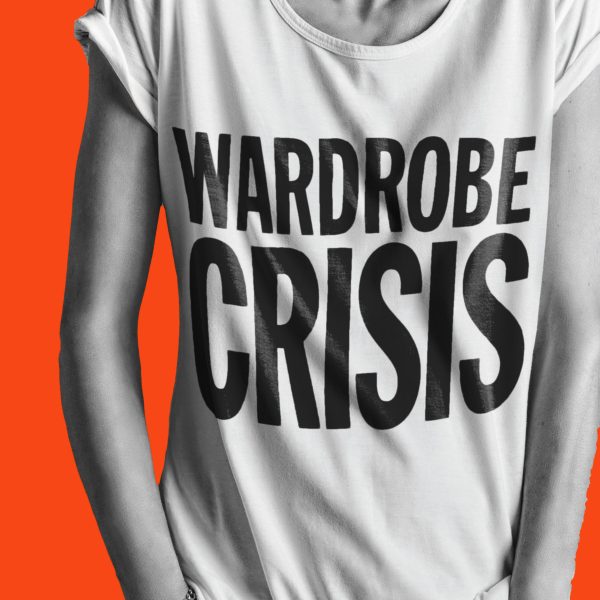
WARDROBE CRISIS with Clare Press
- Episodes
- 284
- Released
- every two weeks
- Latest episode
- Oct 21, 2026
About the podcast
WARDROBE CRISIS is a fashion podcast about sustainability, ethical fashion and making a difference in the world. Your host is author and journalist Clare Press, who was the first ever Vogue sustainability editor. Each week, we bring you insightful interviews from the global fashion change makers, industry insiders, activists, artists, designers and scientists who are shaping fashion's future.
Hosted on Acast. See acast.com/privacy for more information.
Episodes 284
Workers' Rights, Public Procurement and Parliamentary Power Dressing, with Dr Sarah Kaine
Pomp! Circumstance! Policy! Politics! From Margaret Thatcher through ceremonial dressing to holding clothes swaps in Parliament, power dressing can be a complicated business, says this week's guest, Labor …
Show notes
Pomp! Circumstance! Policy! Politics! From Margaret Thatcher through ceremonial dressing to holding clothes swaps in Parliament, power dressing can be a complicated business, says this week's guest, Labor Member of the NSW Upper House, Dr Sarah Kaine. Just don't dismiss fashion as frivolous, please. We all know its impacts extend far and wide.
Dr Kaine is the NSW state parliament's Chair of the Standing Committee on Social Issues, has a background in the union movement, and a formidable rep for acing second-hand style. Tabled for debate?
Why organised labour is so important in protecting the right to dignity and fairness at work; the truth about modern slavery, where governments can move the needle on EPR, and what's going on in Australia's public university sector right now. Oh and Liz Taylor! What?! Listen to find out.
We hope you enjoy the latest from our series on workers' rights.
Don't forget to listen to the previous episodes you may have missed & please help us share it.
Find links and further reading at thewardrobecrisis.com
Support the show on Substack - wardrobecrisis.substack.com
Tell us what you think. Find Clare on Instagram @mrspress
Hosted on Acast. See acast.com/privacy for more information.
"I was a garment worker. I know how the system works." - Beth Macpherson on Empowering Fashion Workers through Ethical Clothing Australia
"Oh, but we buy Australian-made. Exploitation is something that happens elsewhere!" Time to bust that myth, says this week's guest, Australian union organiser - and former garment worker - Beth Macpherson. In …
Show notes
"Oh, but we buy Australian-made. Exploitation is something that happens elsewhere!"
Time to bust that myth, says this week's guest, Australian union organiser - and former garment worker - Beth Macpherson.
In this warm and enlightening conversation we discuss: the evolution and changing shape of Australia's domestic manufacturing in the textiles, clothing and footwear sector; what's gone and what's left; Beth's own experience working in factories during boom time in the 1970s and '80s, before production moved off shore; the current state of textiles and sewing skills, and how and why our governments should take them seriously into the future; the increasing use of outworkers today, and how they can be invisible. Many outworkers here are migrant women who come from non-English speaking backgrounds and often do not understand their rights as Australian workers.
We hope you enjoy the latest from our series on workers' rights, produced with Clean Clothes Campaign. Don't forget to listen to the previous episodes you may have missed.
Find links and further reading at thewardrobecrisis.com
Support the show on Substack - wardrobecrisis.substack.com
Tell us what you think. Find Clare on Instagram @mrspress
Hosted on Acast. See acast.com/privacy for more information.
Hope in Times of Oppression with Khalid Mahmood from Pakistan's Labour Education Foundation
On the surface this is our first episode on the textile, clothing and footwear industry in Pakistan. The industry is major player in the country’s economy, contributing significantly to exports and employing …
Show notes
On the surface this is our first episode on the textile, clothing and footwear industry in Pakistan. The industry is major player in the country’s economy, contributing significantly to exports and employing more than half of its workforce. And in this interview with labour rights expert Khalid Mahmood, we cover capabilities, challenges, cotton production, wages and improvements in factory safety.
But there's a bigger story here - one about history, and who gets to tell it; politics, power and democracy; and what happens when the latter fractures, or is captured by the military, for example, and how all this impacts on freedom of association, social justice and workers' rights. How do you organise in the face of that? Why should you, what are the stakes? There's a personal story woven through this too: Khalid went from driving a taxi to heading up a leading NGO. Also up for discussion: what to do as an ambitious person when conventional routes seem closed to you, the power of creative thinking and the secret to loving your work.
We hope you enjoy the latest from our series on workers' rights, produced with Clean Clothes Campaign. Don't forget to listen to the previous episodes you may have missed.
Find links and further reading at thewardrobecrisis.com
Support the show on Substack - wardrobecrisis.substack.com
Tell us what you think. Find Clare on Instagram @mrspress
Hosted on Acast. See acast.com/privacy for more information.
Who Made Your Clothes? Cambodia Edition
H&M, Inditex, Adidas, Gap... Some of the world's most famous apparel brands source from Cambodia, where 1 million people are employed by the garment, footwear and travel goods industry. Low-paid work, work in …
Show notes
H&M, Inditex, Adidas, Gap... Some of the world's most famous apparel brands source from Cambodia, where 1 million people are employed by the garment, footwear and travel goods industry. Low-paid work, work in the informal economy, even work without pay is sadly widespread. By some estimates, half of all fashion workers are indebted to micro-finance because they need to take out loans to make ends meet. And, warns Clean Clothes Campaign, while Cambodian law theoretically protects the right of workers to form unions and bargain collectively, many independent labour organisations face severe legal and practical restrictions.
What can, and should, multinational brands be doing about this? Why don't they step up and pay more than survival wages? How does politics come into play here? Plus the curious case of the instant noodle unions - can we really expect trade unions run by management to put workers first?
In the latest from our series on workers rights, Clare meets Tola Mouen, executive director of the Center for Alliance of Labor and Human Rights, Cambodia.
Find links and further reading at thewardrobecrisis.com
Support the show on Substack - wardrobecrisis.substack.com
Tell us what you think. Find Clare on Instagram @mrspress
Hosted on Acast. See acast.com/privacy for more information.
Happy 20th Birthday Copenhagen Fashion Week! A catchup with Cecilie Thorsmark
All fashion eyes on the Danish Capital!We interrupt our series on workers’ rights to bring you this warm and lovely chat between friends. I have been on the sustainability advisory board of Copenhagen Fashion …
Show notes
All fashion eyes on the Danish Capital!
We interrupt our series on workers’ rights to bring you this warm and lovely chat between friends.
I have been on the sustainability advisory board of Copenhagen Fashion Week since 2019, and it’s by far my favourite fashion week.
As the SS27 runaways happen in the city, and the event turns 20, here’s how CPHFW's CEO Cecilie Thorsmark is thinking about progress, nostalgia and the way forward for sustainable fashion.
Find links and further reading at thewardrobecrisis.com
Support the show on Substack - wardrobecrisis.substack.com
Tell us what you think. Find Clare on Instagram @mrspress
Hosted on Acast. See acast.com/privacy for more information.
How Ethical are My Sneakers? Niki Gamara on Speaking Out for Workers
How much do we really know about how our clothes and shoes are made? Or even where? While the latter is routinely included on care labels, that’s often the end of the story, at least the one the brands want to …
Show notes
How much do we really know about how our clothes and shoes are made? Or even where? While the latter is routinely included on care labels, that’s often the end of the story, at least the one the brands want to tell you.
Despite years of campaigning by groups like Fashion Revolution, Labour Behind the Label and Clean Clothes Campaign, many of us still have no idea who made our clothes and under what conditions.
Did you even know the Philippines is an important garment producer for brands like Lulu Lemon, and until recently, Adidas? In 2023, when a factory in Cebu supplying Adidas closed, 4000 workers lost their jobs. How about the stories of union busting linked to factory in Cambodia that's a major supplier to ASICS? Or the closure of another facility in Vietnam making Nike shoes that left thousands of workers without severance pay?
Niki Gamara is CCC’s South East Asia Urgent Appeals Co-Ordinator, working with those needing quick support in areas where violations are happening. In this vivid, warm conversation we talk about everything from how the history of colonisation echoes in the present to what I should do with my sneakers now that I know more about what goes in behind the scenes...
Find links and further reading at thewardrobecrisis.com
Support the show on Substack - wardrobecrisis.substack.com
Tell us what you think. Find Clare on Instagram @mrspress
Hosted on Acast. See acast.com/privacy for more information.
Distressed Denim - Why Four Dutch Consumers Want to Take Levi's to Court
There's a long history of exploitation in the denim supply chain, as our first guest this week, Bego Demir, can attest. He developed incurable silicosis in the 2000s as a result of his sandblasting job in a …
Show notes
There's a long history of exploitation in the denim supply chain, as our first guest this week, Bego Demir, can attest. He developed incurable silicosis in the 2000s as a result of his sandblasting job in a Turkish factory producing jeans for a famous American brand.
These days Bego coordinates Clean Clothes Campaign Türkiye, and is supporting a creative new activist strategy to hold another brand to account, this time for making big claims about being "responsibly made", while workers in a supplier factory in Istanbul faced harsh consequences when they dared to organise for better conditions.
Earlier this year, the Dutch office of the CCC network filed a groundbreaking lawsuit against denim giant Levi Strauss. Their core argument is that Levi’s used misleading claims on the labour conditions in its supply chain when advertising its products to Dutch consumers. Four individual consumers, who purchased Levi’s products believing they were buying from an ethical brand, have joined the lawsuit. One of then, Pam, is also on this week's show sharing her perspective.
Too many brands fail to prevent worker exploitation in their supply chains, from union busting to denying workers' their basic rights, whether that's the right to organise, to strike, or to be paid a living wage.
Could this latest CCC tactic - to use consumer law that protects shoppers from greenwashing - make a difference? Let's find out.
Find links and further reading at thewardrobecrisis.com
Support the show on Substack - wardrobecrisis.substack.com
Tell us what you think. Find Clare on Instagram @mrspress
Hosted on Acast. See acast.com/privacy for more information.
How to Make Fashion Fair - Johnson Yeung from Clean Clothes Campaign
What are the biggest issues facing garment workers globally today? How can we most effectively advocate for them if we've never walked in their shoes? What do we mean by solidarity, and how does that work in …
Show notes
What are the biggest issues facing garment workers globally today? How can we most effectively advocate for them if we've never walked in their shoes? What do we mean by solidarity, and how does that work in action? Is the compliance and social auditing industry the answer? (Spoiler alert: no!)
In this deep and meaningful introductory convo with Clean Clothes Campaigner Johnson Yeung, we unpack the challenges and changes facings the labor rights movement today, and ask, what will it really take to build a fair fashion supply chain for the people who make our clothes?
This Episode was recorded at the CCC's 35 Year Celebrations in Bangkok.
If you find the interview valuable, please help us share it.
Find links and further reading at thewardrobecrisis.com
Support the show on Substack - wardrobecrisis.substack.com
Tell us what you think. Find Clare on Instagram @mrspress
Hosted on Acast. See acast.com/privacy for more information.
Christina Clausen on Unions, Workers' Rights and the New Industrial Revolution
Welcome to the first episode of our new series all about workers' rights. My guest this week is Christina Hajagos-Clausen who is the IndustriALL Global Union’s director for the Textile, Garment, Shoe and …
Show notes
Welcome to the first episode of our new series all about workers' rights.
My guest this week is Christina Hajagos-Clausen who is the IndustriALL Global Union’s director for the Textile, Garment, Shoe and Leather Sector.
Our interview was recorded during the organisation's 4th Global Congress held in Sydney at the end of last year, at "a critical moment. Workers everywhere are being hit by converging crises, growing inequality, the climate emergency, digital disruption and the increasing concentration of corporate power."
So how can workers ensure get to help shape a future that is fair, democratic and just?
This is an expansive conversation that covers everything from: Why are trade unions necessary to the New Industrial Revolution, automation and AI. We explore what unions doing in the global textile & garment sector to shape a just transition. We look at specific garment producing countries and stories - including whether or not to boycott Made in Myanmar - plus the whole idea of the Labor movement as a check on fascism everywhere.
If you find the interview valuable, please help us share it.
Find links and further reading at thewardrobecrisis.com
Support the show on Substack - wardrobecrisis.substack.com
Tell us what you think. Find Clare on Instagram @mrspress
Hosted on Acast. See acast.com/privacy for more information.
Encore - How Michael Preysman Built Everlane
So Shein has bought Everlane and it's freaking people out.This feels like the right time to throwback to 2019, and my one-on-one with Everlane's founder Michael Preysman.I found it super interesting to listen …
Show notes
So Shein has bought Everlane and it's freaking people out.
This feels like the right time to throwback to 2019, and my one-on-one with Everlane's founder Michael Preysman.
I found it super interesting to listen back to what he said 7 years ago about why he built the brand, what inspired him, and his hopes for changing the game around sustainability. He ended up selling to LVMH-backed private equity firm L Catterton in 2020, and as such was not involved in the Shein acquisition. But in a yet another plot twist, he's just announced plans to return with a new offering, that he's calling Still Radical. Questions: will anybody buy it? Who else feels let down? Can someone please press pause on sustainable fashion's Twilight Zone/Black Mirror nightmare moment for corporate #sustfash ?!
I'll be back soon with Series 13!
Want more encores in the meantime? Here's the Episode on How Shein Makes Clothes So Cheap.
Hosted on Acast. See acast.com/privacy for more information.
Do You Know the History of Cotton? Artist Nikesha Breeze on Honouring her Ancestors and the Story of Colonial Cotton
This week, I bring you an interview with the fascinating artist Nikesha Breeze. Their Living Histories project explores African diasporic stories, and was a standout at this year's Biennale of Sydney. The …
Show notes
This week, I bring you an interview with the fascinating artist Nikesha Breeze. Their Living Histories project explores African diasporic stories, and was a standout at this year's Biennale of Sydney. The fashion connection? Cotton's colonial history.
Maybe you (rightly) love cotton as a beautiful, breathable natural fibre, and routinely choose it over synthetics. Me too! But how much do you know know about the commodity's troubling history, and its links with slavery in the US? The textiles that we wear never exist in isolation, and it's the human stories that unlock meaning.
Also up for discussion: art's role in catalysing change; self-care; the healing powers of sound; capitalism and the commodification of time; our relationship to place, land and each other; how corporations profit from the prison industrial complex - and even make clothing using prison labour.
Recorded in person at the 25th Biennale of Sydney.
If you find the interview valuable, please help us share it.
Find links and further reading at thewardrobecrisis.com
Support the show on Substack - wardrobecrisis.substack.com
Tell us what you think. Find Clare on Instagram @mrspress Follow Nikesha @nikeshabreeze
Hosted on Acast. See acast.com/privacy for more information.
Helena Norberg Hodge - Globalisation Has Failed Us. What Now?
As supply chain shocks rock the world yet again, we ask: is globalisation a failed experiment? As my guest this week points out, the idea that global trade is always beneficial for everybody is a lie. Big …
Show notes
As supply chain shocks rock the world yet again, we ask: is globalisation a failed experiment? As my guest this week points out, the idea that global trade is always beneficial for everybody is a lie. Big business just gets bigger, multi-national corporations lobby governments to win tax breaks and shape trade deals, while bankers bet on the misery of millions. There's no point pretending that this system works for the majority. So what's the alternative?
My guest this week is the legendary author, linguist and movement builder, Helena Norberg Hodge.
Helena is the founder of Local Futures, an international non-profit set up to promote ideas around a new economy, one rooted in place, "nature, community, and the deeper meaning that makes life whole". Her books include 2019's Local Is Our Future, and 1991's its called Ancient Futures, about her time in Ladakh, where she arrived in 1975 and began working with local communities there. She's also a filmmaker - you'll hear us discuss her documentary The Economics of Happiness. From the fashion side, she loves local textile heritage and her critique of the global fashion industry is around its focus on what she calls "the consumer monoculture". An expansive conversation about the failings of the current system and what we might build in its place - essential listening!
If you find the interview valuable, please help us share it.
Find links and further reading at thewardrobecrisis.com
Support the show on Substack - wardrobecrisis.substack.com
Tell us what you think. Find Clare on Instagram @mrspress
Hosted on Acast. See acast.com/privacy for more information.
Dark Matter Labs' Indy Johar on Planetary Civics and a new Vision for Fashion's Future
In a future shaped by climate breakdown and extreme weather volatility, the current systems will be forced to change. Where does that leave fashion? My guest this week has ideas for "a profound structural shift …
Show notes
In a future shaped by climate breakdown and extreme weather volatility, the current systems will be forced to change. Where does that leave fashion? My guest this week has ideas for "a profound structural shift away from fashion as trivialised, superficial and seasonal."
Indy Johar is the co-founder of Dark Matter Labs and a Professor of Practice at RMIT with the Planetary Civics Inquiry.
In his new paper, "The Future of Fashion, Toward an Entangled Economy" he outlines a whole new approach whereby "fashion is not simply worn, it is inhabited, augmented and co-stewarded. It is not just manufactured or marketed, it is programmed, maintained and integrated into complex civil, ecological, and technoligical systems. The garment becomes more than a product - it becomes a living protocol, a cultural interface, a microclimate shelter and a shared asset."
In this rollercoaster convo, we talk about everything from what he wears in the plane, to why he studied architecture, the climate reality and how we might design a better future, what it means to embrace 'interbecoming', and just what your Tshirt might cost if all the the externalities of producing it were factored into the price tag. Buckle up, you might want to listen twice!
If you find the interview valuable, please help us share it.
Find links and further reading at thewardrobecrisis.com
Support the show on Substack - wardrobecrisis.substack.com
Tell us what you think. Find Clare on Instagram @mrspress
Hosted on Acast. See acast.com/privacy for more information.
A Forest Story - Adventures in Tasmania's Magical Temperate Rainforest
In Tasmania's jawdroppingly beautiful Takayna/Tarkine lies the southern hemisphere’s largest single tract of temperate rain forest. It's home to an extraordinary wealth of Aboriginal cultural heritage sites …
Show notes
In Tasmania's jawdroppingly beautiful Takayna/Tarkine lies the southern hemisphere’s largest single tract of temperate rain forest. It's home to an extraordinary wealth of Aboriginal cultural heritage sites, and habitat for over 50 threatened species. Many of its magnificent trees were here long before colonisation, with some Huon Pines thought to be more than 2000 years old. It’s a pristine, mossy, magical place, that speaks of deep time and reminds us of our relative insignificance. To be lucky enough to camp deep in the forest is to feel an overwhelming sense of connection, gratitude, and our collective responsibility to protect it.
WAIT, WHAT....?!
WE’RE LOGGING IT THOUGH to produce woodchips, plywood and single-use packaging. Says the state government: "Around 5% of the Tarkine has been formally declared as production forest land to sustainably supply wood products." Mad but true. They don’t tell you that on the tourist websites...
Up for discussion: Why should Takayna be world heritage listed? What even is a temperate rain forest? How do they help us regular climate? Who lives there? What might the trees tell us, if they could speak? They're pretty stylish - what do they *wear? What technically is moss, and why is it such a thrill? What's it like to camp here? Are all Aussie animals out to kill you? What can we learn for First Nations people about stewardship? And how are creative activists stepping up action to save these vitally important places?
Featuring: Bob Brown Foundation campaigner Scott Jordan, Palawa activist Cody Gangell, microbiologist Lana Mišić, field ecologist Janey Ogilvie, and artist Imogen Yang.
If you find the interview valuable, please help us share it.
Find links and further reading at thewardrobecrisis.com
Support the show on Substack - wardrobecrisis.substack.com
Tell us what you think. Find Clare on Instagram @mrspress
Hosted on Acast. See acast.com/privacy for more information.
Ethics, Embroidery and Which Stories Get Told, Wafa Ghnaim on the Power and Practice of Palestinian Dress
A child's dress rescued from the roof of a bombed-out museum. A mother teaching her daughter her ancestral embroidery techniques. A Miss Universe contestant confused over just whose traditional clothes she's …
Show notes
A child's dress rescued from the roof of a bombed-out museum. A mother teaching her daughter her ancestral embroidery techniques. A Miss Universe contestant confused over just whose traditional clothes she's trying on on a field trip. Cultural appropriation, erasure, silencing. Joy, close looking, reframing perfection.
On International Women's Day, it feels timely to publish this important episode with Palestinian dress expert Wafa Ghnaim, as we look through the textiles lens to ask: who decides which stories get told, and from what angles? Where do colonial narratives lurk, how can we challenge them and why should we?
Wafa is an art and dress historian, fashion researcher, embroiderer, curator, and the founder of the Tatreez Institute, specialising in Palestinian embroidery, dress, and adornment. In this compassionate, nuanced conversation we start behind the scenes at the museum, and end on every woman's right to tell her story, pass it down - and live in peace.
If you find the interview valuable, please help us share it.
Find links and further reading at thewardrobecrisis.com
Support the show on Substack - wardrobecrisis.substack.com
Tell us what you think. Find Clare on Instagram @mrspress
Hosted on Acast. See acast.com/privacy for more information.
A Wardrobe Crisis Listener on Learning Tatreez Embroidery to Connect with her Palestinian Culture
This is the third of four episodes about embroidery. They're all very different perspectives, but each asks in their own way, what is the significance of these stitches? What are they saying, what's their …
Show notes
This is the third of four episodes about embroidery. They're all very different perspectives, but each asks in their own way, what is the significance of these stitches? What are they saying, what's their message? It's never just, 'I'm gorgeous.'
Textiles, as we know, can have deep meanings.
In the case of Palestinian tatreez embroidery, it speaks of culture, belonging and exile, documenting stories of family, land and identity. Here, a Wardrobe Crisis listener details her own experience of learning the practice as a way of connecting with her Palestinian roots, and finding comfort and community in these trying times.
If you find the interview valuable, please help us share it.
Find links and further reading at thewardrobecrisis.com
Support the show on Substack - wardrobecrisis.substack.com
Tell us what you think. Find Clare on Instagram @mrspress
Hosted on Acast. See acast.com/privacy for more information.
The Unreal Awesomeness of Amanda Cobbett's Embroidered Moss Sculptures
Wait, what? That's not real moss?! Occasionally, you come across something that blows your tiny mind. That's what happened when, flicking through a World of Interiors magazine in my local library, I discovered …
Show notes
Wait, what? That's not real moss?!
Occasionally, you come across something that blows your tiny mind. That's what happened when, flicking through a World of Interiors magazine in my local library, I discovered the blisteringly brilliant work of my guest this week. It lodged itself in my psyche and I determined to track her down.
I did! And here is the resulting conversation. I hope you enjoy it as much as I did!
In this Episode, I go and visit extraordinary textile artist Amanda Cobbett in her Guildford, UK studio to see exactly how she machine embroiders her magic realist sculptures inspired by the moss and lichen fragments she collects from the forest floor.
If you find the Episode valuable, please help us share it.
Find links and further reading at thewardrobecrisis.com
Support the show on Substack - wardrobecrisis.substack.com
Tell us what you think. Find Clare on Instagram @mrspress
Hosted on Acast. See acast.com/privacy for more information.
Sew Good! Learning Embroidery at Hampton Court Palace
Imagine learning embroidery in the home of Henry VIII's famed Abraham Tapestries, which have hung on these hallowed walls since 1547. Turns out, it's a thing. The Royal School of Needlework is based at Hampton …
Show notes
Imagine learning embroidery in the home of Henry VIII's famed Abraham Tapestries, which have hung on these hallowed walls since 1547. Turns out, it's a thing. The Royal School of Needlework is based at Hampton Court, and offers Europe's only degree program specialising in hand-embroidery.
We meet three students from the class of 2025. Featuring: hard work and failing eyes, the marvellous crusty vibes of sea creatures, melted plastic, rock animism, Indigenous wisdoms and a possible haunting... who said embroidery was quiet pursuit?
If you find the Episode valuable, please help us share it.
Find links and further reading at thewardrobecrisis.com
Support the show on Substack - wardrobecrisis.substack.com
Tell us what you think. Find Clare on Instagram @mrspress
Hosted on Acast. See acast.com/privacy for more information.
The Absolutely Fascinating History of Secondhand Everything, with Robin Annear
What's new about the current secondhand obsession?Trick question! Nothing.For most of human history, there really was no such thing as waste. As my guest this week, Robin Annear writers in her fascinating book …
Show notes
What's new about the current secondhand obsession?
Trick question! Nothing.
For most of human history, there really was no such thing as waste. As my guest this week, Robin Annear writers in her fascinating book, Nothing New, A History of Secondhand, "Common sense dictates that used must have always followed new." Used stuff had value and there was always a market for it.
But how much do you actually know about the history of all this?
Were you aware, for example, that Shakespeare bequeathed his wife his second-best bed in his will?
Or that it was once considered normal to pawn your winter coat in summer to free up cash?
Or that many servants were part-paid in the master’s cast-offs?
From linen rags in high demand by the paper industry, to the British exporting their military uniforms to Holland (they were cut down to make flannel undergarments); from the posh ladies who patronised the revendeuses (the original preloved fashion dealers of Paris) hoping to nab royalties cast-off couture, to the origin story of the great Aussie opshop - this Ep is chock full of re-fashion stories that will blow your mind. Enjoy!
If you find the Episode valuable, please help us share it.
Find links and further reading at thewardrobecrisis.com
Support the show on Substack - wardrobecrisis.substack.com
Tell us what you think. Find Clare on Instagram @mrspress
Hosted on Acast. See acast.com/privacy for more information.
How to Co-Create with Artisans, with Karishma Singh-Kelsey
The global handcraft market is worth more than a trillion dollars. Yet, particularly in rural areas, many highly skilled craftspeople live with inconsistent incomes, no social safety nets and ongoing threats to …
Show notes
The global handcraft market is worth more than a trillion dollars. Yet, particularly in rural areas, many highly skilled craftspeople live with inconsistent incomes, no social safety nets and ongoing threats to their cultural heritage.
There is rising interest their wares, for some of the same reasons that secondhand is booming - uniqueness, story, the human touch in an increasingly disconnected, AI-obsessed world.
But do we really see the artisans behind the products we buy? What is the true value of skilled artisanship? Where do different worldviews, timelines, rhythms and Indigenous wisdoms come into it? And how can western designers work with diverse communities in authentically sustainable and ethical ways? Co-creation is a buzz word, but what does it really mean?
"To co-create, we might need to unlearn top-down western ways of thinking," says my guest this week, Karishma Singh Kelsey, who's leading our new course on Wardrobe Crisis Academy.
"Working with artisans and micro-enterprises often requires a paradigm shift away from entrenched (and usually unexamined!) 'I am better than you' ways of thinking. It recognises that when different worldviews come together on an equal footing, we can create even more interesting outcomes."
If you find the Episode valuable, please help us share it.
Find links and further reading at thewardrobecrisis.com
Support the show on Substack - wardrobecrisis.substack.com
Tell us what you think. Find Clare on Instagram @mrspress
Hosted on Acast. See acast.com/privacy for more information.
The Rise and Rise of Secondhand Fashion
We’re all secondhand shoppers these days. But where? How? And more importantly, why?Online marketplace platforms have grown exponentially (making billionaires of some of the founders in the process) but there’s …
Show notes
We’re all secondhand shoppers these days. But where? How? And more importantly, why?
Online marketplace platforms have grown exponentially (making billionaires of some of the founders in the process) but there’s also a surge happening IRL, where the indie dealers hold the power. And the more niche the better.
In this episode we’re exploring how preloved fashion is booming in physical spaces, and in particular the new-style, curated vintage and archive fashion markets. Is it about sustainability or status, or both? Subcultures, nostalgia, a yearning for authenticity in our increasingly disconnected world, sheer fun - it all comes into play.
Also covered: What’s with the curated obsession? Don’t we love a rummage anymore? What’s driving new gen uptake? Could we be seeing a backlash against fake AI vibes? What are the dealers looking for? Is it okay to haggle? Also, has decluttering fallen out of favour? Is it more about restyling what’s already in your wardrobe? SO MANY QUESTIONS! We’ve got answers.
If you find the Episode valuable, please help us share it.
Find links and further reading at thewardrobecrisis.com
Support the show on Substack - wardrobecrisis.substack.com
Tell us what you think. Find Clare on Instagram @mrspress
Hosted on Acast. See acast.com/privacy for more information.
Expert Advice on the Vintage Life with Fashion Impresario Phillip Boon
In the first of a mini-series on the rise of second-hand fashion, my guest is the very charismatic and knowledgeable Aussie vintage fashion guru, Philip Boon. I'll leave it to him to tell you his story, and …
Show notes
In the first of a mini-series on the rise of second-hand fashion, my guest is the very charismatic and knowledgeable Aussie vintage fashion guru, Philip Boon. I'll leave it to him to tell you his story, and that of the late Mary Lipshut, the extraordinary Melburnian vintage doyenne, whose collection Philip (with his business partner Sonia) now manages as part of The Internationals.
Get ready for a super-fun gallop through key vintage eras of the last century!
Up for discussion: the importance of designers knowing this stuff; how past decades were defined by particular silhouettes; why vintage is hotter than ever; fashion subcultures; the rules of vintage dressing (are there any?); how to look after your vintage duds, wash those old silks and store those beads and jumpers; why the real vintage insiders are looking for uniqueness over brands these days plus lots of funny stories and outfit descriptions. Let's go!
If you find the Episode valuable, please help us share it.
Find links and further reading at thewardrobecrisis.com
Support the show on Substack - wardrobecrisis.substack.com
Tell us what you think. Find Clare on Instagram @mrspress
Hosted on Acast. See acast.com/privacy for more information.
Commercial Break - A Lovely Conversation on Noticing Birds
We know the struggle to resist the January sales is real! So this week's pod is for anyone who needs a reminder that some of the best things in life are free. Or, maybe you could use bit of encouragement to …
Show notes
We know the struggle to resist the January sales is real! So this week's pod is for anyone who needs a reminder that some of the best things in life are free. Or, maybe you could use bit of encouragement to take a moment to ground yourself.
Consider it permission to forget capitalism, scary news headlines, the spectre of going back to work for while.
In this limbo time after Christmas but before the new year really kicks in, we wanted to invite you to have a moment of noticing the birds, how delightful, clever and fascinating they are, how they live among us, yet often go unnoticed.
My guest is Australian theatre actor and playwright, Nathan Harrison, who's latest play is Birdsong of Tomorrow.
Our conversation was recording on a birdwatching jaunt in my local park.
Hang on! Isn't Wardrobe Crisis a fashion podcast? Don't worry - birds are often brilliantly dressed with their wonderful plumage.
Enjoy!
If you find the Episode valuable, please help us share it.
Find links and further reading at thewardrobecrisis.com
Support the show on Substack - wardrobecrisis.substack.com
Tell us what you think. Find Clare on Instagram @mrspress
Hosted on Acast. See acast.com/privacy for more information.
With Love From's Lizzie Dibble Wants Local Libraries to Lend Clothes as well as Books
Lizzie Dibble wants libraries to lend clothes as well as books. Not just any clothes though. A carefully curated selection of donated second-hand fashion, imbued with the stories of former wearers, and …
Show notes
Lizzie Dibble wants libraries to lend clothes as well as books. Not just any clothes though. A carefully curated selection of donated second-hand fashion, imbued with the stories of former wearers, and volunteer-run.
With Love From… has built a collection of occasion-wear, mostly for women (though there’s also a children’s dressup box) for library members to loan in her hometown of Oswestry, UK. That focus is intentional, because party dresses are some of the least-worn garments in our wardrobes. Lizzie is on a mission to encourage less wardrobe waste and more collective joy - all while encouraging new users into the existing local library network.
We have questions!
Who’s donating? Who’s borrowing? How does it work in practice? Did the library take some convincing? How can others get involved? Could it annoy existing library users who just want a quiet spot to read? Lizzie’s answer to the latter is both lovely and surprising. She says that the shared wardrobe is a quiet space, and that’s part of why it works. With Love From… is not just like shopping without money, but without the frenzy that underpins so much unsustainable consumption. Could this be a blueprint for shared wardrobes around the world?
If you find the Episode valuable, please help us share it.
Find links and further reading at thewardrobecrisis.com
Support the show on Substack - wardrobecrisis.substack.com
Tell us what you think. Find Clare on Instagram @mrspress
Hosted on Acast. See acast.com/privacy for more information.
Inside Shein - How the Ultra Fast Fashion Brand Makes Clothes So Cheap
Despite Shein’s new sustainability rhetoric, workers are still paying the price for the ultra-fast fashion giant’s success. To 75-hour working weeks, piece rates and no contracts, we can add secrecy, opaque …
Show notes
Despite Shein’s new sustainability rhetoric, workers are still paying the price for the ultra-fast fashion giant’s success.
To 75-hour working weeks, piece rates and no contracts, we can add secrecy, opaque financial operations and a general air of mystery around its billionaire founder and how the brand does business.
This is the story they don't want told.
But thanks to Swiss NGO Public Eye's meticulous research and undercover reporting, it's now out in the open. So can Shein change for the better? Or is unethical simply part of the business model?
If you find the Episode valuable, please help us share it.
Find links and further reading at thewardrobecrisis.com
Support the show on Substack - wardrobecrisis.substack.com
Tell us what you think. Find Clare on Instagram @mrspress
Hosted on Acast. See acast.com/privacy for more information.
"Brands Should Stop Overproduction!" Yayra Agbofah's Advice for Big Fashion
Listen up! Yayra Agbofah is the founder of Ghanaian non-profit, The Revival. He's seriously stylish a poet, a creative upcycler, and one of Time Magazine's 100 Most Influential Climate Leaders, as well a 2025 …
Show notes
Listen up! Yayra Agbofah is the founder of Ghanaian non-profit, The Revival. He's seriously stylish a poet, a creative upcycler, and one of Time Magazine's 100 Most Influential Climate Leaders, as well a 2025 winner of the H&M Foundation's Global Change Award.
And he's got some advice for the global fashion industry...
Also covered in this charismatic convo: why wear a hat, the art of knowing yourself, community upcycling at scale, fashion education, how circularity is creating jobs as well as value from waste, and a new vision for the fashion system of tomorrow.
If you enjoy the Episode, please help us share it.
Find links and further reading at thewardrobecrisis.com
Read Clare's columns & support the show on Substack - wardrobecrisis.substack.com
Tell us what you think. Find Clare on Instagram @mrspress
Got recommendations? Hit us up!
And please leave us a rating / review in Spotify/ Apple & help us share these podcasts.
Hosted on Acast. See acast.com/privacy for more information.
She's Serving Fabulous! Notes on Dressing Confidently with Samia Benchaou
We're back! And excited to be kick off Series 12 with this fabulous interview with Copenhagen-based Moroccan Danish stylist, and excellent dresser, Samia Benchaou. Clare and Samia met at fashion week when they …
Show notes
We're back! And excited to be kick off Series 12 with this fabulous interview with Copenhagen-based Moroccan Danish stylist, and excellent dresser, Samia Benchaou.
Clare and Samia met at fashion week when they got talking about the power of a great outfit. Can you relate? Bet you have a story of someone you met because of what they were wearing! (If so, tell us on Instagram).
Clothes speak before we do and fashion is a fun way to connect. But what we wear can also express our politics, culture and identity and belonging.
Themes up for discussion? First, confidence! How to get it, how to dress with it, and how it can set you free. We also talk about why you should give more complements to strangers, being a renegade, the influencer economy, and how much some people really get paid, while others miss out. Earnings, value, power imbalance, and how free clothes don't pay the bills. And we talk racism, why representation matters but it can't stop there, and why there aren't more Muslim prominent fashion influencers and stylists. Buckle up!
If you enjoy the Episode, please help us share it.
Find links and further reading at thewardrobecrisis.com
Read Clare's columns & support the show on Substack - wardrobecrisis.substack.com
Tell us what you think. Find Clare on Instagram @mrspress
Got recommendations? Hit us up!
And please leave us a rating / review in Spotify/ Apple & help us share these podcasts.
Hosted on Acast. See acast.com/privacy for more information.
Cut Above - Inside Savile Row with Edward Sexton's Dominic Sebag-Montefiore
Construction! Proportion! Craft! What lies behind the enduring power of the suit? Of great tailoring? How is that amplified when it’s bespoke? What makes a good suit? Does it still matter? Why? And how much …
Show notes
Construction! Proportion! Craft!
What lies behind the enduring power of the suit? Of great tailoring? How is that amplified when it’s bespoke? What makes a good suit? Does it still matter? Why? And how much should it cost? All these questions, and many more are on the (cutting) table this week, as Clare sits down with Savile Row tailor Dominic Sebag-Montefiore, creative director of iconic bespoke house, Edward Sexton.
Thank you for listening to Wardrobe Crisis Series 11! We'll be back soon with a new series of inspiring interviews from fashion's front lines.
Find links and further reading for this episode at thewardrobecrisis.com
Read Clare's columns & support the show on Substack - wardrobecrisis.substack.com
Tell us what you think. Find Clare on Instagram @mrspress
Got recommendations? Hit us up!
And please leave us a rating / review in Spotify/ Apple & help us share these podcasts.
Hosted on Acast. See acast.com/privacy for more information.
Trade Secrets - Pattern Making 101 with Glen Rollason
This week's guest, Glen Rollason, describes pattern making as the architecture of fashion. It's the bones, the structure, the technical process that gives our clothes shape, moves them from the 2D to the 3D …
Show notes
This week's guest, Glen Rollason, describes pattern making as the architecture of fashion. It's the bones, the structure, the technical process that gives our clothes shape, moves them from the 2D to the 3D, and helps them fit. Pattern making is drafting, design, and highly skilled technical process - but it's also team work.
No pattern, no coat!
From the basics (what is it, where do you begin) to the artistry (fit, form, allure) through Raf Simons, bust darts and the crazy complexity of national sizing standards, we've got it all in this dynamic conversation about this essential fashion ingredient. Plus, why do we need to keep capacity on shore? How might small factories / design labs work in future? What's going on with apprenticeships, and what are we going to do about skilled people ageing out of the industry?
Scissors at the ready!
Thank you for listening to Wardrobe Crisis.
Find links and further reading for this episode at thewardrobecrisis.com
Read Clare's columns & support the show on Substack - wardrobecrisis.substack.com
Tell us what you think. Find Clare on Instagram @mrspress
Got recommendations? Hit us up!
And please leave us a rating / review in Spotify/ Apple & help us share these podcasts.
Hosted on Acast. See acast.com/privacy for more information.
Made in Melbourne Pt 4: Australia's National Designer of the Year, Amy Lawrance on Artistry and Authenticity
In the last of our mini series, Made in Melbourne, we meet Australia’s National Designer of the Year 2025, Amy Lawrance.Amy launched her namesake label just a couple of years ago, but she's highly experienced …
Show notes
In the last of our mini series, Made in Melbourne, we meet Australia’s National Designer of the Year 2025, Amy Lawrance.
Amy launched her namesake label just a couple of years ago, but she's highly experienced - working for other labels, teaching at RMIT, and she is an extraordinary, couture-standard maker.
Her architectural patterns are blisteringly original, she uses mostly undyed silks and has been experimenting with decorative embroidery stitches that she discovered studying vintage dressmaking manuals.
As she tells us, her atelier is "very, very small scale and very, very hands-on"; everything from pattern-making, to sampling to final production is by her own hands. "A lonely team of one!" she jokes, but she loves it.
Not that it comes without challenges. Any small fashion business owner will be familiar with these. Like, how are you going to pay for it all? Will you need a second job forever? At what point should you give up? Or shift your aims from running your own show to helping grow someone else's vision?
Resist! It's worth it in the end!
In our discussion, we talk about passion, solitude, the joy of sewing, and the gap between that and selling, doing media, all that stuff that not every creative automatically loves. Why should they? We cover trend cycles (hello, Pantone Colour of the Year), self doubt, origami, the joy of having a dog and what it's like to stand before the judges at one of these big fashion prizes. But big picture: this is an episode about the sometimes elusive "Why" - why do what you do, the way you do it. Enjoy!
Thank you for listening to Wardrobe Crisis.
Find links and further reading for this episode at thewardrobecrisis.com
Read Clare's columns & support the show on Substack - wardrobecrisis.substack.com
Tell us what you think. Find Clare on Instagram @mrspress
Got recommendations? Hit us up!
And please leave us a rating / review in Spotify/ Apple & help us share these podcasts.
Hosted on Acast. See acast.com/privacy for more information.
These are the latest 40 of 284 episodes. You’ll find older episodes in the podcast’s feed.
Similar podcasts
More Arts podcasts




Is this your podcast?
Confirm it with an entry in your feed: you get a code here, add it as podcast:txt to the channel of your feed, and we check it. Your podcast is then shown as “verified” on SoundNode.