

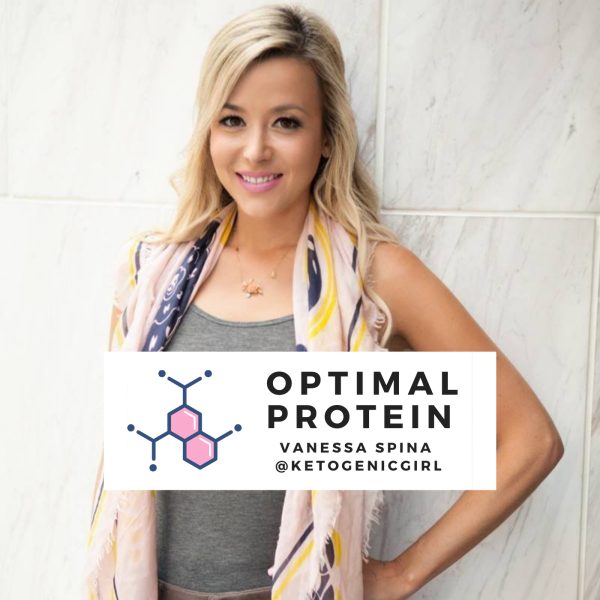
Optimal Protein Podcast with Vanessa Spina
- Folgen
- 540
- Erscheint
- mehrmals pro Woche
- Letzte Folge
- 20. Nov. 2026
Über den Podcast
Vanessa Spina is a Sports Nutrition Specialist, Best Selling author, creator of the innovative TONE device, as well as a sought after international speaker. On the Optimal Protein podcast, Vanessa shares how to get effortlessly lean and improve metabolic health and fitness with an optimal protein intake! Featuring interviews with world renowned and leading edge protein scientists & experts, authors, and people with inspiring transformational stories discussing the best tools for becoming optimizing your metabolic health with whole foods, nutrition, exercise and more!
Folgen 540
How to Eat Carbs Again After Keto or Carnivore + Fibermaxxing, the Fiber Gap and Resistant Starch
BLACK FRIDAY SALE — SAVE 30%! 🖤 My Black Friday sale is officially LIVE! Use code BLACKFRIDAY30 for 30% off the PSMF Library™, Tone LUX red light therapy, and the Tone Device. Save now at Ketogenic Girl! …
Shownotes
BLACK FRIDAY SALE — SAVE 30%! 🖤
My Black Friday sale is officially LIVE! Use code BLACKFRIDAY30 for 30% off the PSMF Library™, Tone LUX red light therapy, and the Tone Device. Save now at Ketogenic Girl!
Whether you've been wanting to invest in your own health, fat loss, recovery and vitality—or give someone you love the gift of health—this is a great time to shop!
In today's episode, we're diving into fibermaxxing, the fiber gap, blood glucose, resistance training, and how to reintroduce carbohydrates after keto or carnivore without the food fear.
I'm sharing the results of my recent blood-glucose experiments—including a high-protein, high-fiber ground beef, sweet potato and black bean bowl on resistance-training versus rest days, freshly cooked versus 24-hour refrigerated protein oatmeal, and the same sushi meal with and without resistance training.
We'll break down what these experiments can—and can't—tell us, how resistance training affects glucose uptake and insulin sensitivity, why muscle contractions activate GLUT4, and practical ways to add more fiber-rich whole-food carbohydrates while still maintaining a high-protein, lower-carb approach if that's what works best for you.
We'll also explore the fibermaxxing trend and America's fiber gap, and why increasing fiber doesn't have to mean abandoning low-carb eating or becoming afraid of normal changes in blood glucose after a meal.
In this episode, we cover:
- What fibermaxxing is and why it's suddenly everywhere
- The fiber gap and how little fiber many Americans are actually eating
- Protein intake in the U.S. and why combining protein + fiber can be such a powerful approach for satiety
- My blood-glucose response to the same ground beef, sweet potato and black bean bowl with and without resistance training
- What happened when I ate my protein oatmeal fresh vs. refrigerated for 24 hours
- My sushi experiment with and without resistance training
- Why contracting skeletal muscle can increase glucose uptake through GLUT4
- How resistance training can improve insulin sensitivity after your workout
- Why a rise in blood glucose after eating carbohydrate isn't automatically something to fear
- How I personally transitioned from being extremely carb-conscious after carnivore to feeling comfortable enjoying whole-food carbohydrates again
- Why I still choose a high-protein, lower-carb diet most of the time
- Practical ways to begin adding back fiber-rich foods like berries, vegetables, beans, oats, or sweet potato if you've been eating very low-carb
- And how to experiment with foods you miss without feeling like you have to abandon the way of eating that already works for you
This isn't about saying everyone should eat more carbohydrates—or that there's anything wrong with keto, carnivore, or low-carb.
It's about food freedom, metabolic health, and having more information instead of more fear.
If you've been eating keto or carnivore and there's a food you miss, I'd love to know: What food would you most like to feel comfortable eating again?
Come tell me on Instagram @ketogenicgirl.
BLACK FRIDAY: Don't forget to use code BLACKFRIDAY30 for 30% off the PSMF Library™, Tone LUX, and Tone Device during my Black Friday sale! 🖤 Save NOW!
DISCLAIMER: This podcast is for educational and informational purposes only and is not medical advice. The blood glucose readings and food experiments discussed in this episode reflect my personal experience and individual response and should not be interpreted as clinical research or as predictions of how another person will respond. Finger-stick glucose measurements provide individual readings at specific points in time and may not capture the true glucose peak or full post-meal response. Many factors can influence blood glucose, including meal composition, activity, sleep, stress, hormones, and measurement variability. Always consult your physician or qualified healthcare provider regarding your individual health, diet, blood glucose, or exercise program, particularly if you have diabetes, prediabetes, take glucose-lowering medication, are pregnant or breastfeeding, or have another medical condition.
Fat Fasting vs. Protein Fasting | Dr. Nadia Pateguana, Women's Health Coach at Dr. Jason Fung's The Fasting Method
What happens when fasting used to feel easy, and now you're hungry, thinking about food all day, and gaining weight even though you haven't changed your approach? In this episode of the Optimal Protein Podcast …
Shownotes
What happens when fasting used to feel easy, and now you're hungry, thinking about food all day, and gaining weight even though you haven't changed your approach?
In this episode of the Optimal Protein Podcast, Vanessa welcomes back Dr. Nadia Brito Pateguana, a naturopathic doctor, health coach at The Fasting Method, and co-author of The PCOS Plan with Dr. Jason Fung.
Nadia shares what it was like to gain 50 pounds during perimenopause while dealing with anxiety, disrupted sleep, and intense cravings. She talks candidly about her experience with hormone therapy and a GLP-1 medication, and how going through that transition changed the way she coaches women.
Then Vanessa and Nadia get into a friendly debate about fat fasting versus protein-sparing modified fasting (PSMF). Nadia explains why she starts with structured meals and sometimes alternates higher-protein days with her version of fat fasting. Vanessa makes the case for prioritizing protein during a significant calorie deficit to help preserve lean mass. They also dig into a question that comes up often in low-carb circles: What does a rise in insulin after eating protein actually tell us?
In This Episode, We Discuss
- Why a fasting routine that worked before may feel harder as sleep, hunger, and hormones change
- Nadia's experience with perimenopausal weight gain, food noise, GLP-1 medication, and hormone therapy
- How Nadia uses her "meal, gap, meal" approach before introducing longer fasting periods
- How fat fasting and PSMF differ, and what Vanessa and Nadia each prioritize
- Why waist size, strength, and body composition came up alongside the number on the scale
- How Vanessa and Nadia fit short resistance-training sessions in at home
- What Nadia covers in The Menopause Plan, her forthcoming book with OB-GYN Dr. Melissa Hague, scheduled for June 1, 2027
Today's Sponsor | AquaTru
Thank you to AquaTru for sponsoring this episode. Get 20% off your AquaTru water purifier with code VANESSA. AquaTru offers a 30-day money-back guarantee. Shop AquaTru
Resources
- Connect with Dr. Nadia Brito Pateguana
- Find Nadia at The Fasting Method
- Learn more about The Menopause Plan
- Explore Vanessa's PSMF Library™
- Follow Vanessa on Instagram @ketogenicgirl
If this conversation made you think of someone, send it to her. Follow the Optimal Protein Podcast for more conversations on protein, strength, and metabolic health. If you have a moment to leave a rating or review, it helps more listeners find the show.
This episode is for educational purposes only. Talk with your healthcare professional before starting a fasting protocol, making major dietary changes, or starting, stopping, or adjusting medication or hormone therapy.
MUST LISTEN for Every Woman: 8 Things to Know About Menopause, HRT & Brain Health!
MUST LISTEN for Every Woman Over 40: 8 Things to Know About Menopause, HRT & Brain Health! Do you really need hormone testing in perimenopause? Is menopause accelerating your brain aging? And what can you do …
Shownotes
MUST LISTEN for Every Woman Over 40: 8 Things to Know About Menopause, HRT & Brain Health!
Do you really need hormone testing in perimenopause? Is menopause accelerating your brain aging? And what can you do NOW to protect your brain, metabolism, and long-term health?
In today's special Friday Research Recap of the Optimal Protein Podcast, Vanessa Spina breaks down eight important takeaways from her fascinating conversation with menopause and brain-aging researcher Madeline Wood Alexander, whose groundbreaking research was published in Nature Medicine in 2026.
We're exploring the surprising connections between ovarian aging, inflammation, Alzheimer's disease risk, hormone replacement therapy (HRT), and the powerful role of exercise and maintaining muscle mass as women age.
In this episode, you'll learn:
- Why you may not need expensive hormone panels: How fluctuating hormone levels during perimenopause can make single blood tests misleading, and why symptoms and menstrual history are often more useful for understanding the menopause transition.
- Menopause and Alzheimer's risk: What new research reveals about changes in the brain during menopause
- Your ovaries do more than regulate reproduction: How declining ovarian hormones can affect your brain, cardiovascular system, metabolism, and whole-body aging.
- Why the timing of menopause matters: What earlier menopause may signal about long-term health, and why reproductive aging isn't necessarily the same as chronological aging.
- The cardiovascular-brain connection: Why supporting vascular and metabolic health is so important for cognitive health as women age.
- Muscle is protective: Why resistance training, physical activity, and maintaining muscle mass are foundational strategies for healthy aging, metabolic resilience, and long-term health.
- Not all hormone therapy is the same: Why timing, formulation, and delivery method matter, including important differences between transdermal estradiol and oral hormone therapies.
Vanessa also discusses the bigger picture: menopause is not simply a reproductive milestone. It's an important window for understanding women's metabolic and neurological health, and an opportunity to prioritize the lifestyle factors that support healthy aging.
The takeaway: You cannot control every aspect of hormonal aging, but you can take meaningful steps to support your health
If you're in your 30s, 40s, 50s, or beyond, this episode is packed with important insights to help you navigate the menopause transition with greater confidence and less fear.
Monday's FULL interview with Madeline Wood Alexander
Research discussed:
Wood Alexander M. et al. (2026). Blood proteomics of menopause map to brain aging and dementia risk. Nature Medicine.
https://doi.org/10.1038/s41591-026-04648-4
Listen to the full interview with Madeline Wood Alexander:
MUST LISTEN for Every Woman: Skip the Hormone Testing—Do This Instead! Menopause, HRT & Brain Health
Thank you for tuning in to the Optimal Protein Podcast!
Save 20% OFF on My Favorite Tools for Body Composition, Muscle & Wellness with the code VANESSA:
Shop Tone LUX: www.ketogenicgirl.com
PSMF Library™ | Delicious High-Protein Recipes for Fat Loss
Looking for delicious ways to boost your protein intake while keeping calories and fat in check?
The PSMF Library™ is packed with high-protein, lower-fat recipes designed to make reaching your protein and body composition goals easier, without sacrificing flavor!
Explore the PSMF Library™: https://ketogenicgirl.com
Tone LUX | Red & Near-Infrared Light Therapy
Bring the benefits of red and near-infrared light therapy into your daily routine with Tone LUX! Designed for convenient at-home use to support your skincare and wellness routine. https://ketogenicgirl.com
If you enjoyed today's episode, please share it with a friend and leave a review of the Optimal Protein Podcast! Your support helps us continue bringing you the latest science on protein, metabolic health, muscle, and longevity.
Thank you for listening!
Love, Vanessa
This podcast is for educational purposes only and does not constitute individualized medical advice.
MUST LISTEN for Every Woman: Skip the Hormone Testing—Do This Instead! Menopause, HRT & Brain Health with Madeline Wood Alexander
What really happens inside a woman's body during the menopause transition—and what can your hormones actually tell you? In this episode of the Optimal Protein Podcast, Vanessa sits down with Madeline Wood …
Shownotes
What really happens inside a woman's body during the menopause transition—and what can your hormones actually tell you?
In this episode of the Optimal Protein Podcast, Vanessa sits down with Madeline Wood Alexander, a researcher at the University of Toronto and Sunnybrook Research Institute whose work examines menopause, ovarian aging, brain health, and Alzheimer's disease risk.
Madeline is the first author of the 2026 Nature Medicine study "Blood proteomics of menopause map to brain aging and dementia risk," which used large-scale proteomic analyses to investigate how menopause is reflected in circulating proteins—and how some of these changes may relate to brain aging and future dementia risk.
Vanessa and Madeline break down what women need to know about hormone testing, perimenopause, menopause, HRT, brain health, body composition, exercise, and healthy aging—including why a single hormone test may not tell you nearly as much as you think.
In This Episode, We Discuss:- Why routine hormone testing may not be the best way to identify typical perimenopause
- What women can pay attention to instead of relying on a single hormone test
- When hormone testing actually can be useful
- What happens biologically during perimenopause and menopause
- The difference between chronological aging and reproductive/ovarian aging
- How dramatically hormones can fluctuate during the menopause transition
- What proteomics can reveal about menopause and aging
- How menopause-associated changes may relate to brain aging and Alzheimer's disease risk
- Why an association does not mean menopause causes Alzheimer's disease
- The relationship between cardiovascular, metabolic and cognitive health in women
- What we know—and still don't know—about HRT and brain health
- Why the timing, formulation and route of hormone therapy matter when interpreting research
- Transdermal estradiol and progesterone/progestogens
- Why maintaining skeletal muscle becomes increasingly important through midlife
- The role of physical activity and resistance exercise during healthy aging
- What women can do now to support long-term brain and metabolic health
- Where menopause research is headed next
Madeline Wood Alexander is a researcher at the University of Toronto and Sunnybrook Research Institute studying menopause, ovarian aging and women's brain health.
Her work uses large-scale biological datasets and proteomics to investigate how reproductive aging relates to systemic physiology, cognitive aging and dementia risk.
Her recent Nature Medicine research identified menopause-associated differences in circulating proteins and investigated how these biological signatures relate to subsequent brain-aging outcomes.
The Big TakeawayMenopause is far more than the end of reproductive function. The transition occurs alongside changes throughout the body that researchers are only beginning to understand.
But this research should not be interpreted to mean that menopause inevitably causes cognitive decline or Alzheimer's disease. Many of the relationships researchers are uncovering are associations, and determining which mechanisms are causal—and which factors we can actually modify—is an important next step.
And when it comes to identifying perimenopause, more testing isn't necessarily better. Hormones can fluctuate considerably during the transition, which is one reason symptoms, menstrual-cycle changes and clinical history can sometimes provide more useful information than a single snapshot from a blood test.
Today's Sponsor: AirDoctorThank you to AirDoctor for sponsoring today's episode!
Visit AirDoctorPro.com and use promo code VANESSA for up to $300 off select AirDoctor models, plus a FREE 3-year warranty. All AirDoctor air purifiers also come with a 30-day money-back guarantee.
AirDoctor also uses a dual-action Carbon/Gas Trap/VOC filter to help reduce gases and volatile organic compounds.
For the special Optimal Protein listener offer, visit AirDoctorPro.com and use promo code VANESSA at checkout.
The PSMF Library™If your goal is to lose body fat while prioritizing protein and preserving lean muscle, check out my PSMF Library™!
The PSMF Library™ is packed with high-protein, lower-calorie recipes designed to make hitting your protein goals simple, delicious and satisfying—from protein-packed breads and breakfasts to meals and desserts.
Whether you're in a fat-loss phase or simply want easy ways to boost protein while keeping calories and fat lower, these are recipes you can use again and again.
Save 20% on the PSMF Library™ with code VANESSA at KetogenicGirl.com.
ResourcesFeatured study:Blood proteomics of menopause map to brain aging and dementia risk — Nature Medicine (2026)
Find Madeline Wood Alexander and her research through the University of Toronto and Sunnybrook research community.
Thank You for Listening!If you enjoyed this episode, please follow, rate and review the Optimal Protein Podcast and share this episode with another woman who needs to hear it.
Your ratings, reviews and shares help more women discover evidence-based conversations about protein, metabolism, muscle, menopause and healthy aging.
Disclaimer: This podcast is for informational and educational purposes only and is not intended to provide medical advice, diagnosis, or treatment. The information shared in this episode should not be used as a substitute for advice from your physician or other qualified healthcare professional. Always consult your healthcare provider regarding any questions or concerns about your health, medications, supplements, hormones, diet, exercise, or medical conditions. The views expressed by guests are their own and do not necessarily reflect the views of Vanessa Spina or the Optimal Protein Podcast.
Women Have MORE Testosterone Than Estrogen?! 7 Takeaways on Muscle, Hormones & Fat Loss
In today's Friday recap, Vanessa breaks down seven fascinating takeaways from her conversation with Dr. Khashayar Farzam on testosterone in women, muscle preservation, hormones, and the science of fat loss. Did …
Shownotes
In today's Friday recap, Vanessa breaks down seven fascinating takeaways from her conversation with Dr. Khashayar Farzam on testosterone in women, muscle preservation, hormones, and the science of fat loss.
Did you know that women typically have higher circulating concentrations of testosterone than estradiol? And that you can preserve muscle mass during weight loss but still lose strength?
In this episode:
- Why testosterone matters for women's health beyond libido
- How testosterone changes throughout life and menopause
- Total vs. free testosterone and the role of SHBG
- What the research actually supports about testosterone therapy in women
- Why maintaining muscle mass doesn't always preserve strength
- A fascinating case study of fat loss with preserved muscle but declining bench press performance
- Practical strategies to support muscle and strength during fat loss
🎧 Listen to Monday's full interview with Dr. Khashayar Farzam:
Women Have MORE Testosterone Than Estrogen?! Testosterone 101, Muscle & Menopause
Research discussed:
- Beyond Libido: The Multifaceted Role of Testosterone in Women
- Maintenance of Skeletal Muscle Mass Does Not Guarantee Bench Press Performance
Connect with Dr. Farzam: Instagram @truenorthmetabolic
✨ Save 20% OFF on My Favorite Tools for Body Composition, Muscle & Wellness with the code VANESSA
Shop Tone LUX: www.ketogenicgirl.com
PSMF Library™ | Delicious High-Protein Recipes for Fat Loss
Looking for delicious ways to boost your protein intake while keeping calories and fat in check?
My PSMF Library™ is packed with high-protein, lower-fat recipes designed to make reaching your protein and body composition goals easier, without sacrificing flavor!
Explore the PSMF Library™: https://ketogenicgirl.com
Tone LUX | Red & Near-Infrared Light Therapy
Bring the benefits of red and near-infrared light therapy into your daily routine with Tone LUX! Designed for convenient at-home use to support your skincare and wellness routine.
If you enjoyed today's episode, please share it with a friend and leave a review of the Optimal Protein Podcast! Your support helps us continue bringing you the latest science on protein, metabolic health, muscle, and longevity.
Thank you for listening!
Love, Vanessa
This podcast is for educational purposes only and does not constitute individualized medical advice.
Women Have MORE Testosterone Than Estrogen?! Testosterone 101, Muscle & Menopause | Dr. Farzam
Did you know women have more circulating testosterone than estrogen when measured in equivalent units? And could testosterone play an overlooked role in muscle growth, metabolism, and healthy aging? In this …
Shownotes
Did you know women have more circulating testosterone than estrogen when measured in equivalent units? And could testosterone play an overlooked role in muscle growth, metabolism, and healthy aging?
In this episode, Vanessa is joined by Dr. Khashayar Farzam, physician specializing in emergency and obesity medicine, founder of True North Metabolic, and clinical assistant professor at McMaster University.
They unpack the new review Beyond Libido: The Multifaceted Role of Testosterone in Women, exploring testosterone's role in women's health, how levels change with age and menopause, and what the evidence says about testosterone replacement therapy.
PLUS: Dr. Farzam shares a fascinating case study of an experienced lifter who lost nearly 15 lbs of body weight while preserving almost all measured muscle mass—yet still experienced a substantial decline in strength!
Topics covered:
- Testosterone in women: muscle, metabolism, motivation, and cognition
- Perimenopause, menopause, and hormone replacement therapy
- Total vs. free testosterone and why SHBG matters
- Insulin resistance, body fat, and hormonal health
- How to preserve muscle and strength while losing fat
AquaTru 💧
Enjoy cleaner, great-tasting water with AquaTru's countertop reverse osmosis purifiers, certified to reduce 84 contaminants, including lead, microplastics, and forever chemicals.
Get 20% OFF your AquaTru purifier at https://AquaTru.com with code VANESSA!
AquaTru also comes with a 30-day money-back guarantee.
Studies Discussed
Beyond Libido: The Multifaceted Role of Testosterone in Women
https://doi.org/10.1093/sxmrev/qeag072
Maintenance of Skeletal Muscle Mass Does Not Guarantee Bench Press Performance: A Body-Composition Case Study
https://doi.org/10.7759/cureus.108557
Connect with Vanessa:
Website: KetogenicGirl.com
Instagram: @ketogenicgirl
Connect with Dr. Farzam:
Instagram: https://www.instagram.com/truenorthmetabolic/
Official Website: https://www.doctorfarzam.com
True North Metabolic: https://www.truenorthmetabolic.com
Love this episode? Please follow the Optimal Protein Podcast, leave a rating and review, and share it with a friend!
Disclaimer: This episode is for educational purposes only and is not personalized medical advice. Please consult your healthcare provider regarding hormone testing or treatment.
NEW STUDY: The Best Eating Window for Losing Belly Fat Without Losing Muscle | Dr. Satchin Panda Recap
Can you use meal timing to lose body fat without sacrificing muscle—and does time-restricted eating actually change what is happening inside your fat cells? In this Friday episode, Vanessa breaks down 8 of the …
Shownotes
Can you use meal timing to lose body fat without sacrificing muscle—and does time-restricted eating actually change what is happening inside your fat cells?
In this Friday episode, Vanessa breaks down 8 of the biggest takeaways from her conversation with world-renowned circadian researcher Dr. Satchin Panda, including fascinating new human research examining time-restricted eating, adipose tissue, inflammation and body composition.
This isn't about extreme fasting or eating one meal a day.
Instead, Vanessa explores how a practical 8–10 hour eating window may fit alongside adequate protein, resistance training and a sustainable calorie deficit—and why simply changing when you stop eating may naturally eliminate some of the least nutritious calories of the day.
In this episode:
• What researchers discovered by examining human fat tissue • How time-restricted eating affected pathways involved in fat metabolism • Why your fat cells have their own circadian clocks • How excess adipose tissue can contribute to inflammation • Does intermittent fasting cause muscle loss? • Why protein and resistance training change the conversation • Why extreme fasting isn't necessary • The practical case for an 8–10 hour eating window • Earlier dinner vs. later breakfast—which should you prioritize? • Why Dr. Panda recommends finishing dinner roughly 3 hours before bed • How late-night eating may affect glucose regulation • Why you may not need to eat immediately after waking • How TRE can unintentionally eliminate alcohol, desserts and late-night snacking • Why meal timing may offer benefits beyond calorie restriction • How sleep consistency, daylight, exercise and meal timing work together • Vanessa's practical framework for losing fat while protecting lean mass
The biggest takeaway: meal timing can be a useful tool, but it doesn't replace the fundamentals. Protein intake, resistance training, overall nutrition, energy balance and sleep still matter enormously.
The goal isn't simply to lose weight.
It's to lose body fat while maintaining the metabolically active muscle you've worked so hard to build.
Listen to Vanessa's full conversation with Dr. Satchin Panda in Monday's episode for the complete discussion of his newest research.
⭐ PROTEIN SPARING MODIFIED FASTING LIBRARY™
Vanessa's complete high-protein system features satisfying high-protein recipes, structured meal frameworks, grocery lists and strategies designed to support fat loss while prioritizing lean mass.
Visit KetogenicGirl.com and use code VANESSA for 20% off.
CONNECT WITH VANESSA
Instagram: @ketogenicgirl Instagram: @optimalproteinpodcast Join the Optimal Protein Podcast community on Facebook.
This podcast is for educational and informational purposes only and is not medical advice. Always consult your physician or qualified healthcare provider regarding your individual health, nutrition and exercise needs.
NEW STUDY: Dr. Satchin Panda on How IF/TRE Changes Your Fat Cells | Fat Loss, Muscle & Meal Timing
What actually happens inside your fat cells when you practice time-restricted eating—and can meal timing help you lose body fat without sacrificing muscle? Dr. Satchin Panda, one of the world's leading …
Shownotes
What actually happens inside your fat cells when you practice time-restricted eating—and can meal timing help you lose body fat without sacrificing muscle?
Dr. Satchin Panda, one of the world's leading researchers on circadian rhythms and time-restricted eating, returns to the Optimal Protein Podcast to unpack fascinating new human research examining time-restricted eating, body composition, inflammation and changes in gene activity inside fat tissue.
Dr. Panda explains why fat tissue is far more than a passive storage depot. We explore how fat cells have their own circadian clocks, why excess fat can become pro-inflammatory, and how aligning eating and fasting periods may influence the pathways involved in fat breakdown and inflammation.
We also tackle one of the biggest concerns surrounding intermittent fasting: Does time-restricted eating cause muscle loss? Dr. Panda explains why some earlier studies raised this concern, what newer research is showing, and why protein intake, diet quality and resistance training remain essential—especially as we age.
We discuss:
• The new human study examining time-restricted eating and fat tissue • What researchers discovered about gene activity inside fat cells • How time-restricted eating may change the way stored fat is mobilized • Why visceral and excess body fat can become pro-inflammatory • How the circadian clock coordinates fat metabolism • Why TRE may naturally reduce calories, alcohol and late-night processed foods • Whether the benefits extend beyond simple calorie restriction • Does intermittent fasting cause muscle loss? • Why adequate protein and resistance training matter during fat loss • Why an 8–10 hour eating window may be a practical approach • Earlier dinner vs. later breakfast—which matters more? • Why Dr. Panda recommends finishing your last meal about 3 hours before bed • Why he recommends waiting approximately 1–2 hours after waking before breakfast • Black coffee, morning lattes and whether they "break" the fasting period • What research in athletes tells us about TRE and body composition • Meal timing, glucose regulation and metabolic health • New preliminary research combining meal timing, exercise, daylight exposure and sleep consistency • The surprising effects observed in older adults after only 60 days • Dr. Panda's practical framework for organizing sleep, meals, movement and light exposure for healthy aging
Dr. Panda also shares how he structures his own mornings, why consistency matters more than perfection, and the simple daily habits he believes can have an outsized impact on metabolic health and healthy aging.
This conversation goes far beyond "when should I eat?" It's a fascinating look at how protein, resistance training, circadian biology, sleep and meal timing can work together to support fat loss while preserving the muscle we work so hard to build.
RESOURCES
⭐ Protein Sparing Modified Fasting Library™ Get the complete high-protein system featuring recipes, structured meal frameworks, grocery lists and strategies designed to support fat loss while prioritizing satiety and lean mass. Visit KetogenicGirl.com and use code VANESSA for 20% off.
AirDoctor Upgrade the air quality in your home with AirDoctor's powerful filtration systems. Visit AirDoctorPro.com and use code VANESSA to get up to $300 off select AirDoctor models plus a free 3-year warranty.
CONNECT WITH DR. SATCHIN PANDA
Learn more about Dr. Panda's research, books and work on circadian biology and time-restricted eating at SatchinPanda.com and follow him on Instagram and X.
CONNECT WITH VANESSA
Instagram: @ketogenicgirl Instagram: @optimalproteinpodcast Optimal Protein Podcast Facebook Community
This podcast is for educational and informational purposes only and is not medical advice. Always consult your physician or qualified healthcare provider regarding your individual health, nutrition and exercise needs.
2 NEW STUDIES: How Many Calories Does It Take to Build Muscle—and Can Lifting Change Fat Cells?
How many calories does it actually take to build muscle—and do you really need to eat in a surplus? In this Friday solocast, I recap my conversation with Dr. Milo Wolf, exploring a new paper modeling the energy …
Shownotes
How many calories does it actually take to build muscle—and do you really need to eat in a surplus?
In this Friday solocast, I recap my conversation with Dr. Milo Wolf, exploring a new paper modeling the energy cost of building muscle and what it means for the familiar advice to "eat more to grow."
We discuss how muscle gain and fat loss can happen together, why protein matters, and how to make your workouts effective when time is limited!
You'll learn:
• Why building muscle doesn't automatically require bulking—and how stored body fat can help supply energy. • What an energy-cost model can tell us, and why it cannot prescribe your exact calorie needs. • Milo's protein recommendations for supporting muscle growth and preserving muscle during fat loss. • How brief, challenging workouts can deliver results. • Training close to failure, emphasizing the stretched position, and saving time with supersets and drop sets. • How to approach a calorie deficit while supporting muscle, performance, and recovery.
Plus, I unpack a fascinating mouse study on changes in fat tissue following strength training—even before body weight changed—and explain why mobilizing fat is different from losing it.
Listen to the full interview with Dr. Milo Wolf for our deeper dive into the research!
Explore the PSMF Library, the Tone device and Tone LUX red light therapy at ketogenicgirl.com. Get 20% off with the code VANESSA
This podcast is for informational and educational purposes only and does not constitute medical advice. Consult your qualified healthcare professional for advice specific to your health and circumstances.
New Study: Do You Really Need a Calorie Surplus to Build Muscle? | Dr. Milo Wolf
Can you build muscle without bulking—and could stored body fat help fuel the process? Dr. Milo Wolf joins me to unpack new research on the energetic cost of building muscle and what it means for losing fat …
Shownotes
Can you build muscle without bulking—and could stored body fat help fuel the process?
Dr. Milo Wolf joins me to unpack new research on the energetic cost of building muscle and what it means for losing fat while gaining or preserving muscle, even for experienced lifters.
We discuss:
• Why a calorie surplus may not be necessary for muscle growth. • His protein recommendations for body recomposition. • Balancing fat loss with muscle retention and recovery. • How little resistance training can still produce results. • Using lengthened partials, supersets, and drop sets to make workouts more efficient.
Join me Friday for my solo recap and top takeaways!
Thank you to our sponsor, AQUATRU!
Get 20% off your AquaTru water purifier at AquaTru.com with code VANESSA! Includes a 30-day best-tasting water guarantee or your money back.
SAVE ON THE PSMF LIBRARY™ & TONE LUX
Explore the Protein-Sparing Modified Fasting Library™ and the Tone LUX red light therapy collection at Ketogenic Girl. Save 20% with code VANESSA
DISCLAIMER
This podcast is for educational and informational purposes only and is not medical advice. Consult your healthcare professional before changing your diet, exercise routine, or supplement use. Guest opinions are their own, and individual results vary.
This episode contains paid advertising and promotions for my own products. Some links may be affiliate links, meaning I may earn a commission at no additional cost to you.
T2, Fat Burning & Brown Fat: How It Works in the Mitochondria and What the Studies Show
Does increasing fat burning automatically mean losing more body fat? And what would we need to measure to know whether an intervention preserves muscle? In this Friday solocast, I'm revisiting my conversation …
Shownotes
Does increasing fat burning automatically mean losing more body fat? And what would we need to measure to know whether an intervention preserves muscle? In this Friday solocast, I'm revisiting my conversation with Dr. Amie Hornaman to unpack the research on T2, a lesser-known thyroid hormone derivative, and connect the mechanisms to the body composition questions we care about. …T2 and Fat Burning: What the Thyroid Research Really Shows with Dr. Amie Hornaman
What is T2, and why have researchers been investigating its effects on metabolism? In this episode of the Optimal Protein Podcast, I'm welcoming back Dr. Amie Hornaman to explore 3,5-diiodothyronine, commonly …
Shownotes
What is T2, and why have researchers been investigating its effects on metabolism? In this episode of the Optimal Protein Podcast, I'm welcoming back Dr. Amie Hornaman to explore 3,5-diiodothyronine, commonly called T2—a lesser-known thyroid hormone derivative studied for its effects on energy expenditure, fatty acid oxidation, and mitochondrial function. Thank you to our sponsor, AirDoctor! …7 Takeaways on Metabolic Flexibility, Fat Burning vs Fat Loss & Protecting Muscle
Burn More Fat—But Are You Losing It? 7 Takeaways on Metabolic Flexibility & Protecting Muscle Does becoming a better fat burner automatically mean you're losing more body fat? And do higher ketones mean better …
Shownotes
Burn More Fat—But Are You Losing It? 7 Takeaways on Metabolic Flexibility & Protecting Muscle Does becoming a better fat burner automatically mean you're losing more body fat? And do higher ketones mean better results? In today's episode, I'm unpacking seven of my biggest takeaways from my conversation with Dr. Mike T. Nelson about metabolic flexibility, sustainable fat loss, and protecting your hard-earned muscle. …Burning Fat vs. Losing Fat: Metabolic Flexibility Explained with Dr. Mike T. Nelson
Does burning more fat for fuel mean you're actually losing more body fat? And if you're in ketosis, does that mean the fat you're burning is coming from your body—or from the food you just ate? Today on the …
Shownotes
Does burning more fat for fuel mean you're actually losing more body fat? And if you're in ketosis, does that mean the fat you're burning is coming from your body—or from the food you just ate? Today on the Optimal Protein Podcast, I'm joined by Dr. Mike T. Nelson to unpack this important distinction and explore what metabolic flexibility really means for fat loss, muscle preservation, and performance. BACK-TO-SCHOOL SALE! …6 New Science Takeaways on Losing Fat Without Losing Muscle
Can you gain lean tissue while losing body fat? And if two people eat the same number of protein grams, will they necessarily get the same body composition results? In this episode, Vanessa shares six takeaways …
Shownotes
Can you gain lean tissue while losing body fat? And if two people eat the same number of protein grams, will they necessarily get the same body composition results? In this episode, Vanessa shares six takeaways from her conversation with Dr. Drew Gonzalez on the science of fat loss, muscle retention, protein quality, creatine, and sustainable nutrition. BACK-TO-SCHOOL SALE! …New Study on Creatine During Fat Loss and Body Recomposition: Dr. Drew Gonzalez
Can you lose body fat while gaining lean tissue—even during a calorie deficit? And could the quality of your protein change how well you recover and protect muscle? Vanessa is joined by exercise and nutrition …
Shownotes
Can you lose body fat while gaining lean tissue—even during a calorie deficit? And could the quality of your protein change how well you recover and protect muscle? Vanessa is joined by exercise and nutrition researcher Dr. Drew Gonzalez to explore new research on creatine, body recomposition, protein quality, and what it takes to make weight loss more than a lower number on the scale. Try my favorite electrolytes! Cure Hydration. …Why Stubborn Fat Is So Hard to Lose + Protein-Sparing Fat Loss: Lyle McDonald Recap
Vanessa breaks down the biggest scientific takeaways and most actionable gems from her recent conversation with body-composition expert and author Lyle McDonald. Why does fat come off easily from some areas …
Shownotes
Vanessa breaks down the biggest scientific takeaways and most actionable gems from her recent conversation with body-composition expert and author Lyle McDonald. Why does fat come off easily from some areas while other areas seem determined to hold on? And can we influence stubborn fat loss without simply getting leaner everywhere else? Create your own custom protein blend at truenutrition.com/vanessa and use code VANESSA for 20% off your first order. …The Stubborn Fat Solution: How to Mobilize Lower-Body Fat with Lyle McDonald
Why does body fat disappear quickly from certain areas while seeming almost impossible to lose from others? BACK TO SCHOOL SALE! For a limited time, save 40% sitewide at ketogenicgirl.com with code …
Shownotes
Why does body fat disappear quickly from certain areas while seeming almost impossible to lose from others? BACK TO SCHOOL SALE! For a limited time, save 40% sitewide at ketogenicgirl.com with code BACKTOSCHOOL40, including the Protein-Sparing Modified Fasting Library™, ToneLUX Red Light Therapy Collection and Tone Breath Ketone Analyzer. …My Postpartum Fat-Loss Progress + 10 Science-Backed Ways to Protect Muscle
Vanessa breaks down the biggest scientific takeaways and most actionable gems from her recent conversation with Dr. Lee Breen, one of the world's leading researchers in protein metabolism, resistance training …
Shownotes
Vanessa breaks down the biggest scientific takeaways and most actionable gems from her recent conversation with Dr. Lee Breen, one of the world's leading researchers in protein metabolism, resistance training and skeletal muscle health across the lifespan. Before diving into the latest research, Vanessa shares an exciting update from her postpartum fat-loss and body-recomposition journey: she has lost five pounds since beginning her gentle fat-loss phase two weeks ago. …Are You Losing Muscle Instead of Fat? The Protein Strategy That Protects Lean Mass: Dr. Leigh Breen
When the scale goes down, how much of that weight is actually body fat—and how much could be metabolically active muscle? BACK TO SCHOOL SALE! For a limited time, save 40% sitewide at ketogenicgirl.com with …
Shownotes
When the scale goes down, how much of that weight is actually body fat—and how much could be metabolically active muscle? BACK TO SCHOOL SALE! For a limited time, save 40% sitewide at ketogenicgirl.com with code BACKTOSCHOOL40, including the Protein-Sparing Modified Fasting Library, ToneLUX Red Light Therapy Collection, and Tone Breath Ketone Analyzer. …My Current Fat Loss Plan & PSMF Update + You May Not Need 10,000 Steps
Vanessa breaks down the most surprising and practical lessons from her recent conversation with Dr. Amanda Paluch on daily steps, walking, cardiovascular health, longevity, fat loss, and body recomposition. She …
Shownotes
Vanessa breaks down the most surprising and practical lessons from her recent conversation with Dr. Amanda Paluch on daily steps, walking, cardiovascular health, longevity, fat loss, and body recomposition. She also shares a personal update on her current postpartum fat-loss journey — including exactly what she is doing right now, how much progress she has made, what she is prioritizing with calories, protein, resistance training and daily movement, and why she has decided not to rush back…Do You Really Need 10,000 Steps to Lose Fat? The Science of Walking & Body Recomposition: Dr. Amanda Paluch
How many steps do you actually need every day—and do you really need 10,000 steps to support fat loss, health and body recomposition? BACK TO SCHOOL SALE! For a limited time, save 40% sitewide at …
Shownotes
How many steps do you actually need every day—and do you really need 10,000 steps to support fat loss, health and body recomposition? BACK TO SCHOOL SALE! For a limited time, save 40% sitewide at ketogenicgirl.com with code BACKTOSCHOOL40, including the Protein-Sparing Modified Fasting Library, ToneLUX Red Light Therapy Collection, and Tone Breath Ketone Analyzer. …Eat More Protein, Lose More Fat? 7 Science-Backed Body Recomp Lessons
Vanessa breaks down 7 of the biggest science-backed lessons from her recent conversation with Dr. Cassandra Evans on protein, body recomposition, fat loss, muscle preservation, genetics, caffeine, and women's …
Shownotes
Vanessa breaks down 7 of the biggest science-backed lessons from her recent conversation with Dr. Cassandra Evans on protein, body recomposition, fat loss, muscle preservation, genetics, caffeine, and women's iron health. BACK TO SCHOOL SALE! For a limited time, save 40% sitewide at ketogenicgirl.com with code BACKTOSCHOOL40, including the Protein-Sparing Modified Fasting Library, ToneLUX Red Light Therapy Collection, and Tone Breath Ketone Analyzer. …Eat More Protein, Lose More Fat? The Surprising Science of Body Recomposition: Dr. Cassandra Evans
Dr. Cassandra Evans joins Vanessa to break down the science of protein, body recomposition, fat loss, muscle preservation, genetics, caffeine, and women's iron health. BACK TO SCHOOL SALE! For a limited time …
Shownotes
Dr. Cassandra Evans joins Vanessa to break down the science of protein, body recomposition, fat loss, muscle preservation, genetics, caffeine, and women's iron health. BACK TO SCHOOL SALE! For a limited time, save 40% sitewide at ketogenicgirl.com with code BACKTOSCHOOL40, including the Protein-Sparing Modified Fasting Library, ToneLUX Red Light Therapy Collection, and Tone Breath Ketone Analyzer. …Can You Build Muscle While Losing Fat? The Science of Body Recomposition
Vanessa breaks down the biggest takeaways from her conversation with Dr. Sara Oikawa, including what the research says about losing body fat while preserving—or even gaining—lean mass. A major focus is a …
Shownotes
Vanessa breaks down the biggest takeaways from her conversation with Dr. Sara Oikawa, including what the research says about losing body fat while preserving—or even gaining—lean mass. A major focus is a tightly controlled body recomposition study in which young men followed a 40% calorie deficit while completing intensive resistance and interval training. …The Science of Losing Fat Without Losing Muscle: Dr. Sara Oikawa
Dr. Sara Oikawa joins Vanessa to break down the science of protein, body recomposition, muscle preservation, and protein quality. BACK TO SCHOOL SALE! For a limited time, save 40% sitewide at ketogenicgirl.com …
Shownotes
Dr. Sara Oikawa joins Vanessa to break down the science of protein, body recomposition, muscle preservation, and protein quality. BACK TO SCHOOL SALE! For a limited time, save 40% sitewide at ketogenicgirl.com with code BACKTOSCHOOL40, including the Protein-Sparing Modified Fasting Library, ToneLUX Red Light Therapy Collection, and Tone Breath Ketone Analyzer. …PSMF Series: The Fat Loss Spectrum: PSMF, Keto, Carnivore & Finding What Actually Works | Craig Emmerich
Vanessa is joined by Craig Emmerich, co-author with Maria Emmerich of The Art of Metabolic Health, for a deep dive into how to lose body fat while protecting lean mass and hard-earned muscle. Back-to-School …
Shownotes
Vanessa is joined by Craig Emmerich, co-author with Maria Emmerich of The Art of Metabolic Health, for a deep dive into how to lose body fat while protecting lean mass and hard-earned muscle. Back-to-School Sale! Save 40% sitewide at ketogenicgirl.com with code BACKTOSCHOOL40, including the Protein-Sparing Modified Fasting Library, ToneLUX Red Light Therapy Collection, and Tone Breath Ketone Analyzer. …Build Muscle in 70% Less Time? The Myo-Reps Method for Fat Loss & Body Recomposition with Børge Fagerli
Can you build and preserve muscle while spending dramatically less time training? In this episode of the Optimal Protein Podcast, Vanessa sits down with Børge Fagerli, creator of the Myo-Reps training method …
Shownotes
Can you build and preserve muscle while spending dramatically less time training? In this episode of the Optimal Protein Podcast, Vanessa sits down with Børge Fagerli, creator of the Myo-Reps training method, to break down one of the most time-efficient approaches to hypertrophy and body recomposition. BACK TO SCHOOL SALE! …How to Lose Fat & Build Muscle at the Same Time: 7 Body Recomposition Rules
Vanessa is back with her first solocast since welcoming baby Taylor! In this episode, she breaks down the seven biggest takeaways from her recent conversation with world-renowned muscle hypertrophy and body …
Shownotes
Vanessa is back with her first solocast since welcoming baby Taylor! In this episode, she breaks down the seven biggest takeaways from her recent conversation with world-renowned muscle hypertrophy and body composition researcher Dr. Brad Schoenfeld—and shares how she's applying them to her own postpartum body recomposition journey. Back-to-School Sale! …The Science of Body Recomposition: How to Lose Fat & Build Muscle with Dr. Brad Schoenfeld
Today I'm joined by Dr. Brad Schoenfeld, one of the world's leading researchers in muscle hypertrophy and resistance training, to break down the latest science on body recomposition, protein intake, fat loss …
Shownotes
Today I'm joined by Dr. Brad Schoenfeld, one of the world's leading researchers in muscle hypertrophy and resistance training, to break down the latest science on body recomposition, protein intake, fat loss and training. The PSMF Library is officially live 🎉 👉 Check it out here + get 20% off with code VANESSA Can you actually build muscle while losing fat — even if you're already resistance trained? …
Hier stehen die neuesten 40 von 540 Folgen. Ältere Folgen findest du im Feed des Podcasts.
Ähnliche Podcasts
Mehr Gesundheit und Fitness-Podcasts


Ist das dein Podcast?
Bestätige es mit einem Eintrag in deinem Feed: Du bekommst hier einen Code, trägst ihn als podcast:txt in den Kanal deines Feeds ein, und wir prüfen ihn. Danach steht dein Podcast als „verifiziert“ bei SoundNode.