

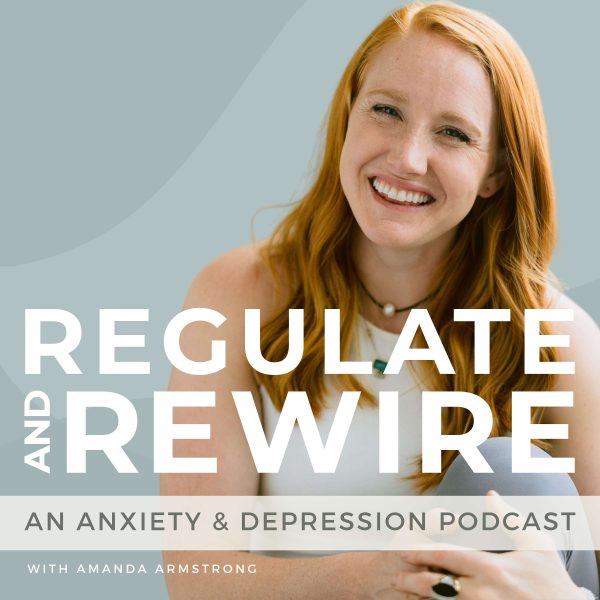
Regulate & Rewire: An Anxiety & Depression Podcast
- Folgen
- 183
- Erscheint
- wöchentlich
- Letzte Folge
- 10. Nov. 2026
Über den Podcast
Millions of people struggle with anxiety & depression every single day. Regulate & Rewire is where Amanda, a nervous system focused and trauma-informed practitioner, teaches you the lessons she learned on her healing journey and the tangible research-based tools she uses with clients everyday to help them regulate their nervous system & rewire their mind – in hopes of helping you do the same. Each episode features specific takeaways for you to apply to your healing journey today.
Website: www.regulatedliving.com
Folgen 183
Tiny Experiments for Low-Capacity Seasons
What do you do when you know something needs to change but you don’t have the capacity to change it? In this episode, Amanda follows up on the Capacity Series by lowering the stakes. Drawing on two recent …
Shownotes
What do you do when you know something needs to change but you don’t have the capacity to change it? In this episode, Amanda follows up on the Capacity Series by lowering the stakes. Drawing on two recent RESTORE discovery calls and a lunch with an old friend navigating depression, she explores how the support we need often requires capacity we don’t have, and why optimizing every habit can add to your stress bucket. She then introduces the concept of tiny experiments from Anne-Laure Le Cunff’s book, Tiny Experiments, including the PACT framework, as a curious, low-pressure way to approach change. You’ll leave with real examples for sleep, movement, and capacity, plus permission to experiment with doing less.
3 Takeaways
- Lower the ask. When support itself feels like too much, one small step or one request for help still counts.
- Trade the goal for a question. Start with “I wonder what would happen if...” and commit to one small action for a set period.
- Every result is information. Helpful or not, each experiment teaches you something about what your system needs right now.
Resources Mentioned
- Tiny Experiments by Anne-Laure Le Cunff: Click Here
- The Capacity Series + The Capacity + Support Audit: Click Here
- Book a pressure-free RESTORE discovery call: Click Here
CLICK HERE for the full show notes, resources, and 3 tangible takeaways!
—
Looking for more support?
- RESTORE, Our 16-week 1:1 coaching program
- Regulated Living Membership
- Regulated Health functional lab testing
- Order my book: Healing Through the Vagus Nerve
*Want me to talk about something specific on the podcast? Let me know HERE.
Website: https://www.regulatedliving.com/podcast
Email: [email protected]
Instagram: @amandaontherise
TikTok: https://www.tiktok.com/@amandaontheriseThe Capacity + Support Audit: Delete, Delegate, Do Differently (Capacity Series, Part 3)
This is the final episode in the Capacity Series, and it finishes the walkthrough of Amanda’s free workbook, The Capacity + Support Audit. Picking up where part two left off, Amanda guides you through the back …
Shownotes
This is the final episode in the Capacity Series, and it finishes the walkthrough of Amanda’s free workbook, The Capacity + Support Audit. Picking up where part two left off, Amanda guides you through the back half of the workbook: the 3 D’s (delete, delegate, and do differently) for working through what’s actually optional on your plate, a full brainstorm of what increased support could look like across paid, free, shared, and tiny forms of help, and an honest audit of what’s actually keeping you from using the support you already have access to. She shares the story of her neighbor Pat, and how a years-long relationship, not a single ask, made it possible to request real help when she needed it. The episode closes with an invitation to choose just one small, specific shift rather than trying to overhaul everything at once.
3 takeaways from this episode:
- Decrease demand creatively. Ask what can be deleted, what someone else could fully own, and what can stay but be done differently, cheaper in time, energy, thought, or decisions.
- Widen your definition of support. It can be paid, practical, relational, reciprocal, free, or tiny, and it doesn’t have to address the problem directly to help with it.
- Choose one shift. You don’t need to reorganize your life this week. Make one thing specific, then two percent easier, and see what happens.
Resources mentioned:
- The Capacity + Support Audit (free workbook) — [link]
- Strategy Calls (members only) — join the membership
- RESTORE, Our 16-week 1:1 coaching program
CLICK HERE for the full show notes, resources, and 3 tangible takeaways!
—
Looking for more support?
- RESTORE, Our 16-week 1:1 coaching program
- Regulated Living Membership
- Regulated Health functional lab testing
- Order my book: Healing Through the Vagus Nerve
*Want me to talk about something specific on the podcast? Let me know HERE.
—
Disclaimer: This podcast is for informational and educational purposes only and is not a substitute for professional medical or mental health advice, diagnosis, or treatment.
Website: https://www.regulatedliving.com/podcast
Email: [email protected]
Instagram: @amandaontherise
TikTok: https://www.tiktok.com/@amandaontheriseThe Capacity + Support Audit: Where Is Your Capacity Actually Going? (Capacity Series, Part 2)
This is part two of the Capacity Series, and it’s a guided walkthrough of the first two pages of Amanda’s free workbook, The Capacity + Support Audit. Amanda opens with a story from when her oldest was under a …
Shownotes
This is part two of the Capacity Series, and it’s a guided walkthrough of the first two pages of Amanda’s free workbook, The Capacity + Support Audit. Amanda opens with a story from when her oldest was under a year old, a phone call to her husband where she realized she couldn’t tell which things on her plate were optional anymore, everything just felt like an obligation. From there, she walks through rating your actual capacity across five areas, physical energy, mental bandwidth, emotional bandwidth, initiation, and your ability to handle the unexpected, then guides you through a full brain-dump of everything you’re actually carrying, including the invisible load most of us stop seeing. This episode is built to pause along the way, so grab the workbook and a pen, or listen now and fill it out later. Part two, covering the rest of the workbook, comes next week.
3 Takeaways:
- Rate the capacity you actually have. “I’ve done this before” and “I have the capacity to do this right now” are different statements, and your answers should come from today, not six months ago.
- Capacity gets spent on invisible things too. Worrying, remembering, anticipating, and deciding all count, so get as much of it down on paper as you can.
- Aim for choice, not just output. Know which things on your plate are necessary, which you’re choosing because they matter to you, and which may be more flexible than they feel right now.
Resources mentioned:
CLICK HERE for the full show notes, resources, and 3 tangible takeaways!
Website: https://www.regulatedliving.com/podcast
Email: [email protected]
Instagram: @amandaontherise
TikTok: https://www.tiktok.com/@amandaontheriseWhen Capacity Is Lower, Support Needs to Be Higher (Capacity Series, Part 1)
This episode kicks off a new 3-part series on capacity and support. Amanda unpacks why so many of us are chronically overfunctioning and under-supported, and why that imbalance, not just the stress itself, is …
Shownotes
This episode kicks off a new 3-part series on capacity and support. Amanda unpacks why so many of us are chronically overfunctioning and under-supported, and why that imbalance, not just the stress itself, is often what drives anxiety and eventual burnout or depression. She shares a personal story about operating at ninety-five percent capacity as her default for over a decade, including a callout from a friend and a moment in therapy that both named the pattern before she could see it herself.
The episode closes with a reframe: instead of asking “what’s the minimum help I can get by on,” ask “what is the absolute most support I can get, ask for, accept, or invest in right now.” The next two episodes will walk through Amanda’s free Capacity + Support Audit, a mini workbook for assessing your own capacity and reworking the balance of stressors and supports in your life.
3 Takeaways:
- Capacity is variable. Anxiety, depression, stress, grief, illness, or a demanding season all lower your capacity, and your expectations and support need to adjust with it.
- “Can I do this?” isn’t always the right question. Also ask, “What is doing this costing me?”
- What Is the Absolute Most Support You Can Get Right Now? You don’t have to wait until you’ve exceeded your capacity to let yourself have more support.
Resources mentioned:
- The Capacity + Support Audit (free workbook, coming in the next two episodes) — will be linked with next week's episode
- Strategy Calls (for Regulated Living Members) — join the membership
CLICK HERE for the full show notes, resources, and 3 tangible takeaways!
—
Looking for more support?
- RESTORE, Our 16-week 1:1 coaching program
- Regulated Living Membership
- Regulated Health functional lab testing
- Order my book: Healing Through the Vagus Nerve
*Want me to talk about something specific on the podcast? Let me know HERE.
—
Disclaimer: This podcast is for informational and educational purposes only and is not a substitute for professional medical or mental health advice, diagnosis, or treatment.
Website: https://www.regulatedliving.com/podcast
Email: [email protected]
Instagram: @amandaontherise
TikTok: https://www.tiktok.com/@amandaontheriseDepression, Weight Gain, and the Story We Tell Ourselves About It
Sparked by a real question from a member Q&A, this episode tackles something Amanda hears constantly: weight gain during a season of depression, and the shame that tends to follow it. She walks through why …
Shownotes
Sparked by a real question from a member Q&A, this episode tackles something Amanda hears constantly: weight gain during a season of depression, and the shame that tends to follow it. She walks through why those behaviors, low energy, less movement, food as comfort, made complete sense given the context, and why "getting back to your old body" is the wrong goal to chase. She also pushes back on the trendy claim that regulating your nervous system alone will melt off the weight, offers a consistency-first approach to movement for anyone whose motivation still feels offline, and makes the case for why food doesn't need to become the enemy on the way to feeling better.
3 Takeaways:
- Your behaviors made sense given the context you were in. Weight gain during depression often reflects lower energy, lower motivation, and food stepping in as an accessible source of comfort, not a personal failure.
- You're not digging yourself out of a hole, you're building forward from here. Recovery isn't about returning to who you were before. It's about supporting the person you are in your life right now.
- Consistency comes before intensity, and motivation follows action. Start with the smallest version of movement your system will actually repeat, and let motivation catch up behind you rather than waiting for it to lead.
Resources mentioned:
- Strategy Sessions (members only) — Click Here
- Regulated Reset, through Regulated Health — Click Here
CLICK HERE for the full show notes, resources, and 3 tangible takeaways!
—
Looking for more support?
- RESTORE, Our 16-week 1:1 coaching program
- Regulated Living Membership
- Regulated Health functional lab testing
- Order my book: Healing Through the Vagus Nerve
*Want me to talk about something specific on the podcast? Let me know HERE.
—
Disclaimer: This podcast is for informational and educational purposes only and is not a substitute for professional medical or mental health advice, diagnosis, or treatment.
Website: https://www.regulatedliving.com/podcast
Email: [email protected]
Instagram: @amandaontherise
TikTok: https://www.tiktok.com/@amandaontheriseThe Genius of the Contained Cry
A client's offhand comment about crying through a sad movie sparked something Amanda hasn't been able to stop thinking about: the contained cry. In this episode, Amanda unpacks the real difference …
Shownotes
A client's offhand comment about crying through a sad movie sparked something Amanda hasn't been able to stop thinking about: the contained cry. In this episode, Amanda unpacks the real difference between containing an emotion and suppressing it, why giving a feeling boundaries can actually be one of the smartest moves your nervous system makes, and how the concept of titration explains why touching the edge of something hard, then coming back, then touching it again, is often more healing than trying to feel it all at once. She also shows how this idea extends beyond crying into contained anger, contained worry, and contained grief, and why learning to trust that a feeling has an ending is at the heart of real self-trust.
3 Takeaways:
- Containment is not suppression. Suppression says you're not allowed to be here. Containment says I know you're here, and I'll make space for you when I have the capacity to do that.
- Every wave you ride all the way through teaches your nervous system where the ending is. The more times you feel something intensely and come out the other side intact, the less threatening the beginning of that feeling becomes.
- Titration is about pacing. Touching the edge of something hard, coming back, and touching it again lets your nervous system take in new information without getting overwhelmed by all of it at once.
CLICK HERE for the full show notes, resources, and 3 tangible takeaways!
—
Looking for more support?
- RESTORE, Our 16-week 1:1 coaching program
- Regulated Living Membership
- Regulated Health functional lab testing
- Order my book: Healing Through the Vagus Nerve
*Want me to talk about something specific on the podcast? Let me know HERE.
—
Disclaimer: This podcast is for informational and educational purposes only and is not a substitute for professional medical or mental health advice, diagnosis, or treatment.
Website: https://www.regulatedliving.com/podcast
Email: [email protected]
Instagram: @amandaontherise
TikTok: https://www.tiktok.com/@amandaontheriseYour Anxious Brain, Your Stressed Gut, and the Loop Between Them
Your gut and brain are in constant conversation, which means what’s happening in your gut can influence your mood, stress response, sleep, and overall mental health—and chronic stress and nervous system …
Shownotes
Your gut and brain are in constant conversation, which means what’s happening in your gut can influence your mood, stress response, sleep, and overall mental health—and chronic stress and nervous system dysregulation can influence your gut right back. In this episode, we unpack the gut-brain axis, microbiome, inflammation, and common gut disruptors; explore when gut health might be a missing piece in persistent anxiety or depression; and talk through the foundational habits and functional testing that can help you know where to start.
3 Takeaways:
- Your gut and brain are in constant, bidirectional conversation. Mental health isn’t just happening in your head, and digestive health isn’t separate from your nervous system. Stress can disrupt the gut, and gut dysfunction can add stress back into the system—which also means there are multiple places you can intervene.
- Gut health is one piece of the physiological environment your brain and nervous system are functioning within. Yes, physiology matters; but we're not going to turn one physiological mechanism into The One singular explanation as to why your symptoms exist.
- Start with the foundations, then get more specific if needed. Sleep, diverse nourishment, movement, connection, and nervous system regulation all support gut-brain health. If those foundations are reasonably supported and you’re still struggling, targeted testing may help identify what’s keeping you stuck.
CLICK HERE for the full show notes, resources, and 3 tangible takeaways!
—
Resources Mentioned:
- Healing Through the Vagus Nerve by Amanda Armstrong — pages 40–41
- Our Gut Health Testing + support: CLICK HERE
- Some mentioned sources:
—
Looking for more support?
- RESTORE, Our 16-week 1:1 coaching program
- Regulated Living Membership
- Regulated Health functional lab testing
- Order my book: Healing Through the Vagus Nerve
*Want me to talk about something specific on the podcast? Let me know HERE.
—
Disclaimer: This podcast is for informational and educational purposes only and is not a substitute for professional medical or mental health advice, diagnosis, or treatment.
Website: https://www.regulatedliving.com/podcast
Email: [email protected]
Instagram: @amandaontherise
TikTok: https://www.tiktok.com/@amandaontheriseWhat a Flat, Numb Response (To a Cancelled Flight) Taught Me About Healing
In this episode, Amanda tells the story of a cancelled flight, three kids, a dog, and three extra days away from home, and the strangely flat, checked-out response she had to it. Instead of treating that …
Shownotes
In this episode, Amanda tells the story of a cancelled flight, three kids, a dog, and three extra days away from home, and the strangely flat, checked-out response she had to it. Instead of treating that numbness as a problem, she breaks down why it was her nervous system doing exactly its job. Along the way, she offers a new way to actually measure healing (hint: it's not whether you still get anxious), a guardrail against turning nervous system work into one more thing to grade yourself on, and a look at what quietly builds the kind of capacity that was working in the background long before she needed it.
3 Takeaways:
- Regulation doesn't mean not reacting. A healthy nervous system still moves into activation, frustration, or even mild shutdown under stress. The goal is flexibility, not permanent calm.
- Measure healing by distance and speed, not by absence. Instead of asking whether you still get anxious or still shut down, ask how far you go, how long you stay there, and how quickly you find your way back.
- Capacity is built quietly, long before you need it. The unglamorous, consistent inputs, regulation, movement, sleep, nourishment, and connection, are what determine how you land on your hardest days.
CLICK HERE for the full show notes, resources, and 3 tangible takeaways!
---
Looking for more support?
- RESTORE, Our 16-week 1:1 coaching program
- Regulated Living Membership
- Regulated Health functional lab testing
- Order my book: Healing Through the Vagus Nerve
*Want me to talk about something specific on the podcast? Let me know HERE.
—
Disclaimer: This podcast is for informational and educational purposes only and is not a substitute for professional medical or mental health advice, diagnosis, or treatment.
Website: https://www.regulatedliving.com/podcast
Email: [email protected]
Instagram: @amandaontherise
TikTok: https://www.tiktok.com/@amandaontheriseBringing It All Together (Final Part: B2B Series)
In this final episode of our Back to the Basics series, we bring together all the key concepts we've explored over the past eight episodes. From understanding your nervous system to creating a personalized …
Shownotes
In this final episode of our Back to the Basics series, we bring together all the key concepts we've explored over the past eight episodes. From understanding your nervous system to creating a personalized path to healing, this episode serves as both a review and a roadmap for moving forward with confidence and clarity.
3 Takeaways:
- Whole-Human Approach: True healing comes from integrating both physiology and psychology – one that explores and acknowledges how your body, mind, relationships, and environment all interconnect in your mental health. Understanding the interplay between your nervous system, stress bucket, reactive and proactive regulation creates a comprehensive framework for healing that honors your unique experiences and needs. If you’ve been feeling stuck in your healing…
- Which area of your life (physical, mental, relational, or environmental) feels most neglected in your current healing approach, and what small step could you take to address it?
- Your Symptoms Likely Make Sense: Your symptoms make perfect sense given your past lived experiences and current life circumstances—they’re not signs of brokenness but messages from a system trying to protect you and understanding this helps you shift from self-blame to self-compassion.
- How might your perspective shift if you approached your symptoms with curiosity rather than judgment, asking “what happened to me?” instead of “what’s wrong with me?”
- If you were to apply the equation ‘Current Nervous System State = Past Lived Experiences + Current Life Circumstances’ to your own experience, what’s one key insight you gain about why you might be struggling the way you are?
- Strategic Path Forward: Real healing comes from a balanced approach that includes both in-the-moment tools and deeper, proactive changes that address the root causes of dysregulation. The journey of healing, viewed through a nervous system lens, is ultimately about reconnecting with your authentic self, accessing your inner resources, and creating a life where you feel safe, resilient, and whole.
- What’s one reactive tool you can practice this week when you notice dysregulation, and one proactive change you feel ready to explore to address something in your stress bucket?
- “What does ‘coming home to yourself’ mean to you, and what’s one small practice or action you could incorporate into your daily life to cultivate a stronger sense of connection with yourself?”
CLICK HERE for the full show notes, resources, and 3 tangible takeaways!
—
Ps. This is a re-run of this series. It originally aired in February 2025, and is still the series I hear back about the most. Since there’s been a wave of new listeners joining lately, I wanted to bring it back around.
And for those of you who were here the first time, I invite you to listen again through the lens of where you are right now, it’s likely shifted over the last year and a half, and just see what lands differently.
Looking for more personalized support?
- 1:1 Coaching (RESTORE): Learn more or book a free discovery call (HSA/FSA eligible & includes comprehensive bloodwork)
- Regulated Living Membership: A mental health membership and nervous system healing space (sliding scale pricing available). Join here.
- Order my book: Healing Through the Vagus Nerve
*Want me to talk about something specific on the podcast? Let me know HERE.
—
Disclaimer: This podcast is for informational and educational purposes only and is not a substitute for professional medical or mental health advice, diagnosis, or treatment.
Website: https://www.regulatedliving.com/podcast
Email: [email protected]
Instagram: @amandaontherise
TikTok: https://www.tiktok.com/@amandaontherise- Whole-Human Approach: True healing comes from integrating both physiology and psychology – one that explores and acknowledges how your body, mind, relationships, and environment all interconnect in your mental health. Understanding the interplay between your nervous system, stress bucket, reactive and proactive regulation creates a comprehensive framework for healing that honors your unique experiences and needs. If you’ve been feeling stuck in your healing…
Bloodwork & The Chemical Imbalance Theory (Part 8: B2B Series)
In this episode, we’re continuing with Part 8 of the Back to the Basics series by exploring the vital role that comprehensive lab work plays in healing anxiety and depression. I break down why we take a …
Shownotes
In this episode, we’re continuing with Part 8 of the Back to the Basics series by exploring the vital role that comprehensive lab work plays in healing anxiety and depression. I break down why we take a physiology-first—but not physiology-only—approach, the truth behind the outdated “chemical imbalance” theory, and how functional labs can uncover real root causes that are often missed in standard care.
3 Takeaways:
- Physiology First, Not Only: There’s an interplay between physiology and psychology but if your body is depleted or stressed, it changes how your brain functions. You can’t mindset your way out of a nervous system stuck in survival mode.
- The Chemical Imbalance Theory is outdated and debunked. This oversimplified narrative can prevent people from exploring the root causes of their symptoms and keeps many stuck in medication-only treatment plans that don’t fully support their healing.
- Comprehensive Lab Work can take out some of the guesswork. It helps uncover hidden imbalances—like nutrient deficiencies or hormone issues—that may be driving anxiety or depression. It gives you clear, personalized data to support your healing.
CLICK HERE for the full show notes, resources, and 3 tangible takeaways!
—
Ps. This is a re-run of this series. It originally aired in February 2025, and is still the series I hear back about the most. Since there’s been a wave of new listeners joining lately, I wanted to bring it back around.
And for those of you who were here the first time, I invite you to listen again through the lens of where you are right now, it’s likely shifted over the last year and a half, and just see what lands differently.
Looking for more personalized support?
- 1:1 Coaching (RESTORE): Learn more or book a free discovery call (HSA/FSA eligible & includes comprehensive bloodwork)
- Regulated Living Membership: A mental health membership and nervous system healing space (sliding scale pricing available). Join here.
- Order my book: Healing Through the Vagus Nerve
*Want me to talk about something specific on the podcast? Let me know HERE.
—
Disclaimer: This podcast is for informational and educational purposes only and is not a substitute for professional medical or mental health advice, diagnosis, or treatment.
**Referenced Sources: Moncrieff, J., Cooper, R. E., Stockmann, T., Amendola, S., Hengartner, M. P., & Horowitz, M. A. (2022). The serotonin theory of depression: A systematic umbrella review of the evidence. Molecular Psychiatry, 28(8), 1–14. https://doi.org/10.1038/s41380-022-01661-0
Website: https://www.regulatedliving.com/podcast
Email: [email protected]
Instagram: @amandaontherise
TikTok: https://www.tiktok.com/@amandaontheriseProactive Regulation: Long-Term Strategies for a Resilient Nervous System (Part 7: B2B Series)
In Part 7 of our Back to Basics series, we explore proactive regulation as the long-term approach to healing anxiety and depression through a nervous system lens. Building on our previous discussion of reactive …
Shownotes
In Part 7 of our Back to Basics series, we explore proactive regulation as the long-term approach to healing anxiety and depression through a nervous system lens. Building on our previous discussion of reactive tools, this episode examines how to address the root causes of your symptoms.
3 Takeaways:
- Proactive regulation is about root causes, not symptom chasing. It’s the long game of building a sustainable, regulation-supportive life.
- The most effective healing path is personal. Your next step depends on what’s in your bucket and what feels doable now.
- Consistency beats overhaul. Small, well-supported changes (especially with guidance) create the biggest long-term impact.
CLICK HERE for the full show notes, resources, and 3 tangible takeaways!
—
Ps. This is a re-run of this series. It originally aired in February 2025, and is still the series I hear back about the most. Since there’s been a wave of new listeners joining lately, I wanted to bring it back around.
And for those of you who were here the first time, I invite you to listen again through the lens of where you are right now, it’s likely shifted over the last year and a half, and just see what lands differently.
Looking for more personalized support?
- 1:1 Coaching (RESTORE): Learn more or book a free discovery call (HSA/FSA eligible & includes comprehensive bloodwork)
- Regulated Living Membership: A mental health membership and nervous system healing space (sliding scale pricing available). Join here.
- Order my book: Healing Through the Vagus Nerve
*Want me to talk about something specific on the podcast? Let me know HERE.
—
Disclaimer: This podcast is for informational and educational purposes only and is not a substitute for professional medical or mental health advice, diagnosis, or treatment.
Website: https://www.regulatedliving.com/podcast
Email: [email protected]
Instagram: @amandaontherise
TikTok: https://www.tiktok.com/@amandaontheriseReactive Regulation in Real Life (Part 6: B2B Series)
This morning I wanted to flush my kid down the toilet, it was just one of those mornings. It made me realize that while last week we had a great chat about reactive regulation, it was a bit heavy on the theory …
Shownotes
This morning I wanted to flush my kid down the toilet, it was just one of those mornings. It made me realize that while last week we had a great chat about reactive regulation, it was a bit heavy on the theory vs practical application. I'm extending that conversation today to share some real life examples of how I use these tools in my everyday life, how I used them this morning with my son. So, here's Part 6 of my Back to the Basics Series.
3 Takeaways:
- Tools work better when they’re practiced in low-stakes moments. Amanda didn’t magically regulate during a meltdown—she had practiced those steps in less charged settings first.
- You don’t have to fully shift your state to call a tool successful. If it takes the edge off enough to help you stay present, it’s working.
- Use different tools for different goals. Some tools shift your physiology. Others help you stay with emotion. Both are valid.
CLICK HERE for the full show notes, resources, and 3 tangible takeaways!
—
Ps. This is a re-run of this series. It originally aired in February 2025, and is still the series I hear back about the most. Since there’s been a wave of new listeners joining lately, I wanted to bring it back around.
And for those of you who were here the first time, I invite you to listen again through the lens of where you are right now, it’s likely shifted over the last year and a half, and just see what lands differently.
Looking for more personalized support?
- 1:1 Coaching (RESTORE): Learn more or book a free discovery call (HSA/FSA eligible & includes comprehensive bloodwork)
- Regulated Living Membership: A mental health membership and nervous system healing space (sliding scale pricing available). Join here.
- Order my book: Healing Through the Vagus Nerve
*Want me to talk about something specific on the podcast? Let me know HERE.
—
Disclaimer: This podcast is for informational and educational purposes only and is not a substitute for professional medical or mental health advice, diagnosis, or treatment.
Website: https://www.regulatedliving.com/podcast
Email: [email protected]
Instagram: @amandaontherise
TikTok: https://www.tiktok.com/@amandaontheriseReactive Regulation: Your In-The-Moment Nervous System Toolkit (Part 5: B2B Series)
In part 5 of our Back to Basics series, we explore reactive regulation, a powerful approach to managing your nervous system in moments of anxiety, overwhelm, or shutdown. Learn how to use your body's …
Shownotes
In part 5 of our Back to Basics series, we explore reactive regulation, a powerful approach to managing your nervous system in moments of anxiety, overwhelm, or shutdown. Learn how to use your body's natural stress responses to create a personalized toolkit for finding more calm and intentionality amidst life's challenges.
3 Takeaways:
- Reactive Resourcing: Reactive regulation is like a first-aid kit for your nervous system – a set of tools that provide temporary safety cues to help you bridge the gap between stress and regulation in moments of dysregulation.
- Meet Your System: The principle of “meeting your nervous system where it is” and “tool layering” is essential – rather than forcing calm when activated or high energy when shut down, acknowledge your current state first and then incrementally guide yourself toward regulation.
- Proactive Practice: Proactively practicing your reactive regulation tools in low-stress situations makes them more accessible and effective when you’re facing bigger challenges.
CLICK HERE for the full show notes, resources, and 3 tangible takeaways! *click here to view the impala video I referenced in the episode
—
Ps. This is a re-run of this series. It originally aired in February 2025, and is still the series I hear back about the most. Since there’s been a wave of new listeners joining lately, I wanted to bring it back around.
And for those of you who were here the first time, I invite you to listen again through the lens of where you are right now, it’s likely shifted over the last year and a half, and just see what lands differently.
Looking for more personalized support?
- 1:1 Coaching (RESTORE): Learn more or book a free discovery call (HSA/FSA eligible & includes comprehensive bloodwork)
- Regulated Living Membership: A mental health membership and nervous system healing space (sliding scale pricing available). Join here.
- Order my book: Healing Through the Vagus Nerve
*Want me to talk about something specific on the podcast? Let me know HERE.
—
Disclaimer: This podcast is for informational and educational purposes only and is not a substitute for professional medical or mental health advice, diagnosis, or treatment.
Website: https://www.regulatedliving.com/podcast
Email: [email protected]
Instagram: @amandaontherise
TikTok: https://www.tiktok.com/@amandaontheriseAssessing Your Stress Bucket (Part 4: B2B Series)
In part 4 of our Back to Basics series, we explore the "stress bucket" analogy to help you understand why you might be feeling overwhelmed, anxious, or depressed. Learn how to assess your unique stress load and …
Shownotes
In part 4 of our Back to Basics series, we explore the "stress bucket" analogy to help you understand why you might be feeling overwhelmed, anxious, or depressed. Learn how to assess your unique stress load and discover personalized pathways to healing.
3 Takeaways:
- You have a unique stress capacity. When your bucket overflows, symptoms show up. That doesn’t mean you’re failing—it means your body is communicating with you.
- Identify your stressors. List both baseline and daily stressors. This simple awareness offers a more personalized path forward.
- Healing is about balance. You don’t have to eliminate all stress. Add support, increase capacity, and shift what you can.
CLICK HERE for the full show notes, resources, and 3 tangible takeaways!
—
Ps. This is a re-run of this series. It originally aired in February 2025, and is still the series I hear back about the most. Since there’s been a wave of new listeners joining lately, I wanted to bring it back around.
And for those of you who were here the first time, I invite you to listen again through the lens of where you are right now, it’s likely shifted over the last year and a half, and just see what lands differently.
Looking for more personalized support?
- 1:1 Coaching (RESTORE): Learn more or book a free discovery call (HSA/FSA eligible & includes comprehensive bloodwork)
- Regulated Living Membership: A mental health membership and nervous system healing space (sliding scale pricing available). Join here.
- Order my book: Healing Through the Vagus Nerve
*Want me to talk about something specific on the podcast? Let me know HERE.
—
Website: https://www.regulatedliving.com/podcast
Email: [email protected]
Instagram: @amandaontherise
TikTok: https://www.tiktok.com/@amandaontheriseWhy We Get Stuck (in Anxiety & Depression): Understanding Nervous System Dysregulation (Part 3: B2B Series)
In part 3 of our Back to Basics series, we explore why we get stuck in states of dysregulation and why anxiety and depression persist. Learn how modern living patterns and past experiences shape our nervous …
Shownotes
In part 3 of our Back to Basics series, we explore why we get stuck in states of dysregulation and why anxiety and depression persist. Learn how modern living patterns and past experiences shape our nervous system responses, and discover a compassionate approach to understanding your symptoms.
3 Takeaways:
- Your symptoms make sense. Anxiety and depression are often normal responses to overwhelm. Recognize your patterns without pathologizing them.
- Biology matters. The way you live—your sleep, stress, food, and relationships—can either support or sabotage your nervous system. Start small by changing one supportive habit.
- Safety is learned. If your body perceives the world as dangerous, even safe moments will feel threatening. Begin identifying your “parts” and their protective roles to shift how you relate to stress.
CLICK HERE for the full show notes, resources, and 3 tangible takeaways!
—
Ps. This is a re-run of this series. It originally aired in February 2025, and is still the series I hear back about the most. Since there’s been a wave of new listeners joining lately, I wanted to bring it back around.
And for those of you who were here the first time, I invite you to listen again through the lens of where you are right now, it’s likely shifted over the last year and a half, and just see what lands differently.
Looking for more personalized support?
- 1:1 Coaching (RESTORE): Learn more or book a free discovery call (HSA/FSA eligible & includes comprehensive bloodwork)
- Regulated Living Membership: A mental health membership and nervous system healing space (sliding scale pricing available). Join here.
- Order my book: Healing Through the Vagus Nerve
*Want me to talk about something specific on the podcast? Let me know HERE.
—
Website: https://www.regulatedliving.com/podcast
Email: [email protected]
Instagram: @amandaontherise
TikTok: https://www.tiktok.com/@amandaontherise6 Nervous System States & Their Stories (Part 2: B2B Series)
In this second episode of the "Back to Basics" series, we explore the six nervous system states and how understanding them can transform your approach to anxiety and depression healing.3 Takeaways:Your state …
Shownotes
In this second episode of the "Back to Basics" series, we explore the six nervous system states and how understanding them can transform your approach to anxiety and depression healing.
3 Takeaways:
- Your state determines your story. How you feel physically shapes how you think emotionally. Track your state, not just your thoughts.
- You experience each state differently. Start noticing your own patterns. When do you feel buzzy and urgent? When do you go flat or withdrawn? That awareness is your first step toward change.
- Try the paper-on-the-door check-in. Write “What state am I in right now? How do I know?” on a piece of paper. Tape it somewhere visible. Ask it daily. This builds awareness fast—and gently.
CLICK HERE for the full show notes, resources, and 3 tangible takeaways!
—
Ps. This is a re-run of this series. It originally aired in February 2025, and is still the series I hear back about the most. Since there’s been a wave of new listeners joining lately, I wanted to bring it back around.
And for those of you who were here the first time, I invite you to listen again through the lens of where you are right now, it’s likely shifted over the last year and a half, and just see what lands differently.
—
Looking for more personalized support?
- 1:1 Coaching (RESTORE): Learn more or book a free discovery call (HSA/FSA eligible & includes comprehensive bloodwork)
- Regulated Living Membership: A mental health membership and nervous system healing space (sliding scale pricing available). Join here.
- Order my book: Healing Through the Vagus Nerve
*Want me to talk about something specific on the podcast? Let me know HERE.
Website: https://www.regulatedliving.com/podcast
Email: [email protected]
Instagram: @amandaontherise
TikTok: https://www.tiktok.com/@amandaontheriseGet To Know Your Nervous System (Part 1: Back to the Basics Series)
In this first episode of the “Back to Basics” series, Amanda dives into the core of what drives anxiety and depression: your nervous system. When you better understand how this mind-body system works you can …
Shownotes
In this first episode of the “Back to Basics” series, Amanda dives into the core of what drives anxiety and depression: your nervous system. When you better understand how this mind-body system works you can work with it towards healing.
3 Takeaways:
- Your symptoms are protective, not personal. Your nervous system isn’t trying to ruin your life. It’s trying to keep you safe. The more fluently you speak its language, the less you’ll feel at war with yourself.
- Self-compassion is non-negotiable. Understanding your nervous system can help dissolve self-blame and shift you into a posture of curiosity instead of criticism. That shift alone can change your healing trajectory.
- You’re likely carrying more than anyone ever taught you to hold. When Amanda describes the nervous system as holding a “bucket” of stressors, it clicks: Most of us are carrying too much with too little support. Of course we’re tired. Of course we’re stuck. The work isn’t to toughen up—it’s to learn how to carry differently.
CLICK HERE for the full show notes, resources, and 3 tangible takeaways!
—
Ps. This is a re-run of this series. It originally aired in February 2025, and is still the series I hear back about the most. Since there’s been a wave of new listeners joining lately, I wanted to bring it back around.
And for those of you who were here the first time, I invite you to listen again through the lens of where you are right now, it’s likely shifted over the last year and a half, and just see what lands differently.
—
Looking for more personalized support?
- 1:1 Coaching (RESTORE): Learn more or book a free discovery call (HSA/FSA eligible & includes comprehensive bloodwork)
- Regulated Living Membership: A mental health membership and nervous system healing space (sliding scale pricing available). Join here.
- Order my book: Healing Through the Vagus Nerve
*Want me to talk about something specific on the podcast? Let me know HERE.
Website: https://www.regulatedliving.com/podcast
Email: [email protected]
Instagram: @amandaontherise
TikTok: https://www.tiktok.com/@amandaontheriseMy Favorite Anxiety Equation (+ Personal Update)
In this episode Amanda shares her favorite anxiety equation (Anxiety = an overestimation of threat + underestimation of your ability to manage the threat) through a lens of two personal examples. She also …
Shownotes
In this episode Amanda shares her favorite anxiety equation (Anxiety = an overestimation of threat + underestimation of your ability to manage the threat) through a lens of two personal examples. She also shares a little life update and upcoming plans for the next segment on the podcast.
Hit play to join her for a candid, unscripted conversation with an ending invitation to write in (on the form linked below) to share what you'd like to hear future episodes on and that if you've found the podcast helpful to leave a review to help get these tools and conversations out to even more people who need them.
*Want me to talk about something specific on the podcast? Let me know HERE.
—
Looking for more personalized support?
- 1:1 Coaching (RESTORE): Learn more or book a free discovery call (HSA/FSA eligible & includes comprehensive bloodwork)
- Regulated Living Membership: A mental health membership and nervous system healing space (sliding scale pricing available). Join here.
- Order my book: Healing Through the Vagus Nerve
—
Disclaimer: This podcast is for informational and educational purposes only and is not a substitute for professional medical or mental health advice, diagnosis, or treatment.
Website: https://www.regulatedliving.com/podcast
Email: [email protected]
Instagram: @amandaontherise
TikTok: https://www.tiktok.com/@amandaontheriseMy Family Song: The Nervous System Lessons I'm Teaching My Kids (and Still Learning Myself)
In today's episode, Amanda shares something she's never shared publicly before — a little bedtime song she wrote for her kids that's become a nightly staple. What started as a spontaneous attempt …
Shownotes
In today's episode, Amanda shares something she's never shared publicly before — a little bedtime song she wrote for her kids that's become a nightly staple. What started as a spontaneous attempt to teach her children the things she wished she'd known earlier has turned into a fun family song teaching the fundamentals of mental and physical health. Amanda share the song with you, invites you to make it your own, and then breaks down each line of the song and what it means not just for the littles in our lives, but for the adults who are still doing this healing work themselves.
CLICK HERE for the full show notes, resources, and 3 tangible takeaways!
—
Looking for more personalized support?
- 1:1 Coaching (RESTORE): Learn more or book a free discovery call (HSA/FSA eligible & includes comprehensive bloodwork)
- Regulated Living Membership: A mental health membership and nervous system healing space (sliding scale pricing available). Join here.
- Order my book: Healing Through the Vagus Nerve
*Want me to talk about something specific on the podcast? Let me know HERE.
—
Disclaimer: This podcast is for informational and educational purposes only and is not a substitute for professional medical or mental health advice, diagnosis, or treatment.
Website: https://www.regulatedliving.com/podcast
Email: [email protected]
Instagram: @amandaontherise
TikTok: https://www.tiktok.com/@amandaontheriseMorning Sunlight & Your Mental Health
Morning sunlight might be the most underutilized free regulation tool available to us — and in this episode, Amanda breaks down exactly why getting outside within the first hour of waking is one of the …
Shownotes
Morning sunlight might be the most underutilized free regulation tool available to us — and in this episode, Amanda breaks down exactly why getting outside within the first hour of waking is one of the highest-return things you can do for your nervous system. From circadian rhythm and cortisol to serotonin, sleep quality, and mood regulation, the science is clear — and the practice is simpler than you think.
3 Takeaways:
- Your morning sets the stage for your night. Getting outside for 5–15 minutes within the first hour of waking helps set your circadian rhythm, supports healthy energy during the day, and improves your chances of sleeping well at night.
- Small things matter more than we think. When symptoms are big, we often look for big solutions. But healing is often built through small, consistent actions that support our biology and create a foundation for regulation over time.
- Modern life often works against our nervous system. Our biology evolved expecting bright light during the day and darkness at night. Morning sunlight is one simple way to reduce that mismatch and give your brain and body the signals they were designed to receive.
- "Happy Light" Recommendations: Verilux® HappyLight w/ Timer ($39)
CLICK HERE for the full show notes, resources, and 3 tangible takeaways!
—
Looking for more personalized support?
- 1:1 Coaching (RESTORE): Learn more or book a free discovery call (HSA/FSA eligible & includes comprehensive bloodwork)
- Regulated Living Membership: A mental health membership and nervous system healing space (sliding scale pricing available). Join here.
- Order my book: Healing Through the Vagus Nerve
*Want me to talk about something specific on the podcast? Let me know HERE.
—
Disclaimer: This podcast is for informational and educational purposes only and is not a substitute for professional medical or mental health advice, diagnosis, or treatment.
Website: https://www.regulatedliving.com/podcast
Email: [email protected]
Instagram: @amandaontherise
TikTok: https://www.tiktok.com/@amandaontheriseWhen Life Gets in the Way of Healing
In this episode, Amanda gets candid about what regulated living actually looks like when life gets hard — including the sleep deprivation, the skipped workouts, and the very human experience of teaching what …
Shownotes
In this episode, Amanda gets candid about what regulated living actually looks like when life gets hard — including the sleep deprivation, the skipped workouts, and the very human experience of teaching what you're currently struggling to practice. She walks through the two things that keep her grounded in chaotic seasons: flexibility and context. She also shares her five domains of healing and the Daily Five as a framework for strategic, adaptable healing that meets you where you actually are.
3 Takeaways:
- Flexibility is a healing skill. When one foundation slips, pivot to what's accessible. Doing less well is still doing something.
- Your symptoms make sense given the load. Context isn't an excuse — it's accurate information that guides you back to what you need.
- Healing is strategic. The six domains of healing give you a map so that when life gets chaotic, you know where to look instead of trying harder at everything at once.
CLICK HERE for the full show notes, resources, and 3 tangible takeaways!
—
Looking for more personalized support?
- 1:1 Coaching (RESTORE): Learn more or book a free discovery call (HSA/FSA eligible & includes comprehensive bloodwork)
- Regulated Living Membership: A mental health membership and nervous system healing space (sliding scale pricing available). Join here.
- Order my book: Healing Through the Vagus Nerve
*Want me to talk about something specific on the podcast? Let me know HERE.
—
Disclaimer: This podcast is for informational and educational purposes only and is not a substitute for professional medical or mental health advice, diagnosis, or treatment.
Website: https://www.regulatedliving.com/podcast
Email: [email protected]
Instagram: @amandaontherise
TikTok: https://www.tiktok.com/@amandaontheriseA Guided Wind-Down Practice for Sleep
Today’s episode is a guided practice designed to help your nervous system settle and prepare for quality sleep. We’ll start by moving through a short discharging sequence to process any lingering stress from …
Shownotes
Today’s episode is a guided practice designed to help your nervous system settle and prepare for quality sleep. We’ll start by moving through a short discharging sequence to process any lingering stress from the day, then move into some gentle breathwork.
This first part of the practice can be done standing beside your bed, sitting on the edge of it, or already lying down — whatever feels right for where you are tonight.
There's nothing you need to do to prepare, just be here as you are, hit play and let's begin.
—
Looking for more personalized support?
- 1:1 Coaching (RESTORE): Learn more or book a free discovery call (HSA/FSA eligible & includes comprehensive bloodwork)
- Regulated Living Membership: A mental health membership and nervous system healing space (sliding scale pricing available). Join here.
- Order my book: Healing Through the Vagus Nerve
*Want me to talk about something specific on the podcast? Let me know HERE.
—
Disclaimer: This podcast is for informational and educational purposes only and is not a substitute for professional medical or mental health advice, diagnosis, or treatment.
Website: https://www.regulatedliving.com/podcast
Email: [email protected]
Instagram: @amandaontherise
TikTok: https://www.tiktok.com/@amandaontheriseSleep Anxiety: What To Actually Do About It (Part 2)
In Part 2 of this sleep anxiety series, Amanda gets practical. She breaks down exactly what to do when you can't fall asleep, what to do when you wake up in the middle of the night, and offers a full …
Shownotes
In Part 2 of this sleep anxiety series, Amanda gets practical. She breaks down exactly what to do when you can't fall asleep, what to do when you wake up in the middle of the night, and offers a full toolkit of cognitive, environmental, and somatic practices that shift the conditions for sleep over time. If Part 1 was the understanding, this is the application.
Click here to preorder your own lamp. Use the code "REGULATED" to get 10% off.
3 Takeaways:
- You can't force sleep, but you can build better conditions for it.
- The middle-of-the-night wake-up needs a different response than lying there fighting it. Sit up, name the state, meet the sensation, reach for breathwork over your phone, and get up if you're still activated after 20-30 minutes. Every regulated response starts to undo the old pattern.
- Your daytime is the preparation for your nighttime. Morning sunlight, consistent wake time, movement, processing stress before it accumulates — none of this feels like sleep hygiene but all of it is.
CLICK HERE for the full show notes, resources, and 3 tangible takeaways!
—
Looking for more personalized support?
- 1:1 Coaching (RESTORE): Learn more or book a free discovery call (HSA/FSA eligible & includes comprehensive bloodwork)
- Regulated Living Membership: A mental health membership and nervous system healing space (sliding scale pricing available). Join here.
- Order my book: Healing Through the Vagus Nerve
*Want me to talk about something specific on the podcast? Let me know HERE.
—
Disclaimer: This podcast is for informational and educational purposes only and is not a substitute for professional medical or mental health advice, diagnosis, or treatment.
Website: https://www.regulatedliving.com/podcast
Email: [email protected]
Instagram: @amandaontherise
TikTok: https://www.tiktok.com/@amandaontheriseSleep Anxiety: Why Your Nervous System Won't Let You Sleep (Part 1)
Sleep anxiety is one of the most common experiences for people living with chronic stress, anxiety, and dysregulation. In Part 1 of this three-part series, Amanda breaks down why the nervous system is at the …
Shownotes
Sleep anxiety is one of the most common experiences for people living with chronic stress, anxiety, and dysregulation. In Part 1 of this three-part series, Amanda breaks down why the nervous system is at the center of sleep disruption, the difference between not being able to fall asleep and middle-of-the-night wake-ups, and the primary drivers behind nighttime anxiety. This is the understanding episode — Part 2 brings the tools, and Part 3 is a guided wind-down practice.
3 Takeaways:
- Sleep requires safety, not effort. Your nervous system won't let you go offline until it believes the coast is clear. Sleep disruption during chronic stress isn't a flaw — it's your system doing its job. The path forward is building safety, not trying harder.
- There are two distinct flavors of sleep anxiety and they feed each other. Not being able to fall asleep and waking in the night share the same root — a nervous system that hasn't received the signal that it's safe to rest.
- If the middle-of-the-night wake-up is consistent, it's not random. Four primary drivers are worth understanding: dysregulated cortisol, unprocessed stress, conditioned arousal, and blood sugar instability. Knowing which applies to you is where the work starts.
CLICK HERE for the full show notes, resources, and 3 tangible takeaways!
—
Looking for more personalized support?
- 1:1 Coaching (RESTORE): Learn more or book a free discovery call (HSA/FSA eligible & includes comprehensive bloodwork)
- Regulated Living Membership: A mental health membership and nervous system healing space (sliding scale pricing available). Join here.
- Order my book: Healing Through the Vagus Nerve
*Want me to talk about something specific on the podcast? Let me know HERE.
—
Disclaimer: This podcast is for informational and educational purposes only and is not a substitute for professional medical or mental health advice, diagnosis, or treatment.
Website: https://www.regulatedliving.com/podcast
Email: [email protected]
Instagram: @amandaontherise
TikTok: https://www.tiktok.com/@amandaontheriseWebsite: https://www.regulatedliving.com/podcast
Email: [email protected]
Instagram: @amandaontherise
TikTok: https://www.tiktok.com/@amandaontheriseUnderstanding Self-Harm from a Nervous System Perspective
Understanding self-harm through a nervous system lens changes everything — and in this episode, Amanda breaks down what's actually happening in the brain and body when this behavior shows up, why it works …
Shownotes
Understanding self-harm through a nervous system lens changes everything — and in this episode, Amanda breaks down what's actually happening in the brain and body when this behavior shows up, why it works as a short-term regulation strategy even when it comes at a high cost, and what genuinely helps address the root of the pattern rather than just the behavior itself.
3 Takeaways:
- Self-harm is a nervous system regulation attempt. Understanding this is not permission to continue it — it's the foundation for approaching it without shame.
- The nervous system underneath self-harm is physiologically dysregulated, not just psychologically. Healing has to target the nervous system itself, not just thoughts or behaviors in isolation.
- Effective alternatives work when they do the same jobs as self-harm — building discharge pathways and widening the window of tolerance. That takes time and often professional support, and healing is genuinely possible.
CLICK HERE for the full show notes, resources, and 3 tangible takeaways!
—
Resources:
- 988 Suicide and Crisis Lifeline: call or text 988
- Crisis Text Line: text HOME to 741741
—
Research referenced in this episode:
- Cornell Research Program on Self-Injury and Recovery — The Neurobiology of NSSI
- PMC/NIH — Self-harm and emotional regulation research
- MedlinePlus — Self-harm overview
- Nature Mental Health (2025) — Electrodermal activity and self-harm
—
Disclaimer: This podcast is for informational and educational purposes only and is not a substitute for professional medical or mental health advice, diagnosis, or treatment.
Website: https://www.regulatedliving.com/podcast
Email: [email protected]
Instagram: @amandaontherise
TikTok: https://www.tiktok.com/@amandaontheriseWhy Walking Is Actually a Nervous System Practice
Walking for mental health goes deeper than most people realize — and in this episode, Amanda breaks down exactly why increasing your daily step count is one of the highest-return nervous system practices …
Shownotes
Walking for mental health goes deeper than most people realize — and in this episode, Amanda breaks down exactly why increasing your daily step count is one of the highest-return nervous system practices you're probably underutilizing. From bilateral movement and cortisol metabolism to blood sugar stability and sleep, the science behind a simple daily walk is more connected to your emotional wellbeing than you might think.
3 Takeaways:
- Walking regulates your nervous system through several physiological pathways at once. Bilateral movement, cortisol metabolism, blood sugar stabilization, and sleep quality are all influenced by consistent daily walking. That’s why the research on it for anxiety and depression is so consistent.
- The right goal is a real stretch from where you actually are. Find your current daily average, then set a target that’s meaningful but reachable in your current life. Sustainable habit change doesn’t start with the ideal number. It starts with the next number.
- Walking is one lever, and it’s worth pulling. If you’re already walking consistently and still struggling, something else needs attention. But if this is a lever you haven’t been pulling, the research is clear enough and the barrier low enough that it earns its place as a genuine mental health practice.
CLICK HERE for the full show notes, resources, and 3 tangible takeaways!
—
Looking for more personalized support?
- 1:1 Coaching (RESTORE): Learn more or book a free discovery call (HSA/FSA eligible & includes comprehensive bloodwork)
- Regulated Living Membership: A mental health membership and nervous system healing space (sliding scale pricing available). Join here.
- Order my book: Healing Through the Vagus Nerve
*Want me to talk about something specific on the podcast? Let me know HERE.
—
Disclaimer: This podcast is for informational and educational purposes only and is not a substitute for professional medical or mental health advice, diagnosis, or treatment.
Website: https://www.regulatedliving.com/podcast
Email: [email protected]
Instagram: @amandaontherise
TikTok: https://www.tiktok.com/@amandaontheriseListener Q&A — Your Questions from the Stress Management Series
In this listener response episode, Amanda answers three thoughtful follow-up questions from the five-part stress management series. She digs deepest into a question about reorienting to a baseline mindset …
Shownotes
In this listener response episode, Amanda answers three thoughtful follow-up questions from the five-part stress management series. She digs deepest into a question about reorienting to a baseline mindset stressor — using the trigger vs overwhelm distinction to help listeners diagnose what's actually happening before deciding what to do about it. She also honors a listener's real-life editing win in the middle of profound grief, and offers a few grounding thoughts on going it alone, the impulse to flush everything and start over, and what chronic consumption does to your inner knowing.
3 Takeaways:
- When something you love starts to feel overwhelming, the most important diagnostic question is: is this the trigger, or is it the final drop? Those two scenarios need different responses. One is primarily a load management problem. The other points toward nervous system associations that need to be slowly rebuilt. Knowing which is which changes where you focus your energy.
- Your nervous system learned the associations it’s operating from, which means it can unlearn them. But rewiring requires capacity first. You cannot rebuild an association from inside a survival response. Regulation comes before rewiring, and that sequencing isn’t a detour it’s what makes the rewiring actually stick.
- That immediate felt sense of relief when you make the right edit? Trust it. Your nervous system is giving you real-time feedback. That signal the exhale, the release is data. And it builds momentum for the next edit.
CLICK HERE for the full show notes, resources, and 3 tangible takeaways!
—
Looking for more personalized support?
- 1:1 Coaching (RESTORE): Learn more or book a free discovery call (HSA/FSA eligible & includes comprehensive bloodwork)
- Regulated Living Membership: A mental health membership and nervous system healing space (sliding scale pricing available). Join here.
- Order my book: Healing Through the Vagus Nerve
*Want me to talk about something specific on the podcast? Let me know HERE.
—
Disclaimer: This podcast is for informational and educational purposes only and is not a substitute for professional medical or mental health advice, diagnosis, or treatment.
Website: https://www.regulatedliving.com/podcast
Email: [email protected]
Instagram: @amandaontherise
TikTok: https://www.tiktok.com/@amandaontheriseFrom Knowing Different to Living Different (Part 5)
In the final episode of this stress management series, Amanda steps back from frameworks and talks about the gap between understanding what needs to change and actually changing it. She revisits the nervous …
Shownotes
In the final episode of this stress management series, Amanda steps back from frameworks and talks about the gap between understanding what needs to change and actually changing it. She revisits the nervous system ladder as a way to help listeners locate themselves after five episodes of honest reflection, reads from her book Healing Through the Vagus Nerve on the four-phase healing process and her strategic healing philosophy, and closes with a direct look at what personalized, whole-human support actually looks like inside RESTORE.
3 Takeaways:
- Know what season of healing you’re in and match your support to your actual capacity. Each phase has its own needs. Trying to force Phase 3 work before your nervous system is regulated enough to hold it doesn’t accelerate healing; it stalls it. Asking “what season am I in?” is one of the most clarifying questions you can bring to your next step.
- Healing has a general sequence: education, regulation, rewiring, resourcing. Order matters. Building a regulated baseline is the foundation that makes deeper work possible — not an optional first step you can skip.
- Knowing different and living different are not the same thing and that gap is not a willpower problem. It’s a capacity and support problem. Strategic, personalized, whole-human support is what bridges it. If you’re looking for that kind of support, it exists.
CLICK HERE for the full show notes, resources, and 3 tangible takeaways!
—
Looking for more personalized support?
- 1:1 Coaching (RESTORE): Learn more or book a free discovery call (HSA/FSA eligible & includes comprehensive bloodwork)
- Regulated Living Membership: A mental health membership and nervous system healing space (sliding scale pricing available). Join here.
- Order my book: Healing Through the Vagus Nerve
*Want me to talk about something specific on the podcast? Let me know HERE.
—
Disclaimer: This podcast is for informational and educational purposes only and is not a substitute for professional medical or mental health advice, diagnosis, or treatment.
Website: https://www.regulatedliving.com/podcast
Email: [email protected]
Instagram: @amandaontherise
TikTok: https://www.tiktok.com/@amandaontheriseEditing Your Stress Bucket (Part 4)
In part four of this stress series, Amanda moves from filtering into action — introducing the 3 D's framework for actually editing your stress bucket. She opens by distinguishing between poking holes …
Shownotes
In part four of this stress series, Amanda moves from filtering into action — introducing the 3 D's framework for actually editing your stress bucket. She opens by distinguishing between poking holes (reactive regulation) and real editing, then walks through Delete, Delegate, and Do Differently with honest personal examples from her own life. She also introduces Add as the fourth move on the supporter side of the see-saw, and closes with an important reminder that editing isn't just a thinking exercise — letting things go has a felt sense, and that response is normal.
CLICK HERE for the full show notes, resources, and 3 tangible takeaways!—
Looking for more personalized support?
- 1:1 Coaching (RESTORE): Learn more or book a free discovery call (HSA/FSA eligible & includes comprehensive bloodwork)
- Regulated Living Membership: A mental health membership and nervous system healing space (sliding scale pricing available). Join here.
- Order my book: Healing Through the Vagus Nerve
*Want me to talk about something specific on the podcast? Let me know HERE.
—
Disclaimer: This podcast is for informational and educational purposes only and is not a substitute for professional medical or mental health advice, diagnosis, or treatment.
Website: https://www.regulatedliving.com/podcast
Email: [email protected]
Instagram: @amandaontherise
TikTok: https://www.tiktok.com/@amandaontheriseFilter Your Stress Bucket: How to Know What Actually Belongs (Part 3)
In part three of this stress series, Amanda introduces the important step that comes before editing your stress bucket — filtering it. She shares two practical filters to help you get clear on what actually …
Shownotes
In part three of this stress series, Amanda introduces the important step that comes before editing your stress bucket — filtering it. She shares two practical filters to help you get clear on what actually belongs in your life: the rubber vs glass ball distinction and your personal core values. This episode is honest about the fact that this process is often countercultural and sometimes relational, and Amanda shares her own experience of what it cost — and ultimately gave — when she first started doing things differently.
Resources mentioned: Brené Brown Core Values Exercise
CLICK HERE for the full show notes, resources, and 3 tangible takeaways!
—
Looking for more personalized support?
- 1:1 Coaching (RESTORE): Learn more or book a free discovery call (HSA/FSA eligible & includes comprehensive bloodwork)
- Regulated Living Membership: A mental health membership and nervous system healing space (sliding scale pricing available). Join here.
- Order my book: Healing Through the Vagus Nerve
*Want me to talk about something specific on the podcast? Let me know HERE.
—
Disclaimer: This podcast is for informational and educational purposes only and is not a substitute for professional medical or mental health advice, diagnosis, or treatment.
Website: https://www.regulatedliving.com/podcast
Email: [email protected]
Instagram: @amandaontherise
TikTok: https://www.tiktok.com/@amandaontherise
Hier stehen die neuesten 40 von 183 Folgen. Ältere Folgen findest du im Feed des Podcasts.
Ähnliche Podcasts
Mehr Gesundheit und Fitness-Podcasts
Ist das dein Podcast?
Bestätige es mit einem Eintrag in deinem Feed: Du bekommst hier einen Code, trägst ihn als podcast:txt in den Kanal deines Feeds ein, und wir prüfen ihn. Danach steht dein Podcast als „verifiziert“ bei SoundNode.